


War, Corporeality, and New Technologies: Reflections on the 81st Venice Film Festival
Last week, the 81st Venice Film Festival concluded, showcasing premieres from renowned directors such as Pedro Almodóvar, Takeshi Kitano, Todd Phillips, Wang Bing, and others. Almodóvar's The Room Next Door rightfully earned the Golden Lion, standing head and shoulders above the other contenders in the competition.
In this intimate and poignant drama, involving youthful friends Ingrid (Julianne Moore) and Martha (Tilda Swinton), Almodóvar tackles the issue of euthanasia. Swinton delivers a brilliant performance as a terminally ill cancer patient who, faced with an inescapable fate, chooses to end her life with dignity and avoid unbearable suffering. However, she doesn't want to die alone and asks Ingrid to accompany her in her final moments. Martha rents a beautiful house in the suburbs of New York and invites Ingrid to stay with her in the room next door for a month, while she takes care of the arrangements for her passing on her own. One day, Swinton’s character dons a ceremonial yellow suit, applies bold lipstick, and takes a pill she acquired from the dark web. After her death, Ingrid faces the oppressive legal system and is called in for police questioning, but skilled lawyers manage to resolve the situation in her favor.
Room Next Door 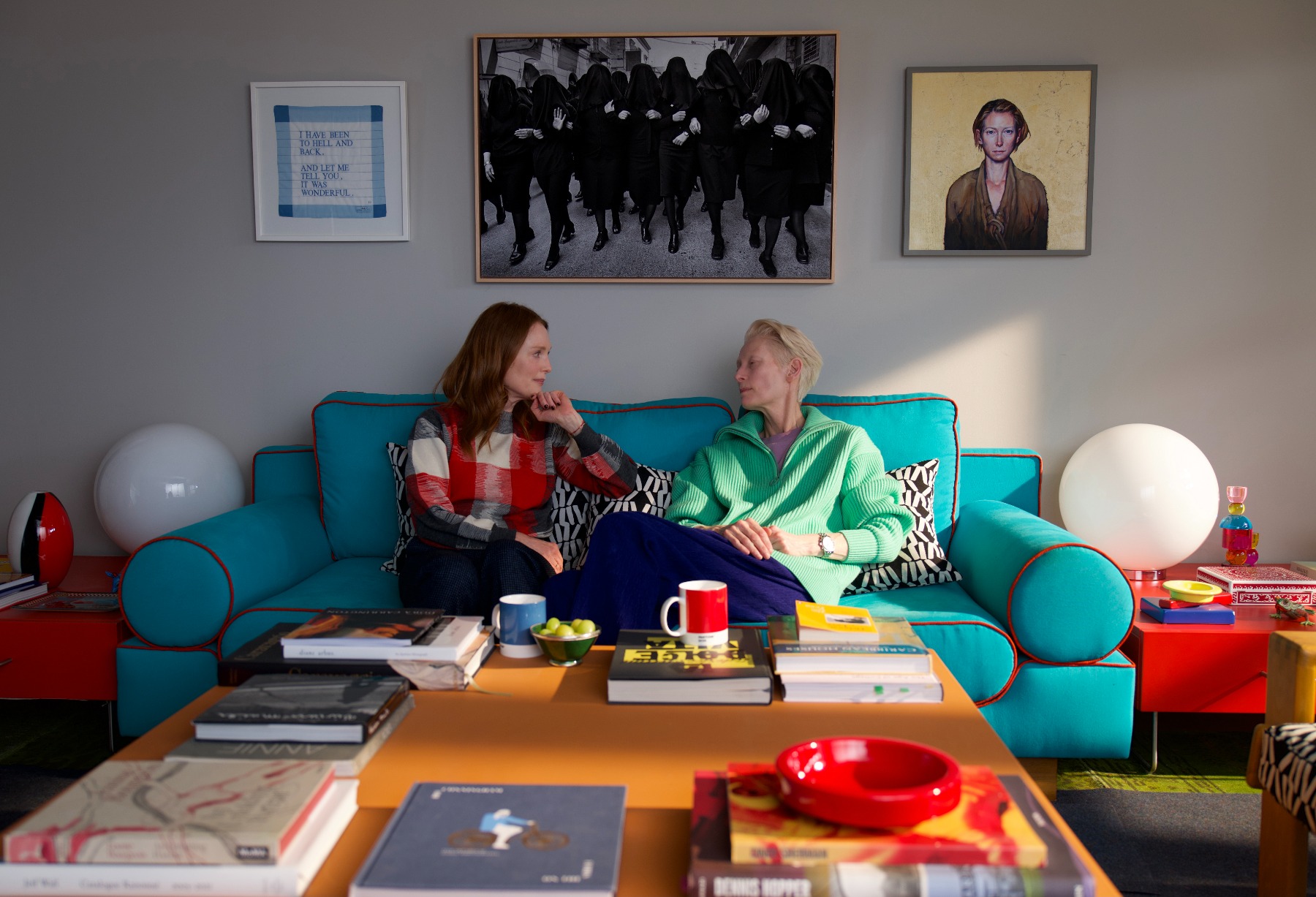
Despite its pressing relevance, the film is poetic in nature. The friends gaze out at the evening New York skyline from a skyscraper, listen to birds sing at dawn, and quote James Joyce's The Dead: “snow falling faintly through the universe […] upon all the living and the dead.” This line is repeated throughout the film, serving both as a refrain and as an epilogue, culminating in the final scene where white flakes fall, symbolizing the reconciliation of life and death.
This is one of Almodóvar's finest films, notably distinct from his previous works while still retaining his signature touches: black-and-white film sequences (Martha and Ingrid watch old movies), the inclusion of a homosexual relationship in the plot, and so on. Even in such an intimate film, there is an emphasis on war and its traumas. Martha had spent many years as a war correspondent, and her partner, the father of her child, was mentally scarred by his experience in Vietnam, ultimately destroying their relationship. The battle with cancer is also portrayed as a war, but Martha chooses to lose it on her own terms, as she is left with no other options.
The Brutalist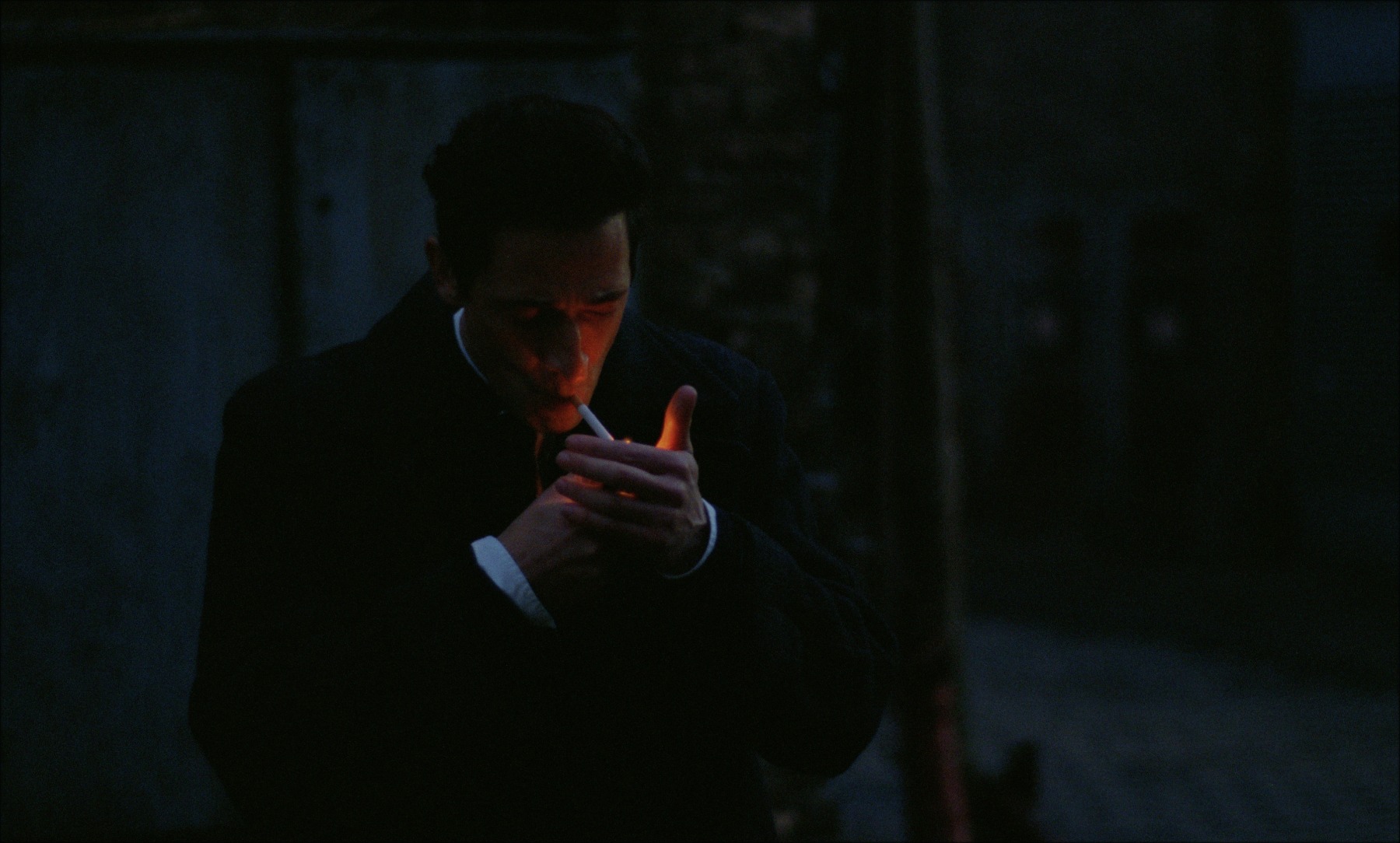
Patria o Vita?
This year's Venice Film Festival featured numerous films with war themes or those that touched on war indirectly. In Brady Corbet's film The Brutalist, war is not depicted directly; its traumas surface in the unsettling dreams of the protagonist, Laszlo Toth, a Hungarian Jew and Holocaust survivor who has moved to the U.S., as well as in his imposing and heavy architecture. This lengthy film about a fictional character, spanning 3.5 hours with an intermission, received the award for Best Director.
In Gianni Amelio's Battlefield (Campo di battaglia), the action takes place in a military hospital during World War I. Hundreds of disfigured bodies are expected to return to the front to fulfill their duty to their homeland, as urged by the hospital’s chief physician. His colleague, on the contrary, tries to save the wounded from being sent back to the front lines by further injuring them with their consent, infecting them and thus rendering them incapacitated for service. In this way, the cannon fodder is given a chance to survive. Patria o muerte? The protagonists of this film choose life.
The immersive section of the festival, located on Lazaretto Island near Lido, also tackled the theme of war. By donning a VR headset, visitors were transported to the trenches of World War I, experiencing front-line life in vivid detail: the mud underfoot, fallen soldiers, and chunks of earth flying toward them from exploding shells. François Vautier’s Champ de bataille tells the story of a French soldier who finds himself unarmed in a ravine with a German enemy, who, out of compassion, chooses not to kill him. This narrative, reminiscent of Remarque's All Quiet on the Western Front and its recent adaptation, highlights the absurdity and devastation of war. “In 1916, Verdun’s fields were the theatre of unprecedented barbarism. Battered bodies, mutilated landscapes, darkened skies of despair. Amidst all this, a soldier, Julien, lives through these dark times, abandoning any chance of youth and happiness…” reads the annotation to the work. Champ de bataille also provides a glimpse of the future of mass cinema, heading toward immersive spectacle, expansive panoramic imagery, and large-scale special effects.
The anti-war sentiment was shared by other films as well. Anastasia Trofimova's documentary Russians at War depicts lost soldiers who don’t understand what they are fighting for. The portrayal of war is far from what is shown on television: it’s mud, blood, fallen comrades, and burning Soviet tanks they are forced to fight in. However, the film sparked outrage from the Ukrainian side, which felt it was too close to Russian propaganda by eliciting sympathy for these soldiers. In turn, In Ukrainian films, the depiction of the horrors of war drives the audience toward a patriotic interpretation — the need for victory. In Honeymoon (directed by Zhanna Ozirna), after a phone call with a colleague from Austria who offers to send money for humanitarian aid but refuses to donate to the military, the protagonist delivers a monologue in front of a mirror, convincing herself and the audience that the money is for freedom, not war.
Despite protests against the inclusion of Israeli cinema at the festival, and a petition signed by 300 filmmakers, two films were shown: Of Dogs and Men by Dani Rosenberg and Why War by Amos Gitai. Both address the terrorist attack on Israel on October 7, 2023. The title of the latest film refers to the correspondence between Einstein and Freud that took place in 1932, which the director draws upon. In his letter, Einstein asks: can humanity avoid war? How is it possible for a small clique to bend the will of the majority, who stand to lose and suffer by a state of war, to the service of their ambitions? Why does humanity allow itself to be swept up in such wild enthusiasm that leads individuals to sacrifice their lives? How can we protect mankind from the psychosis of cruelty and destruction?
Why War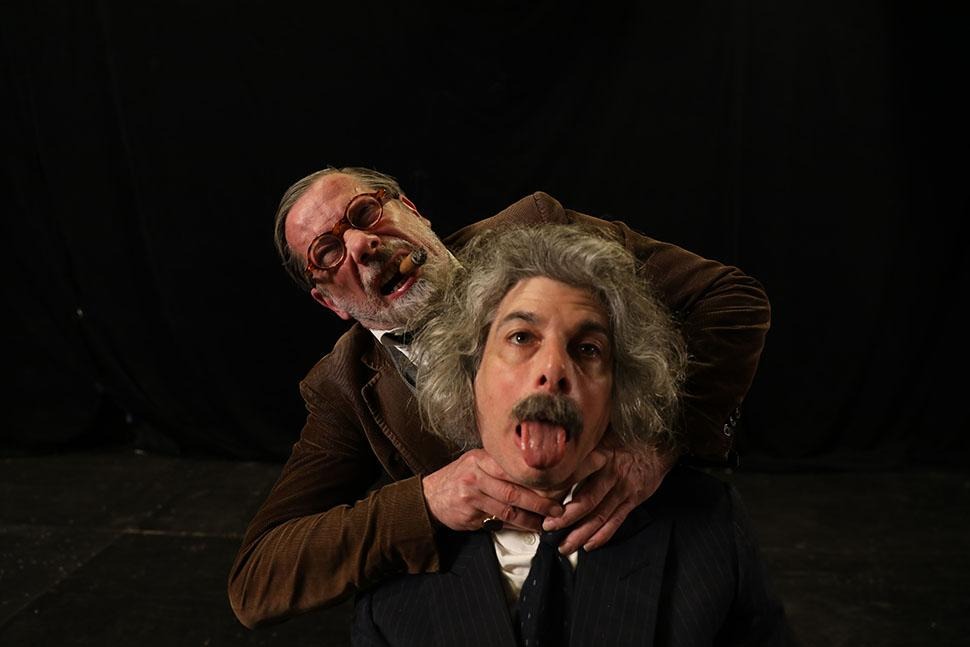
Freud sees the antidote to war in a sense of community among people. In addition to sexual intent and love, this sense of community can be achieved through identification: “All that brings out the significant resemblances between men calls into play this feeling of community, identification, whereon is founded, in large measure, the whole edifice of human society". He concludes by stating, "Whatever makes for cultural development is working also against war. " Yet, the behind-the-scenes events at the Venice Film Festival convincingly demonstrate that culture itself has become a battleground.
Harvest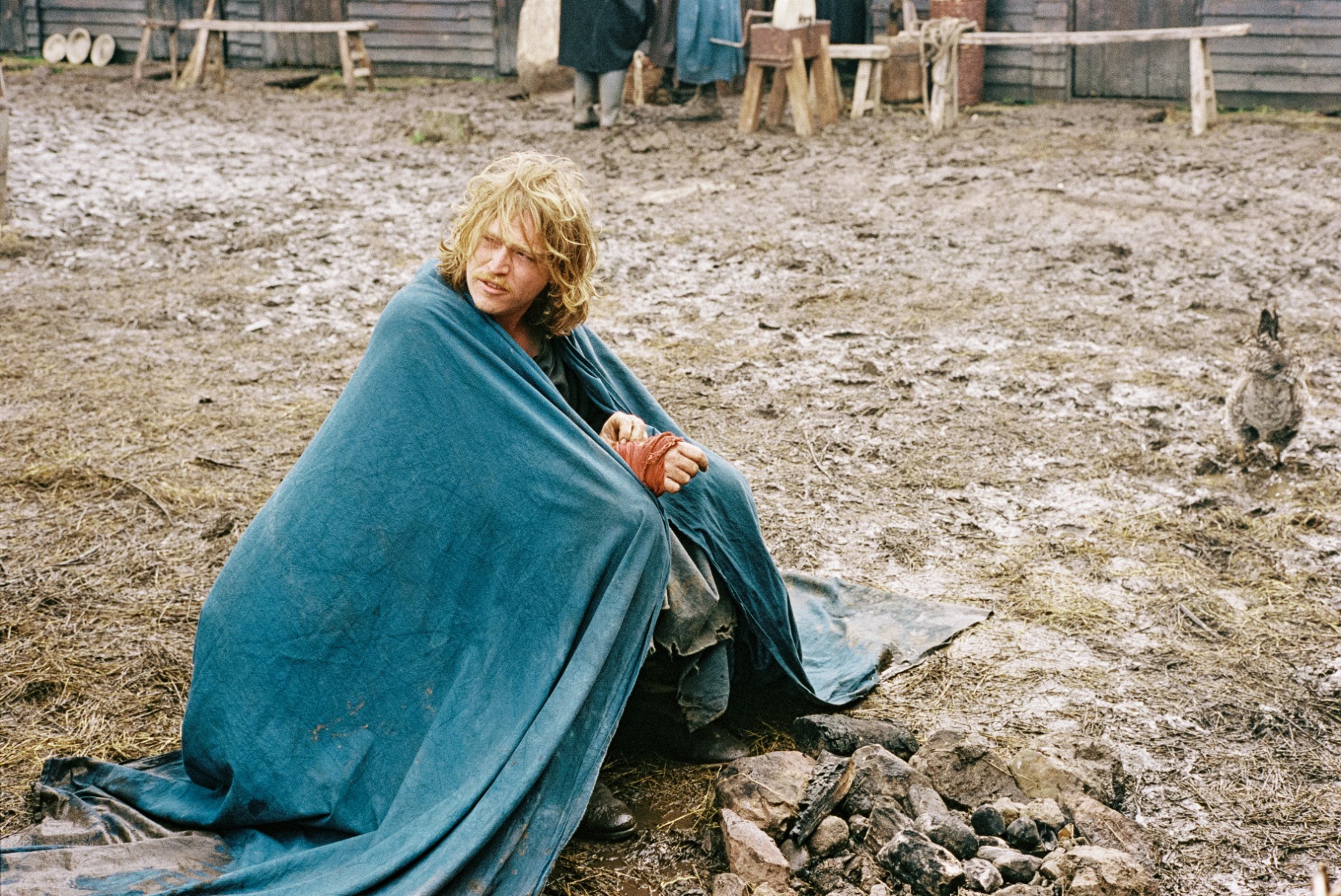
Corporeality
Another prominent theme at the film festival is corporeality, depicted through illness, aging, trauma, transitional states, and cultural customs. In Harvest (directed by Athina Rachel Tsangari), set in a medieval village somewhere in Scotland, corporeality is shown through a close connection to the land. This is literally the dirt under the nails, shown to us in the opening frames, fertility rites, and wild rituals (such as children being forcefully struck headfirst against a large stone to help them remember their origins). The film features fantastical costumes and masks, as well as wreaths made from wildflowers. It also captures the somewhat wild behaviours, the naivety of gestures and facial expressions—corporeal practices of people living far from civilization. The film at times imitates ethnographic cinema, while in other moments it evokes the works of Bruegel, depicting scenes of everyday folk life.
April by Dea Kulumbegashvili is a film about the female, traumatized body, unregulated sexuality, and the right to control oneself. It is a slow-moving, almost road movie about a midwife travelling through Georgian villages, secretly assisting women with abortions. Along the way, she engages in chaotic sexual encounters with various men, without forming any subsequent relationships or attachments. However, this is not just another feminist film; it also incorporates mysticism and existential poignancy, expressed in the deep blue of April evenings that the protagonist races toward in her car.
Familiar Touch 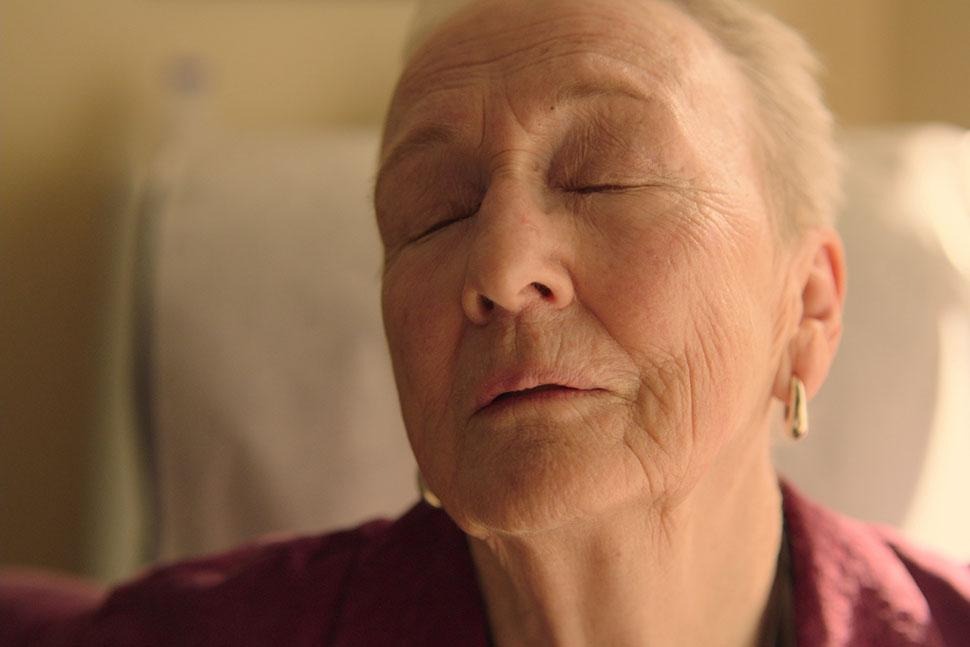
How can one come to terms with their own body or that of a loved one, affected by aging and illness? Familiar Touch by Sarah Friedland tells the story of an eighty-year-old woman suffering from dementia. The Director's Statement includes a quote from feminist scholar Lynne Segal: “As we age, changing year on year, we also retain, in one manifestation or another, traces of all the selves we have been, creating a type of temporal vertigo and rendering us psychically, in one sense, all ages and no age.” The film’s protagonist, Ruth, also carries numerous traces of the past and fragments of her various identities that manifest in the present. Although previous forms of communication often become impossible, the language of gestures and touch remains, creating the necessary closeness between people.
Familiar Touch 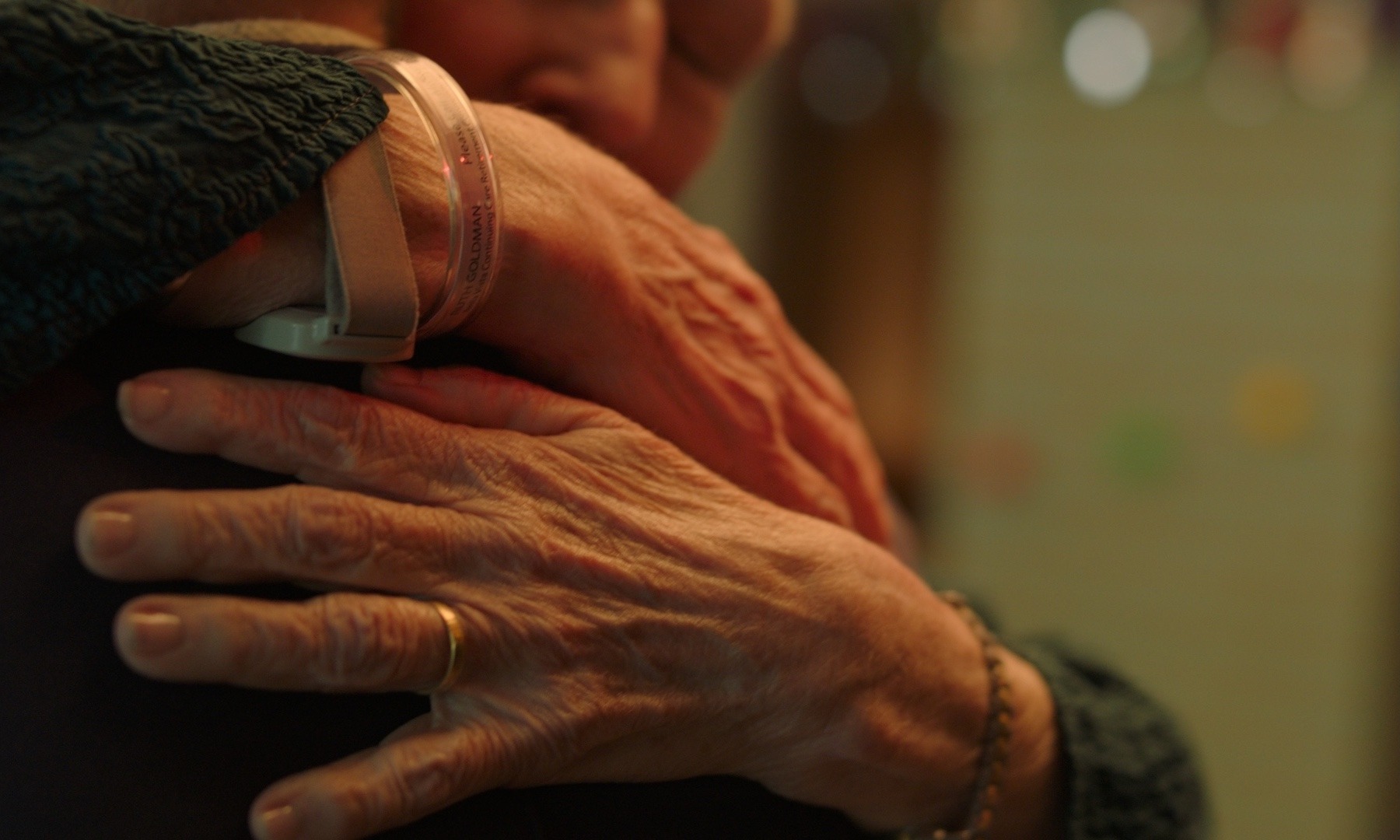
New technologies allow us to step into someone else’s shoes or experience another’s body. Through virtual reality, for instance, it is possible to convey how people with physiological and psychological conditions perceive the world. In Impulse: Playing with Reality (Barry Gene Murphy, May Abdalla), which received the Achievement Prize at the festival, the gameplay and testimonies of individuals with ADHD (attention deficit hyperactivity disorder) reveal the syndrome that leads to undue risks and living on the edge. Another work, Turbulence: Jamais Vu (Ben Joseph Andrews, Emma Roberts), describes vestibular migraine, which affects perception of motion and balance. The first warning of an attack is a sense of derealization, a strange lapse in reality. The poetic work Ceci est mon coeur (Stéphane Hueber-Blies, Nicolas Blies) explores distorted perceptions of one’s own body and teaches self-acceptance. The creators start from the premise that very few people are at peace with their bodies. Most people experience self-rejection, body shame, exacerbated by negative experiences such as sexual violence, school bullying, and depression. The session is akin to therapy: visitors don white garments adorned with glowing embroidery that lights up in sync with the story’s text, embarking on a sensory odyssey.
Technological control
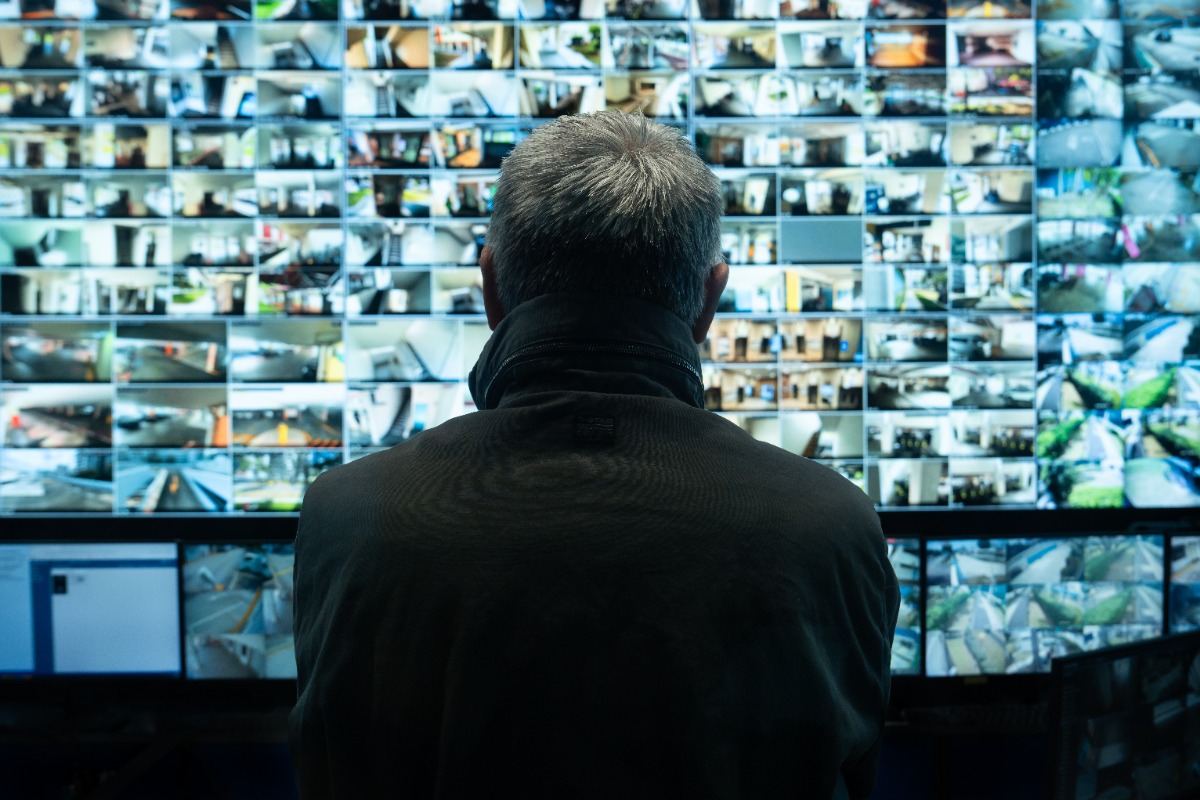
New technologies open up new horizons, create a new visual language, and enrich the user experience, but they also give rise to new fears and concerns. Media today are not just an everyday part of our lives; they increasingly control them. The crucial question is: who owns the media? They become weapons in the hands of totalitarian regimes, tracking every step and suppressing any nascent dissent. We live in an entirely transparent world, where intelligence agencies have access to social media and messaging apps, information about bank accounts, geolocations, and sexual preferences. Add to this the surveillance cameras that turn the world around us into a panopticon, where a person is observable from any point. Every step is recorded and can be used against you at any moment, serving as evidence and accusation. But it’s not just surveillance cameras that are watching you; neighbours are also filming you with their smartphones and observing from the windows of the house across the street, as depicted in the film Stranger Eyes by Siew Hua Yeo. This situation is further exacerbated by the emergence of AI, capable of analyzing vast amounts of data and creating user profiles. These issues are also addressed in the film 2073 by Asif Kapadia, which begins as a post-apocalyptic narrative. The setup is rather cliché: a global catastrophe has occurred, dictators have usurped power and rule through technology, and a small group of dissenters hides in the underground, making occasional forays for necessities. What happened? What are the roots of this situation? The director takes the audience back to our time, presenting a montage of documentary footage and TV news featuring figures such as Putin, Trump, Zuckerberg, Musk, and others.
In Kapadia's film, there is a nod to Chris Marker's classic work La Jetée (1962), whose influence can also be seen in another piece shown in the immersive program – In the Realm of Ripley (Soo Eung Chuck Chae), which combines VR and cinema. The story is set in the future, in 2080. A detective, investigating a murder case, delves into the memories of a boy who died in 2009 and turns out to be the sole witness. However, the boy’s memories are distorted by Ripley Syndrome, which blurs the line between truth and falsehood. Under the guidance of a screen-based AI actor, viewers watch the film and make choices through voice interaction, affecting the plot's outcome and the experience of individual users present in the virtual reality session. The project raises questions about the impact of technology on memory and reality, and the ethics of such interventions. Moreover, this work proposes an approach that emphasizes interactivity and combines different technologies, pointing to the trajectory that future cinema may follow.
In summary, the film festival program highlights the complex ways in which contemporary cinema reflects and responds to the multifaceted challenges of our time. From the harrowing depictions of war conflicts to the intimate portrayals of human suffering and resilience, these films address pressing social and political issues. The incorporation of new technologies and interactive elements in cinema signifies a transformative shift, suggesting a future where the boundaries between reality and fiction become increasingly fluid. The films and immersive works presented at the festival provoke a crucial dialogue on the effects of technological and societal transformations.
