


The Sadness of Things
Autumn’s here they say —
the Star yearns for his love on
the coat of a deer.
(Matsuo Bashō, The Complete Haiku of Matsuo Bashō, p. 38)
The Sea and the Three
The coming of autumn: light dimming, the rays of the sun inclining, days growing shorter as if shaved off the body of the year. Trees begin to shed their leaves, standing bare as if waiting for the cover of snow and winter. With autumn begins the movement away from the full-blown observation and wild energies of spring and summer, the slow turning from the lush to the spare.
The bareness of trees, the dying of light, brings a certain melancholia, a quiet sadness, as if autumn itself engulfs all things in the flush of impermanence. With this engulfing comes a sadness that clings to objects and seeps into us. What overwhelms us is not merely the sight of fading but the recognition that the same impermanence moves through us as well.
Uninvited sadness frightens us. Impermanence unsettles us. We always yearn for what does not change. Yet the unchanging may be nothing other than change itself – this simple, unqualified observation. Is there a witness behind it, an observer untouched? It is difficult to say, since the question leads into the winding, meandering languages of metaphysics. For now, we remain within this place where the three meet.
I sit by the seaside and watch the grey waves break against the stones. The air is heavy with salt and the slow rhythm of retreat and return. The boulders are darkened by the tide, wet, gleaming, patient. When the water draws back, it leaves behind a thin skin of foam that slowly disappears into the cracks between rocks. Nothing here seems to ask for attention, yet everything seems to look back.
The particular spot where I sit, facing the stones and the boulders, becomes its own field of attention. I notice that if I allow myself, even for a moment, to look without the usual thread of memories, without naming, the whole scene shifts. The gaze loosens. The air trembles with presence. For an instant there are no associations, no recognition of this place as my place, no past that intervenes like a film between seeing and what is seen. It is as if I perceive it for the first time.
This, perhaps, is what I have come to call pure experience: a seeing that no longer needs the comfort of meaning. A gaze that does not possess, that does not insist on continuity. The stones, the sand, the fragments of seaweed, the shifting light – all appear in their own right, without claiming to belong to a story. It is a quiet suspension of memory, a pause in which the world, free from interpretation, discloses itself.
None of the objects really care what kind of inner experience is born out of the connection of the three. The three, in this case, are what Buddhist philosophy calls the sense faculty, the object, and the resulting consciousness: for example, sight, visible form, and eye-consciousness. Consciousness arises only when these three meet, yet none of them possesses any inherent being or intention. The object does not intend to be seen; it simply appears.
In that instant of meeting, the world and awareness touch but do not merge. They generate one another and dissolve again. This is the field where perception happens, the trembling contact between what is and what knows that it is.
Driving on a bus and looking outside at the shifting, lead-colored clouds of sadness, I thought that perhaps another method of gazing and looking would be connected to an inner work, a work on consciousness itself. Between the automatic movements of attraction and aversion, between the almost mechanical formation of positive and negative reactions, one can stay present, unmoved, like a surface of water that reflects everything but grasps nothing. This is not detachment but stillness. It is a shift of attention into the neutral: neither good nor bad, neither sad nor happy.
Could this be true observation or pure experience? In true observation there is still a watcher, a thin film of “I” stretched between the eye and what it sees. But pure experience, if it exists at all, would be without that film. There would be no observer and no observed, no witness standing apart. Only the seeing itself.
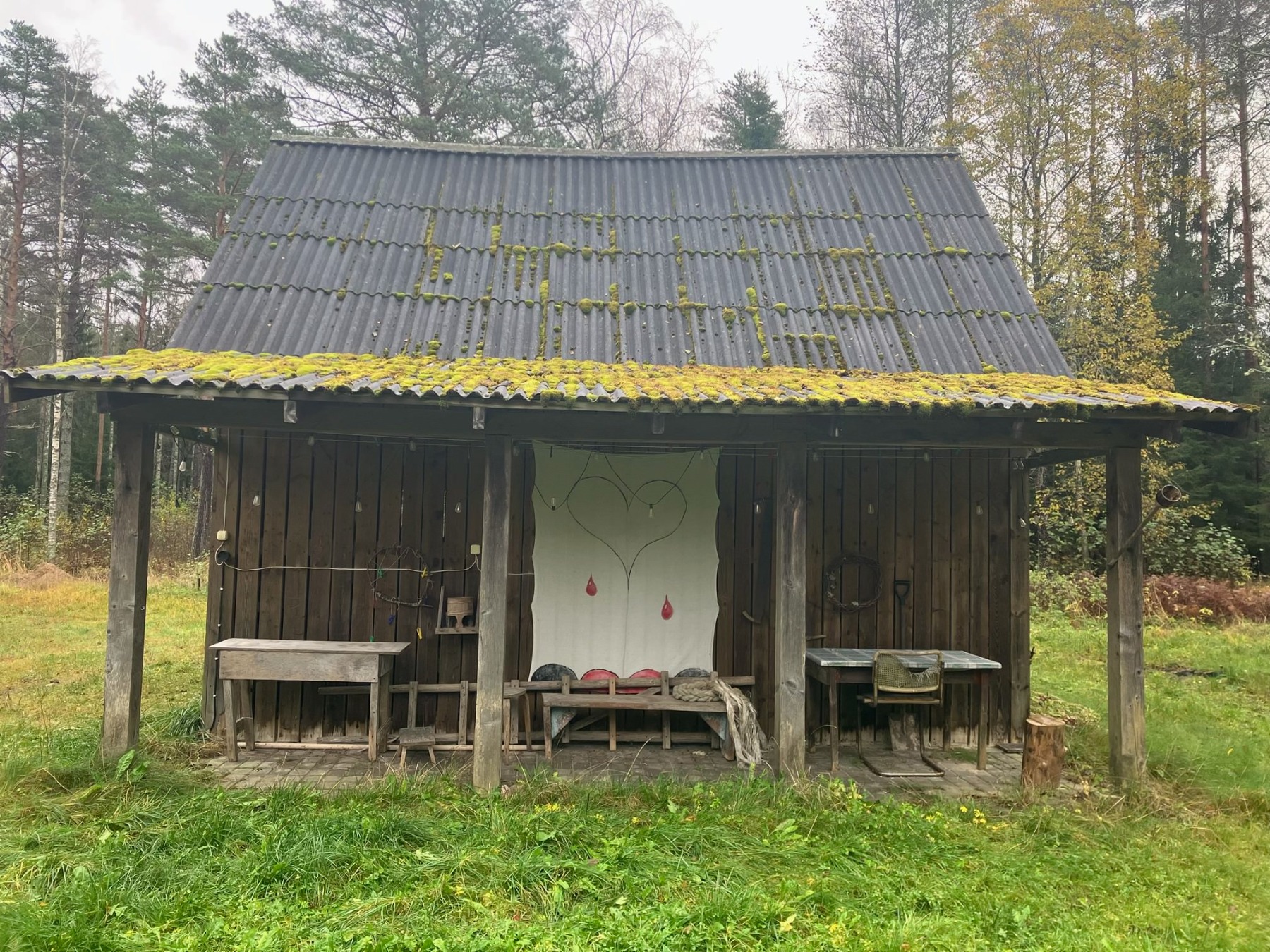
Think of this when you watch the rain falling from the eaves of a house. The raindrops, seen from a distance, seem to flow as a continuous silver line. But as you move closer, you see that they fall one by one, each alone, each separate and complete. This is how consciousness works. Each moment of awareness is a droplet, self-contained yet in the continuity of perception they fuse into an apparent stream. The mind, in its restlessness, mistakes this sequence for an unbroken flow, and out of this illusion the idea of self emerges – I am the one through whom time flows. When we look carefully, we see that there is no flow at all, only the arising and vanishing of discrete moments.
This recognition brings an odd kind of serenity – a calm not born from control but from clarity. The gaze becomes transparent to itself. The rain continues to fall, but its sound and movement seem to belong to something larger than weather. Each drop fulfils its fall, completes its small existence, and disappears. Perhaps this is the true form of seeing: not possession, but accompaniment.
In such moments, the ordinary world reveals its strangeness. The boundary between subject and object, between “I” and “it,” thins until it nearly disappears. The stones by the shore, the water in the gutter, the wind against the bus window: they all become events of the same order. There is no center and no periphery, no hierarchy of importance. The world exists as a shimmering totality of equal presences.

Melancholy, Indifference, and the Aesthetic Gaze
And yet, even in this clarity, something frightening remains: the realization that the world is indifferent. Lao Tzu wrote: “Heaven and Earth are not humane; they treat the ten thousand things as straw dogs. The sage is not humane; he treats the people as straw dogs. The space between Heaven and Earth, is it not like a bellows? Empty, yet never exhausted; the more it moves, the more it brings forth. Too many words hasten exhaustion; it is better to keep to the center.” (Tao Te Ching, trans. D. C. Lau, 1963, p. 77).
The universe, in its vast calm, neither consoles nor condemns. But this is not a reason for despair. The absence of care is not cruelty. It may be the deepest form of peace – the peace of a world that allows everything to exist, even our sorrow. Care, after all, is a human invention, an act of mind. We emerge from the same processes that shape the tides and the clouds. To expect the world to care would be to impose upon it our own restless ethics. But the indifference of the world is not emptiness; it is the condition for participation. If the waves do not care, they also do not exclude. The sea’s refusal to acknowledge us is what allows us to belong to it.
Is there, then, a kind of melancholy that neither sinks into despair nor denies the fleetingness of things? When one looks at a single withered branch, or at a tree standing alone in the open field against a heavy autumn sky, a feeling arises that is not grief but understanding. It is as if the sadness of the scene becomes an opening rather than a closing: a space in which the heart can breathe. Between the extremes of indifference and sorrow lies a gentler rhythm, one that binds us again to the place where we stand.
It may be in this interval that we learn to live among things as they are, not as we wish them to be. The Buddhists call the ordinary world the red dust – the restless cycle of human affairs. But the sadness of things, when felt without resistance, allows us to re-enter that world with renewed attention. We begin to move within it not as masters or victims, but as participants in its flux.
The aesthetic gaze arises precisely here – at the meeting point of transience and awareness. It is not a gaze of domination or analysis but of belonging. It accepts the world’s impermanence as the condition of beauty itself.
Wabi, Sabi, and Mono no Aware
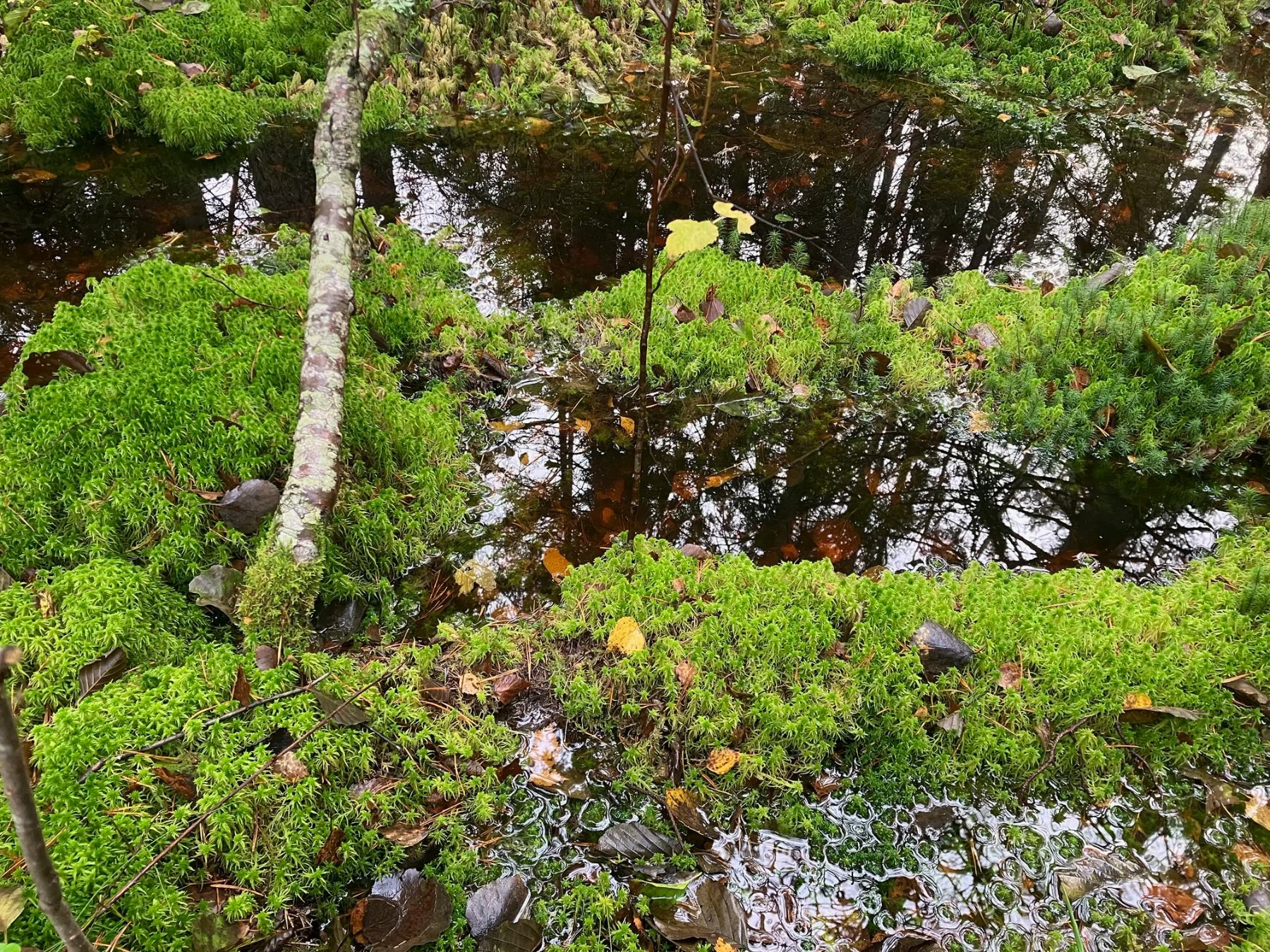
The aesthetic gaze accepts the world’s impermanence as the very condition of beauty. Yuriko Saitō reminds us that the Japanese aesthetics of wabi-sabi, “a celebration of imperfection, defect, and insufficiency, emerged in the sixteenth century… and it became established as one of the quintessential Japanese aesthetic tastes” (Aesthetics of the Familiar, 2017, p. 204). The tea room – small, dimly lit, unadorned—embodies this reversal of values: simplicity against splendor, absence against accumulation. Within such a space beauty is not manufactured; it happens. Wabi names the humility of this condition – the unpretentious plainness that welcomes transience. Sabi names the quiet dignity that time imparts - the patina of wear, the depth of what has endured.
In the tea ceremony, writes Saitō (Everyday Aesthetics, 2008, pp. 188–189), the ruling principles are “transience, insufficiency, imperfection, and accident (chance).” The crack in the bowl, the fading of a glaze, the sound of the kettle before it boils – these are not flaws to be concealed but the very texture of the moment. Such awareness teaches the eye to attend rather than to grasp, to accompany rather than to own.
If wabi-sabi refines the eye, mono no aware refines the heart. Steve Odin defines it as “the pathos of things, that is, the poignant awareness of the transience of all things” (Tragic Beauty in Whitehead and Japanese Aesthetics, 2016, p. 264). It is “a sensitivity to ephemera… a poignant awareness of their transience” (p. 271). The cherry blossoms are beautiful because they fall; their beauty is inseparable from their death. The poignancy does not destroy delight; it completes it. The blossoms give pleasure but also arouse tenderness and loss – the double awareness that joy and sorrow are one.
As Saitō notes (Aesthetics of the Familiar, 2017, p. 80), wabi-sabi and mono no aware share a common orientation: they appreciate impermanence and insufficiency not as flaws but as the conditions of beauty. To see thus is to let go. What fades does not vanish into nothingness; it fulfils itself by disappearing. This is not an aesthetic of despair but of acceptance. It teaches that beauty is not a property of things but a relation between their fragility and our perception. The crack in the cup, the rust on the gate, the leaf about to fall – each becomes a teacher of impermanence. The sadness of things is not tragedy; it is clarity. To sense it is to participate in the rhythm of the world as it breathes, contracts, and releases.
Byung-Chul Han deepens this perception. He writes that “In the sensibility of the Far East, neither the permanence of being nor the stability of essences is part of the beautiful. Things that persist, subsist, or insist are neither beautiful nor noble. Beautiful is not what stands out or exceeds but what exercises self-restraint or retreats” (Absence: On the Culture and Philosophy of the Far East, 2023, p. 34). “What is beautiful is a silver bowl that has lost its sheen and begun to darken… not what is bright, translucent or crystalline, but what is matt, cloud-like, semi-translucent or shadowy” (p. 35).
Han’s words illuminate what the eye knows intuitively by the shore in late autumn: that beauty withholds itself. It appears in traces, never in possession. To look aesthetically is to release the urge to hold. When the gaze lets be, things shine not by their brightness but by their retreat into shadow. The crack, the patina, the worn edge of stone – these are the modes through which the world breathes its absence into form.
To see beauty in this way is not to seek emptiness as escape, but to recognize emptiness as the world’s own gesture of letting be. The aesthetic gaze that accepts this gesture learns to see without grasping, to accompany without possessing. It is a discipline of humility, and perhaps the first lesson in compassion.
Place, Transparency, and the End of Seeing
No place belongs to us; we belong to the place. Every encounter with a landscape, a room, or a corner of the world, when freed from the dichotomy of subject and object, becomes an opening—a field in which being and seeing arise together. Each place calls us into awareness, yet it is never truly ours. The place looks back. It witnesses us, receives our footsteps and our gaze, and then continues without us.
The Japanese philosopher Nishida Kitarō (1870–1945) called this field basho – the “place” of absolute nothingness, the groundless ground where all opposites meet. In his early work A Study of Good, he defined pure experience as follows:
“It refers to that moment of seeing a color or hearing a sound which occurs not only before one has added the judgment that this seeing or hearing relates to something external or that one is feeling this sensation; but even before one has judged what color or what sound it is. Thus, pure experience is synonymous with direct experience. When one experiences directly one’s conscious state there is as yet neither subject nor object, and knowledge and its object are completely united. This is the purest form of experience.” (A Study of Good, 1960, p. 3)
Pure experience is Nishida’s name for the immediate moment before subject and object separate. Basho, developed in his later philosophy, is the larger field within which such moments arise—the non-dual “place” that holds both seeing and seen. If pure experience describes the quality of direct awareness, basho describes the space or field that makes such awareness possible.

When I sit among the stones by the sea, I understand what Nishida meant. The act of perception is not mine; it belongs to the place itself. The wind, the salt, the slow breathing of the tide—they form the conditions of my awareness. To perceive is to be carried within a movement that began long before my presence and will continue after I leave. The gaze does not emanate from the eye; it radiates from the world.
Contemporary with Nishida, the Chinese aesthete Wang Guowei (1877–1927) described two realms of artistic vision in his Renjian Cihua [Poetic Remarks on the Human World]: you wo zhi jing – the realm “with self,” and wu wo zhi jing – the realm “without self.” In the first, the observer remains distinct, the poet projects his feeling upon the world. In the second, the self disappears into the scene, and the world contemplates itself through him. The poet becomes transparent, and the boundaries of subjectivity fall away.
This vision resonates with the aesthetic gaze I have tried to describe – the gaze that looks without ownership, that belongs to the world as much as to the seer. When perception clears of attachment, when the “I” thins, the world does not lose its depth; it gains it. What was once background now steps forward, luminous in its ordinariness. The gleam on the wet rock, the pulse of the tide, the slow dimming of evening light – these become not objects but gestures of participation.
Sometimes this awareness occurs in places far from temples or tea houses. In Jānis Streičs’ film Limuzīns Jāņu nakts krāsā (A Limousine the Colour of Midsummer's Eve, 1981), the final scene shows the protagonist walking into the autumn mist. The camera remains still as he fades from view, swallowed by the pale air. The image holds that same poignancy as the falling cherry blossom—an ordinary Latvian aware, a moment in which disappearance becomes a form of beauty. The mist closes, but it does not erase; it completes. What fades returns to the invisible from which it came.
All seeing ends this way: in mist, in dimming light, in the folding of form into formlessness. To watch without ownership is to dwell, for a moment, in that absolute nothingness which is also fullness. It is to understand that impermanence is not a flaw in being but its very shape.
Autumn teaches this more clearly than any philosophy. The falling of leaves, the thinning of light, the quieting of sound, these are not symbols but gestures of the world’s own contemplation. The sadness of things is not a mood but a rhythm. To live within it is not to mourn but to awaken—to find, in every fading moment, the trace of what endures.
Between the silence of the shore and the thought of the autumn branch lies a single rhythm – the rhythm of the world gazing at itself. The aesthetic gaze, then, is not a doctrine but a practice of attunement, a form of seeing that allows impermanence to disclose itself without resistance. From the falling rain to the mist that swallows a figure in the field, from the fading sheen of a silver bowl to the crack in a tea cup, beauty manifests not in possession but in release.
When we look at the world in this way, we do not stand apart from it. We belong to it, as the waves belong to the tide. The sadness of things (mono no aware) is the tenderness of impermanence; wabi-sabi the grace of incompletion; basho the place where the self and the seen lose their boundaries; wu wo zhi jing the state where the world sees itself through us. What joins them is not a theory but a sensitivity—the awareness that all form is a fold in the same flowing texture of being.
The path of seeing becomes the path of return. In the Buddhist sense, it is the red dust of the world that instructs the mind. To look well is to return to participation—to enter the rhythm that sustains both beauty and mortality. The aesthetic gaze does not flee from finitude; it listens to it. The sadness of things teaches that even what passes away does not vanish; it remains as resonance, as echo, as memory in matter. The sea withdraws, the stone dries, the day ends—yet the pattern endures.
This is why the essay must end not in abstraction but in weather. The dimming sky, the scent of salt and pine, the thinning of light on water: these are not mere details but the world’s own language of impermanence. When we attend to them without claim, the gaze becomes transparent, and seeing becomes a kind of gratitude. What remains after the gaze has emptied itself is not nothingness, but the clarity of belonging. The sadness of things is thus not sorrow but awareness: the opening through which being becomes tender.
***
References:
Bashō, Matsuo (2022) The Complete Haiku of Matsuo Bashō. Berkeley: University of California Press.
Han, Byung-Chul (2023) Absence: On the Culture and Philosophy of the Far East. Cambridge: Polity Press.
Lao Tzu (1963) Tao Te Ching, trans. D. C. Lau. Harmondsworth: Penguin Classics.
Nishida, Kitarō (1960) A Study of Good. Tokyo: Printing Bureau, Japanese Government.
Nishida, Kitarō (2012) Place and Dialectic: Two Essays by Nishida Kitarō. Oxford: Oxford University Press.
Odin, Steve (2016) Tragic Beauty in Whitehead and Japanese Aesthetics. London: Bloomsbury Academic.
Saitō, Yuriko (2008) Everyday Aesthetics. Oxford: Oxford University Press.
Saitō, Yuriko (2017) Aesthetics of the Familiar: Everyday Life and World-Making. Oxford: Oxford University Press.
Wang, Guowei (1910) Renjian Cihua. [Poetic Remarks on the Human World]. Shanghai: Commercial Press.
