


About the Art Market in 2025
In preparation for this 2025 art market review, research was conducted on reports produced by the main art market observing companies, a study was done on art market publications by prominent art market observers, and interviews were organised with three art experts who shared their own perspectives on the art market in 2025 based on their experiences and knowledge. Prof Magnus Resch, a Yale University professor and world-renowned art market specialist, London-based Art Critic Tabish Khan, and Writer and Editor Anna Dickie, who contributes to Ocula and Art Asia Pacific, were requested to express their perspectives.
The year 2025 marks a turning point in the art industry, with alterations in market dynamics, technological integration, and changing collector demographics. Art trends in 2025 include the rise of emerging artists, digital art progression, and the influence of younger patrons.
Despite continuing geopolitical instability, unstable international trade, and economic turbulence, the most recent annual Art Basel and UBS Survey of Global Collecting report revealed that a younger, more diversified, and increasingly confident collector community is influencing now and will be influencing the future of cultural value.
The 2025 reports produced by artnet, ArtTactic, ArtLogic or Artsy demonstrate how Millennials and Gen Z strongly changing the collection landscape. Their preferences and motivations differ significantly from those of earlier cohorts, indicating not only a generational shift, but also a diversity of taste, practice, and participation.
At the same time reports show that women’s visibility and influence in the market have never been higher, with female collectors driving expenditure in certain countries and pushing works by female artists at historic rates. Women’s increased prominence is one of the most evident changes in wealth and collecting today. According to UBS research, female investors choose a long-term, purpose-driven approach, with a focus on impact, research, and risk awareness. Another intriguing feature about women’s investments in art is their rising interest in NFTs.
Liga Spunde at Kogo gallery booth, Riga Contemporary, 2025
“The art market is currently caught between two competing dynamics. On one hand, the longtime ultra-wealthy are demanding increasingly exclusive treatment now that it seems everyone (with money) can enjoy the finer things in life. On the other hand, the next wave of the rich, notably younger generations and women, is eschewing the old-school trappings of exclusivity in favour of a more socially-minded approach to luxury,” the art market observer Melanie Gerlis begins her piece about the art market and trade secrets, published couple weeks ago in The Art Newspaper.
The digital transition is equally noticeable. After years of fluctuation, reaching a peak of 15% during the NFT boom of 2022, the average share of digital art in collections increased from 3% in 2024 to 13% in 2025, based on the Art Basel and UBS Survey of Global Collecting report. The works on sale during the last twelve months have been a combination of screen-based works, NFTs, and physical artworks derived from their digital counterparts. Collectors of all ages continue to embrace new formats and channels, with digital art emerging as one of the major category of acquisition, but online platforms such as social media and direct-from-artist sales have been becoming popular avenues of involvement. These changes reflect collectors’ increased familiarity with hybrid modes of trade, as well as the adaptability of the art environment that sustains them.
For example, Anna Dickie says: “To build real support for the arts, a significant need is for more accessible art education and communication, so people have the tools to understand why one work might be considered important than another. This is where good communicators are invaluable. The rise of the ‘art influencer’ – people and organisations who translate art into plain language, place it in context and make it feel less intimidating and has been genuinely helpful. AI has made it easier than ever to produce content, but knowledgeable writers, editors and content‑makers are still essential to ensure that what circulates is accurate and meaningful. Their role in shaping how the public understands art feels more critical than ever.”
Fortunately, the desire to accumulate in general remained strong during the whole year. And based on the reports, still in 2025, collectors were devoting a larger share of their fortune to art than in recent years, with a significant number planning new buys and philanthropic contributions in the close future.
Diana Orving, Nebulae, CHART 2025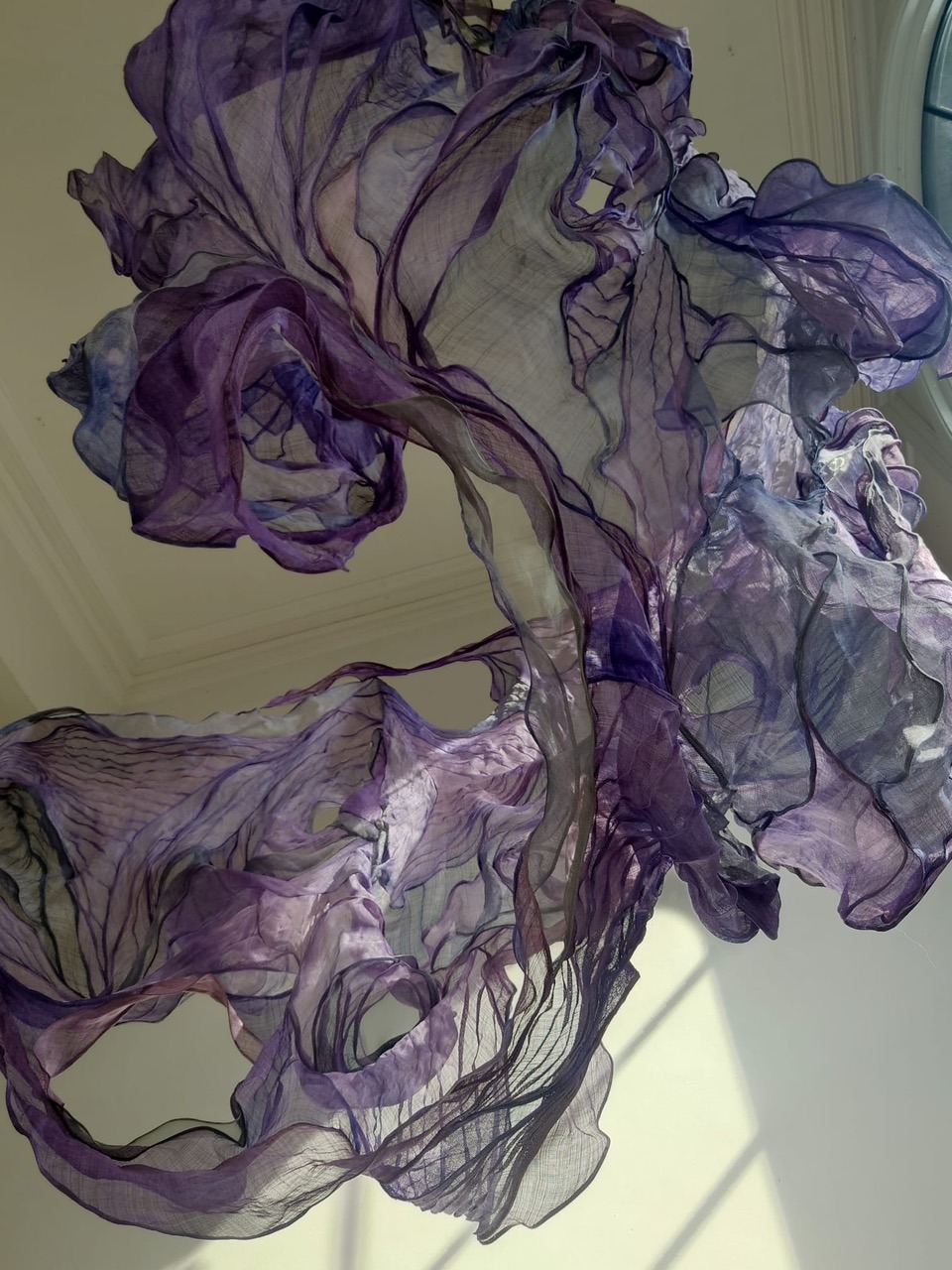
At the same time Magnus Resch says: “We are still in a recession, and the art world has only partially acknowledged it. The numbers have been clear for two years: sales are down, auction volumes have contracted, mid-tier galleries are under real pressure, and collectors have quietly reduced their buying. A few big auction records in 2025 created the impression that things were improving, but these moments are outliers, not indicators of market health. What has changed is the psychology. In 2024 there was denial; in 2025 there was resignation. People will not say “recession” publicly during Basel week, but privately everyone understands that the boom years are behind us and that a reset is underway.”
In the meanwhile, Anna Dickie explains: “We all felt the constant financial anxiety that permeated the folds of 2025 – and indeed, the art world felt it in its bones. Public funding cuts in countries like the UK and the US left institutions running on thinner blood, while the financial uncertainty left dealers exasperated by hesitant collectors. The Art Basel and UBS Survey of Global Collecting report noted global art sales down by around 12% in 2024, and that cautious mood seeped into 2025. I feel positive about a much‑needed sobering up after the post‑pandemic high. What is emerging looks more like a slow, necessary exhale: speculative froth is thinning, the fever of instant flips is cooling, and attention is drifting back to artists whose practices will carry weight over decades rather than seasons. From that vantage point, the correction feels like a recalibration - a chance for quality, rigour and conviction to speak a little louder than adrenaline.”
Collecting has always been a very personal act, expressing taste, identity, and beliefs. Across generations, collectors have been participating with art not only as cultural stewards, but also as creators of their generation’s cultural heritage. They have been supporting live artists and establishing socially and environmentally relevant collections despite that economic instability and trade fragmentation have been among the primary worries in the art market in 2025.
When questioned about collecting in 2025, Magnus Resch says: “The slowdown actually pushed the market in a healthier direction. Collectors re-engaged with artists in more intimate ways and attention shifted back to artists’ stories rather than price trajectories. Many collectors told me they preferred following an artist over time and buying smaller or earlier works they felt emotionally connected to, instead of chasing speculative names. In other words, the recession re-centred collecting around curiosity, narrative, and genuine relationships - exactly where it should be. Most people bought art this year for the same reasons as always: to fill the white space about the sofa. Secondly, to live with meaningful objects, to support artists they care about, and to feel part of a cultural community. The speculative motive that dominated in 2021 and 2022 has largely disappeared. If the art market wants to grow again, it needs to embrace these motivations instead of resisting them – by lowering barriers to entry, being transparent about pricing, offering simple and honest education to new buyers, and meeting people where they already are: online. Only if we convert the large pool of “art lovers” into actual “art buyers” the market will become sustainable.”
Abdollah Nafisi. Neighbours, at Frieze London, 2025
However, Tabish Khan believes: “You should always buy art because you are passionate about it. I would never encourage anyone to buy art purely as an investment – you should love it! The difficulty is that buying and owning art is seen by most as a luxury, and the global cost-of-living crisis means everyone is tightening their belts and spending less. Those who do have the money are holding on to it as we live in uncertain times. These are not art trends; they apply to most sectors, and retail, hospitality and other markets have been hit hard by people spending less.”
In which Anna Dickie speaks: “Paradoxically, the economic squeeze has nudged many collectors back toward art in the way it probably always deserved to be approached: as a stubbornly personal, long‑term commitment rather than a clever line on a spreadsheet. I feel encouraged by what feels like a quiet shift from treating work as chips in a casino of fast flips to treating it as a companion to live with and grow alongside. There appears to be a renewed interest in quality over novelty, with buyers wanting to build a collection of note, rather than make a fast buck. Another positive thing is increased access to quality works. As speculators drifted off to chase AI stocks and bitcoin, the door to high‑quality, more affordable work inched open again. Collecting, at its best, is a long conversation between people and the works they choose to stand beside.”
Some dealers have started trying out new models to navigate the uncertain times in 2025. There are galleries that adopted a nomadic business model after operating spaces. And it is not just emerging-art galleries that have been struggling with huge expenditures. Unfortunately, some even well-known and long-term established galleries have reshaped and even closed their spaces during this year. Galleries, on the other hand, still continued to be the preferred channel for sales in 2025, while art fairs saw a minor increase in engagement, highlighting the continued relevance of in-person interactions.
Diana Velasco, Digital Twins, 2024, Riga Art Week
Magnus Resch expresses his viewpoint by stating: “The gallery world feels anxious, but also experimental. Yes, 2025 saw a troubling number of closures and restructurings, especially among mid-sized galleries who are most exposed to rising costs and shrinking demand. But those who adapted – by sharing spaces, reducing fair participation, building closer relationships with fewer collectors, or adopting nomadic, low-overhead models – actually found new stability. Meanwhile, mega-galleries expanded aggressively into Seoul, Paris, Mexico City and the Gulf. The result is a barbell-shaped market: big players thriving at the top, agile newcomers at the bottom, and a squeezed middle trying to reinvent itself. It is a difficult moment, but not a terminal one.”
“Many galleries I have spoken with have told me it has been a tough couple of years, with sales figures subpar. Most galleries have put on a brave face, hoping the market improves in the coming years and not wanting to spook their artists into thinking they cannot sell their work, or to encourage collectors to ask for significant discounts if they know the gallery is struggling. We have seen galleries close across the world, but we have also seen many open, particularly those showing emerging artists. I have witnessed this first-hand in London. Many galleries have moved to a pop-up model, as uncertain times make investing in a permanent space too risky. We are also seeing studios putting on exhibitions and exciting new models that turn empty spaces into galleries. Innovative organisations and artists will always find a way to show their work. What has been hit the hardest is the middle market of galleries, where most of the closures have been – those with enough sales to justify a permanent location, but not sufficient finances to ride out difficult years. The result has been some of the larger galleries now dipping down to take on more emerging artists and accelerate their prices. While in the past, they would have waited for a middle-market gallery to establish the artist’s reputation before trying to poach them,” adds Tabish Khan.
From Anna Dickie’s viewpoint regarding the galleries: “The gallery landscape appears to be under real strain, but it’s also where some of the most interesting re‑thinking is taking place. The high‑profile closures and cancelled fairs in cities like New York feel less like isolated tragedies than symptoms of a model that has simply grown heavy: too much square metreage, too many shows, too many flights and fair booths for too little oxygen. In response, many galleries are sensibly shrinking to fit reality – swapping grand flagships for smaller or shared spaces, playing with pop‑ups, and teaming up with other galleries and non‑profits. The ones that seem most alive are those with a clear sense of integrity, who would rather build long, slow relationships than chase quick wins, and who use digital tools for genuine storytelling and education rather than just another sales funnel. At their best, gallerists are still the art world’s essential filters and interpreters: they do the hard looking, the deep reading, the awkward conversations in studios, and they help collectors build collections that make sense over time.”
In 2025 art fairs were announcing they would be expanding: inaugural editions of Art Basel Qatar and Frieze Abu Dhabi are now scheduled for 2026. The Middle East is currently the most closely watched region in the art market today. Christie’s and Sotheby’s launched auctions in Saudi Arabia. This year these moves follow years of investment in cultural infrastructure, from the Louvre Abu Dhabi to the AlUla Arts Festival and the Islamic Arts Biennale. At the same time, regional relevance has played an important role, particularly for art fairs that do not attract high-end buyers. Having a distinct local mentality and providing collectors with a new perspective on their collections and tastes, regional art fairs create chances for galleries and a larger number of art dealers to establish their businesses, as well as for artists to be noticed and sold.
Regarding the art fairs, Magnus Resch remarks: “Art fairs still matter because they gather serious collectors in one place and give galleries visibility they could never generate from their own spaces. But the financial risk is enormous, and many galleries fail to break even. The galleries that succeed today treat fairs strategically: they attend fewer, prepare more deliberately, place most works before the fair opens, and use the week to build relationships rather than chase walk-in sales. Fairs, for their part, need to rethink booth pricing, find additional revenue streams, support smaller galleries, and curate with more intention. A healthier fair ecosystem requires to move away from volume and toward sustainability.”
In this case Tabish Khan says: “Art fairs have always been helpful to galleries for showcasing their works to major collectors, and for many galleries, they are essential. However, the cost of participating in an art fair is high, and galleries have to weigh this risk up against the potential reward. Many galleries are one or two bad art fairs away from bankruptcy, and they may not want to risk it. We have also seen many global art fairs consolidated under the Art Basel or Frieze umbrella. The larger galleries may have to choose which one they ally themselves with if they cannot afford to participate in both.”
But Anna Dickie goes even further detail: “Art fairs remain crucial, but their role has shifted. For galleries, a fair delivers three main benefits: visibility – a concentrated platform to present artists to a global audience of collectors, curators and press; access – the opportunity to meet new collectors who might never visit the gallery in person; and momentum – the time‑bound intensity of a fair can catalyse decisions and sales that might otherwise take months. Fairs also serve as live laboratories for market information, where galleries can observe pricing, demand, and emerging trends across regions and segments. Given the costs and pressures, galleries now need to be highly selective about which fairs they attend, favouring those aligned with their programme and client base. Fairs, in turn, are getting better at supporting galleries through more flexible, tiered participation models, stronger digital tools (apps, online viewing rooms), initiatives like awards, curated sections, and focused presentations that highlight galleries doing rigorous work, not just those with the biggest stands.”
Enter Art Fair 2025
On the question – what do you foresee for 2026 in the art world Anna Dickie replies: “If 2025 was the hangover, 2026 is the year the art world finally drinks some water, opens a window and starts rearranging the furniture. 2026 needs to be the year of the new collector: regional fairs, curated online platforms, talks that are both smart and legible, and advisers who take smaller budgets seriously. Smaller or shared spaces, pop‑ups and collaborations with museums, peers and even non‑art businesses look more like a sensible re‑think. In museums, I expect to see more art‑as‑activism and eco‑conscious practices, a continued commitment to overlooked voices, and deeper scholarly attention to neglected movements.” Where Magnus Resch states: “2025 was defined by a quiet recession, a market that continued to contract at the middle, a collector base that became more cautious, but more sincere, and the rise of new cultural hubs such as the middle east. The biggest shift was psychological: the art world began to accept that the speculative boom is over. For 2026, the market needs three bold steps — radical price transparency, real collector education, and products tailored to the next generation of buyers rather than the top 0.1%. If we do this, we can grow a wider, healthier, more inclusive art ecosystem instead of relying on a shrinking circle of ultra-wealthy collectors.” And Tabish Khan adds a really crucial point: “Though we are starting to see steps towards addressing the gender balance with more exhibitions for female artists, particularly those working with abstract and surrealist art, and for artists of colour. However, there is still a long way to go before we reach market parity across genders and race. In terms of daring steps, I would love to see more initiatives giving spaces for emerging artists to show and sell their work, especially for those that are not from privileged backgrounds.”
Title image: Ida Kvetny, Aqua Quantum, 2025, Riga Art Week
