


Costume as Portal: Uta Bekaia on Queerness, Craft, and Cultural Survival
Laine Kristberga
Interview with Uta Bekaia
Uta Bekaia (1974) is a Georgian-born, New York–based multidisciplinary artist whose artistic practice merges performance, wearable sculpture, costume, ceramics, tapestry, video, and installation into immersive environments that blur the boundaries between the aesthetic, the spiritual, and the political. Drawing on his Georgian heritage and lived experience within the diaspora, Bekaia’s work is deeply rooted in ancestral ritual, queer identity, and speculative world-making. Whether through site-specific performances or ceremonial installations, he creates spaces of transformation where myth, memory, and collective imagination converge.
At the heart of Bekaia’s artistic language lies the garment as a site of embodiment, resistance, and storytelling. Costumes in his performances function as sculptural extensions of the body, as ritual objects, and as containers of both personal and cultural history. Informed by a background in avant-garde fashion and performance art in Georgia and New York, Bekaia approaches the body as a sacred, mutable site – a canvas through which to navigate queerness, exile, and belonging. His performative strategies reclaim space and visibility for queer identities, particularly in the Georgian context, where LGBTQ+ communities face ongoing repression and political erasure.
Bekaia’s work is also an act of cultural archaeology. He excavates and reimagines pre-Christian mythologies, women’s textile traditions, and ancestral craft as part of a queer futurist project. Through embroidery, carpet-making, ceramics, and found materials, he weaves together a visual lexicon that both honors and reclaims cultural forms historically sidelined or politicized. These material practices serve not only as tactile expressions of heritage but also as portals into imagined cosmologies – ones where deities are queer, borders are fluid, and transformation is sacred.
As a migrant artist working between Tbilisi, Brooklyn, and various European contexts, Bekaia’s perspective is shaped by the experience of displacement. His projects reflect a hybrid positionality – rooted in the specificity of the South Caucasus, yet open to global dialogues on diaspora, queer kinship, and postcolonial identity. This transnational sensibility allows his work to speak across contexts, forging unexpected connections between local tradition and contemporary critique.
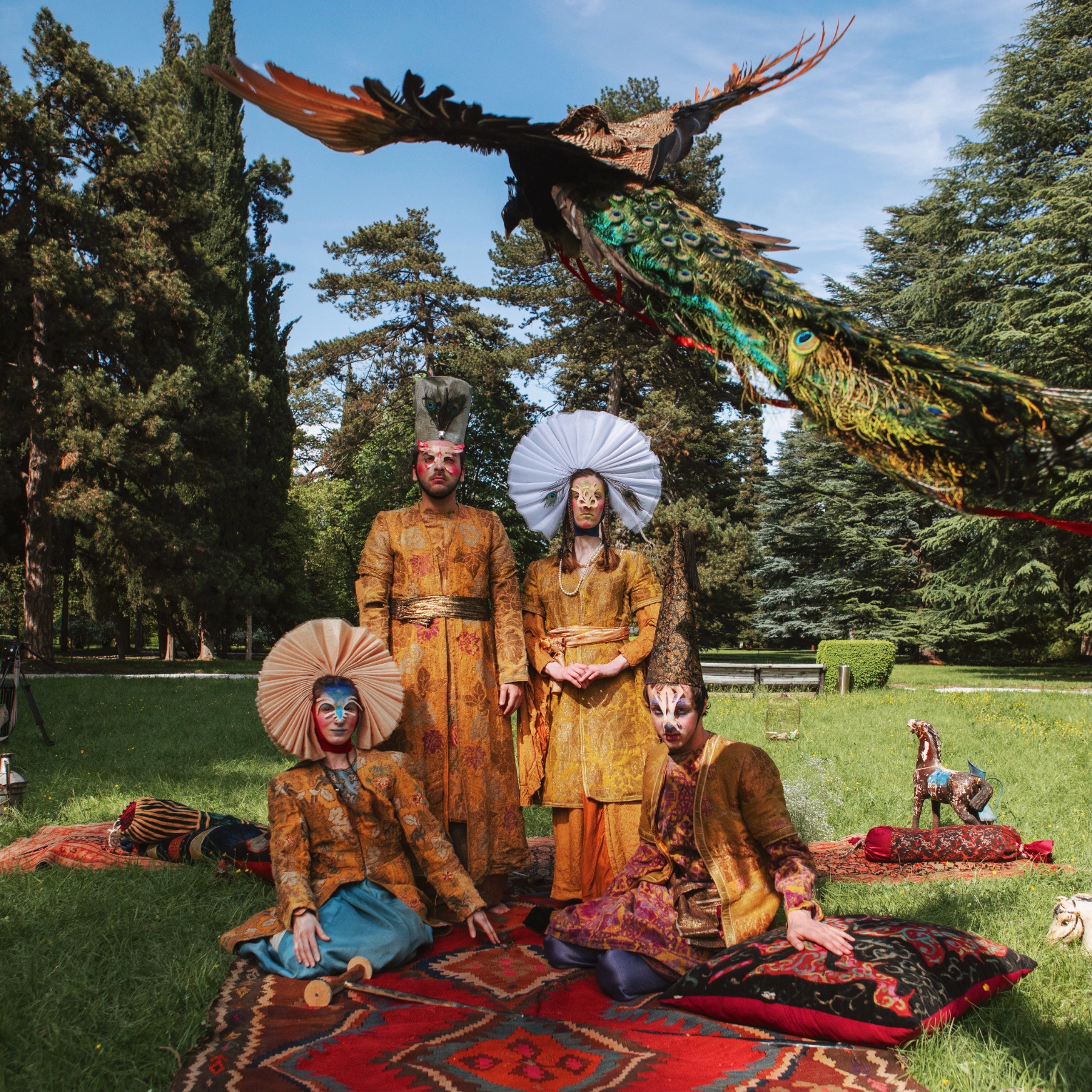
Central to Bekaia’s evolving body of work are immersive, ritualistic environments that invite audiences into shared acts of witnessing and transformation. His installations are often built as symbolic “caves” – spaces of sanctuary, introspection, and collective presence. Within these spaces, sculpture, textile, movement, and sound come together to evoke a suspended temporality.
Through his artistic and activist efforts – such as co-founding Fungus, a platform for queer art and community in Tbilisi – Bekaia continues to cultivate spaces of radical visibility and resistance. In a society where queerness remains politicized and vulnerable, his art becomes a powerful tool for survival, solidarity, and the reclaiming of agency.
Bekaia’s work reminds us that performance is not merely spectacle – it is ritual, protest, and healing.
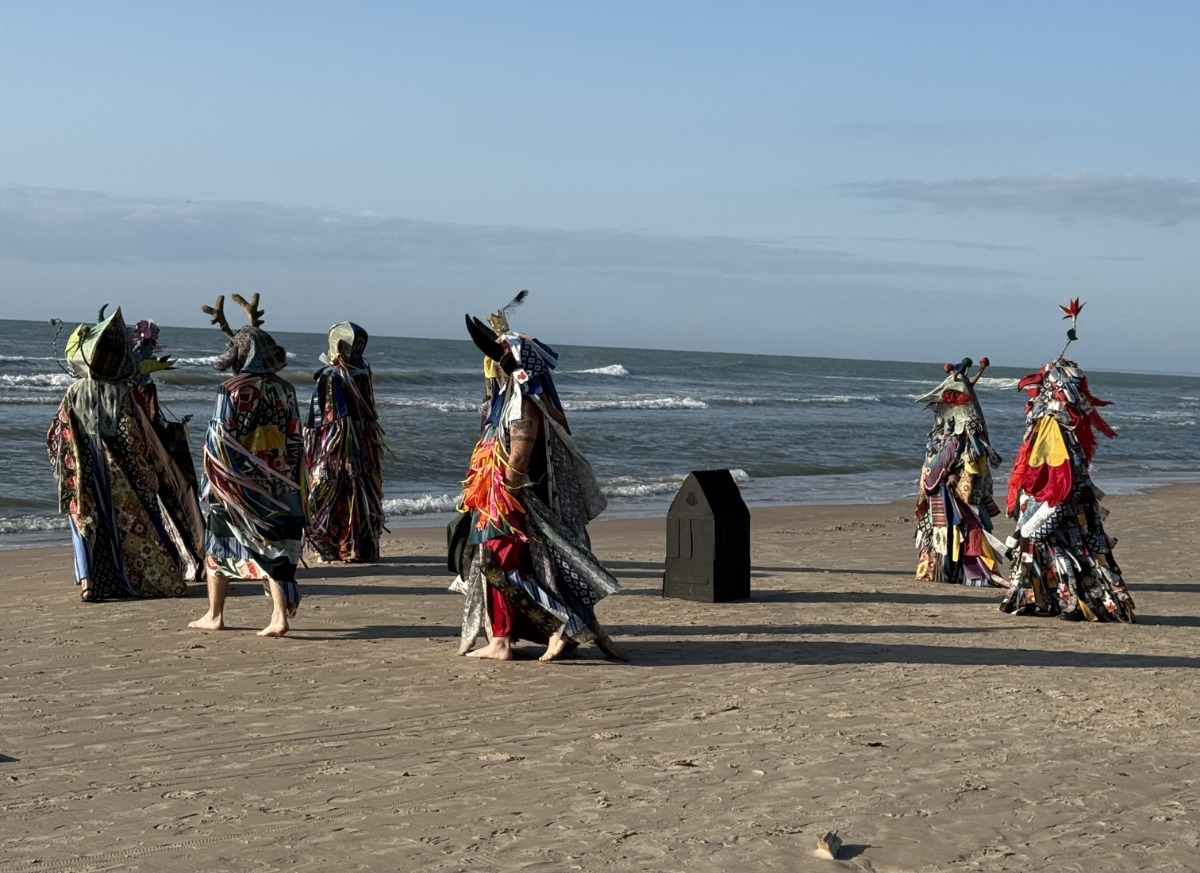
On June 21, 2025, Bekaia presented Jāņi/The Longest Day, a site-specific performance and installation dedicated to Latvia’s rich Summer Solstice traditions. Developed during his residency at PAiR in Pāvilosta and curated by Daria Kravchuk, the project premiered as a live ritual performance, followed by an installation documenting the event. The performative installation will be presented by VV Foundation at the Riga Contemporary Art Fair at Hanzas Perons in Riga on 10-13 July, 2025.
***
Laine Kristberga: How did the site-specific context of Pāvilosta shape the development and energy of Jāņi/The Longest Day, and how did you approach the process of weaving together Latvian mythology with your ongoing exploration of transformation and ancestral symbolism?
Uta Beikaia: It was a very interesting process. For me, it was incredibly inspiring to witness how deeply rooted the celebration of the summer solstice is in Latvian culture. This successful ritual — honoring the sun and summer — is perhaps one of the oldest living traditions and connects many different cultures. It is a celebration of life itself.
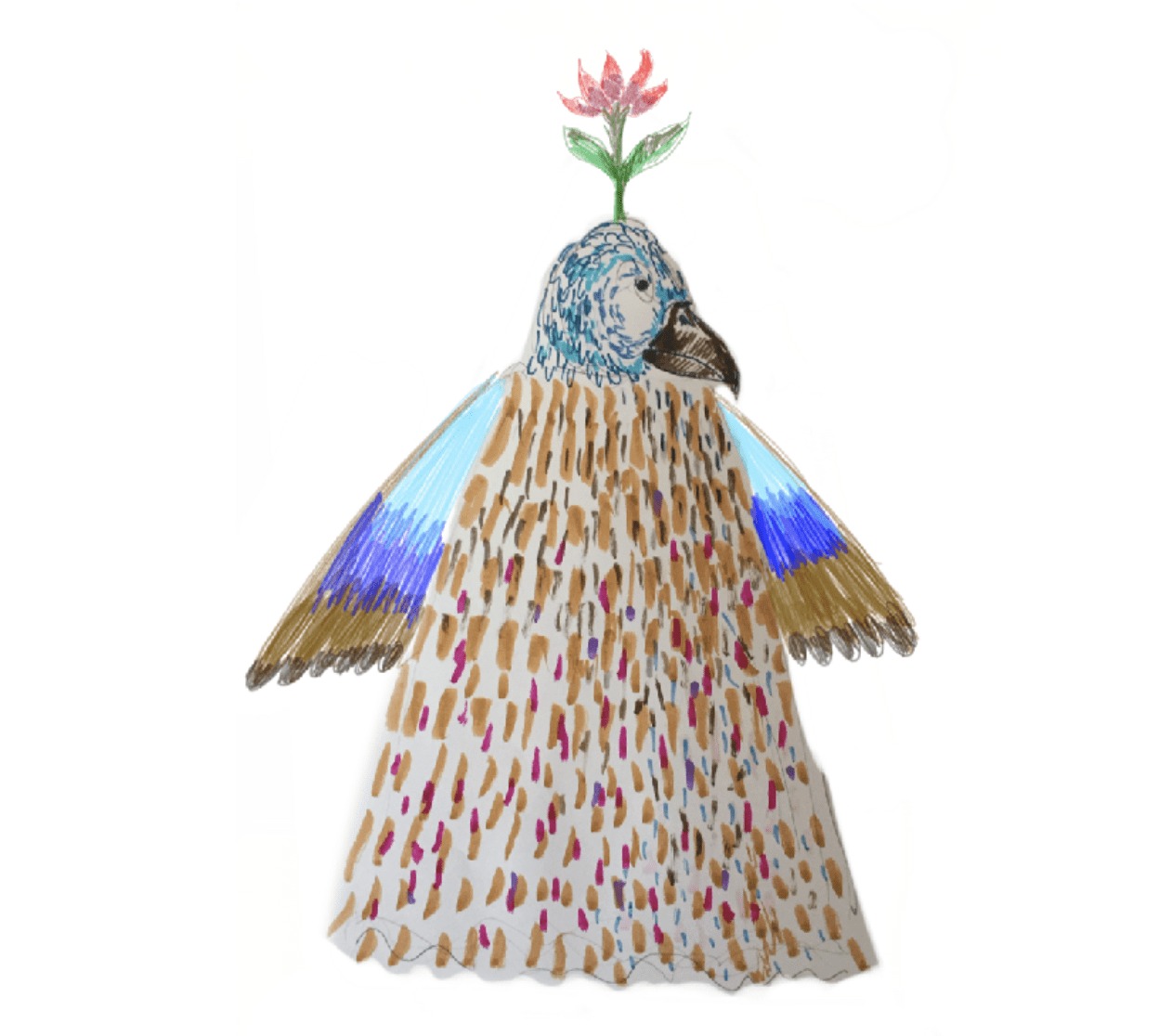
I wanted the performance to have a personal and easily relatable character, so I linked it to the cycles of life. The performance was divided into seven parts, each representing a distinct and significant period in our lives. Each performer embodied an archetype that guided and symbolized one of these life stages.
Many traditional rituals across cultures, including in Georgia and Latvia, involve the use of masks. How did you draw from these ancestral practices when creating the masks for Jāņi/The Longest Day, and what meanings did you embed in their forms?
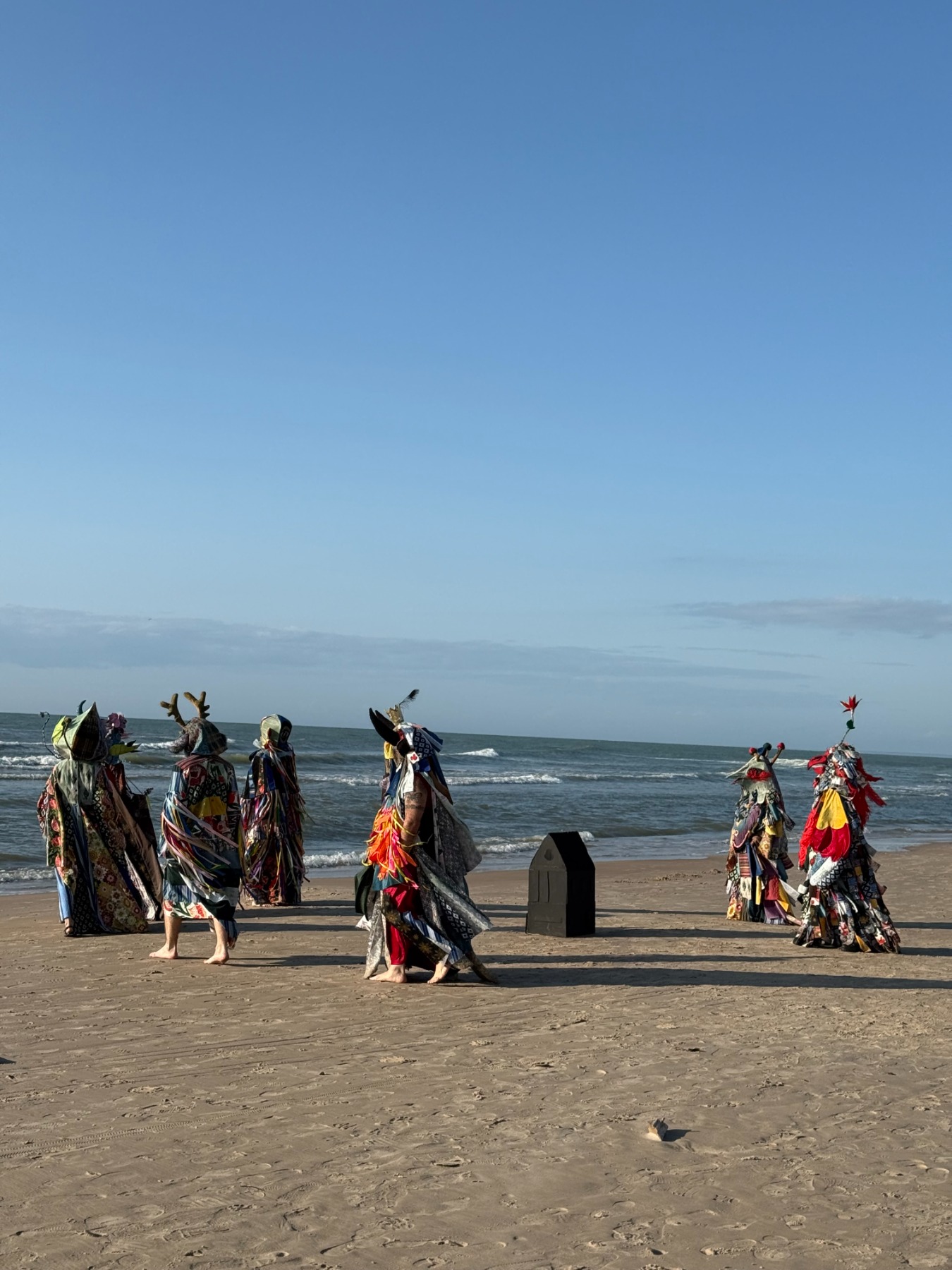
Masks have always played an important role in my performances. Costume, in my view, is one of the oldest art forms. Since ancient times, our ancestors wore masks and transformed themselves into other beings to carry out rituals. This act of transformation is at the core of my performances – it objectifies the body and allows sculpture to emerge from it.
It was fascinating to connect Latvian and Georgian traditional cultures in this way. The costumes were created as a fusion of Latvian and Georgian traditional materials and forms. They strongly resembled the costumes worn in the Georgian “Berikaoba” festival. They were extremely colorful, and I wanted to bring that vibrant chaos into the minimalist and natural landscape of Pāvilosta.
Can you speak about the process of developing movement with Latvian dancers for Jāņi/The Longest Day?
Working with the performance group was a truly engaging experience. We explored each chapter of the piece together. There were deep conversations, collaborations on movement and choreography, and co-creation around the text. It became a very intimate and fully collaborative project – one in which all of us were completely immersed and committed.
Your work seamlessly blends performance, wearable sculpture, ceramics, tapestry, film, and installation. How do you conceptualize when a project is best expressed through performance versus a static medium?
I always tell this story. Not too long ago, during a period of self-analysis and revisiting old memories, I clearly remembered something from my childhood. When I was little, I would often build little protective shelters – gathering bed sheets, pillows, blankets, and toys to construct a kind of den. I would crawl inside and imagine myself as a winter creature preparing for hibernation. It was the peak of my safe space, my ultimate comfort zone.
Now I realize that through my art I’ve been repeating this very practice. I try to create a kind of magical world where time stands still, where beauty triumphs over darkness, and where I feel completely safe – together with other mythical beings.
Whenever I create a project, I always try to build it using the “cave” technique – a space where all mediums blend together harmoniously, aiming to fully absorb the viewer, so they feel completely immersed in my world.
Perhaps the next step is the deconstruction of these “caves”?
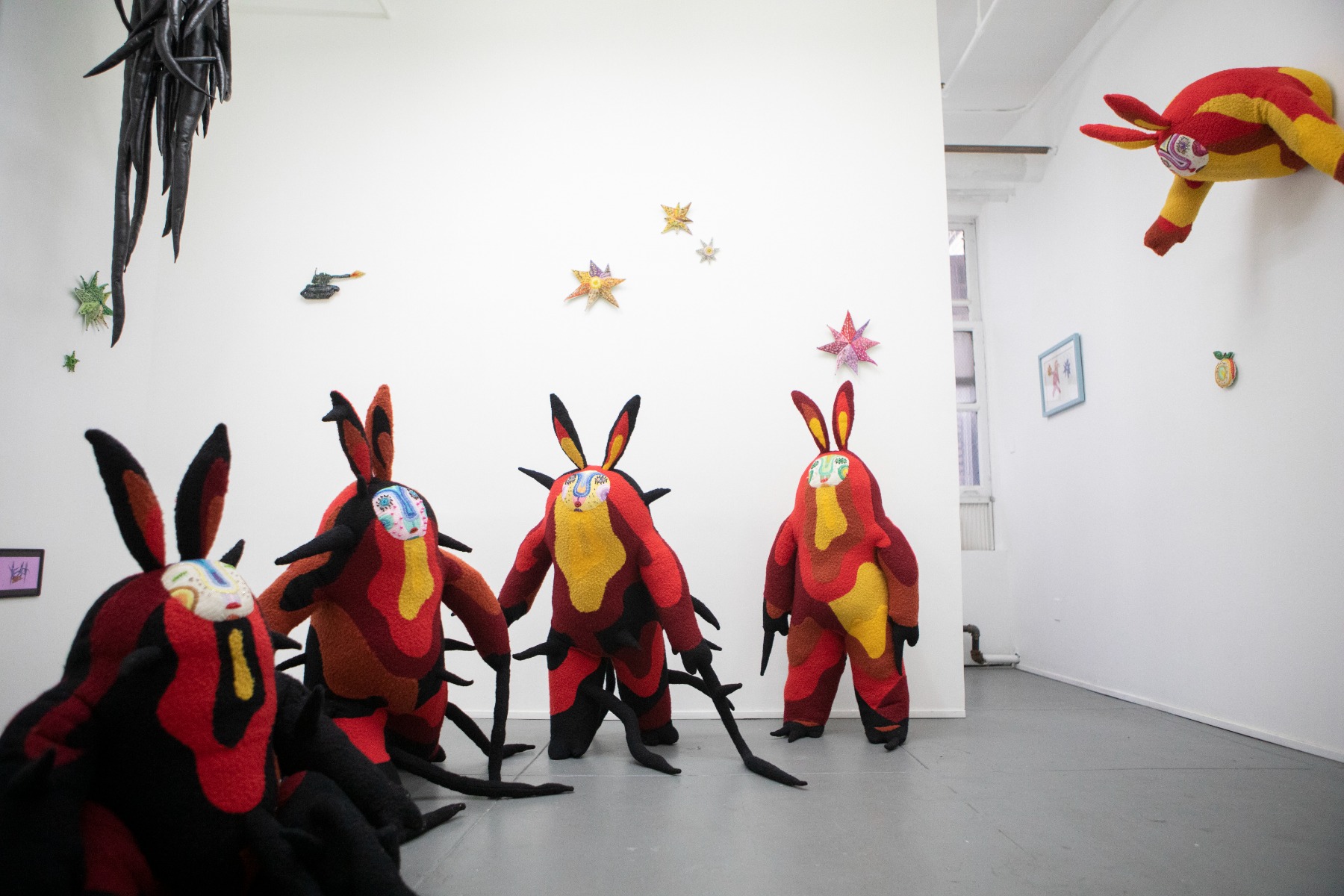
Drawing from your background in industrial design, how do you carry that structural thinking into your wearable sculptures and live performances?
Because I grew up in Georgia during the 1990s – precisely at the age when I should have received a formal education – I have to say that I’m essentially self-taught. My knowledge comes more from sculpture, which I studied at an art school, than from sewing or fashion design. I approach costume and draping through the lens of sculpture. For me, costume culture is much closer to the perception of moving sculpture than to wearable clothing.
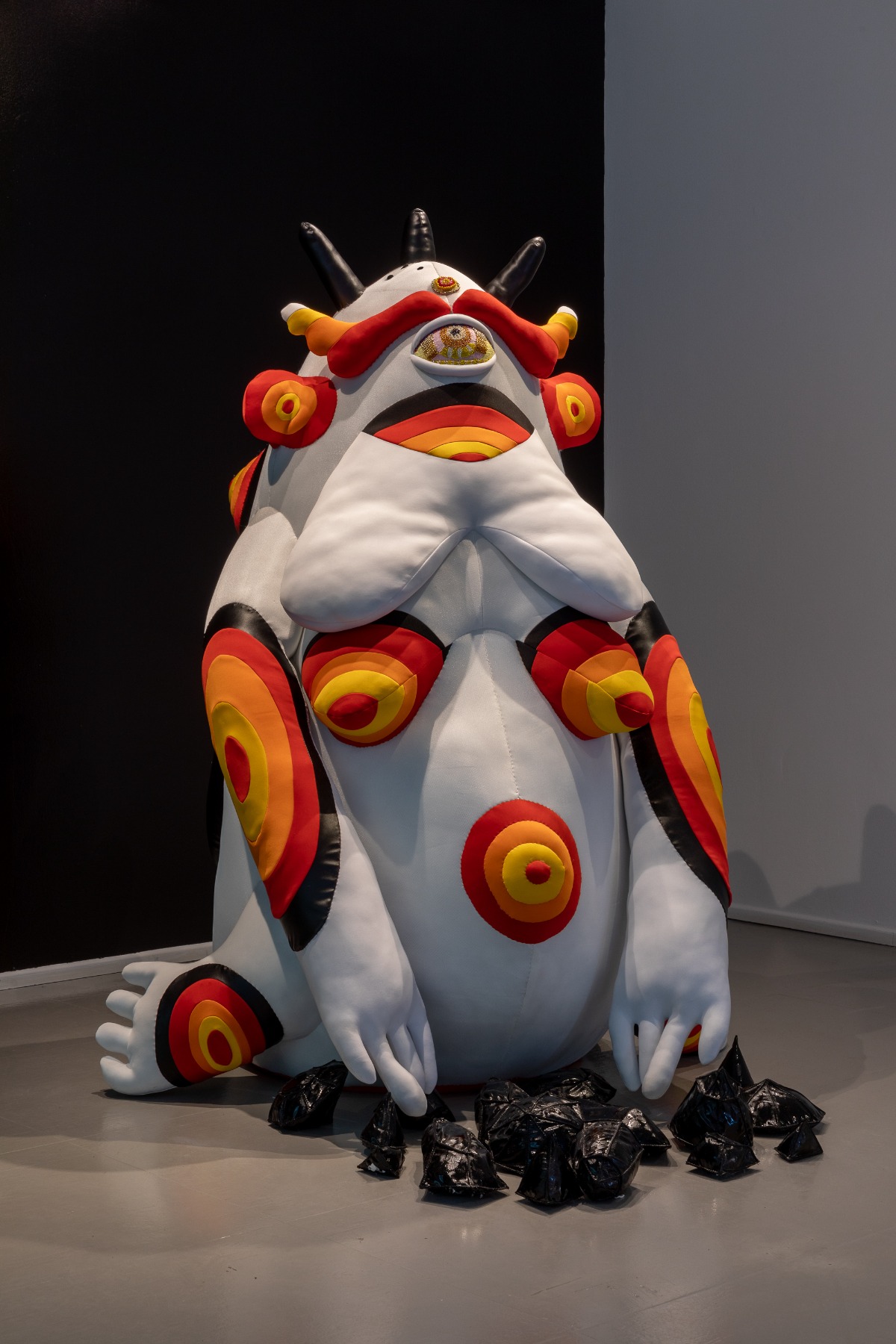
You began your career in avant-garde fashion and costume design in Georgia and New York. How does garment function as a narrative or character in your performance work?
My first exhibition – a fashion show – took place in the 1990s at an avant-garde fashion festival in Tbilisi. It was a very difficult time. With the collapse of the Soviet Union came the complete breakdown of systems across post-Soviet countries. Life in Georgia was incredibly hard during this period – it was dark, dangerous, and unstable. We witnessed the collapse of a system with our own eyes and realized just how easily a structure can fall apart once cracks appear within it.
At the same time, after 70 years of repression, a new sense of freedom began to emerge – the desire and the opportunity to express oneself. It was during this moment that I discovered fashion. Although I couldn’t articulate it clearly back then, for me, fashion was a full celebration of queerness. That’s why I instinctively felt drawn to it. I called myself a fashion designer and threw myself into it.
That first show was a wild performance – instinctively, I was celebrating my own queerness. Through that process, clothing became one of my main artistic languages.
In your “Cosmic Kintos” installation, costumes are worn as armor and identity. How do you balance aesthetics and political agency when creating these pieces?
In Georgian culture, the Kintos are symbolic figures often associated with queer identity. They were a subcultural group in 19th-century Tbilisi known for their flamboyant dress, expressive dances, and street performances. They sold goods, entertained in the streets, and created their own codes of behavior and style. The Kinto dance, still performed in traditional Georgian ensembles today, is deeply rooted in flirtation and theatrical play between men – something many now interpret as an early form of queer expression in Georgian society. Their presence represents one of the few visible archives of queer-coded behavior in Georgia’s cultural memory.
With this in mind, I wanted to revive and reimagine that identity. That’s how I created my three-channel video piece, in which I perform as a Kinto figure dancing to techno music – blending tradition, queerness, and contemporary club culture into a personal ritual.
Your practice draws heavily from Georgian ancestral crafts – women’s tapestry, carpet making, pagan myth. How does your Georgian lineage inform your visual lexicon and ritual design?
This topic is connected to my search for identity. Perhaps because I spent 20 years of my life in emigration, the connection to my roots – and the ongoing search for them – feels incredibly important to me.
Georgia is a colonized country, and we are living through an identity crisis. The influence from all sides – political, cultural, religious – is immense. It’s incredibly difficult to form a solid and organic sense of identity in a small country like Georgia, especially under such conditions.
Because I haven’t lived in the country for two decades, I’ve developed a certain perspective – an external gaze – which constantly drives me to explore themes of Caucasian identity, particularly through a queer lens. I want to contribute to a discourse that gives future artists and thinkers the space to build their own interpretations and critiques of our contemporary actions.
For me, pre-Christian rituals and legends are part of this world – they are the roots I long to reconnect with. I want to reclaim them as my own and reinterpret them in a way that feels authentic to me. Through that, I aim to create neo-rituals – deeply rooted in tradition, but filtered through my own perspective.
In the “Queer Deities” project, you reimagine South Caucasus pagan gods like Armazi. How do you reconcile historical meaning with contemporary queer narratives?
This project is very important to me. With “Queer Deities”, we wanted to create a bridge between ancient deities and the lives of ordinary queer people – especially those who have been forced into emigration. Armazi was one of the key figures in this process.
In this work, we connect the deeply painful, yet authentic lives of queer individuals – people whose only “fault” is living truthfully – with the myths of ancient gods. It’s about honoring both their resilience and their divinity. The project is still in progress, and we plan to present the completed version after a residency next year.
As a co-founder of “Fungus” in Tbilisi, you support queer youth through visibility and community. What drives your activism, and how is it embodied in public works like parades or installations?
In Georgia, the queer community faces real oppression and an urgent need for solidarity. The current ultra-right-wing, conspiracy-fueled government has weaponized queerness – trying to frame us as enemies of the nation, erasing our presence from public life, and blocking any form of visibility.
That’s why platforms like “Fungus” are essential. It’s not just an art space – it’s a lifeline. It offers queer artists a place to speak, be seen, and find community. It’s a space where we can reclaim our narratives, where vulnerability becomes power, and where chosen family becomes a force of resistance.
I’m also deeply involved in Tbilisi’s underground scene – organizing queer parties and gatherings that serve as both celebration and protest. One of our key projects is EAU DE COLOGNE, a party series we host at Bassiani. These events are more than nightlife – they’re living rituals of survival. Our dance floors have become sanctuaries. In the face of repression, joy becomes radical. Presence becomes defiance. And community becomes our most powerful weapon.
You have described clothing and performance as “armor”, a means for queer Georgians to reclaim space. How do you see costume performative strategies building resilience or solidarity?
In my practice, costume is never just aesthetic. It’s ritual. It transforms the body, creates new mythologies, and opens a portal between the self and the collective. When we perform together in these costumes – whether in the street, in galleries, or at underground events – we generate visibility, solidarity, and a shared sense of purpose.
Costume allows us to inhabit alternative realities – ones where beauty, strength, and identity aren’t defined by systems of oppression, but by our own terms.
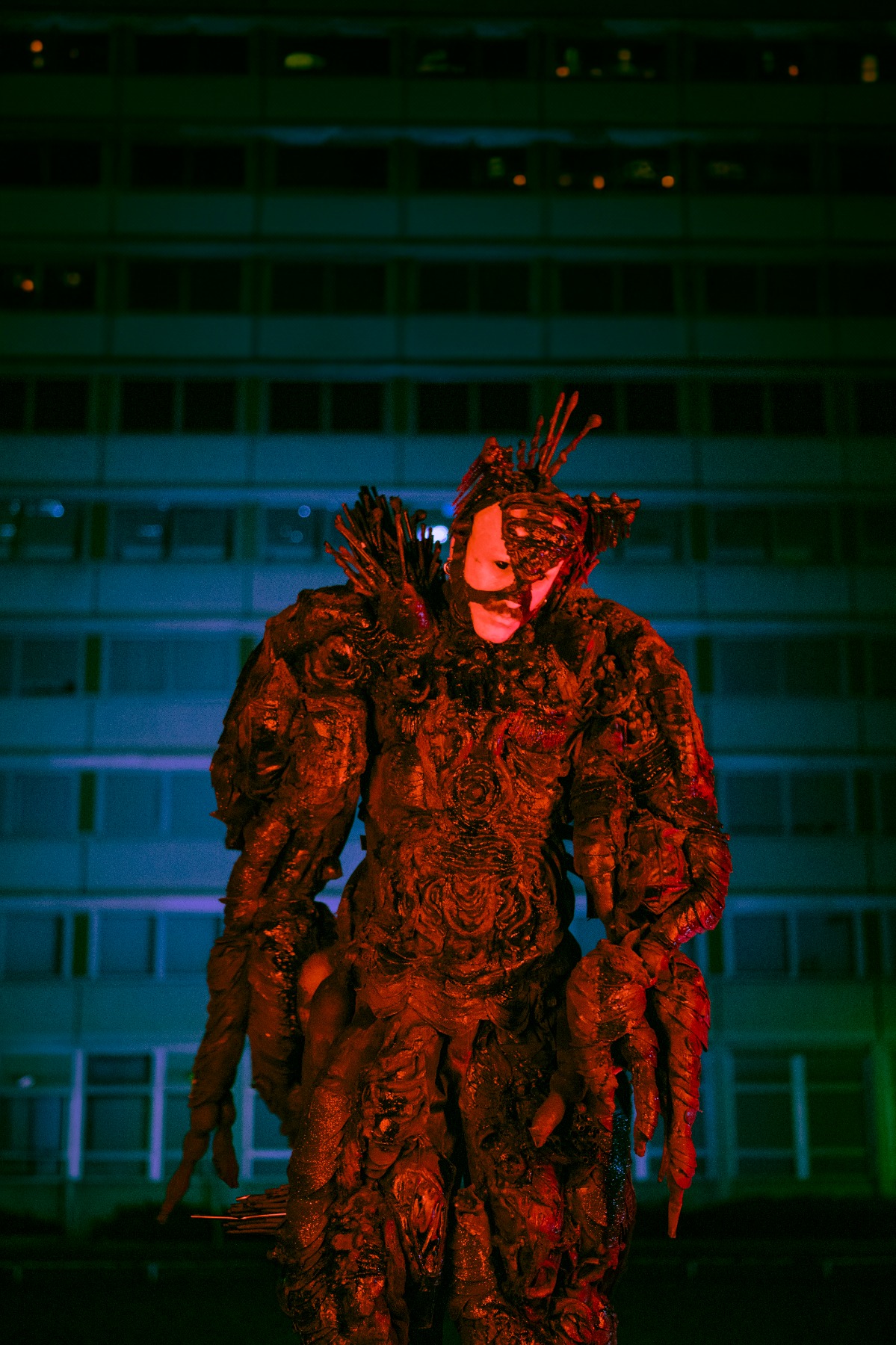
Having lived and worked between Tbilisi, New York, Brooklyn, and Europe since the late 1990s, how has living between cultures shaped your sense of identity – as an artist and as queer Georgian?
I feel very privileged to have lived a life shaped by travel and movement. I truly believe – just like in the old myths and legends – that a person must leave their home, their childhood ground, and their comfort zone in order to truly begin to understand themselves. Only through this kind of displacement can we learn to stand firmly in our truth, express our ideas clearly, and reflect on the consequences of our actions.
Living between cultures has allowed me to see the world – and myself – from many angles. The constant movement has made me feel like a child of the Earth, rather than bound to one place. At the same time, the culture I inherited from my ancestors becomes more subjective and fluid the more I travel. It becomes something I can shape, question, and reimagine.
This perspective helps me find a golden middle path in my artistic language – one where the specificity of my Georgian roots can coexist with a more universal, borderless understanding of identity. Being between worlds has allowed me to create my own space – one that is grounded, yet always shifting.
In “Queer Deities in Migration”, the first performance took place in Barcelona with themes of exile. How did staging a Georgian inspired ritual in Europe influence your creative choices?
Performing “Queer Deities in Migration” with Azerbaijani artist Pari Banu Asgar for the first time in Barcelona was very meaningful. It felt like bringing a piece of Caucasus into a new place—just like many queer people form south Caucasus who have had to leave their home. The performance was about exile, identity, and the feeling of being far from your roots, but still carrying them with you.
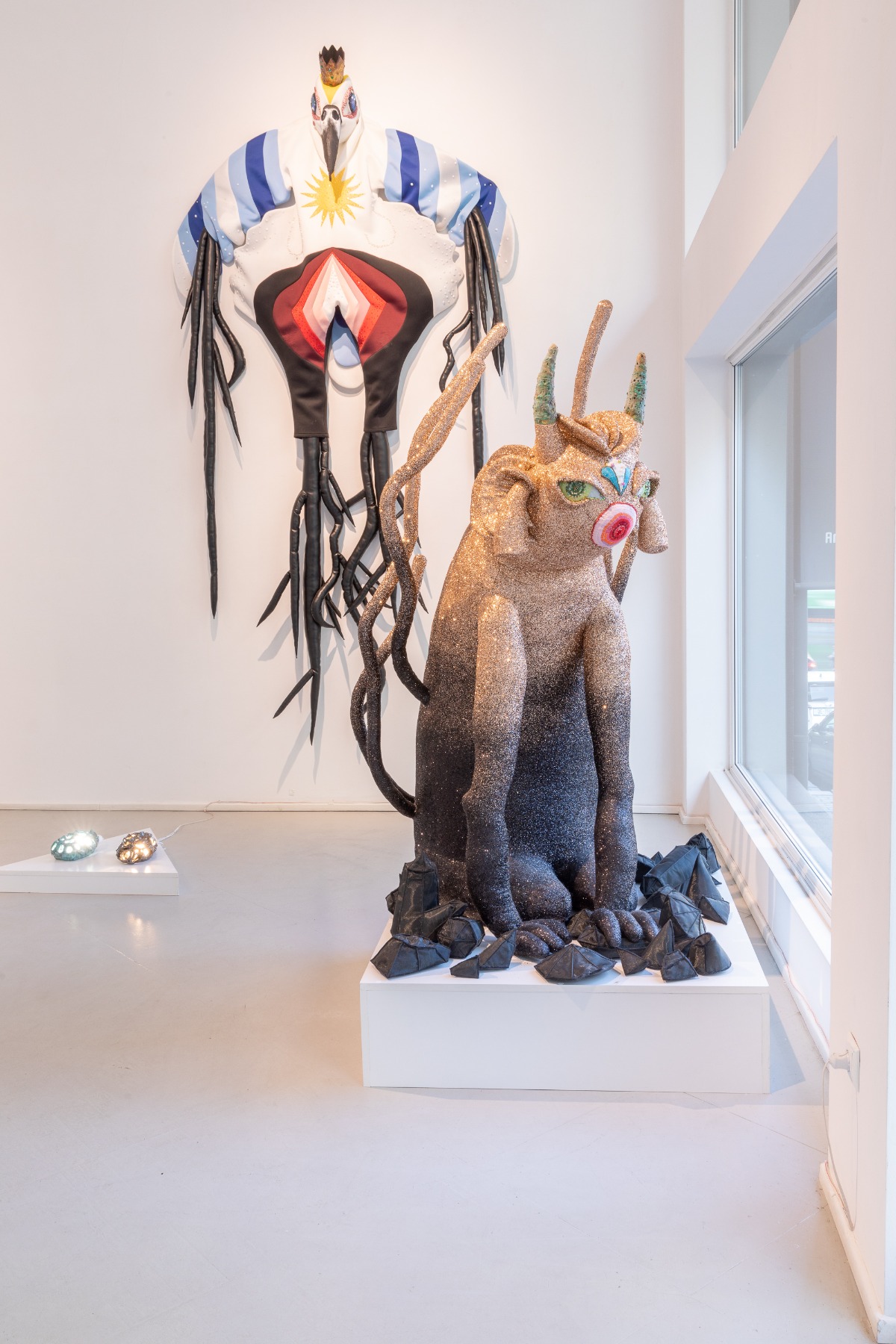
Your work often evokes ritual – a choreography of gesture, material, space. How do you balance spontaneity and structure in these live events?
For me, performance is a kind of spiritual discipline. I always try to create a space – together with other performers – where we can connect to a shared, collective consciousness. In that moment, time feels suspended, and the present becomes fully alive. This is always the starting point of my performances.
Because the performances are always costumed, the participants can fully hide behind the character or figure they’re embodying. Their bodies – not their individual identities – become the language of the work. This allows something deeper and more universal to emerge. It’s a balance between structure – through costume, space, and intention – and spontaneity, which comes from the energy of the moment and the presence of each performer.
What role does audience participation or witness play in translating your work from personal myth to communal meaning?
I always try to create an immersive experience for the audience – so that during the act, they are fully absorbed in the process and present in the moment.
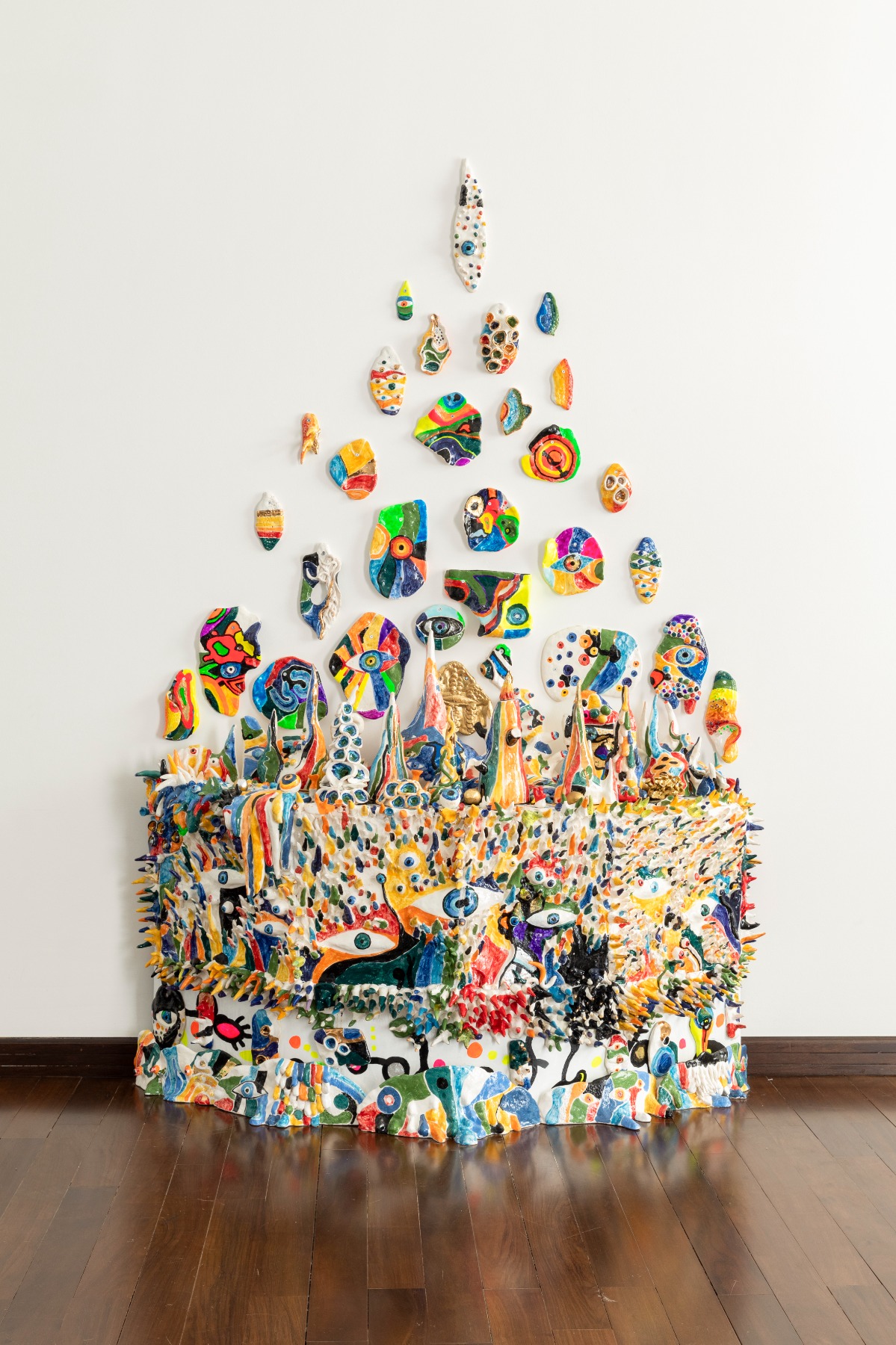
You have said you’re drawn to “meditative” Georgian tapestry motifs and women’s craft. How do you engage with these traditionally gendered arts in your sculptural costumes?
Traditional craft, such as embroidery, which is often associated with women’s handicrafts in Georgia, serves as the foundation upon which I build my artistic works. It is precisely through this that I strive to create an organic, authentic vision connected to my heritage and inspired by it.
The process of working is also a form of meditation, as concentrating on details and repeating the same movements often brings the mind and body into a very interesting, tranquil state.
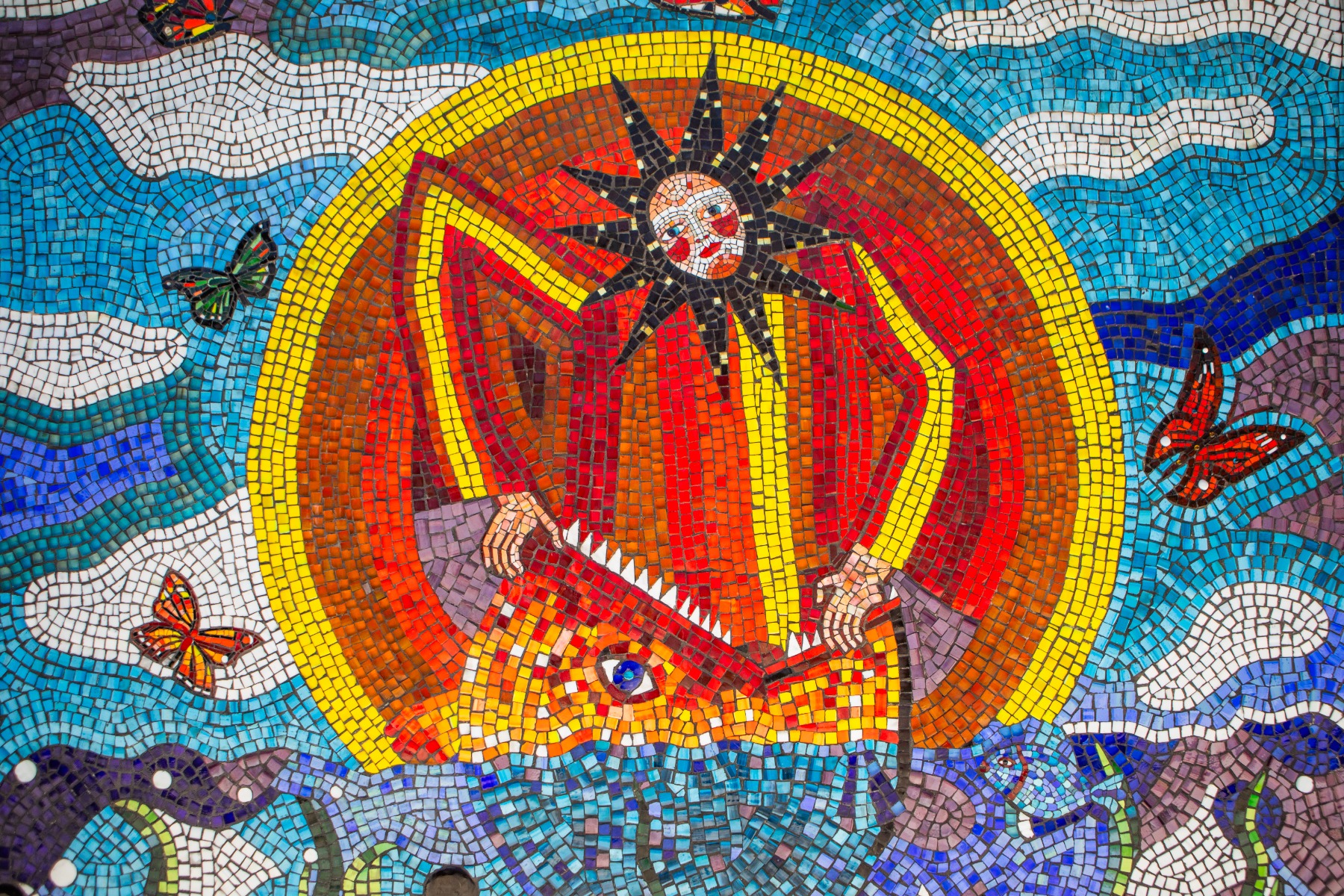
How do you source materials – found, recycled, crafted – and how does the act of making influence the performative moment later on?
The materials I use are often tied to my memories – family heirlooms, textiles, and found objects frequently appear in my work. I always strive to incorporate reusable materials that carry their own history or site-specific materials linked to a particular place, where the piece is created.
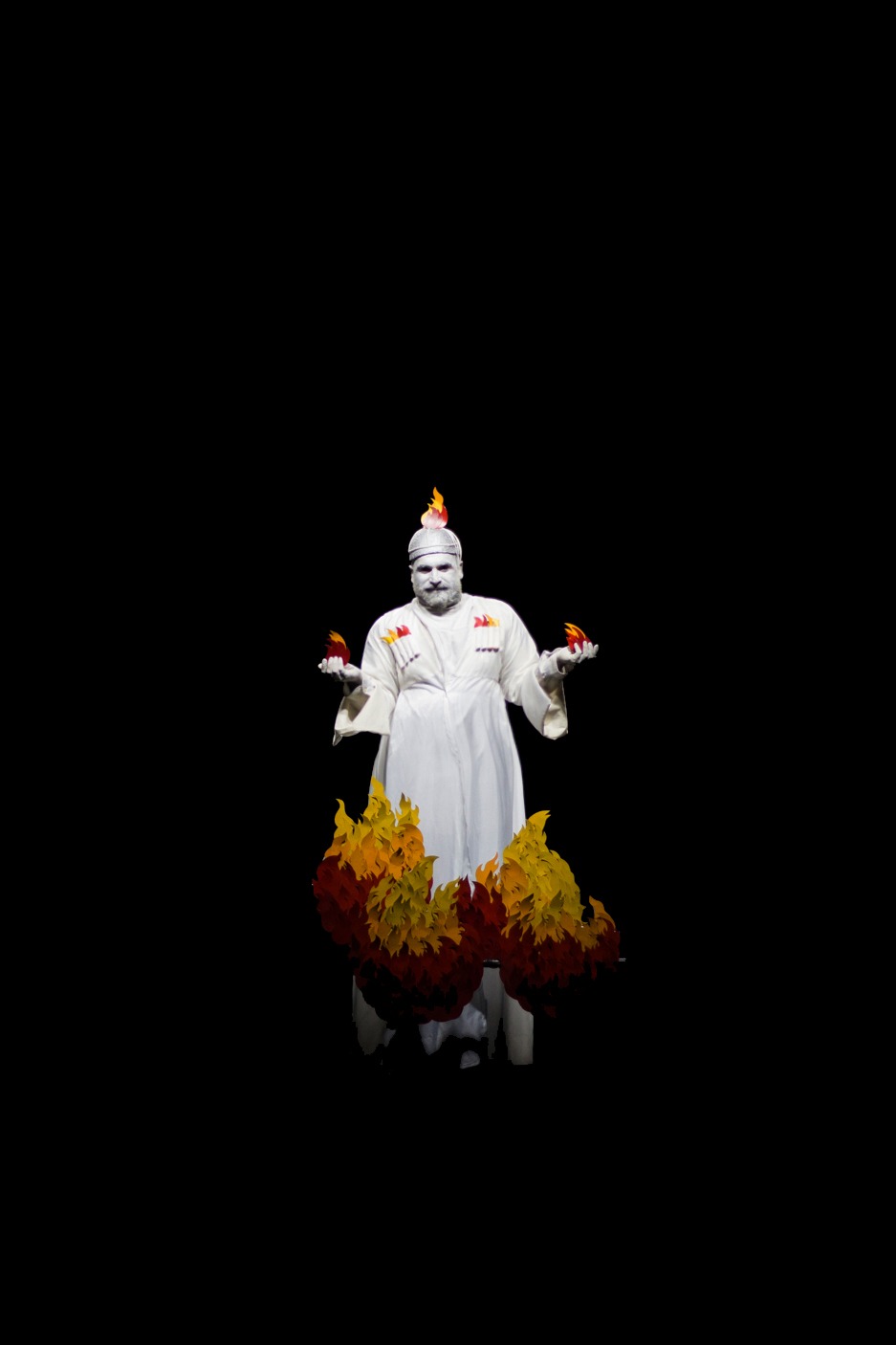
You recently collaborated on “The Mother of Fire” (Amsterdam, July 2024). Can you tell us how this work extends your explorations of utopia, transformation, and ritual?
This project was created to celebrate Baroque music. We brought this vision to life with the incredible Georgian countertenor Micheil Abramishvili, performing at a beautiful church where he appeared in a stunning Baroque costume. It was a celebration of gender-bending artistry and the divine diversity of human talent.
Looking ahead, how do you envision the next phase of “Queer Deities in Migration”? Are there new regions, rituals or media you are keen to explore?
As this project is still in progress, we are interviewing queer artists who have lived in the Caucasus region and connecting their stories with mythology. In total, we will feature seven deities. Over time, we will create an exhibition – a “Gallery of Gods” – where each life story and divinity can be explored and witnessed.
If you could invite a Georgian deity as a queer muse for a new performance today, who would it be – and why?
Although he is not a deity, it will undoubtedly be Sergei Parajanov – a master who captured the beauty of our region in the most authentic and exquisite way.
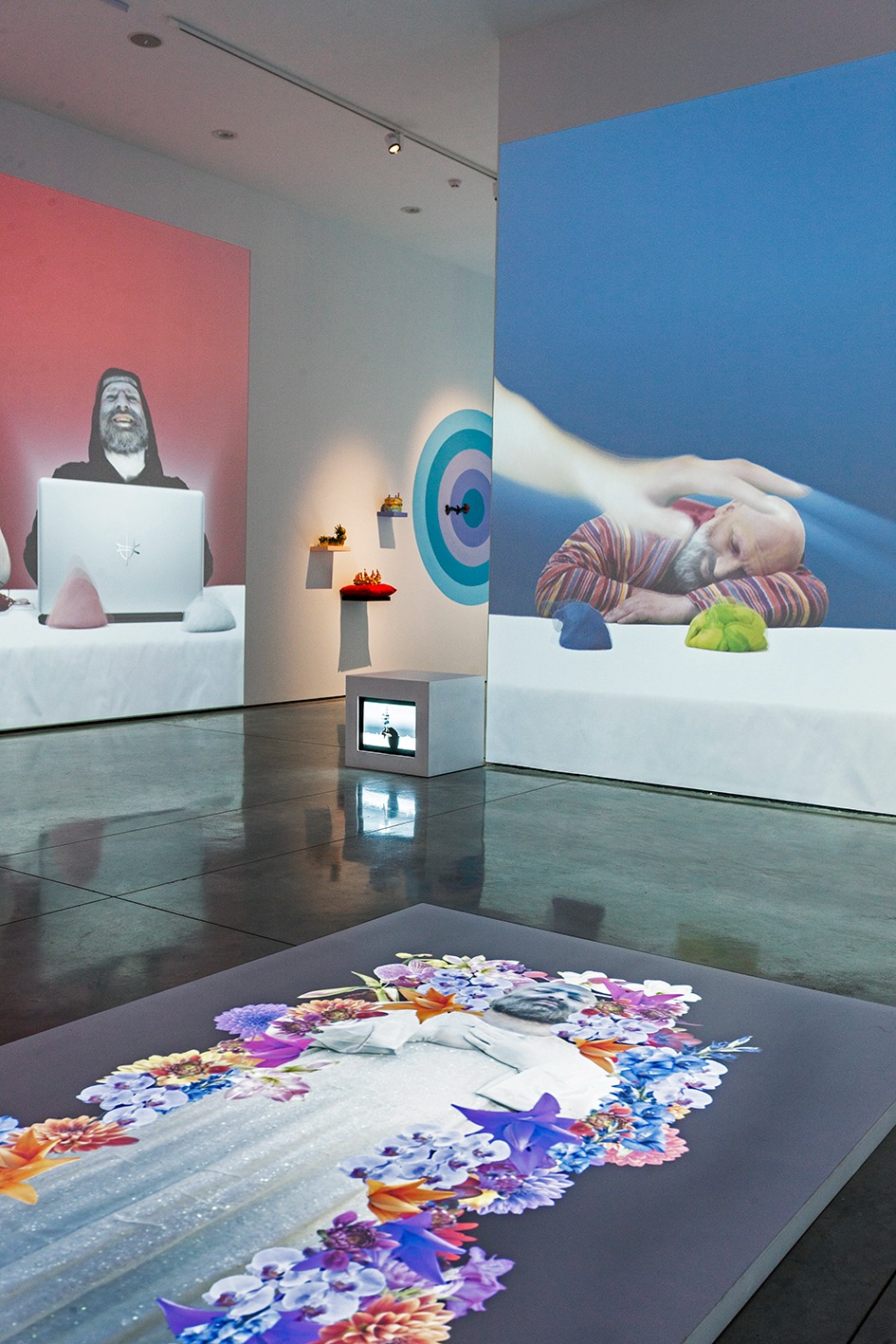
In your own words, how do activism, ancestral craft, and speculative future building converge in your practice?
Everything is interconnected. Because my vision is queer, and I strive to create a utopian vision through the lens of my heritage, both I and my perspective become inherently politicized in a reality where queerness is already political – even penalized. I become a political activist simply by trying to keep my vision authentic and true.
