


Reclaiming the Erotic
Viola Dóra Lenkey
A conversation with Swedish visual artist Jessica Ekström around femininity, performativity and self-representation within hypersexual visual culture
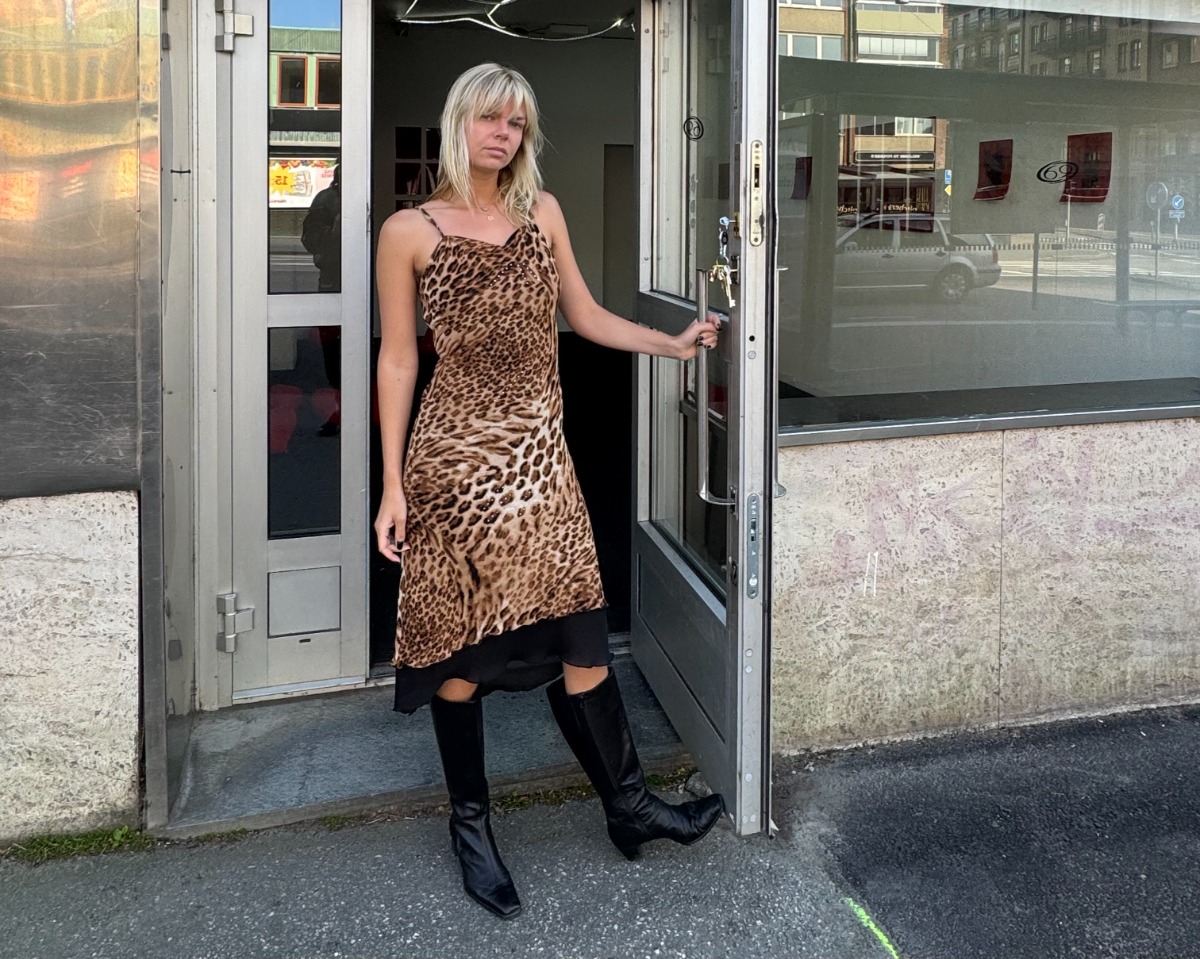
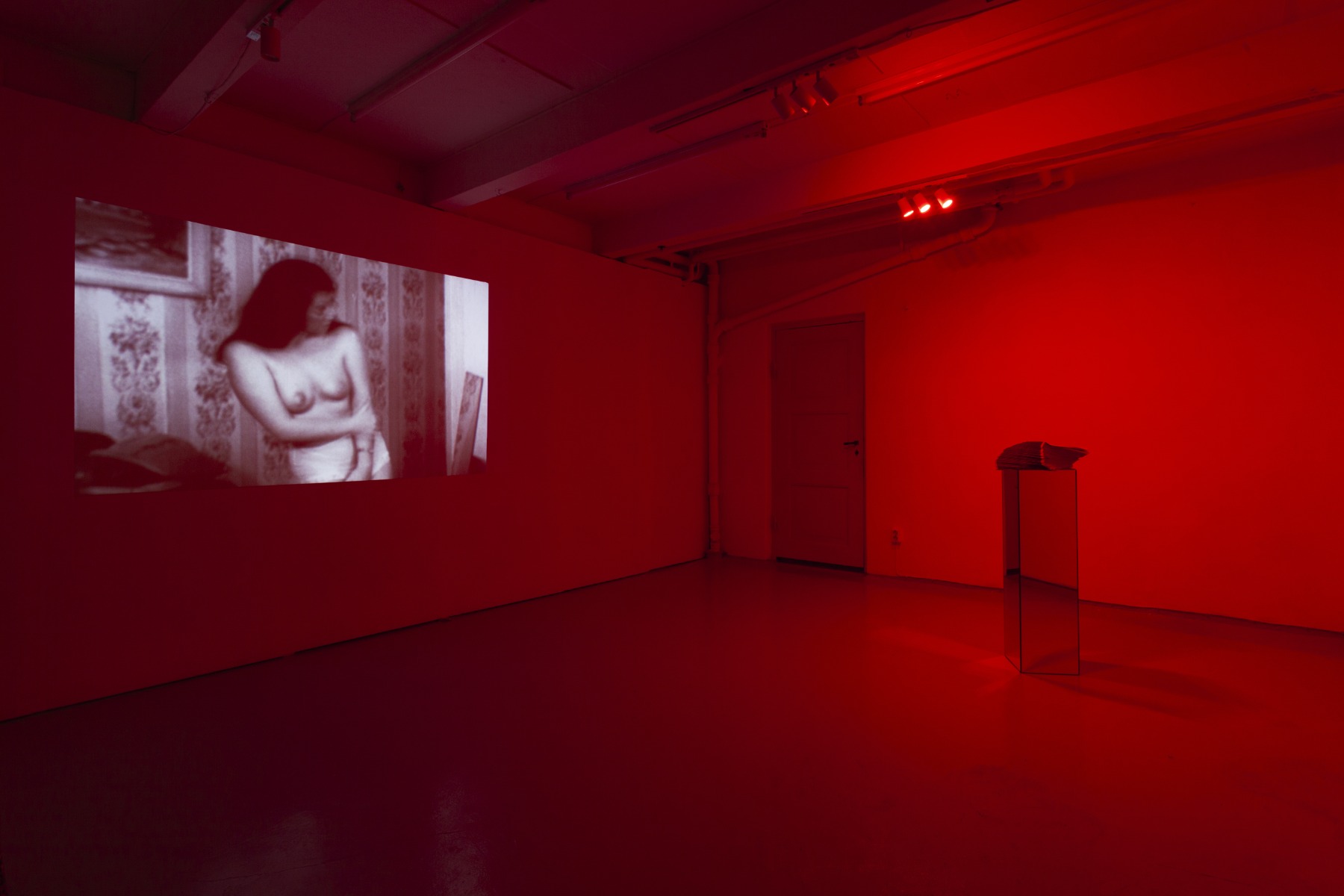
On July 17, NSFW/SVILOVA – a Gothenburg-based platform for contemporary art – hosted a pop-up exhibition, “Erotic Utopia: She’s on Fire” featuring new works by Swedish photographer Jessica Ekström. The project explored the tension between intimacy and public display, questioning how pornography and erotica shape our perception of the body across regional, racial, and gendered identities. Developed through a sustained ten-month collaboration between artist and curator, the exhibition formed the first stage of a broader inquiry into the aesthetics and politics of the erotic.
The second stage unfolded on November 13 at the 6th PARSE Biennial Conference hosted by The Artistic Faculty at the University of Gothenburg, Sweden, where the project was expanded into a live performance and an accompanying written study under the title “Unveiling the Erotic”. Presented in response to the conference theme, “Some Like It Hot,” the work translated curatorial research into an experiential format, exploring how performative and discursive strategies can expand curating into a space of artistic research – one that not only represents but actively enacts the erotic as knowledge and resistance.
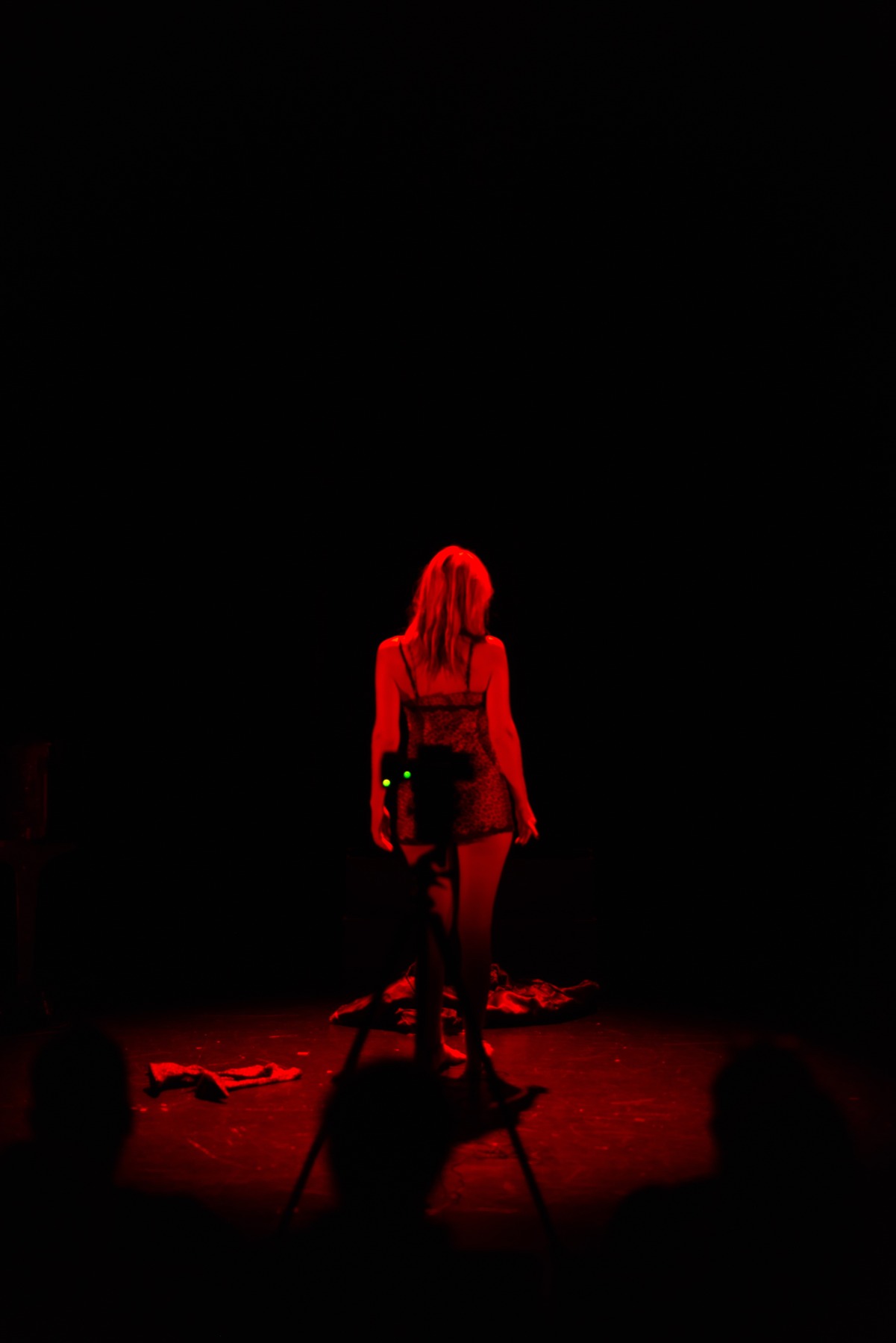
Jessica Ekström works primarily with photography as both a method and an artistic approach. At PARSE, however, she presented her first live performance, challenging the boundaries of photography by dissolving the spatial and temporal division between observer and observed. By breaking down the barriers between visibility and vulnerability, persona and artist, intimacy and public exposure, she extends the notion of the gaze by bringing the act of the camera’s flash into real time and presence. In doing so, she repositions the dominant “public gaze” as a common gaze – a shared act of looking that dissolves hierarchy and replaces dominance with mutual presence.
Ekström’s artistic practice brings new dimensions to the dialogue around gaze and power. Throughout her work, she repeatedly emphasizes that being a woman is a social construct – something we learn to perform. We are taught how to act, move, and exist as women, which means femininity is not innate but reproduced through social norms and expectations. In this way, the body becomes subject to control by societal forces – linking directly to the realm of pornography, where rigid ideas about how the female body should look, what is considered desirable, and what is deemed acceptable are constantly reinforced.
In this context, the body often appears as a consumable commodity, shaped by and catering to male desire, which continues to dominate mainstream representations of sex and sexuality. By reclaiming control over how the body is seen, Ekström reconnects with the body in a self-defined way; one that resists external control. By creating space for self-expression, she challenges our collective assumptions and opens the door to imagining alternative identities and ways of being.
Installation view from the exhibition EROTIC UTOPIA, NSFW, 2025. Photo: Jessica Ekström
How has your background shaped your artistic practice?
My practice emerges from a lifelong dissonance: I have never felt I could fit into the fact of being born a “woman” nor identifying with – or fitting into – the ideal of a “woman”. Since the ideal of a “woman” is a constructed and consumed gesture created by men, for men, there is a conflict arising – I am not the one in control of my body nor the gaze upon it or myself which affect the perception of myself. These conflicts create a tension that gives rise to the core of my work and shapes how I relate and transform my personal experiences into my artistic expression.
Are there any artists or influences that feel especially close to you – ones that have shaped your visual language?
I’m drawn to artists who use their own bodies as a resistance, critique, or transformation – like Carolee Schneemann and Hannah Wilke, whose performances and photographs challenge the way the female body has been framed and fetishized. I also feel close to Sophy Rickett, Ann-Sofi Sidén, Lotta Antonsson, and Sarah Lucas who use both performative strategies, spatial installations and imagery to disorder and embody ideas of femininity, power and gaze.
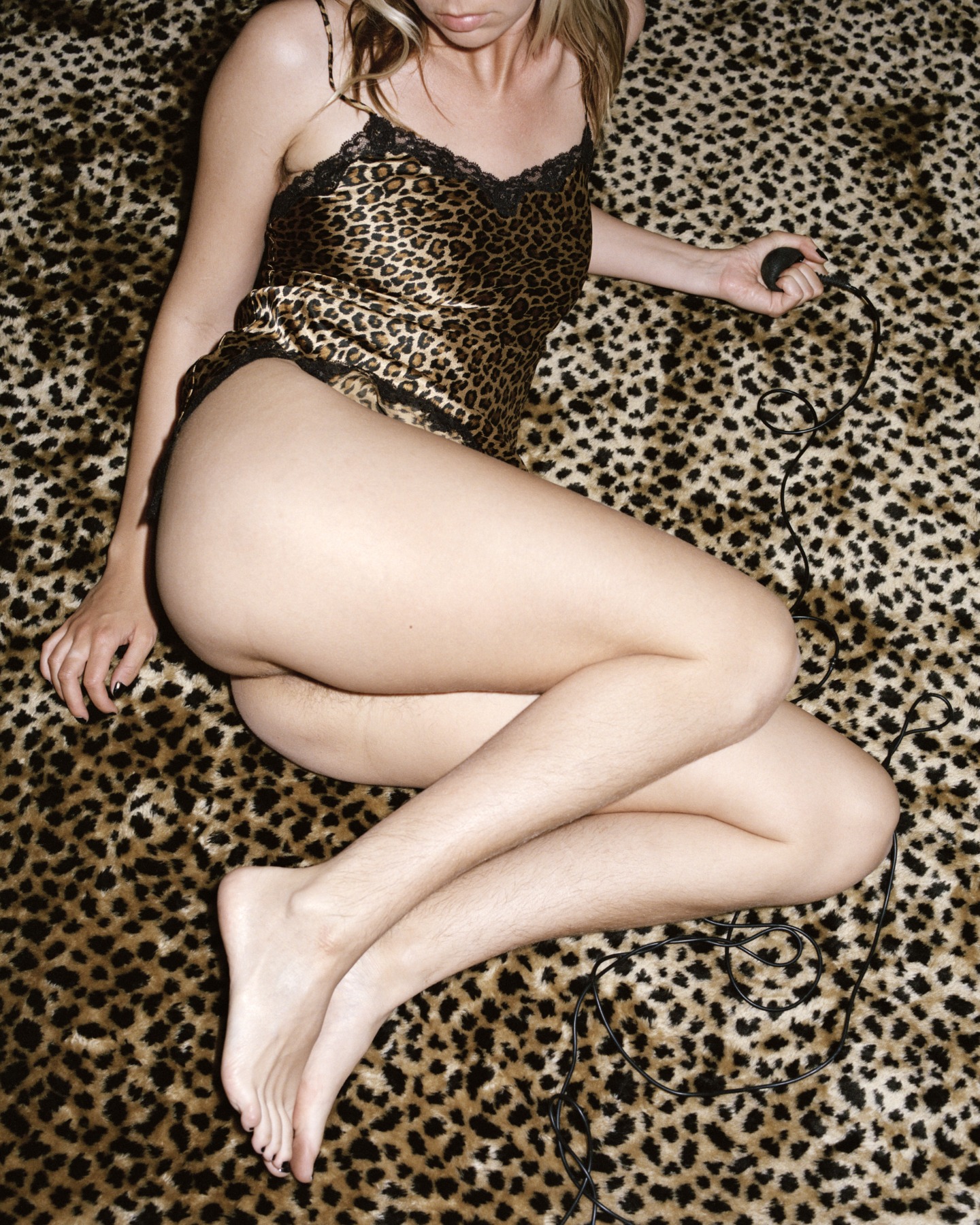
Jessica Ekström, She's on Fire, 2025. Courtesy the artist
Your own body always plays a central role in your practice. What initially inspired you to start using your body as the primary material of your work?
Since I never felt I could embody the ideal “woman” this became a personal and political starting point: By turning the camera on myself, I began to reclaim the gaze upon me – inhabiting the image not as an object but as an active and resistant presence where I confront the act of being looked at and/or the viewer. I use my body as a tool to explore how femininity is constructed, consumed, and emptied out through repeated gestures and stereotypical images. It is both a critique and a reclaiming, an attempt to be the one in control and owning my body.
I was given a body – and through it, I confront those who have taken it from me.
Do you follow a particular process or philosophy when approaching self-representation?
My photographic process involves repetition. By repeating poses and gestures, imagery and approaches, I expose how visual codes flatten and fetishize the female body. This becomes my artistic ritual – I dress up as a “woman”, I pose as a “woman”, I photograph myself as a “woman”. This “woman” is not a self-portrait, but a character through my self-portraying. With the help of an alter-ego, I have created a way of using my body and experiences through her. I dress up as the constructed character of a “woman” and act like her. She is depicting, presenting and acting a confrontation through me, that is mediated by her.
Performance by Jessica Ekström at "Some Like It Hot" – 6th Biennial PARSE Research Conference. Photo: Eskil Högman
What role does performance have in your work? When using your own image, do you consider yourself a model, a persona, or a character?
The photographic use of mine can be interpreted as a documented performance – through it I am capturing a moment, an ongoing act.
The concept of a performance is fundamental to my practice since it is referring to a tradition of female performance artists who used their own bodies as the material of the artwork to reclaim its agency and challenge the male gaze. Female performance artists often explore how gender is constructed through repeated acts, revealing how femininity is performed through gestures, behaviours, and stylizations.
Performance by Jessica Ekström at "Some Like It Hot" – 6th Biennial PARSE Research Conference. Photo: Eskil Högman
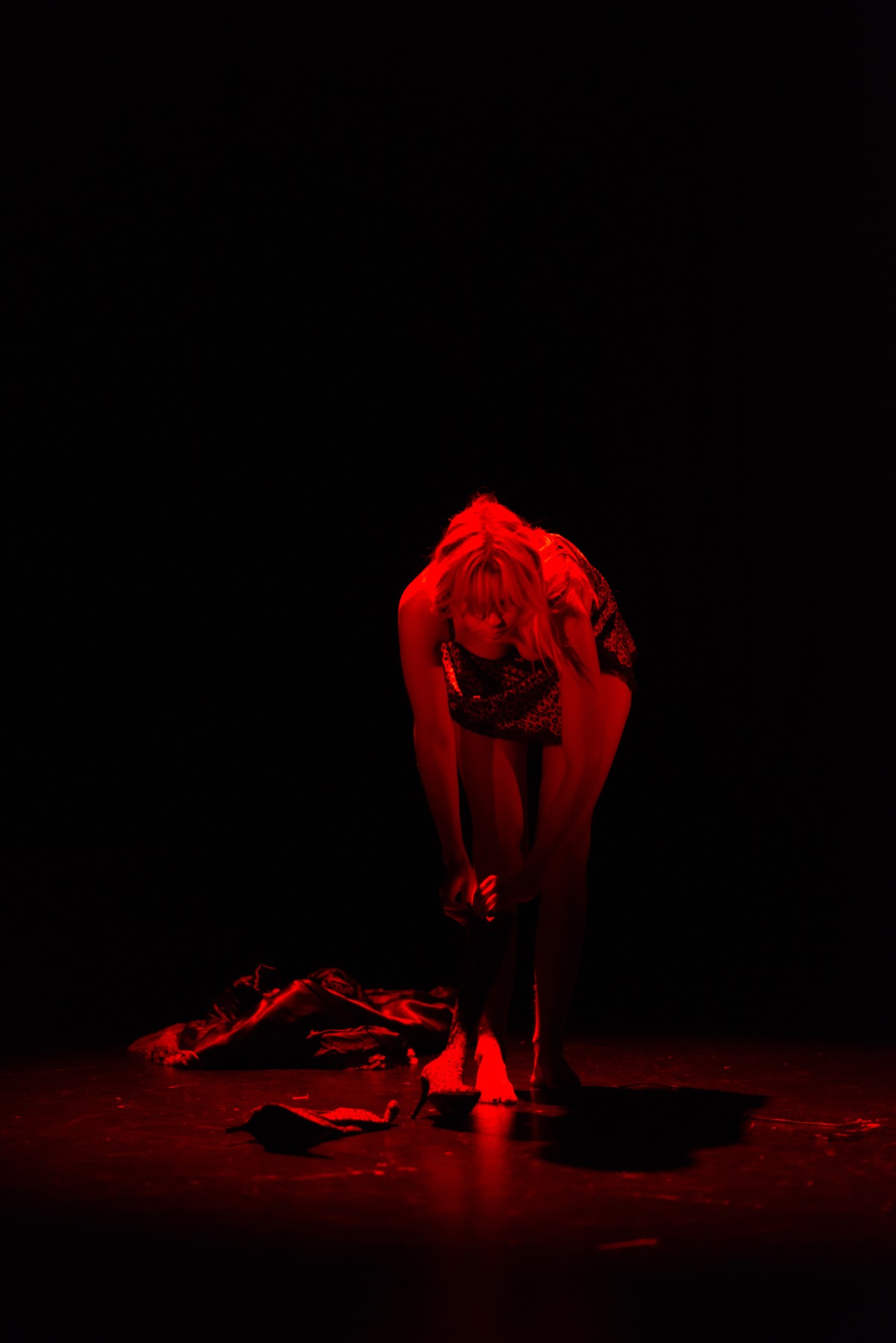
One thing that often stands out in your work is the interplay between exposure and control. How do you see that dynamic playing out in this project?
I’m the one in control since I’m the one editing and reconstructing the images. I take existing material, created through a male gaze for a male viewer, to reframe them on my own terms and through my own gaze. The exposure is mine, both in being in charge of the image and the nudity. Exposure becomes the tool of power, but the control is never complete. By inserting myself into the imagery and exposing my body I also make myself vulnerable. There is a fine line between empowerment and objectification and that’s where my work lives: in the flicker between reclaiming visibility and being consumed by it.
Jessica Ekström, She's on Fire, 2025. Courtesy the artist
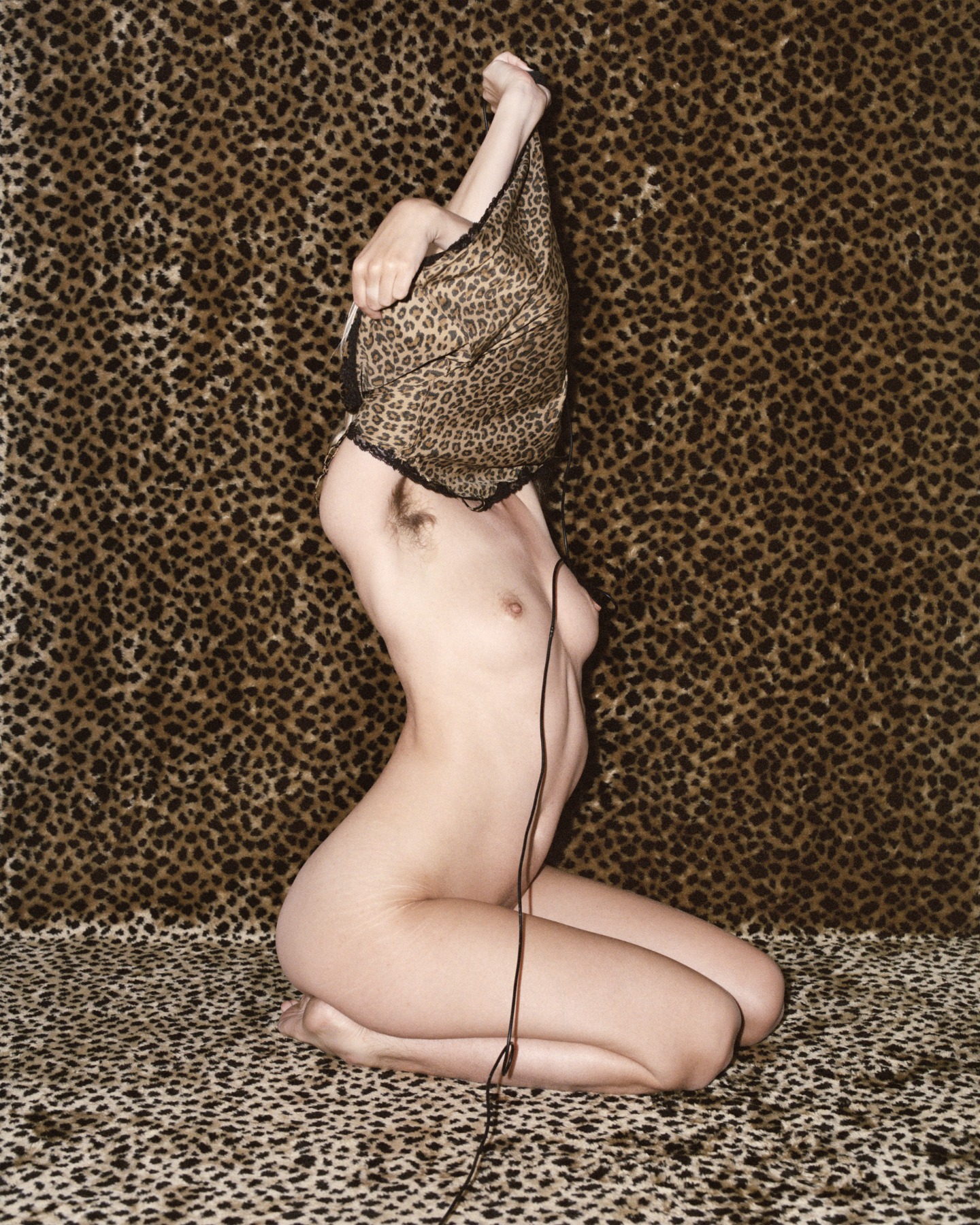
Nudity shows up in a really powerful way in your work – what does it mean to you personally, or in the context of “She’s on fire”?
In my work, nudity is about vulnerability and control. I use it as a tool to liberate the female body. The nude female has historically been positioned as passive and available – an object for men, created by men. In “She’s on fire”, I am reframing both the gaze and the body; it becomes active and charged with agency. In that process, its vulnerability transforms into power.
On a personal level, I see nudity as the most natural and liberating state of a human body. It’s unmarked by any characterized costume or code. Still, a female body is characterized by its nudity.
Installation view from the exhibition EROTIC UTOPIA, NSFW, 2025. Photo: Jessica Ekström

You’ve previously said that you weren’t born a “woman” but act like one. How does this constructed femininity or alter-ego appear in “She’s on fire”, especially as you rework imagery from old porn magazines?
I wasn’t born a “woman” – I learned how to perform as one. In “She’s on fire”, this performativity becomes my working method. I use archival porn imagery as a choreography to mimic and restage the depicted women; I slip into their poses, I inhabit their gestures. By doing so, I blur the boundaries between myself and the women. They become me as I become them, and I create my alter-ego through their staged personas. The femininity I perform in “She’s on fire” is both burning with desire and expectations as flickering and close to collapse – but still, it glows.
In previous works, you’ve used urine as a form of cleansing ritual. In this project, you’re working with images of women from vintage porn magazines – are you attempting to cleanse, reclaim, or confront those figures as well?
I wouldn’t describe it as a literal cleansing, but it’s definitely an attempt to reclaim and confront the figures – it becomes a form of ritual undoing. I use urine as a way to mark my body, to reject its domination by others, and to cleanse it from its gaze upon it. The urine becomes another artistic tool of mine to position myself, as an extended use of the body.
In “She’s on fire”, the confrontation happens through repetition and embodiment. There is something ritualistic in that act: it’s not about cleansing them, or myself, but about exposing and owning the structure behind the desire. It’s about exposing the machinery of femininity, and revealing what it costs to perform it over and over again.
Installation view from the exhibition EROTIC UTOPIA, NSFW, 2025. Photo: Jessica Ekström
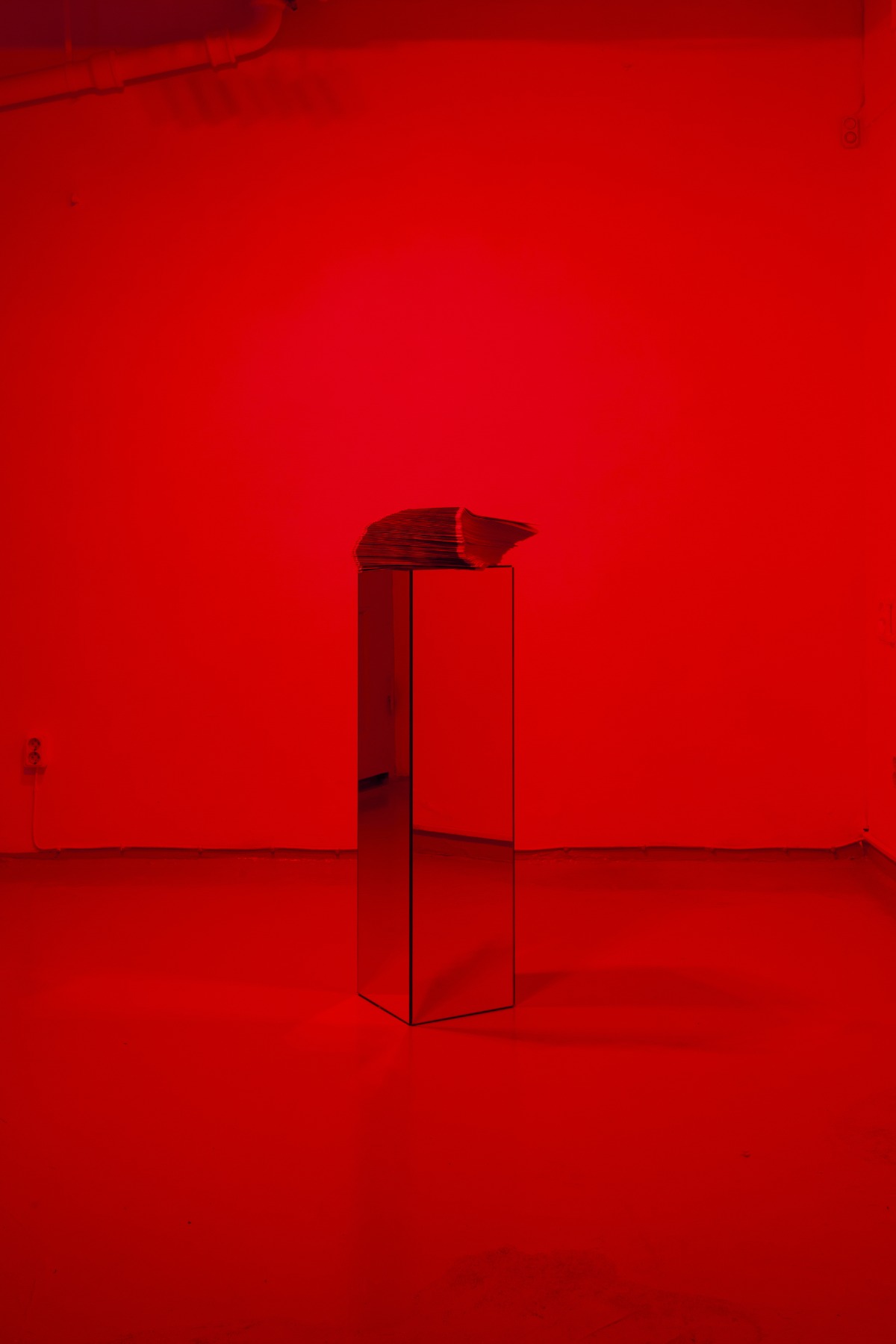
Why is it important to you to give voice – or visibility – to these women from the past?
To me, it’s about giving these women another chance – a new meaning and interpretation, in a different context, with a different role. They were once depicted for a specific purpose and a specific viewer. By revisiting and reworking their images, I aim to shift their narrative and how they’re represented.
It’s also a tribute to them and their bodies. By bringing them into my work, I want them to be seen again – not as objects, but as figures with presence, complexity, and agency. It’s about honoring their existence and what they once gave, while interrupting the gaze they were made for – on my terms and through my gaze.
When you think about erotica, what comes to mind – personally, politically, and/or artistically? Would you differentiate it from pornography?
To me, erotica is both explicit and suggestive, ambiguous and resistant as it can be very complex in its expression and presence. It opens a space where intimacy, vulnerability and tension are allowed to unfold; where bodies and desire can be tender, confrontational or disorienting, as they function as a tool to attract attention. Erotica becomes an artistic strategy where questions are given rise to rather than being answered. The aesthetics speak differently to everyone, but are always provocative.
In that sense erotica differs from pornography, though the boundary between them can blur. Pornography tends to aim for a direct, one-dimensional message or consumption whereas erotica allows for multiple layers of meaning and interpretation.
Performance by Jessica Ekström at "Some Like It Hot" – 6th Biennial PARSE Research Conference. Photo: Eskil Högman
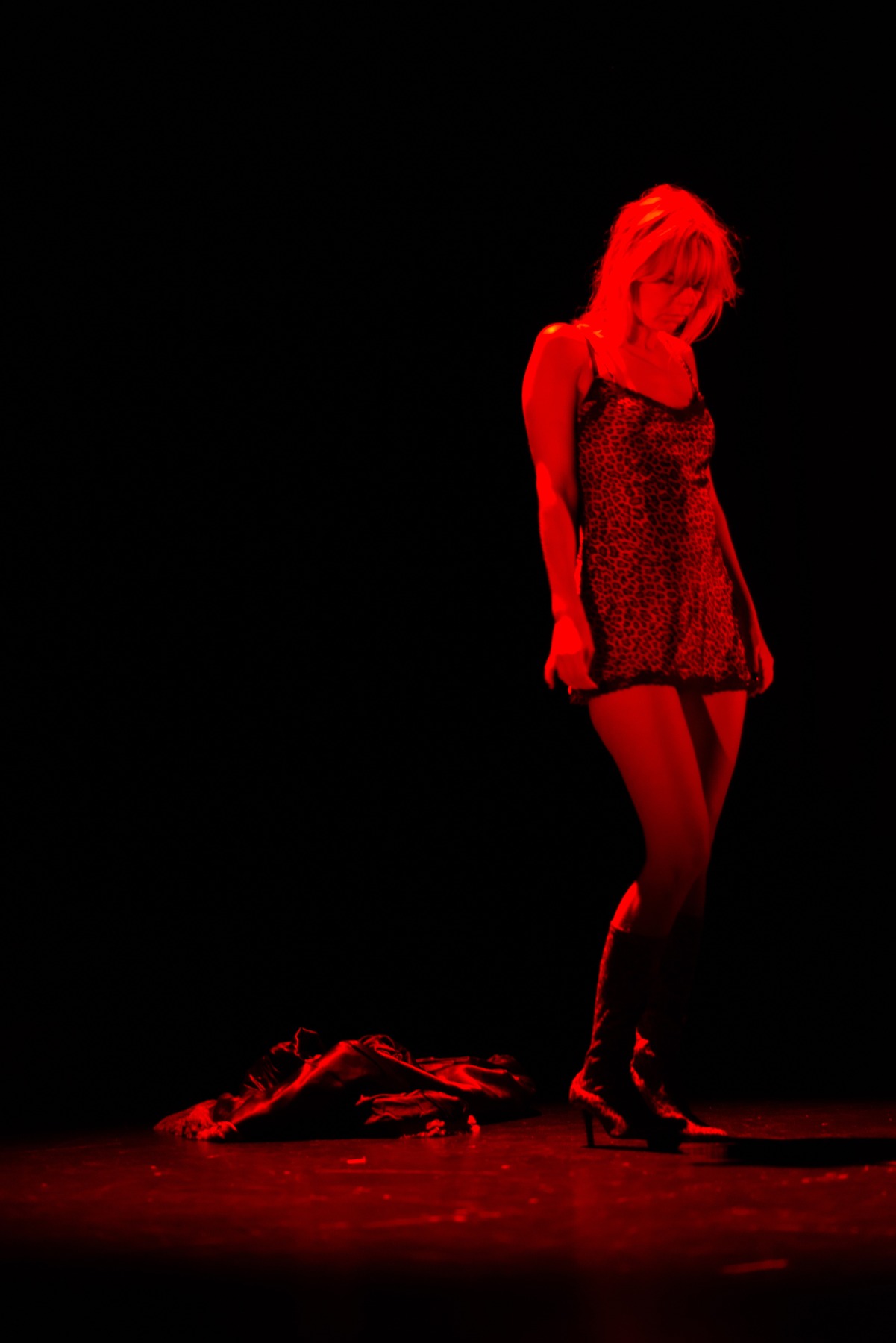
Do you think it’s possible to challenge power structures by “going against the tide” of visibility politics – or is that already part of the same system?
It’s possible to challenge power structures, but resistance itself can become a kind of aesthetic, one that is eventually absorbed back into the systems it opposes. One has to be aware of what may begin as resistance becomes a style and strategy that remains entangled in the same system of power. There is a contradiction in its rejection and a rejection in its contradiction. Therefore, the power lies in its interference, friction and questions that resistance provokes.
A lot of artists today use hypersexualized self-representation on social media. Why do you think the aesthetics of porn have become so widespread and “trendy” among contemporary artists?
Porn has become normalized and part of our daily visual life. It’s constantly consumed and accessible, which operates as an extension of the male gaze – to catch your attention, to hold your gaze.
When contemporary artists use a hypersexualized self-representation or “trendy” pornographic aesthetics, it functions both as a critique and a mirror. On one hand, it exposes how deeply embedded these visual codes are in our media-saturated culture. And on the other, it reflects how the body – especially the female – is continuously commodified, stylized, and consumed. By adopting these aesthetics, the artist can play with visibility, control, and desire – sometimes to reclaim agency, sometimes to expose how limited or loaded that visibility still is.
Jessica Ekström, She's on Fire, 2025. Courtesy the artist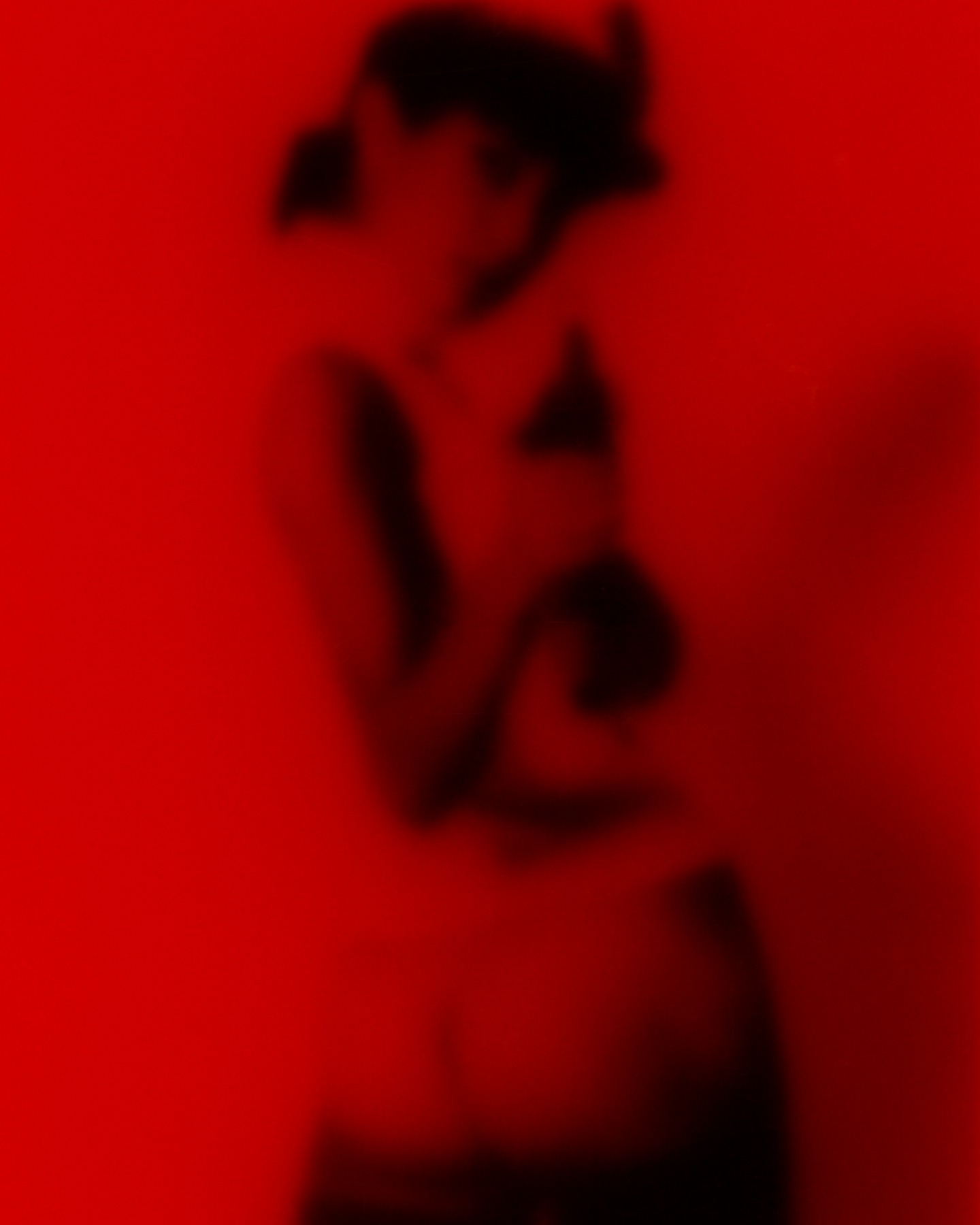
Do you see your work as a way of challenging the narratives we’ve inherited around sexuality and the way bodies, especially female ones, have been represented?
My work challenges the inherited narratives around sexuality and the representation of female bodies – but at the same time, I’m also repeating the same stereotypical images. This repetition is intentional. It’s part of the work itself, and part of how I confront those inherited forms. By repeating them, I expose the constructed emptiness in their persistence, and their hold on us.
Many artists use their social media presence to build a kind of sexy, visible persona. Unlike many, your social media presence doesn’t mirror your art’s erotic intensity. Is this a conscious decision? Do you feel it’s important to keep your artistic practice separate from self-branding on social media? And do you personally feel a difference between the two?
She is a performer, I am not.
Through the creation of an alter ego I get the ability and courage to express myself. She may appear from personal experiences and embodied research, but she doesn’t represent me as a person. I construct her presence and act like her within my work.
There’s definitely a connection between my artistic practice and myself. My practice is a personal need and a fulfilling act. But the intensity or erotic charge within my work doesn’t need to be mirrored in how I present myself on social media. I want it to be both personal and artistic rather than commercial or a “sell-out”.
