


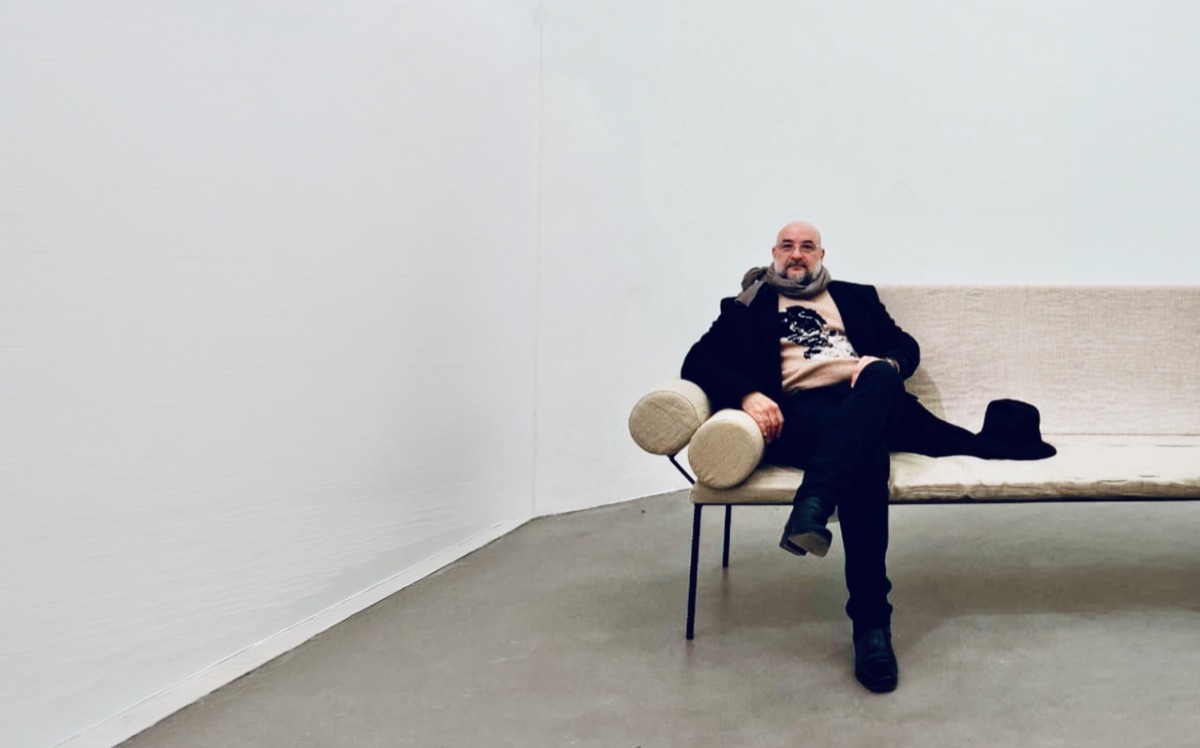
The Periphery Can Actually Be a Luxury
An interview with George Vamvakidis, the co-founder of The Breeder gallery in Athens
Founded in 2002 by George Vamvakidis and Stathis Panagoulis, The Breeder has become one of the defining forces within the contemporary art scene in Athens over the past two decades. Originally emerging from The Breeder magazine – launched in 2000 as a platform connecting Greek and international artists, writers, and curators – the gallery grew organically alongside the transformation of Athens itself. Known for its distinctive program balancing local and international perspectives, The Breeder has played an important role in bringing Greek contemporary art into broader international conversations while remaining deeply rooted in the cultural and political realities of the city.
This conversation with George Vamvakidis was conducted as part of the interview series accompanying Always the Sun (02.10.2026–10.01.2027), an upcoming exhibition of Greek contemporary art curated by Marina Fokidis at Riga Contemporary Art Space. Reflecting on Athens, crisis, collectivity, artistic freedom, and the shifting relationship between center and periphery, Vamvakidis speaks about the transformations of the Greek art scene and the place of art in an increasingly unstable world.
How did it happen that you found yourself in contemporary art?
Like all great beginnings, it was completely accidental – not a mistake, but pure chance. I had always been interested in art, in all its forms, though not necessarily in contemporary art specifically. When I was younger, I moved to London to study business. But there, in the early 1990s, I discovered a very vibrant and active contemporary art, theatre, and dance scene. It distracted me from my studies – probably too much, I must admit. I spent far more time at gallery openings, museum events, and around creative people than I did with my classmates at university.
After my second year, I made a very conscious decision to drop out of the business program at the University of Westminster – without telling my parents – and enroll at Central Saint Martins to study photography, because I was fascinated by it at the time. I was accepted into the course and studied photography, along with some art history, first at Central Saint Martins and later at the London College of Printing. By the end of my student years, I had a much clearer understanding of what really interested me. I realized that rather than becoming an artist myself, I wanted to create a platform for artists – although at that point I still did not know what form that platform would eventually take.
During a trip to Athens for Christmas, I met my partner, Stathis, who had similar questions in mind. We started talking and came to the conclusion that Athens, at that time, was somehow isolated from the rest of Europe, especially from Central Europe. Although there was an active art scene, there were not really any platforms to export it or make it known abroad.
So, to make a long story short, we decided to start a magazine, or rather a periodical. Not a magazine in the sense of a weekly or monthly publication, but something that would come out four times a year. We commissioned new projects by writers and artists, both Greek and international, presenting them on completely equal terms. We would place very well-known artists alongside almost unknown ones, focusing on artistic merit rather than popularity, nationality, or any of those factors.
The periodical was called The Breeder, and it was entirely in English, because that was, and still is, the international language of the art world. We managed to distribute it not only in very good bookstores, but also in major museum shops such as Tate Modern, Museum of Modern Art, and Centre Pompidou. From there, things slowly started rolling.
At the same time, we had a small ground-floor office where we would meet and discuss the magazine and upcoming issues. People started coming by and saying, ‘This is such a cool space – I’d love to have an exhibition here.’ In Athens at the time, most galleries were still very traditional, and there were very few spaces dedicated to contemporary art.
So we began offering the space to artists for exhibitions, without really thinking about the commercial side of things. But gradually that aspect developed naturally. Collectors started coming in - something we were completely unprepared for – and asking about prices. One thing led to another, and by 2002, during a major exhibition in Athens curated by Christos Joachimides, our space was invited to participate.
Soon after, we collaborated with The Modern Institute in Glasgow on a joint exhibition by Jim Lambie, and that became our first proper commercial show. From then on, things simply began to take their course.
Georgia Sagri, Deep Cut, 2020, installation view at The Breeder Skin, Athens
© the artist, Courtesy The Breeder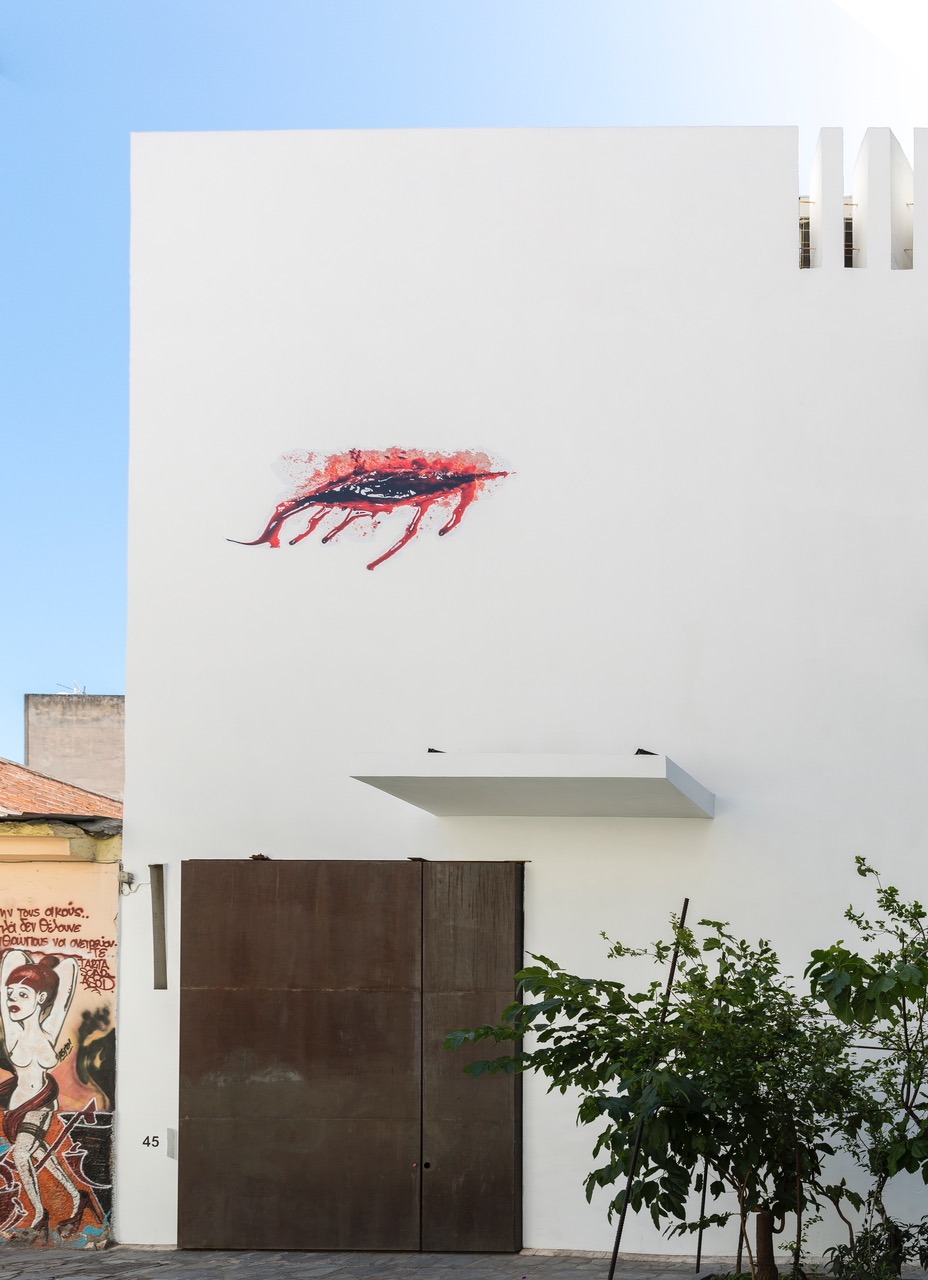
How did you come up with the name The Breeder?
Well, the magazine came in a box, and although we weren’t aware of it at the time, looking back now, it was essentially a portable gallery. The name The Breeder came out of our desire to nurture and cultivate new artistic talent – to create a space where artists could develop and grow. We tried out different names, and then The Breeder came up. We immediately thought, ‘Wow, that’s the perfect name for what we want to do.’ We wanted to create a platform where other people’s ideas and practices could grow and evolve.
Since 2000, more than twenty years have passed. How do you see the role of the gallery today? I think its core essence has remained the same, but many things have also changed over the years. Is a gallery still primarily a market actor, or has it become more of a cultural institution – or perhaps something in between? What is its place within the ever-changing and increasingly unstable art ecosystem we live in today?
You’re absolutely right, we are living in a totally unstable art ecosystem right now, where roles are constantly shifting and nobody really knows exactly where they stand anymore. You have museum directors trying to raise money and court collectors, while galleries are increasingly taking on institutional roles. Everything has become very mixed.
I see the role of the gallery today as something very much in flux. Different galleries mean different things depending on their geopolitical location, their understanding of what art is, and the kind of impact they want to make.
You see galleries that are focused primarily on the commercial aspect, and if they are mid-sized, many of them are struggling. Then you have the major players, which function almost like luxury boutiques – you go there to buy the name, not necessarily the best work. But in return, you are invited to very luxurious dinners and introduced to influential people. It becomes a kind of service-based gallery model.
And then there is, I would say, a younger generation of galleries driven more by romanticism. We were romantics ourselves when we started in the early 2000s. But then commerce gradually took over. Suddenly there were galleries opening outposts all over the world, everyone wanting to expand, to build bigger galleries and larger spaces. Everything became focused on growth.
For almost twenty years, everything was about growth. But now you can see a younger generation returning to the more romantic side of things – returning to the idea of the gallery as a place of expression, where one expresses oneself through the program and through the artists one supports. And in my opinion, that is invaluable.
To be able not to live on a hamster wheel, constantly chasing expansion, but instead to nurture artists and articulate a vision – that’s important. Galleries are self-funded organisms, so of course it matters how you manage your business, how much you sell, and how much of what you earn you reinvest into your ecosystem rather than simply using it to grow the business itself. It’s ultimately a matter of choice.
I think we have followed that model ourselves. We never really tried to position ourselves as one of the major global players. We always knew we were coming from Athens, which at the time was still considered somewhat peripheral in the art world. So first and foremost, we tried to make a statement about what was happening in our corner of the world – a place situated between East and West.
At the same time, we also understood the importance of being active within the market for the sake of our artists, because artists need to make a living. Ideally, they should be able to live from their work. So with that in mind, we have always tried to maintain a balance: between being commercial enough to support our artists and ourselves, while also remaining conscious of the kind of impact we want our presence to have within the broader art ecosystem.
We are living in a totally unstable art ecosystem right now, where roles are con-stantly shifting and nobody really knows exactly where they stand anymore.
Yes, and your gallery was still relatively young when the financial crisis hit Greece. What were the biggest challenges for you at that time, and what lessons did you learn from the experience? Because the situation was extremely difficult.
It was really tough. After our very humble beginnings, we had entered a period of real momentum. We had started participating in major art fairs such as Frieze Art Fair, Art Cologne, and Liste Art Fair Basel, so things had been developing very positively for us.
Just before the crisis, we bought the building where the gallery is still housed today, and we organized some very ambitious exhibitions and events to celebrate that moment. So when the crisis arrived, it found us very exposed. Suddenly we had this large space to fill with art, but there was no market.
What really saved us was resilience, and also the fact that we always saw the art world as a single ecosystem. Of course, it is regional in terms of aesthetics, language, and politics, but at the same time it is deeply interconnected. Because we had already expanded internationally, we were able to respond strategically.
The global financial crisis affected most of the world around 2008, but it reached Greece more dramatically around 2010, so we had roughly a two-year window to observe what was happening elsewhere and prepare ourselves. During that time, we strengthened our presence abroad and deepened our international relationships.
So by the time the crisis fully hit Greece, we already had connections with collectors around the world, especially in the United States. That helped us keep things moving. It didn’t destroy us in the way it did many others, because we were never dependent on just one place – we always tried to keep our perspective and our activity international.
Now, looking back, do you think the crisis reshaped the local art scene in unexpected ways? Perhaps it generated something entirely new that you could not have anticipated before? Because today the scene feels completely transformed - and not only economically.
I’m going to be very honest with you, and what I’m about to say may raise a few eyebrows, but for me the crisis was, in a way, a blessing for Athens.
Athens is a city that keeps being discovered and rediscovered over and over again. Before the crisis, the art ecosystem was very fixed. You had a small group of collectors, a handful of galleries, a limited number of artists, and very few institutions. It was a closed system, moving very slowly and largely isolated from the rest of the world. In many ways, it had been running on its own fumes for years.
What the crisis did was burn everything down. And I know that sounds heretical, but it’s true. Some artists lost their studios, people lost their livelihoods – it was extremely painful. But at the same time, it created fertile ground for something new to emerge.
If today everyone is looking at Athens and saying, ‘Athens is the new Berlin’ – although of course Athens is a far older city than Berlin – if people feel that something vibrant and dynamic is happening there, it is because of that rupture. Suddenly there was space for new initiatives, new collaborations, new ways of thinking that otherwise might never have existed.
So for me, despite all the suffering the country went through, the crisis also had a regenerative effect. It allowed new things to blossom. At that time, initiatives such as Marina Fokidis’s Kunsthalle Athena and South as a State of Mind began to emerge and gain momentum. Projects and collaborations started happening that probably would not have existed otherwise, because before that everything had been neatly contained within fixed structures, with very little room to move.
Athens is a city that keeps being discovered and rediscovered over and over again.
You mentioned Kunsthalle Athena, but who were some of the other key players that really helped sustain and develop the scene during those years?
I mean, there were many different players. New figures and initiatives suddenly came into prominence. Of course, there were already established institutions, such as the Benaki Museum or the DESTE Foundation for Contemporary Art, but at the same time new foundations and new artistic initiatives also began to emerge.
A younger generation of collectors entered the scene as well. Collecting no longer felt so inaccessible or intimidating. New artists appeared, along with artist collectives, which previously had been quite rare. Before the crisis, everyone tended to operate individually, with very little collaboration. But suddenly the atmosphere became much more collective – about sharing studios, sharing practices, exchanging ideas, and working in a more democratic and collaborative way.
At the same time, rents became extremely cheap, which allowed artists and creatives from elsewhere to move to Athens. That changed the ecosystem significantly. It enriched the local scene and created a much stronger dialogue with other countries and artistic communities.
That means that, in a way, the egos – which are very present in the art world – were put slightly aside, and people became more willing to collaborate. But what was, and what still is, the role of the collector within the Athenian and Greek art scene? Because ultimately collectors help sustain the ecosystem. Many people have different opinions about this, but as a gallerist you probably have a more objective perspective on the matter.
So this is a very good question, and actually a very good example comes to mind. The thing about Greece – and Athens in particular – is that it has always had a remarkably strong collector base relative to the size of the country. There have always been very adventurous and passionate collectors. But before the crisis, most of those collectors largely ignored the local art scene and local artists. They preferred to buy abroad – from major galleries in Germany, London, or the United States – because they believed that was where the important things were happening. There was this perception that investing in Greek artists was somehow risky or insignificant. That mentality was very much part of the pre-crisis world.
What we see now, however, is a new generation of collectors – often the children of those earlier collectors – who are genuinely interested in supporting local artistic production. They understand that living with art is also about understanding your own surroundings and your own reality. Art reflects how you see the world, your ideas about society, about utopia, about everything happening around you.
And sometimes an artist from your own cultural context can express those things in a way that feels much closer and more immediate than someone working on the other side of the world. So if you want to engage meaningfully with art, you also need to support your immediate ecosystem first, and then expand outward from there. You cannot build something sustainable by only looking elsewhere. You have to nourish your own roots first, and then the field naturally expands.
I think many people understand that now. We are seeing a younger generation of collectors and supporters who are actively backing younger Greek artists, many of whom are doing extremely well internationally. And that’s why today, almost every important exhibition or gallery program includes at least one Greek artist. That simply wasn’t the case before. I’m very happy about that, because it is something very close to my heart. In many ways, this is exactly why we started the gallery in the first place. Our main purpose was to create a platform through which the language of Greek contemporary art could travel beyond Greece – to make it visible internationally and bring it into a broader conversation.
Georgia Sagri, The Heart of Kore, 2025, Hand-blown glass, iroko wood, metal, various metallic components, rubber, water-based acrylic paint, 115 x 350 x 350 cm, Installation View at The Breeder, Kore, 2025.
Courtesy the artist and The Breeder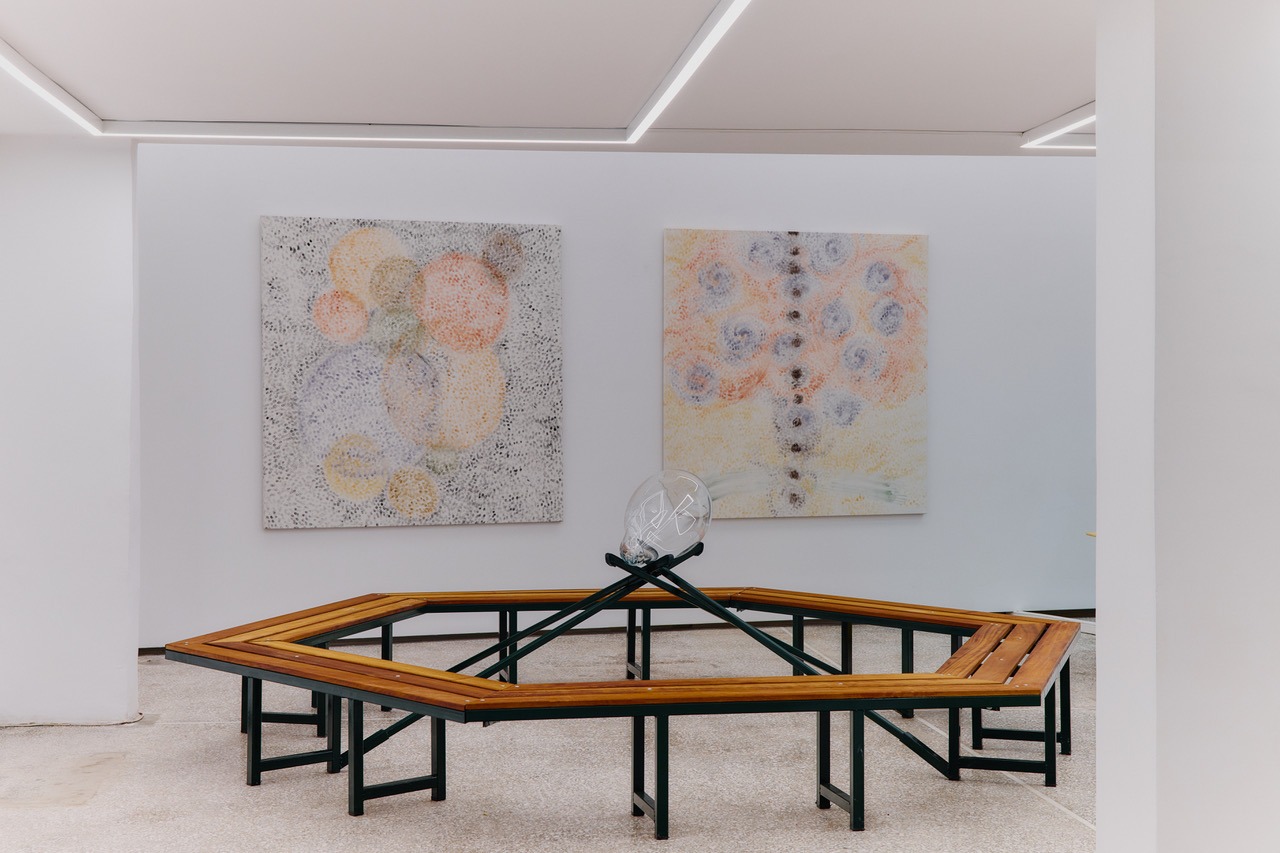
Of course, there is also this ongoing question of the ‘periphery.’ Even though Athens is booming now, in conversations with locals one still senses, perhaps unconsciously, this lingering feeling of being somehow outside the center. How do you relate to that idea today? Do you think the notion of the periphery still carries real meaning, or has it become simply a geographical condition rather than a cultural limitation?
Is ‘periphery’ necessarily a bad word? I mean, we always return to the same question: what is the center, and what is the periphery? Because this also touches on a world shaped by colonial structures and colonized ideas.
Why do people instinctively want to buy art from London, from Paris, from Germany? Historically, these were the cultural centers, the colonizing powers. Meanwhile, artists from less internationally recognized places were often overlooked. That is a chain that still needs to be broken – not only financially, but mentally. In fact, I would say it is primarily a mental chain.
We have been taught to think of the periphery as something secondary, something lesser. But people living in the so-called periphery are often happier. They have more time, and in many ways they are more interesting, because they are more interested in what is happening around them. People in the major centers are often focused only on themselves – on competition, on survival within the center.
The periphery can actually be a luxury, you know – the luxury of time, of attention, of seeing things differently. So perhaps we should reshape the way we think about these categories altogether. Maybe the periphery is not the lesser position at all.
Personally, I do not really differentiate between center and periphery. I have my own system of values, but that depends on artistic value – on whether something is interesting, on whether it moves me intellectually or emotionally – not on where the artist comes from. What matters to me is not geography, but how compelling the work is and how deeply it engages my curiosity.
But if I ask you directly: what makes the Athenian art scene distinctive in comparison to other European cities? What would you say are its greatest strengths – and also its biggest vulnerabilities?
I think both questions actually lead to the same answer. Greece occupies a very particular geopolitical position – between East and West – and that creates a unique cultural condition. Especially now, with everything happening in the world – wars, increasing censorship, and the very conservative climate we are living through – I feel that a great deal of contemporary art is becoming increasingly cautious. Today, if you want your work to be accepted or positioned within certain institutional frameworks, it often feels as though you have to follow very specific rules. That would have been unthinkable in the 1960s or 1970s, or even in the 1980s and 1990s.
In some ways, I feel we are living through a new kind of artistic Middle Ages in terms of censorship and self-censorship. But what makes Athens different, I think, is that because of our cultural DNA, people still speak very freely here. Greek artists do not censor themselves to the same degree. You encounter work that is openly political, work that confronts ideas directly rather than trying to soften or avoid them.
And that is both the strength and, potentially, the vulnerability of the Athenian scene. Some people may find that freedom uncomfortable, provocative, or even inappropriate. But I believe the openness of the Athenian landscape – the fact that conversations can still happen without immediate fear – is incredibly important. This is still a place where people can openly express opinions, whether they stand on one side or another. That freedom of expression is deeply embedded in Greek culture. And I think that is simultaneously Athens’ greatest advantage and its greatest risk.
I feel we are living through a new kind of artistic Middle Ages in terms of censorship and self-censorship. But what makes Athens different, I think, is that because of our cultural DNA, people still speak very freely here.
But as a gallery, you have always tried to connect Greek artists with international networks and audiences. How is it today for an artist coming from Greece to enter global conversations? Has that changed over the years?
It has definitely changed. Today it feels much more natural, partly because more people are paying attention to what is happening in this part of the world. At the same time, artists can communicate their ideas much faster and far more easily through technological platforms and digital channels.
When we first started, there were no smartphones, no Instagram, none of these tools. We were working with fax machines, telephones, and physically mailing slides and portfolios. So in that sense, the situation has changed enormously. But again, it works both ways. It is easier now for artists from Greece to participate in a global conversation, but it is also easier for them to see what is happening elsewhere in the world. The channels of communication have opened dramatically.
At the same time, however, what ultimately matters is still the work itself – the work being produced in the studio. It is important that artists are able to speak through a language that can resonate internationally while still remaining grounded in their own context and experience.
As a gallery, you still maintain residency programs as well as publishing initiatives.
We actually resumed publishing this year after a break of twenty-two years. When the gallery began operating more seriously, it became impossible to sustain both the magazine and the gallery simultaneously. At a certain point, we realized we had to choose, so after issue eight we put the magazine aside and focused entirely on developing the gallery.
But this year we published issue nine again – once more as a boxed publication. We invited younger designers to rethink what The Breeder could be today. Of course, the publication is now more closely connected to the gallery and its program, because naturally it has evolved alongside it. Still, it felt important for us to return to publishing. So after twenty-two years, we relaunched The Breeder magazine.
Andreas Lolis, Undercurrents, 2015, installation view at The Breeder, Athens.
Courtesy the artist and The Breeder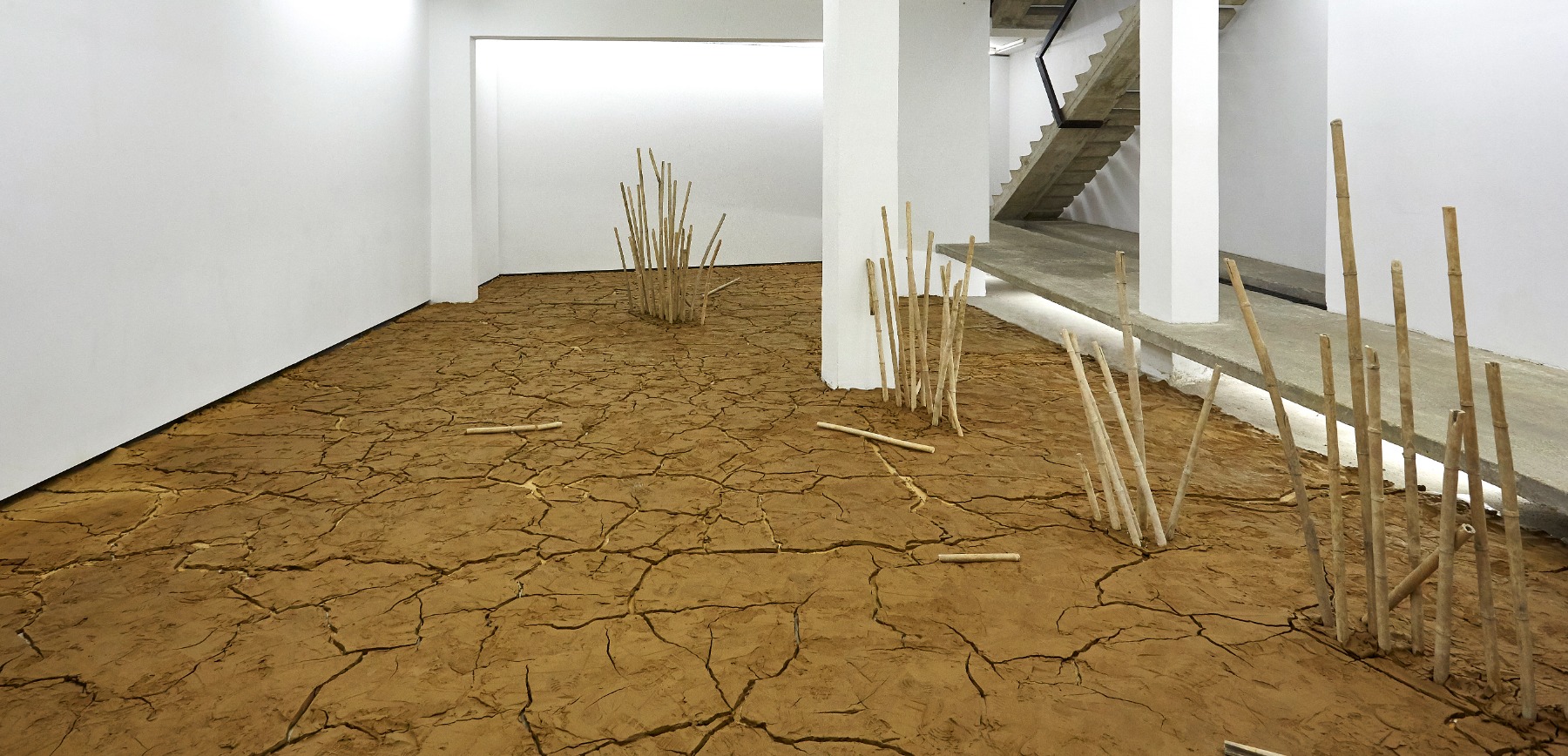
But why did you feel that the time was right to bring it back? Did you sense that something had changed?
Yes. We felt that we are constantly being bombarded by digital signals and endless streams of images on screens – one after another after another. And because of that, the physicality of a publication suddenly became important again.
Also, the physicality of the artwork after all this craziness with NFTs, no?
Yeah, I mean, with NFTs, you know, we have a lot of younger clients nowadays who are deeply involved in the digital economy. They spend their days dealing with Bitcoin, blockchains, the stock market, or investing in media and technology companies, and things like that.
What we realized is that when these people want to relax, or when they want inspiration and space to think, they want physical things. They don't want another screen in their living room. They do not want an augmented-reality artwork, because that is already their entire daily reality – that is what they do all day long.
So they want to escape into physicality. They want to experience a physical artwork. And interestingly, we see that many of these people are actually gravitating toward the most classical forms of art – sculpture, painting, very traditional handmade works that contain what we might call the soul or physical presence of the artist, rather than purely digital works. Of course, there is also a broader and mostly younger audience that genuinely loves digital art, but often they experience it more as a kind of game.
Obviously, I do not want in any way to suggest that new forms of art, such as digital practices, are somehow lesser forms – on the contrary. We have always worked with artists exploring those mediums and have been very open to them. I am simply saying that we increasingly see how important physicality and direct interaction with an artwork still are.
Yeah, it’s interesting. During the lifetime of your gallery, you have experienced the economic crisis, the pandemic, and now wars happening close by. How do you feel these events have affected not only the art market, but also what people are searching for in art? During the pandemic, for example, museums opened digital platforms, and there was a lot of discussion about art’s potential impact on mental health and wellbeing. Art entered hospitals and therapeutic contexts more visibly than before.
Now the situation has shifted again. First there was the war in Ukraine, which felt geographically closer to us here in the Baltics, and now conflict is also approaching your region. What do you think is the place and role of art in times like these?
The world has always been in turmoil, and art has always continued to be produced. The role of art is to make you think and to make you feel. It lies at the very core of human existence. Its importance is not opportunistic – it does not suddenly become more important because there is a war or because a utopia is being imagined. Its role is constant, and deeply tied to what it means to be human.
How would we exist without art? If everything around us were purely practical, could we really exist in a meaningful way? Could we think? Could we evolve as a species?
The role of art is to make you think and to make you feel. It lies at the very core of human existence.
Art scenes are often experienced almost like shifting centers of attention – first London, then New York, Berlin and so on. And there was definitely a moment when Athens became the eye of the hurricane, a place everyone suddenly wanted to focus on.
How easy or difficult is it to sustain that kind of international attention? Or perhaps the more important question is: do you even need to sustain it?
I don’t know if it’s necessarily important. I don’t even know if we really need it, you know.
This whole circuit is mostly created by art professionals and art workers. We are like bees moving from one place to another, carrying ideas and connections, helping things pollinate and blossom elsewhere. That’s how the art ecosystem functions.
But for the millions of people who actually experience art, these dynamics are not really important. What matters is what they feel when they encounter a work of art.
So whether Athens is temporarily at the center of attention or not is, in the end, somewhat irrelevant. Athens has existed for almost three thousand years - it will continue to exist regardless of whether the international art world happens to focus on it for a particular moment or not.
But if you look at the scene today, what developments excite you the most? And what would you personally like to see more of in the Athenian art scene – as a gallerist, as an art lover, and simply as a human being?
I would love to see more public spaces where people can encounter art. I would love to see more collectors opening their collections to the public. I would love to see more artist-led initiatives.
Honestly, I would simply love to see more of everything. I don’t think you can ever have enough art. Whether you are in New York, Athens, or Riga – if you truly love art, it is never enough. So yes, if possible, I would always want more.
Did you ever think about opening a branch of The Breeder in another city?
We did, for a very short period of time, open a project space in Monaco because we had friends there. It was beautiful, but at the moment I’m not thinking about opening anything abroad. What we are actually thinking about is expanding within our own city. We would love to see more of our activities unfold across Athens rather than trying to grow elsewhere, because I think our DNA is here, and the essence of what we do is rooted here. If we were to expand on a much larger scale internationally, I think the focus would inevitably shift more toward business rather than toward the pleasure of seeing things happen organically.
So, my last question: you mentioned that, in a way, the previous crisis became a blessing. When you look at the world today – everything that is happening and how deeply we are all affected by it – do you think this moment could also, in some strange way, become a blessing?
No, I cannot say that. What we are witnessing now is something very different. We are talking about the erosion of ethics, of rules, of empathy and human sentiment. In that sense, I think it is a real catastrophe for humankind.
Not a catastrophe in the literal sense of total physical destruction, like an atomic bomb, but a catastrophe in terms of what we have tried to build as human beings – our values, our sense of coexistence, our understanding of who we are.
What kind of beings are we? Are we thinking beings? Emotional beings? All of that feels as though it is being systematically demolished by what is happening around us today. In many ways, it feels as though humanity is being pushed backwards rather than forwards.
Yeah, and it’s strange that we still haven’t learned, because this is not the first crisis in human history. We keep repeating the same mistakes, moving in circles and stumbling over the same stone again and again. So the question remains: are we really a species capable of thinking? That, too, is still an open question.
We will see. And the real question is whether we are able to survive our own stupidity.
That is also why we need art – because art allows us to become something higher. It offers another way of being, beyond the need to dominate, destroy, expand, or conquer.
Thank you!
