


Holding Space for Each Other
A conversation with Nastia Svarevska about artistic practices where relations and forms of belonging emerge
Nastia Svarevska is a London-based art worker, writer and curator from Jūrmala, Latvia, whose practice centres on process-based, access-led, and cross-disciplinary approaches.
Her art writing has appeared in publications including Fetch London and Doris Press, while her poetry has been published by Ink Sweat & Tears, The Crank, MONO Fiction, and in various print anthologies. She has curated exhibitions at APT Gallery and Whitechapel Gallery in London, and at PILOT Gallery in Riga. Alongside her independent practice, she works at Acme Studios, the largest provider of permanent affordable artist studios in England.
Having lived in Latvia, Austria, Scotland, and Australia, her work is shaped by repeated experiences of relocation and encounters with environments shaped by different histories. London has been her home for the past five years.
In 2024, she founded In Between Knots, a community platform and publication that explores home as an ongoing, lived entanglement. Through this project, she has facilitated workshops at University College London (UCL), the Sopra Sotto residency in Italy, and with the Shor Series.
The second print issue of In Between Knots, titled A Soft Undoing (Volume One), was launched on 27 May at Staffordshire St in South East London.
I would guess that the idea of In Between Knots is connected to how much you have moved during your life and how many places you have called home.
Exactly. Even before leaving Latvia, my family moved several times, so home has always been a shifting coordinate. Moving between countries intensified this. I felt a dual impulse: a need to root myself in each new place and a growing sense that I was living multiple, fragmented lives that didn’t fully cohere. I was emotionally stretched across borders, distanced from my heritage, and searching for a stable sense of belonging that didn't exist.
In Between Knots emerged from the decision to move away from home as a fixed point and towards it as something processual, unfolding over time. Anthropologist Tim Ingold’s writing gave me a language for this. His idea of places as knots along a line – points of entanglement within continuous movement – reframed belonging as lived along a trajectory rather than anchored to a single place.
That trajectory is not linear. It is alive, constantly forming, and extends beyond me. My family histories – on my mother’s side from Kyrgyzstan and Uzbekistan, and on my father’s side from Ukraine and Poland – are part of it too.
Could you tell us more about the title? To me, it suggests connection, but also tension and a sense of unfinished processes.
A knot binds, holds, and connects, but it also carries the potential to tighten or loosen. It is never truly static.
The title holds two things at once: the knot itself and the space around it. A knot marks a point of entanglement, yet it never exists in isolation; it’s always part of a line, shaped by the movements that come before and after it. I’m particularly drawn to that ‘in-between’ space, the moments where things shift, intersect, and continue to form without ever reaching a final resolution.
In Between Knots, Issue One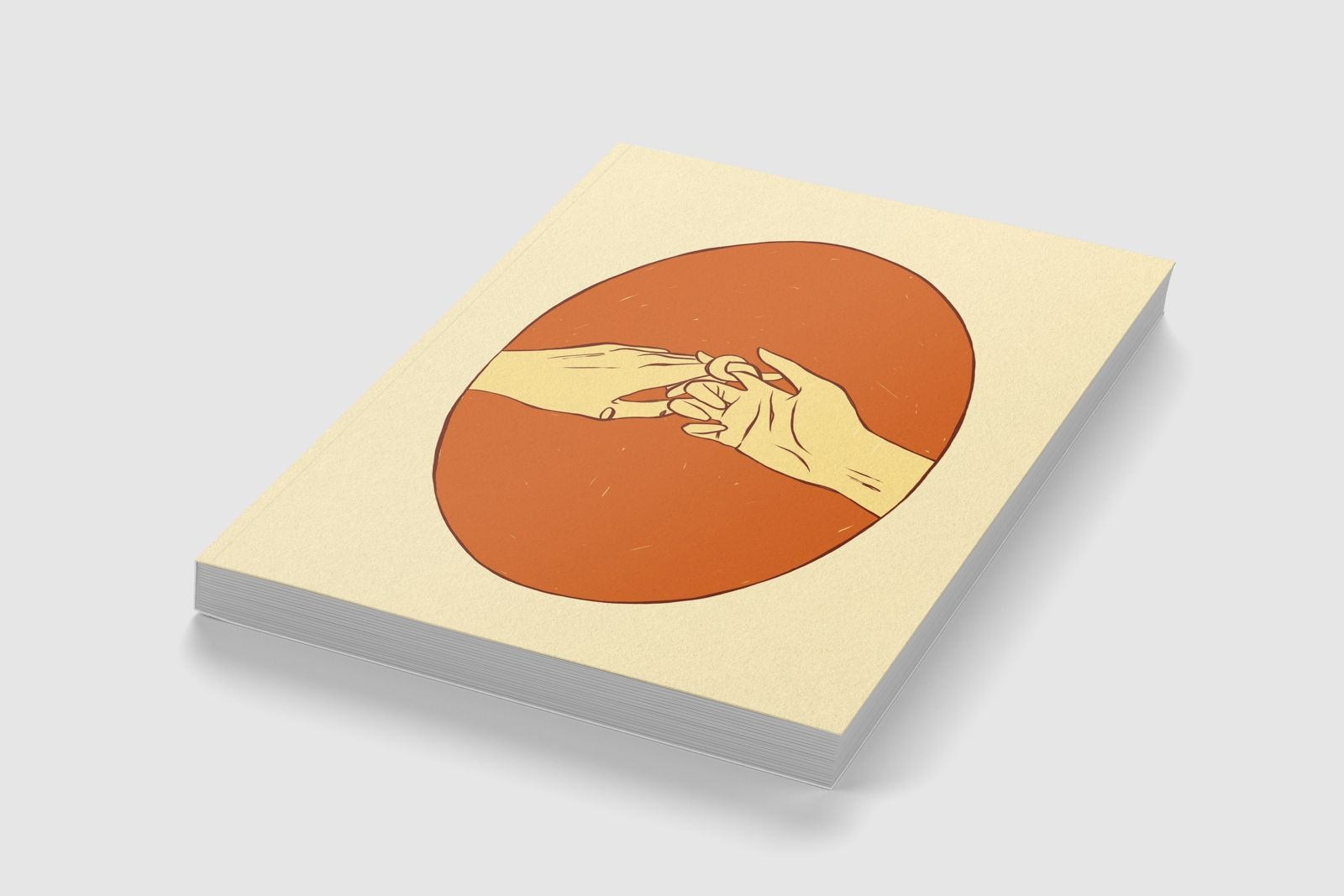
Through texts, photographs, and visual contributions, the first print issue explored the fluid concept of home and ways of belonging.
I had noticed how many people around me were trying to make sense of what home meant in their own lives, and I was struck by how generous and vulnerable those conversations were. The first issue became a way of holding space for those stories. Our open call brought together contributors from across the United Kingdom and Latvia who approached home through the lens of the body, intimacy, cultural identity, migration, and memory.
The publication exists entirely through these contributions. I feel immense gratitude toward those who chose to share parts of their lives, especially those complex fragments that often resist articulation. That became especially tangible at the launch; witnessing contributors read and present their work, many for the first time publicly, was so precious.
Lines Under Construction, workshop led by Nastia Svarevska, 2025. Photo: Pietro Molinaris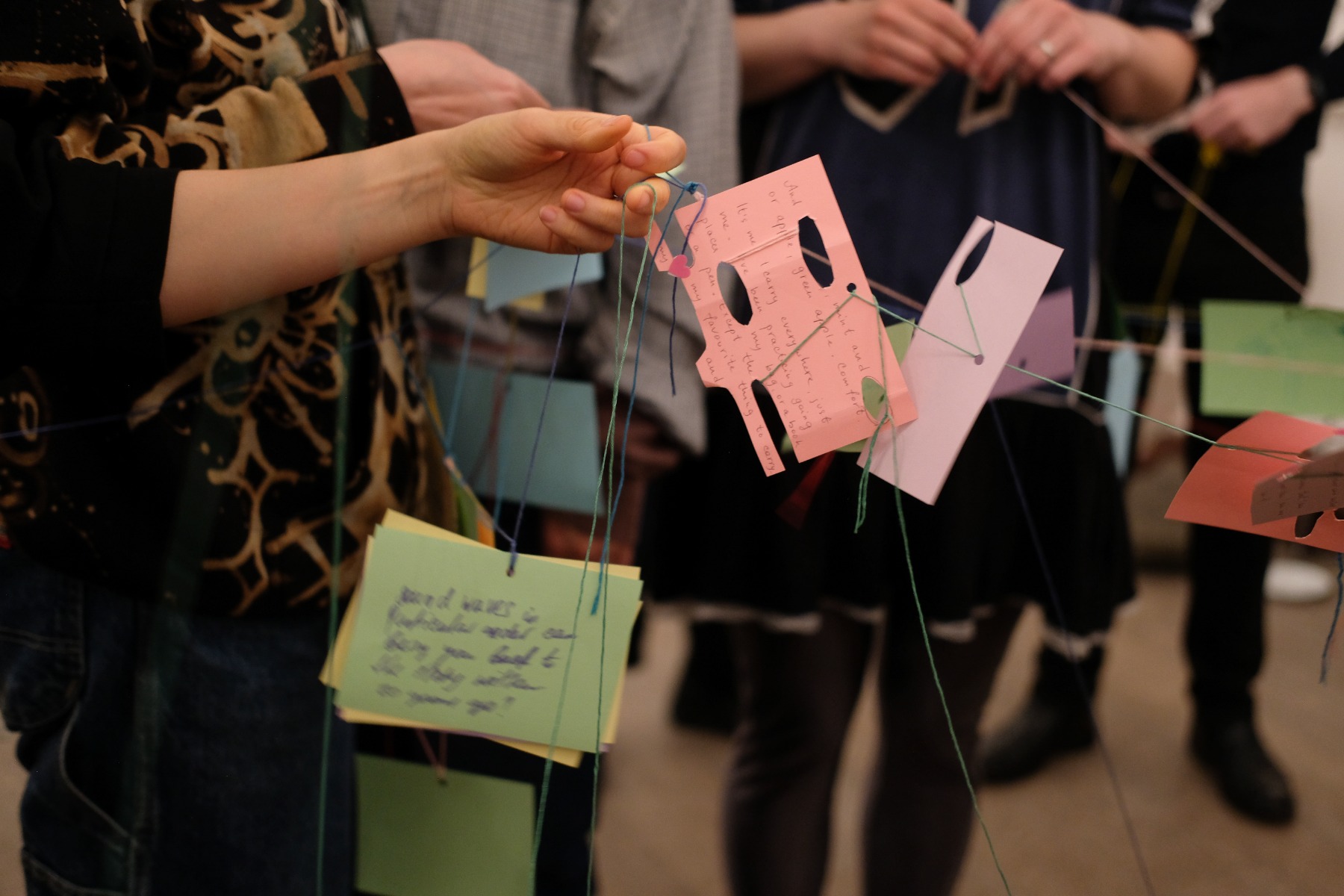
You also organised several workshops prior to the launch of the first issue, inviting artists and writers to share their perspectives on identity.
I wanted to bring people together not only on the page but also in person. At the time, I was part of Lot Projects in East London and had access to a physical space – a rare resource in this city – so I tried to make the most of it.
The workshops became an essential extension of the research. Nina Gonzalez-Park led a cooking session exploring contemporary Mexican identity; Elida Silvey facilitated a writing workshop on borders and language; and Caroline Ip, who is also guest editor for the second issue of In Between Knots, guided an exploration of patchwork, tracing the parallels between the craft and the fluid nature of cultural identity.
Each of them created moments of connection that extended well beyond the printed page and shaped the project in ways I couldn’t have anticipated.
Taquiza, workshop led by Nina Gonzalez Park, In Between Knots programme, 2024. Photo: Pietro Molinaris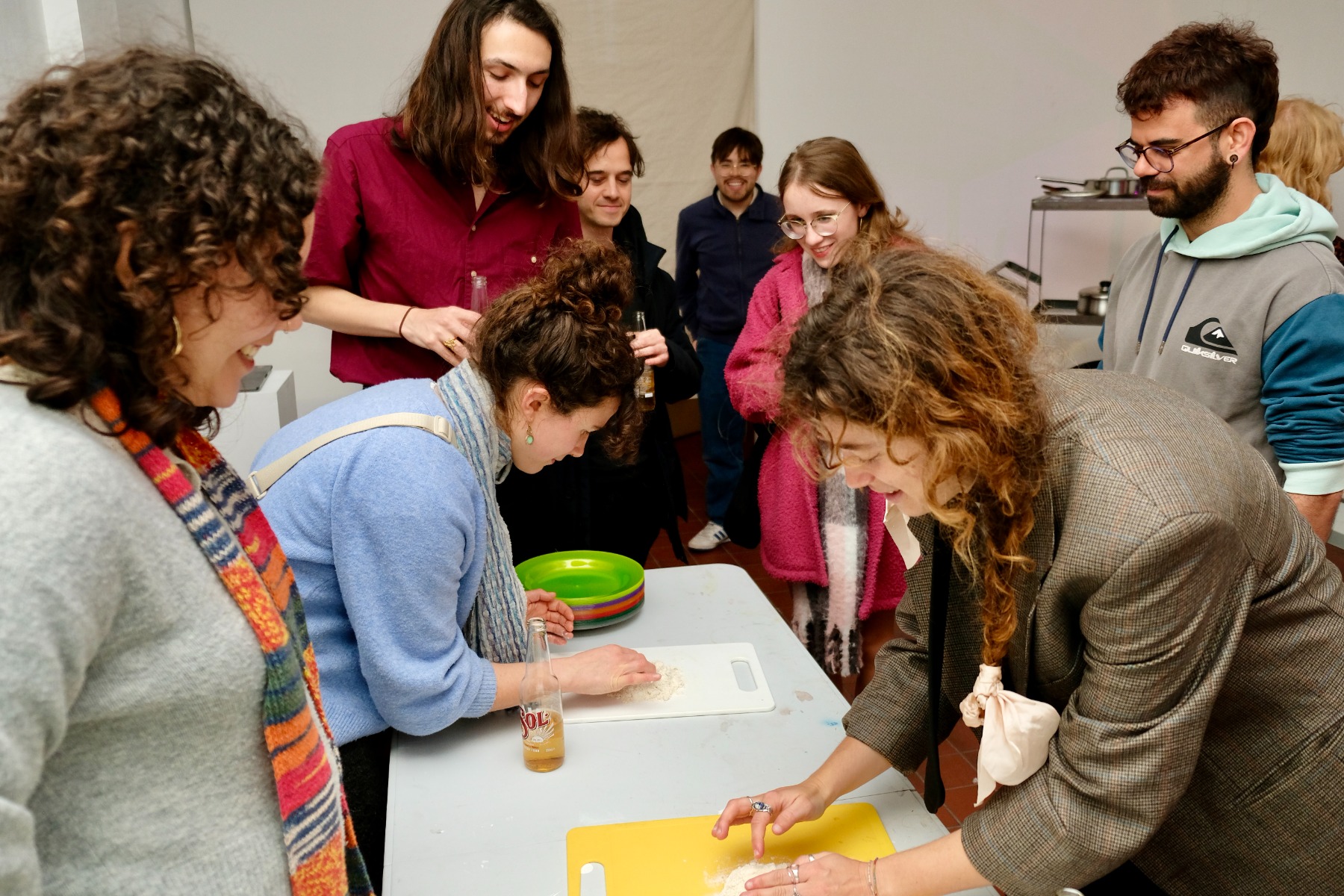
I am currently reading After Theory by Terry Eagleton, in which he writes, “It is to find one’s happiness in being the reason for the happiness of another.” He then discusses how the liberal model of society has produced individuals with private spheres and limited mutual interference.
It feels increasingly important to question the idea of the self as something separate or self-contained – a concept deeply embedded in liberal thought.
In relation to home, my own experience has always been relational. Emanuele Coccia’s Philosophy of the Home speaks to this beautifully: that to be at home is not simply to occupy a space, but to move through the bodies of others and to be shaped by what surrounds us. What we call home is then not a private enclosure, but a condition formed through the interweaving of lives.
Tell us more about the second issue, titled A Soft Undoing.
A Soft Undoing builds on the foundation of the first issue but shifts toward the processes of unravelling and repair. I was interested in what happens when knots loosen, whether they are inherited narratives, connections to place and people, or our internal ideas of identity.
While working on the issue, my own life began to mirror these questions. I moved out of a shared house that had grounded me – the longest I’ve lived anywhere in the twelve years since I left Latvia. As that sense of rootedness shifted, other ties to the city began to unravel. Intimacies changed, friendships thinned, and I found myself navigating a period of personal grief within a wider climate of collective loss.
So what began as a conceptual enquiry became lived experience. I started to see loosening as a necessary undoing, a reconfiguration of the line that opens space rather than closes it, even when that space feels uncertain. The response to the open call was so incredibly rich that the issue grew into two volumes, anchored by the interview with Ingold.
In Between Knots: A Soft Undoing (Vol One)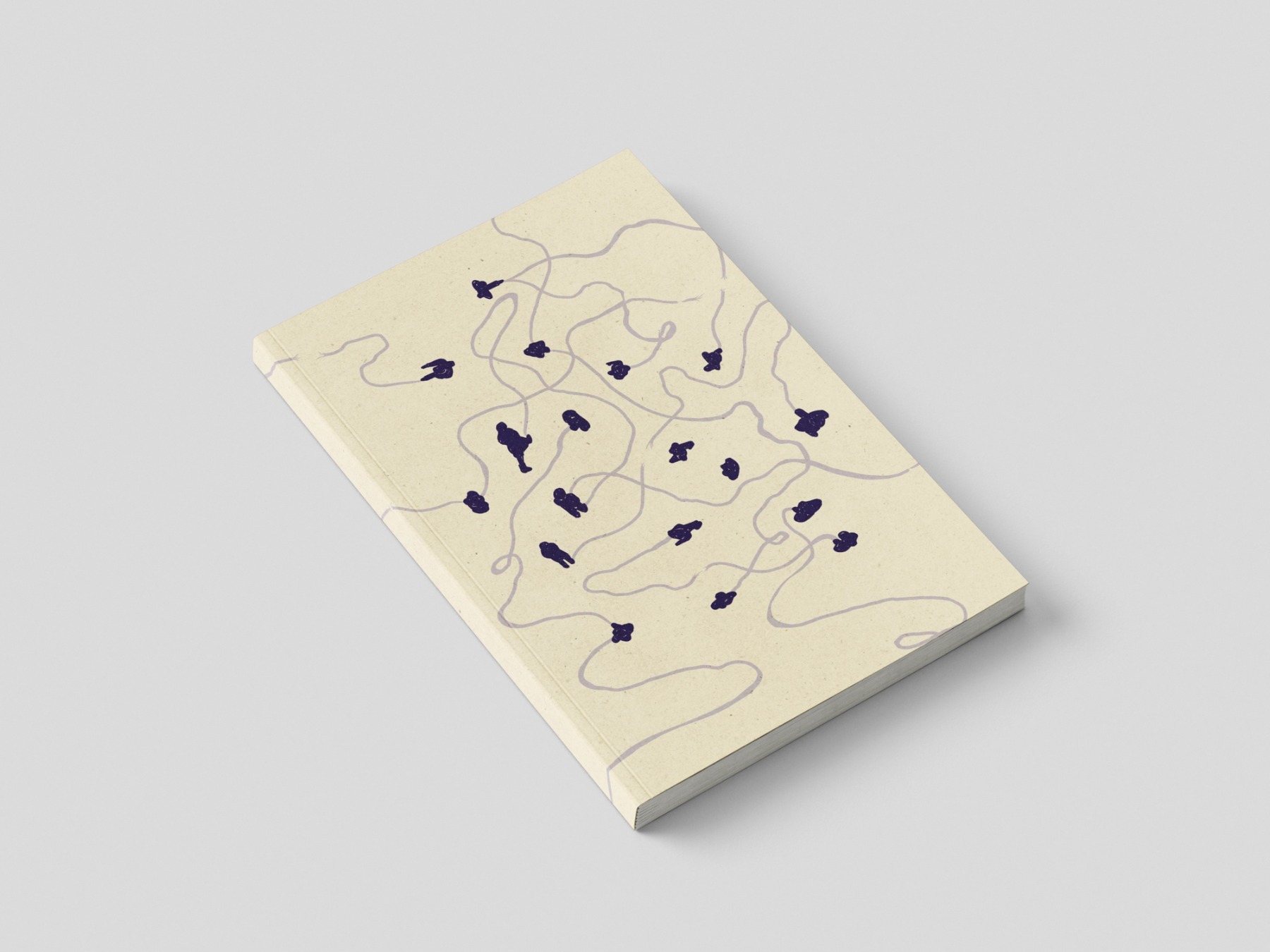
Given that the personal is often political, and the political inevitably becomes personal, was it difficult to divide these themes across two volumes, especially at a time of ongoing political emergencies that directly impact many people on a daily basis?
I see the two volumes less as personal versus political, and more as inward- and outward-looking. Though, of course, they’re inseparable. One cannot exist without the other, and many of the works across both volumes speak to one another. Volume One attends to undoing at a more intimate scale: within the body, memory, relationships, and private forms of care. Volume Two extends this outward, tracing how rupture and repair are lived collectively – across social, ecological, and political conditions. Rather than a division, it becomes a question of scale. From the fibre that makes us up to the rope that forms a collective.
Yasmin Jones, Tapestry, from In Between Knots: A Soft Undoing (Vol One)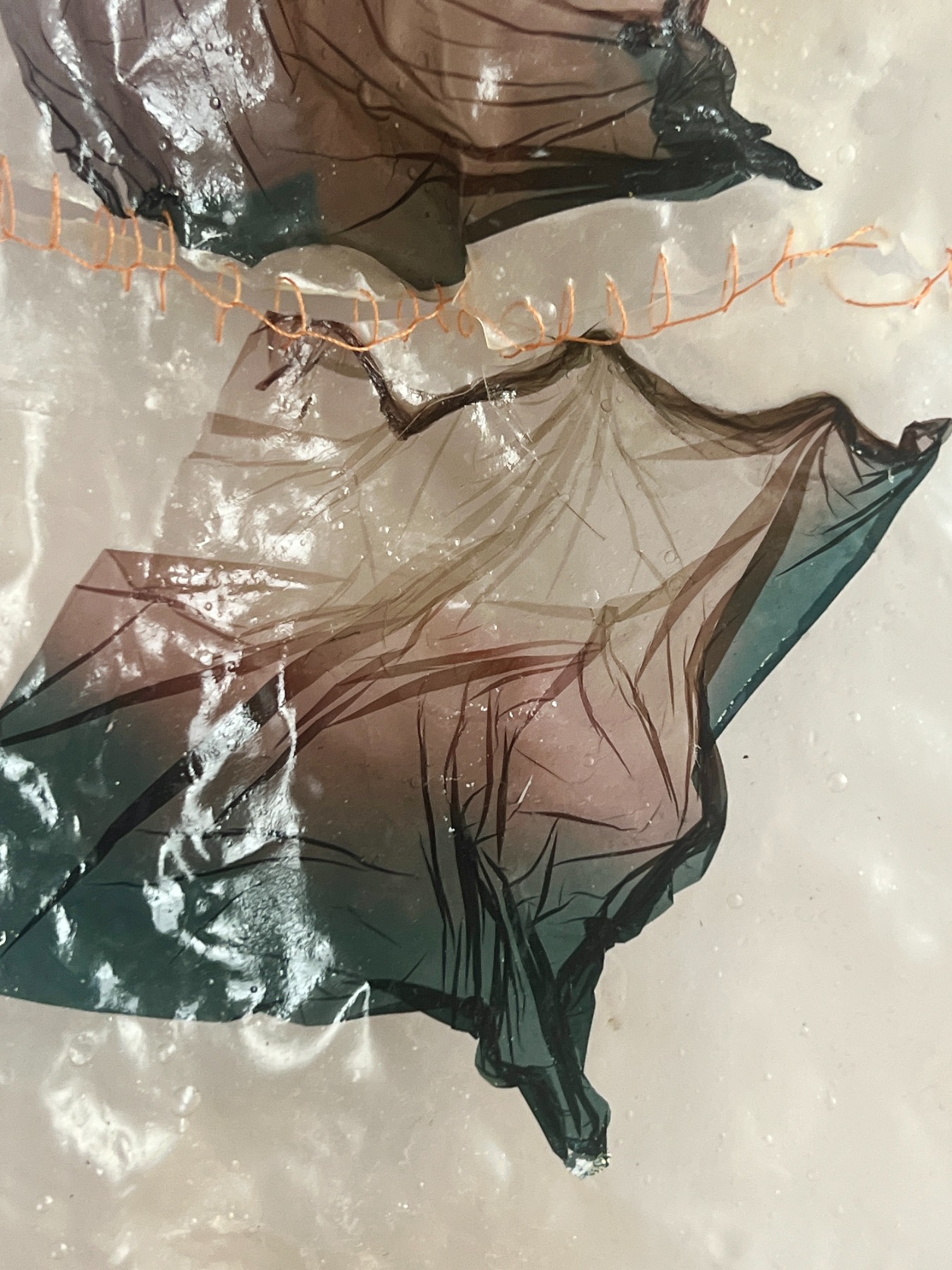
As someone slightly obsessed with The Life of Lines by Tim Ingold, I think it’s wonderful that you had the chance to interview him for this issue.
Honestly, it was one of the highlights of the past year! I was struck by the generosity of his thinking – the care and attention with which he engaged with my questions.
One of the most profound moments of our conversation was his critique of the logic of settlement. He argues that we often view movement as a gap between two fixed points, a state of limbo where the migrant is suspended until they arrive. He challenged me to see it differently: that movement isn't an absence of belonging, but a primary way of inhabiting the Earth. We belong not by locking ourselves into the ground, but through the traces we leave and the lives we entangle as we pass through.
Carrying that idea forward requires nuance, of course, and it shouldn’t minimise the trauma of forced migration and displacement. I’m very aware that my own migration was a choice, a privilege not shared by those moving for survival.
For me, thinking about rupture also brings to mind mending and continuity. Do you see these two volumes as spaces for imagining alternative futures?
Definitely! Rupture is never separate from mending. In an ecological sense, a disturbance, like a fallen tree, is not simply a death; it creates a light gap in the forest canopy, allowing new and diverse species to reach for the sun. When a knot comes undone, there are always loose ends – threads that can be retied or carried forward into another form. There’s a sense of solace in that; it suggests the possibility of something else emerging.
Launch of In Between Knots: A Soft Undoing (Vol One). Photo: Pietro Molinaris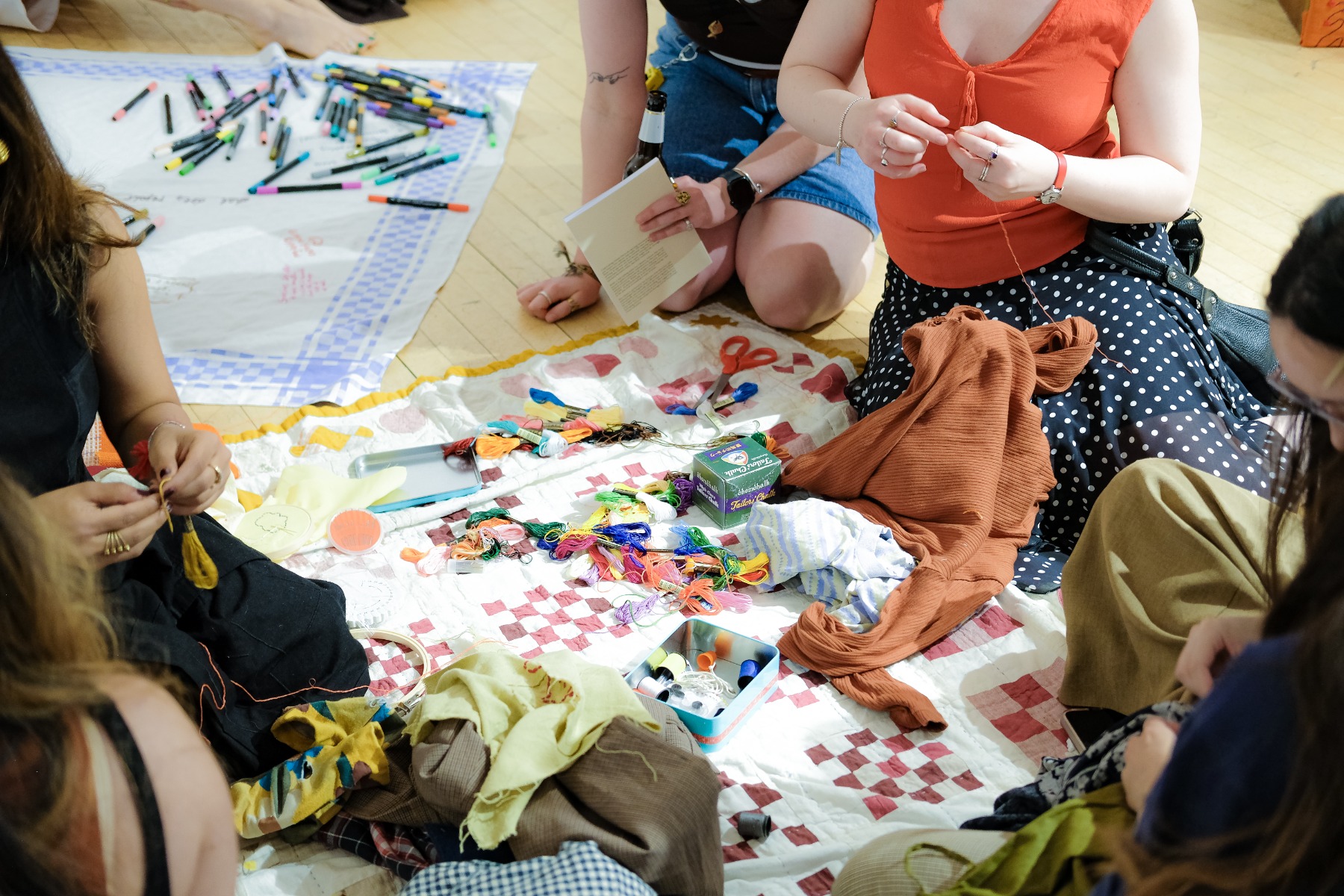
At the same time, mending isn't always about restoration. Not everything can, or should, be returned to what it was. So it becomes a question of how we can either repair the ecosystems we have participated in or find the collective resilience to continue otherwise.
Do you already have a date and venue in mind for the launch of the second volume?
I have a few ideas, but nothing is confirmed yet. With the first volume, we moved the publication’s research into a multi-sensory space at Staffordshire St, transforming the launch into a live extension of the work. This included readings by contributors alongside an installation by Margarita Frančeska Loze, a soundscape by Jamie Lee, and an interactive performance by Ananya Jain. It brought me so much joy to see how all of these individual elements responded to and complemented one another.
The goal is to ensure the launch remains a site of active dialogue rather than a static event, and I’m also looking forward to working with Sofia De Vita on design and Martina Francone on the covers.
Launch of In Between Knots: A Soft Undoing (Vol One). Photo: Pietro Molinaris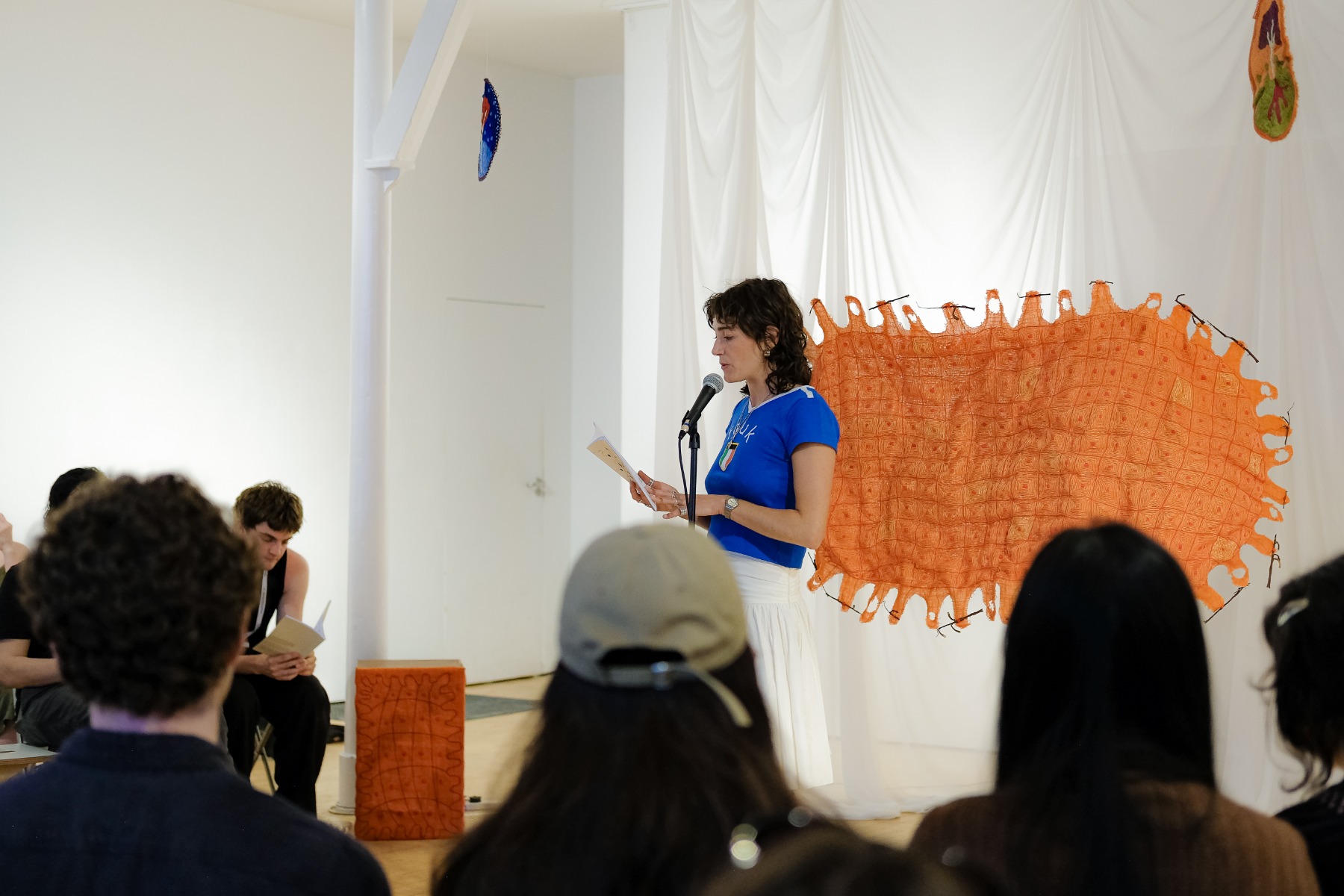
Launch of In Between Knots: A Soft Undoing (Vol One). Photo: Pietro Molinaris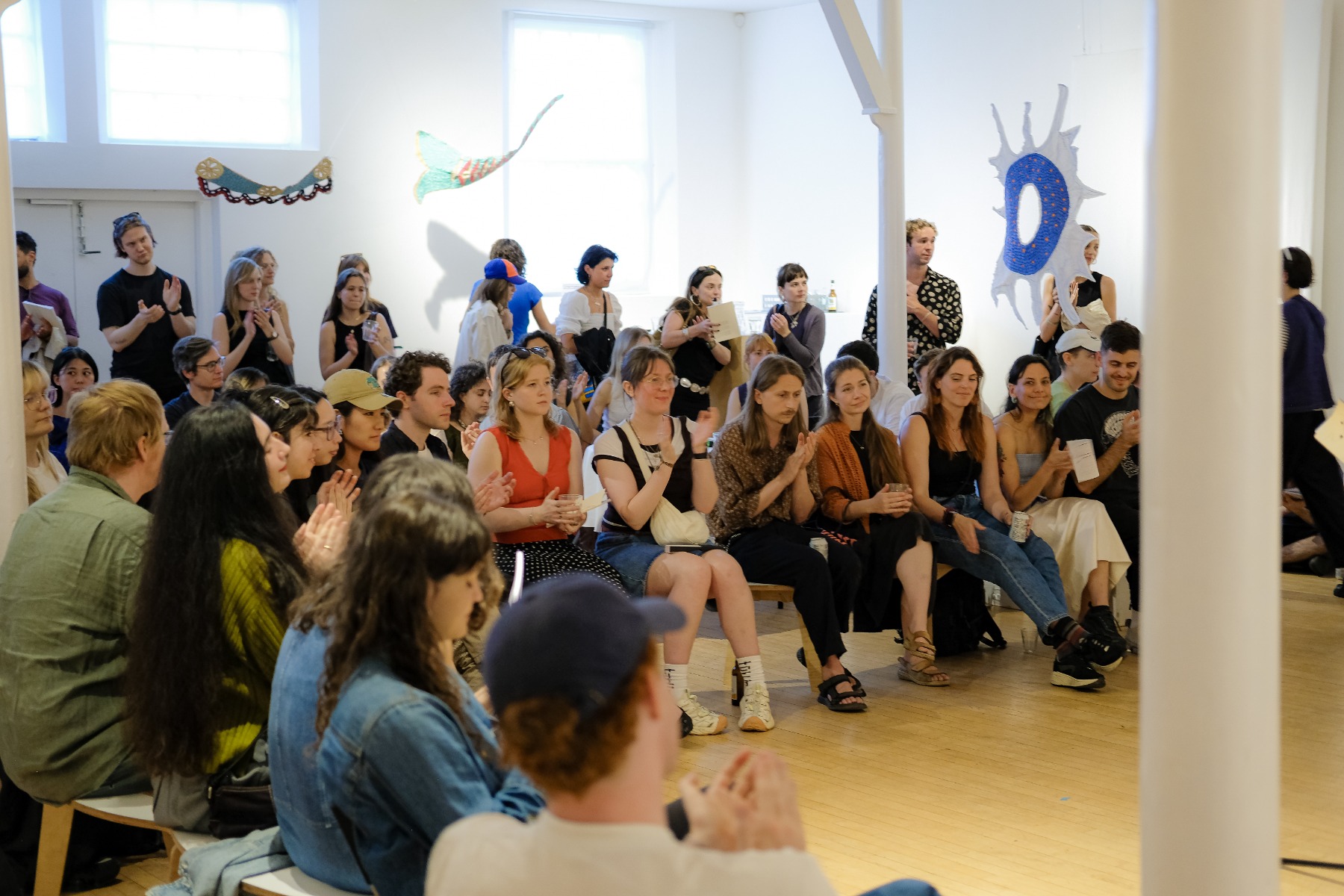
You work across art, writing, curation and socially engaged projects. Where do you feel most at home creatively?
I don’t think I feel at home in any one discipline. My practice has always unfolded ‘across’ as opposed to ‘within’, and moving between them feels most true to how I think.
What can writing do that exhibitions cannot, and vice versa?
Writing and exhibitions are not separate forms, but different ways of organising attention and relation – one unfolding primarily in time, the other in space, though neither remains fully contained within those limits. I’m interested in how both extend beyond them, with writing becoming spatial and relational, and exhibitions persisting through their afterlives – in textual forms, audio, and the relations they produce.
In your curatorial practice, how do you ensure that care and collaboration become real working methods, not just abstract ideas in wall texts?
Care and collaboration are not values that sit alongside a project, but the forces that shape how it comes into being. It begins with structuring the work so that different voices can lead it, rather than reinforcing a singular curatorial authorship. And while collaboration can be formalised through shared credits, care is more elusive. It’s intrinsically tied to time, the very resource that the current project economy seeks to compress.
Within those constraints, collaboration becomes one way of moving towards care in practice. For example, in Pickled! at APT Gallery, this involved co-creating audio descriptions with artists and facilitator Joe Rizzo Naudi, treating accessibility as an integrated creative layer rather than an afterthought – although, of course, audio description is only one entry point within a much broader conversation about access. Similarly, for Beyond Our Bodies Our Beings Extend at PILOT Gallery, we invited practitioners from various fields to write responses to the films, intentionally opening the work to multiple readings rather than a single interpretive frame.
Pickled!, APT Gallery, 2025. Photo: Pietro Molinaris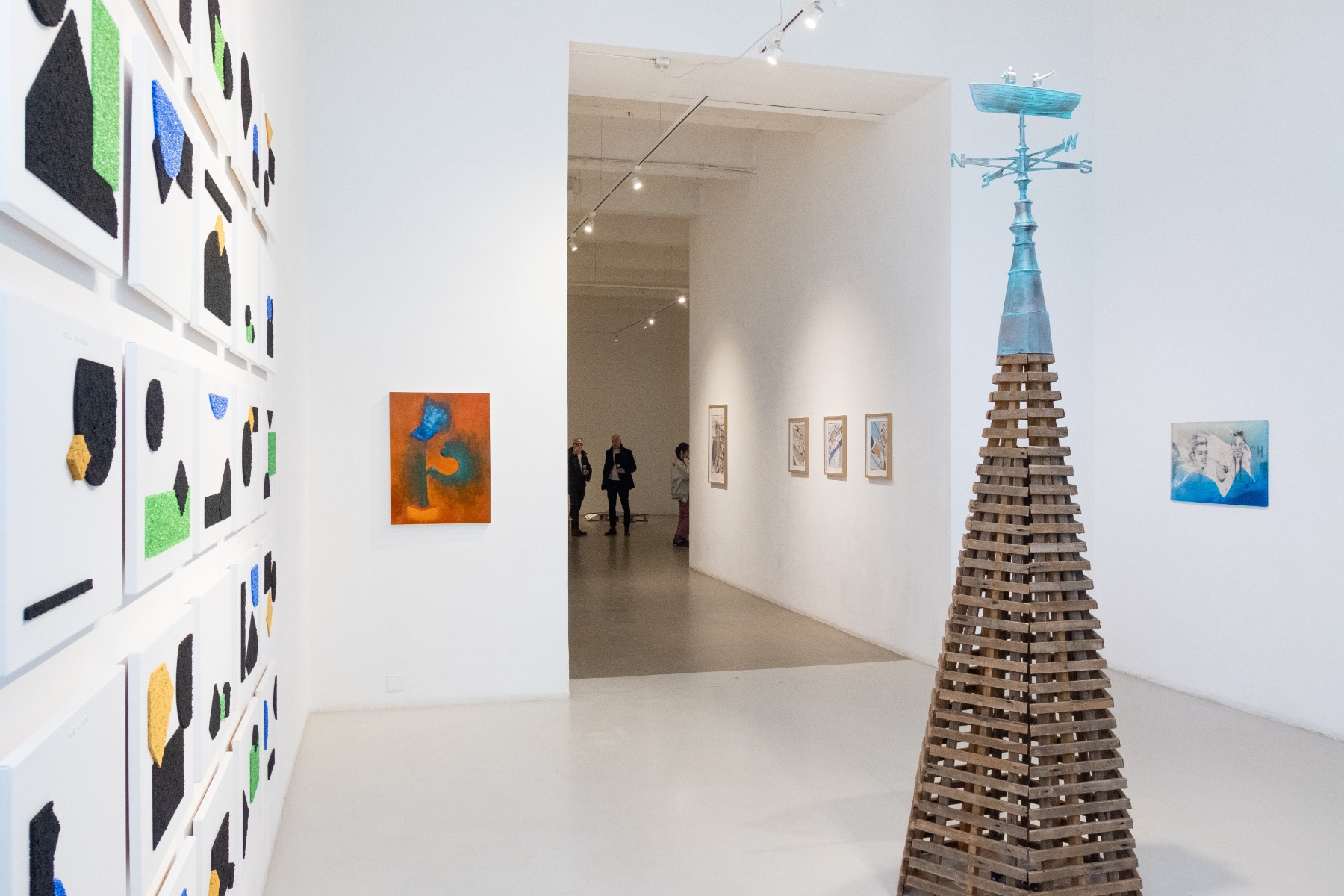
You work at Acme Studios. For Latvian readers, the name may sound familiar, as the Art Academy of Latvia has a partnership with them and each year one MA graduate has the opportunity to join Acme’s Early Career Award Programme. How has working there shaped your understanding of artists’ everyday realities?
Working at Acme has made clear how much an artistic practice relies on a stable site of production, and how fragile that stability has become. Especially in a city like London, where hyper-development and rising costs are steadily displacing artists. It has also reinforced my belief that we cannot talk about art as a public good without first protecting the physical spaces that allow it to exist.
What aspects of cultural and art work remain invisible that you wish audiences understood better?
Good question! We often encounter art at the moment it becomes visible – the exhibition, the publication – without seeing the unstable conditions surrounding it. What remains invisible is the economic precarity that underpins much cultural work, and the immense emotional labour required to sustain it over time.
Which structural issues in the art world feel most urgent to you right now? Funding is an obvious challenge everywhere, but are there other concerns that stand out?
What feels particularly urgent is how normalised instability has become within the cultural sector, as though exhaustion, underpayment, and overextension are inherent to creative life rather than symptoms of structural failure. At the same time, the basic conditions that make creative work possible – time, space, mobility, and financial security – remain a luxury. There’s an undeniable friction between the values the art world publicly champions and the actual material realities of its labour practices.
What gives me hope is seeing how cultural workers are refusing to accept this as the default. There is a shift happening toward self-organisation – through community cooperatives or networks of mutual aid – where people are actively building alternative spaces to protect and sustain one another.
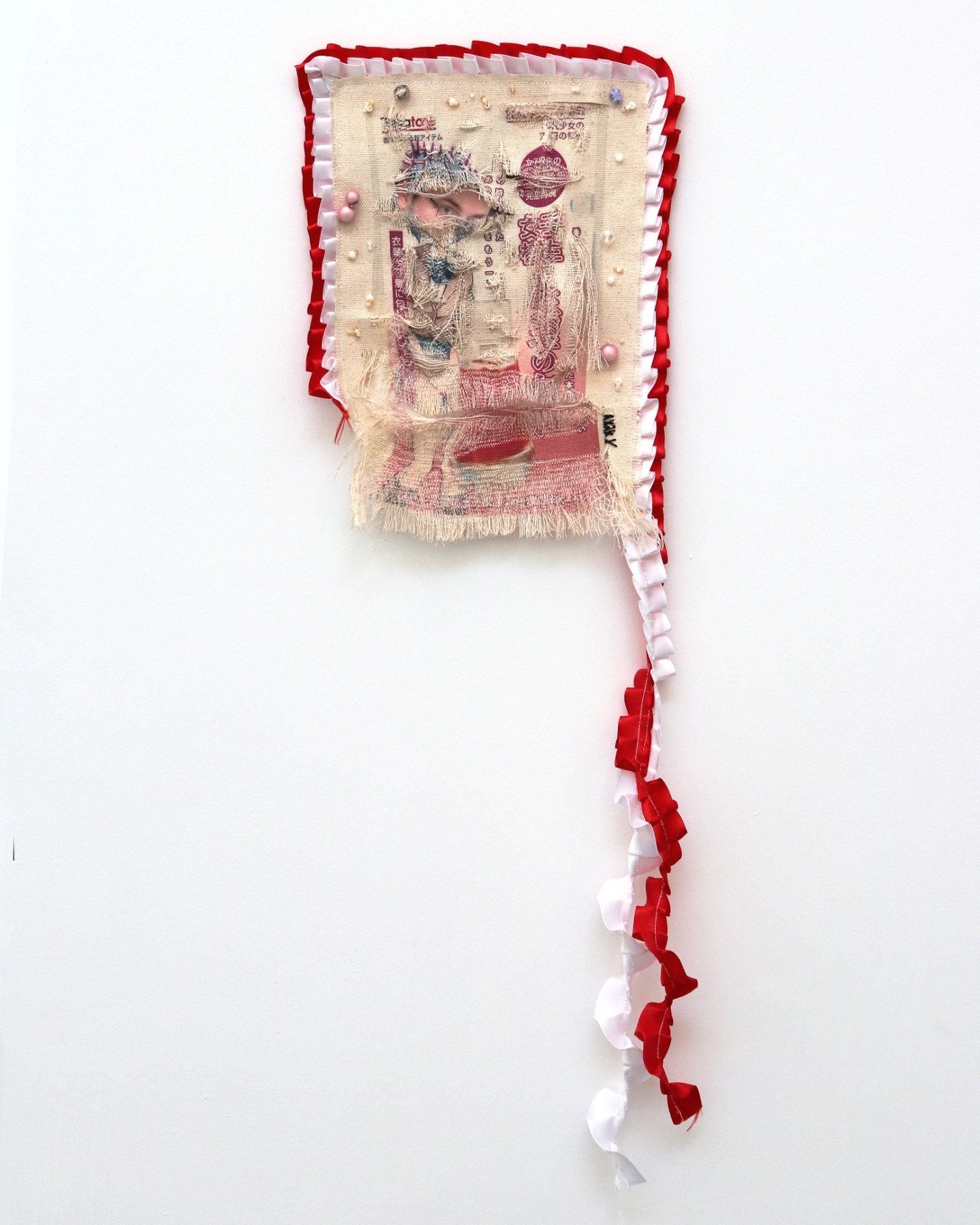
Marine One, from In Between Knots: A Soft Undoing (Vol One)
Is London a place where you imagine settling, or simply another point along an ongoing trajectory?
London has been home for the past five years, and I do feel like I’ve landed here. But I’ve also become less attached to the idea of arrival as an endpoint. I’m more interested in how a trajectory continues, and where it might lead next. For now, I want to keep building a life here.
Many people talk about being “in between” as instability, but it can also be a position of perspective. What advice would you give to those who feel “in between” places or identities?
There is a persistent pressure to arrive – to become legible, settled, or defined. But clarity often comes at the cost of complexity, and being “in-between” can resist that reduction. It’s not always comfortable, but it can be generative.
My advice would be not to rush toward resolution. Stay with the discomfort, and trust that a sense of home can be built within the transition itself.
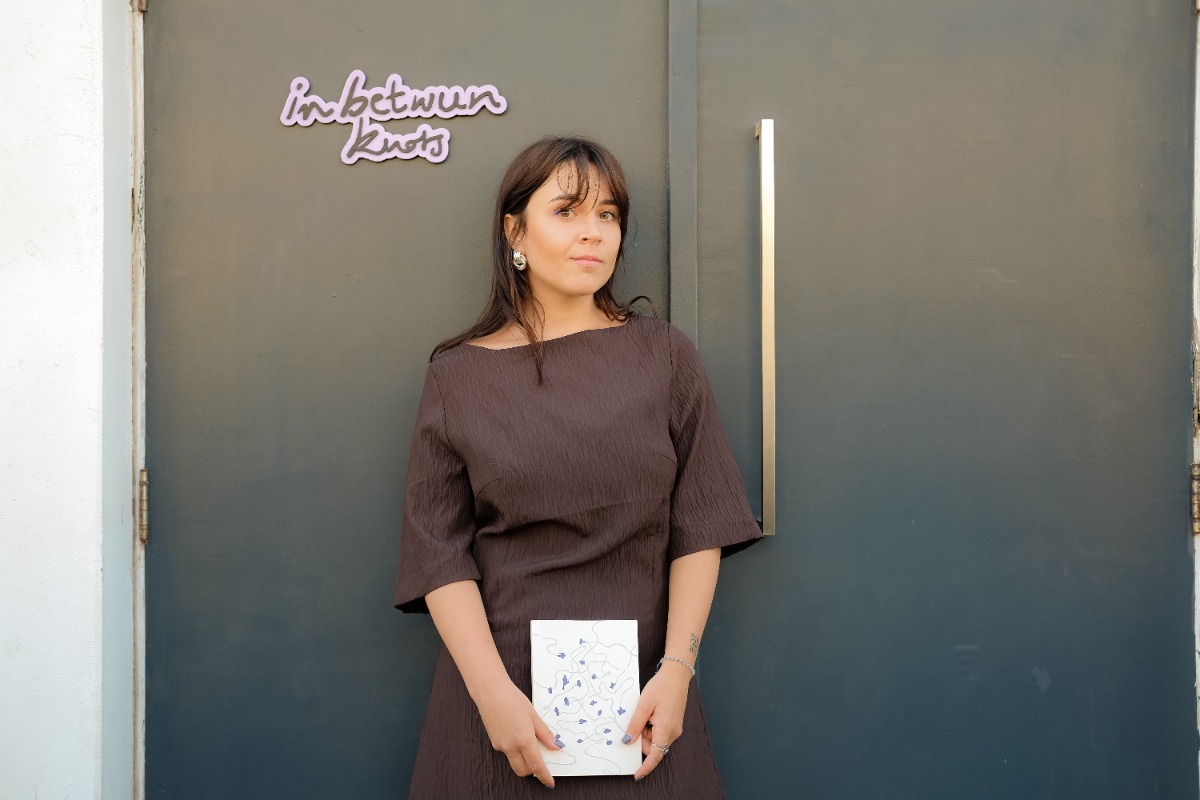
Title image: Nastia Svarevska. Photo: Pietro Molinaris
