


Thinking is a full-body experience
An interview with Zorana Ivcevic Pringle, a Senior Research Scientist at the Yale Center for Emotional Intelligence and Director of the Creativity and Emotions Lab
What does it take to transform an idea into reality? How do emotions shape the creative process? And why might uncertainty, despite being deeply uncomfortable, be one of the essential conditions for creativity?
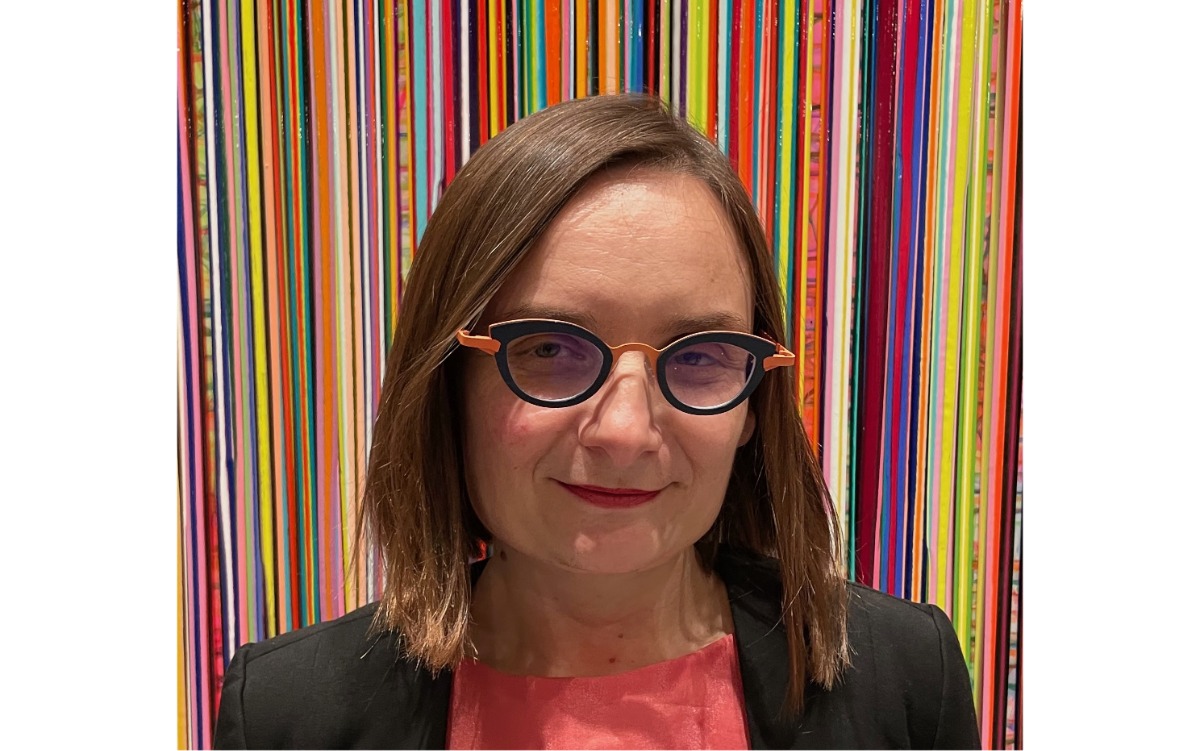
These questions are at the heart of the work of Zorana Ivcevic Pringle, Ph.D., a Senior Research Scientist at the Yale Center for Emotional Intelligence and Director of the Creativity and Emotions Lab. Her research focuses on creativity, emotions, emotional intelligence, and self-regulation, exploring how people generate ideas, navigate uncertainty, and bring creative work into the world.
In her recent book, The Creativity Choice: The Science of Making Decisions to Turn Ideas into Action, Pringle argues that creativity is inseparable from uncertainty and explores how curiosity, emotions, and everyday choices shape the journey from an idea to its realization.
This conversation is part of the dialogue series accompanying the exhibition How Are You Today? Emotional Intelligence at Riga Contemporary Art Space (July 2–September 13, 2026), a project exploring emotions not only as psychological states, but also as cultural, social, aesthetic, and existential phenomena.
In our conversation, we discuss the relationship between creativity and uncertainty, the origins of ideas, the role of curiosity and emotions in creative work, and what art can teach us about attention, empathy, perception, and human experience.
We are living through a period of profound uncertainty, and many people find it difficult to cope with. Yet in your book, you write that uncertainty is inseparable from creative work.
Why do you think uncertainty is so psychologically challenging for us, while at the same time being such an essential part of creativity?
Uncertainty is where creativity comes from. Maybe a good place to start is the definition of creativity. We all intuitively know what creativity is. We understand that word, but if pressed to define it in our own words, without guidance, we might find it difficult. Creativity scholars agree about the definition: Creativity is something that is, at the same time, original and effective.
Now, both originality and effectiveness can take different forms. Something that is original can be original just in relation to yourself and your prior experience. You might have a new insight you didn’t have before, but other people had it. Then it could be something that is original in relation to your immediate environment, or your professional circles and domain of work, all the way to eminent creativity that changes how we live.
In the same way, the meaning of effectiveness varies. Something that is effective in an engineering environment means it is solving a problem; it is working in some way. What is effective in the art space is something that is getting a reaction from its audience. If something has to be, to a certain extent, original to be considered creative, we have to depart from what has been done before, and therefore there is no blueprint for how we get from our ideas to their realization. And if there is no known way of getting there, it means it’s uncertain. It’s uncertain whether we have the skills or the capacity to make it happen, and it’s also uncertain how we make it happen.
So when you bring up the idea of uncertain times, creativity always comes from uncertainty. It’s just a matter of what kind of uncertainty we are talking about. That does not mean that every kind of uncertainty, or uncertainty that is related to crises, always leads to creativity, but there is a potential for it to happen. This potential is very important, because in times of uncertainty there is no solution or way of acting that we can rely on because it has worked before, and so we have to do something different. Whether we are creative or not is going to depend on the resources we have: personal resources and social resources.
You have already touched on this, but the question of where ideas come from still seems remarkably open. Many artists have told me that they enter a particular state where everything else disappears, yet they often struggle to describe what that state actually is.
And then there are those moments when we are unable to solve a problem, only for an idea to appear later while walking, talking to a friend, or doing something completely unrelated. We tend to experience these moments as mysterious. From the perspective of creativity research, how much do we actually understand about where ideas come from?
It’s a very interesting thing that you’re bringing up. It feels like a mystery. We experience the creative process as a mystery, but if we step back and look at everything we know about it, we do have many answers.
We know that ideas are not coming out of nowhere. They are not coming out of a vacuum. They are emerging from our prior experiences, from our knowledge, and from making connections among them. What gives rise to creative ideas is the nature of our experiences. In this sense, creative thinking depends on curation of what we know and come in contact with. Each of us has unique experiences based on our background, our upbringing, our cultural context, our educational history, what we have tried, what we have succeeded at, and what we have learned from challenges, both implicitly and explicitly. New ideas are also inspired by the social nature of creativity. This can take a form of interacting with others in our minds, through hearing or reading work of others. And it comes from conversations, whether we are talking to colleagues or someone we loosely know at a conference or an event. These interactions can provide new perspectives and ways of making original connections, which give rise to creative ideas. My ideas often start with the, “That reminds me of...”. That association can be relatively abstract at first, but it can provide an unexpected direction.
So, emergence of ideas feels mysterious or even magical. But it is really coming from living in the world and actively participating in it.
What gives rise to creative ideas is the nature of our experiences.
Yeah, I remember my conversation with the British neuroscientist Daniel Glaser, and he said that we are what we see, and that our visual literacy is very important. It is important for creativity, but also for openness. And curiosity, I think, plays a huge role too. Sometimes, with our lives being so hectic, we lose a bit of that curiosity.
What we see, of course, does not have to be only visual. It can be anything we perceive. Because of the primacy of visual input for humans, we often use the word see when we really mean experience through any of our senses.
Creative work benefits from engaging the full body. There have been studies done with designers where one group was asked to think only inside their heads to solve a design problem, while another group was given the same challenge but also had the ability to interact with physical objects, materials, and props. The latter group ended up developing more creative designs because this interaction with objects – which is tactile and kinesthetic – contributes to successful thinking.
I think that using the word thinking is almost misleading, because we tend to define thinking as something that happens only in our brains, inside one part of us. But really, it happens as a full-body experience. It involves seeing, interacting, playing, and exploring.
And you are bringing up curiosity. Recently, a very large group of creativity scholars – really, it was a field-wide endeavor – with more than 200 researchers involved, defined what we mean by creativity and what are the key ingredients that make creativity happen, based on everything we have learned about it. The number one attribute that emerged was curiosity.
Curiosity is part of the broader trait of openness to experience. This trait includes intellectual openness - looking at and perceiving the world with a desire to learn something new and entertain a broad range of ideas. It also includes experiential and emotional openness, being willing to experience a wide range of feelings, and pursue experiences that expand our perspectives.
What is the role of emotions in creativity? Emotions, in a way, are information, and all emotions have their specific roles at different stages of the creative process. There are no good or bad emotions when it comes to creativity. Each of them plays a particular role. You write about this in your book, but perhaps you could also tell us, in the context of our conversation, what is the role of emotions in the creative process from your perspective as a researcher. We often do not think about emotions as an important part of creativity.
We often don’t think about emotions; we feel them. They seem to just happen to us. But research in emotion science has found that we have agency in relation to our emotions. We can do something about them. Emotion scholars now see emotions as information. That might seem very cold. It might seem as though we are stripping emotions of their energy and their power, reducing them to something binary, almost like input in a machine. But let’s consider what viewing emotions as information actually does.
Let’s say that you are feeling frustrated. Saying that emotions are information means asking yourself: What is this experience telling me? Feeling frustrated is telling you that you have reached a block, that you have encountered an obstacle, and that the way you have been approaching something is not working.
Now, that is very useful to know because it contains a hint about what the next helpful step might be. Because frustration conveys information that what you have been doing is not working, it suggests to change your approach. That might not be obvious in the moment of experiencing frustration, but if we become skillful at reading the meaning behind an emotion, it can become very useful.
Or take another example: feeling angry. When we are angry, we are activated. We are not necessarily thinking and analyzing in that moment. However, if we step back, even just for an instant, and ask why anger happens, we realize that it is usually related to an experience of injustice, or a feeling that something is unfair. Again, if we understand that anger is telling us there is an injustice, it can point us to a problem that could and probably should be creatively solved.
That makes the question, “How are you feeling today?”, very important.
It is a very important question.
Emotion scientists have found that identifying very specifically, in a granular way, what we are experiencing in a given moment is a first step toward regulating our emotions. Just the act of naming what you are feeling can make you feel better. Imagine an experience we often describe as being stressed. It is unpleasant and highly activated. What happens if we pause and ask whether there is a different label we can attach to it? Could we be more specific than simply saying stress?
Could it be that we are disappointed? Or could it be that we are anxious because of an element of uncertainty in something we are doing? Those more specific labels would give us more information, and that information could then point toward different ways of approaching and dealing with the feeling.
Identifying very specifically, in a granular way, what we are experiencing in a given moment is a first step toward regulating our emotions.
When I spoke with Peter Salovey, he said that his research on emotional intelligence actually began with a question that a colleague asked him, a question that interested him as well: Why do we have an emotional system?
What would your answer be? What are emotions? We have been discussing how emotions are information, how they can help us, and how we can regulate them. But what are they, really? Why do we have them?
I think the question of what emotions are is an interesting intellectual one, and there is a lot of debate about it in the field. I don’t think we have a definitive answer, but I think there are some things that we agree on. We agree that there is a subjective feeling, an experience of pleasantness or unpleasantness, calm or activation. Emotions are also personally meaningful, they have immediacy and relevance to our lives.
One thing that we have also touched upon is that emotions are information. That means there is a cognitive component to emotions. Emotions are information in the sense that there are common or typical causes behind different emotional experiences, and with experience and skill-building, we can learn to identify them.
Often, emotion scholars take the discussion a step further and ask what kinds of experiences should be considered emotions, as opposed to experiences that might be better described by other terms, such as feelings or core affect. These are all concepts that scholars use when trying to understand and describe emotional experiences.
But why is it so often difficult for people to identify and describe how they are truly feeling? And do you think our experience with art can help with that?
I think it is difficult to describe our emotions for multiple reasons. One is that we are rarely taught about emotions explicitly. We pick up bits and pieces from interactions with other people, often implicitly. There are significant differences in how people talk about emotions – or whether they talk about emotions at all. We also learn about emotions from what we read and from how we interact with culture, including art.
I think another reason why it is difficult to describe emotions is that even within a particular category of experience, let’s say joy, there is enormous variation. We all know what joy is. It is not one of those words that are especially challenging to define. Yet, it can still be difficult to describe the exact flavor of joy in a moment. I’m borrowing from a different sensory domain to start describing it.
Art can provide means of description that go beyond single words. It can take us into a territory that uses metaphor, description, visual imagery, and time-based narrative.
Imagine reading poetry that describes a sense of joy. Or imagine seeing a painting that expresses joy through color. Or imagine a video installation that conveys it through time and motion. We might not have all the words to describe that particular kind of joy, and we might not have a single word for it at all, but we can come to experience it through art. Through art, we can come to understand what somebody else is feeling, which is the heart of empathy. It is thus fitting that the word empathy was first coined to describe the experience of “feeling into” art.
Art can provide means of description that go beyond single words. It can take us into a territory that uses metaphor, description, visual imagery, and time-based narrative.
Yeah, it’s interesting. I did not know that. Another thought came to my mind during our conversation. At the beginning, you mentioned perception and the involvement of all the senses, including the tactile sense. In a way, I think art often foresees the things we, as a society, need to pay attention to.
For example, I have just returned from the latest Venice Biennale, where there were many works involving ceramics. I have also noticed that, in recent years, many of my artist friends have started experimenting with clay. They want to do something with their hands. It seems that, perhaps intuitively or subconsciously, we are missing the tactile dimension in our digital age. The sense of touch is deeply connected to our evolution, and I also think it is important for our cognitive processes.
Your hunch certainly resonates. When the whole culture is talking about things that are disembodied – our digital lives and so-called artificial intelligence - we start asking questions. Is what machine does really intelligence? How should we think about it? And in doing so, we begin searching for what makes us uniquely human.
Perhaps implicitly at first, and then more explicitly, as in the examples of artists you mentioned, we begin to realize that there is something important about having a body and having an expiration date. We are not eternal beings. We change over time.
And the process of working with clay engages multiple senses. The interaction with the material also has a temporal dimension. It unfolds over time. Working with clay becomes an activity through which we can feel ourselves expressing our full humanity.
And I think artists – and you also write about this in your book - spend a lot of time in receptive states, thinking, looking, researching, and observing. Many of us simply do not notice the things that artists notice when they are working on a new piece, whether it is music, visual art, or another form of creative expression.
How do you think art could help us train our attention in a time that feels increasingly fragmented? We know that our attention spans are shrinking. We also know that, in museums, people spend only a very short amount of time in front of an artwork. And yet, to truly connect with art, we need to look. We need to pay attention. We need to stay with the work for a while.
At the same time, good art seems capable of helping us do exactly that. Does art itself have a kind of agency that captures and directs our attention?
I think that art has the potential to be a means through which we engage with the world and develop understandings. The agency comes from people and their willingness to engage. Art is a medium or a mirror between artistic process and the audience. Artists interact with the world, develop visions of how the world works, and express those visions. The resulting work becomes a means through which audience members can, in a sense, reverse the artist’s experience. Audiences begin with those first elements that grab attention within seconds of encountering a work of art. If they continue engaging with an artwork, they start asking questions and making associations. Connecting art to personal experiences or knowledge.
As people continue engaging, they begin forming hypotheses and intuitions about where the artist’s ideas and vision are coming from. This is the process of extracting meaning. Meaning about the nature of the artwork itself, about how we see ourselves, and about how we understand the world.
Art becomes a conduit. The artwork displayed in a gallery becomes a way of engaging with the world in a deep way. It can be a helping hand in a time when we are distracted. In this process, we might gain insights about our identities, come to understand our emotions better, realize something about the social and moral issues around us, begin to question how we see the world, or have deep spiritual insights.
Art is a medium or a mirror between artistic process and the audience.
Yeah, that brings me to a question: Can art make us feel better? Is art a way to greater well-being?
Art has a healing effect. Art can make us fully experience a sense of being alive in all of ourselves – in engaging our senses, developing our understandings, and engaging with emotions.
A single experience is not going to change our lives. But making art a regular experience of life, making art a part of how we live, might significantly contribute to our well-being.
Yes, you have to practice it, just like you practice meditation or anything else. Only then does it work.
Experience of art is indeed akin to meditation. You wouldn’t expect a single instance of meditation to change your life. You shouldn’t expect a single experience with art to change your life (although occasionally it can). But it is one of the powerful experiences that makes us human.
Thank you!
