


Moving Faster Doesn’t Always Mean Being Free
An interview with the curators and organisers behind the 5th Råneå Biennial
Råneå is not an obvious place for a biennial. Perhaps that is precisely what makes it interesting. Founded in 2018 by artist Mats Wikström, the Råneå Biennial has grown out of the place itself – its people, histories and existing networks – while bringing contemporary art into spaces where one might not necessarily expect to encounter it: a former bank, a bus station, a Thai restaurant, an airport.
Its fifth edition, So Far, So Good… Now What?, opens on August 29 and takes movement as its starting point. Drawing partly on Råneå’s history of shoemaking, it looks at movement not only as something physical, but as a question of speed, distance, access and inequality – of who is able to move freely, who has to wait, and whether moving faster necessarily means moving forward.
This edition also marks a moment of transition. A new generation of organisers and an international curatorial team are taking the biennial into its next chapter, while asking a question that extends well beyond Råneå itself: so far, so good – but what happens next?
Arterritory spoke with the team behind the fifth Råneå Biennial: founder Mats Wikström; organisers Linn Lindström and Isak Anshelm; and curators Ana Victoria Bruno, Silvia Colombo, Sixten Liu, Kerstin Möller, Foteini Salvaridi and Anastasia Shestak.
The title of this year’s Råneå Biennial is So Far, So Good… Now What? It sounds both optimistic and uncertain. What questions did you want this edition to ask rather than answer?
Curatorial team [Ana Victoria Bruno, Silvia Colombo, Sixten Liu, Kerstin Möller, Foteini Salvaridi, Anastasia Shestak]: We are a group of six curators, both from Sweden and from abroad. We first met in 2023 during Konstfack’s CuratorLab programme, through which we travelled extensively across the Swedish part of Sápmi under the direction of Joanna Warsza and Maria Lind. When the programme ended, we inevitably began looking for ways to continue working together.
When we began talking with the founder of Rånea Biennial, Mats Wikström, a friend and collaborator from our CuratorLab year, he told us that, if the next edition ultimately went ahead, this would be the final one of the biennial. We immediately resonated with that feeling. It brought questions of longevity, economy, and temporality very close to our own situation. What happens afterwards?
The decision-making process, and the transition from Mats to a new generation of promising organisers, unfolded at the same time as we were becoming the curators of this edition. In that sense, the biennial became a space in which we could think through some of these questions, not only in relation to the institution itself, but also in relation to contemporary society and the precarious moment we find ourselves in today. We feel that, in this sense, some of the questions had already been answered before the opening. Others, however, remain deliberately open. Some emerge from the themes of the biennale and the questions that arise from the multiple crises of our societies; others are much more personal, such as: What will happen to our group after this?
We are curious to see both the answers this edition might generate and the questions it might leave us with.
Unlike many international biennials centred on major cities, Råneå takes place in a small community in northern Sweden. What possibilities does this geographical position create? Does distance from traditional art centres become a limitation – or a form of freedom?
Mats Wikström, artist & founder of Råneå Biennial: Råneå is a small coastal town, but it also serves as the hub for a larger area: the Råneå River Valley. Until 1968, the area constituted its own municipality, and a sense of cohesion has persisted even though the upper section was incorporated into the Municipality of Boden and the lower, coastal section into the Municipality of Luleå. I view the area’s location solely as an advantage. However, proximity to Luleå proved to be a prerequisite for the biennial. The Råneå Biennial began as a response to all the hype and generous funding surrounding the 2018 relaunch of the Lule Biennial (as it was known then without the å, with my ex-wife at the helm). Things happen for a reason, so I started a biennial of my own – the 2018 Råneå Biennial. It was launched the same day and same time as the Lule Biennial without funding, but with a desire to poke the bear. The two biennials are on friendly terms now, though a certain healthy rivalry likely remains.
Linn Lindström, artist & organiser of 5th Råneå Biennial 2026: I love art, and I love the space for translation and reflection that art can offer. I can really appreciate the grandeur of it, the way the body can be overwhelmed at once by scale and material. And the things that have cost enormous amounts of money to produce and execute. Or the white cube, where a small painting can occupy an enormous wall. Poetry.
But it is not a world that we can, in any meaningful way, compete with. And I also believe in art outside those spaces. I find something exciting and challenging in having to redirect your trained eye, the eye that, when rushing through the Venice Biennale, can decide within a second whether something interests you or not. In places like these, you have to look with another part of yourself, one that is less institutionalised. This has helped me open up more rooms within myself. Looking at art in a pizzeria or in an old bank with suspended office ceilings requires you to clear something out of your own way of seeing, something connected to status and expectations. I have even come to think that there is something interesting about the fact that this is, quite frankly, rather ugly, and that our spaces are rather ugly too. What happens to the art then? It is a challenge for artists, but also something that can create a different kind of possibility for them. When things are less aestheticised, the focus can shift elsewhere, towards ideas, and towards looking at art with fresh eyes. Towards thoughts, and a closer connection to what exists and what things look like outside the walls of the art world.
With Mats’s biennials, I have really appreciated this way of looking. It makes you take your art eyes with you when you leave, and you begin to see art in more things. Traces of where there is heart, where there is searching, where someone has wanted something, meant something. I think there is a freedom in not having to relate to the trends of the art world. Where the perfect thing does not have to be pursued. And if you are not part of a competition, there are other things you can put your attention towards. Art does not have to be relevant; it is allowed to simply be. It gets a chance to focus on the irrelevant, the strange thing in the corner, the thing you have not quite figured out how to formulate for yourself yet, the little stone.
One thing that is, however, a challenge is distance. It costs a great deal of money just to transport a work of art and an artist here. And an artist may not necessarily have the time to spend fourteen hours on a train just to give a lecture on a particular subject.
Emma Bertuchoz, The Impossible Shoes, 2022. Installation shot at Last Tango, Zurich. Photo: Kilian Bannwart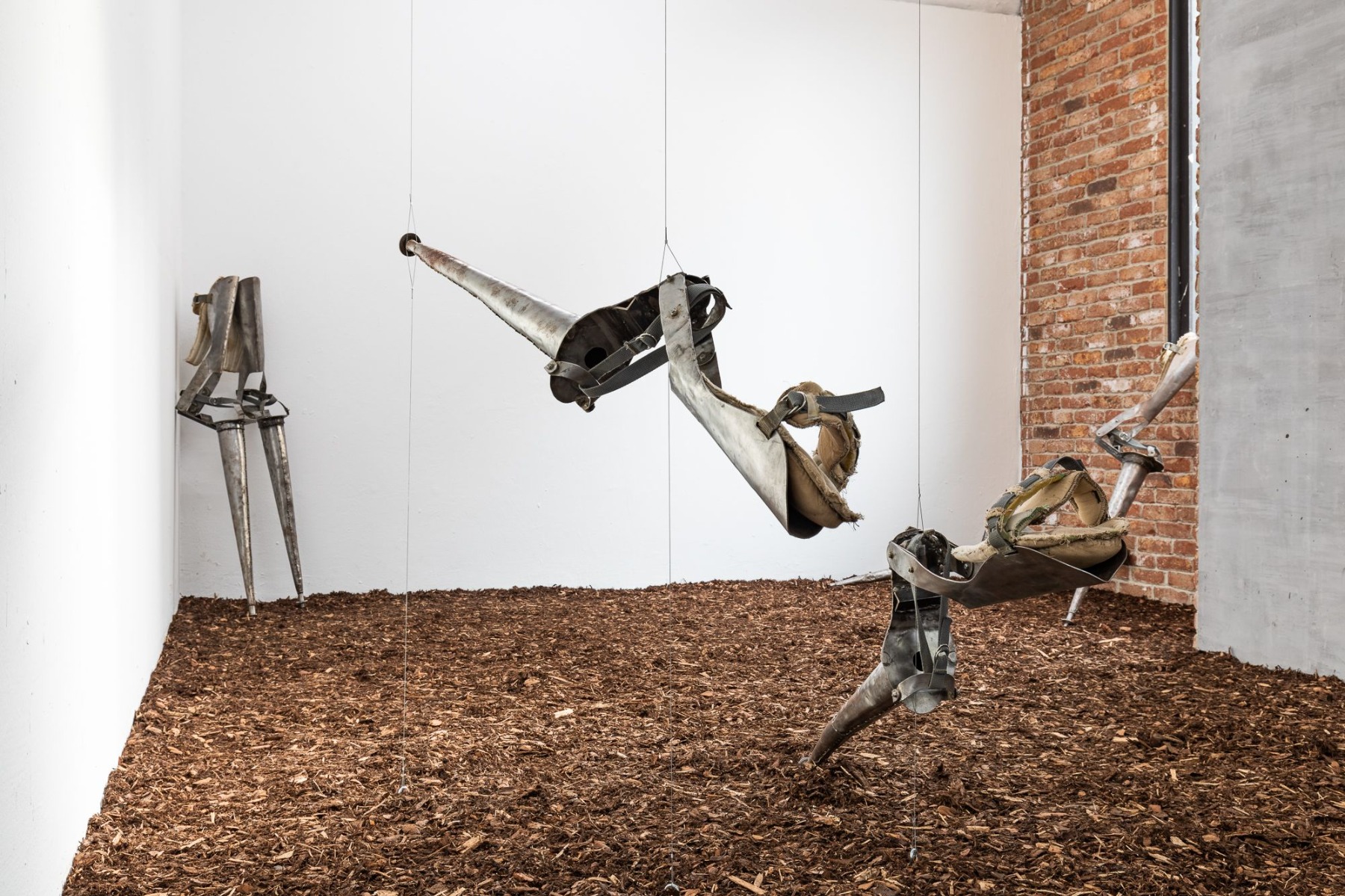
Isak Anshelm, artist & organiser of 5th Råneå Biennial 2026: There are of course limitations to an art venue quite remote, the main one is probably reaching an audience. Since there is a limited number of people who can reasonably access the events in Råneå we try to plan accordingly, by scheduling the Konsthalls regular openings on Sundays for example. Another challenge which goes for all of Norrbotten is getting media to write or even mention an event. There are upsides too however. With relatively few contemporary art venues it is easier to be a part of the local community. While art events in big cities are something known within the scene it is our view rare that it breaks through to outside of that quite small scene. On the contrary, there are probably few in Råneå who are unaware of Råneå Biennial or Råneå Konsthall.
The biennial revolves around the idea of movement – not only physical movement, but also social mobility, access, inequality and the pace at which contemporary society operates. Why did movement become the central theme of this edition, and what does it reveal about the present moment?
Curatorial team: For some of us, it began with the local history of Råneå and its tradition of shoemaking, and with the movement of people, labour, and goods that shaped the place. Others were interested in physical movement itself – the body, mobility, and the movement of people – while others focused more on the technologies of movement, on speed, distance, and the acceleration of contemporary life. From there, questions of movement opened up into questions of democracy, displacement, identity, gender politics, access, and inequality, particularly given that the elections in Sweden are just around the corner.
What feels specific to this moment is that movement is everywhere, but access to it is so uneven. For instance, the same railway carries both people and extractive resources, but not with the same urgency or priority. Some movement is smooth and continuous, some involves waiting, detours, dependency. That’s also why the question of pace became important to us. We seem to treat speed as progress: faster transport, faster communication, faster everything, but moving faster doesn’t always mean being free.
You invited the artist collective coyote to create a commission for Luleå Airport even before the biennial officially opens. Why begin the exhibition in an airport rather than inside a gallery?
Curatorial team: The airport was the perfect satellite location for us to reflect on movement, interconnectedness, distance, as well as relative notions of democracy. It was our way of loudly announcing what was coming and what the biennial was about.
There has been a longstanding collaboration between Swedavia and Region Norrbotten supporting presentations by local artists at the airport, which made it easier for us to build on this existing infrastructure and coordinate everything smoothly.
Coyote is an artist collective that works with interventions in public, social spaces. It was exciting to have them develop a commission specifically for this biennale and for this particular site. This was the first time an “outsider” artist had shown work there, just as it was the first time guest curators had shaped the Råneå Biennial.
But I have to say that even the more conventional venues of the biennial are already unconventional. Taking the main venue first, Rånea konsthall was formerly a bank. That said, be sure to expect art installations, performances, workshops, and events in bus stations, Thai restaurants, on the highway, and in other unexpected places.
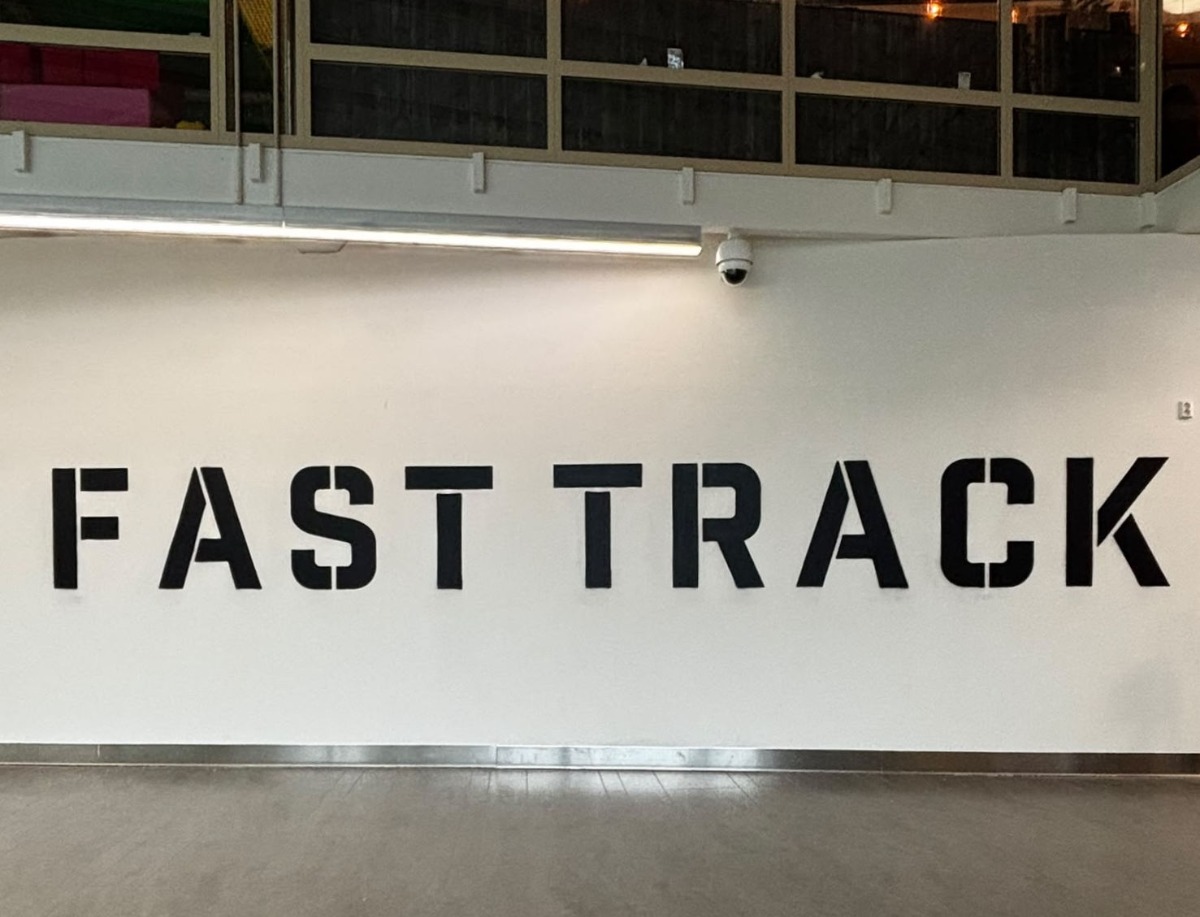
The artwork by coyote is titled Fast Track – a phrase that immediately evokes speed and efficiency, but also privilege, hierarchy and unequal access. How did coyote transform an everyday airport expression into a broader reflection on contemporary society?
Foteini Salvaridi, Co-curator: Fast Track responds to the various aspects and entanglements of speed and democracy, reflecting on how life has been organised around acceleration and a distorted notion of progress. An eight-metre-long FAST TRACK appears as a site-specific wall installation by the artist collective coyote.
Resonating with the etymological roots of the word speed, historically associated with prosperity and success, fast track appears as a shortcut through the infrastructures of contemporary life, shaped by the forces of global economy and the ultimate driving force of progress. The fast track processes materialise a system of spatial and social differentiation, territorialising movement according to access and privilege. The airport, as a liminal space of transit, functions as a particularly potent site for examining this logic. A fast track apparatus is not simply a shorter line. It is a social mechanism that conceals the fact that time is a valued and unequally distributed resource. While passengers may ultimately undergo the same security procedures, the order in which they experience them mirrors the ways in which contemporary societies distribute opportunities of “mobility”. At the same time, the promise of the fast track is paradoxical. Easier and easier to be accessed the fast track ceases to be a privilege and instead turns into an obligation, ultimately reinforcing the idea that no one should ever stop moving, that to move is to progress.
Research visit by Nordting in Rånea, 2026. Courtesy Nordting. Råneå Biennial 2026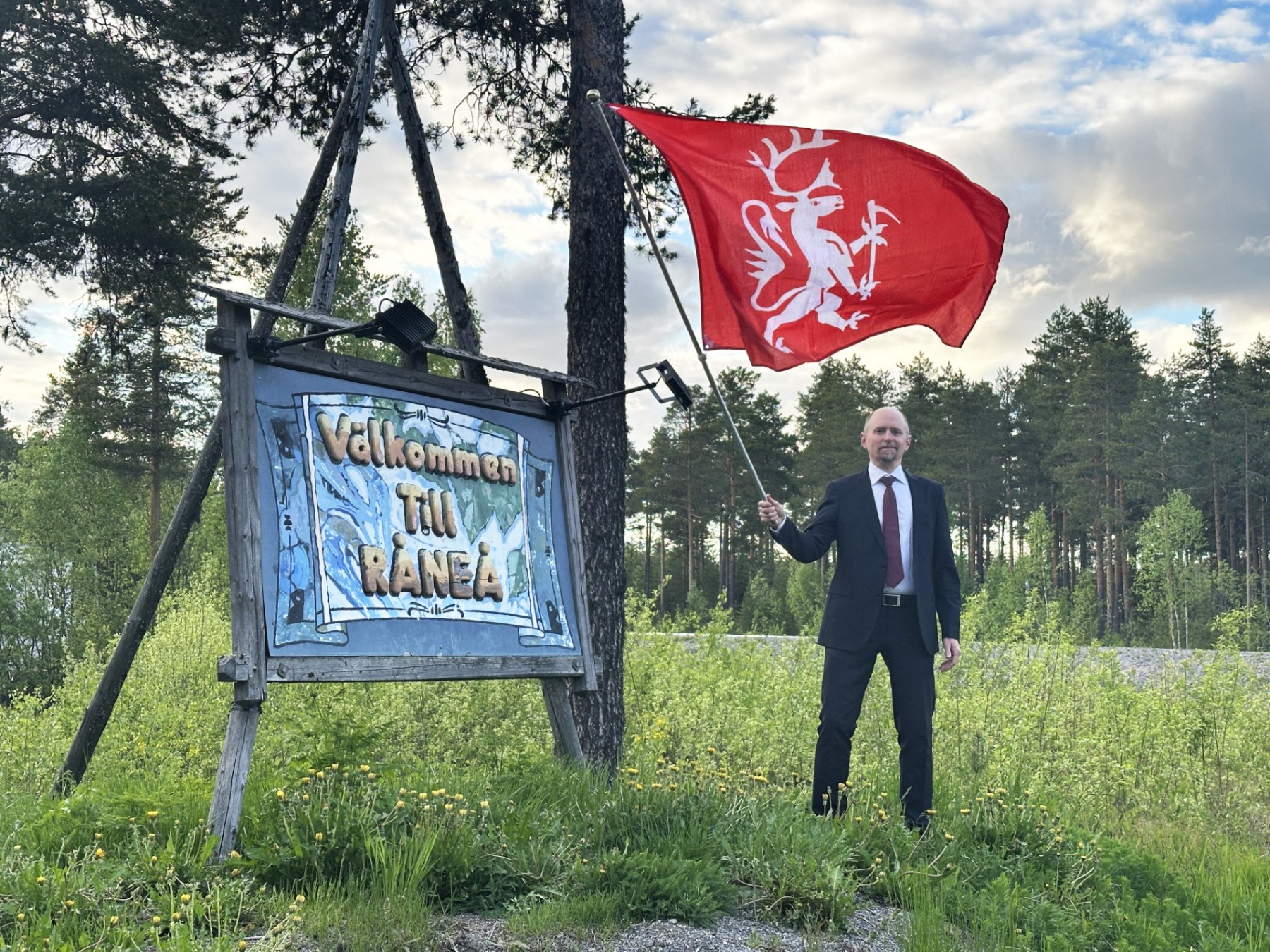
Although Råneå Biennial has a core exhibition venue, it is primarily an event-based biennial spread across the wider region. What does this structure allow you to do that a more centralised model wouldn’t, and what should audiences look out for in the programme beyond the main venue?
With a more spread programme, it is possible for us to reach places that might otherwise be excluded from the cultural circuit. One of the main aims of the Råneå Biennial has always been to bring culture to places where there are usually few cultural events or exhibition opportunities. This approach also gives us the opportunity to collaborate with remarkable cultural associations and dedicated individuals who are committed to making the area livable for everyone.
The opening weekend at the end of August includes performances and presentations by local and international artists and contributors, the opening at Råneå konsthall, featuring works by Max My Ehnlund Göran, Marta Romankiv, among others, an EPA tractor parade, and a performance by Nordting. Other highlights include Lotta Lampa’s workshop on decorating EPA tractors ahead of the parade, workshops with Jonas Staal (in collaboration with Luleå konsthall) and Bernd Krauss (in collaboration with Kin Museum of Contemporary Art, Kiruna), Tintin Wulia’s participatory Make Your Own Passport workshops, and a lecture on Råneå’s shoemaking history by the Head of Collections at Norrbotten Museum, in dialogue with the Museum Director of the Shoe Industry Museum in Kumla.
There will also be opportunities to encounter the biennial’s activities through local community events, including an arts and crafts weekend in Sörbyn/Sundsnäs, with a presentation by Birgitta Linhart developed with local participants and a workshop by Elis Ottosson, open studios in collaboration with KIN – Konstnärer i Norrbotten and their Konstrunda, alongside film screenings, music, artist talks, and educational programmes throughout September.
This edition brings together a number of collaborations beyond the airport commission – such as with Luleå Konsthall, and with Kin Museum of Contemporary Art. What role do partnerships play in shaping the biennial and putting this edition together?
Curatorial team: Partnerships and collaborations have been at the heart of Råneå Biennial since its beginning in 2018. As a biennial organised outside the major art centres and established cultural circuits, it has always sought to work closely with local associations and organisations, creating opportunities for broader participation and building an engaged community around the project. For a small non-profit cultural organisation such as Råneå kulturförening, organising this event and building a network of partners means pooling resources, both financial and social, while also making space for their creative and intellectual input. The network has been already there. We are simply using and activating the existing infrastructure through our proposals. We all think that this approach not only makes the biennial more sustainable, but also creates opportunities for contemporary art and culture to reach wider audiences and enter different local contexts.
From left: Gunnar Hansson, Klara Kristalova, Hanna LT Ailaskar, Torsten Klingstedt, Lena Flodman,
Linn Lindström, Lotta Lampa, Kent von Almassy, Lotta Lampa, and Olof Marsja. Also featuring a
work by Rebecka “Bebben” Andersson, positioned where the camera is standing. Råneå Church,
Råneå Biennial 2020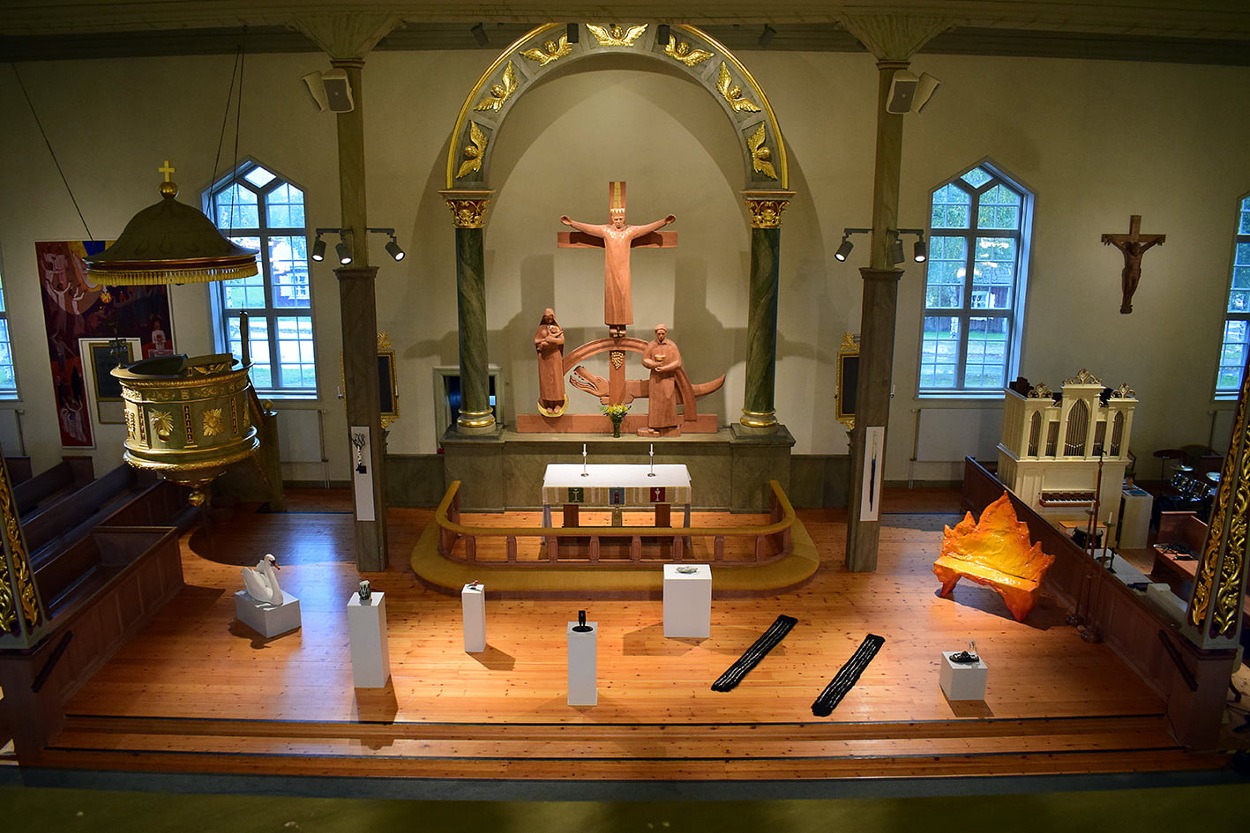
Råneå Biennial began as an artist-run initiative and is now entering a new chapter with a younger generation of organisers and curators. What do you hope will remain unchanged, and what do you believe must evolve if the biennial is to stay relevant?
Linn Lindström, artist & organiser of 5th Råneå Biennial 2026: I am incredibly impressed by and grateful for the work Mats has done, and continues to do, for the arts in Råneå. He has approached the biennials with a force and a perspective that are uniquely his, and I think that would be very difficult to replicate. However, I think it is really exciting that this international curatorial collective is coming to a small village in Norrbotten. I look forward to hearing new stories and being offered new ways of seeing. Mats has sparked curiosity among many people in Råneå, not by adapting the programme to what people think is beautiful or appealing, but by creating a welcoming space where visitors feel appreciated, regardless of who they are. I think this is something that is important to preserve: the programme does not need to be adapted to what the audience wants. It is not necessarily what is being shown that makes people feel welcome, but the feeling of being welcomed as an audience.
For me, living in the countryside, I can sometimes miss a sense of pace, the feeling that things are happening, that you have to choose one thing and therefore miss out on something else. That is something I have really appreciated about Mats’s biennials. Almost like a kind of stress from having so many fun things going on. It has brought a lightness, where having fun and being together can exist alongside something serious and focused. As an artist, I need to see good art to remind myself that it really is worth doing. And that is what I hope to be able to give the audience here.
Sculptures in the Råneå Church’s yard by young local girls during a workshop with Lotta Lampa.
Råneå Biennial 2020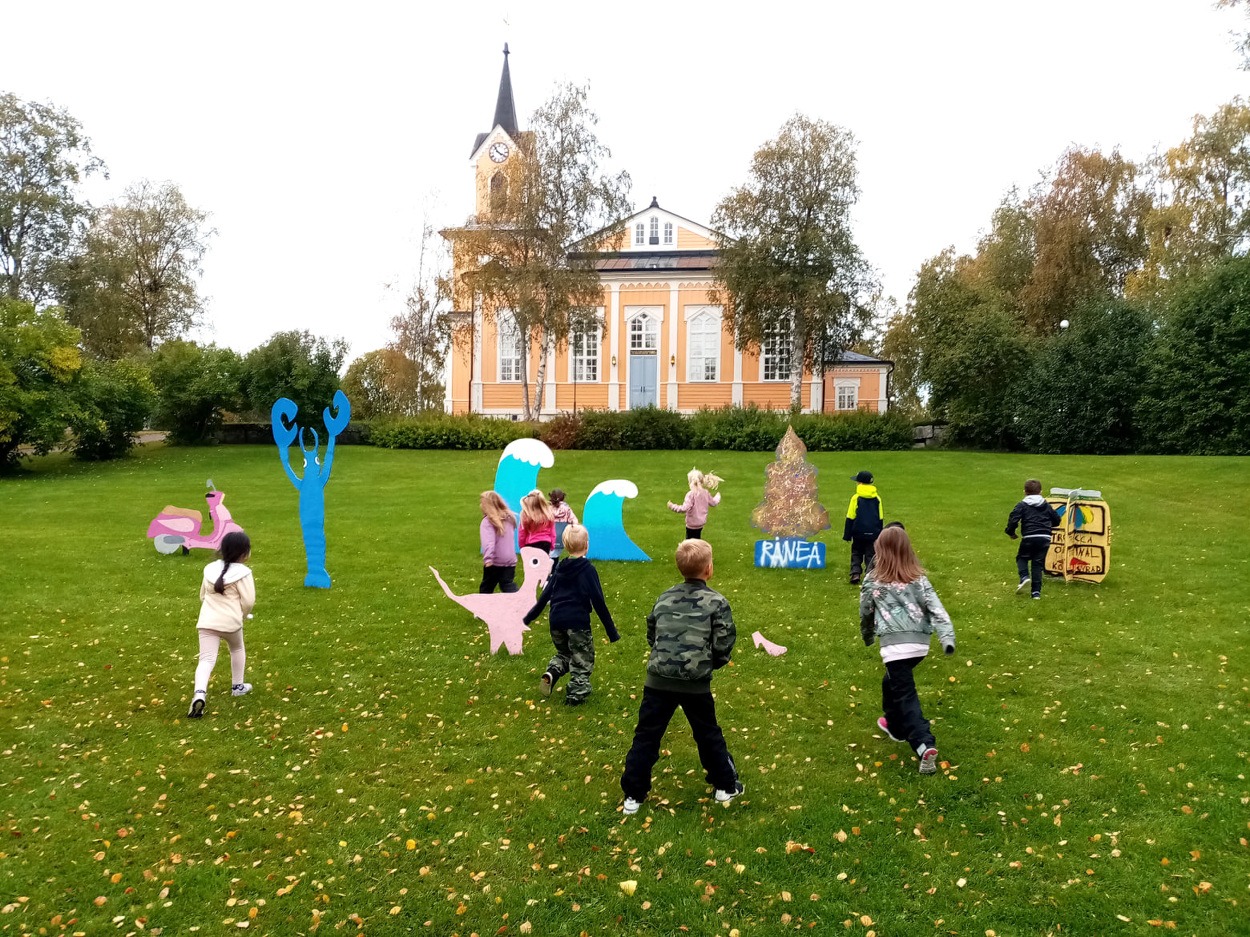
Isak Anshelm, artist & organiser of 5th Råneå Biennial 2026: Råneå Biennial has been run brilliantly by Mats Wikström and it is a challenge to live up to that. I think the mix of local gems and more established artists is the key to a successful biennial and that is what we hope remains unchanged. What is difficult is to distribute the workload and crucial for its continuation. The relevance of the biennial is much up to its individual participant artist together with finding a theme that is interesting both locally and in a wider context.
Mats Wikström, artist & founder of Råneå Biennial: Each year, the biennial’s leadership team has been supplemented by a young assistant who also participates in planning activities. As I see it, the major difference this year is the larger curatorial team, comprising individuals from various parts of Europe. This brings an external perspective to the site and the area; furthermore, since everyone participated in Konstfack’s CuratorLab course in 2024, there is also a more theoretical approach to the curatorial process. It might be difficult to maintain the partly hyper-local character the biennial has previously held. But everything has its time, and I look forward with interest to experiencing the biennial in its new form. Personally, I think it would be good if this curatorial team also took on the 2028 edition. En gång är ingen gång [once is not enough] as we say in Sweden.
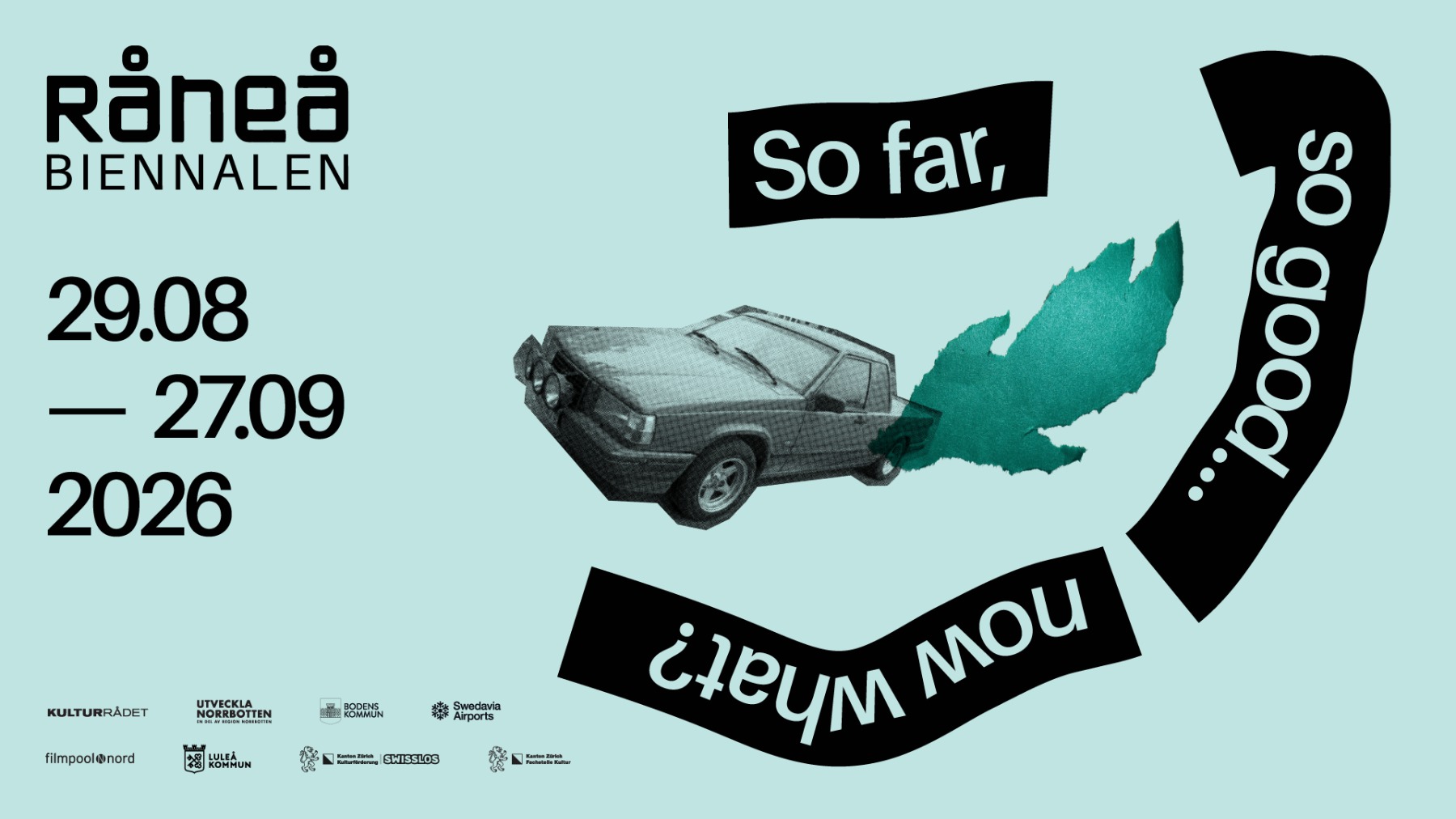
Visual identity of Råneå Biennial 2026, designed by Julian Hoxhaj
Title image: Fast Track, 2026 by coyote, Luleå Airport, produced on site by artist Katt Skarin. Råneå Biennial 2026
