


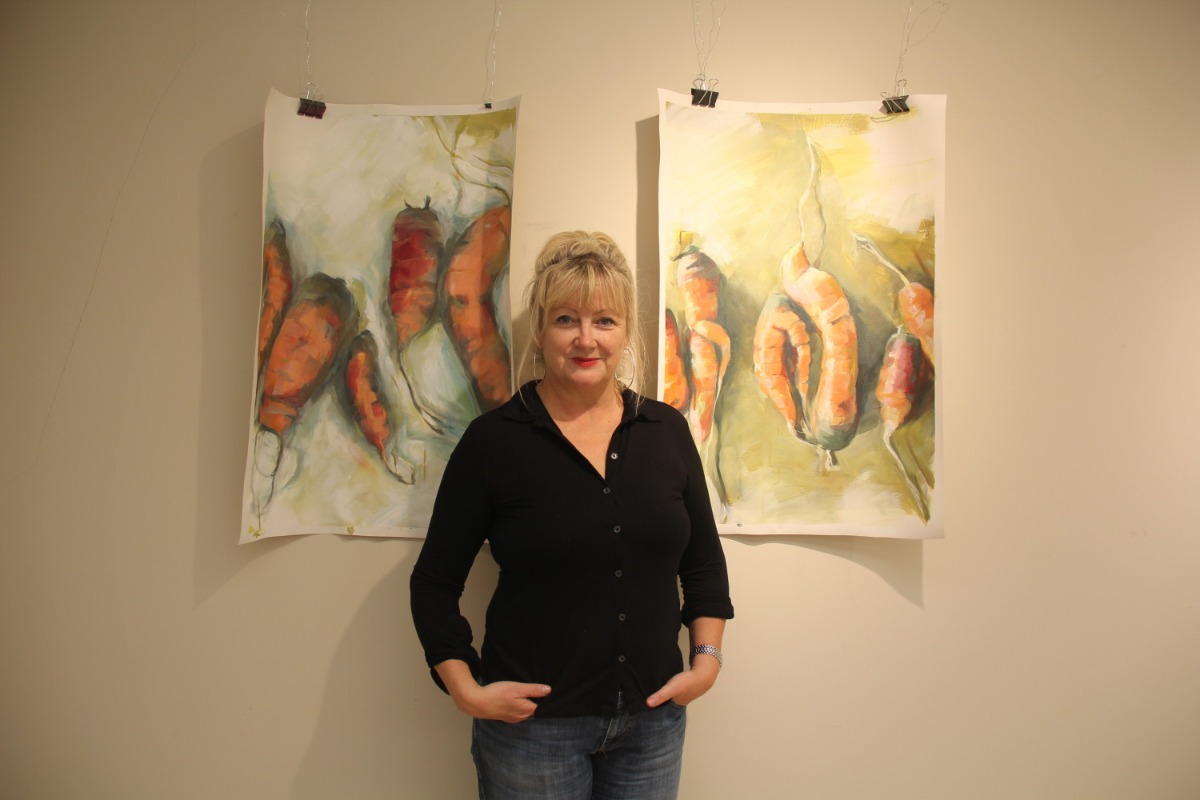
The Landscape of Inherited Memory
An interview with Austrian artist Dora Mai on memory, belonging, and the past we inherit
Sometimes the places we have never been to can feel strangely familiar. For Austrian artist Dora Mai, this became an unexpected experience during her recent residency at Pedvāle in Latvia, where she had come to trace her family's roots.
Originally trained as an architect, Mai later studied at the Academy of Fine Arts Vienna. Her artistic practice, centred on painting, explores memory, human relationships, intimacy and the passage of time. In her recent work, including the exhibition Scaling Memories at Künstlerhaus Vienna in 2026, photographs from her family archive have become a way of approaching the lives and experiences of her ancestors.
I met Dora in Riga, shortly after she had returned from Pedvāle. Her grandfather, a Baltic German who left Latvia, had rarely spoken about the past he left behind. What began as an artistic exploration of family photographs and inherited stories had become something much more personal - an unexpected sense of recognition and belonging.
Our conversation moves between personal and collective memory, the silences passed down through generations, the complexities of history and belonging, and the possibilities of art to approach what can no longer be remembered or fully understood. It is also about how searching for the past can change our relationship with the present.
Dora Mai’s studio at the Pedvāle Art Residency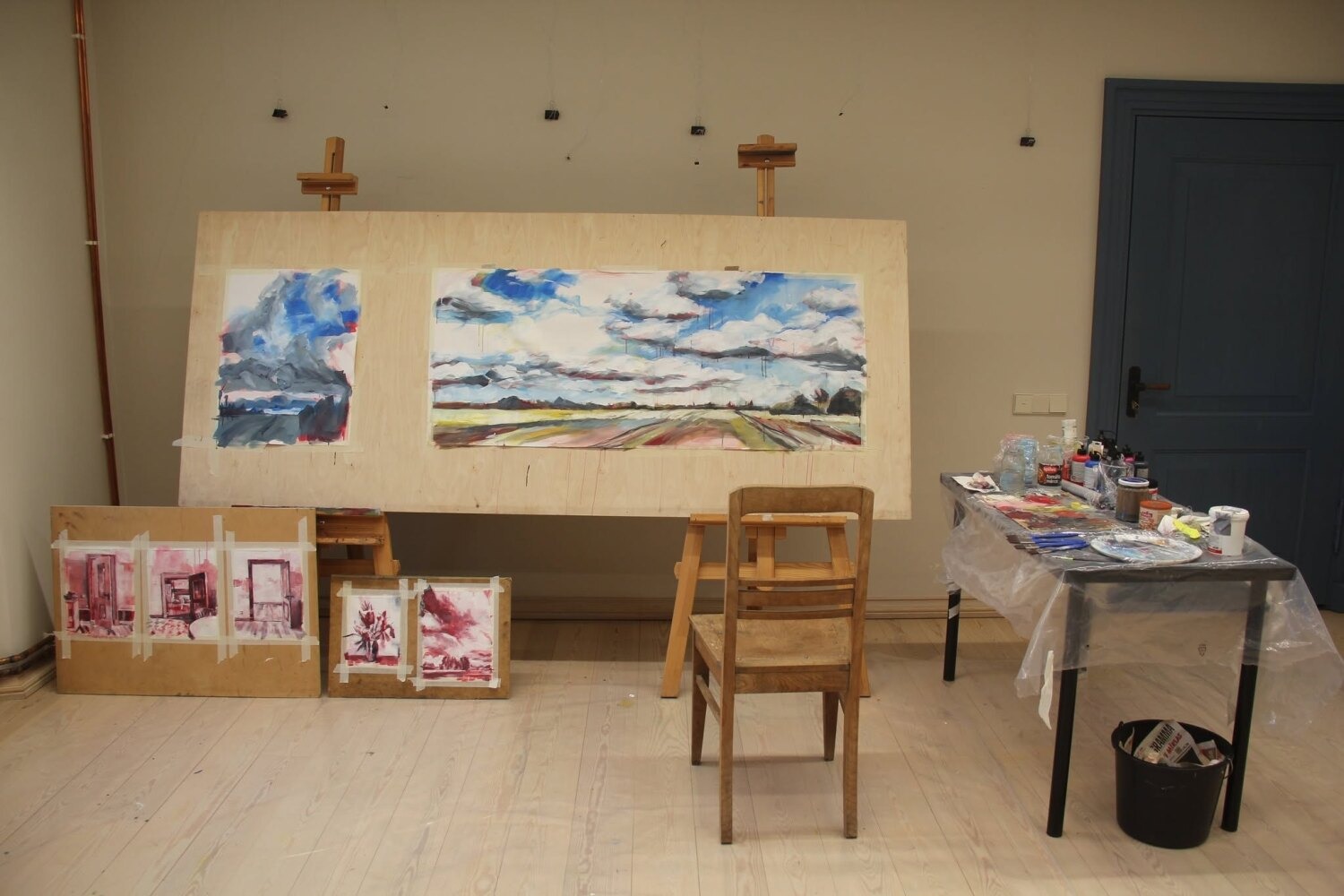
You recently spent time at the Pedvāle Art Residency in Latvia, tracing your Baltic family roots. What was it like to arrive in a place that belongs to your family history but not to your own lived experience? Did anything feel strangely familiar, or was it entirely foreign?
I experienced it as an incredibly intense time. I was completely open to the experience, and the beautifully and sensitively restored Pedvāle manor, with its extensive parkland, was the ideal starting point. Surprisingly, the landscape and the sky felt familiar to me almost immediately. It didn't take long for the manor itself, with its grounds and rooms, to become part of my own inner world of memories.
What initially prompted you to embark on this journey? Was there a particular moment when your grandfather's past stopped being simply a family story and became something you felt compelled to explore?
For several years now, I have been working on a series titled ‘still in love’, based on photographs from my family archive. In the exhibition ‘scaling memories’, presented at Künstlerhaus Vienna in May 2026, I focused exclusively on my Baltic relatives. This gave rise to a desire to take the project further: not only by working with photographs and texts, but also by engaging with the place itself through my own sensory experiences.
SCALING MEMORIES, Künstlerhaus 2026. Photo: © M. Nagl - Ausstellungsansicht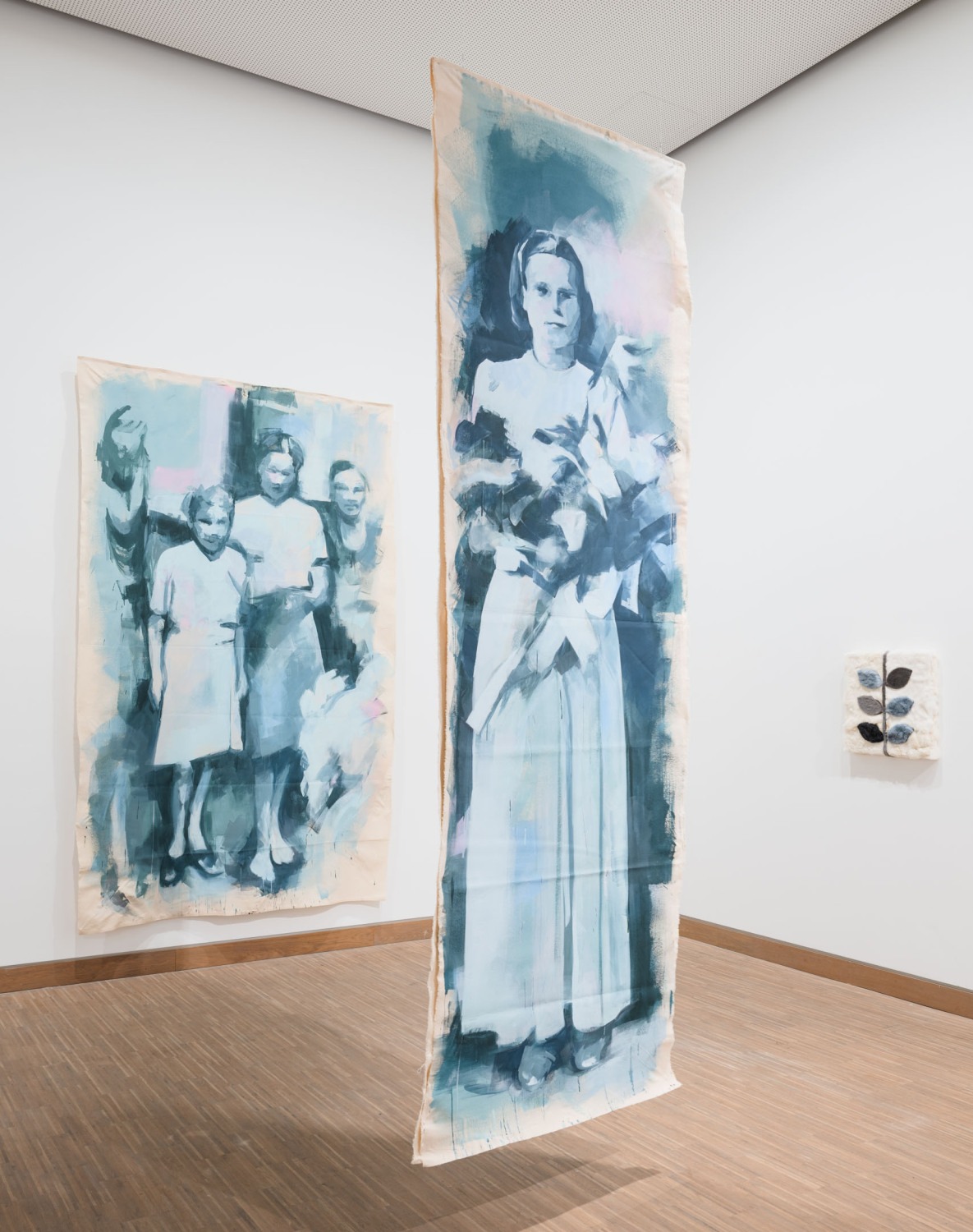
We often think of belonging as something rooted in personal experience - in the places where we were born, grew up, or lived. But can we also belong to a place we have never known? Did your time in Latvia change your understanding of what it means to belong somewhere?
I feel a sense of belonging primarily in relation to people and the places associated with them, including landscapes. Interestingly, these are not the place where I was born, Munich, or the town in Bavaria where I grew up, but rather the small town in Salzburg where my parents now live and where all my grandparents lived, although I only ever spent my holidays there.
In that sense, I am familiar with the experience of approaching places or regions that mean, or once meant, something to the people I love. My grandfather died when I was sixteen, and only now am I coming closer to him in a different way than I did as a child. Through my time in Latvia, I feel more connected to him.
Your grandfather was a Baltic German who left Latvia and eventually settled in Austria. You mentioned that he was reluctant to speak about his past. What did you know about his life in Latvia when you were growing up? And how did his silence shape your own imagination of that place?
I knew that he loved spending time in nature. He spoke about the birch trees, the forests and the animals. Even as a child, he had felt a deep longing for home, because he could only return to the family farm during the holidays while attending boarding school, completing his professional training and later studying at agricultural university. That longing from his youth made a strong impression on me as a child. It seemed terribly hard to me that he was not allowed to be at home. And so, even without much being said about it, Latvia became a place of longing.
Exhibition view at the Pedvāle Art Residency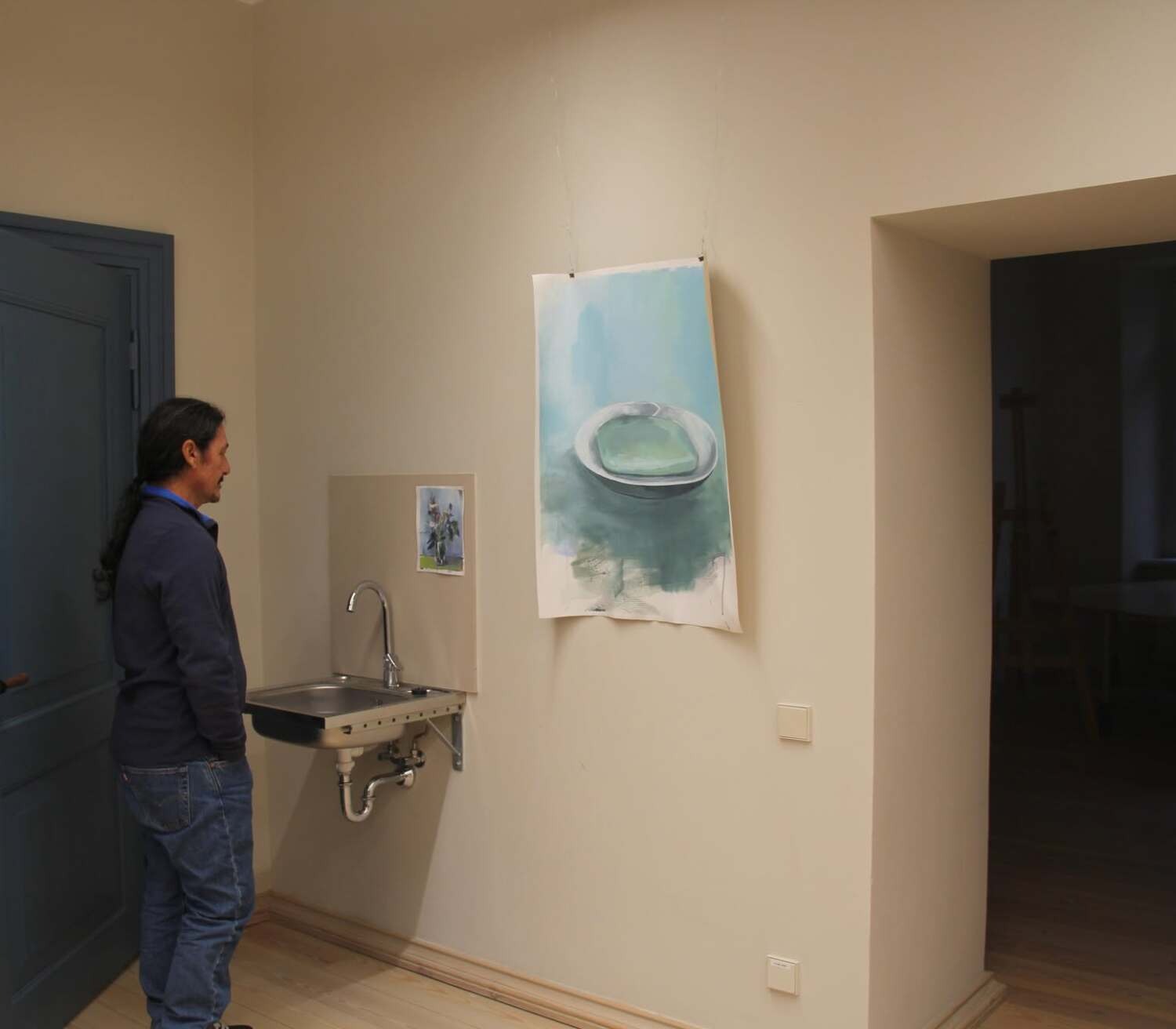
Silence can sometimes become a form of inheritance in itself. Do you think we inherit not only the stories our families tell us, but also the things they choose not to speak about?
I think every family has its own culture of speaking, of addressing certain subjects, and of remaining silent. In my experience, the generation of my grandparents, who lived through Nationalsocialism and the Second World War in Germany and Austria, spoke very little about that period.
There were disappointment, loss, pain and guilt involved, but I am interpreting these things into the silence only now. What I actually experienced was the silence itself. Perhaps it served as a form of self-protection, but perhaps it was also a way of shielding the family and future generations from the burden of the past.
I read that your grandfather eventually began writing down fragments of his life story. Have these notes helped you understand his experience, or have they perhaps raised even more questions? And how do you approach the gaps that remain?
My grandfather had two daughters, my mother and my aunt, and I have a sister. I am the first person in our family to have read his stories, after the age of forty. The subject is too close for the other members of my family. I, too, needed the distance that time provides, as well as the perspective offered by my art, before I could engage with my grandfather's texts and the experiences of his childhood and youth, his accounts, disappointments and some truly terrible experiences.
The stories of his childhood and youth have brought me closer to him. They have also helped me understand much better his deep connection to nature and his practical knowledge of all kinds of crafts and manual skills.
The accounts of resettlement and the war are difficult to bear, and all I feel is compassion. When you read about what happened to someone you love, about what they experienced without you ever knowing about it, you simply cannot imagine what that does to a person. I find it difficult to understand how he could be such a loving, optimistic and cheerful person for most of his life, someone who got along well with everyone. In that sense, his stories raise new questions.
Alongside this, I have been reading about the history of the Baltic region, listening to podcasts and acquiring books and poetry by Baltic and Latvian authors. I want to approach the subject from a variety of perspectives.
There is a difference between remembering something ourselves and carrying the memory of someone else's experience. Do you think we can inherit memories of events we never lived through? And if so, where do these memories reside - in stories, images, gestures, emotions, or perhaps even in the body?
This is something that occupies my thoughts a great deal. I once read that trauma, too, can be passed down through generations. Memory is not just an individual matter; there is also collective, social and cultural memory.
Sometimes we believe we can remember something that we have only been told about. Perhaps we can also carry memories of stories told by someone close to us. For example, in his accounts, my grandfather described the flight of wild geese as something deeply meaningful to him, a special experience. Their movements were also important for agriculture, as they served as natural indicators of the weather: the departure of migratory birds heading south in autumn, and their return in spring.
Now, whenever I see a formation of wild geese in the sky, I feel an intense sense of joy. I don't necessarily want to analyse whether this comes from his stories or has been passed down to me in some other way.
Exhibition view at the Pedvāle Art Residency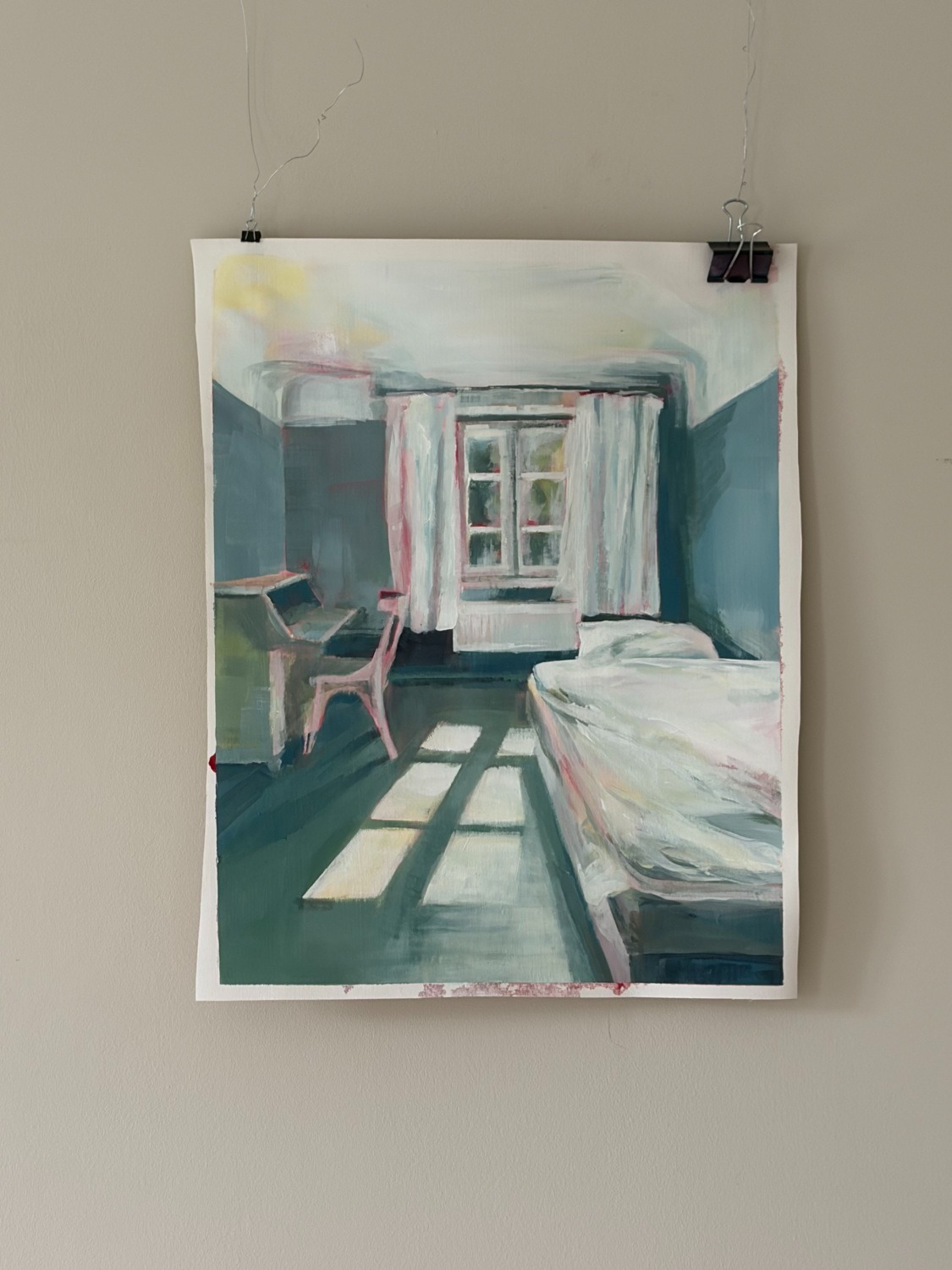
You have described painting as a way of bringing past moments into the present. Can art become a way of approaching something that is no longer accessible through ordinary memory or historical knowledge?
I hope so, and I believe so. Historical knowledge is generally based on facts or generalisations, and the perspective from which something is presented as seemingly objective is crucial. Memory, by contrast, is something very random and arbitrary. As Cees Nooteboom puts it: “Memory is a dog that lies down wherever it pleases.”
Art allows me to consciously direct my attention towards particular moments, people, objects or subjects. In doing so, I can open up a new way of approaching the past from the present and create a new space for perception, inviting viewers into a different, sensory experience of memory.
Exhibition view at the Pedvāle Art Residency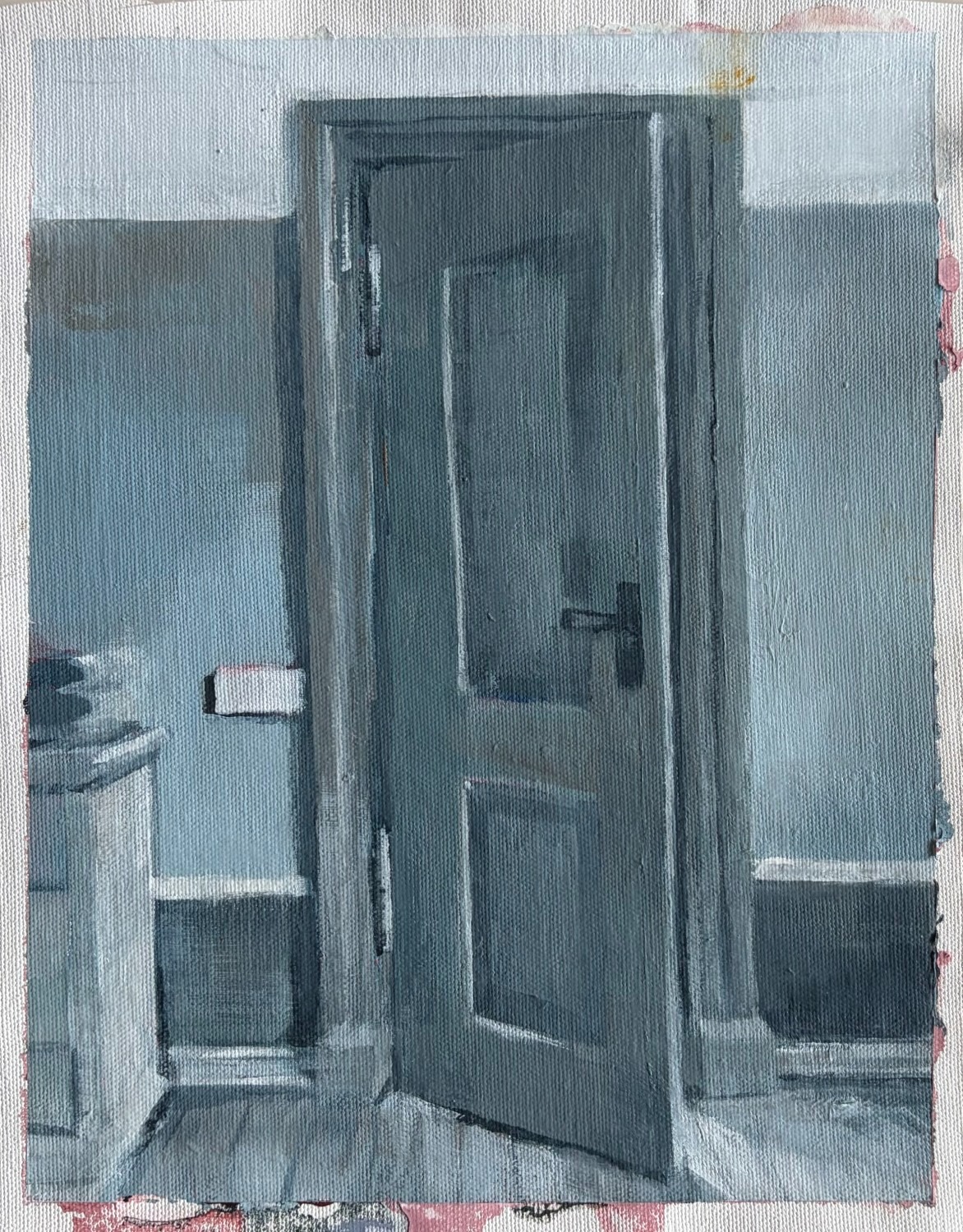
Your work often draws on old family photographs, including images of people you have never met. What attracts you to these photographs? Is it what they reveal, or perhaps what they leave hidden?
Both - what is immediately apparent and what remains hidden. Sometimes it is the subject itself that draws me in: my great-grandmother in the garden of her home on the family farm near Riga; my great-grandfather standing in his wheat field shortly before the harvest, dressed in his work clothes, with a vast expanse of land surrounding him. Even a subject has many layers: personal, historical, art-historical, cultural and social.
Then the process of engaging with the subject through painting begins. Through the choice of framing, composition and colours, through working in series, and finally through the intuitive, impulsive process of painting, something new emerges: new meanings and a new context that were not planned from the outset.
The result is an invitation for viewers to bring their own perspective and personal histories to the work, and to perceive what lies beneath the surface rather than only what is immediately visible.
Exhibition view at the Pedvāle Art Residency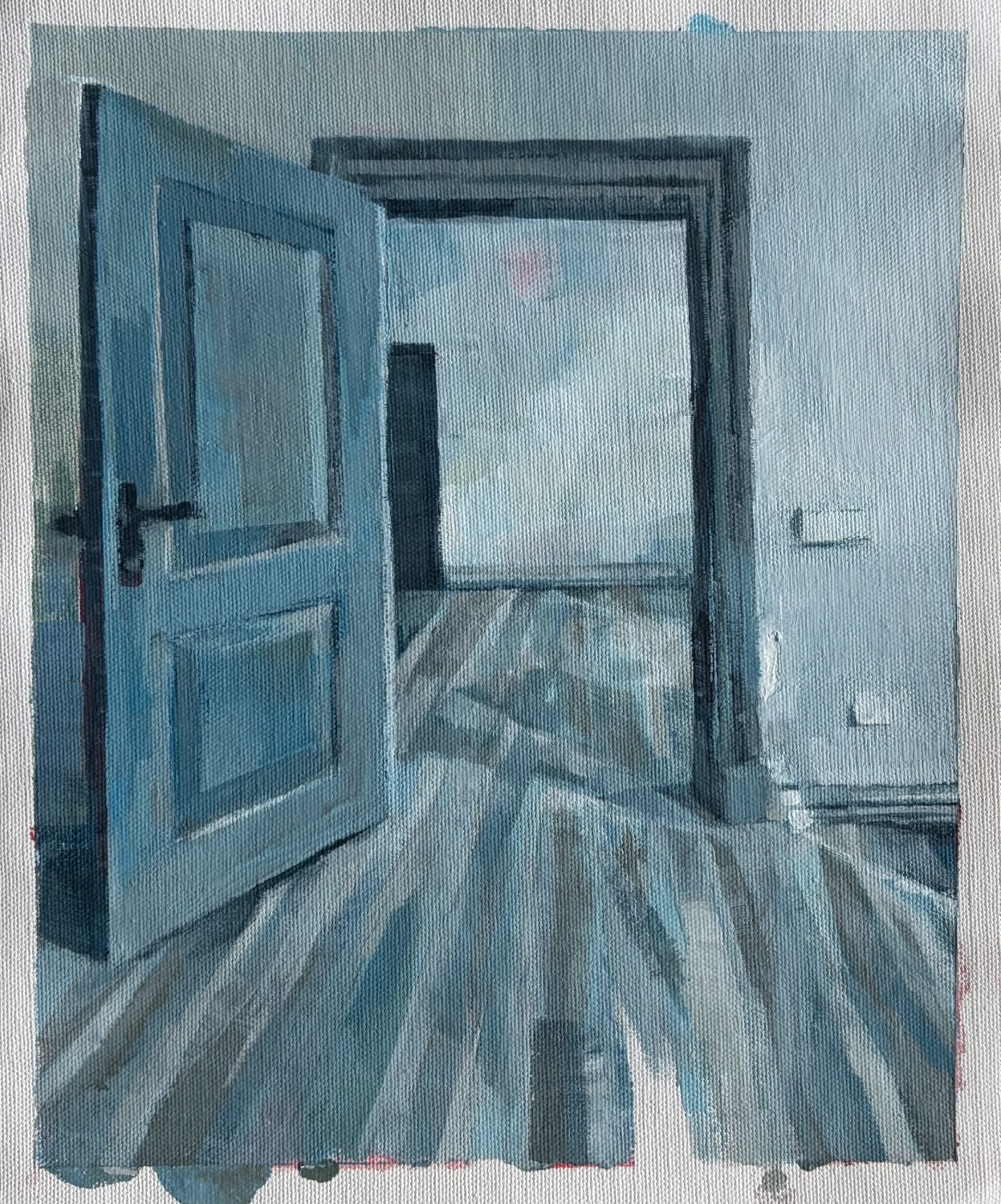
A photograph is usually perceived as evidence that something or someone existed. Yet it tells us very little about what the people in it actually felt or experienced. When you transform a photograph into a painting, do you feel you are recovering a memory, imagining a possible story, or creating something entirely new?
I see the photograph simply as an anchor point from which to tell a story or open up a space for perception. At first glance, photography may appear to be an objective medium, but on closer examination it also reveals quite a lot about the photographer and the context in which the image was made.
My intention is not to recreate a situation or scene through the transition from one medium to another. Rather, through the process of painting, I want to create something more open and diffuse, something that allows for ambiguity and multiple interpretations.
Exhibition view at the Pedvāle Art Residency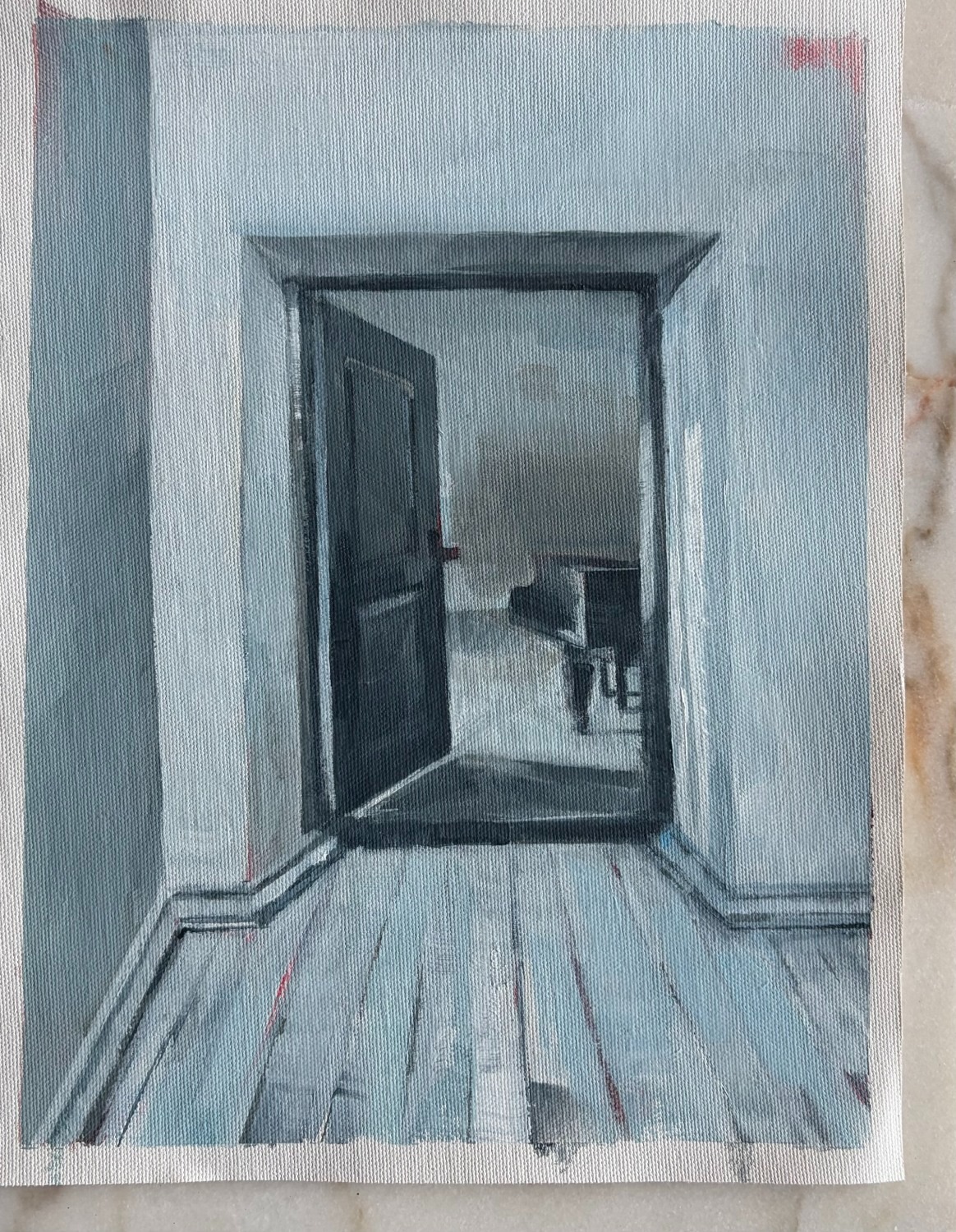
Your artistic practice frequently explores closeness and distance, both physical and temporal. I wonder whether painting someone from the past can become a particular form of intimacy - a way of establishing a relationship with a person who is no longer there to respond. Have you experienced something like this through your work?
Yes, that is exactly how I have experienced it. The more I engage with the people I paint, the more I enter into a relationship with them.
At the same time, I don't actually feel that they are unable to respond. Through texts, images and memories of situations I have experienced, I feel that I am still in dialogue with them. It is not a one-sided exchange; the relationship continues to develop in both directions.
Exhibition view at the Pedvāle Art Residency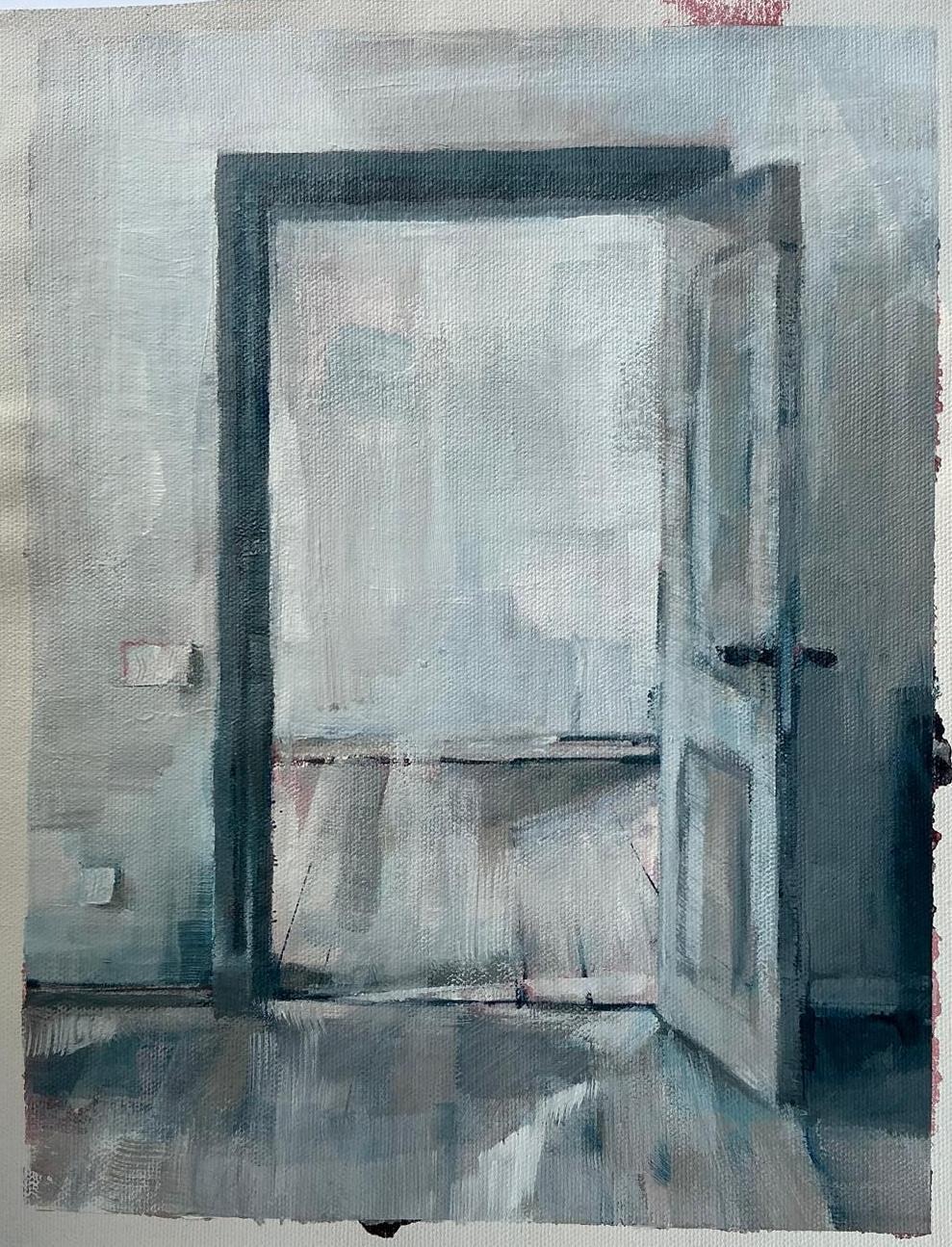
Water, swimming and the experience of the body appear repeatedly in your paintings. Water is also a powerful metaphor for memory. Do you see a connection between your fascination with water and your interest in memory and the passage of time?
Absolutely. For me, water represents time, the moment, flow and constant change, but also human memory. We all come from the element of water, even if we can no longer consciously remember it. There is a bodily memory of it.
At the same time, immersing oneself in water is the most complete physical contact with the world, a merging with it, a single, all-encompassing bodily experience.
Exhibition view at the Pedvāle Art Residency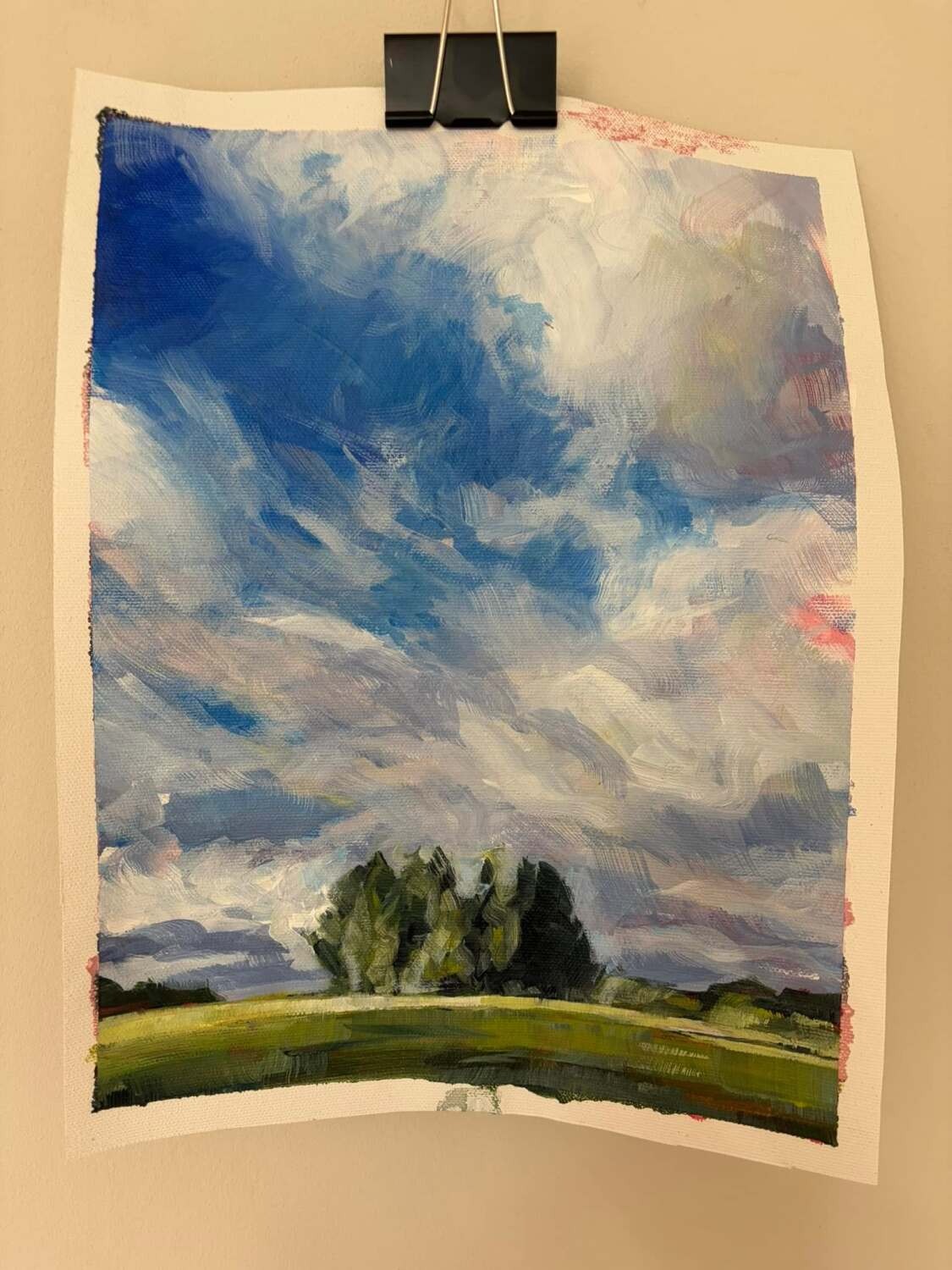
Landscapes can carry histories that are not immediately visible. During your residency in Pedvāle, did you find yourself looking at the Latvian landscape differently because of your family connection to it? Can a landscape evoke a sense of memory even when we have no personal memories attached to it?
I was able to immerse myself consciously in the landscape by walking every day through the park at Pedvāle and exploring the area around Sabile.
I had the feeling of having arrived, of being where I was meant to be, although it is difficult to describe. It is not something that happens in the mind, where you might think, “There is a tree-lined avenue weathered by time, a small birch grove.” Rather, it was an emotional and physical experience.
Even travelling through Latvia, to the sea, to Riga and to the surrounding towns, evoked a feeling of recognition in me, rather than a sense of encountering something new and unfamiliar.
Dora Mai’s studio at the Pedvāle Art Residency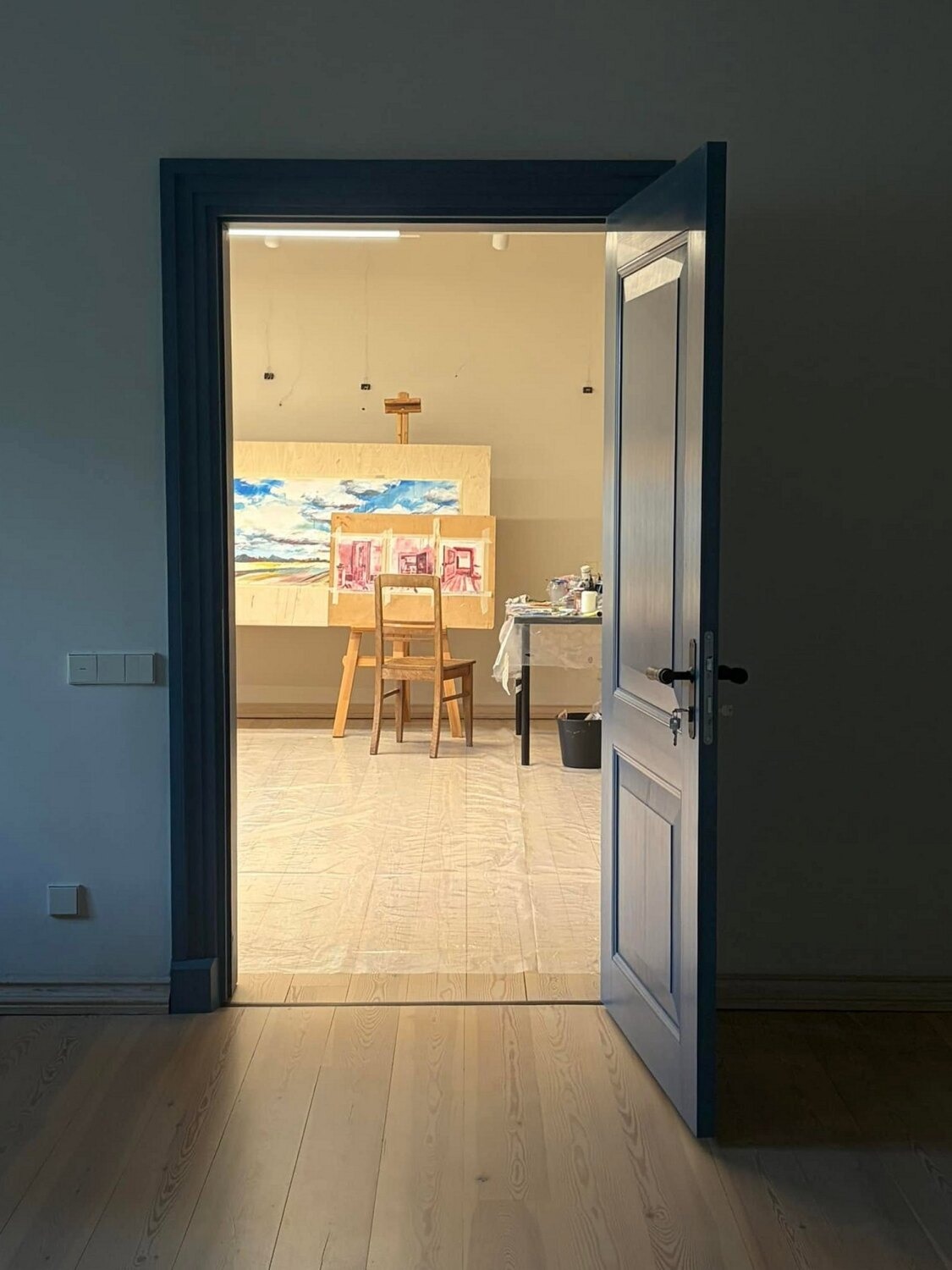
Your work explores the relationship between physical presence and absence. Did being physically present in Latvia give you something that photographs, documents and family stories could not? And has this experience influenced the way you think about your future work?
It was fascinating for me to realise that, before travelling to Latvia, I had mainly portrayed the people I wanted to get closer to. Only once I was there, at Pedvāle, did I feel that I had truly become part of the project, and I was able to explore new layers of meaning.
It was only in Latvia, first during a trip the previous year and then during this year's residency, that I began to understand just how deeply connected my grandfather was to the land and to nature. In contrast, the women in the family inhabited the world of houses, rooms and domestic life, with all the objects that filled those spaces. This perspective has now become part of the project.
The vast sky above Latvia, and the memory of it, will certainly find their way into future works as well.
SCALING MEMORIES, Künstlerhaus 2026. Photo: © M. Nagl - Ausstellungsansicht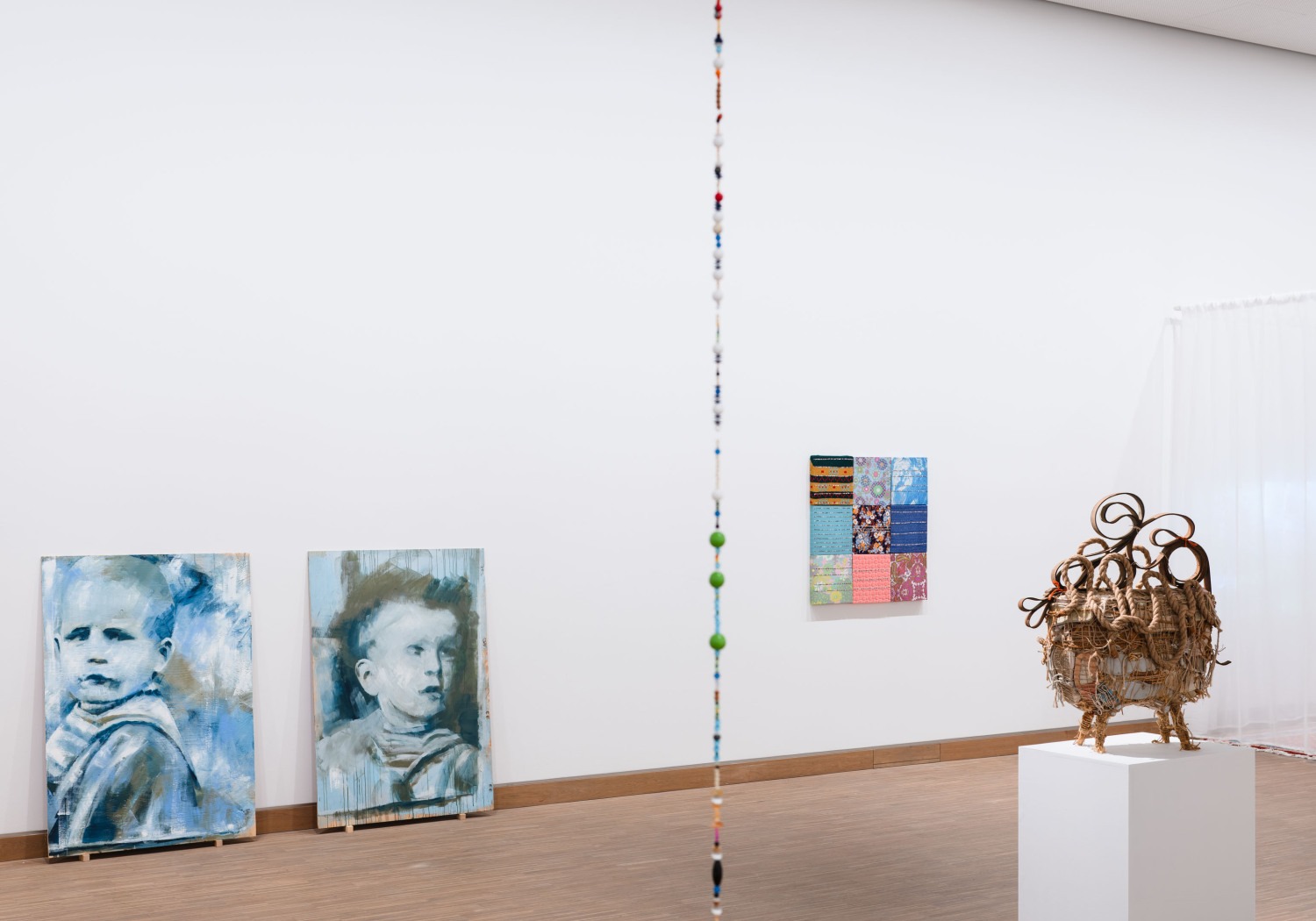
When we begin searching for our roots, we often imagine that discovering where we come from will help us understand who we are. But perhaps such journeys also complicate our sense of identity. Has this experience brought you closer to an understanding of yourself, or has it opened up new uncertainties?
In the past, I never really thought about my origins. Two of the three grandparents I knew had lost their ancestral home. For all three, talking about the past was not an option. For me, this search for my roots has become a process of opening up, expanding my horizons and establishing a new connection with a larger world. Another interesting aspect is that the project has brought me closer to my mother and my aunt. They are very grateful that I am engaging with our family history through my art. They follow my exploration of their father and his family with great interest, even though they have never chosen to embark on this journey themselves.
Dora Mai. Paulchen 1. Acrylic on woodpanel, 140x100 cm, 2026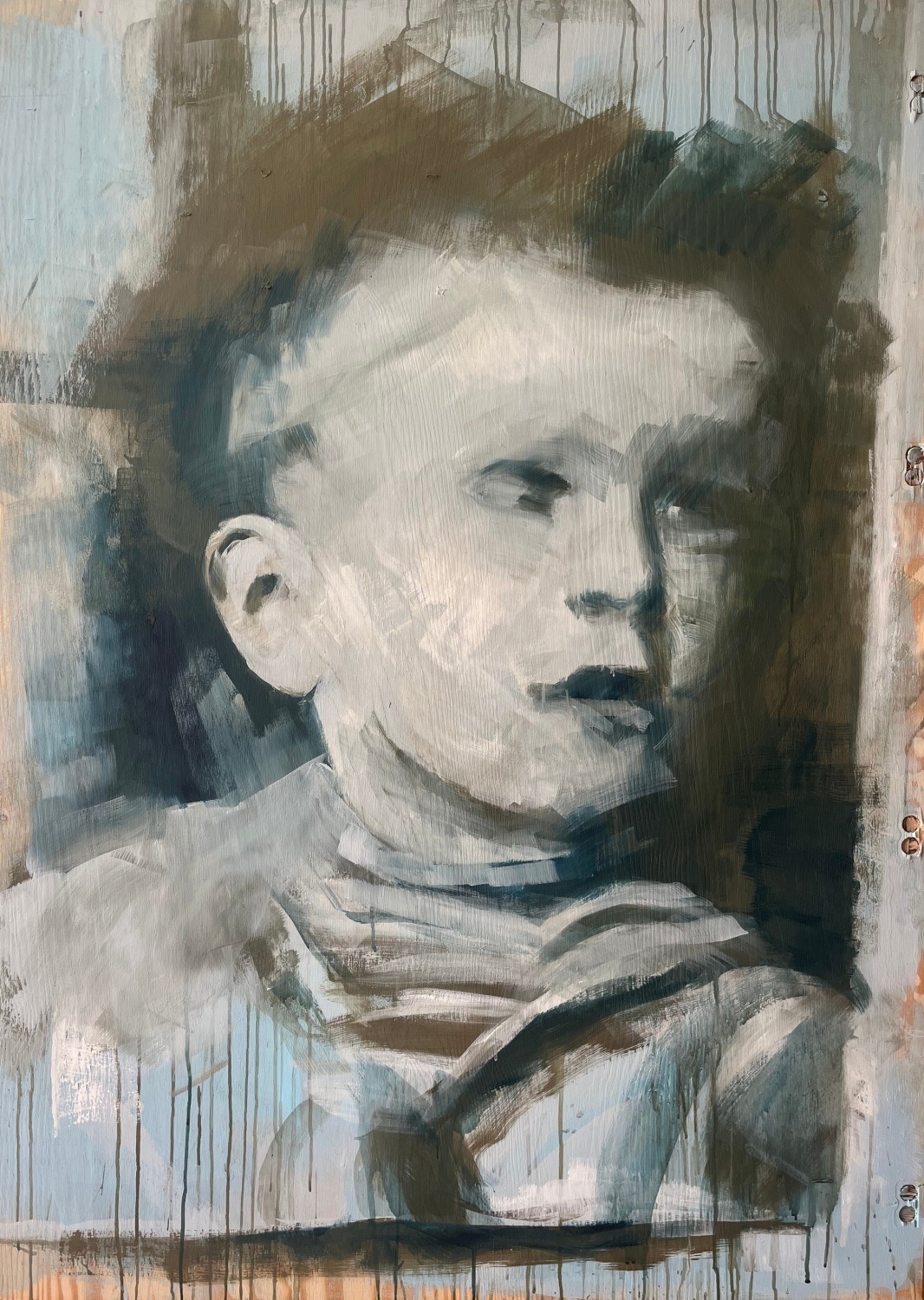
We often speak about memory as something that connects us to the past. But could forgetting also be a necessary part of survival? Do you think your grandfather's silence might have been his way of creating a new life?
Absolutely. On the one hand, I find it deeply sad that he never shared his experiences of the past, his losses and his misfortunes with us, his family. On the other hand, I am glad that, through his stories, he found a way to remain connected to us beyond his own lifetime.
With what I know now, I am amazed by how contented, optimistic and warm-hearted my grandfather was. Perhaps his silence was the foundation for this: simply taking the next step without looking back.
Opaque memories. with Anita Steinwidder . project statement @parallel vienna 09/2023. Photo: Joanna Pianka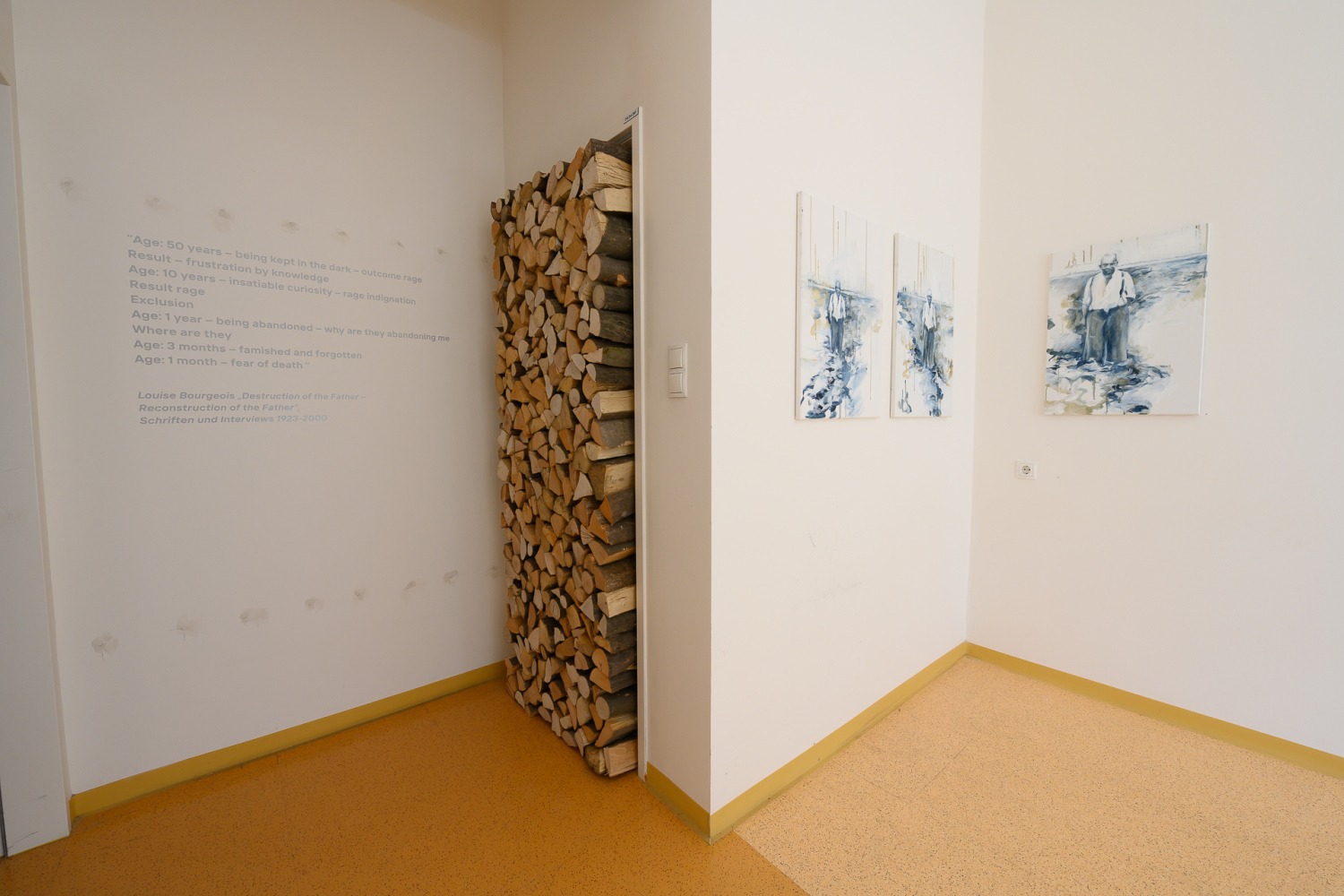
Is there a danger that, when searching for our roots, we begin to romanticise a past we never experienced? How do you negotiate the tension between longing for a lost world and acknowledging its historical complexity?
I don't see it as a romanticisation of the past. For me, it is about uncovering layers, but without viewing them through a rose-tinted lens. The letters written by my great-aunt and the biographical texts written by my great-grandmother frequently refer to the precariousness of life, illness, financial hardship and even the death of children. My grandfather's older brother, Paulchen, was poisoned in 1919, at the age of five. All their lives were marked by uncertainty.
Although my grandfather, like any child, was born into this family without any guilt of his own, the history of the Baltic people— the Baltendeutsche, as Hitler called them — is far from unproblematic when viewed from today's perspective. Their social status and privileges had been established through the Crusades, secured through cooperation with the Russian tsars, and subsequently maintained through extensive landownership. And although my approach is a very personal one, focusing on relationships and individual lives, politics inevitably plays a role in the private sphere, too. Losing one's homeland and being separated from one's family changes a person. So, longing for a lost past? Absolutely not. What I feel is a deep curiosity, a genuine interest and a sense of affection: an attempt to approach a world of lived experience without nostalgia.
Perhaps we never really find our roots in the way we expect to. Perhaps the search itself becomes more important than what we discover. What do you think you were actually looking for when you came to Latvia - your grandfather's past, a missing part of your family story, or something about yourself?
I think that, initially, I set out to follow the traces of my relatives, to embark on a journey of discovery. I would never have imagined that I myself would become so deeply immersed in the process and experience a new sense of belonging.
SCALING MEMORIES, Künstlerhaus 2026. Photo: © M. Nagl - Ausstellungsansicht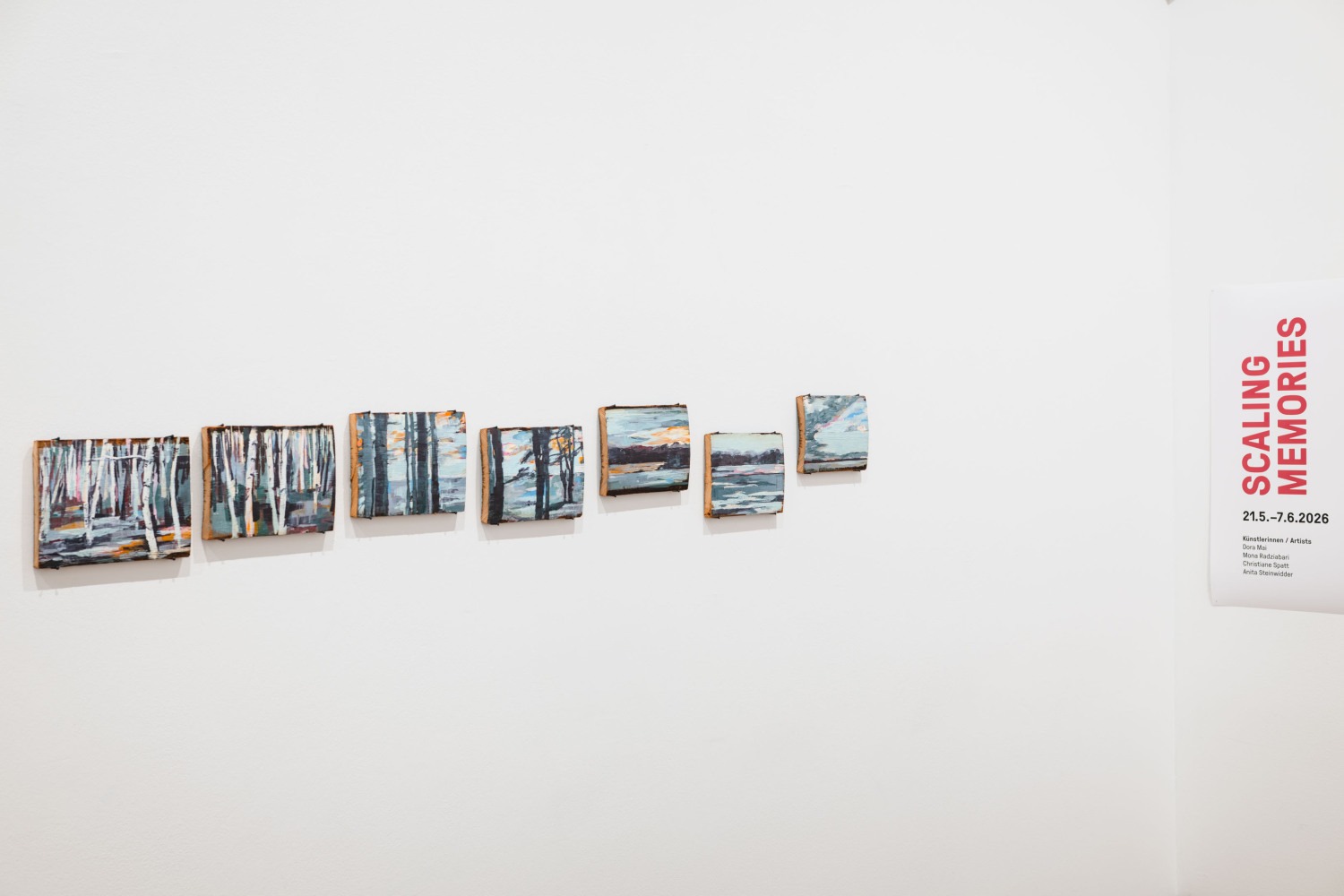
Was there a particular moment, encounter, or experience during your time at Pedvāle that stayed with you? Something you hadn't expected to find or feel when you first came to Latvia?
Pedvāle itself is a very special place: so peaceful, so powerful, and entirely dedicated to art. It was a wonderful starting point for my search, following the traces of my family's past. There were also a few particularly memorable moments. The encounters with the people there, who welcomed me with such warmth and were so generous and supportive, meant a great deal to me. What was especially intense for me were the walks through the landscape around Pedvāle, across the damp meadows and through the wooded areas with their peaty ground. Although these were not the exact historical places where my family had lived, I was surprised to experience a kind of recognition. I felt that our paths were somehow connected across time.
Title image: Dora Mai. Photo: Ojārs Feldbergs
