


A Biennial Is Defined by Time
An interview with Poka-Yio, Artistic Director of the Athens Biennale
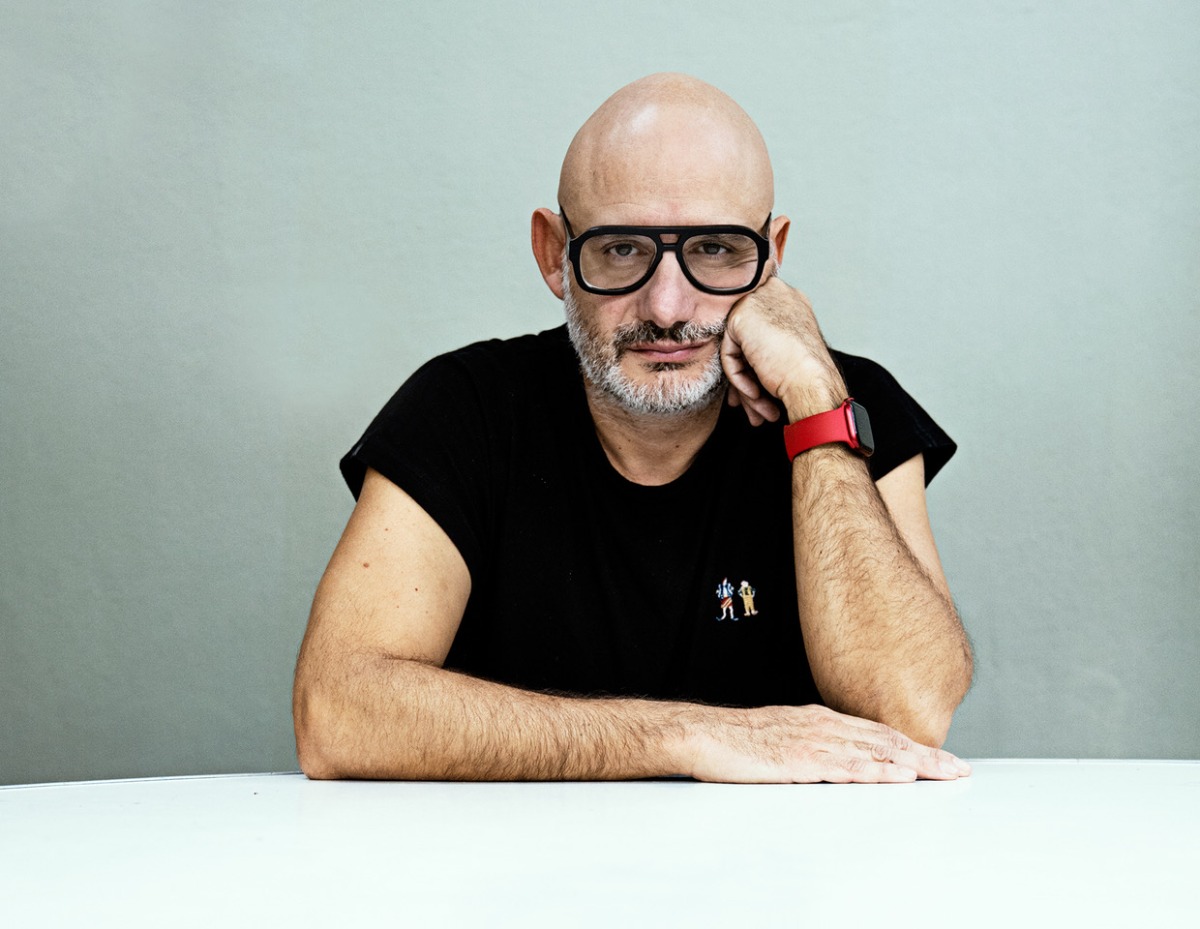
Poka-Yio is a Greek artist, curator and Associate Professor at the Athens School of Fine Arts. His artistic practice encompasses painting, performance, theatre and film, with a recurring interest in the tensions between attraction and repulsion in what he describes as the “Culture of Desire”. Alongside his artistic work, he has been closely involved in the development of Athens’ contemporary art scene, first as co-founder and director of A-Station, the Athens Center for Contemporary Art, and later as co-founder and Artistic Director of the Athens Biennale.
Established in 2005 together with curator Xenia Kalpaktsoglou and art critic Augustine Zenakos, the Athens Biennale held its first edition, Destroy Athens, in 2007. Conceived as an independent initiative, it has developed in close relation to the city’s political, economic and cultural transformations, with each edition reflecting a different moment in its recent history.
As the Athens Biennale prepares for its eighth edition, STASIS/EKSTASIS, opening on April 2, 2027, it is also entering a new phase in its development. With a newly established Board of Trustees and a revised approach to curatorial collaboration, the upcoming edition will be curated by Thiago de Paula Souza, with Poka-Yio continuing as Artistic Director.
In this conversation, Poka-Yio reflects on the origins of the Athens Biennale, the changing relationship between Europe’s cultural centres and peripheries, the impact of Documenta 14, and the difficulties of maintaining an independent cultural institution.
The Athens Biennale has always felt less like a recurring art event than a way of thinking about the city. Looking back over the past two decades, what do you think has made it stand apart from other biennials – not just in terms of its programme, but in the role it has played within Athens itself?
As an artist in the 1990s, when I was studying at the School of Fine Arts, we believed that Athens was irrelevant. We had been conditioned to see it as a place on the periphery of Europe, not where culture was being produced. There were very few galleries, no museum of contemporary art, and we saw ourselves as neither the exotic “other”, like Istanbul, nor part of the European centre represented by London, Paris or Berlin. Many of my peers chose to travel, study and relocate abroad. Those power dynamics are still active in Europe today.
Then, around the Olympic Games, there was a sense that something was changing. New galleries opened, there was investment in culture, and we felt that something was finally beginning to happen. But by the end of 2005, after all the excitement, there was a kind of depression. We realised there was no strategy for what would come next. We had missed an opportunity.
I remember discussing this during the summer with a friend who was planning to return to London. She said she couldn’t see a future in Athens. I told her, “Stop complaining. If the structures and institutions we need don’t exist, then it’s up to us to build them.” That’s how the idea of the Athens Biennale began. We were three people – an artist, a curator (Xenia Kalpaktsoglou) and a critic (Augustine Zenakos) – with no money, no institutional backing, no influential families behind us. Just the naïve belief that we could create something ourselves. Our aim was simple: to put Athens on the international contemporary art map as an independent and relevant place. Nobody expected three people to succeed.
Stelios Faitakis, Socrates Drinks the Conium, 2007. Courtesy: The Breeder, Athens.
Installation at the 1 st Athens Biennale “DESTROY ATHENS” (2007)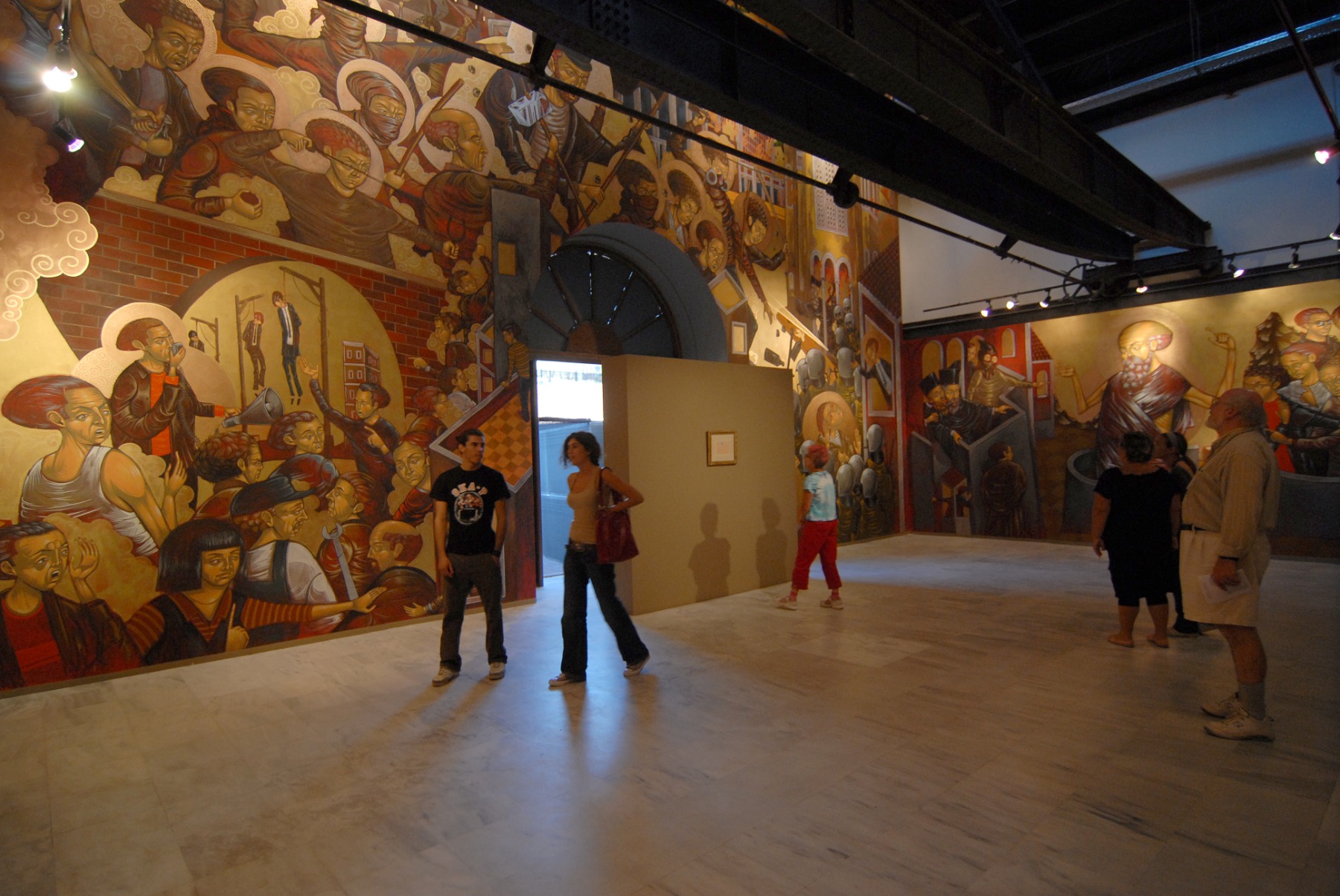
The first edition was called Destroy Athens. The title was important because we wanted to challenge the stereotype of Athens as little more than a stop on the way to the islands or a city defined only by classical antiquity. We wanted to show Athens as a contemporary cultural melting pot. The Biennale opened in 2007, and something unexpected happened – it spread like wildfire. People became curious about what was happening in Athens.
It took almost a decade before Athens became firmly recognised as part of the international contemporary art landscape. We certainly didn’t do it alone – many other initiatives contributed, but I think the Athens Biennale played an important part in that process.
Christodoulos Panayiotou, 2008, 2008. Courtesy: RODEO, Istanbul. Installation view at the 2nd Athens Biennale 2009 “Heaven” (2009)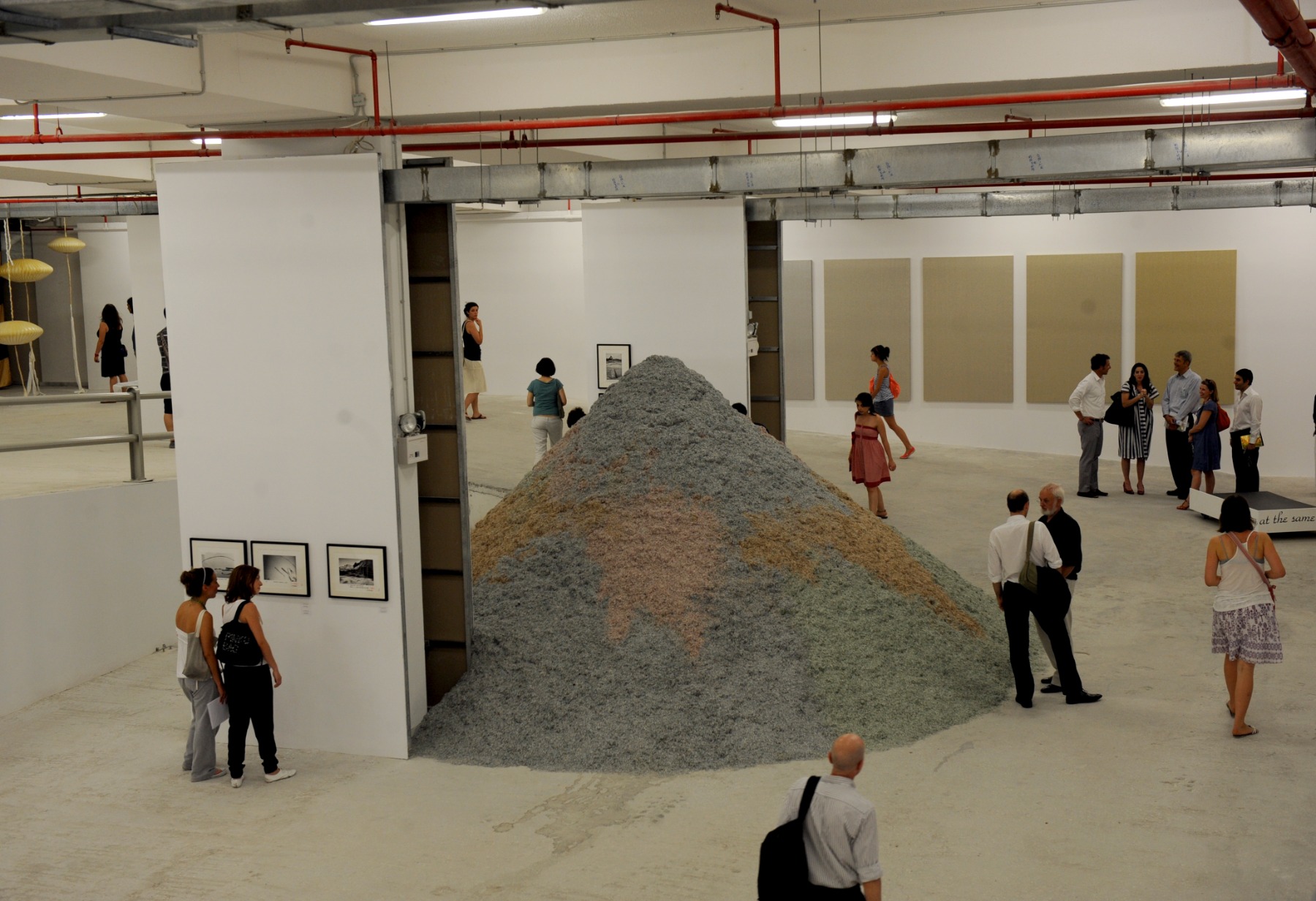
One thing that has always distinguished the Athens Biennale is that each edition seems connected to the previous one, rather than beginning from scratch. Was it important for you to think of the Biennale as an ongoing process?
I think hardships made us come up with ideas and ways of working. One of those hardships was that we never had stable, ongoing support from the state. We still don’t. Funding has always been irregular and uncertain. That meant we couldn’t operate like a conventional biennial.
We worked with many international curators, but we couldn’t offer them the kind of stability that most biennials can: a fixed budget, a clear timetable, and the freedom to arrive with a finished concept. Everything remained a work in progress. In a way, that also meant the curators became part of the process rather than arriving with a finished exhibition.
Because we were creators ourselves – artists, curators and critics, – the creative process naturally became central. We gradually realised that a biennial is more like a timeline, or even a score. Because it unfolds periodically, each edition becomes another chapter.
There is always something constant in the background: the city. There is also the wider global context, but always seen through the lens of Athens. Each edition echoed the previous ones rather than negating them. Usually, a curator arrives with a blank sheet of paper, a new agenda and a new list of artists, and then leaves. They’re like paratroopers. We never wanted to work that way. Our main focus has always been the Athenian scene and what is happening here.
Our focus was never simply to produce an event. It was to create something that was deeply relevant locally while giving the Athenian artistic community an equal place within the international conversation. I believe that continuity became one of the main reasons why the Athens Biennale came to be perceived differently.
Another important discovery was that the Biennale is not an exhibition. In fact, it may not even be an event. It has to become something bigger than that. It has to remain relevant and challenging while also speaking to wider audiences. That combination creates something unique.
The city itself became one of the protagonists. We were interested in Athens as a city in transition. Contemporary Greek history wasn’t simply a backdrop; it became part of the Biennale itself. We explored this conceptually, but also through the buildings we chose. These were never neutral exhibition spaces. They carried their own histories and memories and became active participants in the Biennale.
Kostas Roussakis, Egg tray, 2009. Courtesy of the artist. Installation view from the 2nd Athens Biennale 2009 “Heaven” (2009)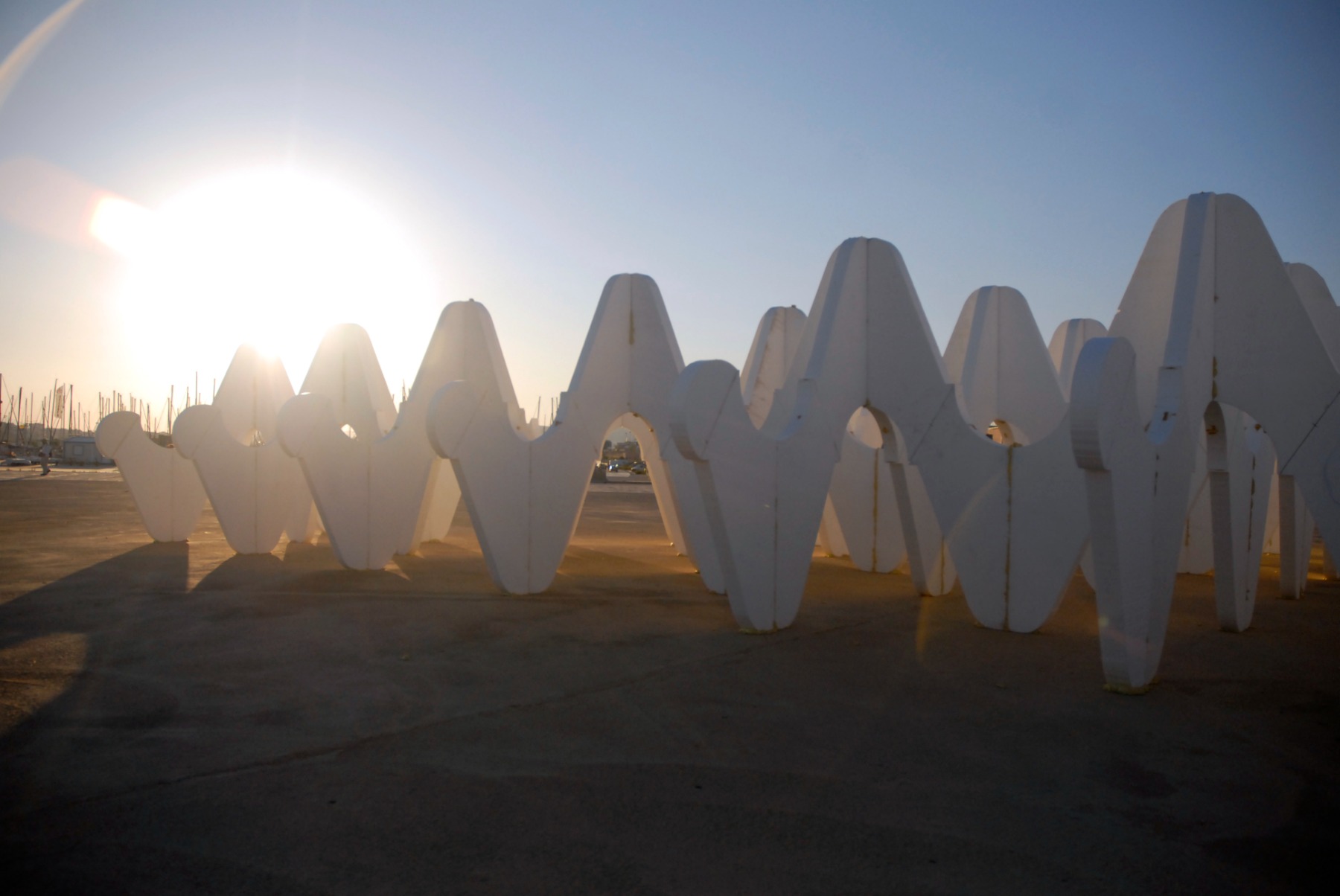
Two decades later, Athens is a very different city. How has that changed the role of the Athens Biennale?
Before each edition, we always ask ourselves the same questions: What is a biennial? We need to constantly reassess what a biennial stands for, because, like language, it changes over time. Its relevance changes. The platform changes. The channels through which it communicates also change. The second question is: Who are we? What is the Athens Biennale today? Why should we be doing it? What is our role now?
Our scope has changed because Athens itself has changed. Today it is considered a very attractive place. Many artists come here, establish studios, open spaces and start new initiatives. Athens is firmly on the contemporary art map now, and it occupies a significant position. But that hasn’t happened because of culture alone. It is also the result of broader social and political developments. After Brexit, the balance within Europe shifted. The political and economic changes in Germany also changed the cultural landscape. All this created more space for places operating on the margins.
I’m decoding it now as the emergence of friction points. We are at the crossroads of the tectonic plates of Europe, Asia and Africa. Beyond the metaphor, this has very tangible consequences: migration, political tensions, even military tensions. It is a friction point. Friction generates heat, and as we know from physics, when temperature rises, particles move faster. That’s why things accelerate here more quickly than in central Europe.
At the same time, Greece remains unregulated in many ways, including in the public sector. That creates potential. And I think creatives are always looking for potential. They went to Paris because of potential. They went to Berlin because of potential. Not necessarily because there was more wealth, but because there were opportunities.
Cajsa Von Zeipel, Catch and Kill, 2020 (detail). Courtesy of Faurschou Foundation. Installation view at the 7th Athens Biennale 2021 “ECLIPSE”. Photo: Nysos Vasilopoulos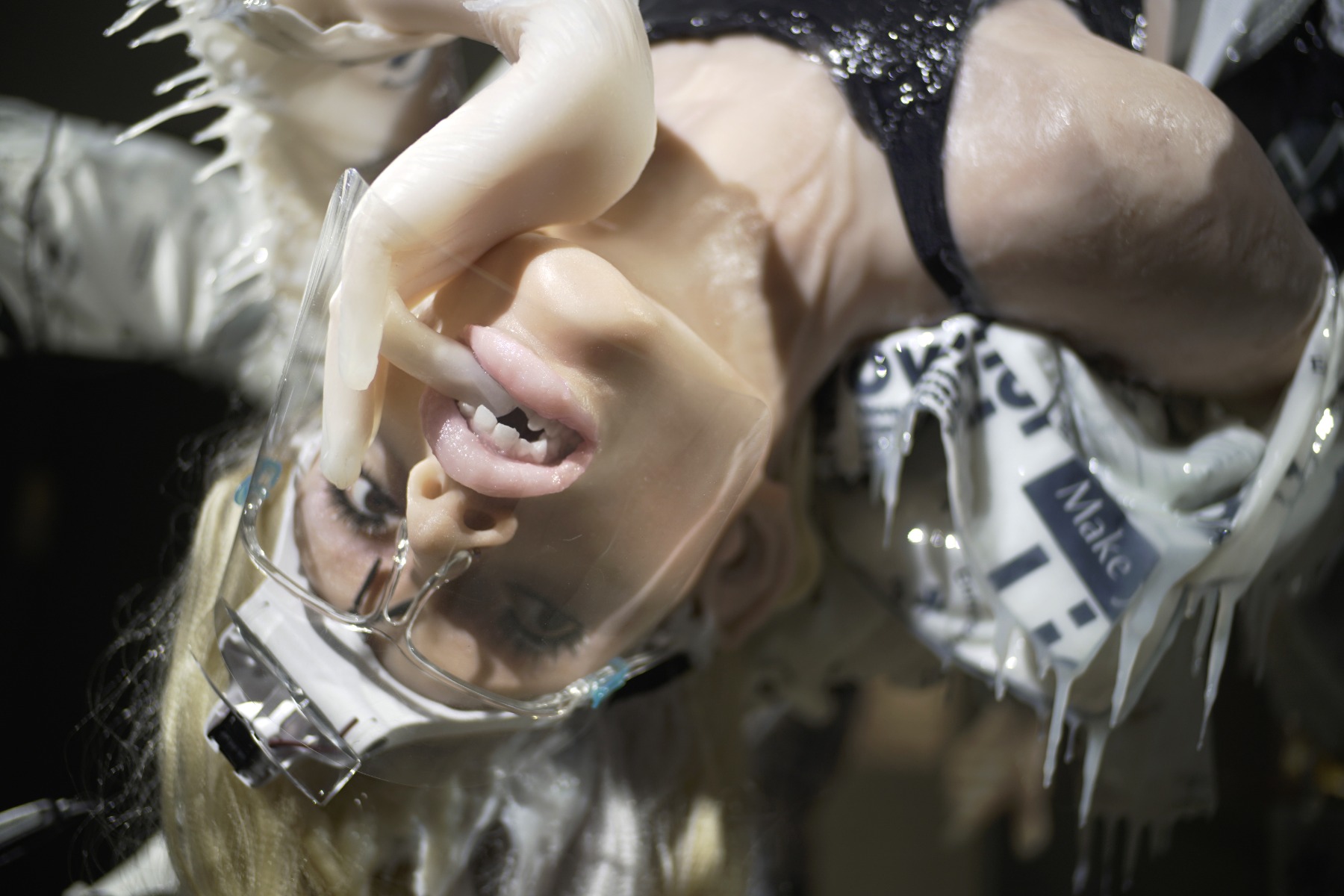
Athens has become a different kind of European centre – more southern, more temperamental, more extroverted. Unlike countries with long-established cultural institutions and foundations, we are still building many of those structures. That also creates possibilities. Today I think the Athens Biennale can aspire to become Europe’s leading forward-looking biennial. Venice is something else entirely; it is an institution of its own. But Athens can become an outpost where new ideas appear first. Because we have always been a small team, we have remained agile. We have never had heavy institutional baggage or many strings attached. That allowed us to address issues that were often difficult for larger biennials to engage with. We could react faster and take risks.
Biennials are city-specific rather than country-specific. That is fundamental. This remobilisation of the periphery is something we probably share with Riga. Your proximity to Russia and the war in Ukraine creates a different kind of awareness. It becomes part of everyday life, but it also keeps you intellectually and culturally alert. In our case, the decade of economic crisis taught us many lessons. But we also missed opportunities to imagine a different future. Today Athens may look polished from the outside, but many of the underlying problems remain. We still lack a long-term vision.
That is why I believe our task is to narrate these transitions. History doesn’t move in a straight line – it moves through upheavals, pauses and new beginnings. In that sense, what we do is a form of dramaturgy. We are trying to narrate cultural transition, almost like epic storytellers.
Installation view at the 4th Athens Biennale 2013 “AGORA”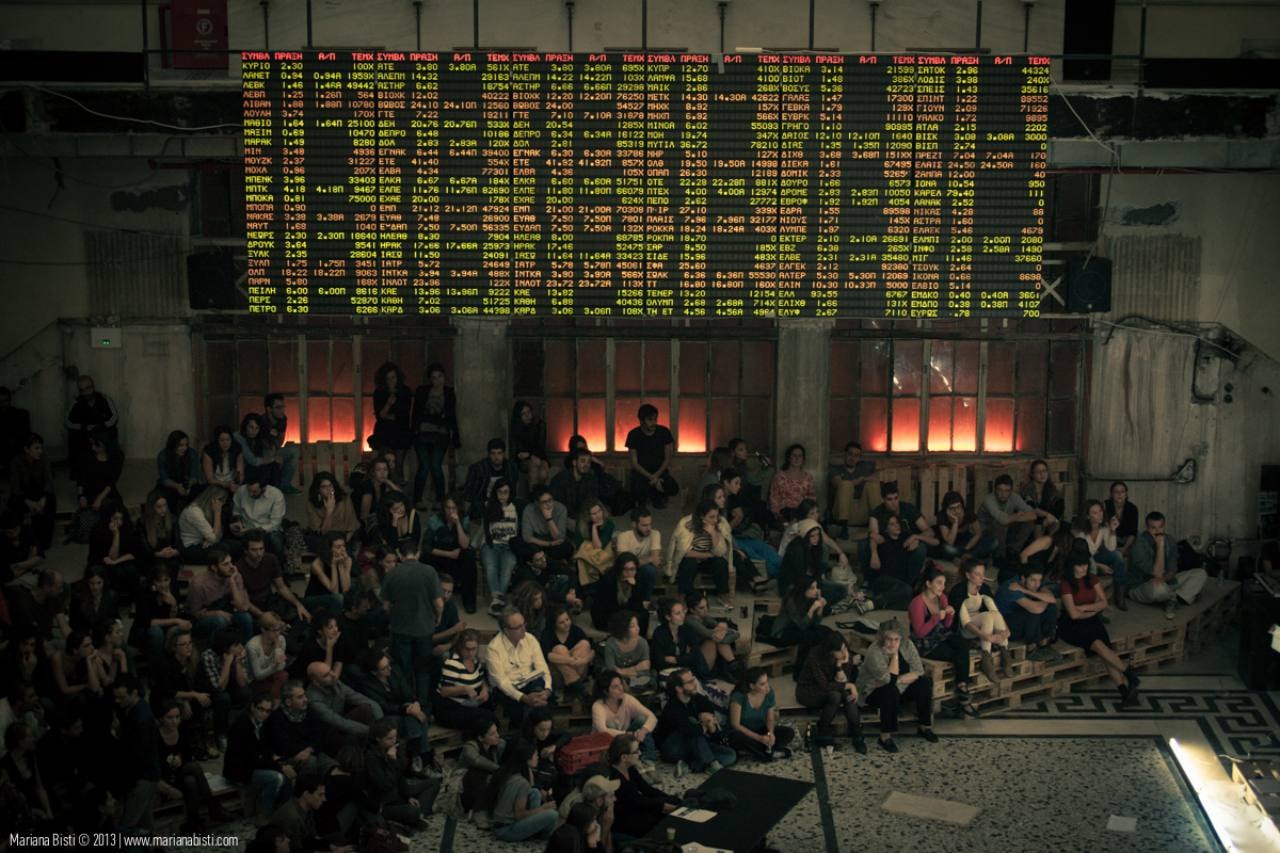
The 2027 edition also marks a profound change in the Biennale itself. You have introduced a new governance model built around a Board of Trustees. Why did you decide that such a radical change was necessary?
Times of danger – times of crisis – require radical decisions. Creating the Biennale was one paradigm shift. Three young people with no resources deciding to create a biennial in Athens was already a radical idea. What is happening now is another paradigm shift. In Greece we are conditioned to believe that we function better individually than collectively. It is deeply embedded in our culture and even in our history. We have always been a country of isolated places, islands, families, merchants, pirates – everyone pursuing their own interests. Only when confronted by a greater external threat do we come together.
So bringing together people who had never really collaborated before was already significant. These are collectors, entrepreneurs and people with their own successful projects. They never needed each other. When it became clear that we couldn’t establish the Biennale around one major foundation or the state, I realised that we had to rethink the model completely. My ambition has never been to cling to authority. My ambition has always been to let the Biennale become the best version of itself.
When the danger of closure became real, I thought: we have to remodel it. By creating the Board of Trustees and bringing together some of the most experienced people in the Greek and international art world, we also challenged another myth – that Greeks cannot work collectively. We can. I hope it lasts. I hope it becomes productive.
The Board safeguards the long-term future of the organisation, but at the same time it protects our creative autonomy. They don’t dictate taste or programme. They provide experience, knowledge and international perspective while allowing the artistic direction to remain independent. Many of them sit on the boards of major museums – MoMA, Tate, Dia, Guggenheim. They know how institutions function. I hope this becomes another new chapter in the history of the Athens Biennale. Not because we want to become hegemonic – that is completely against our DNA, but because we want to remain a leading voice by continuing to anticipate what is coming next.
Nikos Kessanlis, Rhinoceros, 1997. Courtesy: Klara Romanos © Dimitris Tsoublekas. Installation view at the 5th Athens Biennale “OMONOIA” (2015-2017)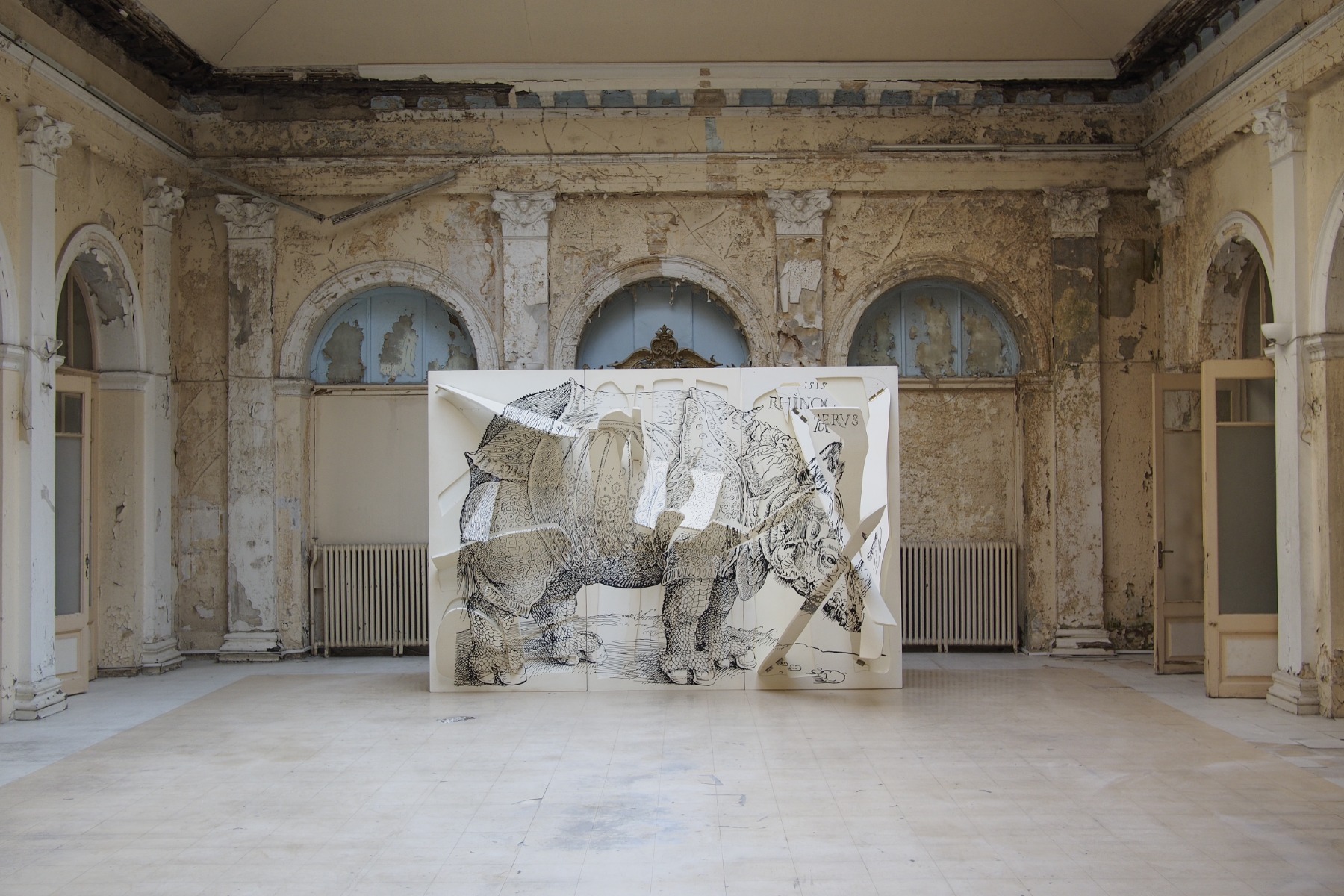
Documenta 14 remains one of the defining moments in the recent history of Athens. Looking back today, how do you assess its impact?
Before anything else, I want to give credit where credit is due. Adam Szymczyk had a vision. Whatever happened afterwards, that vision was real. Documenta was, without question, the most important international contemporary art event ever to take place in Athens. Nothing else comes close. I don’t want to diminish that. At the same time, for me – and for many people close to the Athens Biennale, it was also a difficult and, in many ways, traumatic experience.
Looking back now, what interests me most is the idea behind its title: Learning from Athens. For me, that phrase means treating Athens as a subject – as something that possesses knowledge. If you say you are learning from someone, you approach them with humility and curiosity. You assume they have experienced something worth understanding.
Athens at that moment was living through an extraordinary crisis. There was social unrest, poverty, homelessness and a profound sense that the future had collapsed. To learn from Athens meant engaging directly with that experience and asking what Europe could understand from it. Gradually, however, I felt the meaning shifted. Instead of learning from Athens, Athens became the place from which broader global questions were discussed. Those are two very different propositions. The first asks what Athens itself has to teach. The second simply uses Athens as a platform. For me, that distinction was fundamental.
I felt Documenta missed the opportunity to tell the story that was unfolding in front of it. Athens itself contained an extraordinary narrative – a city at the centre of a European crisis, confronting questions of power, vulnerability and the future. It was a story that could have resonated far beyond Athens. Instead, much of the attention turned elsewhere. Many of those projects were important in themselves, but I felt the living reality of Athens remained largely untold.
Having said that, Documenta left an important legacy. It brought remarkable artists and thinkers to Athens. Many people discovered the city through it; some even decided to stay. Its programme was extraordinary, and many of its projects still deserve to be revisited today. So my criticism isn’t about ambition. It’s about what I believe was a missed opportunity to tell the story that was unfolding in front of us.
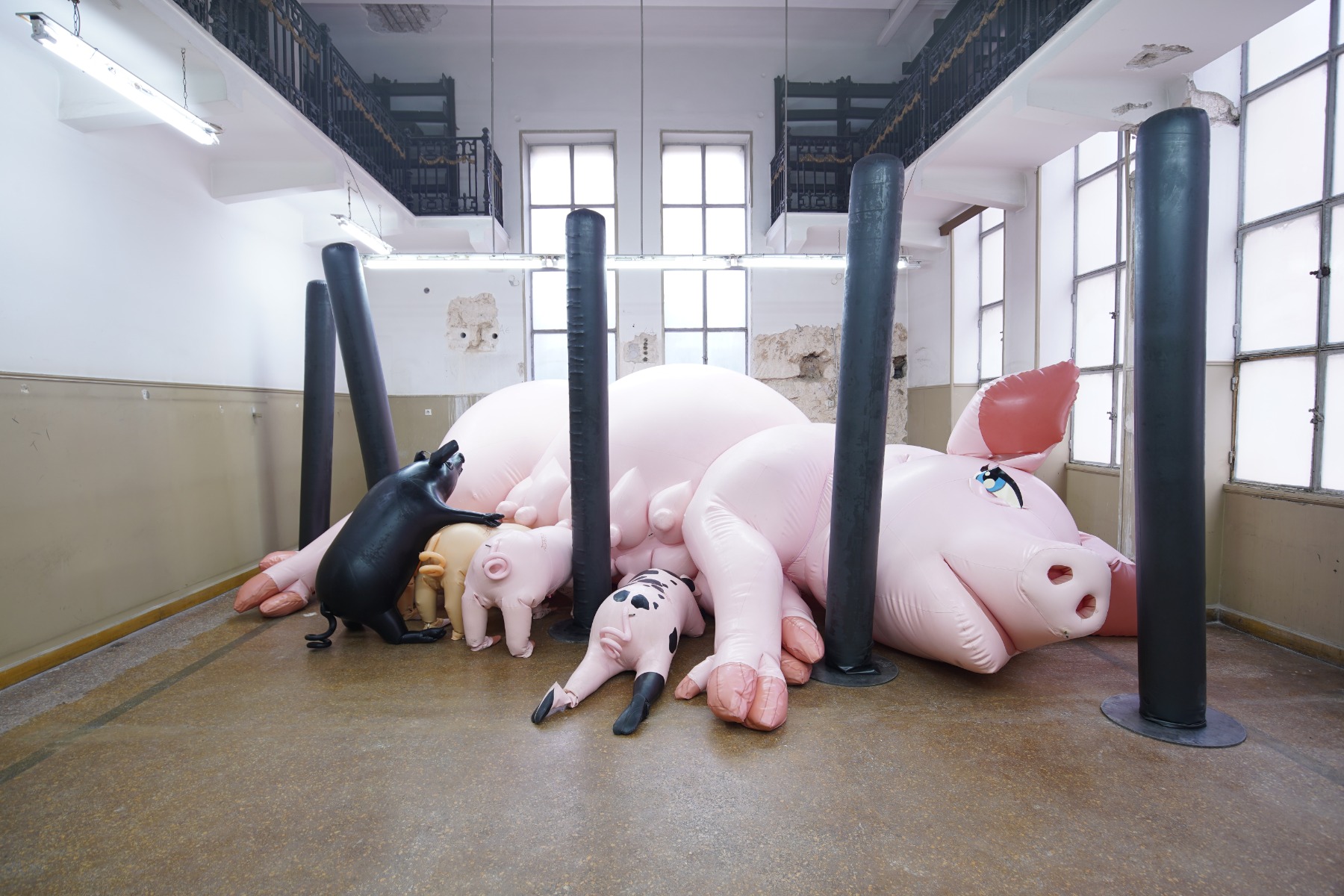
Saeborg, Pigpen, 2016. Courtesy of the artist. Installation view at the 6th Athens Biennale 2018 “ANTI”. Photo: Nysos Vasilopoulos
The next edition of the Athens Biennale opens in April of 2027. What can you tell us about it, and what direction do you hope it will take?
One thing that interests me greatly is how digital culture has changed younger generations, not just the way they communicate, but how they experience themselves and the world. We still tend to think of the individual as something stable and unified. I don’t think that’s true anymore. Identity has become much more fluid, fragmented and constantly shifting. I’m not sure contemporary art has yet fully understood how profound that change is, or whether exhibitions and biennials are even the right format to engage with it. That remains an open question.
As for the upcoming edition, I’m the artistic director rather than the curator. The exhibition is being curated by Thiago de Paula Souza, whose concept revolves around the tension between stasis and ecstasis – between stillness and transcendence, between the limits of the body and the possibility of moving beyond them. Although those ideas appear to be opposites, they share many connections. I think Thiago understands those nuances very well, and I’m hopeful he is building something substantial.
Sirous Namazi, Leaning Horizontal II, 2018. Courtesy the artist and Galerie Nordenhake Stockholm / Berlin. Installation view at the 6th Athens Biennale 2018 “ANTI”. Photo: Nysos Vasilopoulos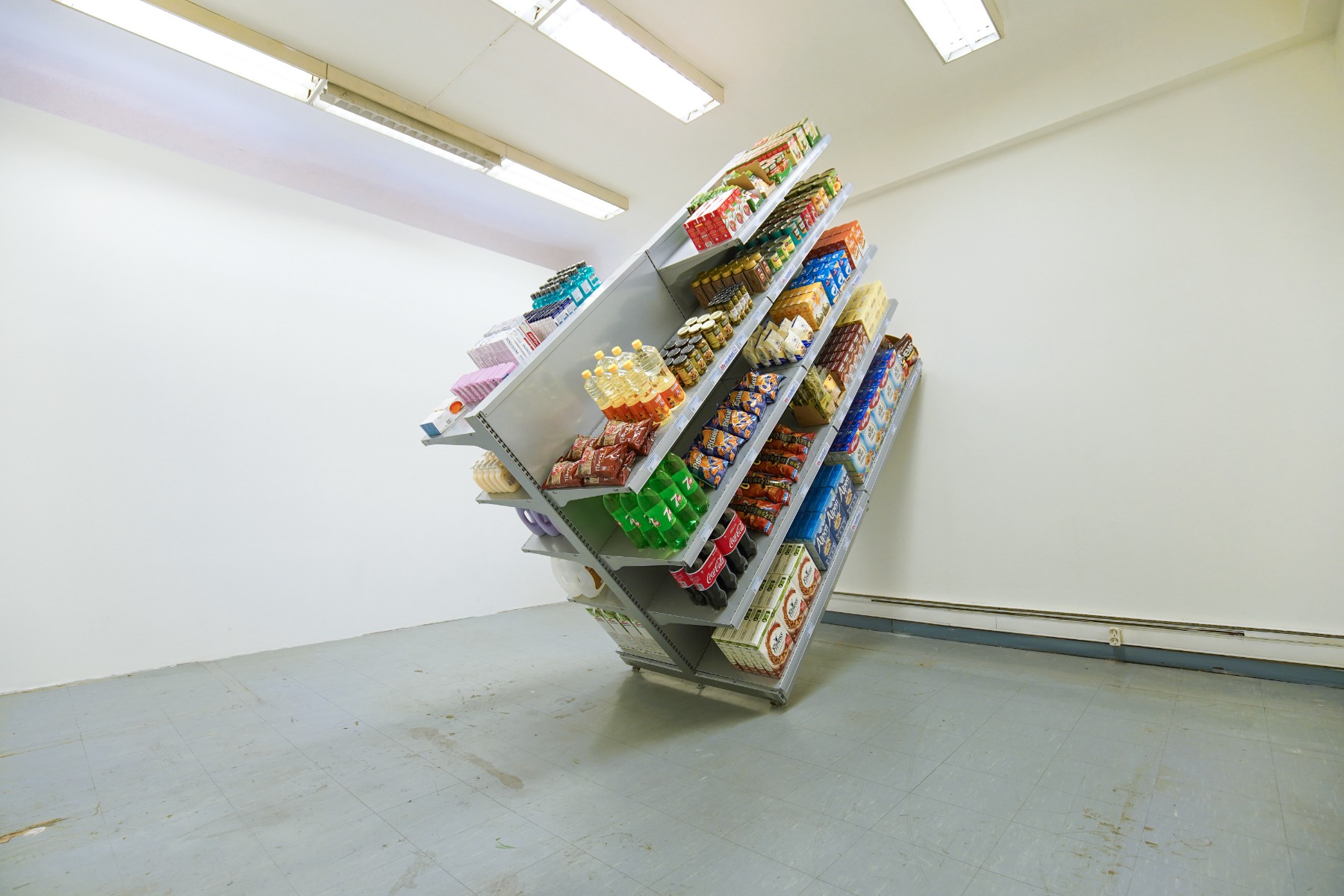
Was it important for you that the curator of this edition came from outside Greece?
It wasn’t a decision we made from the outset. One of the first initiatives of the new Board of Trustees was to rethink how we work with curators. We created a curatorial committee, identified an overarching theme for the Biennale, and invited a group of curators to respond to it. Through that process we eventually selected Thiago de Paula Souza. For us, this was an entirely new way of working. It wasn’t someone I already knew or had collaborated with before, so the process felt genuinely open.
One thing that worked strongly in Thiago’s favour was his willingness to spend time in Athens. He has already spent several months here. That matters because many curators today move constantly from one biennial to another and simply don’t have the time to develop a deep understanding of the places they work in. Too often that leads to exhibitions that feel more homogenised and less attentive to local nuances. I hope that won’t be the case here.
Deborah Joyce Holman & Yara Dular Gisler with contributions by B Covington Sam-Sumana, FALSE PRPHT & Suutoo, Untitled (in rage), 2021. Commissioned and produced by the Athens Biennale. Installation view at the 7th Athens Biennale 2021 “ECLIPSE”. Photo: Nysos Vasilopoulos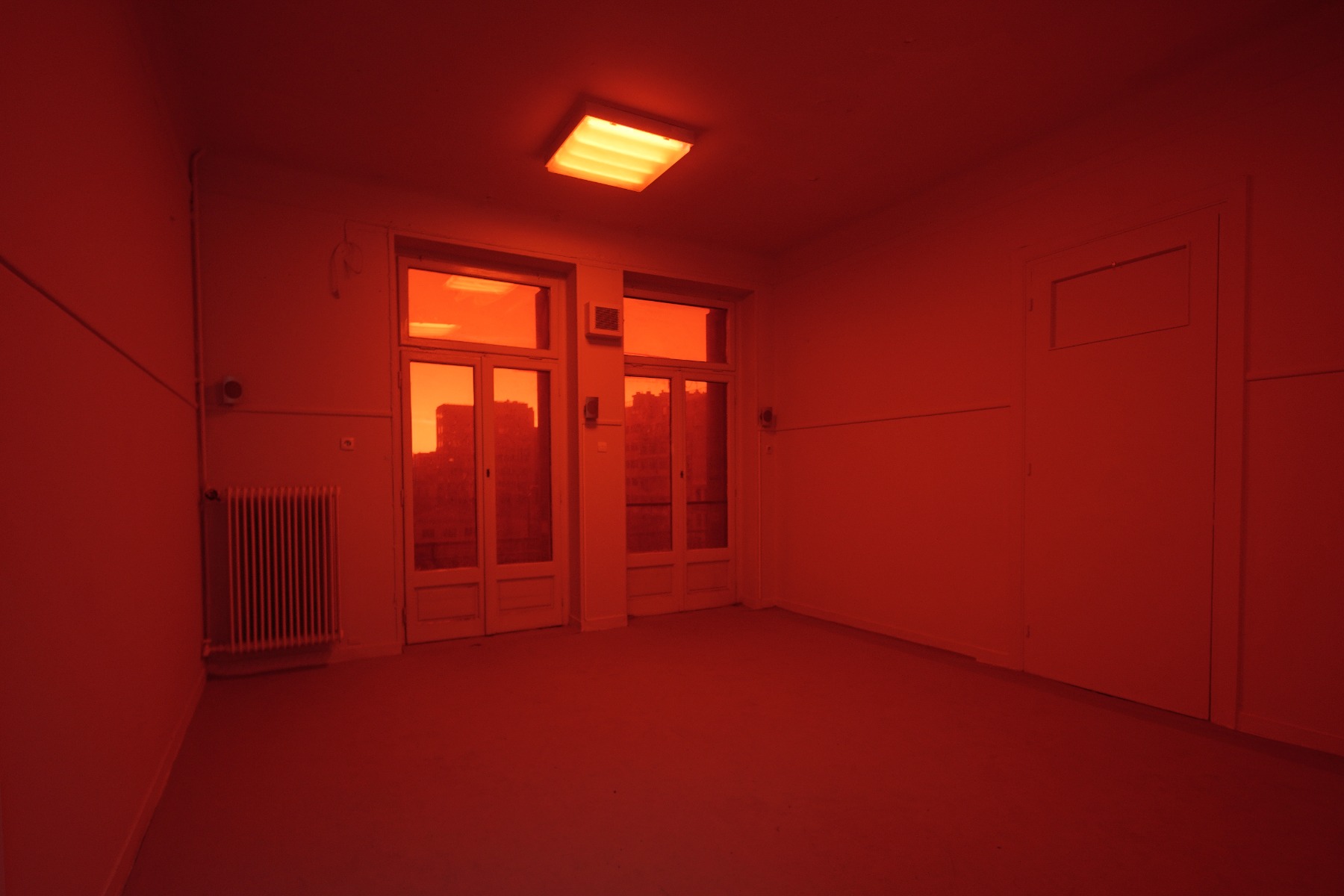
But in a way, that could also change the DNA of the Biennale.
Of course, and I’m very much in favour of that. How can a biennial that aspires to be forward-looking refuse to change its own constitution? We should constantly be changing in order to adapt. Look at how much the world has changed in just the past few years. Things we once believed were stable no longer are. So how can art remain stable?
I often think about Nassim Nicholas Taleb’s idea of antifragility. Being antifragile doesn’t mean becoming rigid or stronger. It means being able to bend, adapt and evolve. That’s something I have also learned from my students. We need to remain adaptable. Otherwise, there is no evolution.
Navine G. Khan-Dossos, Ta Nea Xysta, 2021. Commissioned and produced by the Athens Biennale. Installation view at the 7th Athens Biennale 2021 “ECLIPSE”. Photo: Nysos Vasilopoulos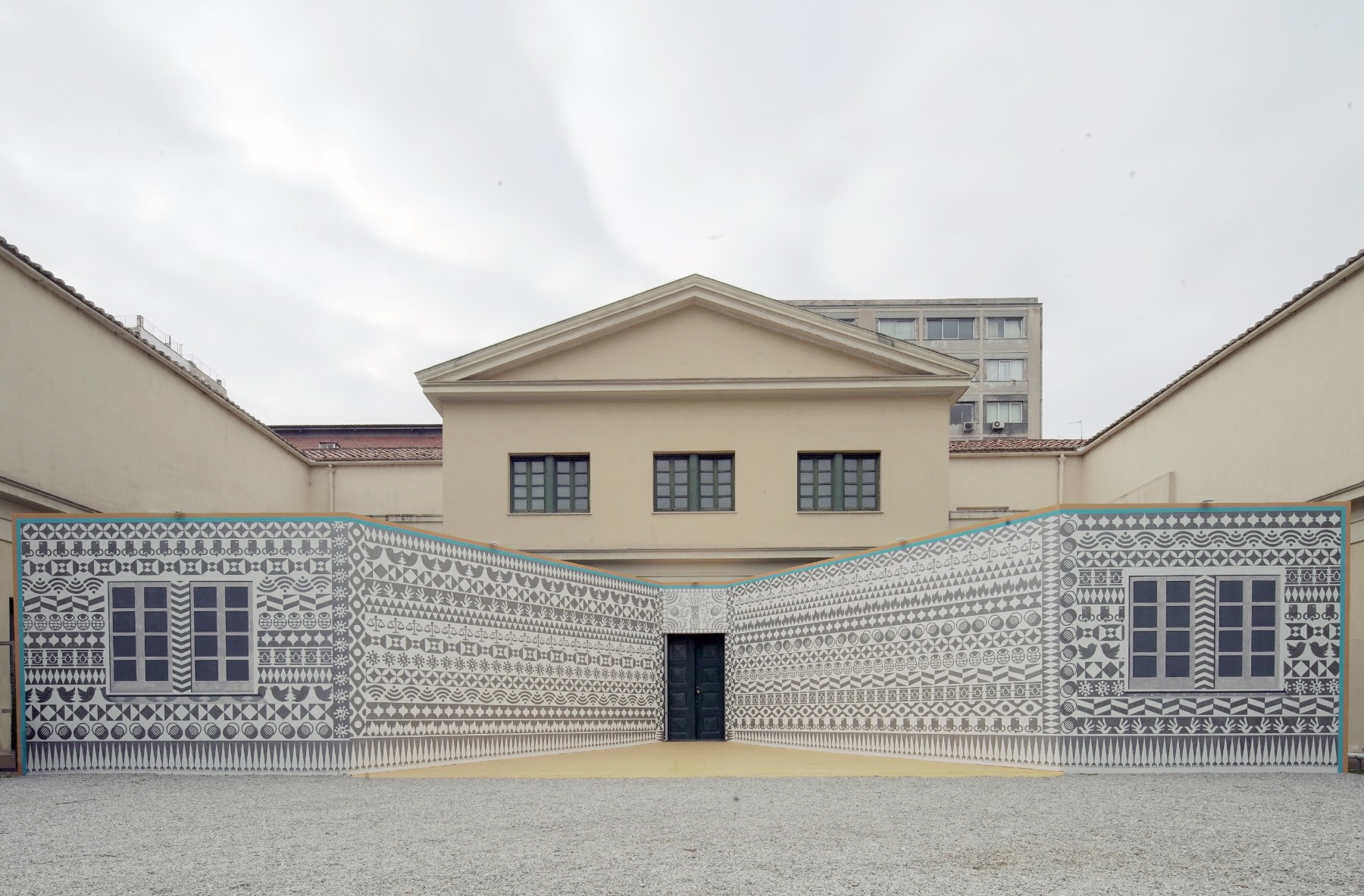
For me, Athens has gradually become one ongoing conversation. Every visit reveals another layer, another perspective. I don’t think it’s a city one can ever fully understand, not even by living there. In a way, the Athens Biennale feels similar: an ongoing conversation.
Yes. Discussions about whether biennials are still relevant have been going on for decades. There are countless articles and dissertations asking whether we still need them. Yet they remain one of the most vital platforms in contemporary art.
Why do you think that is?
Because of their relationship to time. Museums are defined by space. A biennial is defined by time. Its only real obligation is to remain timely – to stay close to the present.
In that sense, a biennial is like an X-ray of a particular historical moment. It can never capture everything, but it reveals something essential about the time in which it takes place.
***
The interview was originally conducted for the catalogue of the exhibition “Always the Sun”: Contemporary Art from Greece, held at the Riga Contemporary Art Space from October 2, 2026 to Janary 10, 2027
Title image: Poka-Yio. Photo: Andreas Simopoulos
