Performance Art Festival MAZIRBE 2025
Photo and Video Coverage
The festival ran from June 20 until sunrise on June 21, filling Mazirbe’s seashore and village landscape with the presence of live art — individual movement interventions, silent performances, environmental installations, live music, and a communal solstice ritual by the sea. The event emphasized the idea of presence as participation, inviting visitors to take part not only as spectators but also as co-creators of this unique occasion.
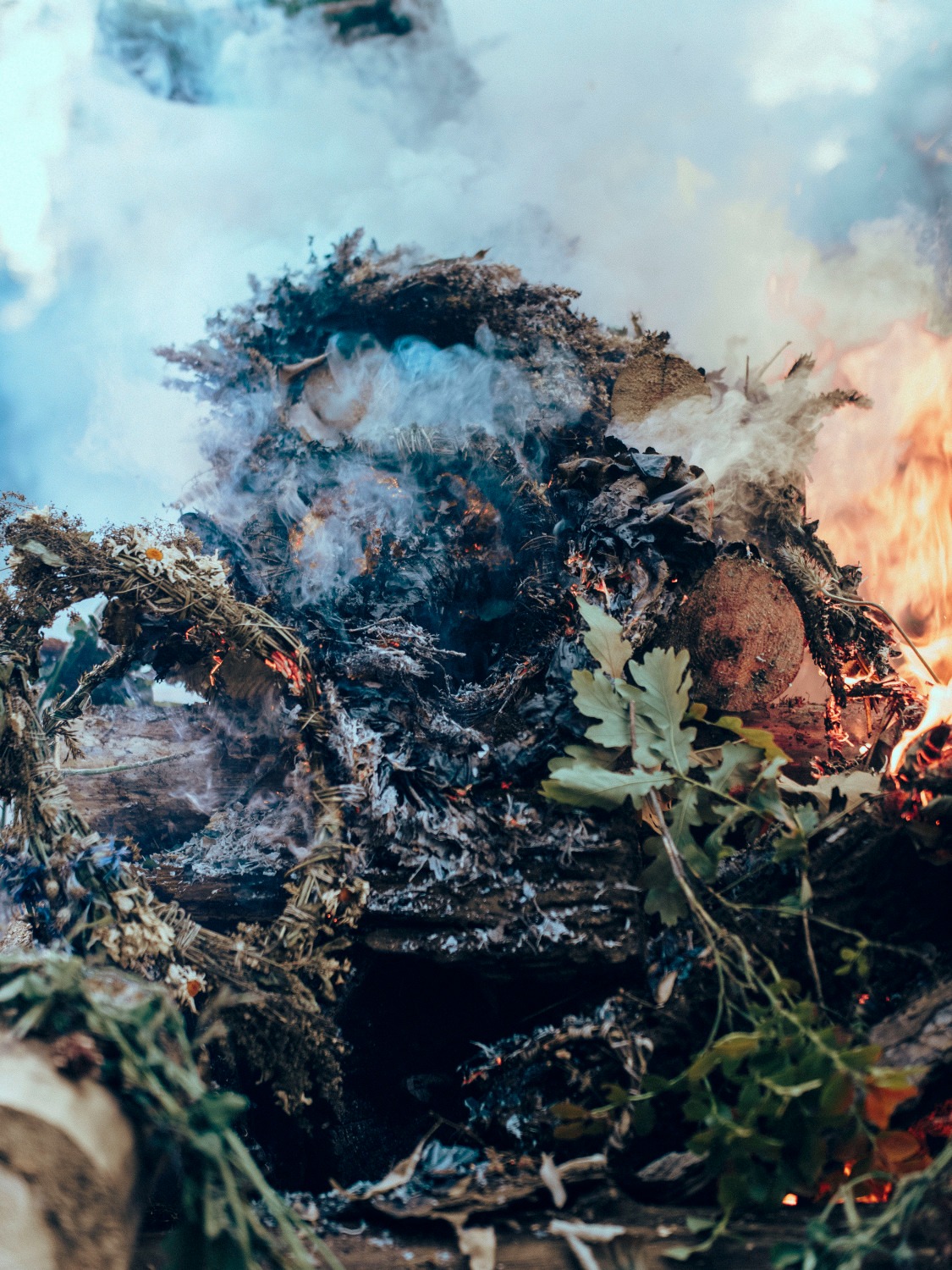
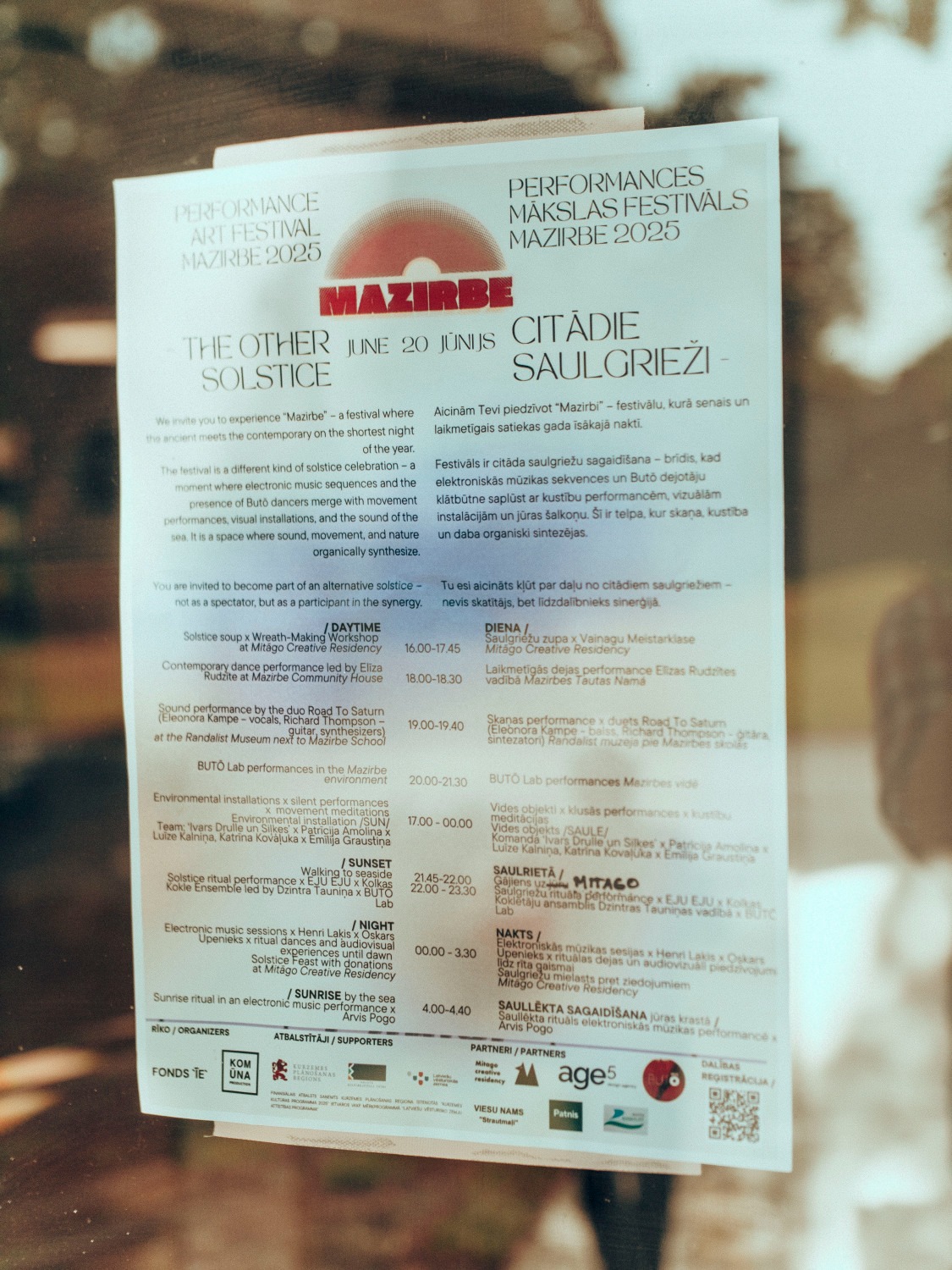
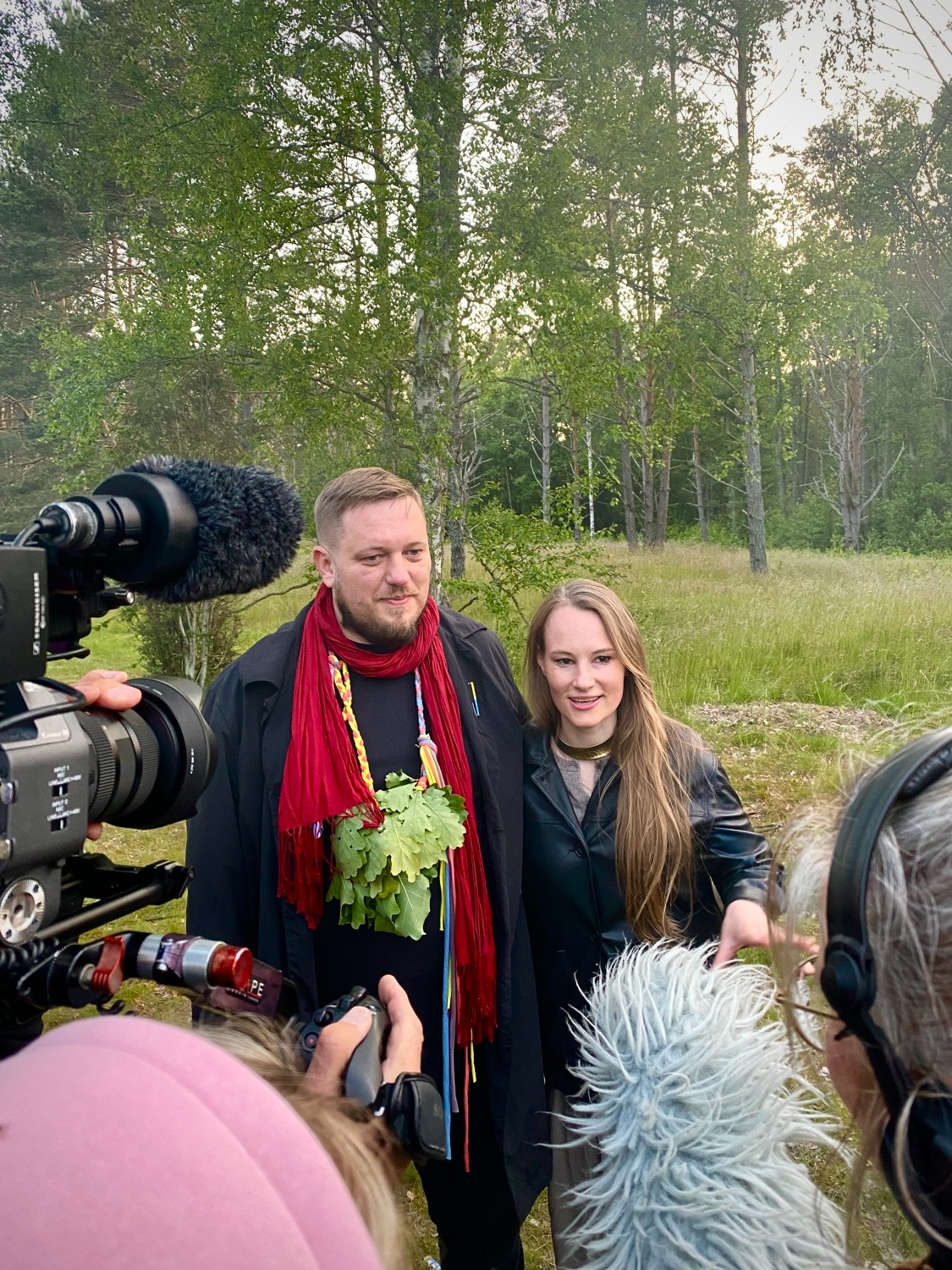
Mazirbe is a special place that demands a unique attitude. “At once it is the middle of nowhere, and yet a center. It is where Livonian history and modern industrial environments meet by the sea — in the forests of Slītere. Our team is starting this wonderful tradition to look at the unspoiled simplicity and authenticity of Mazirbe with new eyes. Through a contemporary perspective, we wish to give both locals and visitors the opportunity to get to know this place differently than usual — to discover it through an event infused with Butō and contemporary dance, environmental installations, and electronic music performances,” says the festival founder and author, Dāvis Stalts.
BEYOND THE USUAL SOLSTICE
Living Art that Awakens a Place
The Mazirbe 2025 festival did not simply present art — it created it together with the place, with the people, with the light and darkness of the solstice. Mazirbe became a living stage, where sea and forest, ancient and new, body and spirit — all met in a single night.

TWO SUNS
Environmental Installation
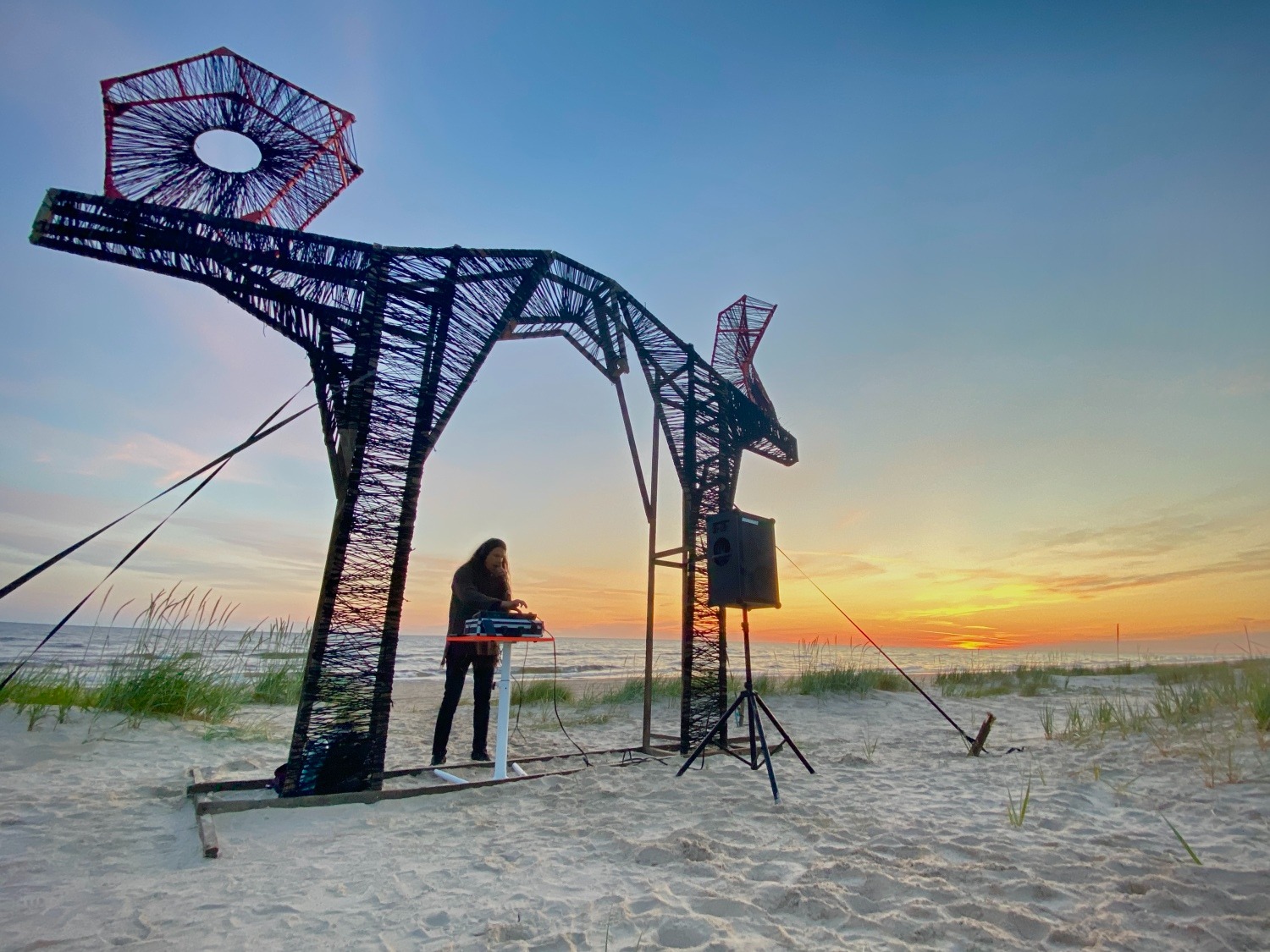
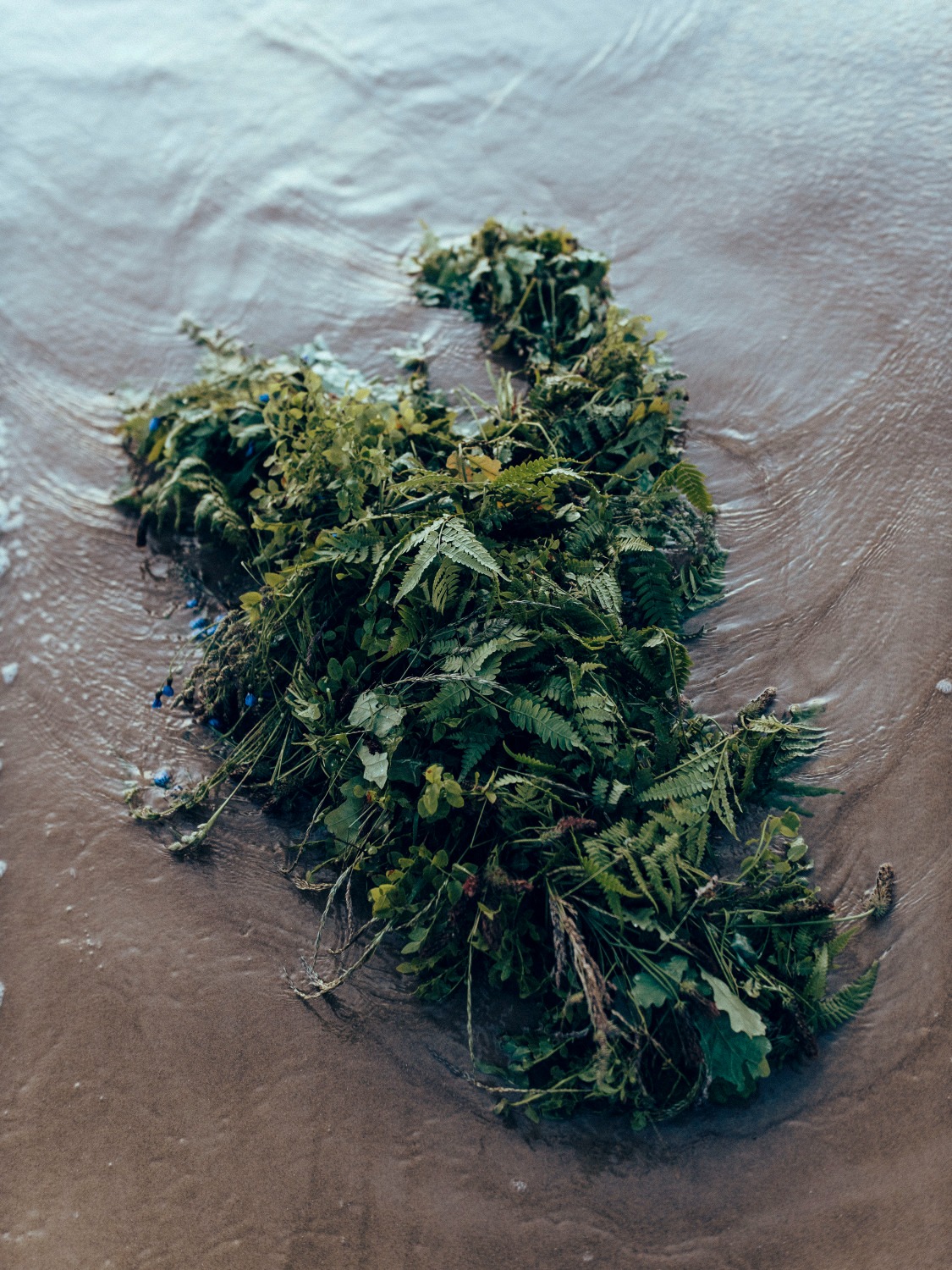
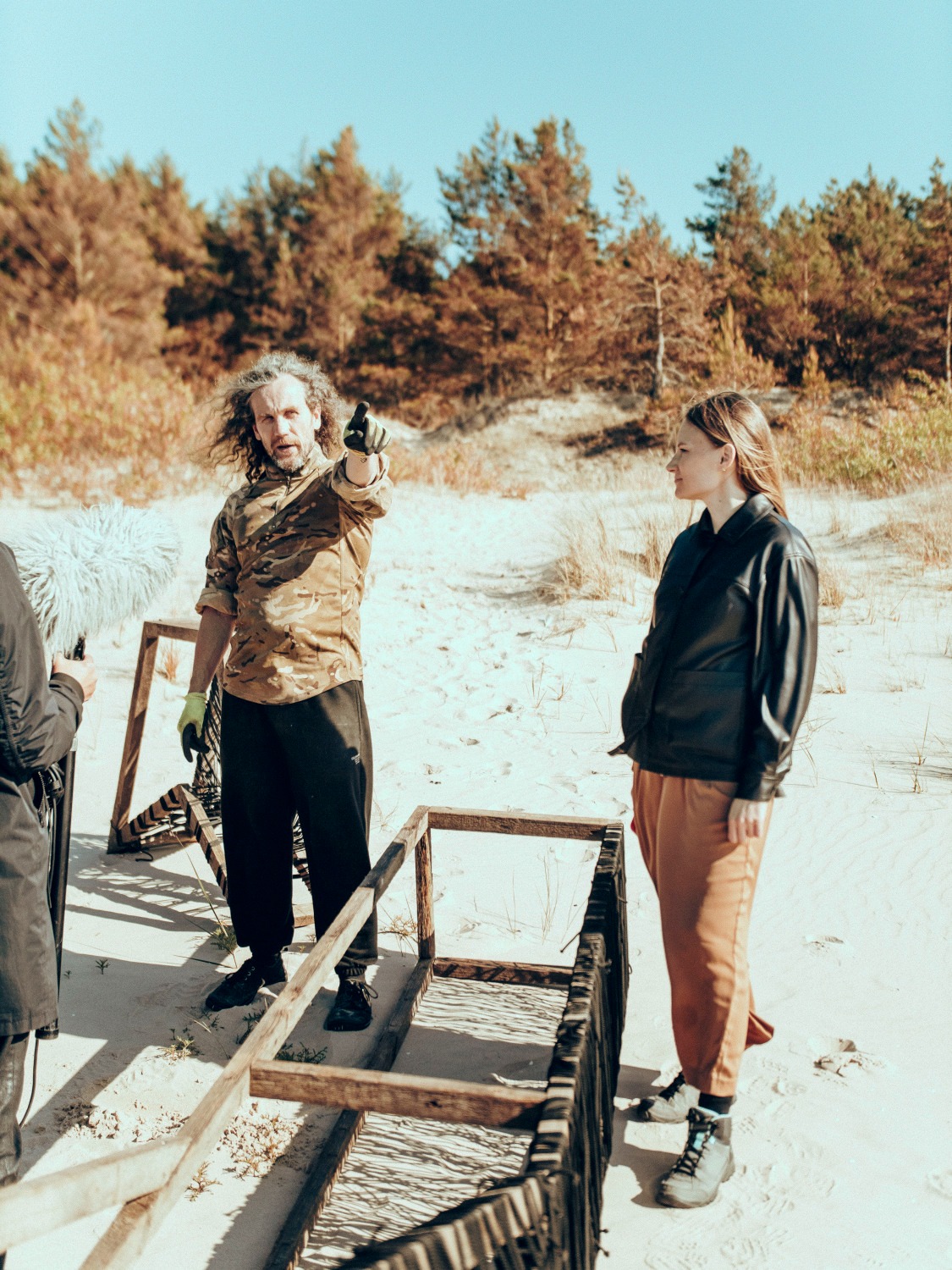
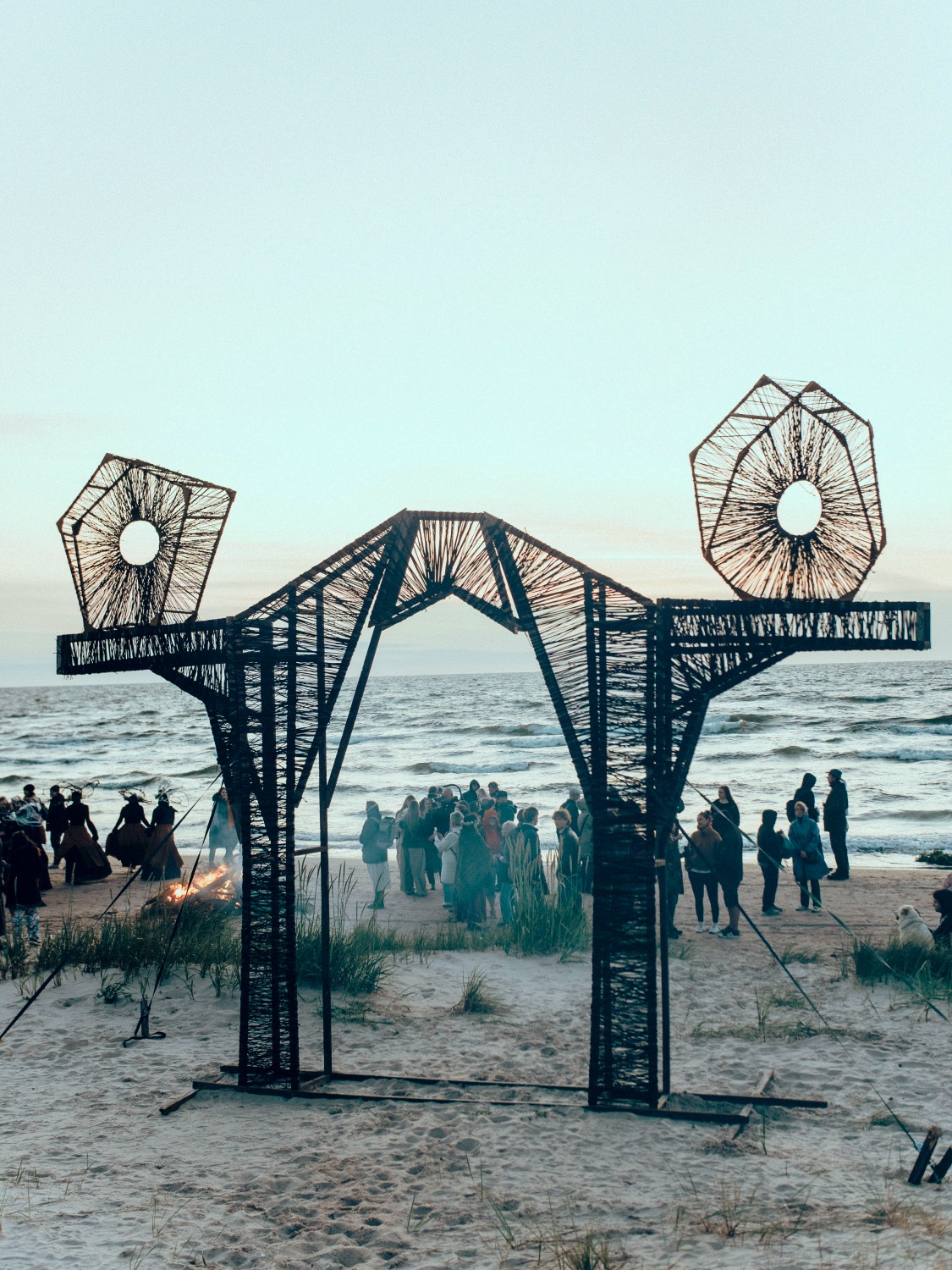
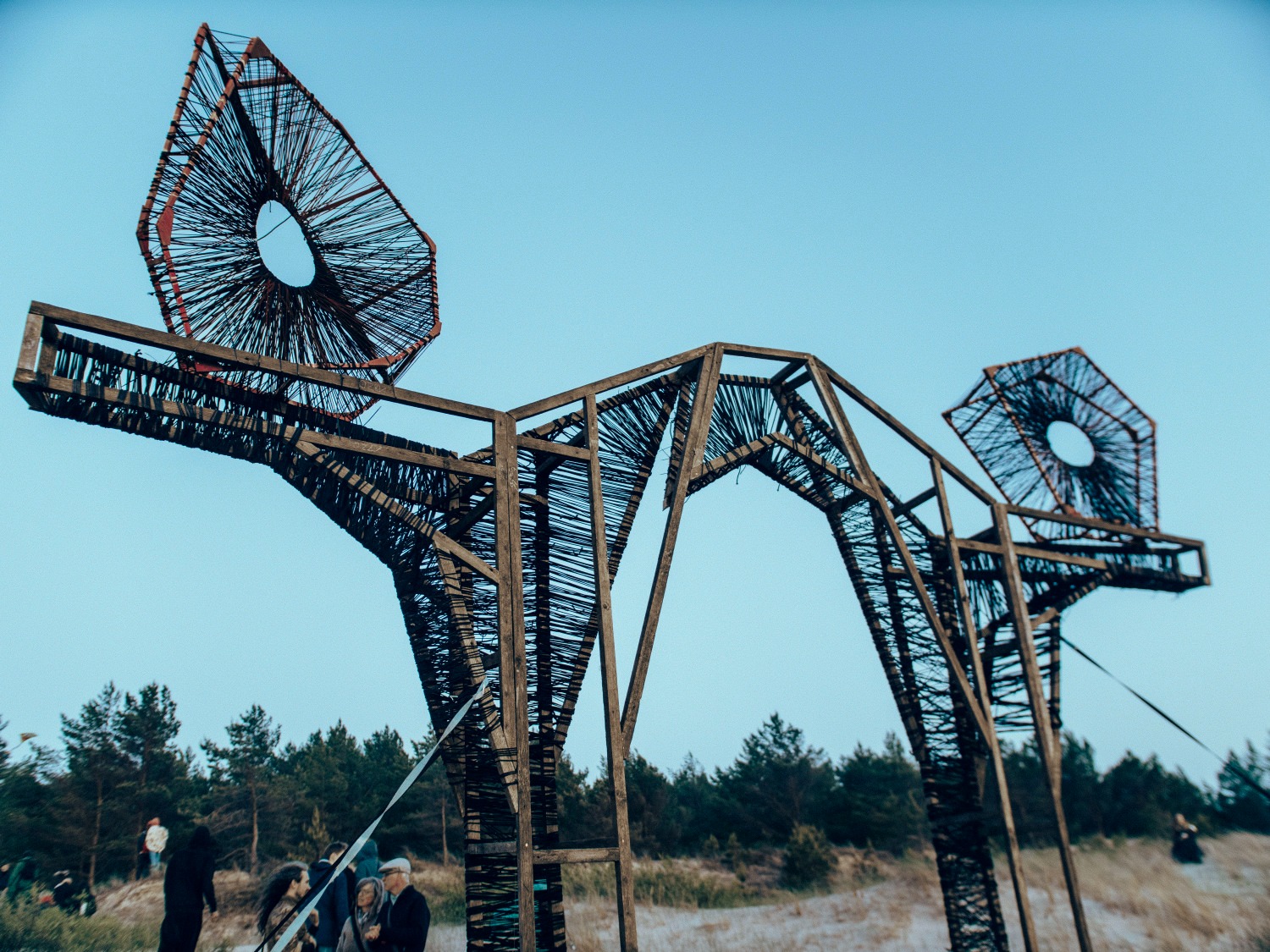
The festival’s central environmental art installation, Two Suns, was created in collaboration with artist Ivars Drulle and the collective “Siļķes” (Patrīcija Amoliņa, Luīze Kalniņa, Katrīna Kovaļuka, Emīlija Graustiņa). Situated by the seashore, this work offered a contemporary interpretation of the sun — a visual ritual where creative freedom intertwined with symbolic richness.
PLŪSTI LĪDZ (JŪOKŠ ĪŅÕ in Livonian)
Contemporary Dance Performance
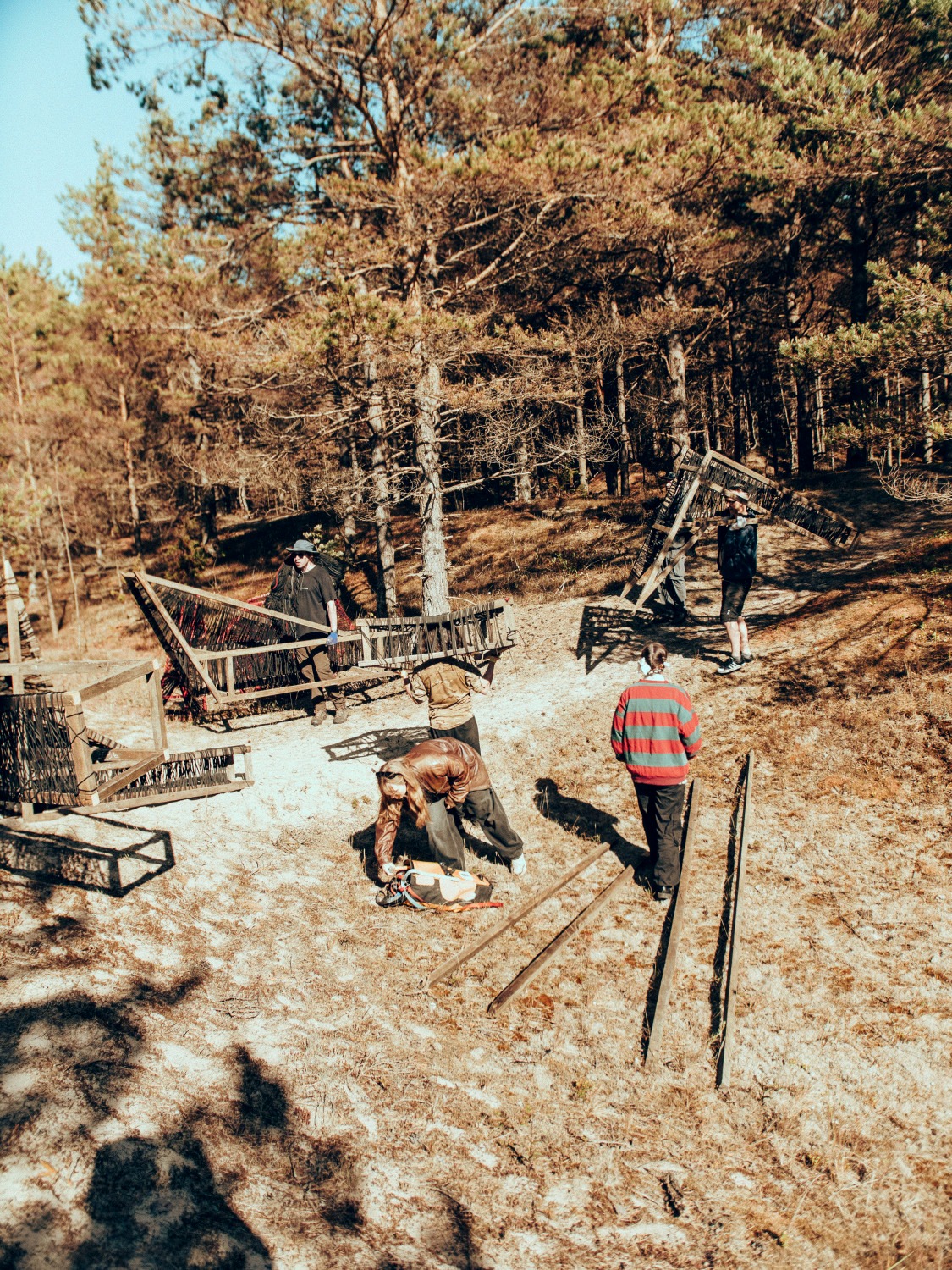
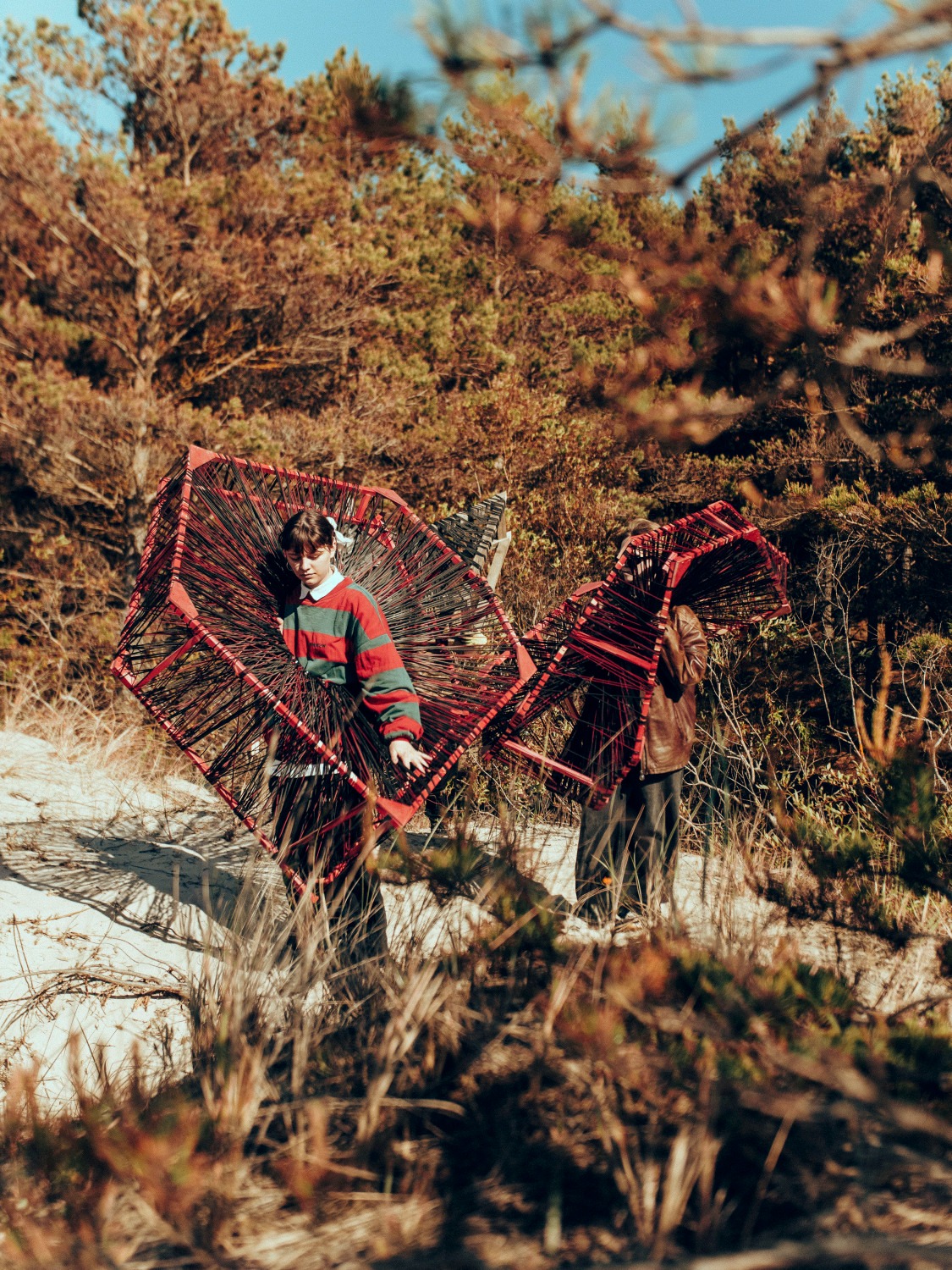
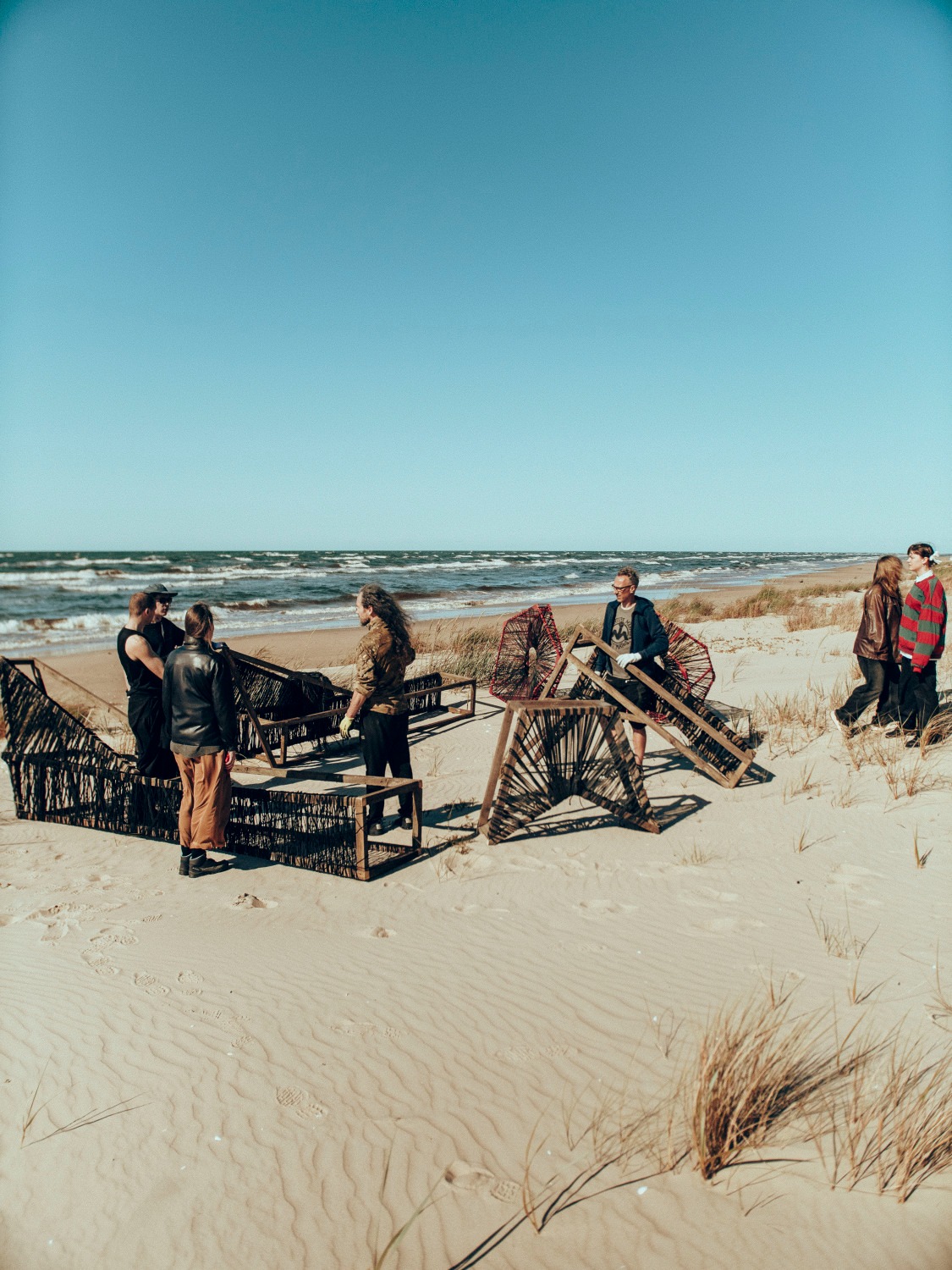
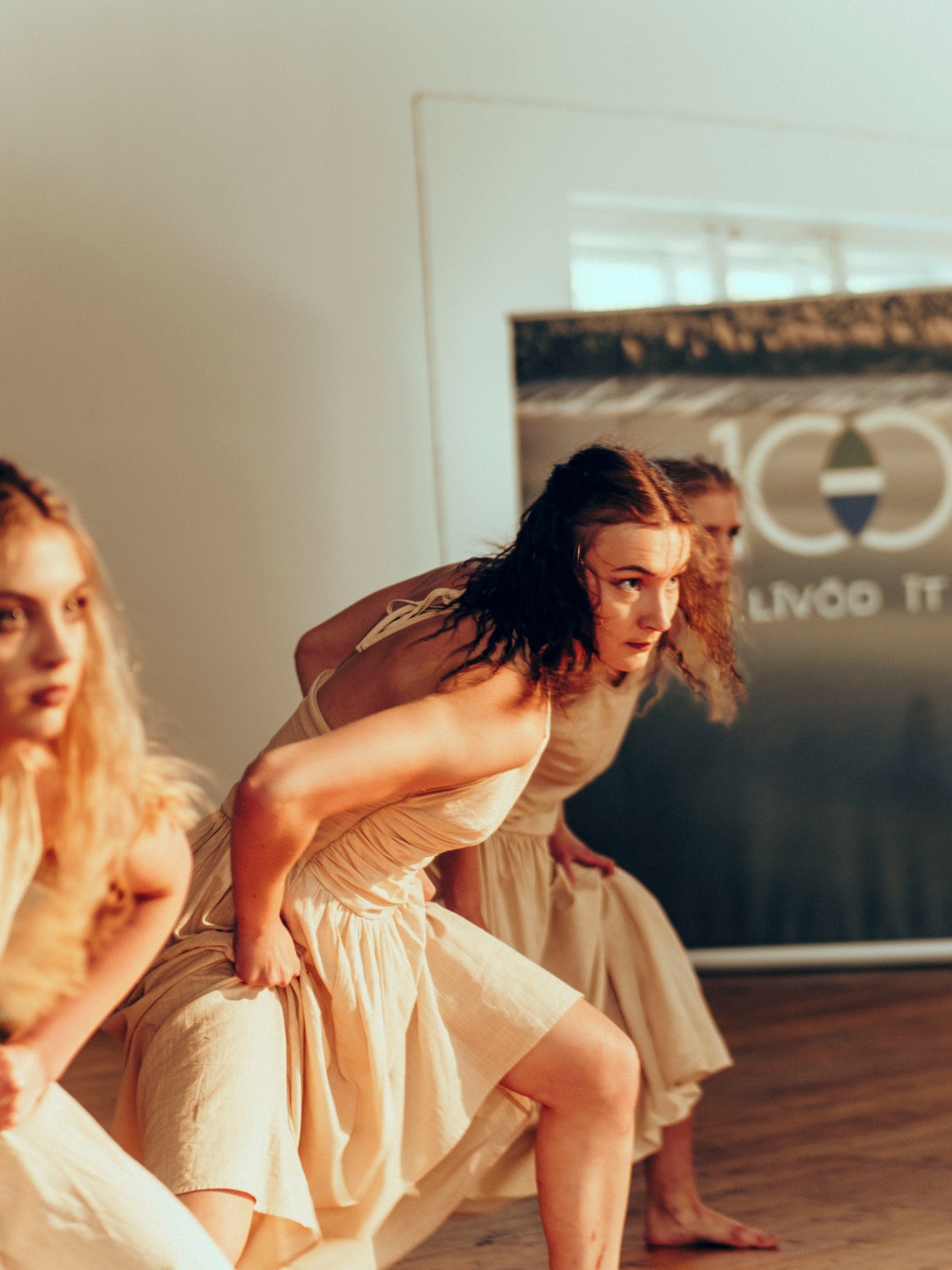
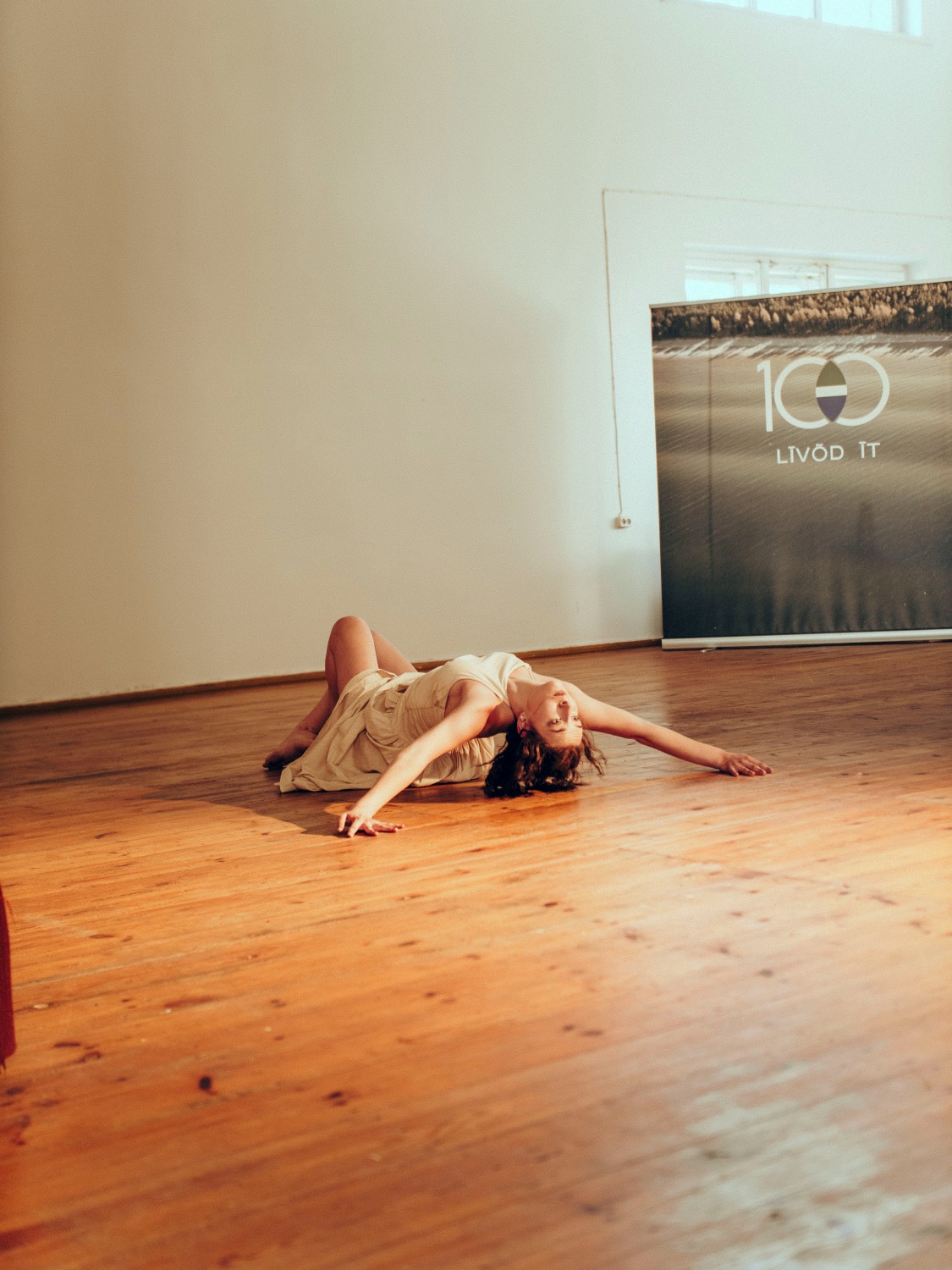
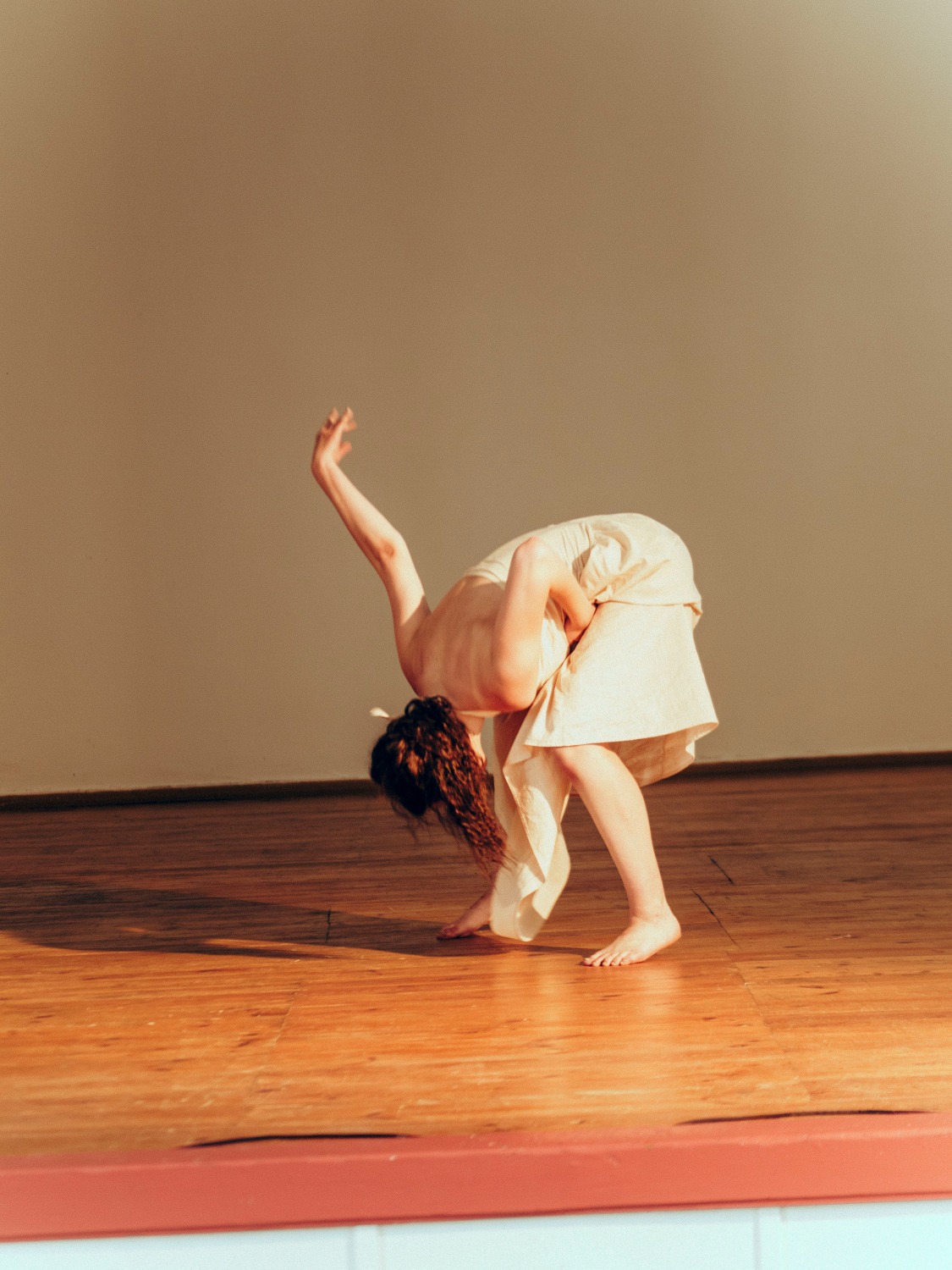
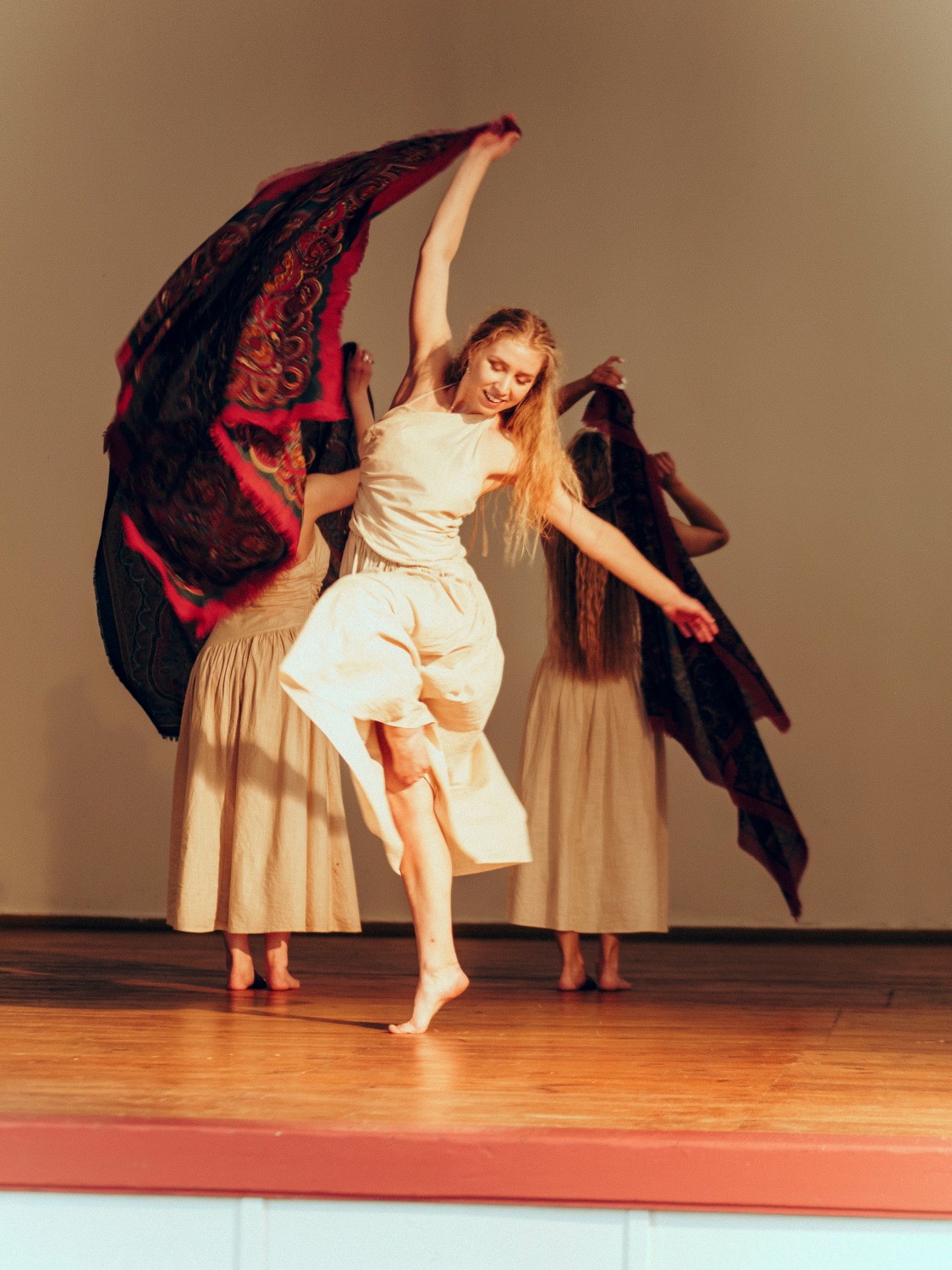
Plūsti līdz (in Livonian: Jūokš īņõ) is a contemporary dance performance choreographed by Elīza Rudzīte, which premiered as part of the Mazirbe 2025 festival. The performance features Annija Bērta, Linda Millere, Samanta Eglīte, and Elīza Rudzīte herself. The work explores the flow between tradition and modernity, identity and movement, solitude and togetherness. Both Elīza and Linda grew up attending Livonian children's camps in Mazirbe, where their close connection to Livonian culture was formed. Now, this bond continues through their artistic expression — using contemporary dance as a way to honor and reinterpret their cultural heritage in new forms. The performance was born from a shared sense of belonging — shaped by memory, language, and a sense of place. Through this work, the dancers invite the audience into a space where movement becomes both a personal and collective ritual — a musical and powerful continuation of the ancient, flowing into the present.
ROAD TO SATURN
Sound Art Performance
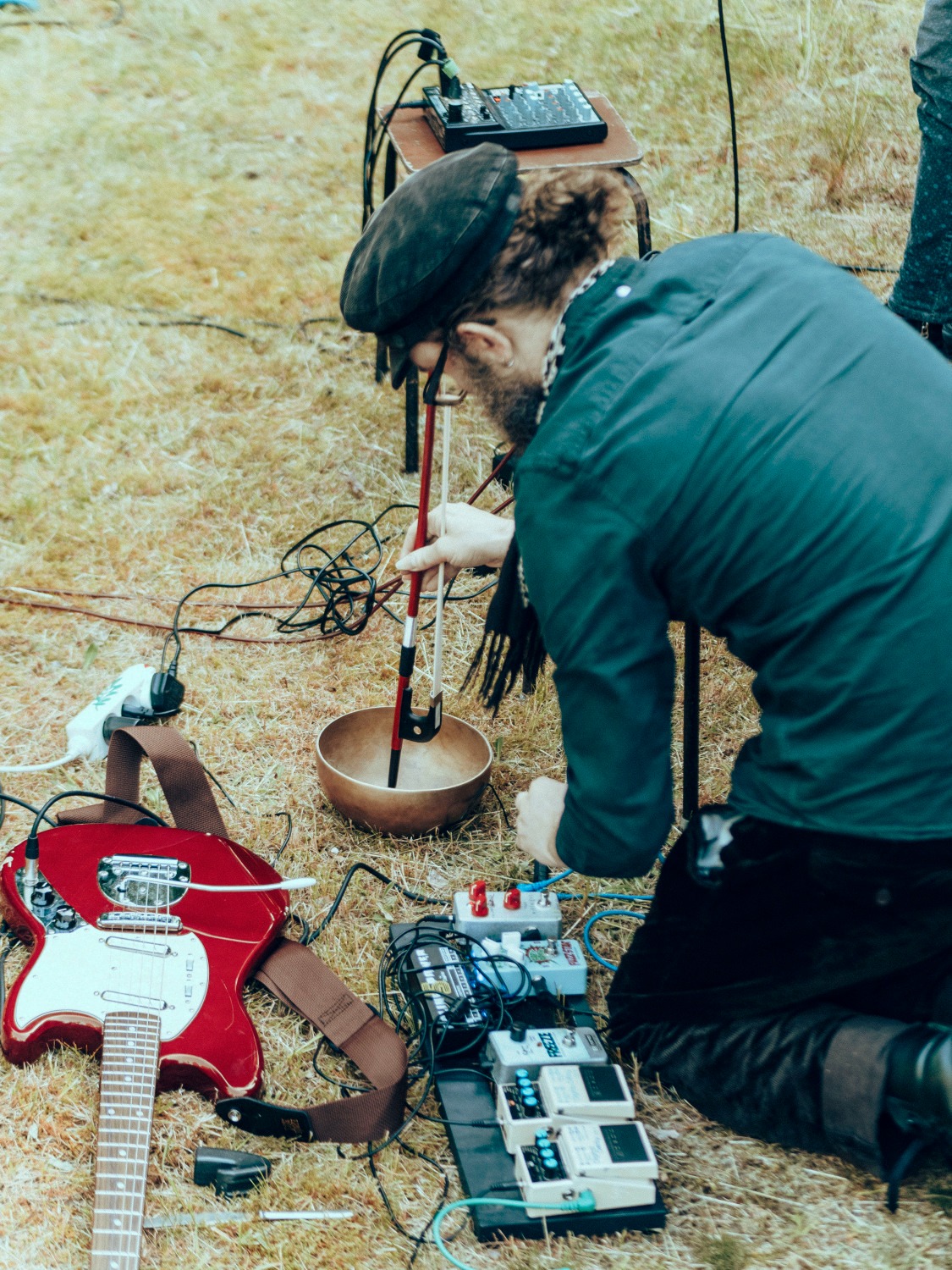
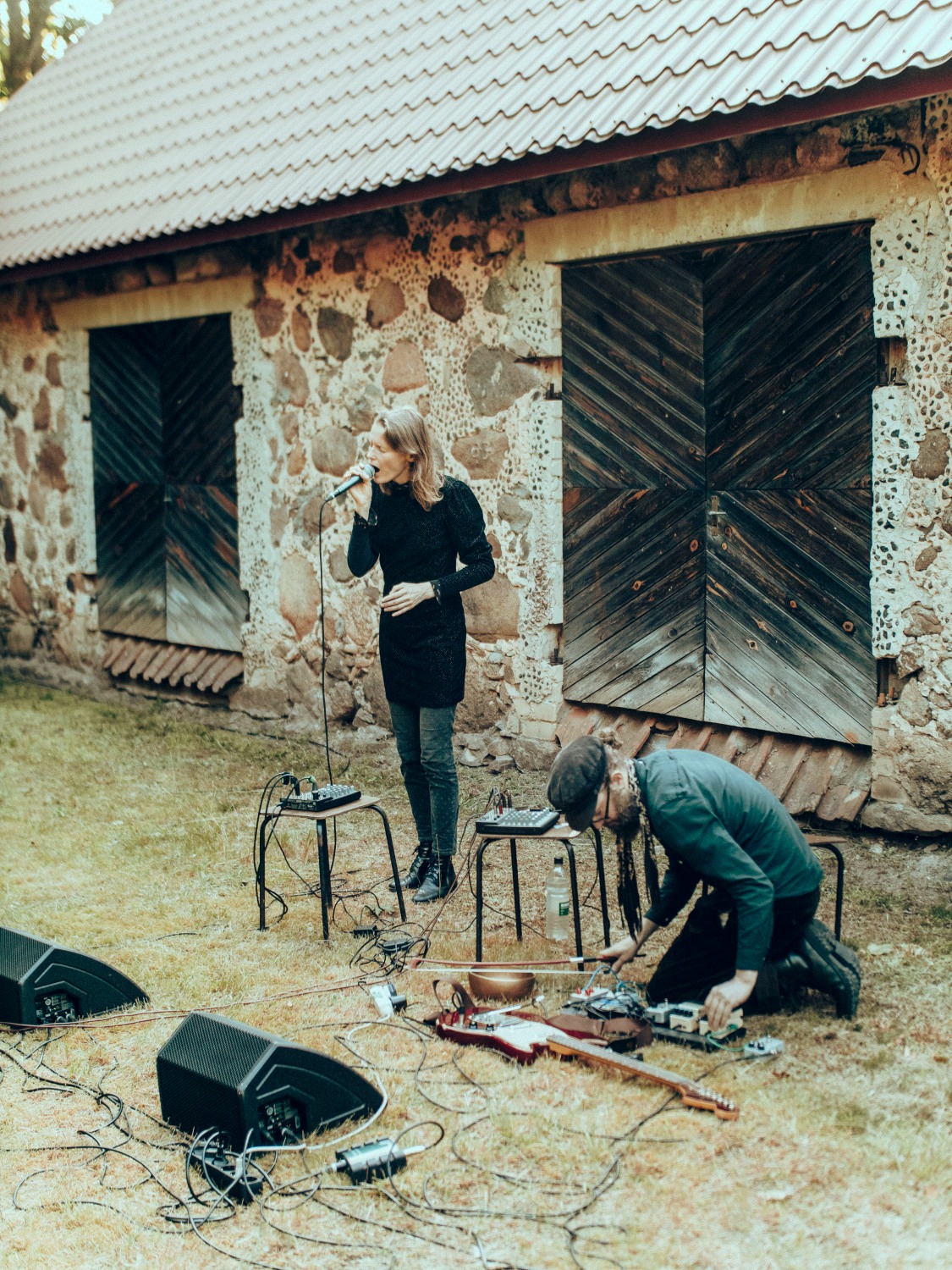
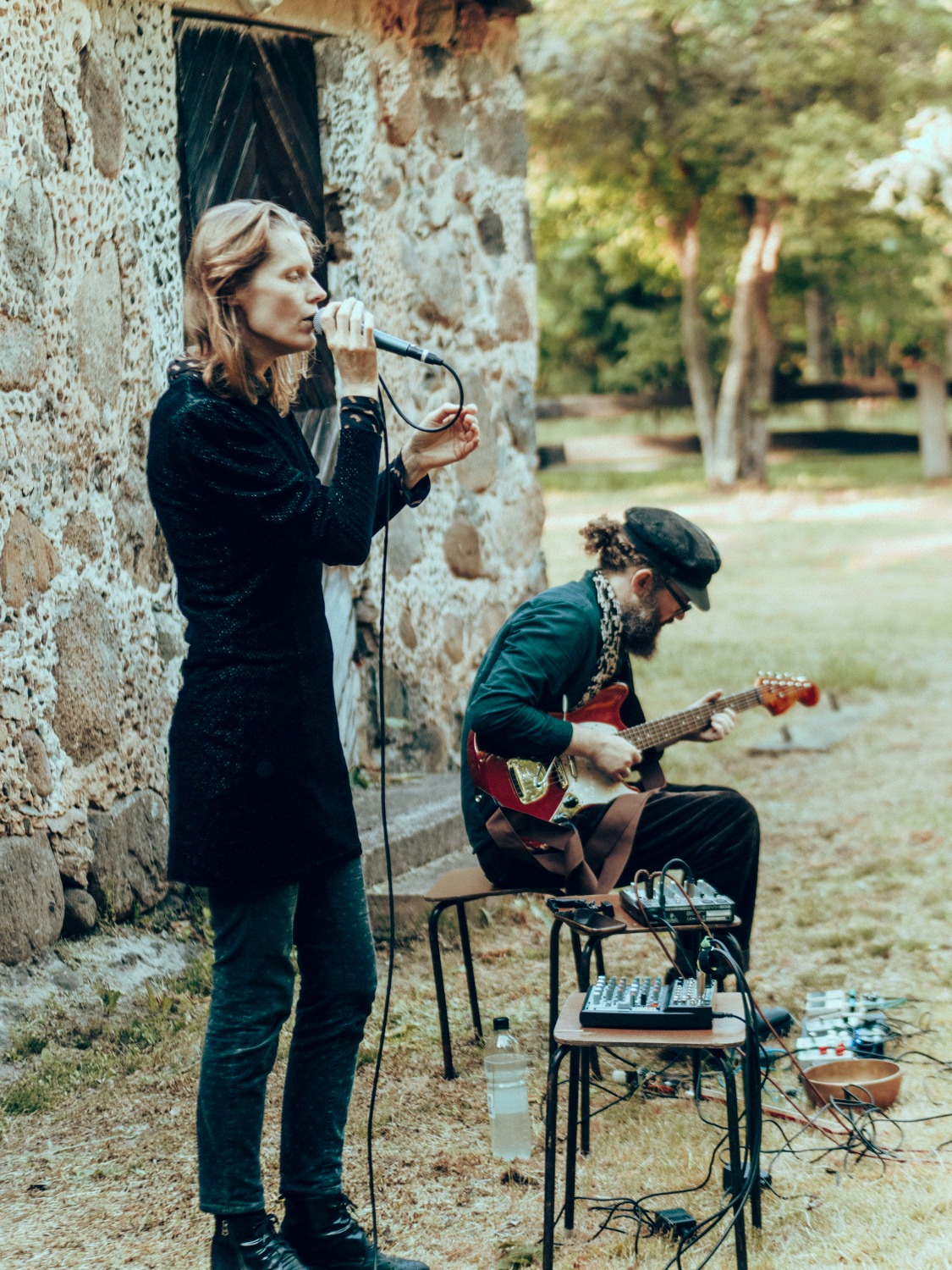
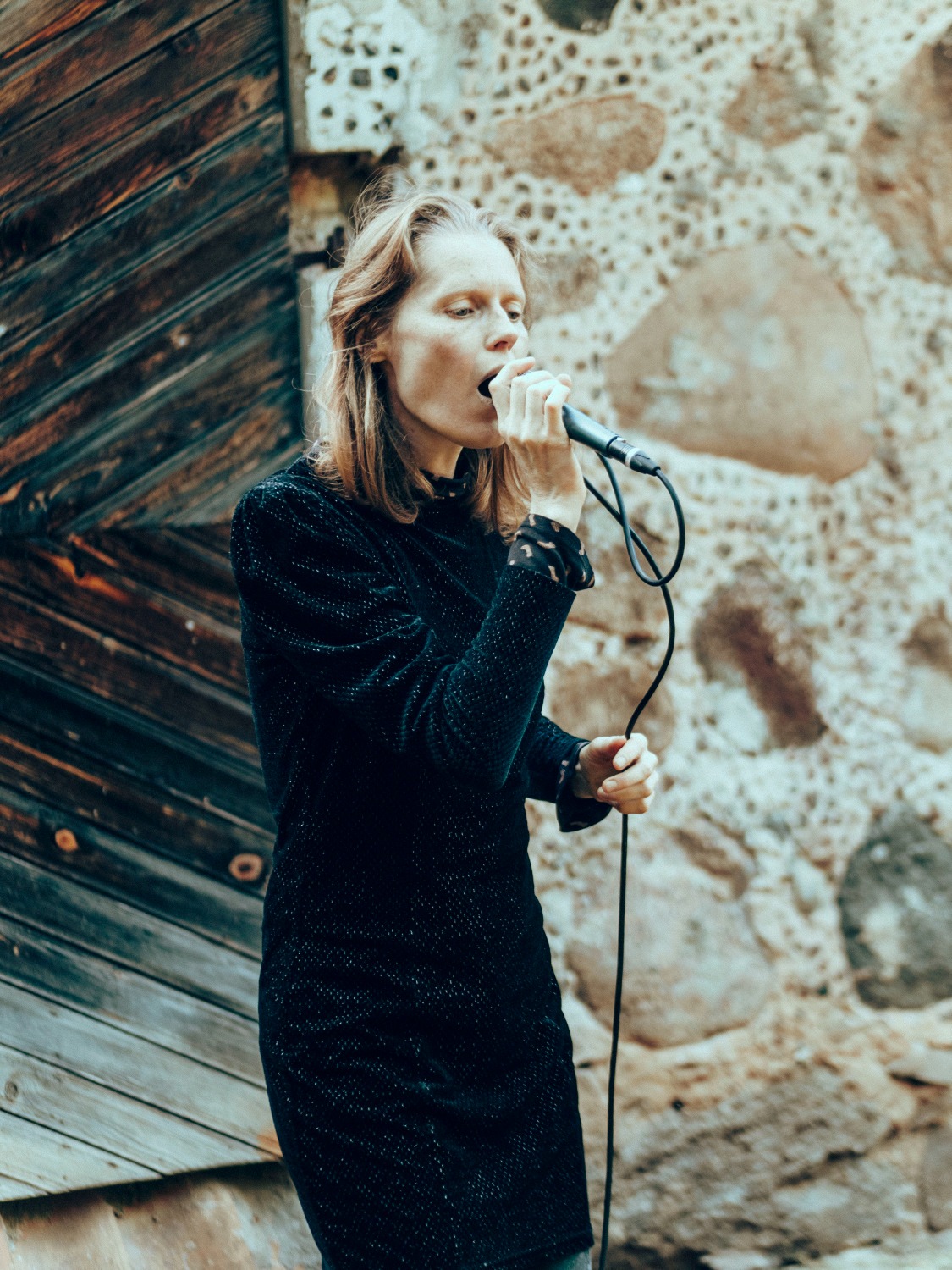
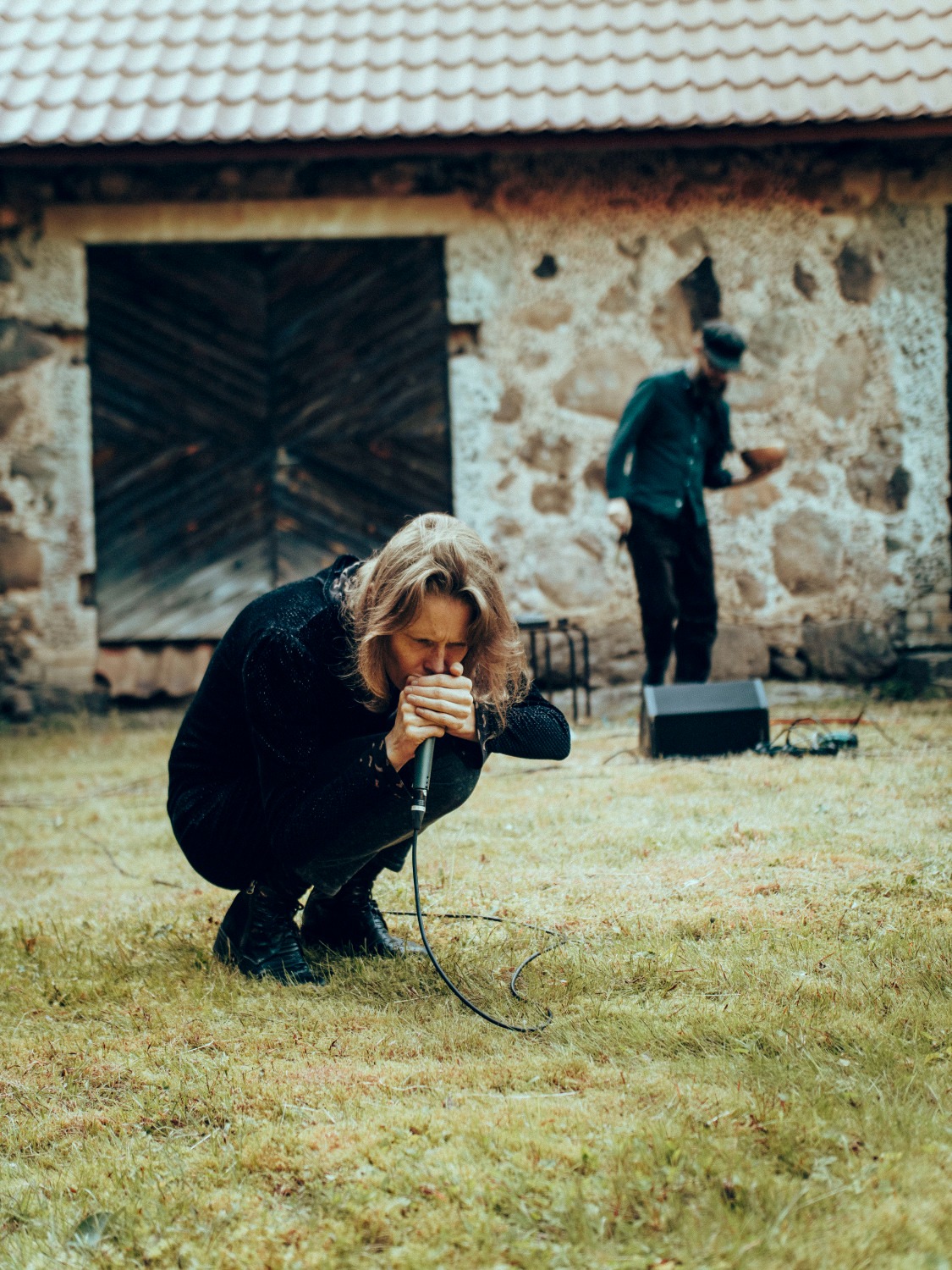
Road To Saturn is a collaborative project between experimental vocal artist Eleonora Kampe and guitarist Richard Thompson, with releases on labels such as Dub Cthonic, Cruel Nature, Human Geography, among others.
Eleonora Kampe is a singer and avant-garde vocalist living and working in the Baltics. She has been developing her artistic language since 2010, has participated in various collaborative projects, and released several albums. In October 2023, Cruel Nature Records released her first solo album, tuuljamuud.
Richard Thompson is known for his involvement in the cultural initiative Culture As A Dare, as well as for being a member of the experimental folk group Lost Harbours and the post-punk band Abuses.
BUTŌ LAB
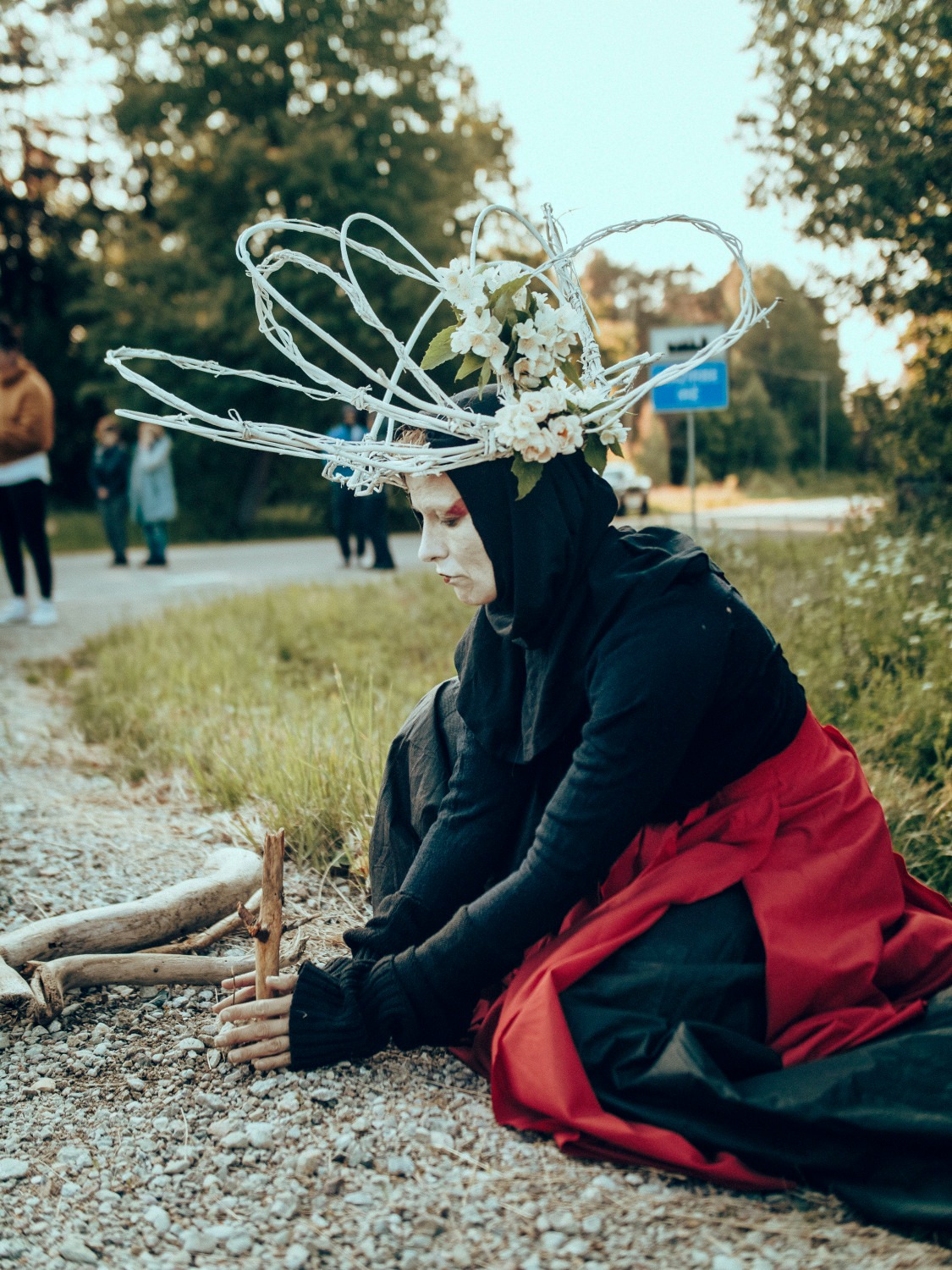
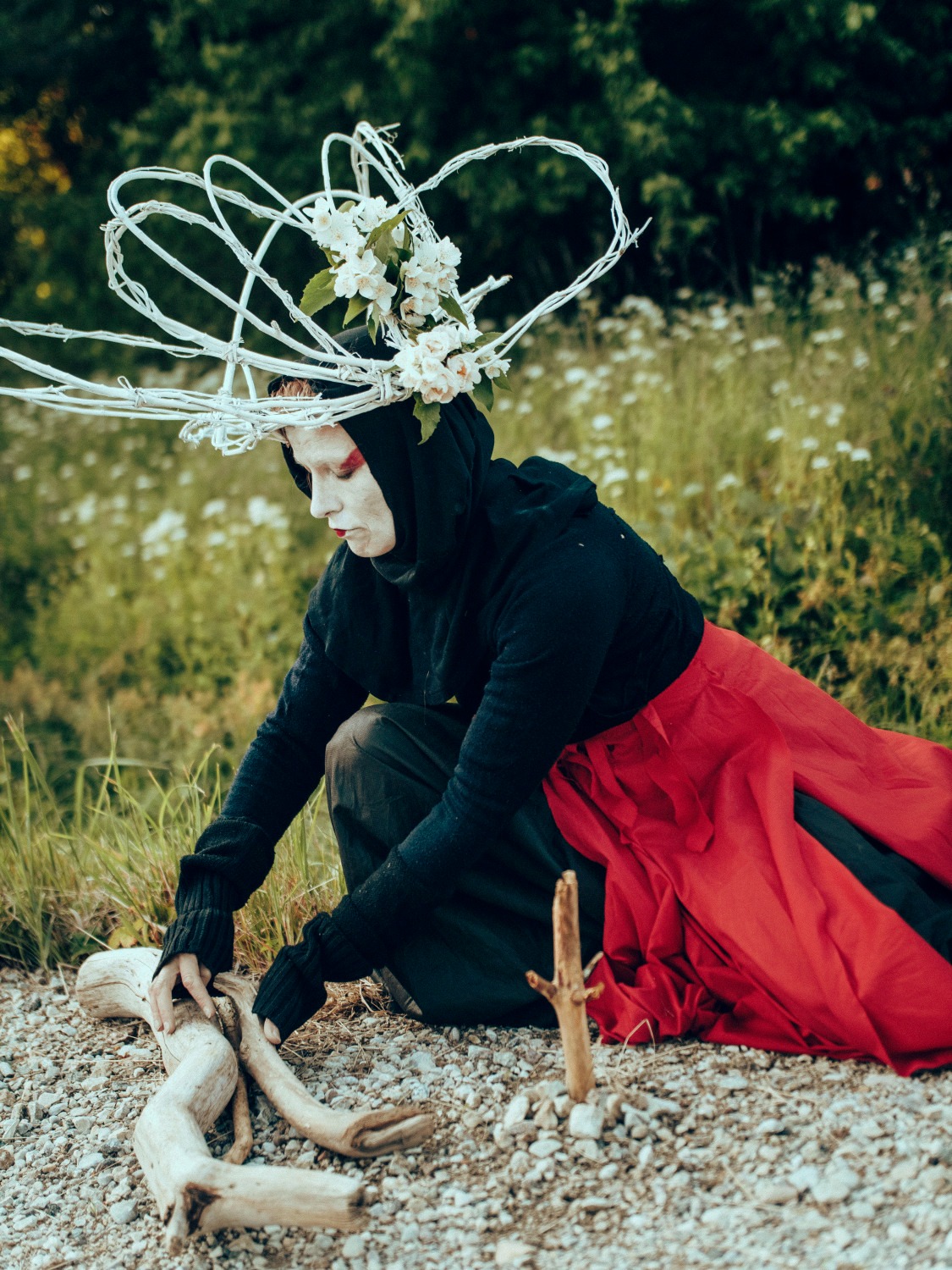
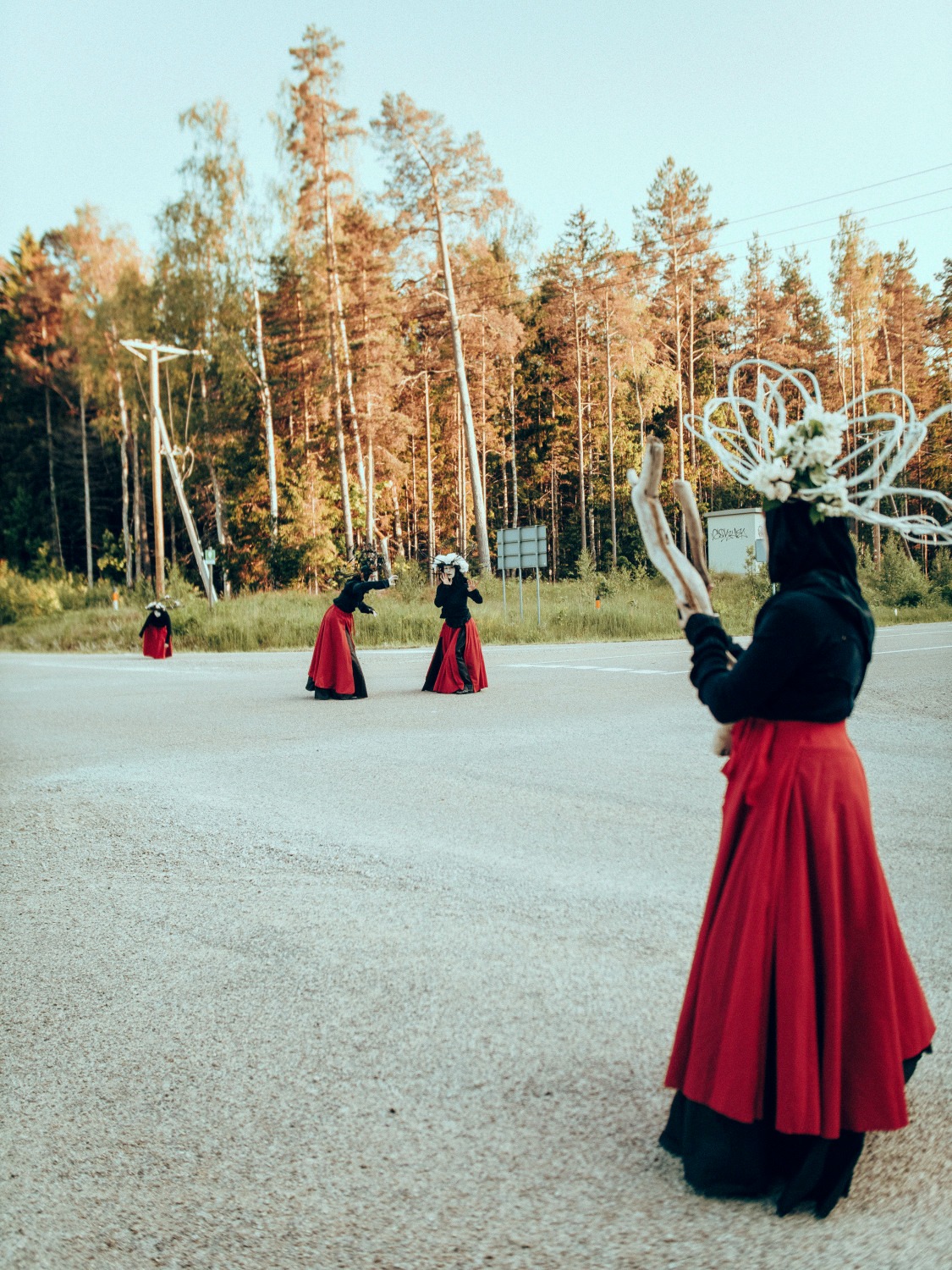
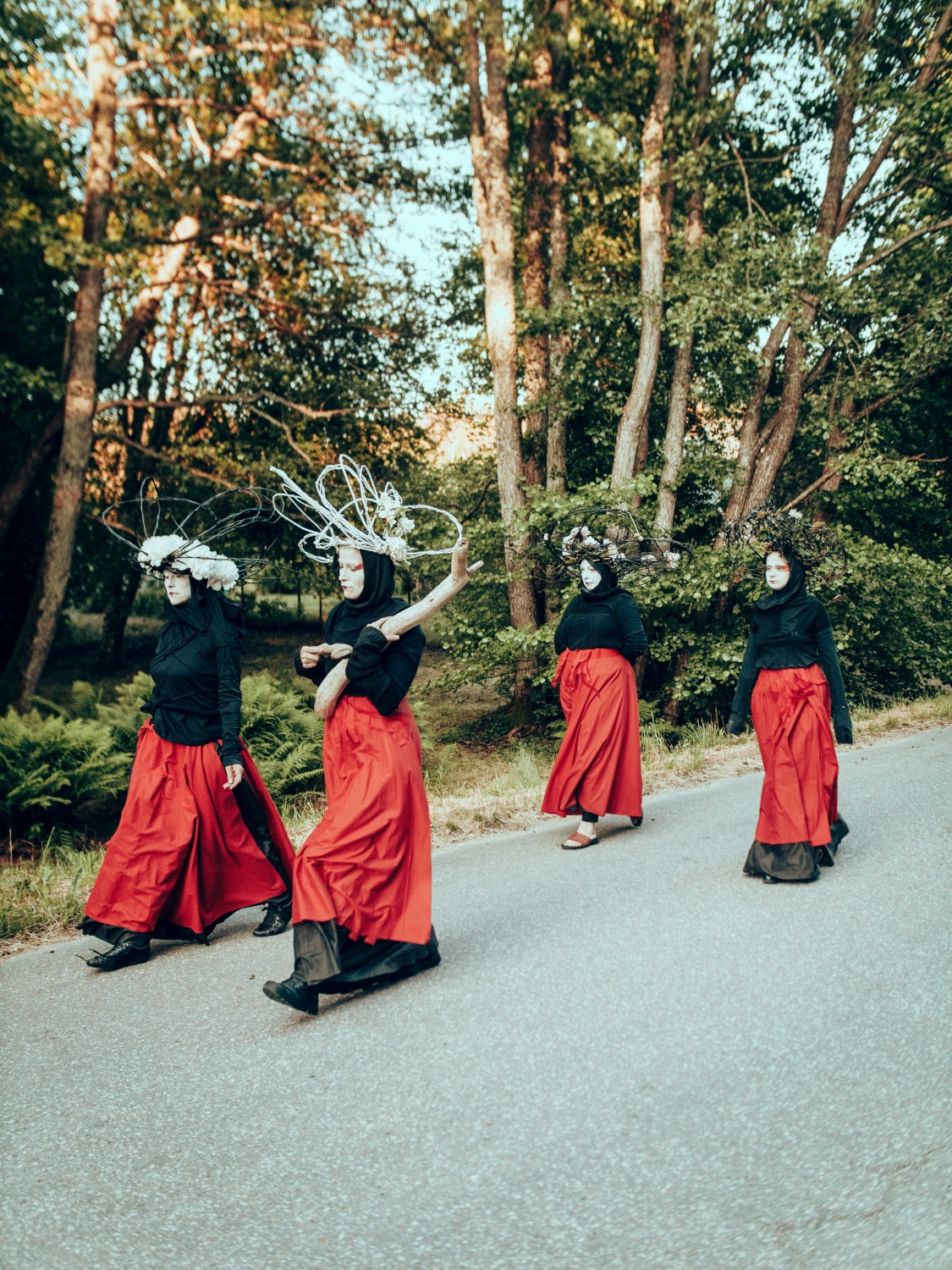
Dance Ritual
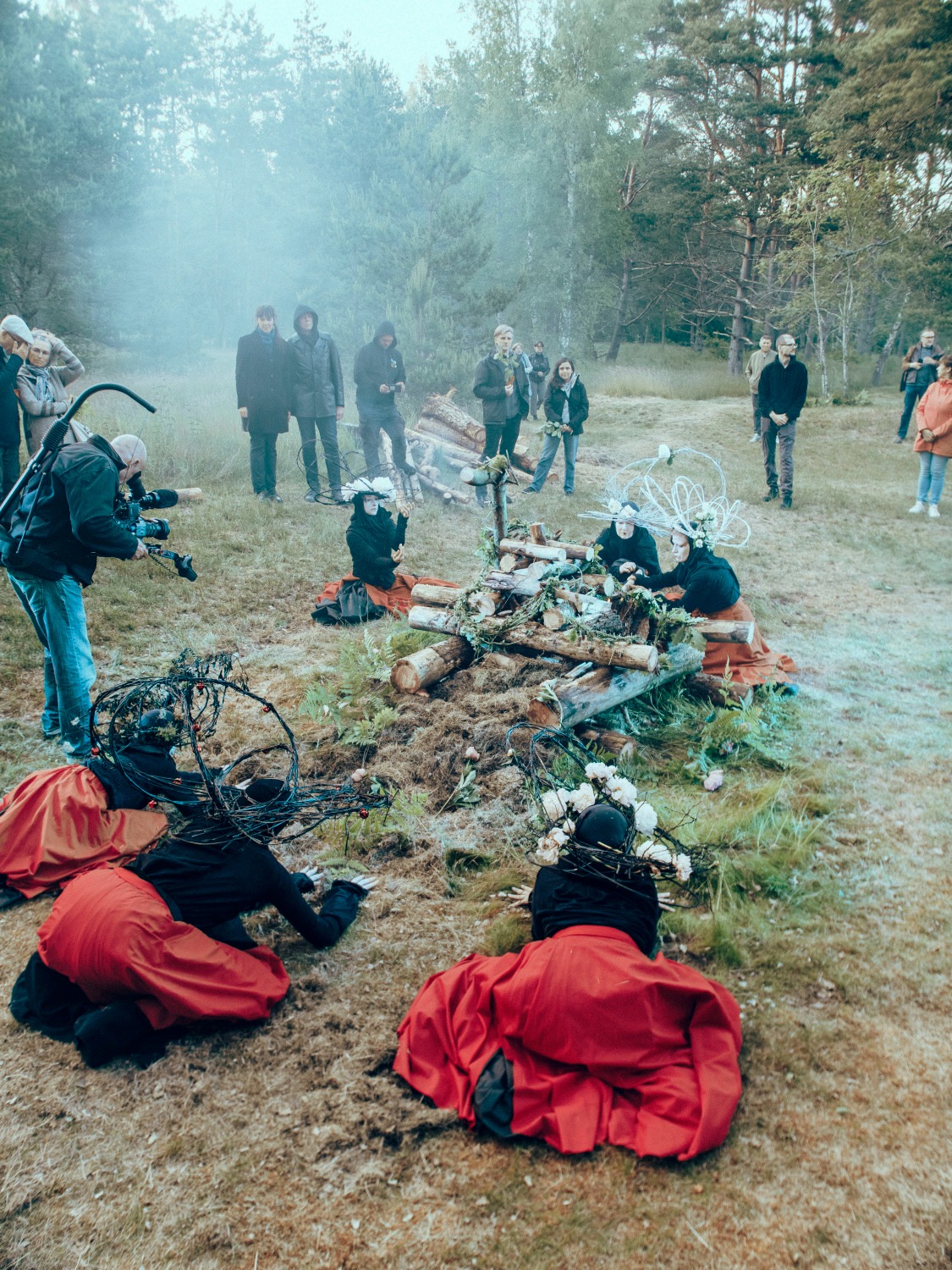
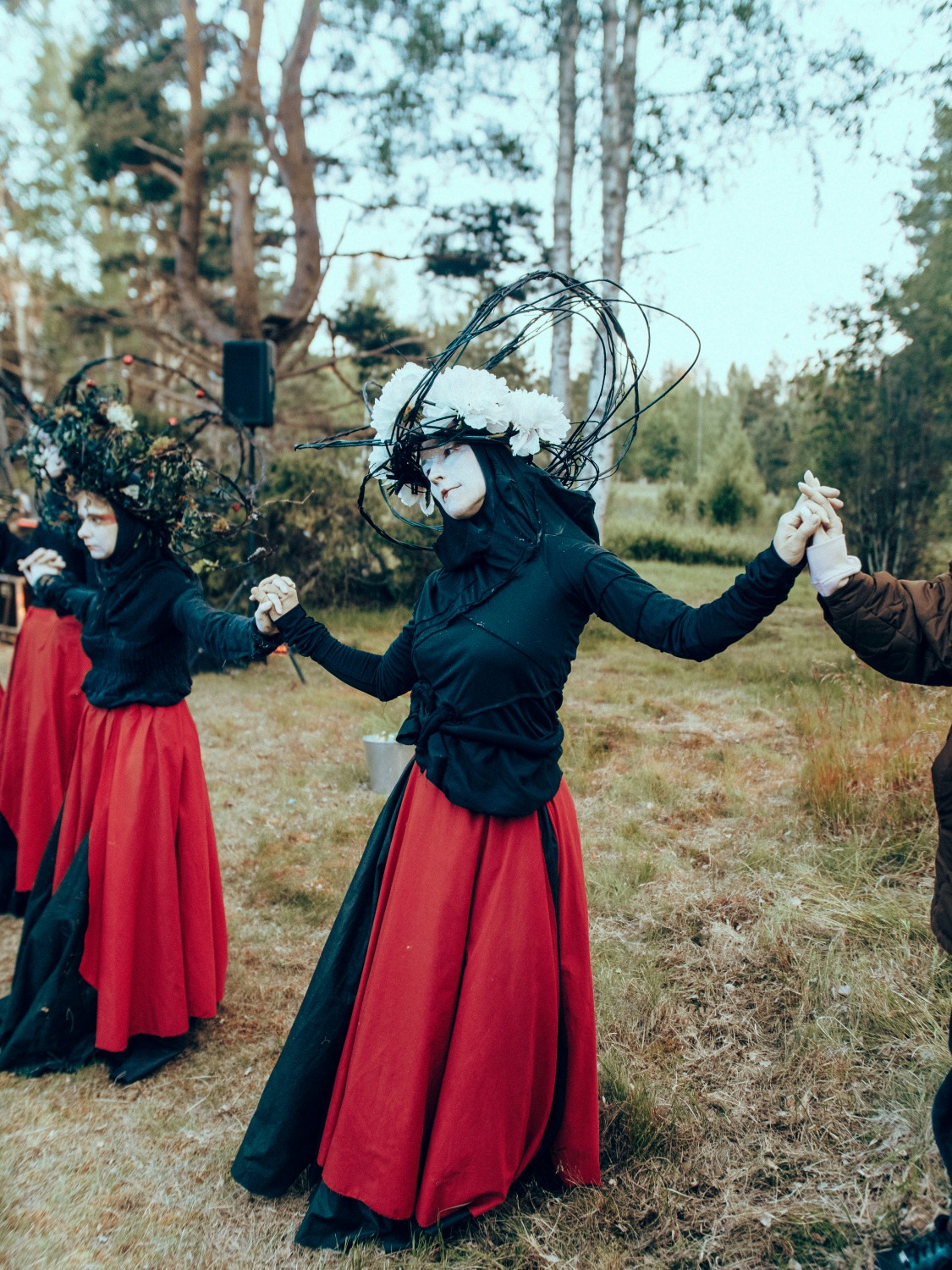
In Livonian culture, the traditions of shamans, seers, and healers are centuries old and interwoven with myths. Historically, almost every family possessed its own “black book” (as it came to be called under the influence of Christianity), which compiled healing knowledge. The bond between people and the elemental forces of nature and animals was so strong that even snakes behaved as if domesticated. Yet, for these traditions to endure through centuries of suppression, a unique code of survival and protection had to be found.
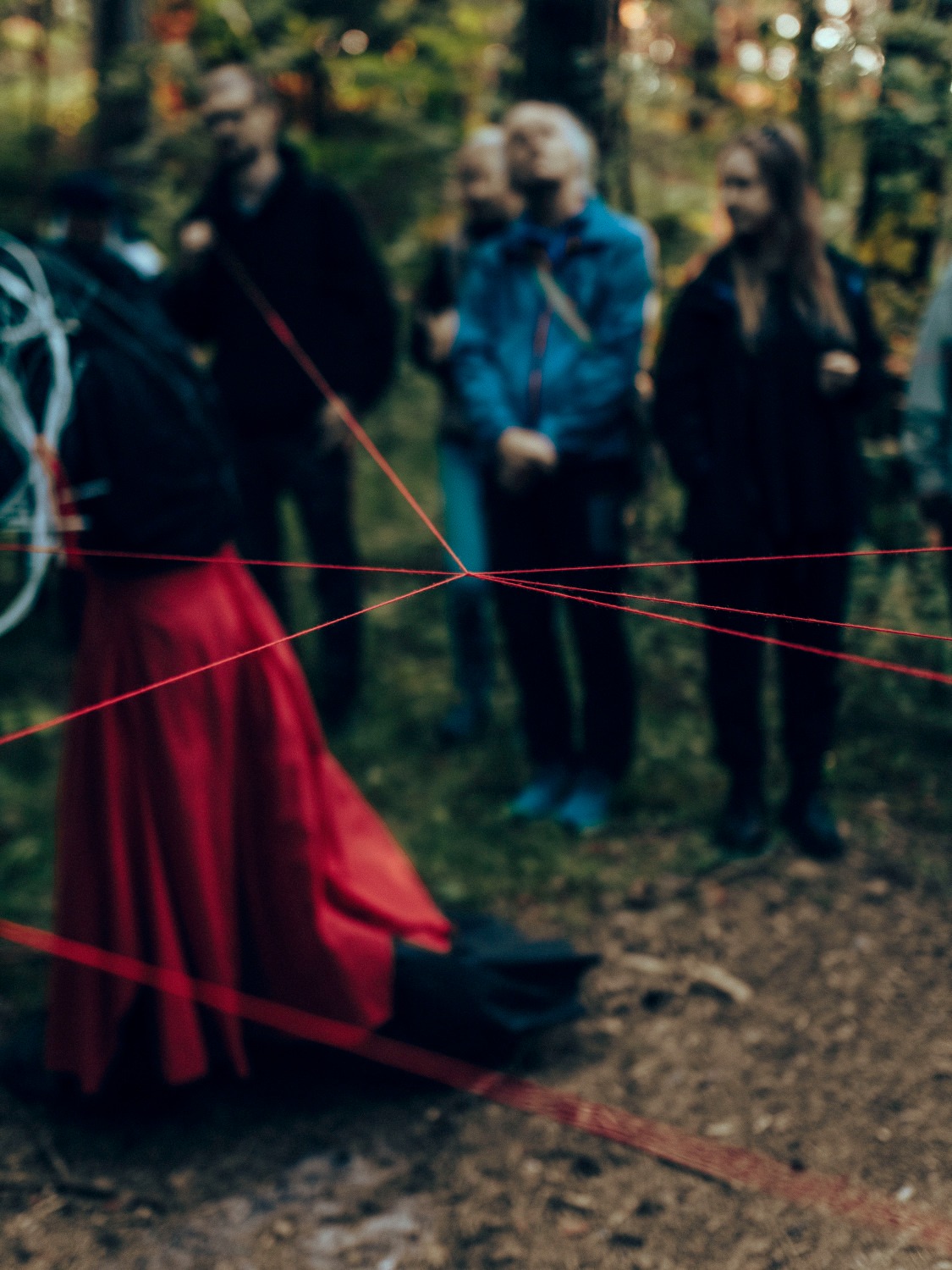
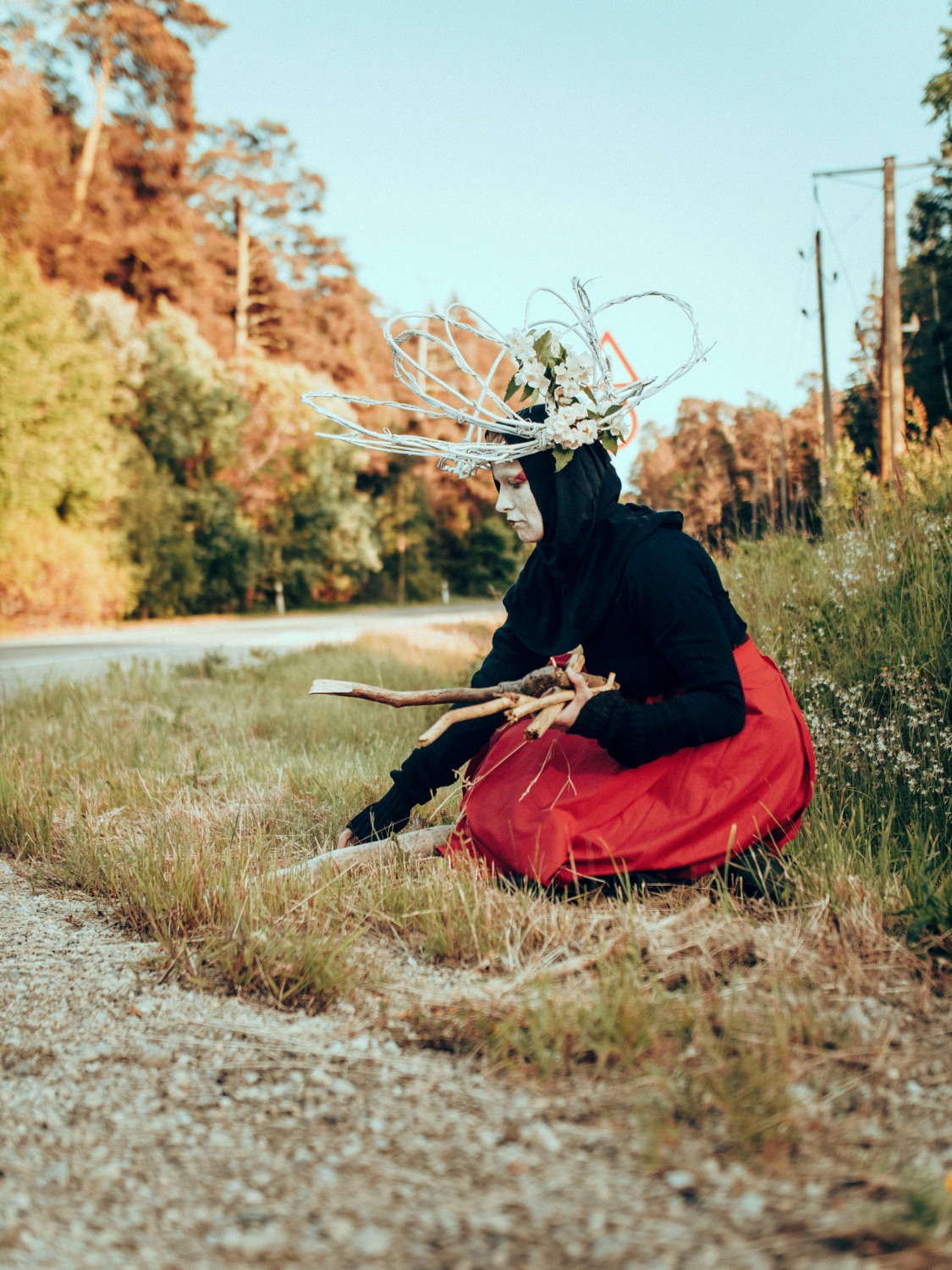
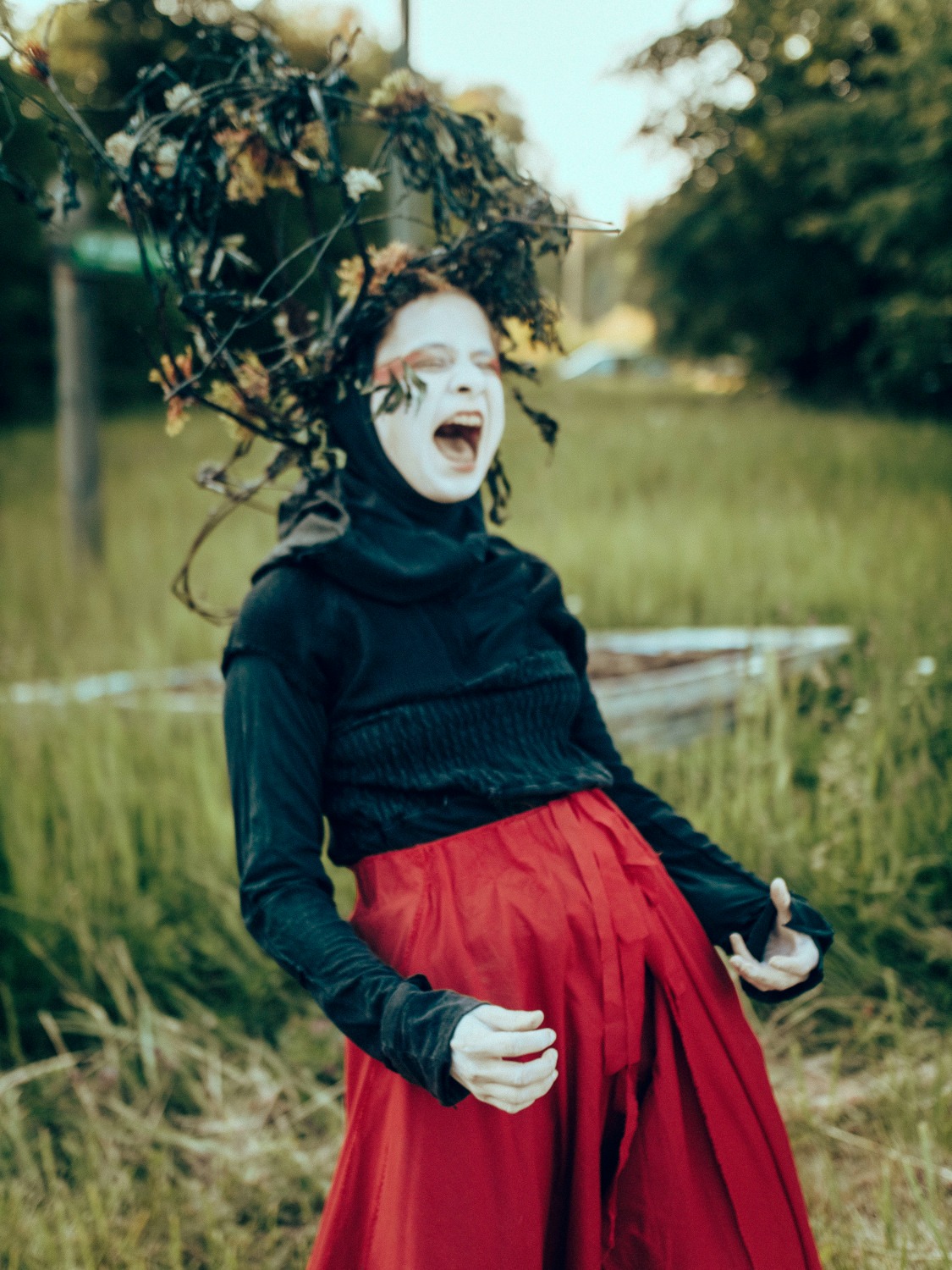
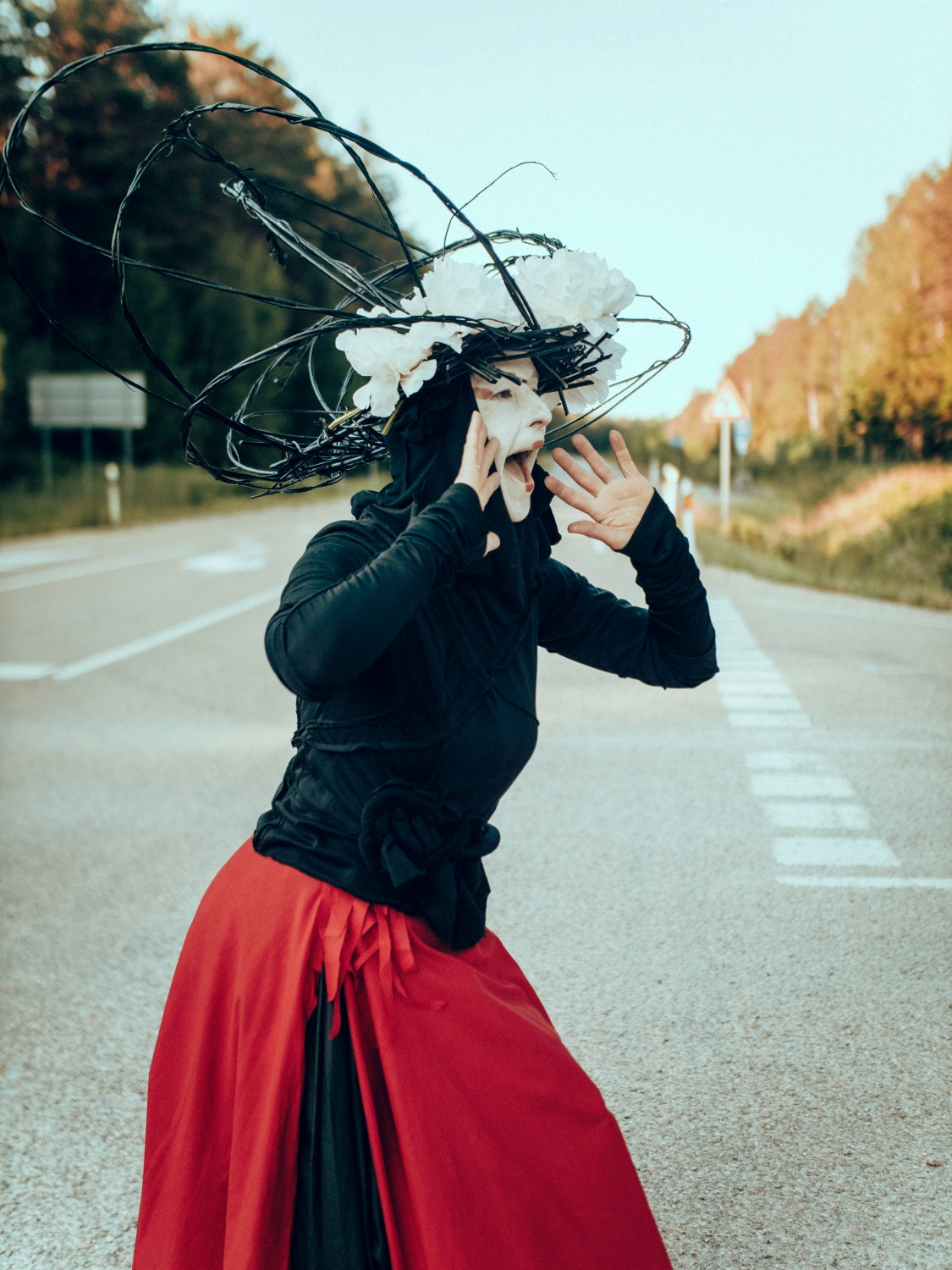
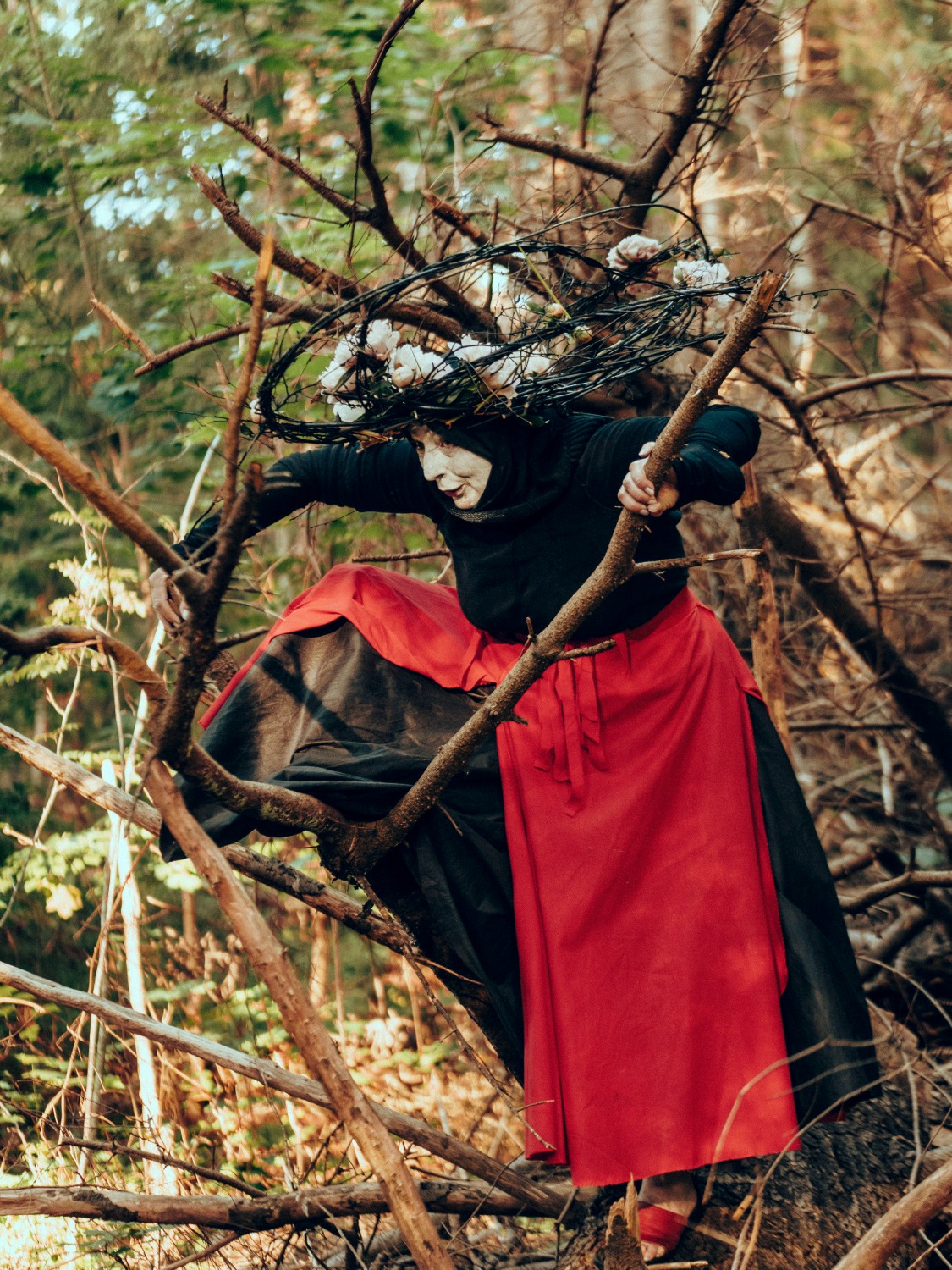
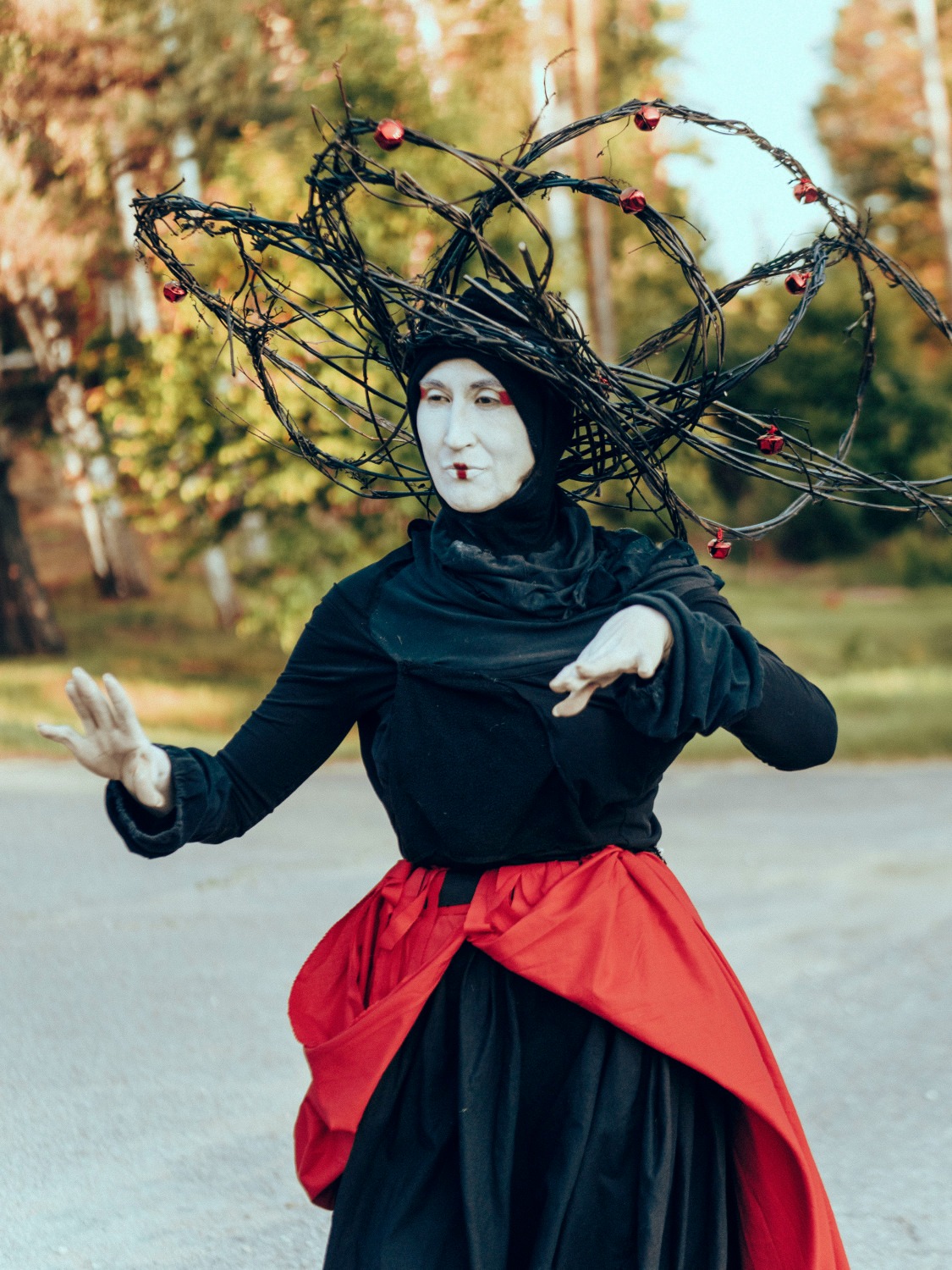
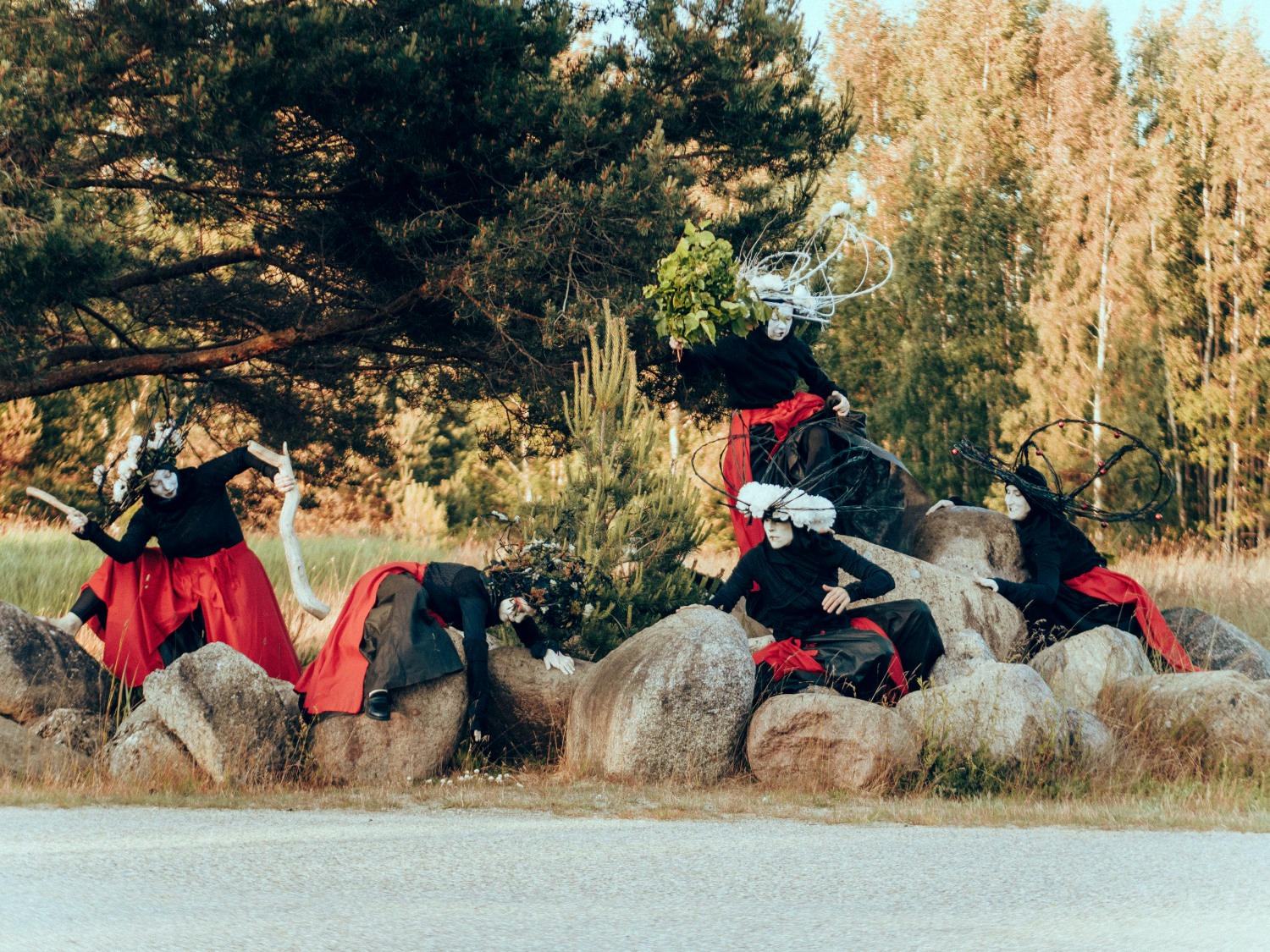
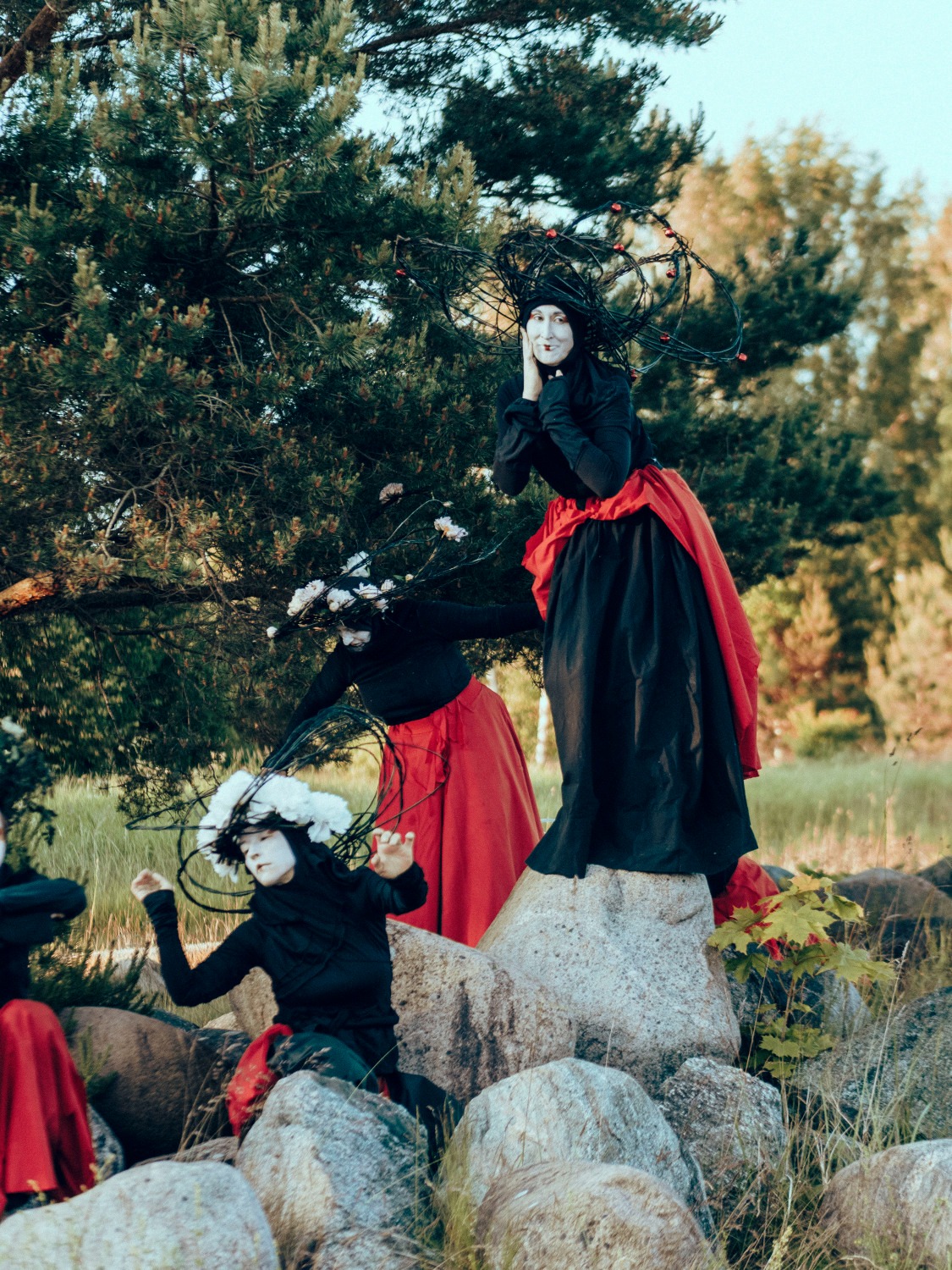
At the festival, the Butō dance ritual united the entire event as a collective sequence of performances, symbolically and thematically connecting solstice and site-specific narratives, and engaging with the world of archetypes.
BUTŌ Lab is an artists’ collective whose professional activities span various artistic fields: visual arts, photography, video, painting, sculpture, dance, poetry, and vocal art. The group is united by their work in performance, Butō, and both visual and stage arts. They create collaborative projects, take part in and produce multimedia performances and shows, cooperate with art museums and galleries, and participate in international projects and festivals. The group was founded by artist Simona Orinska together with like-minded collaborators.
EJU EJU
Experimental Music Project
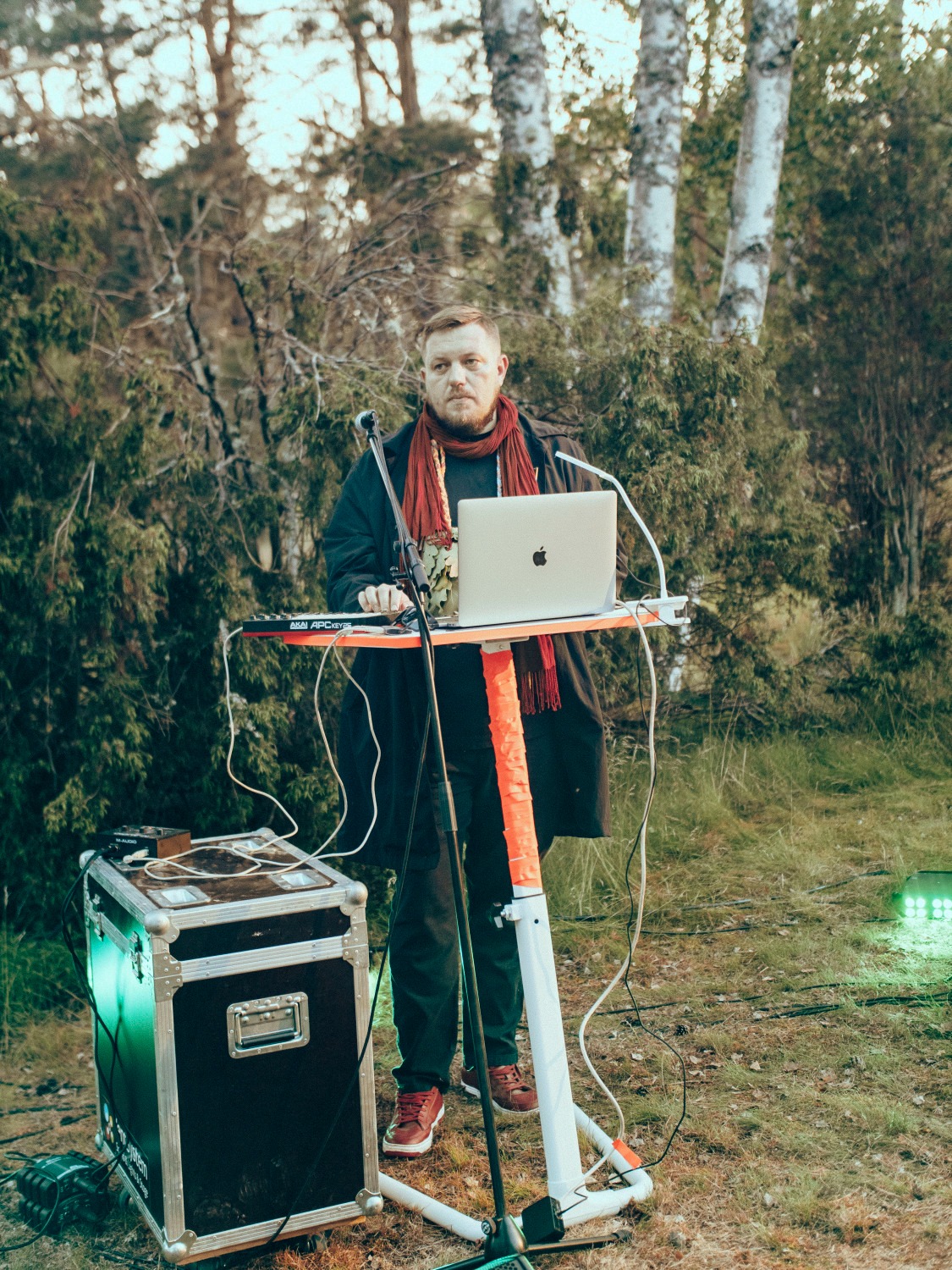
EJU EJU is an experimental music project created by Dāvis Stalts and Monta Bernšteine Kvjatkovska, synthesizing Latvian folklore with elements of electronic music. EJU EJU is characterized by a constant forward motion, discovering unexplored musical horizons while maintaining a deep connection with folk songs. Through an innovative interplay of ethnic and electronic elements, the music of EJU EJU offers listeners a new experience that fuses folklore with the pursuit of contemporary sound.
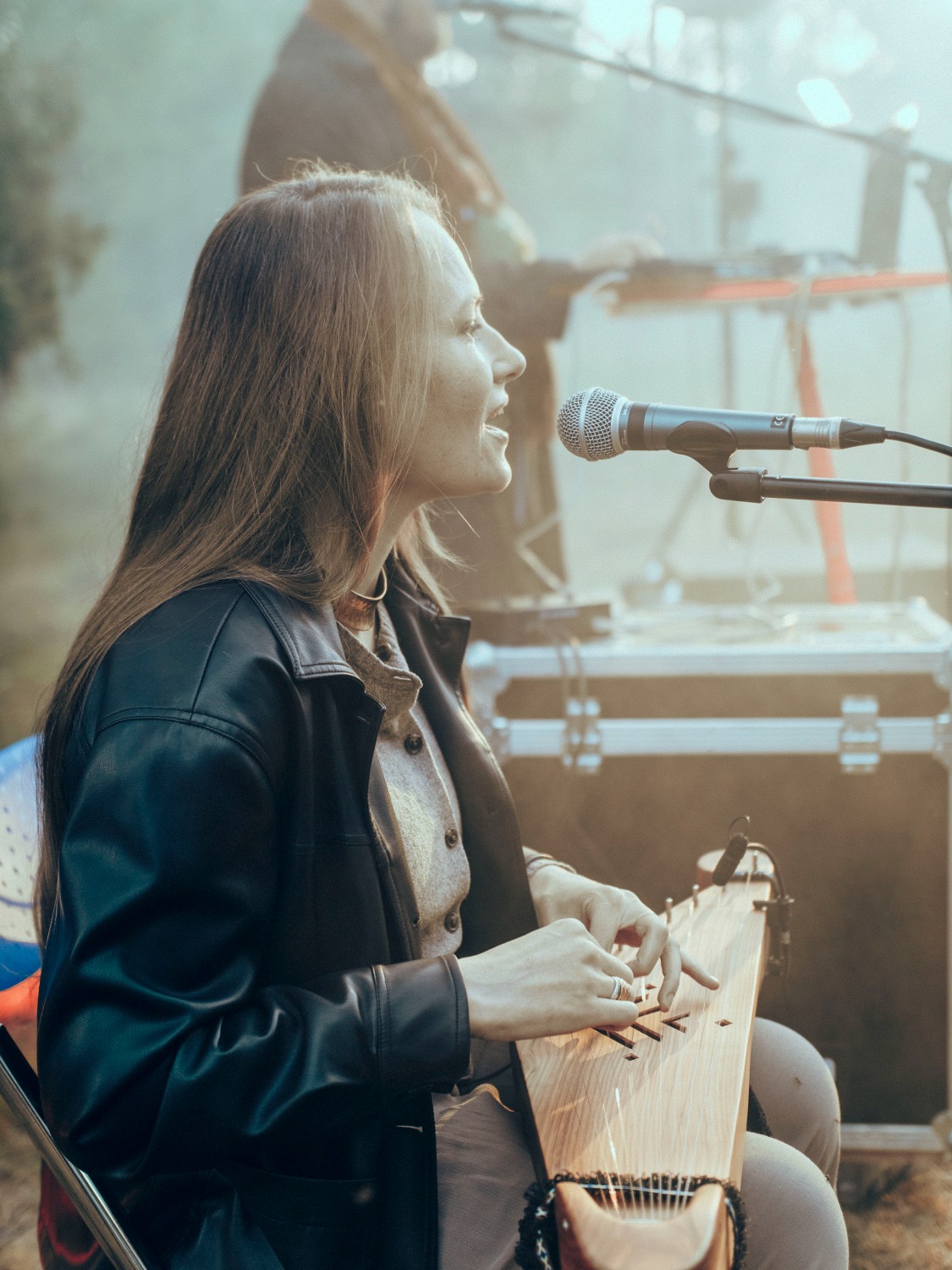
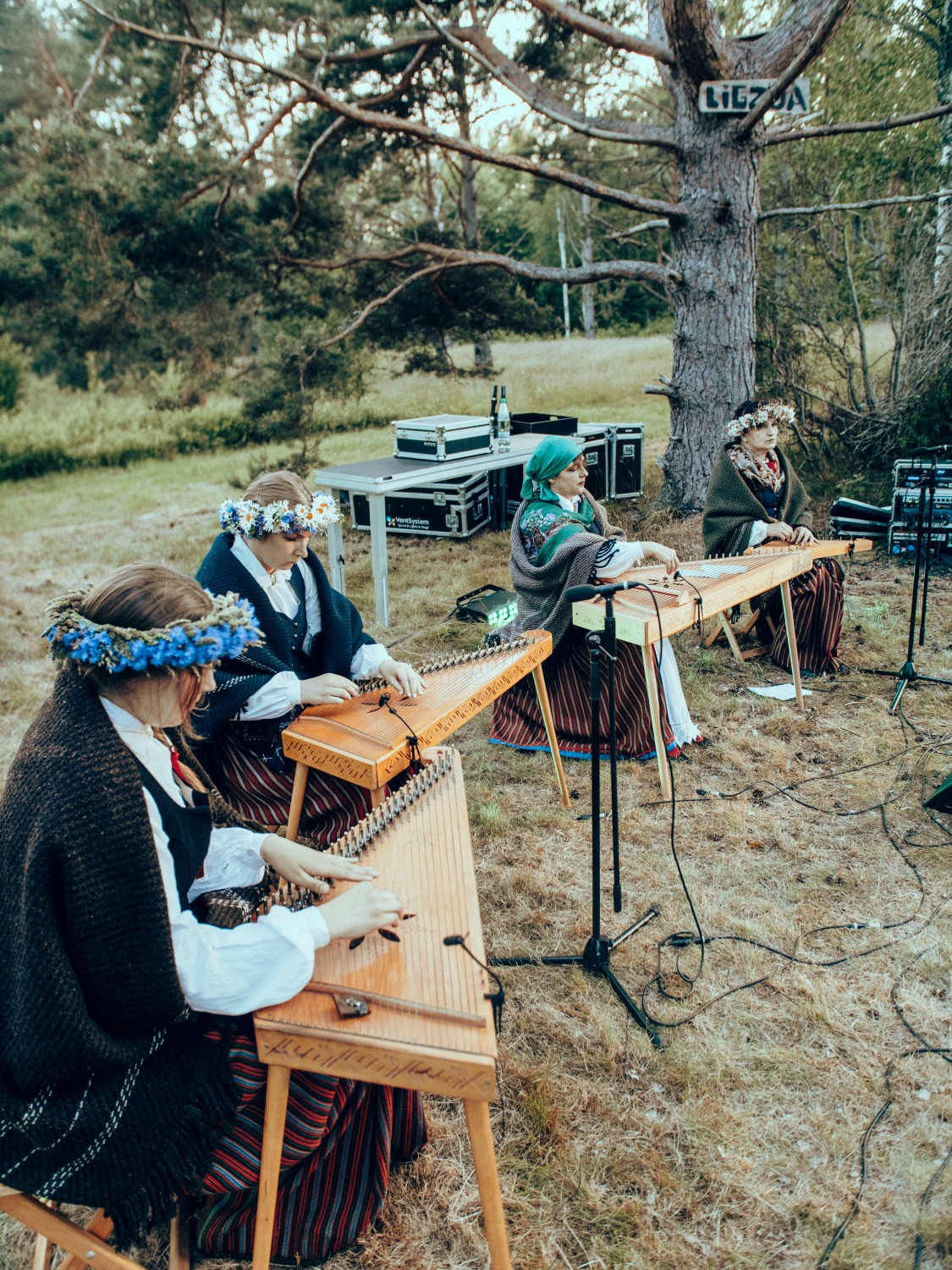
Together with the group EJU EJU, this time the improvised ritual concert featured the Kolka kokle player ensemble led by Dzintra Tauniņa. Four concert kokles, in a partially improvised manner, intertwined with the solstice theme. This was a unique and unprecedented collaborative experience for both groups.
Photo: Kaspars Adjans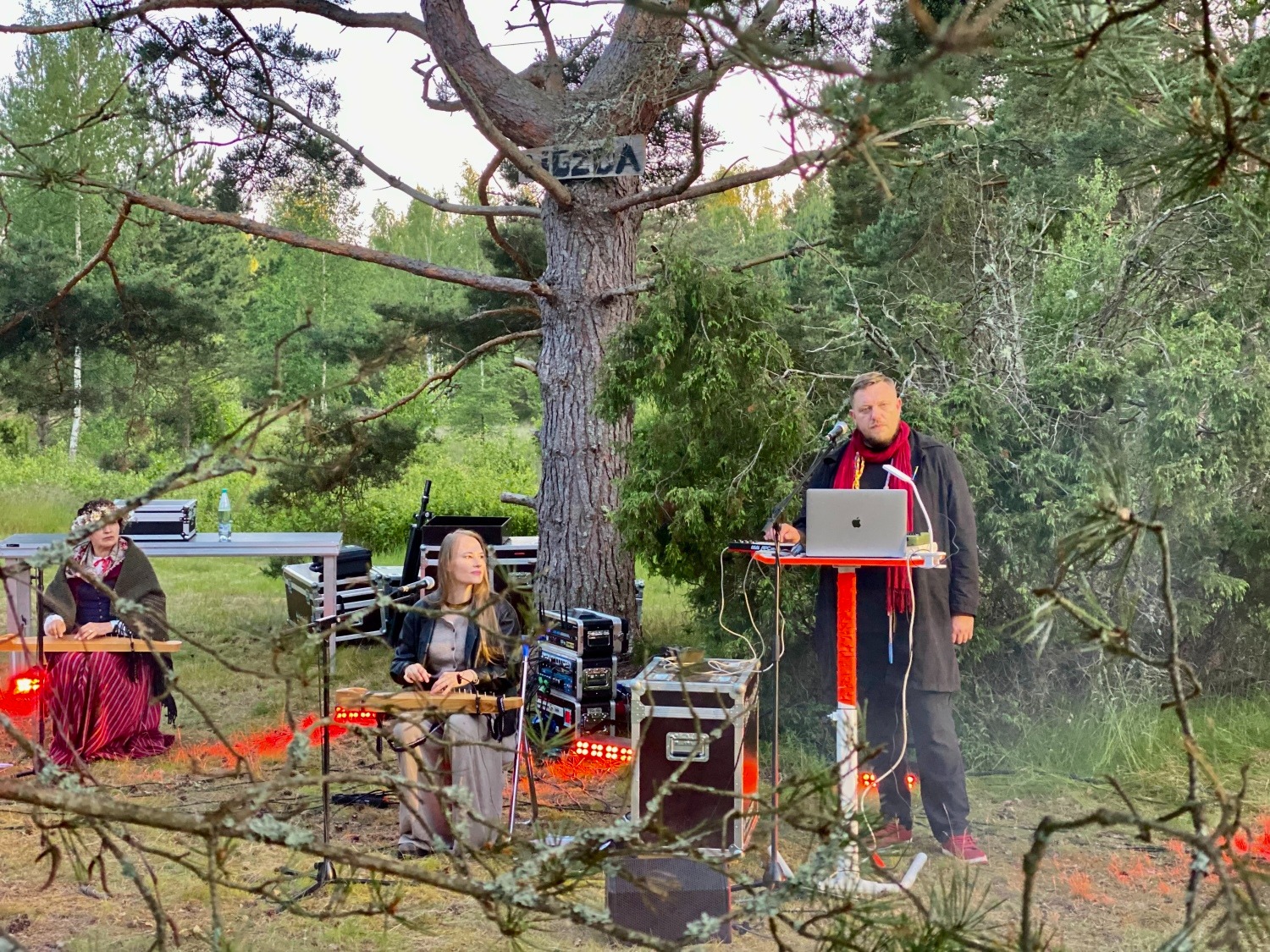
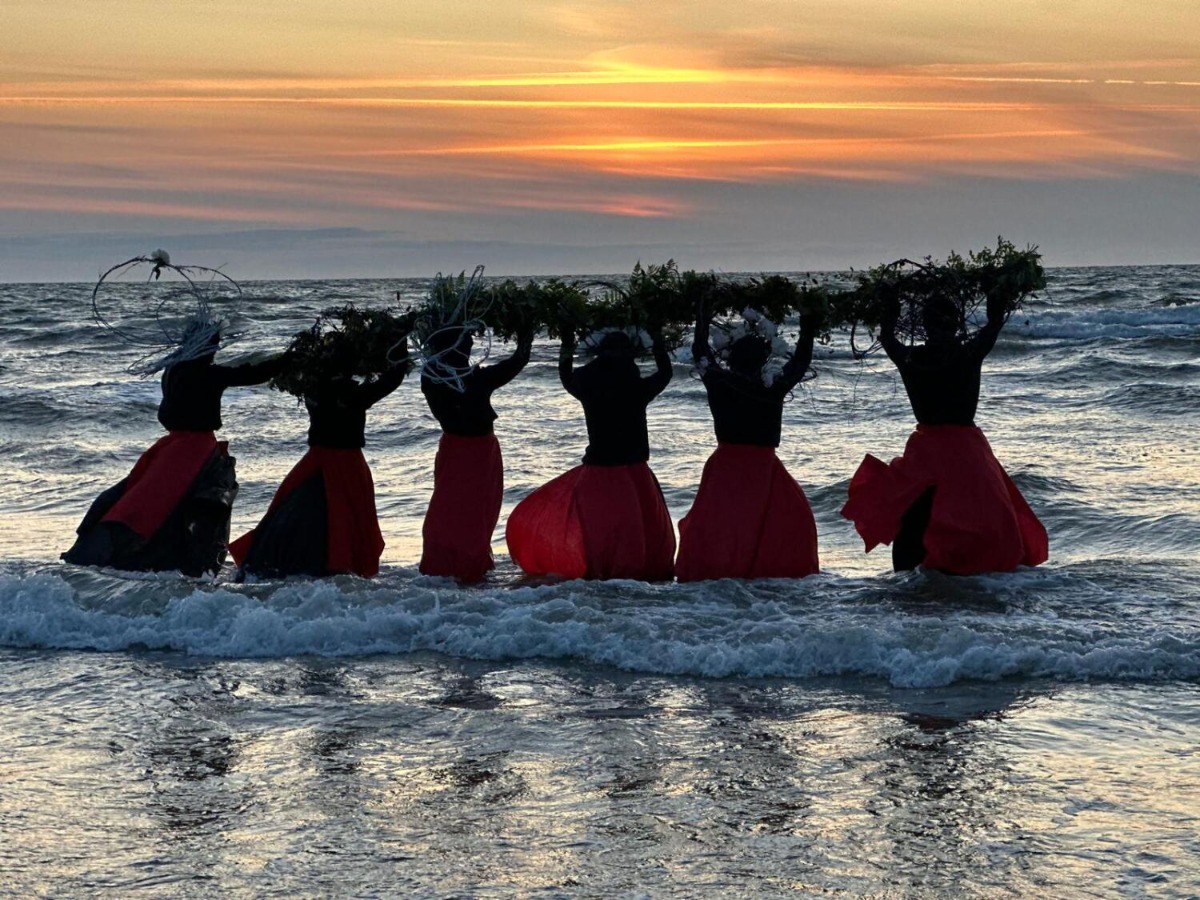
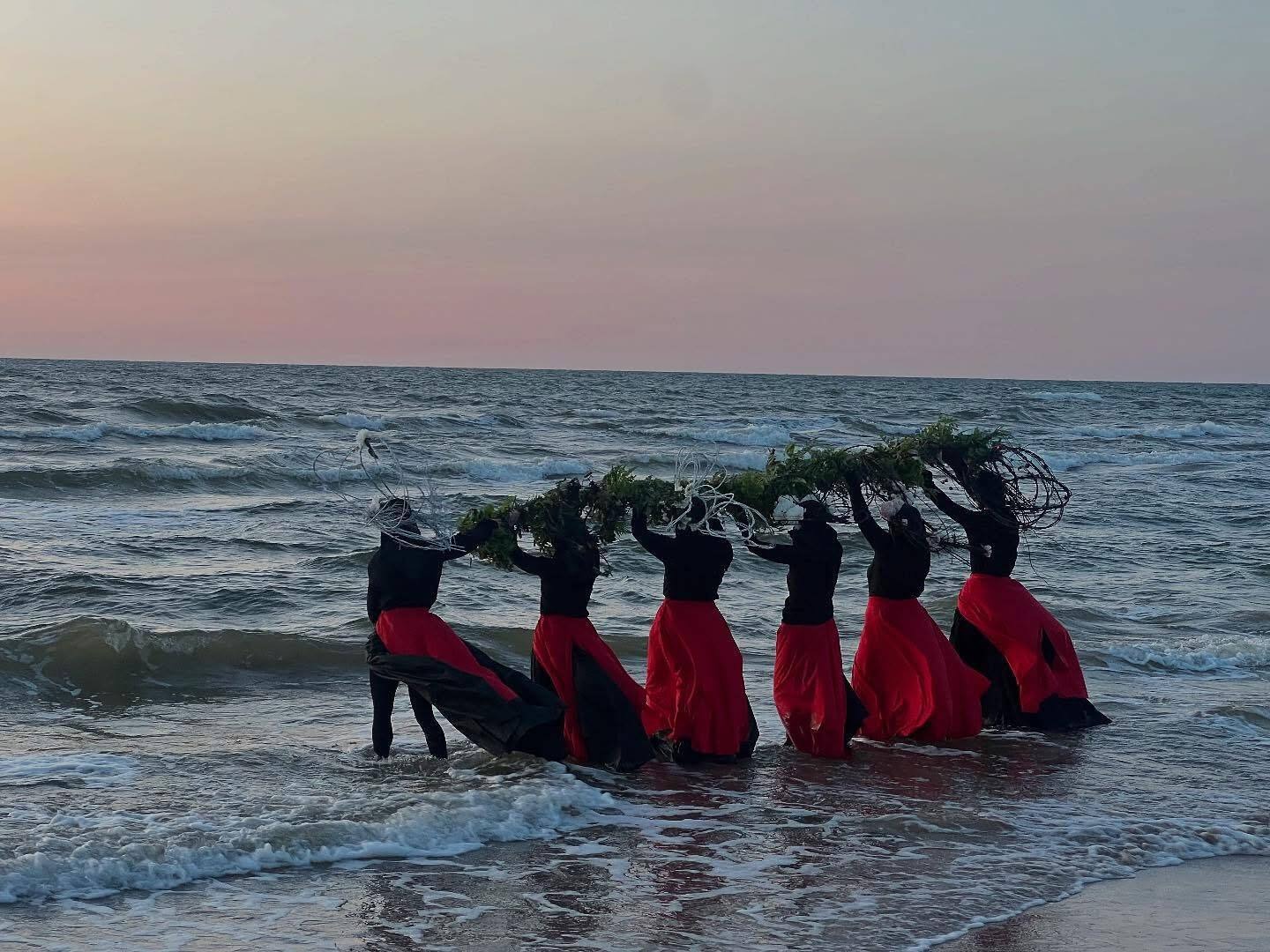
DONATION TO MOTHER SEA
A solstice performance with deeply symbolic meaning, carried out with the utmost respect for local tradition and for the Sea Mother — the principal element of the custom.
Photo: Kaspars Adjans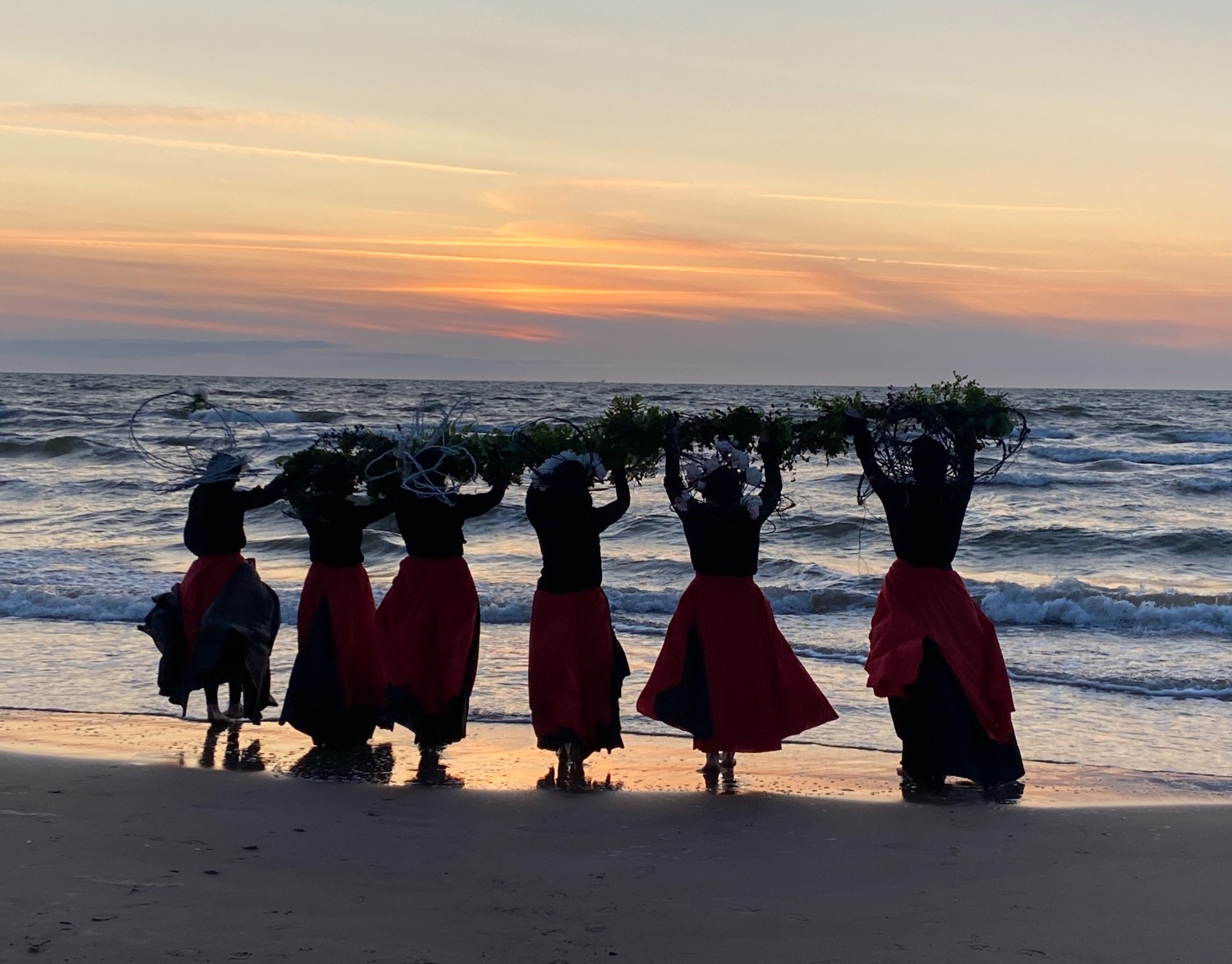

A NIGHT WHEN ART DOESN’T SLEEP
Electronic Music Night Sessions
The night unfolded through electronic music sessions featuring performances by artists Henri Laķis, Oskars Upenieks, and Arvis Pogo — offering visitors ritual dance, audiovisual journeys, and a sunrise welcome by the sea.
TWO SUNS
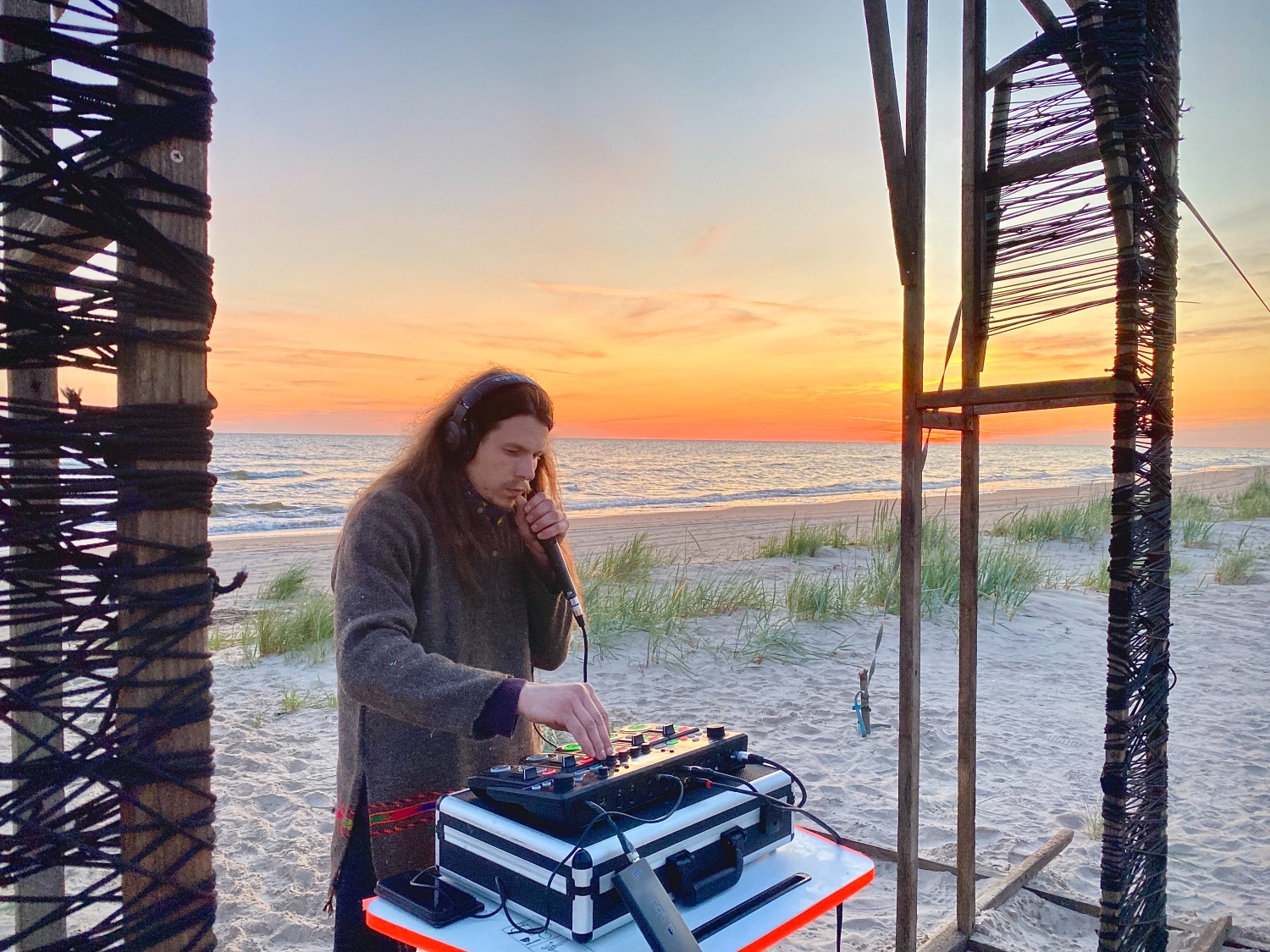
Sunrise Performance with Arvis Pogo at Mazirbe Festival 2025
In the early morning hours, festival guests gathered quietly by the site of the environmental art installation Two Suns. Created by artist Ivars Drulle and his team, the object offered a powerful visual presence in the landscape. At sunrise, it gained an additional layer through a live performance by artist Arvis Pogo.
Without a stage or formal beginning, the performance merged naturally with the environment and the emerging light. Through slow, attentive movement and presence, Arvis Pogo added a new emotional tone to the object — a kind of “second sunrise,” unfolding in parallel with nature.
The audience was not just watching — they were part of the moment.
This sunrise performance became one of the most quietly powerful experiences of the festival — a meeting point of visual art, performance, and the northern coastal landscape.