


A Transcorporal Dance Between the World and Us
Rosana Lukauskaitė
The review of Marija Griniuk’s performance at the Starptelpa Performance Festival in Riga
In a gripping episode of the legendary anthology series “The Twilight Zone” an uncanny reflection of the tense sociopolitical atmosphere that characterized the Cold War era unfolds. The narrative follows a desperate family, grappling with the dire prospect of an impending nuclear war in their home world. In an audacious act of survival, they construct a makeshift spacecraft, their only means of escape from the imminent doom. As they approach an uncharted, alien planet, they paradoxically voice hope that they might find safety on the planet called Earth (!). It appears to be an inherent trait of humanity – an incessant longing for the novel, the divergent, the untouched. Our souls thirst for exploration, not merely to ensure survival but to carve out new paths, to experience fresh encounters and paint our existence with an array of diverse experiences. It’s the ongoing battle between the nomad’s spirit and the settler’s sensibilities. Even the simplest deviations from the routine, as trivial as the unexplored side of a pillow – cool and undisturbed – can entice us with its promise of something new.
Photos: Vladislav Klapin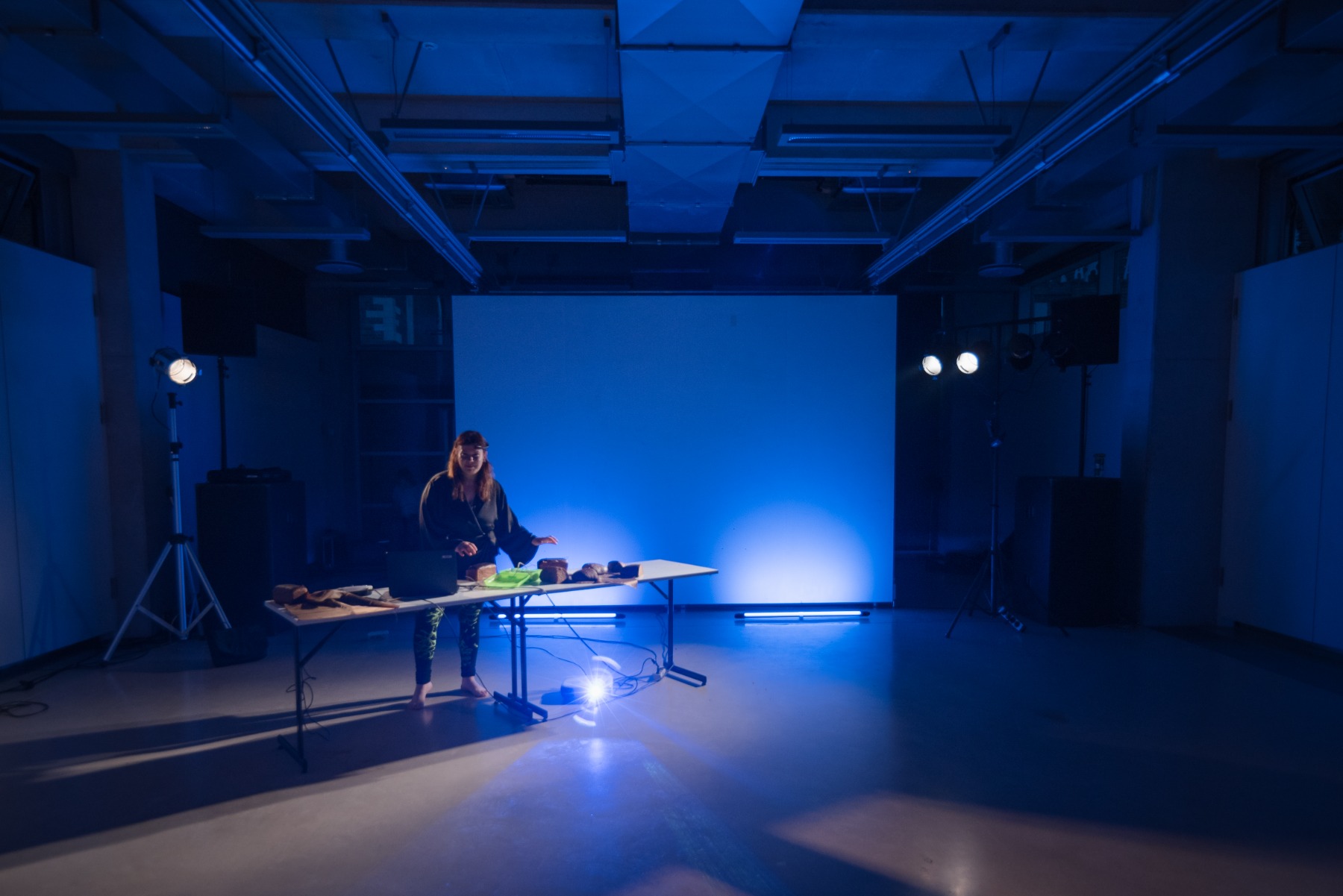
Yet, the irony of our cosmic journey is stark. Despite venturing into the immense expanse of the universe, our explorations often lead us back to our own reflections. It’s as if we chart a titanic circle across the galaxies, only to return to the familiarity of our own countenances – a poignant embodiment of our perpetual yearning for the known, set against a backdrop of boundless possibilities. Consider the sensation upon returning home after a long journey. For a fleeting moment, the familiar feels alien, as if we are viewing our own space through the eyes of a stranger. This instant offers a unique perspective, allowing us to view the familiar with a fresh lens, illuminating the nuances we might have previously overlooked. But swiftly, this alien feeling gives way to a deep-rooted longing for home, echoing unrelentingly within our hearts, irrespective of our physical location. Such is the human predicament – a pendulum swinging between the thirst for novelty and the comforting allure of the familiar. It’s an eternal dance, a complex duet choreographed by our innate desire to explore, countered by the relentless pull of home.
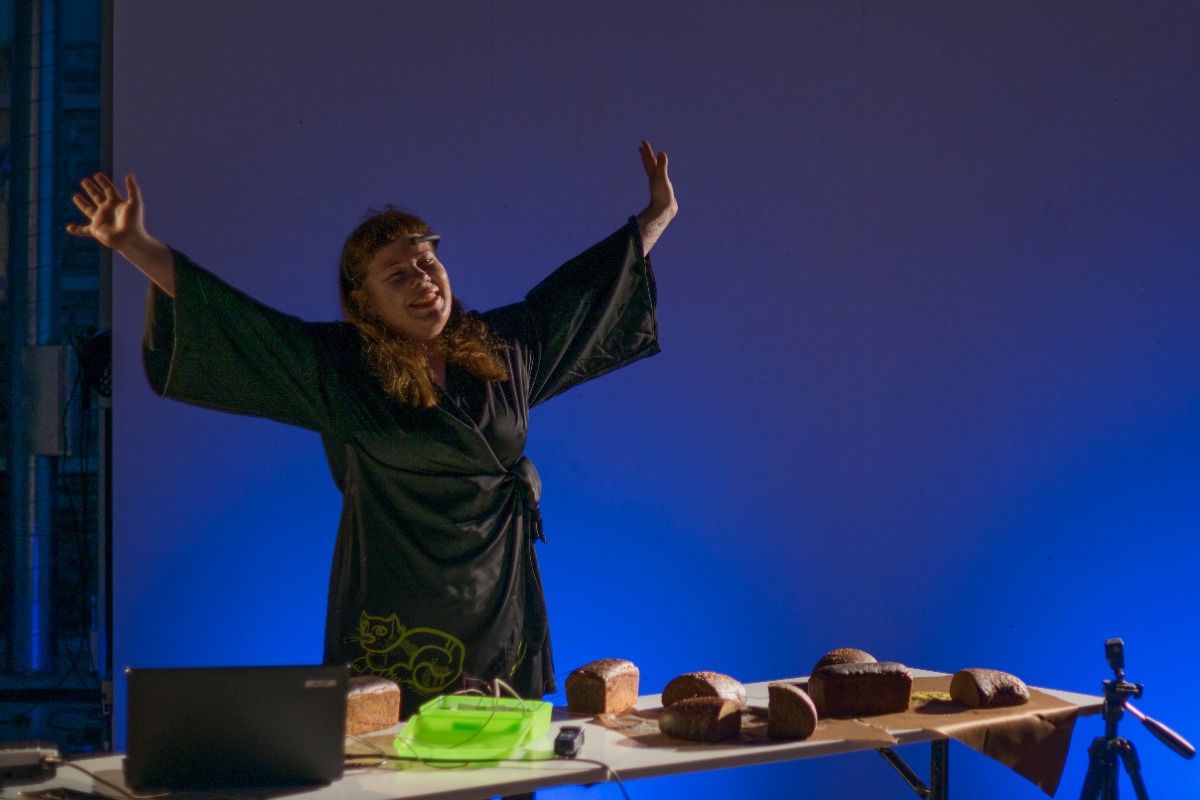
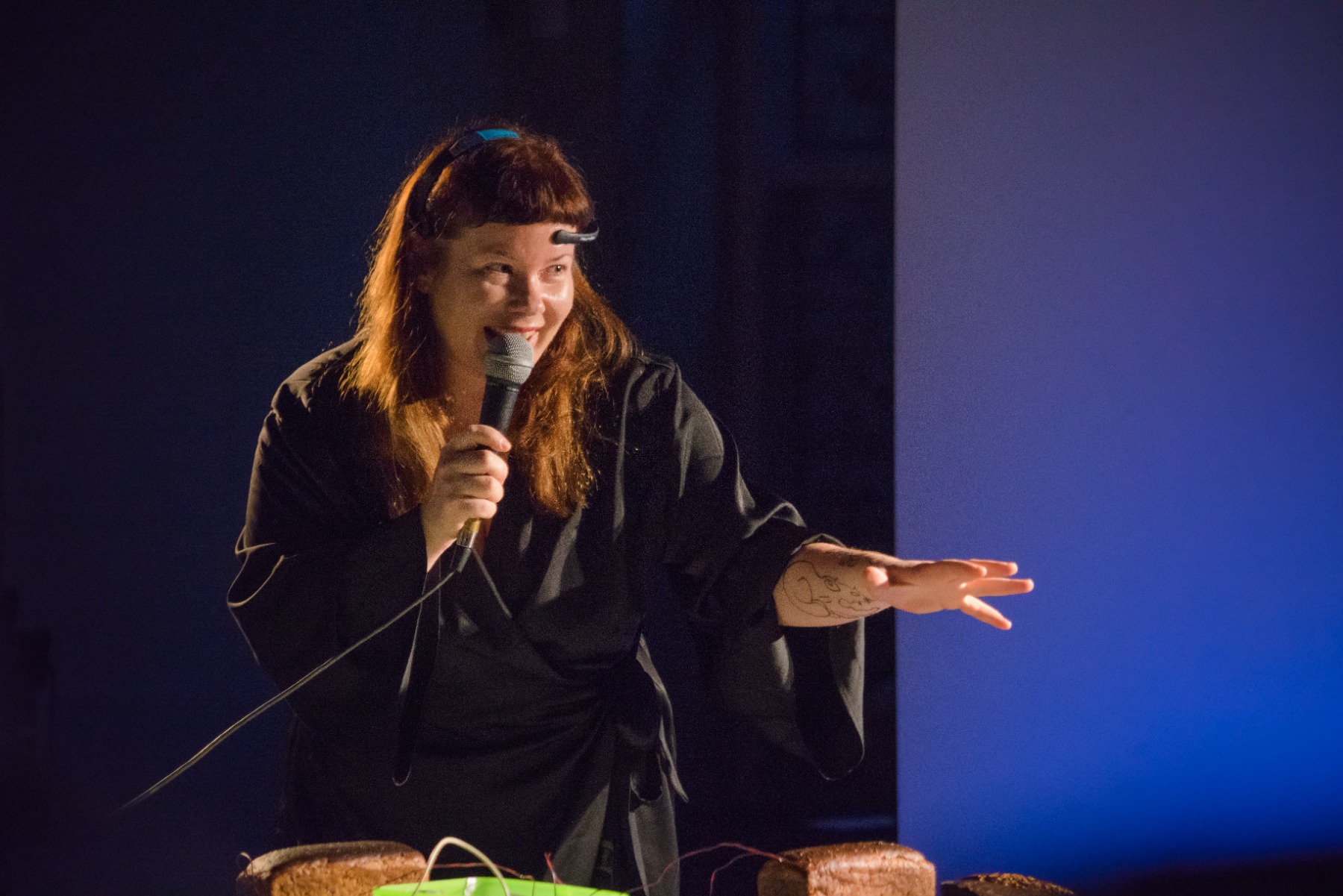
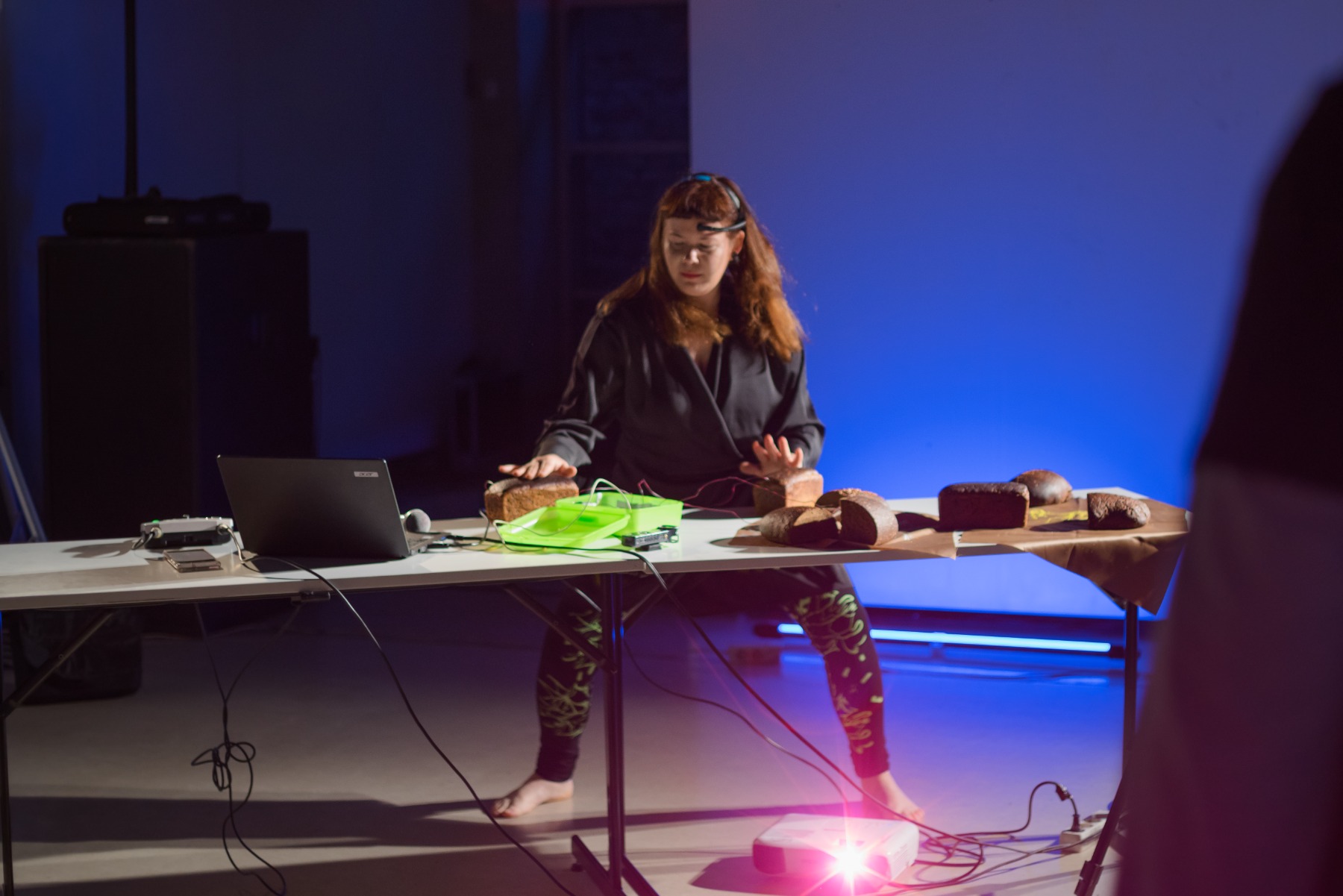
This sentiment resonated with me as I reflected upon the performance piece “Transcorporal Site and Action” by the Lithuanian artist Marija Griniuk. Presented at the Starptelpa Performance Festival in Riga on June 18th, the piece unfolded on the second floor of the Art Academy of Latvia. The performance seemed to explore the contours of longing, homesickness, and the search for the familiar in the alien, drawing attention to our cyclical journey from, and back to, home. The title “Transcorporal Site and Action” seemingly references a concept that transcends the physical – a ‘transcorporal’ existence – anchored in a specific ‘site’ with ‘action’ denoting the performance itself. Here, the term ‘transcorporal’ could suggest a profound interconnectedness between bodies, environments, and objects, in this instance, loaves of traditional Lithuanian bread. It emphasizes fluid boundaries and the interchange of energies or meanings, creating a dynamic tapestry of relationships and interactions.
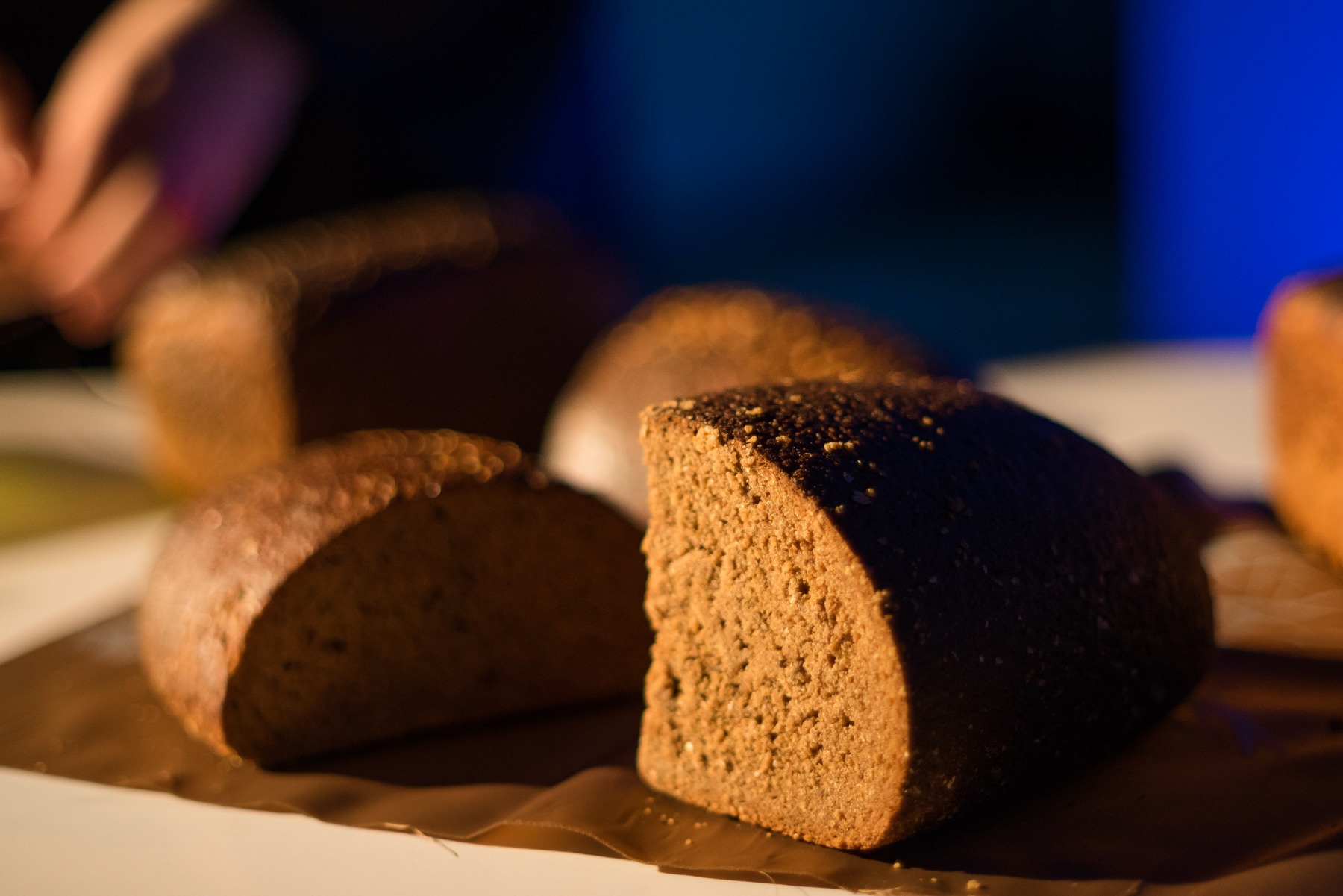
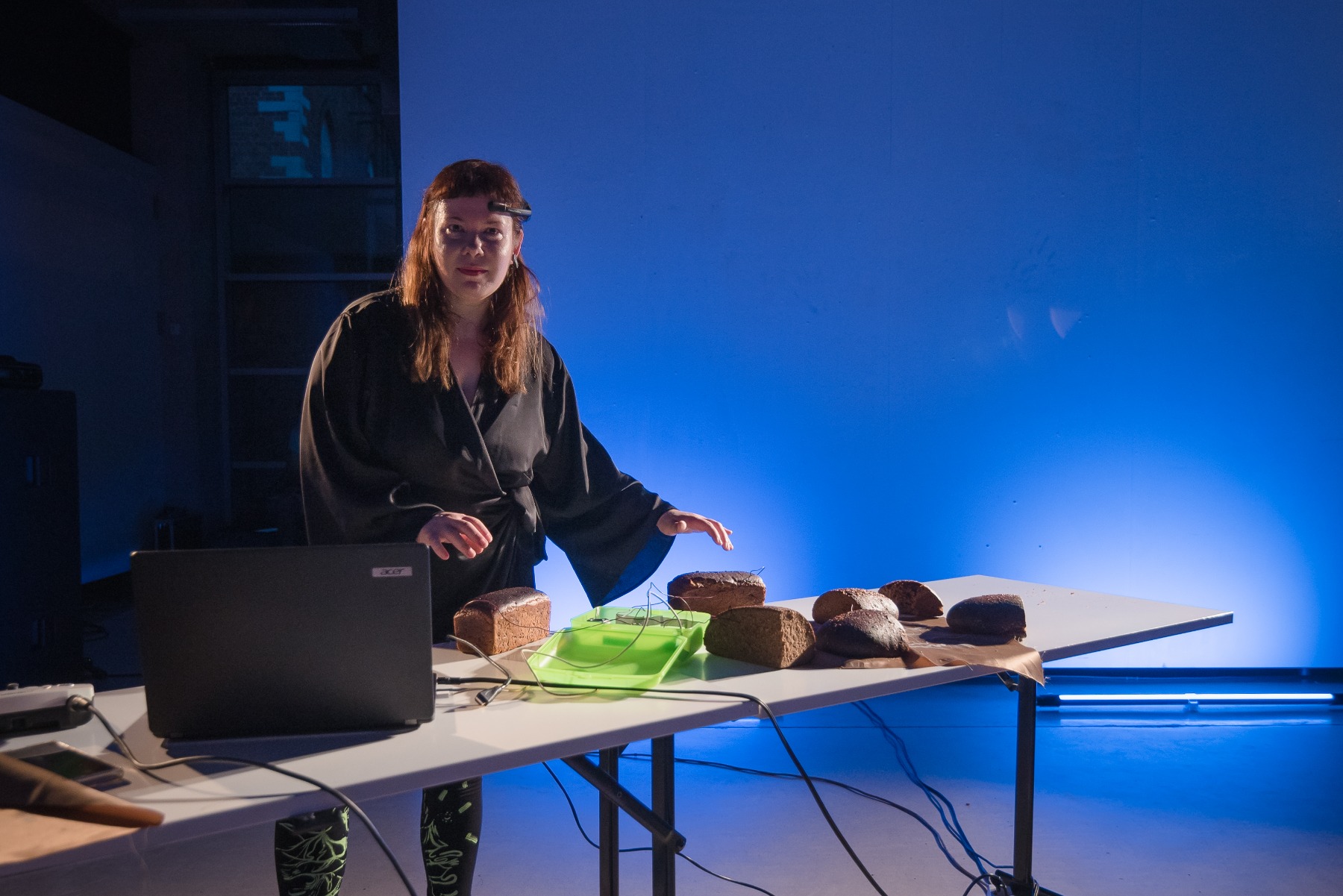
In the realm of performance art, this piece delves into the complex interplay between the performer’s body, the physical location of the performance, and the intricate actions performed. The work challenges the notion of our bodies as solitary entities and instead posits them as dynamic organisms, perpetually interacting with, and being moulded by, their surroundings. This idea is expressed through carefully choreographed movements and interactions with the bread loaves, and the auditory element derived from touching them. The bread, bearing the weight of tradition and the irresistible pull of its evocative aroma, lures the artist into a sensory journey through memory, an almost tangible, olfactory roadmap leading back home. This voyage unfolds as the narrative arc of the performance, echoing through vocals, soundscapes created by DIY instruments, and the sonic manifestation of remediated EEG data. In this piece, bread evolves beyond the physical, serving as a metaphorical and musical instrument for the artist. It forms both a material connection, via wires, and a spiritual bond with the performer, allowing the theme of home to resonate through the loaves, stirring in the audience the universal longing for home.
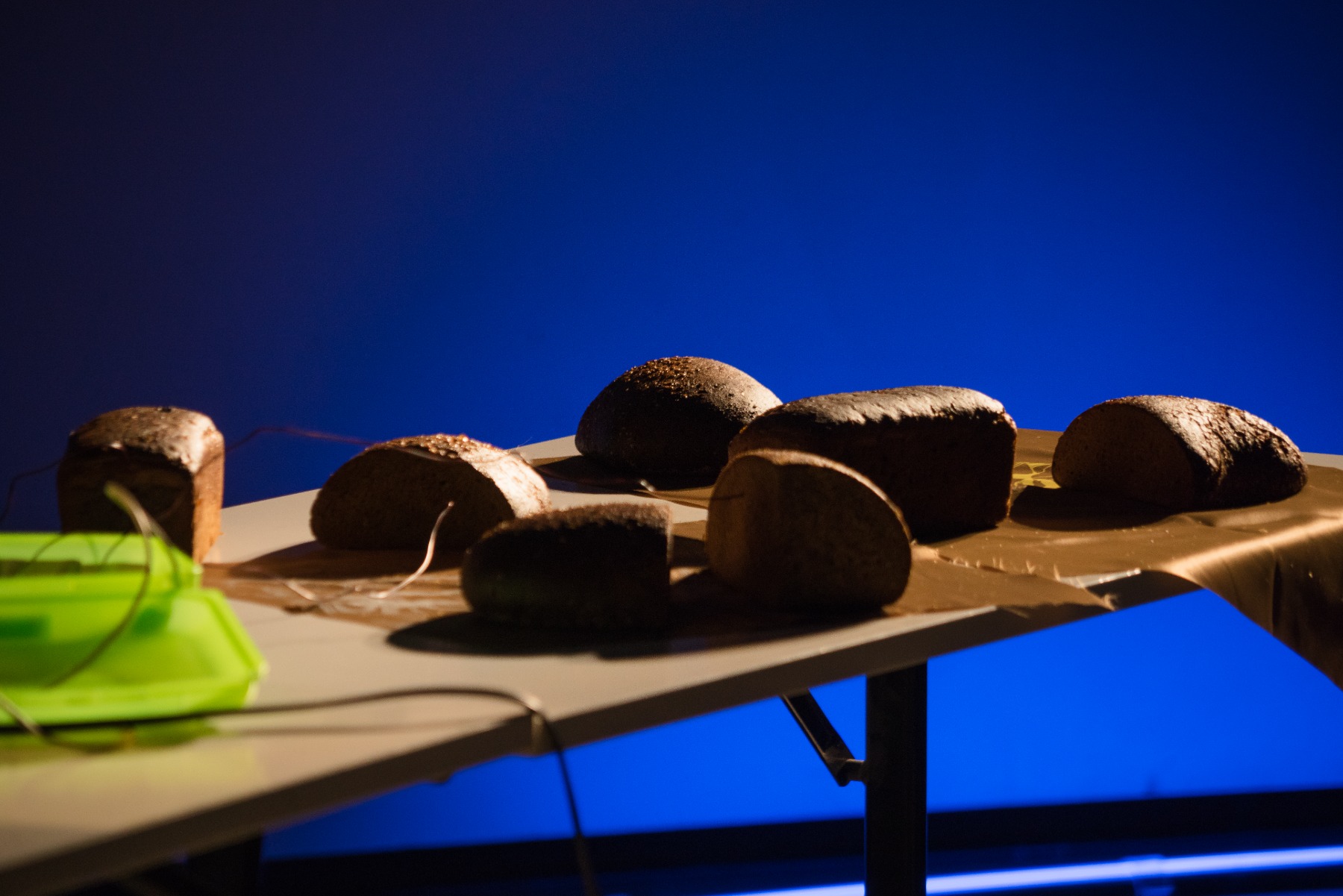
The artist’s discourse on the theme of ‘home’ in an interconnected global world exudes a poignant resonance, especially when contextualized within her living experience in the vast, serene landscapes of the Arctic North, where she currently resides. In such remote expanses, a stretch of 200 kilometres may only mark the boundary of a neighbourly encounter, completely reframing our conventional understanding of distance and proximity. Marija Griniuk, originally from Lithuania, considers her presence in Riga as teetering on the edge of home – it presents a state of tantalizing closeness, yet simultaneously underscores the tiny chasm of difference that prevents her from completely crossing the threshold. It’s a balancing act on the fragile border between the familiar and the foreign, a dance of nearness that stops just short of merging into absolute belonging. This intriguing notion of being ‘almost home’ is at the core of her performance. Through her work, she diligently unravels the intricate tapestry of connections that bind physical location, memory, and personal identity, creating a poignant, layered narrative that resonates with audiences. Each thread – the familiarity of the Baltic culture in Riga, the scent of Lithuanian bread stimulating a flood of memories, the cold and vastness of her current Arctic home – weaves into an evocative tableau that challenges and redefines the concept of home.
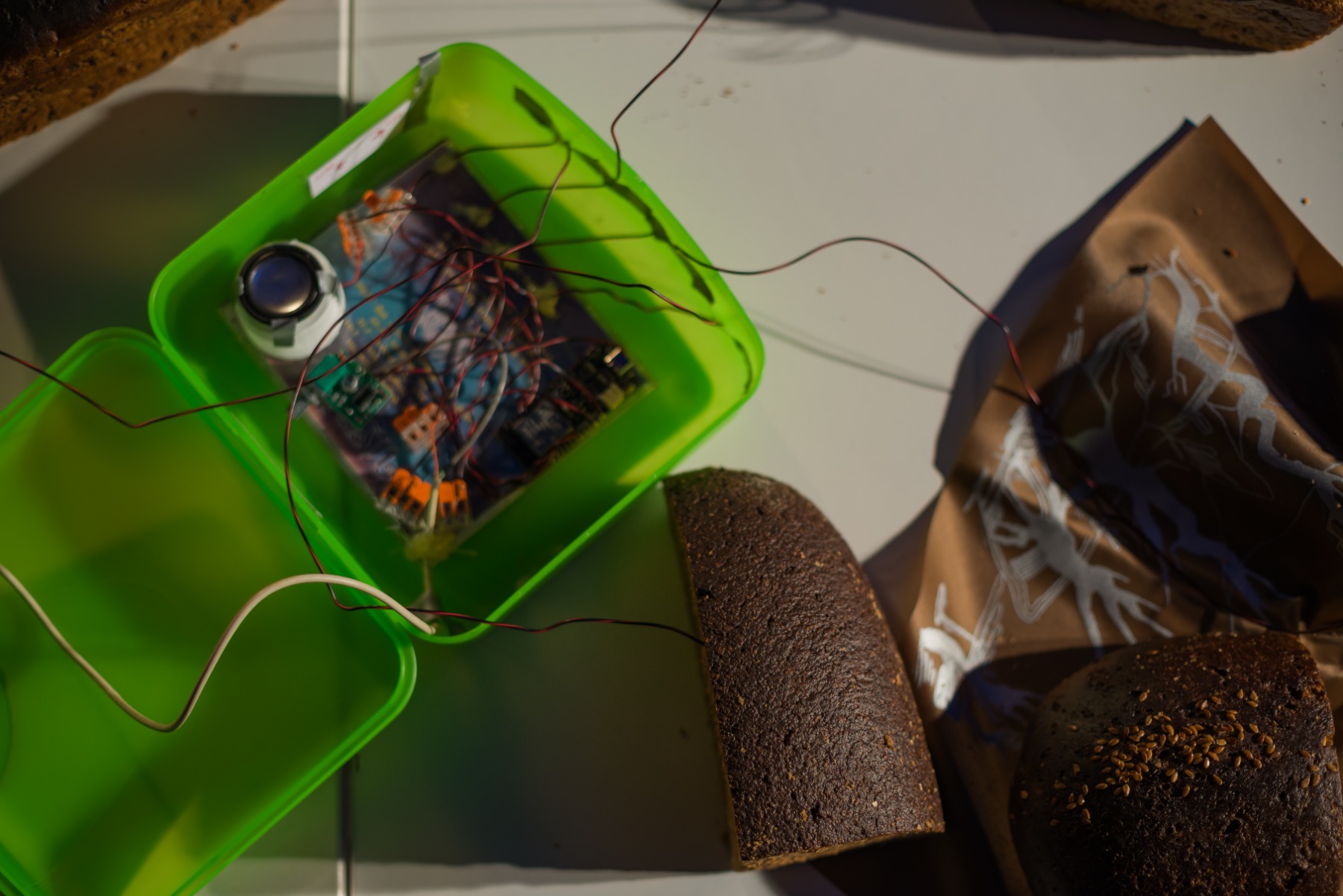
In the process, she imparts a unique perspective on the meaning of home, transforming it from a simple geographical concept into a multi-dimensional, emotional, and psychological space that constantly shifts and evolves. Her explorations delve into the nuances of the ‘in-between’ spaces that many of us inhabit in today’s globalized world – an interpretation that is as deeply personal as it is universally relatable. Through her artistic expression, she not only gives voice to her experiences but also opens up a dialogue about the complexities of belonging in a world that is simultaneously becoming more connected and more fragmented. In the philosophical realm, her work exhibits strong parallels with the thoughts of Martin Heidegger, particularly his concept of “Being-in-the-world”. This notion underscores the inherent interconnectedness of an individual with their surroundings, an idea that finds a resonant echo in the artist’s work. Heidegger extends his philosophy to encompass concepts of “dwelling” and “home” that move beyond mere physicality, which aligns closely with the Marija’s exploration of home as a fluid, multi-dimensional entity.
Marija Griniuk's performance “Transcorporal Site and Action” can be connected to the concept of cymatics, the study of visible sound or wave phenomena. Like Ernst Chladni’s and Hans Jenny’s pioneering work in cymatics which revealed that vibrations could generate distinct and often intricate patterns in sand or fluids, Griniuk’s art similarly draws upon the transformative power of vibrations, or in a wider sense, sound and frequencies. In her performance, the vibrations generated from her interaction with bread loafs echo the cymatic principle. The sounds form a unique pattern that can be likened to a sonic fingerprint or a unique voice – a direct, tangible manifestation of the act performed, creating an immediate, dynamic dialog between the artist, the environment, and the audience. Just as water, with its high resonance capacity and inner readiness to resonate, responds instantaneously to sonic waves, Griniuk’s performance reflects how our bodies, deeply interconnected with our surroundings, respond and adapt to varying stimuli, echoing the patterns of the natural world around us.
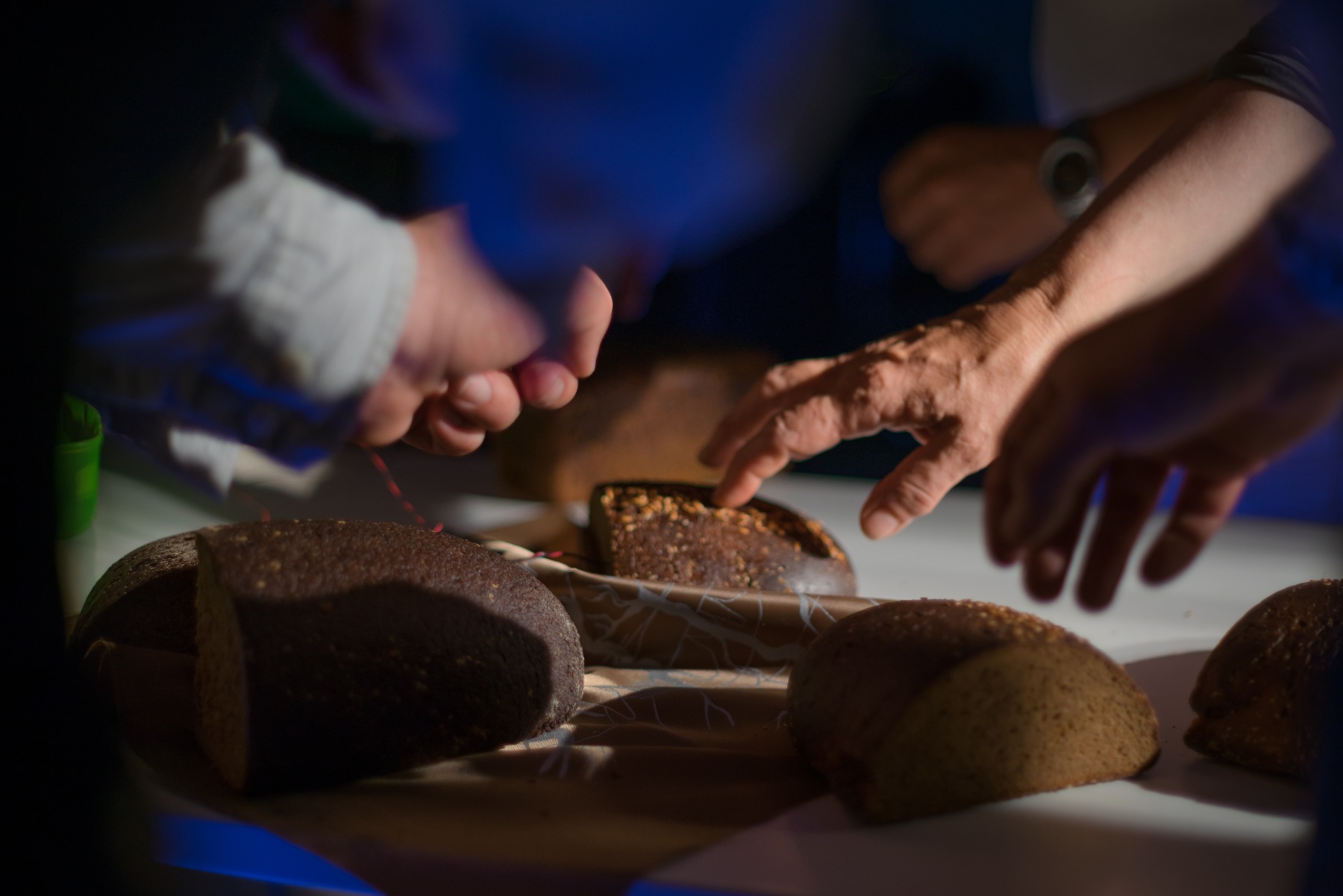
Ernst Chladni, in his intriguing experiments, found that when he sprinkled sand onto metal plates and vibrated these plates using a violin bow, the sand organized itself into various geometrical patterns. The type of pattern formed varied with the vibrations produced. Chladni meticulously documented these diverse shapes, creating a comprehensive catalogue now referred to as “Chladni figures”. These patterns bear a remarkable similarity to numerous natural formations, from the unique shell markings of a tortoise to the spot patterns adorning a leopard. The study of these Chladni or cymatic patterns provides a captivating glimpse into the inherent order found in the natural world, a world otherwise perceived as random. Drawing a parallel to this phenomenon, Marija Griniuk’s performance features visual motifs of Arctic woods and a small cat-like creature, elements imprinted on her robe and the tablecloth beneath the bread loafs. These visuals seem to harmonize with the soundscape she creates, adding another layer of meaning to the performance. They serve as visual analogues to the sonic patterns, contributing to the conception that “home” can be more than a physical place – it can be a certain frequency or a specific state of being, a resonant pattern amidst the grand symphony of life.
Marija Griniuk’s performance, the philosophical undertones resonating through her work, her cheerful deliverance, her unique approach to the artistic interpretation of “home” conjure a narrative that is both deeply personal and universally compelling. This narrative, bridging the chasms of physical geography, cultural diversity, and subjective memory, has its roots firmly grounded in a fundamental human sentiment – the longing for home. Artist’s performance becomes a moving reminder of our collective journey, a mirror held up to the multifaceted human experience. It illuminates the inherent contradictions that define us – our insatiable curiosity for the uncharted and the comfort we find in the known, our ceaseless quest for novelty and the refuge we seek in familiarity. Through her evocative artistic language, she urges us to confront and reconcile these dualities, to acknowledge that we are, indeed, wanderers charting the vast expanse of life, but also settlers yearning for the embrace of home. In doing so, she elegantly weaves a narrative tapestry where each thread – be it a sonic pattern, a smell, a memory, or a place – brings us closer to answering an age-old question: What does it truly mean to be ‘home’? The answer, it seems, is a symphony of resonant patterns, a chorus of shared experiences, a harmonious confluence of diverse yet interconnected paths – a transcorporal dance between the world and us.
