Unlearn to heal the soul
Alexander Burenkov
Exploring Vasily Sumin’s “The Resemblance to the Speech Will Be Erased” ZKM, Karlsruhe
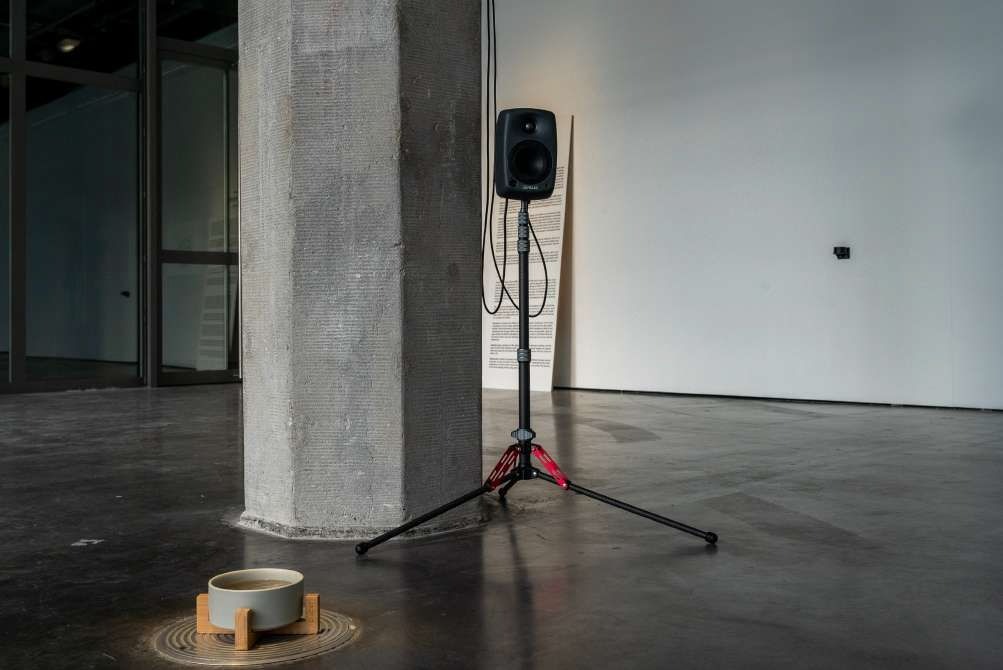
Crafting a query within Stable Diffusion, the wildly acclaimed text-to-image deep generative artificial neural network, and conjuring forth a suitably photorealistic image necessitates the formulation of an exact text input. The requisites for these requests are exactitude, rigid ordering, and the judicious use of commas. Such stringent constraints form the nucleus of the groundbreaking cross-media art project titled “The Erasure of Resemblance to Speech” by Vasily Sumin. In this endeavor, Sumin persists in his extensive exploration of the realms of non-verbal and more-than-human communication, merging cutting-edge technologies, personal poetic reflections, and healing strategies within a singular space.
Several years ago, within the confines of the YE5 Station at the Special Astrophysical Observatory of the Russian Academy of Science in Nizhniy Arkhyz, Karachay-Cherkessia, Vasily embarked on a captivating dialogue with a secluded community of astrophysicists. His aim was to reinterpret their logical constructs into sound and video installations. With “How to Receive an Answer?” he pushed even further, delving into the complexities of transmitting messages into the cosmos through the lens of quantum physics, exploring the potential for non-verbal communion with nonhuman consciousness.
Photos: Courtesy of the artist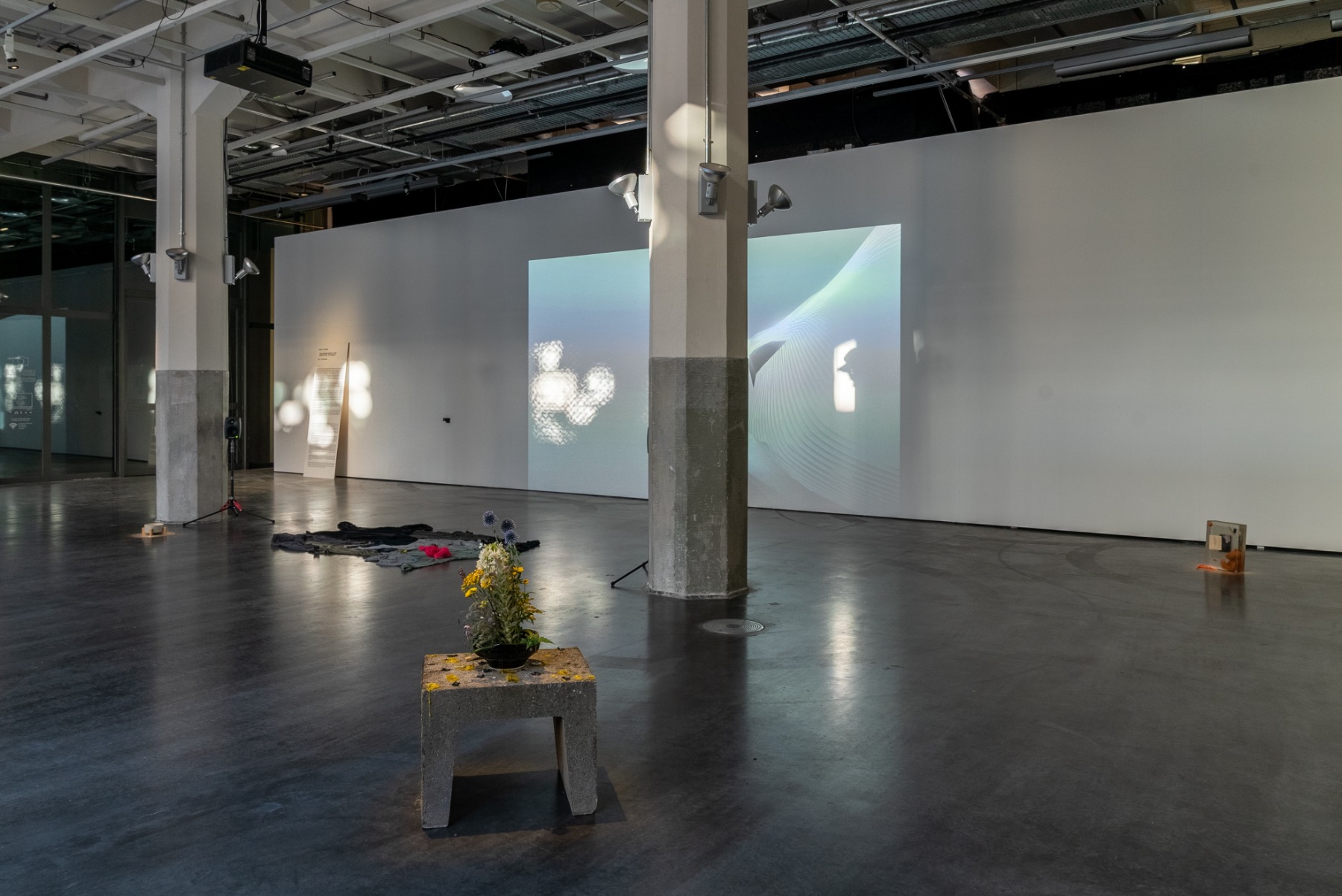
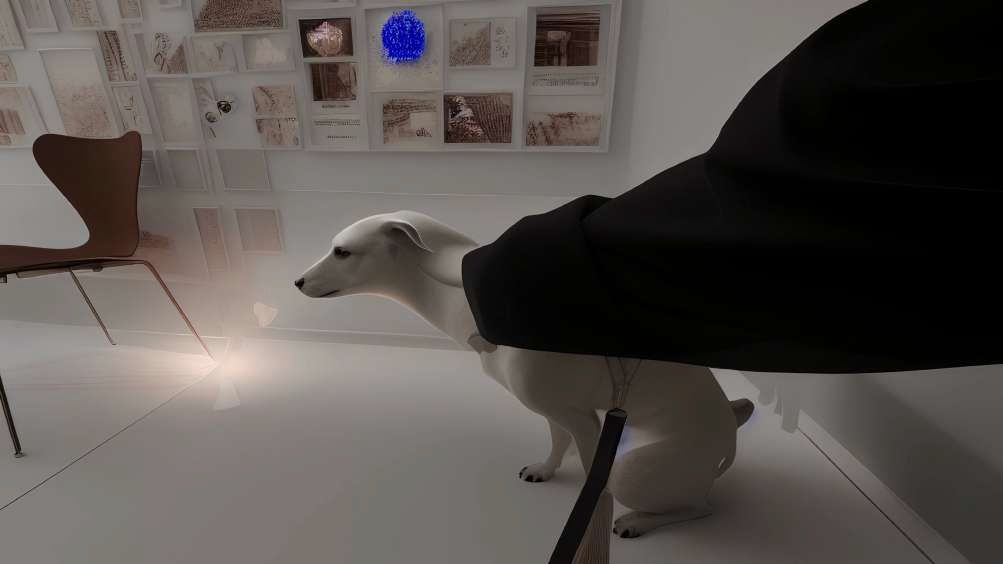
Forced to depart from his homeland amidst the onset of Russian atrocities in Ukraine, Sumin embarked on a deeply personal journey of relocation, assimilation, and a ceaseless oscillation between acquiring and shedding his prior values. This odyssey finds expression through the medium of video and a series of meticulously chosen objects. In his quest to find solid ground beneath his feet, he initiated Telegram crowdfunding chats to aid Ukrainian refugees and gather humanitarian assistance. He also sought indirect communication with the outer world, engaging online with the aid of his personal AI assistant, GPT4, which functioned as a psychological support service chatbot. Offline, he relied upon his loyal canine companion, Aiya, whose name bears a striking resemblance to “AI” by no mere happenstance. In the midst of these circumstances, Aiya transformed into a guide dog and a companion species for Sumin, a man forging his migrant identity through tactile experiences.
“I shall provide you with precise information rooted in my training and data. I do not process personal intentions and emotions,” states GPT4. Confronted with the challenge of framing his inquiries devoid of emotional hues, Sumin embarks on a journey to uncover the standardized logic embedded within GPT4 and the concealed stereotypes of normalization lurking within artificial intelligence databases. Much of the video footage was shot in Karlsruhe, where Sumin served as an artist-in-residence at the Zentrum für Kunst und Medien, capturing moments on the streets and amidst anti-war protests. Yet, a distinct portion of the project delves into the harrowing videos of detentions by the Moscow police during political opposition demonstrations.
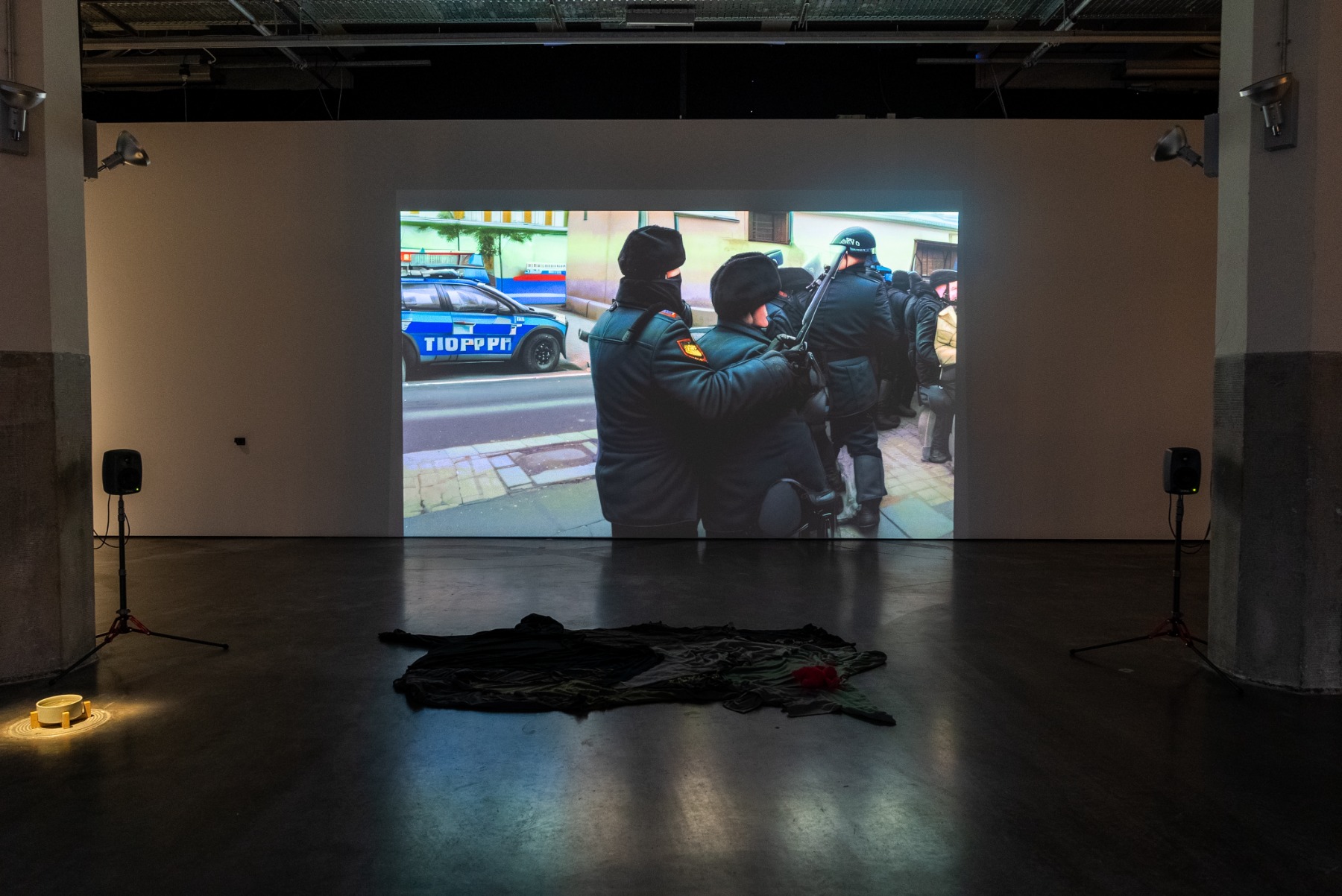
A poignant question arises: “What would you recommend doing if you were taken hostage?” GPT4 responds, “It’s imperative to remain composed, avoiding any abrupt movements. Comply with the captor’s directives to ensure your safety. Collaborate with the authorities when they arrive to peacefully resolve the situation and secure your release.” Nevertheless, maintaining composure becomes a near impossibility when one is taken hostage alongside their homeland, ensnared in the clutches of terrorists and war criminals. In such existential quandaries, where machine intelligence falters, the quest for answers becomes a personal odyssey fraught with emotional trials, subjecting one’s mental well-being to rigorous experimentation. In a foreign land, the need to adapt and dispel the pervasive sense of isolation compels Sumin to engage with the local community, forging connections that kindle a sense of belonging.
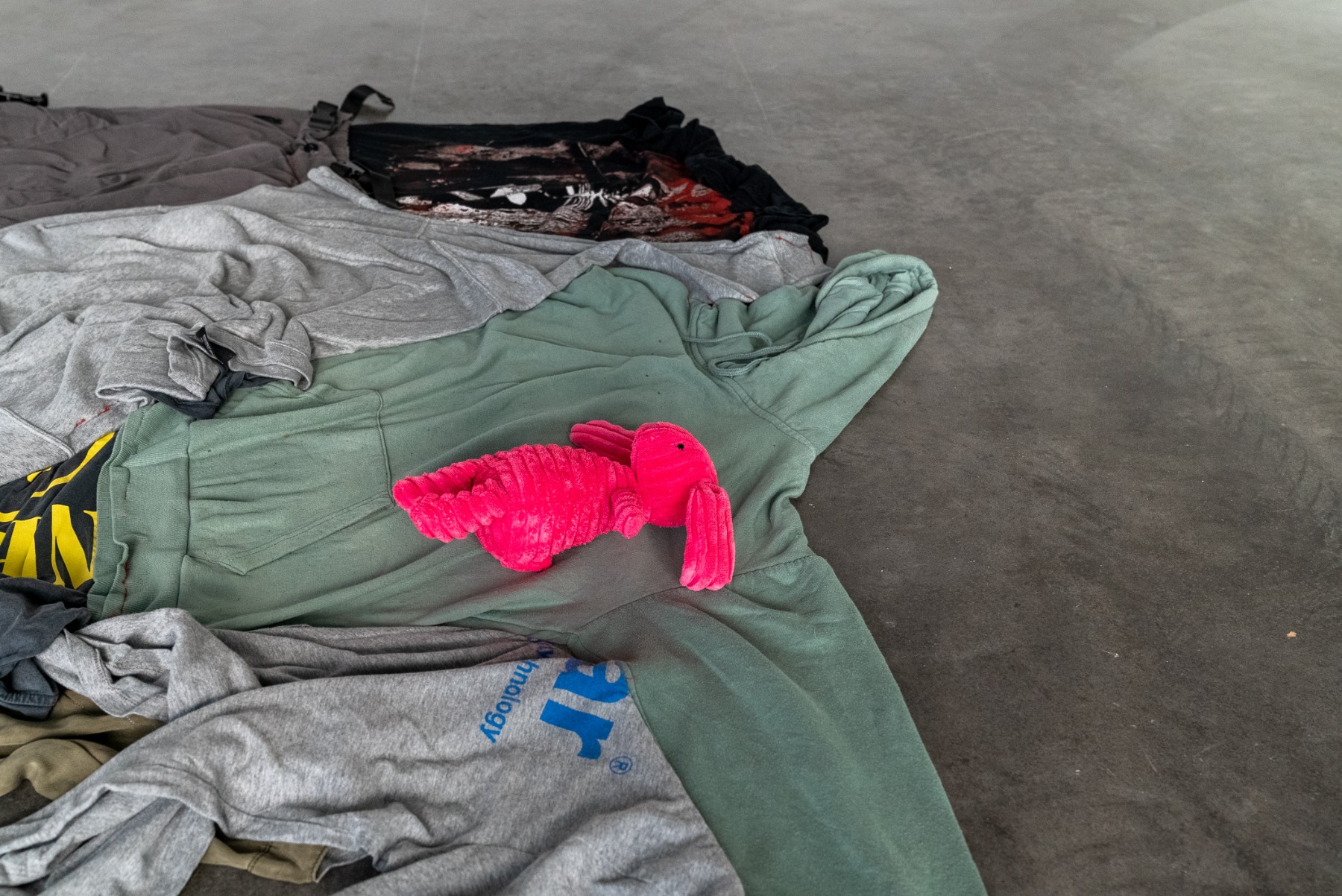
His creation of an online support community for refugees served as one such mental survival strategy, though it bore perilous and dramatic consequences. Exposure to others’ traumatic experiences, relayed through their narratives, inevitably led to vicarious traumatization, inflicting personal emotional distress and a profound sense of shared experience.
Video still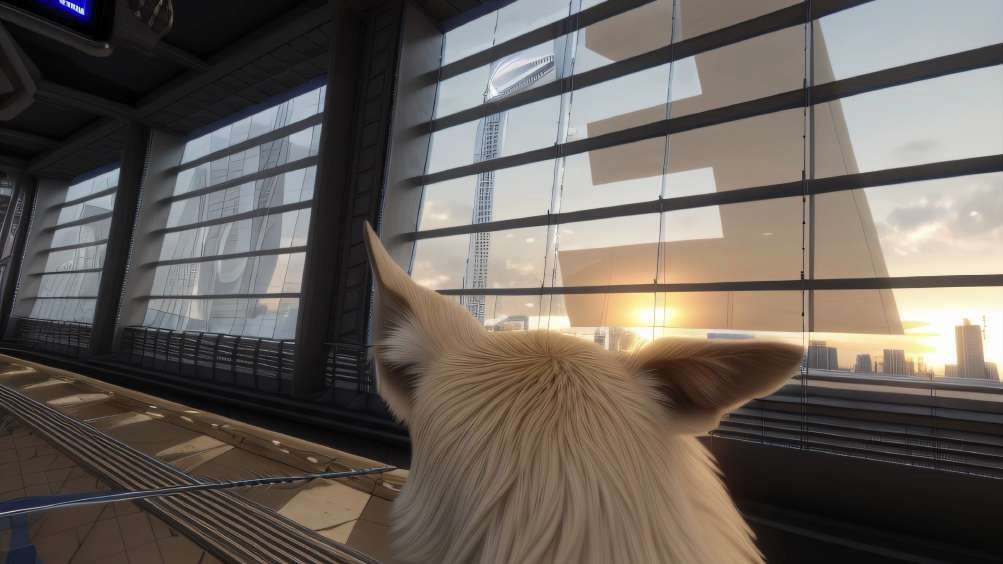
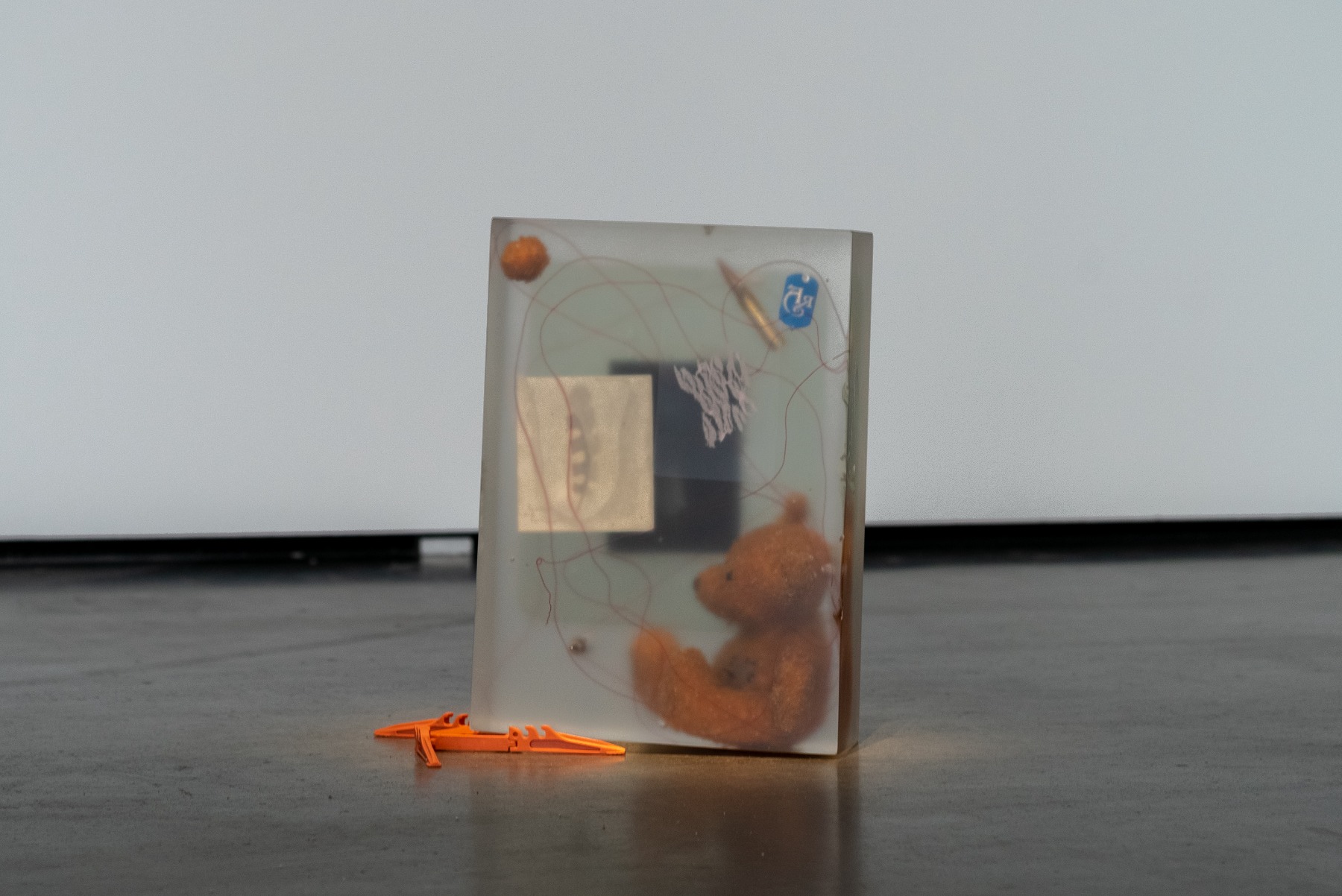
In this crucible of adaptation and unlearning, the artist is compelled to seek a new language that resonates with his surroundings. This endeavor extends to the reconfiguration of reality through fresh optics and tools, prompting Sumin to explore a novel visual language. Stable Diffusion emerges as the quintessential instrument for this enterprise, capable of not only generating images based on textual descriptions but also manipulating original images through artificial intelligence algorithms and latent diffusion techniques, alongside img2img reception. This potent tool facilitates the creation of a world that teeters on the precipice of a luminous and surreal reality, disintegrating into a realm indistinguishable from a lucid dream or a nightmarish hallucination. The visual effects woven into the fabric of the video bear a striking resemblance to rotoscoping, evoking strong echoes of Richard Linklater’s cult animated film, “Waking Life.” Much like the film’s protagonist, who traverses a succession of dreamlike realities, Sumin’s work probes a tapestry of philosophical inquiries. These encompass the very nature of reality, dreams and lucid dreams, consciousness, the meaning of life, reincarnation, free will, and existentialism. The central character, in the course of his musings, confronts incisive queries regarding the “slave system” enveloping him, realizing that all transpires within the confines of a dream from which escape remains elusive. The floating objects within the frame, the mutable countenances of characters, and more, by deliberate design, mirror a dream, albeit possibly someone else’s dream. In this somnambulistic realm, the protagonist finds himself captive to another’s nightmare, a product of another’s vivid imagination. This pervasive sense of impotence and helplessness mirrors the plight of a political migrant, whose former life lies in ruins, burdened by the loss of home, estrangement, and the severance of social bonds. To rediscover oneself within this altered reality, Sumin embarks on a ritualistic act, encasing significant mementos, gifts from friends and lovers, and even his national passport within a block of epoxy. This serves as a symbolic farewell to his past life, severing the prospect of an imminent return to his homeland. Among the series of sculptures featured in the project, one stands out—a bouquet of flowers, crafted according to the tenets of Japanese ikebana. Over the course of the exhibition, these blossoms wither, mourning not only the author’s lost past but also the casualties of war, victims of a senseless machinery of violence.
Video still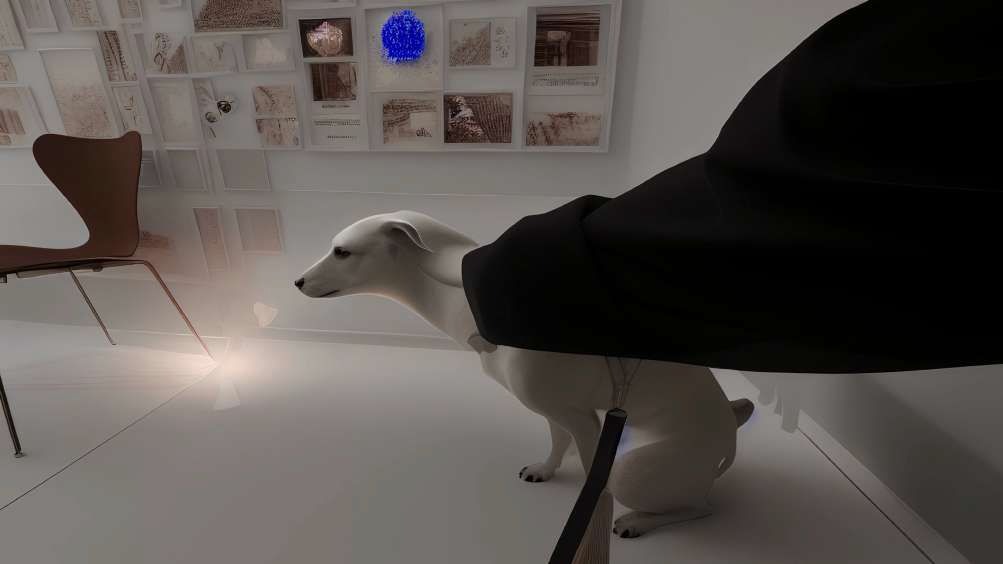
Stable Diffusion owes much of its popularity to the availability of its open-source code. This liberally shared software empowers individuals to craft their own adaptations. Rooted in the technique of latent diffusion, it involves the system’s identification of familiar shapes within an extensive repository of images, honing in on them as it endeavors to fulfill each request. The neural network’s aptitude for recognizing shapes is a skill acquired during its training. Sumin likens the process of training and adapting to his newfound worldview to the neural networks’ own training regimen, based on an expansive trove of images. This journey is arduous, particularly at the initial stages, as Sumin elucidates. In the preliminary phases of network training, Stability AI personnel culled images infused with metadata—additional information, such as captions accompanying images on websites—forming a rich pool of graphic data. Drawing upon a subset of the vast LAION-5B dataset, encompassing approximately five billion internet images, sourced predominantly from Getty Images, DeviantArt, and Pinterest, Stable Diffusion inherits the artistic styles of contemporary creators. Sumin postulates a compelling question, which manifests as a creative modus operandi within this work: Can Stable Diffusion birth a new style that a contemporary artist may adopt? Sumin approaches this endeavor with unwavering determination, entwining frank documentary-style narration, even confessionalism, with the clinical lexicon of an impartial algorithm. In doing so, he elevates AI to the status of a co-author, an integral participant in the artistic dialogue.
Following the collection of data, the neural network underwent training on a GPU-equipped server tailored for complex operations. This training followed a unique principle, wherein the system employed CLIP technology (Contrastive Language–Image Pre-training) to generate a complete composition in a single stage. This diverges from the conventional layer-by-layer image creation process, which typically commences with the background and culminates with the object. CLIP fosters associative linkages between words and images, enabling a seamless confluence of text and visual elements. Post-AI training, another phase ensued, akin to further honing the network’s faculties. During this stage, the neural network drew upon the associations forged during training, analyzing the pixel ratios of specific colors within its reservoir of familiar images. Subsequently, it conjured the final iteration of the image in alignment with the given request. Training, much like the AI itself, unfolded as an ongoing process, continually refining and enhancing Stable Diffusion’s capabilities.
Video still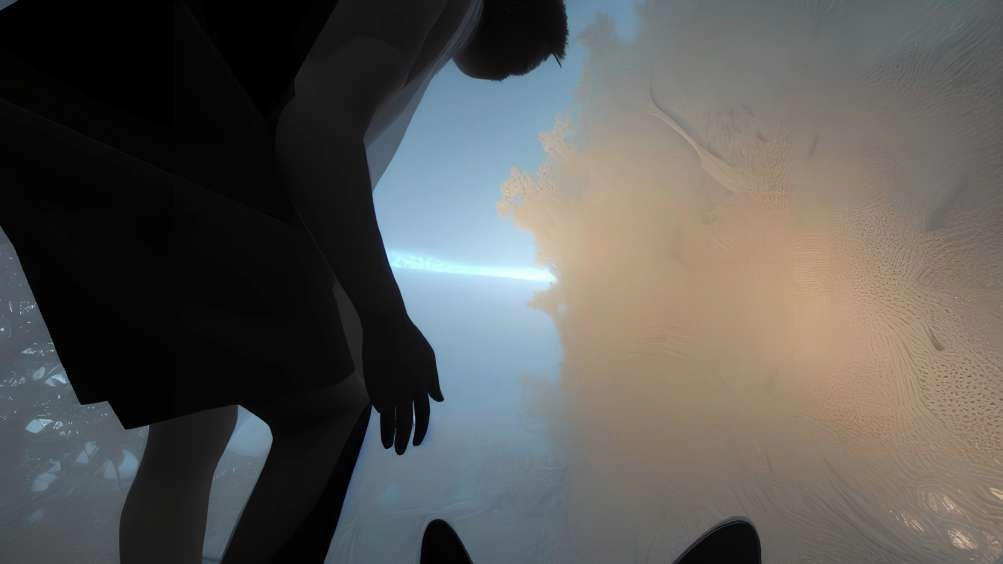
Amidst Sumin’s tumultuous journey of adaptation and unlearning, his canine companion assumes a pivotal role. Aiya, the artist’s faithful companion, becomes the lens through which we perceive his world (a GoPro camera adorns her neck). She not only serves as a guide to the realm of superverbal communication but also functions as Sumin’s primary source of solace and elation. The dog bestows joy and delight upon her owner, and we even bear witness to Sumin’s laughter as he engages in play with his loyal companion. In a manner reminiscent of American artist Ian Cheng, who orchestrated a digital dog in his project “Bad Corgi”, Sumin finds his own canine companion taking on a transformative role. In Cheng’s project, the digital dog, a dwarfish demon pup, is tasked with benignly herding sheep and averting distractions within a world teetering on the brink of chaos. Cheng’s project delves into the capricious vicissitudes of the human mind—its oscillations between focus and distraction, discipline and impulsive autopilot. Cheng elucidates, “I perceive my simulations as a neurological gymnasium in which art serves as a deliberate exercise in the sensations of bewilderment, anxiety, and cognitive dissonance that accompany life within a world characterized by intense change and uncertainty.” In Sumin’s narrative, his dog transcends the realm of a mere simulator for medical adaptation or a substitute for psychological support. Aiya metamorphoses into an inhuman alter ego, guiding Sumin into a world steeped in the grand tapestry of art history. This connection becomes evident, given Aiya’s shared lineage—a white Ibizan hound—with Human, the renowned canine adorned with a left front leg daubed in pink makeup. Human starred in Pierre Huyghe’s relational artwork for dOCUMENTA (13) in 2012. In moments of Aiya’s physical distress, Sumin reciprocates her care, escorting her to the hospital and adorning her with a protective Elizabethan collar—a time-honored medical device and aid for dogs. Upon visiting the artist’s installation, housed upon the museum balcony at ZKM, one discerns not only an act of self-reflection but also an act of self-healing. It becomes abundantly clear that, in the absence of a literal veterinary collar for his own convalescence, Sumin has set forth on a mission to reinvent his art. His art, beyond merely recounting personal experiences, possesses the capacity to heal the soul, engaging in a profound and poetic dialogue with the observer.