


What We Carry, What We Shelter
Notes on Philip Aguirre y Otegui exhibition at KMSKA in Antwerp
On the edge of a canal in Venice’s Arsenale, where ships were built for centuries before setting out to sea, an unusual shelter stood during this year’s Venice Biennale. A monumental sky-blue structure brought together the forms of a boat, a watchtower, a lighthouse and a temporary dwelling. Gaalgui Shelter (2026), by Belgian artist Philip Aguirre y Otegui, takes its inspiration from traditional Senegalese fishing boats, which are also used for perilous crossings of the Atlantic to the Canary Islands.
There is something paradoxical about the work. A boat, made for movement, has become an architectural structure that promises rest and protection. Its sky-blue colour, borrowed from the painted fishing boats of Senegal, evokes the sky and the sea, but also hope and sadness. Yet behind this impression of lightness lies one of the most difficult questions of our time: the right to safety, to a home and to a sense of belonging. The location adds another layer of meaning. Venice, whose history is inseparable from maritime trade, navigation and movement between continents, is confronted here with a very different experience of the sea. The sea can offer freedom and opportunity, but it can just as easily become a border that not everyone manages to cross.
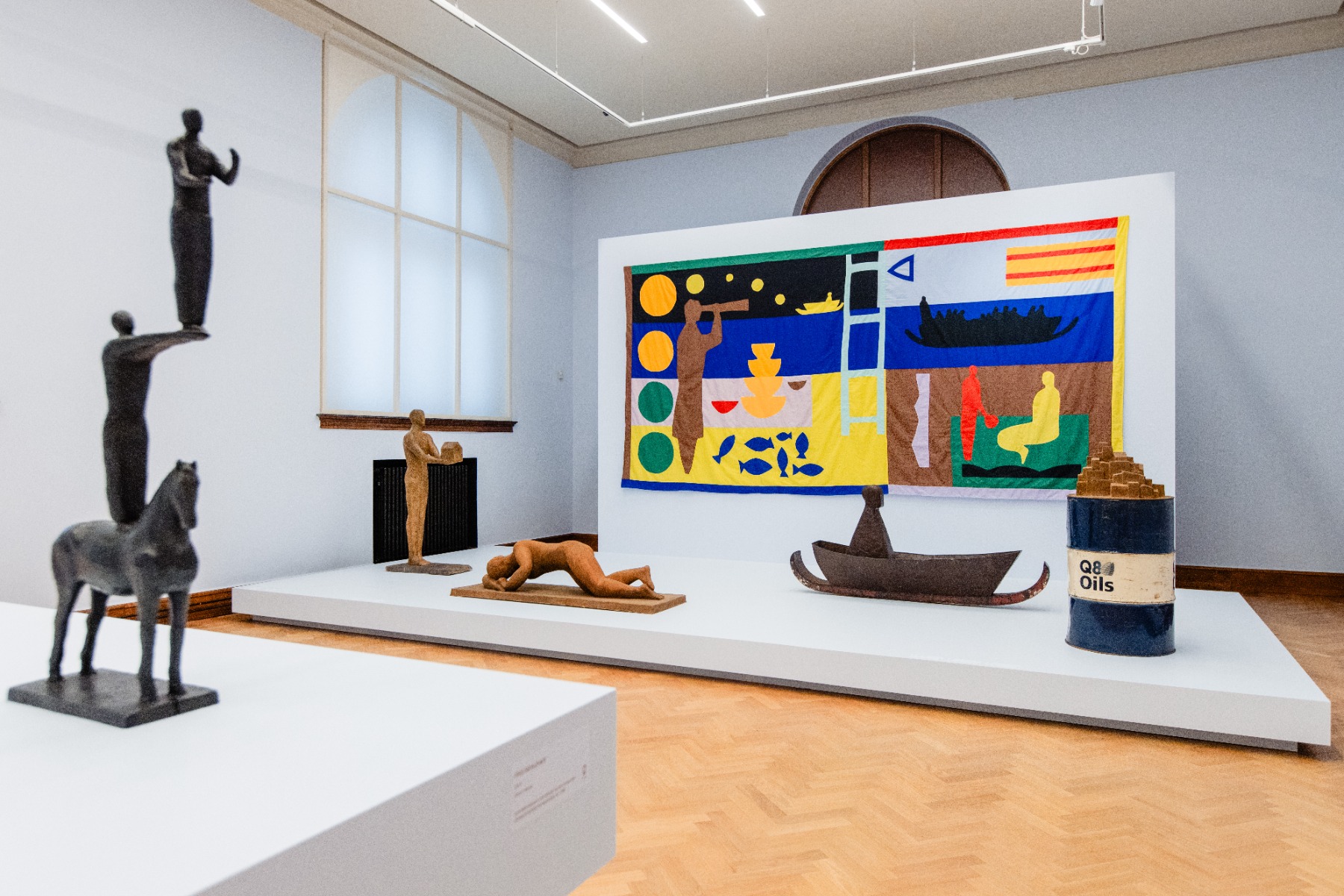
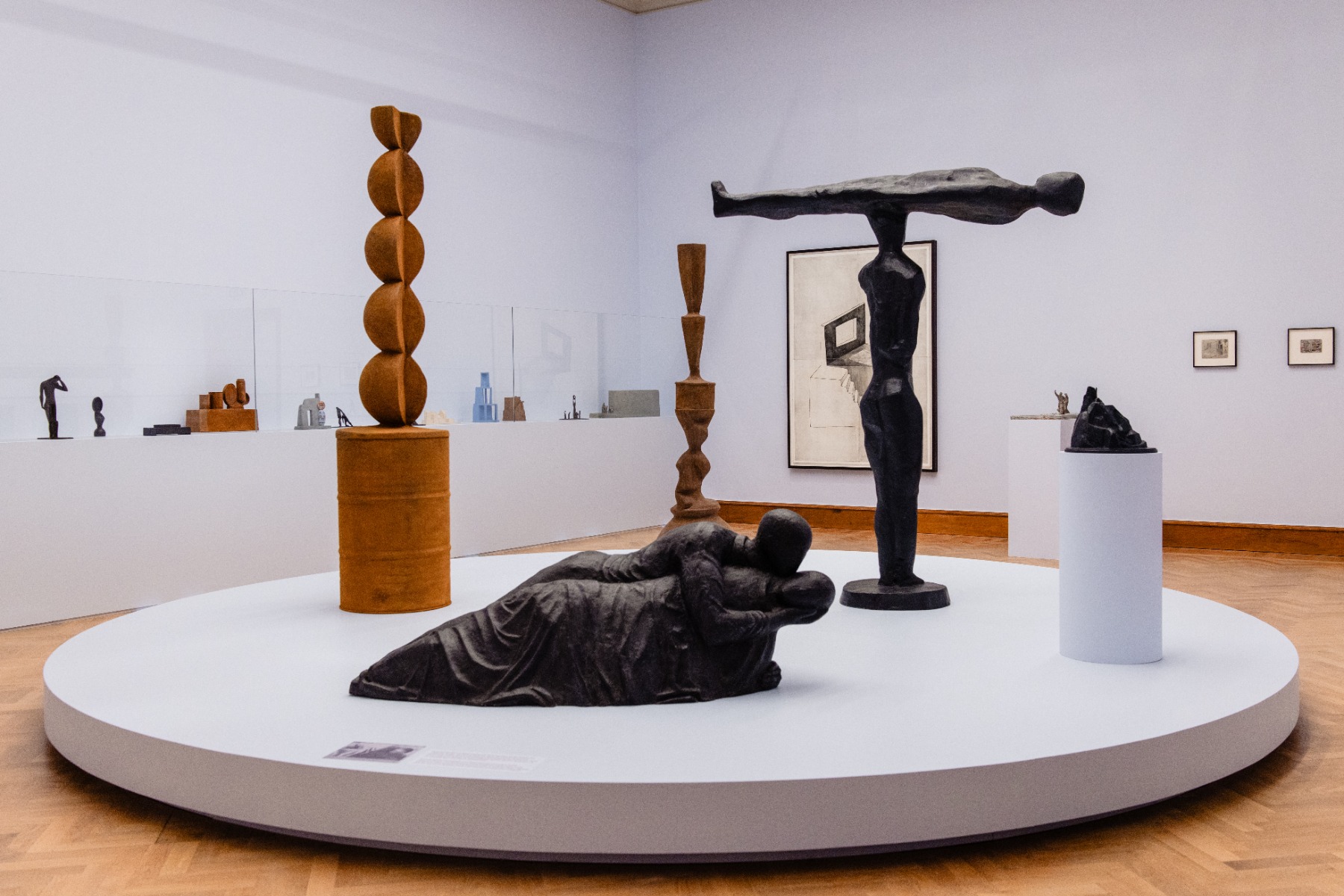
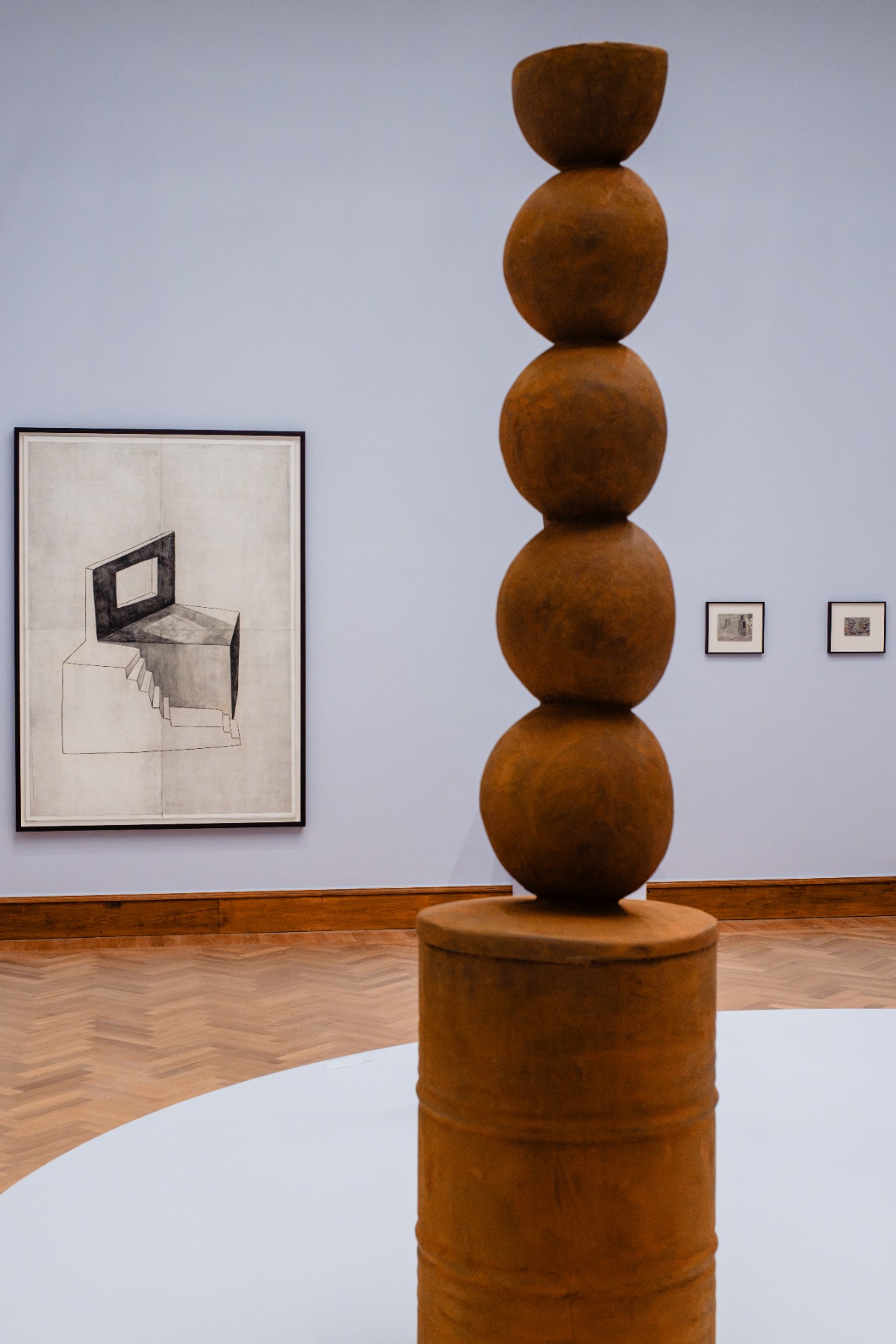
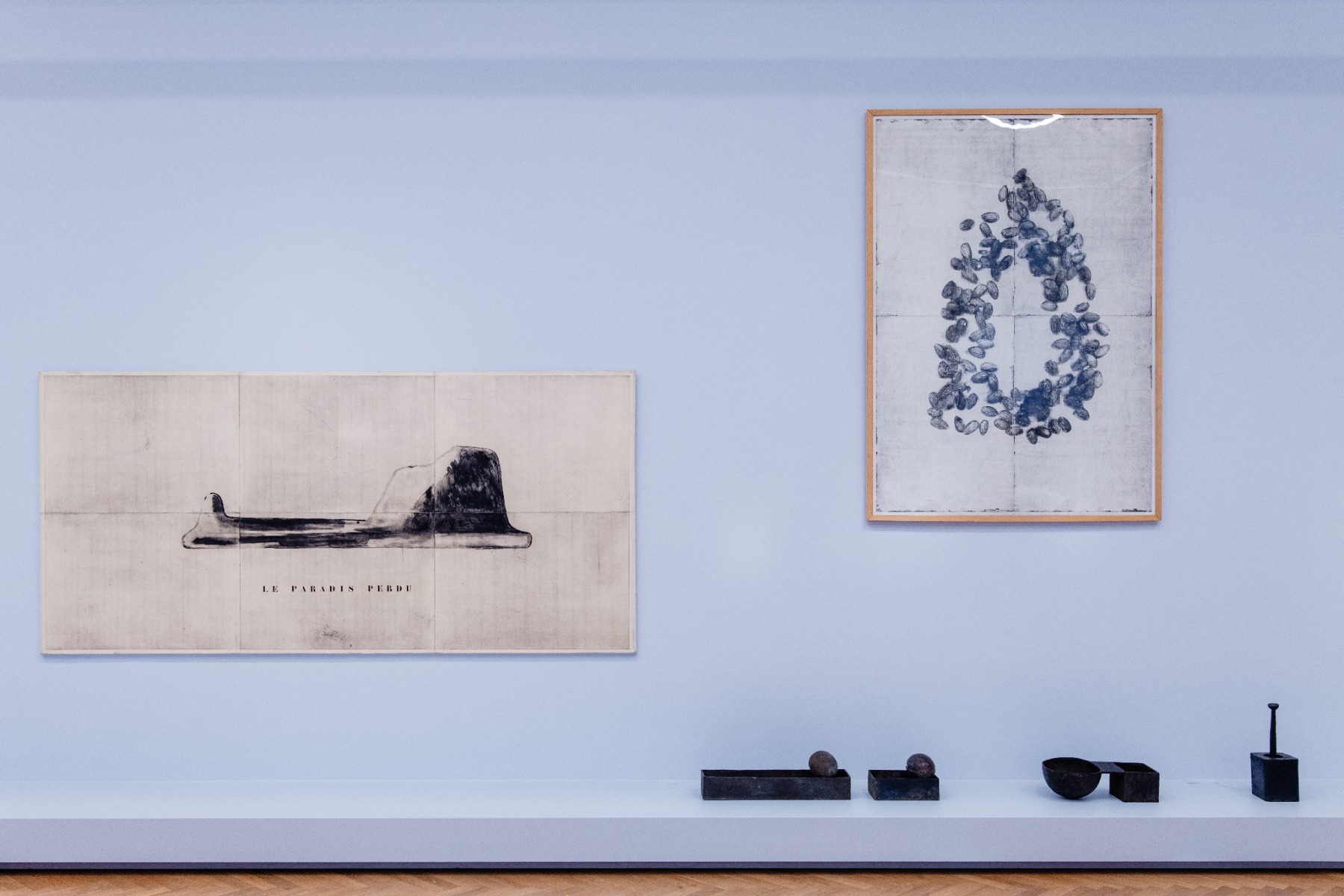
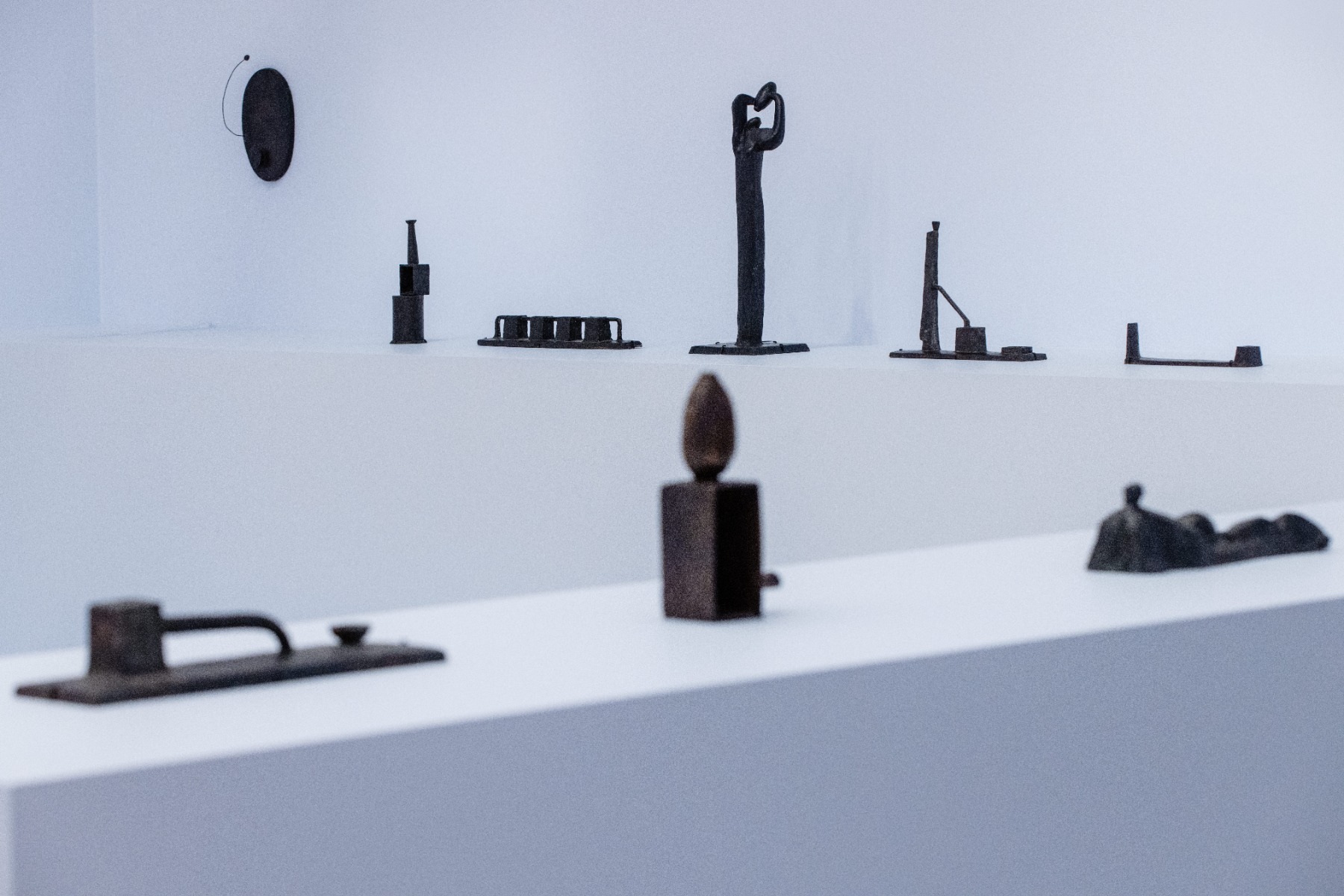
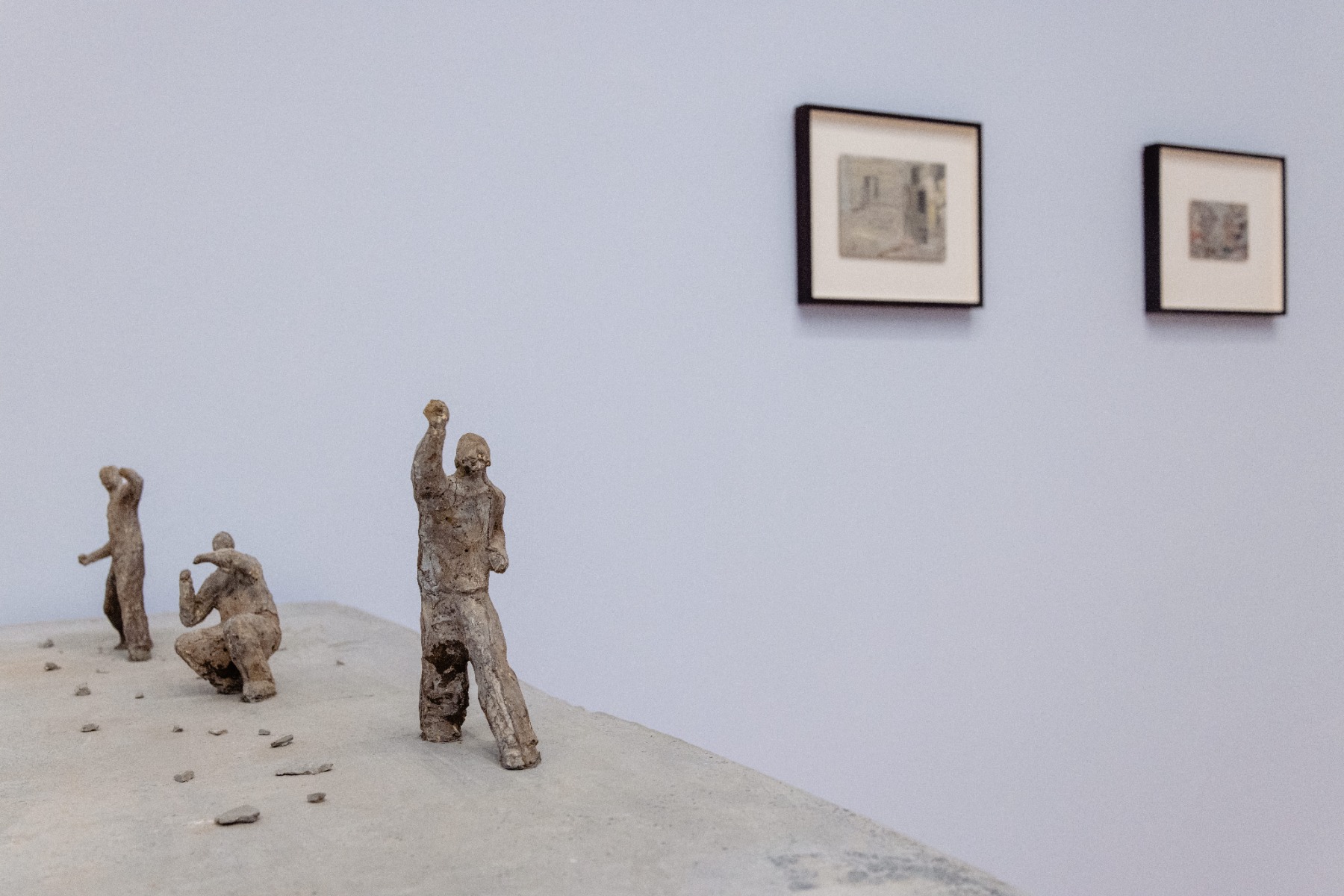
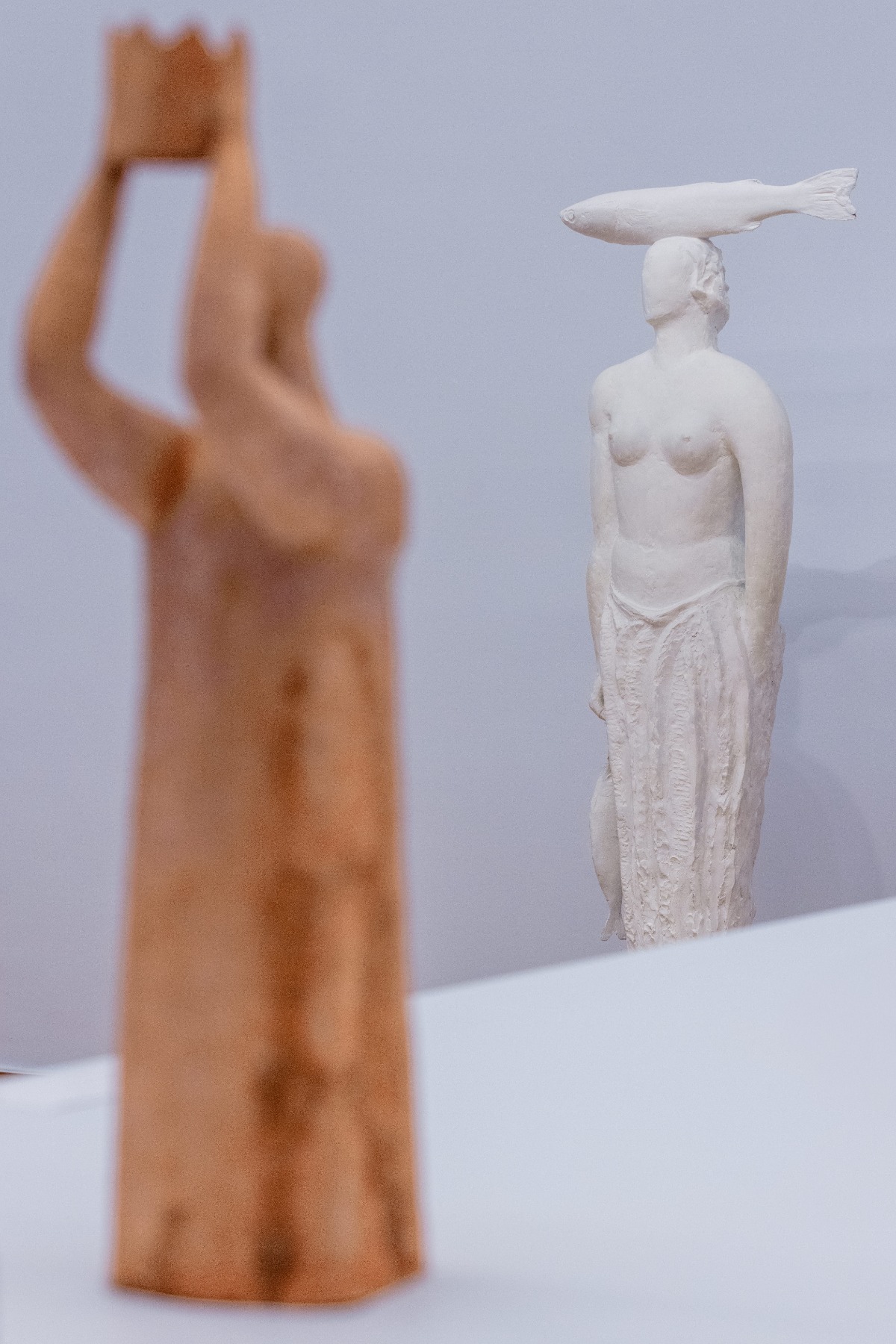
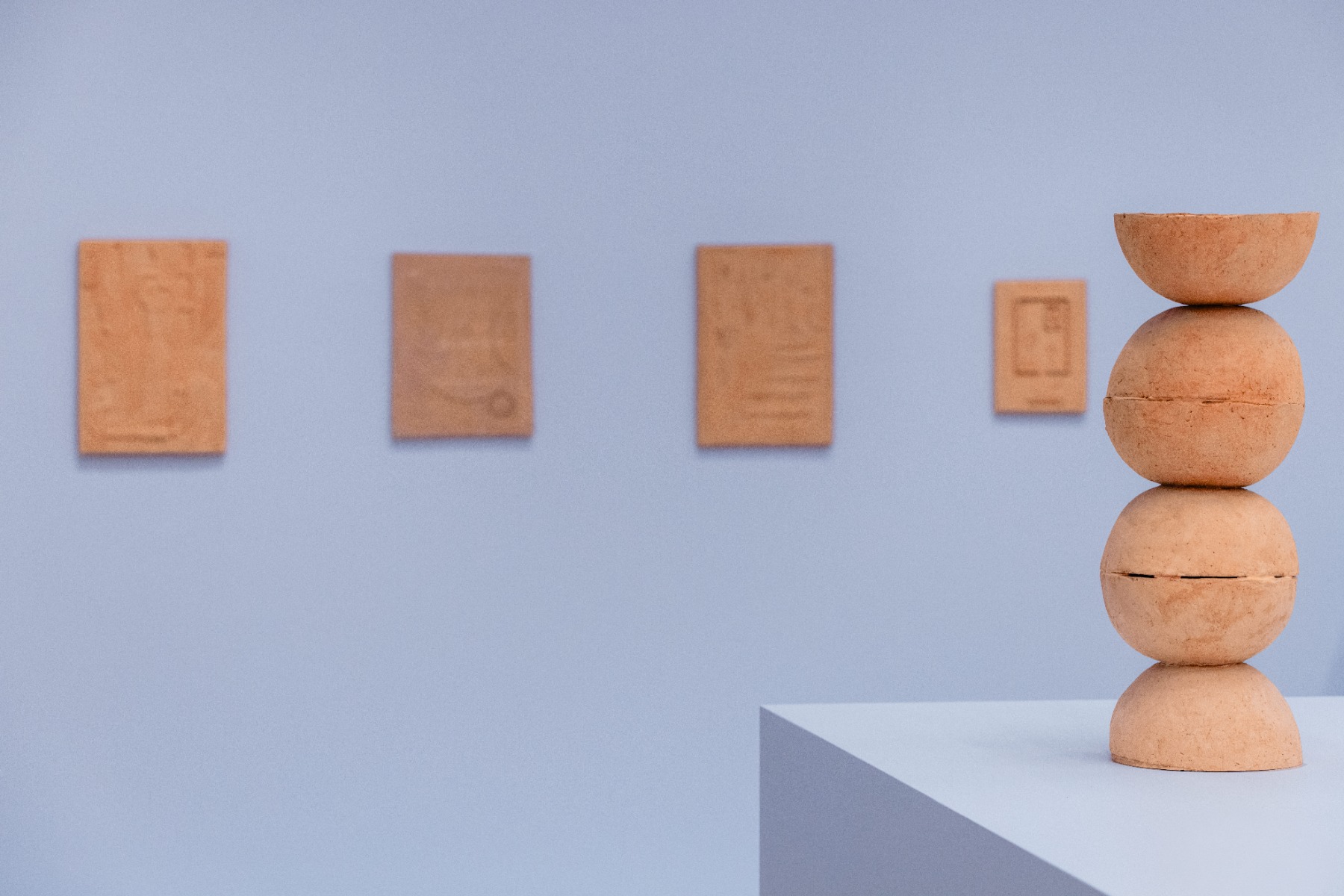
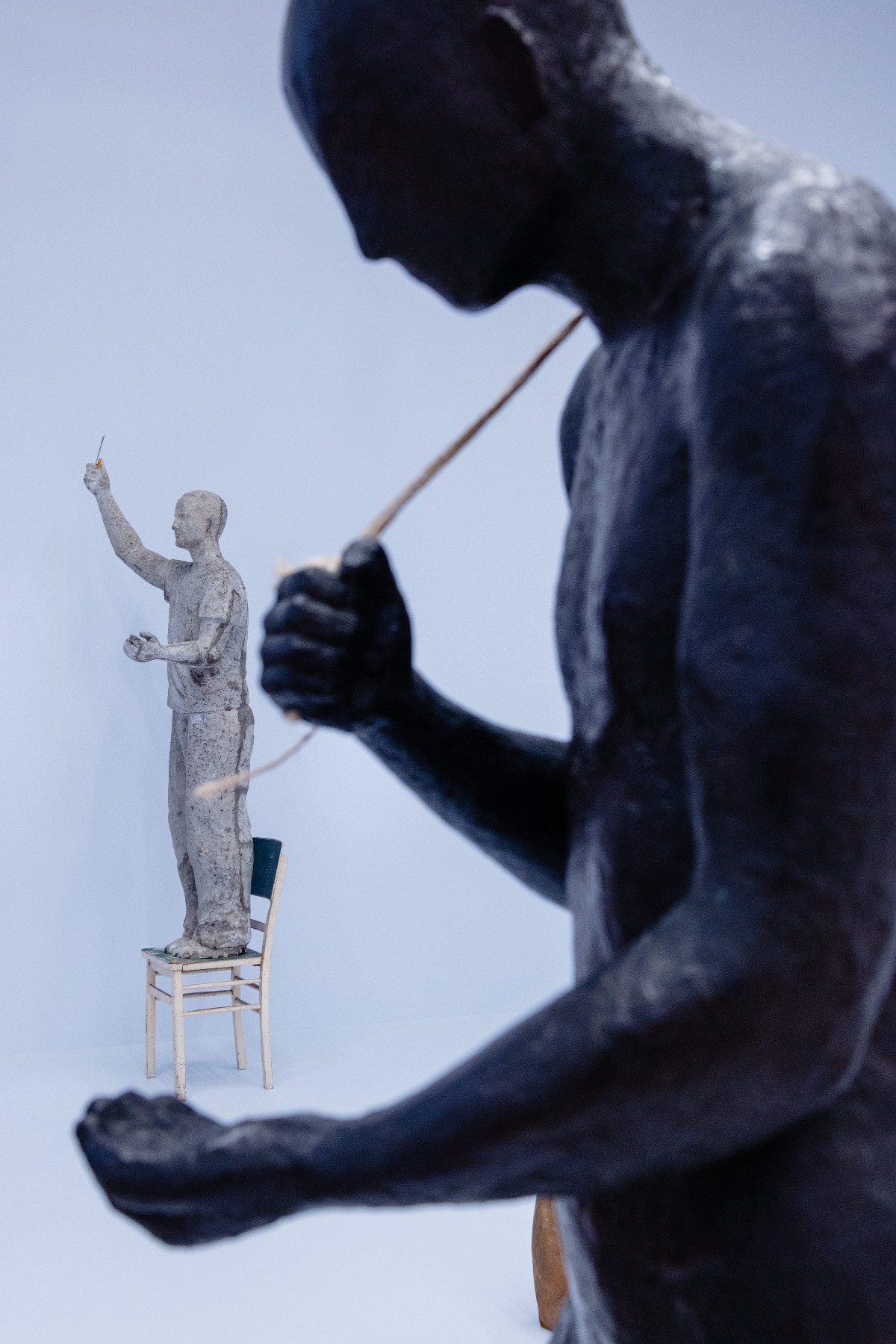
Exhibition views. “Philip Aguirre y Otegui. A Sanctury for art and soul” at KSMA . Photos: Sanne De Block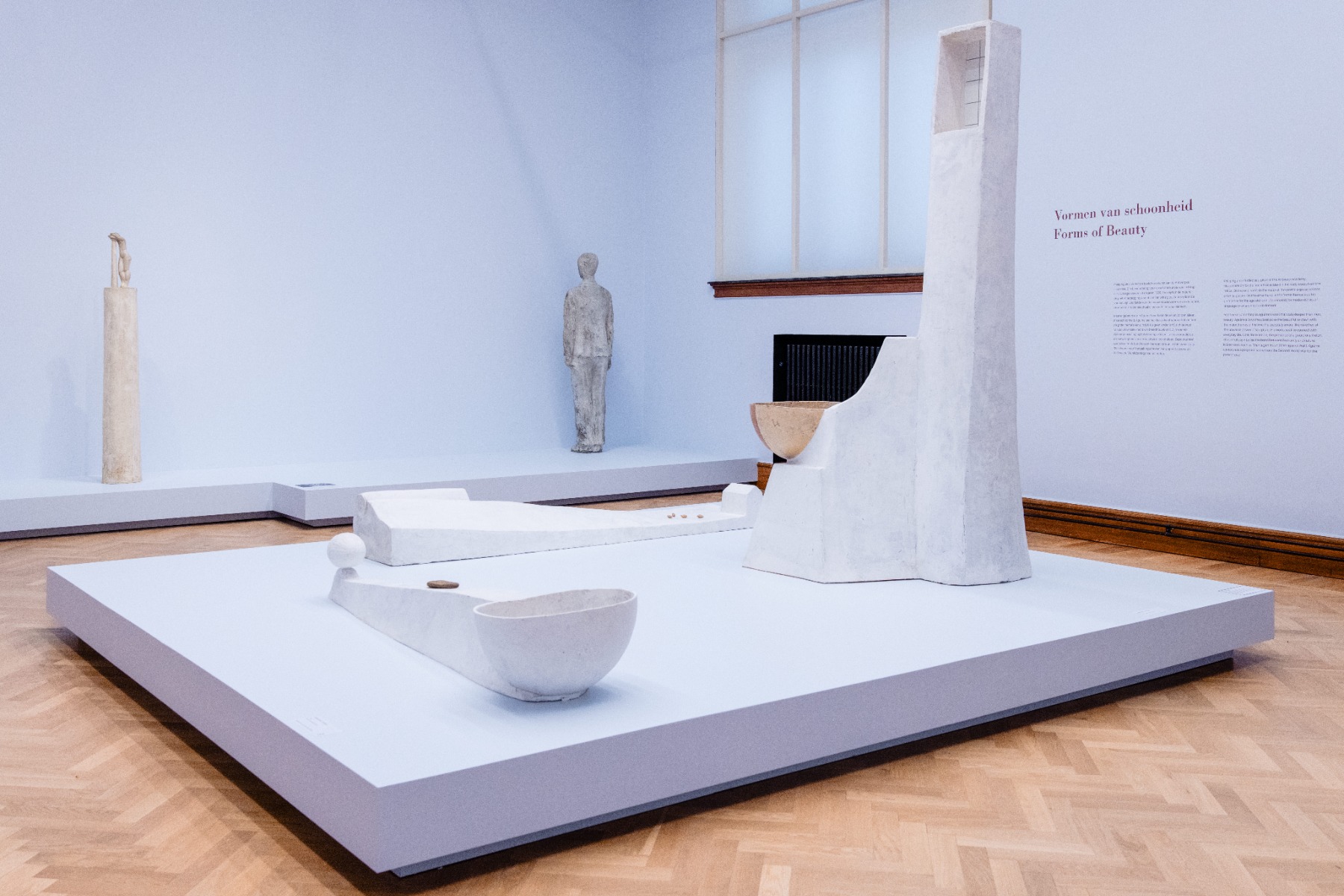
Aguirre’s work was part of the 61st Venice Art Biennale, In Minor Keys, curated by Koyo Kouoh, who passed away in 2025 before seeing her vision realised. Aguirre shared a longstanding professional and personal connection with Kouoh, rooted in Africa. With Kouoh’s support, Aguirre developed Gaalgui in 2008 for the 2009 Beaufort Triennial, working with traditional boat builders from M’Bour, Senegal, and the shelter presented in Venice grew out of its early sketches. A small bronze version bearing the same title, Gaalgui Shelter (2026), is now on view in the artist’s retrospective at KMSKA in Antwerp, and appears on the exhibition catalogue cover. Gaalgui Shelter is therefore not only a reflection on migration but also a continuation of a conversation that can no longer take place in person. It also brings together several concerns that have accompanied Aguirre throughout his career: the search for belonging, the vulnerability of the human body, and the need for shelter – both for ourselves and for others.
A Studio in Antwerp
One part of Aguirre’s studio occupies a glass-covered wing of the building, where he works on smaller sculptures, drawings and sketches. It is a place for trying things out, thinking, making mistakes and beginning again – a treasure trove of ideas. At the centre of the space stands a scale model of his exhibition layout at KMSKA. Aguirre says he likes physicality.
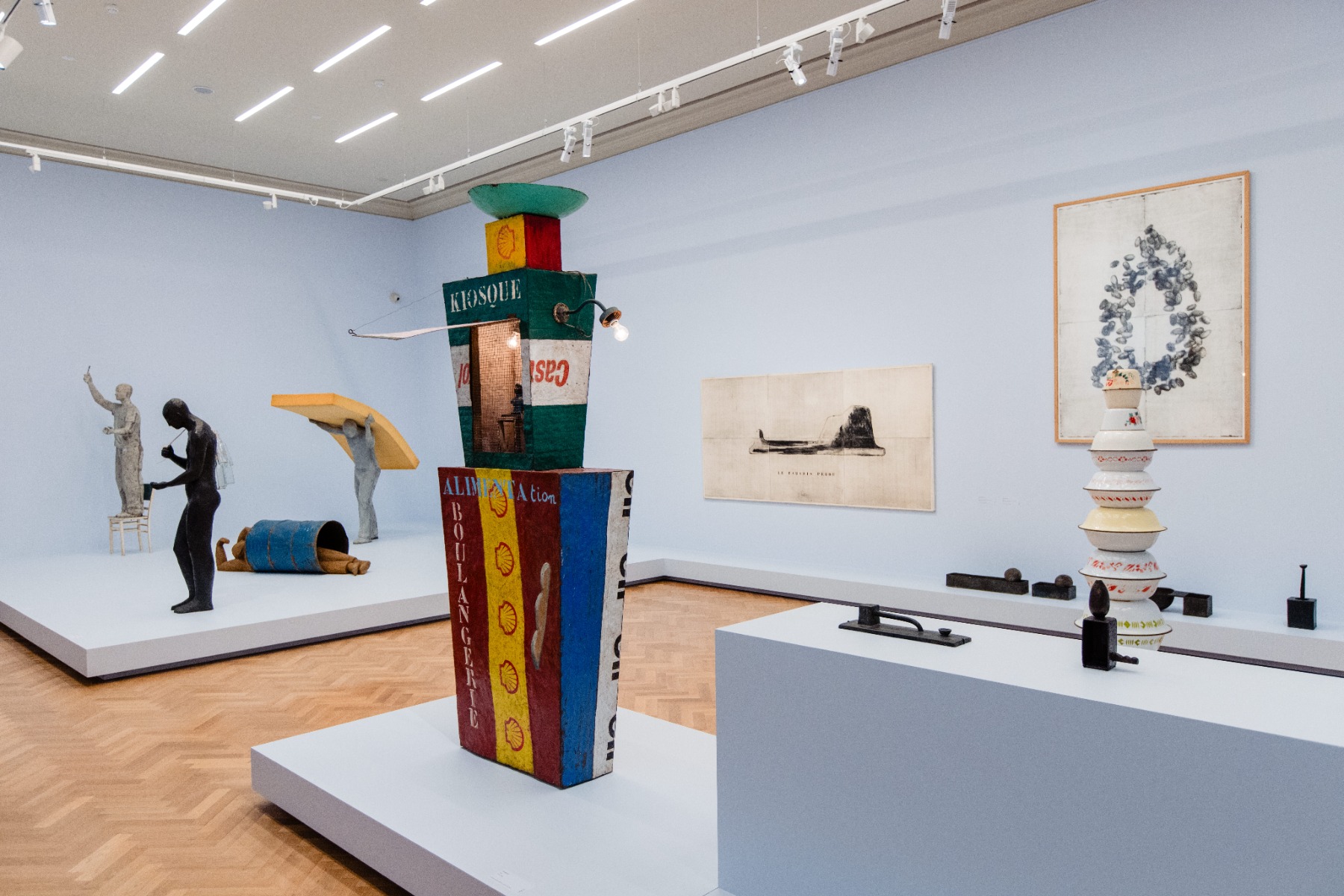
A little further away, in the atrium of a historic nineteenth-century building, is the workshop for his larger sculptures. Here, ideas take on another scale. Small sketches become substantial structures, life-size figures and monumental sculptures. Making them requires not only hands and imagination but also technical knowledge, and the help of other people. “I also made mistakes in enlarging pieces, and then you see it large, and you say, ‘No, that’s not right. I have to go back.’” Aguirre refers to Leonardo da Vinci’s ideas about the limits of the human body’s reach. As long as we work within those limits, we can control the process ourselves. Once we move beyond them, we need tools and the involvement of others.
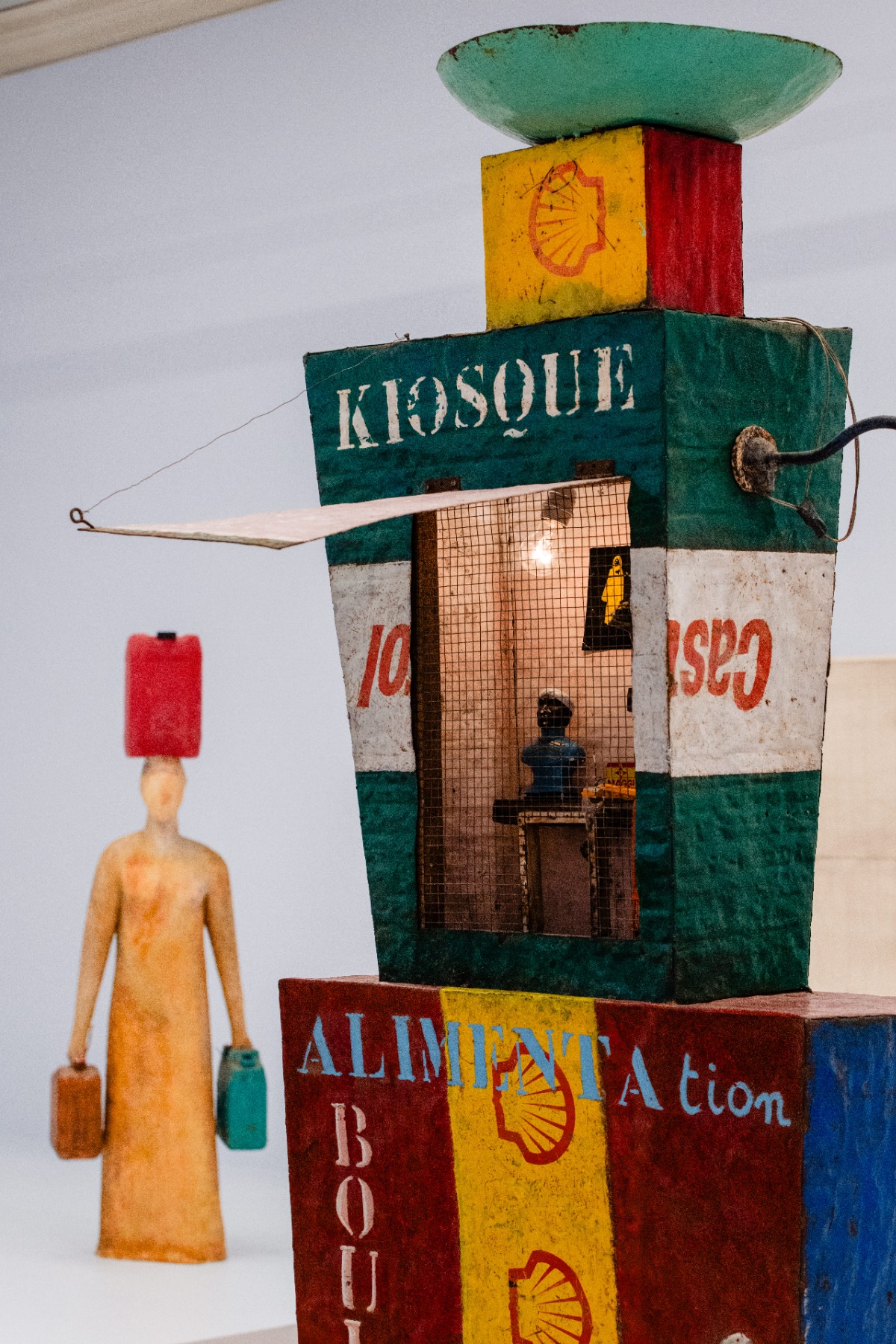
In the spacious atrium, this thought becomes almost physically tangible. Aguirre does not separate drawing from sculpture. For him, they are complementary parts of the same process. Among the works in the studio is Je vous offre une maison (I Offer You a House, 2018), a slender, almost archaic bronze figure holding out a small house in its extended arms. This simple gesture contains one of the central ideas of Aguirre’s art. A house is not presented as a possession to be guarded against others, but as something that can be shared. Shelter is not only something we seek for ourselves, but something we can offer another person.
Alongside the works in progress are found objects, materials and fragments brought back from different parts of the world. Some have come from Senegal, where Aguirre continues to return every year. They are not simply potential materials for future artworks. Each carries traces of its former use, its previous life and its own story.
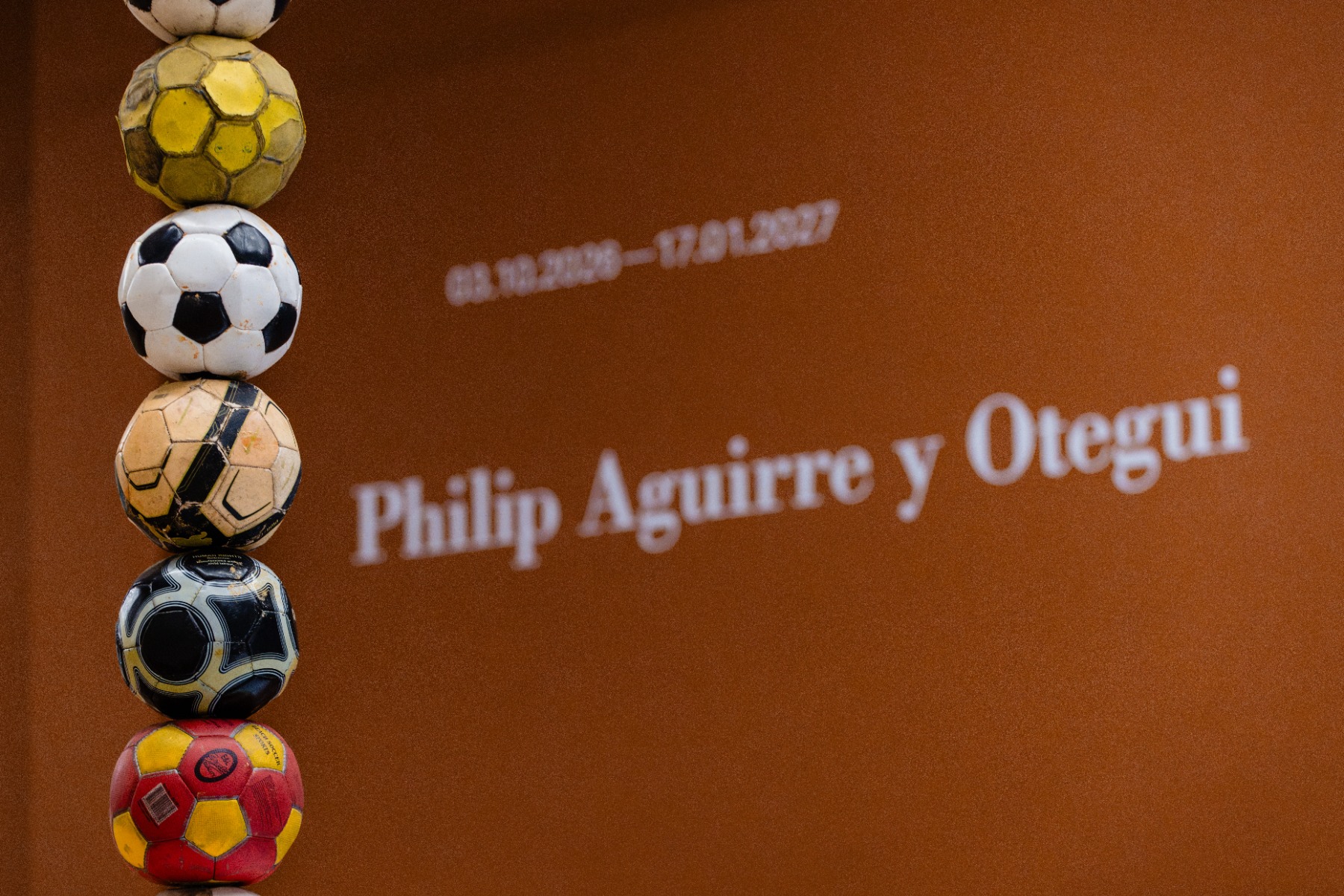
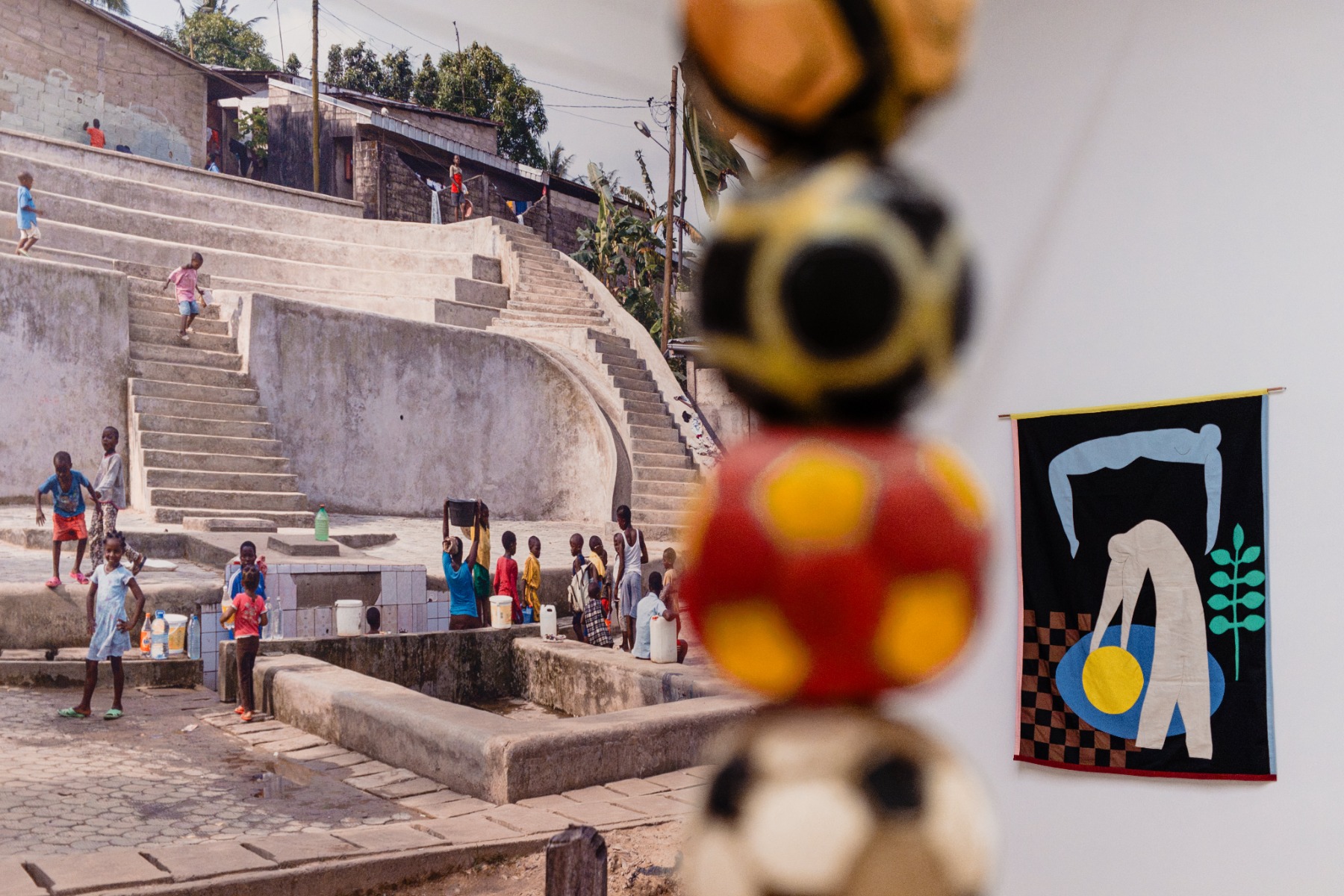
During the exhibition tour at KMSKA, Aguirre talks about abandoned footballs he has collected around the world. When a ball breaks and can no longer be used, children leave it in the street. He is drawn to the texture and colours of the worn leather, but also to the feeling that these objects retain something of their former lives. “These are objects used by children, and so they have a spirit, they have a soul, they have a history,” he says, referring also to animism. Fifteen footballs now form his work Tour du Monde (Tower of the World, 2019). Rather than imposing his intentions on a material, he tries to listen to what is already there.
© Philip Aguirre y Otegui, Tour du Monde, foto © Koen de Waal, Collectie Roger Szmulewicz. & Arpaïs Du Bois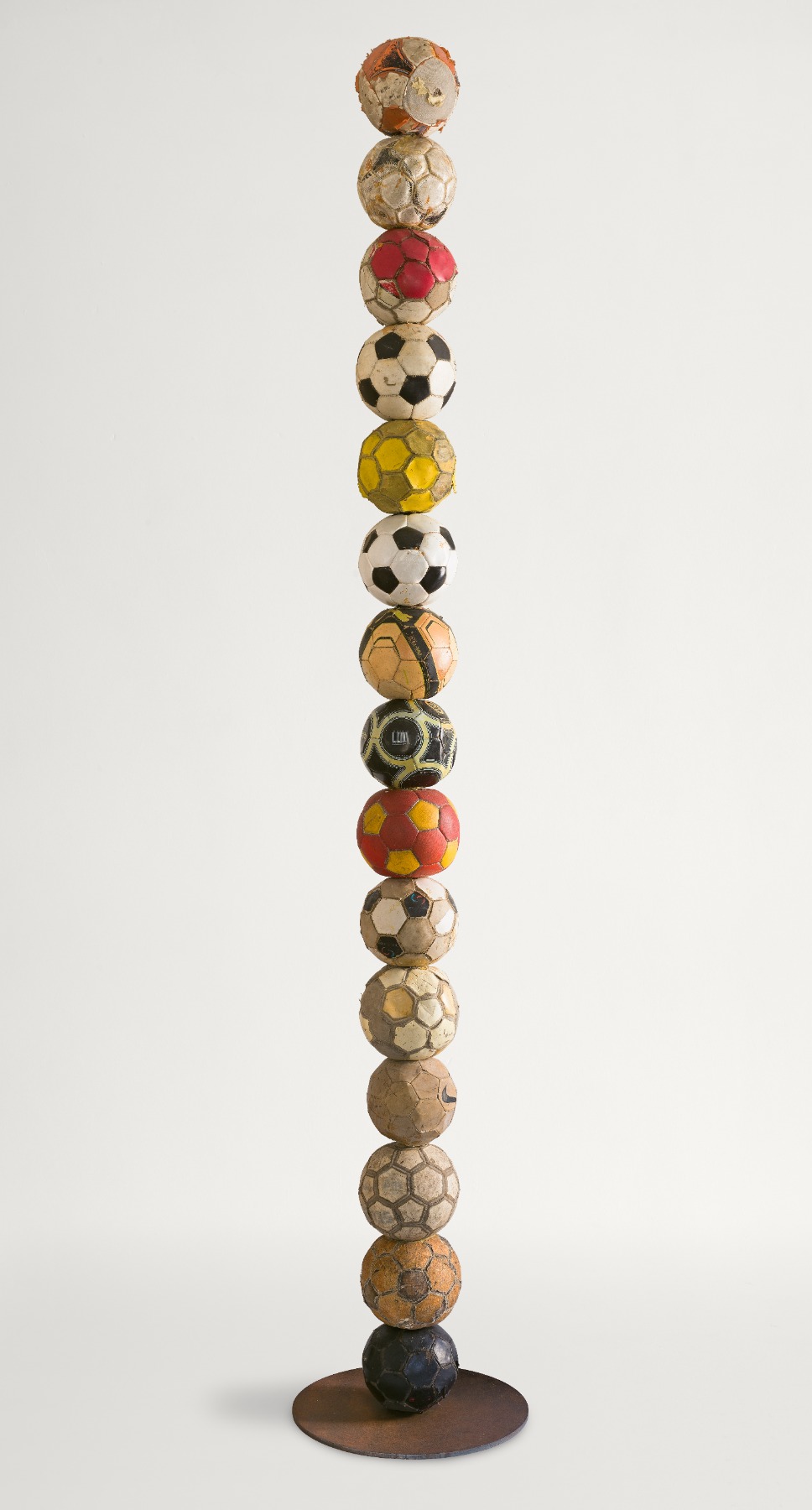
Returning to Dakar
Senegal entered Aguirre’s life in the 1990s, when a non-governmental organisation invited him to work with artists in Dakar. The journey led to lasting friendships and professional relationships. Since then, he has returned to Senegal or Cameroon almost every year, and Africa has become an integral part of his artistic thinking. This connection is not simply a search for unfamiliar visual impressions. It is rooted in relationships with people, shared work and years of returning. “I worked with a tailor who was working in the street, but I met him and we became friends. And I started to give him drawings, and he works it out in a patchwork,” Aguirre recalls. The collaboration has continued for several years. The colourful textile works it has produced are now also made for schools, hospitals and other public spaces. One of them is included in the KMSKA retrospective. Its vivid colours and simplified figures stand out beside Aguirre’s restrained sculptures, often made in earthy tones, yet both forms of expression share an interest in human beings and their place in the world.
In another project, art became a practical contribution to community life. In 2013, Aguirre created Théâtre Source, an architectural structure around a natural spring in Douala, Cameroon. In a neighbourhood where people had no running water in their homes, he made not only a functional place to collect water but also a kind of open-air theatre and meeting place. A large-scale photograph of the project now introduces his retrospective at KMSKA. The work is still in use. People continue to come for water, while the site has also become part of the neighbourhood’s social life. It is an important example of how Aguirre understands the possibilities of art. An artwork need not always be an object intended for display in a museum or acquisition by a collector. It can also be a place where people meet and go about their daily lives.
At the Royal Museum of Fine Arts Antwerp (KMSKA), Aguirre’s retrospective spans more than forty years of his artistic practice. Monumental sculptures, small figures, drawings, prints and textile works come together in an exhibition shaped by tensions between inside and outside, safety and danger, beauty and the cruelty of the world.
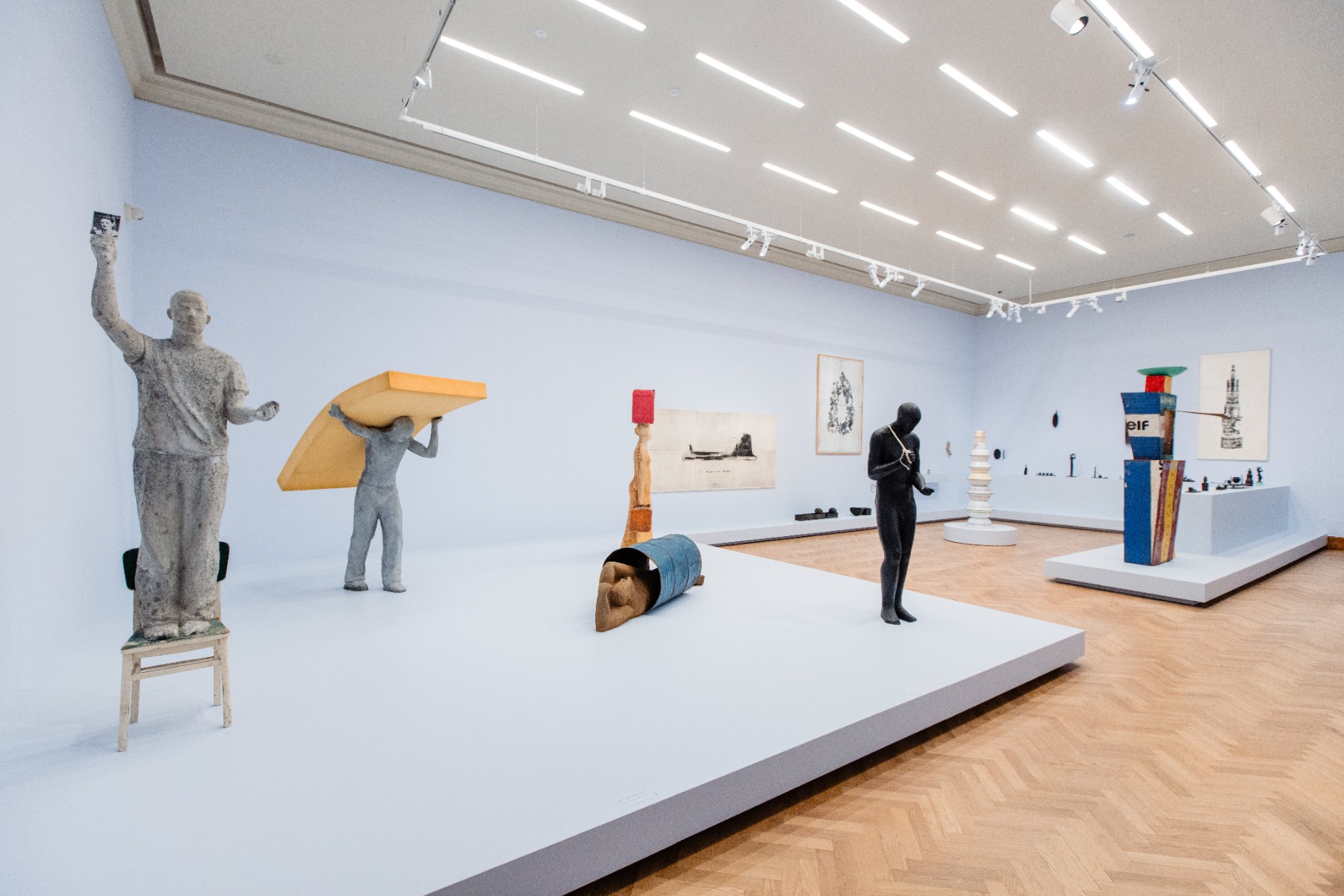
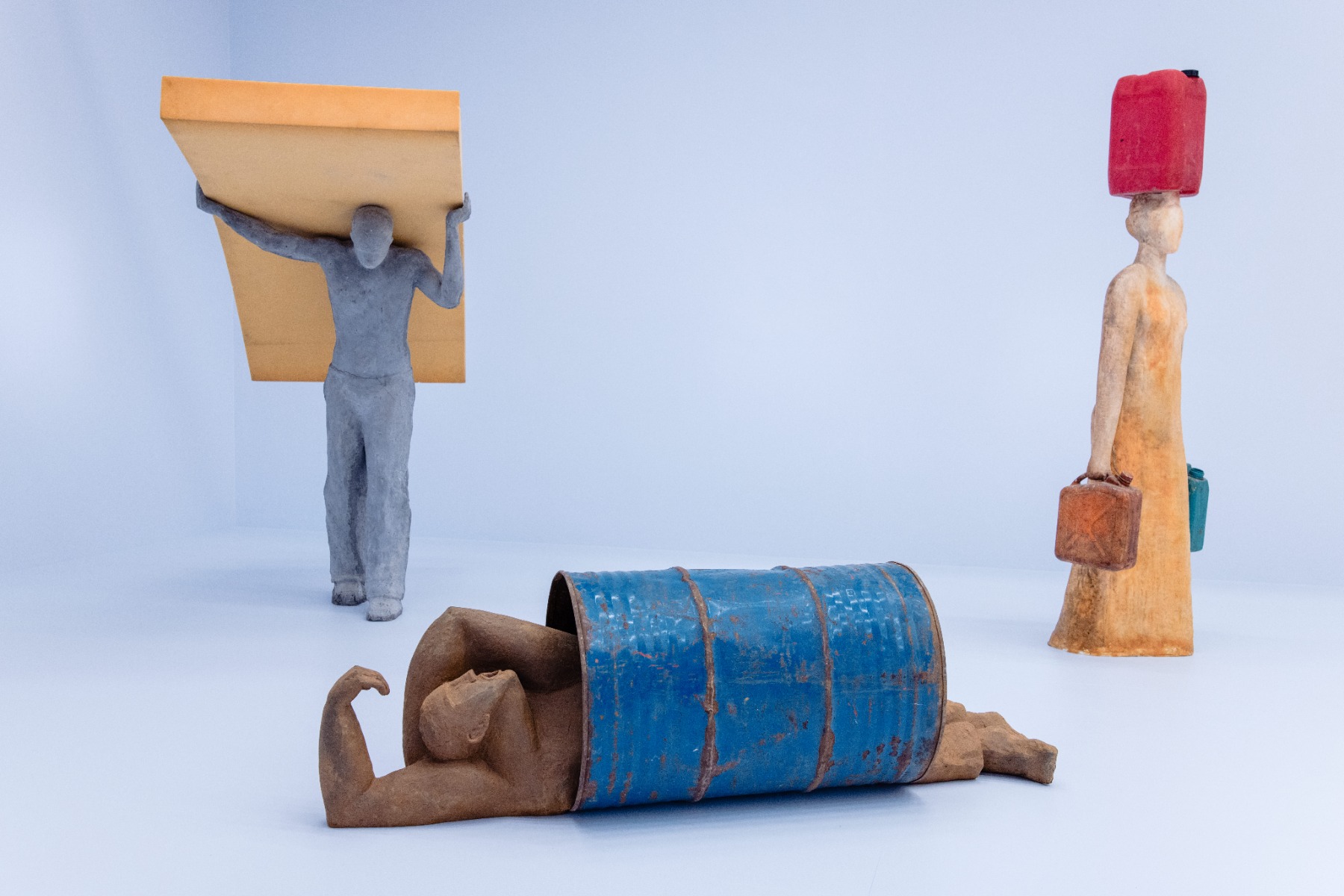
In Aguirre’s work, classical sculpture is never merely an aesthetic reference. Ancient figures, caryatids and heroes lose their conventional monumentality. His caryatid no longer supports a building but carries a wounded person. A hero may be mutilated, uncertain or exhausted. A man carrying a heavy mattress (Mattress Carrier, 2001), meanwhile, acquires something of the dignity of an ancient figure. The burden is heavy, but carrying it is his duty, and he simply gets on with it. We all carry things through life.
© Philip Aguirre y Otegui, Matrasdrager, 2001: Collection of the Flemish Community, on loan to Mu.ZEE Ostend. Photo © Koen de Waal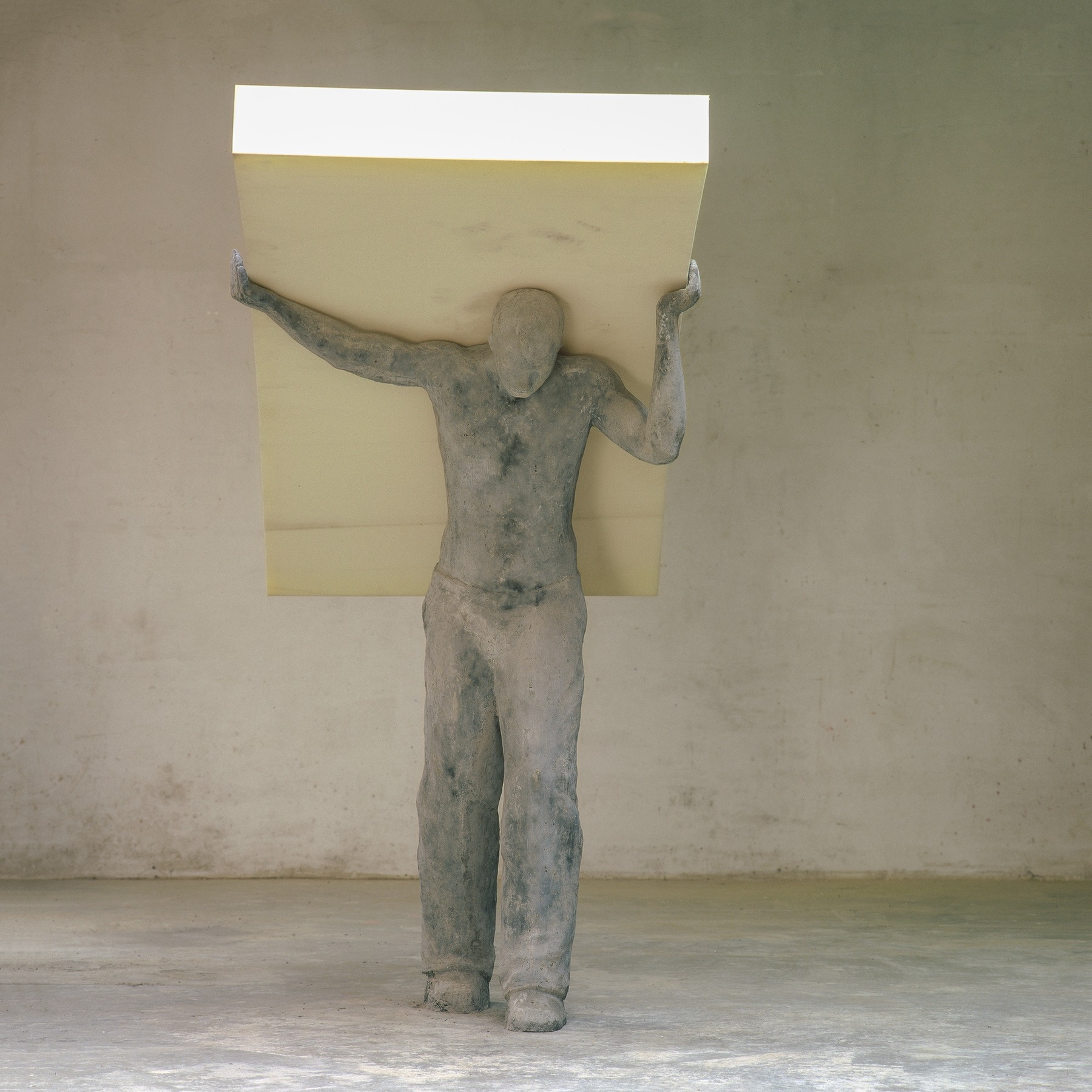
One of the exhibition’s most understated yet striking works is Polis (City, 2020). On an old oil barrel, Aguirre has placed a dense, stepped model of a city. In ancient Greek, polis referred not only to a city but also to a political community, while the oil barrel is an unmistakable symbol of modern economic and political power. The city, civilisation and the structures of our shared existence quite literally rest on fossil fuels. With this simple, almost ironic arrangement, Aguirre draws attention to the dependencies and contradictions of the world we inhabit.
Facing the Wall
A particularly striking example of how Aguirre transforms historical experience into sculptural form is Man tegen muur (Man Against Wall, 2000). The work is a 172-centimetre-high cement figure positioned facing a wall. It was inspired by a photograph taken at the Breendonk detention camp in Belgium. The black-and-white image, dated 13 June 1941, shows newly arrived prisoners waiting to be registered and issued clothing. The men stand apart from one another, facing the wall. There is something both ordinary and frightening about the positions of their bodies: they are waiting for something over which they have no control.
From this historical photograph, Aguirre has created a solitary standing figure. The man stands with his back to the viewer, as though he were still facing the wall. We cannot see his face or read his emotions directly. Yet it is precisely this restraint that gives the work its force. The historical event recorded in the photograph becomes, in the sculpture, a human condition: isolation, uncertainty, vulnerability. Aguirre does not attempt to reconstruct or illustrate violence. He takes one person from the historical image and allows him to stand before us. The sculpture’s near-life-size proportions make that presence almost physically tangible. There is something more disturbing about this silent figure than a direct depiction of tragedy.
Human vulnerability is central to Aguirre’s work, but it does not necessarily mean helplessness. It is something we share, regardless of our origins, circumstances or the times in which we live. The artist’s family history is significant here. During the Spanish Civil War, Aguirre’s father was forced to leave the Basque Country and seek refuge in Belgium. Displacement is not an abstract political subject for the artist; it belongs to his family’s memory. Yet his work avoids overt political declarations. Instead, he draws on particular historical experiences without confining their meaning to a single time or place. For Aguirre, beauty is neither a luxury nor a privilege. It is a human necessity. This belief runs through both his sculptures and his public-space projects. Beauty is not a way of turning away from reality or suffering, but a means of resisting them without losing our humanity.
Among Old Masters
KMSKA itself has undergone significant changes. Following an eleven-year renovation, it reopened to visitors in 2022. The historic nineteenth-century building has been complemented by a new contemporary architectural volume inserted into its former inner courtyards. The collection allows visitors to encounter both the Flemish Old Masters and a significant body of modern art. Yet the changes extend beyond architecture. KMSKA is increasingly bringing different periods of art history into conversation and seeking to become a lively cultural space, with performances, concerts, discussions and other events taking place alongside exhibitions. Next year will be particularly significant for the museum, marking the 450th anniversary of Peter Paul Rubens’s birth. An exhibition titled Rubens and the World is being prepared for the occasion, while the Studio Rubens restoration project gives visitors the opportunity to follow the research and conservation of artworks.
Alongside Aguirre’s retrospective, KMSKA is presenting Ossip Zadkine and Belgium (31 October, 2026 – 18 April, 2027), an exhibition devoted to the sculptor Ossip Zadkine (1888–1967). The idea came to curator Véronique Van Passel shortly after the museum reopened in 2022. Looking more closely at the nine works by Zadkine in the KMSKA collection, she became interested in the artist’s surprisingly important ties to Belgium, particularly Antwerp – a chapter of his career that had received little attention. Four years of research followed. The resulting exhibition reveals the role Belgian collectors, galleries and fellow artists played in the development of a sculptor who would later become one of the leading figures of twentieth-century modernism.
Zadkine’s expressive, often fragmented forms and Aguirre’s vulnerable heroes belong to different periods, yet both artists are interested in the human figure as a bearer of emotional and historical experience. Aguirre speaks openly about his predecessors. Among the artists who influenced him are Aristide Maillol, Henri Laurens, Alberto Giacometti, Arturo Martini and other modernist masters. He does not believe that artists need to reject tradition in order to make something new.
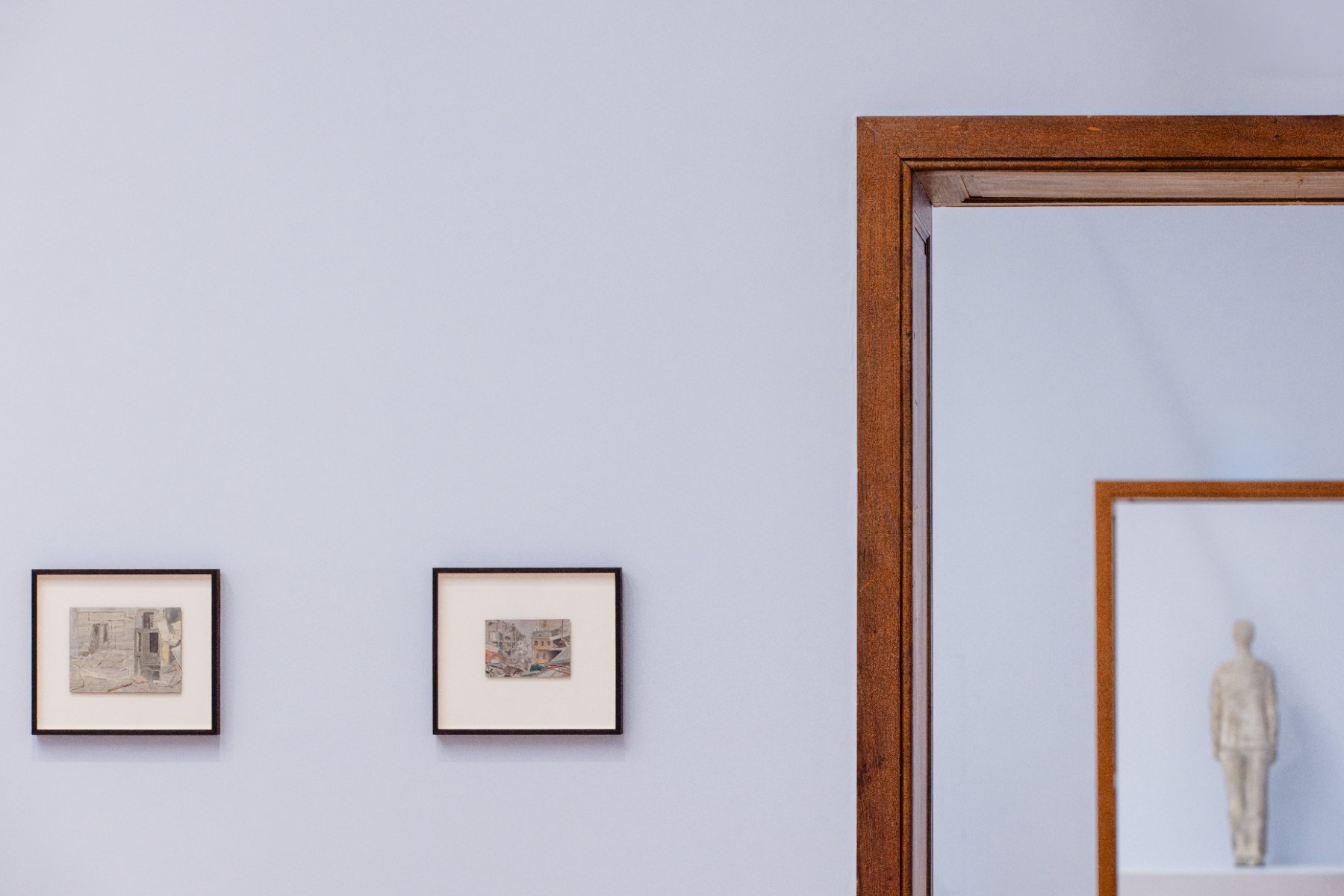
During the exhibition tour, he recalls visiting museums as a child and the impression James Ensor made on him. Now his own work is shown alongside artists he once admired. “Ensor was for me, even as a kid, already a hero,” he says. “So I’m now very touched that I can show my work next to Ensor and Alechinsky.”
Aguirre also recalls Henri Matisse’s book Jazz and the advice it offered young artists: to study the whole history of art rather than looking only at the most prominent figures of their own generation.
“You have to know all history to find yourself. Don’t look at the generation that now has the power or is famous. You have to go through all the history to discover yourself,” he says, paraphrasing Matisse.
There is beauty in Aguirre’s art, but little comfort in the conventional sense. His figures are often vulnerable, sometimes wounded, yet they retain their dignity. Even when his work addresses violence or loss, it leaves room for tenderness and for the possibility of helping another person. In an earlier interview, Aguirre said: “I don’t think art can directly influence public opinion. Art, however, can make individuals think, touch them emotionally, and comfort them. And art can certainly bear witness as well.” Perhaps this is why I keep returning to the image of the blue shelter in Venice’s Arsenale. It does not promise protection from every storm. It offers a place to rest before setting out again.
***
“Philip Aguirre y Otegui. A Sanctury for art and soul” is on view at KMSKA from 3 October, 2026 till 17 January, 2027
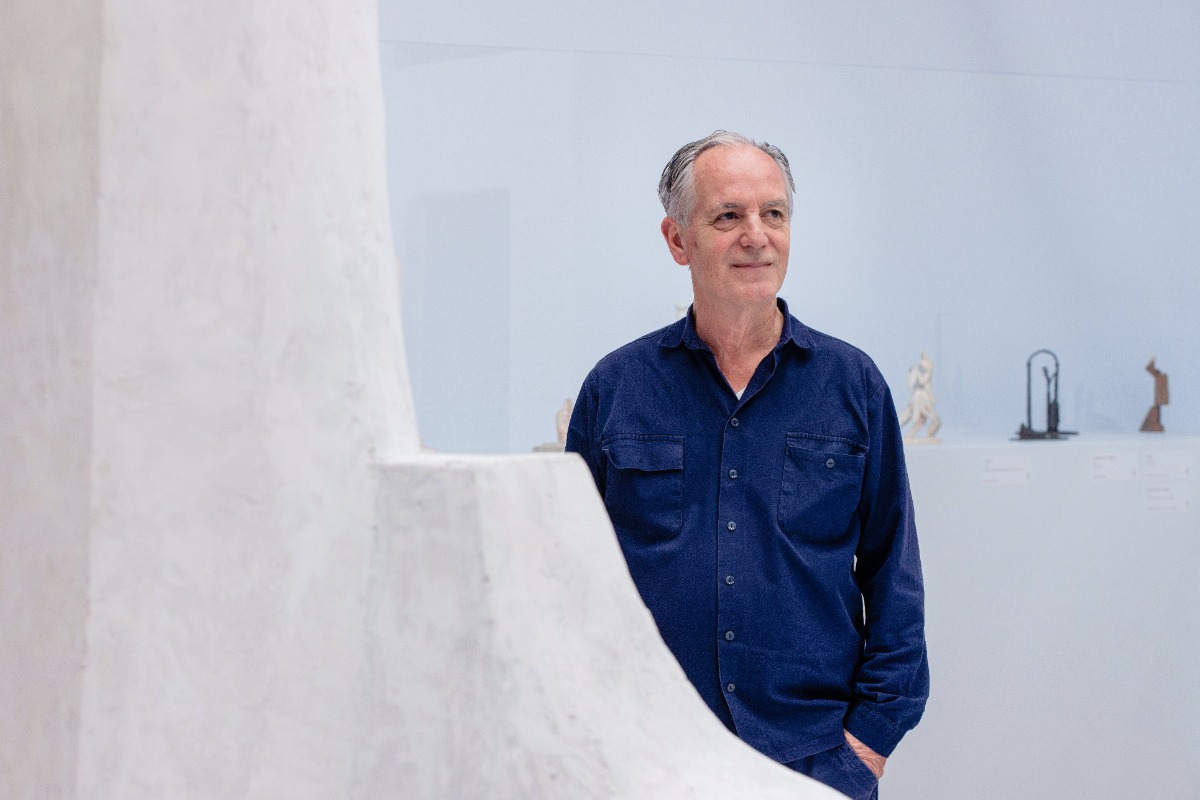
Title image: Philip Aguirre. Photo: © Sanne De Block
