


The second MUNCH Triennale in Olso
The MUNCH Triennale 2025 is an invitation to suspend current realities and imagine differently
As in the previous edition of the MUNCH Triennale, the machine is us (2022), this year’s overall theme centres on art and new technologies. The title of the 2025 edition, Almost Unreal, refers to a current moment in which the division between the real and the unreal is becoming increasingly fluid. The exhibition responds to the contradiction between recent technological developments that enable the creation of simulated, augmented and enhanced realities and their high cost to the climate, interpersonal relations, and human imagination.
The 2025 Triennale includes new commissions and existing works by 26 Norway-based and international artists, spanning video and film, hologram, video games, textiles, and installation. The artists span different generations and geographies, but their interests, concerns, and frames of reference overlap. Some appropriate and hack existing technologies such as music boxes, holograms and looms. Others use advanced gaming engines and machine learning software. The artists often subvert the intended use of technologies, turning them into tools for worldbuilding.
© Ann Lislegaard, The Mind is a Muscle, Trio A
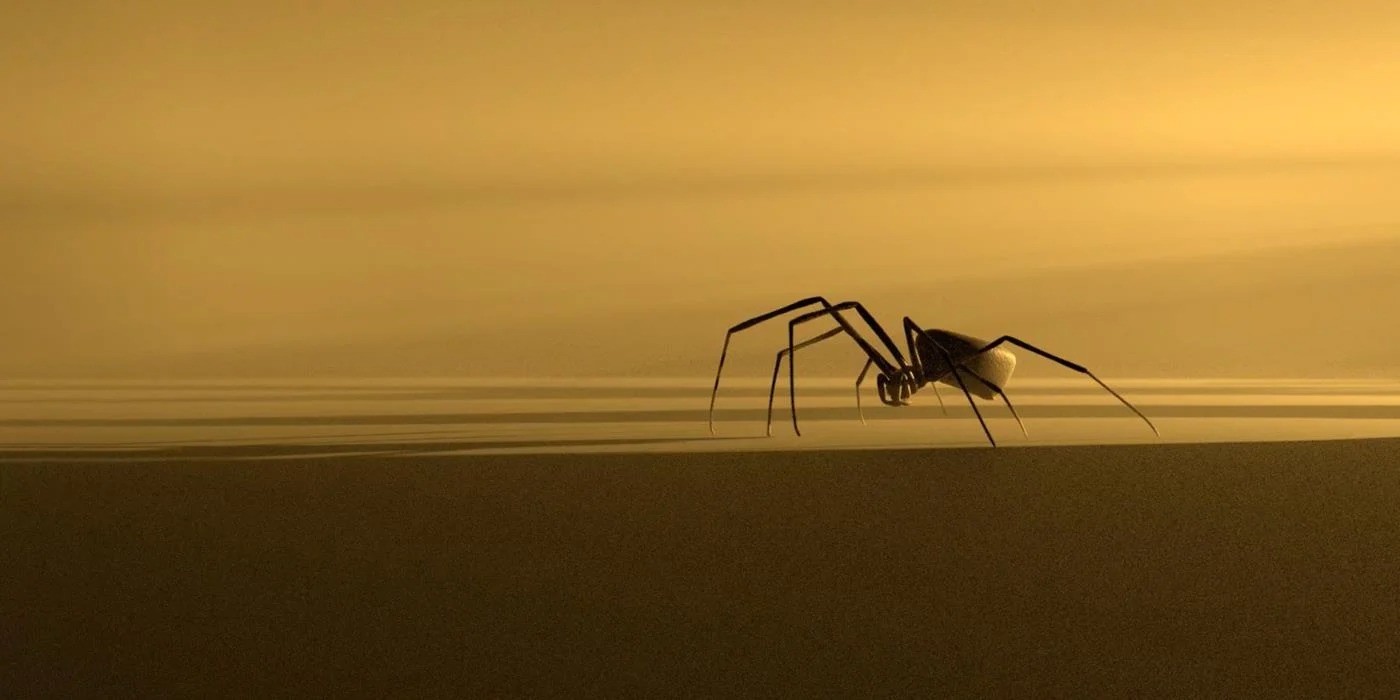
Over half of the works in the exhibition are new commissions, which are juxtaposed with existing works from the 1970s to the present day. The exhibition opens with Simone Forti’s celebrated work Huddle (1975), a small-scale hologram which emerged from a collaboration with physicist Lloyd G. Cross, allowing her dance compositions to reappear without the performers’ presence. Serving as a touchstone for the exhibition, the hologram is described as an “old new technology” that offers a means to consider technology, presence and reality. Its origin in movement-based practices is something that resonates with a number of the works the exhibition, including Ann Lislegaard’s spider that performs sequences from Yvonne Rainer’s The Mind is a Muscle – Trio A (1966) in a post-apocalyptic landscape in which only insects have survived.
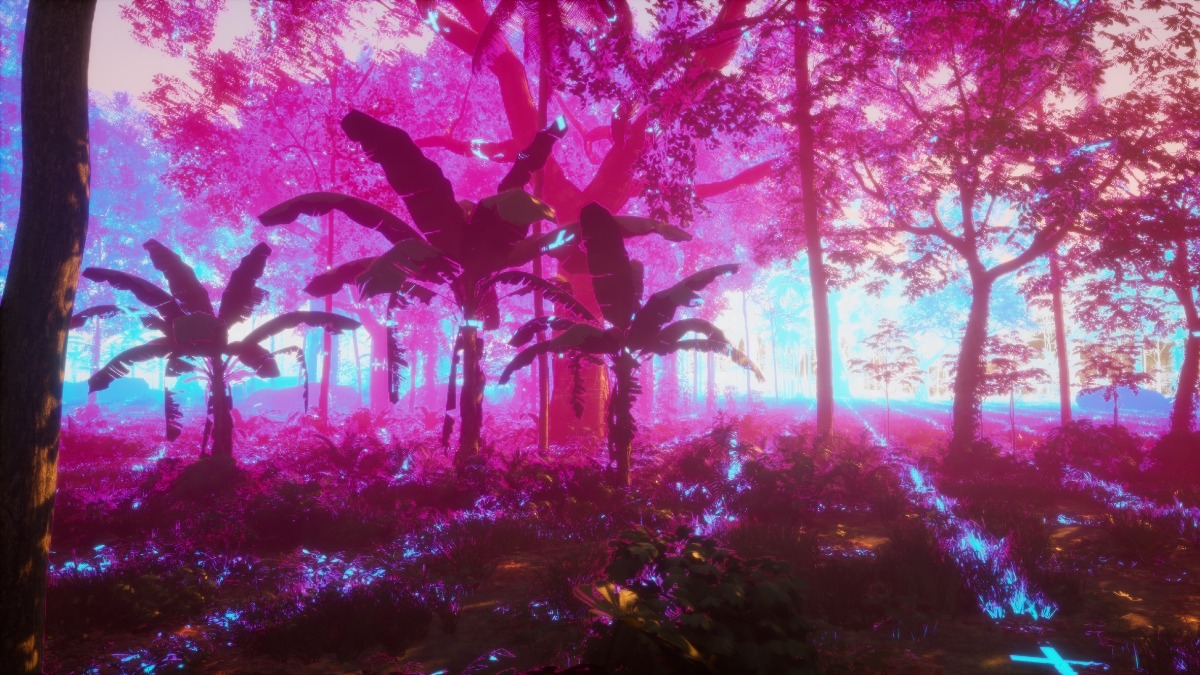
New works include Alice Bucknell’s Earth Engine, which upends the regular hierarchy of video games, casting the “Earth” as the primary player and the human visitor as a “Non-Player Character”. It also questions the limits of predictive technologies and how they foreclose other possible scenarios. Sahej Rahel’s gaming simulation Atithi (2025), which translates to “guest”, is an audio-responsive artificial intelligence which, like Bucknell’s, rebukes notions of technological intelligence and computational views of the world. Dreaming of alternative futures through worldbuilding in gaming environments is also central to Keiken’s ongoing work, Morphogenic Angels, and a new chapter is presented in the MUNCH Triennale, while Firas Shahedeh’s video breaks the script of contemporary video games, revealing deep links between gaming and colonial violence. Existing works such as Priyageetha Dia’s work Spectre System (2024) and Himali Singh Soin’s how to startle the unbelieving (2019) further drive this connection, focusing on the spectral presence of colonial exploitation.
Mazenett Quiroga, Motherboard-Motherearth. Courtesy of the artist
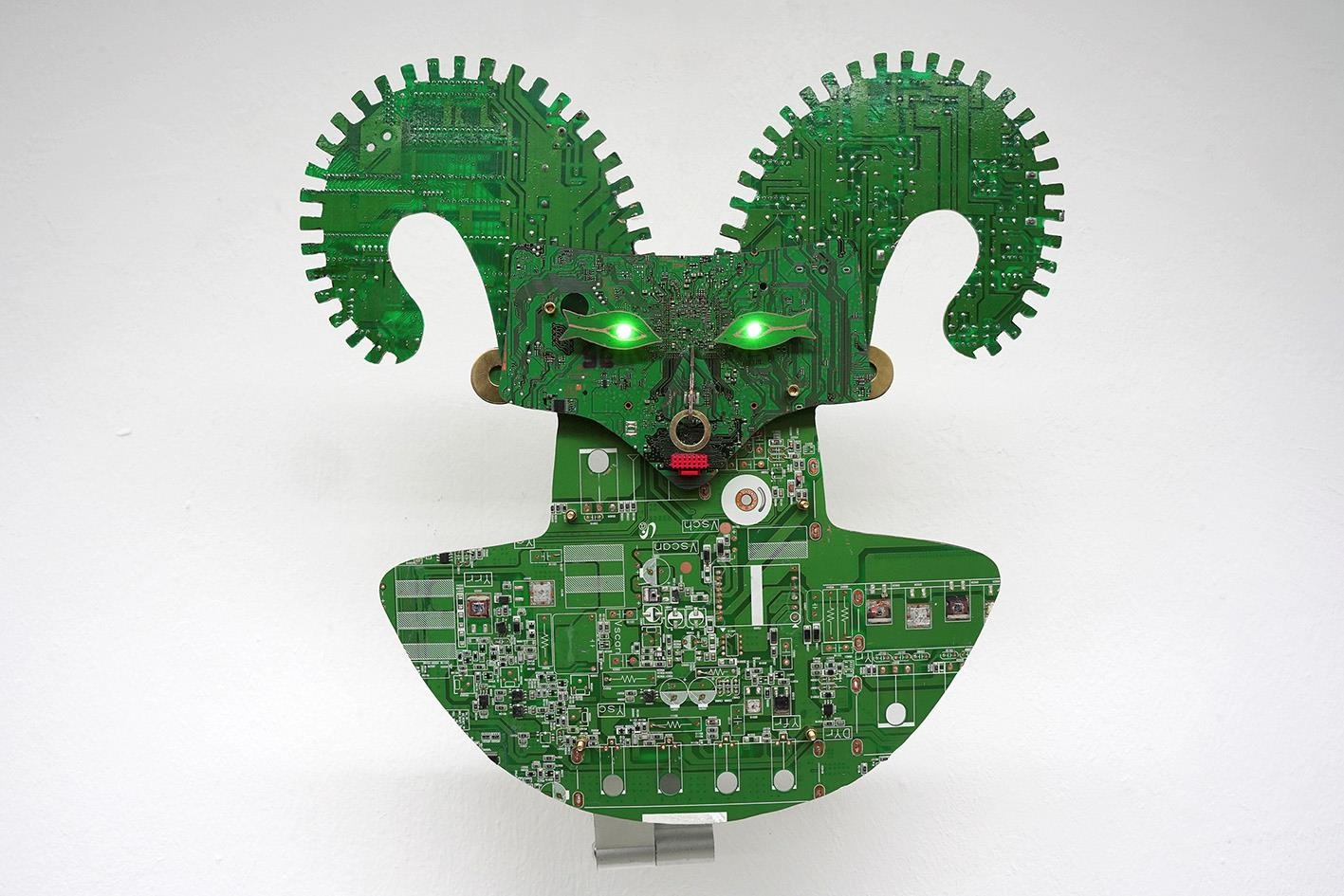
The MUNCH Triennale includes video works with a strong spatial presence, from Sara Sadik’s new speculative four-channel video 80 ZETREI Summit (2025) with its inflatable seating to Natasha Tontey’s new film Macho Mystic Meltdown (2025), and Infopsin’s new commission Patch Opal (2025), set within a large grid structure. Installations by Emilija Škarnulytė and Patricia Domìnguez draw on mythology and “spiritual technologies”, while the duo Mazenett Quiroga and Natalie Paneng both describe their installations as “archaeology of the future”. Icaro Zorbar’s installation The Pace of Time (2025) hacks existing technologies, such as the music box and mini-projectors. Sven Påhlsson’s virtual representation of a woodland scene in Finding Bambi (2023) is handmade as an act of digital craftsmanship.
Textile works by Charlotte Johansson, and digital jacquard weaving by Kristin Austi and Nanna Debois Buhl reflect the relationship between art, craft, and science in early digital art. Debois Buhl explicitly cites Johannesson’s early experiments with computers and weaving after acquiring an Apple II Plus in 1978, one of the first generation of so-called “personal computers”. For Johannesson, there was a clear link between the loom and the computer screen, which she described as “synchronicity”, and her woven images reflect the social and political dissent of the time. Four of her works are included in the MUNCH Triennale, including a digital slide show that welcomes visitors to the museum.
Together, the artists in Almost Unreal propose alternate and more equitable realities in a multitude of different forms.
“The MUNCH Triennale is a key part of MUNCH’s ambitious commitment to contemporary art and the fostering of new voices, and we’re delighted to present some of the most cutting-edge contemporary art – including works created specifically for our museum,” says MUNCH Director Tone Hansen.
“The past – real or imagined – is mindfully mined, and the slippages between the real and the unreal become an invitation to imagine differently” says co-curator Tominga O’Donnell, “it is essential at a time when we are facing, what Gayatri Chakravorty Spivak refers to as a crisis of imagination, and it is imperative to re-imagine the future.”
“The works on display traverse time scales, apocalypses, fantastical happenings, mythical realms, and mystical planes. The aim is to recognize that what feels unreal is not false but constructed and therefore open to reimagining. In the exhibition, “reality” is glitched, rewritten, and recast toward more plural and liveable worlds.” says co-curator Mariam Elnozahy.
MUNCH Triennale
15 November 2025–22 February 2026
Press Preview: 14 November 2025
Title image: Still from Alice Bucknell, Earth Engine (2025). Courtesy of the artist and MUNCH
