


The Imprint of the North
New exhibitions at the National Gallery of Art of the Lithuanian National Museum of Art invite to explore the links between landscapes and memory / Exhibitions will run through 8 February, 2026
On the 7th of November the National Gallery of Art of the Lithuanian National Museum of Art (LNMA) opens two new events, Shadows Leave Traces, an international exhibition on the memory and imagination of the Northen landscape, and Claudia Heinermann’s photography exhibit Siberian Exiles. Baltic Testimonies of Soviet Repression.
“Nowadays, we perceive the Northen countries as our close allies with whom we share memories and the determination to ward off common threats. This kinship emerges also in the new exhibitions at the National Gallery of Art of the LNMA, which incite to rethink our relationship with the memory and the landscapes that shape it. The exhibition Shadows Leave Traces enlightens the viewer on the culture of the Sámi, Norway and Finland. It evokes memories of the Lithuanian travellers led to the Arctic by their thirst of knowledge – and of the deportees torn apart from their homeland by force. The sufferings of our compatriots in Siberia are also the subject matter of Claudia Heinermann’s photographic narrative. Both events inspire to meditate on the power of memory in the nation’s struggle for survival, the ability to create and cherish its culture even under the most hostile conditions,” Dr Arūnas Gelūnas, director general of the LNMA invites to see the exhibitions.
Viktorija Daniliauskaitė, from the series Wooden Monuments , 1980, linocut on paper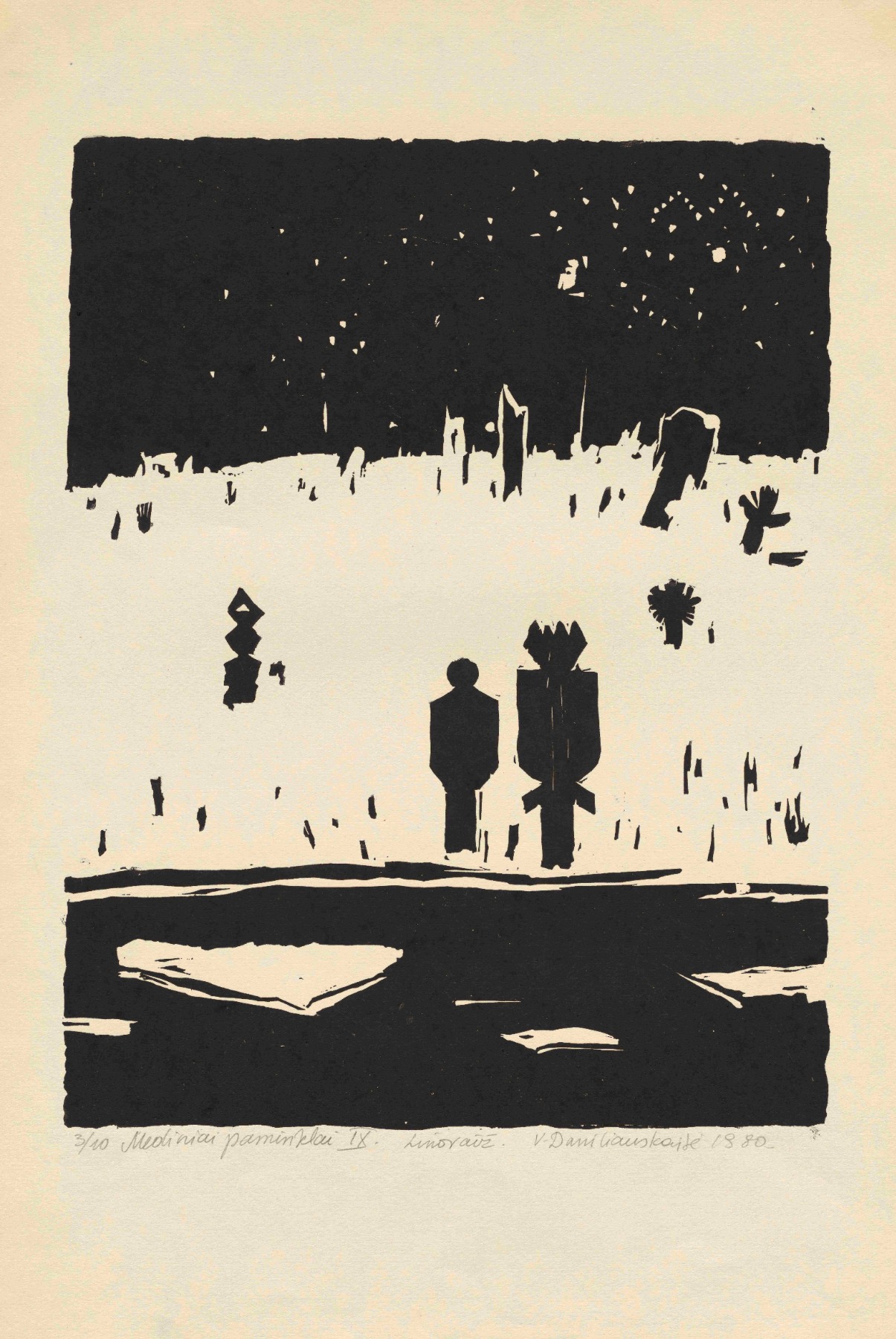
“A better understanding of the contemporary world depends also on a constant verification of our historical memory; we should engage in a critical dialogue with it, expand our field of vision and consider a variety of contexts. The parallels drawn between the Northen and Baltic experiences and visions at the exhibition opening at the National Gallery of Art is a unique opportunity to encounter some previously unseen artwork from contemporary artists and to revisit the legacy from the 20th century. It is a new step forward the artistic exchange takes in this region, and you are invited to become active witnesses of this process,” says Dr Lolita Jablonskienė, director of the National Gallery of Art.
Algimantas Julijonas Stankevičius-Stankus, Snowman and Buratino, 1965, oil on canvas, Lithuanian National Museum of Art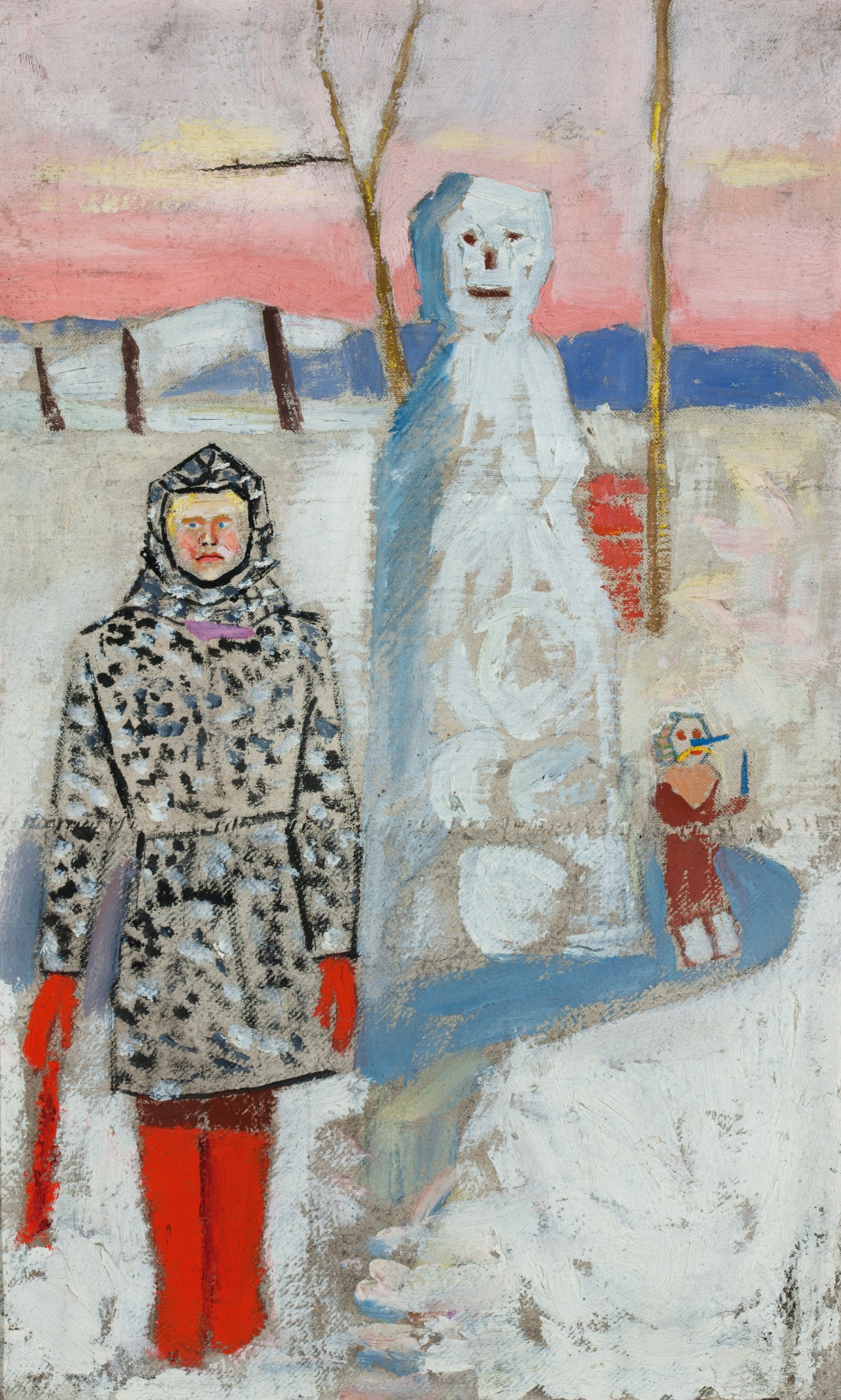
The traces of artists, naturalists, travellers and deportees in the Northern landscape
The exhibition Shadows Leave Traces invites to focus on the history and the present of the Northern, mostly Arctic, region. The exhibition sets the stage for the first-time exchange between the works of art, documentary and archival materials of the Lithuanian, Latvian and Estonian polar expeditions and the artwork by the Sámi, Finnish and Norwegian artists. Collectively, they present the image of the North as a place where the sense of home, cultural tensions and the preservation of identity are woven together.
“We hope that this dialogue in reflection on our links in the present-day context of postcolonialism, changing climate, and the geopolitical competition will enhance the relevance of our cultural ties with the Northern region,” Kotryna Markevičiūtė and Gabrielė Radzevičiūtė, co-curators of the exhibition, share their expectations.
The North has left a deep imprint on the culture of Lithuania and the entire Baltic region. Artists, travellers, naturalists, and thinkers have journeyed to the Arctic, driven by curiosity and a search for identity. At the same time, centuries of Russian imperialist policy involved the inhabitants of our region into the colonization of the North. Particularly painful are the testimonies of Soviet repressions – deportations, imprisonments, forced labour, and military service in the Far North.
Leonardas Kazokas, Narvik, 1936, oil on canvas, Lithuanian National Museum of Art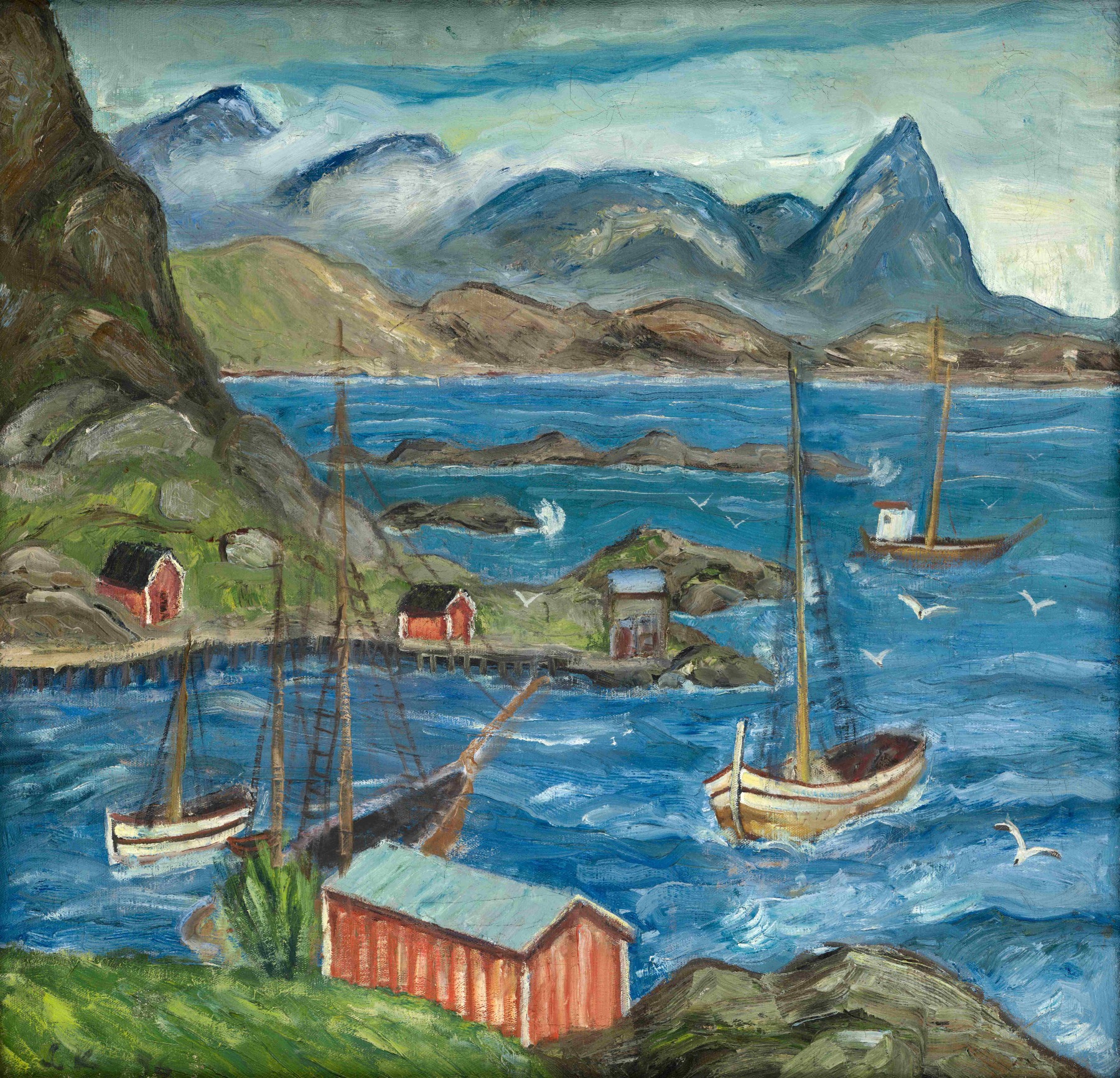
The exhibition features the artwork by 50 artists, among them, both, the classics and contemporary figures, such as Antanas Žmuidzinavičius, Kristjan Raud, Kalervo Palsa, Viktorija Daniliauskaitė, Juozas Kazlauskas, A K Dolven, Kaljo Põllu, Outi Pieski, Marja Helander, Ruth Maclennan to mention some of them. On display are also works created particularly for this event. Ignas Krunglevičius, contemporary Oslo-based artist, will present his video Surrogates. Taking inspiration from his mother’s memoirs of her childhood in deportation, he explores the non-linear ways of passing memories from generation to generation. The work has been shot in Lithuania and the Arctic of Norway. The Lithuanian artist Rūta Spelskytė will present her new sculpture piece inspired by her voyage to Svaldbard, the north-most Norwegian archipelago.
Claudia Heinermann. A scale model of Ground Zero at Semipalatinsk Nuclear Test Site Museum, Kurchatov, Kazakhstan, 2019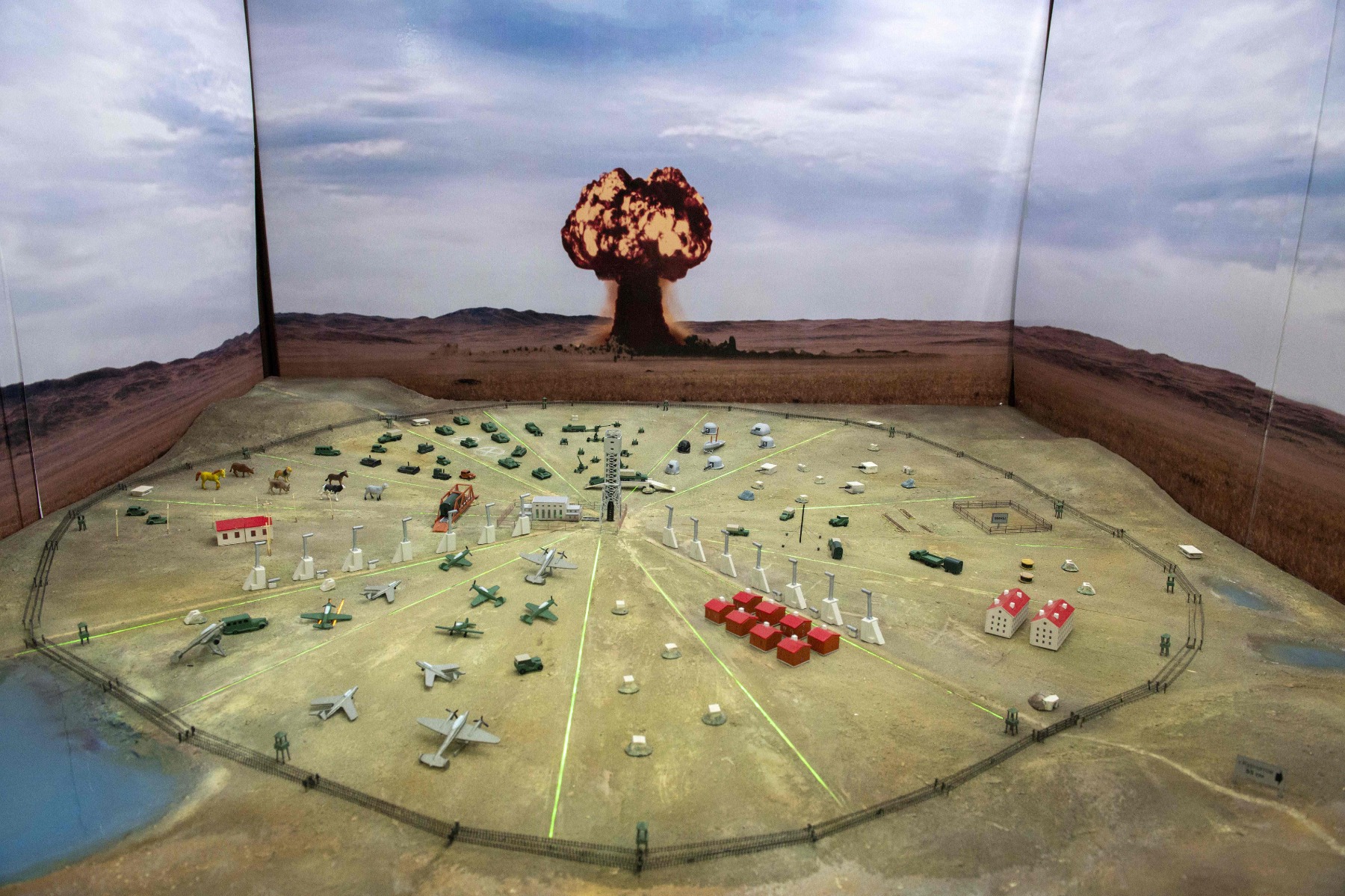
Photography exhibition as a testimony of the Baltic countries’ citizens of Soviet repression
Siberian Exiles, a concurrently opening exhibition by the artist of documentary photography Claudia Heinermann, tells the story of postwar exile of the Baltic citizens, tracing its identity shaping effect on the region. Germany-born, the Netherlands-based photographer explores the themes of military conflicts, genocides and their traumatising effect left on societies and individuals. She has been working for seven years on a photographic series – a narrative of the oppression of the Baltic countries under the Soviet Union. In the exhibition, eyewitnesses tell of the deportation of women and children, of the life in the Gulag camps, the organised resistance against the Soviet occupier, and the beginning of the Cold War. The artist herself had followed in the footsteps of the deported Balts through the former Soviet Union, and her resulting work merges the eyewitnesses’ photographic portraits and testimonials with pictures of everyday life, interiors, still lifes, and landscapes. The materials gathered from private photo albums and historical archives add deeper and enriching layers of memory to her pictorial narratives.
Claudia Heinermann. Frozen Lena River , Yakutia. 2018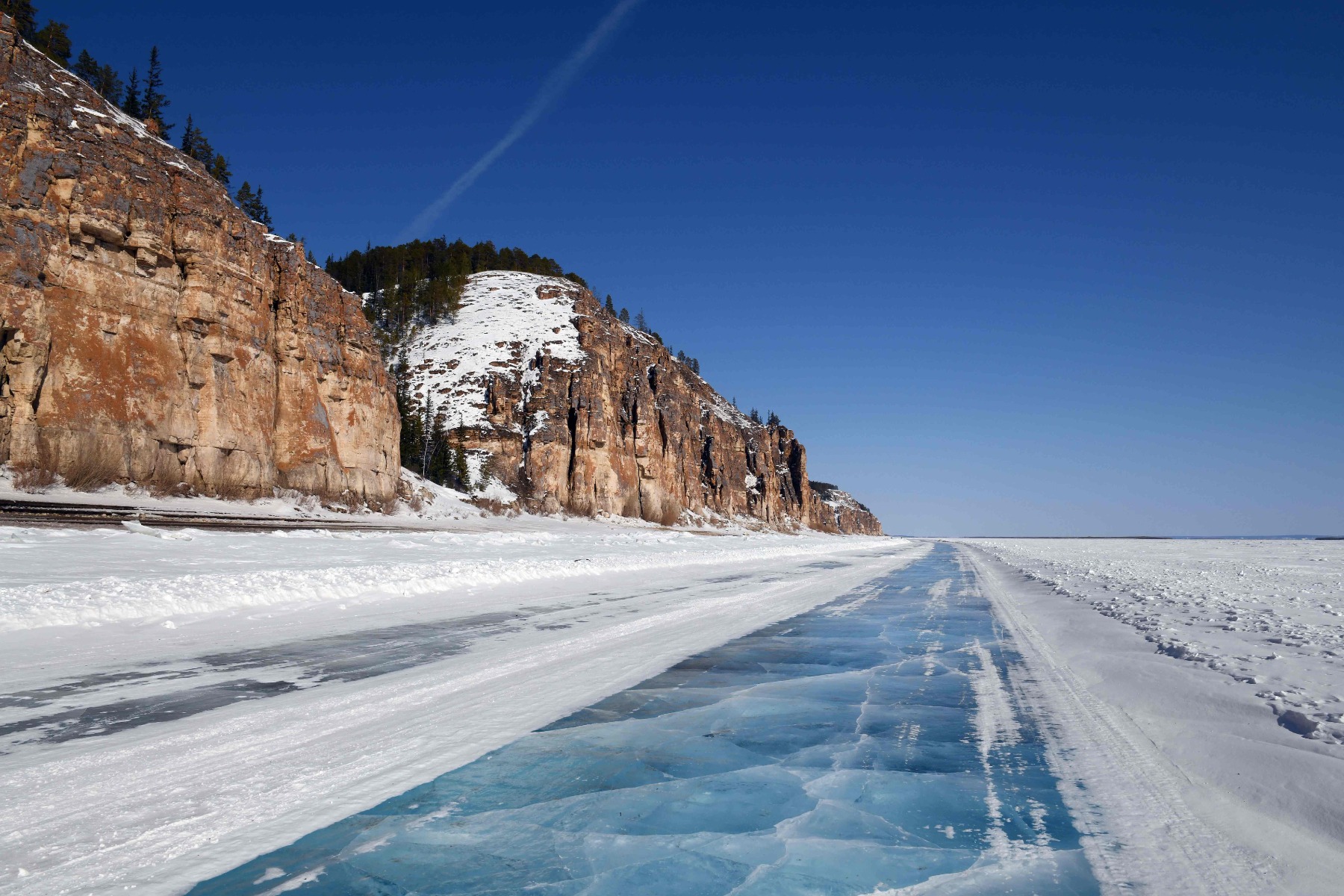
“No one has ever been convicted of the crimes against humanity the Soviets committed. This was openly discussed for the first time after the Soviet Union’s dissolution. However, in Putin’s russia, Stalin’s past is again being brushed under the carpet. That is why it is so important to me to preserve the stories which were hidden from us behind the Iron Curtain, in order to contribute to a correct historiography,” says the photographer.
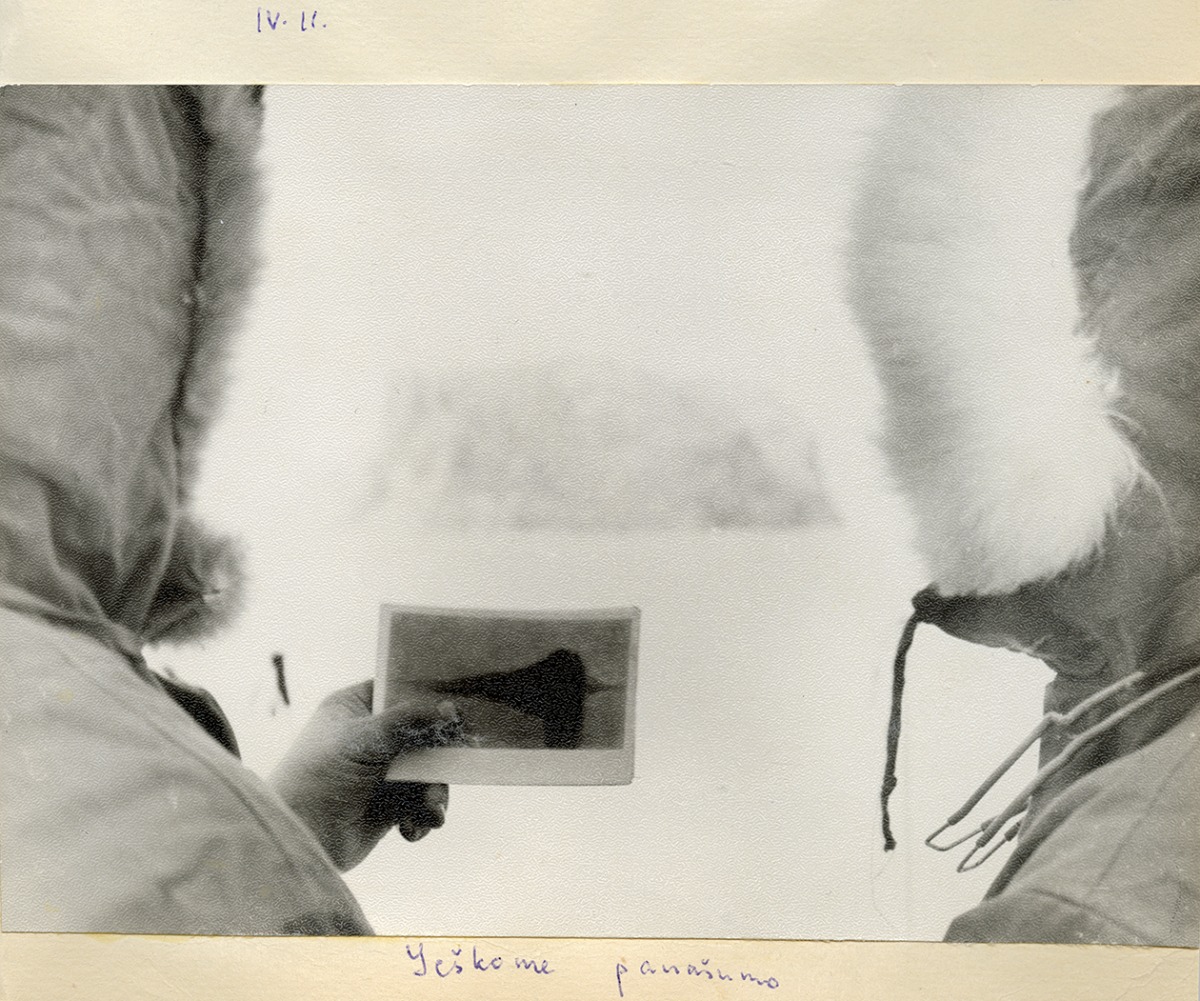
Title image: Diary fragment from the ski expedition to the Čiurlionis Mountains on Franz Josef Land led by Gražina Čižauskaitė-Jucienė. 1977. Courtesy of Gražina Čižauskaitė-Jucienė
