


Katrīna Levāne and Adam Gidlund – winners of the Nordic & Baltic Young Artist Award 2025
The winners of the Nordic & Baltic Young Artist Award 2025 have been announced, celebrating the most promising emerging artists from across the region. The laureates were decided on 7 November 2025 during the jury meeting at Academy of Fine Arts, Uniarts Helsinki, which gathered representatives from eight art academies across the Nordic–Baltic region along with additional invited experts in the field. The award, now marking its 10th anniversary, continues to serve as the largest and most significant contemporary art competition for recent graduates in Northern Europe – providing a platform for visibility, dialogue, and cross-academic collaboration.
This year’s competition included 154 emerging artists from five countries presenting 299 artworks.
For the first time in the award’s history, the Grand Prix was jointly awarded to Katrīna Levāne (Art Academy of Latvia) and Adam Gidlund (Umeå Academy of Fine Art, Umeå University), acknowledging their distinctive practices that push the boundaries of contemporary art through cross-media experimentation and conceptual approaches.
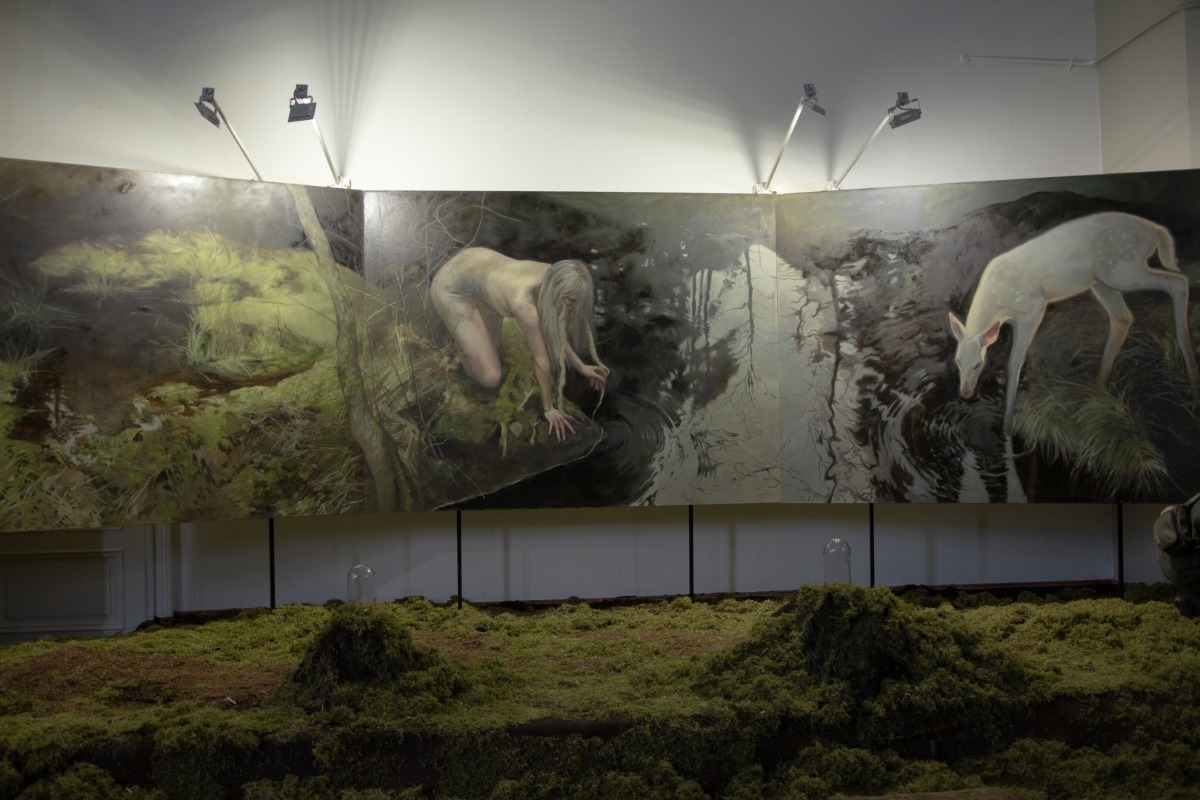
Katrīna Levāne. Forest Floor. 2025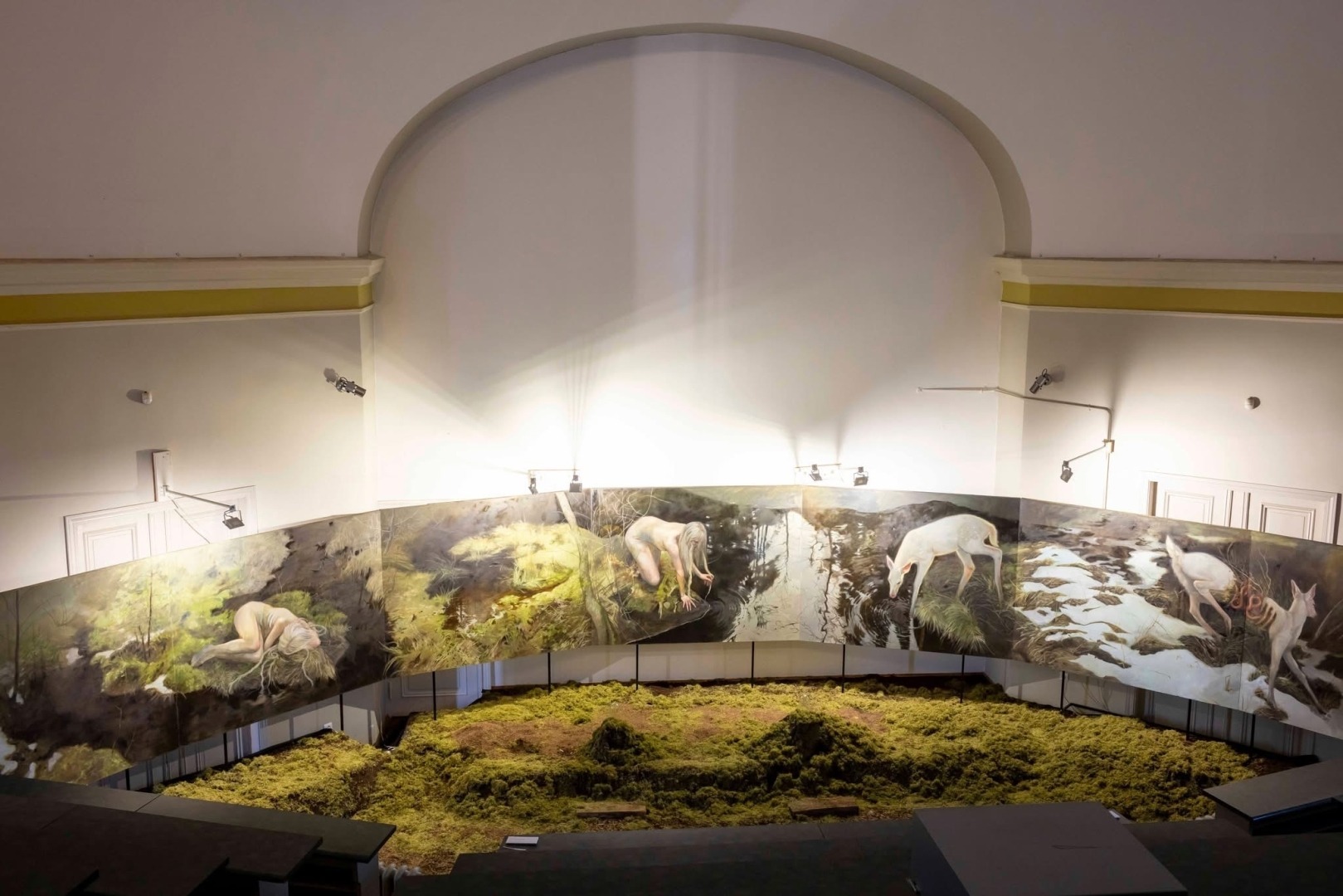
Katrīna Levāne (Art Academy of Latvia)
Levāne’s interdisciplinary practice expands painting beyond its traditional limits, transforming it into immersive, multisensory environments that engage sight, sound, scent, and touch. Her awarded work Forest Floor (2025) does exactly that–addressing the fear of death through Latvian intangible cultural heritage and the ecological cycles that accompany it. The artist creates a contemplative space where death is acknowledged as an inherent, though uneasy, part of life. The mythological forest she depicts exists in suspension–between life and death, time and stillness. Subtle layers of scent and sound heighten the experience, evoking sensations of nature that are both familiar and unsettling, resulting in a quietly uncanny atmosphere.
Adams Gidlunds. The Rot. 2025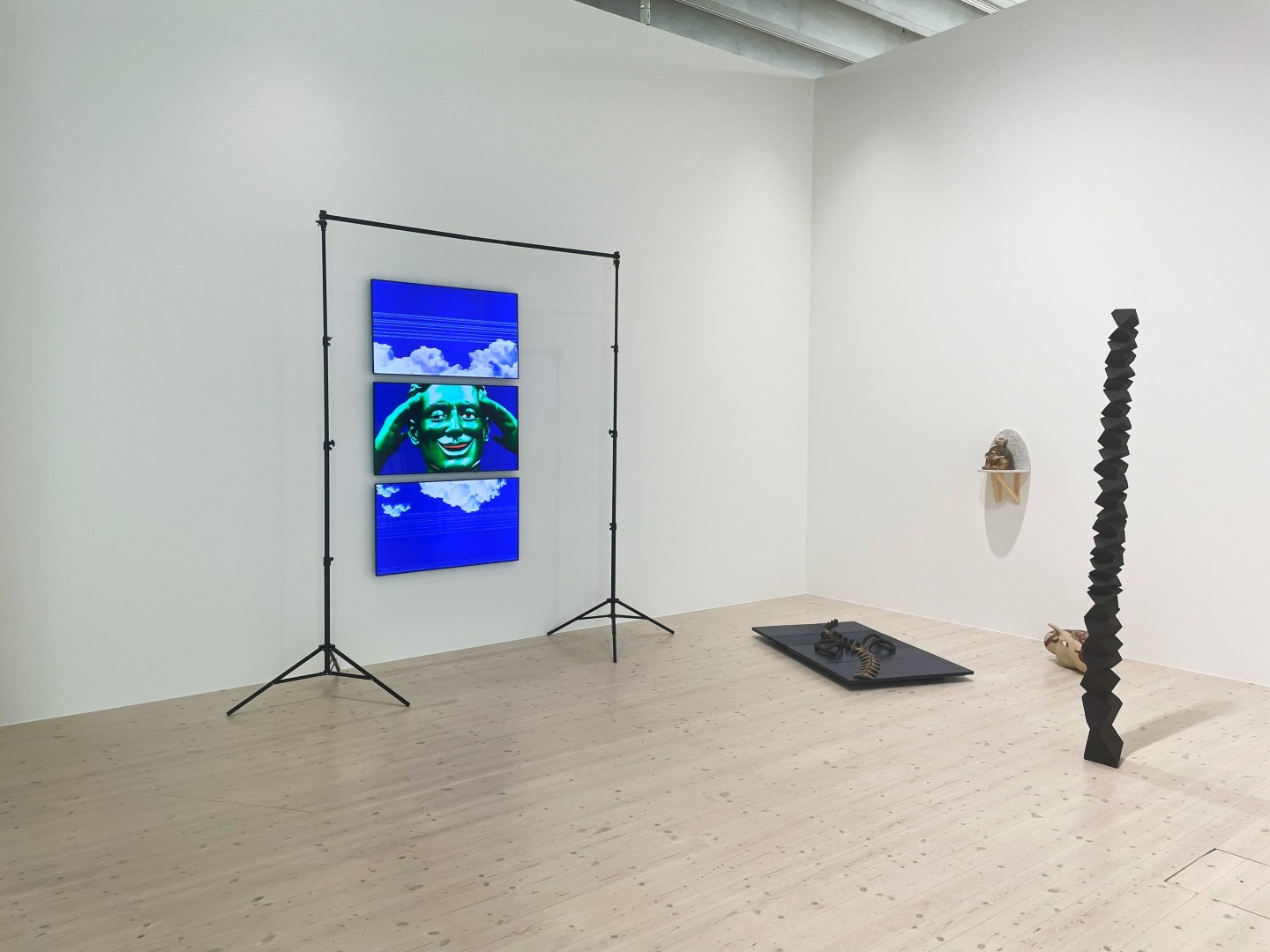
Adam Gidlund (Umeå Academy of Fine Art, Umeå University)
Gidlund’s work operates at the intersection of digital culture, identity, and decay. His recent projects – including Dandy Issues, Blue Screen of Death, and The Rot – critically examine artificial intelligence, online surveillance, and the absurdities of late capitalism. Through parody, melancholy, and deliberate malfunction, he reflects on how identity is constructed, commodified, and ultimately eroded in a post-truth, screen-saturated era.
Recurring themes of concealment, absurd humour, and technological breakdown shape his practice. Gidlund’s use of queerness extends beyond subject matter – it becomes a method for destabilising established narratives and media formats, foregrounding instability and non-normative futures.
His awarded work The Rot (2025) is a three-channel video installation exploring the collapse of meaning within digital systems. Constructed entirely from AI-generated voices, stock imagery, and synthetic animation, the piece stages artificial beings trapped in an endless blue-screen void. Their fragmented phrases – “something went wrong,” “describe the image you want to generate” – mirror both machine error and human uncertainty. As these entities dissolve into a viscous green sludge, Gidlund evokes not only the saturation of low-quality digital content but also a deeper exhaustion – of ideas, identities, and futures caught in technological stasis.
Viljamaria Raittila. Not for long we swim in gloom. 2025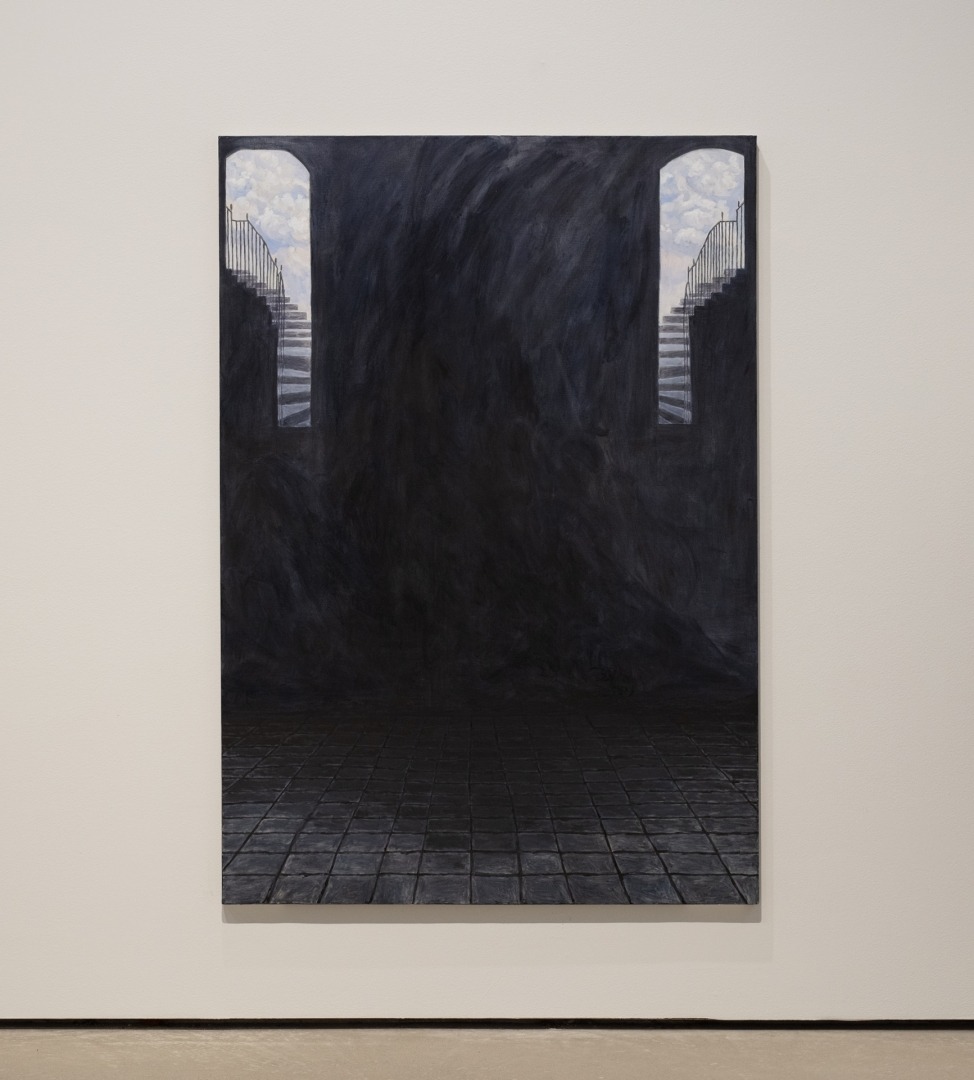
Painting Award – Viljamaria Raittila (Academy of Fine Arts, Uniarts Helsinki)
Raittila paints large-scale, elegiac scenes in muted grey tones, exploring recurring themes of vulnerability, longing, and transience. Her works unfold in liminal spaces — somewhere between presence and disappearance, tenderness and tension. Through restrained gestures and layered translucency, she constructs atmospheres that feel suspended in time, where silence itself becomes a visual condition.
Her awarded painting Not for Long We Swim in Gloom (2025) embodies this quiet psychological charge. The subtle gradations of light and shadow evoke both intimacy and distance, inviting the viewer into a space of reflection rather than resolution. “I have tried to listen to silence,” the artist notes — and it is precisely within this silence that her work finds its resonance.
Albin Ulvebring. Vittra. 2025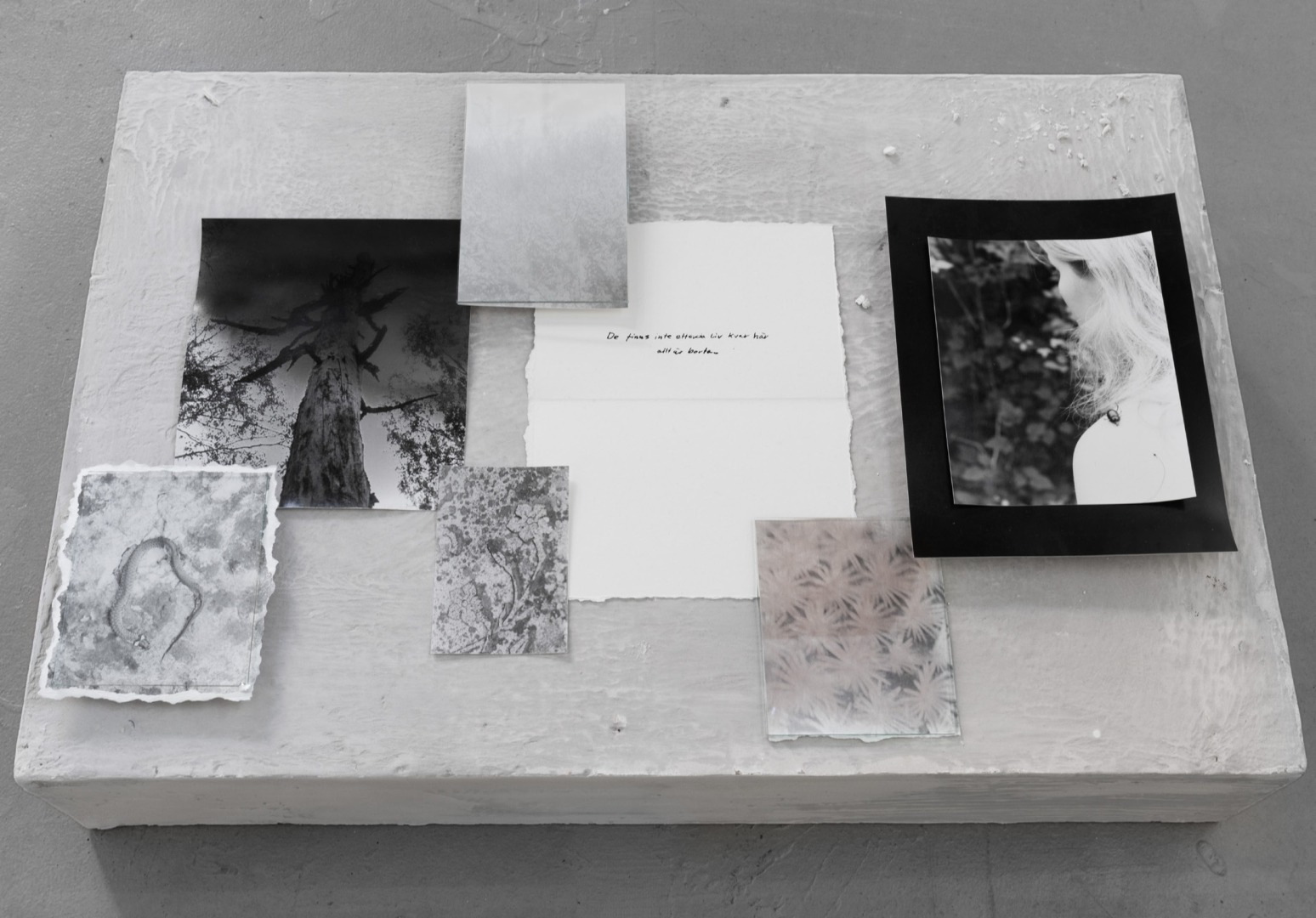
Photo Award – Albin Ulvebring (Umeå Academy of Fine Art, Umeå University)
Ulvebring explores the relationship between body, memory, and materiality, often using nature as both subject and metaphor. Through experimental use of archival materials and organic processes, the work reflects on human connection, forgotten histories, and the blurred boundary between inner and outer landscapes.
Ulvebring’s installation Vittra (2025) combines silver gelatin prints, screen printing, and metal objects to address inherited trauma and ecological memory. The work reflects on invisible legacies and intergenerational loss through an intimate dialogue between photography, matter, and memory. Vittra is a photographic installation about people without a documented legacy, those who were never part of society, who were erased after their death. Through hand-printed analog photographs of dead insects, people, and cacti, questions arise about memory, erasure, and ecological loss.
Andra Rahe. The Daycare Diary. 2025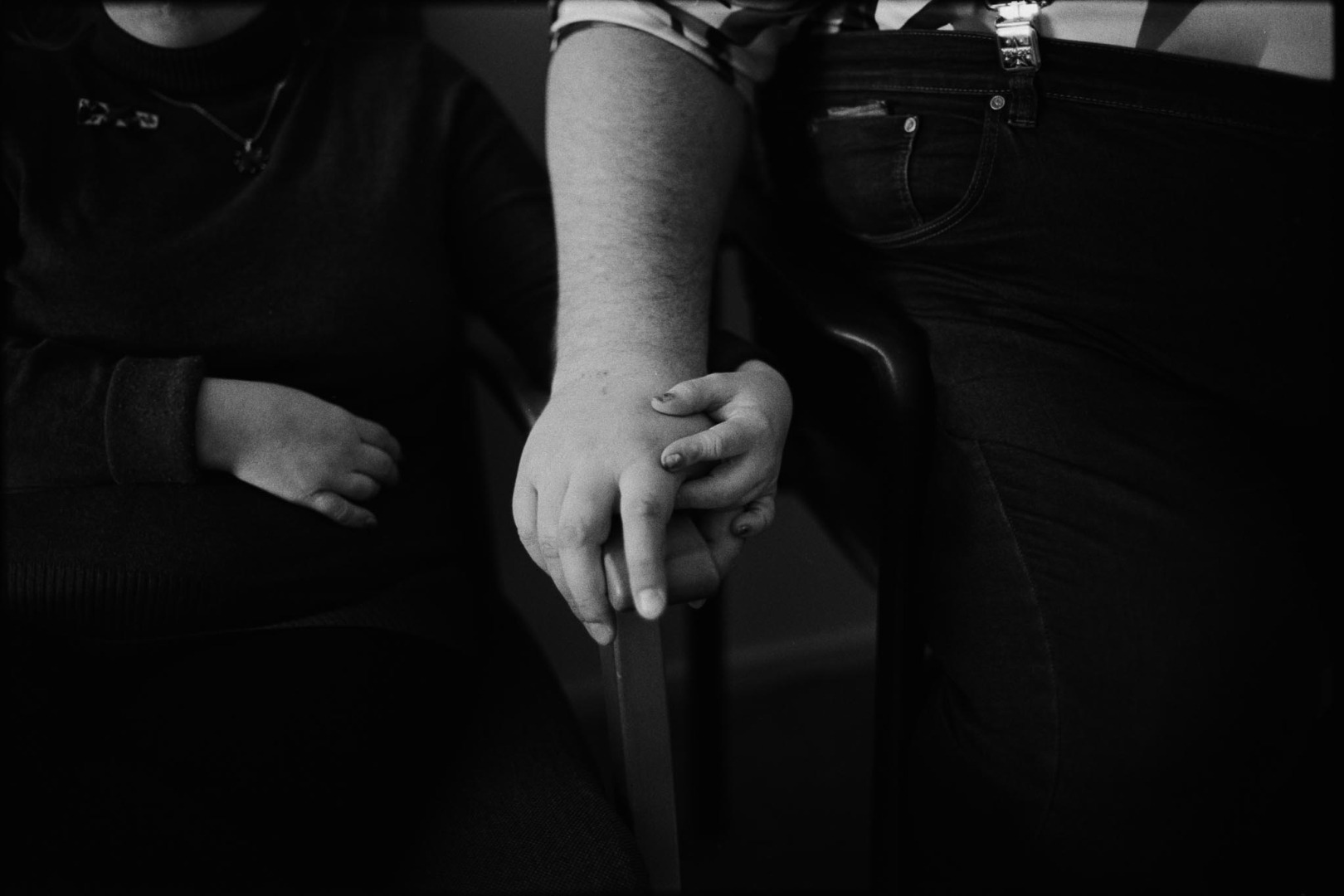
Public Choice Award – Andra Rahe (Pallas University of Applied Sciences)
The Public Choice Award, decided through online voting with 1,359 participants, was awarded to Andra Rahe for her autobiographical photo series The Daycare Diary (2025). The work explores disability, care, and human vulnerability through experimental photographic processes that merge personal narrative with broader cultural reflection.
Rahe, who has a mobility impairment, transforms lived experience into visual culture — addressing disability not as a private matter but as a shared, interpretable, and visible part of society. Her practice balances sensitivity and strength, using photography as both a means of documentation and empowerment, revealing how the intimate can speak to universal questions of identity and resilience.
A Decade of Regional Collaboration
Established in 2016, the Nordic & Baltic Young Artist Award has evolved from a Baltic initiative into a pan-regional platform connecting eight leading art academies: the Estonian Academy of Arts, Pallas University of Applied Sciences, Art Academy of Latvia, Vilnius Academy of Arts, Academy of Fine Arts, Uniarts Helsinki, Turku University of Applied Sciences, Konstfack University of Arts, Crafts and Design, and the Umeå Academy of Fine Arts.
A selection of nominees will be presented in 2026 at Academy of Fine Arts, Uniarts Helsinki Gallery, Helsinki, further expanding the cross-border dialogue between Nordic and Baltic art schools.
The 2025 jury combined leading curators, professors, and art critics from the participating academies and beyond: Andris Vītoliņš (Art Academy of Latvia), Ieva Skauronė (Vilnius Academy of Arts), Harri Monni, Anni Anttonen and Dean Leevi Haapala (Academy of Fine Arts, Uniarts Helsinki), Margus Meinart (Pallas University of Applied Sciences), Kaisa Maasik (Estonian Academy of Arts), Taina Erävaara and Suvi Lehtinen (Turku University of Applied Sciences), Anne Klontz (Konstfack), Per Nilsson (Umeå Academy of Fine Art, Umeå University), Solvita Krese (Latvian Centre for Contemporary Art, Riga), Hólmar Hólm (Art in Iceland magazine), and Andra Orn, curator and founder of the Nordic–Baltic contemporary art platform NOBA.ac.
