


Survival Kit 17: Festival curators and concept announced
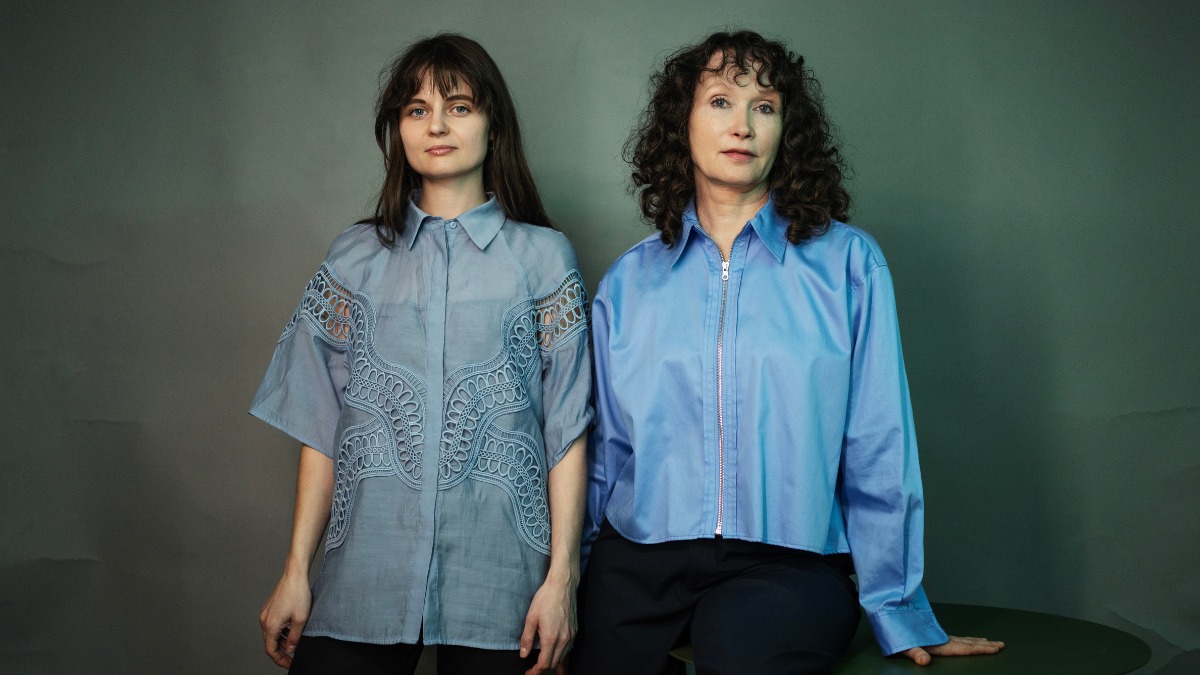
This year, the annual contemporary art festival Survival Kit is curated by Elena Sorokina and Simona Markel Dvorák, with the Initiative for Practices and Visions of Radical Care. The project, titled Arrow of the Wind: On Artists and Healers, explores the shared terrain between art and healing – spanning therapy, incantation and ritual, physical and mental healthcare, and spiritual restoration.
Across cultures and throughout history, these practices have been deeply intertwined, taking many forms – from shamanic rituals to clinical art therapy. The exhibition, which takes place from 28 August until 27 September 2026, Riga, builds on this lineage, tracing a continuum and ongoing transformations, rather than a separation.
Healing stands at the heart of what the curators call “life-affirming practices” – ongoing, attentive processes that nurture individuals, sustain communal bonds, safeguard cultural knowledge, and deepen connections with human and non-human ancestors and the land. These practices value the quality of relationships, the care embedded in methods, and the slow cultivation of continuity as much as any visible outcome.
Arrow of the Wind: On Artists and Healers brings together artists for whom art and healing are not distinct domains but mutually sustaining forces and living practices: one nourishes the other, and both arise from embodied knowledge, somatic intelligence, and profound relationships to land and communities. Working at the intersection of traditional healing and contemporary healthcare, the artists place the senses at the center of their creative and restorative practices. The classical five senses expand into a broader sensory ecology – encompassing balance and spatial orientation, breath and movement, embodied awareness, and modes of attention attuned to the intelligence of place.
Within this broader framework, the project is rooted specifically in Latvian ancestral healing knowledge and ritual practices embedded in the land – forests, lakes, the Baltic Sea, and peat bogs. Historically, Latvian healing traditions combined empirical knowledge of medicinal herbs and natural remedies with magical techniques, ritual gestures, and careful observation of seasonal cycles. Fairy tales, folk songs, spells, and vernacular poetics carried these practices forward, preserving divination methods, herbal wisdom, and ritual protocols despite histories of oppression.
During the Latvian waves of migration, this ancestral and cultural knowledge became a sustaining force. Myth, songs, shared language, vernacular symbols, and everyday materials formed a vital healing infrastructure for communities displaced without certainty of return. Cultural continuity became a form of survival.
The curators of Survival Kit 17 elaborate: "Grounding these knowledges within the exhibition, we trace intergenerational transmissions and deep genealogies – from feminist and community-based art movements of the late twentieth century to ancestral and Indigenous modes of creation in which art, care, and healing were inseparable. These practices challenged institutional definitions of art, dissolved the boundary between artwork and lived experience, and repositioned healing as an essential artistic medium."
In this spirit, Elena Sorokina and Simona Markel Dvorák, with the Initiative for Practices and Visions of Radical Care are committed to sustainable curating, for Survival Kit 17 in particular this considers responsible modes of production, local collaboration, recyclable materials, reduced mobility, and active community involvement. These are not logistical additions but material extensions of an epistemic position – an effort to align curatorial practice with more-than-human relationality and to rethink the exhibition as an ecology.
Solvita Krese, director of the Latvian Centre for Contemporary Art and founder of Survival Kit festival comments: “In today’s complex geopolitical situation, it is becoming increasingly difficult to maintain mental and emotional balance. The constant presence and escalation of wars are causing ever-greater physical suffering and loss. “Survival Kit 17” centers on care–an essential element of survival in today’s world. Caring for one another is also an indicator of a society’s maturity. We truly need a society capable of caring and critical thinking, and art has always been an invaluable tool for stimulating these processes.”
About the curators
Elena Sorokina has held key positions within major art events, notably as Associate Curator of documenta 14 (Athens/Kassel) and as Director of HISK (Higher Institute for Fine Arts) in Belgium in 2017. In 2022, she co-curated the Armenian Pavilion at the 59th Venice Biennale. Her curatorial practice unfolds on an international scale, within museums and art platforms such as BOZAR (Brussels), the Musée d’Art Moderne de la Ville de Paris, the Pera Museum (Istanbul), the Rudolfinum (Prague), and the Centre Pompidou (Paris).
Simona Markel Dvorák is a curator and researcher working at the intersection of art, ecology, and care, combining critical theory, poetical imagination, and participatory methodologies. Dvorák has collaborated with institutions including the National Gallery Prague, Musée Picasso–Paris, Frac Île-de-France, Rockbund Art Museum, and Haus der Kulturen der Welt. She participated in documenta fifteen, the 59th, and the 60th Venice Biennale. Between 2021 and 2023, she served as Curator for Public Programs at the Centre Pompidou and co-curated, with Tadeo Kohan, Actes de Langage at Maison Populaire in Montreuil.
The Initiative for Practices and Visions of Radical Care was founded in 2020 by Nataša Petrešin-Bachelez and Elena Sorokina in the Greater Paris region. It brings together a diverse group of practitioners across the arts, crafts, philosophy, healing, and therapy, spanning multiple geographies. Neither a classical collective nor a rigid structure, the Initiative researches and reinvents modes of sustainable institutionalism. Rooted in friendship as much as in professional collaboration, it functions as an ecosystem, fostering interdependence and solidarity beyond fixed identities. Through fluid artistic and curatorial ventures, the Initiative embraces languages, energies, histories, landscapes, bodies, and materials that reflect a non-extractive and sensitive relationship to both human and more-than-human worlds.
Survival Kit 17 is organised by Latvian Centre for Contemporary Art. Supported by the Ministry of Culture of the Republic of Latvia, Riga City Council, and the State Culture Capital Foundation. With the participation of the Performing Arts unit, Centre Pompidou, Paris.
Upper image: Simona Markel Dvorák and Elena Sorokina. Photo by Jérôme Bonnet
