


Leaving a mark with your hand
Conversation with Sara Piccinini, Director of Collezione Maramotti, one of the largest private contemporary art collections in Italy
The heart of the Italian fashion company Max Mara, founded in 1951, lies at 66 Via Fratelli Cervi in Reggio Emilia. This is a picturesque Italian town, with parks and old, massive trees, and sculptural portraits of the founding fathers embedded in the walls of the local art school. Here, it’s easy to sense generations and generations who simply valued life, took joy in it, and embraced a whole culture of admiration for what life can offer. And it was in this very city, at this very address, that in 1957 a very special factory was built for Max Mara. The concept was innovative: all utility areas were placed outside the main space, maximizing natural light and ventilation.
Collezione Maramotti. Courtyard and project space Pattern Room – by night. Photo: Bruno Cattani. Courtesy Collezione Maramotti, Reggio Emilia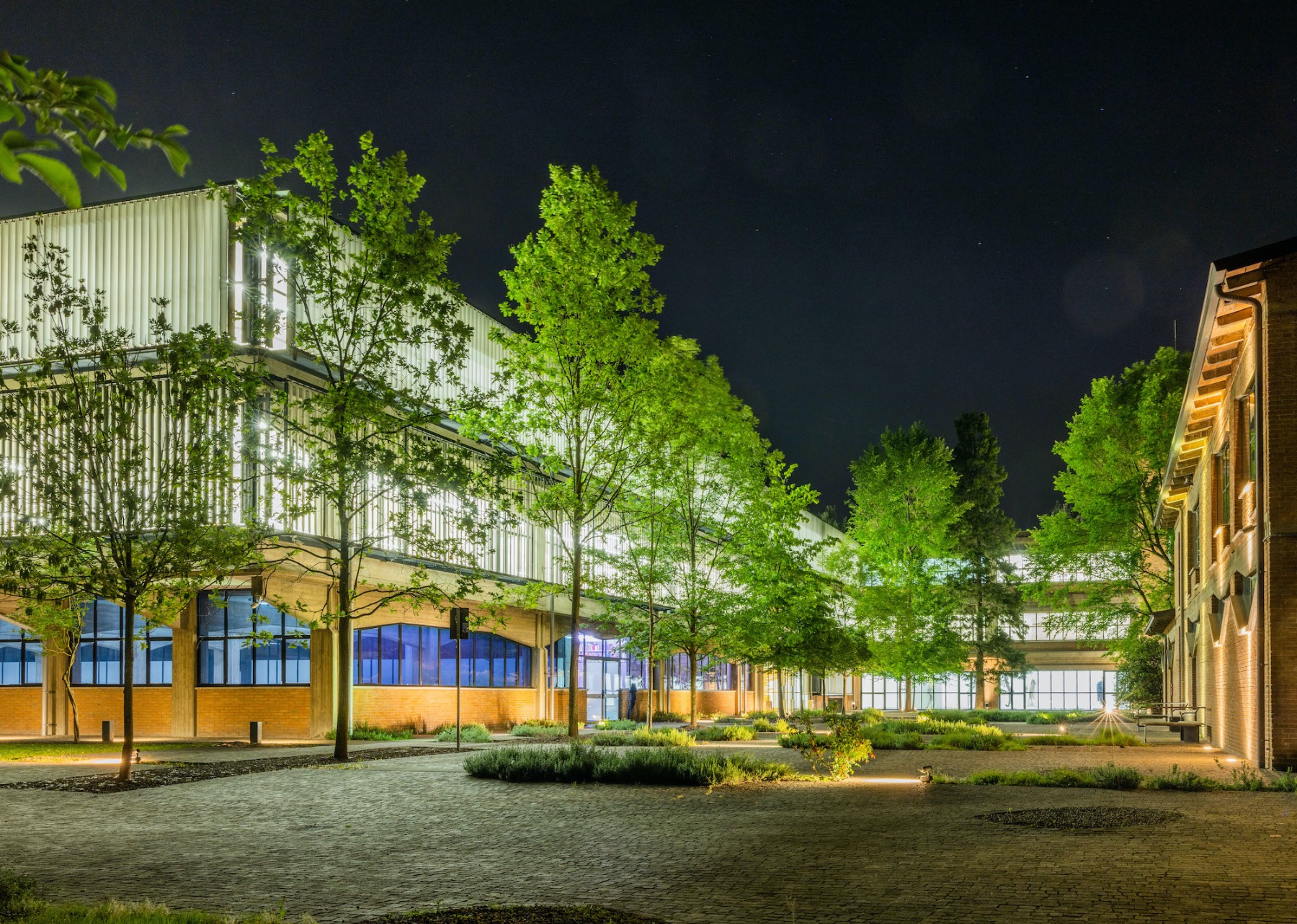
In 2003, the headquarters of the company moved to the northern part of the city, near the high-speed rail station designed by Santiago Calatrava, and the former factory was transformed into an exhibition space for the contemporary art collection of the company’s founder, Achille Maramotti (1927–2005). The collection includes hundreds of works from 1945 to the present, with more than 200 on permanent display, covering key trends in Italian and international art from the second half of the 20th century to today. The exhibition spans two floors and 43 rooms, featuring paintings, sculptures, and installations, organized chronologically, by artistic movement, or by national school.
Perhaps one of the defining features of this collection is the predominance of large-scale works, rich in expression and drama, that can literally take the viewer’s breath away. It’s a living history of the second half of the twentieth century – passions, sudden insights, and obsessive ideas of the era – masterfully and metaphorically poured onto canvas.
Collezione Maramotti. Exhibition view, artworks by: © Francesco Clemente, © Nicola De Maria. Photo: Dario Lasagni. Courtesy Collezione Maramotti, Reggio Emilia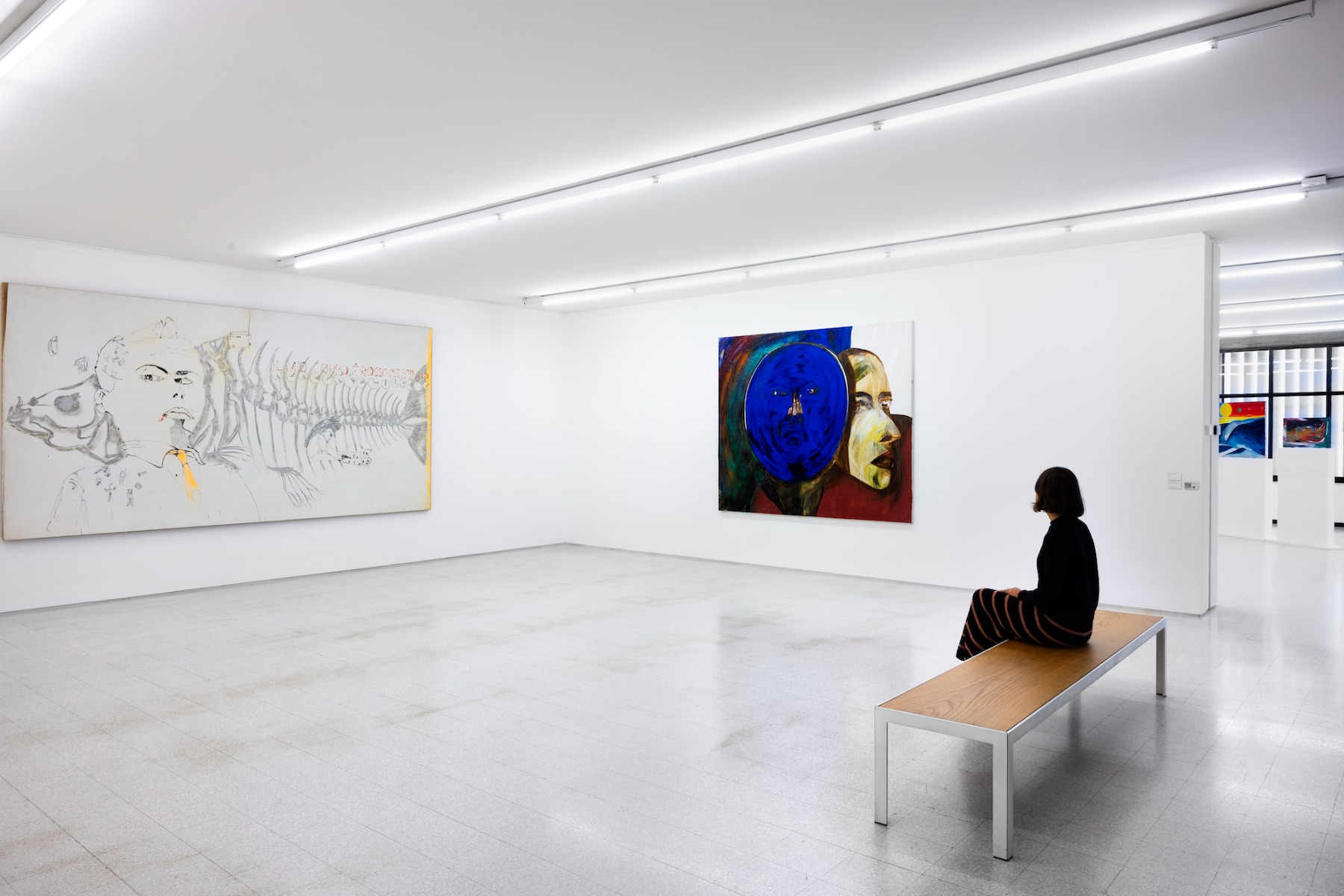
But the collection is not static or sealed off; it continues to grow with new temporary exhibitions. In March, when I had the chance to visit Reggio Emilia, an exhibition by the young Italian artist Giuditta Branconi was opening (it will be on view until July 26). For Cannon Fodder, her first solo institutional show, Giuditta Branconi presented new paintings and a walk-through installation of painted canvases. Branconi’s layered, dense paintings cover both sides of thin fabrics, blending references from pop and high culture, literature, comics, and everyday texts. They are incredibly rich in details, images, and words – in multiple languages and fonts. “In my paintings, everything happens at the same time. I don’t want to guide the viewer; the viewer can see whatever they want. The gaze is anarchic,” says Giuditta herself. Her works are truly semiotic labyrinths, wrapped in a cloak of bright colours and striking imagery.
Of course, there’s much to say about this exhibition, but I’m particularly curious about the collection and the visionary collector who shaped it. To explore this, I sit down with Sara Piccinini, the elegant and gracious director of Collezione Maramotti. Though she officially became director in January 2021, Sara has been part of the institution since its opening year, 2007. She knows this world in exquisite detail. And we settle into the library, while visitors, journalists and art critics drift among Giuditta Branconi’s delightfully “anarchic” canvases.
Giuditta Branconi. Se seguissi le molliche di pane (non torneresti qui mai più) / If you followed the breadcrumbs (you'd never get back here). 2026. Wooden structure, oil on linen © Giuditta Branconi. Courtesy the artist; L.U.P.O Gallery, Milan. Photo: Dario Lasagni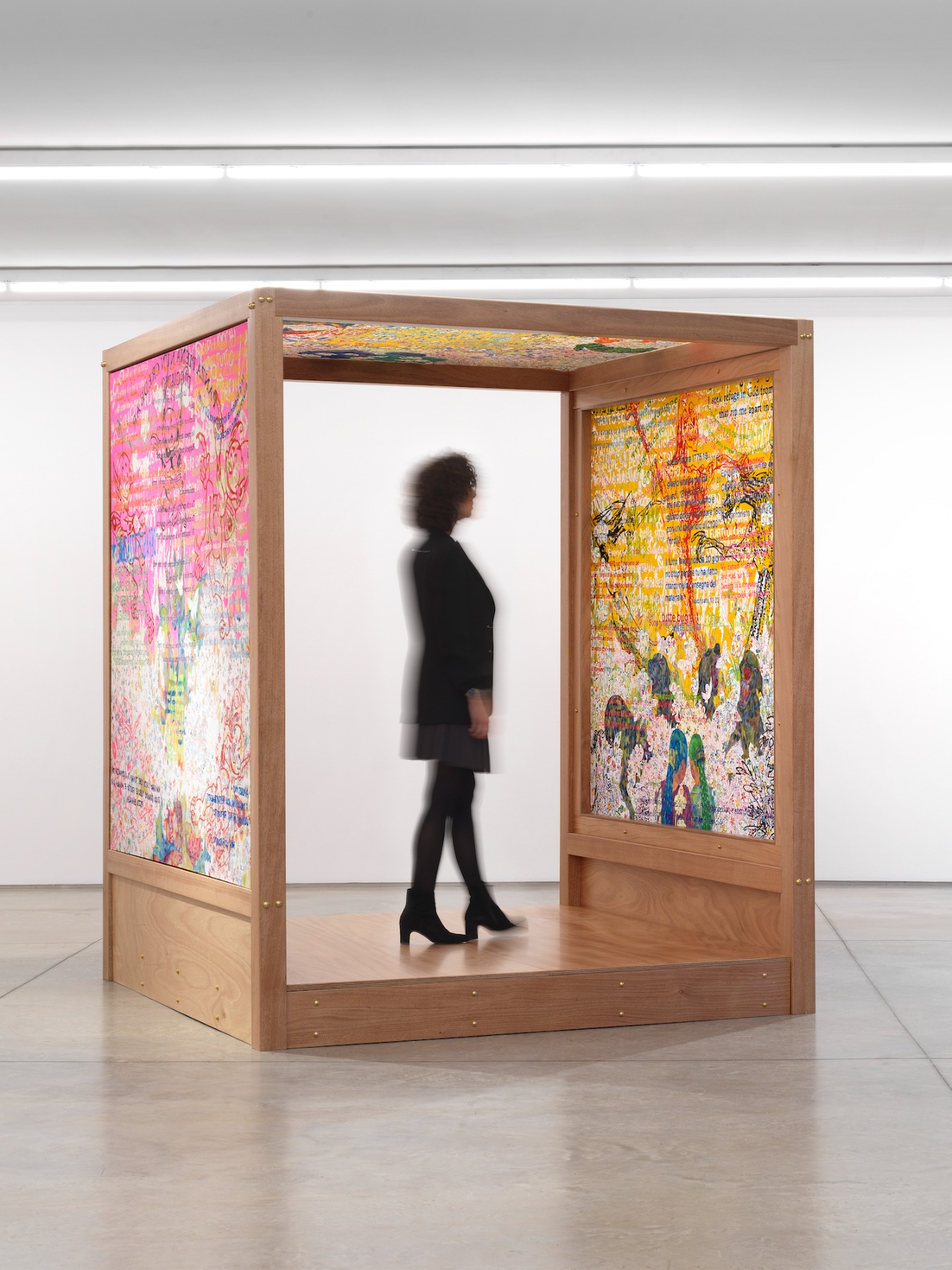
Let's start with the founder of the collection, Achille Maramotti, who was also the founder of the Max Mara brand. Did he choose the artworks for the collection himself, or did he have an advisor?
He began collecting in the 1960s. He had already been a collector of older art, especially Baroque Emilian art, as well as works from the 15th century, though mainly from the 17th and 18th centuries. He was also very fond of Italian art from the first half of the 20th century, such as Pittura Metafisica and related movements. However, from the 1960s onward, he decided to dedicate his collection to contemporary art, so he started to follow what was happening in his own time. Initially, as you saw in the permanent collection, he focused on Italy.
It was the most natural thing to do, and later, when he travelled – whether for business or other reasons – he expanded his perspective to include Europe, the United States, and beyond. He was particularly fond of painting, as you may have noticed from the collection.
Yes, those huge paintings!
Yes, really large-scale works. This is important, not so much because of their size, but because they already reflected a vision of something open to the public, rather than something domestic.
Many of the works you saw upstairs were kept in crates from the moment they were acquired – there was simply no possibility of displaying them in a private home. So, Achille Maramotti had this vision as early as the 1970s: he wanted to create a space open to the public and to share his passion with others.
The collection actually opened to the public in 2007. He passed away in 2005, so he wasn’t able to see this place open, but he knew it would open.
Collezione Maramotti. East entrance, Photo: Bruno Cattani. Courtesy Collezione Maramotti, Reggio Emilia
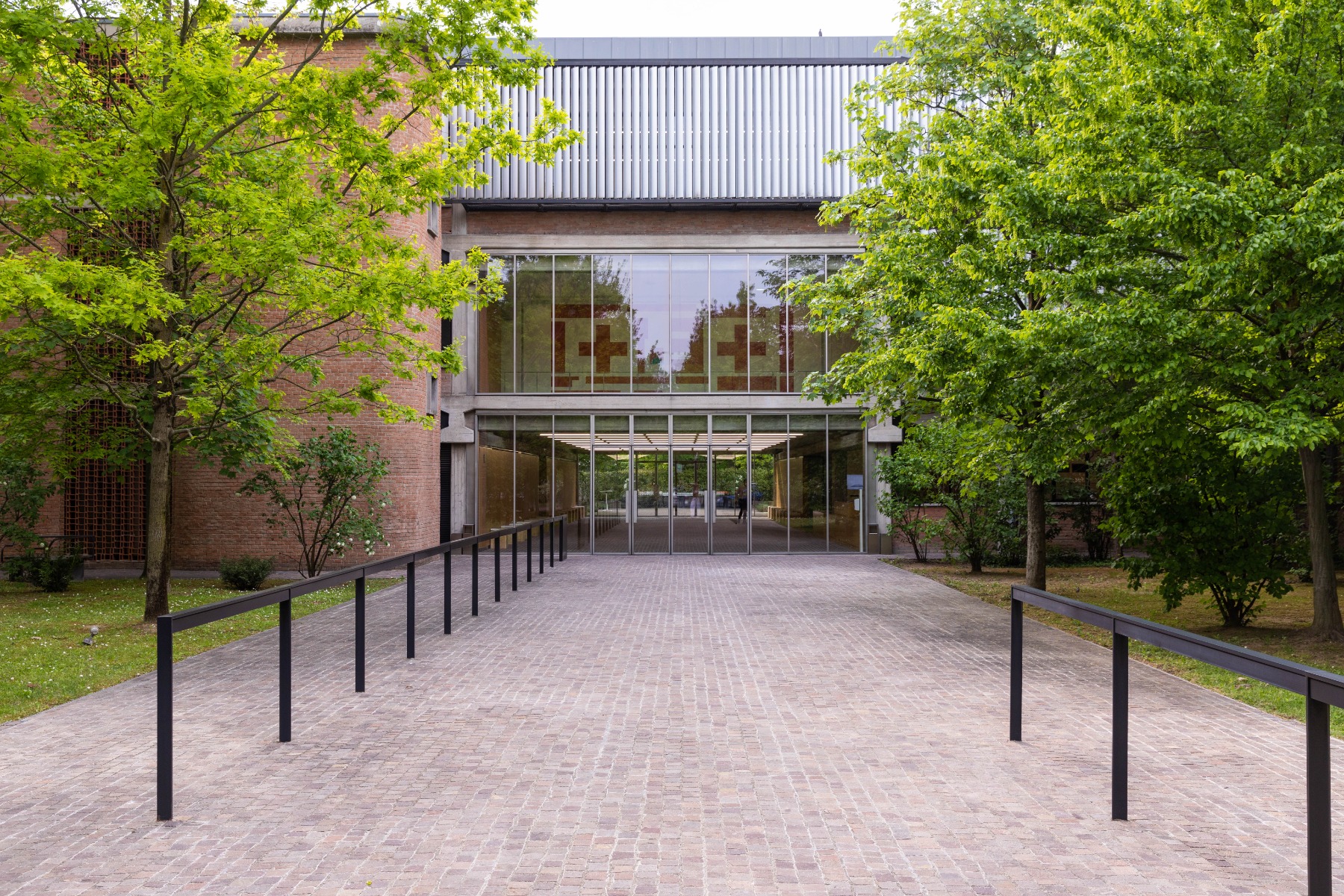
I must say, the collection is in perfect harmony with the building itself. Who was the architect?
At the time, they were two very young architects – the building dates back to 1957: Eugenio Salvarani and Antonio Pastorini. One was in his late twenties and the other in his early thirties, so they were incredibly young. And they were quite remarkable, because they developed a very flexible space with natural light. Tonight, you can’t fully experience the effect of the natural light as it was originally intended, but you can still see the large windows throughout the building. The space was designed to be highly adaptable: initially, it was a factory; later, as Max Mara expanded, it housed mainly offices and served as a representational venue; and eventually, it became an exhibition space.
What’s impressive is that the building itself didn’t need to change much. Many of the elements you see today are the same as in the 1950s and 1960s.
Collezione Maramotti.
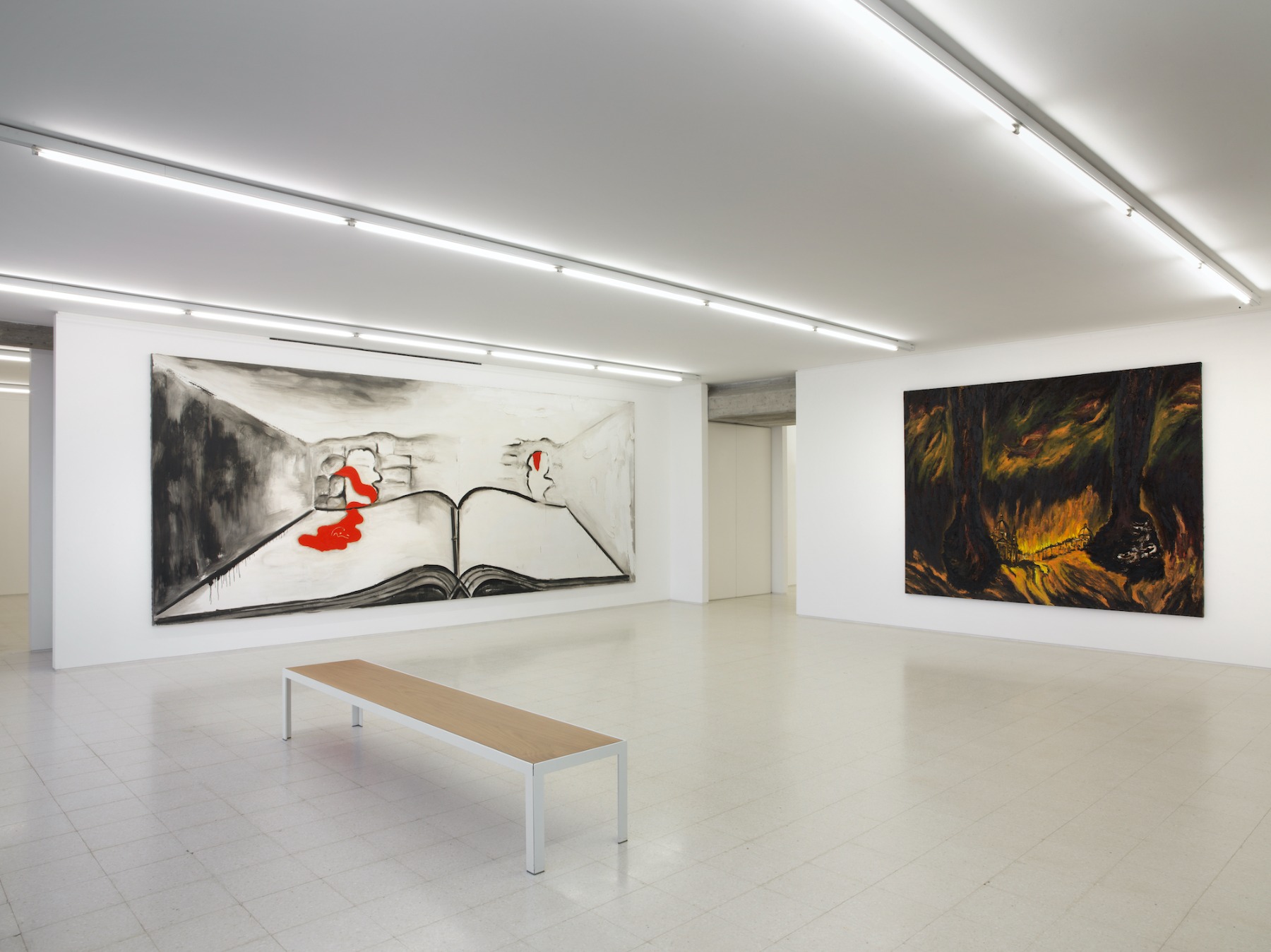
Exhibition view, artworks by: © Enzo Cucchi. Photo: Dario Lasagni
So before 2007, the collection was mostly kept at Achille Maramotti’s house and in special storage, right?
Some of the works were in his house. Others were kept here, when the factory was still operating – in the corridors, offices, and meeting rooms – to encourage a daily engagement with contemporary art within a creative industry. However, many of the works were kept in storage, often in crates, because of their large size.
But what kind of works did he have in his own house?
Some of the works you saw – for example, the painting by Julian Schnabel Man of Sorrow (The King) (1983) was kept there.
Oh, it’s a beautiful piece, really.
Yes! And it’s a characteristic piece, blending oil and acrylic on velvet. Interestingly, an artist who presented a temporary exhibition here last year, Roméo Mivekannin, took inspiration from that velvet painting and began working on velvet as well – black velvet, in particular. So, I’m certain that this one was in his house.
I couldn’t imagine having so impressive work in your own house. It’s like… having an opera or a theatre performance happening in your home all the time.
I know it was placed quite high on the wall. So, it was really… even more, perhaps, striking and a little unusual, looking down at you from above – almost imposing. But he had a taste in, also in conceptual art. What you see upstairs is Achille Maramotti’s collection – about 75% of it – because the last ten galleries feature selections from temporary exhibitions that we’ve held since 2008. You could say this represents the “second generation,” the heirs of Achille. There are some works of conceptual art, but the focus is mainly on painting – Transavanguardia, American Expressionism…
Achille Maramotti believed that painting was really like a red thread running from prehistoric times – from the caves, from the simple gesture of leaving a mark with your hand. That impulse has continued to develop throughout the centuries. Even during periods like Minimalism, or in the 1960s and 1970s, when painting wasn’t as dominant, he still followed artists who were painting, even if the times weren’t exactly “painting times.”
And also, with the temporary projects, we mainly work with artists who are engaged with painting in some way.
This idea of bringing the collection to the public – did he already have a structured vision of how it would be?
Kind of. And it’s actually quite straightforward, because it’s mostly arranged in chronological order, but it’s also his own personal chronological path of acquisition. So, the two things are closely connected.
It starts in the very first room with a work by Francis Bacon Man Eating a Leg of Chicken (1952) and Alberto Burri painting – Sacco e Rosso (1954). These were the first paintings he acquired. And then he continued following it, so it’s quite natural to organize the path this way, because it really reflects his own exploration of contemporary art.
Claudio Parmiggiani. Delocazione 2. 1970 © Claudio Parmiggiani. Photo: Carlo Vannini. Courtesy Collezione Maramotti, Reggio Emilia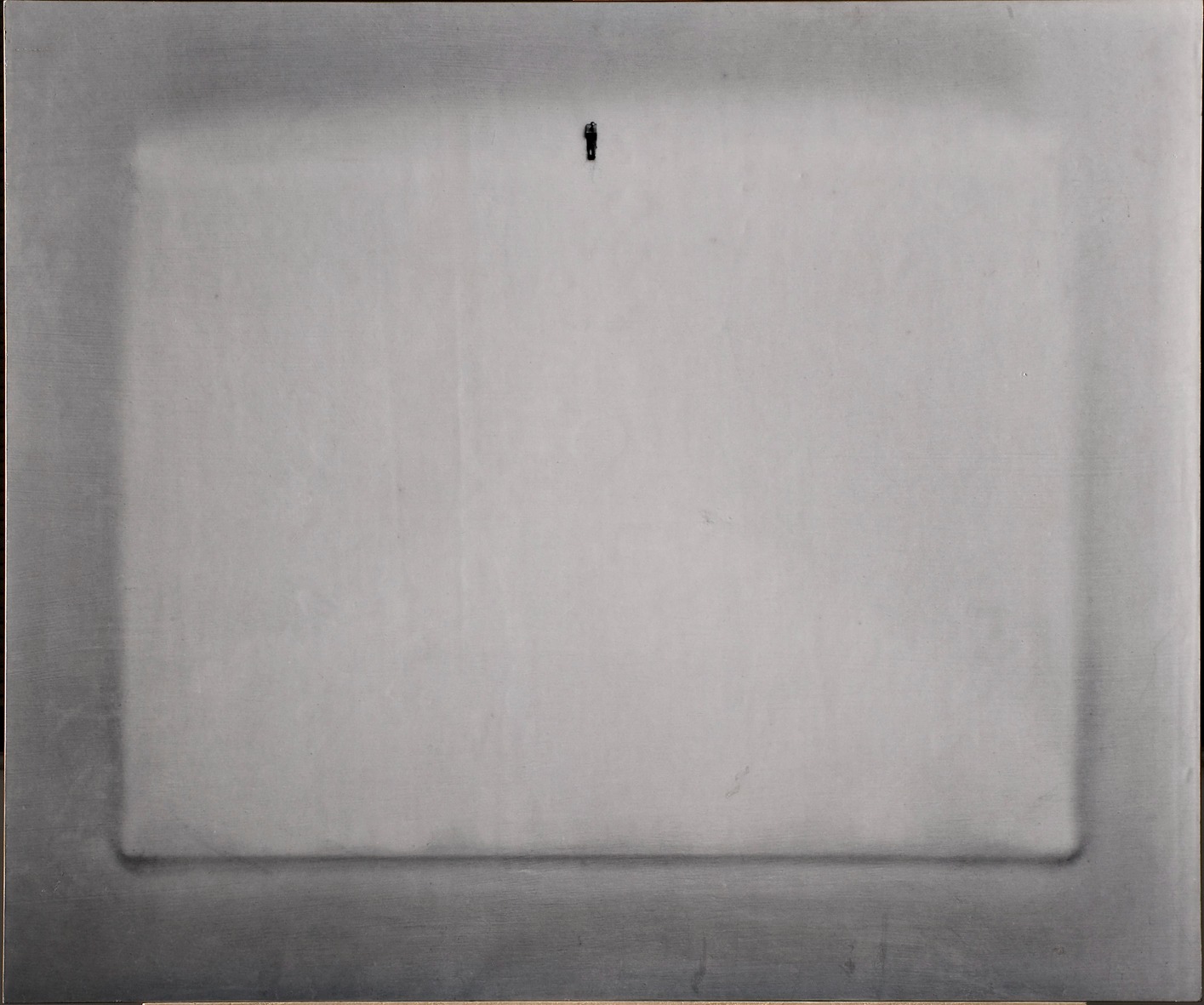
Was he in any kind of relationship with the artists in the collection?
Yeah, sometimes they were very close. Claudio Parmiggiani was the closest. We have, I think, about forty works by Claudio Parmiggiani in total, though only some of them are on display. They were very connected and exchanged ideas about art, literature, philosophy, and even alchemy. Claudio Parmiggiani is one of the few artists from Reggio Emilia included in the collection, so that connection was quite natural. Another important figure in this “triangle of conversation” was Mario Diacono. We also have Mario Diacono’s archive – he was an art critic and gallerist – and all three of them were friends. They even collaborated on experimental magazines, editorial projects, and artist books together.
So, they had a very strong relationship. But he was also kind of friends with Enzo Cucchi. Yeah, we have – I’ll show you – a photograph of Enzo Cucchi in his studio while painting the large work on the second floor, with these houses going downhill. It’s black and red. And it’s huge.
He really liked to get to know artists personally, and it’s the same approach today.
Enzo Cucchi. Le case vanno in discesa. (The Houses are going downhill). 1983 © Enzo Cucchi. Photo: Carlo Vannini. Courtesy Collezione Maramotti, Reggio Emilia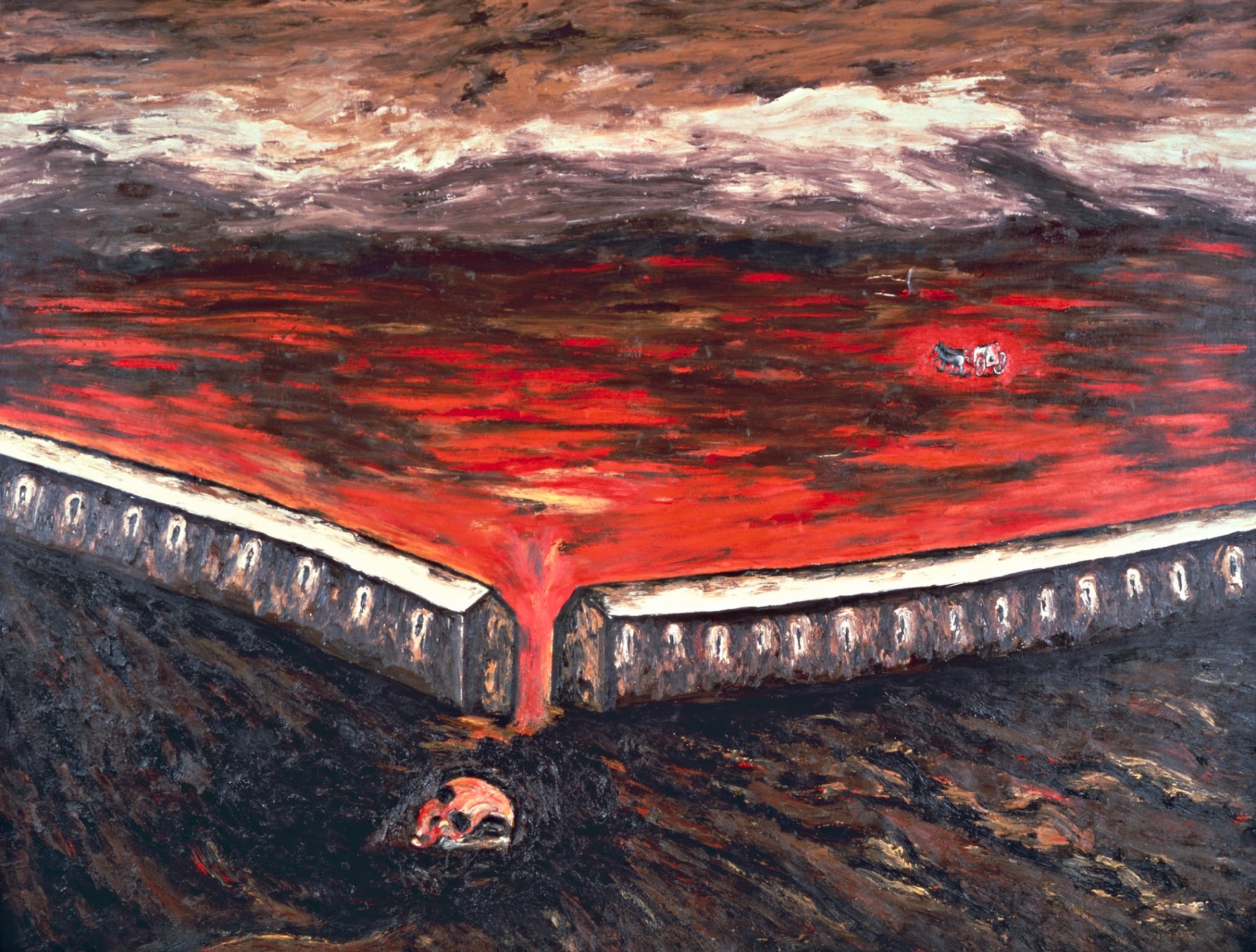
Did Achille Maramotti leave any diaries or memoirs?
Not really. I mean, we do have his personal archive. Many of these books [shows the books around] are from his library. We also have documents – correspondence with artists, with Claudio Parmiggiani, with Mario Diacono – so his archive is quite extensive.
This is very important for us. We continue to enrich these archival materials because they are essential – they give the works their roots and context.
You started to work here when he already passed away.
Yes. It was in 2007.
But do you have an idea of what kind of person he was — from the collection itself, or from stories told by other colleagues?
From what I’ve heard, since I never got to know him personally… I think he was incredibly passionate and also very approachable. Many people worked here when Max Mara was still operating. I mean, he knew the names of every single employee and would always say hello or have a little chat – he was very kind and friendly. That’s the impression I have.
He also believed – and his children respect this vision – that fashion and art can connect and have a dialogue, but they are also separate. This is why this is not a corporate or brand collection, but a family collection. Art can inspire designers and open up new ways of thinking. But fashion, even at its highest and most elegant, is always designed for the end user, whereas art simply exists – and it doesn’t need a reason to exist.
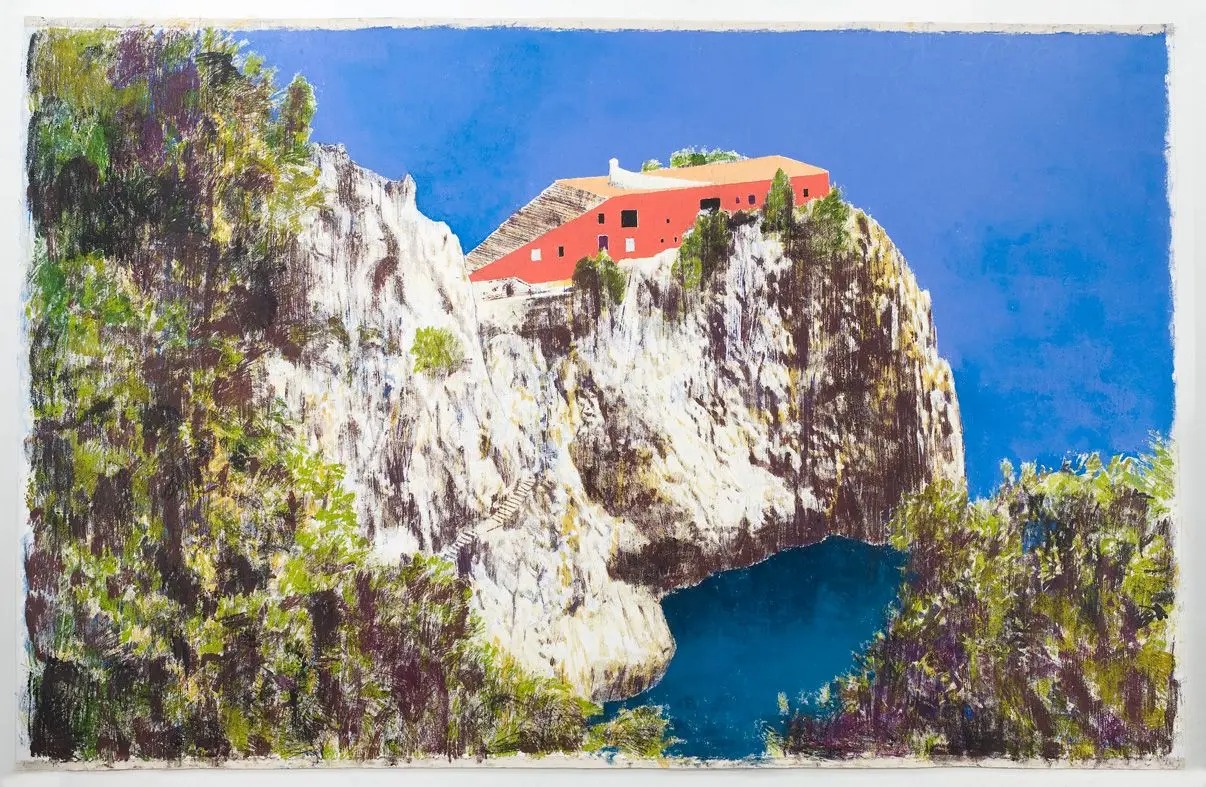
Enoc Perez. Casa Malaparte (Day)", 2008 © Enoc Perez, Photo: Carlo Vannini. Courtesy Collezione Maramotti, Reggio Emilia
Since you started working here… how has the collection changed over time? I mean, how has its presentation evolved?
When I started here, the collection had around four hundred works, and now it’s grown to more than a thousand. So, the collection has expanded, mainly through acquisitions from the temporary projects. From every exhibition we’ve presented here, the family has kept either the entire show or a selection of works. That’s why you can now see this series of galleries dedicated to previous temporary exhibitions. It’s a way to merge the practice of exhibition with the practice of acquisition, and to show the public how the collection is developing in the present.
In terms of taste, of course, there’s the personal vision, but there are also certain lines that the second generation wants to maintain – a focus on painting, and on the quality and ambition of each project.
So, we generally invite emerging or mid-career artists, much like Achille Maramotti did. For example, Alberto Burri wasn’t the Alberto Burri we know today back in the fifties – it’s the same approach.
We work with artists who may be having their first solo show in Italy or Europe, and we develop specific projects that are meaningful for them. It’s also about taking a risk – giving them the opportunity to do something they haven’t had the chance to do before, and to be brave in a way. Because sometimes exhibitions even get postponed. Some projects take six to eight months, and others even four years to complete.
So, it’s a balance that we try to maintain in the programming of the exhibitions, but it’s very important that the artists have the time to create something they’re truly proud of. That may mean taking more time, doing more research, or exploring ideas fully.
Collezione Maramotti. Exhibition view, artwork by: © Anselm Kiefer. Photo: Bruno Cattani. Courtesy Collezione Maramotti, Reggio Emilia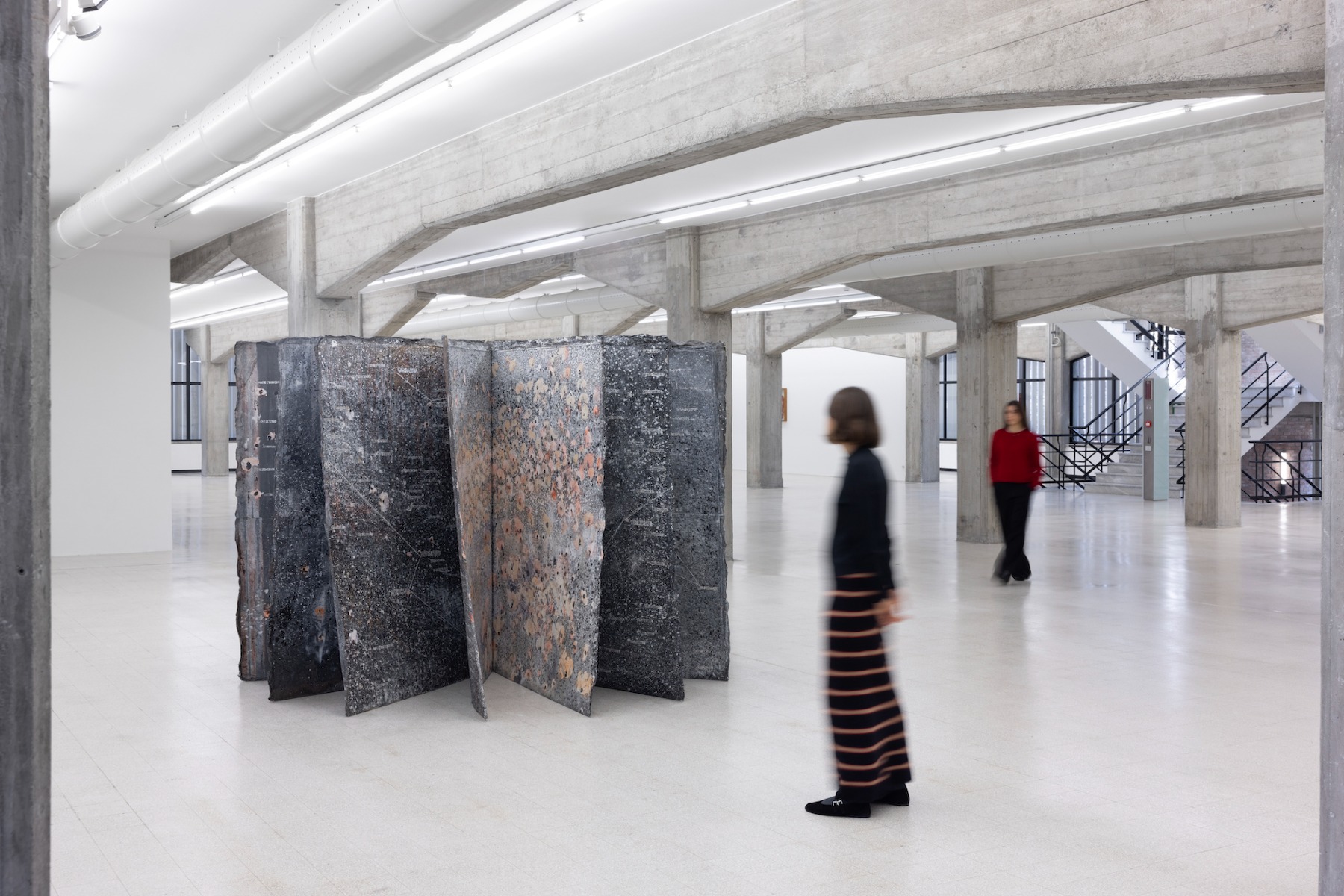
Collezione Maramotti is also connected to a prize dedicated specifically to women artists – Max Mara Art Prize for Women.
The prize was established even before the collection opened, in 2005. For twenty years, we had a collaboration with the Whitechapel Gallery in London. The prize was focused on the British art scene for women – not necessarily British women, but artists based there. The winners have included the French artist Laure Prouvost and the German artist Andrea Büttner.
And just a month ago, we announced that the prize is now nomadic. For each edition, we change the country, the partner, and focus on a different art scene around the world.
The next, tenth edition, which is the current one, is in partnership with Indonesia – with the Museum MACAN in Jakarta. So the winner this time will be from Indonesia. I think the prize is very important because it includes a six-month residency in Italy, organized and supported by Max Mara and the Collezione Maramotti. During this time, the artist has the opportunity to produce new works. She can develop a project or explore something she hadn’t considered before – to change direction, to include new conversations and new ideas. She then presents an exhibition first at the Museum MACAN in Jakarta, and afterwards at the Collezione Maramotti. So next year, in the fall, we’ll present the new project by the winner of this edition.
Is there a special focus on women artists in the collection today as well?
The main criteria are the quality of the works and what the artists are developing. We work with many women artists, but that is not the primary factor in choosing an artist.
Giuditta Branconi. C’est la panik sur le Périphérik / There’s panik on the Périphérik (detail). 2026. Oil on linen © Giuditta Branconi. Courtesy the artist L.U.P.O Gallery, Milan. Photo: Dario Lasagni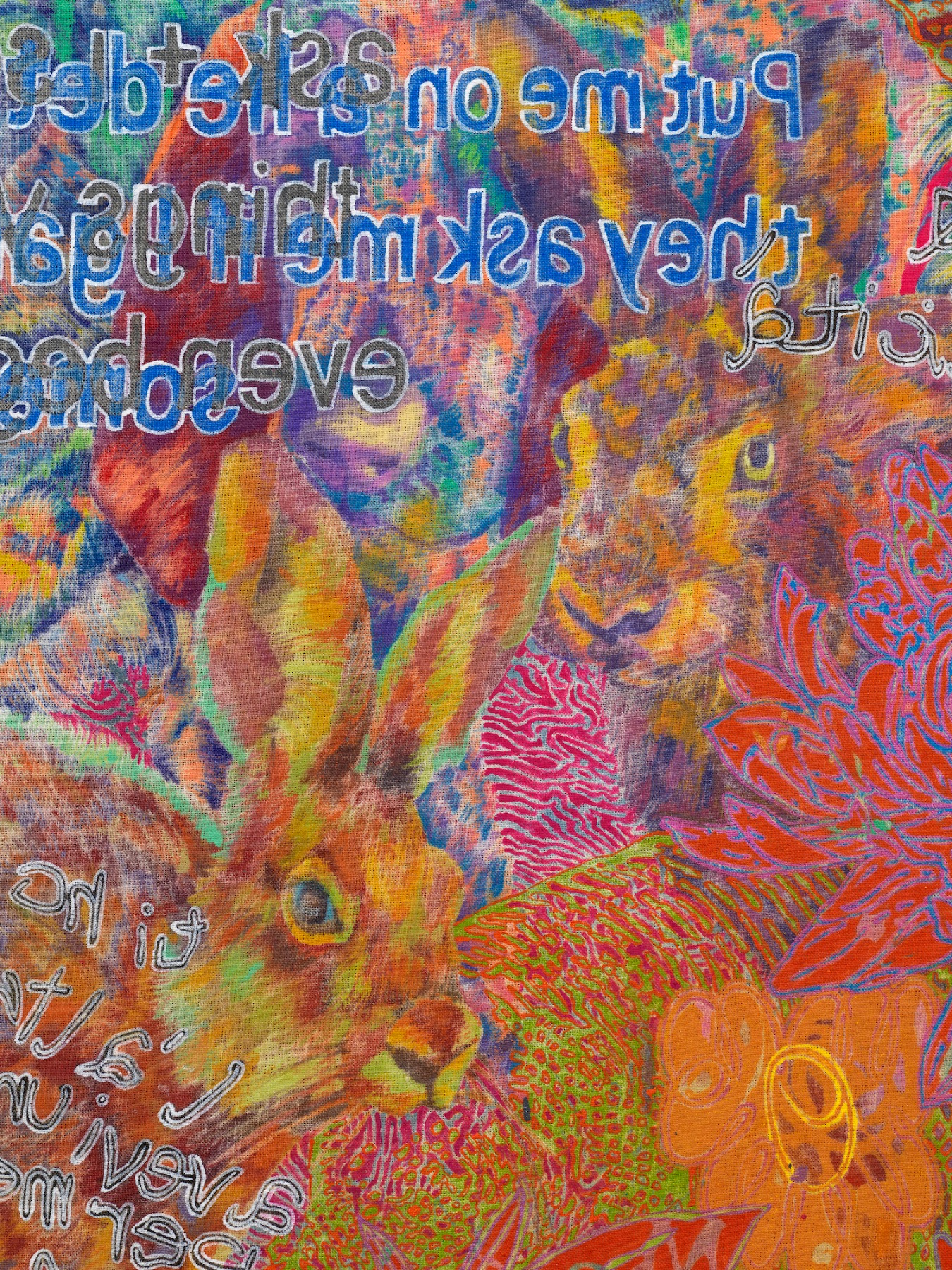
Actually, the current temporary exhibition is by a woman artist – Giuditta Branconi.
Yes! And if I look at the history of our exhibitions, I can see that women artists are becoming more and more present. But that’s also because they’re more visible in the art world today. For example, Giulia Andreani was included in the last Venice Biennale. She has just opened a major exhibition at the Hamburger Bahnhof in Germany. But when she presented her exhibition here – she’s Italian but based in Paris – it was her first solo exhibition in Italy.
And how did you decide to invite Giuditta?
We’ve known Giuditta since 2022. We first noticed her work at a fair in Italy, and the family decided to acquire one of her paintings. Since then, we’ve been following her work over the past three years.
Last year, when we were preparing the program – our planning horizon is usually about a year and a half to two years ahead – we invited Giuditta here. We spoke with her to understand where her work was at that moment and whether she had any challenging or ambitious ideas to develop. After that conversation, we decided to invite her, and we’ve been in discussion ever since.
Giuditta Branconi. Cannon Fodder. Exhibition view. Collezione Maramotti, Reggio Emilia © Giuditta Branconi. Courtesy the artist; L.U.P.O Gallery, Milan. Photo: Dario Lasagni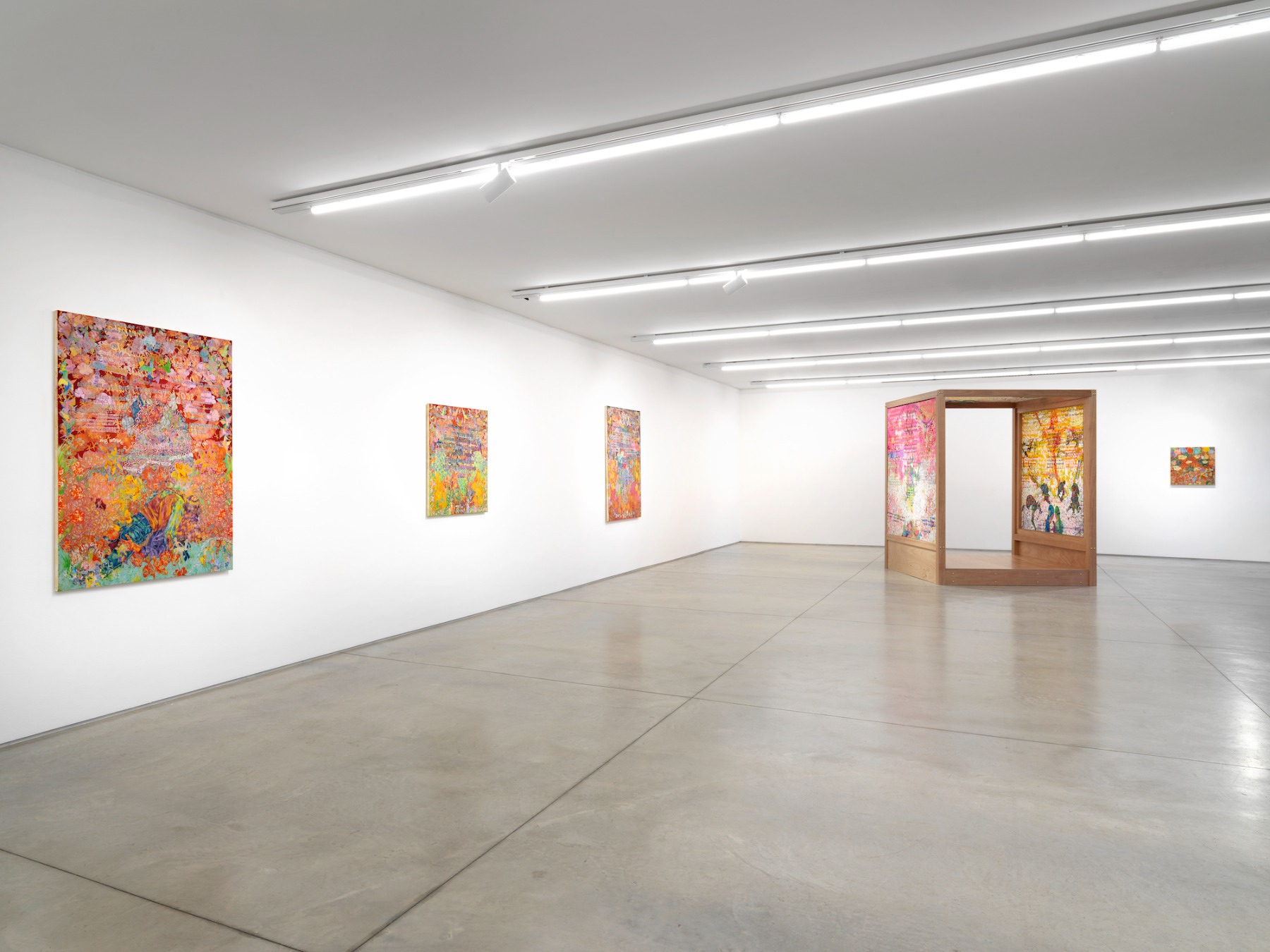
What do you think about her exhibition, her project here, called Cannon Fodder?
I think she did a great job. It wasn’t easy, because she’s young, and this is her first solo show in a space that isn’t a gallery or a fair. I’m sure she felt a lot of pressure, but she worked incredibly hard, with the support of three assistants, because she couldn’t do everything on her own. Every single painting is so rich, so detailed, and so complex that she needed help – but she did amazing work. She was very happy with the show, and that’s the most important thing: when the artist is proud and satisfied with the result.
It’s also not easy, because here you really feel like you’re standing on the shoulders of giants.
Yes, when you go upstairs, you see Bacon, then Kounellis, Schnabel, and so on. Some artists really feel the pressure of the masters or the history of contemporary art. But I think that, in Giuditta’s case, it’s more about being in a space like this – an important place, with many people coming to see her work, judging it, or asking questions about it. What’s really significant is that she was able to create the exhibition exactly as she had imagined and wanted to present.
But what do you personally see in her paintings?
I’m really fascinated by the energy in her work. Personally, I’m very drawn to the tension between the extremely precise, meticulous work she does and this chaotic, colourful, playful “skin” that covers the pieces. But it’s just a surface – a kind of trap. At first, you’re attracted by the brilliant colours, the birds, butterflies, and other seemingly reassuring elements. Then, if your gaze lingers on the work, you start to notice a spider, a fragment of a body, a skeleton, or a vanitas. It’s this kind of opposition that I find very interesting.
Giuditta Branconi. Se seguissi le molliche di pane (non torneresti qui mai più) / If you followed the breadcrumbs (you'd never get back here). (Detail). 2026. Oil on linen, wooden structure © Giuditta Branconi. Courtesy the artist; L.U.P.O Gallery, Milan. Photo: Dario Lasagni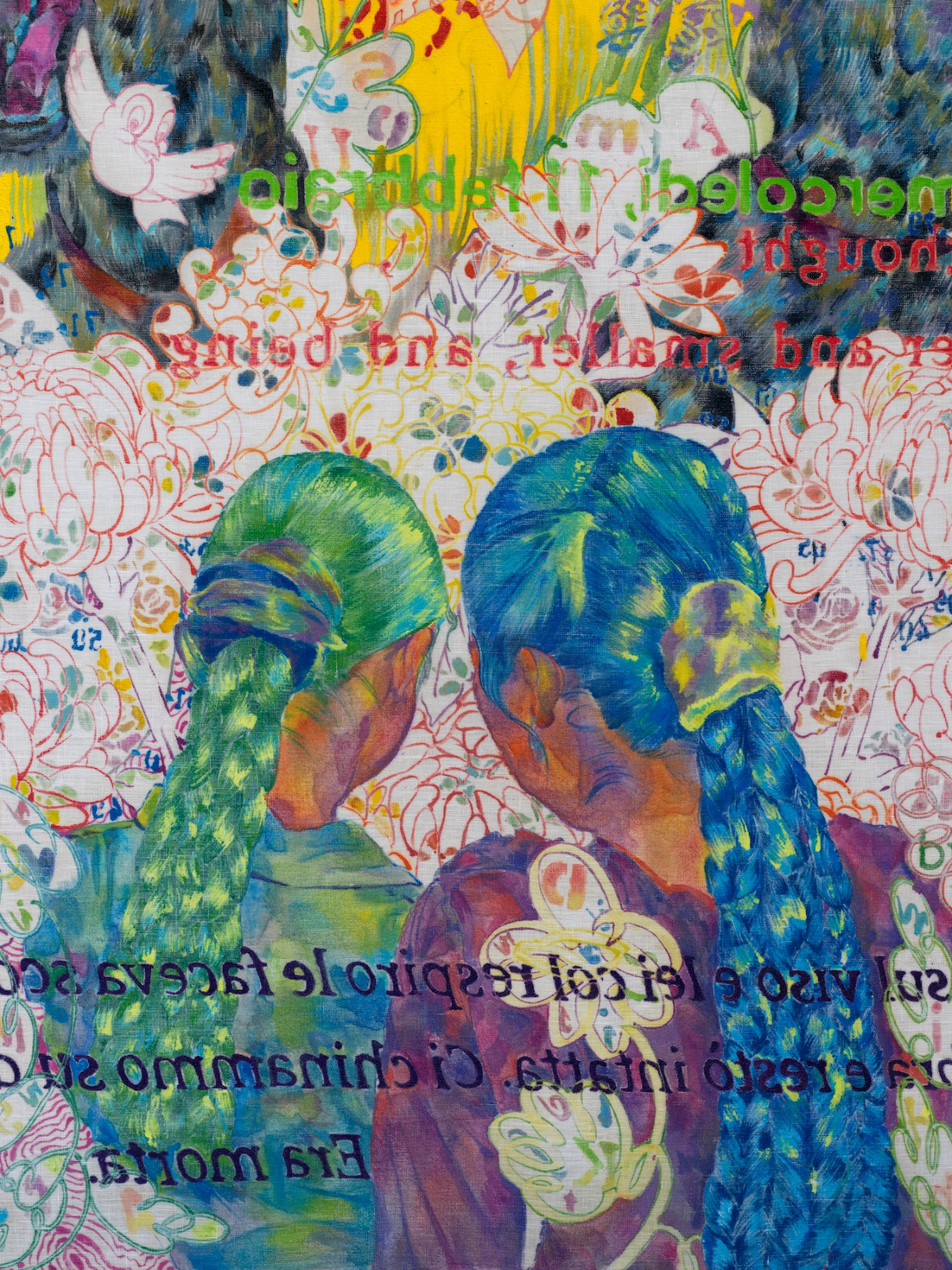
These works are very hypnotic, I would say – especially when you look more closely. And when you do, you notice so many words and phrases, often mirrored, so it becomes a kind of mystery.
They are mirrored, but also overlapping and intertwined. The words change colour from one phrase to another, as do the fonts, the languages – everything.
In one of the publications about the collection, I read that after COVID you introduced a system limiting visits to no more than 25 people in the building at any given time. And this system is still in place.
It’s actually always been like this, since the very beginning – so it’s not related to COVID. Each visit is limited to twenty-five people at a time, in order to preserve the quality and calmness of the experience. Visits are always accompanied by a member of our team, and they are free of charge, but require a reservation. We have regular visiting hours from Thursday to Sunday, and for groups or international visitors, we can also arrange visits on other days. So booking is necessary, as there is a limit of twenty-five people at a time.
So, numbers are not really our driver – it’s more about a different level of engagement with the artworks. And our tours are not really guided – they are accompanied. The approach is very soft, and it’s more about sharing information on the collection and its history, rather than offering a detailed, artist-by-artist or movement-by-movement analysis.
Our colleagues are present and available to answer any questions, but nothing is imposed on visitors. So, everyone can choose whether they want to ask something or experience the visit in silence, simply enjoying their own relationship with the works. And all of this is possible because we limit the number of visitors at any given time.
My last question – or rather, a plea… Maybe you could tell us one or two of your favourites in this collection.
Oh [laughs], bad question! [laughs] They really change every day. My favourite artworks change every day because… I’ve been working here for nineteen years, so they’re all very familiar to me.
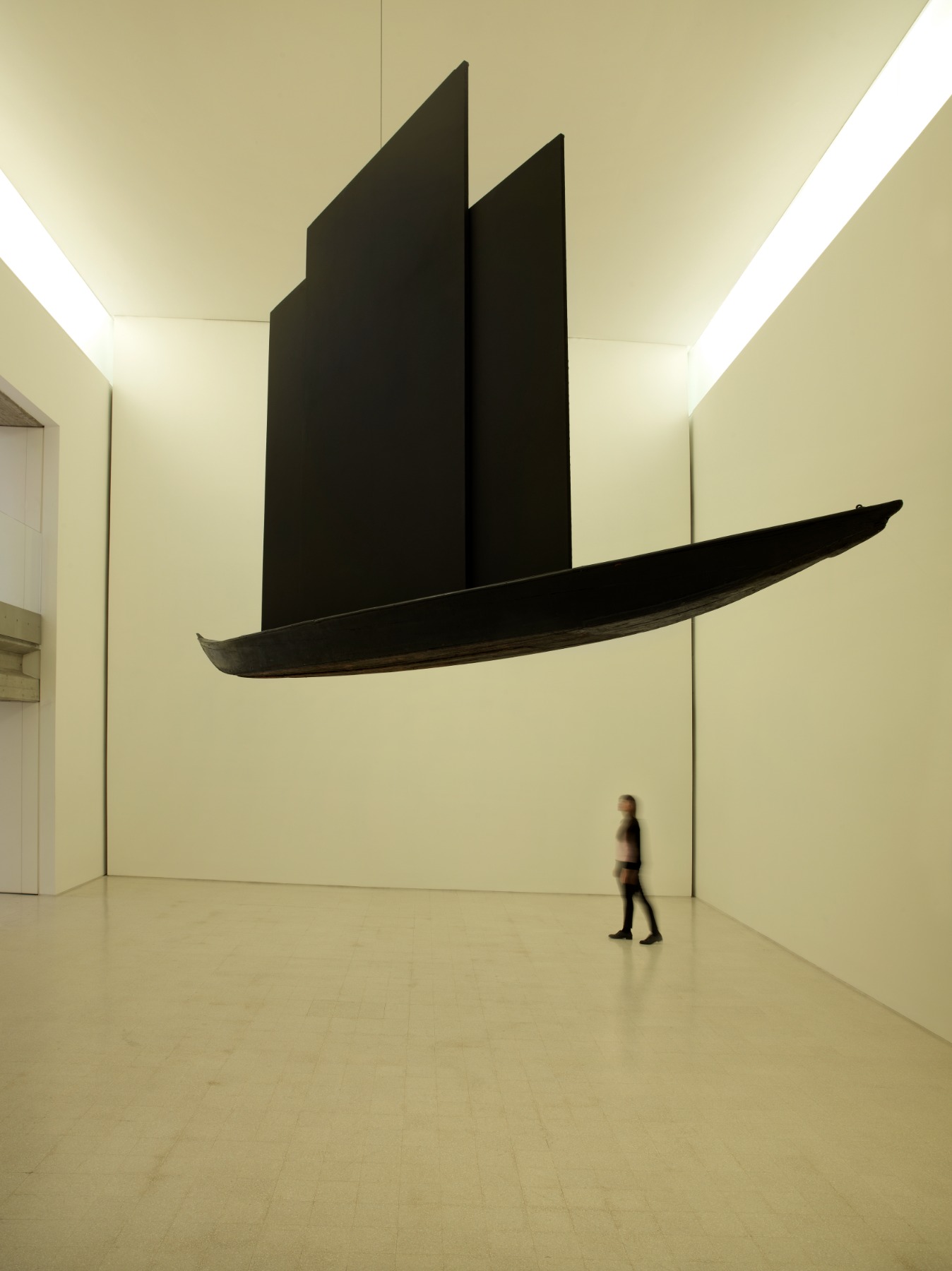
Exhibition view, artwork by: © Claudio Parmiggiani. Photo: Dario Lasagni. Courtesy Collezione Maramotti, Reggio Emilia
But today?
Today? From the permanent collection, I would say… Caspar David Friedrich by Claudio Parmiggiani.
The big black boat. Why?
Because it’s wonderful. It’s lyrical and suspended – with no direction, no water. It feels almost like being on the moon. The boat carries so many associations: a spiritual journey, exploration, or questions like “Where am I going?” This is a special work because the boat is real – one of the typical boats that were used on the Po River, which also touches the province of Reggio Emilia, where Claudio Parmiggiani is from.
For him, it was a very familiar object – this kind of black boat. He used to say that these boats transported sand and fog, because there’s often a lot of fog in that region.
And sand?
Yes, sand – to make the bricks for building things. So, sand and fog, which is very poetic. Here, in this work, there’s no sand, no fog in the boat – just three black paintings. Only a silhouette. It’s not easy to say, “This is exactly my favourite work,” but… okay, today it’s my favourite.
Perfect. Thank you so much!
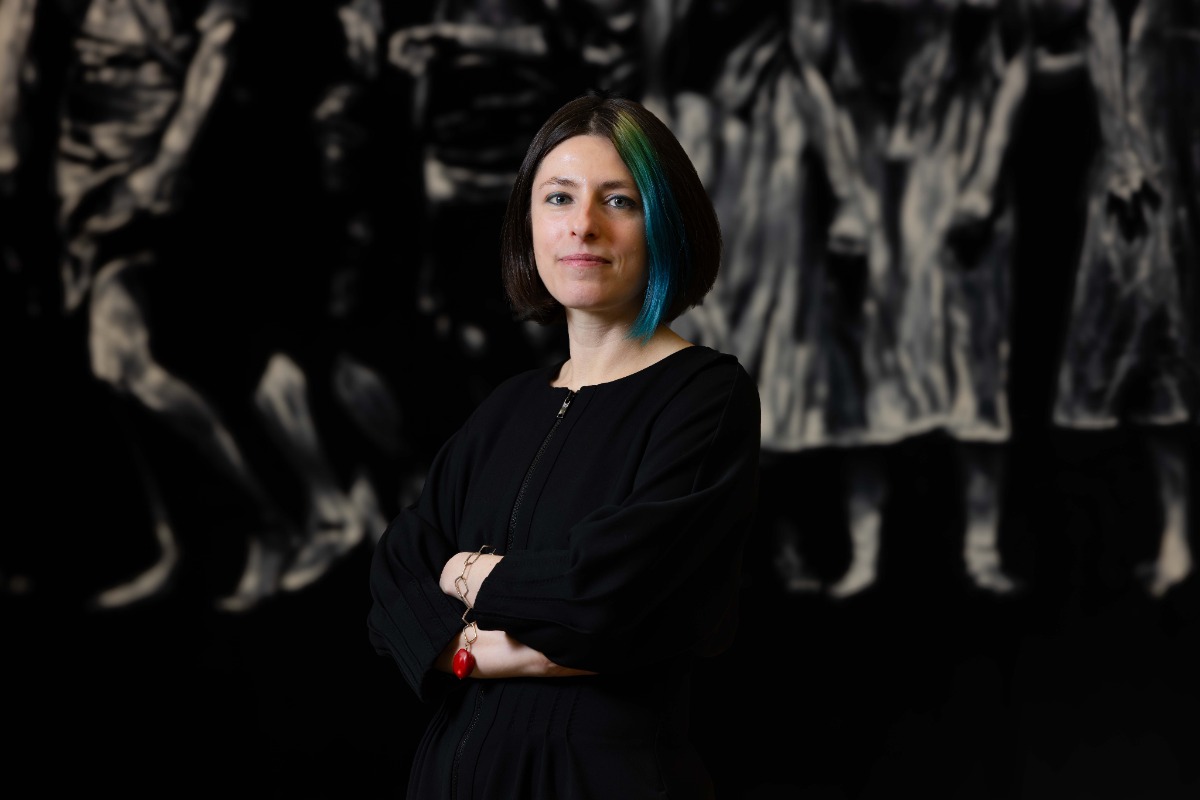
Upper image: Sara Piccinini, Director of Collezione Maramotti. Photo: Bruno Cattani - Foto Superstudio
