


Dainis Pundurs
Dainis Pundurs (1965) is one of the most prominent personalities in Latvian contemporary ceramics. He is, in fact, a true chameleon who has surprised the public many times during his creative career, leading his viewers to literally marvel at his creations: filigree porcelain sculptures that in their visuality and fragility evoke associations with lightly creased paper; deftly made creative interpretations of ancient Greek vases; and three-metre-high stoneware vases that surely involved dizzying technological challenges to have been thrown on a wheel.
Dainis Pundurs works with porcelain, clay, stoneware and chamotte, and makes vessels, interior objects, and groups of objects. In an interview with Arterritory.com, he once said: “[...] I try to maintain the joy of a beginner when working with materials. I choose to focus on the finer details, sometimes even allowing myself to do something wrong, i.e. contrary to what is written in books, in order to still maintain the spirit of a beginner and not that of a professional”.
Pundurs is also an associate professor at the Art Academy of Latvia, where he teaches ceramics. He has received numerous awards, including: the Diena Newspaper Annual Culture Award (2013); the main prize of the Museum of Decorative Arts and Design for Best Creative Performance (2004); and the Martinsons Award Gold Prize, National category, at the 1st Latvian International Ceramics Biennial Competition Exhibition (2016). Pundurs was a nominee for the 2019 Purvītis Prize.
***
THE ASTEROID TENDS TO RETURN
Asteroids came as a sudden idea realised in spatial expression through the physical interaction between the artist and the clay. The culmination of the event was the solo exhibition ASTEROID, held at St George’s Church in 2007. For the duration of the exhibition, objects (asteroids) made of clay became sacred forms that conveyed a message on a scale close to the human body: future catastrophes were already conceived in the distant past with infinite love.
These objects have been joined by by the dimension of memory and the patina of Earth’s weather.
In 2007, while the exhibition was running, a previously unknown asteroid was discovered to be approaching the globe; it was named Asteroid FF1.
On April 1, 2022, as Asteroid FF1 approached Earth once again, it was classified as “potentially hazardous”.
THE ASTEROID. 2007. Artist’s technique; ceramic stoneware. 50 x 36 x 34 cm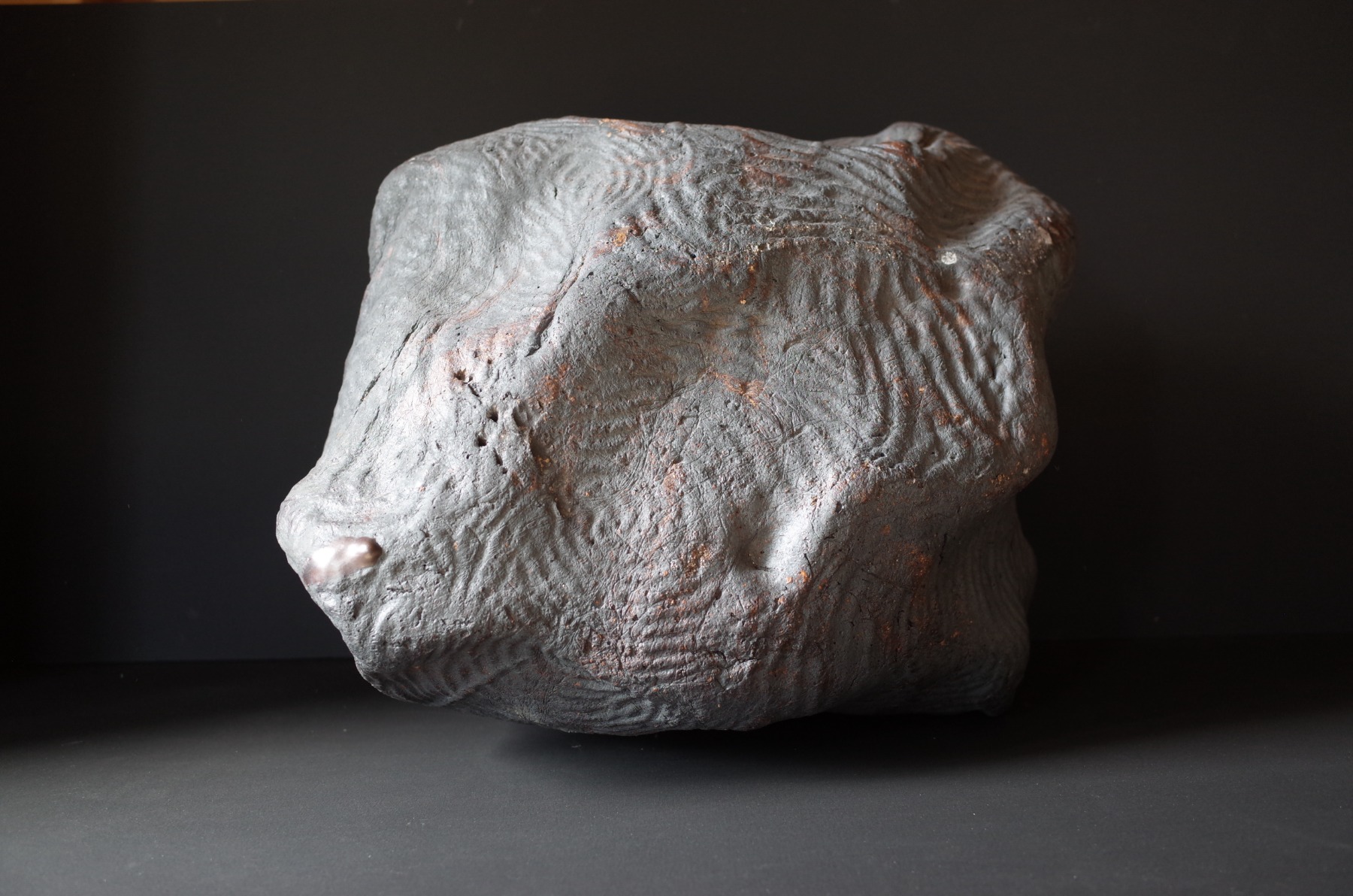
3120 €
BUY
***
Mate Tea Vessel. 2020. Porcelain, clay, glaze, 10 x 8 x 8 cm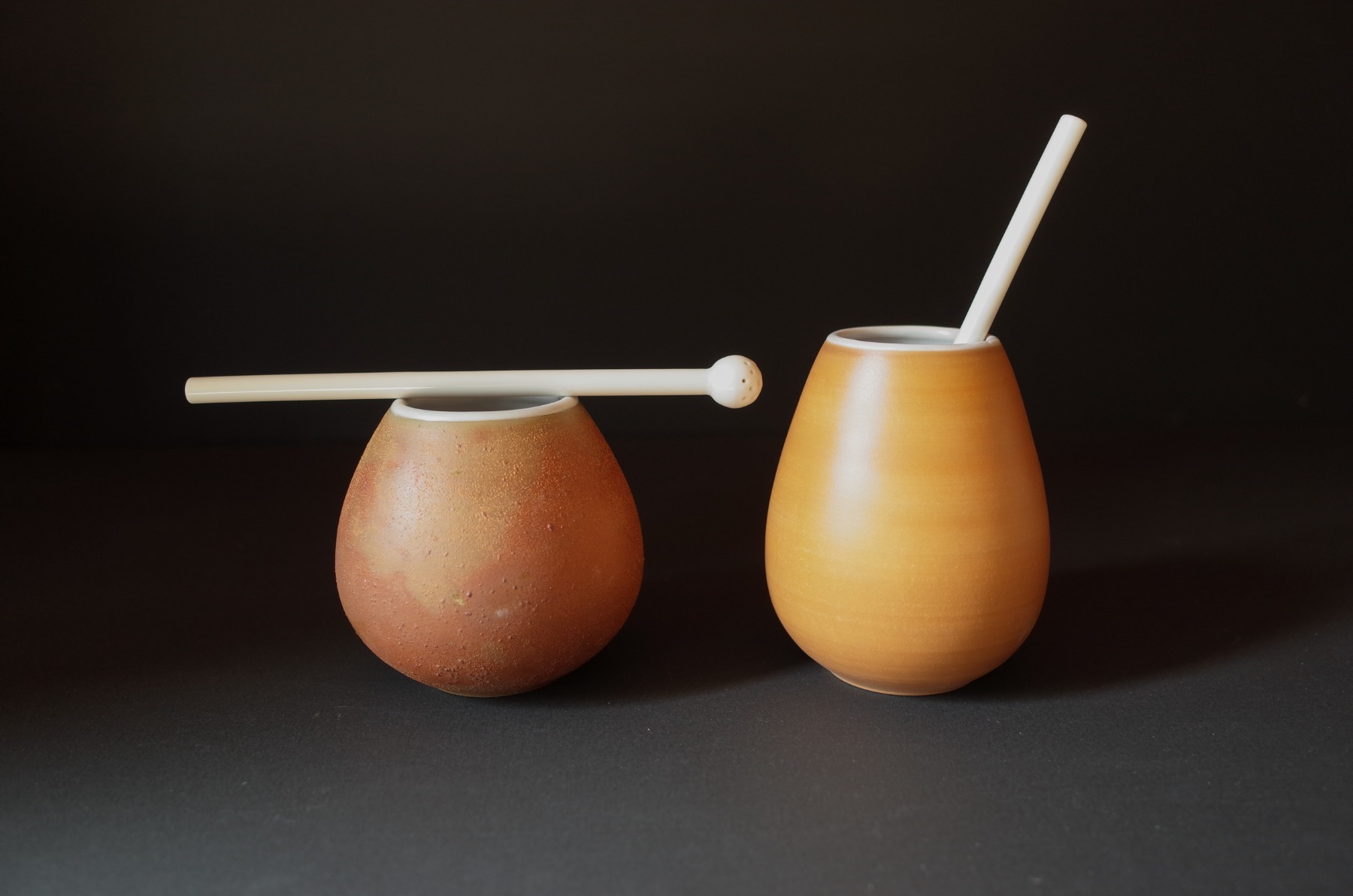
62 €
BUY
