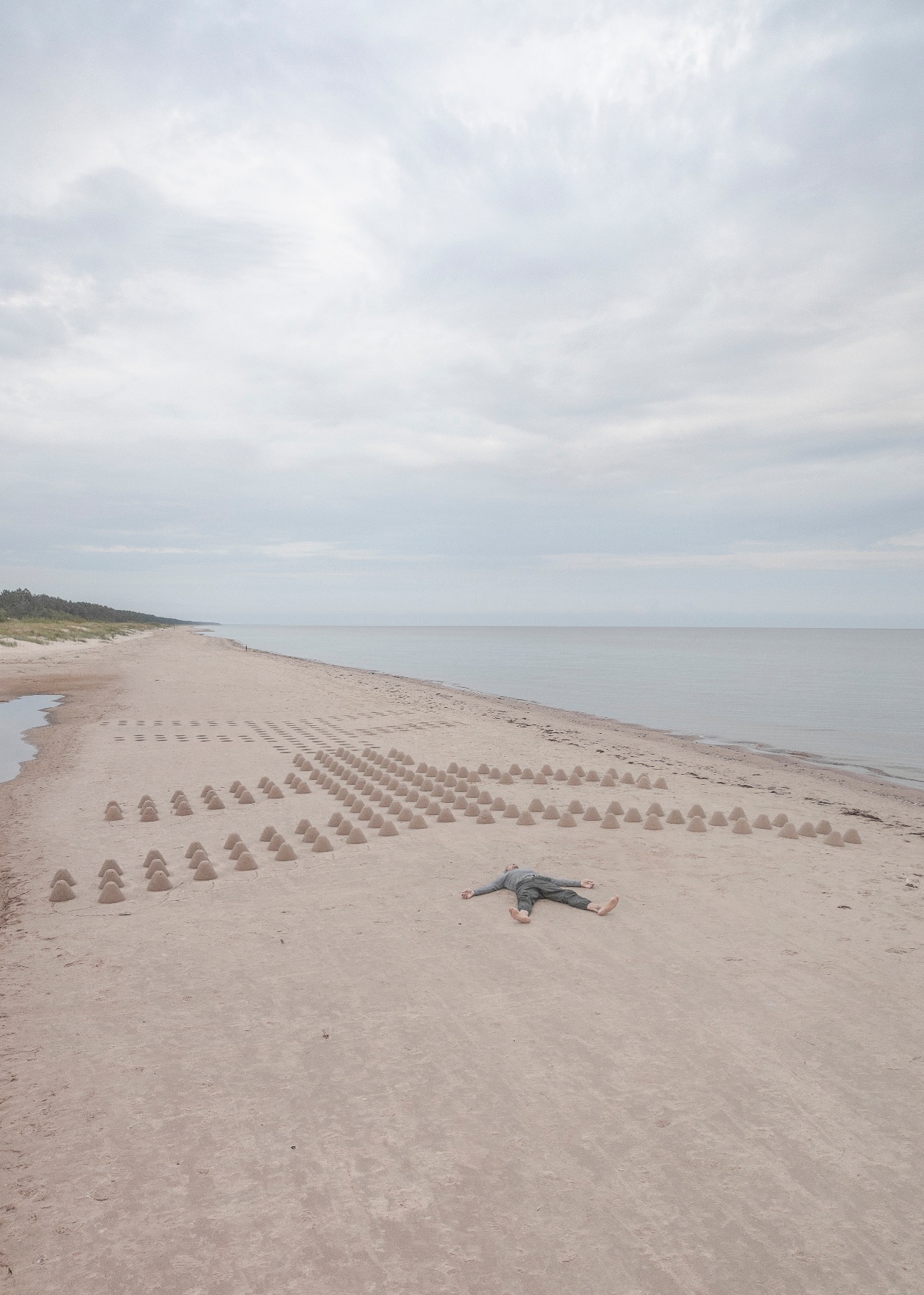
Singularity
The environmental object executed by Dainis Pundurs at Mazirbe beach is the artist's second return to the Livonian coast as part of the Arterritory.com nomadic gallery energART, an art and nature interaction project.
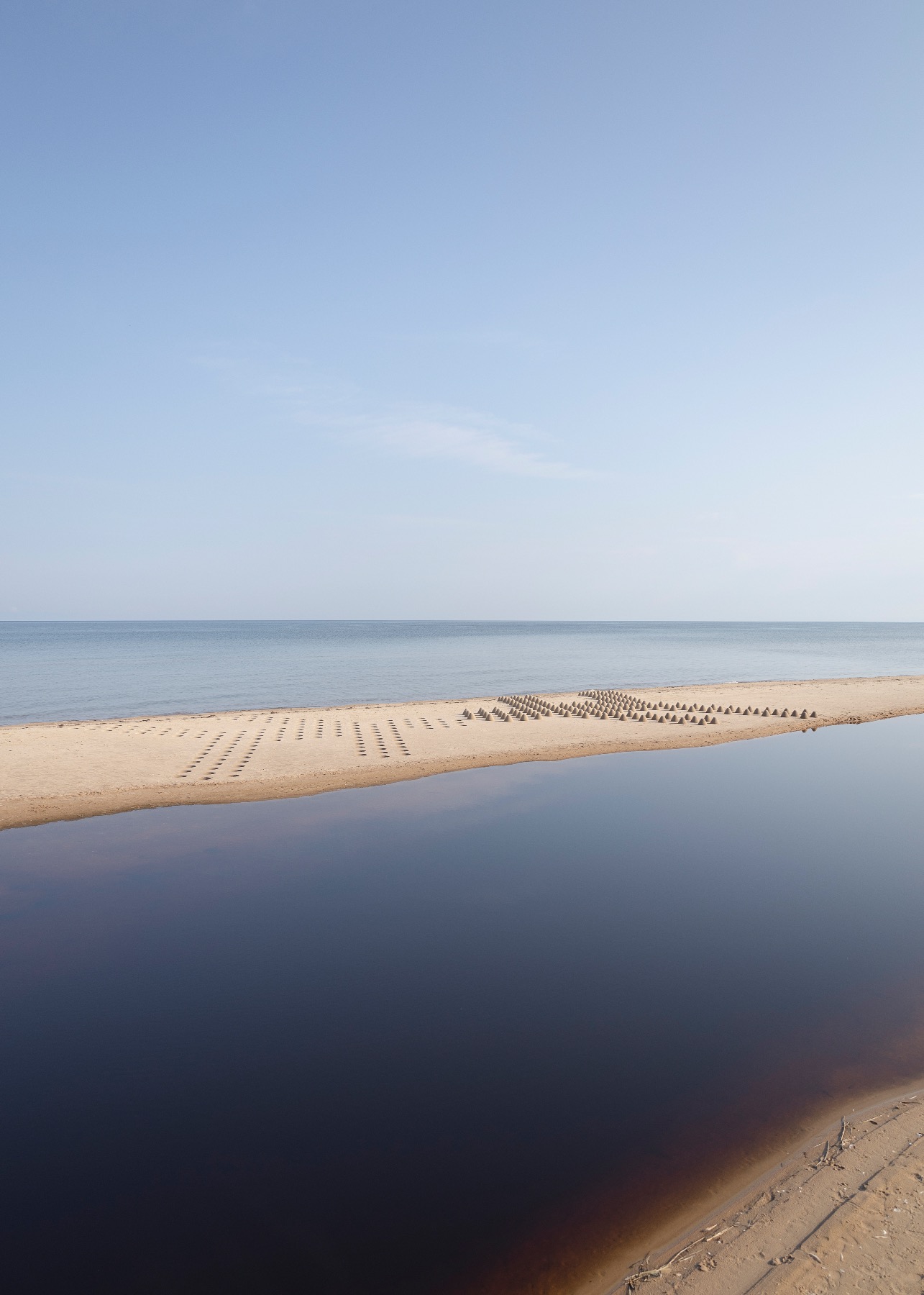
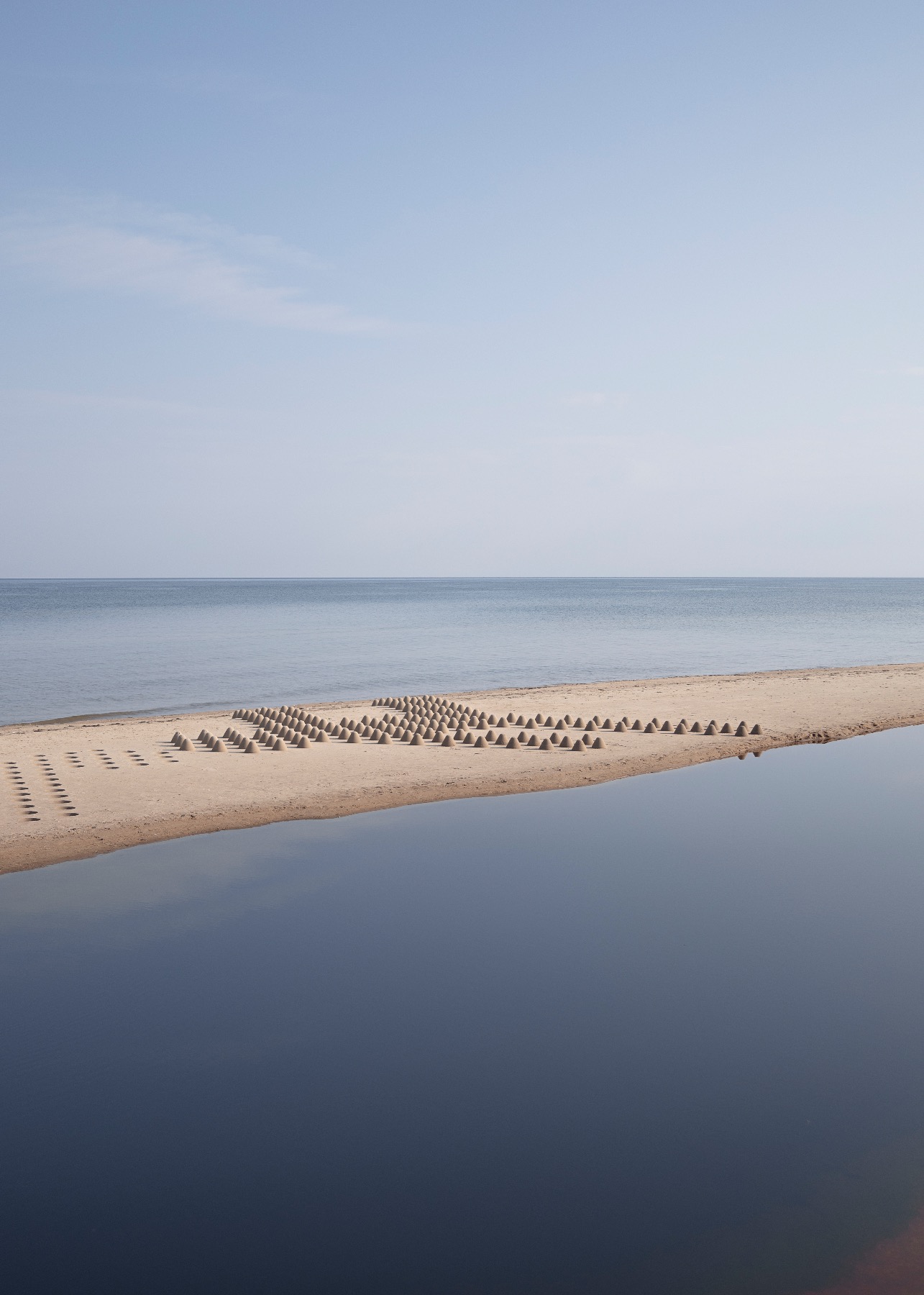
Created in synergy with the sea, sand, sun and wind, Dainis' work is an ode to harmony and the wonder of being. In fact, nature itself has participated in its creation, with the winds of the open sea of Mazirbe becoming almost caressing touches, and the sea completely calming down and turning into a virtual mirror – all in order to support Dainis.
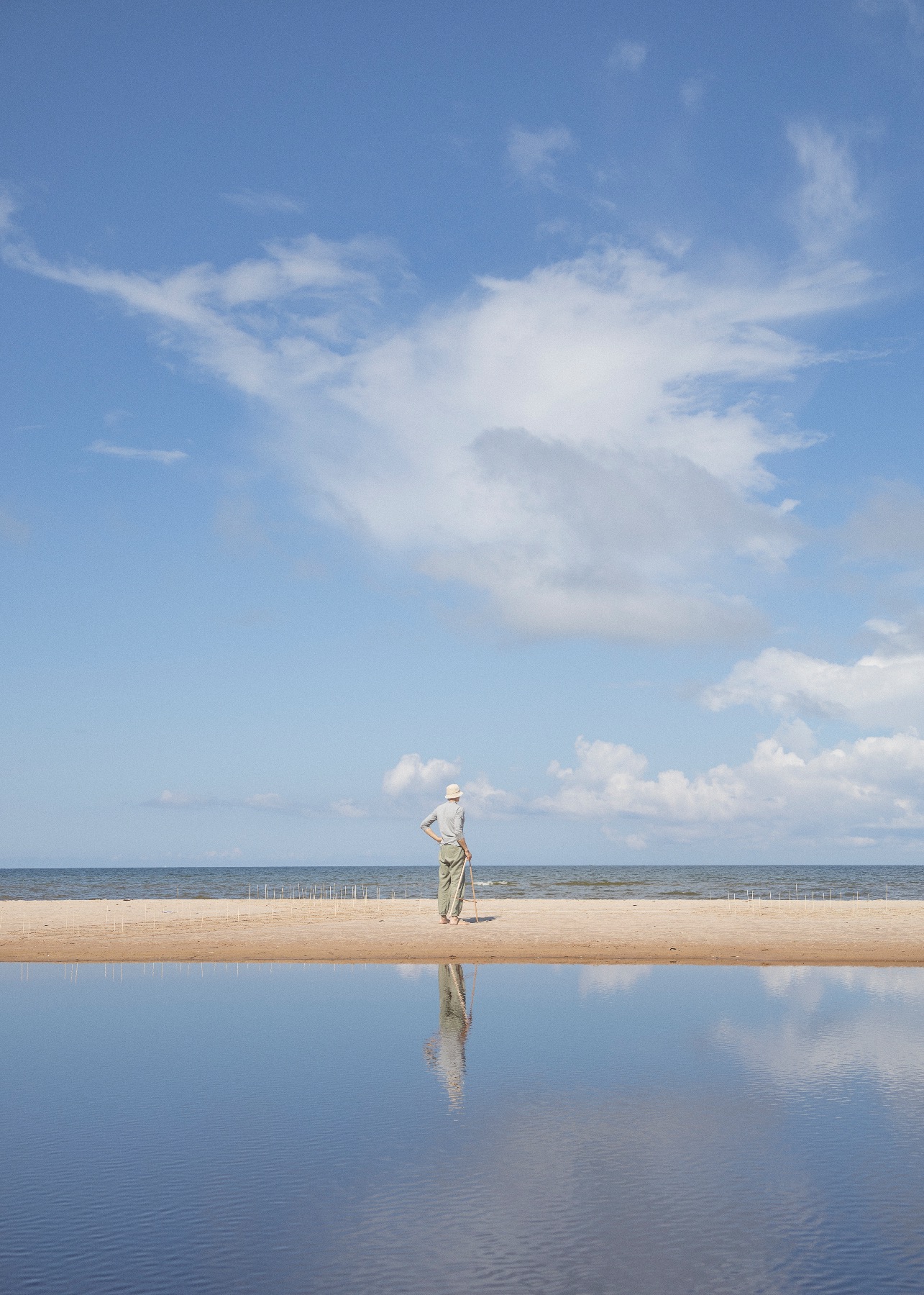
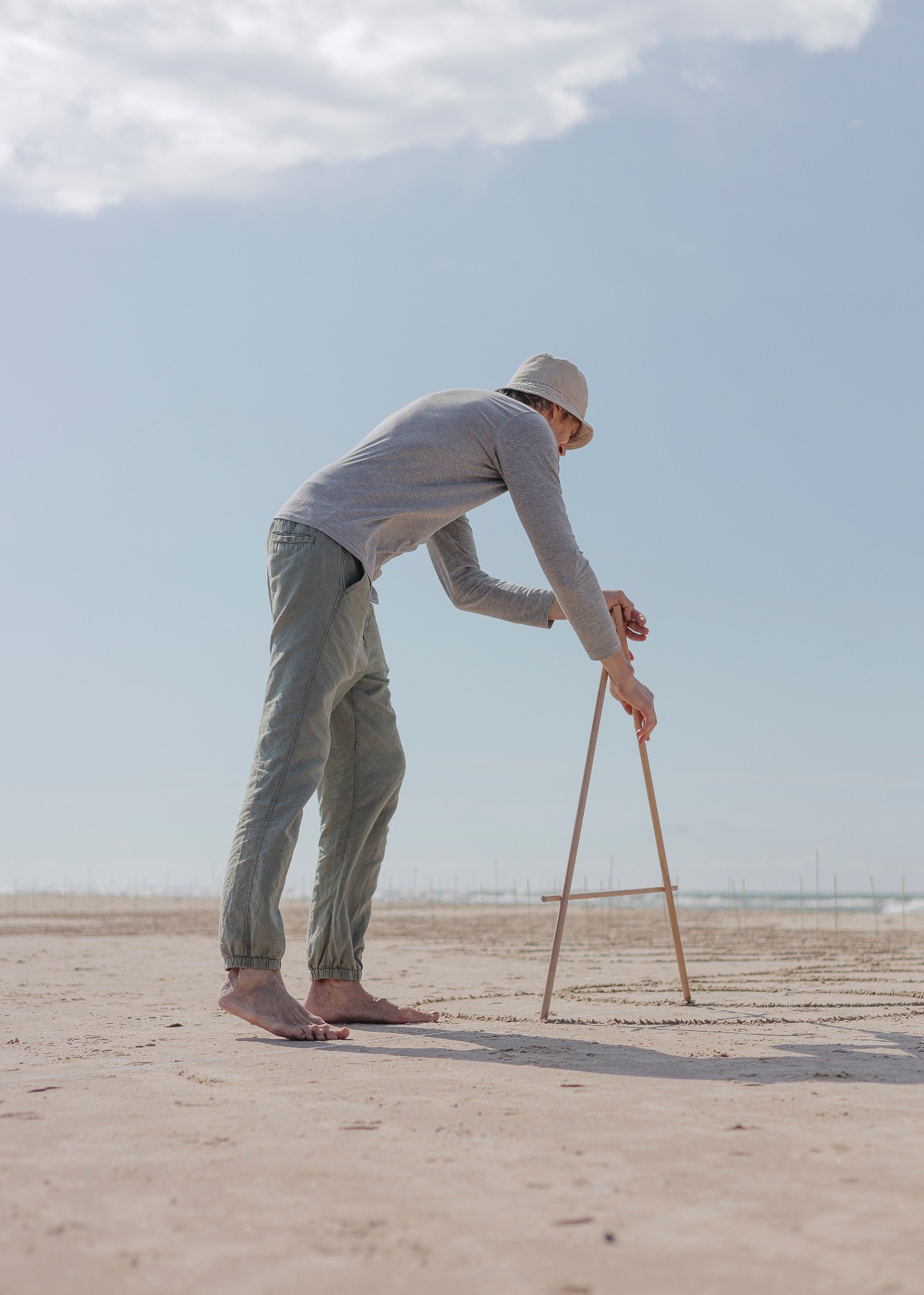
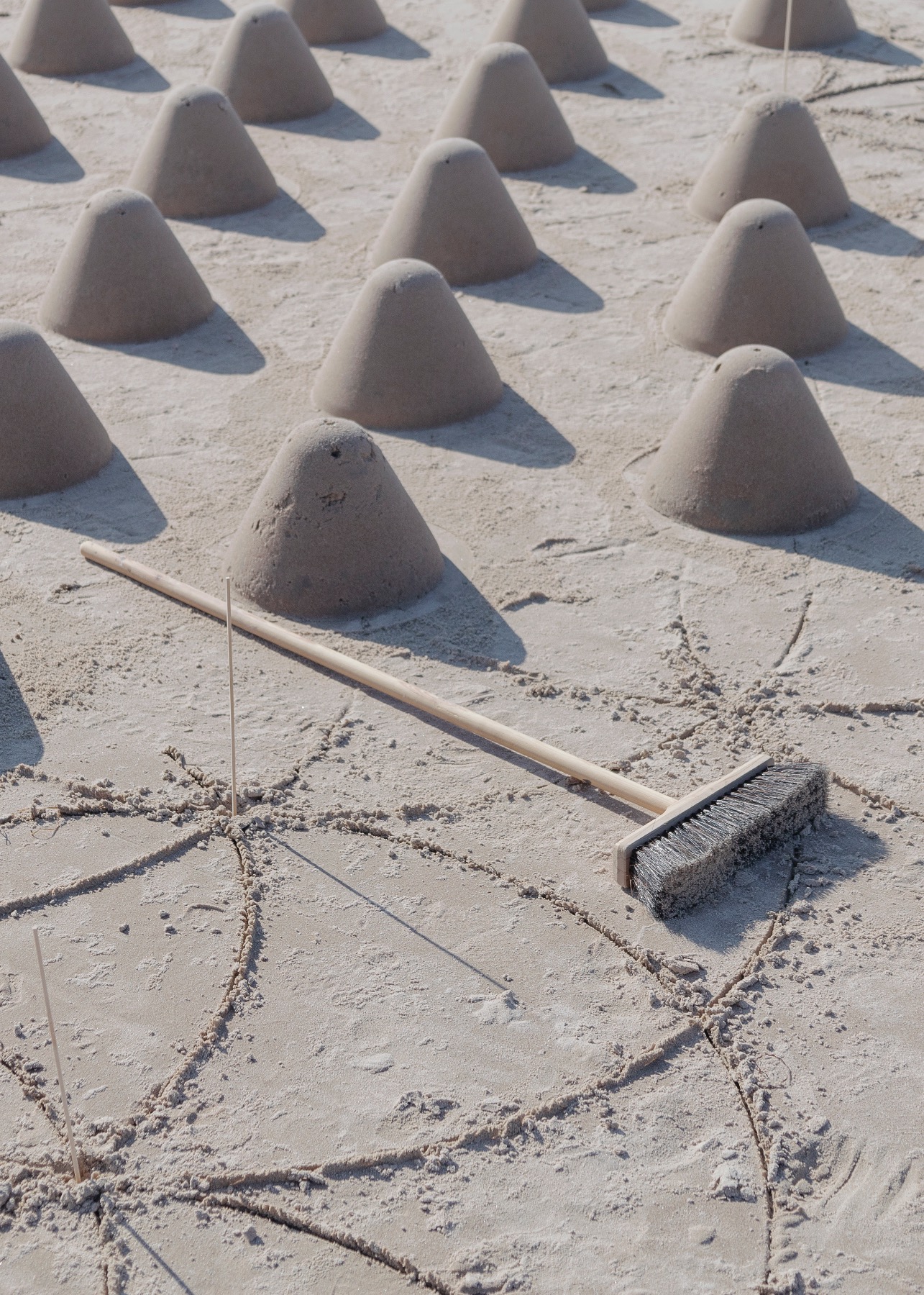
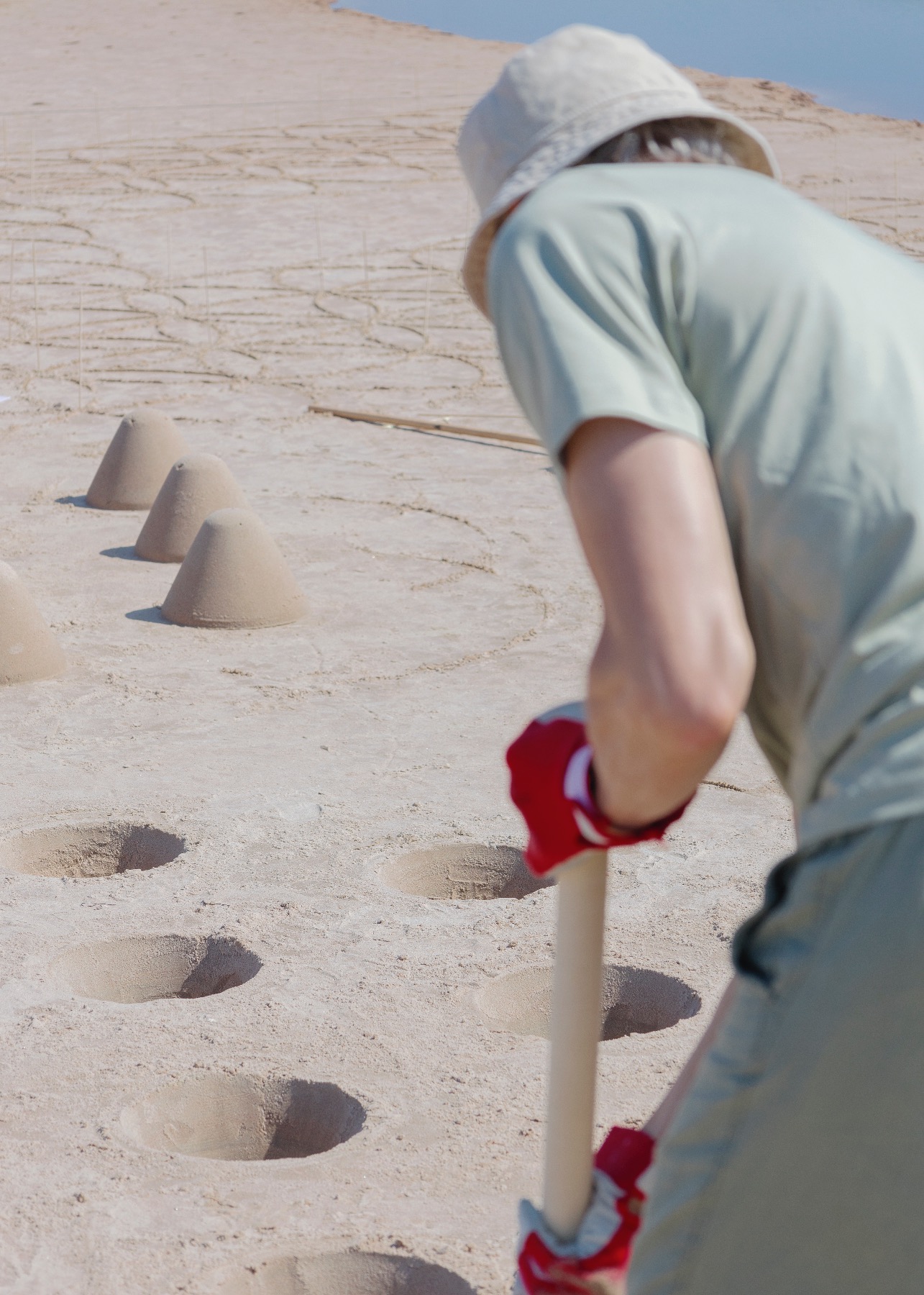
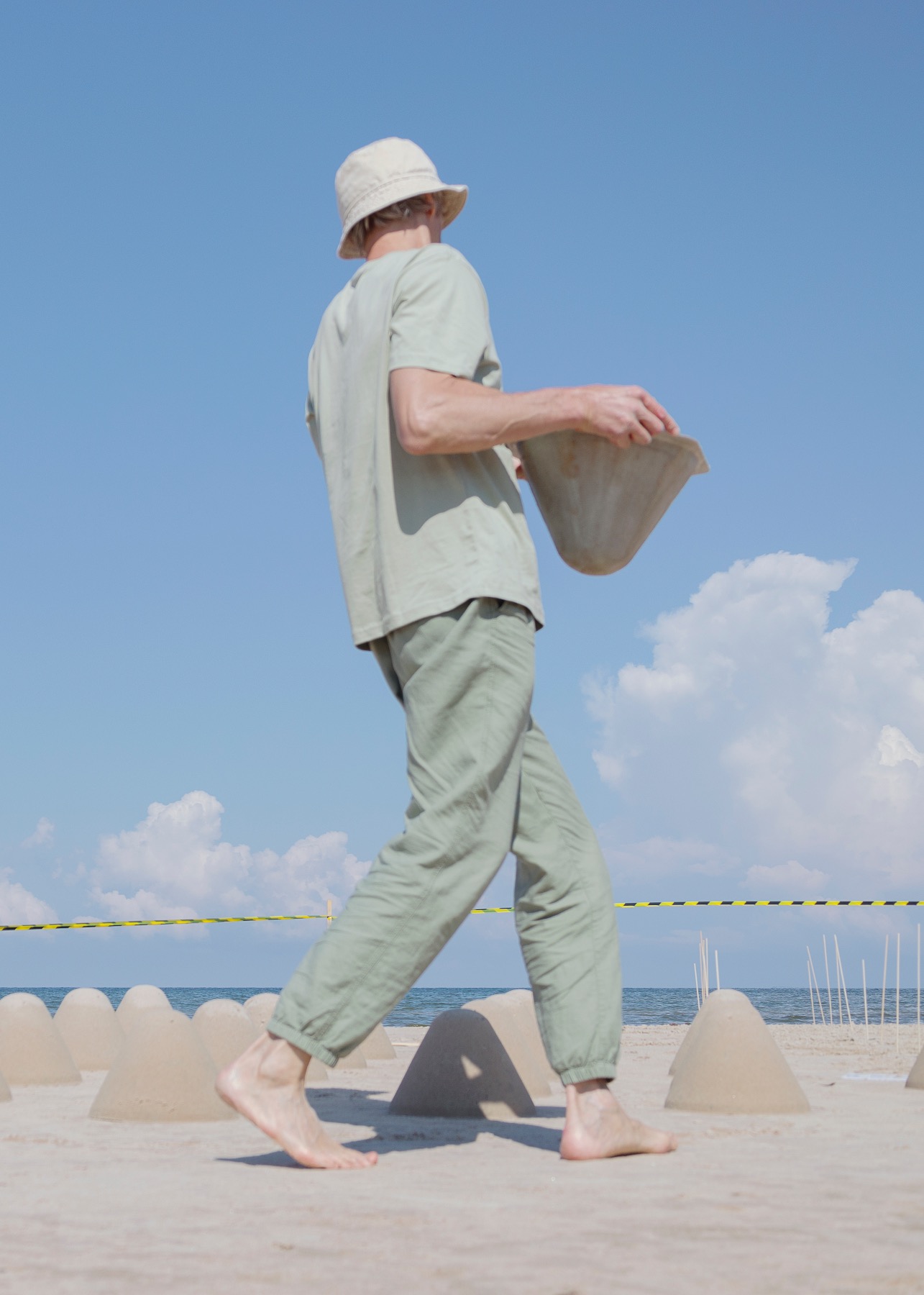
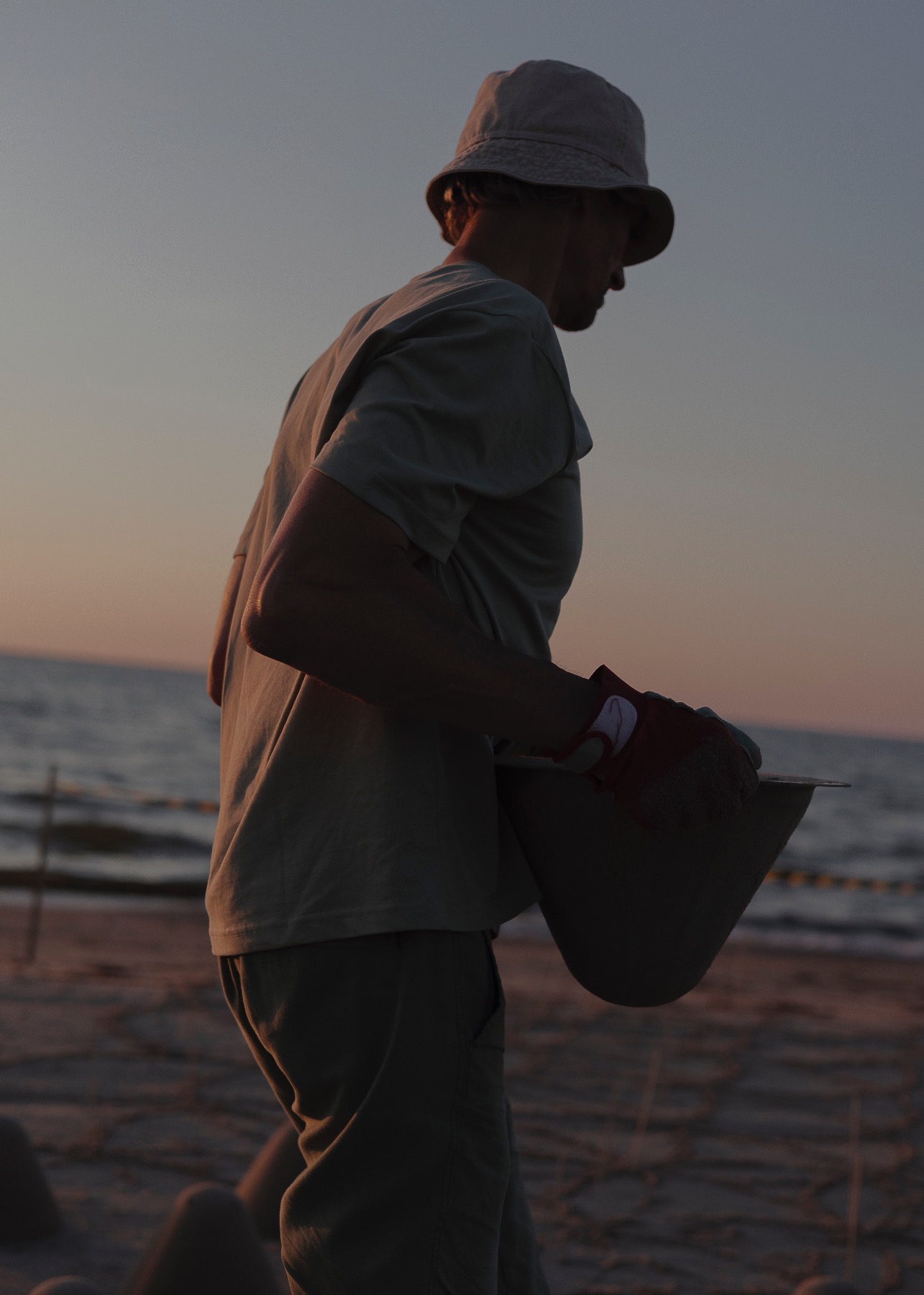
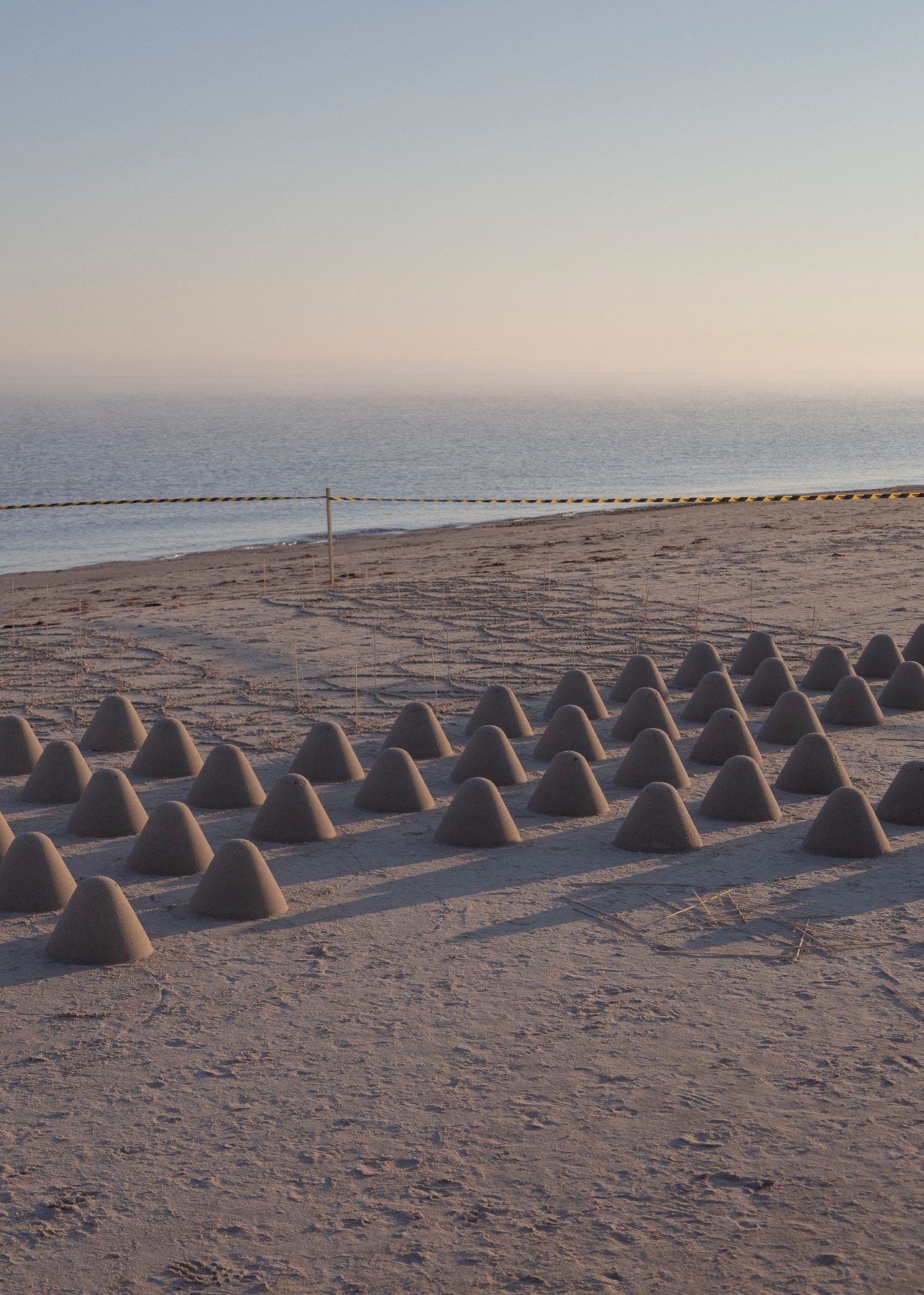
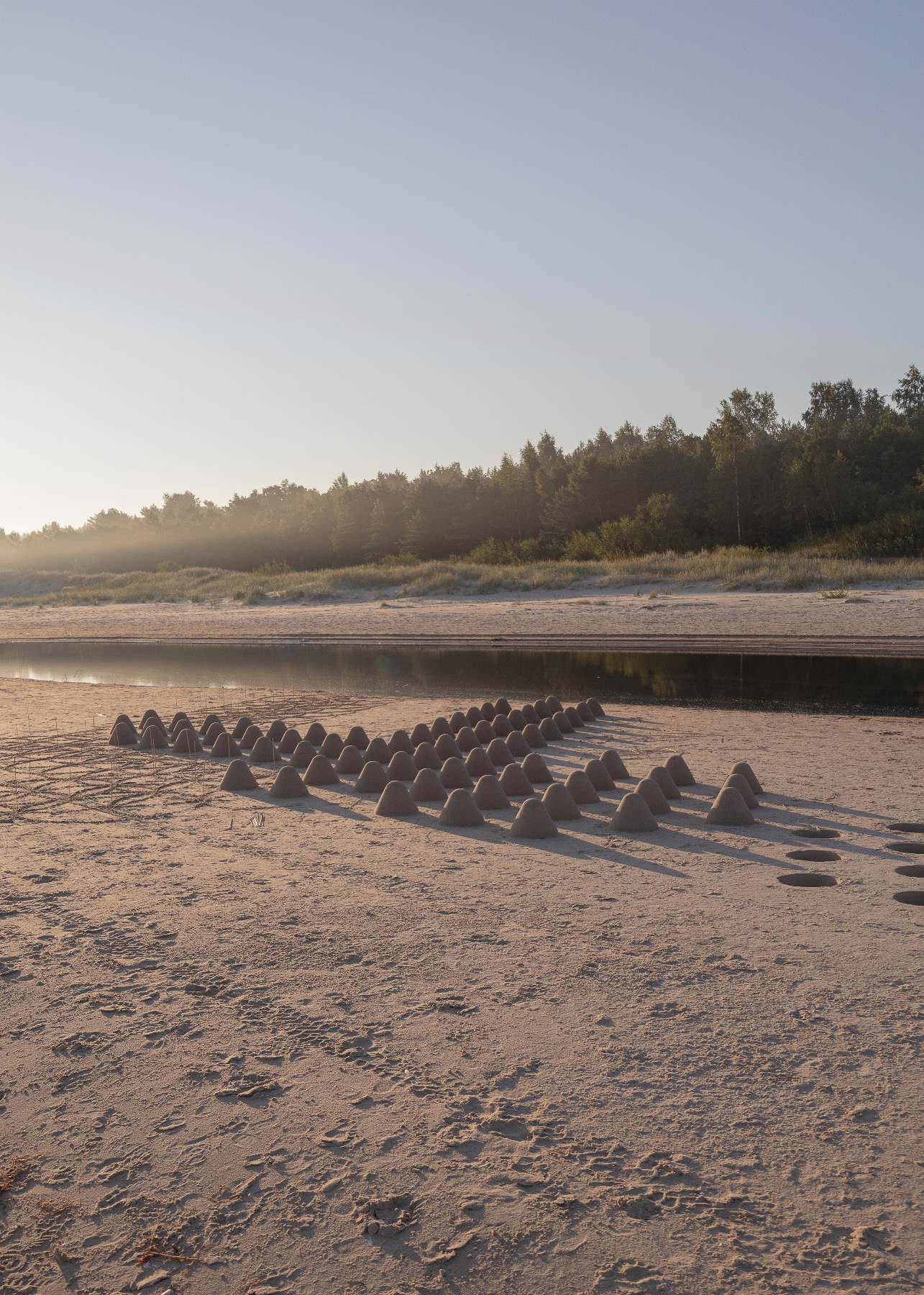
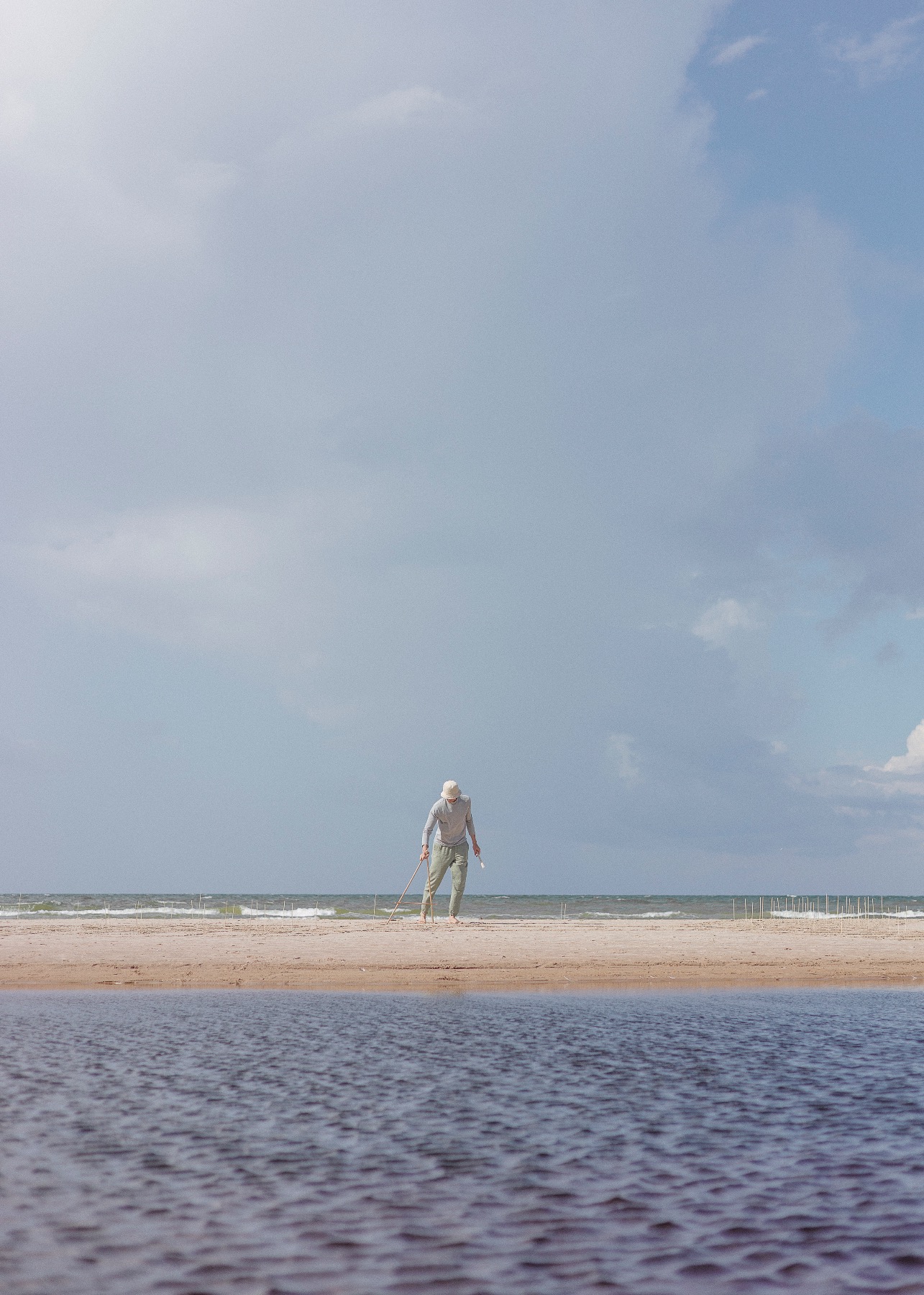
The work is set in a sandbank between the sea and the Mazirbe River, and took four days to create. The artist worked from sunrise to sunset, and sometimes a little longer. The starting point was a line, the so-called "flower of life". One of the sacred geometries found in Egyptian pyramids and Japanese temples, it is, in fact, the basis of all life.
The form of the artwork consists of two human figures. One is made of 150 sand cones, which the artist himself calls "sand cakes". The other is a conditional void, the origin and source of everything. Each filigree hole is the origin of one cone.
Today, on August 9, this object is perfection itself – its two sides are almost faultless. But at the same time, it is in constant transformation, like everything living around us. This is a story of emergence, creation, origin, maturity, disappearance, and becoming one again, thus proving that art is a medium that helps us understand life.
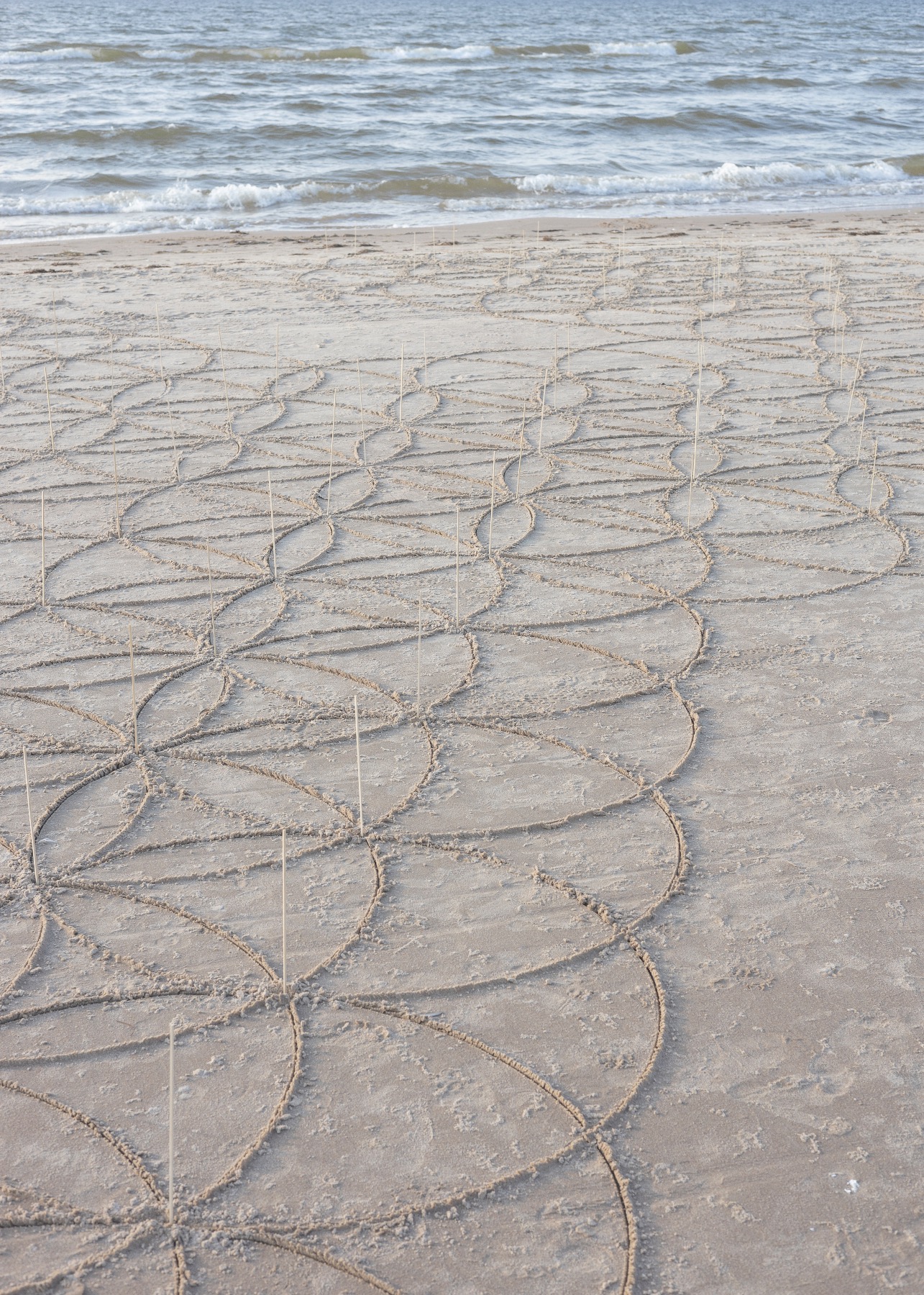
In a few days, the wind will blow, the sea will change its shoreline, and only a fading imprint of Dainis' work will remain. A frozen void, a space in which a new idea will once again be born and materialise. This object is a reminder that form embodies the present. A moment that is here and now. Every action has its pleasures and its price (to quote Socrates). Arriving at maturity is a long and complex process in which it is impossible to "skip over" any stage. The whole environment is involved in the co-creation process – even the birds, who watch the work of art with reverence from a drone's point of view. And perhaps for some of them, who have flown over Peru’s Nazca lines, it reminds them of something they have seen before.
Symbolically connecting earth to sky, the cones evoke the rock garden of the Ryōan-ji temple in Kyoto. Except that instead of the famous fifteen stones, there are 150 cones, which makes the magic of counting even more complex. This geometric figure symbolises fertility and rebirth, and its image has been present in art for at least 5000 years; it can be found in all kinds of places throughout the world.
Dainis’ work embodies the order of life's events and processes.
The process of creating the environmental object was documented by the artist Pauls Rietums.