


As a joyful fighter
Interview with Agnieszka Faferek, founder of the gallery eastcontemporary, which represents Eastern European and Baltic artists in Milan and beyond
“Are you familiar with Agnieszka Faferek?” Italian curators Francesco Urbano Ragazzi, who have long worked as a duo, asked me during a walk through Milan in mid-December. “No,” I replied, “but of course I’ve heard of her gallery, eastcontemporary, dedicated to the research and support of the Central and Eastern European art scene.” “Then you absolutely must meet her,” they insisted.
We enter the gallery on the first floor of a building on Via Giuseppe Pecchio, where, over the five years of its existence, numerous artists from Central and Eastern Europe — many of whom Arterritory has also been closely following — have presented their ideas and visions to an international audience, so characteristic of Milan, a city long considered an art and fashion destination.
eastcontemporary, exhibition space in Milan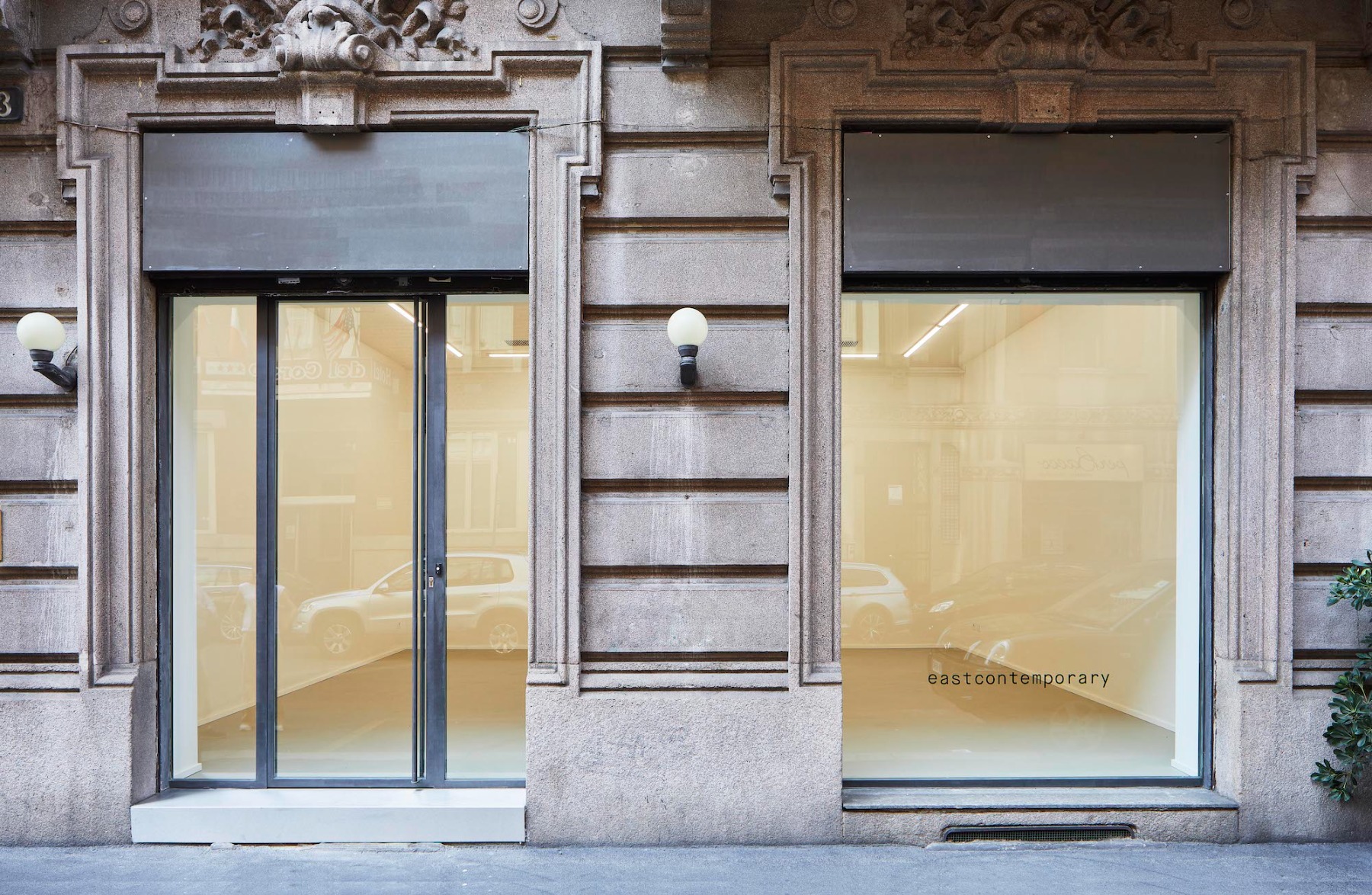
We are greeted by the gallery’s owner, introducing us to the works of Armenian-Lithuanian artist Andrius Arutiunian (b. 1991, Lithuania). His exhibition, Poison Paradise, running until the 20th of January, features several sculptures alongside a dedicated sound installation. Through sculpture and sound, the exhibition investigates the mythic, petrochemical, and magical dimensions of bitumen, reimagining ancient underworld cosmologies.
At the same time, the sound element originates from the very first six seconds of Britney Spears’ pop song Toxic, stretched thousands of times.The song itself is about toxic relationships, and Britney, at the time of recording it, used autotune to achieve perfect pitch on every note. Not everybody knows that autotune was originally developed for entirely different purposes. The algorithm was created by an engineer named Andy Hildebrand, who worked for Exxon, and was initially designed for geophysical research to locate oil deposits – it sent signals into the ground and analysed the reflections to detect petroleum.
Andrius Arutiunian, Poison Paradise, solo exhibition, 2025, eastcontemporary, Milan. Photo: Michela Pedranti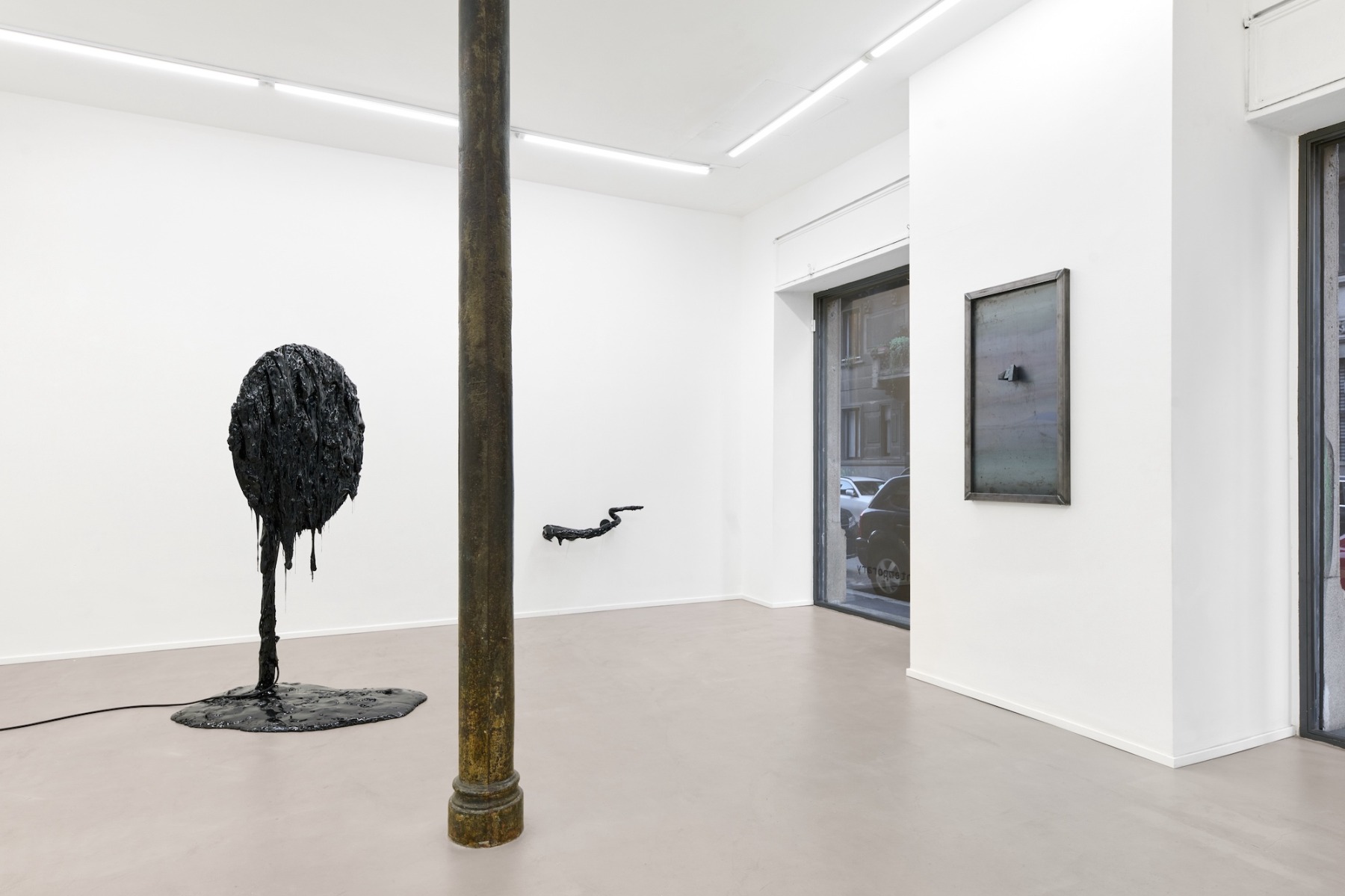
The subterranean connotations and the powerful hums emerging from Andrius’s glossy-black, slowly “flowing” bitumen sculpture-speakers form an especially fitting exhibition for December and January – a time when light and darkness engage in a particularly dramatic interplay. In the meantime, eastcontemporary continues to work with a very wide range of artists. As noted on its website, the gallery “hosted the first solo exhibitions in Italy of Pakui Hardware, Slavs and Tatars, and Barbara Wesolowska, while collaborating with a diverse range of artists, including Nour Jaouda, Stanislava Kovalcikova, Nikita Kadan, Agata Ingarden, Selma Selman, and Katja Novitskova.”
Slavs and Tatars, Salty Sermon, solo exhibition, 2023, eastcontemporary, Milan. Photo: Tiziano Ercoli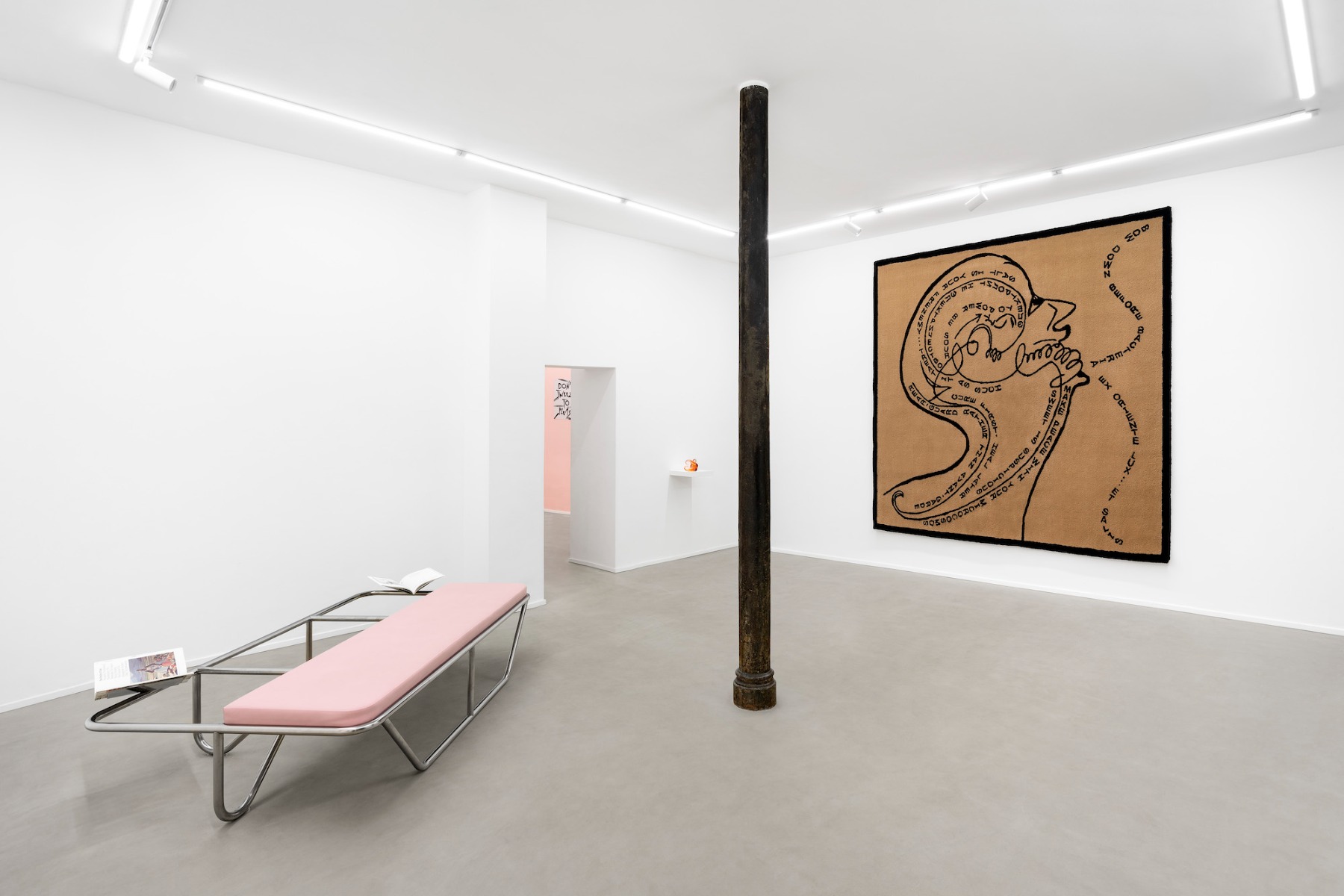
I became very curious to learn more about eastcontemporary – this “bridge” gallery representing the art of Eastern Europe and the post-Soviet space (including, more recently, Central Asia) in one of Western Europe’s strongholds of cultural and social activity. So I got in touch with Agnieszka after returning to Riga, and she, not only a gallerist but also a mother of two, found time to answer my questions right on the cusp of the New Year.
Agnieszka Faferek behind sculpture Utility Dyke by Anastasia Sosunova. Photo: Lorenzo Lanzo 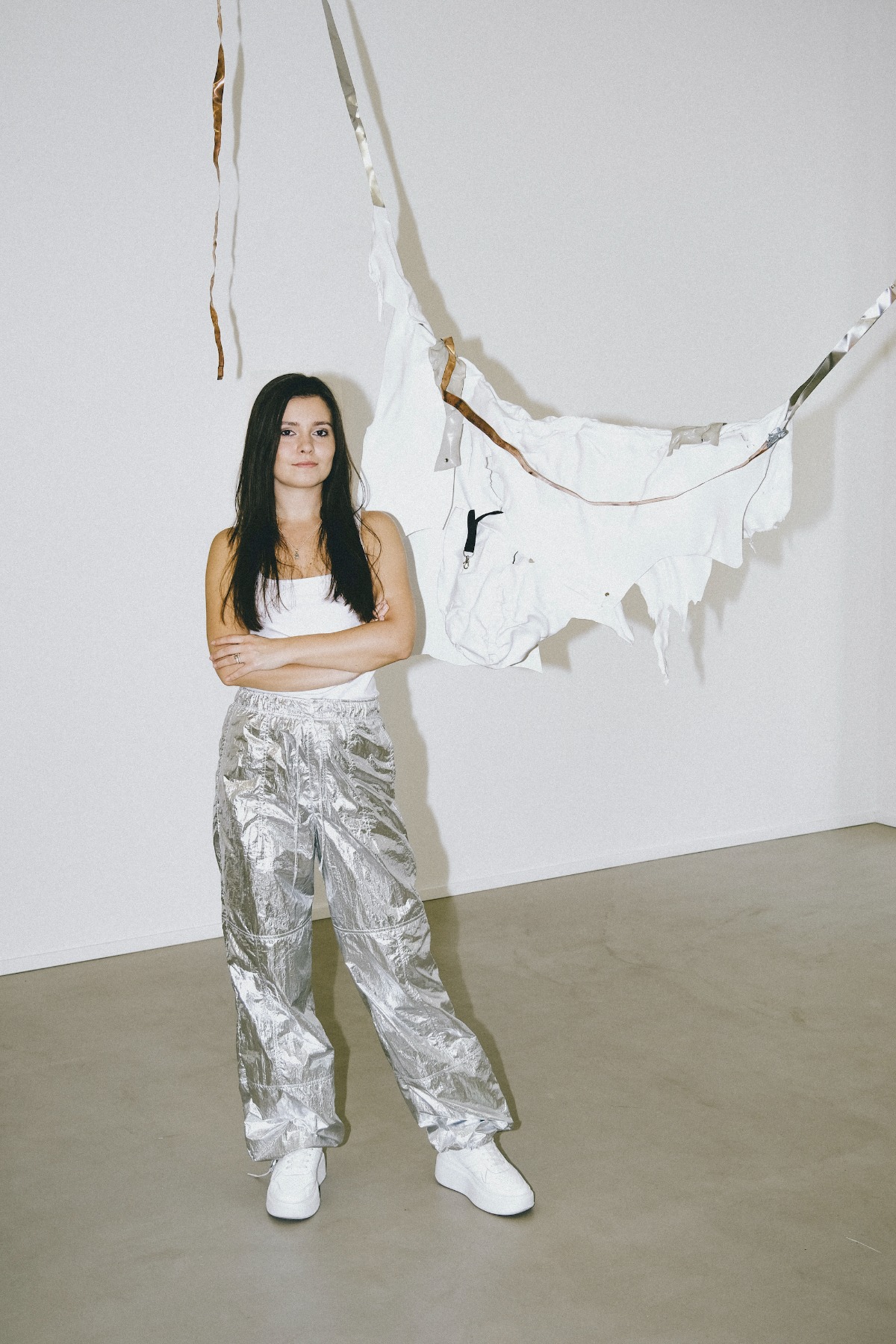
What was your initial idea behind the gallery? How do you see its mission now? Why is it based specifically in this city?
I founded eastcontemporary in September 2020 in Milan – first as a non-profit project space squeezed between lockdowns, and about six months later it grew, almost inevitably, into a gallery. From the start, the idea was razor-sharp: to build an international platform for artists from Central and Eastern Europe. In my earlier professional life in Italy, people were constantly asking me about “the East.” There was real curiosity – but very few tools, bridges, or infrastructures that allowed a deeper engagement with those art scenes. That stayed with me like a small stone in my shoe.
Over these years, I have stayed stubbornly loyal to that mission. I often say: we are physically close, yet institutionally and culturally still far. There are extraordinary artists in Central and Eastern Europe, but developing a career outside the dominant art capitals – where opportunities circulate more easily – is simply harder. The gallery was born as a tangible, collaborative bridge, a place where these practices don’t just “arrive,” but are contextualized and discussed.
Naturally, the mission keeps evolving. The gallery continues to move “eastward,” now engaging also with other regions shaped by the post-Soviet condition – including Central Asia, which I have been researching more intensely in recent years. At the same time, the program has crystallized around practices rooted in storytelling and strong social or political awareness. But I dislike rigid labels: my long-term vision has always been an international roster, with very clear roots and a good memory of where we come from.
As for Milan – it wasn’t a strategic spreadsheet decision. It was life. I moved here for an Italian boyfriend, after years in theatre and music, then decided to complete a Master’s in Economics and Management of the Arts, and I stayed. The gallery was born in full COVID mode. Economically: madness. Communication-wise: surprisingly effective. I kept working while much of the world pressed pause – and people noticed.
Now, looking back, Milan feels like exactly the right place. The city sits at the intersection of design, fashion and contemporary art – a constant international traffic of ideas and people. Add to that the new tax climate and favourable VAT on art, and Milan has become a powerful node on the global map. For a gallery whose whole purpose is to circulate, connect, and translate, this ecosystem is not just convenient – it is incredibly fertile.
eastcontemporary at miart 2025 with works by Eliska Konecna and Mara Verhgoot. Photo: Sarah Indriolo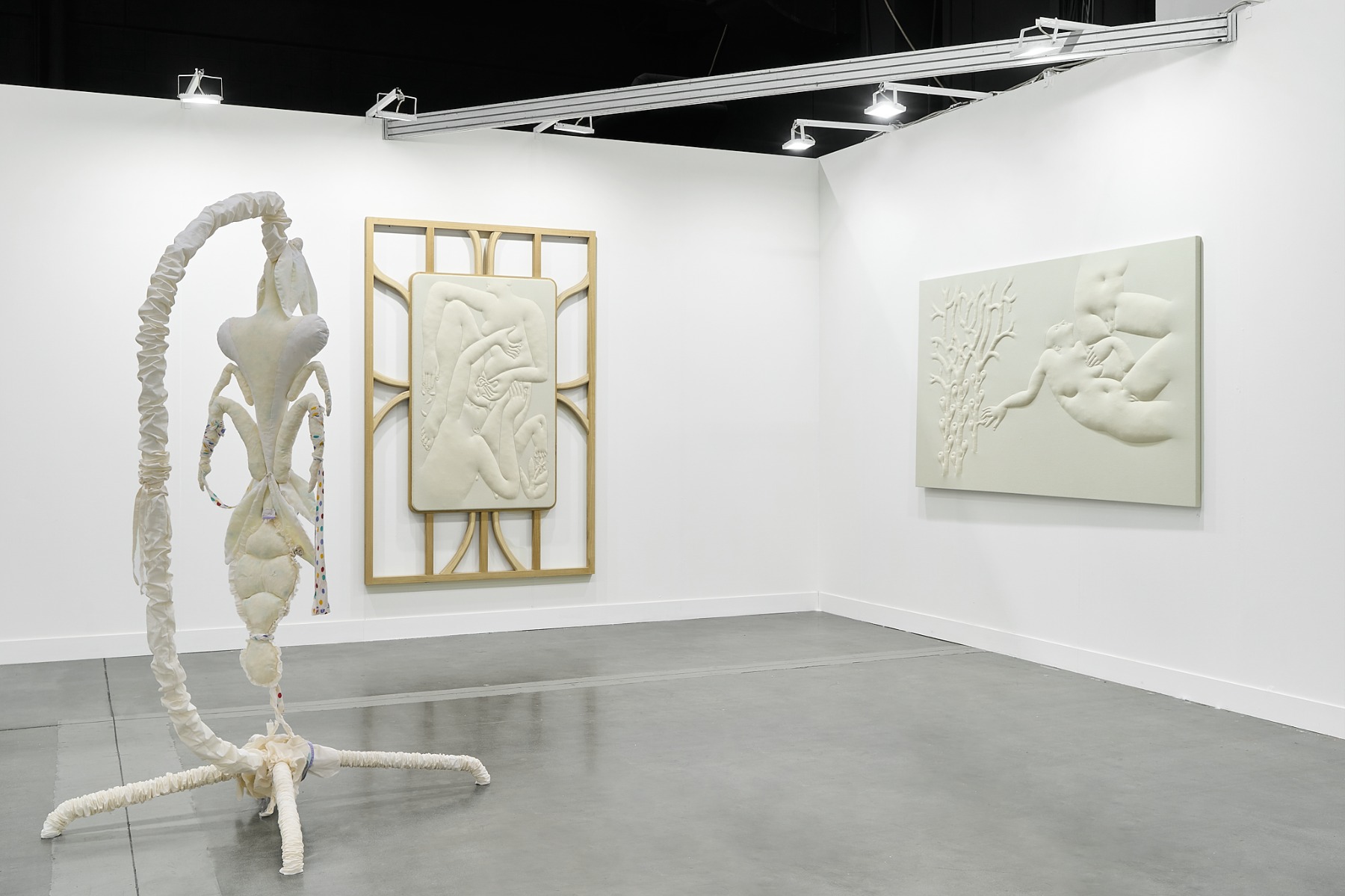
You are from Poland, so I suppose you have many contacts in the Polish art scene. Which Polish artists have you shown in the gallery, and why did you choose them specifically?
When I opened the gallery, I actually had no contacts in the Polish art world. In Poland I was on a completely different track – theatre, music, late rehearsals, and night buses home. I grew up in a tiny town in the middle of forests, then moved to Poznań and Warsaw, studying during the day and working in theatre in the evenings. That path eventually took me to London, dreaming of Andrew Lloyd Webber’s musical school… and instead I had a small existential crisis and changed my life completely.
Italy was the turning point. I moved there, fell head over heels for its cultural heritage, and landed my first art internship at the Peggy Guggenheim Collection in Venice. That’s where my professional life in the art world truly began – not in Poland, but in Italy, from scratch, with no safety net. My network in Poland came later, slowly and organically, through genuine curiosity and long conversations rather than strategy.
Poland, however, remains a gravitational centre for me. Over the years I’ve worked with artists such as Ania Bąk, Emilia Kina, Barbara Wesołowska, Agnieszka Mastalerz, Agnieszka Polska, Agata Ingarden, Agnieszka Brzeżańska, and the Polish-Lithuanian duo Dorota Gawęda & Eglė Kulbokaitė, among many others. There is a certain sharpness, humour, and survival instinct in Polish art that I deeply recognise.
Take Emilia Kina, one of the artists I represent. She is an extraordinary painter from Kraków, but her work speaks fluently with the Italian canon – even without intending to. Her relief-like canvases echo the estroflessioni of Bonalumi, Castellani, Simeti or even the obsessive tactility of Domenico Gnoli. Showing her in Italy created a double revelation: Italians saw a familiar language spoken with an entirely new accent, and Emilia discovered how close she had always been to this lineage without being taught it.
Kina treats painting almost like a living organism. She carves, bends, and models it, working from the outside in, revealing delicate strata of colour and light. Her surfaces pulse, ripple, and push forward into space, hovering between object and image. They are sensual and disciplined at the same time – a perfect metaphor, perhaps, for artists from our region.
So yes – my roots are Polish, my professional life is Italian, and the gallery lives exactly in that tension: between geographies, between histories.
eastcontemporary at miart 2023 with solo presentation by Emilia Kina. Photo: Tiziano Ercoli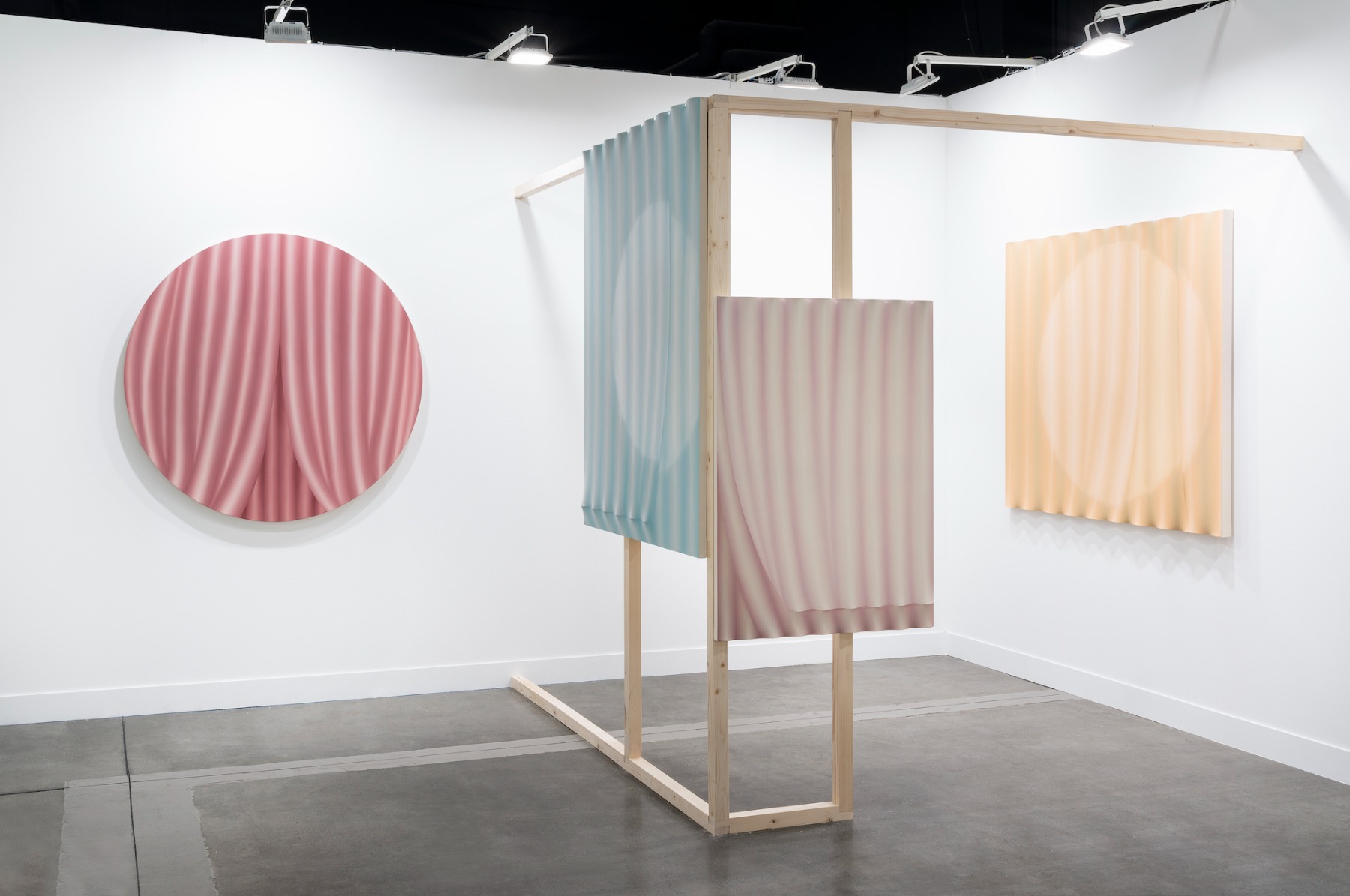
What do you think about Lithuanian contemporary artists? Do you feel any connection between their work and what’s happening in Polish art?
I honestly think the Lithuanian art scene is one of the most exciting in the whole region – razor-sharp, wildly diverse, and completely allergic to boredom. It’s small but incredibly intense: artists work hard, think deeply, and each has a very distinct visual language. No repetition, no copy-paste aesthetics – everyone is doing their own thing, unapologetically.
My real connection with the Lithuanian scene began during a research trip to Vilnius organized by the Lithuanian Culture Institute. I met Augustas Serapinas in his garden in Užupis, Anastasia Sosunova in her studio in an abandoned greenhouse and Robertas Narkus at his unforgettable Autarkia. More recently I’ve also become closely engaged with the practices of Pakui Hardware, Andrius Arutiunian, Emilija Škarnulytė, and the striking up-and-coming painter Gabriela Adomaitytė. These meetings became ongoing conversations, friendships, and collaborations.
Pakui Hardware and Robertas Narkus both went on to have their first solo exhibitions in Italy at eastcontemporary, around the time of their Venice Biennale debuts. With Anastasia Sosunova, whom I represent, it has been a particularly long and committed journey: from her first solo exhibition “Employee of the Month” at the gallery, through early fair presentations and group shows. Since then, her career has grown remarkably – screenings at the New Museum (New York), Whitechapel Gallery (London), Centre Pompidou (Paris), participation in RIBOCA, the Gwangju and Lyon Biennales, and her first institutional solo exhibition in Lithuania at Contemporary Art Center in Vilnius.
Pakui Hardware, The Host, solo exhibition, 2021, eastcontemporary, Milan. Photo: Ugnius Gelguda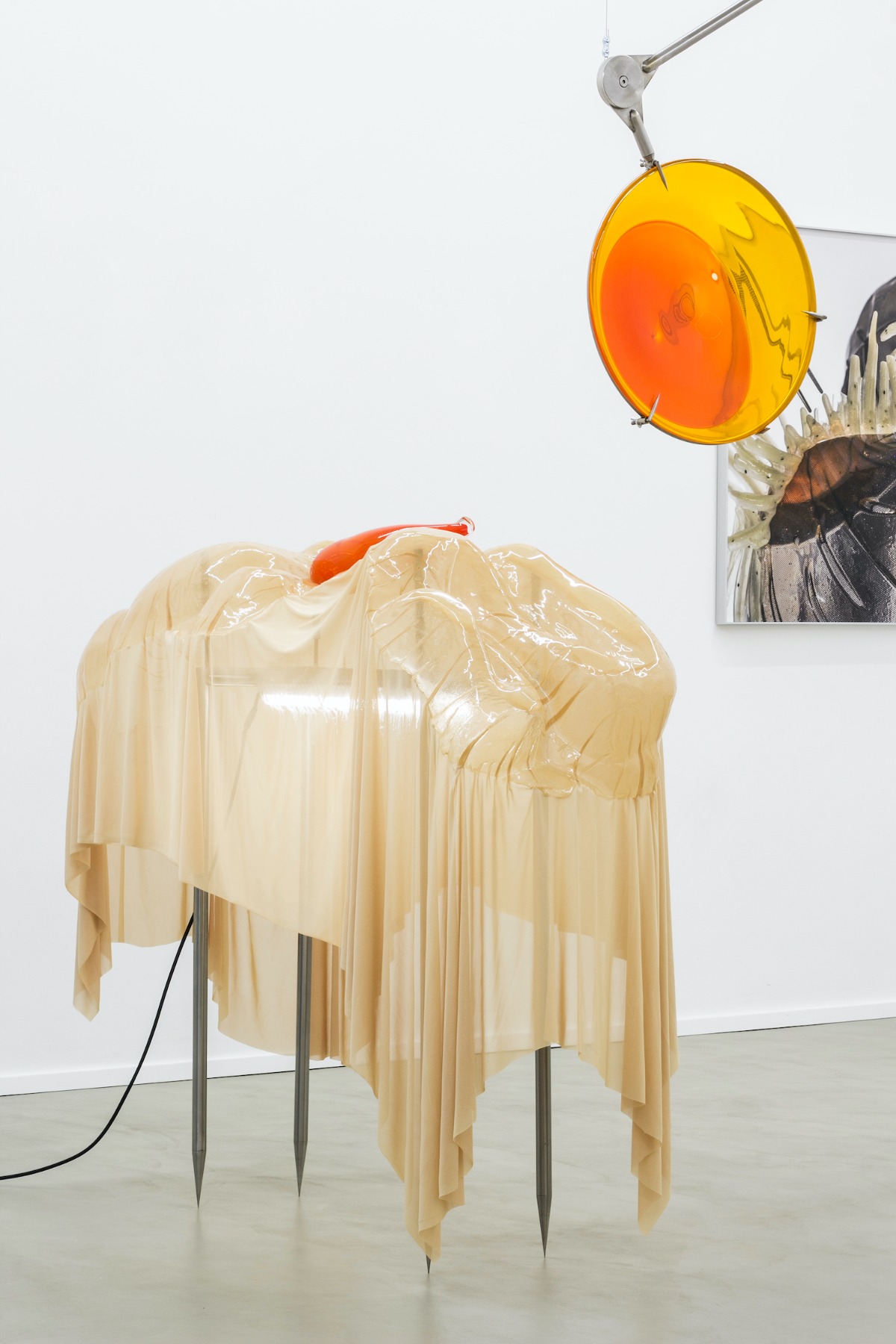
These are exactly the kinds of trajectories I care about: not just market visibility, but meaningful institutional presence and long-term growth that we build together. That’s why I’m especially happy about her current institutional presence in Italy – her solo exhibition at ICA Milano, curated by Chiara Nuzzi, and her participation in the powerful video exhibition “The Screen is a Muscle”, curated by Luca Lo Pinto at Gallerie d’Italia in Turin.
I’m genuinely grateful that my path crossed with Anastasia’s – and very proud of the journey we’re continuing to build together.
Equally important are the institutions and ecosystems that sustain the scene. Understanding the local context in which artists live and think is crucial to me. Even though my mission is to bring these artists into the international circuit, I believe in keeping one foot firmly rooted in their local realities.
And yes – there is a strong dialogue with Poland. Smart institutions, and some private collectors, are paying attention. Pakui Hardware has just opened a stunning solo exhibition at Zachęta National Gallery of Art in Warsaw, while Anastasia Sosunova recently held a solo at Arsenal Gallery in Białystok. In addition, we can finally share the wonderful news that her video DIY and the installation from the Gwangju Biennale have been acquired by the Museum of Art in Łódź.
So yes – Lithuania is not just “interesting.” It’s electric.
Andrius Arutiunian, Poison Paradise, solo exhibition, 2025, eastcontemporary, Milan. Photo: Michela Pedranti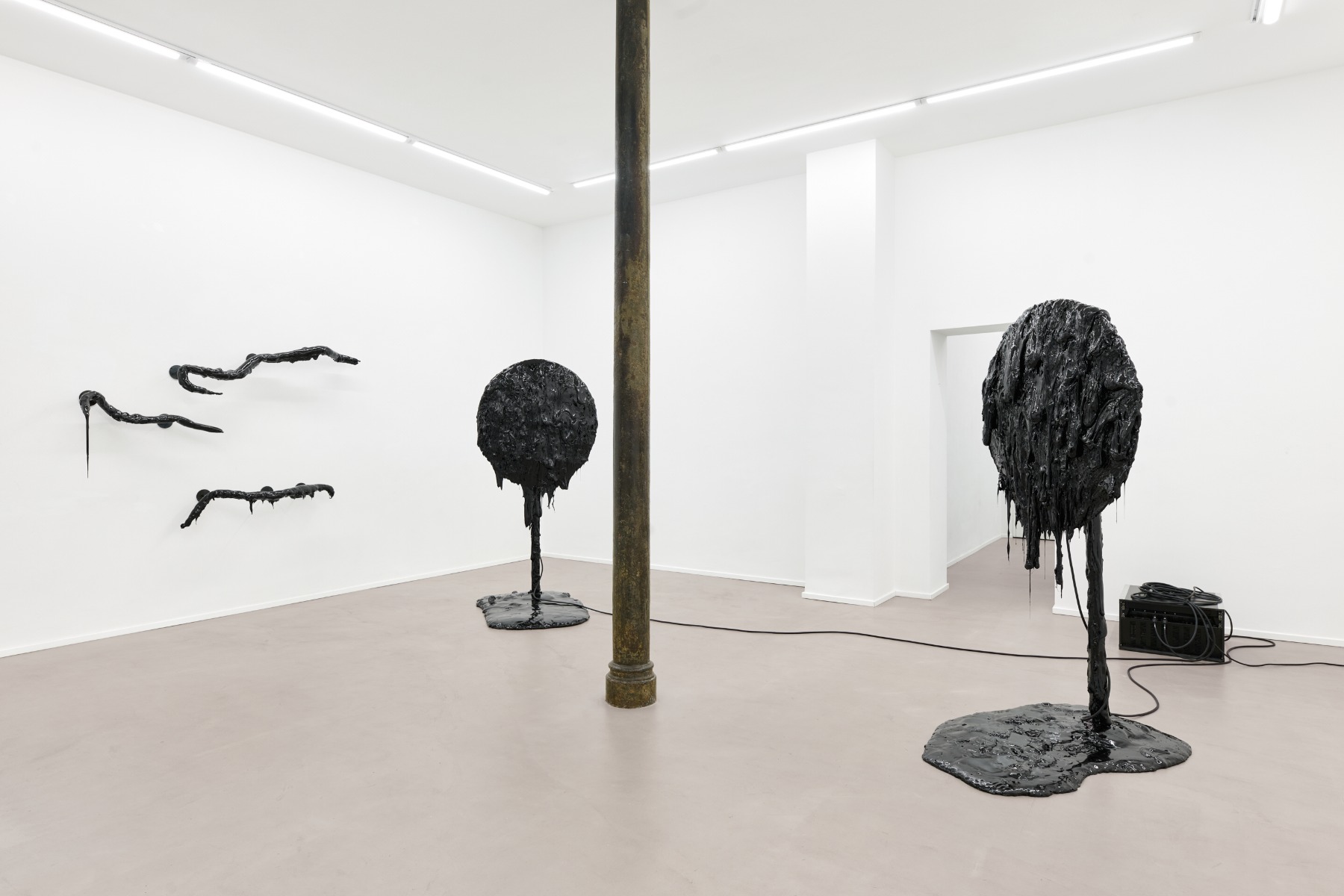
Right now, the gallery is hosting an exhibition by Lithuanian artist Andrius Arutiunian, titled 'Poison Paradise.' This isn’t the first time you’ve worked with him. Could you tell us more about the history of your collaboration and, of course, about the exhibition itself?
I had been following Andrius Arutiunian’s practice for quite a while, fascinated by how he moves seamlessly between sound, installation, and research. I was quietly thinking, “one day we really need to work together.” Then, during one of my conversations with curator Sheida Ghomashchi, his name surfaced very naturally – and that was the spark. We decided, quite instinctively, that it was the right moment to invite him for a solo exhibition at the gallery.
But our collaboration actually began during Artissima week in Turin, where I brought ARMEN, his sound performance. It was quite an adventure. Visitors were invited into a black vintage Mercedes, where they would embark on a 40-minute drive through the city listening to a cassette composed by Andrius, woven from Armenian diasporic disco and field recordings. It was like entering a moving sound sculpture – intimate, nostalgic, political, and joyful at once. The ride ended in the Barriera district, where visitors could see the group exhibition “Stories we carry”, which I co-curated at Associazione Barriera and where Andrius was also featured, alongside his solo presentation at the fair itself. It felt important to present the full spectrum of his practice – not just a booth, but a living ecosystem of performance, sound, sculpture and research.
The exhibition currently at the gallery, “Poison Paradise”, extends this multidimensional exploration. Curated by Sheida Ghomashchi, it examines the unstable thresholds between poison and cure, myth and technology, geopolitics and pop culture. Some of the works draw on the iconography of snakes, Arabic medical manuscripts, Armenian mythologies, and alchemical diagrams–visual systems in which venom and remedy are intertwined rather than opposed.
A central material in the exhibition is bitumen: an ancient, sacred substance used in rituals, mummification, and demon-warding spells, yet also deeply tied to petroleum economies. Formed from the remains of prehistoric life, bitumen is densely sound-absorbent, and Arutiunian uses this quality by combining sculptural forms with a sonic installation. The sound is based on Britney Spears’ 2003 hit “Toxic”–released the same month the US invaded Iraq–stretched from a six-second sample into an hours-long drone. The song’s Auto-Tune processing leads back to oil as well: Auto-Tune’s algorithm was originally developed by an Exxon geophysicist for petroleum exploration before being redirected to correct the human voice.
As sound passes through the sculptures, the bitumen absorbs and distorts it, producing sonic residues–ghost frequencies, artifacts, echoes. The hyper-artificial pop song is forced back into the ancient geological matter from which its very technology emerged, becoming a sonic fossil, a pop ghost buried in deep time.
Across the exhibition, Sheida traces also resonances between herbal treatises, occult sciences and diasporic memory, showing how toxicity and healing, destruction and enchantment, often grow from the same root. In Arutiunian’s work, myth, politics, oil economies, and sound do not contradict each other; they fold into one shared language–seductive, dangerous, and strangely beautiful.
The show extends a research trajectory that began with Andrius’s exhibition “Synthetic Exercise”, continued through his participation in the 15th Gwangju Biennale, and is now moving toward his upcoming solo presentation at the Hermès Foundation in Tokyo opening in February. So, the exhibition in Milan is not a closed chapter – it is a living research node within a growing constellation of projects.
Andrius Arutiunian, Poison Paradise, solo exhibition, 2025, eastcontemporary, Milan. Photo: Michela Pedranti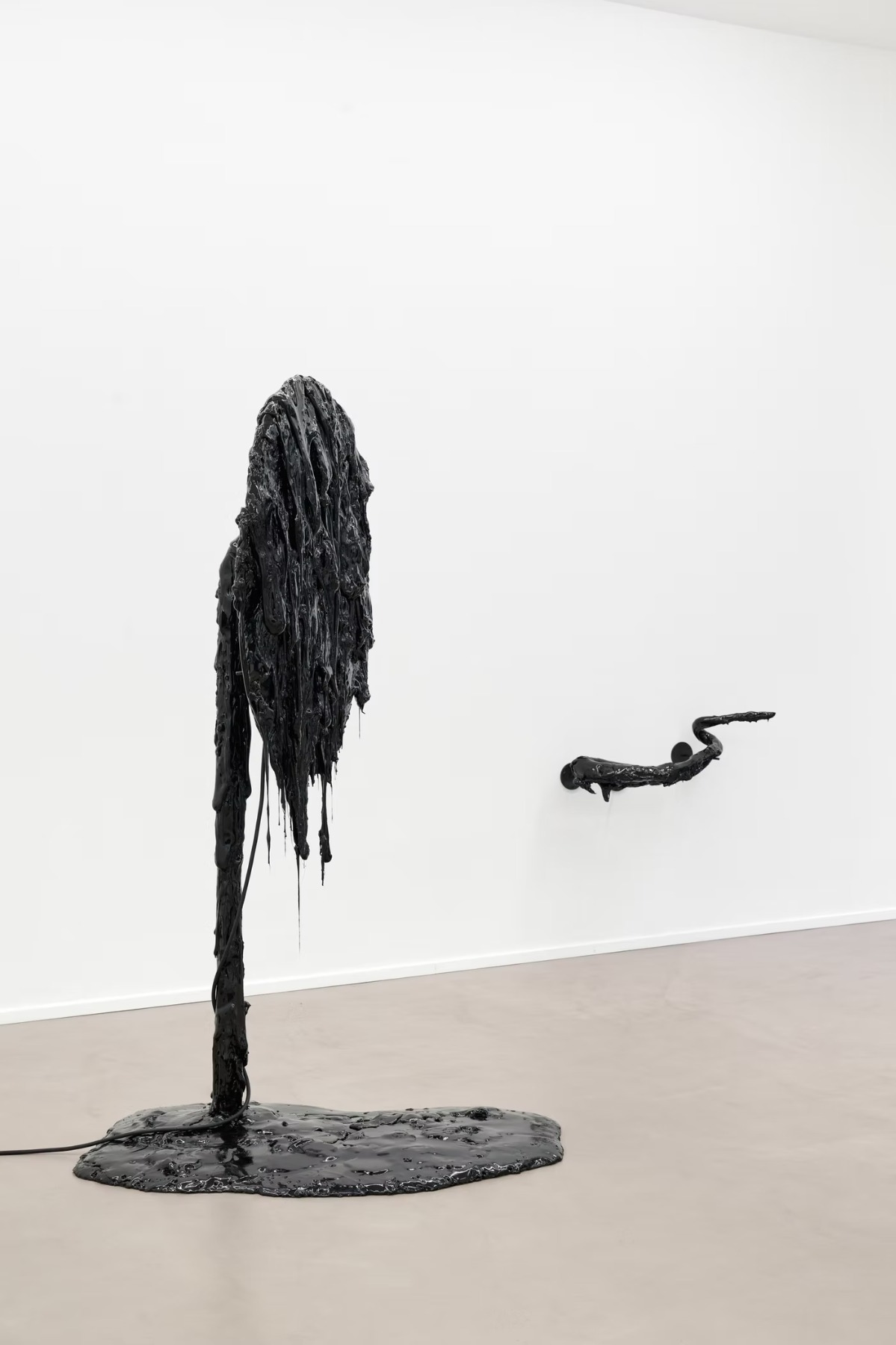
How close are the gallery’s connections with the art scenes in the other Baltic countries – Estonia and Latvia? What plans does the gallery have in this regard?
So far, my strongest ties are definitely in Lithuania, but over the last year I’ve begun building real connections in Latvia as well. This happened largely thanks to the wonderful team at Kim? Contemporary Art Centre, whom I originally met in the United States a few years ago – we clicked, stayed in touch, and the relationship has grown very naturally.
Last year Kim? launched Riga Contemporary, the first curated boutique art fair in Latvia, which brought together a small but very strong group of international galleries. It created exactly the kind of environment I love: intimate, smart, conversation-driven. There I had the pleasure of meeting sharp-minded local collectors such as Vita Liberte and Jānis Zuzāns, and I also used the opportunity for several studio visits. I will definitely be back in 2026 – not just to “show up,” but to continue building Baltic connections in a meaningful way.
Estonia is still on my to-explore list, but of course there is already Olga Temnikova, who has been doing an incredible job for years. She’s a real reference point for me – I admire both her energy and her uncompromising program.
I see the Baltic region as a highly sophisticated cultural landscape, with its own internal conversations and very strong international resonance. With new initiatives such as the Upe Foundation launched by Justas Janauskas and Adomas Narkevičius, I’m genuinely excited to see how Baltic art scene will continue to expand globally.
For me, building these connections slowly and sustainably – through trust, presence, and genuine curiosity is essential.
Performance Armen by Andrius Arutiunian, 2023. Photo: Ilme Vysniauskaite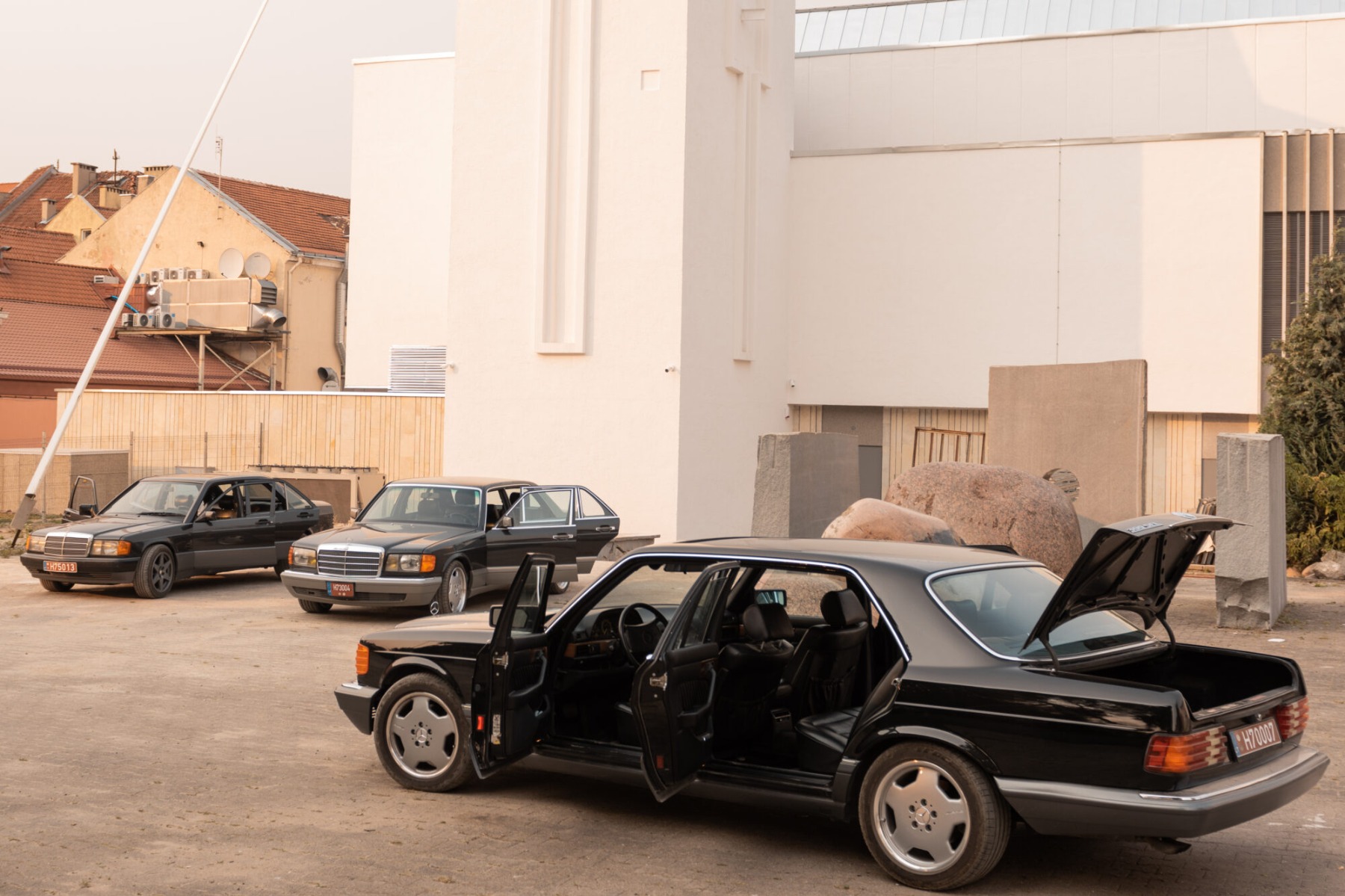
How did this work – this mission – change you as a person? What kind of unexpected experiences did you go through? I know, for example, that when Project ARMEN had just finished, you were driving that old Mercedes back to its owner late one evening in Milan, listening to a cassette recorded by Andrius Arutiunian…
This work has definitely changed me – and in ways I never expected. One artist recently told me I have “vigorous energy,” and it’s true: becoming a gallerist pushed that to a new level. I’ve become a fighter – but a joyful one – putting my whole heart, time, and stamina into a mission and into artists I truly believe in.
I also listen much more. A collector who often introduces me to key people once told me, “Just listen.” It annoyed me at first – now I’m grateful. Listening reveals so much more than speaking, and in this industry it’s still a rare skill.
This mission has also taught me patience. Working with artists outside the main art capitals takes time. Institutional success often arrives first – and many of the artists I work with are doing wonderfully there – but bringing them into the market requires persistence, consistency, and a refusal to give up. Step by step, no shortcuts.
And then there is the DIY part – very Polish of me. Working with complex installations and sculptures forces you to become half gallerist, half engineer: producing, solving, installing, repairing, improvising. My “do-it-yourself” skills have skyrocketed.
And yes – ARMEN. At one point, I seriously thought I’d have to import a vintage black Mercedes from “the East” because I couldn’t find one in Northern Italy. In the end, one appeared in Milan at the very last minute. I produced the whole performance during Artissima week – running between the fair, Barriera, and the project. Andrius and I did a few trial drives to choose the route through Turin, but I never actually had time to really immerse myself, in a relaxed way, in the sound experience from start to finish.
Until Sunday night. Driving the car back to its owner, I realized the cassette was still in the player. So I switched it on. Empty highway. Night lights. Suddenly the performance was just for me, and the city disappeared. It was perfect.
Unexpected experiences have become my daily routine: negotiating shipments of Mila Panić’s neons with Bosnian bus drivers the night before an art fair, delivering works with a Cuban Uber driver in Miami while enjoying his salsa music playlist (one of my favourite rhythm from my dancing school old days) or figuring out how to move Aziza Kadyri’s monumental installation from Bukhara to Europe.
Being a gallerist means choosing a life where the unexpected is often the rule – so it’s essential to learn how to navigate, observe, and constantly adapt to a changing environment.
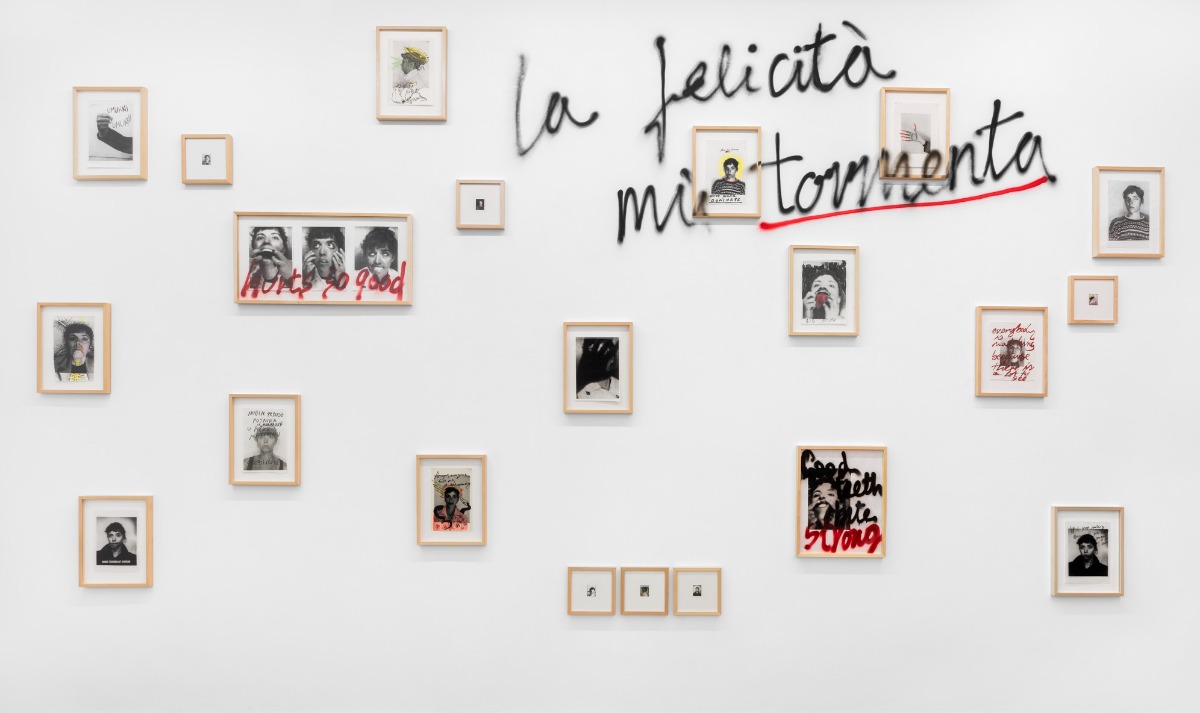
Mila Panic, Madness, solo exhibition, 2024, eastcontemporary, Milan. Photo: Tiziano Ercoli 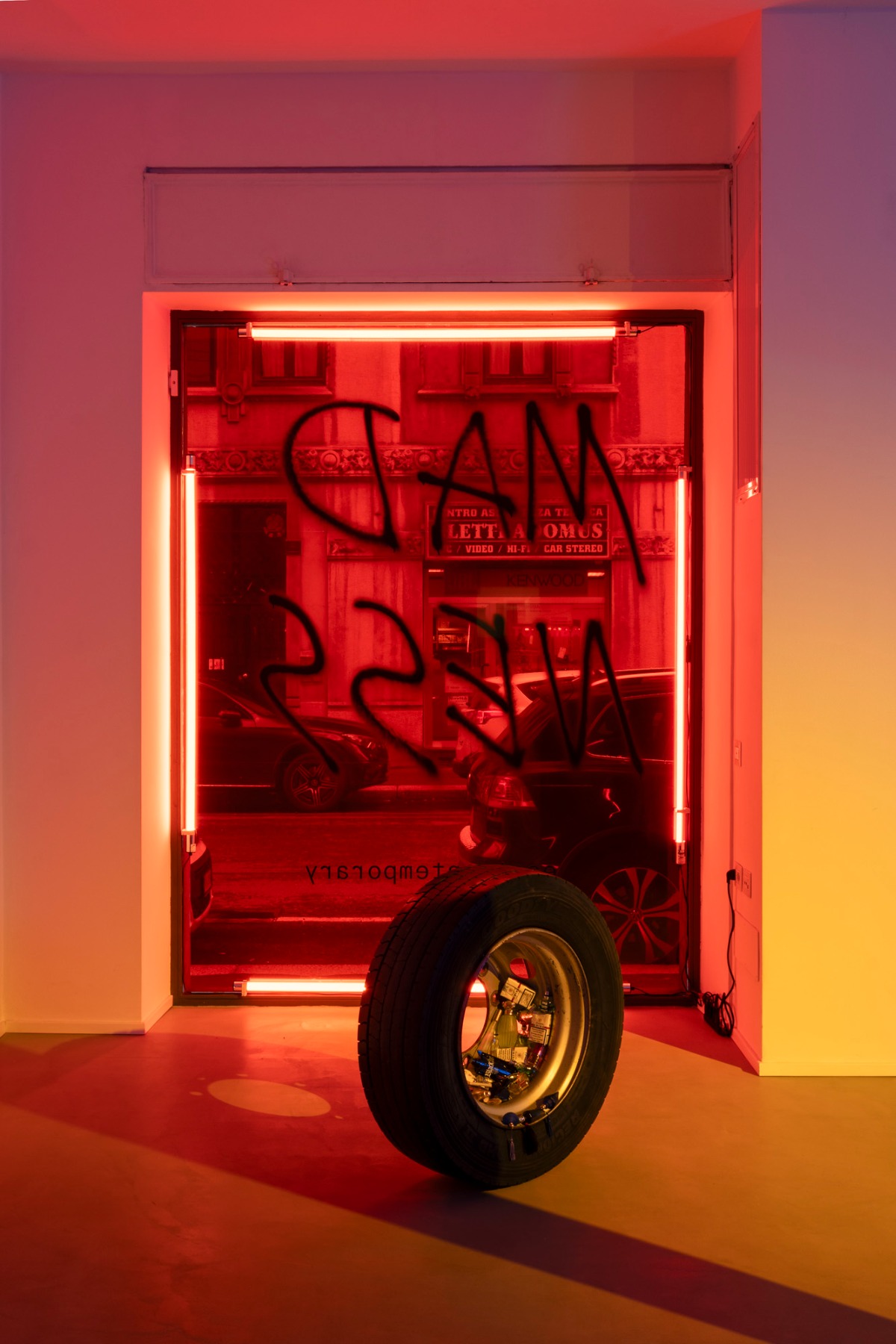
Upper image: Mila Panic, Madness, solo exhibition, 2024, eastcontemporary, Milan. Photo: Tiziano Ercoli
