


Absolute Freedom. Mark of the Times or Utopic Vision?
A conversation about Untamed Fashion Assemblies (UFA) – about freedom gained and lost, and reality and utopia - between alternative fashion designer Bruno Birmanis, artist duo Rolands Pēterkops and Mārīte Mastiņa-Pēterkopa (MAREUNROL’S), and culture journalist Una Meistere.
This conversation, a condensed version of which was also published in the catalogue of the Latvian Pavilion at the Venice Biennale, took place in two parts – while the exhibition was still in the process of being created, and shortly after the opening of the Latvian Pavilion, when the artists had already returned to Riga.
Much like the installation created by MAREUNROL’S for the Venice Biennale, this conversation forms a grid or puzzle whose fragments gradually reveal a story about the world, the time, and the space in which we live. Like the grid itself, it is not linear, as no two viewpoints can ever be identical – even if they appear to coexist within the same moment in time.
Una Meistere: When the first Untamed Fashion Assembly took place in 1990, you, Bruno, were 28 years old, and I was 22, but Rolands and Mārīte were 8. Now, 35 years have passed since the Assembly. Looking from the perspective of our times, what, in your opinion, made Untamed Fashion Assembly possible? Remarkably, it took place in the year when Latvia regained independence. Moreover, the Assembly was not the only “untamed” happening in Latvia – UFA emerged within a broader cultural awakening: alternative film festivals, experimental exhibition-happenings, and performative public art events were already testing the limits of what was possible.
Bruno Birmanis: The main thing that made Assembly possible was the desire for absolute freedom. But our view of freedom was radically different: today we simply have a conviction that we are free, whereas then it was a rebellion which began long before the official declaration of Latvian independence. In 1989, during the Costume Theatre – a new theatrical form we created together with fashion designer Uģis Rūķītis – we created a monumental performance, The Ball of Postbanalism. The participants were artists dressed in striped prisoner and prison guard uniforms. It was still the Soviet time, but the empire was crumbling. Latvian theatre critic Normunds Naumanis dubbed The Ball of Postbanalism a “feast during plague.” I think that precisely this sense of freedom and the wish to confront it with the outside world was what made possible many of the creative activities of the time. In cinema, art and fashion, there were many people who shared the sense of freedom, creating a community, so not long after there were many people who wanted to join Assemblies.
UM: Rolands, when I discussed the beginning of the 1990s with Mārīte and you before this conversation, you were telling me that each of you, as children, formed memories of totally different feelings and emotions. You remember the Time of the Barricades in January 1991, shots being fired, fear...[1]
Rolands Pēterkops: My memories are connected to both calm and peacefulness, as we were not living in the centre where it happened, but also fear. My father was a freedom fighter; we weren’t just bystanders, we were “enemies” of the regime. You realise early on that your family has taken a side. I remember us following the real-time reports from the barricades while living in Purvciems, in the suburbs of Riga. I transformed my imagination and the experience into miniatures. I made scale models of the cities, putting people in them. I began thinking about Riga, about the “evil” power that wants to take something over again. Paradoxically, because of that atmosphere, I perceived the actual freedom we had as a lack of freedom.
As a child, I didn’t grasp the layers of “culture” or “fashion.” I just remember video rentals and secret cinema screenings at home. There was this feeling of a Western world with a totally different aesthetic. That was where the “error” took root: this subconscious, desperate desire to have it all, right then.
Mārīte Mastiņa-Pēterkopa: I was very far from it all. I lived in the countryside and was watching my father going to the barricades, which was scary. Our connection to the “West” was an import from beyond the ocean. My father received overalls sent to him by an uncle who had been exiled in America. Rolands wore them for a long time. It was a strange collision: the fear instigated by the Barricades and the allure of an American aesthetic.
RP: I think many of us still remember the legendary CNN material on the barricades – Wow, CNN is broadcasting information about Latvia! It was a shock that we actually existed in the rest of the world. But looking back at UFA, I realise that inferiority was an illusion. In the cultural sphere, everything was already happening. People weren’t paralysed – quite the opposite. We were creating the world we thought we were missing.
UM: In a way, both of your stories contain a paradox. UFA, even from the viewpoint of fashion, didn’t occur in an empty space. There were five textile companies and several clothing factories in Riga.[2] They served as the soil for the Assembly. From this viewpoint, inferiority seems impossible – it was a time of daring, of widening the horizons.
BB: The thaw didn’t start in the 90s, it began in the 80s, sparked by cinema figures like Augusts Sukuts (co-founder of the Arsenāls film festival) and Juris Podnieks. But it required a total lack of fear. I remember my father, a Party Secretary at the Puppet Theatre, throwing down his membership card in 1988. My mother, who worked on the national evening broadcast Panorāma, was terrified, but he just said: “The decision is made. You are either on one side or the other.”
On the night of January 20, 1991, when OMON special police forces in Riga shot and killed cameramen Andris Slapiņš and Gvido Zvaigzne, they had just left our office, where they stored their cameras. I had just finished my montage shift, the taxi was waiting downstairs, I was going home and even managed to say goodbye to Gvido – “See you tomorrow,” or such. When we crossed the bridge, shots were fired, and then suddenly I heard in a radio broadcast that a filming group had been shot on Basteja Boulevard. I wondered what to do – to turn back, or to go home to my family? I went home, and then, that night, we went to Basteja Boulevard together. I had no physical fear.
UM: Maybe it was precisely this lack of fear that made the Assembly possible – all that untamed madness. Currently we are much more fearful.
BB: Six years or so ago we talked with Artemy Troitsky [a music critic, one of the most prominent cultural personalities during perestroika in the Soviet Union, and still a vocal critic of the Putin regime – U.M.] about how the most horrifying taming happens through the base level of Maslow’s pyramid—you can’t even resist, because you have to pay the bills. You simply must accept that the system is correct. Because as soon as you don’t accept that, the system will immediately spit you out, and you don’t even want to think about where you will find yourself then. That is the real, deep Orwell. When it’s just the good guys and the bad guys, then it’s actually very simple.
UM: What I still find interesting: the Assembly was born in Riga and not, for example, in Tallinn, where there was at the time a very strong fashion week and designers too. Yet it was precisely in Tallinn that you and fashion designer Uģis Rūķītis were noticed. In a way, one could say that the seed of the Assembly sprouted in Tallinn, and precisely from your cooperation, which ended along with the Assembly. With that said, Rūķītis was the most untamed of us all: insanely charismatic and an incorrigible pessimist at the same time.
BB: Uģis Rūķītis is the most talented fashion designer that ever lived in Latvia. A true rock’n’roll guy with a very alternative way of thinking, golden hands and fully open mind. He was mostly working with musicians, who were essentially the most progressive and crazy people of the time. Rūķītis was also a great tailor, while I can’t even really sew; my passion is the content and form. Thus, we came together and complemented each other brilliantly. Once I witnessed how a woman called Rūķītis at eight in the morning, saying that she will come to get her wedding dress by midday. We had just woken up, hungover; the dress had not even been started. I remember he said, “Hold that white cloth, I will whip it up in no time.” He started at 8:00 and the dress was ready by 11:30. In three and a half hours!
The 90s was a crazy time. We had to think about our survival. Families were breaking apart. Bohemianism was insane. In 1989 it became clear that Tallinn’s fashion days were finished because the Estonians’ priorities when it came to industry and production had changed. It was during this breakdown that the idea of the Assembly was born. I told Rūķītis that the base for it could be the Costumes Theatre, which we had created together, but he wasn’t really interested. At the first Assembly I dragged him onto the jury, but afterwards he claimed that he was leaving fashion altogether. He wasn’t interested in the West either. I don’t know what happened to him. Nobody knows.
UM: It’s interesting that the word nepieradināts (“untamed”) first emerged as part of the name of the Assembly in its English version and is most often used when talking about animals or nature or a territory – to say something’s wild, free and unlimited by external forces.
RP: At this time, historically, it feels like a very precise term, but I suspect that at that time it wasn’t used that consciously. Only later, when the West met the East, did we understand how “untamed” we actually were in relation to Western fashion – a system that functions primarily as business. For us, fashion meant something else entirely: an intellectual and emotional space, a constant hunger for experimentation. It was not yet a structure or an industry.
MMP: I think fashion as an intuitive art is initially untamed. Only later does it become legible, utilitarian, and marketable. It’s similar to experimental music: it starts as an untamed message, it inspires and brings to life, and with its sincerity it can move the listener, to let them feel their own selves. This is how the intellect of fashion, its process, thought and tempo develop; it is like a conversation when everyone simultaneously is trying to reach new innovations and discoveries, and, moreover, to get there first.
Looking through the archives of the first Assemblies, it becomes clear that this was never “fashion” in the conventional sense. It functioned instead as visual communication – an attempt to respond simultaneously to Western culture and to the private dreams and imaginations of the artists themselves.
BB: We have to remember that it was the mid 90s, and it’s not like the shift happened only here. In the mid 90s, fashion was evolving globally. The New Wave of the 70s had faded, and Japanese designers like Comme des Garçons and Yohji Yamamoto introduced radical styles that contrasted sharply with the flashy 80s. Rei Kawakubo’s 1997 collection Body Meets Dress, Dress Meets Body challenged established stereotypes surrounding women’s body image and its representation in fashion, prioritising conceptual exploration over commercial appeal. Designers like Hussein Chalayan, Thierry Mugler, and Martin Margiela, along with the Antwerp Six, challenged the traditional fashion establishment, creating a revolutionary shift in the industry.
Consequently, the environment was already very diverse, but the reason why the Assembly could draw people’s interest, in my opinion, was the fact that we agreed not to focus on a specific style. We allowed absolute democracy in the most direct sense of the word. And we were assembling together the stars, experienced designers, and students.
UM: It is important to remember that the late 1980s and early 1990s were also the moment when large luxury conglomerates consolidated power. LVMH had just formed and was developing a shark’s appetite, absorbing houses such as Givenchy, Kenzo and others. Independent designers were increasingly folded into corporate structures.
In 1986 the Spanish company Puig took over Paco Rabanne, even though Rabanne himself stayed on as the creative director. Yves Saint Laurent continued to create collections, but the legend was only a shell of his former self. I remember the pitying gazes when, visibly tired, he came to the stage at the end of the show. As a new fashion reporter who had just begun travelling to Paris, sitting on a gilded chair in the saloon of Hotel Intercontinental, I was trying to reconcile awe and respect for the legend with feelings of human pity and awkwardness.
BB: Saint Laurent, of course, still had business, but not the spark. From this angle, the Assembly was a gem. I remember Paco Rabanne’s visit in 1994. He compared it to a breath of fresh air. “It is our dream to work like this,” he said, not hiding his envy.
RP: Of course, they had the opportunity to “blow up the show,” but in reality, only a few can do this, because capitalist rationale doesn’t allow spending money just to create hype and a happening without a concrete strategy or commercial vision. Sadly, later, the Assembly couldn’t afford that either.
BB: Later, we got nicely and accurately tamed.
RP: Tamed into thinking that events of this scale were irrational. Tamed to avoid risk. Tamed to adapt our thinking to market logic. We had to look for other ways to survive.
Re-reading reviews of Assemblies, I was struck by a significant point made by Jānis Dripe, Latvian Minister of Culture at the time. Namely, that the untamedness of the Assembly should be used to tame the world and Europe to Latvia. Isn’t it the case that we, at one point, lost a lot of ourselves and our identity trying to tame ourselves to the West?
MMP: It’s not that the West corrupted us; we lost our identity through not believing in ourselves, and with “us” I mean those who didn’t use the opportunity to be true to themselves, who listened to Western “advisors” and joined the stream of adjusting. At the same time, some didn’t have any other choice. The 2000s were full of wannabe Western copycat brands, many of which didn’t survive. And only in the last decade have we seen the arrival of those who have finally begun to understand who they are and believe in themselves. Our weirdness and wrongness, the feeling of being a separated outsider, our freedom and self-confidence – all of this can become a magnet, a new aspect to attract a wider audience. When we are in balance with all we have experienced and can be ourselves and dare to go our own way, we become much stronger.
RP: We felt it a lot with our work, and not because we were following how brands operate in the West and how we should adjust to that system. We have never been interested in that. I have also seen many beautiful “saplings” that could have grown into events in Latvia – had they been shaped from the root – cut down at the root in the name of efficiency and expertise. “Design” and “product” replaced experimentation with safe, predictable, appropriate, “fake” innovation, which is learned, but cannot touch or lift us up emotionally.
At the same time, it is inspiring to see those who recognize reality for what it is and try to create or change something. In the past, Japanese fashion was completely different too. There are certain situations that have stimulated it. Which is why, I think, the name of Untamed Fashion Assembly was very powerful at the time. It announced who we were – “untamed” but with our own culture and ideas. We were a part of Europe, we had just been paralysed by a vacuum for 50 years. Luckily, it wasn’t strong or persistent enough, and things could still happen – we were still able to preserve our culture.
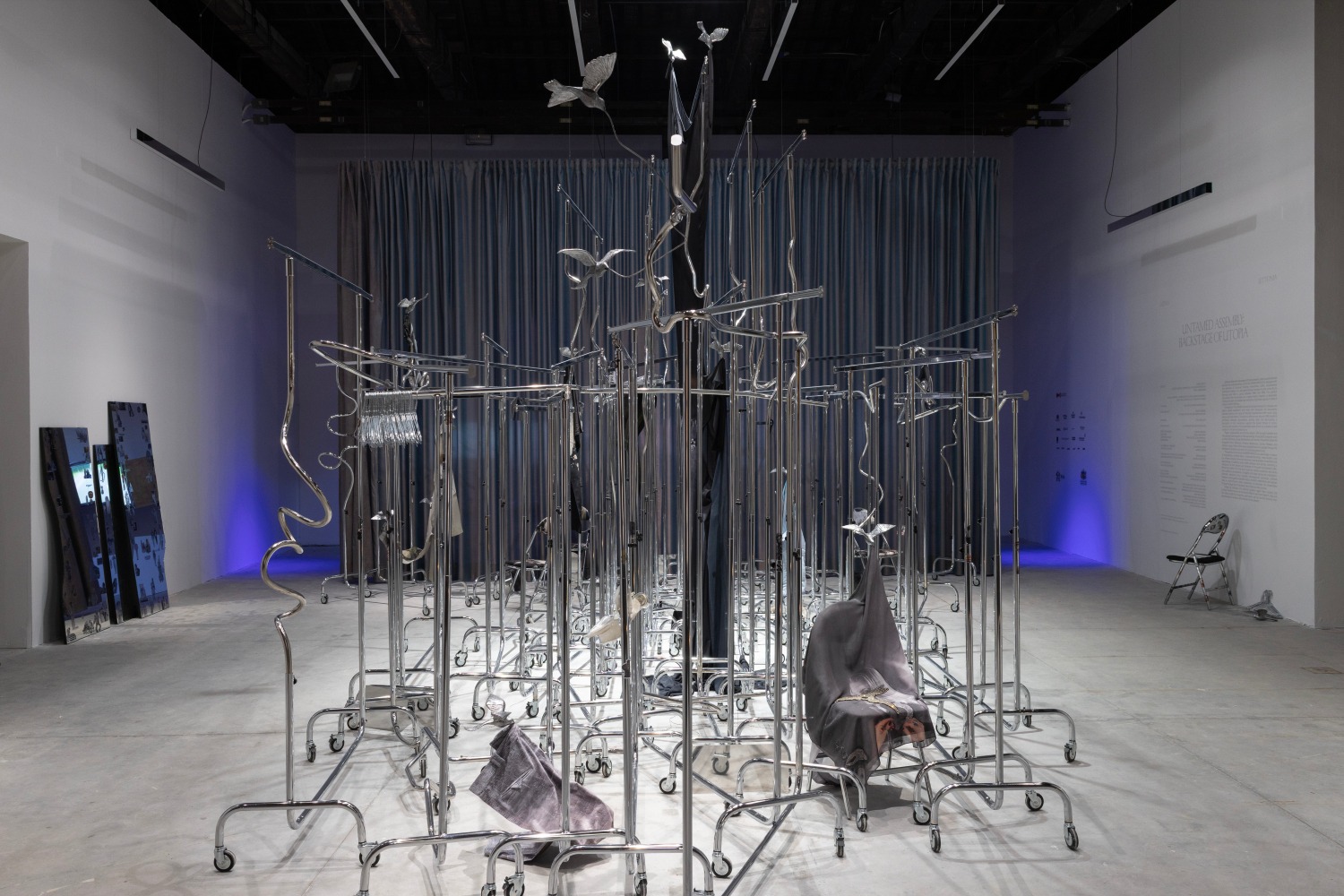
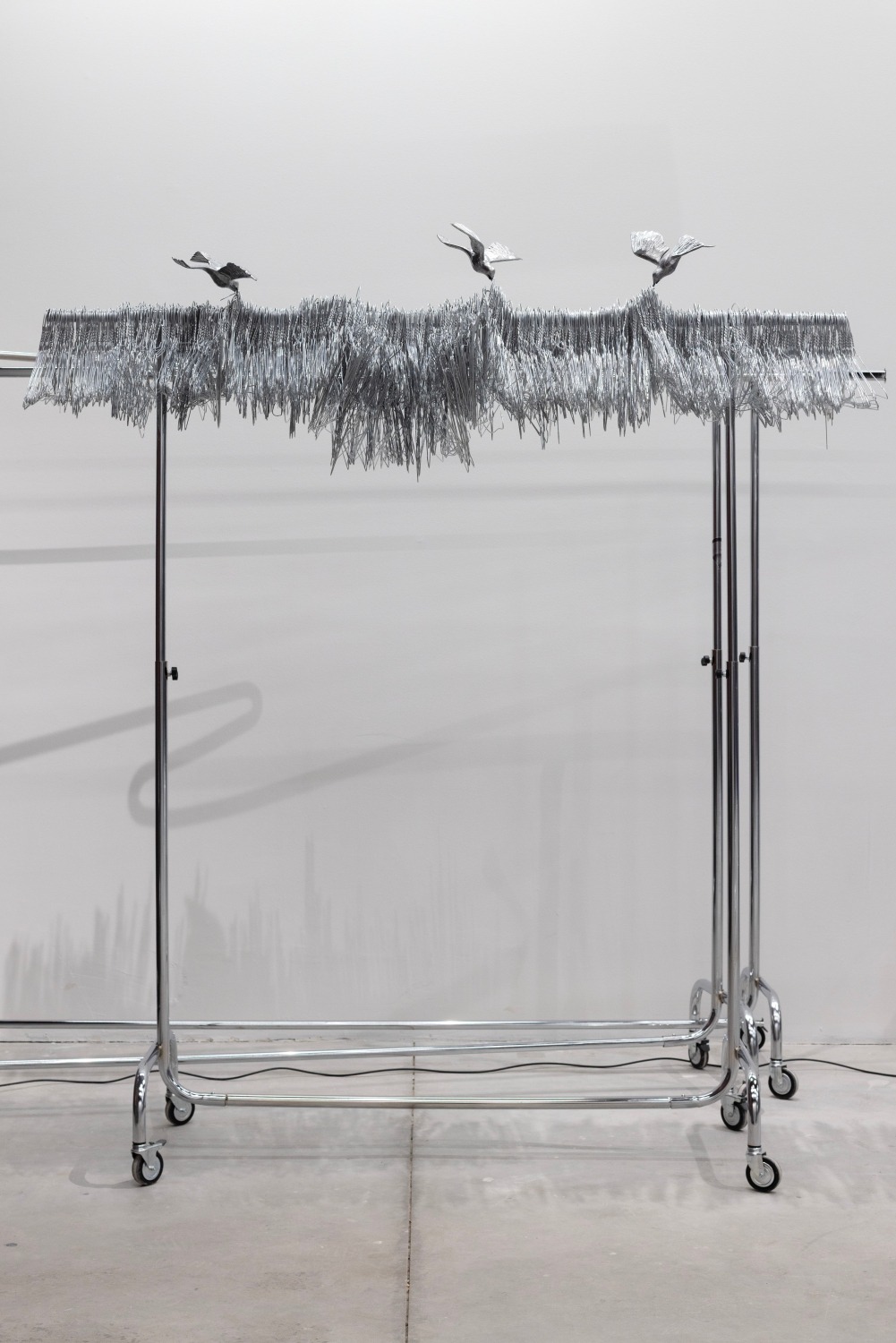
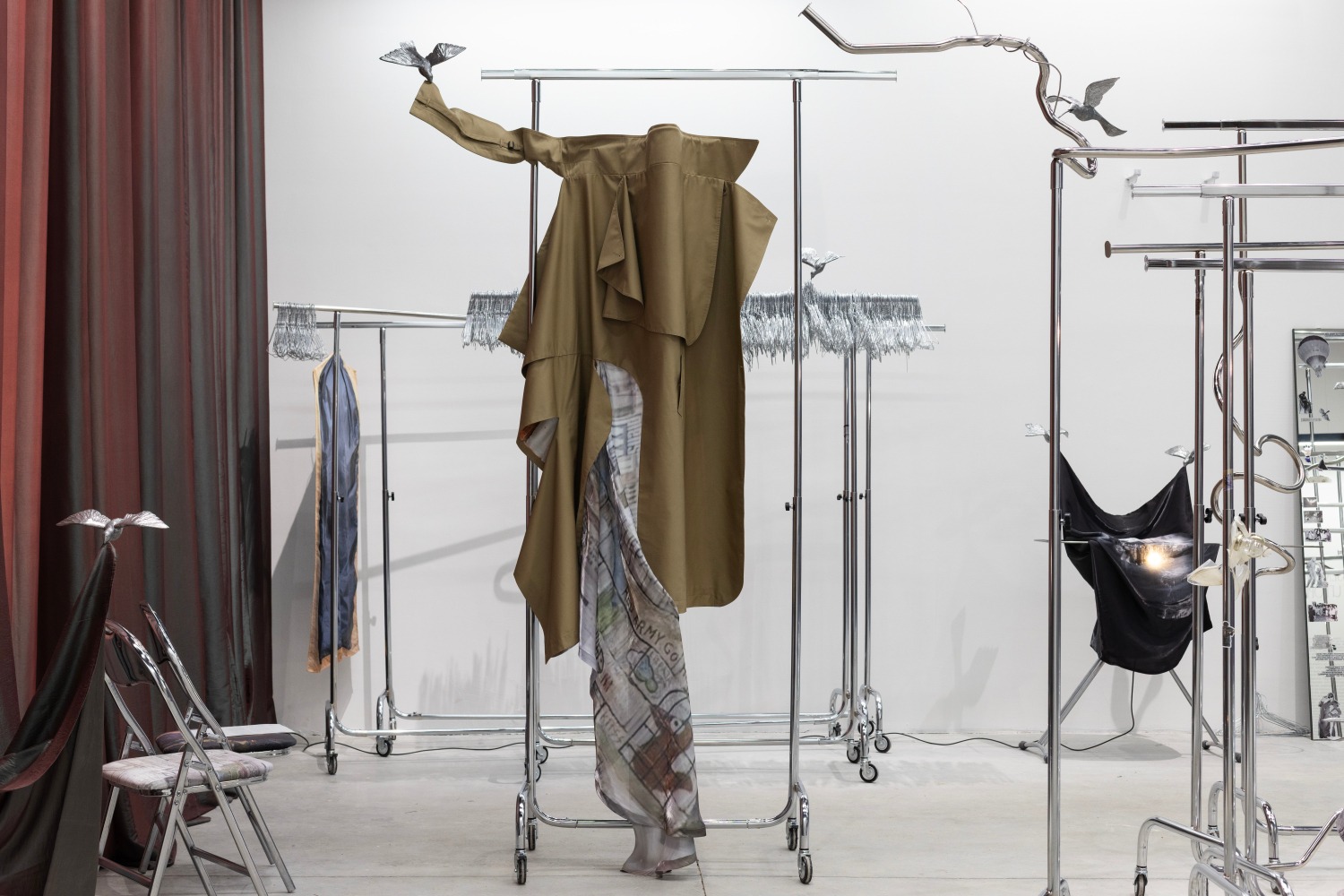
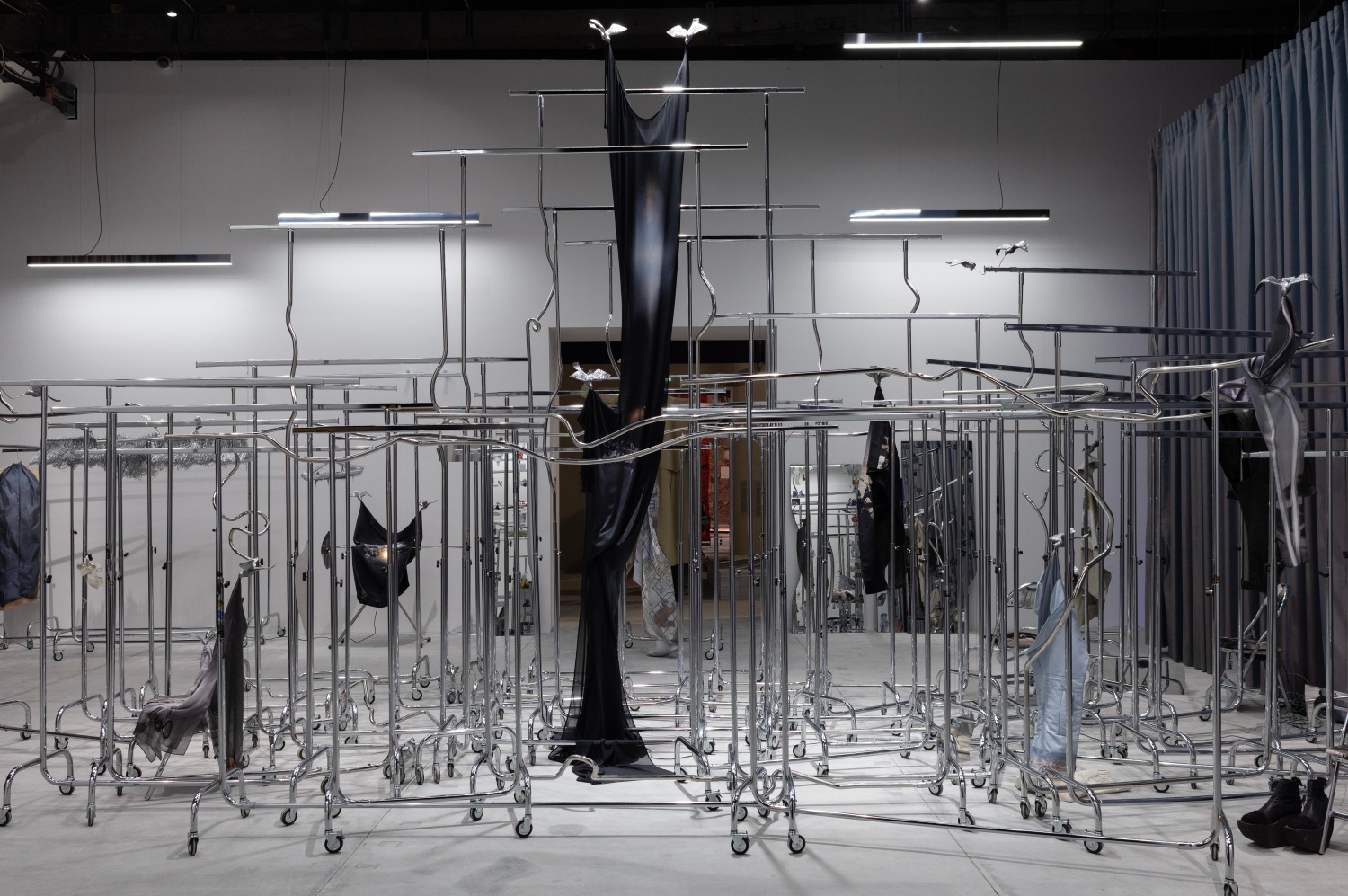
If fashion is a language, the Assembly was a grid – a framework that allowed different voices to meet without being standardised. This idea became a starting point for the Venice pavilion: how to find that grid again, a shared structure that allows freedom instead of enforcing conformity. In the pavilion, it is symbolically embodied in the chrome hangers – a sign of the common language. A structure that morphs into human relationships, that tries to build a utopia from all geopolitical contexts – something that isn’t utopia but indeed a dream, a goal, and courage. A desire to exist and do things. Initially, we considered approaching the Assembly through the lens of today’s commercial fashion culture, the predictable world of merch, branding, and deals, and using irony to contrast it with the raw, emotional, and experimental atmosphere that defined the original events.
UM: Our world today seems to be at a similarly radical turning point as it was when the Assembly became possible. I was struck by Paco Rabanne’s spirituality when he visited Riga in 1994. In an interview with Normunds Naumanis, he spoke of the transition from the Pisces to the Aquarius era, predicting new political, social, and moral concepts. He saw Chernobyl as a cosmic turning point and warned of humanity being “burned’ by misalignment with cosmic energies. Decades later, his words feel prophetic. Could the Latvian Pavilion’s focus on UFA – an event blending utopia and reality – reflect this global shift?
RP: When we were asked to work on this project, two aspects seemed important. The personal one: we ourselves, carrying the traumatic baggage of this region, went to the West, where we presented our work at Paris Fashion Week (as the first Latvian brand), participated in group exhibitions, and won the Hyères Fashion Award – the most prestigious prize in the field. Second, the absence of a broader conversation about the Assembly and its imprint. Its history doesn’t exist in the school curricula and the young designers in Latvia and the Baltics know little about it. We wanted to tell this story in a way that could restore confidence and show how powerful it once was.
It is very important to find the right way to talk about the past, about the richness of our culture with nuance. In this regard, fashion as a language is very interesting because it is built on intuition, on feeling. This is why this project felt extremely important as a communication tool. Especially regarding the context of the time and the geopolitical situation in which the Assembly took place. The dismantling of one block, or grid, allowed for a different type of communication, simultaneously realising that it is incredibly hard to shape relationships because of the long separation and the lack of this common soil, the codes. However, right now there is already a generation that has grown up with the West. They are going to the same schools, and hence there are no such pronounced differences in thought.
I would say that the biggest “handicap” for the generation that experienced the Assembly is having had the opportunity to give hundred percent expression to their creative freedom. At that time, we knew that we had this opportunity of free creation, that nothing bad would happen if we simply went with it; the only limitations are constructs that we built in our minds later.
BB: Many people have admitted to me that the Assembly was fundamental to them at one stage of their personal development. Because they suddenly realised that they felt good in this environment, regardless of their profession. Like they were in a big family.
When I was once asked what the best feeling was when organising such an event, I said that the coolest part is that when you are trying to break through a wall on your own, then you will most likely crack your skull and get a concussion. However, if hundreds of people are running at once, the wall will fall. That was the feeling of the Assembly.
RP: When I am thinking about the Assembly, the first impression is – it’s crazy, how it all happened there! I didn’t care so much about what was happening on the stage. Of course there were interesting worlds, many colourful and also great names, but the most important was the situation in which it all took place, and the relationships between people.
The behind the scenes, the background, the backstage is, essentially, ten times more important than the stage itself.
BB: Yes, because it carries the spirit.
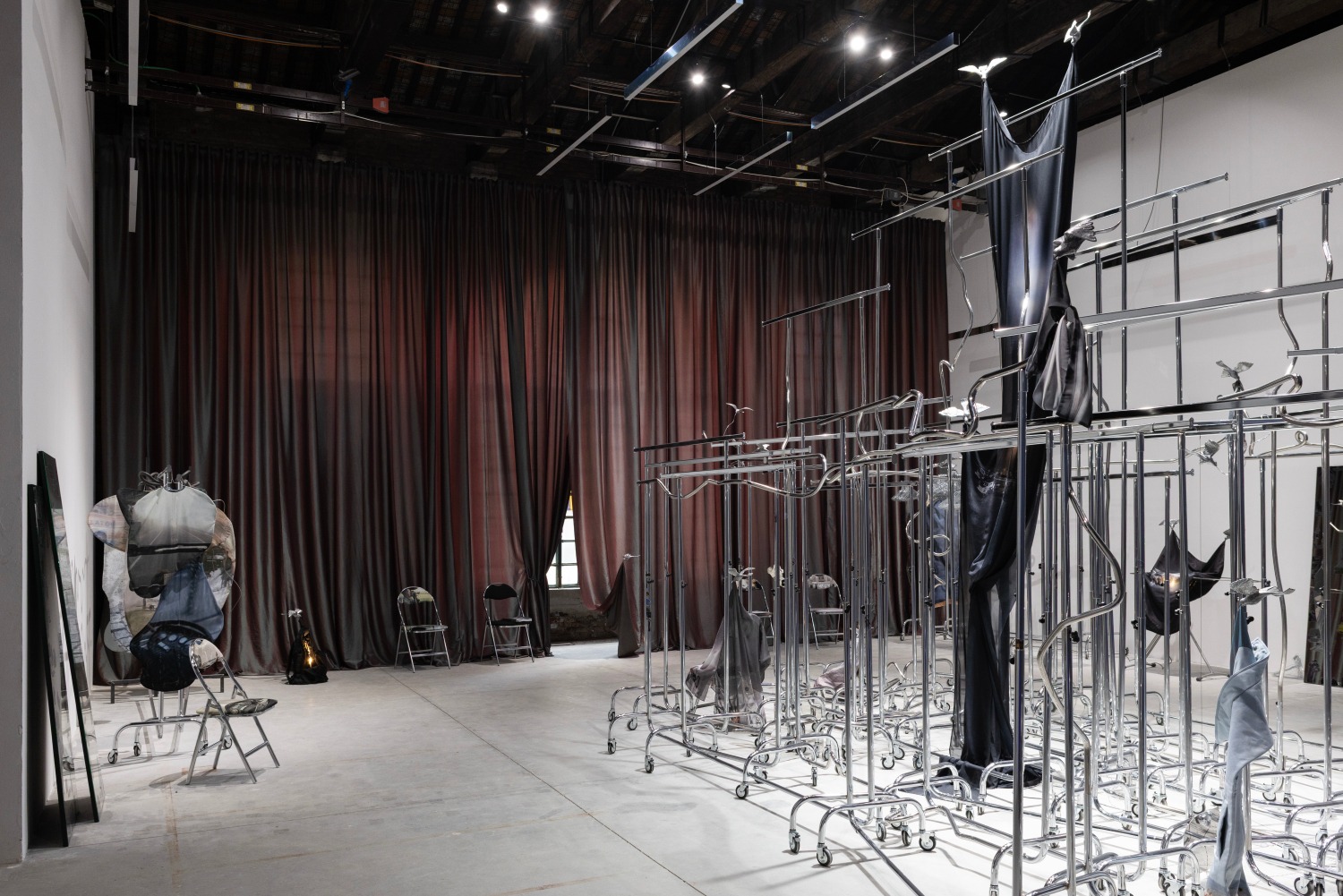
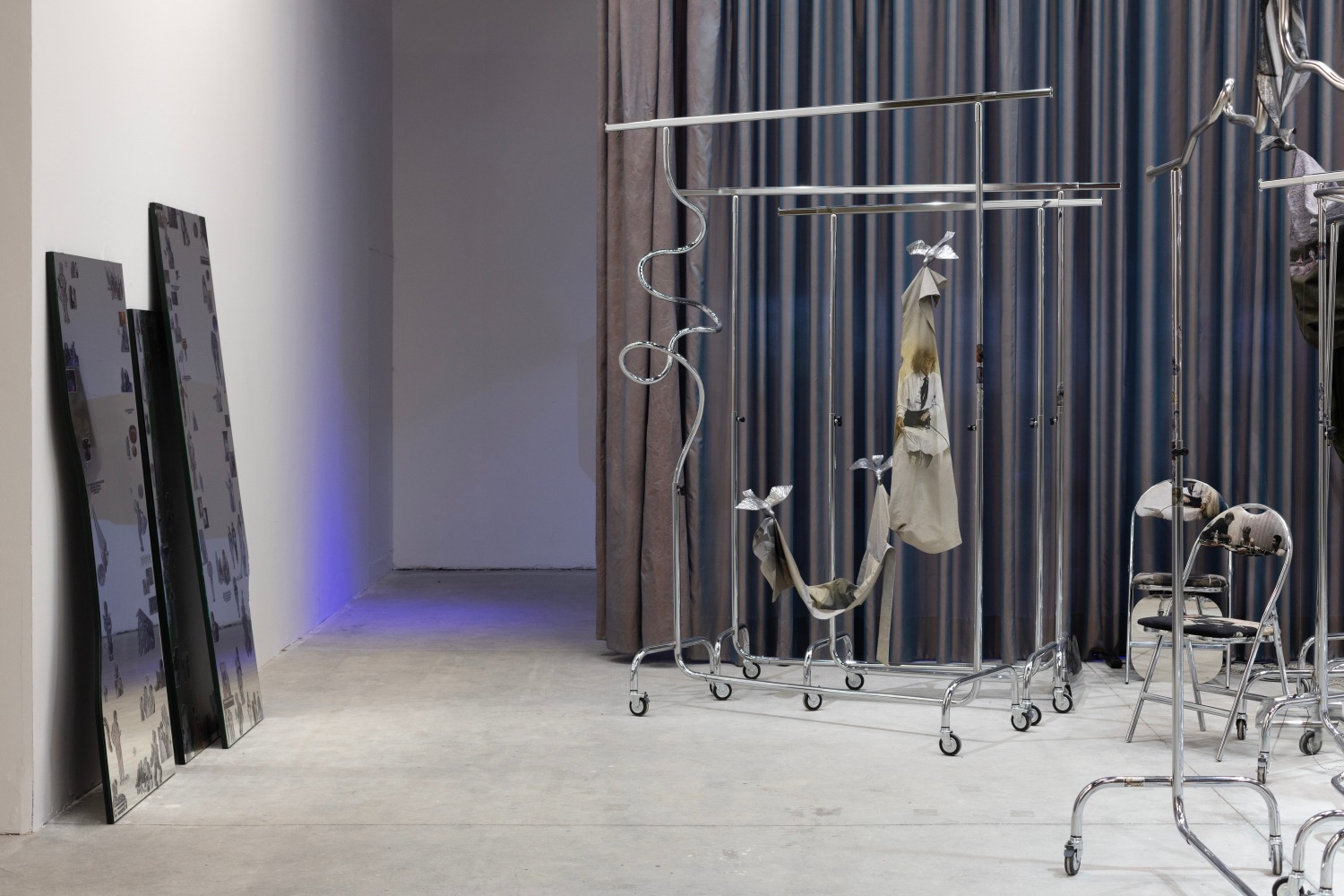
MMP: That is exactly how the idea of the backstage was created, in response to that challenge of how, in such a small pavilion, to talk about this extremely rich collection of narratives. The answer was to shift perspective entirely, to focus not on the spectacle but on what happens behind it. And I must admit that from all the materials of the Assembly, the backstage is the most interesting thing to me. It is also without borders. In the context of Latvia, fashion as an intellectual art form wasn’t taken seriously for a long time. It was most often associated with parties, entertainment, commerciality and superficiality. Yet in the West, fashion has long operated as a site of cultural experimentation as well as business. By working through the aesthetic of the backstage, we can address both the social energy and the structures that sustain it without reproducing the glamour of the show itself.
It is also the backstage of the untamedness and insanity of that time – even though the things that we see as insane, in our time and with our experience, are different. Bruno, and you both too, what feels the most insane thing in the context of the Assembly?
BB: Looking from the present, in my opinion, it would be the numerical volume of the Assembly. The audience of the fourth Assembly was 330 million people. Without the internet! In my view it was a totally impossible thing that was achieved in four years. On the other hand, that spirit relentlessly demanded more and more of untamedness. All the performances, the weirdos that arrived – in some magical way we managed to get them all to come here, in fact we didn’t even consider the possibility that they wouldn’t. We simply did everything to make it happen. Of course, there were a million things that didn’t go through.
RP: Obviously there were such things and more happening in the West; it wasn’t like this was a sudden gathering of geniuses. However, the special thing was that it was happening in Riga, in these circumstances, at this volume.
MMP: For example, a fashion show in Dome Square, with the barricade tractors in the background, and a model lying under the tractor, and the tractor driving over them. You understand that it’s insane. It was freedom that we wouldn’t be able to recreate today even if we tried. This episode is, in our view, one of the most performative artefacts associated with the Assembly.
BB: In principle, by today’s framework and standards, none of what we did would be allowed.
MMP: Or the story of how the Radio House in Dome Square had hooks drilled into the wall, just to make it possible to hang awnings in the case of rain. For a single evening event.
BB: We perceived freedom as absolute. Not as freedom of speech, not legal or economic freedom, but as the essence of freedom. Looking back, it was actually a grand spectacle in four parts.
In my opinion, one very important sign of those times was that the Assembly actually came into being through a process of constant change and development. It wasn’t calculated; it was a gigantic performance in the most direct sense of the word. But this intensity can’t be endured for long. Possibly the Assembly needed a period of “mental hygiene” that would have allowed us to understand how it could be passed on. However, we didn’t think in such categories at that time; we learned as we grew.
BB: I remember living in a constant emotional overload – between the responsibility towards the Assembly’s team and the inner urge to create something completely new and fitting to the future status of the Assembly. It trained me to provoke my imagination till I reach a state of absolute abstraction (I am still working in that mode), but it was also absolutely exhausting. For every Assembly opening performance, new concepts were written, new scenarios, loads of sketches. The sewing took place at the last possible moment… For example, during the performances that took place in Riga Motor Museum, when the jewellery was made by Andrew Logan – I only saw the final (wedding) costumes in their final shape during the show because they arrived backstage when the show had already begun…
In my opinion, the death or the discontinuation of the Assembly was absolutely natural and organic. We didn’t know how to proceed forward. When something grows to a certain volume, miscellaneous factors appear, and things get pulled in different directions. And you see your initial idea disappears somewhere and you need to decide whether you want it to happen that way or not. Look how many talented people have been exiting the fashion business, for various reasons: Martin Margiela, Alexander McQueen, Raf Simons…
RP: There are people who are constantly developing, and with time, a single field gets too narrow for them, which is why they are looking for other avenues. I can say that about both of us too. When I was studying at the fashion school in Antwerp, the first thing we as students were told was “don’t make costumes.” I understood very well what they meant – a costume is a separate reality in a small micro-reality. But fashion is a global language where you have to take into account the kind of a world you are living in; the political, social, and economic activities; the science development; the technologies and intellectual capacity; the added value you are creating in this context. At the same time, when reviewing the archive of the Assembly, I see how many shows and events there are where costume dominates. The difference is that the artists of this region have always had a narrative, a subtext they have wanted to express. Hence it transforms into an artwork, a good one or one that’s less so, which is linked to the concrete region and the situation. The West, where the product has been dominating for a long time, initially did not understand that. But it has changed now. Correct communication can transform almost anything into a product, even something that we currently see as avant-garde.
BB: Because there is a sufficient volume of creative people who have proven that they were right.
RP: In the 2000s, the first Eastern Europeans entered industry. For example, Demna Gvasalia. Currently many people from this region, including some of my former students in Tallinn, are working in the big industry.
BB: And now this language has already established its place.
Interestingly, when we look at the so-called “veterans” of the Assembly like fashion designer Zandra Rhodes or jewellery artist Andrew Logan – when Zandra had a show in Riga, she was not seen as being at the peak of her career, but she has returned there again, and though Andrew Logan is more than 80 years old, both his sphere and his untamedness are only increasing. One can even say that it was institutionalised when Stella McCartney used jewellery made by him in her show.
RP: There was a period when the industry’s standard setters were turning against untamed figures because it is easier to cooperate with predictable designers. There was the attitude that the untamed ones are outsiders, that they can’t be relied on – because everything is business.
BB: Because such people interfere with the system. They are the ones that will never change their rock’n’roll essence.
Do you feel that in the context of today’s reality a utopian idea like Untamed Fashion Assembly would be possible, and is it also necessary?
RP: I think it is already happening – for the past three to four years globally, the assemblies of untamed fashion are happening all the time. Innovation is the key. Saint Martins College of Art and Design student exhibitions are always fireworks. In the current dispersed environment of social media you have to be able to do something insanely avant-garde to be even noticed. Which is why everybody is trying so hard. Artificial intelligence also has an impact. I think that the meaning of “untamed” needs to be put in an entirely different context of understanding than we understood it then. Right now, the winners are those who are able to find new connections and engage the viewer the most deeply – not at a superficial level – or who dare to create a avant-garde contrast with reality.
UM: In a way, that also refers to the Venice Art Biennale. How can one deliver a message so that it’s not only noticed but also understood?
RP: In our case, it is not only important to find associative tools through which to speak about the values and events of that time as objectively as possible; the current political situation also needs to be considered. In my opinion, it is important to recognise how brave people were then and how we, as a society, are constantly allowing cruelty to happen – how we are allowing countless institutions to dictate our actions today.
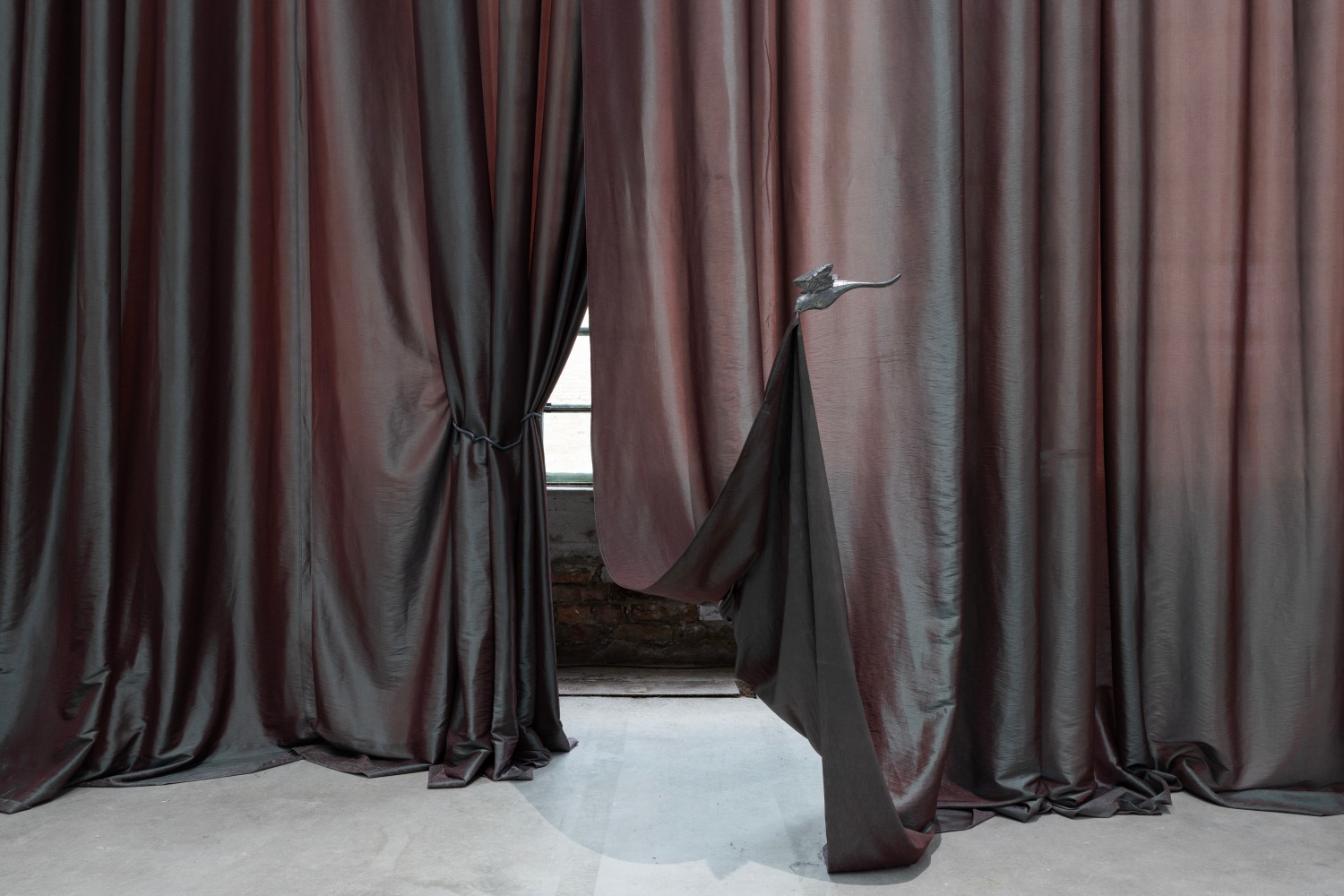
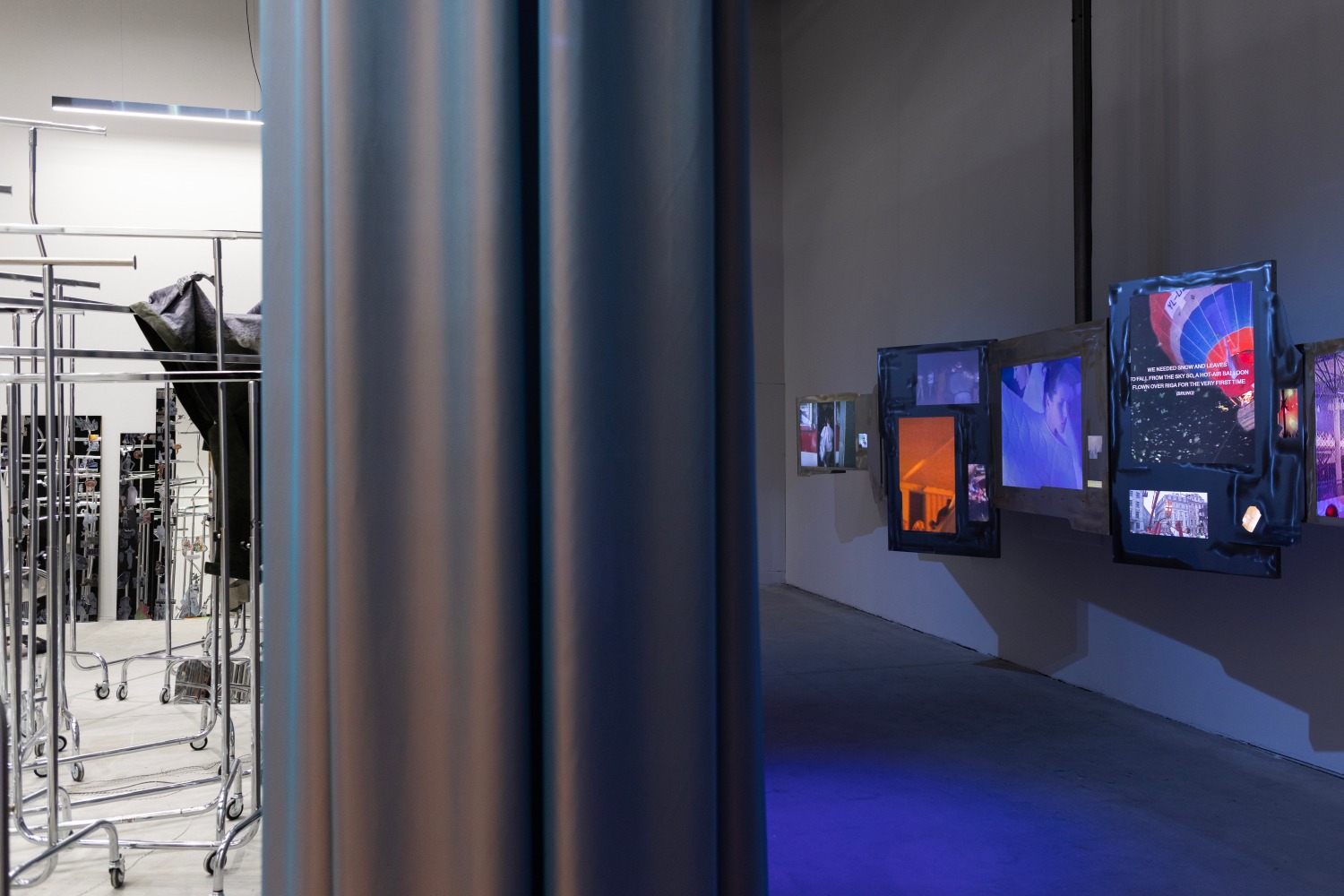
MMP: Remember, there was a video in the archives where a British journalist said that for her, the Assembly feels like Pandora’s box. Only today I understand how poignant it was, and it helped us a lot in creating the visual image of the pavilion. A chance to take a look at materials nobody has even really seen – it is like drawing back the Iron Curtain, as if you are stepping on the stage from the backstage.
RP: In this Pandora’s box, so many things crucial to our identity and self-confidence are hidden, things that due to some pressures have been silenced for a long time. In this case, the pavilion will not only be a tunnel that brings people into a certain terrain – we have also added our experience and future vision to the story.
UM: One of the main values of the Assembly was that it was, from the very beginning, very inclusive – towards all and anyone. Nobody was “different” in the Assembly.
BB: I feel that Assabley is among the most important experiences of my life. I remember when I first went to London, after Alternative Miss World we sat by the river Thames with Andrew Logan. Brian Eno was also there, we smoked weed, I was already quite high and I was thinking, what weird company I am sitting in, but I like all these people a lot. Among them, I felt very comfortable and natural. And these moments have helped me a lot later in life.
In my opinion, the biggest problem of current times is that due to being tamed, and our many social filters, we don’t know how to cooperate. We have a huge generational gap; we are afraid of each other because the slice of bread is so small.
RP: In my opinion, it is exactly this lightness, this joy that we miss the most right now. The Assembly didn’t express a manifesto, political or otherwise, it was simply a game about freedom, joy, bohemian life. You had the chance to talk with a high-ranking politician or a mafia dude who, in turn, was interested in a chance to talk with a model, and this would create a possibility for the model to arrive and to demonstrate an avant-garde outfit. Or the foreign minister who sorted out a permission for a plane with a delegation from Paris might arrive absolutely outside of any schedule. Or Andrew Logan might bring the collection from London by boat. The situations and relationships between institutions, bureaucratic structures, and creative movements that feel impossible now felt natural then.
BB: I still picture it, before my eyes: I am standing with Paco Rabanne, the Minister of Culture is next to us, and I am speaking over the radio. Imagine such a sight today – completely crazy!
UM: The Assembly in essence was a space where different modes of thought met and together created synergies that never existed before. Although it was a utopian idea from every aspect, it was embodied.
BB: This is why I still like those two words, backstage and utopia.
RP: Studying the archives of the Assembly I felt huge joy about it happening in Riga. It was a sort of confirmation that we are a society that isn’t afraid of things that aren’t understood, that aren’t known yet, but we can analyse, evaluate, motivate, support and move with them. Currently, the story of the Assembly makes me think of memories – how do we, in this visually dense time, add value to them, how are we maintaining them? And about the thin line between worshipping memories and memories being a source for learning.
UM: I still remember how every night we made the legendary newspaper of Untamed Fashion Assembly, and every night at 22.30 I asked you, Bruno, “How are you feeling?” In August 1991 you said: “I am in the best mood. I ate twice today and drank 50g of cognac. I have no stress whatsoever.” Please, answer this question now.
BB: I’m heading to Riga after spending two days in Liepāja – I taught at the art school immediately after the opening of the Venice Biennale. Only now do I finally have the time to reflect and process my impressions.
Two years ago, Solvita Krese had an intuitive sense that the moment for the Assembly in Venice would be now. During the first working session in Liepāja, Mārīte, Rolands, and the curators opened the archive – ten years of images, videos, and stories.
They did not approach the archive as history. They took a deep breath, overcame their fears, and immersed themselves in it. And they realized: it can be done this way too. It turns out that within a flood of archival material; it is possible to breathe freely underwater – even if you are a bird. And you do not need anyone’s permission. That is how the exhibition emerged, with its own distinct signature – the backstage of the Assembly then, seen through the eyes of today.
In Venice, I felt as I did thirty years ago - only calmer now. The matter is no longer solely in my hands. Mārīte and Rolands are carrying it forward in their own way – without apologizing, without imitating. Creating a multilayered new work while preserving their own visual language and, most importantly, offering a thoughtful response to the Assembly from today’s perspective.
The desire for free self-expression and passion is still alive – a timeless value, perhaps even more important now, when creativity itself has become increasingly predictable, controllable, even programmed. It is the antithesis of the untamed.
And once again, the world order is beginning to fracture and collapse – this time on a global scale. We are entering a period of turbulence, in which the peace and predictability we have grown accustomed to over the past three decades may no longer exist. Perhaps the Untamed Assemblies have once again arrived at the right place at the right time.
Through participation and shared experience, I rediscovered the forgotten taste of freedom’s euphoria – the selfless spiritual investment of my companions and collaborators. The embers of the Assembly’s legacy still smolder behind the scenes of utopia.
It seems that the time has come to raise the curtain once again.
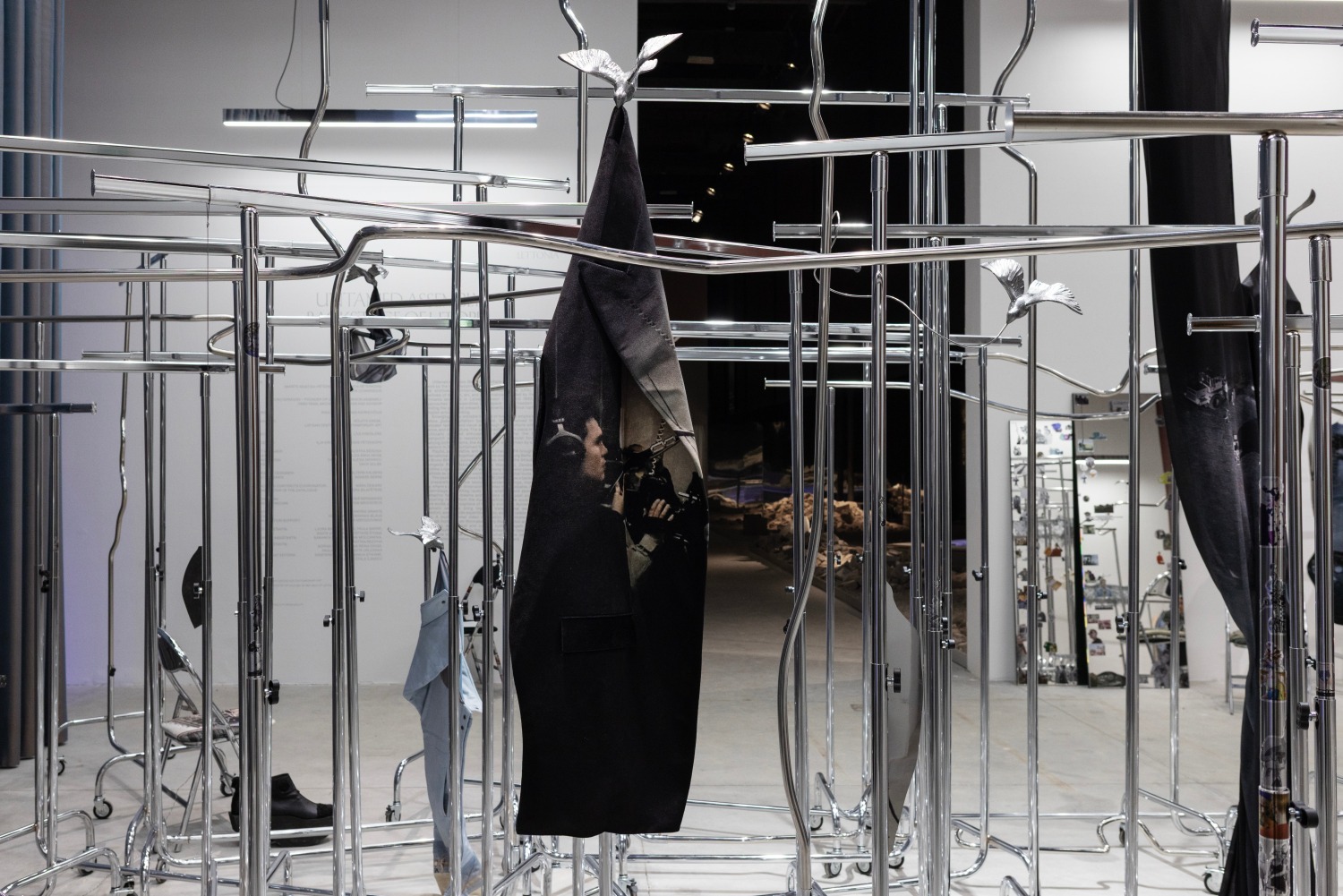
The central element of the exhibition – a metal “puzzle” formed from a grid of bent brackets – symbolically reaches upward, breaking free into the vertical, beyond the frame.
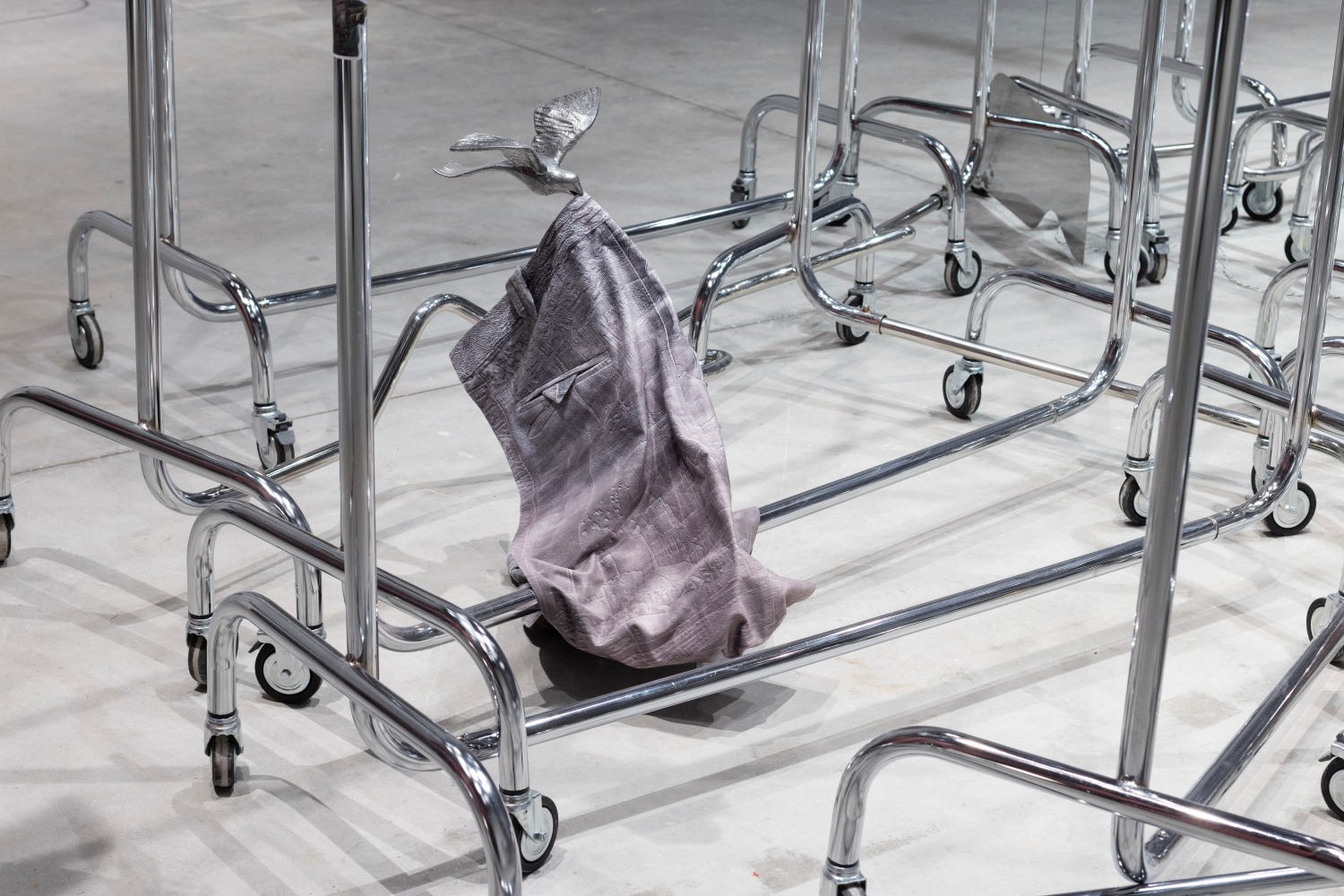
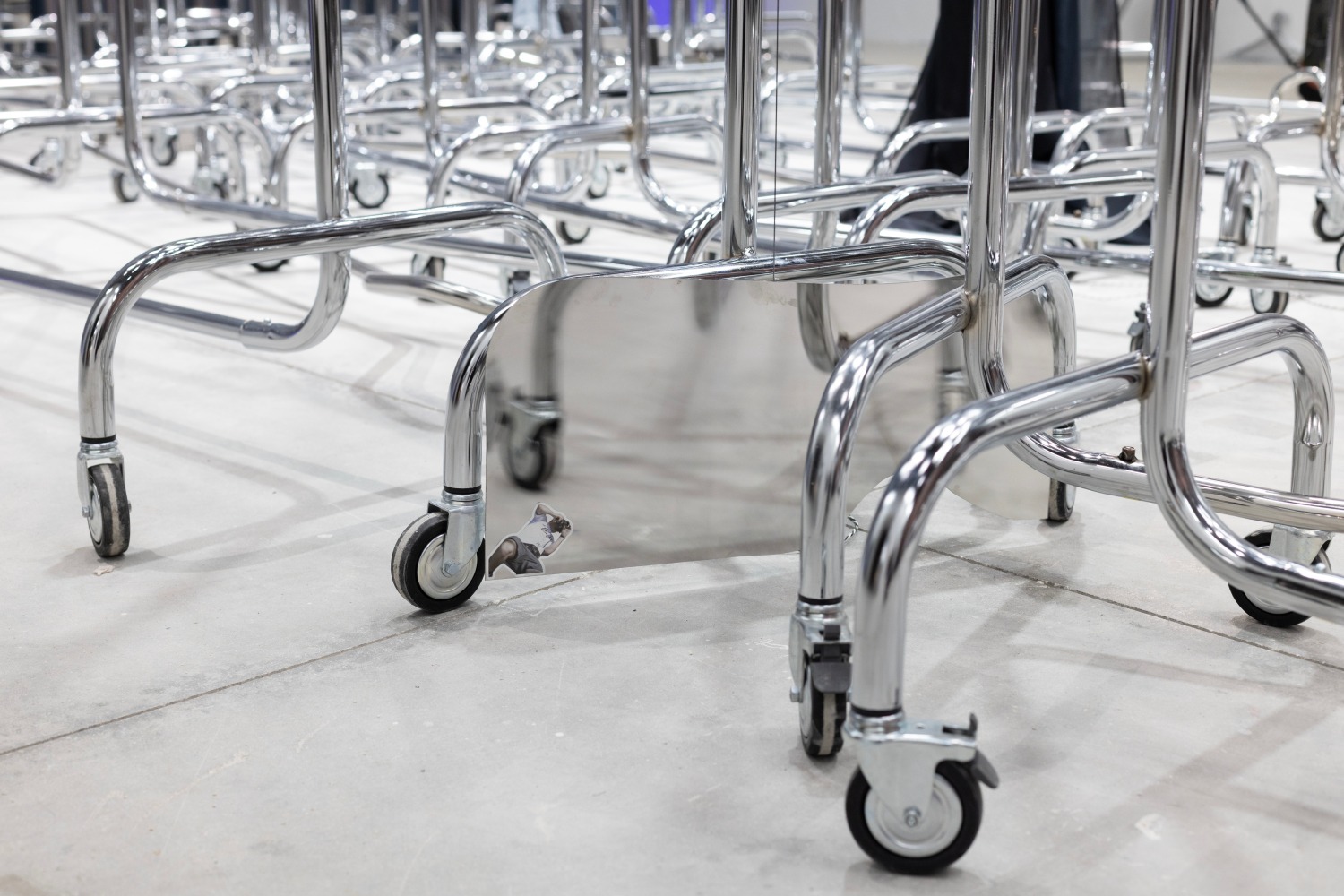
R.P. Our task was to create a dialogue between the past and the present, constantly reflecting on where the present actually lies and how we want to perceive it. The sense of the present is encoded in the installation through the aesthetics of the backstage. On the one hand, the backstage symbolizes industry, structure, mechanisms, and the Western world; on the other, it also represents emotion. The metal puzzle/grid embodies a constant yearning for something – the labyrinths of our psyche, where social, economic, and personal tensions are continuously unraveled.
The grid symbolically speaks of freedom, joy, and energy, which, while exploring the Assembly archives, became strongly associated for us with the 1990s. At the same time, joy is precisely what feels missing today. There is a sense that all these challenges exist so that we might learn how to be present and experience the process itself.
Rhythm also plays an important role in the installation – day, night, day, night. It is embodied through both light and sound, becoming a symbol of everyday tension and constant collision. Meanwhile, mirrors and chrome surfaces create reflections in which one can lose touch with reality or suddenly encounter oneself. It was important for us to incorporate a sense of misunderstanding as well – the idea that everything depends on perspective and point of view.
Metal also evokes associations with the Iron Curtain, which long separated us from the West and created an entire generation marked by collective trauma and a sense of inferiority. Then the birds appear – as an attempt to bring these memories to the surface, romanticize them, and simultaneously heal them. Not to deny the past, but to discover truth within it.
The birds become a bridge between the supernatural and reality, between heaviness and playfulness. Together, these elements form a kind of manifesto of freedom and joy, while also expressing a certain longing for the utopian.
This entire puzzle is also a tribute to our parents’ generation – the people who experienced this explosion of change firsthand. It is also a story about intergenerational dialogue.
We feel that society today is increasingly communicating through subtitles. We very often perceive one another through translation and interpretation. We also read history through “subtitles,” and the question always remains: is the translation even correct? Because within every translation there is always the possibility of manipulation.
This gives rise to conflicts and misunderstandings - both between individuals and within larger communities. The grid itself, in a way, symbolizes the collective work of many people gathered around a utopian idea – whether it be the Venice Biennale or the Assembly. Any major event carries a great deal of emotion, and those emotions can easily be misinterpreted. That is why conversation itself feels so important. Honest, genuine conversation, which, in our view, is sorely lacking today.
The same applies to the tension between the domesticated and the untamed. On one hand, there is industry and the market, which demand predictability, systems, and domestication; yet the birds, in their own way, suggest that we must seek our own path and our own freedom.
We have always felt that history is best understood through present-day experience and personal perception, by recognizing similarities between different eras. That is why it was important to speak about the Assembly not as a nostalgic archive, but as living material that continues to resonate today.
Perhaps that is precisely why the idea of untamedness feels so relevant right now. It speaks to the ability to preserve one’s identity and maintain the courage to think differently. In this context, untamedness is neither protest nor pose – it is the ability to remain true to oneself, one’s language, intuition, and the environment in which we live.
Photo: Ralfs Cimmermanis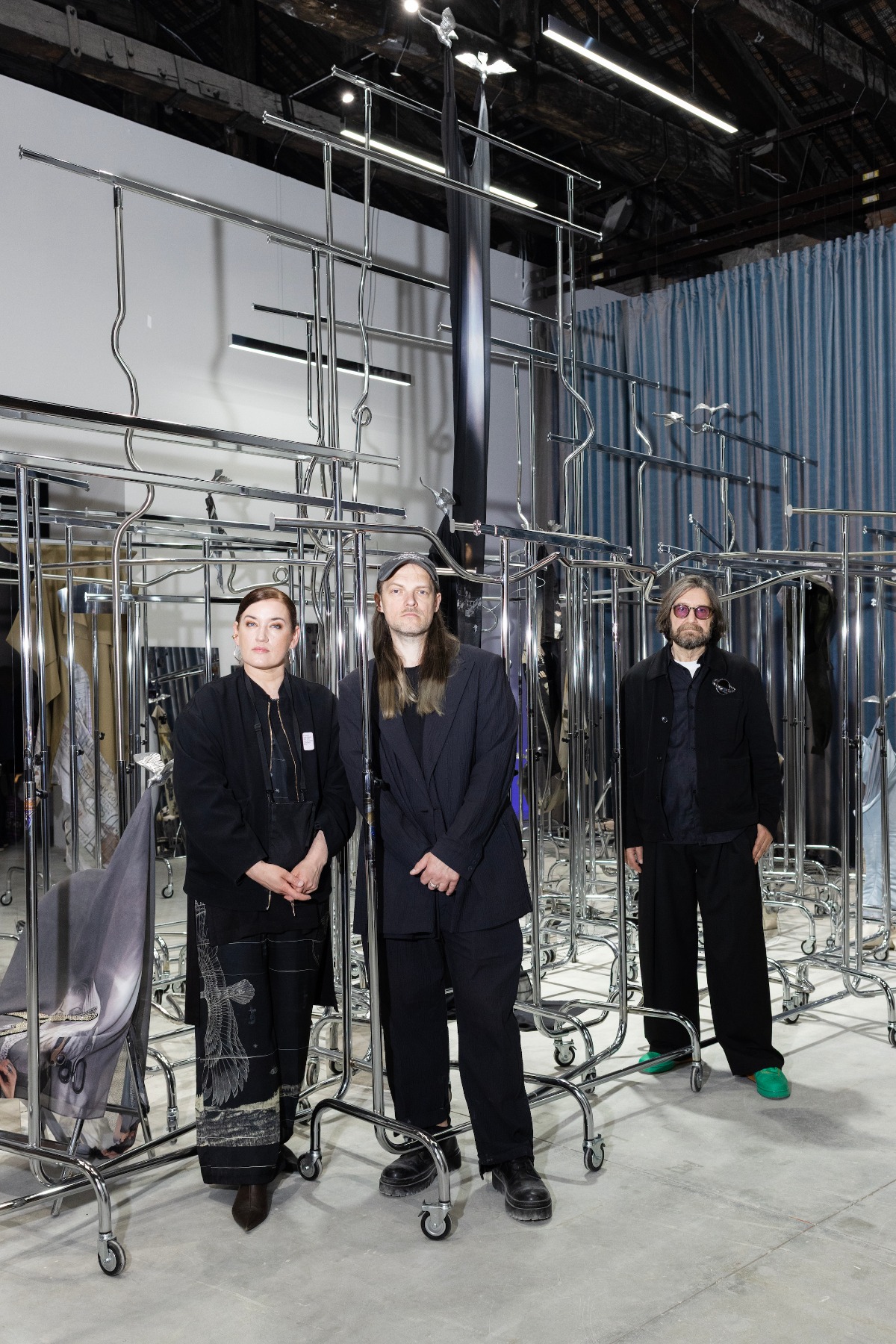
Is freedom a utopia?
R.P. Perhaps this is one of the central questions at the heart of the puzzle – it constantly oscillates between freedom and utopia. Because utopia, in a sense, implies a continuous longing for something, and in that moment you no longer feel entirely free. Freedom, on the other hand, may be a state in which this utopia is no longer necessary.
And then the question remains: how free do we actually feel today? Perhaps far less than we imagine. But a work of art does not need to provide answers; rather, it exists to raise questions. How free are we today compared to the 1990s? Some people assemble this puzzle mechanically and correctly, while others search for something new and strive toward creative freedom.
Perhaps freedom begins precisely at the moment when a person is able to listen to themselves and is no longer afraid to follow their own path.
***
Photo: Kristīne Madjare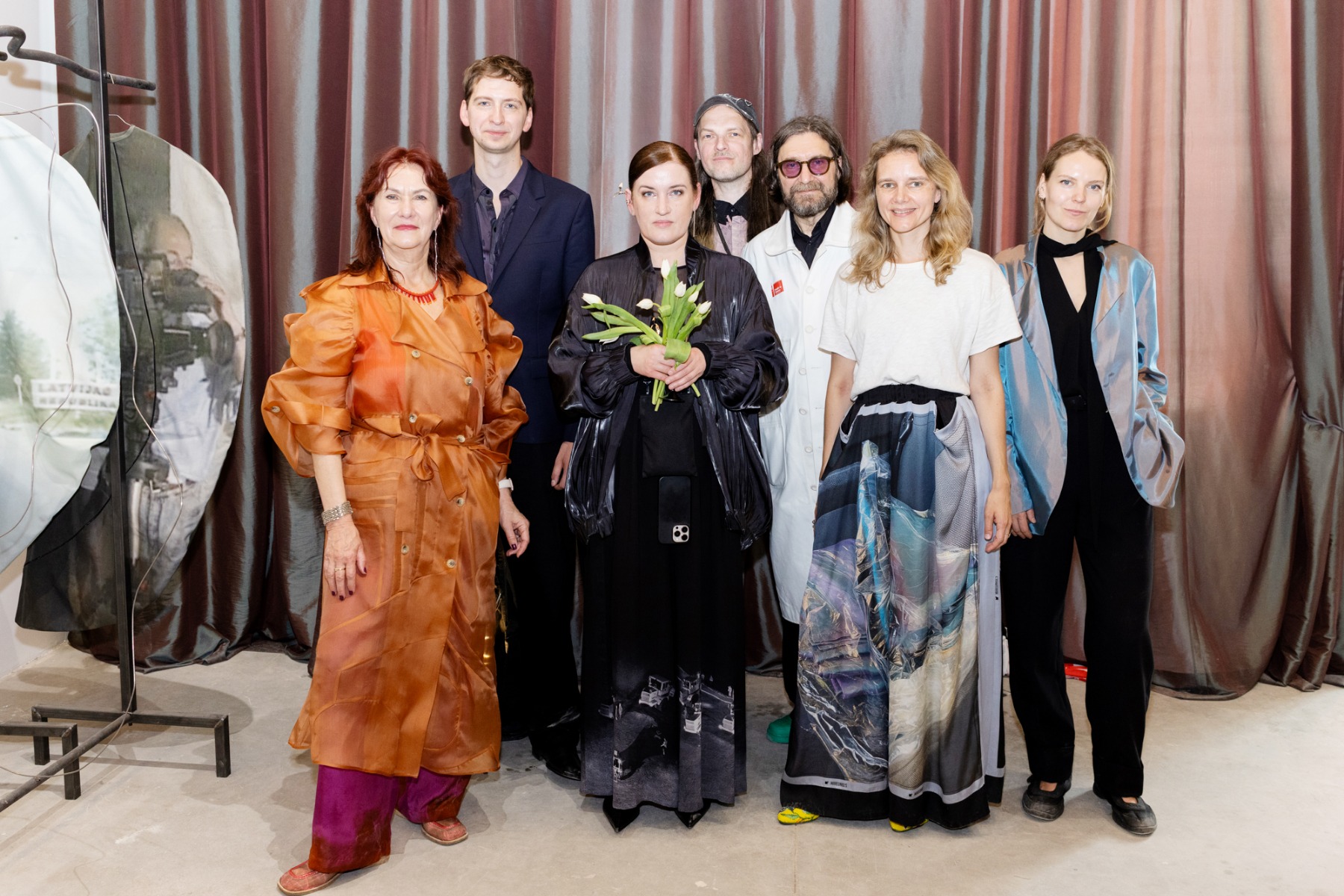
The Latvian Pavilion at the Venice Biennale will be open from May 9 to November 22, 2026
Artists: MAREUNROL’S (Mārīte Mastiņa-Pēterkopa and Rolands Pēterkops) – new work
Bruno Birmanis – Author of the Untamed Fashion Assembley, archive (1990–1999)
Curators: Inga Lāce, Adoms Narkevičs
Commissioner: Solvita Krese, Latvian Centre for Contemporary Art (LLMC)
***
[1] The “Time of the Barricades” was one of the most significant and crucial periods during the regaining of Latvian independence. In response to attempts by Soviet forces to stop the Baltic states from regaining their freedom, on January 13, 1991, barricades began to be built around the most important state buildings and public spaces. These barricades became a symbol of national unity, and thousands of people from all ages and professions stood shoulder to shoulder. The Barricades held till January 27 and then continued till August 21, when the last attack by OMON, Soviet special forces, extinguished the lives of several people.
[2] Three so-called houses of models: “Rīgas Modes” (Riga Fashions), “Rīgas Modeļu nams” (Riga House of Models), and “Baltijas Modes” (Baltic Fashions). In 1985, “Rīgas Modes” already had an established department of experimental fashion. There was a powerful movement of alternative fashion in Russia as well. There were fashion days in Tallinn.
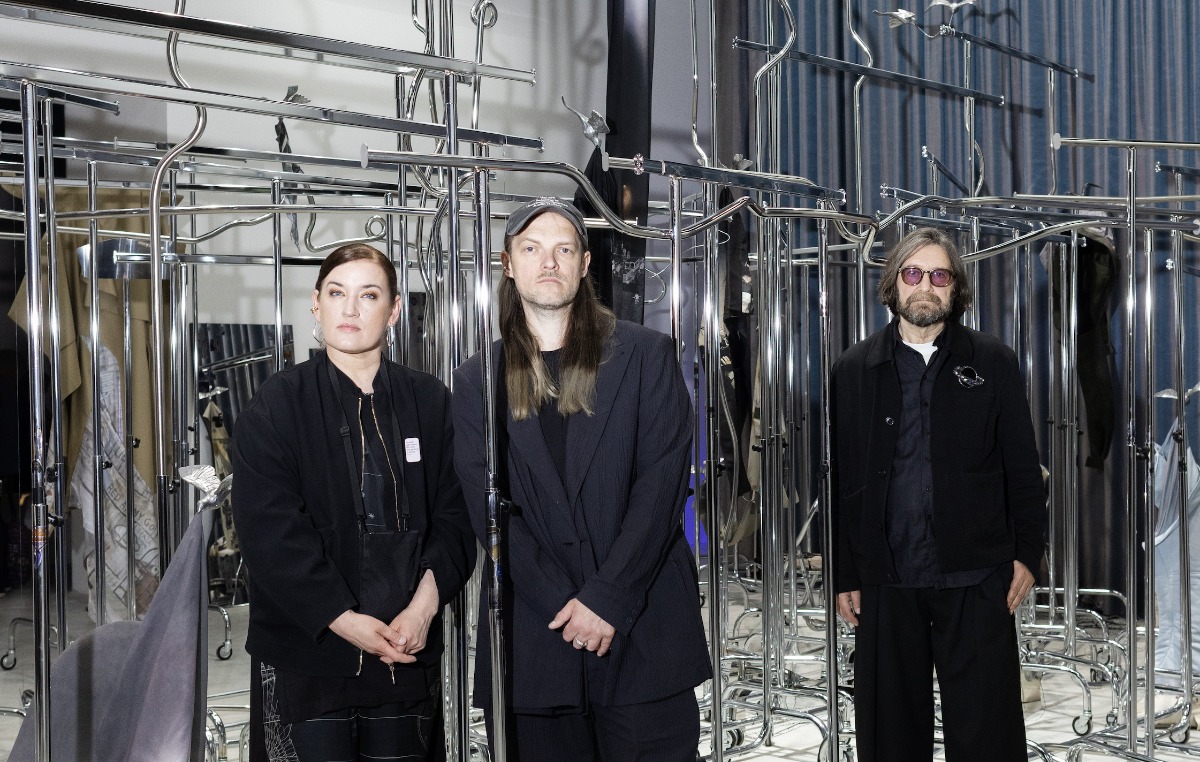
Title image: MAREUNROL’S (Mārīte Mastiņa-Pēterkopa and Rolands Pēterkops) and Bruno Birmanis, 2025. Photo: Ralfs Cimmermanis
