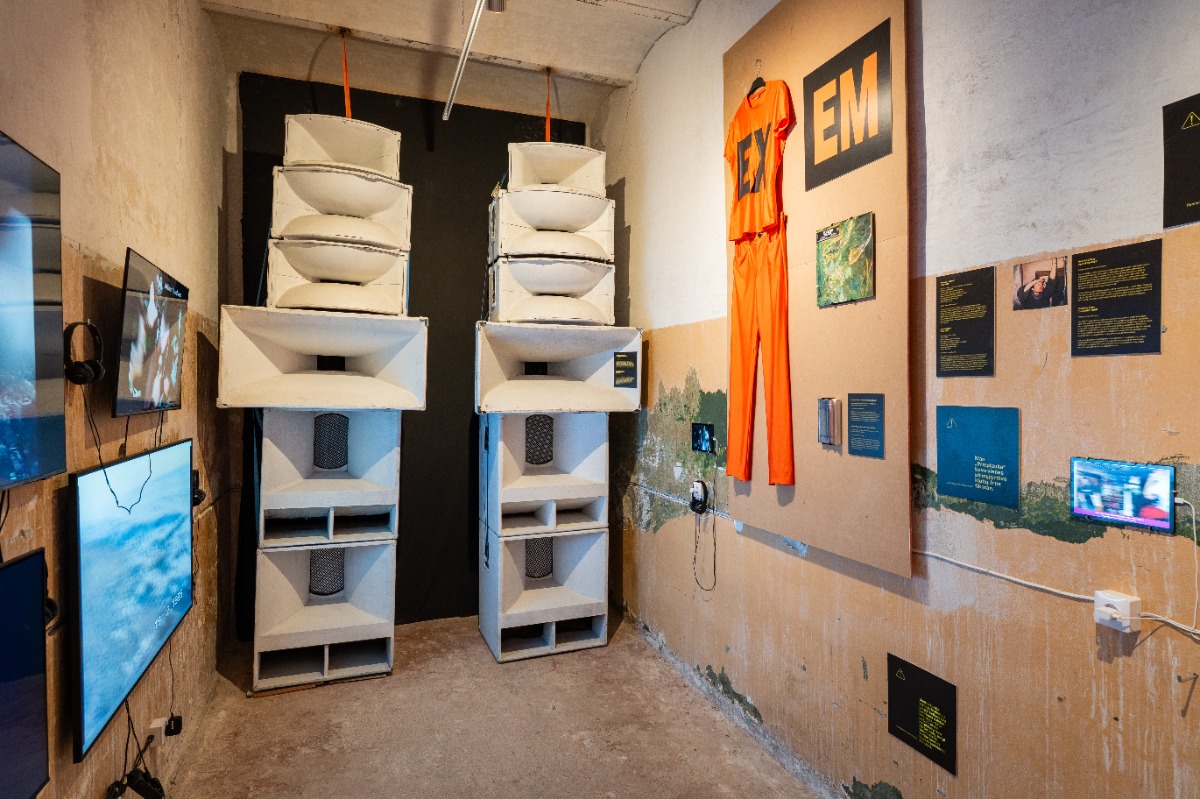
An archetype of collective freedom
Express Interview with Justė Kostikovaitė, co-curator of the exhibition RAVE NATION. Dancing to the Sounds of Freedom. 1992–2004
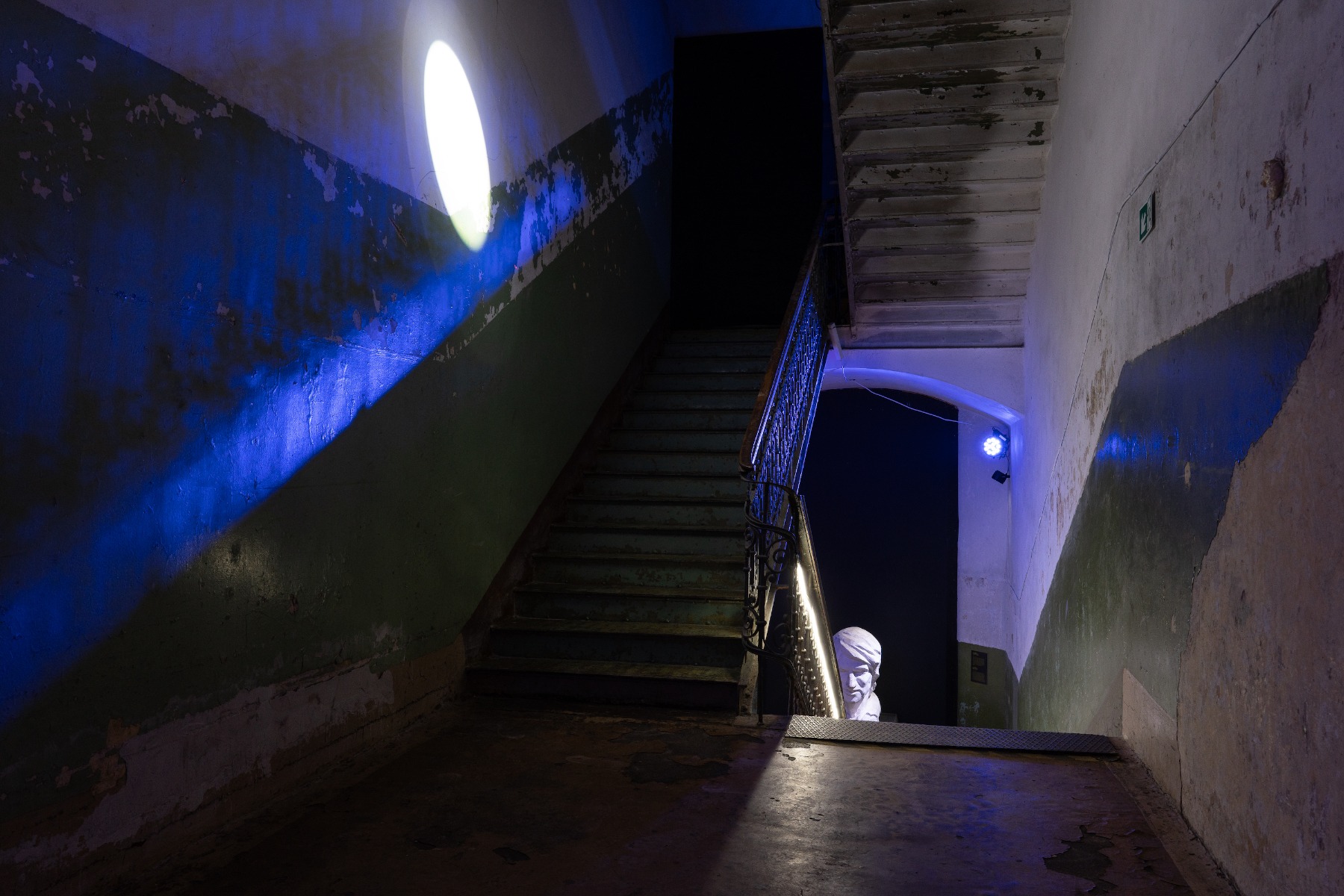
Located in the former prison complex that has recently been transformed into a dynamic art hub under the name Lukiškės Prison 2.0, the exhibition – set against the stark contrast of this space –unfolds as an extended metaphor for freedom and the search for it. This theme resonated most strongly in the 1990s, when freedom descended upon the post-Soviet countries with all its possibilities, but also with the voids and ruptures left in social structures that had suddenly lost their meaning and relevance. Yet it was the older generation that felt these fractures most keenly; for the rave generation, the rivers and waterfalls of freedom were almost tangible, and they carried them forward without hesitation.
Photo by Andrej Vasilenko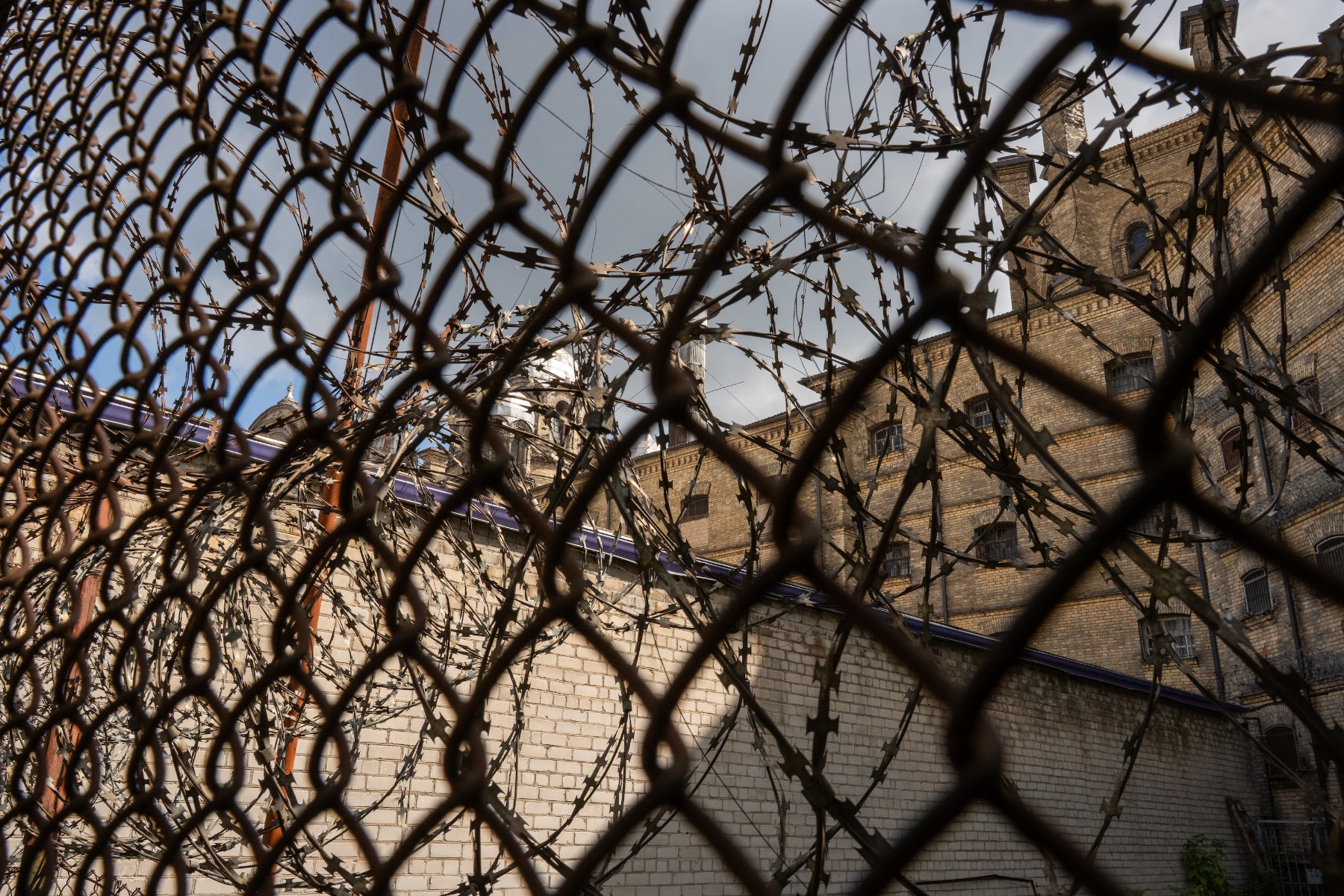
“Rave Nation is not exactly an exhibition about parties. Or rather, not merely about parties. It is, in fact, an archive and a cartography of the turning point when rave emerged as a form of culture – a machine of resistance, escape, and (trans)formation. This machine is presented in the exhibition only through small fragments - flyers, photographs, and archival video snippets – left behind in the wake of an intense ‘battle’ on the dance floor,” reads the curatorial text by Justė Kostikovaitė and Egla Mikalajūnė. “In the West, rave culture originated as an illicit infrastructure of collective ecstasy and post-industrial mourning or dissatisfaction with life. But in Lithuania, between 1992 and 2004, it mutated into something else entirely: a form of rave carrying the imprint of local history and political tensions, along with the entirely novel taste of hard-won freedom…
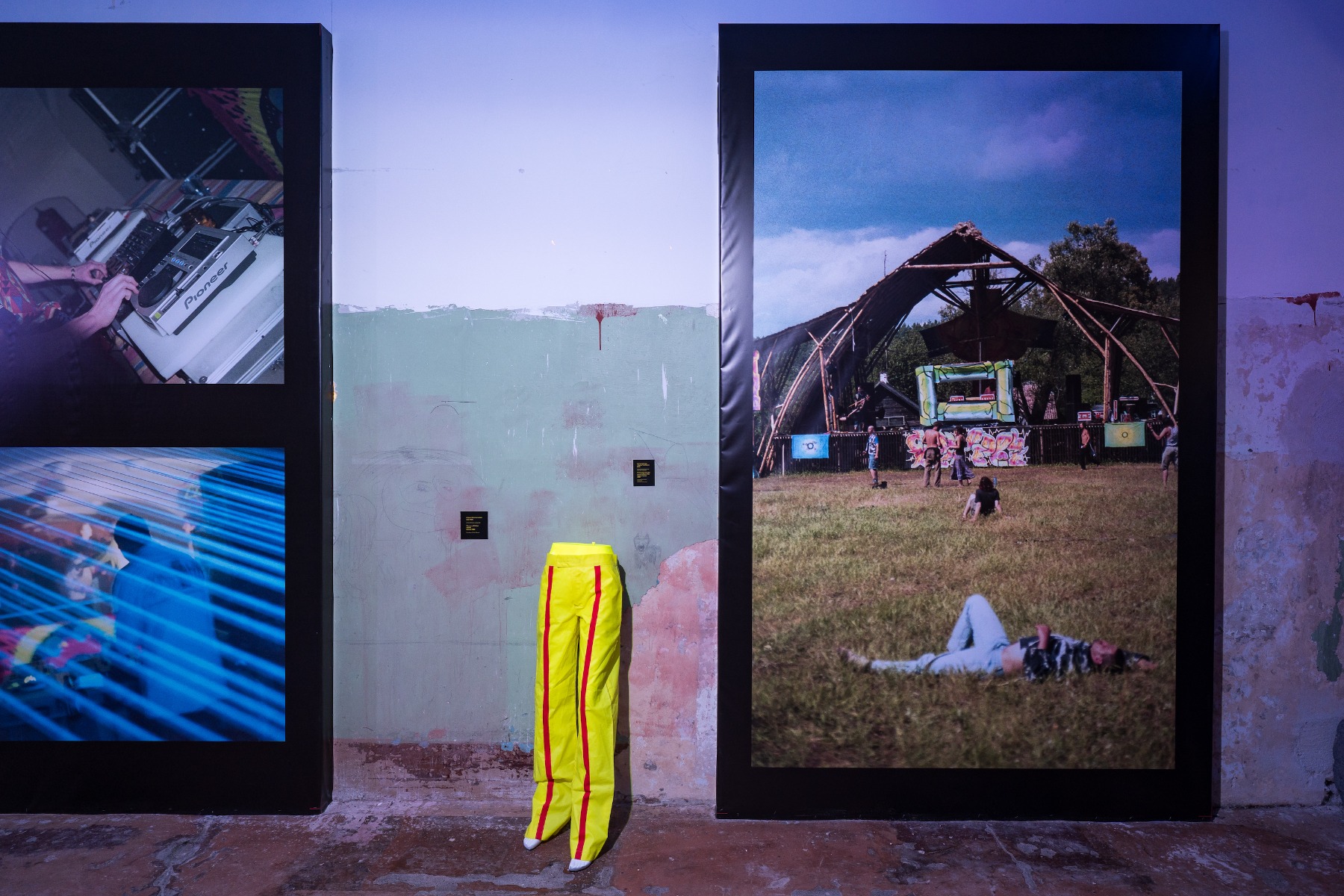
Exhibition “RAVE NATION. Dancing to the Sounds of Freedom. 1992–2004”. Installation view. Photo by Andrej Vasilenko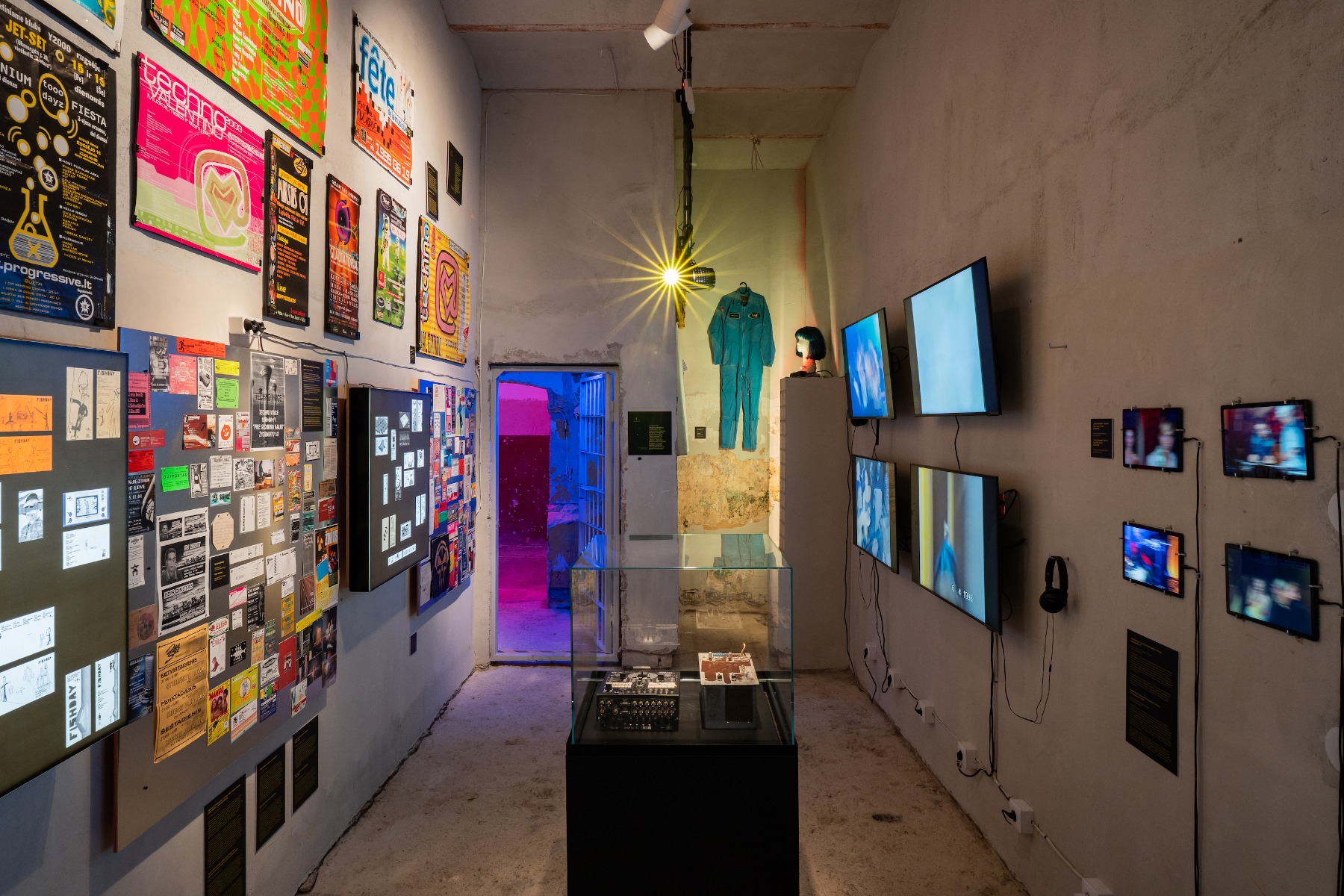
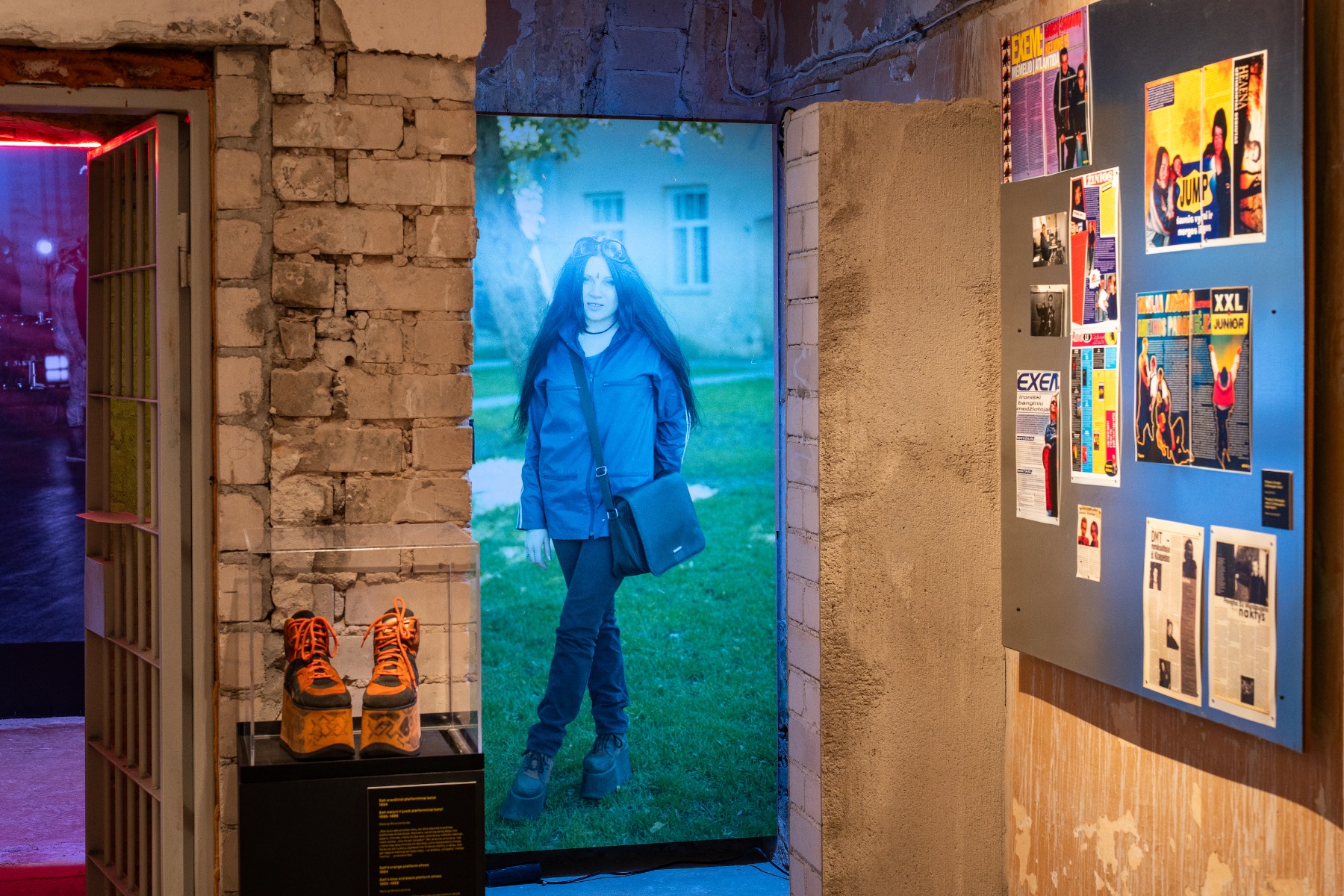
Rave emerged in Lithuania immediately after the declaration of Independence, acting almost as if it were the nation’s cultural subconscious: not as a business venture, but as a project of sound, pleasure, and experimentation. For the younger generation, it offered a novel form of freedom: not a constitutional liberty enshrined in law, but rather a vibrating, rhythmic and collectively experienced liberation, creating its own spaces, its own experiences, its own fashion, and its own DIY rules. Therefore, during the first decade of Independence, rave in Lithuania meant both a celebration and an experiment, a kind of laboratory for distilling a new form of subjectivity. The first rave-like parties in Lithuania would take place in woods, bunkers, community halls, or newly designed clubs. These raves united tribes who favoured different electronic music styles that didn’t always get along, yet these tribes all broadcasted signals into the same shared electronic music and dance space”.
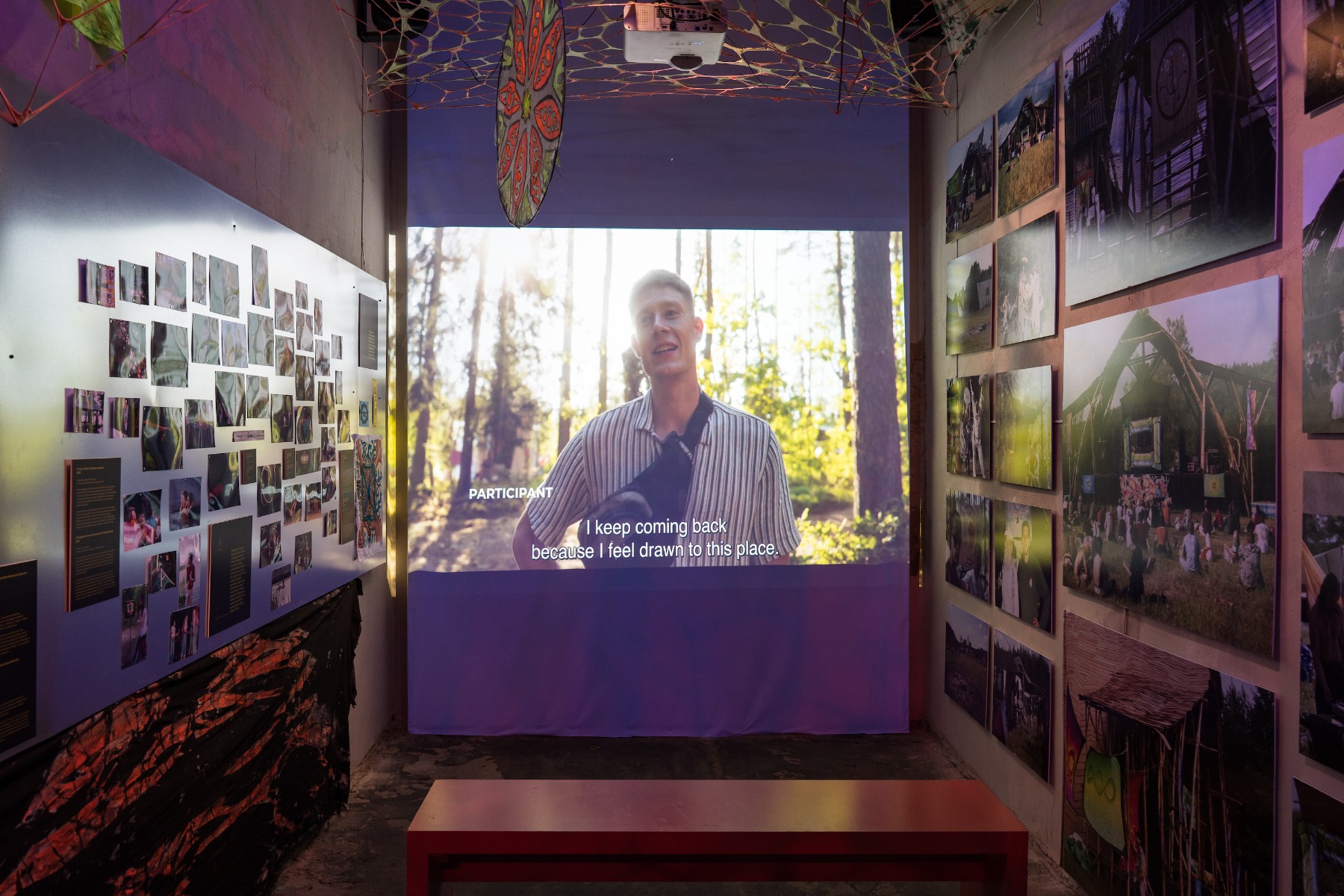
Exhibition “RAVE NATION. Dancing to the Sounds of Freedom. 1992–2004”. Installation view. Photo by Andrej Vasilenko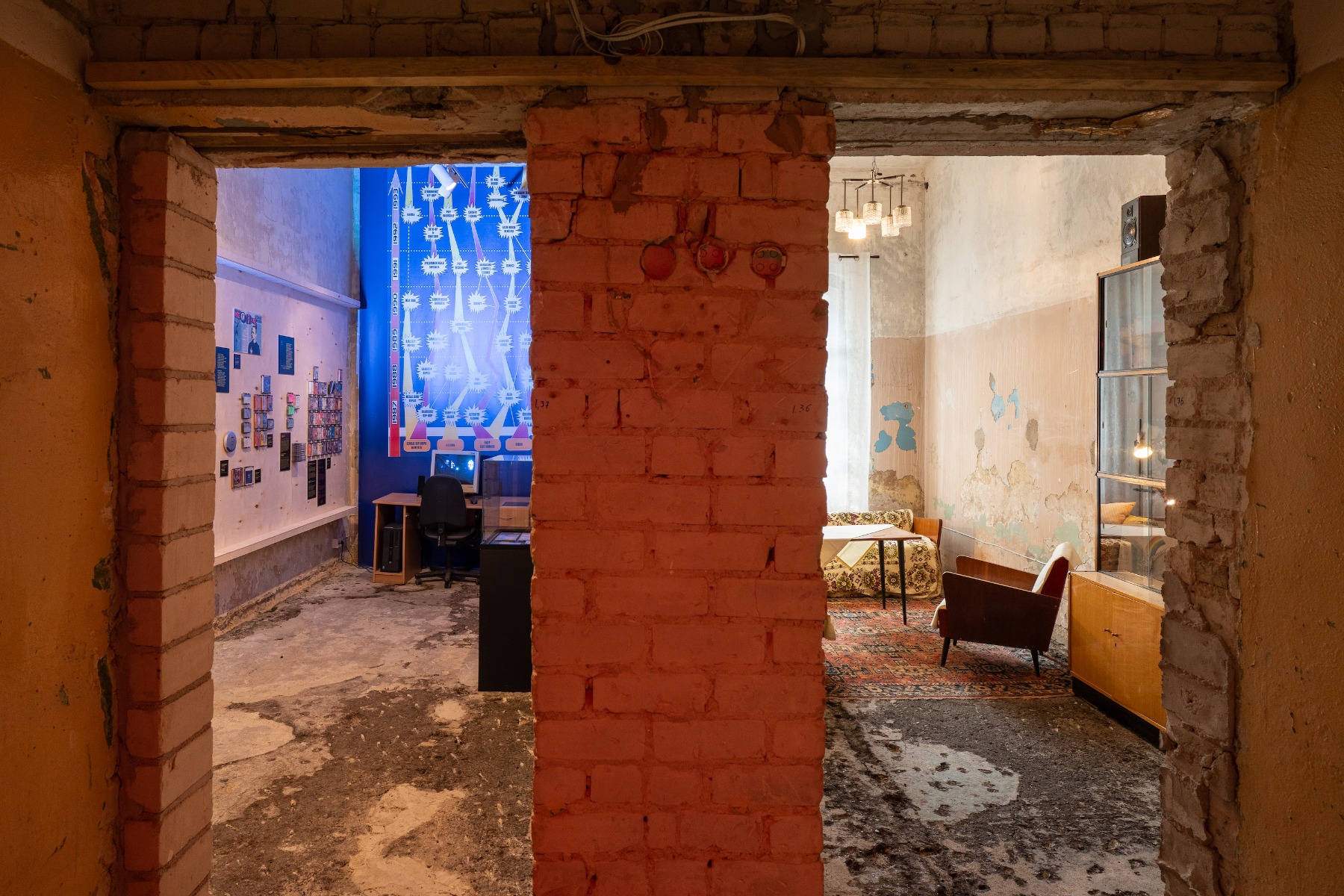
The historical material of the Rave Nation is complemented by contemporary artworks, some created specially for this project, others revealing rave as a field for exploring imagination, body, sound and community. The exhibition, spread across two floors of the building, is a space filled with a unique atmosphere and a wealth of information – a whole kingdom of rave and the ’90s, with their hopes, disappointments, and constant search for the new and unexpected. It is both a declaration of love and an attempt at analysis, a perspective from the distance of time passed. Without a doubt, this is one of the most interesting exhibitions currently on view in Lithuania’s capital. Rave Nation is open to visitors until October 31.
We got in touch with Justė Kostikovaitė, co-curator of the exhibition RAVE NATION, to find out more about the project.
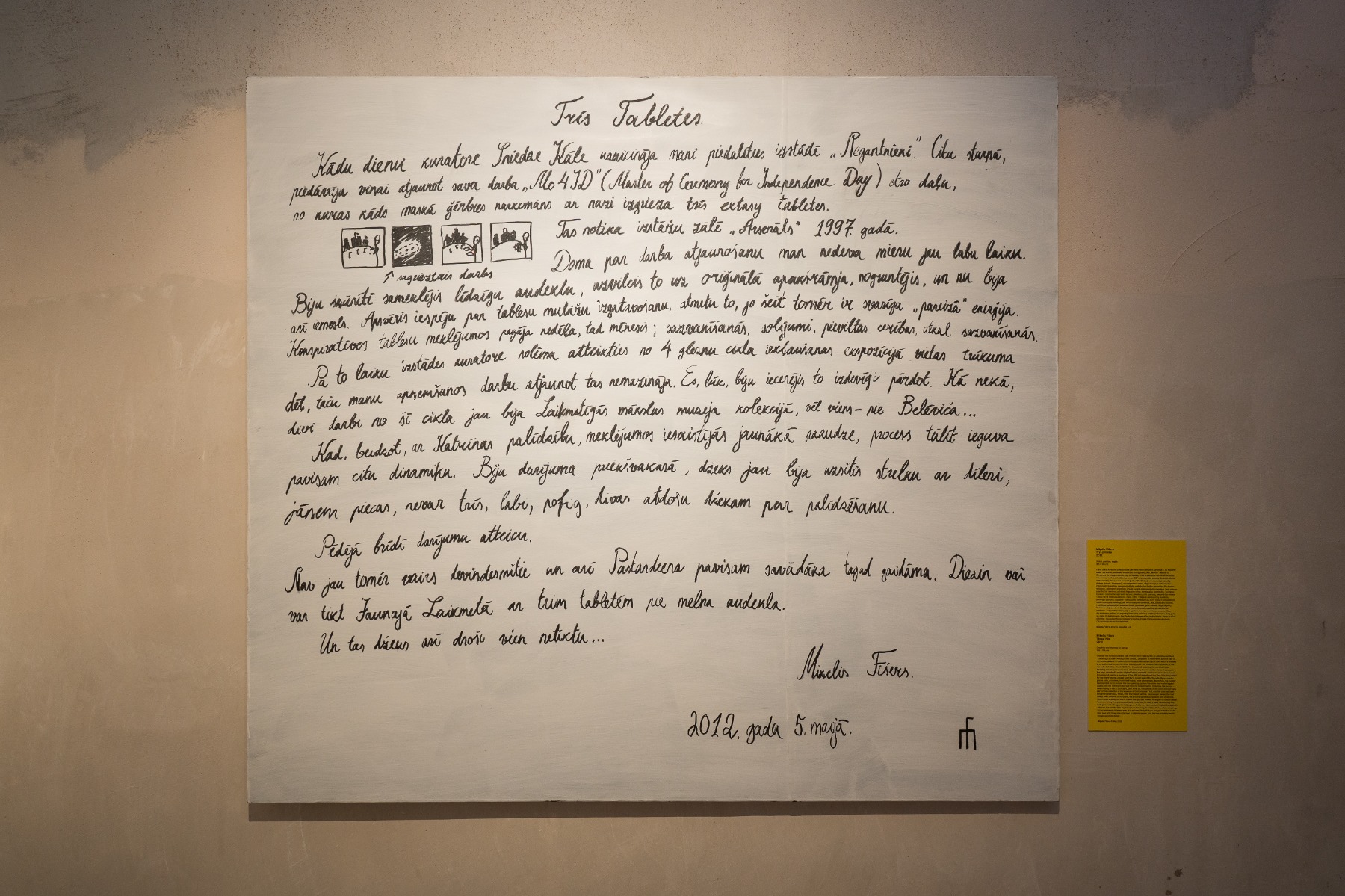
Exhibition “RAVE NATION. Dancing to the Sounds of Freedom. 1992–2004”. Installation view. Photo by Andrej Vasilenko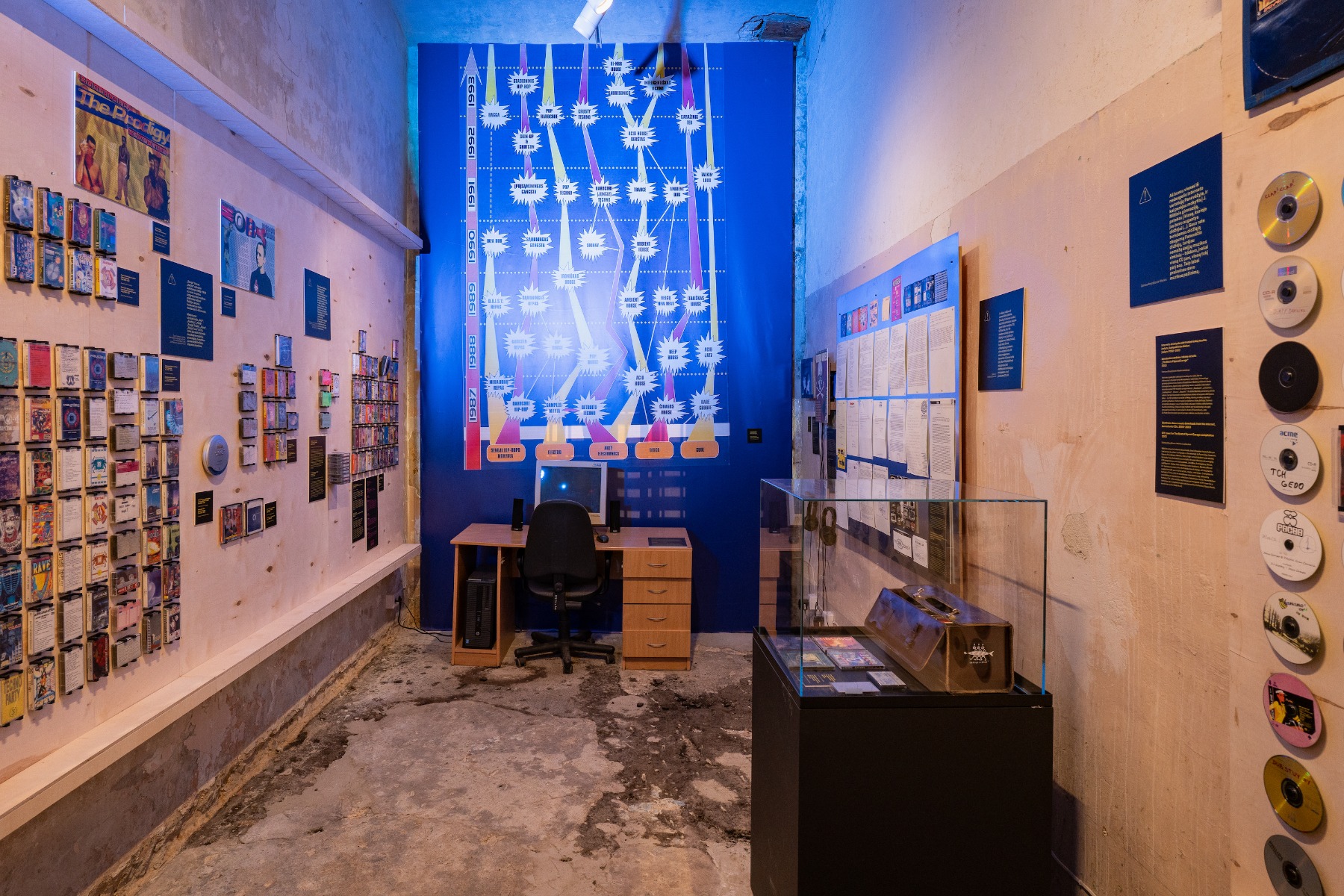
What is your personal connection or your personal story with rave culture? Because it feels like there should be one.
Talking about 90's has become this bad habit of mine, but thankfully it comes up only rarely, from time to time. In the mid and late 90’s I was definitely tasting the scene and then more fully participating in many rave parties, but never a DJ, later on – several times a promoter. The peak of my involvement with the electronic music scene was a very brief attempt to be the manager of the music collective called "Dublicate", headed by a big talent Paulius Kilbauskas. But in the 90's i was mostly exploring, getting to know people and being totally sucked into this completely new sound and the new world that this sound promised. Maybe I can define myself as an ex-raver.
Exhibition “RAVE NATION. Dancing to the Sounds of Freedom. 1992–2004”. Installation view. Photo by Andrej Vasilenko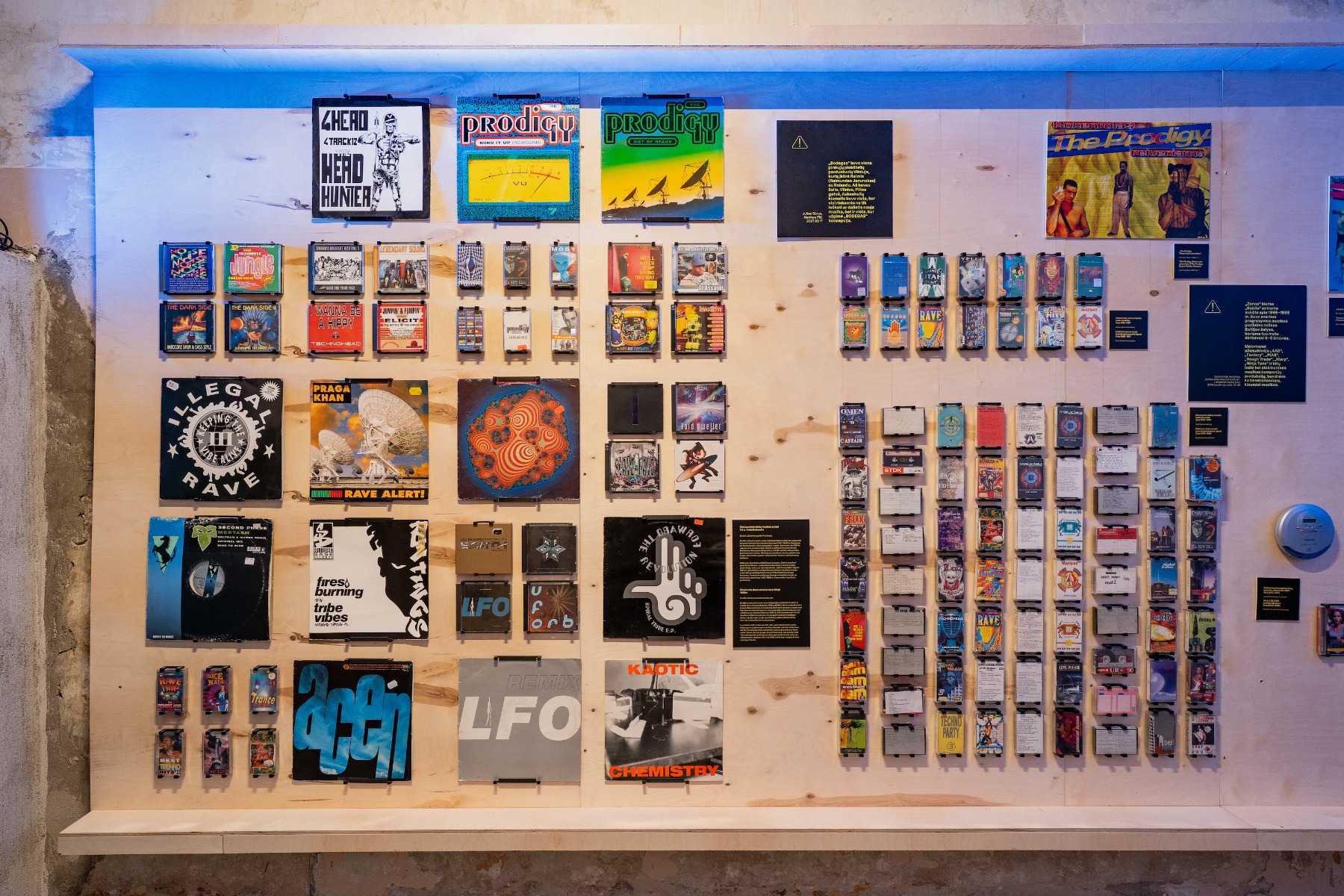
It’s really interesting that a big part of the exhibition is devoted to “regional stories” – to events and people outside the capital. Were they following what was happening in Vilnius, or was it a simultaneous development?
One could of course read this decision of ours (decision of me and co-curator Egla Mikalajune) to include regions in our exhibition on early rave history of Lithuania as a kind of counter-snobbery. But the real story is both more mundane and more interesting. Art and cultural history, when written from the center, has a tendency to naturalize its own vantage point: everything seems to begin and end just in the centre. For us that would be Vilnius. But what we wanted to highlight is the simple fact that the so-called periphery was never truly peripheral – these “regional stories” were unfolding at the same time, often in close dialogue with events in the capital, sometimes even anticipating them, and pioneering them, for example - things that happened earlier in Klaipeda, the port city. Or I can even remember even a story that DJ Assasid has told me about a tiny self-made club Boost that they ran in a small city of Jonava, in some school basement. It is precisely in this simultaneity, in the refusal of a neat hierarchy between center and margin, that the vitality of the scene reveals itself.
I myself travelled a few times to Kaunas, to RyRalio parties at Pakalnė canteen and though of Kaunas party crowd as more mature but also more rouge and avantguard at the same time.
Riga was another story altogether.
Exhibition “RAVE NATION. Dancing to the Sounds of Freedom. 1992–2004”. Installation view. Photo by Andrej Vasilenko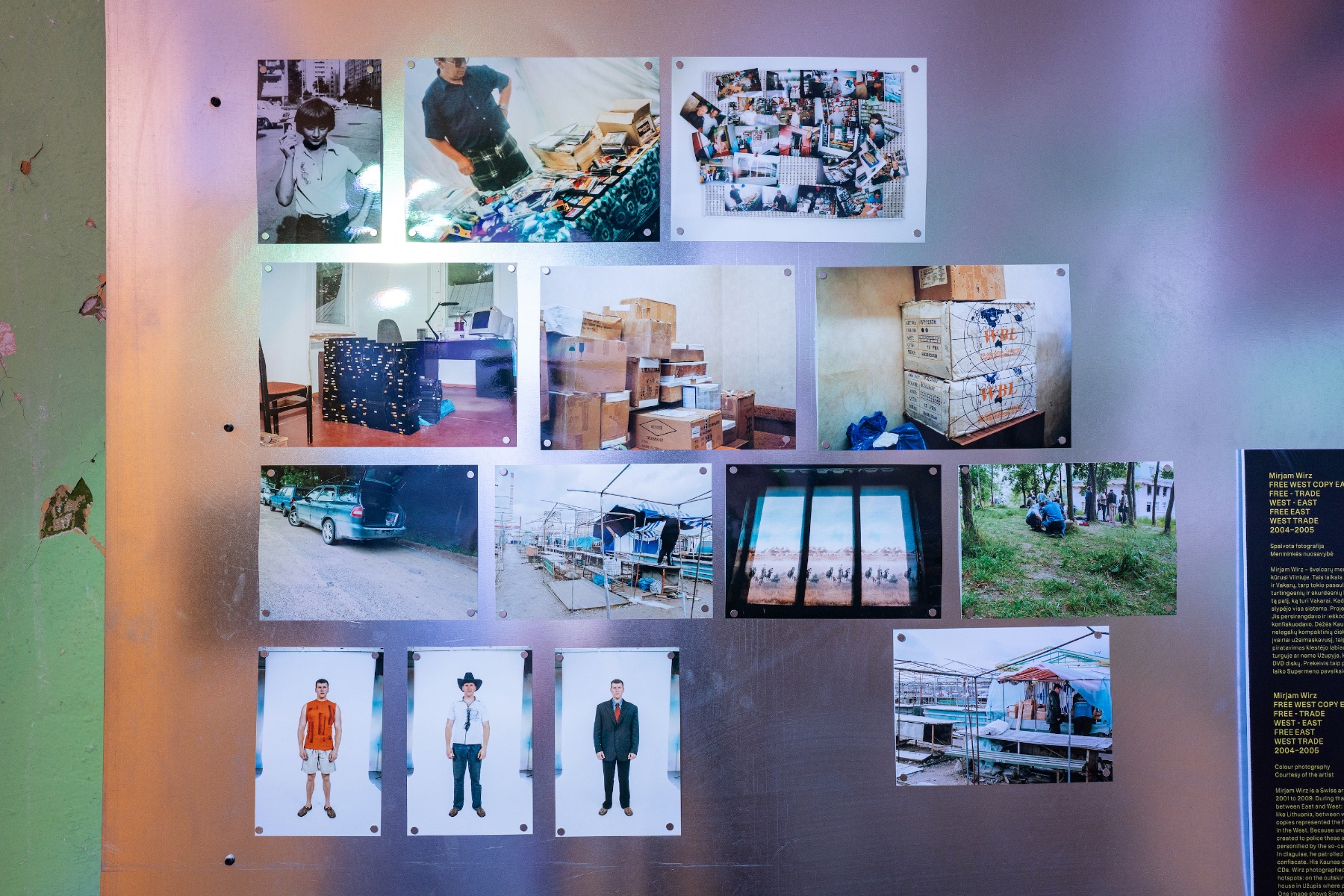
But what was the connection with the other Baltic countries? Were there differences between Lithuanian, Latvian, and Estonian rave cultures?
For some reason that is still a mystery to me we had almost no “rave” relationships with Poland, but Lithuania had a very strong influence in regards to parties and electronic music culture and clubbing in general from Germany. This fact was mentioned by many people I spoke to. For example it was mentioned in the interviews with Ana Maslenikova (Dj A), Sigitas Grybas (DJ Saga) and many others, Raimonda Klimašauskaitė (co-founder of the club “EXTRA”). They all went at some point to Germany in the very early 90’s and were gobsmacked at what they saw and want to attempt create something similar in Lithuania. Latvia was also totally a signpost. For example DJ Saga purchased his first magnetic tape recorder in Latvia in the early 90's. Discomafia DJs (Saulius Imbrasas and Žilvinas Strumbras) studied in Tallinn and even played in the local radio. Saulius claims that Vilnius was a periphery at that time (9š/9ų) compared to Tallinn and Riga burgeoning clubbing scene.
From hundreds of party flyers one can see that there were often Latvian and Estonia Djs, also sometimes Djs from Russia playing at the parties in Lithuania. I presume that they were awfully good at what they were doing! But never did I see a Polish DJ name.
Also for the One Ear Stereo DJ collective from Klaipėda Latvian connection is even more apparent – this Klaipeda almost breaks playing DJ collective had attracted one of its members - Dj Denis moved from Riga and to Klaipeda and later Vilnius with all his records and players. I would say Latvian element may have been the strongest influence from all the Baltics in the LT party scene at that time.
Exhibition “RAVE NATION. Dancing to the Sounds of Freedom. 1992–2004”. Installation view. Photo by Andrej Vasilenko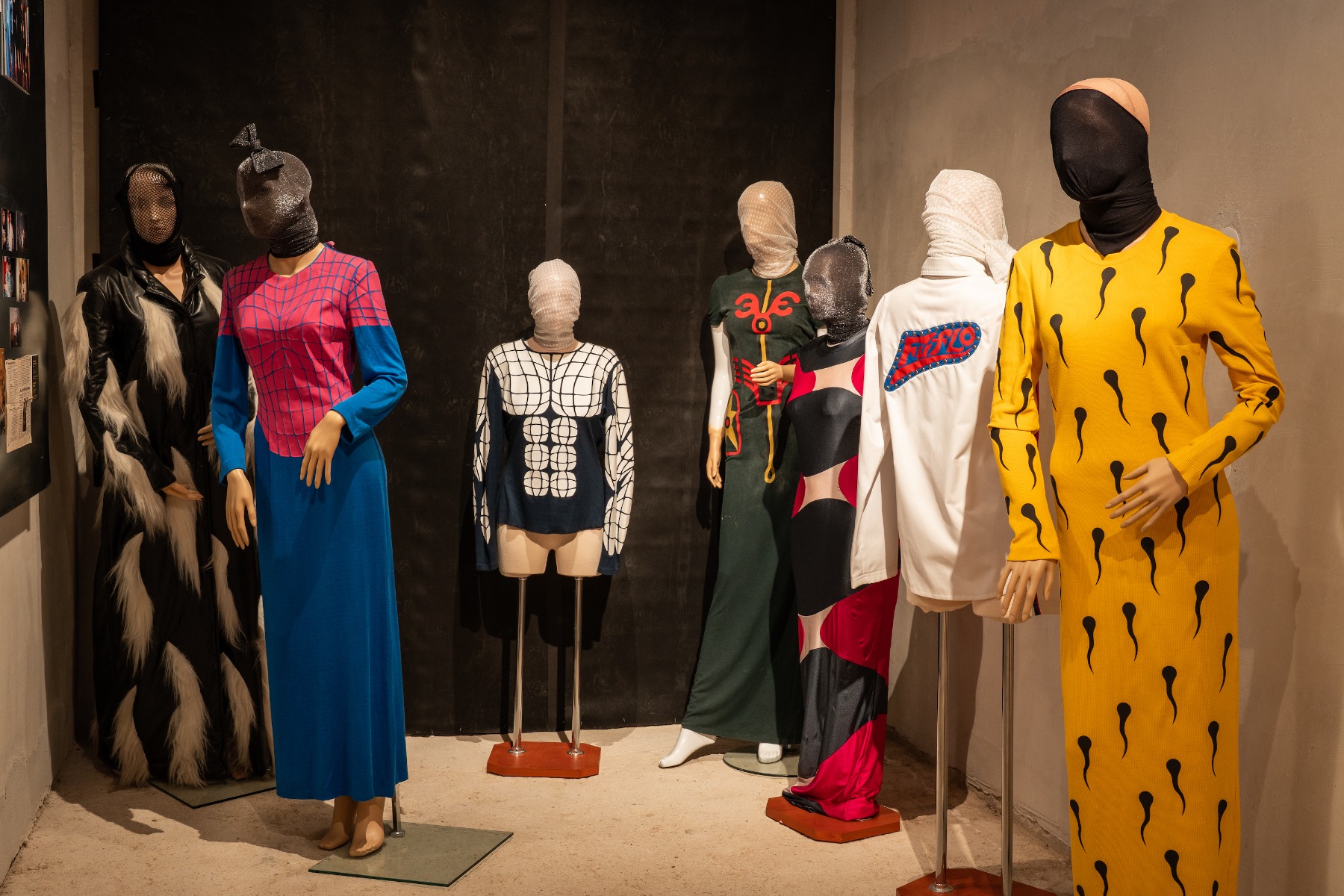
But it was kind of an international movement with local heroes, wasn’t it? So the national scene was part of a global one?
It's hard for me to say that. The rave nation was global and provincial at once: shaped by scarcity and improvisation, yet always oriented toward a completely new and unseen before utopian wider horizon of pleasure, wordlessness, another reality(ies). What emerged was a flawed attempt at a completely new common language of being together. Perhaps – globalism. And sure, there was a lag in the Baltics, in many ways. But as we see now, there were many interesting scenes and music going on in Greece, in Yugoslavia etc. But we consumed mostly "Western" music and labels.
To say there were “local heroes” in a global scene makes it sound like Lithuania was just catching up with Berlin or the mega raves in the countryside of the UK. In reality, things unfolded almost simultaneously, with a lag of a couple years maybe – DJs in Vilnius or Kaunas were tapping into the same frequencies like abroad, people exchanging music through copying cassettes, later- cd’s, and translating them into their own idioms. The floodgate was open and it was about to burst.
Exhibition “RAVE NATION. Dancing to the Sounds of Freedom. 1992–2004”. Installation view. Photo by Andrej Vasilenko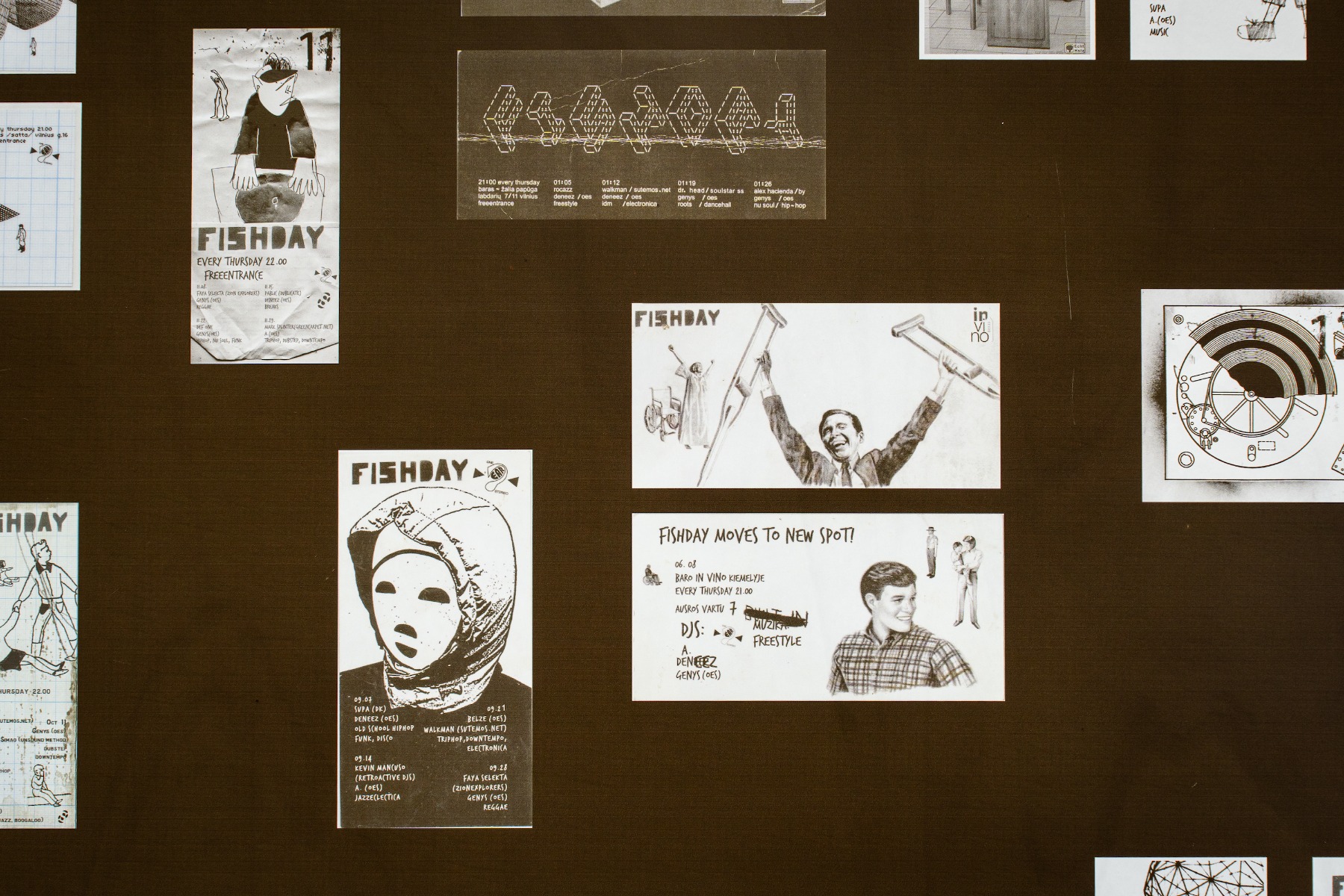
How is the visual side of rave represented in the exhibition? And do you see this visual culture in some way continuing in today’s contemporary art scene?
It was crucial for us to ramp up and collect whatever was left and not destroyed or thrown away from the attics. We have managed to ask to lend us more than 1000 items, mostly flyers (paper invitations to the parties) – that give out a pretty decent visual narrative with patterns of old soul records, some flyers remind a lot of the visual side of old computer games or something sci-fi or something of vapor-wave that was not yet called vapor-wave. But in general, all the aesthetic and sound language and codes surrounding electronic music parties was, as artist Darius Žiūra says, devoid of patriarchy, it was something pure, something much more abstract. And this was a huge pull for many people, as it radically freed them from the oppressing visual and language systems.
The visual side of rave in our exhibition is presented via flyers, posters, photographs (it was not common to take photos in mid 90's), videos, clothing, even some fragments of scenography. I know that at the exhibition in MHKA, Antwerpen in 2016 Energy Flash – The Rave Movement the curators that were focusing on graphic design, fashion and art of those times that the flyers and other paraphernalia are not just secondary illustrations or nostalgic pieces of 90's music but constitutive parts of the culture itself: graphic design, light, and moving image were actors in producing the rave experience, and the raver communities identity (and it's smaller subculture identities). In Lithuania, much of this visuality carried a strong DIY imprint – from photocopied flyers and hand-drawn logos to simple computer graphics, sometimes borrowed from video or computer games. The artist that we are showing in the exhibition, Mark Leckey likens sound systems from rave culture to museum-worthy sculptures – certain sound structures can be visually and sculpturally experienced.
I do think this visual legacy continues in contemporary art. You see it in practices that work with collectivity, immersion, or ephemeral architecture; in artists who re-activate archival material as a living texture; and in a renewed attention to the aesthetics of 90’s nightlife.
Exhibition “RAVE NATION. Dancing to the Sounds of Freedom. 1992–2004”. Installation view. Photo by Andrej Vasilenko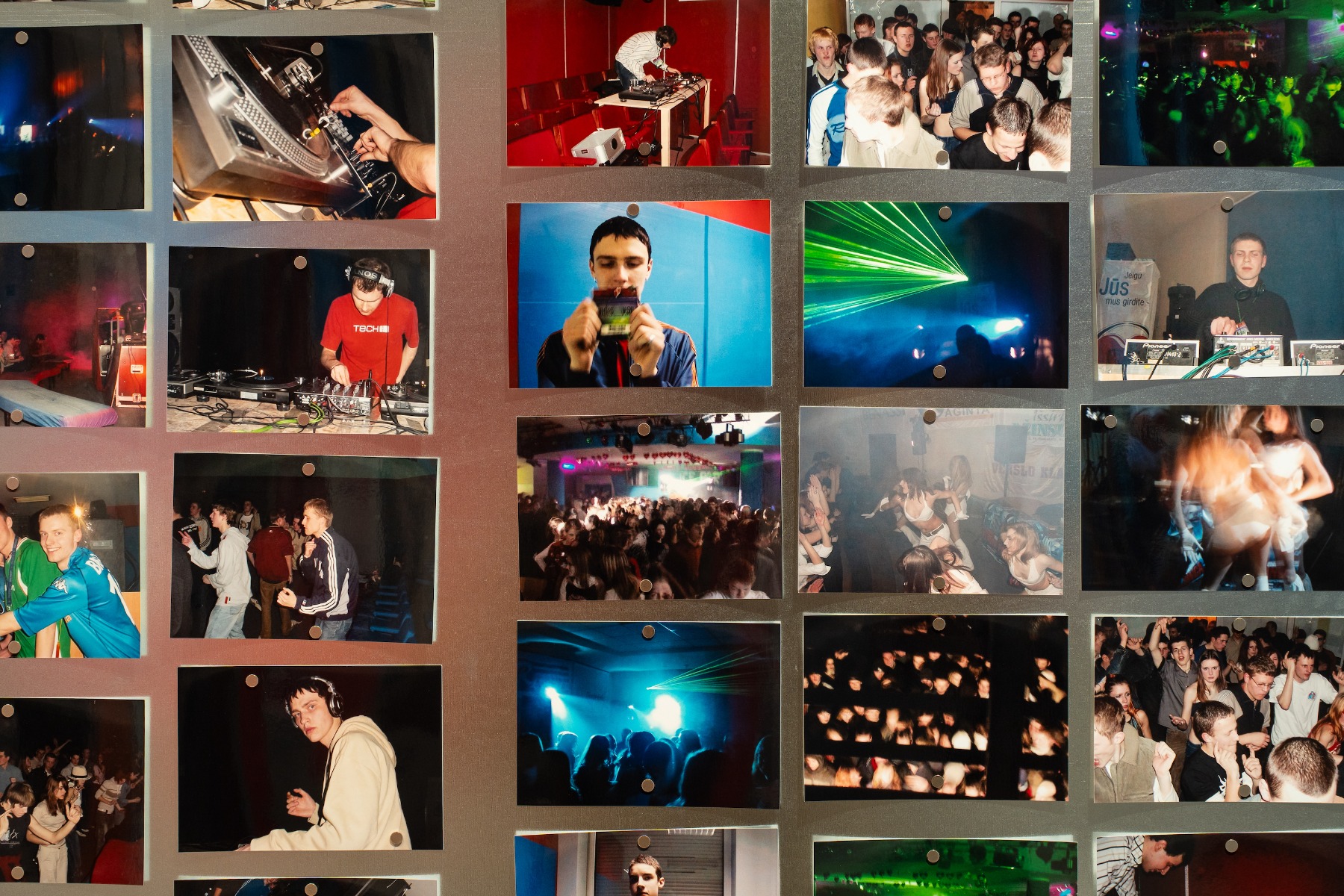
The exhibition also includes works by contemporary Lithuanian artists. How do these works contribute to the broader context of the project?
The exhibition includes works by both international and Lithuanian artists. We wanted to engage with many more artists than we did as our appetite grew given the breadth of the topics that the main topic of “rave nation” enshrined. All artworks presented are tracing rave as both a cultural force via different critical lenses. We worked on the new commissions that we worked on for this show: so for example Vegas Šimblelis’ Acid Truth recasts ecstasy pills as branded plastic icons, exposing how desire and youth is colonized by platforms. Elena Krukonytė’s Fotodisko reanimates obsolete (and now trendy again) first digital cameras into erratic devices for staging “authenticity,” unsettling our archives of collective joy. Ervinas Faktura’s After and before me, 2025 drifts between bodies and beats, rendering the rave as a breathing topology – an ephemeral commons where consciousness circulates. Perhaps through these artworks we ask what becomes of us when techno-utopias are wired into economies of capture, yet still flare into fleeting solidarities and fuel the nostalgia for the “Doom” generation?
Exhibition “RAVE NATION. Dancing to the Sounds of Freedom. 1992–2004”. Installation view. Photo by Andrej Vasilenko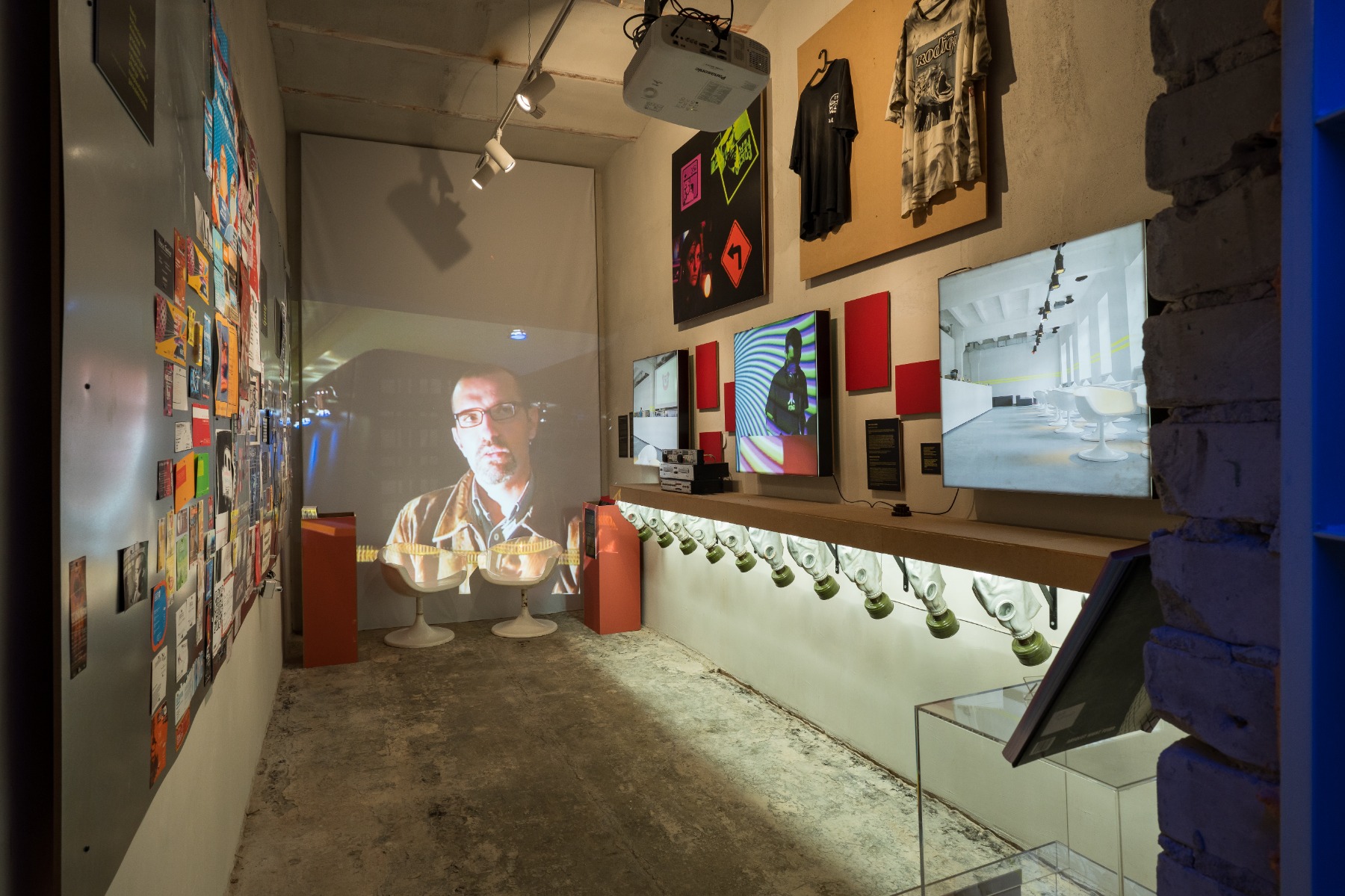
What was this ‘new thing’ that rave culture brought to our societies, something that hadn’t existed before? And is it still relevant for younger generations?”
The newness was perhaps not “rave” as a movement or a subculture, but the sudden arrival of electronic sound itself – at first rare, almost absent, circulating really only in fragments in Lithuania from 1992 to 1997/8. As artist and writer Darius Žiūra writes in his novel: “The first raves were almost religious ecstasies, amphetamine-dissolved experiences of beings. A new sound seemed to erase everything that came before. It was of another nature, built on endless repetitions, without beginning or end, without narrative. It was the future, a revelation, a time of mass flight, like the brief life of mayflies.” (Darius Žiūra, Diseris, Kitos Knygos, 2024)
So the rupture was that of the experience of sound itself as future – immersive, collective, and infinite. People who did not fit into the lame “everyday” and could not find their place in the drab discotheques full of symbols of misogyny could suddenly try and recreate small capsules of what they saw in Germany – a completely new way of dancing, experiencing their body, and even finding a community that adores and explores this new sound of electronic music. And it did at least partially dethrone the “author”/“singer” cult status but inaugurated the new Gods – the Djs, the selectors.
About the young generation – we need to ask them, I can’t speak for them. But there is definitely an interest from very young people, say, in their late teens, that are curious about the show. Perhaps one can call it a pull of some sort of mythopoetic time that this exhibition points to. Some theorists (Georges Bataille, Mircea Eliade) talk about ritual time as “mythic time” – not linear, but cyclic, eternal, archetypal.
Perhaps then we can say that rave gets recoded like that now: almost as if it always already existed, an archetype of collective freedom.
Exhibition “RAVE NATION. Dancing to the Sounds of Freedom. 1992–2004”. Installation view. Photo by Andrej Vasilenko