


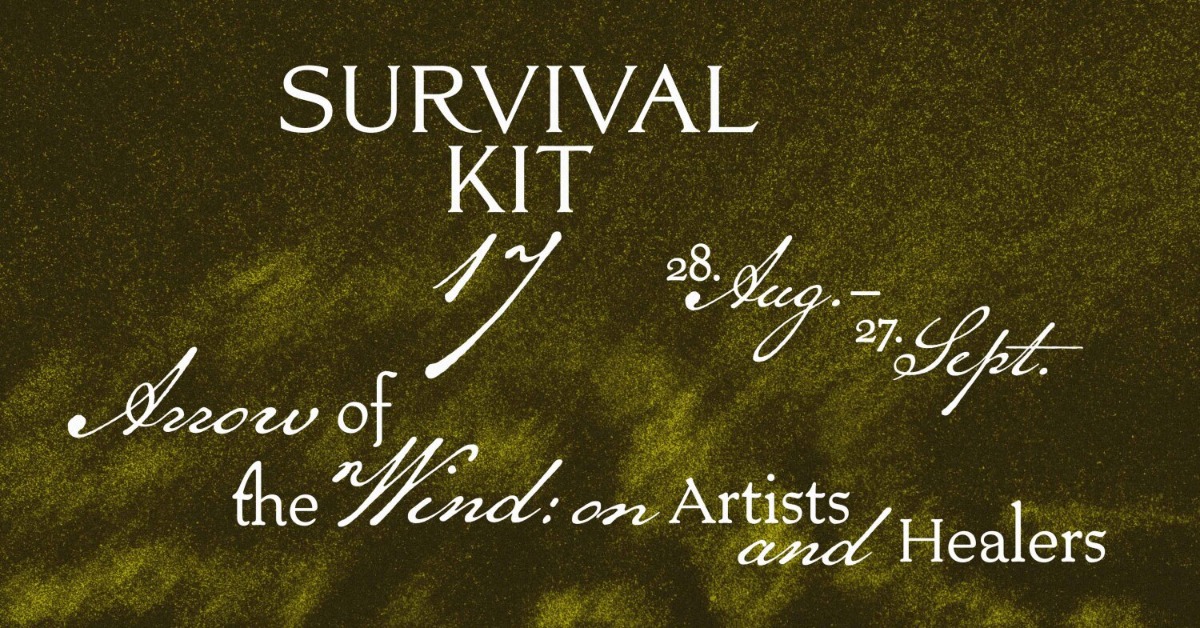
Survival Kit 17: festival artists and venue announced
From August 28 to September 27, 2026 the Riga Congress Hall will host the annual international contemporary art festival “Survival Kit,” organised by the Latvian Centre for Contemporary Art (LCCA). Titled “Arrow of the Wind: On Artists and Healers,” “Survival Kit 17” will present an exhibition and a programme of performances, bringing together more than 25 artists from Latvia and abroad.
On the choice of venue for “Survival Kit 17”, LCCA director Solvita Krese highlights “It is no coincidence that this year the festival will take place here – opposite the Russian Embassy – in a venue that is gradually transforming from a symbol of Soviet modernism and ideological representation into Latvia’s new concert hall. In this space, saturated with meaning, “Survival Kit 17” does not call for direct confrontation, but for a symbolic form of healing that does not avoid critical reflection and the traumatic realities of today.”
The venue of “Survival Kit 17” – the Riga Congress Centre. Photo: Georgs Kreislers.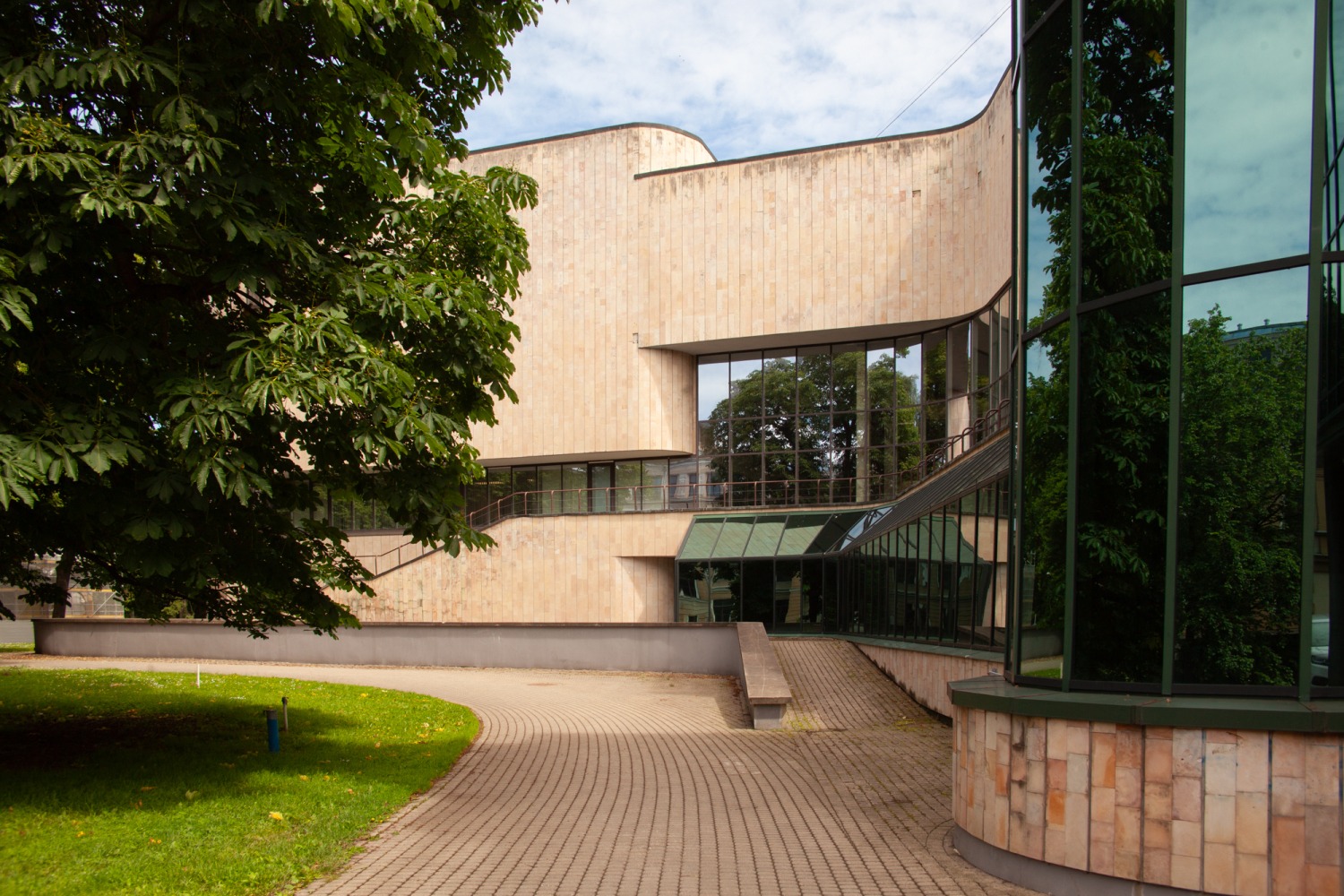
Festival concept
“Survival Kit 17” is curated by Elena Sorokina and Simona Markel Dvorák, in collaboration with the Initiative for Practices and Visions of Radical Care. Festival takes its title from an ancient Latvian spell that summons the powers of the wind to heal humans and animals. Drawing on this legacy, “Survival Kit 17” explores the shared terrain between art and healing therapy, incantation, ritual, physical and mental healthcare, and spiritual restoration – while asking what forms of care, resilience, and repair become possible amid climate crisis, ecological loss, and planetary instability.
Within this broader framework, the exhibition is rooted in Latvian ancestral healing knowledge and ritual practices embedded in forests, lakes, peat bogs, and the Baltic Sea. Historically, Latvian healing traditions combined herbal wisdom with incantations, ritual gestures, and divination methods. Fairy tales, folk songs, spells, and vernacular poetics carried this knowledge across generations despite repeated histories of occupation, displacement, and cultural suppression. During successive waves of Latvian migration, these ancestral traditions became a vital source of resilience. They formed a healing infrastructure for communities displaced from their homeland, often without certainty of return.
“Survival Kit 17” brings together artists whose practices resonate with these expanded understandings of healing. Working at the intersection of ancestral or traditional healing knowledge and contemporary healthcare, they develop what the curators describe as “life-affirming practices”: attentive and relational processes that nurture communal bonds, safeguard cultural knowledge, and deepen connections with spirits, human and more-than-human worlds, as well as with the land itself.
Alongside contemporary practices, the exhibition brings together five historical positions that articulate distinct understandings of healing. Daina Dagnija (1937–2019, Latvia/USA) used painting to navigate the enduring effects of exile and displacement. Betty Muffler (b. 1944, Australia) conceives art as a healing force rooted in land, community, and ancestral knowledge. Sigríður Björnsdóttir (1929–1989, Iceland) pioneered art therapy, using drawing, painting, and play to support emotional recovery during periods of serious illness. Don Cherry (1936–1995, USA) and Moki Cherry (1943–2009, Sweden) developed a collaborative practice that intertwined music, spirituality, performance, and family life, making creativity a form of everyday care. Elsa Wolliaston (1945–2026), Kenya/France/USA), has long explored the connections between embodied knowledge, sensory experience, movement, and healing.
Daina Dagnija in the Catskill Mountains, New York, circa the 1970s. Photo: Voldemārs Avens. From the Rolands Krūmiņš and Daina Dagnija Estate Collection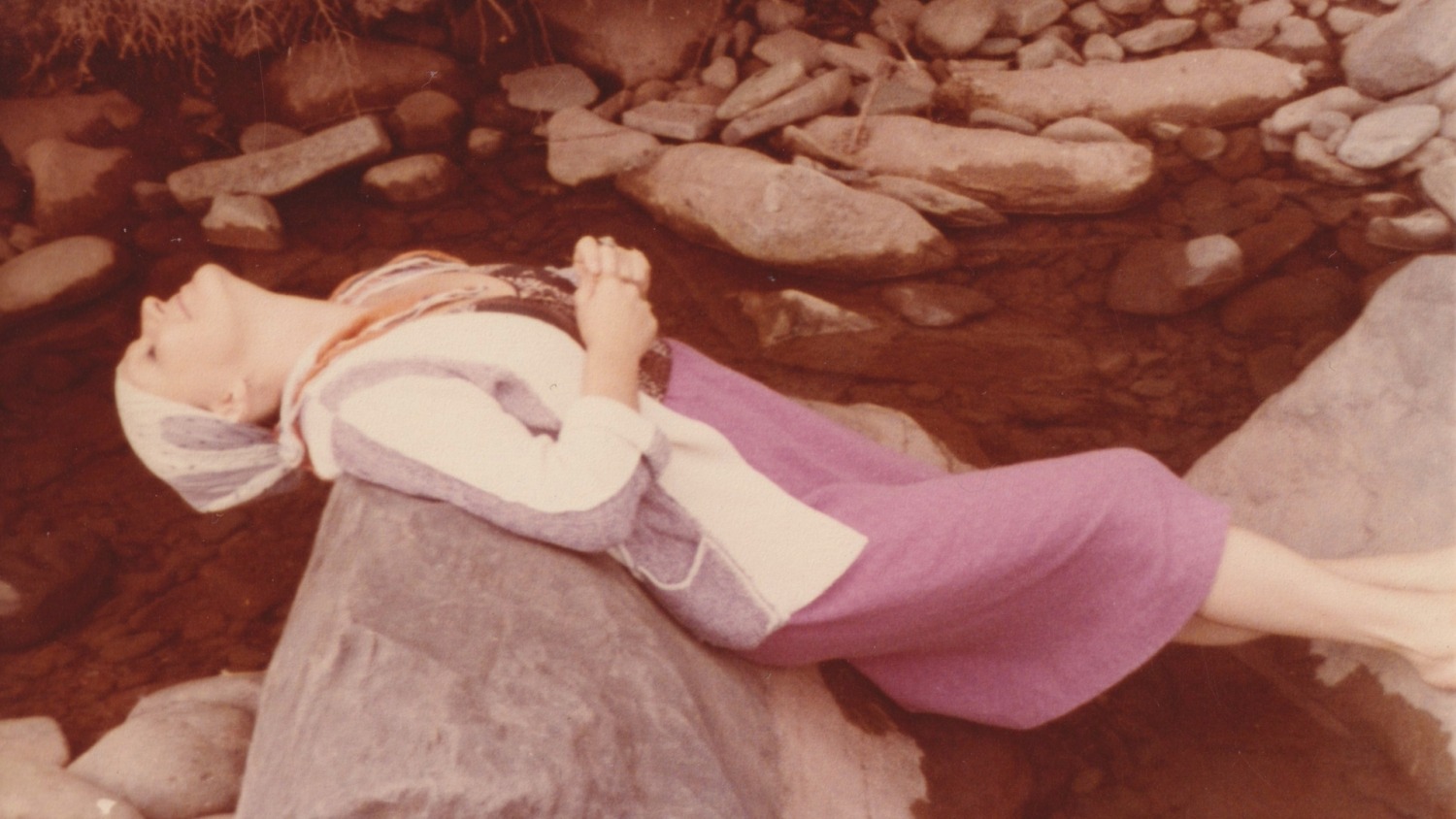
Participating artists
Participating artists: Brook Andrew, Sigríður Björnsdóttir, Moki & Don Cherry, Daina Dagnija, Anna Egle, INLAND Campo Adentro (Sergio Bravo, Fernando García Dory, Enrique F. Vázquez), d harding, Ada Van Hoorebeke, Anna Hulačová, Virginie Ittah, Zhanna Kadyrova, Ieva Kraule-Kūna, Jessie Kleemann, Estelle Labes, Pia Lindman, Angelica Mesiti, Maya Minder, Betty Muffler, Shivay La Multiple, Zaiga Putrāma, Egill Sæbjörnsson & Agusta Oddsdottir, Pierre-Alexandre Savriacouty, Brigita Stroda, Imants Tillers, Timo Tuhkanen, Elsa Wolliaston.
Contributions by: Naima Karlsson, Zora Snake, T.I.E, Zbyněk Baladrán
Collaboration on performance programme and video dance archive with: Linus Gratte, Performance Curator at Centre Pompidou
Local artist liaison: Ieva Laube
More information about visiting “Survival Kit 17” at the Riga Congress Hall, as well as the festival programme and opening, will be announced in August.
Sigríður Björnsdóttir with her child at Saint Joseph's Hospital, Reykjavík, 1982. Copyright: Sigríður Björnsdóttir.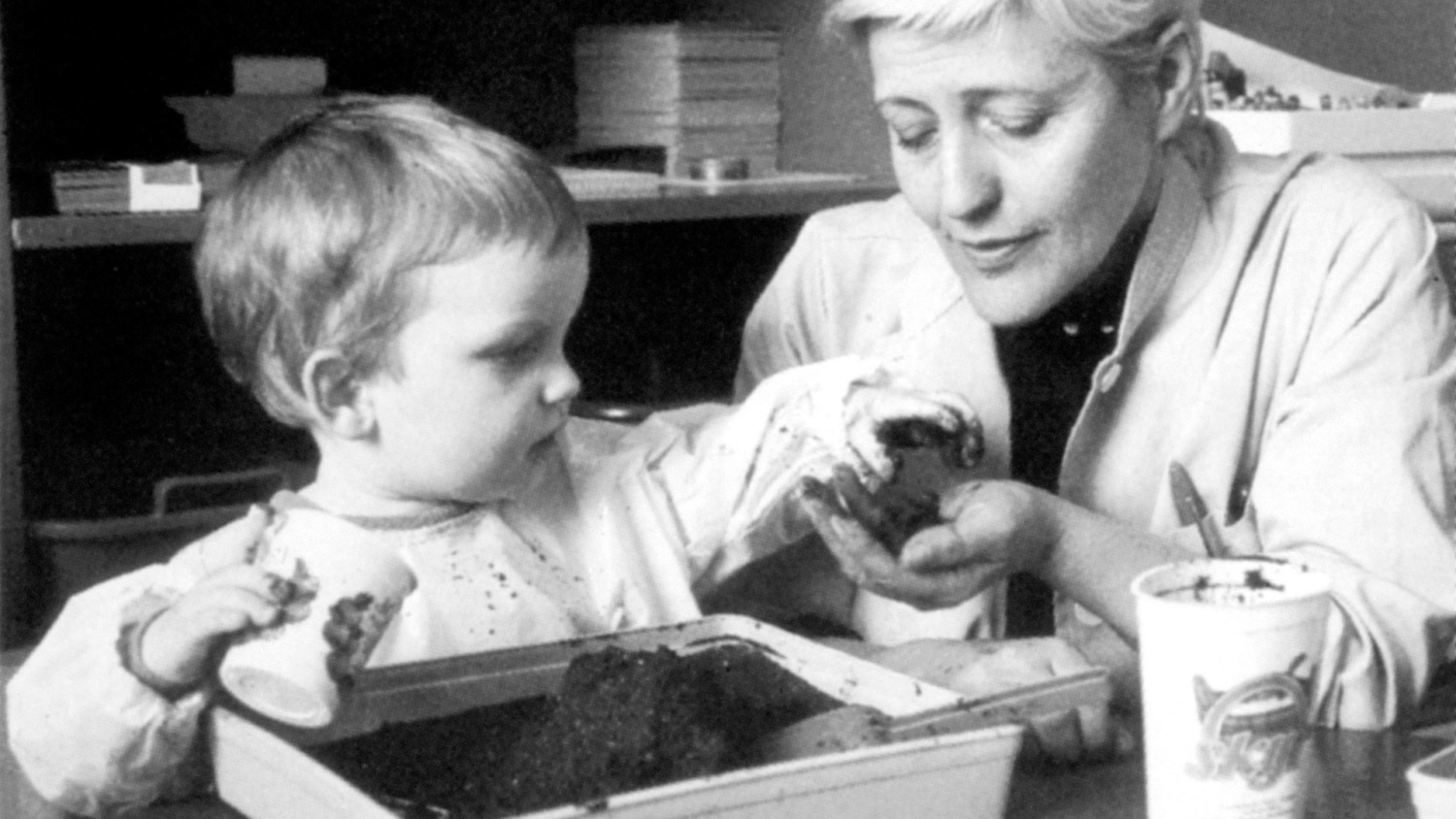
Curators’ biographies
Elena Sorokina has held key positions within major art events, notably as Associate Curator of documenta 14 (Athens/Kassel) and as Director of HISK (Higher Institute for Fine Arts) in Belgium in 2017. In 2022, she co-curated the Armenian Pavilion at the 59th Venice Biennale. Her curatorial practice unfolds on an international scale, within museums and art platforms such as BOZAR (Brussels), the Musée d’Art Moderne de la Ville de Paris, the Pera Museum (Istanbul), the Rudolfinum (Prague), and the Centre Pompidou (Paris).
Simona Markel Dvorák is a curator and researcher working at the intersection of art, ecology, and care, combining critical theory, poetic imagination, and participatory methodologies. Dvorák has collaborated with institutions including the Musée Picasso–Paris, Haus der Kulturen der Welt, Beaux-Arts de Paris, Frac Île-de-France, Cité internationale des arts, or Rockbund Art Museum, among others. She was a fellow of documenta fifteen, participated in the 59th, and the 60th Venice Biennale. Between 2021 and 2023, she served as Curator for Public Programs at the Centre Pompidou and co-curated, with Tadeo Kohan, Actes de Langage at Maison Populaire in Montreuil.
The Initiative for Practices and Visions of Radical Care was founded in 2020 by Nataša Petrešin-Bachelez and Elena Sorokina in the Greater Paris region. It brings together a diverse group of practitioners across the arts, crafts, philosophy, healing, and therapy, spanning multiple geographies. Neither a classical collective nor a rigid structure, the Initiative researches and reinvents modes of sustainable institutionalism. Rooted in friendship as much as in professional collaboration, it functions as an ecosystem, fostering interdependence and solidarity beyond fixed identities. Through fluid artistic and curatorial ventures, the Initiative embraces languages, energies, histories, landscapes, bodies, and materials that reflect a non-extractive and sensitive relationship to both human and more-than-human worlds.
The venue of “Survival Kit 17” – the Riga Congress Centre. Photo: Georgs Kreislers.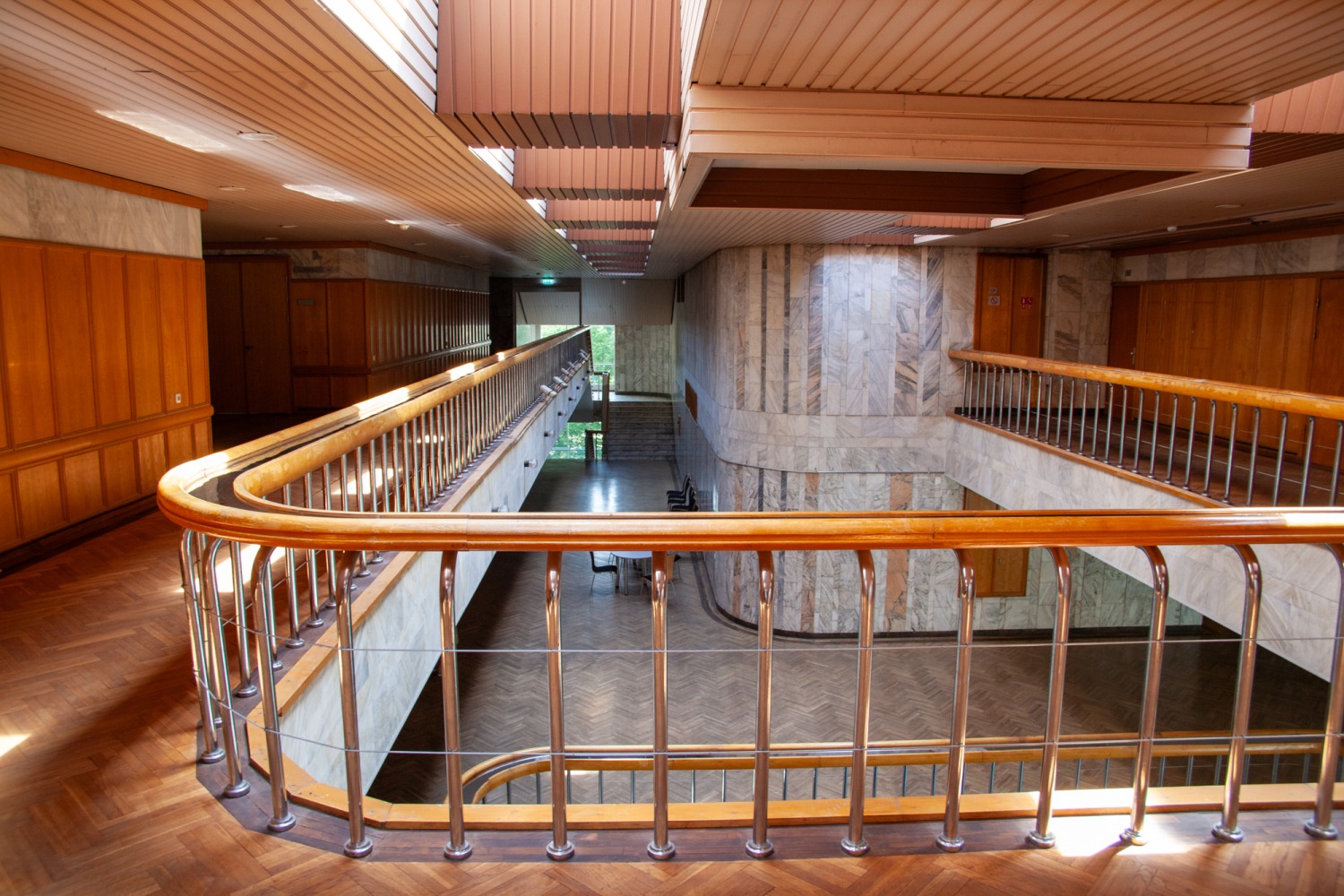
Organisers and supporters
Survival Kit 17 is organised by Latvian Centre for Contemporary Art. Supported by the Ministry of Culture of the Republic of Latvia, Riga City Council, and the State Culture Capital Foundation. With the participation of and support from Institut français, the Performing Arts unit – Centre Pompidou, the Flemish Government, Pro Helvetia - Swiss Arts Council, Danish Arts Foundation, The Icelandic Visual Arts Fund and The Ministry of Culture Innovation and Higher Education of Iceland, Acción Cultural Española (AC/E), Finnish Cultural Foundation, BGSW / Baszta, Kultivator, Kuldiga Artists’ Residence, Kaņepes Kultūras centrs.
