Between the cute and the uncanny
A conversation with Hague-based South African artist Shana de Villiers about their exhibition I Want to Be Glue!, on view at TUR through 27 June
Shana de Villiers’ I Want to Be Glue! transforms Riga’s art space TUR – well known for its ongoing conceptual transformations – into a temporary dwelling for a serpentine presence that appears to emerge from within the space itself. The snake appears not as a threat but as a tender, assembled body made of stitched-together textures and layered references – mythologies and legends. Visitors are invited into close proximity: to sit, listen, and encounter the work through fragments of sound, whispered text, and guided interventions that shift the atmosphere between intimacy, play, and unease.
Photo: Dāvis Drēzinš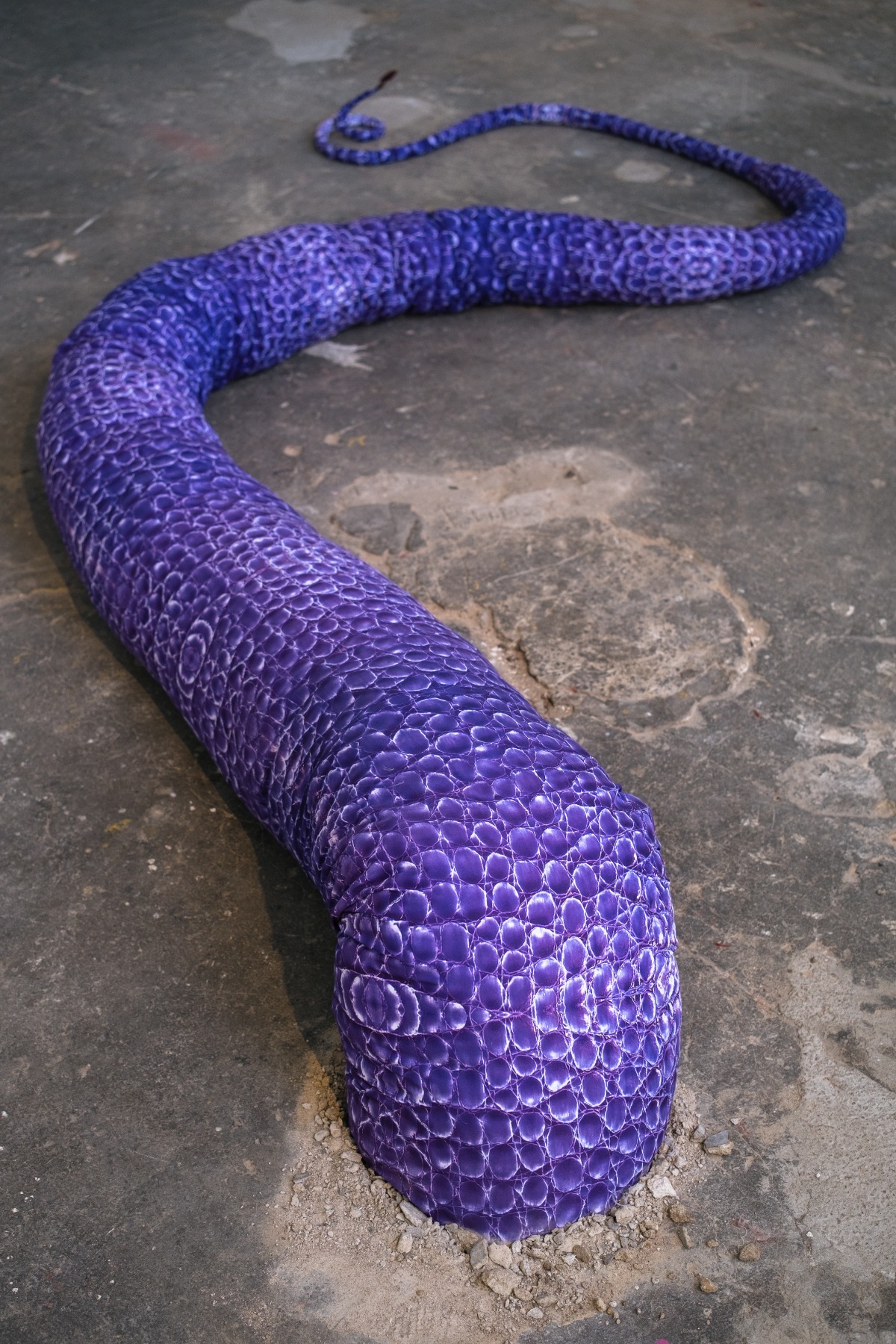
Based in The Hague and originally from South Africa, de Villiers works with sculpture, performance, text, and installation, moving between mythology, craft, internet aesthetics, and storytelling. The artist’s practice often returns to figures marked as monstrous, using sewing and assemblage as a way of connecting fragments of narrative, emotion, and cultural memory. Drawing on serpent mythologies from both South Africa and the Baltics, the exhibition reflects on transformation, fear, and recognition, asking what changes when the unfamiliar is approached with curiosity rather than distance, and proposing a space where the monstrous can become something almost intimate and strangely familiar. I Want to Be Glue! returns to the possibility of radical warmth, proposing closeness where fear might otherwise create distance.
We spoke with Shana in a pub near TUR a few hours before opening – about snakes, mythologies and the mission of glue, which “fix things” together.
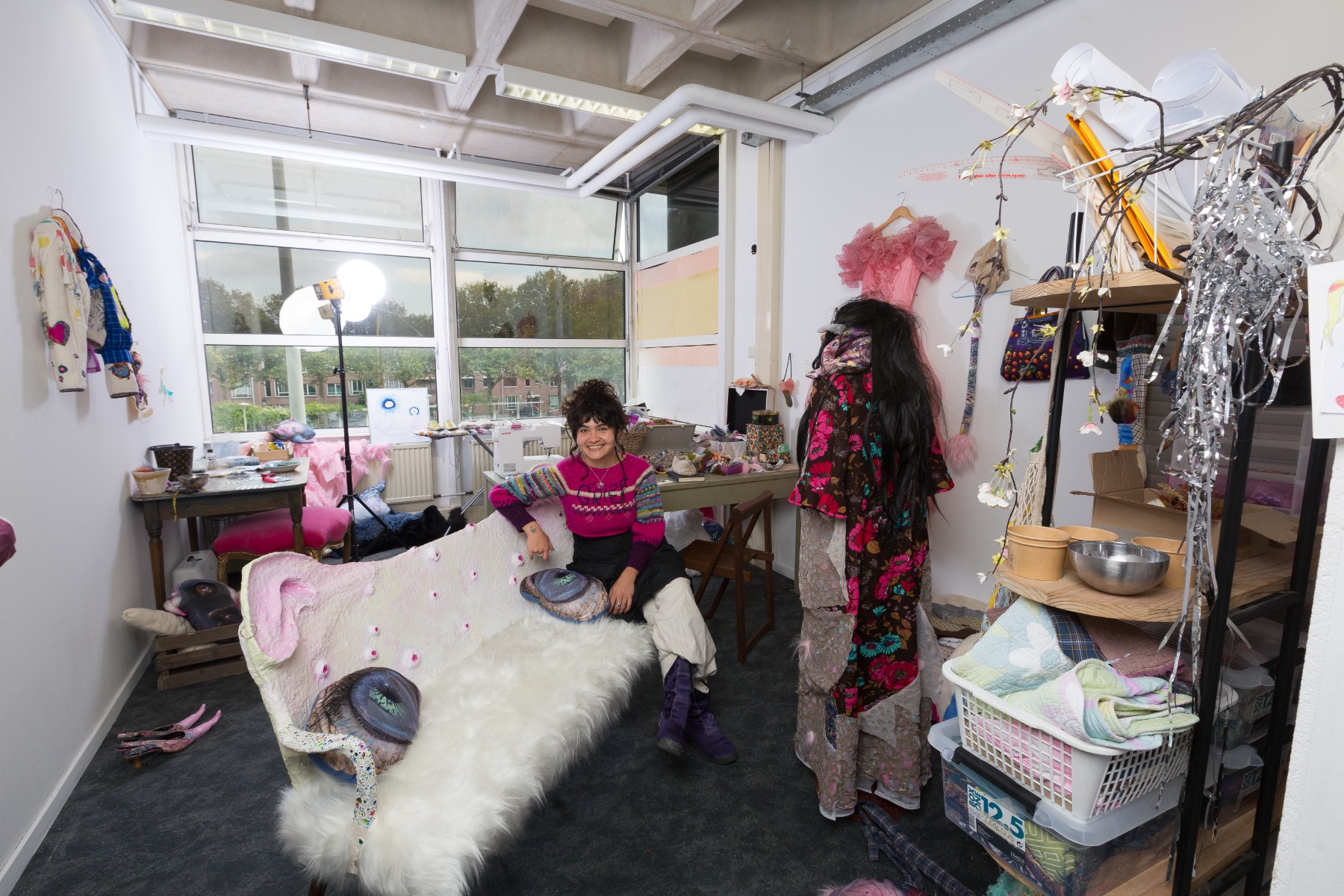
Shana de Villiers. Photo: Tommy Smits
How do you experience the South African context as an artist working with different mythologies? Does that context influence your practice? And do you see any connections or common threads between South African and Baltic mythologies?
Well, I think I have a two-pronged answer to that. On the one hand, with the subject matter I work with, there is a certain universality. I'm interested in how cultures create the idea of the "other," and how fear can transform that other into a monster. That's something you find almost everywhere, regardless of geography or cultural background.
On the other hand, in this particular exhibition, I chose the snake as a central figure precisely because it is such a powerful and widespread symbol. Almost every culture has some kind of mythology surrounding snakes. As I researched both my own cultural traditions and Baltic approaches to snake mythology, it was fascinating to see both the similarities and the differences. What I found especially interesting is how these mythologies are often shaped by the actual species that inhabit a region. In South Africa, snakes tend to be more feared and revered because there are many venomous species. As a result, the stories often carry a sense of respect born out of fear: we're afraid of you, but we respect you, and we know better than to underestimate you.
Here in Latvia, at least from what I've read – I can't really speak from direct experience – I came across many stories and anecdotes about farmers keeping a warm place for a snake in their home or even leaving out milk for it. The snakes people were interacting with were generally non-venomous, which creates a very different relationship.
And I think that appropriation, and kind of flirting with its boundaries, is something that's quite important to me. When I enter a new space and a new culture, I want to do so respectfully. But I'm also interested in exploring those edges.
Photo: Dāvis Drēzinš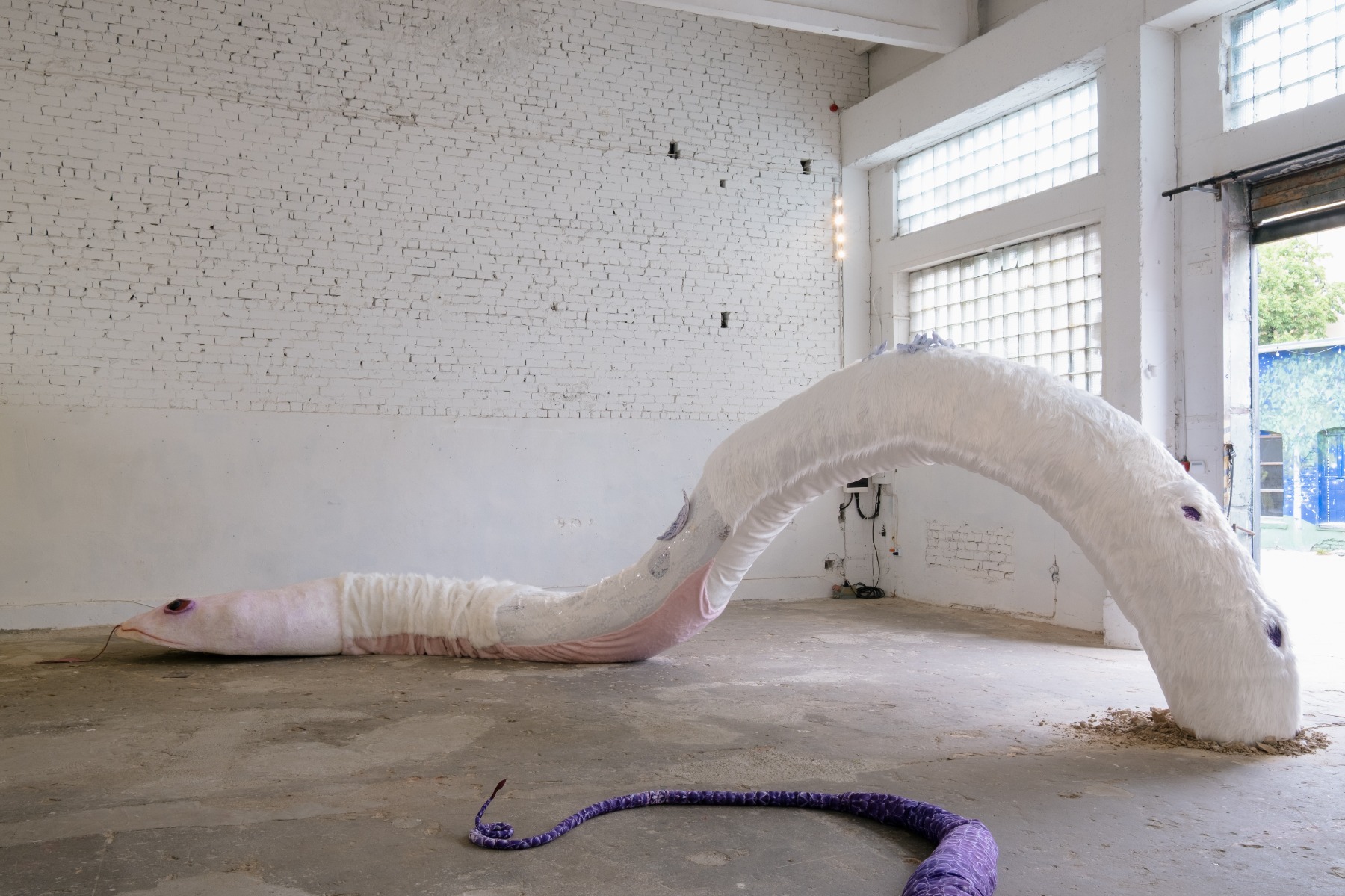
And the snake came out in a very light colour?
Yes, it did.
And sexy.
You think she's sexy? I think so too. I've been reading a book by Sarah Clegg called Women's Lore in preparation for this. The cover is horrible – it looks like a kind of middle-aged lady pulp/smut paperback – but it's not. It's a very well-researched book. It traces around 4,000 years of serpentine and succubus mythology, from ancient Mesopotamia to Victorian paintings of snakes, mermaids, and other serpentine figures. So there is, of course, this sexy element to the snake, which is also part of its mythology and history. This book basically tells the story of how the serpentine was transformed into a female demon species created by men to control concepts of womanhood. Monstering due to fear of mothers, life givers.
And here she is white. Which has been a kind of intuitive colour scheme I've been drawn to lately. But I've also been reflecting on it a bit, and I think there's something quite cheeky about making a large monster white.
Photo: Dāvis Drēzinš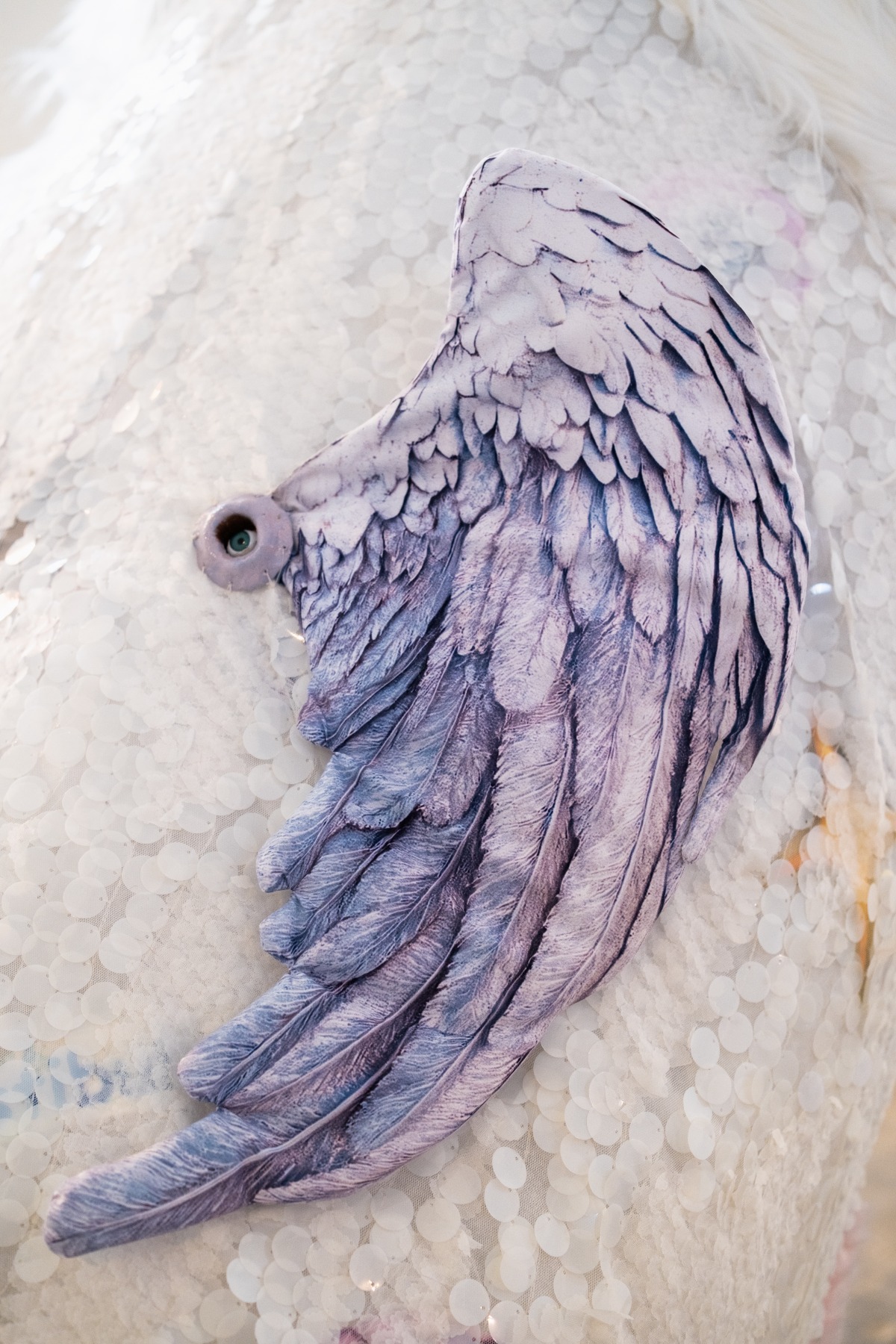
In your works monsters don’t look aggressive, not really transmitting fear.
I think that when you're talking about quite heavy topics that affect many populations – the effects of monstering, for example – it becomes something very serious, something that can ultimately lead to war, genocide, and all of that. I tend to like approachable aesthetics, kind of sitting between the cute and the uncanny – something that's not threatening. But still something that makes you feel a bit like, “ah, yeah.”
“What is this?”
Yeah, exactly.
But this monstrosity is kind of a metaphor for some human characteristics and human things, right?
There are many political regimes active today that use divisive strategies to take power away from people. Because if you look at another person and you "other" them to the point where you turn them into a monster, they (those in power) win in a way, right? Because then we're separate, we're isolated, and easier to control.
So monstering is very real, and I think it's important to talk about it and to understand it. A monster is created by a culture – a culture that is fearful of something and then takes that fear and transforms it into something monstrous as a way of dealing with it. But I think there are other ways of dealing with fear. You don't have to do that in order to encounter it. You can alchemise that fear differently.
Photo: Dāvis Drēzinš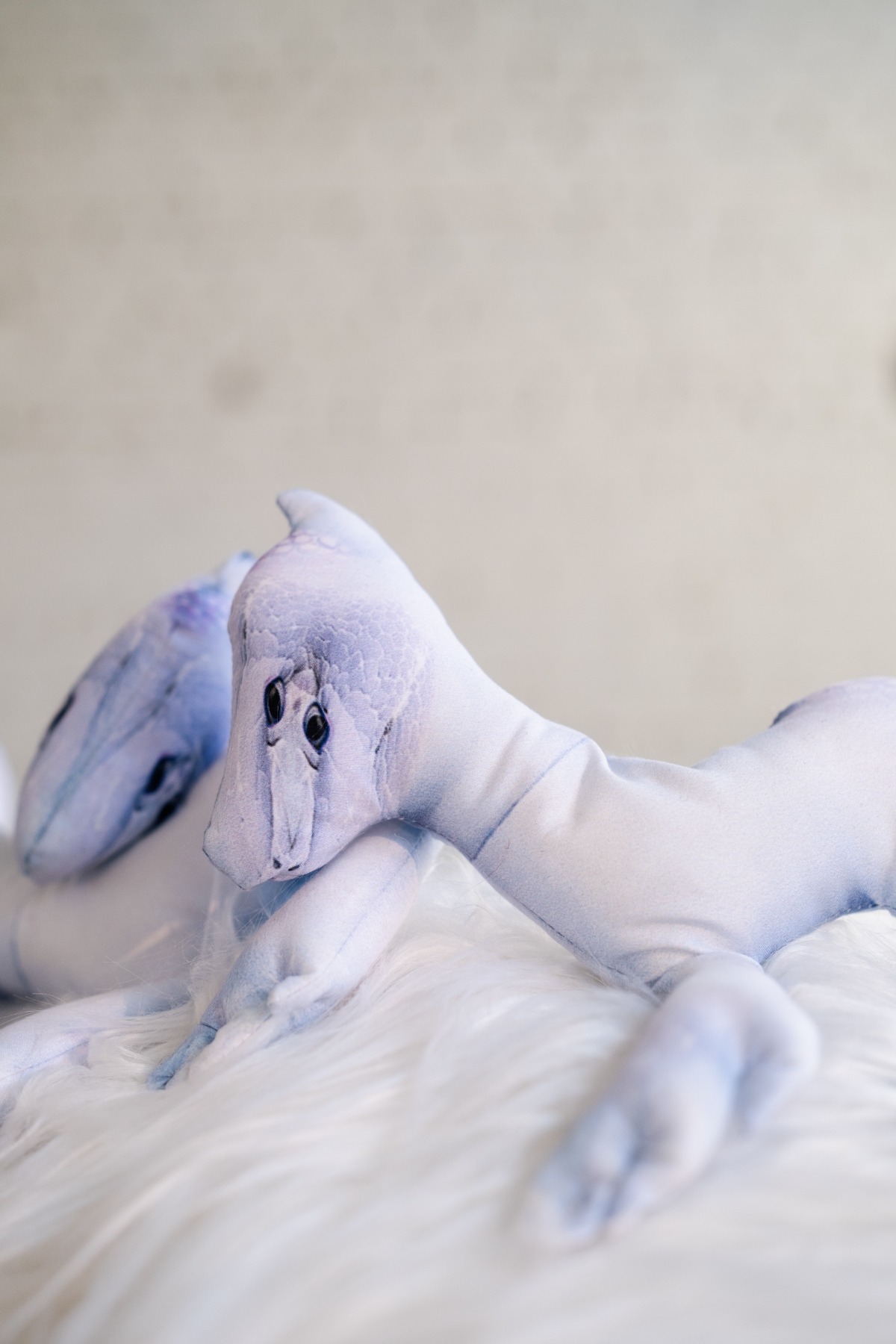
In what way?
In listening and in understanding, without necessarily having experienced what you're trying to understand. But allowing for variation – since we're all just animals, and variation is part of biology. So it's about being able to accept difference without the latent violence that comes with monstering. I think that's important.
Basically, I’ve been working a lot with the subject of monsters – making shows about monsters as shapeshifters. Last year I had a solo exhibition where the monster wasn’t actually in the room; instead, I created, in a way, a monster’s bedroom. For this particular show, I really wanted to choose a body that we can connect to – something that is fragmented, but very present. And the reason I chose the snake specifically is because it is everywhere, as I’ve said. So that we can understand that monsters are shapeshifters; they are not specific to any one body or form, but can take different manifestations.
Photo: Dāvis Drēzinš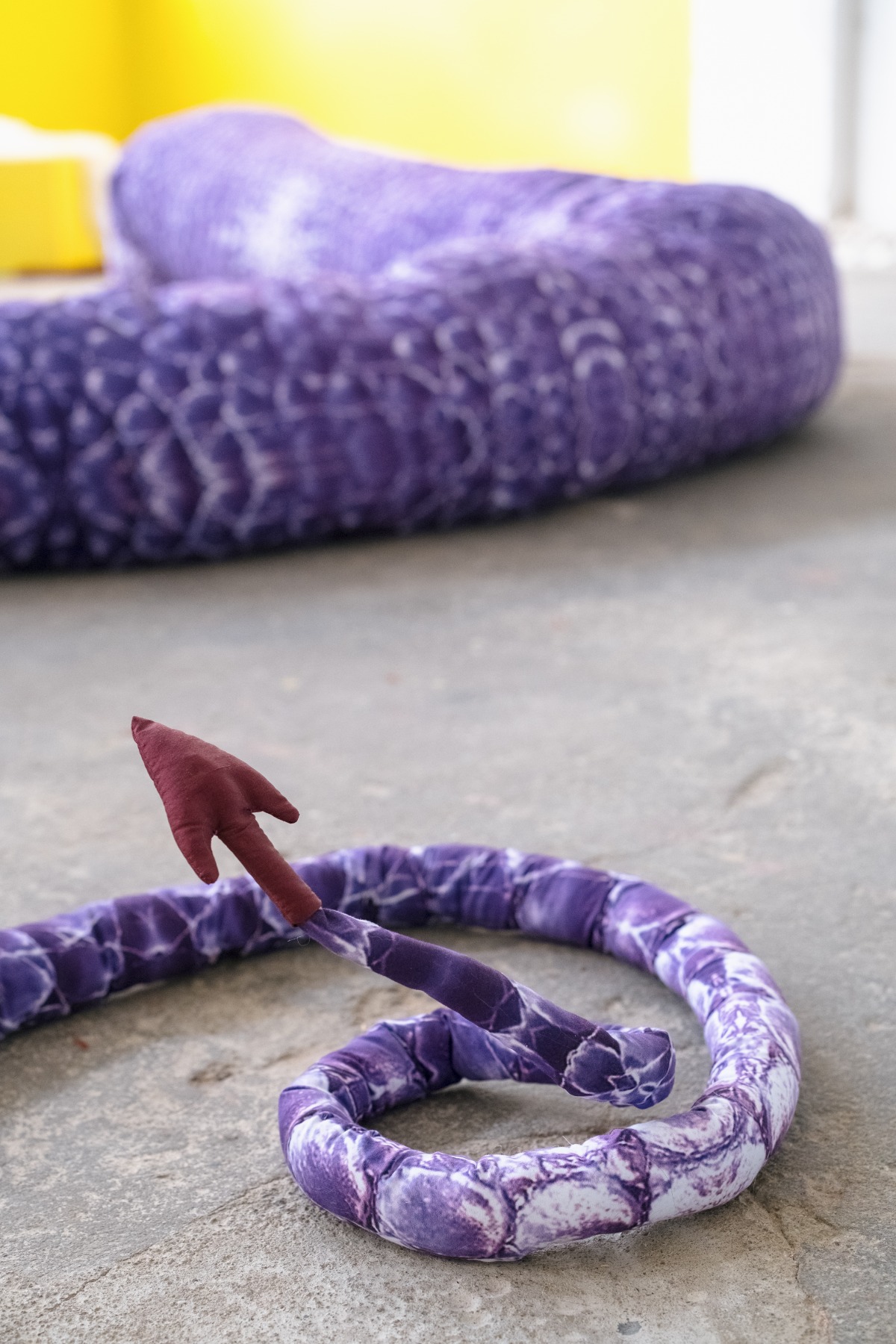
To me in what you are doing there's also a lot of playfulness.
Yeah, definitely. Something I'm very passionate about is the “beigification” of the world. It’s not really a term, but I think of it as going hand in hand with being playful. The world is becoming super beige to counter the chaos, but we still need to play to make sense of it. In this particular work I did use a lot of white, but I still worked with a lot of colour and texture. And to me, that’s all part of it – it’s all quite playful, you know. I think that’s very important in a world where everything is sort of IKEA-fied and uniform in a kind of ironic way, where we’re all meant to be super individualistic and only care about ourselves, our own careers, our own things – “me first, me first.” But at the same time, we all look the same, we’re all buying clothes from Zara, and everything becomes copy-paste. And that’s also a way of making sure people don’t step out of line.
I think being playful with colour, texture, shape, awkwardness, and even ugliness, is a very powerful way to retain agency – and joy – throughout the process.
You are also working with videos. I've seen some of them on your webpage.
Yeah, the videos are quite old, but I have a residency at the end of the year in Portugal, and there I’ll make a film, which I’m quite excited about. Anyway, it’s more about working across different forms; it really depends on what the story needs, in a way. I just don’t make many paintings. (Laughs).
There is also a performative element in your practice, including in the TUR exhibition. Could you tell more about that?
Whenever the show is open, there will be mediators / performers.
Performers/mediators Patrīcija Māra Vilsone and Laura Melbārde. Photo: Dāvis Drēzinš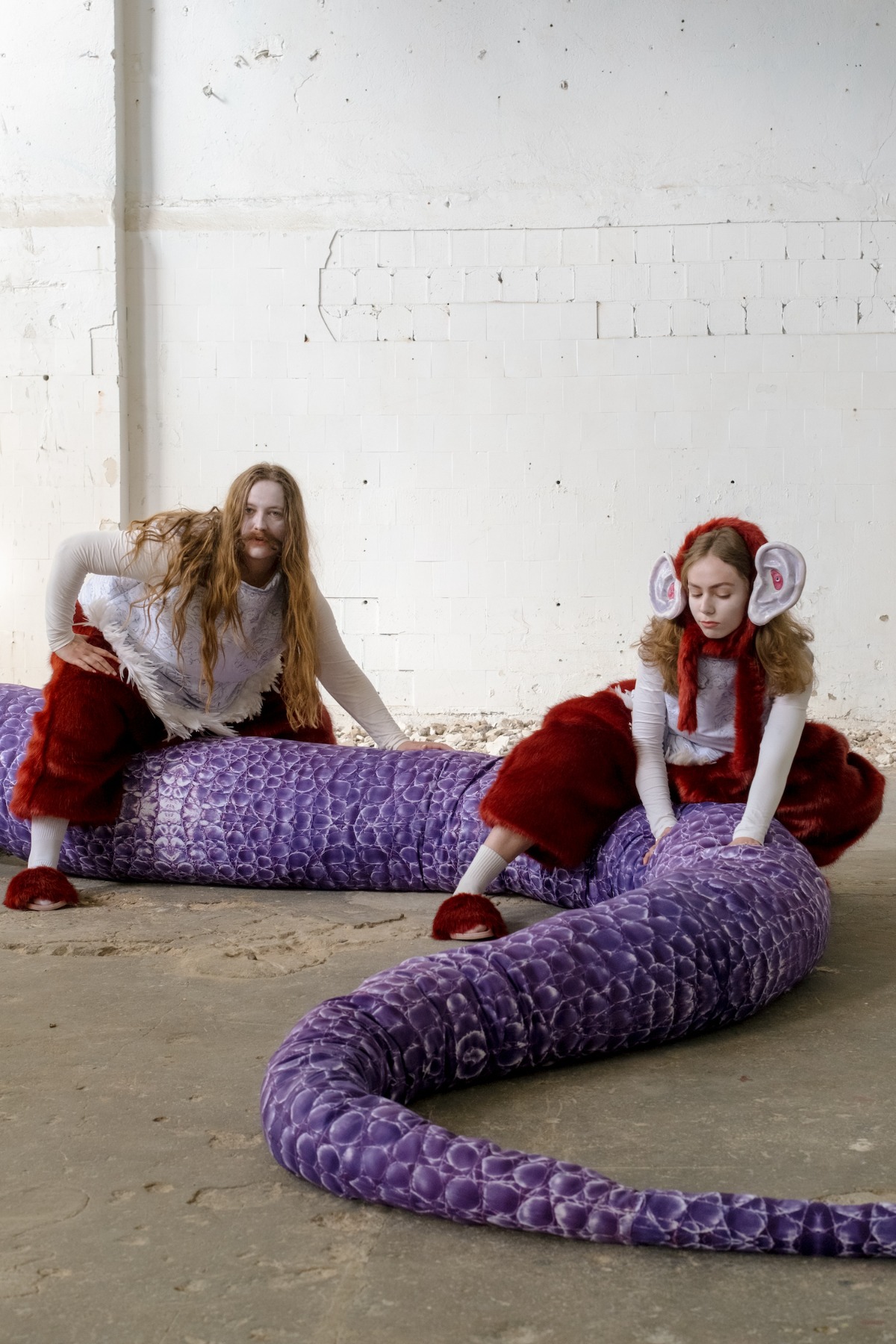
What do they do?
They mediate. I like to flirt with what performance is. So I have these two characters that are part of this world – they’re called the Glimmers. I made the costumes for them, and they turned up at night at the opening. And also, every day the show is open, at least one person will be there. It’s not really performance – I make it from the vantage point that they live there. This is their world, and the characters are just part of it. They’re part of the world I’ve created. They are sort of warriors, in a way, for the snake. They protect her and take care of her; they’re not there to do anything harmful. They’re there to answer questions from the audience, to speak about the work, and to talk about the snake in a kind of personified way – so you feel her presence. So it’s not “the work,” but it’s “she,” you know? That’s their role.
So really, like making her a person.
Yeah, and I think that’s important to me. Generally, I personify most of my work, but I think it’s an important element – to have some kind of connection with it. For it to be a “she,” you know. Maybe she can move if she’s a she, and not an “it.” I feel more emotion when I refer to her this way, and maybe the audiencedoes too, but that’s not for me to decide.
Photo: Dāvis Drēzinš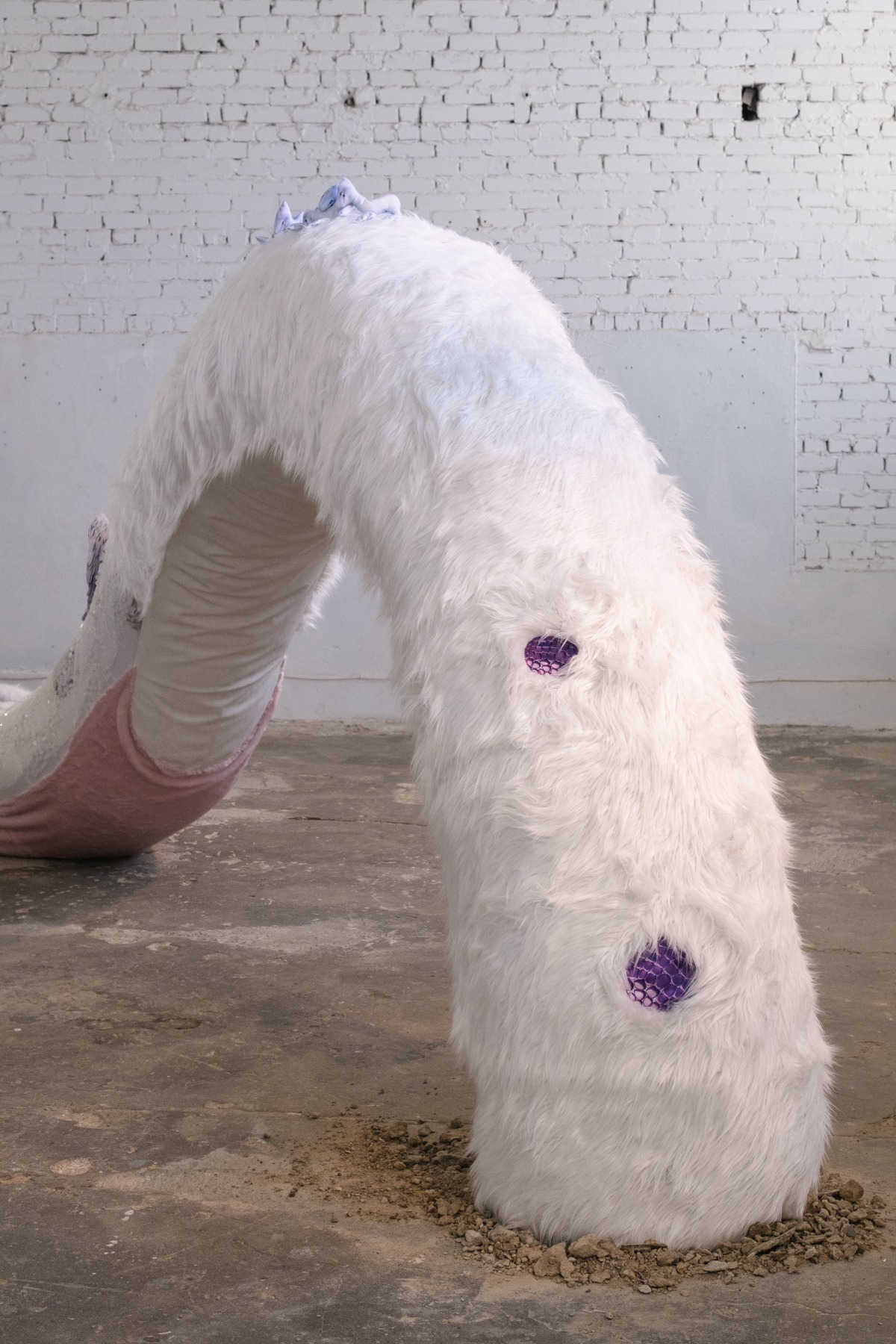
My last question is about the title of the exhibition, I Want to Be Glue!. Who actually wants to be glue?
Snake wants to be glue. I want to be glue in a way that I don’t want to be like a repulsed magnet that pushes things away. I want to be glue. I want to stick things together, to fix things. I don’t want to separate.
And that’s kind of what I imagine she’s trying to say. She says, “I want to be glue!” And the “I” is whoever decides to be the “I.” It can be the monster itself, it can be you, it can be the monster in you, it can be whatever.
Photo: Dāvis Drēzinš