


To be poets with whatever is available
Conversation with the Italian curatorial duo Francesco Urbano Ragazzi following the opening of Gabija Grušaitė’s exhibition Circulations at ASNI Gallery in Riga
Circulation, on view at ASNI until 5 July, is the first solo exhibition in Latvia by Lithuanian writer and artist Gabija Grušaitė, whose practice draws on anthropology and extends her literary work into visual art. Curated by the duo Francesco Urbano Ragazzi, the exhibition presents a new body of work including a video installation, drawings, and a sculptural intervention. The project explores systems of exchange between human environments and the external world, tracing how contemporary life is shaped by material, bureaucratic, and architectural flows across domestic, touristic, and planetary scales. Grušaitė shifts between technical language and lyrical forms, reflecting on the desire – and impossibility – of human separation from the world. “Comfort becomes a metric, a score. A balanced human is an artificial project,” she says.
Gabija Grušaitė. Сirculation. 2026. Installation view at ASNI. Photo: Ansis Starks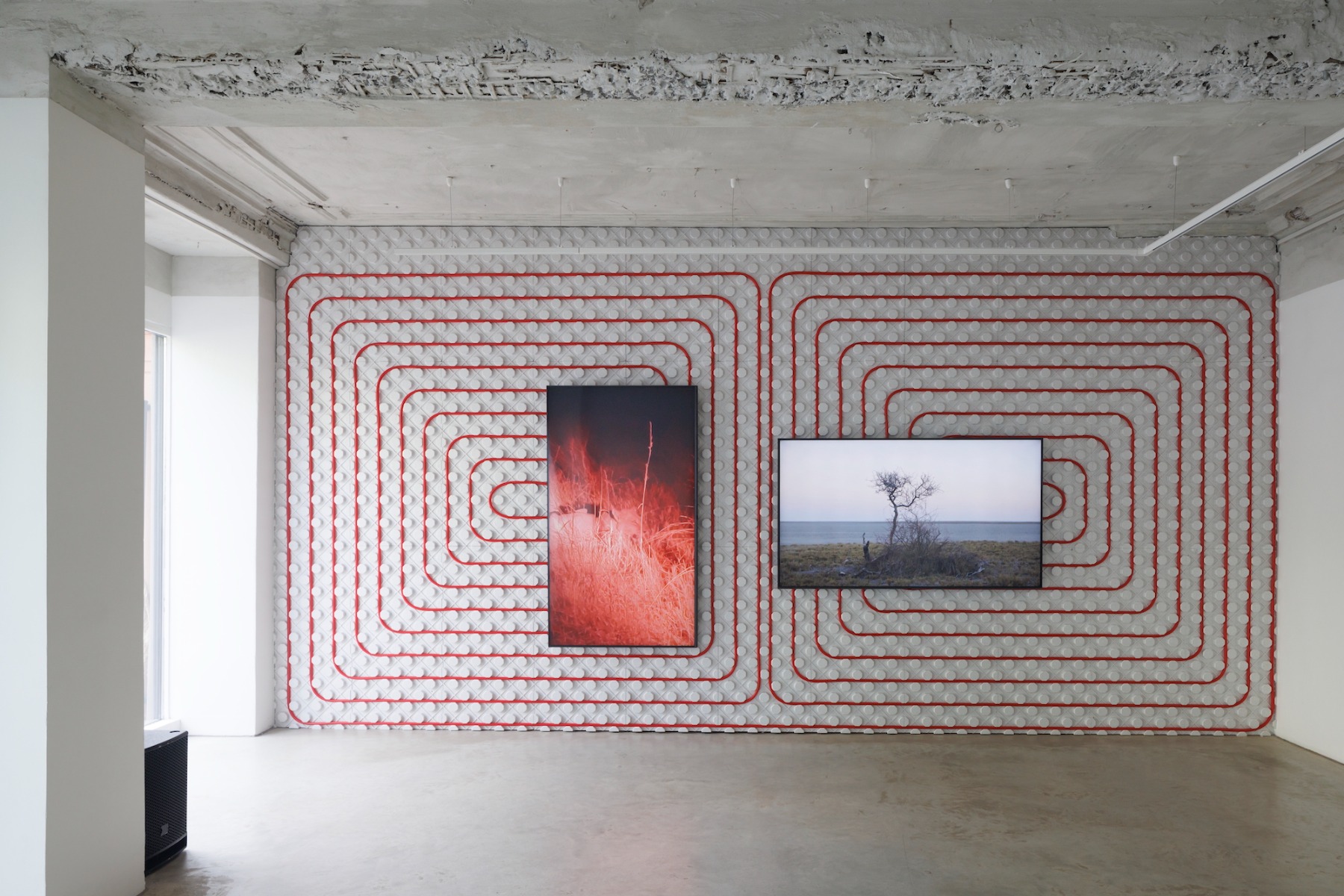
Gabija Grušaitė’s collaborators in this “post-climatic meditation”, the curatorial duo Francesco Urbano Ragazzi, was founded in Paris in 2008 by Francesco Ragazzi (PhD in Philosophy) and Francesco Urbano (PhD in Visual and Media Studies). Their practice reconnects art with reality through exhibitions that extend beyond galleries and museums, exploring a broader concept of public space. Their approach is exemplified by a series of exhibitions curated in Venice on the occasion of the Biennale: “The Internet Saga” by Jonas Mekas (2015); “Hillary: The Hillary Clinton Emails” by Kenneth Goldsmith with the participation of Hillary Rodham Clinton (2019); “Adoration” by Pauline Curnier Jardin and the inmates of the Giudecca detention house (2022); and “Stitched Cosmos” by Jennifer West at Ca’ Foscari University of Venice (2026). The duo was commissioned with curatorial projects for MMCA, Seoul; ISCP, New York City; CERN, Geneva; Bucharest Biennale; Maraya Art Centre, Sharjah; Castello di Rivoli, Turin; Centre d’Art Contemporain Gèneve; La Casa Encendida, Madrid; and Ruya Foundation, Baghdad, among others. Between the end of 2022 and 2024 they curated Jonas Mekas 100! in Italy, the international program celebrating the centenary of the hugely influential Lithuanian filmmaker.
Gabija Grušaitė. Ferma. 2025. Installation view. Photo: Jonas Balsevicius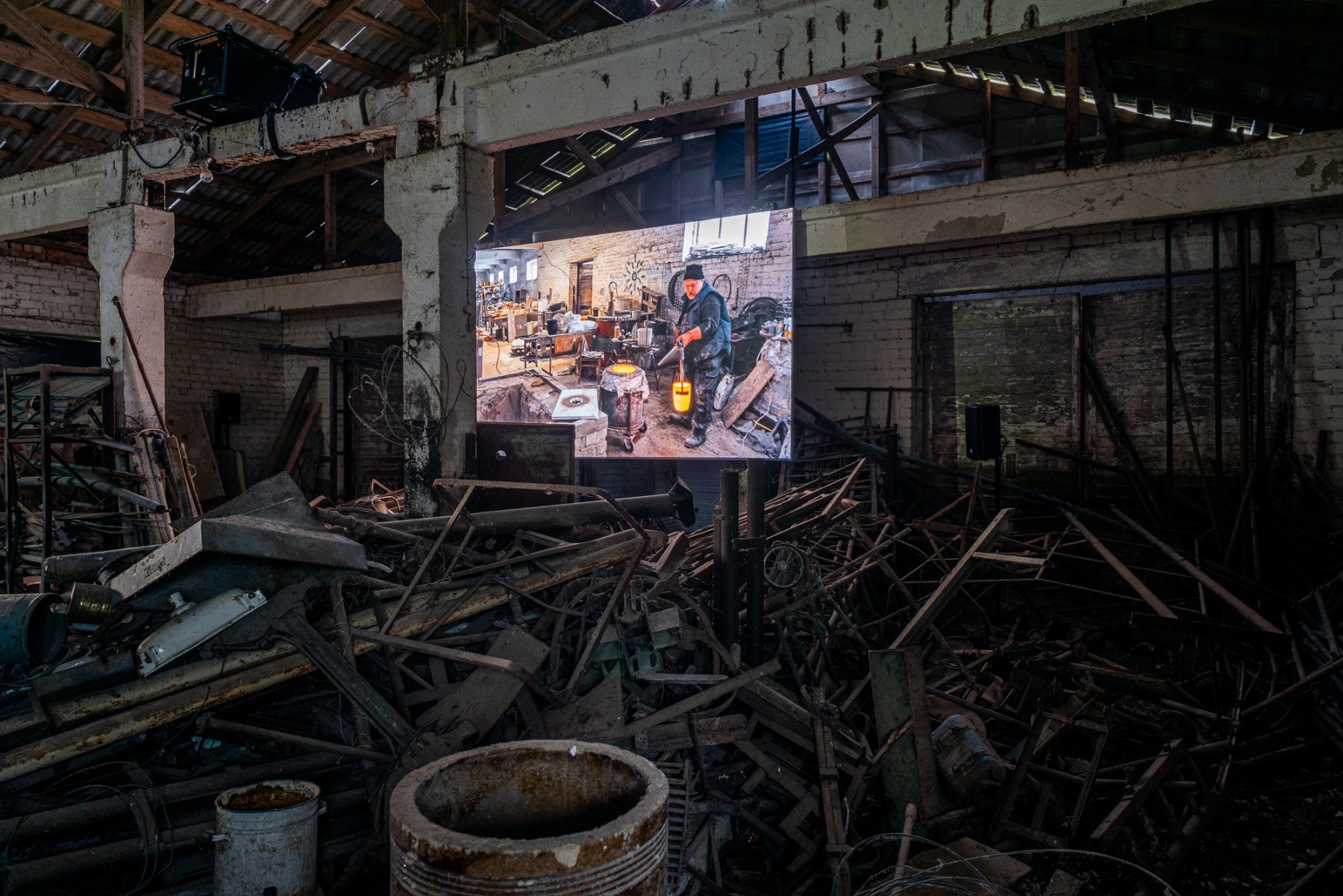
It is already the second exhibition by Gabija Grušaitė curated by Francesco Urbano Ragazzi, following Ferma, presented in August 2025 in the eldership of Sariai, in the large workshop and warehouse of the artist’s father, sculptor Marius Grušas. That earlier project dealt with themes of ghosts and other inheritances of the past, as well as the feeling of living on a border – no longer between two countries, but between two worlds. The site lies only a few kilometres from the Belarusian border.
With Circulation, the question of borders and separated spaces returns, but this time in a climatic rather than political register. The gallery’s controlled temperature and humidity, maintained by special devices, are designed to physically affect visitors arriving from the street, making them sweat and experience a kind of discomfort – mirroring, in a contained space, the effects of global warming. And it is from this question of climate and temperature that we begin our talk with Francesco Urbano Ragazzi, which takes place in Orbīta’s small office on Ģertrūdes Street the day after the opening.
Gabija Grušaitė. Sstill from a two-channel video installation. 2026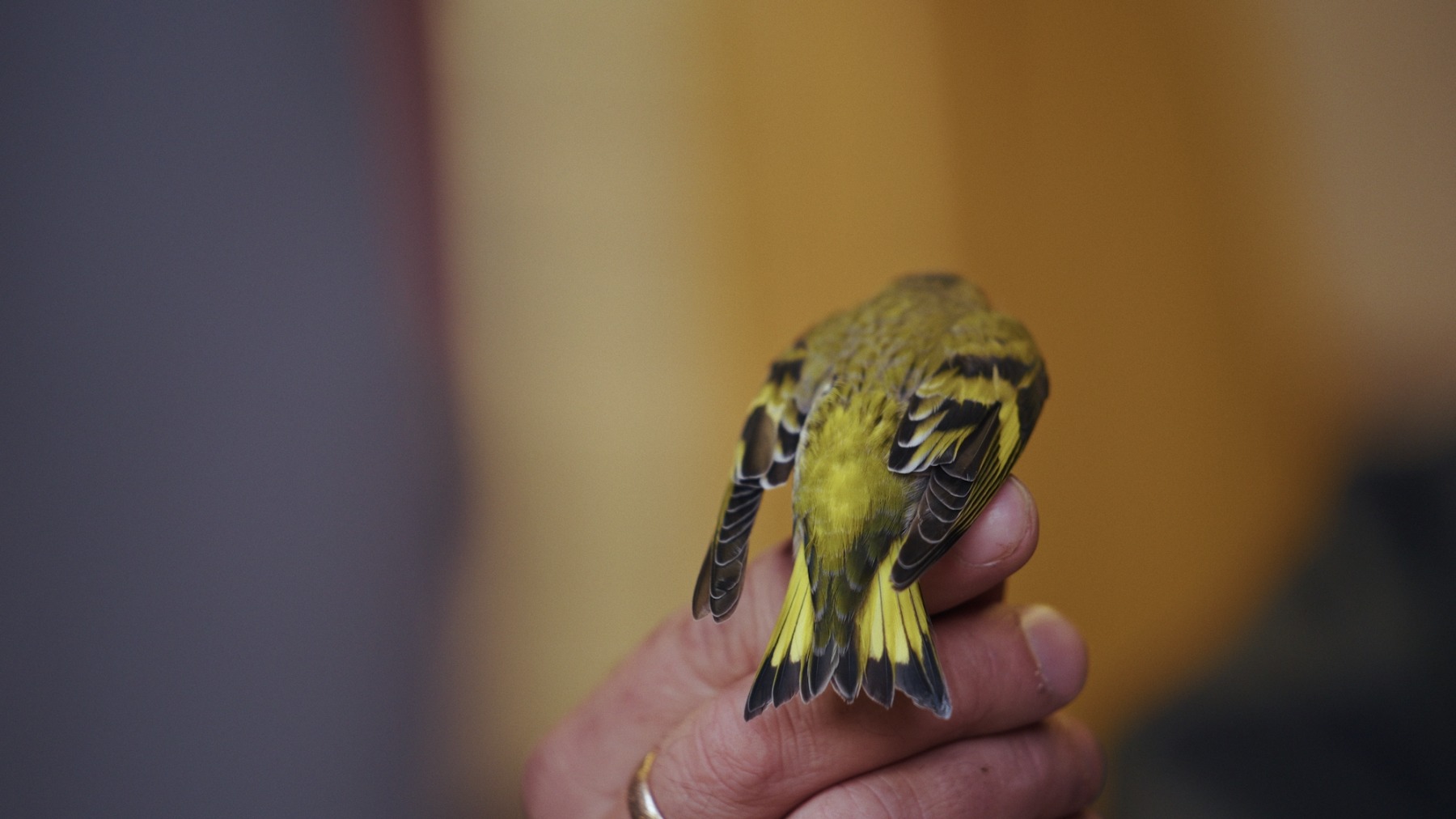
I think one of the interesting aspects of Gabija’s exhibition is the way it brings together migratory birds, which move in response to changing temperatures, and humans, who tend not to migrate but instead try to control their environment – including temperature itself. How do you perceive this contrast?
Francesco Ragazzi: Actually, many animals create shelters during the winter, but they also reduce their energy consumption. Think of bears: they simply go to sleep for a very long time. They prepare for it and store their energy. Humans may be the only animals that refuse to adjust. Instead, we develop strategies that allow us to keep our lives going more or less unchanged. One of the contrasts explored in this exhibition is the ability of animals to adapt to climate and respond to environmental conditions, versus the human desire to keep going regardless of circumstances, even in highly energy-intensive ways. It's a subtle contrast because the exhibition doesn't articulate it explicitly. But there is a tension between the sculpture, which is literally consuming energy, and the video featuring birds, as well as the drawings that trace the routes of migration.
Francesco Urbano: But also, in addition, what you immediately get when you enter is this sense of the cage on both sides. So, this idea of circulation at some point becomes “being closed in a circuit”. The devices are, in a way, creating a cage around you. And this is true both for humans and for animals, especially in safaris and in ornithological stations, where the presence of the animal is in some way reframed, restaged for human beings. So, there is also this sense of being trapped, in a way. Also, in the video there are many scenes where birds are in the hands of ornithologists, or when they are in crates or in nets. And this is something disturbing as well. And you immediately feel the resonance with these patterns on the walls.
Gabija Grušaitė. Сirculation. 2026. Installation view at ASNI. Photo: Ansis Starks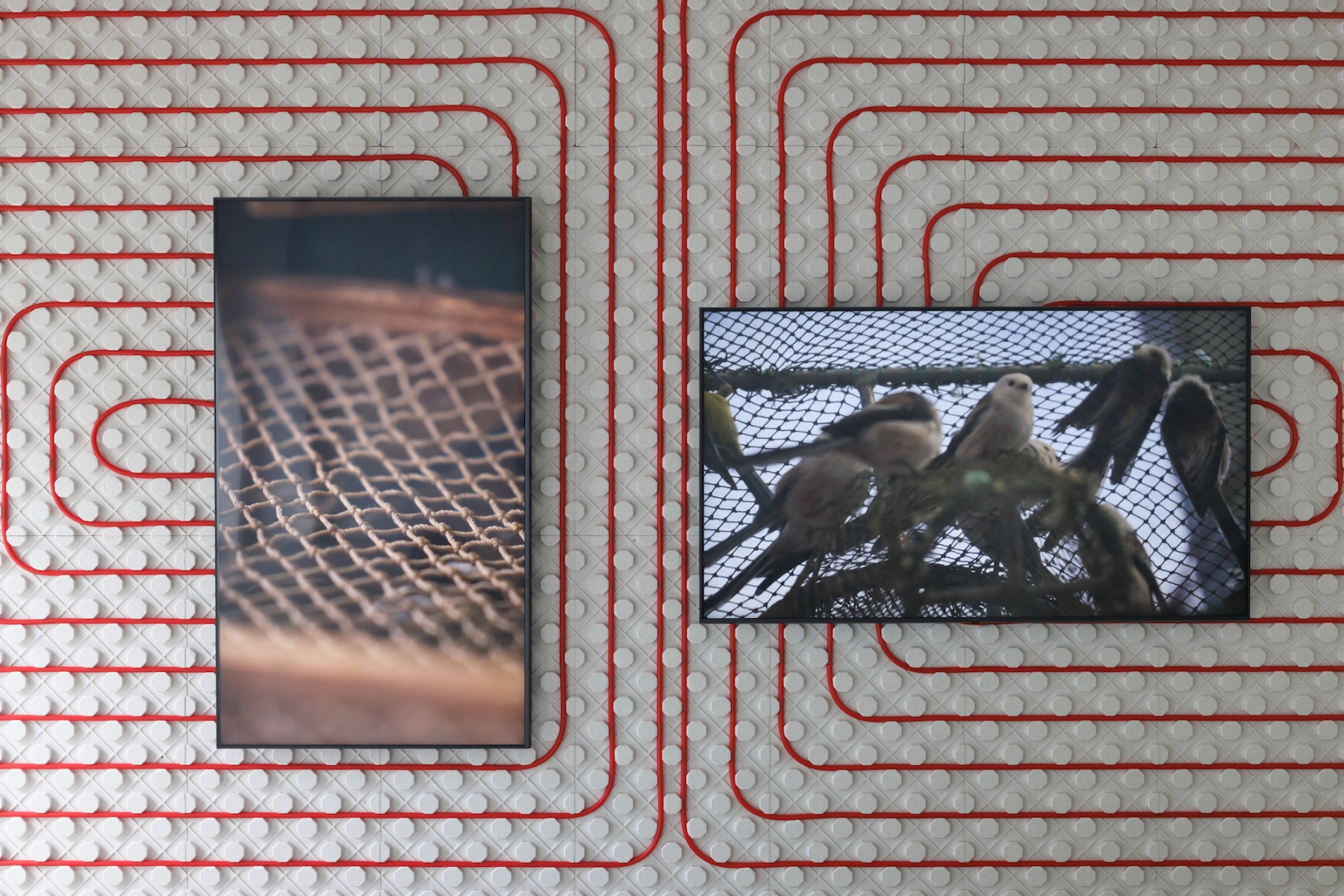
You mentioned the cage. I was thinking about a similar but slightly different word – the cave. For me, it was also about this idea of being enclosed within an outer spatial territory, in a space where you try to control temperature. Сaves were the first places where humans attempted to control temperature through fire. If we look at the history of civilisation, it begins with this attempt to control temperature – both outside and inside.
And now, the very thing we thought we had long overcome is returning and, in a way, overwhelming us again through climate change. Isn’t it ironic in a way? And coming back to the exhibition, we could also call it “global warming” inside one concrete gallery…
F.R.: Here, little by little, you start to realise that you can no longer bear this humidity. You begin to sweat. In a way, you start to resemble the sculpture in the centre, which is sweating or crying on the floor. You also begin, somehow, to lose your shape and become sweat. And you want to go out. So yes, it is a physical reaction to the show.
Gabija Grušaitė. Сirculation. 2026. Installation view at ASNI. Photo: Ansis Starks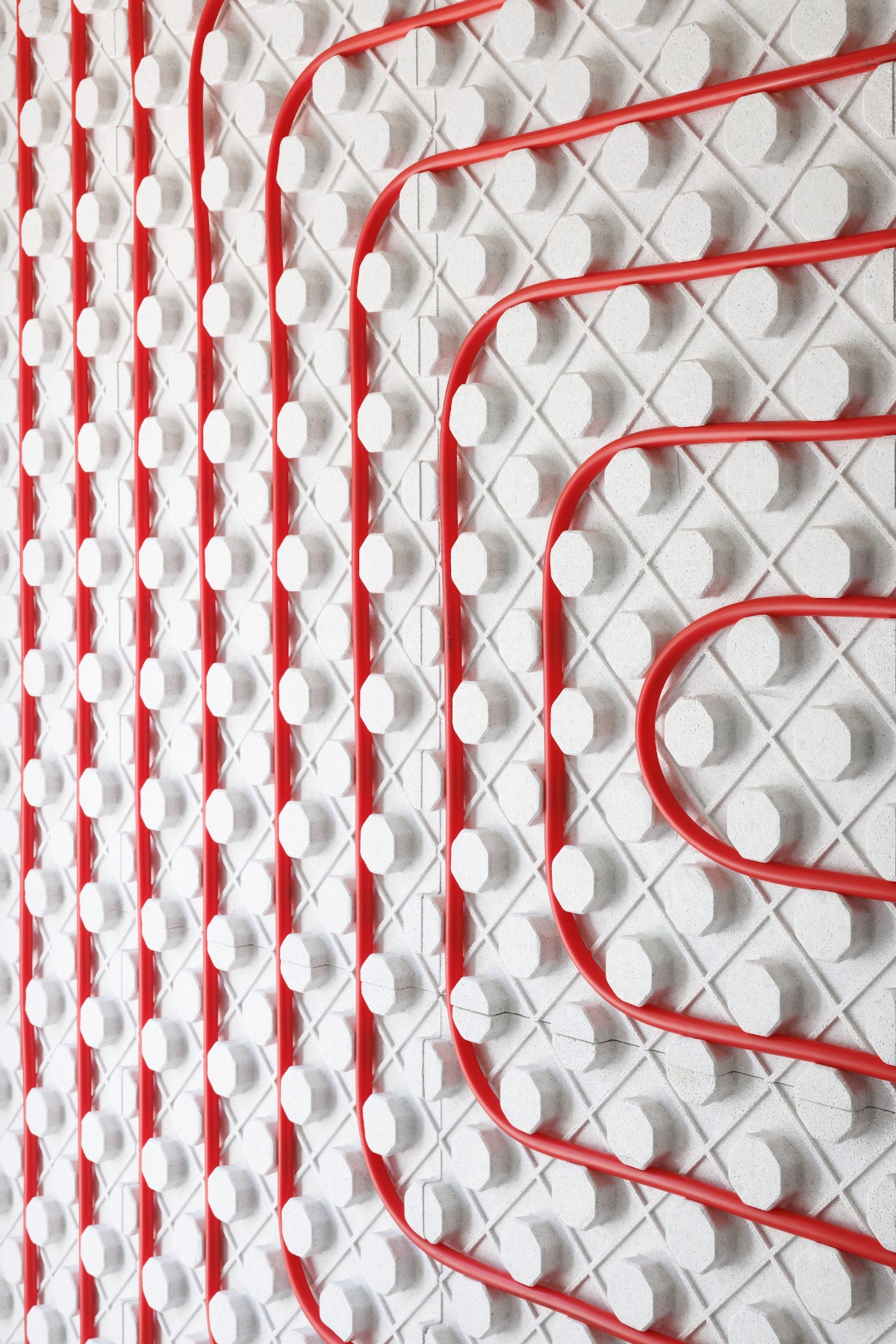
There are also some visual parallels with minimalism...
F.U.: Yes, it’s like, let’s say, a reversed minimalism, in the sense that something functional becomes, or is seen through, a minimalist lens. While minimalism was, in a way, about creating meaning through essential signs, here it becomes interesting to go back to something functional and make it, in some sense, dysfunctional– transforming infrastructural elements into something aesthetically relevant within the grammar of the exhibition space.
So you reveal what is usually hidden in our domestic environments and turn it into a cultural presence, a pattern or a visual element that refers to a certain tradition but also moves in the opposite direction.
F.R.: Exactly. The pattern on the wall, as well as the pattern in the sculpture, resembles or quotes the black paintings of Frank Stella. When these paintings were first exhibited, some critics, including Greenberg for instance, argued that they were too similar to objects – functional objects – to be perceived as art. Gabija recreates this pattern using functional elements in order to make them decorative, to generate a pattern – to produce a form of decoration.
Gabija Grušaitė. Сirculation. 2026. Installation view at ASNI. Photo: Ansis Starks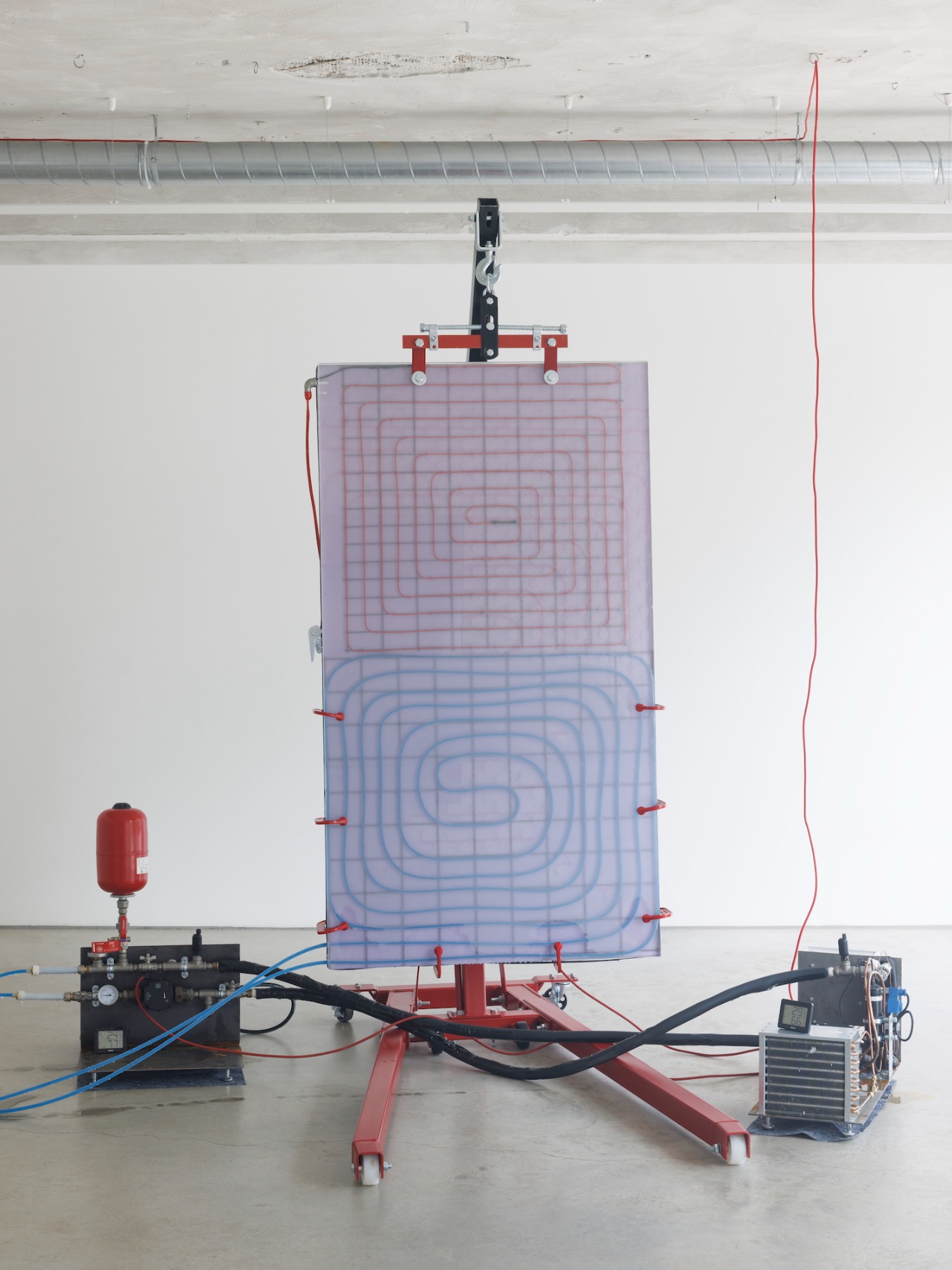
We are in a kind of North now, and Gabija is showing, in her video work, something that relates to a very global South context. What is the role of this video in the frame of exhibition?
F.U.: Let's say the most explicit, but also the most paradoxical, moment in the video is the chapter called Denial. There you hear a voice repeating, “I'm not a tourist. I'm not a tourist.” It's an AI-generated voice. So, in a sense, the statement is true – the voice is definitely not a tourist because it is artificial intelligence. But at the same time, what you see on screen is, in a way, a touristic vision. It is a safari seen through a camera. It is really the essence of mass tourism in its purest form. That's what makes it so powerful for me.
So this voice, combined with these images, creates a certain sense of being part of a mechanism while at the same time trying to step outside of it. It's interesting because that feeling of the cage comes back again. In that particular moment, you feel the paradox very strongly. And when we first saw this part of the work, we immediately mentioned the film Cannibal Tours because it seemed very closely connected to what Gabija was evoking.
What kind of film it is?
F.U.: It's a milestone in the history of visual anthropology. The film was made by Dennis O'Rourke in 1988. It was shot in Papua New Guinea and revolves around a tribe that is supposedly associated with cannibalistic practices. But what the film actually documents is not the tribe itself, but the behaviour of the tourists who come to observe it. In that sense, the cannibalism is somehow reversed – it becomes the cannibalism of the tourists. You hear all stereotypes about the tribe expressed from European and American perspectives. The film presents a kind of escalation of comments and projections onto the tribe, along with a familiar narrative of the "noble savage". What makes it so powerful is that it gradually reveals how the real object of observation is not the tribe, but the tourists themselves. And this is also a strong critique of the colonial foundations of anthropology itself.
And anthropology itself is quite crucial for Gabija’s work as a visual artist.
F.R.: Gabija has a background in anthropology. She studied anthropology at Goldsmiths in London, and she also sees this background as her main foundation for her literary work. She studied anthropology not to become an anthropologist, but to understand how societies work in order to transform that knowledge into literature.
Gabija Grušaitė. Сirculation. 2026. Installation view at ASNI. Photo: Ansis Starks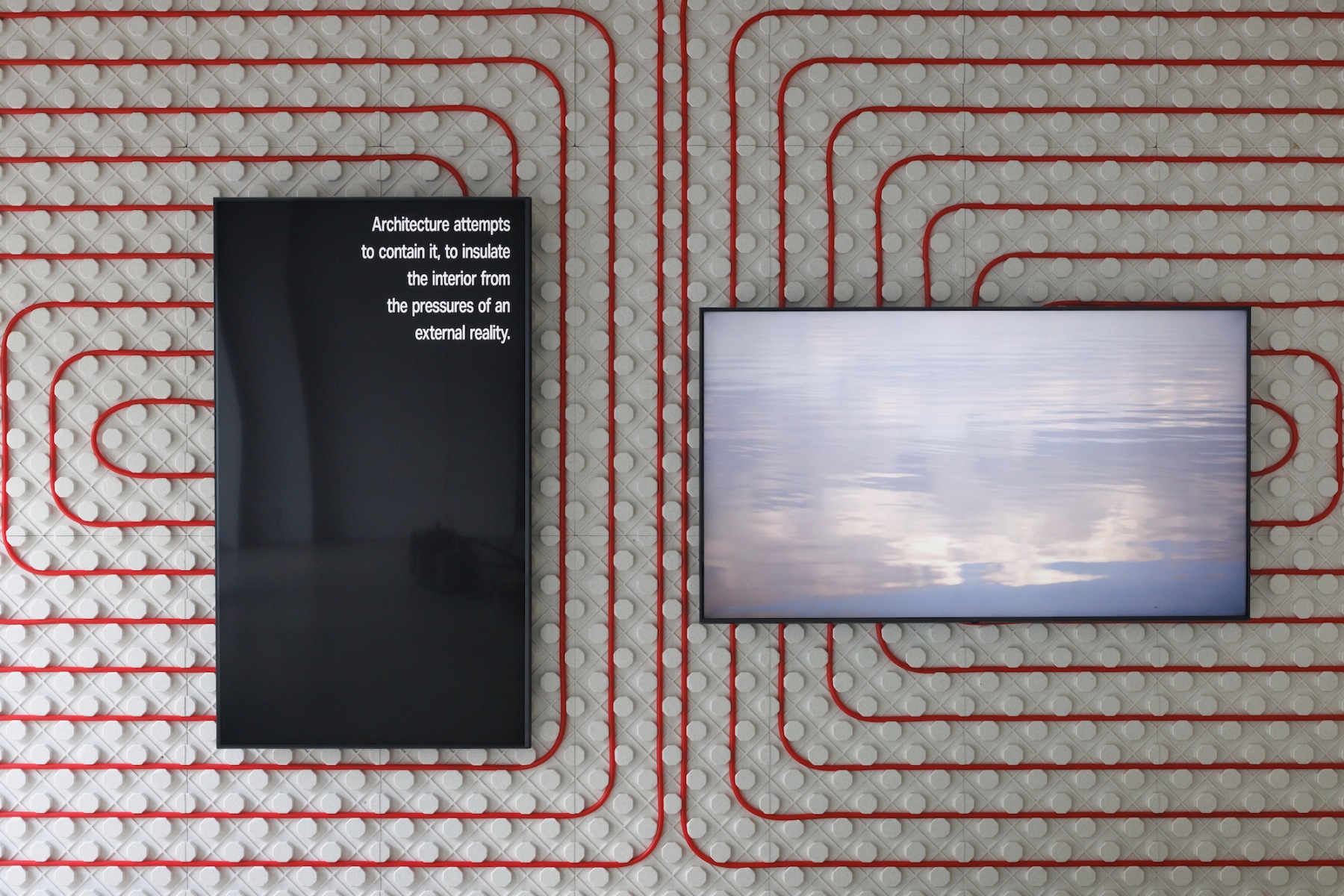
But how are her literary works connected to what she is doing as a visual artist?
F.R.: I think there is always this idea of systems. In her books, there is always a connection between different territories. For example, even in Mycelium Dreams, her latest novel, the book begins with a map. There is always this sense that there is no division between things, but rather relationships. I think this is true both in her novels and in the works she makes as a visual artist. The thinking is always systemic.
F.U.: And there is not so much narration in the book. It is more atmospheric. In a sense, it is also anthropological, because it tries to trace a certain mood, a certain way of life. So, this idea of creating atmosphere is probably what brings her towards art, because it allows her to go further in that direction. I have the sense that it feels quite natural and appropriate for her to move in that way, because perhaps literature alone does not allow her to express certain other levels of what she wants to express. And it was, let’s say, when we first met, it was the first drive that some way connected us.
Because you are also working a lot with texts and trying to expand them into other media?
F.U.: Yes, we also like these kinds of challenges. We work a lot with cinema and moving images, and we do not see a separation between fields. We also think that, in some way, the history of exhibition-making is relatively recent, and there are infinite possibilities for its development. We all are still, in a sense, stuck in a very modernist attitude towards art. But if you start opening the mind to other possibilities, you can really invent formats, understand the interconnections between disciplines, and create new things. So we immediately liked that attitude, because we felt both the challenge and the possibility to break certain rules.
Jonas Mekas and Francesco Urbano Ragazzi. Missoni, New York, 2017. Photo: BFA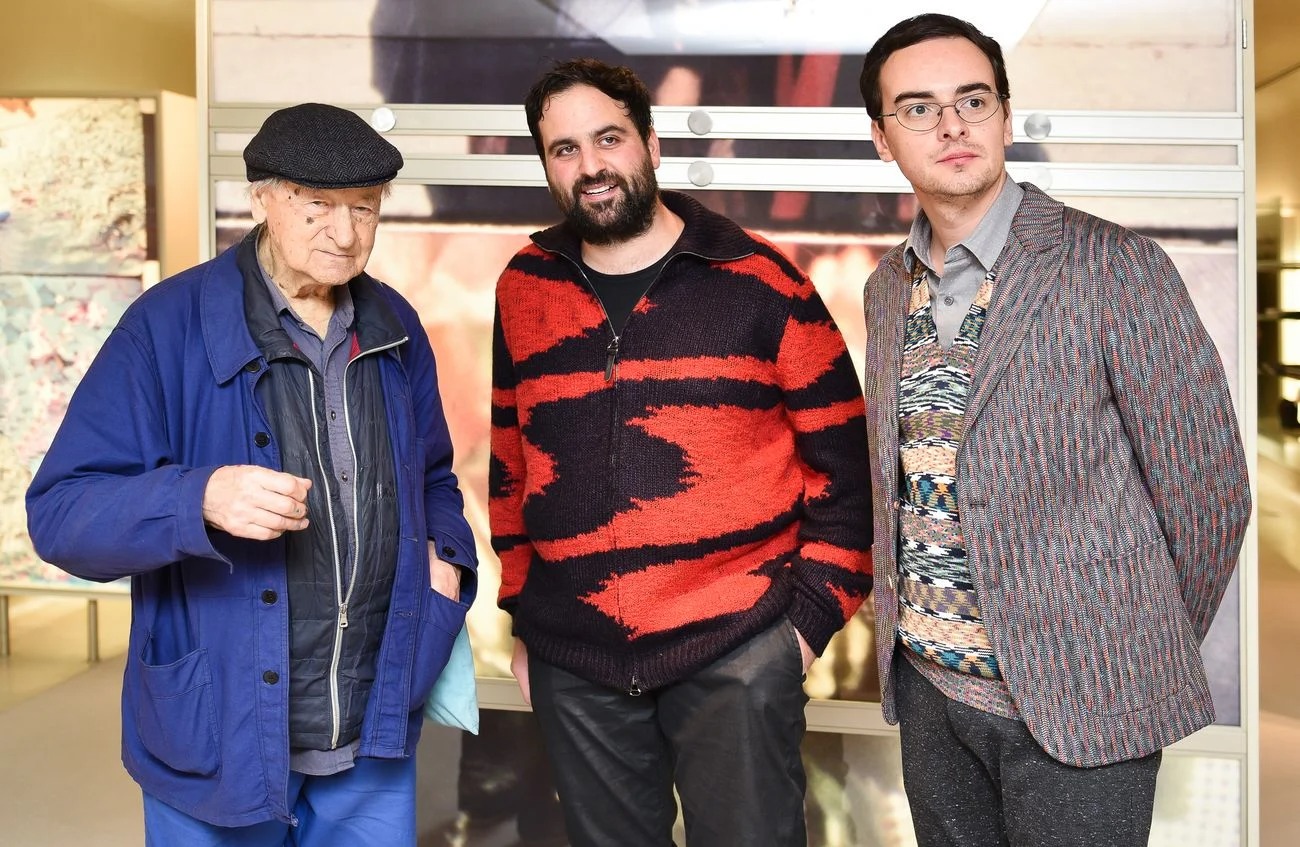
Actually, Gabija Grušaitė is not the first artist from Lithuania you have worked with. I would also like to mention your involvement in the legacy of Jonas Mekas and several exhibitions related to that. You had a very interesting perspective, connecting it to the digital age and questions of how personality is represented in digital media. Could you tell a bit more about that?
F.U.: Jonas was often seen as the master of 16mm film. And of course, he was one of the figures who codified the idea of the diary film. That is the canonic story. But through the idea of the diary, he actually transformed the very notion of what a diary could be. He began to think about life itself as a medium. And it's a revolution that in some way predicted the digital revolution.
We felt that he was someone who helped shape a particular way of thinking and perceiving images that has become commonplace today. We are all filmmakers now. The aspirations of the first and second avant-gardes – the dream of a direct relationship with the cinematic medium, the caméra-stylo – have, in many ways, become reality in our time. But Jonas made this especially tangible. He was probably one of the first filmmakers to create an online diary, beginning in 2006. He started making films specifically for the web, long before many others recognised its potential as a medium.
F.R.: Yes, in 2006 he started posting videos online, and then in 2007 he began making one video a day for an entire year. If we consider that Instagram was launched in 2010, we can see just how forward-thinking Jonas was, and how clearly he understood the future of moving images at that moment.
What he was doing with film was very similar to what we do now with our phones. Between the 50s and the 90s he used a Bolex – a portable camera that allowed him to film his life every day, using the camera as a tool for understanding and reflecting on his own experience. A large part of the editing also happened within the camera itself, much as it does today through our devices. In that sense, he was treating filmmaking in a way that is remarkably close to how we now treat digital images. That is why he was able to grasp what was happening so early on. For us, it was important to emphasise this point, because Jonas is still often seen only as a 16mm filmmaker.
Jonas Mekas. The Internet Saga. 2015. Curated by Francesco Urbano Ragazzi. Photo: Giulio Favotto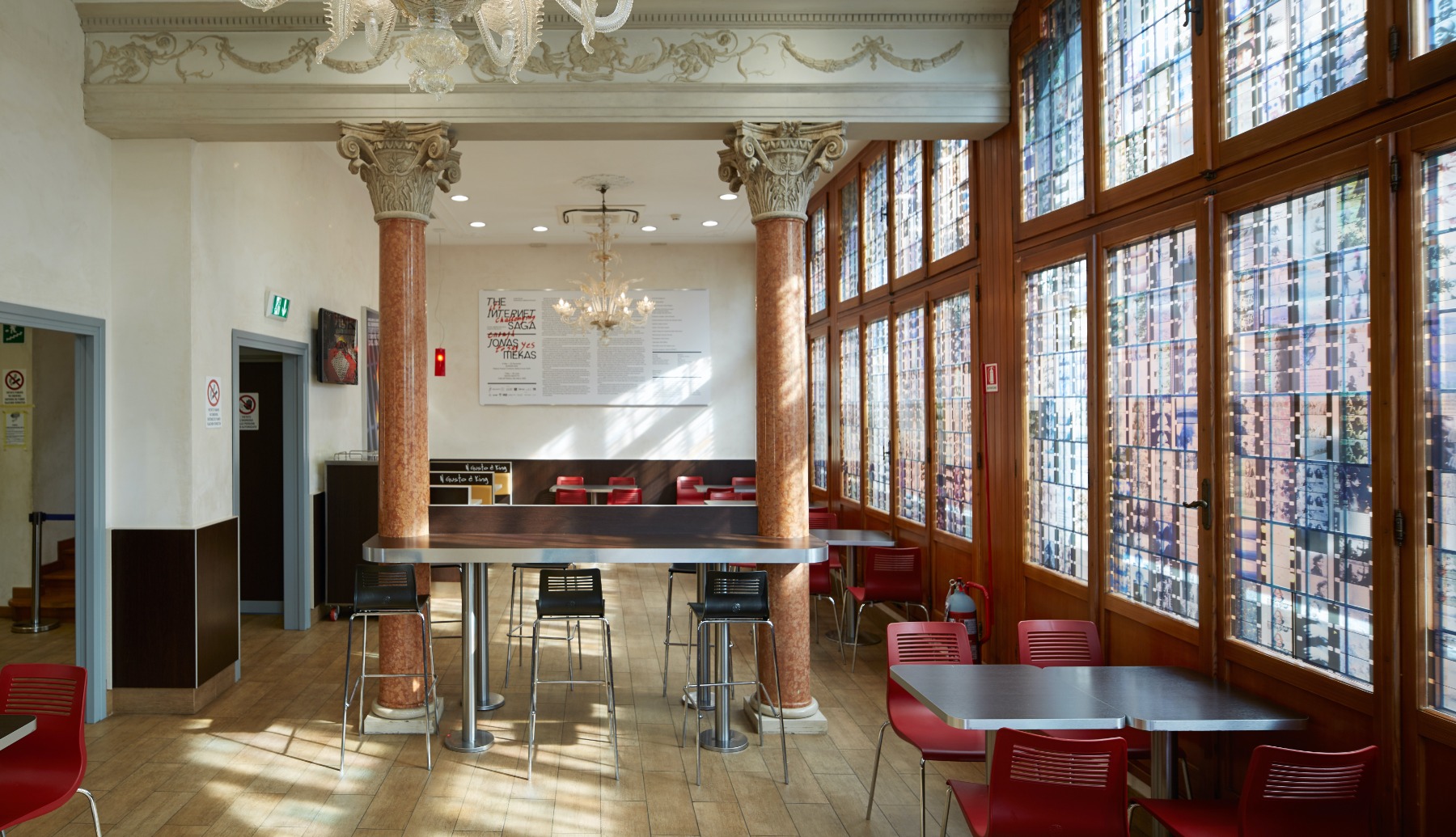
But he was also, in a way, inventing a different model from the one we have today. Now we live within a digital economy, and people are very much oriented towards that logic. He was doing something quite different.
F.R.: Yes, absolutely. And that is precisely why it is important to look at his work today. In many ways, what he was doing is similar to what people are doing now. But at the same time, people often do it in a much more mechanical and format-driven way. It becomes repetitive and less genuinely creative. That is why it is important to return to his work. It was free. It was not determined by a format. He was exploring the possibilities of the medium rather than adapting himself to its constraints.
F.U.: And also, it is again a matter of moving across media. He was a poet, basically, and this idea of poetry appears at different levels and remains part of the same thing. I do not see separation here. It is like a path that expands into different fields in different ways, and that is the beauty of it. That is also why he was so involved, in a way, in the idea of expanded cinema, and in inventing institutions for the promotion of cinema, as well as platforms for producing and distributing moving images.
The Filmmakers’ Cooperative, the Anthology Film Archives, Film Culture Magazine are all act of institution-making. So, filmmaking, situation-making, reality-making are all part of the same thing, which is poetry.
And it was also, for us, again, a very interesting relationship, because together we worked on exhibiting his work in museums and galleries. In a way, there was also his need to be seen in different contexts and across different fields. So, we organised shows both in public spaces and in museums and galleries. We continued investigating the possibilities of moving images in a very concrete way, by bringing them into different spaces – from fast-food restaurants to major museums. We organised, I don’t know, ten or fifteen exhibitions, as well as books, screenings, and many other projects in the meantime. This variety shows just how vast the possibilities are for an artist, and how these possibilities can continue to multiply through the viewers.
Maybe you could describe your curatorial practice more broadly, and how you perceive your role as curators, given that you work across so many different forms in which your practice can develop?
F.R.: It is interesting because it is related to the exhibition, and probably also to why we worked with Gabija on this project. It has to do with understanding how art began to isolate itself at the beginning of the 20th century. In a way, museums, galleries, exhibitions and cinemas as we know them all emerged around the same time, at the end of the 19th century. If you think of these places as environments, they are spaces that isolate art from external reality. It was the moment when art became separated.
After more than a century, we are now exploring, as practitioners, the possibility of undoing this separation, or at least of understanding what it means. A large part of our curatorial practice is therefore related to bringing contemporary art projects into real spaces – non-art spaces, if you like.
At the same time, another important process was emerging in relation to art itself at the beginning of the XX century: while art was separating from reality, the readymade was also being introduced. So art began to appropriate fragments of reality in order to turn them into art. This trajectory continued from objects to products, to gestures, to relationships, and to systems. In a way, it was always art appropriating reality.
We would like to reverse this process and, in some sense, bring art back into reality. And why is this important for us? Because in these separated spaces the viewer is already oriented towards a certain gaze. They know what to look at and how to look at it. It is the environment – the museum, the gallery – that indicates, or even directs, how art should be seen. Whereas in reality, you are not so certain what to do.
You can look at art in a classical way, you can ignore it, you can even hate it. Your behaviour is put into question; your regular patterns of behaviour in how you perceive both art and reality are put into question. In that sense, reality and art can clash. And through this clash you start to think about your own patterns. It becomes a way of becoming self-conscious. That is what we are searching for in our projects, I think.
But I think you can understand it very well. Your practice is very similar. (Before our conversation, I was showing some projects at the border between art and small-town reality, developed by Orbīta and Talka in Strenči in 2023–2026. – auth.) It resonates, I think. And it is not that common, unfortunately. Because we are also dealing with certain automatisms within the system. The system itself is also based on this kind of separate, hierarchical structure, more and more personalistic and dependent on a few wealthy individuals. And it is, in fact, socially quite dangerous.
This perception of art as separate is, in some way, encouraging a certain idea of the world that we do not want to encourage at all.
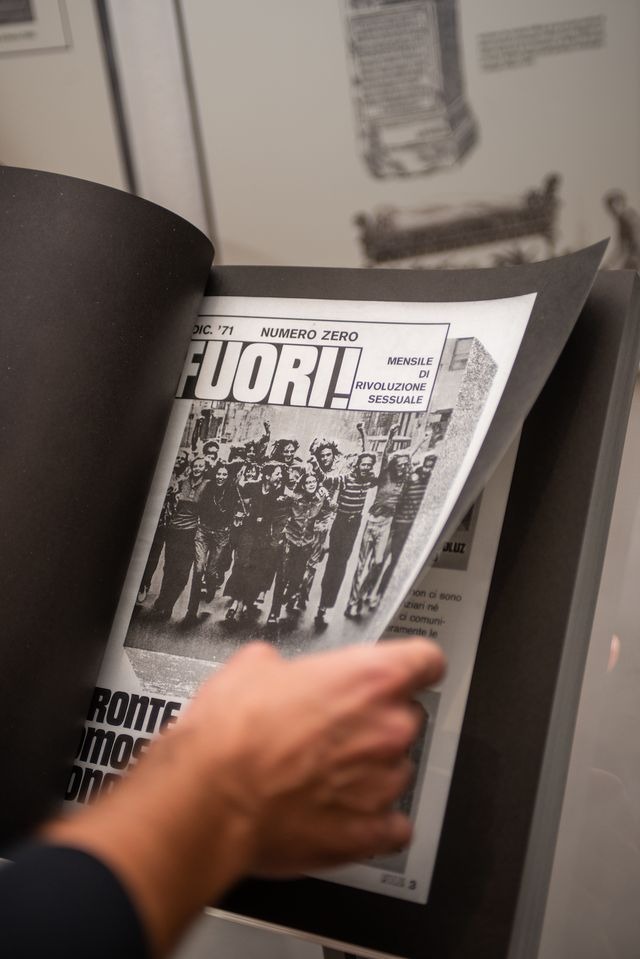
Francesco Urbano co-edited the landmark anthology FUORI!!! 1971-1974 with Carlo Antonelli. Published by NERO Editions in 2021, this award-winning volume makes accessible for the first time the rare pages of FUORI!, the historical organ of the Fronte Unitario Omosessuale Rivoluzionario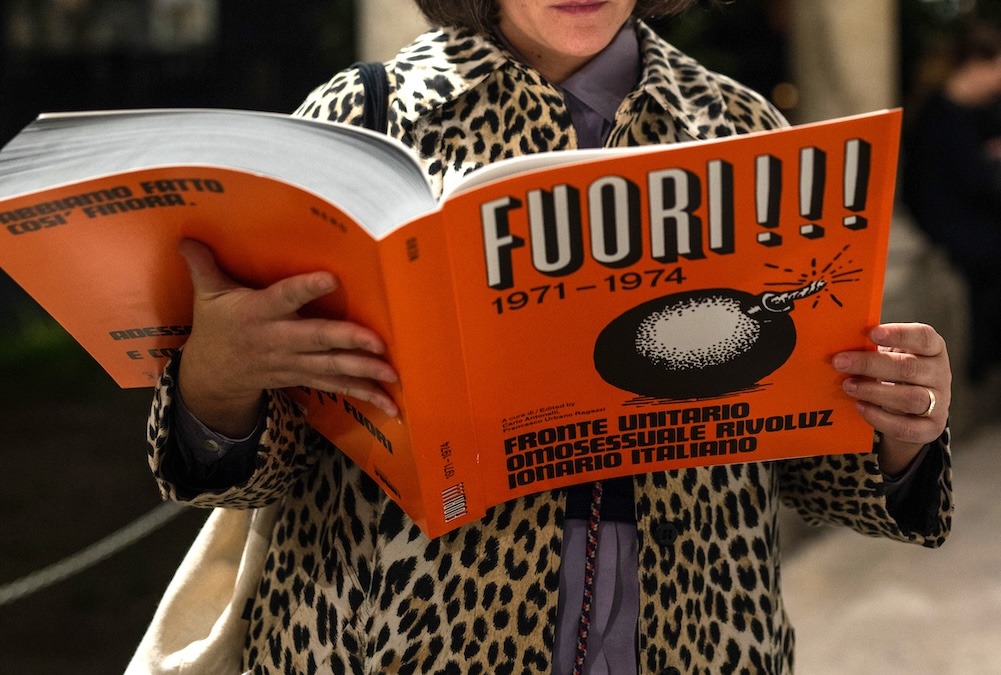
Alessandro Michele, Gucci Twinsburg, s/s 2023, Photo: Cosimo Sereni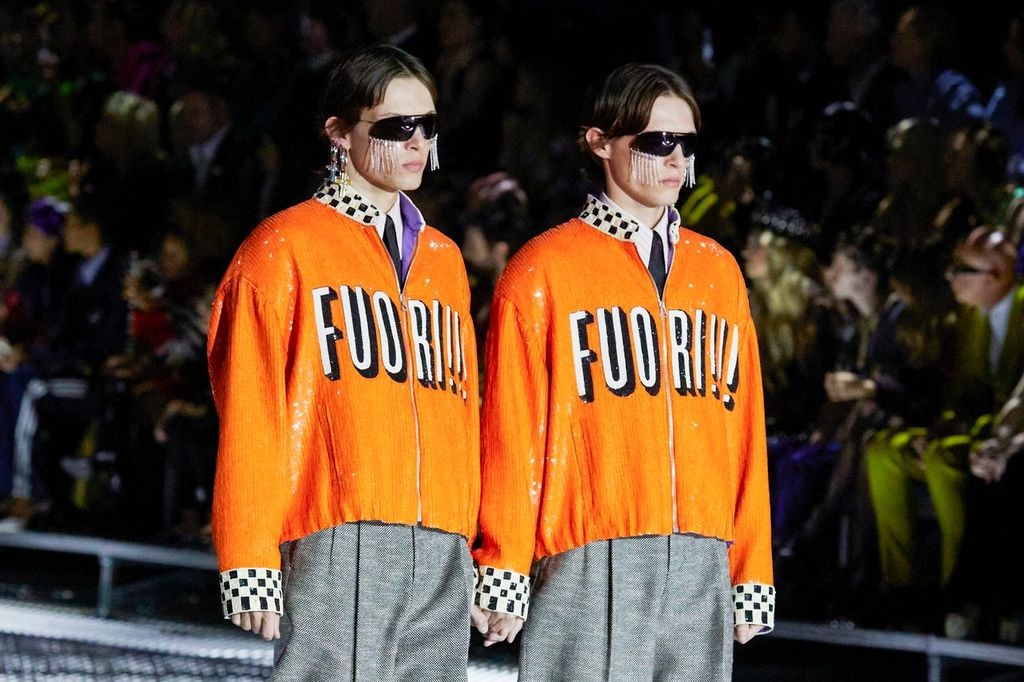
But as I understand, you are also involved in projects related to fashion, collaborating with fashion creators and teaching at the Fashion department of NABA (Nuova Accademia di Belle Arti) in Milan. How do you see the connection between contemporary art and fashion today?
F.R.: We have worked with fashion in the past on specific projects, and for us it was a strategy to reach a much broader audience. We were interested in fashion as a communication channel – really as a way to convey hidden messages or stories through this huge communicative system. For instance, we published a book about the first LGBT magazine published in Italy in 1971-1974. It was a completely forgotten story. Most people did not even know about the existence of this magazine, not even within the LGBT community.
And so we accepted to collaborate with the brand in order to produce clothing related to this book, basically replicating the cover of the book on garments, in order to bring attention to this magazine and make it visible. For us, it is always a matter of negotiation. We do not believe that a purely ethical gesture is entirely possible. There are always constraints, but you can negotiate within them according to specific ethical goals. That is how we try to work not only with fashion, but also with other kinds of economies or markets – including the art economy, of course. It is always a matter of accepting certain rules in order to break others, let’s say. (Laughing).
F.U.: In that case, for instance, it was important to negotiate with the company and not to accept the first offer, but to say: okay, if you want to do clothing, that is fine. We like the idea of expanding the story and sharing it globally. But then it is important that you support the people who actually started the magazine and maintain the archive of the first Italian homosexual liberation movement in Turin. That is the starting point.
F.R.: So they can do very relevant things with real money.
But in this Fashion department in Milan, you are teaching…
F.R.: “The semiotics of collaboration”. And it is also somewhat related to Mekas, because we are comparing two ways of working. On the one hand, there is the corporate model, and on the other, the cooperative model. One is a very vertical, hierarchical way of working, and the other is a horizontal, collaborative and redistributive model.
So again, we are trying to make our students understand that the vertical model is not the only possible one. They will probably work in large corporations, but at least now they know that other models exist. It is quite interesting because we teach not only the Filmmakers’ Cooperative, but also models like George Maciunas’ Fluxhouse Cooperatives, for instance – all these frameworks that are able to redistribute resources among members.
Jennifer West, Stitched Cosmos. Installation view, Ca' Foscari, Venice, 2026. Curated by Francesco Urbano Ragazzi. Photo: Gaia Cambiaggi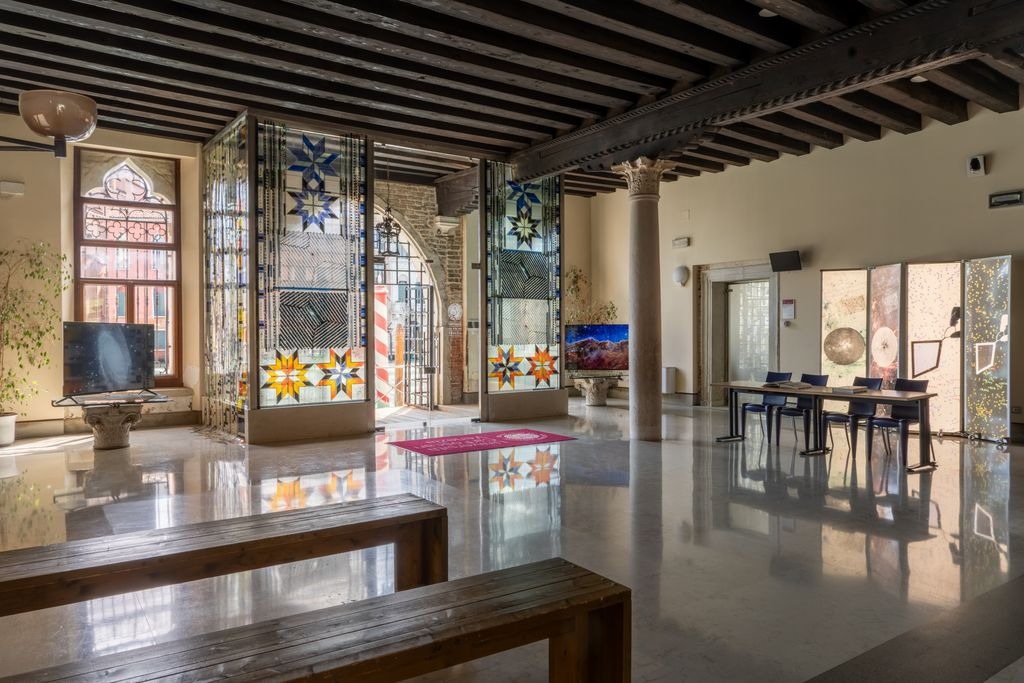
As curators and thinkers, you were also quite connected to the terminology and discourse around post-digital culture. Has this understanding of the post-digital changed, given that it first emerged around ten years ago?
F.R.: When it started, I think there was a very utopian vision of the possibilities of the digital world. The internet and digital culture were seen as a way for artists living in the so-called provinces of the world to develop a practice outside of existing systems. We were interested in these possibilities, in the ability to create alternative systems, or even our own rules.
Now, of course, we are discovering the other side. I think the digital is increasingly associated with oligarchy, with what could be described as a kind of digital feudalism, where there are very rich “kings” and very poor “peasants”. It is much harder to embrace digital culture today in the same way.
But it's also the reality we are living in. So, it's also…
F.U.: …unescapable.
F.R.: Recently we worked with Jennifer West on a project based on a group of so-called “women computers”. These were women scientists active at the Harvard Observatory since the end of the XIX century. They were tasked with doing calculations by hand or with machines, from a very low position within the hierarchy of the institution. They were human calculators, so to speak.
And yet, through this work, they began to make discoveries and also contributed to the systems through which stars are still classified nowadays. For us, working on this project was a way of commenting on this vision of the new space age we are living in.
There is a very masculine, very personalistic imagery of the conquest of space – like a new form of colonialism in space. Through Jennifer’s project, we wanted to show that there is another way of understanding science and calculation – a way that is cooperative, collaborative.
I think that now art is responding to this digital oligarchy by moving in the opposite direction, focusing on the spiritual, the magical, the handmade. But I think this is a somewhat delusional strategy, because it risks creating a simple opposition. We believe there is another way. Not to move to the opposite extreme, but to really rethink and understand science in a different way. That is why we decided to do this project at this time, during this Biennial, because science and the digital are not only about digital oligarchies – they are also about public institutions, about groups working together. So, it is also something else.
F.U.: And also, coming back to your question about the post-digital condition, I think we are just at the beginning of our hybridisation with machines, and we will go much further in that direction. I mean, we can also see how fast it has developed in recent years. If we think that all of us are, in some way, working with, or assisted by AI almost constantly, this was a fantasy not so long ago. And now you can see it at all levels, even in highly intellectual contexts. It is clear that machines are really, really part of the system. We have to understand this. I think art is a space where we can become more aware, and also analyse what we are living through.
And I think we cannot deny these aspects. Sometimes, to understand the creative possibilities of it, that is probably the most interesting part. So again, to be poets, with whatever is available – even with machines.
Gabija Grušaitė. Сirculation. 2026. Installation view at ASNI. Photo: Ansis Starks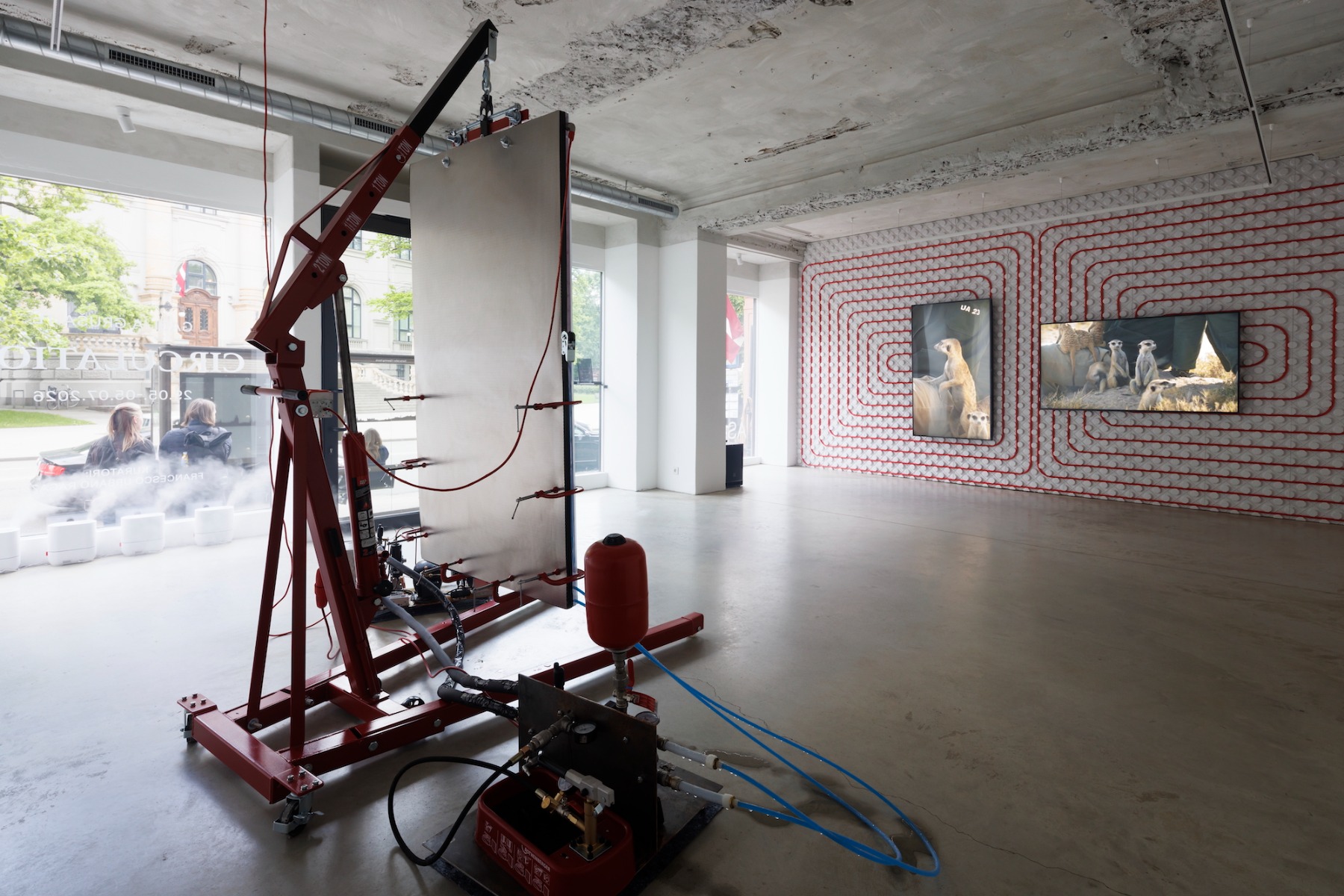
Here we could come back to Gabija Grušaitė’s exhibition that you curated. She was also using AI in her video work, creating the sound of songs, while the text was written by her. How do you perceive this? A song is something very human, something that comes, you know, “from the depth of the soul”. And now it is being produced by a machine. How do you see that?
F.U.: It is interesting because, again, what is very intriguing to me is that the very beginning of the process is a literary one. She writes a text, and then that text is processed by the machine. I prefer not to see it as a product of a machine, but rather again as a negotiation. I like this idea of negotiation – of negotium – as part of the artistic process. This kind of adjustment that human and machine can find between each other can also become very productive. The result feels like a very intense moment in the film, which is also paradoxical.
Because you feel that the voice is warm and sensual but also hyperproduced and post-human. So again, there is this inner tension between poles. And I think that is what gives us possible tracks for interaction between humans and machines.
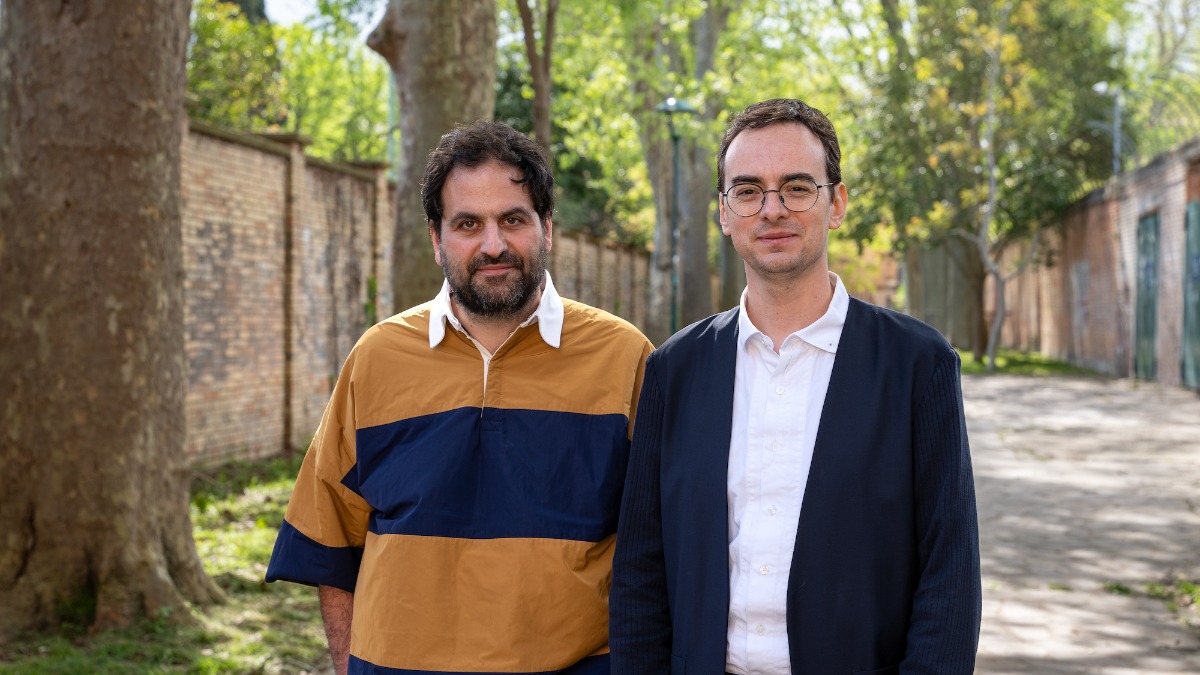
Upper image: Francesco Urbano Ragazzi. Photo: Giulia Ballarin
