


EDEN After Hours
Review of the Exhibition “ĒDENE: Wet Work Over Lap” / The exhibition is on view at the Kim? Contemporary Art Center (22 Hanzas Street) through July 12
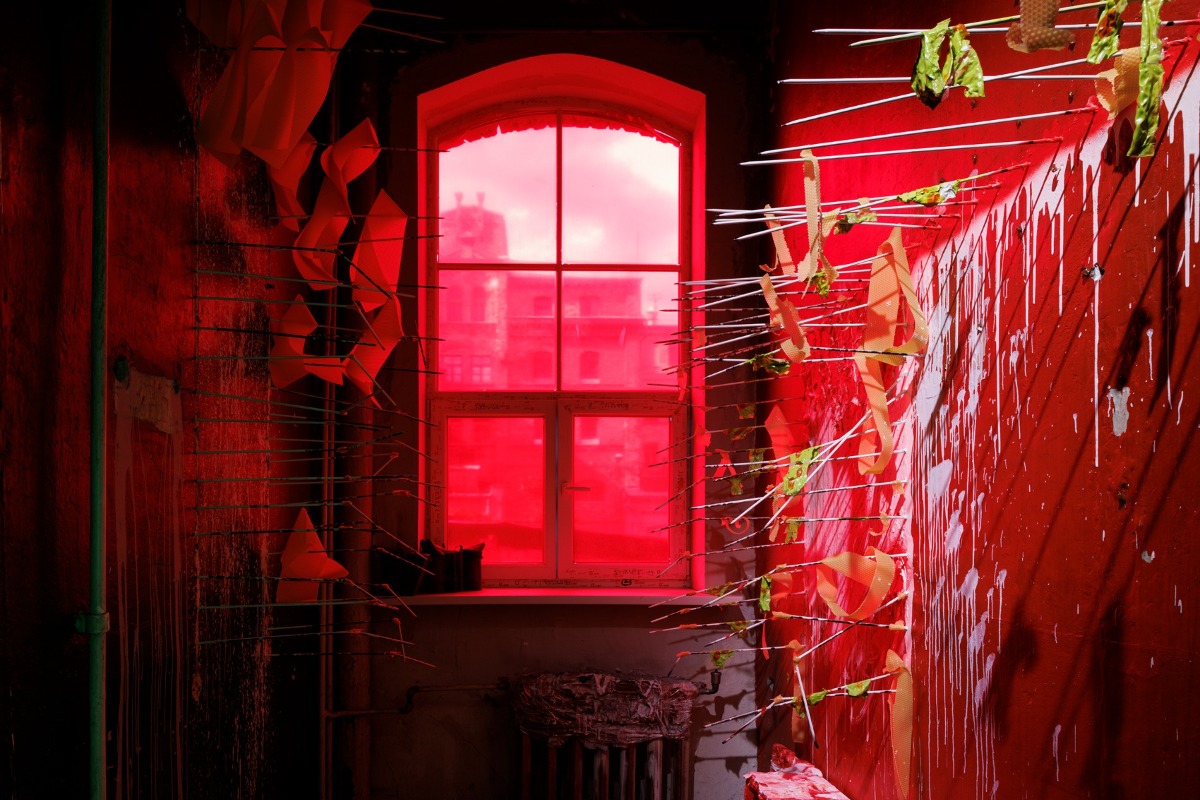
Kim?’s annual festival EDEN returned this year under a different light – red. Wet Work Over Lap doesn’t shy away from sex or the economies built around it. Bringing together artists working across installation, video, photography, and performance, the exhibition takes sex work as a point of departure for thinking about labour, intimacy, power, and the ways desire is produced. Yet little is made explicit. The works move through suggestion rather than statement, creating what curator Zane Onckule describes as “a climate to inhabit rather than a moment to complete”[1].
The title itself reveals the exhibition’s central controversy. The expression Wet work describes criminal acts that leave traces, while exploiting the phrase’s unmistakable sexual undertones. Over Lap is equally playful. Read it literally, it places a body over somebody’s lap; read quickly, it becomes overlap. That slippage is symbolic. Throughout the exhibition, the boundaries between influencer and sex worker, artist and escort, desire and labour, legality and criminality repeatedly collapse into one another. The overlap is everywhere. Often, the difference is simply a matter of branding.
Photos: Ansis Starks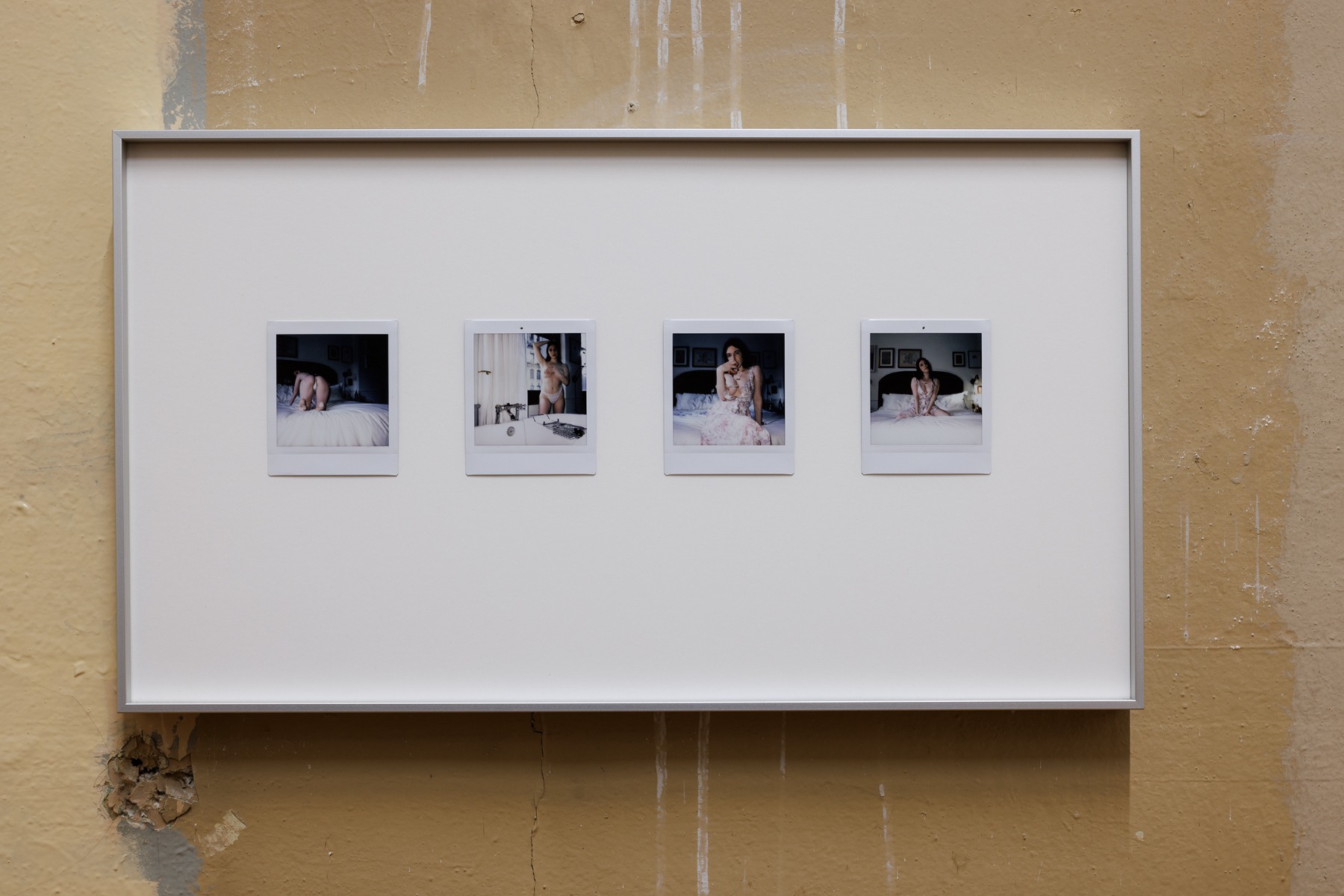
As artist and technologist Mindy Seu observes, “To be a woman who grew up online means you have been taught to be a performer.”[2] A Sexual History of the Internet retells technological history through the women, sex workers, and other marginalized communities whose labour built much of the digital infrastructure we now mistake for neutrality. In the exhibition, the book and performance quietly sharpen one of its central questions: if sexuality has become one of the internet’s dominant currencies, why do only certain forms of selling it remain morally suspect? As Seu reminds us, “the image itself is the most valuable commodity at this point.”
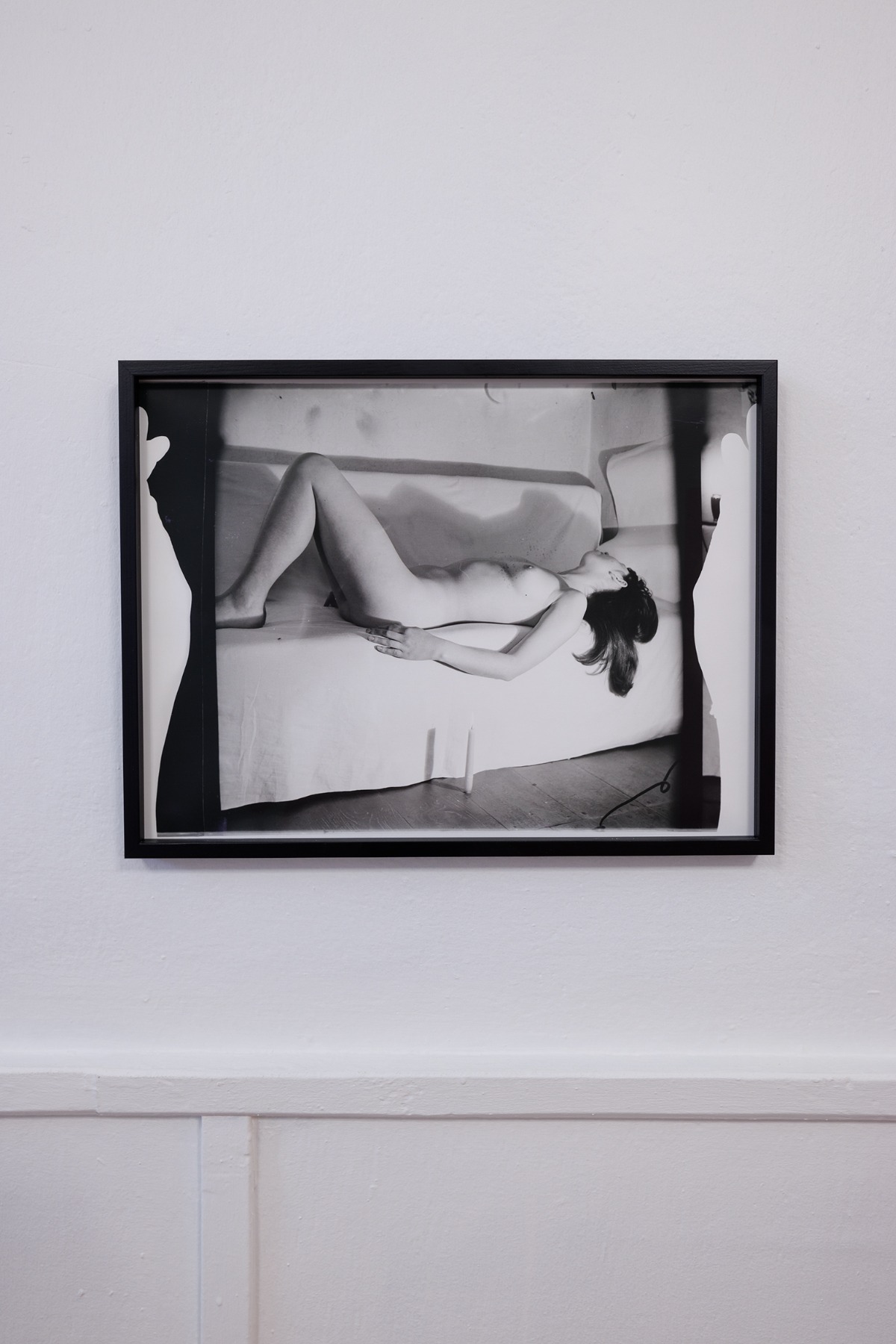
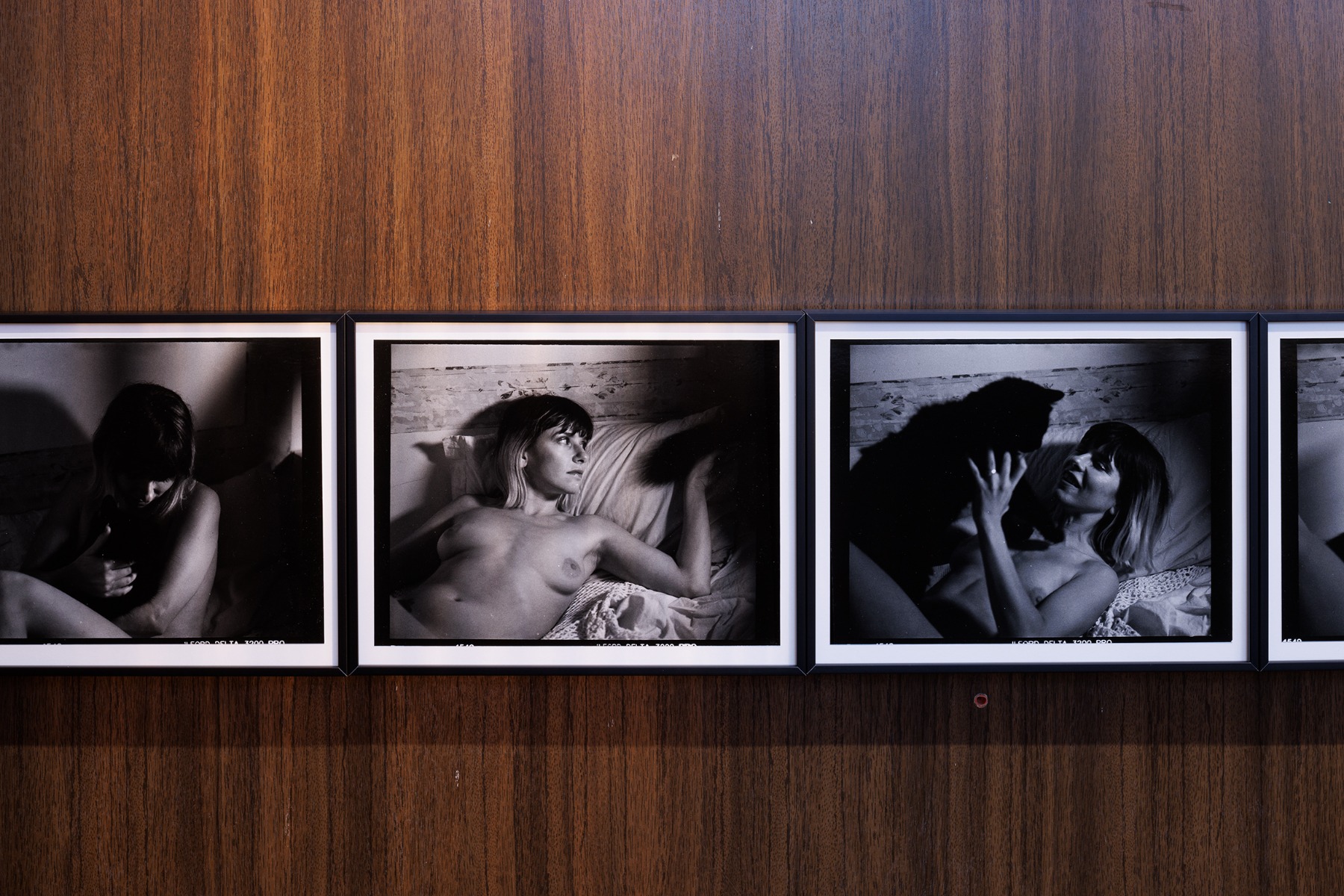
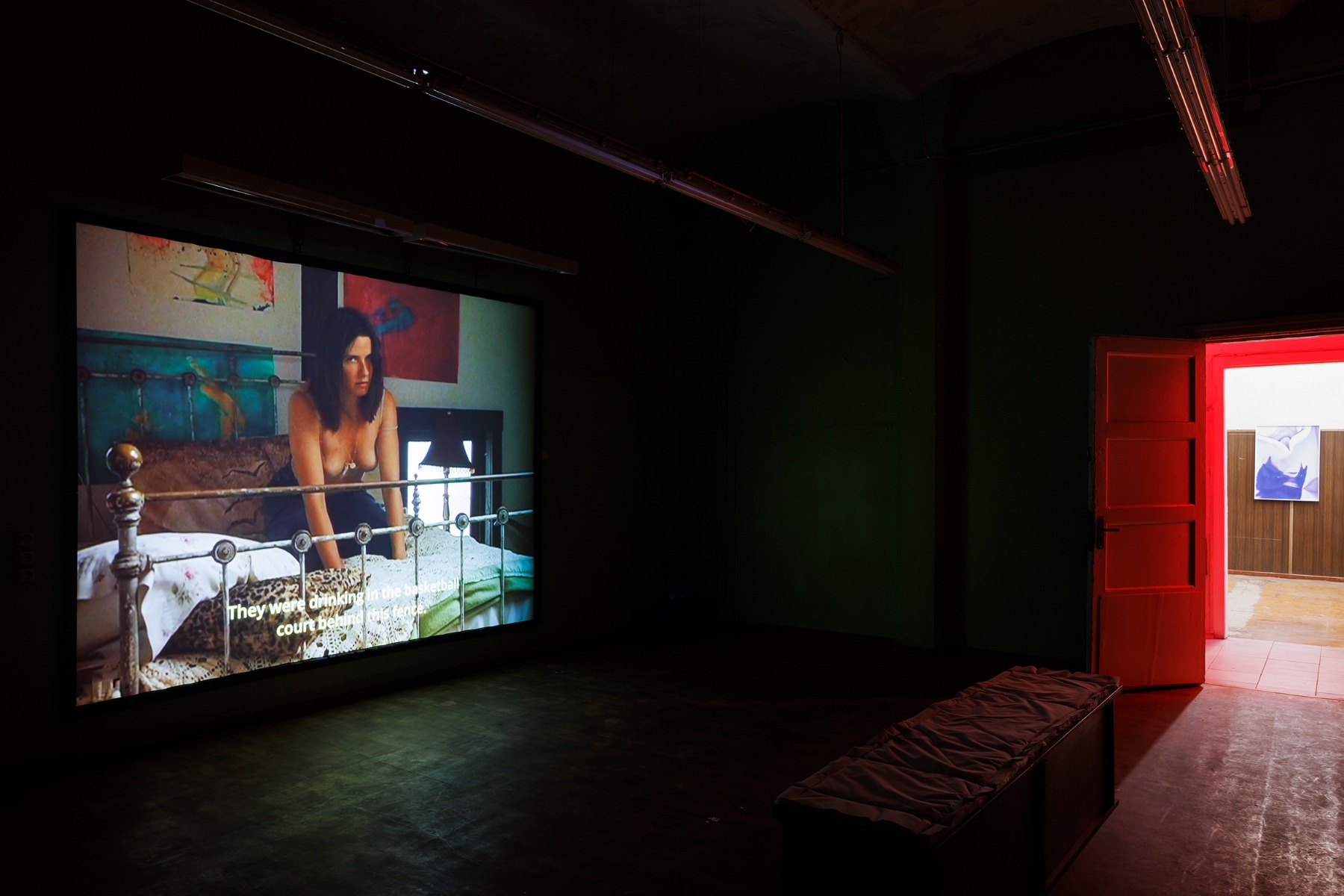
Artist Sophie Thun traces these economies through the labour of image-making itself. Her fragmented self-portraits refuse the fantasy of a coherent subject, exposing photography as both a site of desire and a form of work. Moving between analogue darkrooms (another kind of wet work), hotel rooms as production sites, and her ongoing dialogue with the overlooked archive of Zenta Dzividzinska, Thun reminds us that visibility is never simply given but produced. Where Thun reminds us that images are made, Buerhaus extends the logic: so are selves. In the nude self-portraits and the psychoanalytic monologue of After Discipline, she casts herself as both actor and protagonist, slipping between confession and fiction leaving neither entirely intact. “People say: you’re lying, you’re an actress. Maybe I am.”[3] The only breach of etiquette, it seems, is acknowledging the performance.
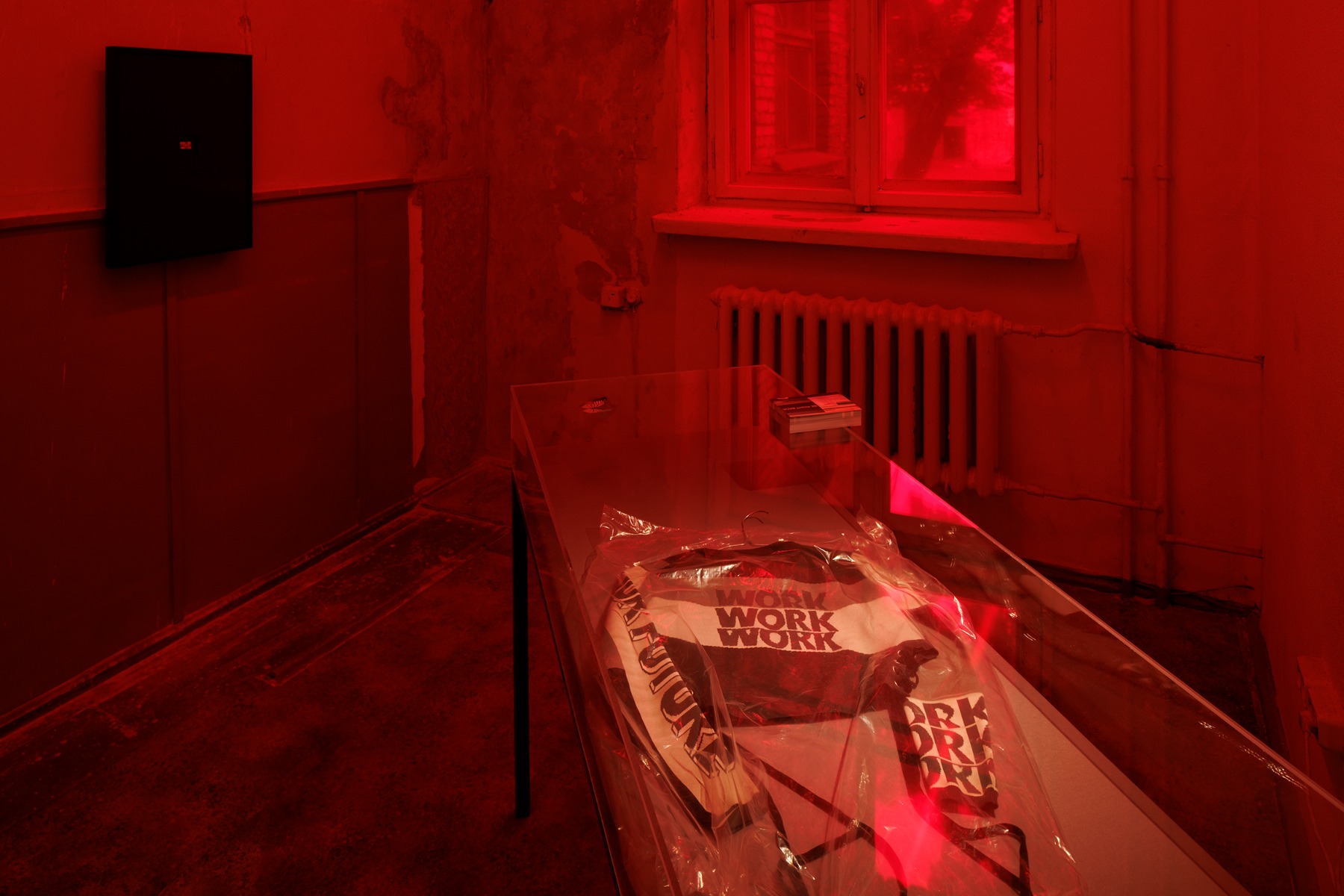
Some of the exhibition’s wittiest moments arrive almost in passing. A Work, Work, Work Marc Jacobs crop top from Zane Onckule’s own wardrobe has migrated into the exhibition itself, collapsing the distance between curating, labour, and everyday life. Sylvie Fleury’s wall painting Égoïste Platinum quietly shifts meaning in Latvian. While referencing Chanel’s iconic men’s fragrance, its title inevitably reads here as egoiste – a woman accused of putting herself first. Outside, Evija Krištopāne’s Rosarium Subsidium gently colonizes Miķelis Mūrnieks’s permanent fountain from last year, introducing an unexpected floral counterpoint to its industrial vocabulary. Mistress Rebeca’s (Reba Maybury’s dominatrix alias) instruction pieces are perhaps more compelling as a concept than as objects. The idea that submissive men reproduce Degas’s working women under the artist’s command is immediately engaging. Yet even in reversed power roles, the resulting copies never quite escape the premise that generated them.
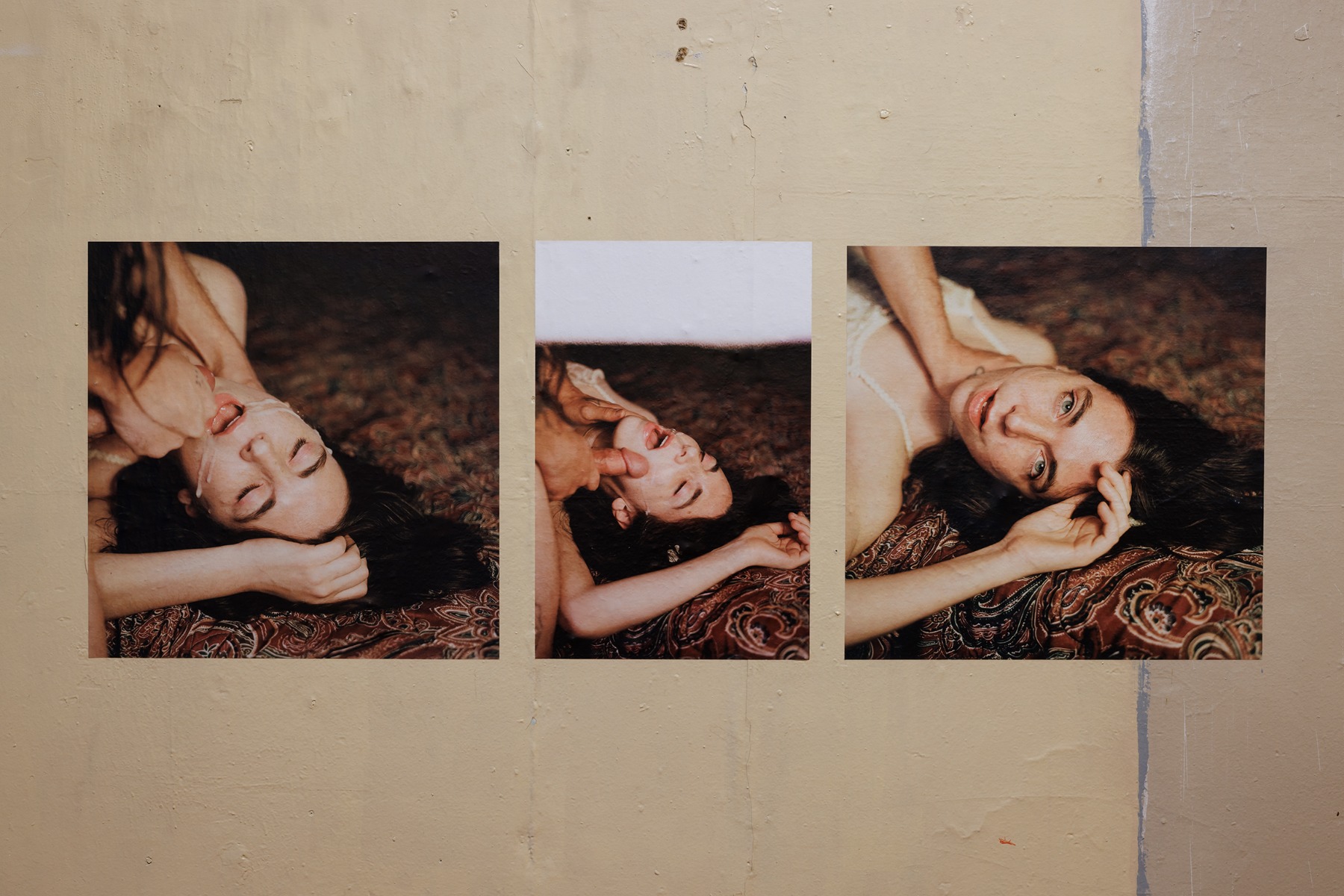
Perhaps the exhibition’s clearest proposition arrives with Sophia Giovannitti, whose book Selling Art Selling Sex gives EDEN much of its conceptual backbone. The comparison between artistic and sexual labour is hardly new. Since the 1970s, artists have repeatedly collapsed the polite distance between the two. Marina Abramović exchanged places with a sex worker in Amsterdam’s red-light district for Role Exchange (1975). Andrea Fraser went further in Untitled (2003), presenting a videotaped sexual encounter with a collector as the artwork itself. Giovannitti abandons metaphor altogether. Rather than treating sex work as an allegory for artistic labour, she argues that it offered a more meaningful way to sustain her artistic practice than selling her time in precarious service work.
Her contribution to EDEN is unexpectedly tender. Referencing Jeff Koons and Ilona Staller’s Exaltation, Giovannitti refuses the familiar reading of pornography as degradation or provocation. Instead, she lingers on the possibility that the result might also be ecstatic. The accompanying photographs from her own Exalted series, taken immediately after her partner ejaculates on her face, are disarmingly matter-of-fact. They reveal something contemporary discourse often struggles to accommodate: that a sexually explicit image can also be tender, vulnerable, devotional, even beautiful.
Meanwhile the Latvian artists featured in the exhibition are reluctant to give us a body directly. Yet sex is everywhere else: in the light, the paint, the membranes, the architecture. It’s a familiar strategy. Latvians have spent centuries discussing uncomfortable subjects by pretending to discuss something else. We even have an expression for it – we speak “through flowers”. Sabīne Vernere comes closest to breaking the rule, although her sexual beings remain absolutely amorphous.
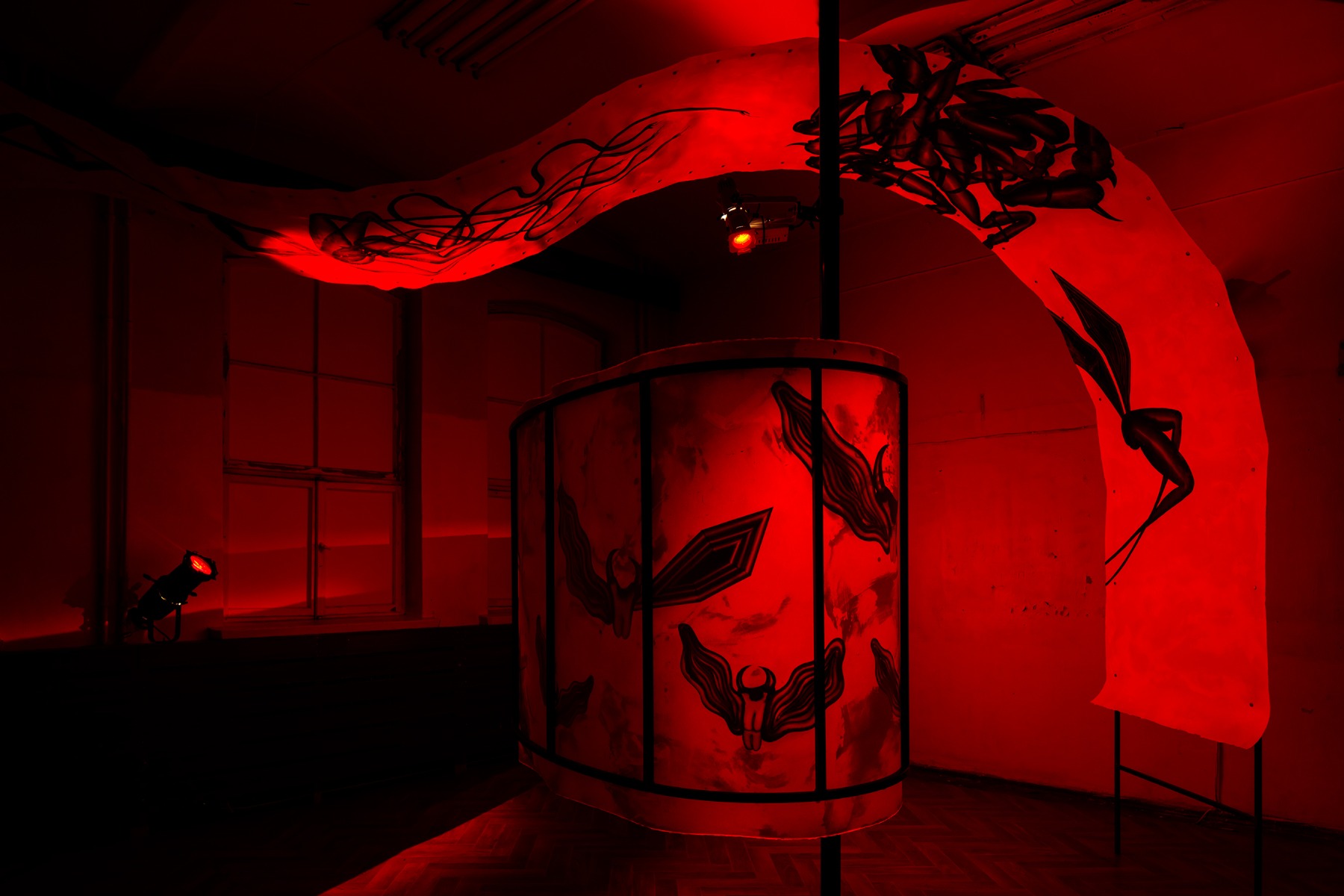
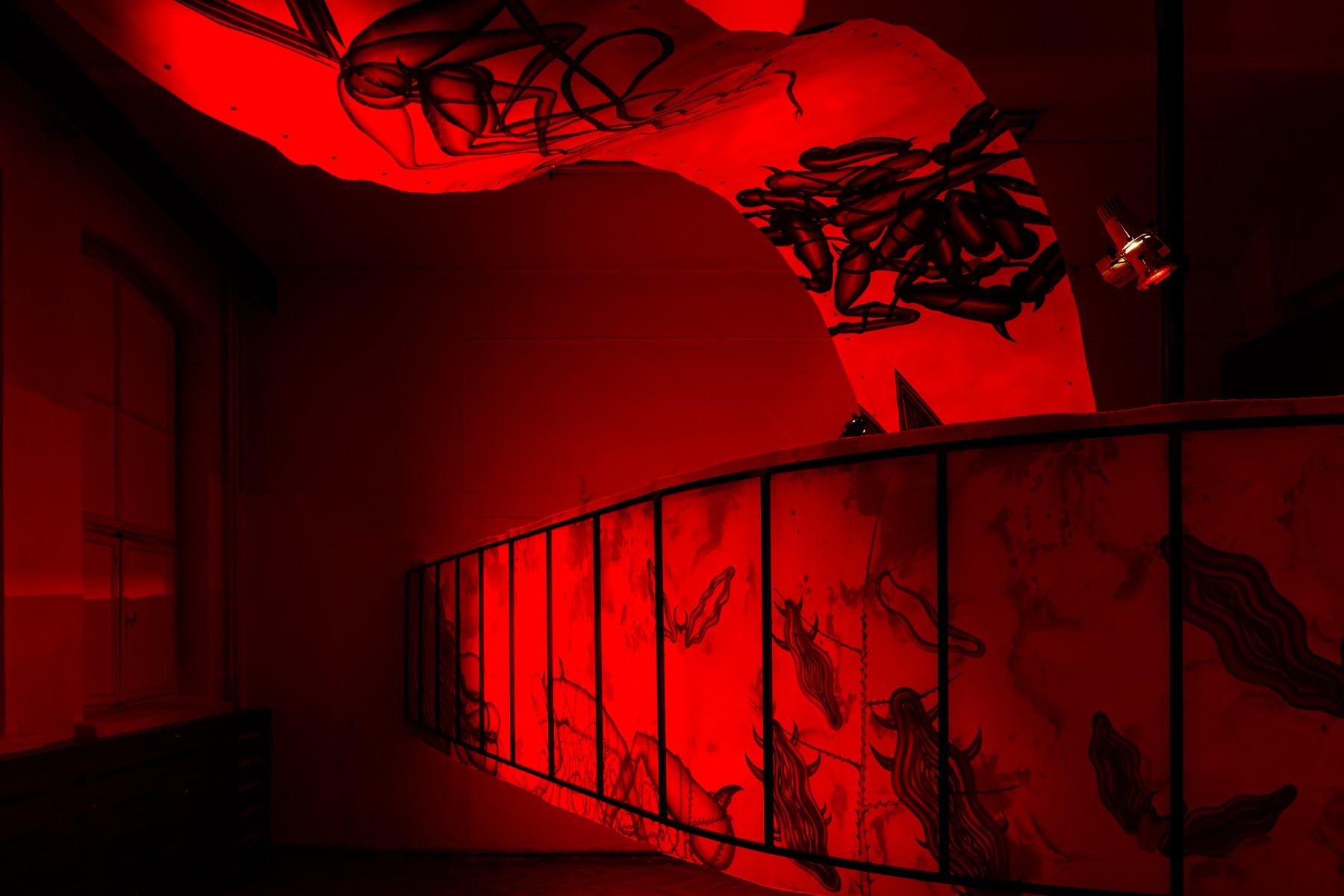
Vernere’s installation Lilith washes the exhibition in the tone of the Red Sea. Its light spills through the building, turning the space charged and quietly dangerous. Continuing a line of inquiry that runs throughout her practice, Vernere returns to demonized female sexualities, recasting biblical Eden as a patriarchal system whose promise depends on obedience. According to Jewish apocryphal tradition, Lilith – the woman who precedes Eve – leaves Eden for the Red Sea, where chaos becomes preferable to submission. The destination is hardly idyllic, but autonomy rarely starts from a place of comfort.
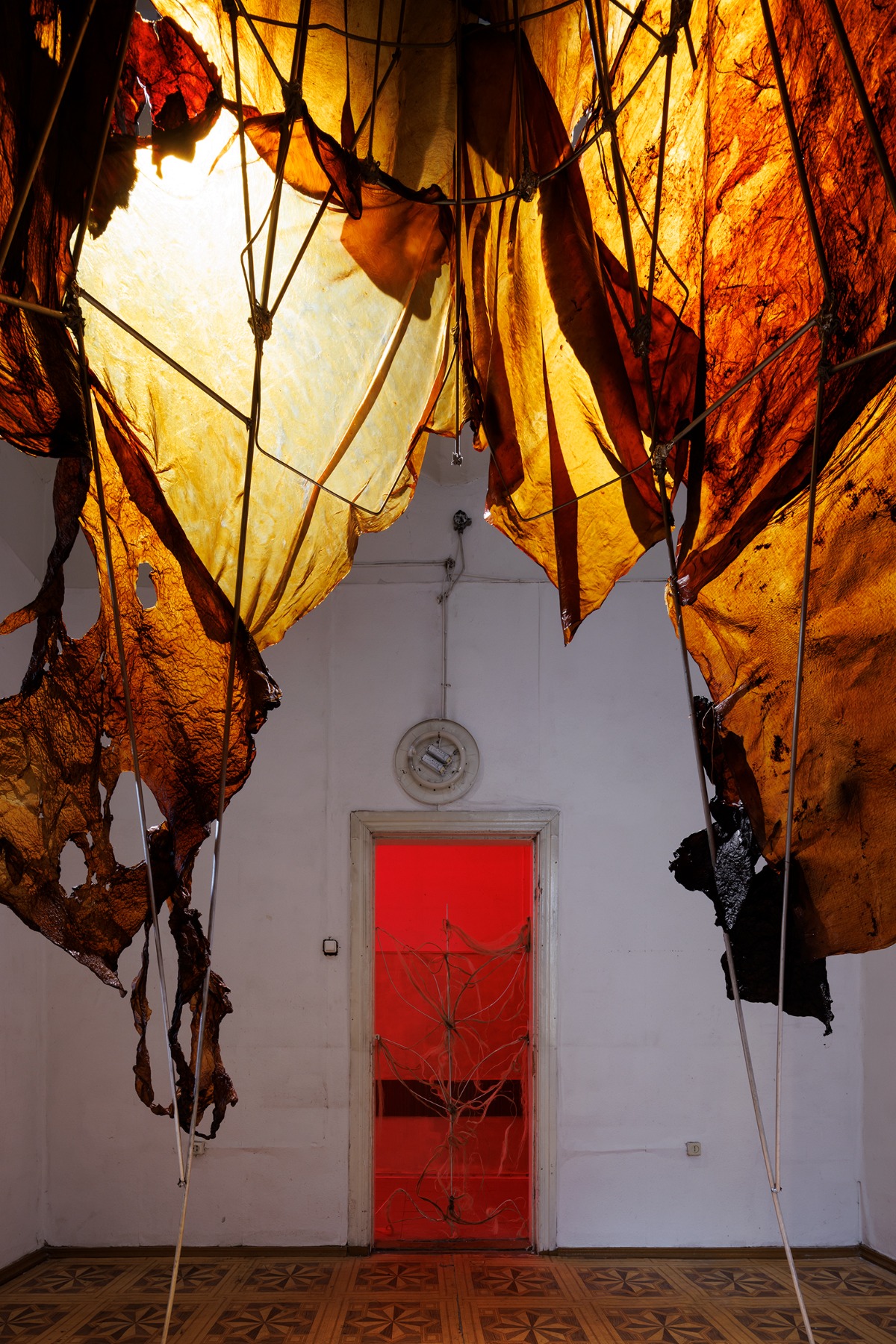
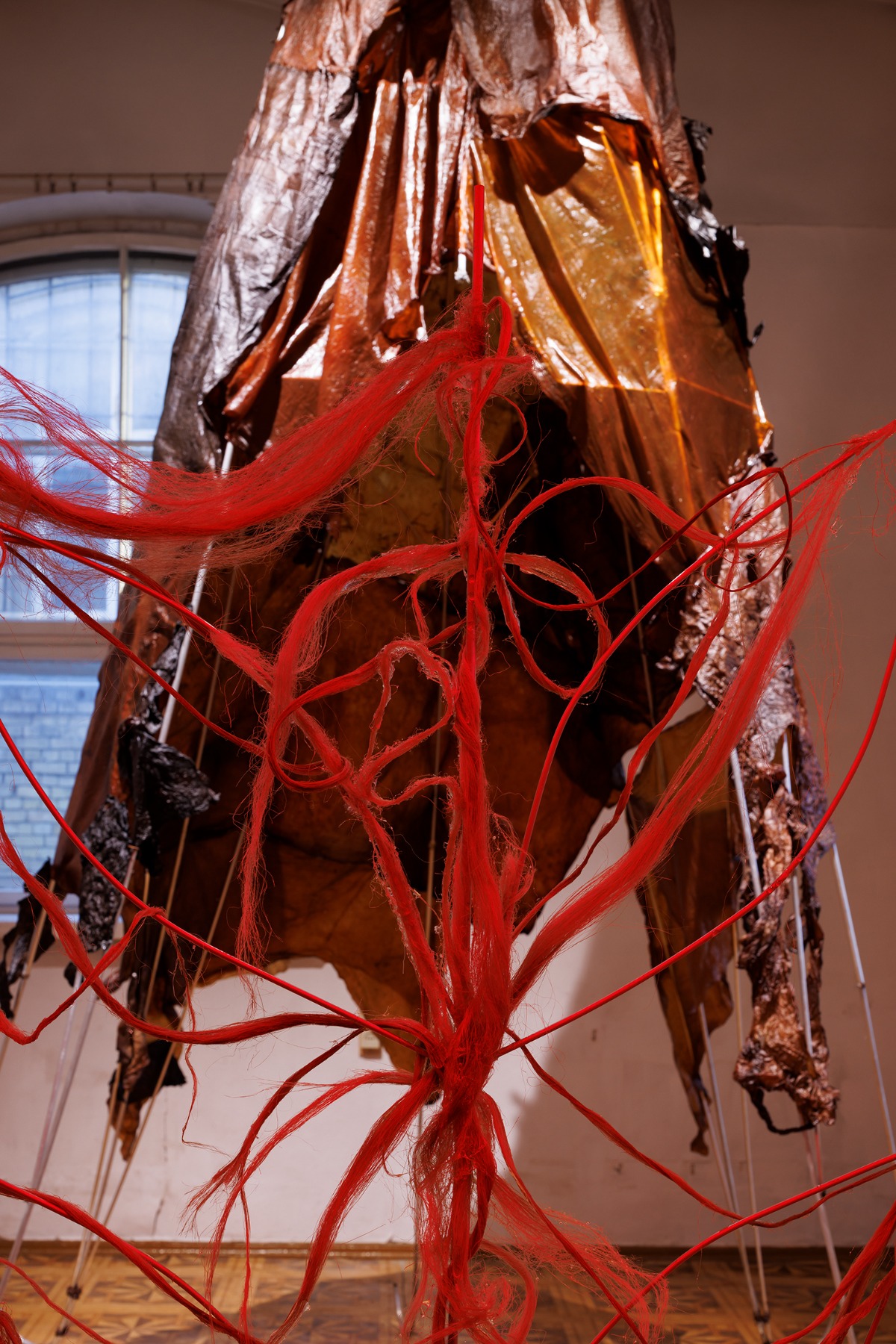
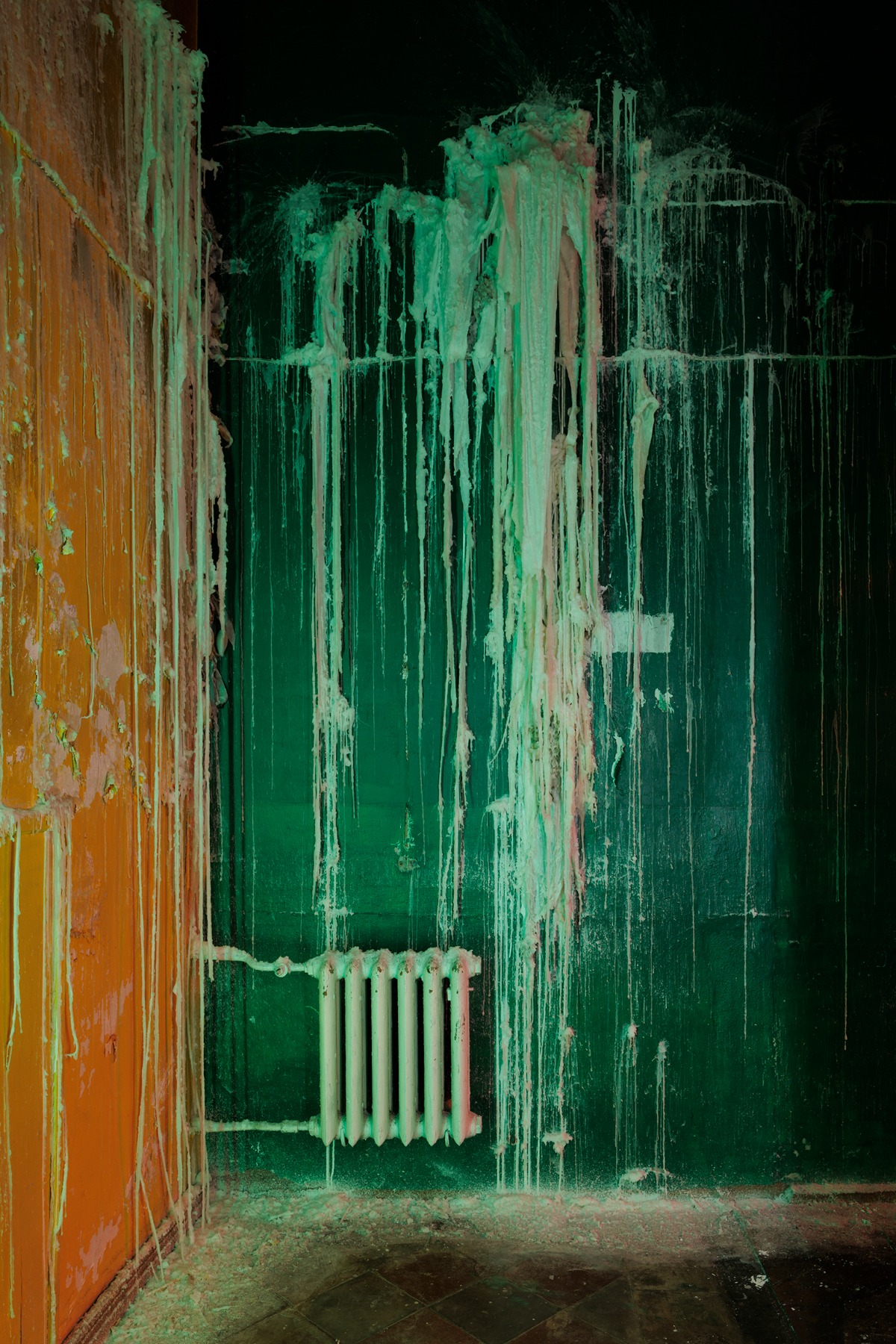
Vernere imagines emancipation through exile. Paula Zvane and Elza Sīle turn to what comes after. Zvane gives eroticism architectural form: a slowly weeping kombucha shelter, curtains of wet hair, and permeable thresholds dissolve the distinction between protection and exposure. Sīle’s duo installation with Aly Milk treats sexual energy as a generative force rather than an erotic image. Her gestural floor and wall paintings resemble the residue of an erotic encounter, neither confessional nor commodified. By the time you reach Sīle, desire is no longer something to witness – it has already happened. And it has stained the walls.
***
[1] Zane Onckule, Wet Work Over Lap (exhibition catalogue, Kim? Contemporary Art Centre, Riga, 2026)
[2] Mindy Seu, interview by Brittany Luse, The Price Women Pay for Being Online, It's Been A Minute, NPR, May 9, 2026, YouTube video, https://www.youtube.com/watch?v=-9HkJmJss7w
[3] Toms Treibergs, interview with Camissa Buerhaus, "American Artist Camissa Buerhaus: 'I Scream from the Depths of My Lungs,'" Sejas (TVNET), https://sejas.tvnet.lv/8481765/intervija-amerikanu-maksliniece-kamisa-bjurhausa-es-kliedzu-no-savu-plausu-dzilumiem
