


Beyond prevailing paradigms
An interview with Katerina Gregos, Artistic and General Director of the National Museum of Contemporary Art, Athens (EMΣT)
Katerina Gregos is a curator of international renown with extensive experience. Many in the Baltics remember her as the curator of the first Riga Biennale (RIBOCA). Before that, she led Argos – Centre for Art and Media in Brussels, worked for four years as Artistic Director of Art Brussels, curated the pavilions of different countries at the Venice Biennale (Denmark, Croatia and Belgium), and organised a number of internationally significant exhibitions. One of her hallmark projects was the 2005 Leaps of Faith exhibition in Nicosia, Cyprus, the last divided capital in the world, in an island country split into Greek and Turkish areas. The project was the first art event to take place on both sides of the divided city, as well as in the UN-controlled, ghostly buffer zone, now deserted by its former residents.
Panos Kokkinias, Arcadia, 2011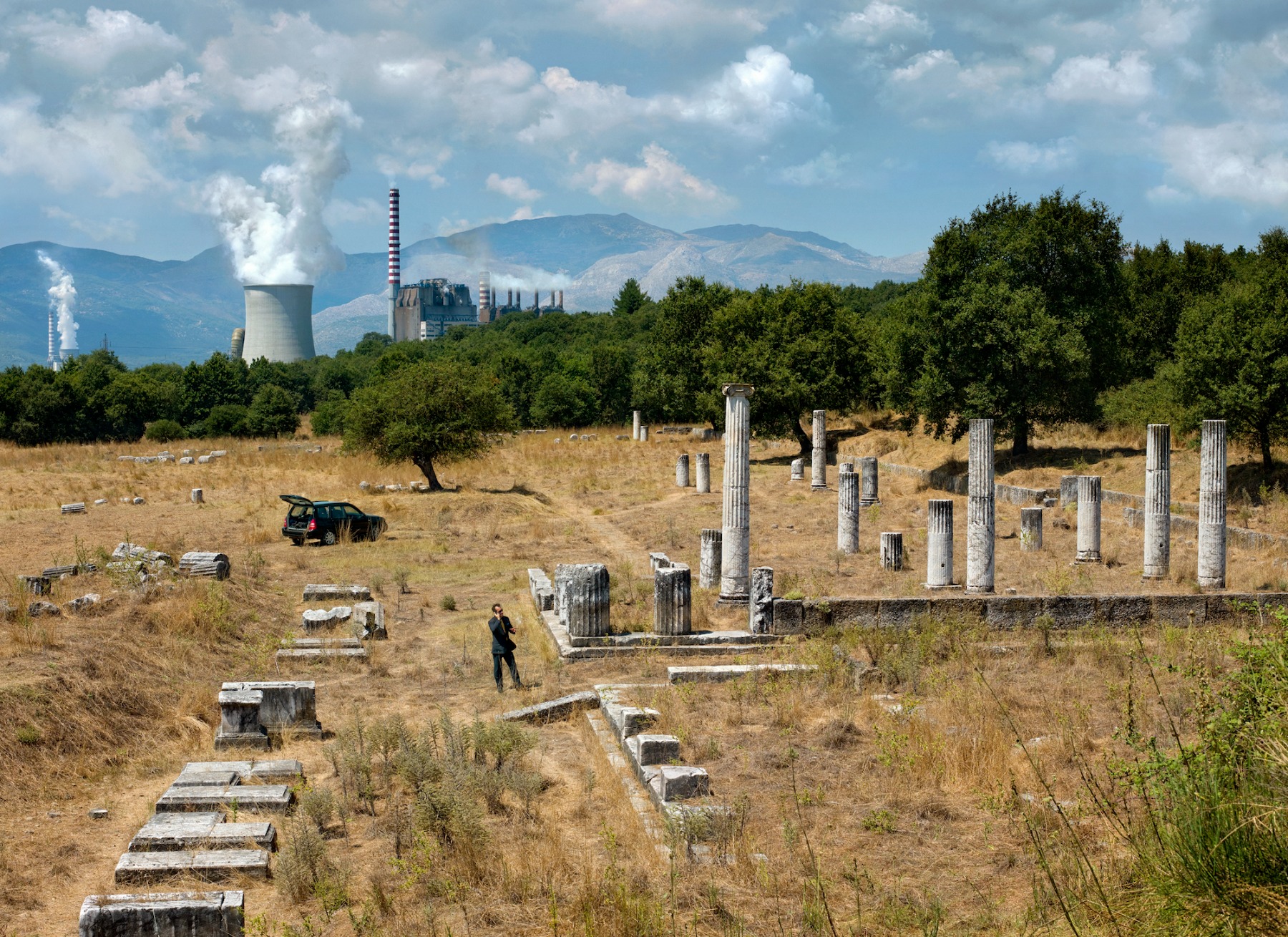
In May 2021, it was announced that she had accepted the offer to head the National Museum of Contemporary Art, Athens (EMΣT). Gregos fundamentally rethought the museum's mission. “Part of our core mission will be to look at the culture and histories of the Mediterranean, the Balkans, the Middle East, and North Africa,” she said at the time. But the first two major projects gradually introduced this concept, broadening and making more inclusive the understanding of contemporary art and its thematic scope as a whole. From December 2023 to November 2024, EMΣT presented a cycle of exhibitions, in four parts, exclusively dedicated to the work of women artists or artists who identify as female, under the broader umbrella title WHAT IF WOMEN RULED THE WORLD? In May 2025, another major project followed – the exhibition WHY LOOK AT ANIMALS? A Case for the Rights of Non-Human Lives, which spanned all seven floors of the museum for almost a year and brought together the work of nearly 60 artists.
This year, another ambitious project followed – one that conceptually and artistically rethinks the role of Greece and contemporary Greek art. Opened on 11 June, the exhibition SOUTH BY SOUTHEAST. Re-Orienting the Collection “looks beyond inherited Western canons and repositions Greece within a wider Mediterranean and south-eastern European cultural geography – one that extends through the Balkans, Turkey, the Middle East, and North Africa. In doing so, it reframes Greece not as the periphery of Western Europe, but as a central node in South East Europe and the Middle or ‘Near’ East, a historically entangled region shaped by mobility, exchange, conflict, multilingualism, and layered identities.” The exhibition includes 50 artists from more than 20 countries. We spoke to Katerina Gregos to find out more about the project and to ask about her vision of contemporary Greek art, ahead of a major exhibition of Greek artists opening in Riga this autumn.
South by Southeast. Installation view (from left to right): Works by Bia Davou, Thedoros and Leda Papakonstantinou, Apostolos Georgiou and Malvina Panagiotidi, ΕΜΣΤ Collection. Photo: Paris Tavitian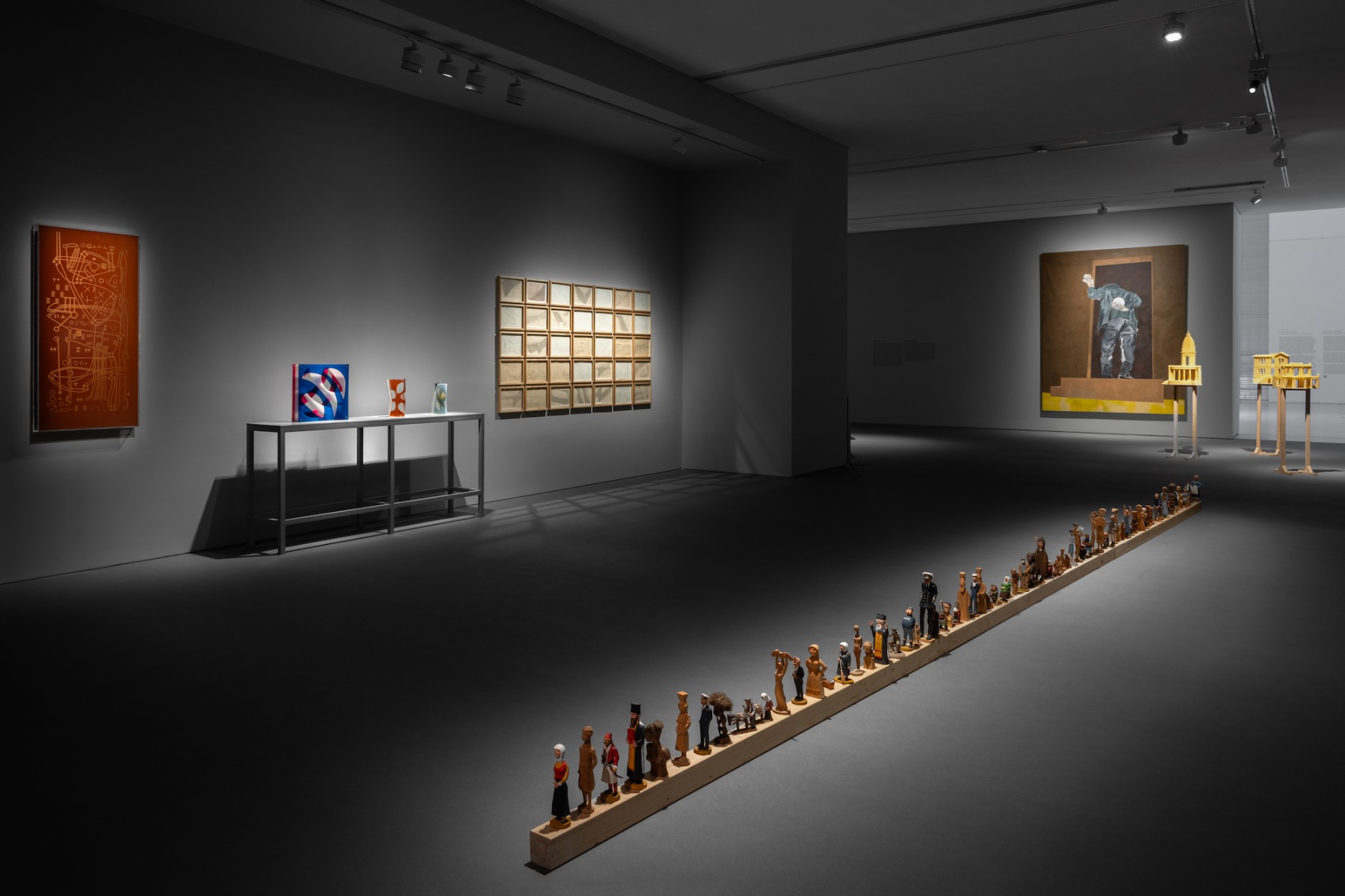
In South by Southeast, you propose reorienting the way Greece is situated culturally and geographically – away from the idea of being a peripheral part of Western Europe and towards the Mediterranean, the Balkans, and the Near East. How does this reorientation change the way we should understand modern and contemporary Greek art presented in the exhibition?
With this exhibition, I wanted to propose a different perspective on how the history of modern Greece can be told, inviting people to look beyond inherited Western canons and to reconsider Greek history and art within a wider Mediterranean and south-eastern European cultural geography. This is not to say that I am proposing to reorient Greece away from Western history. The country is undeniably aligned with Europe and the West, in terms of its foundational economic, legal and security architectures. Rather, I am arguing that we must also acknowledge that Greece’s cultural heritage and historical ties to the East are equally profound, positioning the country as a pivotal intersection between South-Eastern Europe and the Near East – a space of deep historical entanglements shaped by perpetual circulation, trade, cultural reciprocity, friction, linguistic diversity and multifaceted, diasporic identities.
South by Southeast is therefore an invitation to recover a more complex understanding of Greek history, one that extends through the Balkans, Turkey, the Middle East and North Africa. In doing so, it reframes Greece not as a periphery of Western Europe, but as a central node within South-Eastern Europe and the Middle, or “Near”, East. Bringing together 50 artists from more than 20 countries, the exhibition is the result of a renewed collection policy that we began in 2021, and which seeks to reflect Greece’s unique position at the crossroads of these regions – a position shaped by historical entanglements, cultural affinities, diasporic identities and shared experiences.
Thanks to the work of contemporary political historians, we are increasingly aware that, following the collapse of the Ottoman Empire in the nineteenth century, the political and cultural formation of the new Greek state was strongly influenced by the European powers of the time. They found it convenient, in many respects, to construct the new nation primarily around its classical past, emphasising a Western, Hellenic heritage while largely disavowing or marginalising its Byzantine and Ottoman-influenced histories.
What we are trying to do at EMΣΤ, through the new collection policy and exhibitions such as South by Southeast, is to apply this necessary critical turn to contemporary art history and institutional practice as well. A national museum should not simply preserve and present a predetermined narrative; its role is also to create new and meaningful connections between artworks, histories and geographies, and to tell stories that resonate both within the context in which they are situated and beyond it. For me, this is one of the most important responsibilities of a museum today: to make visible connections that have been overlooked, to complicate established narratives, and to create new frameworks through which we can understand both our past and our present.
Nate Lowman, Steven, Fallon, Alexis, Krystle, 2005. ΕΜΣΤ Collection. Presented as part of the D.Daskalopoulos Collection Gift. Photo: Paris Tavitian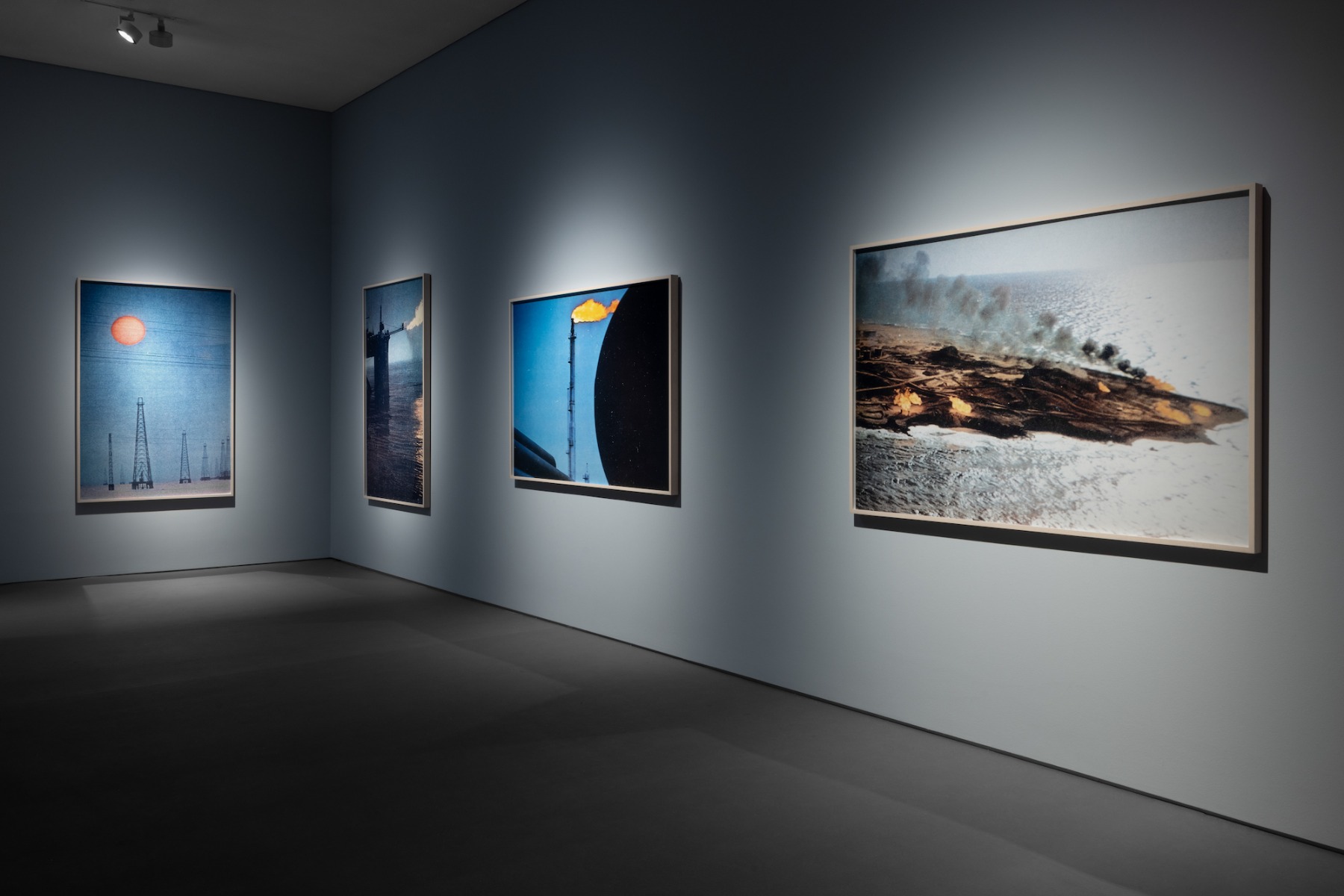
One of the sections of the exhibition is titled Of Oil and Water. As you describe it, the section serves as both a literal and metaphorical lens through which to explore the complexities of the Mediterranean region, bringing together its economic ambitions and environmental fragility. It focuses on water as a vital yet increasingly vulnerable resource – essential to nature, culture, and everyday life – while oil represents global commerce and geopolitical power, shaping trade routes that connect the Mediterranean to the Middle East and beyond. Which artworks were particularly crucial in shaping this section of the exhibition?
Of Oil and Water is one of the four sections of South by Southeast, alongside The Museum of Possibilities, Restless Geographies, On the Fragility of Institutions, and Where Do We Go From Here?. I decided to divide the exhibition into sections to give visitors the opportunity to experience it as a journey through different histories and geographies of the Mediterranean, the Middle East and beyond. I wanted works by artists from different countries, generations and contexts to enter into dialogue with one another, demonstrating that the histories of the Eastern Mediterranean, the Balkans, the Near East and Greece cannot be understood through neat national narratives.
This is why it is difficult to single out particular works as “crucial” while excluding others. The exhibition is really about generating new readings of these histories through the relationships that emerge between the works. The rehang encourages visitors to make connections across different artistic practices and historical experiences, inviting them to discover resonances between the work of a Greek artist and that of artists from Lebanon, Palestine, Turkey, Albania, Bulgaria, Romania, Kosovo, Iraq, Italy and elsewhere. These unexpected dialogues reveal some of the interconnected realities that have shaped the region over time.
Such connections are particularly important in the section you mention, Of Oil and Water, which brings together works that explore the tension between these two elements – rarely capable of complete harmony – whose fragile coexistence has come to define the Mediterranean, and seas more generally, as spaces of both resource and vulnerability.
Having said that, there is one work in this section that particularly crystallises this tension and could be considered, if not “crucial”, then certainly exemplary: Monira Al Qadiri’s SS Murex (TBT, Blue, Blood, Red). The work takes its title from the world’s first modern oil tanker, built by the founder of what is today Shell, whose first commercial enterprise, before entering the oil business, was in fact the buying and selling of seashells. Through archival images of oil tankers from different periods – ironically, many of them named after delicate objects such as seashells – Al Qadiri makes visible the paradox of humanity’s long-standing extractive impulse, and the strange historical continuum between the seemingly innocuous harvesting of marine life and the industrial exploitation of the seabed.
Yet again, the concept of the exhibition does not reside in the display of this particular work alone, but in the possible readings that emerge when it is encountered alongside the other works. Visitors might, for instance, come to Al Qadiri’s work after encountering Water Thief by Diana Al-Hadid, a monumental sculpture that resembles a beautiful, almost antiquated object such as a water clock, while simultaneously functioning as a dystopian reminder of impending ecological collapse and the nightmarish possibility of water scarcity.
Mona Hatoum’s Fossil Folly offers another particularly characteristic example. Made from bent and used steel oil barrels pierced with silhouettes of desert plants, the work explores industrial decay and environmental fragility, while evoking the ghostly traces of nature within landscapes transformed by extraction. Seen together, these works allow oil and water to become more than literal materials or subjects: they become ways of thinking about the Mediterranean as a space where resources, histories, economies and vulnerabilities intersect. This is ultimately what I hope the exhibition does – encourage visitors to move between works and histories, and to discover these connections.
Nate Lowman, Steven, 2005. Digital c-print, 180 × 130 cm. ΕΜΣΤ Collection. Presented as part of the D.Daskalopoulos Collection Gift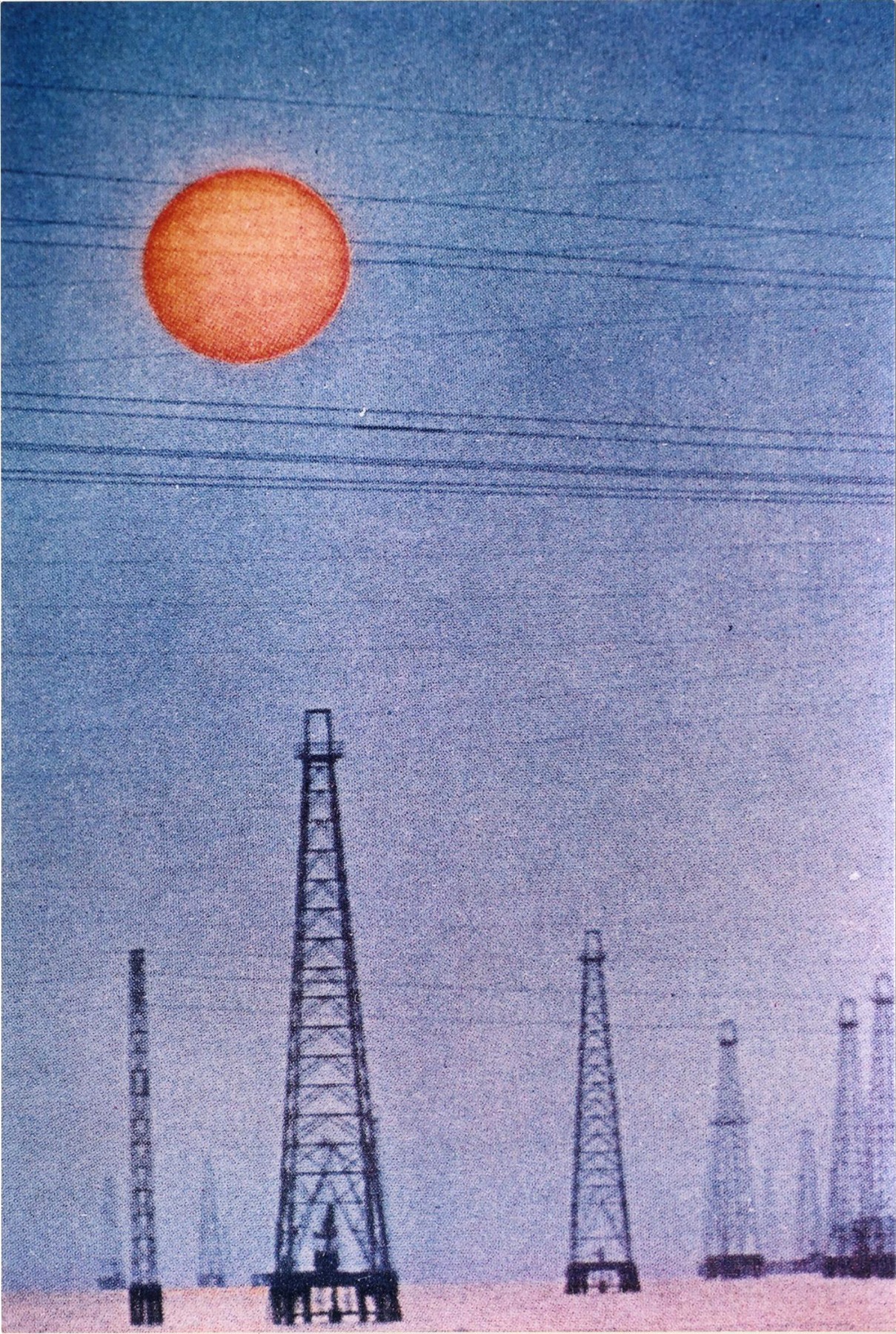
Which artists from what is commonly referred to as Eastern Europe did you choose to include in the exhibition, and what particular connections, affinities, or tensions did you see between their practices and the broader curatorial framework of South by Southeast?
There are many artists from the Balkans and Eastern Europe but also from the Middle East. But for me, where an artist comes from is less important than what they have to say, what perspective they bring to the region, and how relevant that perspective is both to visitors and to the curatorial question at the heart of the exhibition.
This is particularly important for South by Southeast, which starts from the premise that Greece’s deep historical ties to the Eastern Mediterranean – somewhat suppressed during its Western integration – need to be reclaimed and further investigated in the arts. These connections are already reasserting themselves in other spheres, through economic flows, regional diplomacy, cultural continuities, geopolitical developments and, tragically, the conflicts currently unfolding in the Middle East.
In order to offer a deeper historical and cultural framework through which some of these realities can be better understood, the exhibition brings together works that speak to the complex and interconnected histories of the region. The work of Romanian painter Șerban Savu, for example, reflects on his country’s transformation from a Soviet state into a Western-style liberal democracy, while also examining how official history is constructed and continually reinvented. The Wanderers by Albanian artist Adrian Paci, is a video installation that reflects on movement, uncertainty and the search for belonging – issues that resonate particularly strongly today in a Mediterranean marked by conflict, displacement and migration.
The exhibition also features an installation by Bulgarian artist Nedko Solakov which, functioning simultaneously as a map and a narrative, weaves together personal memory and the recent collective history of Eastern Europe. It invites us to reflect on the region’s interconnected landscapes and layered histories. A different, but not entirely different, story is told by Artan Hajrullahu, whose small-scale drawings depict scenes of everyday life in Kosovo, bringing questions of historical memory and cultural cross-fertilisation into focus through subtle allusions embedded in domestic spaces and familiar, intimate objects.
I could continue citing examples, but for me what matters most is to explain the principle behind these choices. These works have not been selected simply because the artists come from a particular geographical area. They have been selected because, through their work and research, they shed new light on the contemporary histories of their countries and of the wider region. In doing so, they contribute to a more complex understanding of a shared cultural geography and offer perspectives that can challenge or expand a predominantly Western-centred narrative.
Adrian Paci, The Wanderers, 2021. Two-channel video installation, ΕΜΣΤ Collection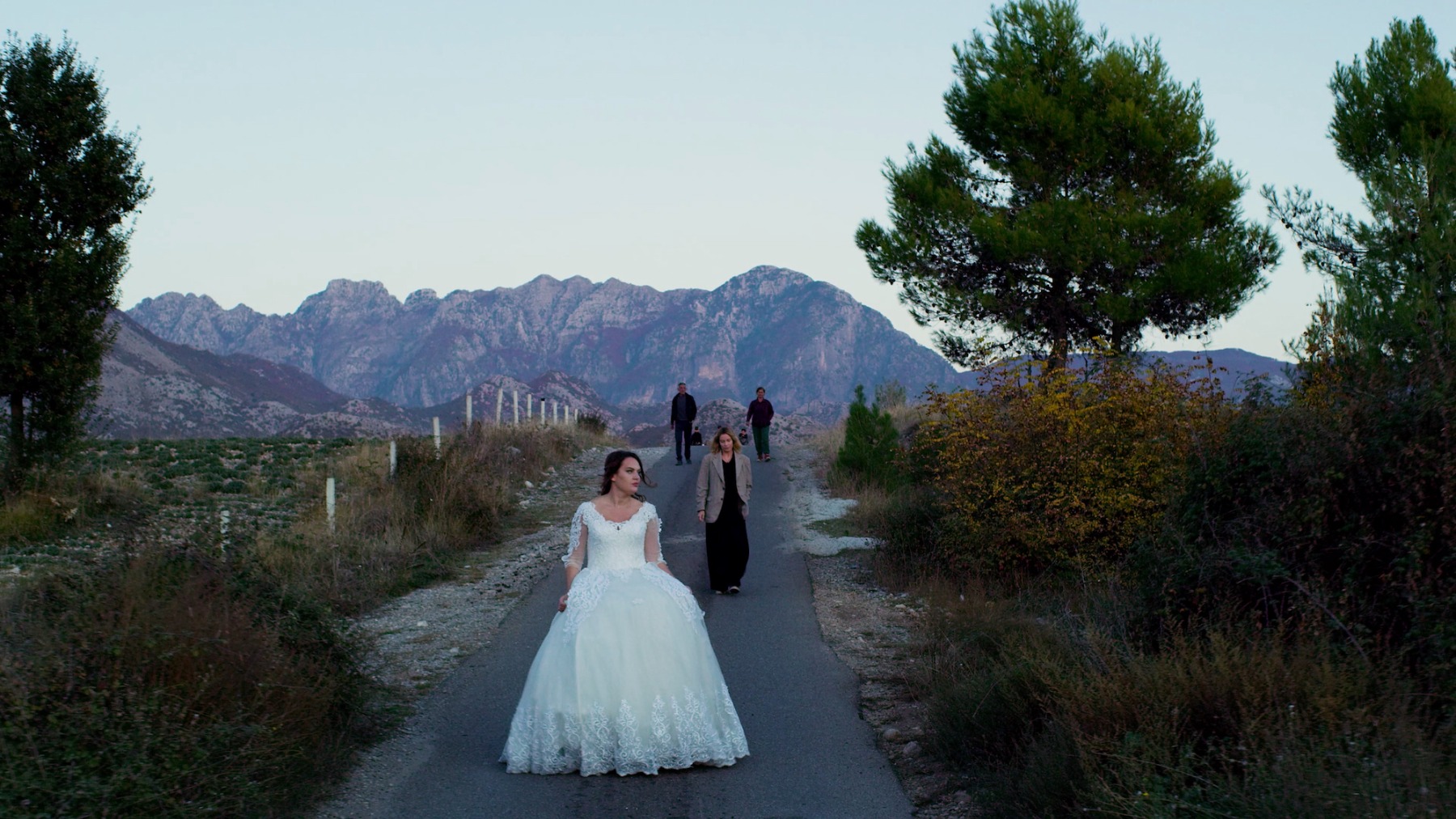
One of the meaningful Greek artists represented in South by Southeast is Stelios Faitakis, who sadly passed away recently. I am a great admirer of his work, and he is also one of the very few contemporary Greek artists whose work has been exhibited in Latvia, at the 1st Riga Biennial you curated. His distinctive visual language brings together elements of Byzantine iconography, monumental painting, and urban culture. In a sense, his work combines a rich cultural past with the urgent issues of the present. Could we see Faitakis as a particularly characteristic figure within the context of contemporary Greek art?
For sure, he is one of the most influential artists of his generation, as his success abroad also demonstrates. But I would describe him as a rather uncharacteristic – indeed, singular – figure, because he dared to combine the revered, even untouchable, traditional iconography of Byzantium with highly critical, often radical, contemporary visual references and futuristic visions.
There are certain subjects that remain particularly sensitive in Greek culture and are often regarded as revered and protected from challenge. Classical archaeology and the religious visual language of Byzantine icons are two such realms. Stelios was the first artist to challenge this deeply ingrained bias in such a profound, iconic, and unequivocal way.
Stelios Faitakis. XTC, 2019.
Mixed media on wood. Courtesy The Dakis Joannou Collection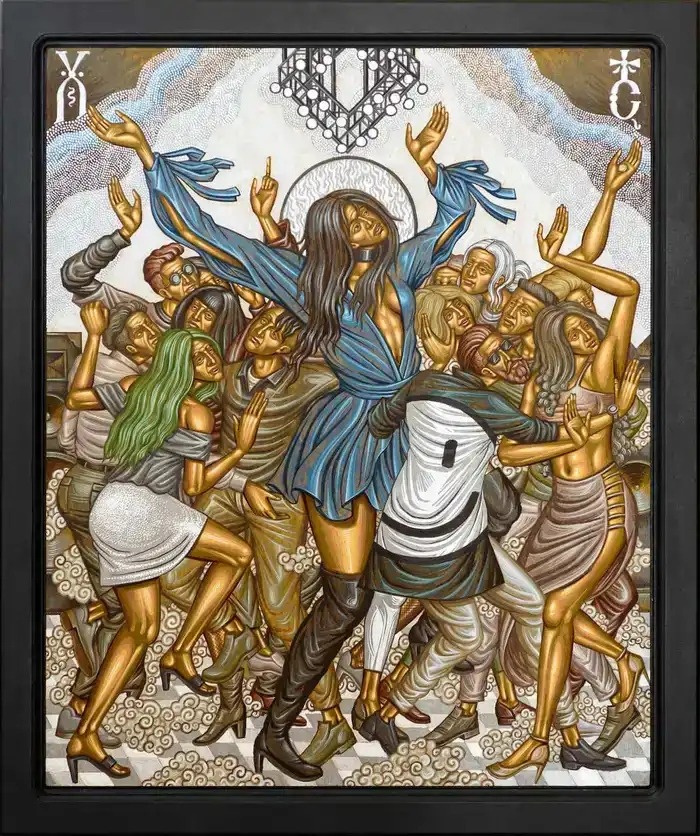
How do you think Greek artists more broadly negotiate the tension between a powerful national cultural heritage – especially the classical past – and the much more complex, hybrid, and entangled realities of contemporary Greece?
One of the great misconceptions of modern Greece is that its story can be told exclusively through its relationship with Western Europe, as the work of some Greek contemporary artists show, particularly of the younger generation. Moving beyond the idea of contemporary Greece being all about ruins, antiquities and tourism, they have something else to say about the country’s present and future, something that takes into account all those personal and collective stories that have been silenced or marginalised in the official national history of the country until now. Panos Kokkinias’s work, for example, explores the relationship between and the tensions between landscape, mythology, progress and contemporary reality, revealing a Greece that is simultaneously shaped by history and rapid transformation. Malvina Panagiotidi looks into the architectural heritage of modern Greece at the height of state-building; Maria Papadimitriou’s practice examines minority groups, marginality, and social exchange, while Antonis Pittas and Kostis Velonis reflect on the ways economic or political histories and political disillusionment versus collective ideals continue to resonate in the present.
It is not only through the Greek artists included in the new collection display that we try to offer an alternative to a Western-centred narrative around Greece and its history. As you know, South by Southeast forms part of a wider constellation of exhibitions currently on view in the museum dedicated to incredibly influential Greek artists who definitely deserve more attention internationally for the impact their work had. I am talking about the solo exhibitions of the work by the deceased visual artists George Lappas, Stathis Logothetis, Niki Kanagini and composer Jani Christou: all these exhibition, along with the rehang of the collection – part of a larger effort to build a permanent display and a temporary programme of exhibitions with a distinctive identity, one that reflects Greece’s historical position as a crossroads of cultures and gives greater visibility to narratives and artistic voices that have often remained marginal to dominant art-historical accounts - always in dialogue with artists from further afield. These artists share a cosmopolitan identity as they shared origins from and were active from outside Greece, a red thread that connects the rehang, South by Southeast with The Cosmopolitans, an ambitious exhibition project that will take place in 2027 and that aims to explore the cosmopolitan, diasporic multi-ethnic identities of the Levant in the 19th and 20th centuries, and particularly their legacy today. What lessons can be learnt from this unique episode in history today, especially in light of globalisation and rising nationalism?
Akram Zaatari, Archeology, 2017. ΕΜΣΤ Collection. Donated by the artist and Thomas Dane Gallery, London, 2025. Photo: Paris Tavitian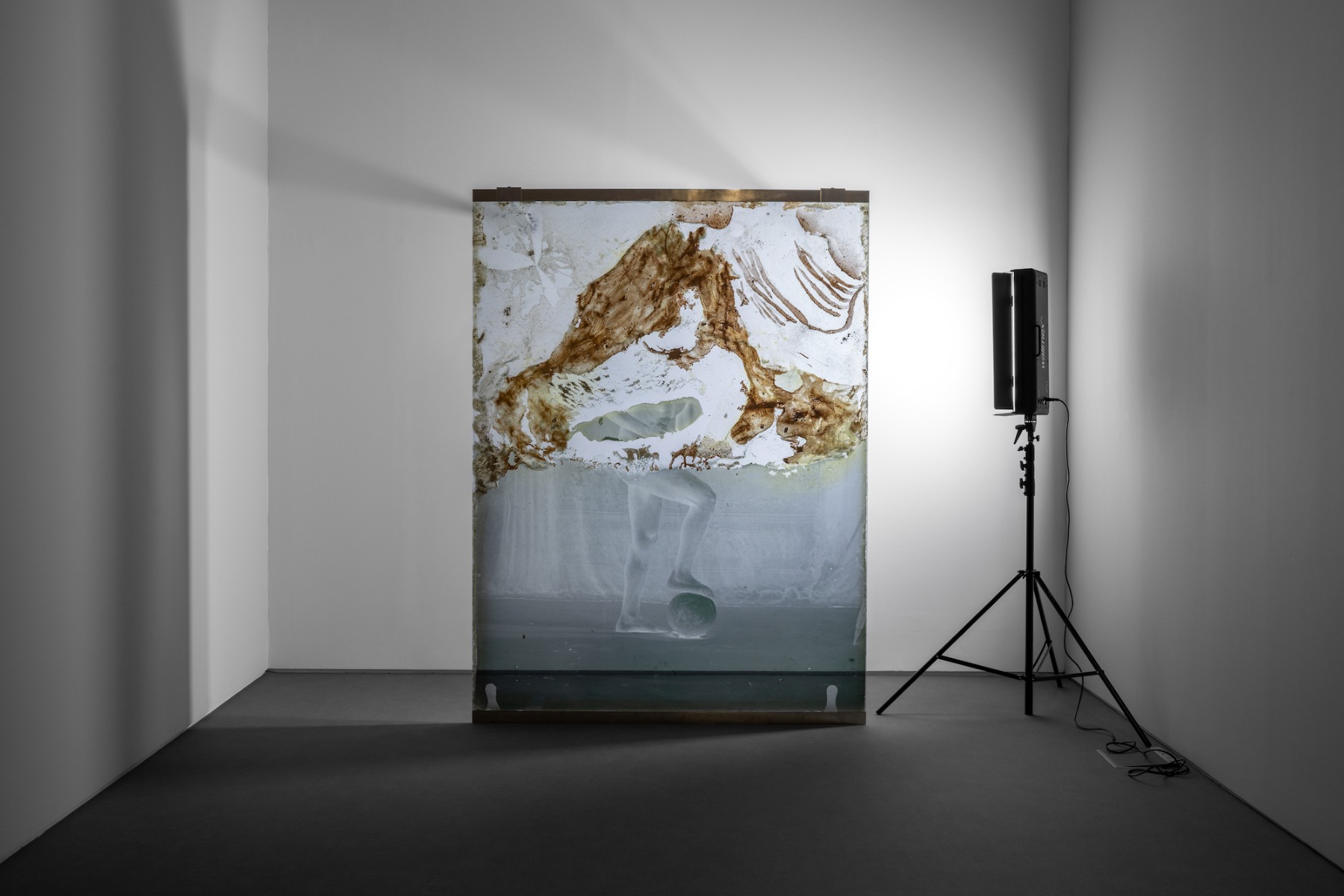
You describe Greece as a “central node” rather than a periphery. Is this primarily a geographical argument, a cultural argument, or also a political intervention into the way Europe itself is imagined?
I would say it is all of the above, although each dimension requires a somewhat different approach. Geography, after all, is contingent on the perspective from which we look at it; it is therefore always, to some extent, relative. What appears peripheral from one vantage point can be central from another.
My intention with South by Southeast, and more broadly with The Cosmopolitan programme, was to propose precisely this kind of reorientation – hence the subtitle of the exhibition – away from the predominantly Western-centric narrative that has come to define modern Greek identity and towards the country’s historically complex relationships with the East. This is not accidental. The almost five centuries of Ottoman rule across the wider region were followed by a process of Westernisation in which anything perceived as Anatolian, and especially anything associated with Turkey, was often negated, demonised or marginalised as part of the effort to establish independence and position Greece firmly within a European framework.
The point of the exhibition was not to deny Greece’s profound and undeniable role in the formation of Western civilisation, nor its European position, but to suggest that Greek history cannot be adequately understood solely through its relationship with Europe and the West. Looking towards the East can reveal a whole series of overlooked entanglements, affinities and shared histories with neighbours to the north, south and east. These connections are not simply historical curiosities; they can be extremely useful in understanding the complexities of the present.
There is therefore a need to rethink Greek culture beyond the familiar narrative of its foundational role in the West, and to uncover some of its less visible connections with the Levant and the wider Eastern Mediterranean in more recent times. I wanted to redirect our gaze when considering Greek and Eastern Mediterranean history, and in doing so open up the possibility of counter-narratives to those established through predominantly Western perspectives. Greece can be understood not simply as the edge of Europe, but as a crossroads of continents, empires, religions and belief systems, with a history shaped as much by circulation and exchange as by separation.
This critical reorientation is inevitably also political, because the way we locate Greece geographically and culturally is inseparable from the way we understand its place within Europe. Greece as essentially a Western construct is largely a nineteenth- and twentieth-century phenomenon, shaped in important ways by the great European powers and by dominant political actors within the country who contributed to the formation and consolidation of the modern Greek state. In his book The New Byzantines, which reinforced my argument, Sean Matthews points to the persistence – and contemporary re-emergence – of Greece’s deep historical ties to the Eastern Mediterranean, visible today in economic flows, regional diplomacy, geopolitical developments and military conflicts.
The exhibition was not based on Matthews’s book, but I found it particularly useful as a conceptual framework for thinking through the questions at the core of this year’s collection rehang, as well as the issues that have informed our renewed collection policy since 2021. In that sense, I see the idea of Greece as a “central node” not as an attempt to replace one fixed geographical identity with another, but as an invitation to complicate the map itself – to understand Greece through the multiple directions in which its history has always extended.
Eleni Mylonas, Box Man, 2011
Oil on canvas, 76.3 x 107.8 cm
ΕΜΣΤ Collection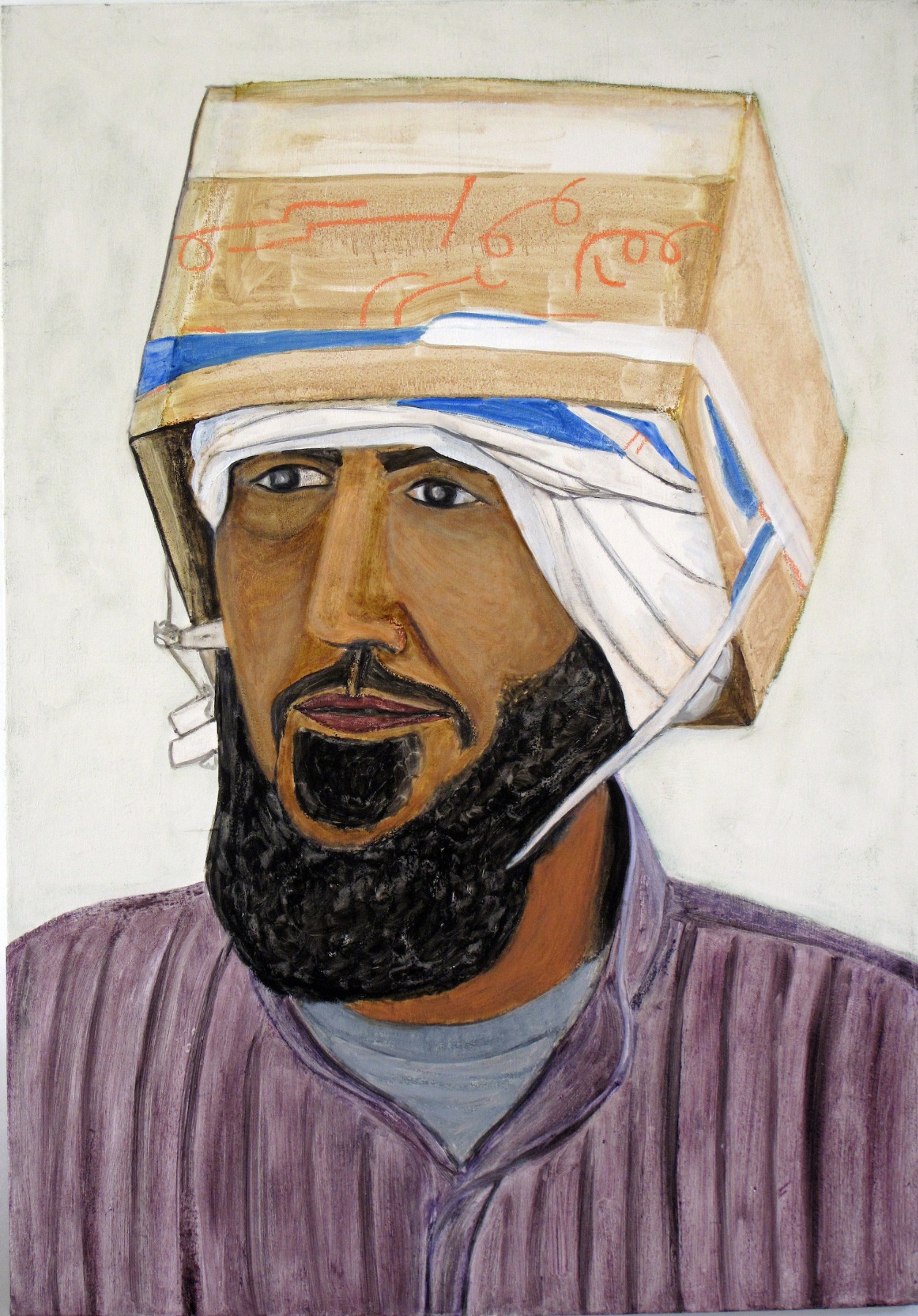
How has the experience of the financial crisis, migration, and Greece’s position between Europe and the Middle East affected the themes and forms of contemporary Greek artistic production?
It is really difficult for me to speak for an entire community, but the answer is both yes and no, depending on the artist’s broader interests. I can certainly offer my own experience as Director of one the country’s premier national museums. The financial crisis certainly had a very big impact on our own production schedule, delaying the development of the museum in very practical ways, such as staffing and programme budget - and this happened in the entire culture field as budgets were radically cut. On the other hand, it also provided a new context in which the museum needed to operate, as questions of economic inequality, social justice, political accountability, and collective responsibility became impossible to ignore. Rather than being abstract concerns, it became finally clear that they are part of the reality in which both artists and audiences live. But yes there are some artists whose work has been shaped by the conditions of the financial crisis. In South by Southeast there is, for example, a photographic sculpture by Antonis Pittas, titled Baa3 Country Ceiling from 2014. The work focuses on the history and aesthetics of parliamentary architecture and explores the relationship between economics and politics. When the work was first created in 2014, its title was Caa3, referring to the sovereign credit rating assigned to Greece by the credit rating agency Moody’s in late 2013. Each time the rating changes, the work is renamed accordingly, this way connecting an economic term indicating the threshold of dangerous public debt with the ceilings of European Parliament buildings. I found this work particularly significant in the context of this exhibition and curatorial concept, as it creates a powerful, visual metaphor for both the European and the Greek crises at once. Likewise are a series of photographs by Eirini Vourloumis and Panos Kokkinias exploring themes of collapse, the former in terms of state bureaucracy, the latter in terms of tourism. As per migration, this is a theme running through the exhibition, but it is approached from a broader historical perspective than contemporary news coverage typically allows, highlighting Greece’s position at this crossroads. Migration is not approached as a ‘temporary crisis’, as an exception in the history of this region, but as one of its defining conditions. Greece has long been shaped by movements of people - whether through trade, exile, forced displacement, population exchanges, labour migration, or refugee flows and so of course this is a theme approached by a number of artists. Eirini Vourloumi, for example, which I mentioned above has made a number of series on the subject and there are others too.
South by Southeast. Installation view (from left to right): Works by Jannis Kounellis and Costas Tsoclis, ΕΜΣΤ Collection. Photo: Paris Tavitian
If you were asked to define the most important shift taking place in contemporary Greek art today, what would it be – and what do you think international audiences still fundamentally misunderstand about Greek art?
I am glad to see a renewed interest among a small group of younger generations of Greek artists in research-based practices and in the excavation of suppressed, overlooked, or marginalised social and cultural histories. What is particularly significant is their willingness to question established accounts of Greek identity and to dismantle the master narratives and national stereotypes that have long shaped how Greece is represented, both from within and from abroad. Through archival research, oral histories, personal testimonies, and engagement with forgotten or contested histories, these artists are creating more complex and nuanced understandings of the social and cultural realities of Greece. Their work challenges the idea of a singular, coherent national identity and instead foregrounds contradictions, silences, exclusions, and experiences that have traditionally remained outside the dominant historical narrative. In doing so, they are not simply revisiting the past, but actively reconsidering how history, memory, and identity are constructed in the present.
Diana Al-Hadid, Water Thief, 2010. ΕΜΣΤ Collection. Presented as part of the D.Daskalopoulos Collection Gift. Photo: Paris Tavitian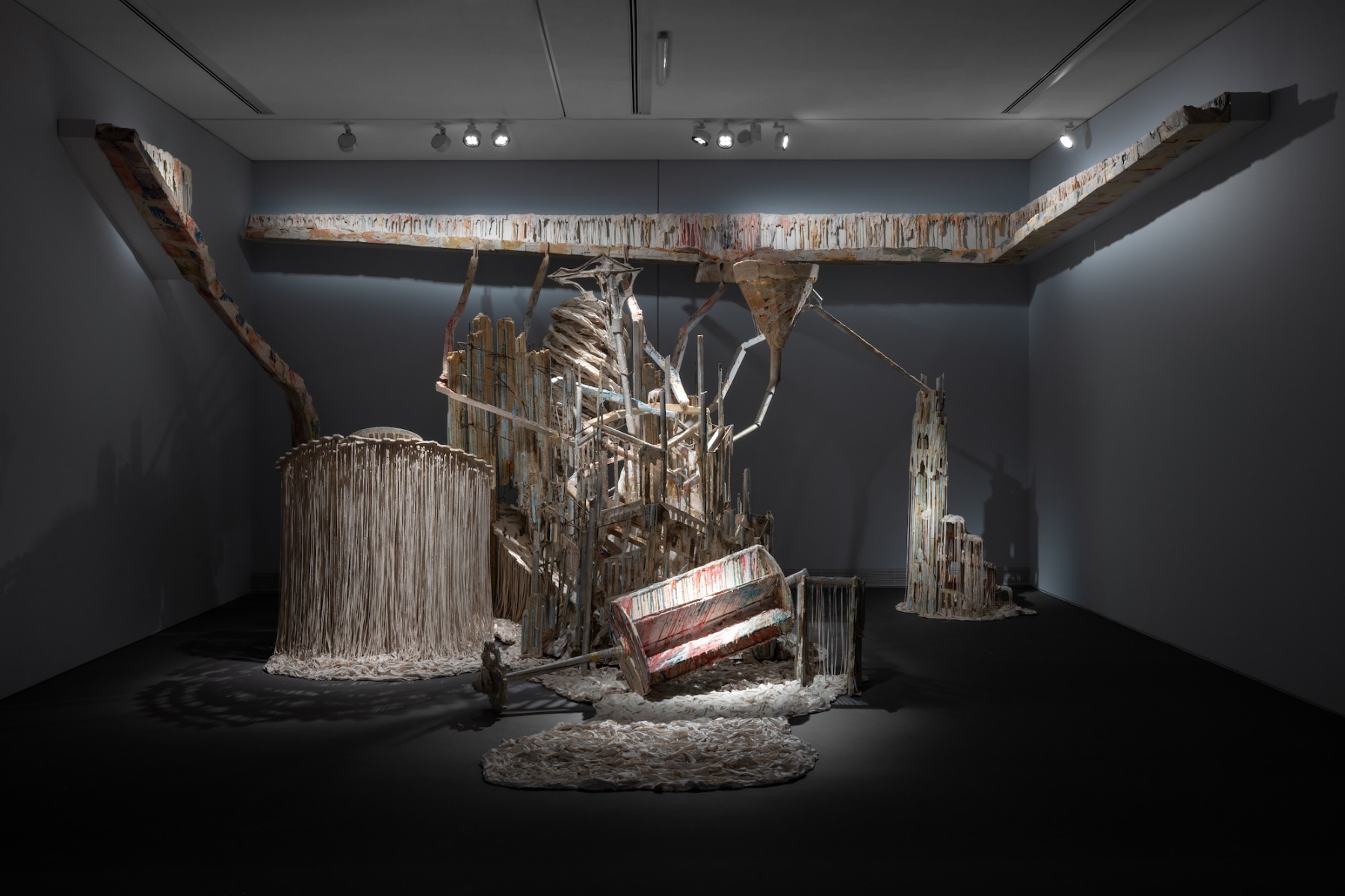
Private collectors and foundations have played a major role in shaping the contemporary Greek art scene over the last decade. How do you see the relationship between private initiative and public cultural infrastructure in Greece today?
Yes, private collectors and foundations have been particularly important in shaping the Greek contemporary art scene over the last 25 years or so, especially because Greece did not have a contemporary art museum until the 2000s. In that context, private initiative often stepped in where public infrastructure was still developing.
NEON and DESTE are two particularly important examples, although they are very different beasts. NEON has been more socially conscious and oriented towards broadening access to contemporary art and engaging with public space and society, while DESTE has been more closely connected to the market and to the international art world. Both, in their different ways, have played an important role in building the contemporary art ecosystem in Greece.
Today, however, that ecosystem has changed considerably and has become much more diversified. The foundations remain active and important players, but they now operate within a much more polyvalent landscape, enriched by the emergence of numerous non-profits and artist-run spaces, many of which were, directly or indirectly, a by-product of the economic crisis. This has created a more distributed and dynamic ecology, in which no single type of institution has a monopoly on shaping the discourse.
The fact that EMΣΤ has become the premier national contemporary art institution, a genuinely global player and an important international point of reference has also changed the landscape. A strong public contemporary art institution gives the ecosystem a different centre of gravity and makes the relationship between public and private initiative more balanced.
I am a big believer in public institutions because they are ultimately more attuned to the commons: to questions of public access, education, collective memory, correctional historiography, cultural rights, and the responsibility to represent a society in all its complexity. Private institutions have an important role to play, but I see that role as complementary rather than substitutive. The only problem is that private institutions and initiatives, at least in Greece but also beyond, tend to be person-centric, which can make them vulnerable to changes in individual interests, fortunes or priorities, and can sometimes make institutional continuity dependent on the vision of a single individual.
Public-private partnerships can therefore be extremely beneficial, as long as each party respects the mission and autonomy of the other. It needs to be a genuine mutual sympraxis – a collaboration rather than an attempt by one side to instrumentalise the other. Public institutions should ultimately have the final word, because they are accountable to the public and, importantly, to the taxpayers whose money sustains them.
At the same time, it is puzzling to see Greek collectors and philanthropists supporting museums abroad while not investing sufficiently in the institutions of their own country. This is something the public sector needs to work on more actively: creating the conditions and incentives for private support to contribute to the Greek cultural ecosystem, without diluting the mission or purpose of public institutions in order to accommodate private interests. The goal should not be to choose between public and private initiative, but to build a mature ecosystem in which both can contribute according to their respective responsibilities and strengths.
South by Southeast. Installation view (from left to right): Nate Lowman, Krystle, 2005. ΕΜΣΤ Collection, Presented as part of the D.Daskalopoulos Collection Gift, Mona Hatoum, Fossil Folly IV, 2023, Commissioned by the Sharjah Art Foundation for Sharjah Biennial 2023, Long-term loan from a private collection. Photo: Paris Tavitian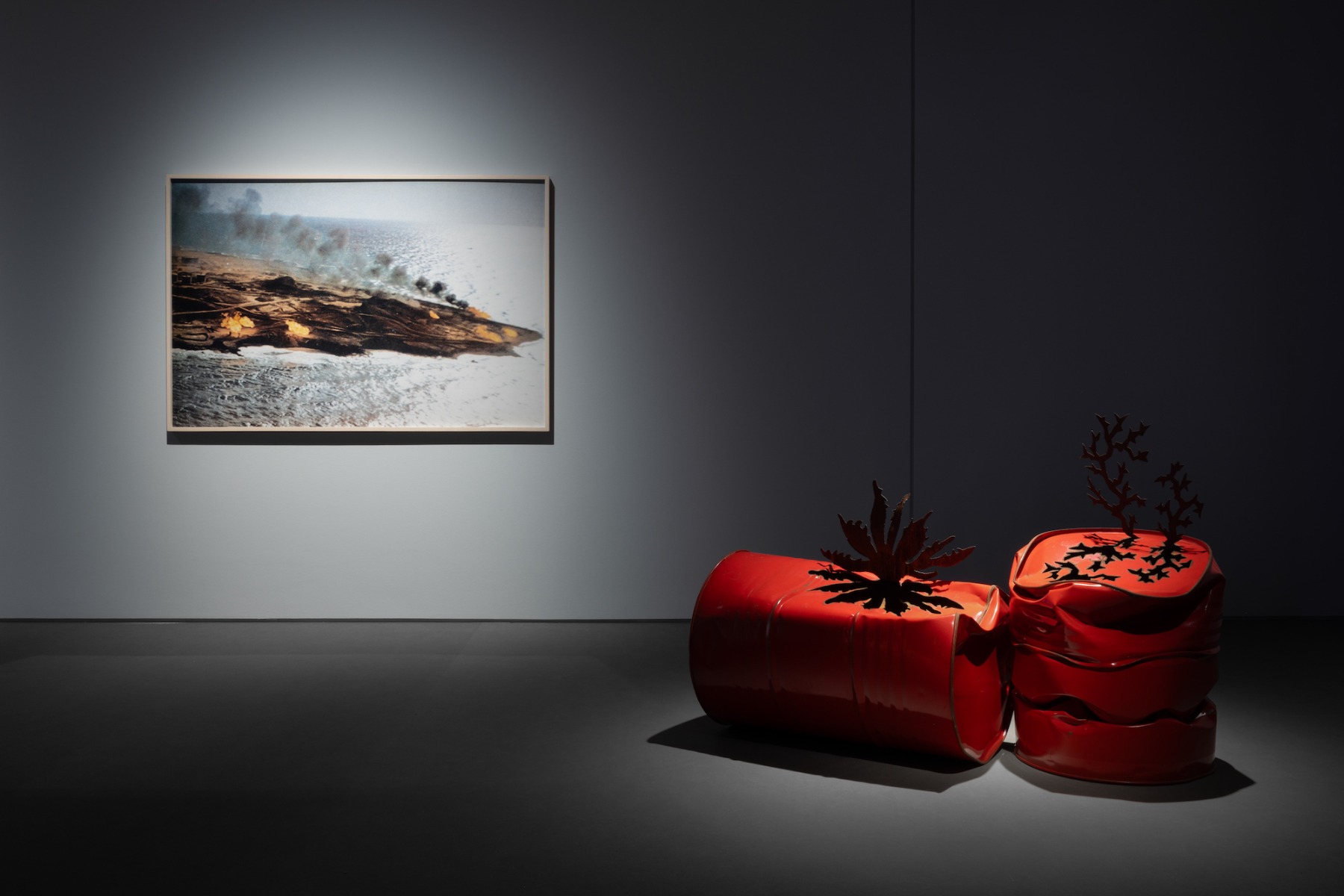
You returned to Greece after living and working abroad. What did you immediately notice about the Greek art scene that insiders perhaps no longer saw? What do you think contemporary Greek art can communicate particularly powerfully to Europe today?
Returning to Greece after living and working abroad, one of the things that struck me most was how strongly the Greek art scene still insists on Western and Euro-centric paradigms. This is partly the result of narratives which have tended to reinforce a particular idea of where Greece belongs culturally. From the outside, you become perhaps more aware of how limiting this can be, because it obscures other histories and geographies that are equally important to understanding contemporary Greece.
There is also a certain reluctance, or perhaps disinterest, in engaging with the rich histories of Greece’s entanglements with the broader region, as well as with its own historical blind spots. There are so many interesting stories to be told about Greece’s de facto diasporic condition, and about its frictions and exchanges with its neighbours in the Balkans and further east. These histories of mobility, migration, coexistence, conflict and exchange are not peripheral to the Greek experience; they are fundamental to it.
I think we need to look beyond inherited Western canons and reposition Greece within a wider Mediterranean and south-eastern European cultural geography – one that extends through the Balkans, Turkey, the Middle East and North Africa. This would allow us to understand Greece as a historically entangled region, rather than a one-dimensional understanding of national and consciousness and cultural exceptionalism.
This is precisely where contemporary Greek art can add something particularly meaningful to the European conversation. Greeks are a facto diasporic peoples with a long history of circulation, migration and exchange, yet these aspects have often been overshadowed by a more self-contained national narratives and the European or American aspiration. There are compelling stories to be told about Greece’s frictions and encounters with its neighbours, and about the ways these relationships have shaped its cultural imagination. Bringing these histories to the fore could locate it within a much more interconnected regional history, which is largely unknown to the outside world. Greece belongs to Europe, certainly, but it has also always been in dialogue – and sometimes in tension – with places and histories that European narratives have tended to keep at their margins.
Another thing Greece can bring to the conversation is its experience of crisis and resilience. This is not simply a recent phenomenon associated with the economic crisis of the last decade; it is something much more deeply ingrained in the Greek consciousness, going back to the founding of the modern Greek state. There is a long history of instability, displacement, political rupture, economic hardship and adaptation, but also of extraordinary resilience and reinvention.
In that sense, there is perhaps something slightly paradoxical that Greece can offer Europe: a Global South narrative - loosely speaking - emerging from within the Global North. It is a perspective that can complicate the binaries between centre and periphery, North and South, Europe and its supposed outside. And I think that is ultimately more interesting than trying to demonstrate that Greek art can simply fit more comfortably within established Western frameworks. Its real potential lies in challenging and expanding those frameworks.
South by Southeast. Installation view (from left to right): Works by Jannis Kounellis and Costas Tsoclis, ΕΜΣΤ Collection. Photo: Paris Tavitian
EMΣΤ is based in Athens and is an important part of the city’s cultural ecosystem. Athens is often described internationally through a set of clichés – crisis, ruins, sunlight, and intensity. What, in your view, makes the Athenian art scene distinctive? What are its greatest strengths, and what are its biggest vulnerabilities?
Over the last decade, Athens has undergone a profound transformation, evolving into a site of exchange where various trajectories and cultural offerings converge. At this moment, the city has a particular energy and a level of international receptivity that was previously absent. What is undeniably evident is that the Athenian environment has become significantly more dynamic and porous; this is also partly due to many creative and younger people returning to it after leaving during the decade-long crisis. The vibrant art ecosystem comprised a diverse array of actors – from major public institutions and foundations to commercial galleries, non-profits, and independent, artist-run spaces.
I sense a cultural field in formation here – one that is developing a greater degree of self-awareness and connectivity, and a newfound willingness to open to the outside world and engage with its own inherent complexities. This development is exceptionally encouraging but in order for this energy to last it needs to be nurtured and supported.. Furthermore, Athens has become more cosmopolitan and multicultural than it was in the past, integrating different communities and modes of cultural reciprocity into its urban fabric. Consequently, the local scene is now far too multifaceted to be reduced to the usual clichés you mention.
There are also distinct practical advantages to consider. Historically, Athens has maintained a relative affordability in comparison to global art capitals like London or New York, although this reality is gradually shifting as the post-crisis city attracts heightened international investment. There is also a more informal, laid-back quality to life here, where social interaction often occurs more fluidly than elsewhere. This sociability is vital: professional and personal networks frequently overlap, allowing for encounters that happen quite organically. Athens remains an immensely energetic hub with an impressive spectrum of cultural offerings – spanning not just contemporary art, but also music, theatre, dance, design, and gastronomy.
However, we must remain realistic regarding the structural challenges that persist. Achieving the status of a major art capital will be a long-term process as the underlying infrastructure supporting this surge of activity remains fundamentally fragile, especially in the public sector, but also in the private sector (the recent closure of NEON being one example).
One of the critical missing elements is a more widespread and engaged audience for contemporary art, in part because contemporary practices were not prioritised educationally or institutionally until quite recently. There is also a pressing need for a robust support system for cultural workers, which has yet to fully materialise. Opportunities for professional growth are still restricted, remuneration within the field is low, and there is a conspicuous lack of structural funding or stable mechanisms for artistic production. Far too much still depends on individual initiative, short-term project cycles, and precarious forms of labour. Moreover, the art market is small and constrained, making it difficult for practitioners to sustain themselves through domestic demand alone.
Ultimately, the distinctive essence of Athens resides less in any single attribute than in this palpable sense of an energetic field coming into being. The primary challenge now is to consolidate this newfound energy without sacrificing its characteristic openness and informality, while building the structural conditions necessary for cultural practitioners to sustain viable, long-term careers. Athens has proven itself capable of generating immense cultural activity; the next imperative is to ensure that this activity becomes truly sustainable.
Giorgos Ioannou, Complete identification with, 1973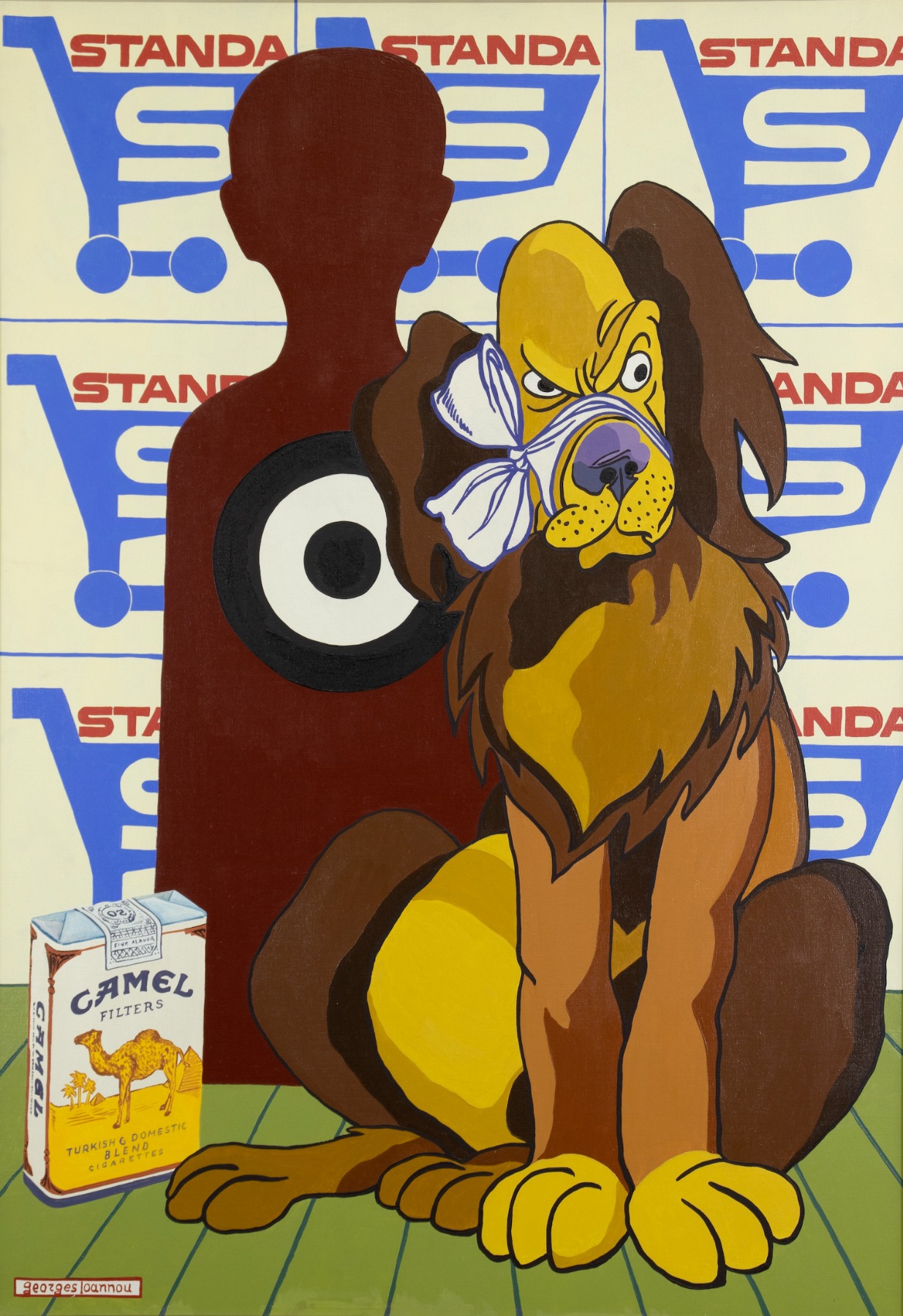
Coming back to South by Southeast, the exhibition “invites viewers to reconsider where Greece stands – historically, geopolitically, and culturally – and to recognise the creative and critical potential of embracing the country’s south-eastern orientation as a source of inspiration and renewed cosmopolitanism.” This latter idea will be explored further in a major group exhibition opening at the museum next spring. Could you tell us a little more about this new chapter – how it will develop the ideas introduced in South by Southeast?
Opening in 2027, the major group exhibition The Cosmopolitans will further investigate the issues presented in this year’s exhibition cycle by the same name, expanding the questions previously presented in the rehang of the collection or in the solo exhibitions that also form part of the programme well beyond disciplinary or cultural boundaries. What was explored through a critical rethinking of the museum’s collection or by delving into an artist’s specific research and body of work will be revisited through the complex idea of cosmopolitanism as something historically layered, often contested and deeply entangled with questions of displacement, hybridity, and geopolitical rupture, especially in the SE Mediterranean.
Re-orienting our gaze towards this area, we noticed that cosmopolitanism has always existed in tension, shaped by migration, exile, and shifting borders. Bringing together artists from across the region and its diasporas, the culminating group exhibition will shed light on practices that explore how identities, as well as personal and collective memories, are not fixed but constantly in flux, moved by the need of being re-negotiated through relations with other identities. We will look in particular at those artistic positions that reflect the complexity of the region at a very specific time in history, the end of the nineteenth and the beginning of the early twentieth century, when Levantine Cosmopolitanism flourished under the dying days of the Ottoman Empire. Just before the rise of nationalisms could silence all these pluralities, Levantine Cosmopolitanism showed that a more nuanced understanding of coexistence is possible. The Cosmopolitans will propose a constellation of positions that explore both the richness and the tensions of living together in difference, which feels particularly urgent today, at a moment when the world is once again grappling with questions of borders, forced displacement, nationalism and regional conflict.
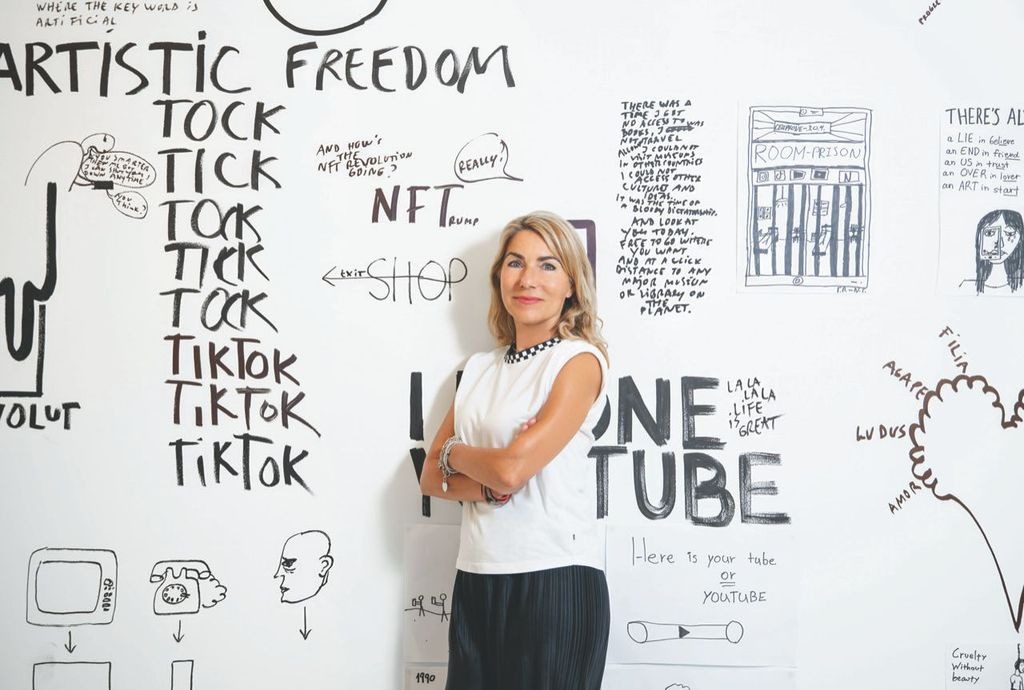
Upper image: Katerina Gregos. Photo by Mari Volens
