


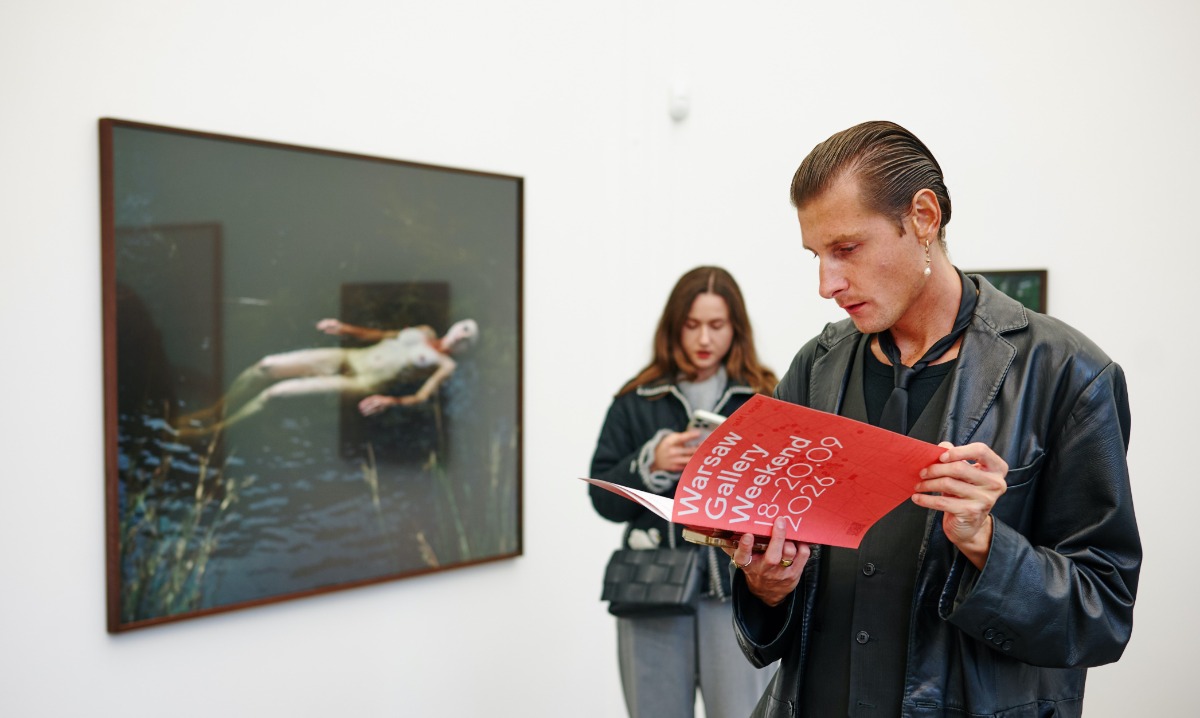
Warsaw Gallery Weekend 2026: a city in exhibition
Warsaw Gallery Weekend (WGW) returned for its 16th edition on September 18–20, bringing together around 60 galleries and exhibition spaces – the largest edition to date. Its expansion reflects the growing density of Warsaw’s contemporary art scene, but it also raises a more interesting question: what can a gallery weekend become when it reaches the scale of a city-wide art ecosystem?
The programme is divided into two main sections. WGW brings together established private galleries with permanent exhibition spaces in Warsaw – the “first circle,” comprising 27 participants this year. WGW+ expands the framework to include foundations, independent initiatives, artist collectives, studios, museums and other cultural organisations.
Michał Woliński, founding director of Piktogram, presenting Rafał Bujnowski’s exhibition Road Window Swifts. Photo: Bartosz Górka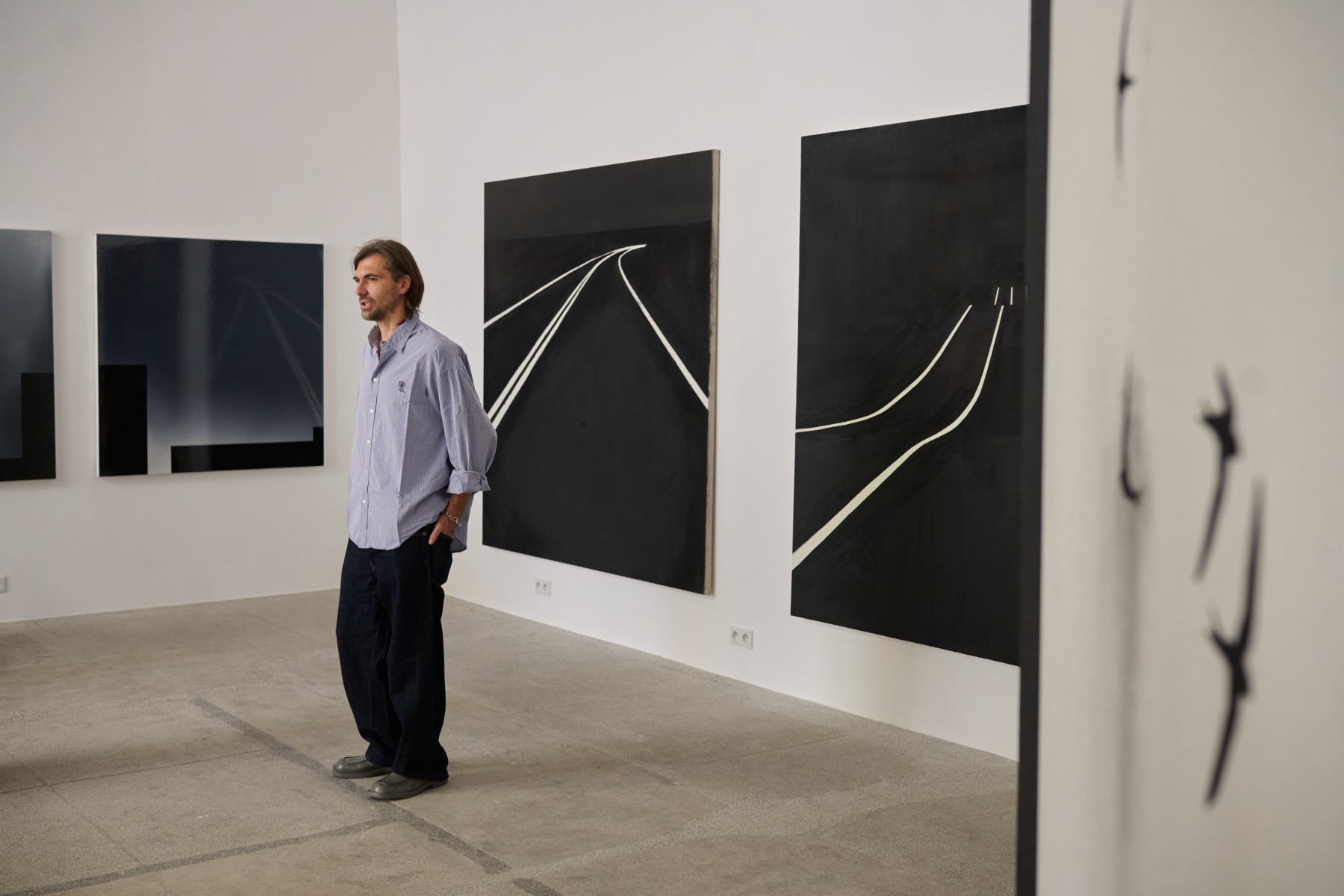
There is also a small visual detail that captures something of WGW’s growing history. As you enter some of the more established galleries, you notice rows of stickers bearing the emblems of WGW editions from previous years. Lined up one after another, they almost resemble the markings once painted onto fighter planes to record their victories – a playful, slightly martial archive of participation that turns the gallery entrance itself into a record of the event’s expanding history.
How do people in Poland’s art scene view WGW’s rapid expansion? Several people I spoke to in Warsaw’s art circles describe the recent history of the event as part of the post-pandemic boom, when a rapidly growing art market brought new collectors into the scene. In their reading, however, this growth also coincided with a certain shift in emphasis, as the market began to play a more prominent role while exhibition-making ambitions seemed, at times, to recede. The 2026 edition suggests a somewhat different direction. With its broader range of galleries, institutions and independent initiatives, the programme feels more diverse and more exhibition-focused again.
Magdalena Lazar, What Happens on Earth Stays on Earth, 2026, recycled metal, glass, found objects, reflective powder, powdered glass, 300 × 200 × 300 cm. Photo: Filip Preis. Courtesy of BWA Wrocław
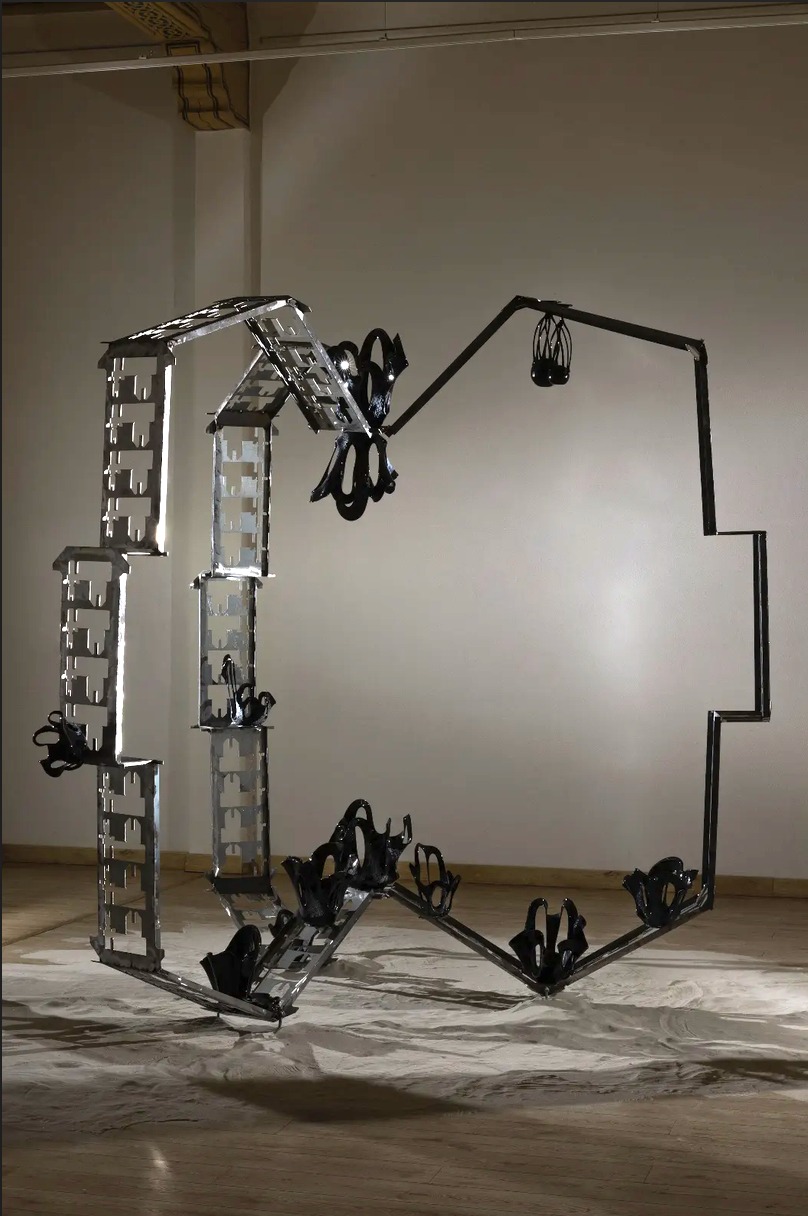
In the visual landscape of WGW, painting and sculpture remain central, while photography, installation, and mixed-media practices also hold a significant place. Some of the most compelling projects approach questions of landscape, memory, housing and the relationship between human activity and the environment. At bliss gallery, for example, Magdalena Lazar’s new series considers the industrial landscape of Upper Silesia and the impossibility of imagining a landscape untouched by human intervention. One of the works in What Happens on Earth Stays on Earth is a huge metal construction resting on sand, incorporating classic black Polish vases from the 1980s – resembling fantastical mushrooms altered by radiation, their forms are at once strangely familiar and unsettling.
Magdalena Lazar, What Happens on Earth Stays on Earth, 2026, recycled metal, glass, found objects, reflective powder, powdered glass, 300 × 200 × 300 cm. Photo: Filip Preis. Courtesy of BWA Wrocław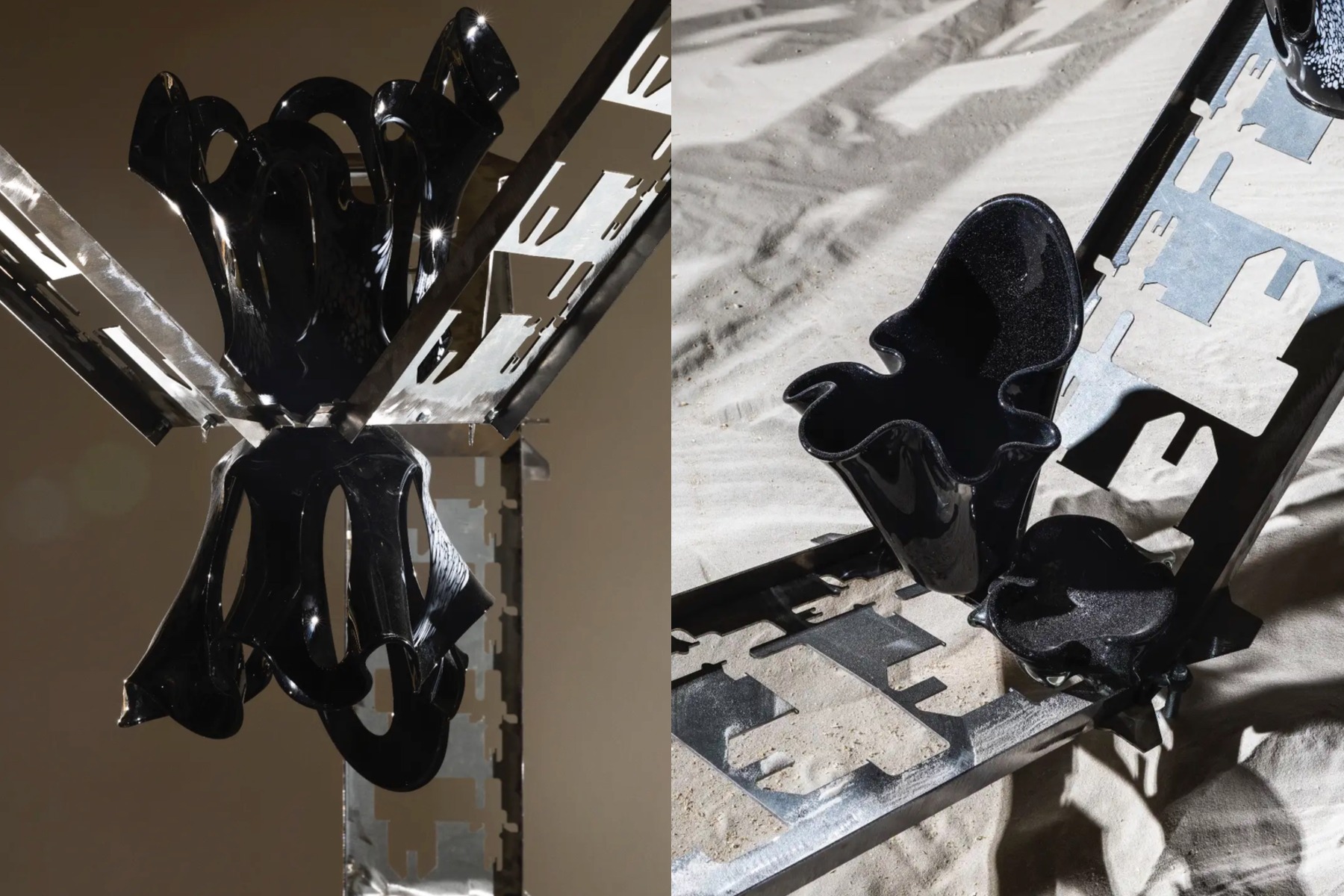
“The metal elements are things I found in scrapyards. They are like negatives of small machine parts, almost traces or imprints of mechanical elements. I put them together because the inspiration for this work was a 16th-century alchemical drawing depicting nigredo – the stage when matter is dissolving and transforming,” Lazar tells a group of international journalists and curators moving from gallery to gallery. The work is also rooted in a very personal experience of the industrial landscape. Speaking about another work from the exhibition, she recalls: “When I was a child, the ground in my hometown was constantly shaking because of the coal mining. There was a huge amount of coal underground, and as it was extracted, the ground became unstable. There was always this fear that the houses might no longer be structurally safe, that they could shift or even collapse.”
Sana Shahmuradova Tanska, Who Promised It Was Going to Be Alright? We Never Did. Indeed (History Knows No “If”), 2026, Gunia Nowik Gallery, Warsaw, Poland, exhibition view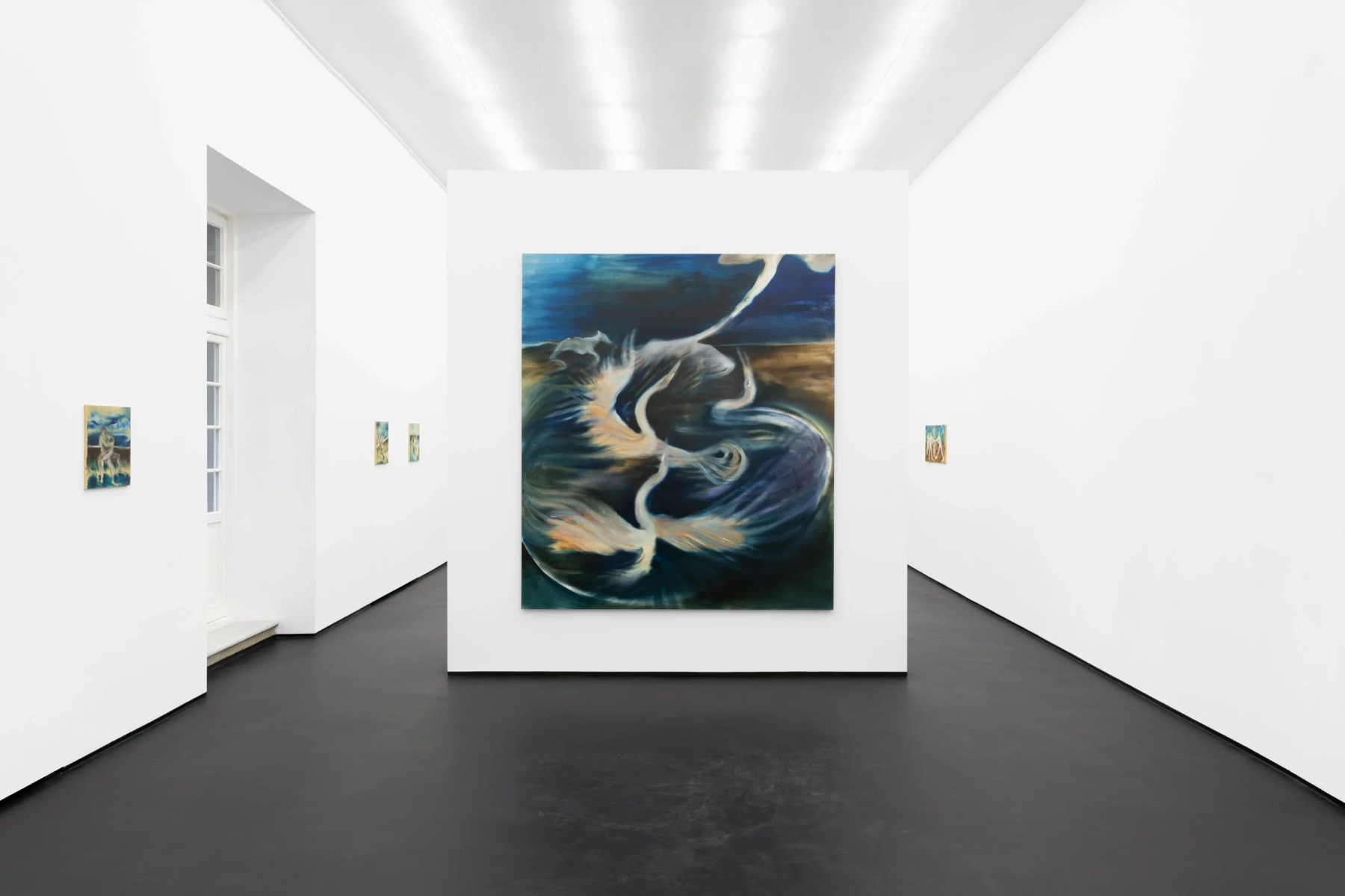
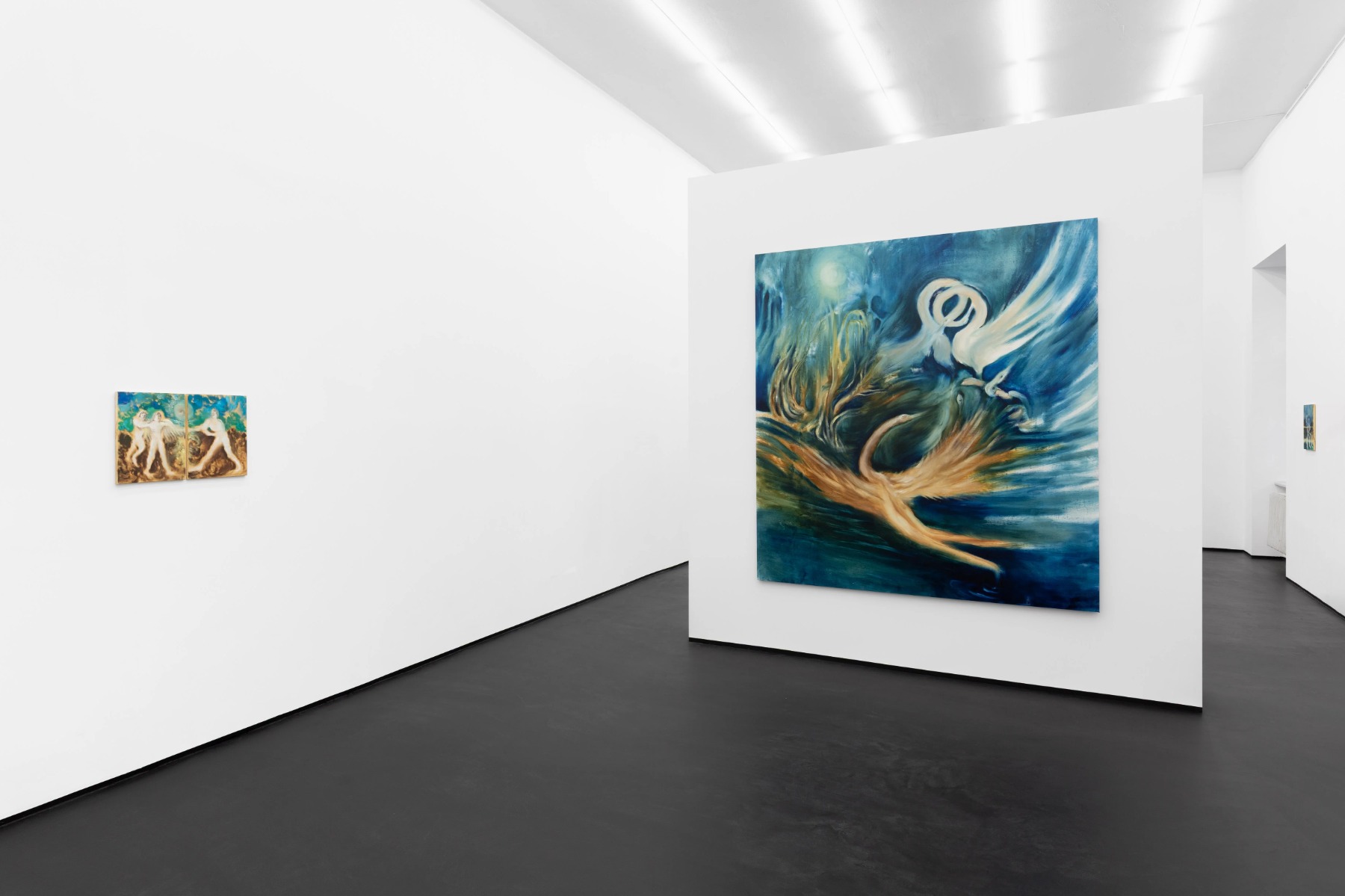
And this story becomes particularly resonant at a moment when our entire reality begins to resemble a house that can suddenly start to shake. The work of Ukrainian artists participating in WGW brings this feeling into sharper focus. One exhibition that immediately comes to mind is Who Promised It Was Going to Be Alright? We Never Did. Indeed (History Knows No “If”) by Sana Shahmuradova Tanska. Her striking, expressive paintings were previously shown in Riga as part of the 2024 edition of Survival Kit, curated by Slavs & Tatars. For her second solo exhibition at Gunia Nowik Gallery, Shahmuradova Tanska turns to Ukrainian mythology and ancestral memory as a way of thinking through the experience of war. Rather than using myth as a refuge from the present, she treats it as a tool for confronting violence and negotiating what is left behind when the certainties that once held a world together begin to collapse.
“I wasn't thinking of, like, oh, I'm working on this particular series. It was like the flow, and it had to be a flow. So I'm happy about it,” the artist told me, visibly exhausted but pleased, as a steady stream of visitors moved through the gallery on Saturday, the third day of WGW.
Daniil Revkovskyi, Boxes. Half a second before..., 2025, graphics, wax seal, varnish, collage. Photo: Arterriotry.com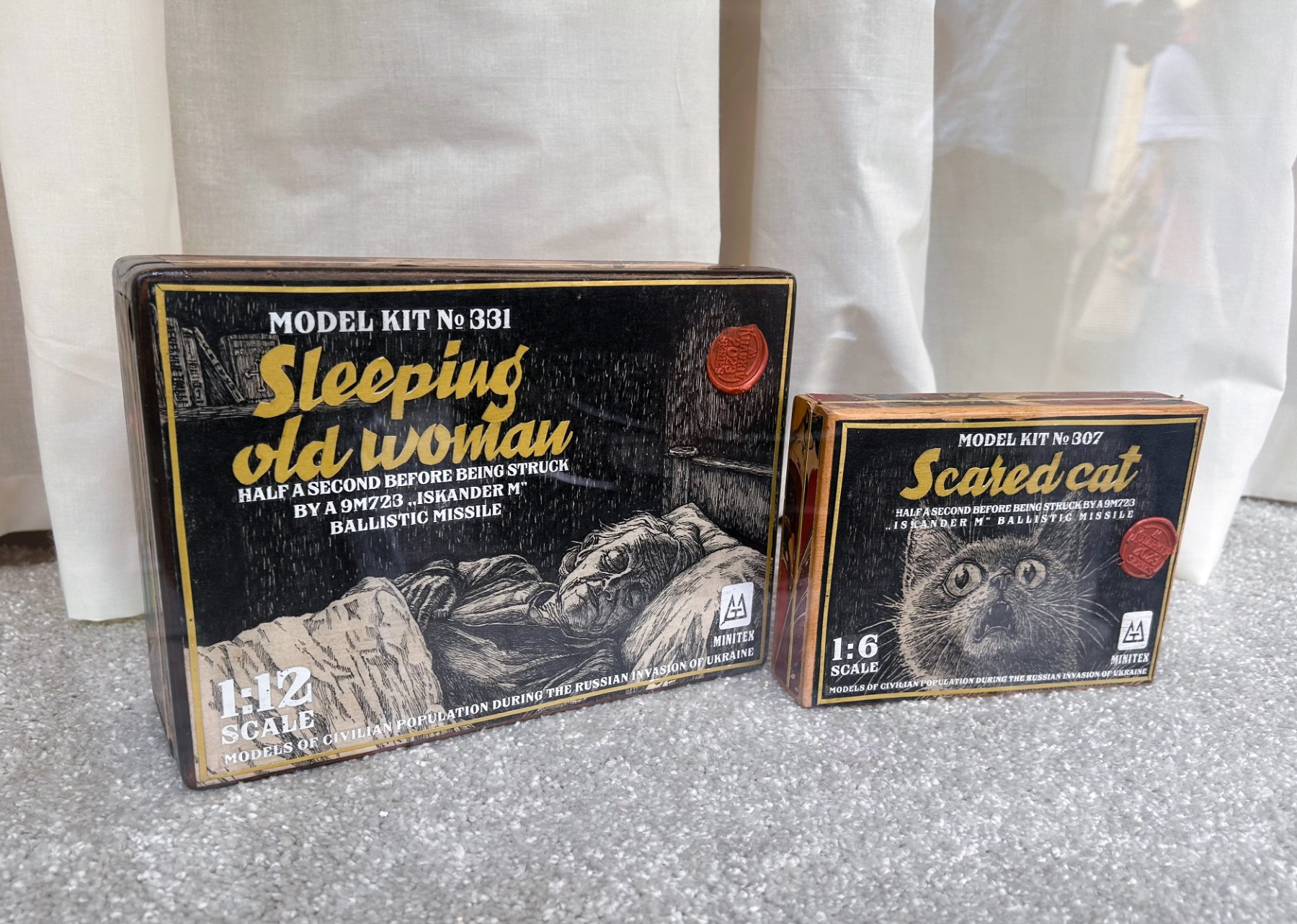
Works from another Ukrainain artist Daniil Revkovskyi’s series Boxes. Half a Second Before… (2025) were included in On View, a special exhibition initiated by two Warsaw galleries, TBA and Turnus. Presented in two windows facing Wilcza Street, the project brings together works sent to Warsaw by a number of friendly galleries from Berlin, Basel and Tokyo. TBA, meanwhile, chose to show Revkovskyi’s works – precise, meticulously constructed, and darkly playful. Taking the form of vintage model-kit boxes, they transform scenes of civilian life during the Russian invasion of Ukraine into miniature objects, creating an unsettling contrast between the familiar language of toys and the narrative of war.
Reef Edge. Maryna Tomaszewska, Alex Urban, Paweł Max Orłowski, Tomasz Kulka. Exhibition view at Van Rij Gallery. Photo: Arterritory.com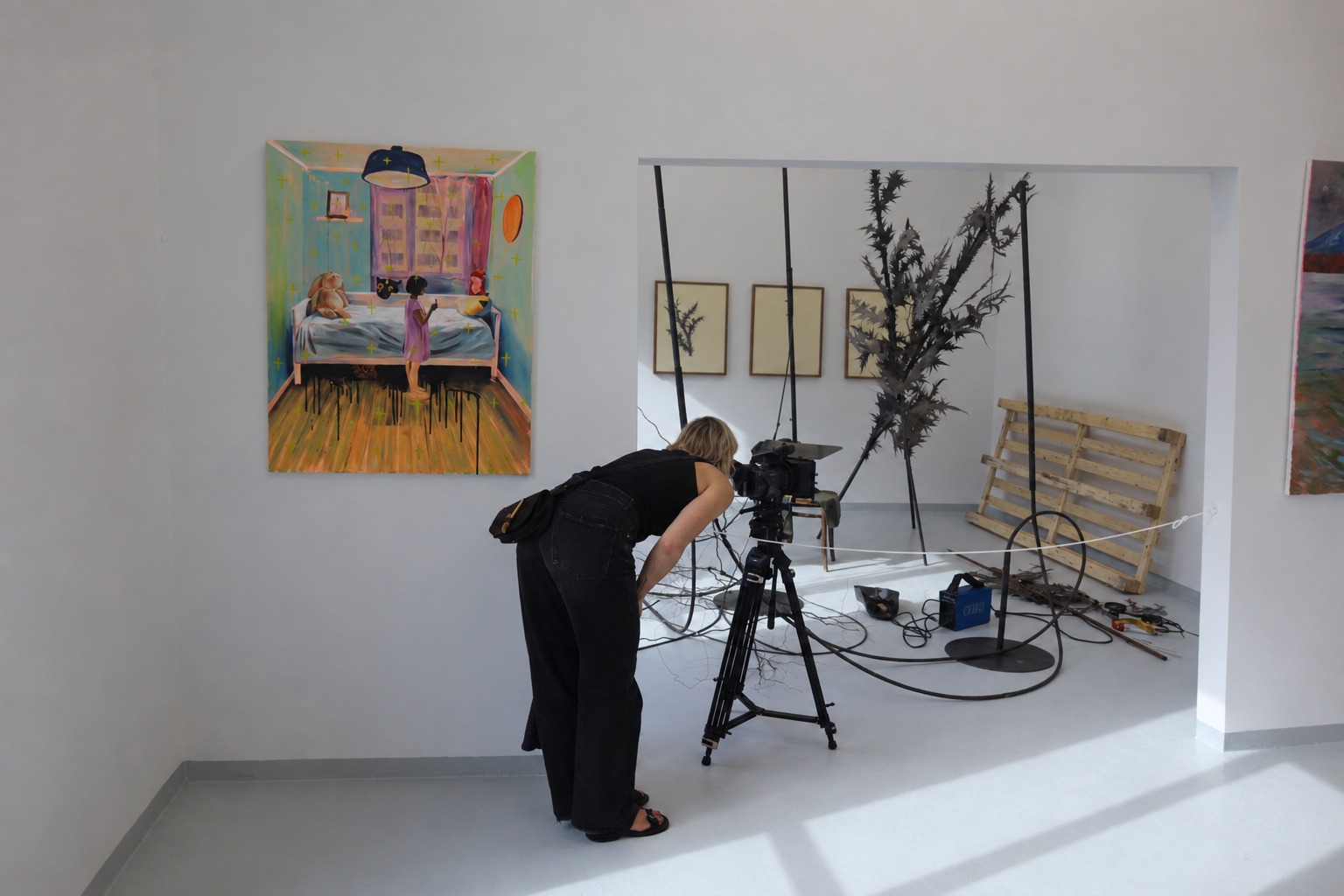
The idea of an unstable ground beneath our feet, on which we continue to live and move forward despite everything, also finds expression in the curatorial text for the group exhibition Reef Edge (Maryna Tomaszewska, Alex Urban, Paweł Max Orłowski, Tomasz Kulka) at Van Rij Gallery. "Through textiles, sculptures, and paintings, the works interweave narratives of geopolitical threats, systems of power, and human activity. They evoke a reality in which an escalating sense of insecurity has become the constant backdrop of everyday life. Working across diverse media, the artists address a suspended state – a moment poised between endurance and collapse, hope and its disappearance.”
Alex Urban, Where Are You, Goldfish?, 2026; oil on canvas. Courtesy of Leto Gallery. On show at Van Rij Gallery
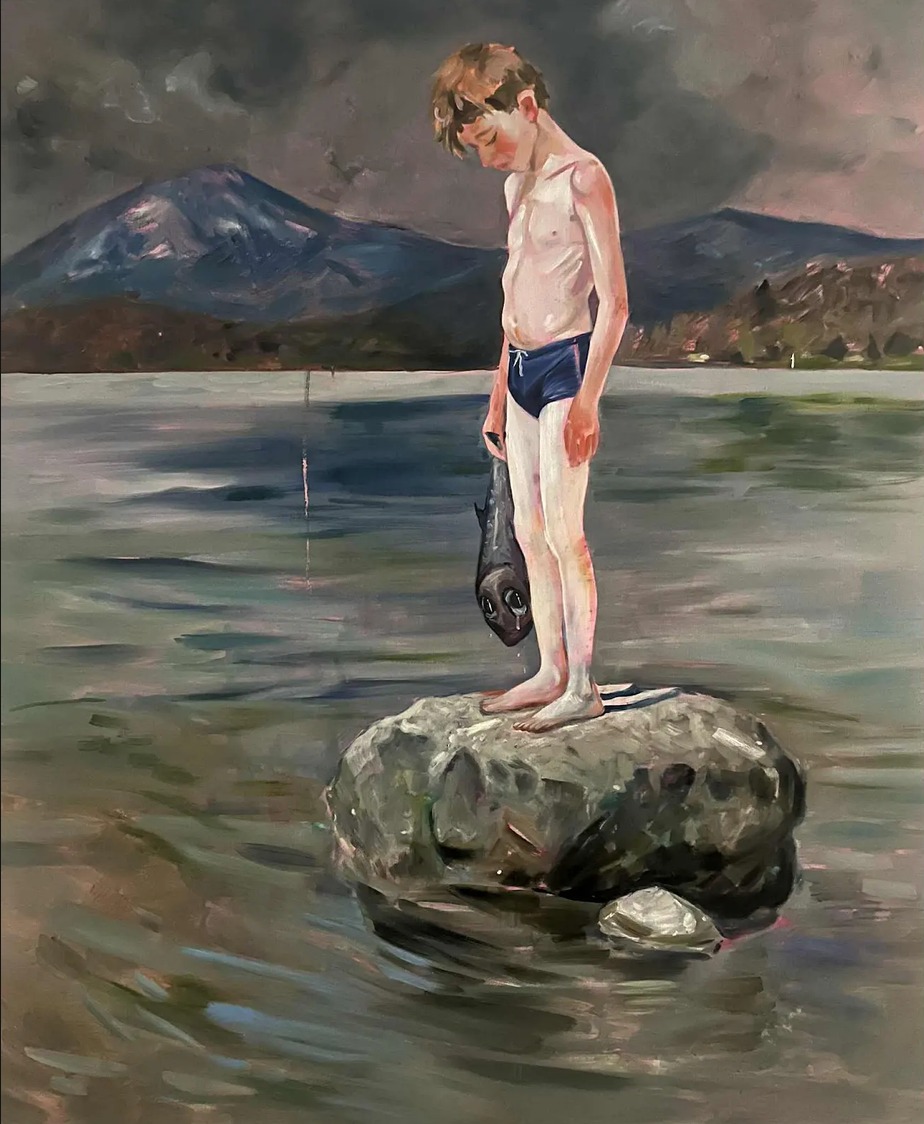
Also, the jury of the ING Polish Art Foundation Prize, a crucial award at WGW, selected as one of its two winners a work in which reality – if not reality as a whole, then at least the reality contained within the family model – seems to short-circuit, like a neon sign flickering during a power surge. Presented by Raster gallery, Daughter is Aneta Grzeszykowska’s most recent photographic series, in which the artist stages a striking encounter with her younger self. She appears wearing a mask based on her own face at fourteen, creating a figure who simultaneously embodies different generations of the same family. Through this transformation, familiar relationships become strangely rearranged: she appears as her daughter’s sister, her husband’s daughter, and the granddaughter of her own parents. By collapsing different stages of life into a single image, Grzeszykowska unsettles conventional ideas of age, kinship and identity, turning the family structure into an existential puzzle.
Aneta Grzeszykowska, Daughter #41, 2026, pigment ink on cotton paper, 70 × 52,5 cm; courtesy of Raster Gallery
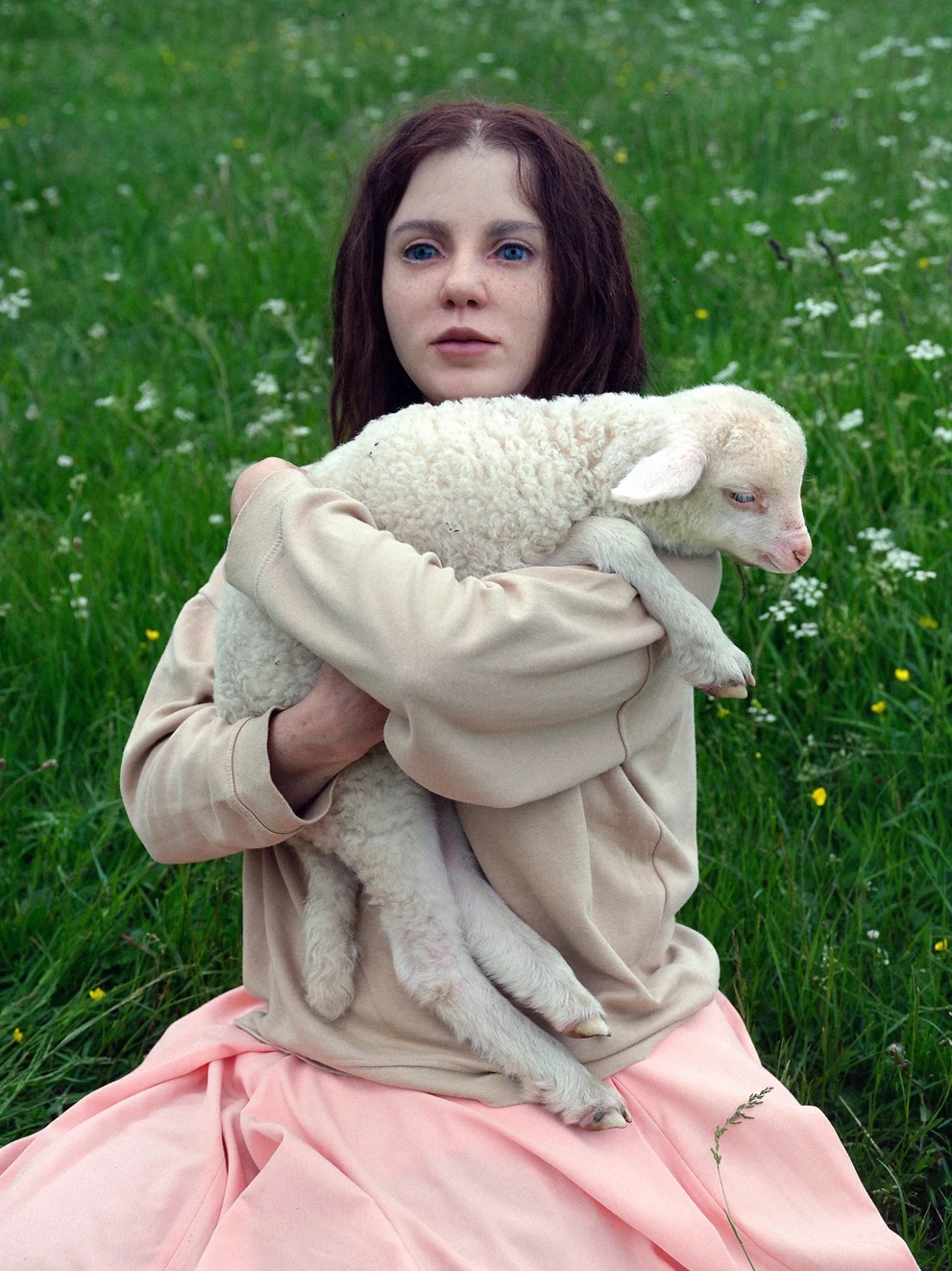
We spoke about Aneta Grzeszykowska’s exhibition with Łukasz Gorczy, co-founder of Raster Gallery. The gallery grew out of Raster, an art magazine he started with Michał Kaczyński in 1995. The magazine ran until 2003, and in 2001 the two opened the gallery under the same name. “It’s quite incredible how dedicated she is, and how there seems to be no real border between her life and her art. One provokes the other, and I think that gives the work a very special dimension, taking it beyond purely artistic questions. There is a strong psychological element to it as well. I would also go back to Aneta’s earlier project Mama, probably her best-known work to date, from around six years ago. It was a series of performative photographs, for which she used a silicone double of herself – a half-body replica of Aneta that her eight-year-old daughter played with. The images were both strange and deeply moving: the child was drawn to this representation of her mother, who was somehow present and absent at the same time. Interestingly, after the exhibition, we received more attention from the psychological press than from the art press. I think that says something about the way Aneta’s work crosses into questions of identity, attachment and the psyche. She’s also very authentic in what she’s doing. It’s a very, very complex and intense body of work.”
Aneta Grzeszykowska, Daughter. Raster Gallery. Photo: Kuba Rodziewicz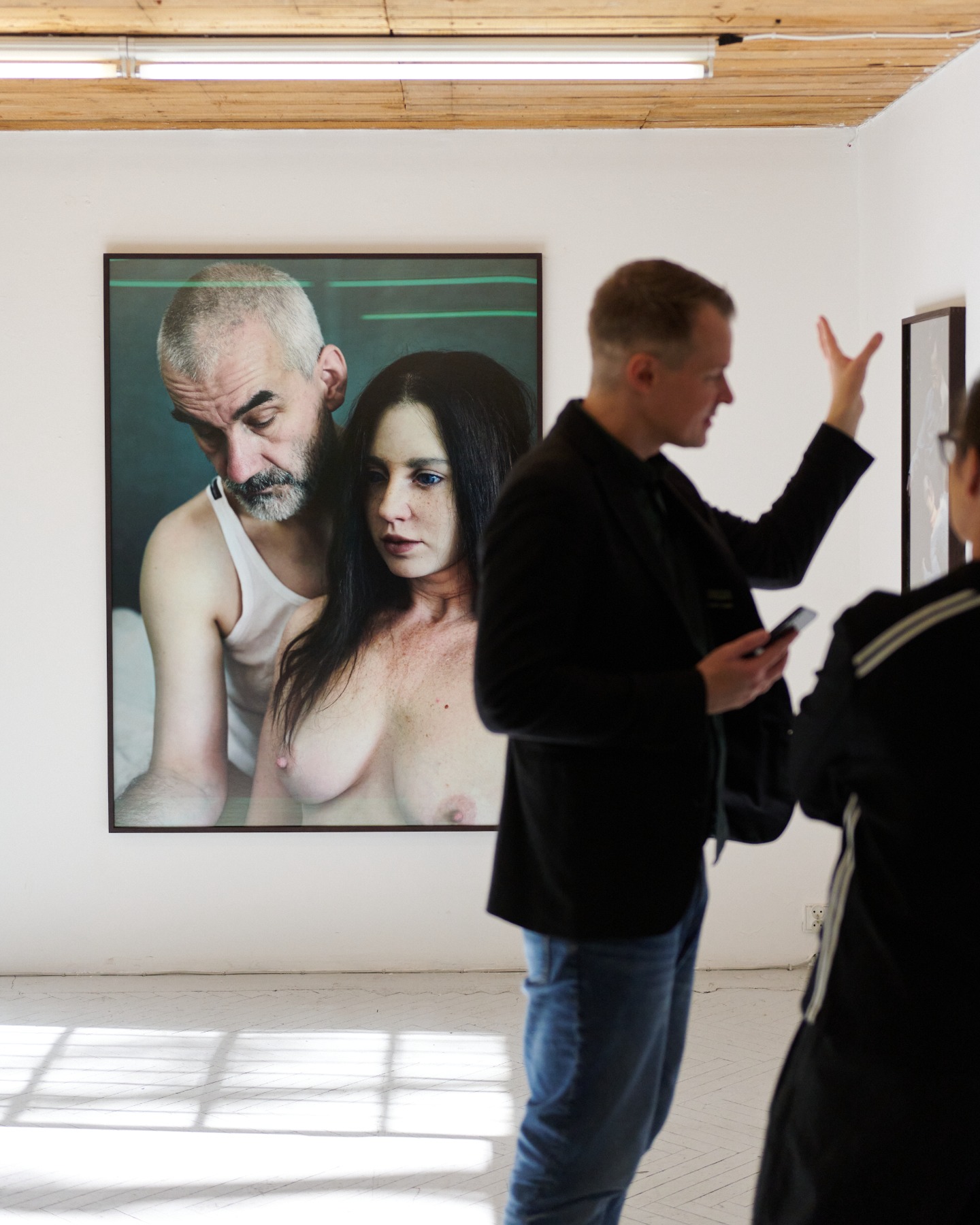
Being named a winner of the ING Polish Art Foundation Prize means that the work or exhibition selected by the jury will be acquired by the foundation and become part of its collection. The collection is privately owned and supported by ING Bank. However, its statutes stipulate that if the foundation were ever to close, the collection would be transferred to the National Gallery of Art, Zachęta. In that sense, it can be regarded, more or less, as a public collection. Today, the collection is presented at ING’s headquarters in Warsaw, Katowice as well as in other Polish cities. The second winner whose works will now enter the collection is Rafał Zajko. The jury selected several sculptures from the joint joint exhibition by Rafał Zajko and Thom Trojanowski Foreign Body, presented in Warsaw by Stockholm-based Coulisse Gallery.
Paulina Ołowska, Autobiography of Red, 2026, oil on canvas, 210 x 150 cm. From Paulina Ołowska’s exhibition Three Colours at Fundacja Galerii Foksal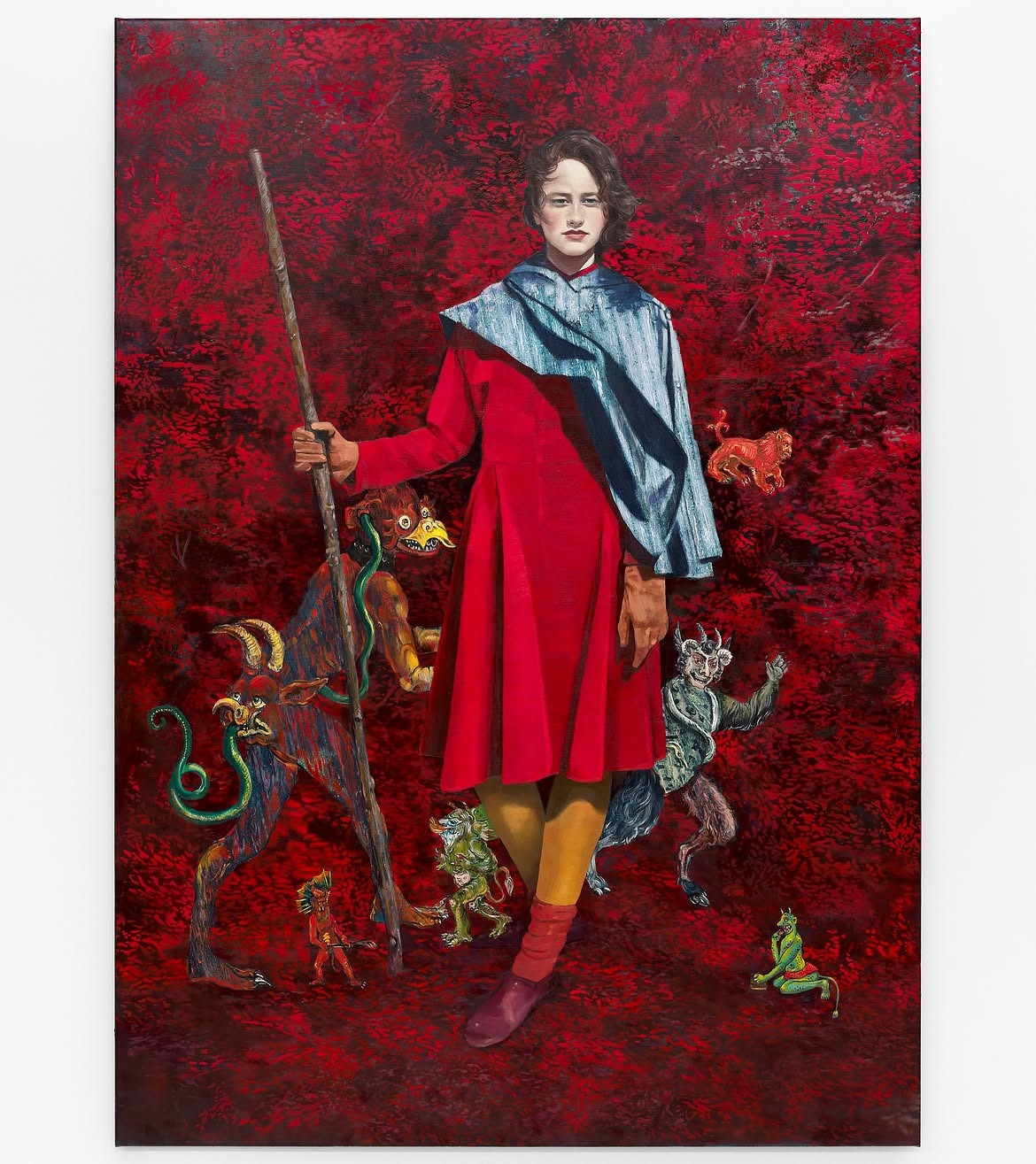
Among the exhibitions that deserve special mention is Rafał Bujnowski’s Road Window Swifts at Piktogram, featuring works made specifically for the exhibition and developed through experiments with a new painting technique. Paulina Ołowska’s Three Colours at Fundacja Galerii Foksal filters the artist’s own biography and practice through the cinema of Krzysztof Kieślowski. Another notable project is Koji Kamoji’s new series Tree and Wind at Szydłowski, marking the gallery’s 30th anniversary. Kamoji, a Japanese artist who has lived in Warsaw for decades, was also the artist with whose exhibition Szydłowski opened 30 years ago.
Koji Kamoji, Tree and Wind 3, 2024, wood, 58,5 × IIO × 3,6 cm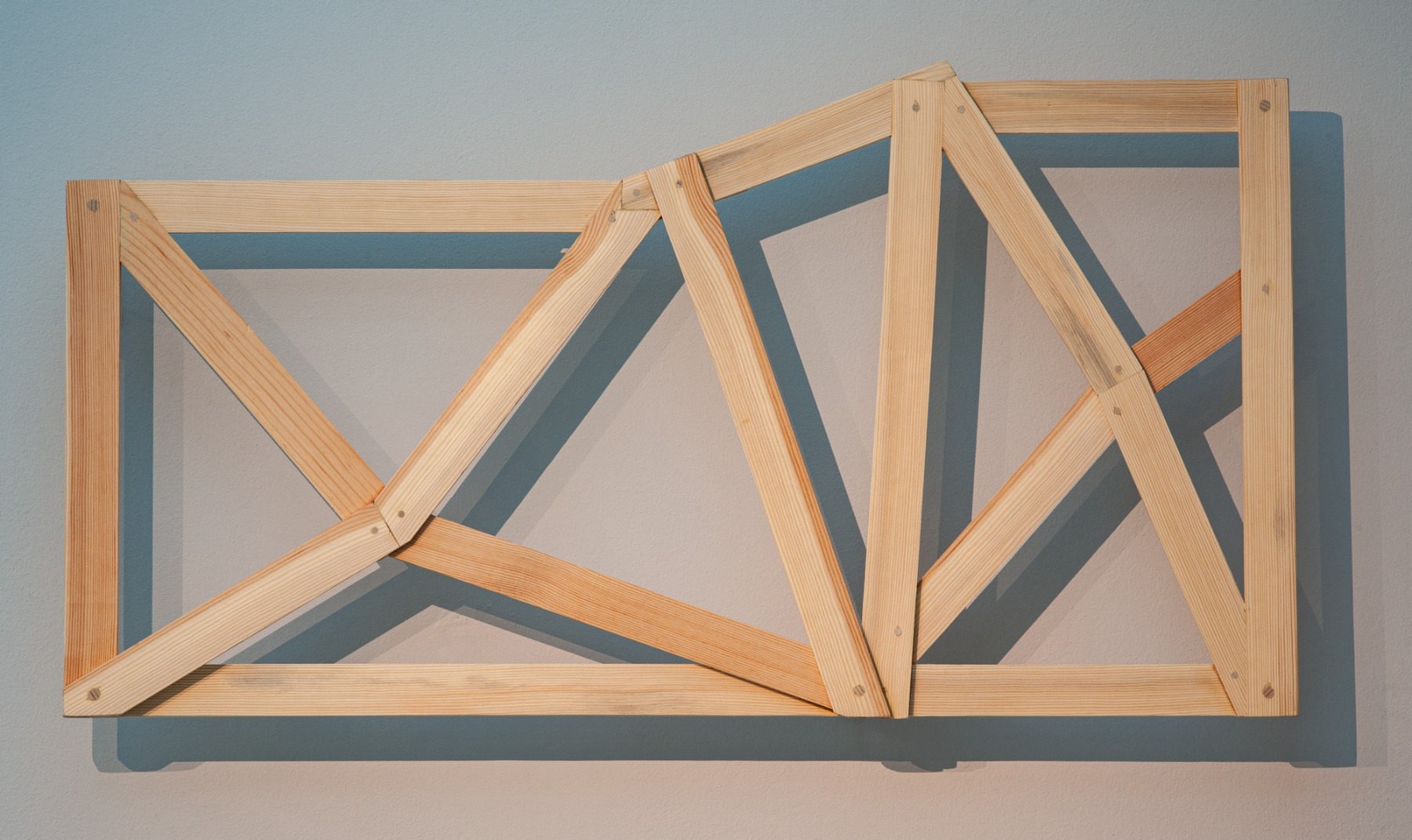
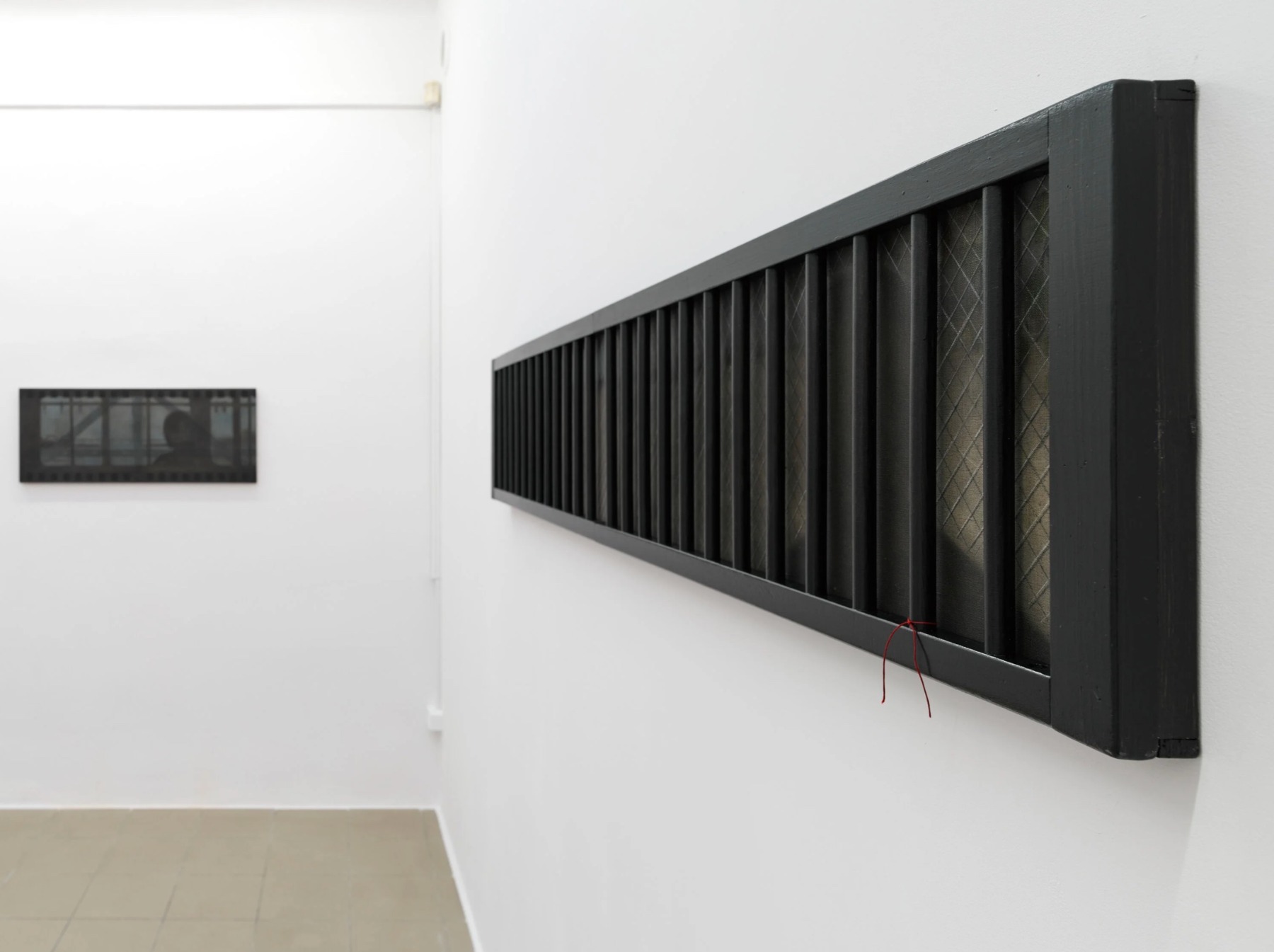
I was also drawn to the way Agata Popik works with form in her enigmatic, atmospheric and meditative paintings-objects, presented by Przeciąg Gallery in the exhibition Wall. Her practice is deeply concerned with the exploration of memory. Popik treats memory not as an archive of the past, but as an ongoing process of assembling reality from fragments of images, objects and associations. “I don't put the memories on a pedestal. It’s more like memory lapses and trying to remember some things which are mixing with things we saw on social media or in TV series, and also our dreams. We don't know which is a real memory and which is something that we saw somewhere. And so in these paintings I'm trying to mix and combine some of these things. I'm trying to put different elements at different levels of opacity. And also these paintings sometimes work like fade-outs in movies or music videos,” Agata told me.
A work from the exhibition Wall by artist Agata Popik, presented by Przeciąg Gallery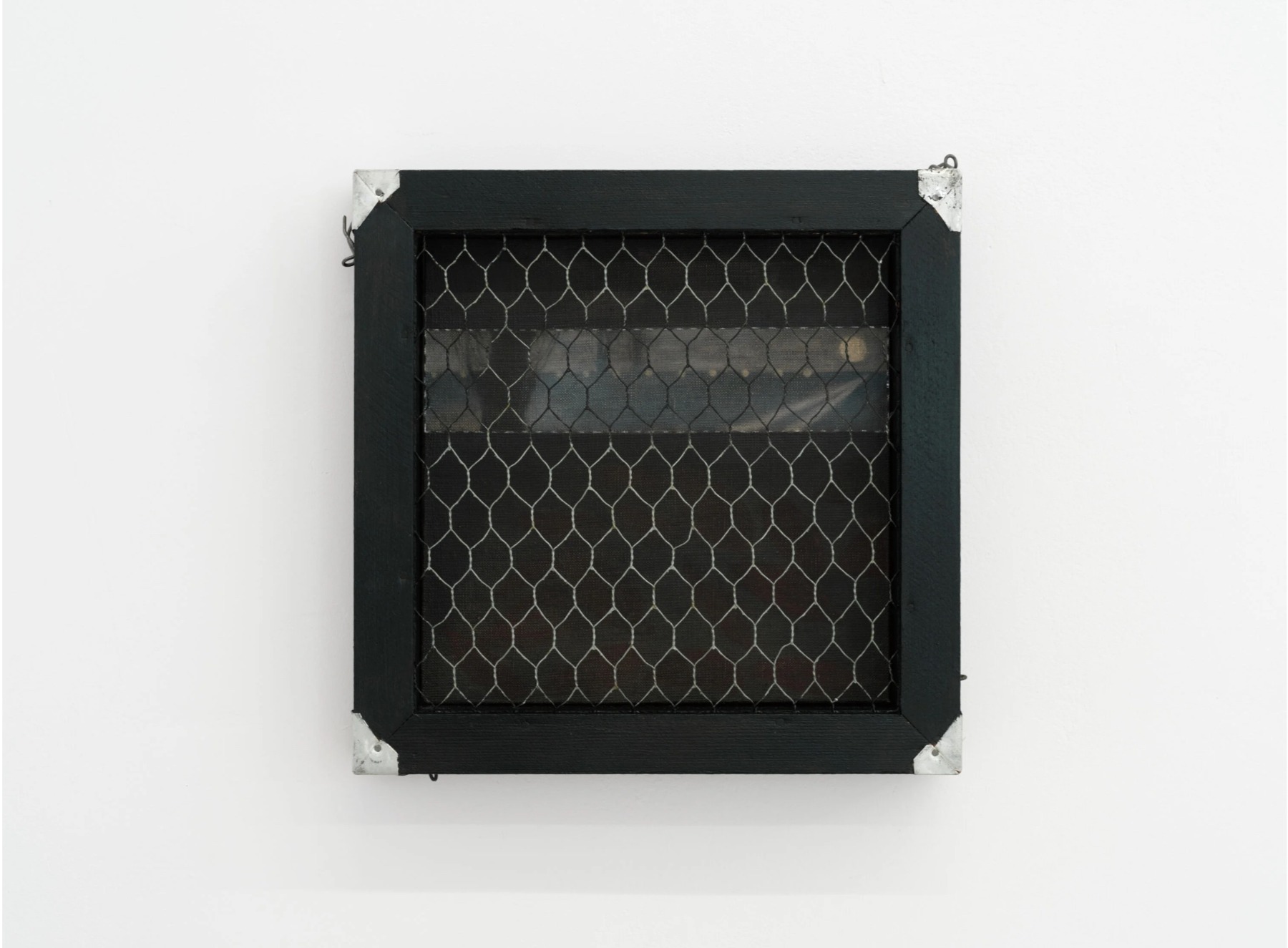
The theme of memory also runs through Julia Platt’s latest painting series, Arriving, leaving, presented by Polana Institute. The artist confronts her past and the difficult passage into adulthood, shaped by her mother’s long and incurable illness. “Being caught in loops of time, attached to the same objects from the past and returning to them again and again, no longer brings comfort; instead, it gives rise to anxiety and exhaustion. The artist tries to break free from the trap of memory through formal devices borrowed from the old masters and through a poignant exploration of different textures,” reads the gallery’s description of the series. It is a subtle, nuanced and deeply considered visual narrative, in which memory becomes not only a subject, but also something to be worked through and transformed.
Julia Platt, Untitled, 2026, oil on canvas, 80xIO0 cm, Courtesy the Artist and Polana Institute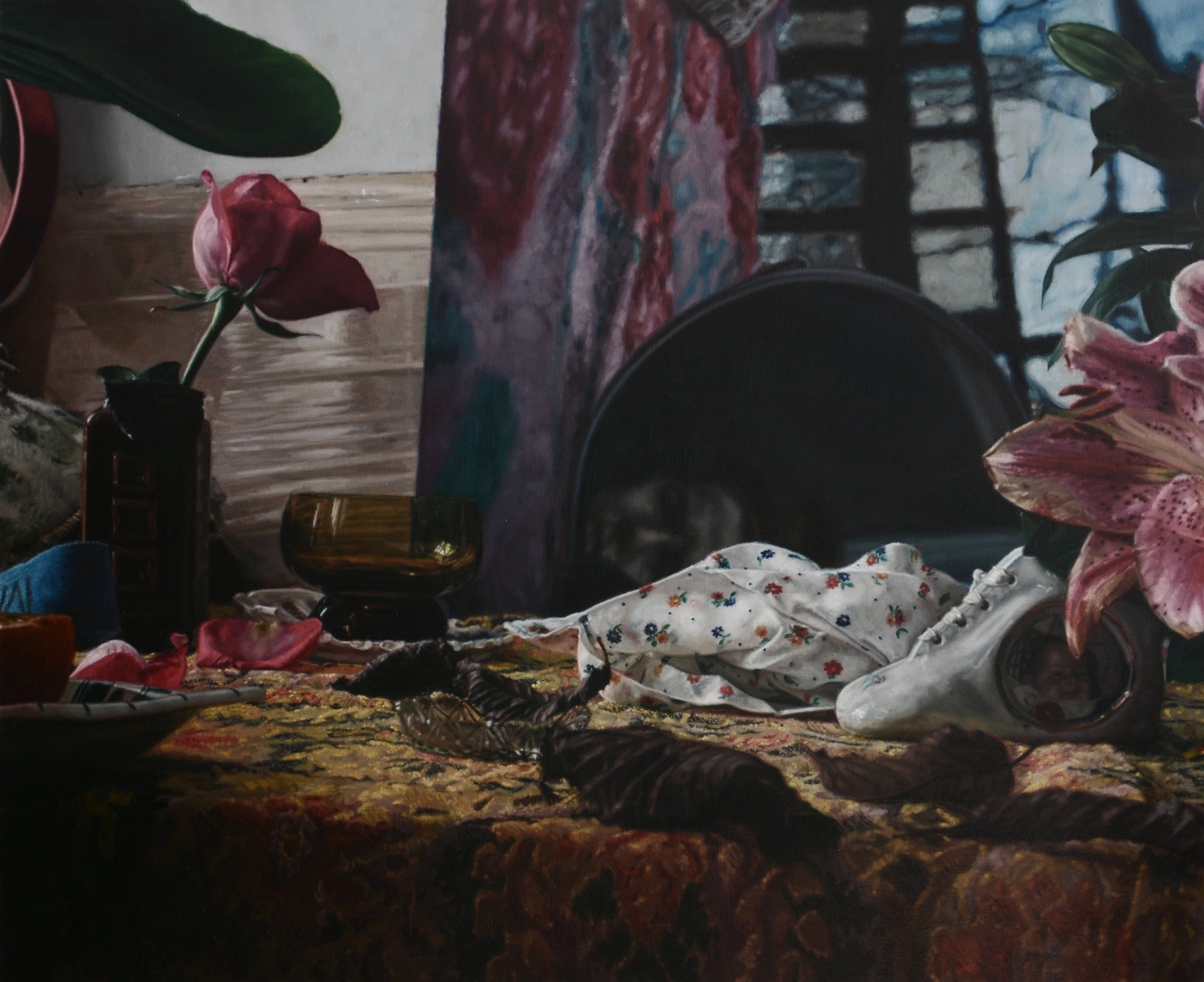
Julia Platt. Arriving, leaving. Polana Institute. Photo: Arterritory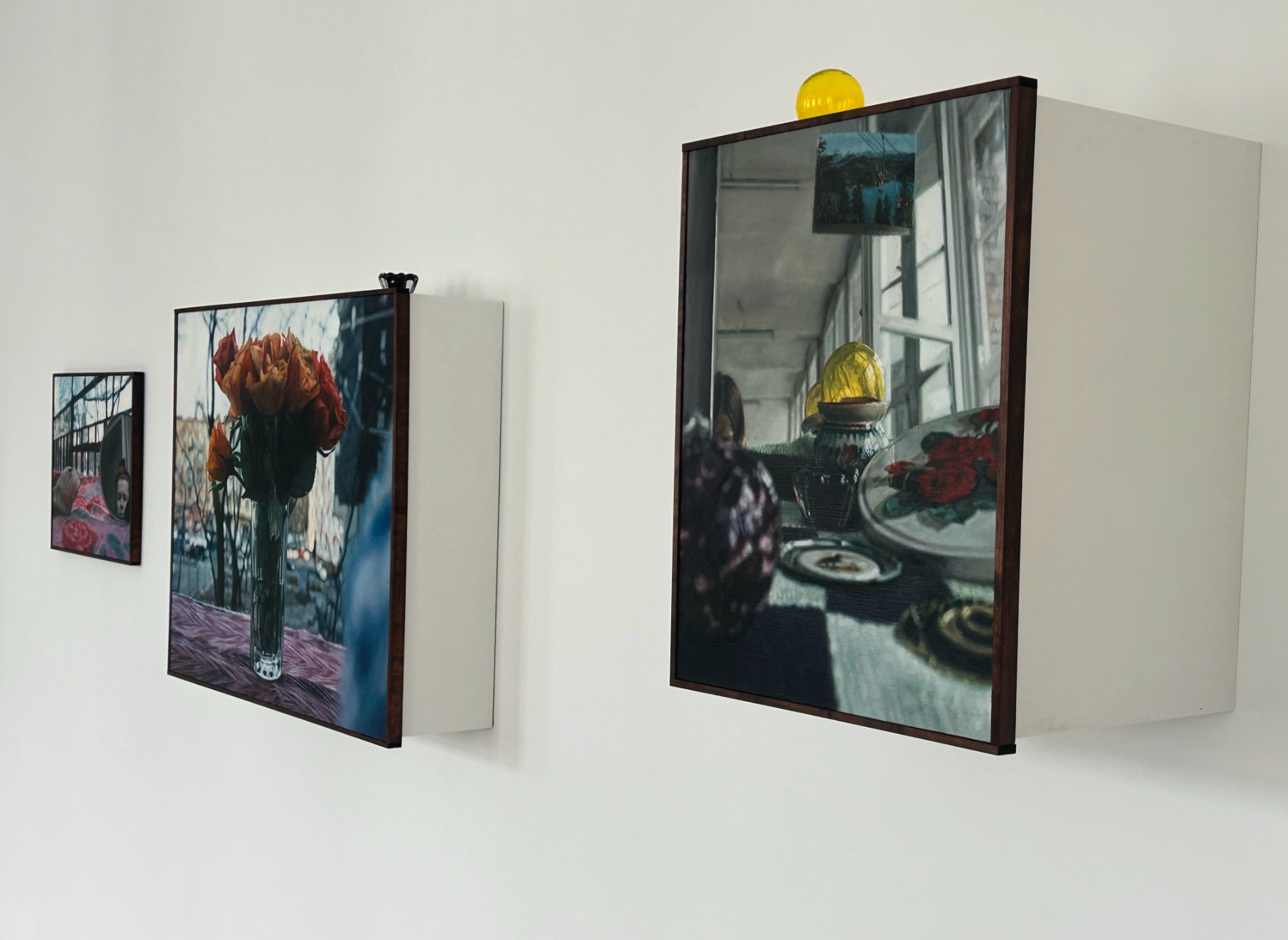
Dominik Lejman, an artist from Gdańsk who has lived and worked in Berlin for many years, explores the relationship between painting, light, projection and the moving image. His works, presented by Molski Gallery, combine painted canvases with projected images that appear and disappear across their surfaces. The projections can take the form of a human figure or a bird, or even a poem that briefly emerges in the corner of the canvas before dissolving again. “This is a poem by Howard Altmann, a New York-based poet. I’ve been using this formula for a quarter of a century. But when text becomes a performer, it creates a different rhythm. Many artists are using text, but projected text is a choreography,” Lejman told me.
Dominik Lejman, Holding Posture (with Howard Altmann), 2023 acrylic on canvas, aluminium pigment on canvas, irregular canvas 165 (left vertical) x 200 x 185 (right vertical) cm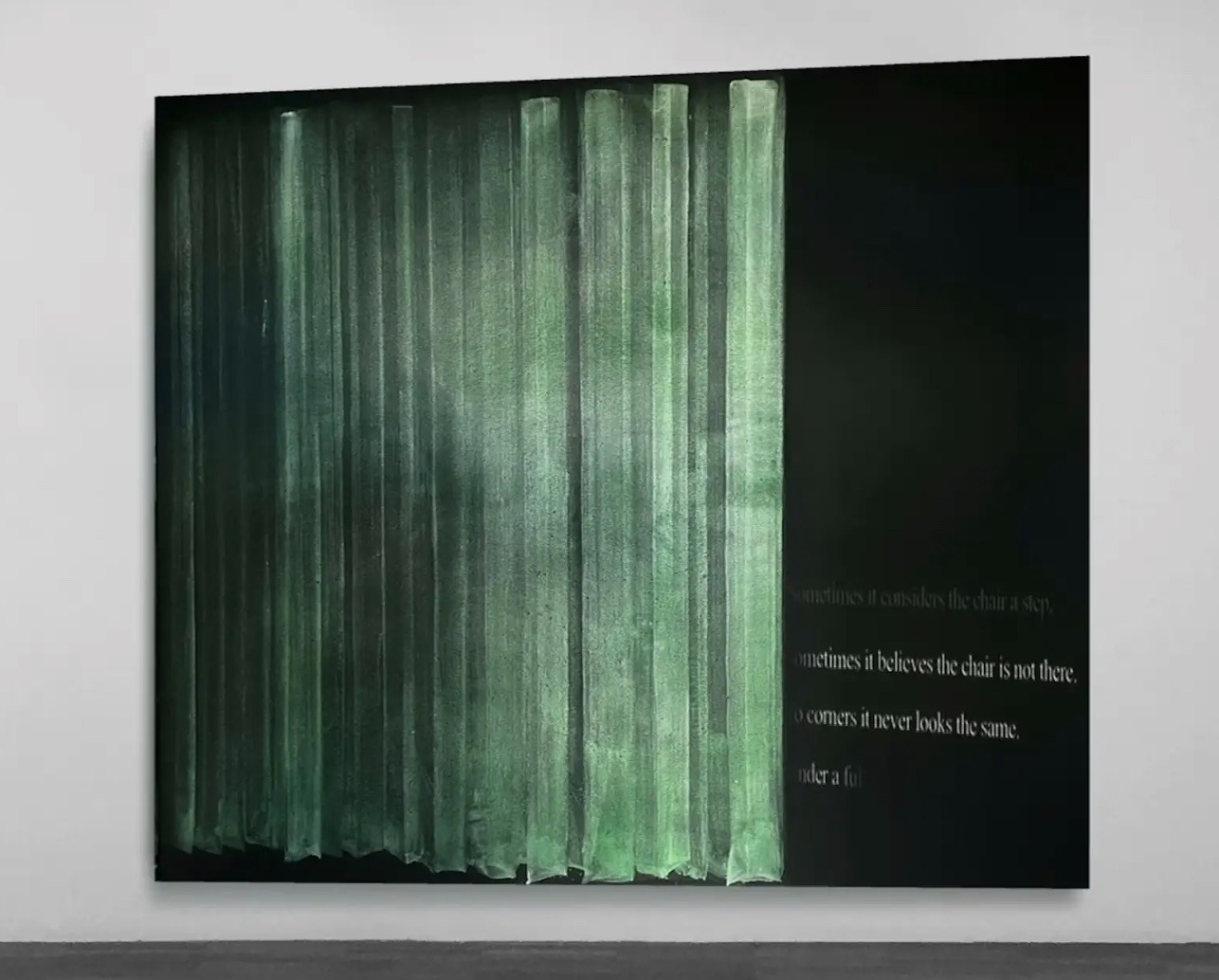
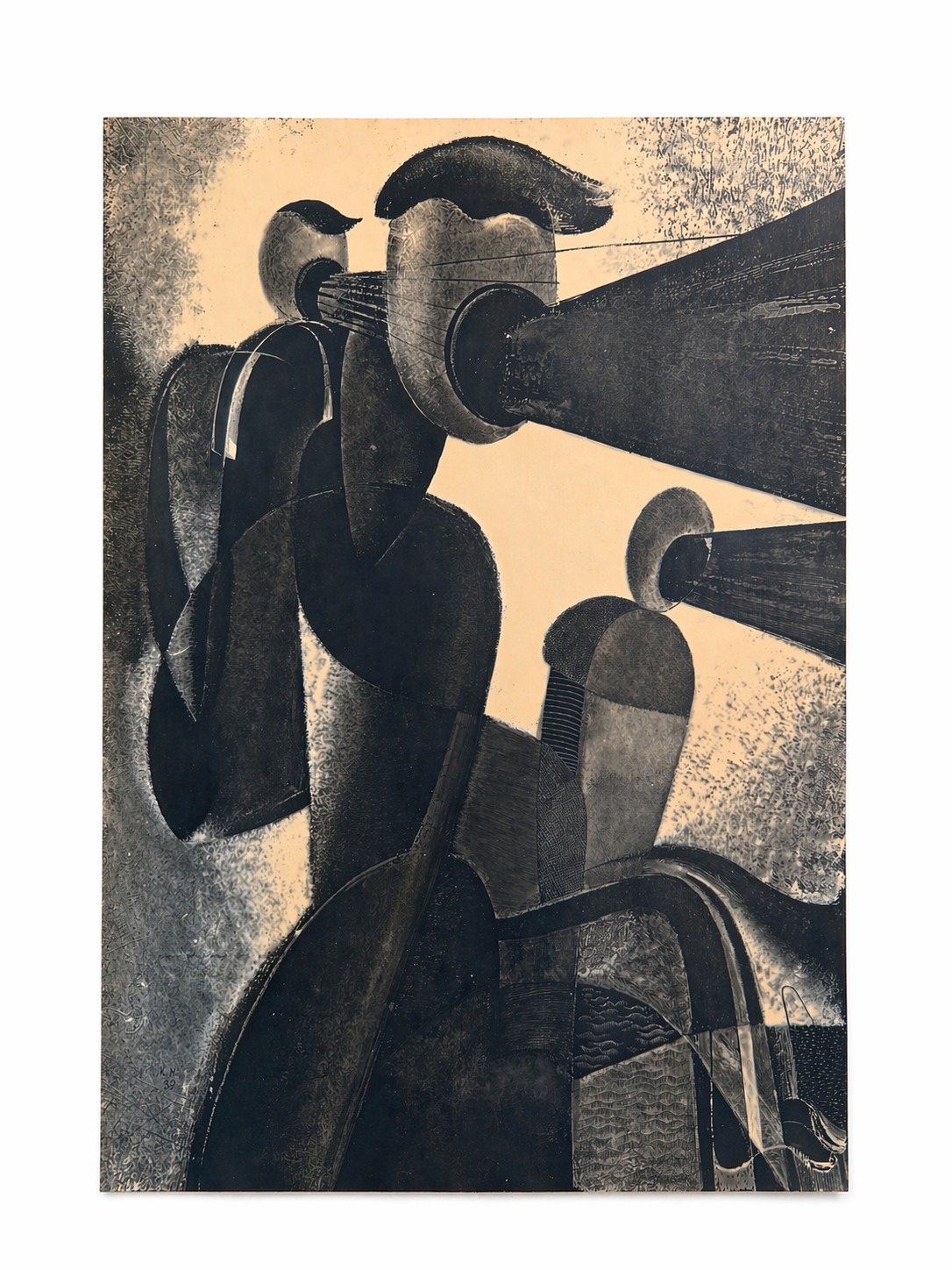
As always, WGW includes exhibitions devoted to artists from earlier generations, bringing their work back into the present through retrospectives and new presentations. This year, these include exhibitions dedicated to Aleksander Kobzdej at Olszewski Gallery, Maria Anto at lokal_30, Karol Hiller and Włodzimierz Jan Zakrzewski at Ciacek Gallery and Wanda Marzec at Leto Gallery.
Karol Hiller, Heliographic Composition XXXIV, 1939, heliograph on photographic paper, 40 × 30 cm
Of course, WGW would not be complete without an exhibition engaging with AI. Uncanny Valley at Import Export Gallery presents recent AI-assisted works by Laurie Simmons, the legendary New York artist whose practice has spanned photography, film and installation since the 1970s. The exhibition brings together her Autofiction films and Autofiction: My Collaborator image series, in which Simmons uses AI to revisit and reimagine her own photographic archive and fragments of her life. It is worth noting that Import Export was founded by Polish collector Piotr Bazylko, whom Arterritory interviewed in 2020.
Laurie Simmons: Autofiction: My Collaborator #7, 2026, Gicleé print on archival paper, 25 x 25 cm | 9 7/8 x 9 7/8 in | Courtesy of the artist and IMPORT EXPORT, Warsaw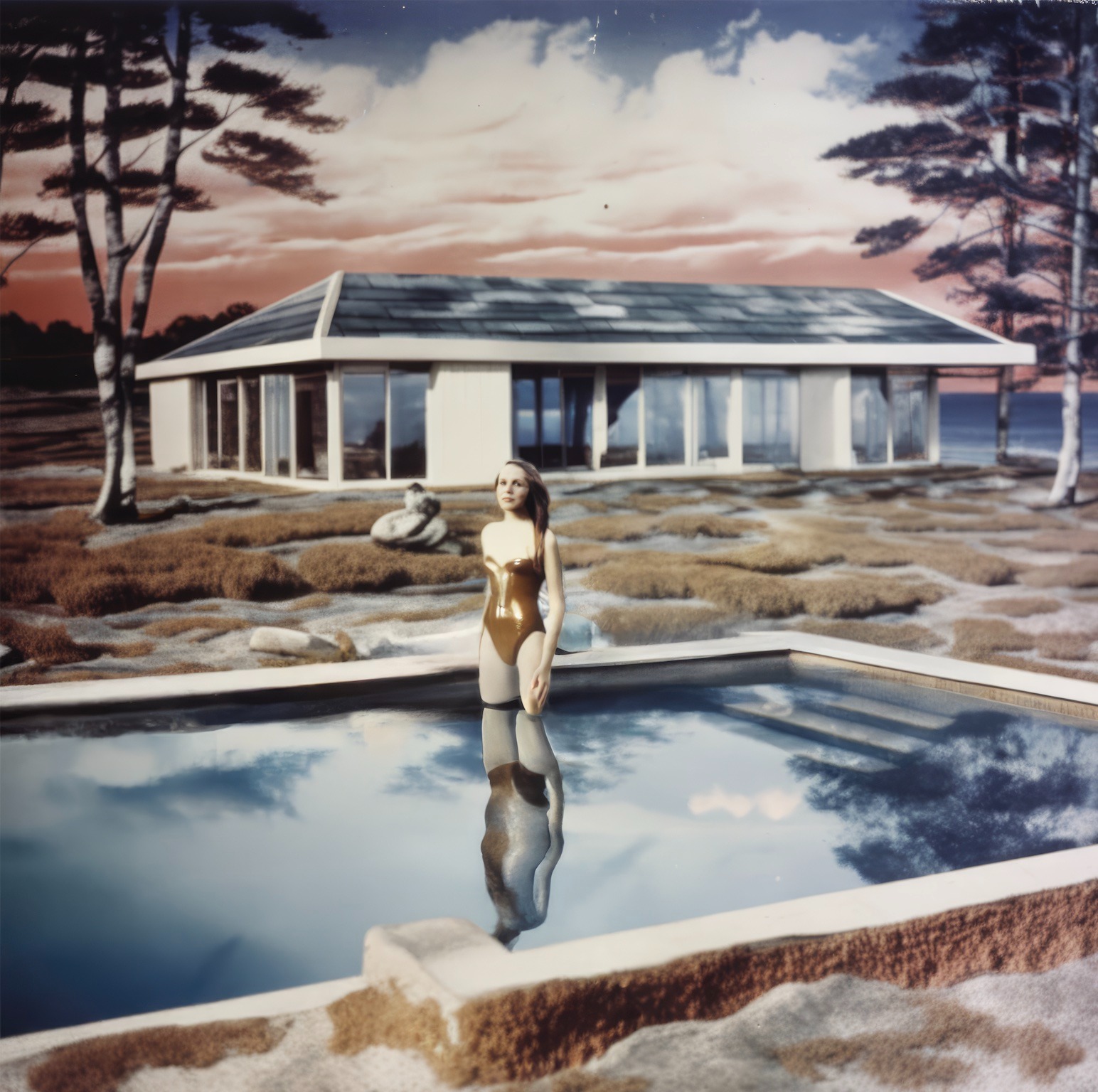
But if I were to give a personal award to one of the gallerists I met in Warsaw, it would go to Petro Vladimirov, who runs the compact TBA Gallery on Wilcza Street, just a couple of metres away from the previously mentioned “window exhibition,” On View. His dedication and enthusiasm were impossible to miss in the way he spoke about In Between, an exhibition by Kateryna Lysovenko. Before the full-scale invasion, Lysovenko lived in Kyiv; she now lives and works in Vienna. “In between is the place where all these creatures from folklore and mythology, which she works with all the time, are kind of finding peace,” Petro told us. It was the last gallery I visited before it was time to head to the airport – and somehow, a fitting place to end my Warsaw Gallery Weekend.
Petro Vladimirov in the space of TBA Gallery, where the exhibition In Between by Kateryna Lysovenko is on view. Photo: Jacek Sosnowski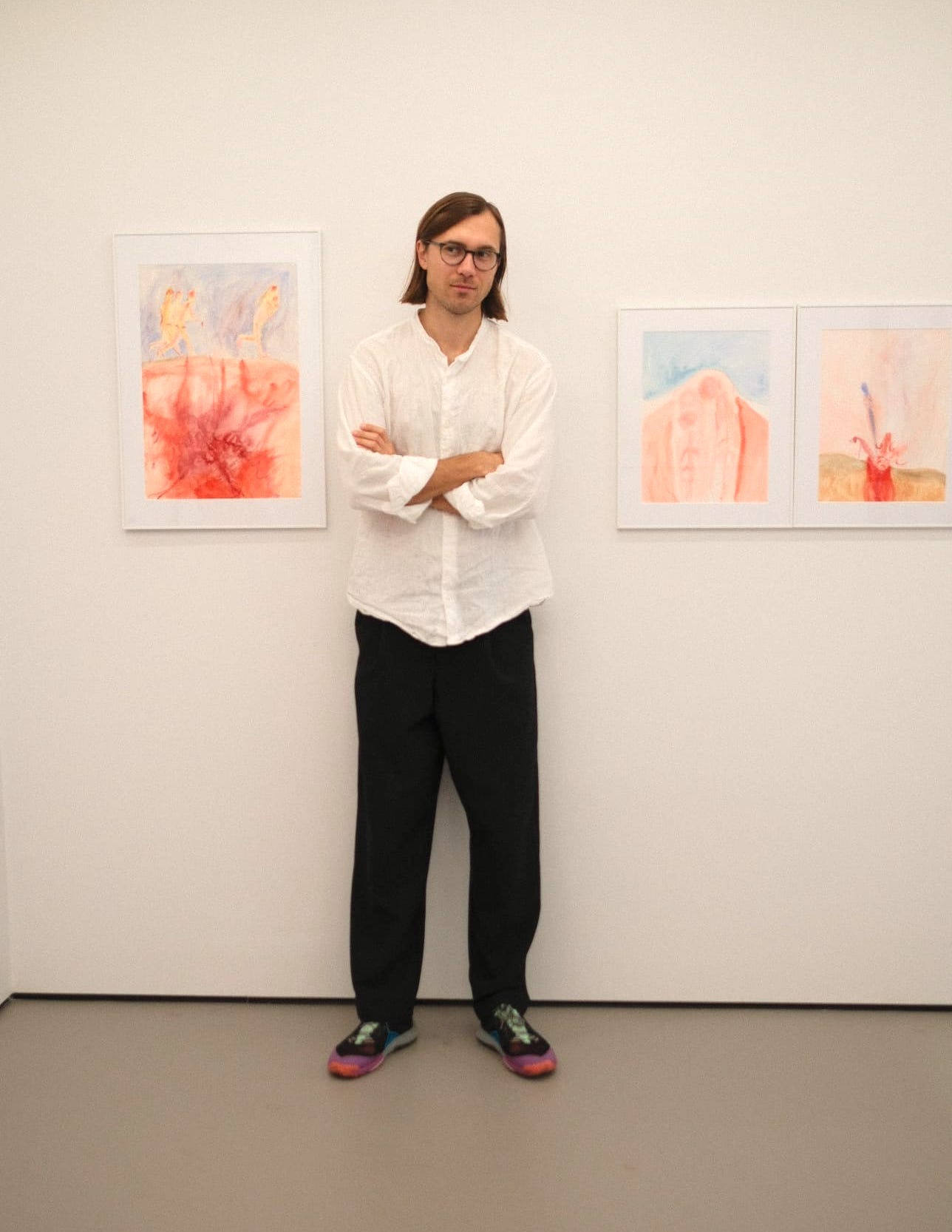
Of course, this selection is inevitably subjective, shaped by what I managed to see during two days in Warsaw – roughly two-thirds of the WGW and WGW+ programme. But the overall impression is clear: WGW has long ceased to be simply a concentrated showcase of what Warsaw’s galleries are selling or presenting at a particular moment. It has increasingly become a way of reading the city’s cultural infrastructure – its established galleries, younger initiatives, temporary spaces, historical references and emerging artistic communities.
Szaber Gallery from Krakow arrived in Warsaw with its exhibition, “WGWroooom,” housed in a rented container. Photo: Kuba Rodziewicz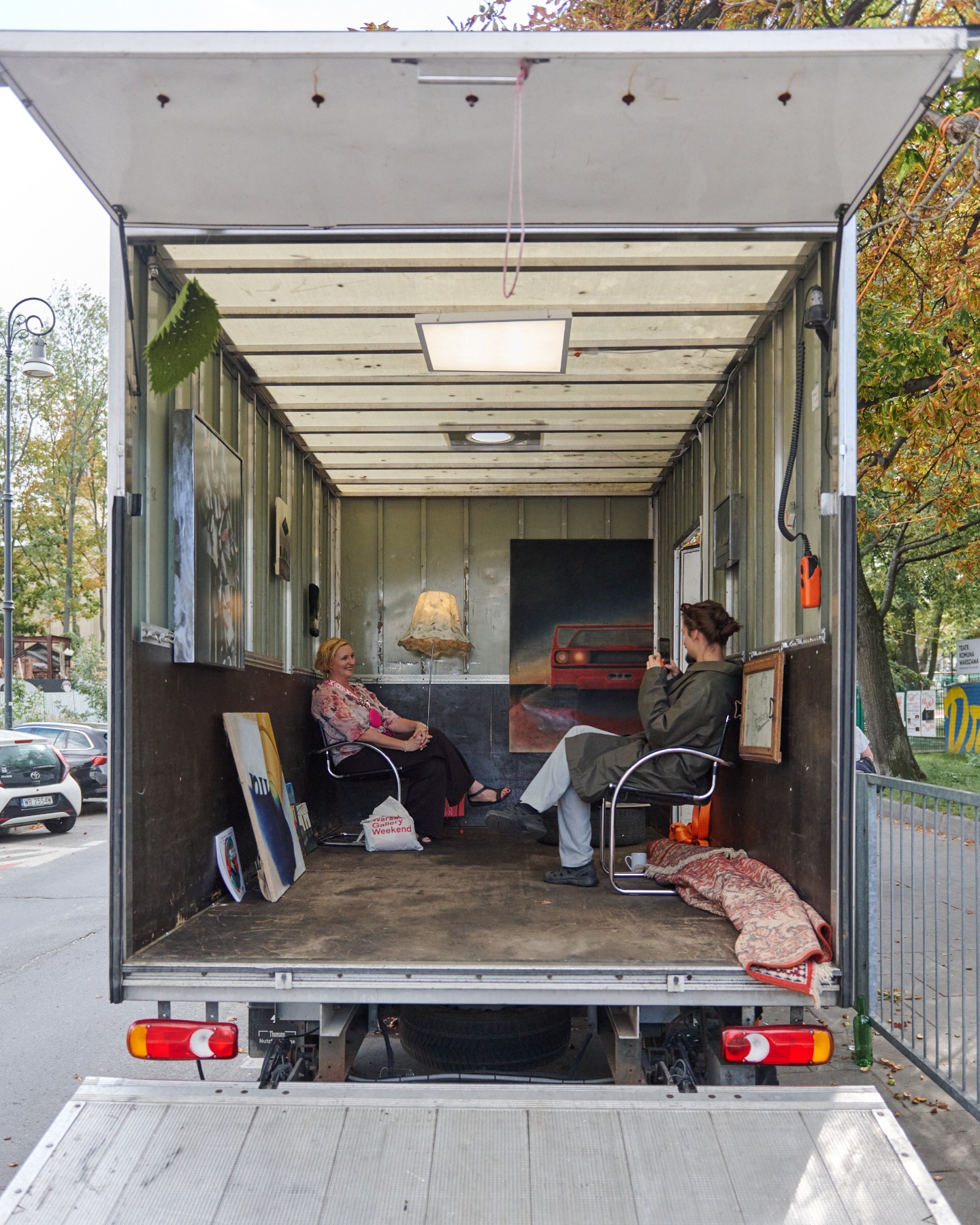
The sheer number of exhibitions can be overwhelming, but that excess is also part of the experience. As Warsaw’s gallery landscape continues to expand, the weekend becomes less a single event than a map of the city’s current artistic imagination. The gallery route is also a way of discovering Warsaw itself: its courtyards, staircases, streets and post-war buildings. This is more than a charming side effect of the event. The geography here is a part of its content. Warsaw is no longer asking to be discovered as an emerging art destination. It is revealing the complications of a mature scene – its histories, contradictions, market structures and increasingly diverse forms of artistic life. But the presence of Ukrainian and Belarusian artists within this scene makes its narratives even richer and more complex.
Upper image: Photo by Bartosz Górka
