


The first impulse is still human generated
Express interview with Anders Härm, curator of the exhibition “Triumph of Galatea: Art in the Age of Artificial Intelligence,” on view at Kumu Art Museum (Tallinn) until 9 August 2026
From the very beginning, Kumu art museum has regarded new media and technology-driven art as one of its key areas of interest. For this reason, the opening exhibition marking Kumu’s 20th anniversary explores the contemporary relationship between art and artificial intelligence. The international group show, whose title alludes to the myth of Pygmalion, investigates how rapid technological advancement is reshaping human experience within culture and society.
Andreas Albrectsen (1986). Untitled (stockholders swept). From the series Recaptures. 2025. Charcoal. Courtesy of the artist. Photo: Malle Madsen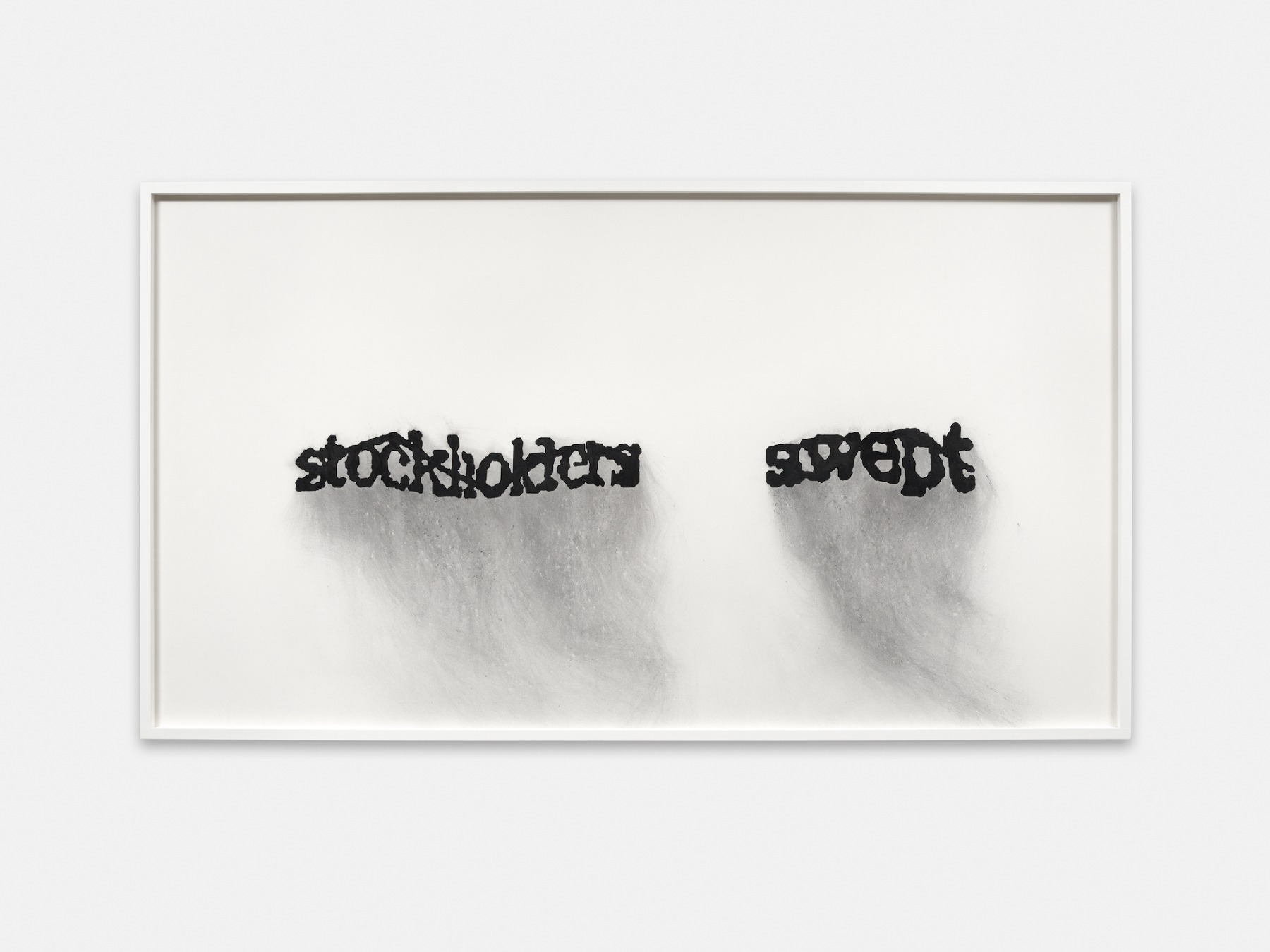
On the exhibition page on the museum’s website, the text includes the following introduction: “Prompt from the curator Anders Härm to AI: Dear AI, please write me a wall text for the exhibition Triumph of Galatea: Art in the Age of Artificial Intelligence taking place at the Kumu Art Museum”. This is followed by the continuation: “AI’s response: In classical myth, Galatea comes to life as the sculptor’s ideal made animate – a creation that exceeds its maker’s intentions and begins to act on its own. In the age of artificial intelligence, this figure acquires renewed relevance. Algorithms no longer function merely as tools but increasingly as agents that generate images, texts, and decisions, reshaping how creativity, authorship, and human agency are understood. Triumph of Galatea: Art in the Age of Artificial Intelligence explores this shifting relationship between human imagination and autonomous systems, asking what “triumph” might mean when creation is shared with machines… The exhibition invites viewers to consider how values, biases, and power structures are embedded in technological systems, and how these systems, in turn, shape our understanding of reality”.
To learn more about this show with such an intriguing theme, we reached out to its curator, Anders Härm. He has previously worked as a curator at Tallinn Art Hall and the Contemporary Art Museum of Estonia. Currently he is dividing his time between the Edstonian Academy of Arts and Kumu. And here’s what he answered.
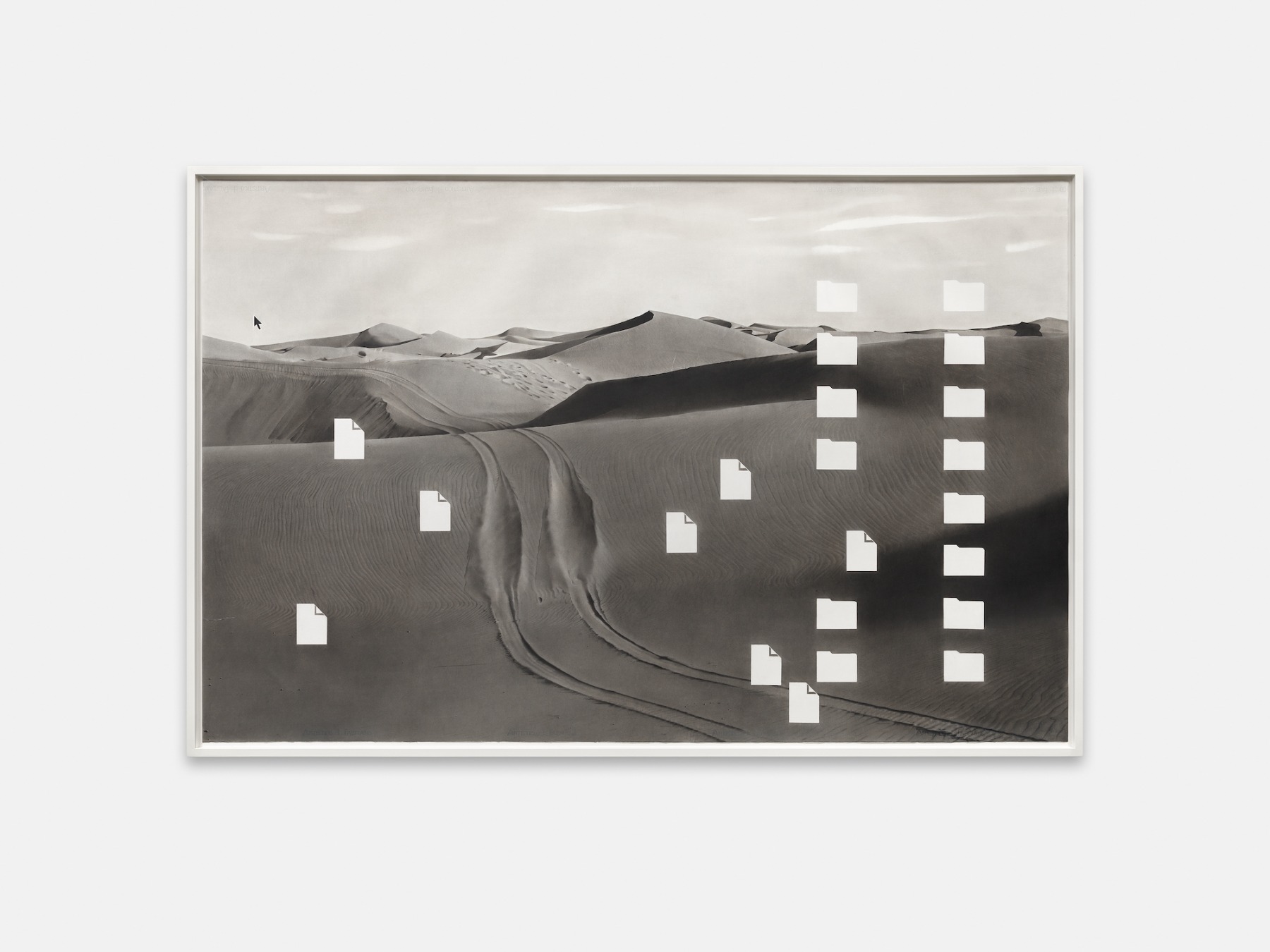
Andreas Albrectsen (1986). Untitled (Folder VIII). 2026. Dry pastel. Courtesy of the artist. Photo: Malle Madsen
What is your personal view on the role AI is playing and will play in the creative process of contemporary art?
I think it is already playing a significant role, but I don’t think we have seen its full potential yet. As it was concluded by the panellists at our talk it is getting pretty good at compiling the existing knowledge but it is still unable to transform it, to create new knowledge. Will it eventually create a consciousness? All this is very important. In the context of art processes the main question is whether it is simply a tool or will it become something else, more like a partner or collaborator. At the moment like with every new medium entering the art field we are still mapping its possibilities and exploring what kind of perspectives it opens. The situation is comparable with the state of video technology in the sixties, I guess. But it is very important to remain critical.
Jon Rafman (1981). Dream Journal 2016–2019. 2019. Video. Courtesy of the artist and Sprüth Magers. Photo: video still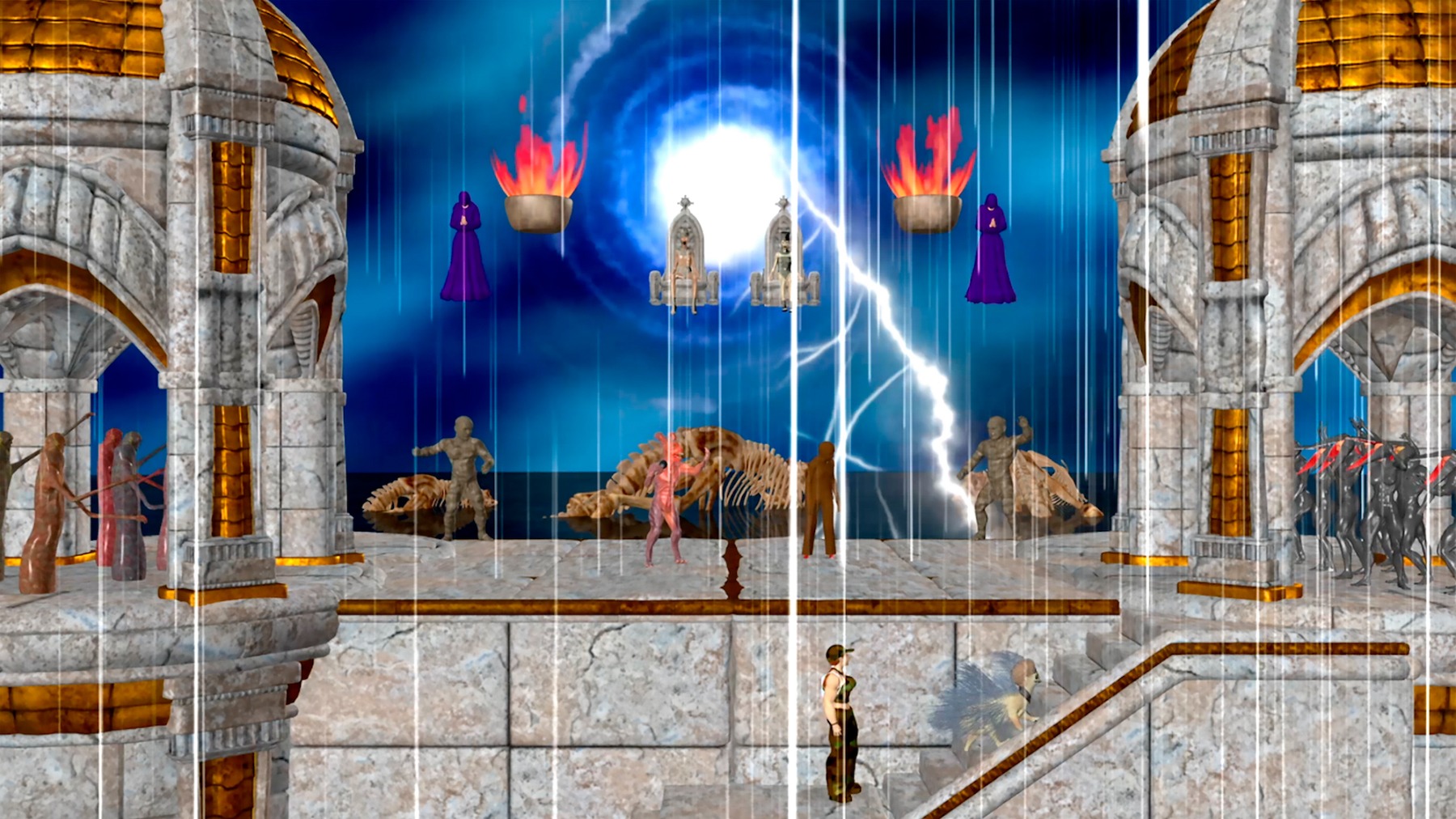
A classical author often loses something in the process of realization – the original concept is usually broader and more abstract than its concrete execution. In contrast, a person working with a generative model often gains something in the act of generation, as the model may introduce elements that were not present in the initial idea. But in that case, who is truly the author of a generative artwork?
The first impulse is still human generated, isn’t it? Also with other technologies we were also sometimes getting unexpected results that were not planned. I think the question of authorship is pretty straight forward – if contemporary artist orders some job from a contractor it does not make the contractor be it a mosaic maker or lenticular print maker, like for example in the case of Jens Settergrens works at this exhibition, an author. Jens is still the author.
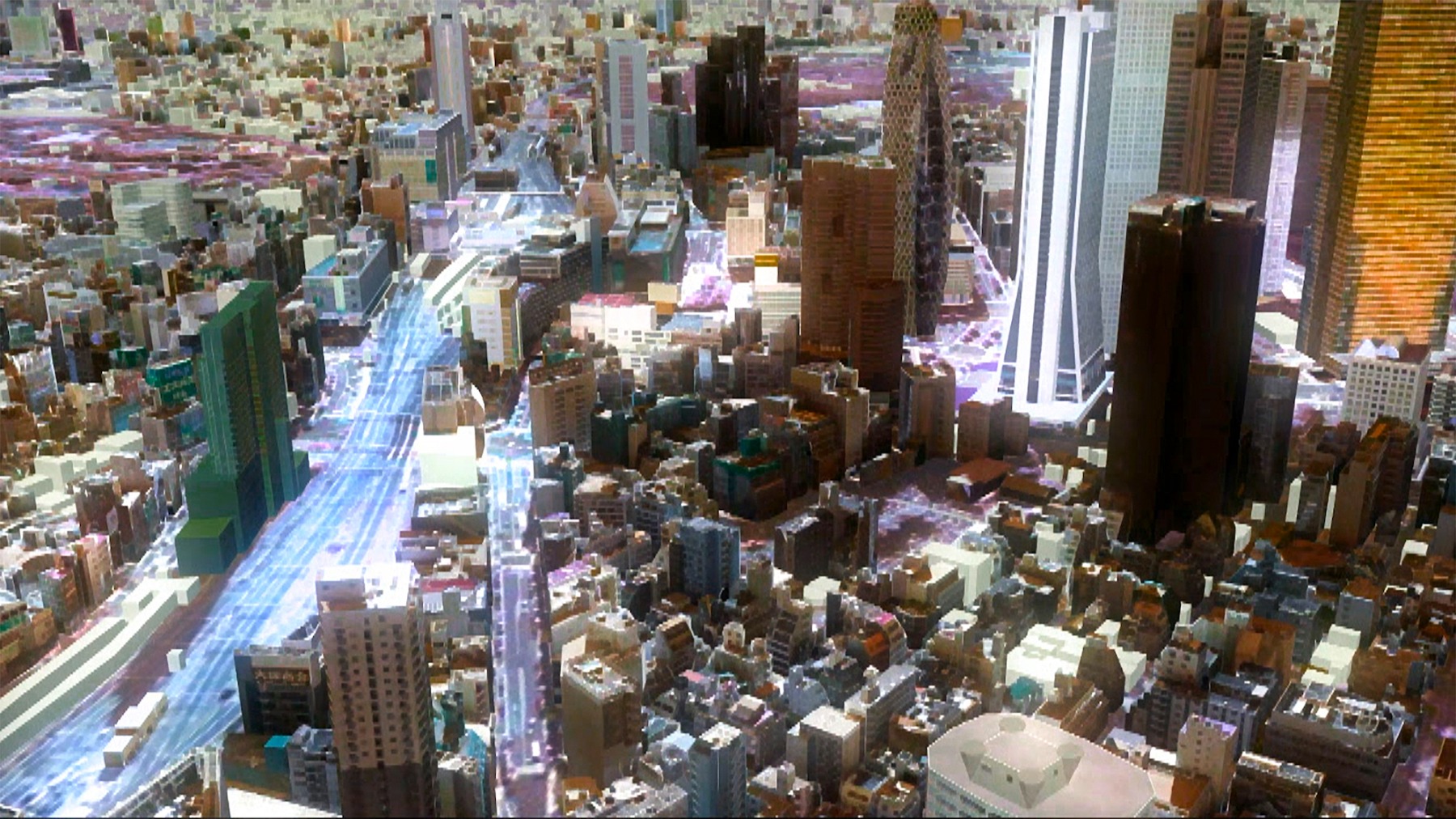
“Algorithms no longer function merely as tools but increasingly as agents that generate images, texts, and decisions, reshaping how creativity, authorship, and human agency are understood”. Do you think this shift from tools to agents has already happened?
I think it has, but it is an agency without an aim. If it had a consciousness it would be another story, I guess.
What was the main idea behind choosing the myth of Galatea as the central theme for this exhibition? Is everything we are going through already encoded in Greek mythology?
It’s one of the most archetypical desires of human kind to bring something human made to life. In Estonian mythology we have the figure of “kratt” for example. (A kratt was a creature formed from hay or of old household implements by its master, who then had to give the devil three drops of blood to bring life to the kratt). Frankenstein monster is an example from pop culture. Up to the A-Ha “Take on Me” video of they are all versions of that same Pygmalion and Galatea myth. But I think desire always goes hand in hand with fear. One also has to fear what it desires.
To answer the second question – myths are archaic version of pop culture and pop culture reveals the true desires and fears in culture according to Žižek at least. But when encountering a problem or question I am not in the first instance looking for a correspondence with some Greek or other myth. Using mythical metaphors in order to analyse contemporary questions has usually not been my cup of tea. But sometimes it doesn’t hurt to look into them
Photo: Aron Urb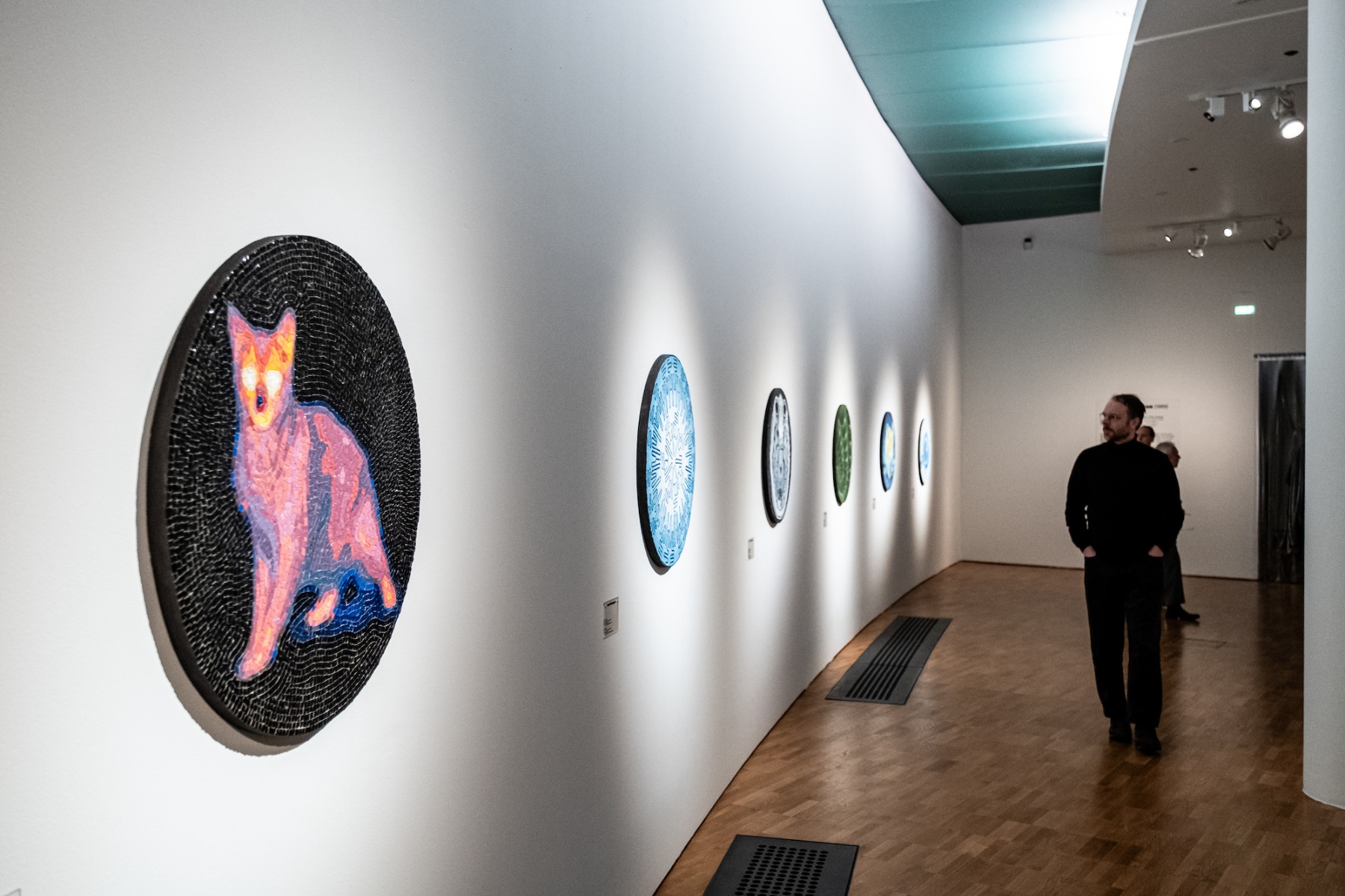
Could you describe how the balance between human artistic intention and AI-generated or AI-influenced processes is reflected in the selected artworks? How do the “historical” and contemporary works included in the exhibition contribute to the overall narrative?
There are artists who use and train AI for their works like Jan Zuiderveld, Maria Arnal, Marge Monko and Olga Jürgenson. There are artists who manifest that they are not using AI at all or at least in the context of this particular work exhibited like Sten Saarits. There are artists who comment on the situation of the digital culture in broader sense like Jens Settergren, Darja Popolitova, Jon Rafman or Timo Toots. Although Timo also has part of his work programmed by AI – so he has no full control over it. Andreas Albrectsen is making hand made enlargements of poetic recaptchas and desktop images partly or fully generated by AI.
18 century book illustrator Bernard Picart is depicting a popular motive at the time titled “The Triumph of Galateia” but it is not a depiction of Pygmalion myth but refers to another mythological plot – namely the story of nereid Galateia whos lover is killed by a jealous cyclops and who then out of grief turns his lovers body into a creek. So it also contains the idea of transformation like the Pygmalion myth. And the question of transformation is the most crucial one in the context of AI – will it become a transformative consciousness or not?
Photo: Aron Urb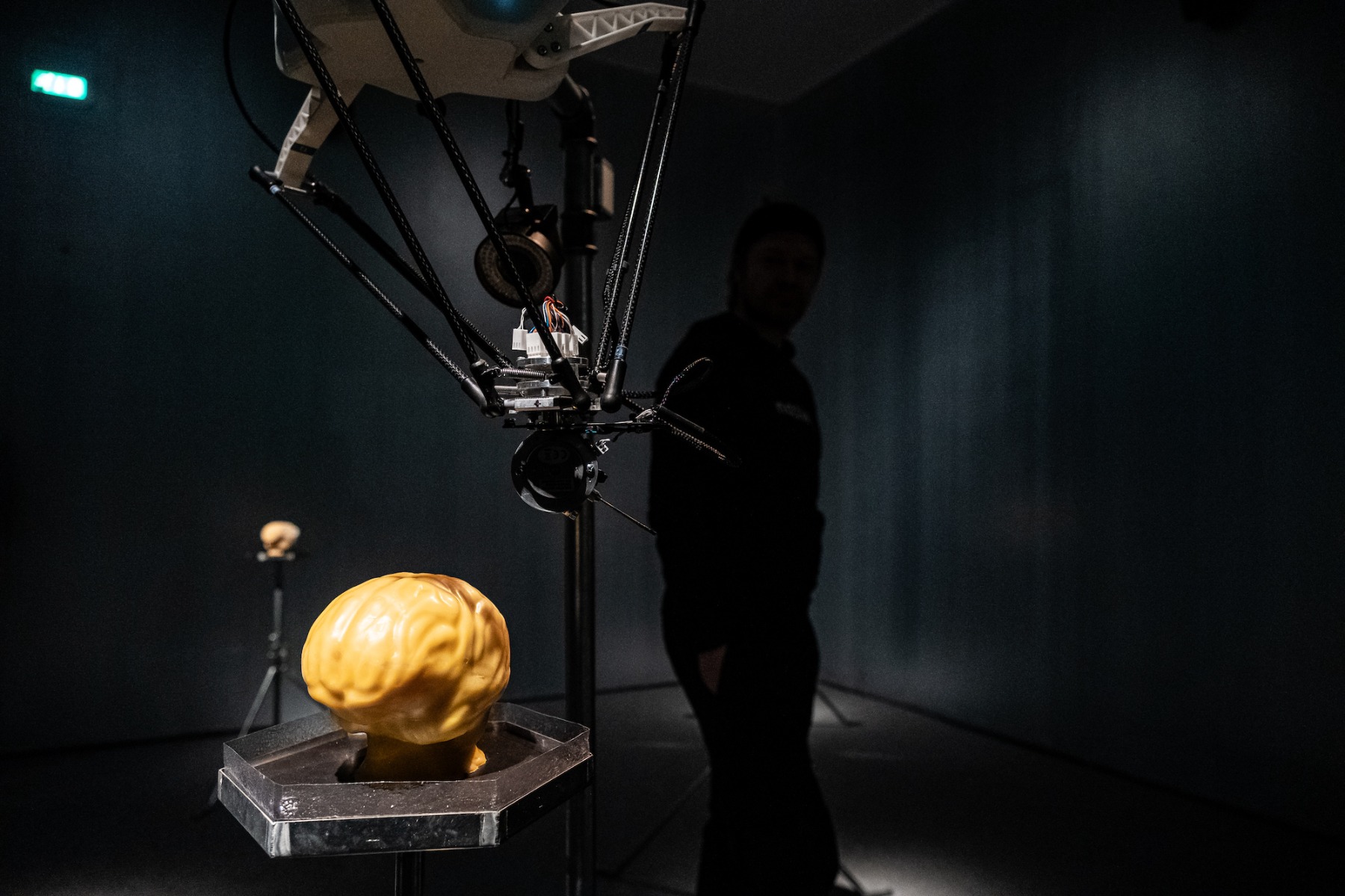
Photo: Aron Urb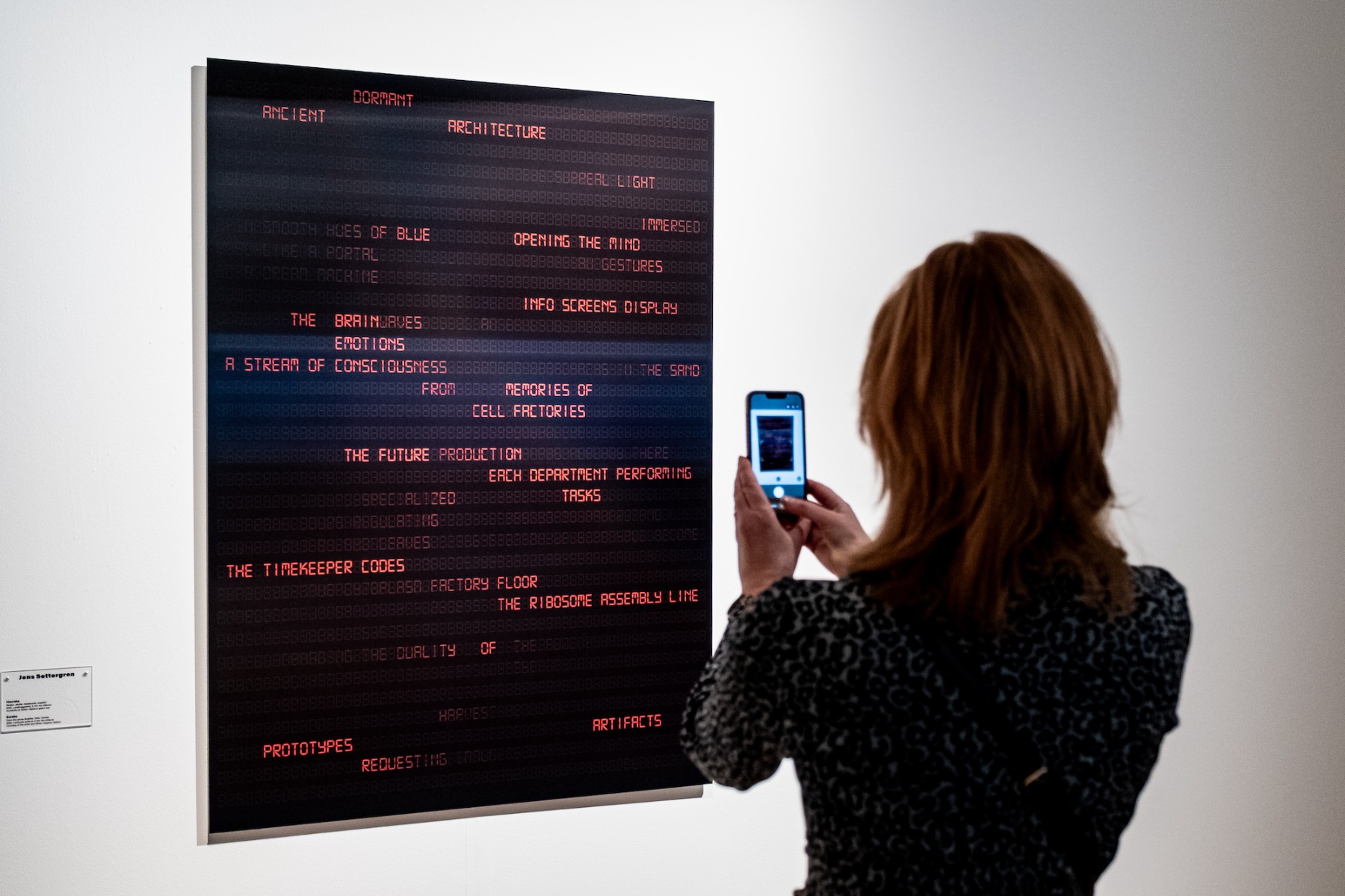
How does this exhibition fit within Kumu’s broader programme for its 20th anniversary, and why is it significant to open with this theme now?
Because its important to look into future even if this isn’t the most prettiest sights and Kumu did not want to look into its own glorious past on its 20th birthday. But there is a history of being engaged with the technological transformations and their impact on art and culture throughout these 20 years. Over the past years perhaps the questions of anthroposcene and decolonialism as well as promoting historical and contemporary female artists have overshadowed the questions of technological utopias and dystopias in our program but the time was ripe to ask these questions. Over the past two-three years quite many exhibitions have been done all over Europe on this topic but I was trying to put a focus on human experience amongst the digital culture. AI is just another step in the development that started with PC-s in the eighties and with the internet in the nineties. I think it was already then when the Pygmalion myth was used as a metaphor for the AI. But only now, when the development of artificial intelligence and biomechanical humanoid robots has reached the next phase, is there reason to talk about it more seriously.
Anders Härm at the exhibition “Triumph of Galatea: Art in the Age of Artificial Intelligence"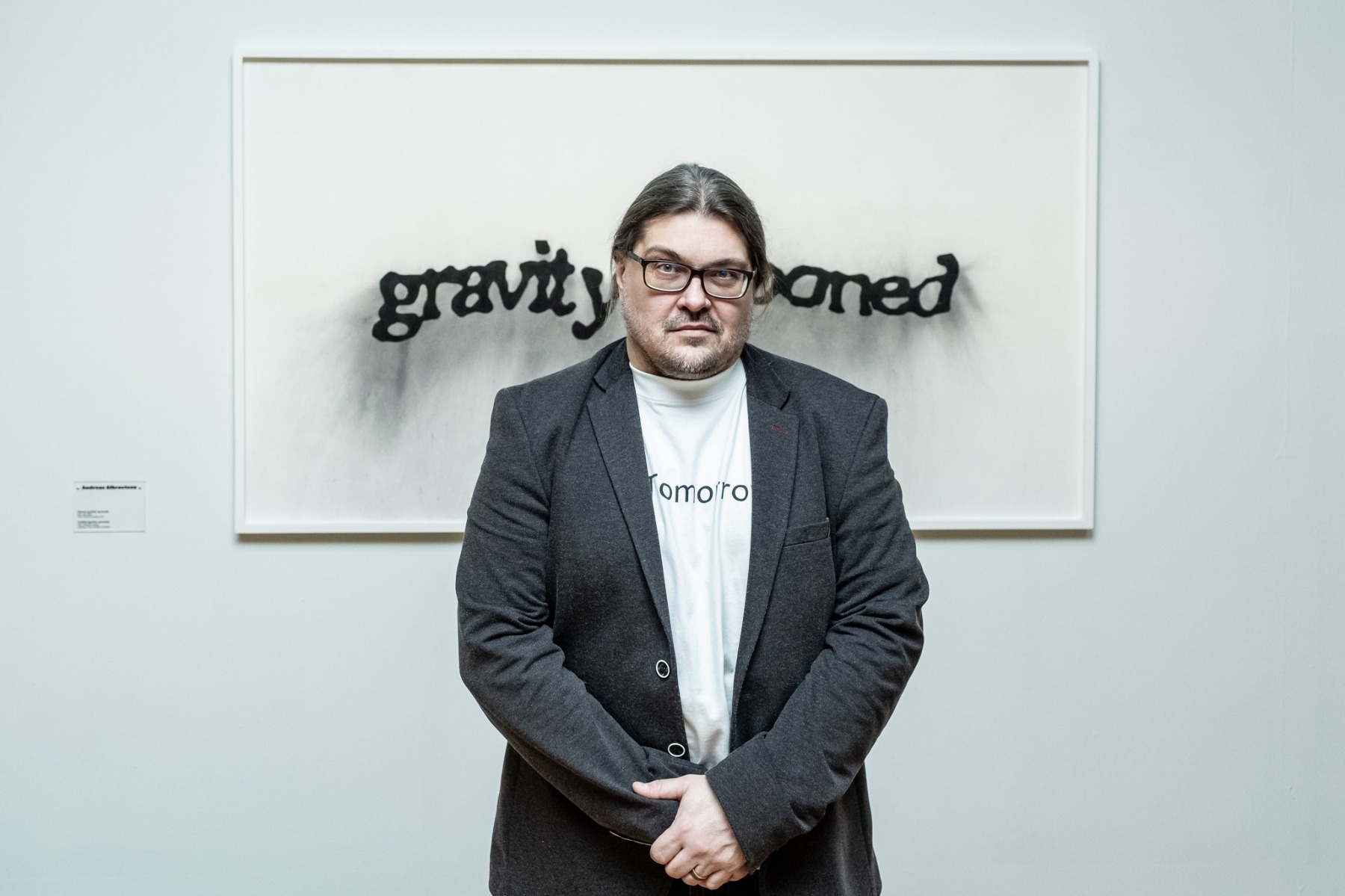
Did really AI write the exhibition concept?
Not really. It did write the wall text though :) If one would ask the Coffee Machine next to it, the damn thing has a very strong opinion on it – Coffee Machine namely thinks the text sucks.
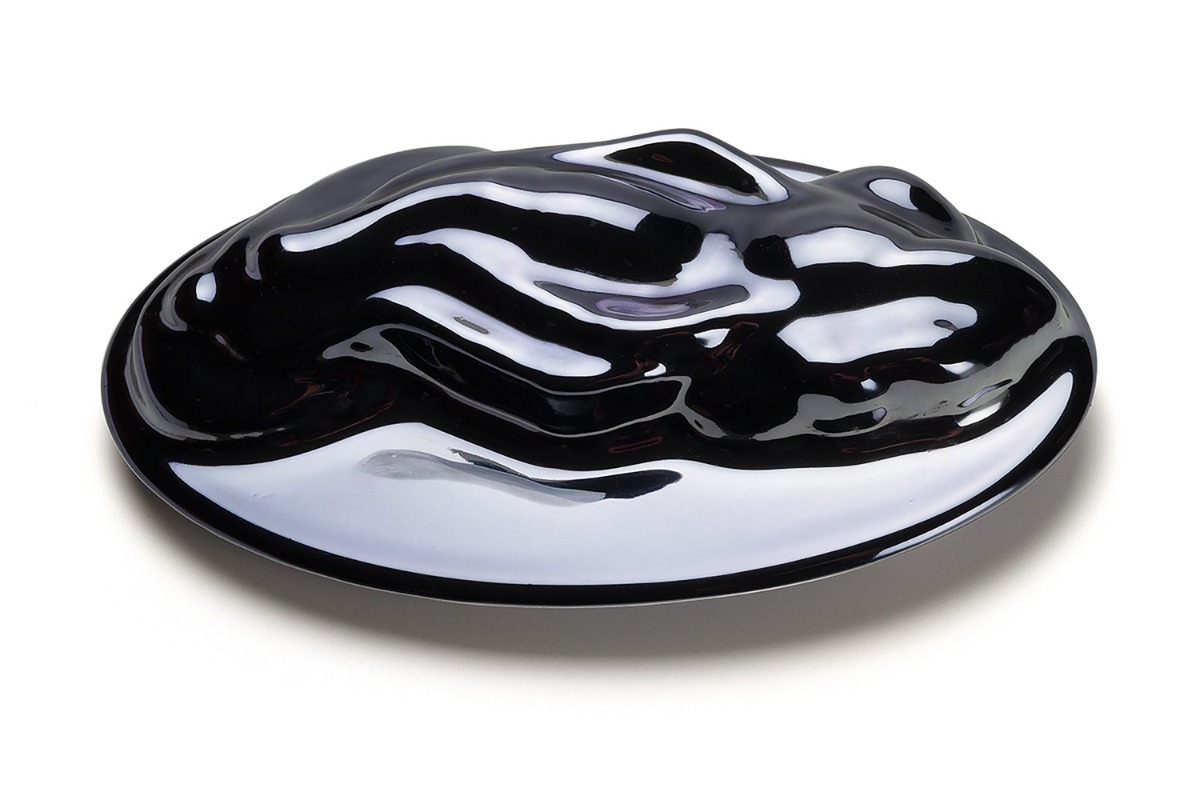
Upper image: Darja Popolitova (1989). Narcissus II. 2017. Vacuum-formed plastic, chrome, silver and steel. Collection of Kadri Mälk. Photo: Tiit Rammul
