


What to see in the Baltics
JULY-AUGUST, 2026
Winter is winter, and summer is summer. What more is there to say? During the summer months, galleries and exhibition spaces become especially inviting – сool oases where we can absorb what we see and take time to reflect. The art scene across the Baltic states never takes a break. Here is our selection of exhibitions for the next two months.
ESTONIA, Tallinn
Kumu Art Museum
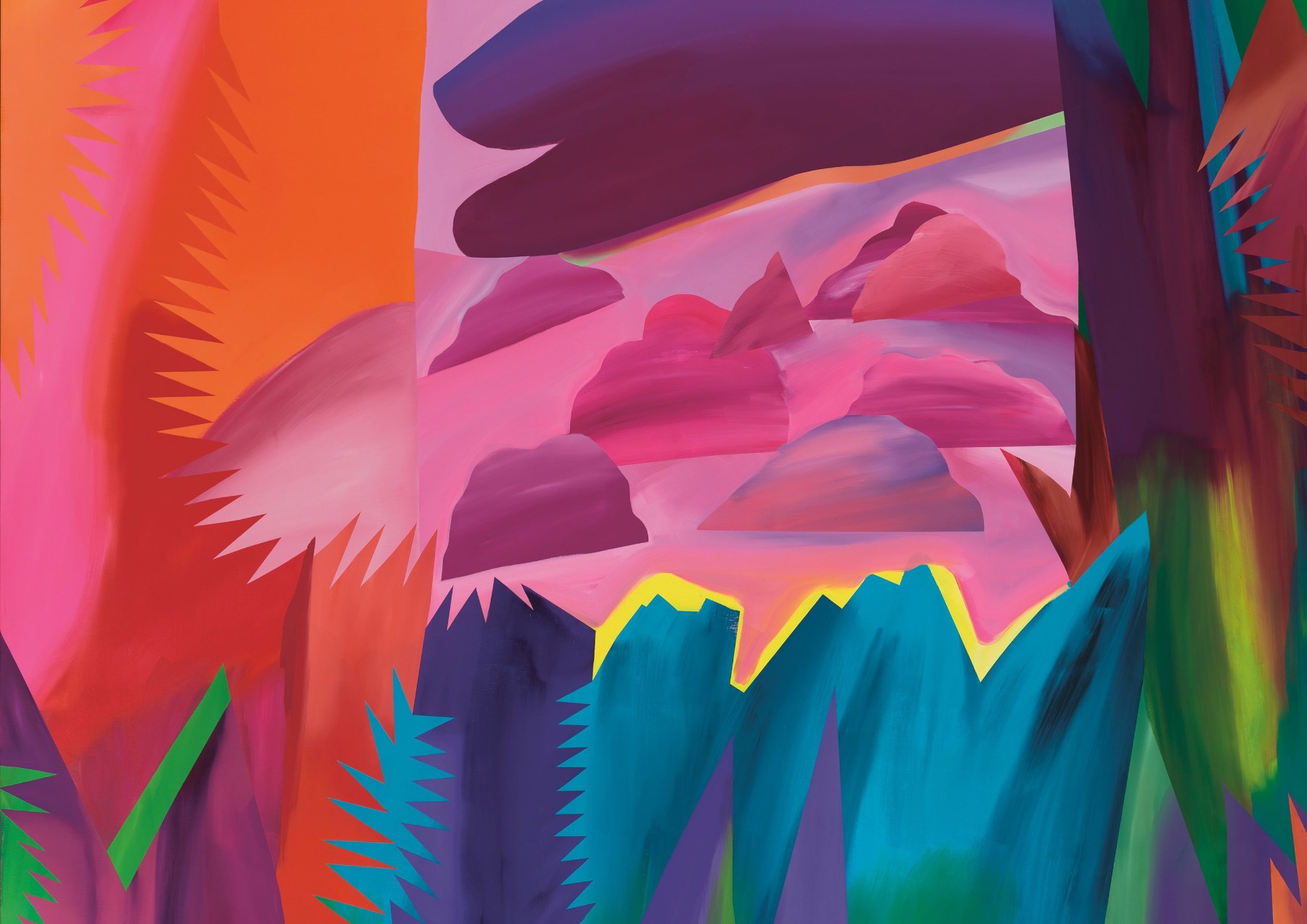
Kristi Kongi (1985). “I think all the world has turned into what I’m seeing” (O’Keeffe). Detail. 2025. Oil on canvas. Courtesy of the artist
Kristi Kongi: Chromatic Drift
Until 10 October
The painter Kristi Kongi’s large-scale solo exhibition is one of the highlights of the Kumu Art Museum’s anniversary year. It is the first solo exhibition by an Estonian woman artist in Kumu’s great exhibition hall, featuring new works created specifically for this event. The exhibition evokes a holistic sensory and spatial experience centred on colour, a hallmark of Kristi Kongi’s oeuvre. Extending beyond the canvas, colours and motifs have spilled onto the floor, walls, windows and the outdoor space.
Chromatic Drift reflects the artist’s inner journeys over the past few years, during which colour has served the purpose of mapping and preserving both states of mind and memories. The works feature recurring motifs of openings and passages, which reflect a sensory journey to somewhere else, a parallel world. The staircase, both as an image and as an object, gives direction for either moving forward or staying put. These empty landscapes created by Kongi do not speak of arrival, but instead draw attention to a state of in-betweenness.
Enno Hallek (1931‒2025). Fractal. 1990‒2010. Oil on plywood and screws. Art Museum of Estonia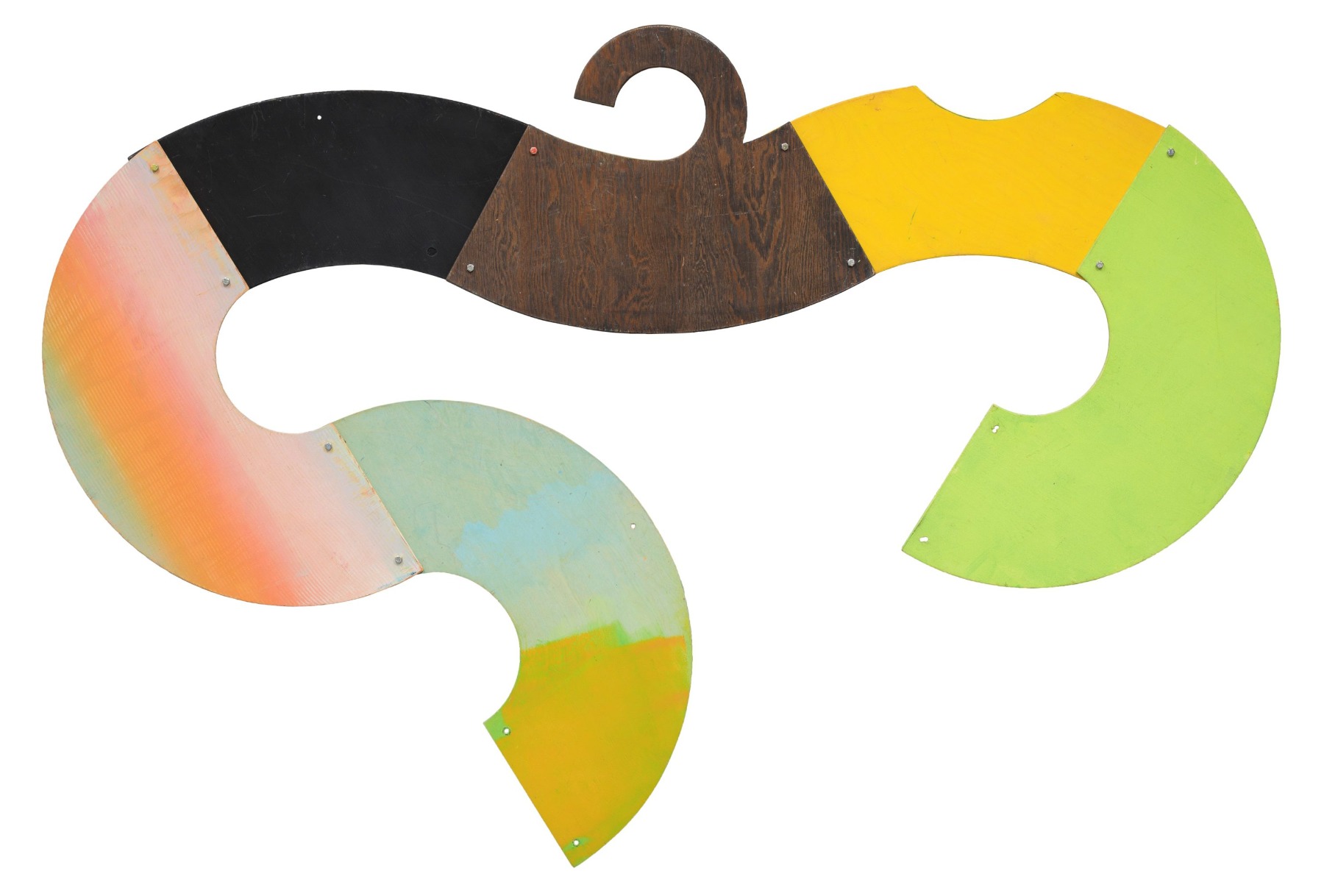
Enno Hallek: Portable Sunset
Until 18 October
Enno Hallek (1931–2025) was born in 1931 in Rohuküla, Lääne County. In 1943, he made his way to Sweden as a boat refugee, where he became a significant international artist and one of the most recognised Estonian artists in exile. Hallek obtained his art education at the Royal Institute of Arts in Stockholm, where he later worked as a professor of painting. In Sweden, he is equally known as an author of works of art in the public space, and his entire oeuvre is underpinned by a belief in art as inherently democratic and accessible to all.
During the 1960s and 1970s, Hallek developed an innovative approach to painting, focusing on vividly coloured wooden objects that push beyond the picture frame into the surrounding space, inhabiting a territory somewhere between painting and sculpture. In the 1990s, the artist turned to plywood as a base material and began creating modular paintings equipped with handles, portable and playfully interchangeable, which re-conceive the very idea of a painting as a precious object meant for gallery walls. These portable artworks also preserve Hallek’s own experience as a refugee: departing Estonia in his family’s fishing boat, he could bring with him only what mattered most: memories of the endless childhood fishing trips out at sea and the sunsets he beheld there, which constituted the future artist’s earliest aesthetic experiences.
Kai Art Centre
Magnhild Øen Nordahl, series 'Objects at Hand' (2022). Photo: Paul Kuimet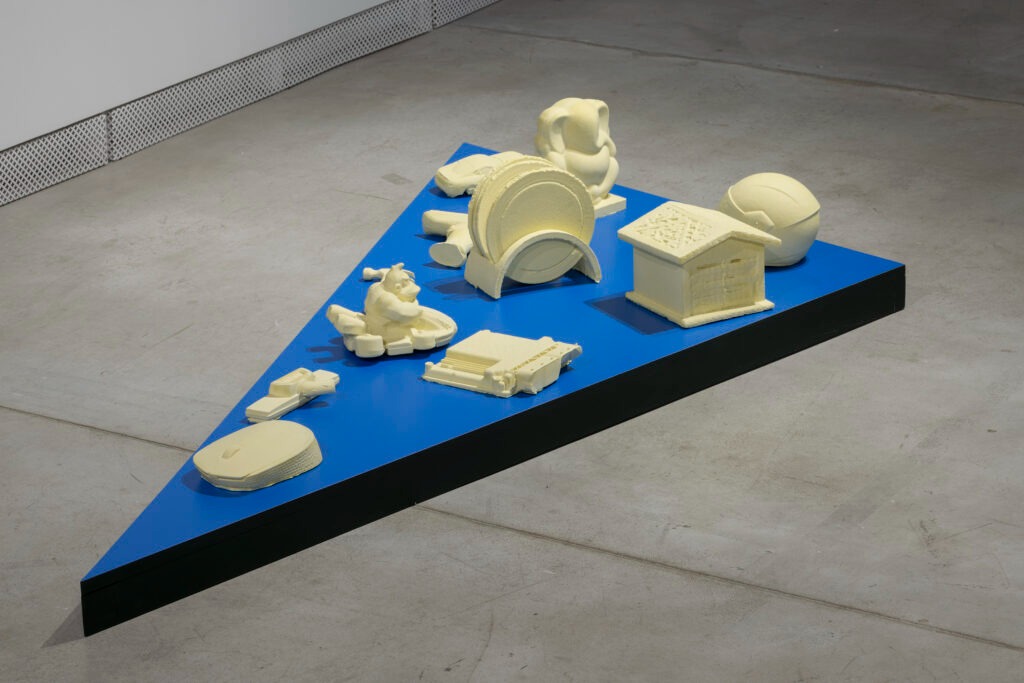
Paul Kuimet & Magnhild Øen Nordahl. Exploded View
Until 9 August
In the forthcoming exhibition Exploded View, new and recent works by Estonian artist Paul Kuimet and Norwegian artist Magnhild Øen Nordahl consider the relationship between visual representation and the lived experience of spaces and objects. Curated by Anthea Buys (ZA). The title, Exploded View, refers to a method of technical drawing in which the components of a functional object, tool or machine are depicted in such a way that their component parts are visible, in order to show how they should be assembled. This taking apart in order to reconfigure is a central metaphor in the exhibition. Exploded View presents two parallel but intersecting artistic investigations: Kuimet’s new analogue photographic and filmic works take as their starting point hand-drawn architectural plans for domestic spaces. These drawings are transformed by lens-based looking and its material outputs – the alluring depth of analogue photographic surfaces and the distinctive materiality of 16mm film.
Nordahl’s sculptures are also about journeys of material and visual translation, and her practice is at once research-based and embodied. The works presented in this exhibition look at how we experience objects that have gone through digital and physical abstractions, which in turn lead to changes in form, function and cultural meaning. A juxtaposition of two profoundly self-coherent practices, Exploded View suggests a vital connection between scale, imaging, materiality, embodiement and perception.
Tallinn Art Hall
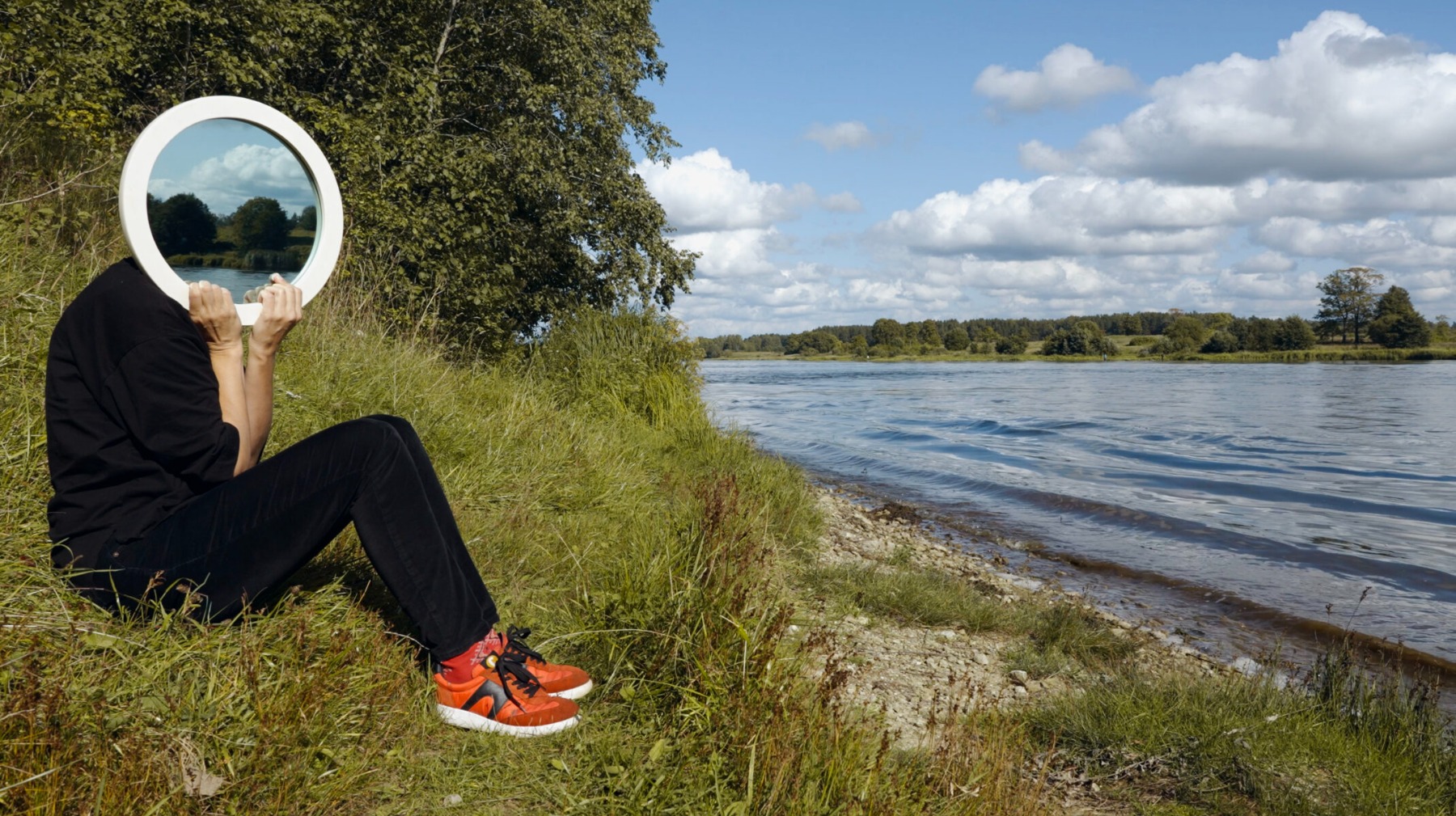
Maria Kapajeva. I Am A Border
Until 16 August
Titled I Am a Border, the exhibition brings together 16 works created between 2014 and 2026, many of them produced specifically for this show. The exhibition is the culmination of more than a decade of artistic research into the border as a geographical, bodily, and emotional phenomenon. Its point of departure is the region beyond Narva, Narvataguse – the former homeland of the artist’s paternal family, now located within the Russian border zone and inaccessible to the family today. Through photographs, video works, installations, and textiles, Kapajeva approaches borderliness not as a fixed place, but as a continuous state of transition – never fully one thing, never fully becoming the other.
The works intertwine the Narva River, the post-operative body, family archives, a disappearing language, and disrupted connections to landscape and heritage. One of the exhibition’s central works, Four Generations Later, features the artist’s relatives reading dialect texts from the Narvataguse region recorded in 1947 – a language that has become partly incomprehensible even to younger Russian-speaking generations. The installations incorporate materials such as maps from the family archive, diary entries by Kapajeva’s father, a family tree drawn by a geneticist, and a blanket that once belonged to the artist’s grandmother. Several works also explore the fluidity of the body and identity, connecting queer perspectives with ecology and border landscapes
Fotografiska
Filips Šmits 'Guardian of the Blocks', from the series 'Let's Get Sun-Kissed', 2025 © Filips Smits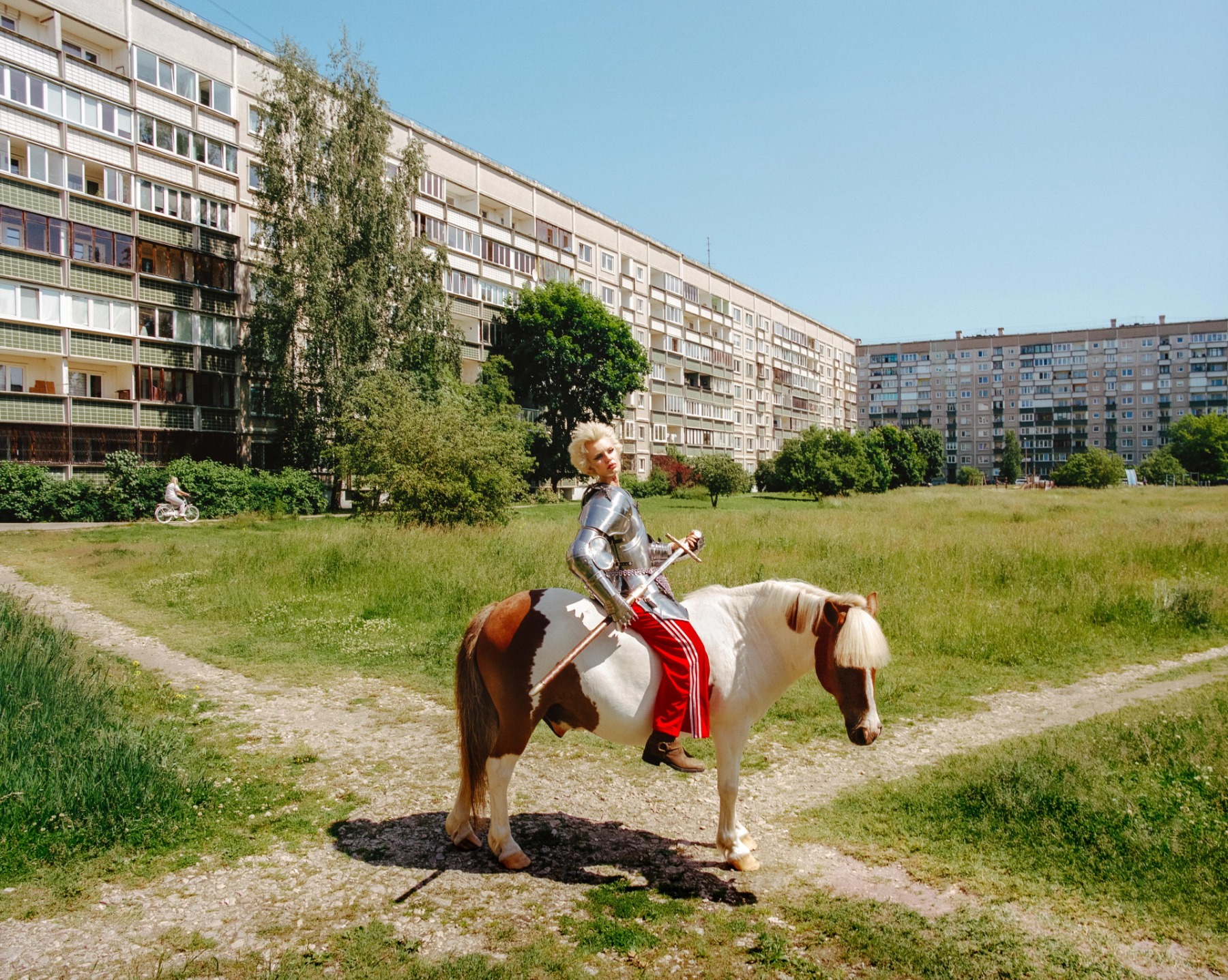
Emerging Artists 2026: The Baltics & Finland
Until 1 November
The first exhibition of Fotografiska Tallinn’s new initiative, Emerging Artists: The Baltics & Finland, brings forward rising photographic talents from the region – a new generation of bold and distinctive voices pointing toward the medium’s possible futures. The platform’s inaugural exhibition brings together artists from four countries, whose works open up personal worlds, test the boundaries of photography, and offer new ways to experience the present moment. The artists have been selected through an international open call.
The exhibition Emerging Artists 2026: The Baltics & Finland features the following artists: Annemarija Gulbe, Krišjānis Elviks, Anna Ansone ft. Anna Marija Puķe (Latvia), Ieva Baltaduonytė (Lithuania), Shia Rówan Conlon (Finland), Karl Ketamo (Finland), Anna-Liisa Kree (Estonia), Andra Rahe (Estonia), Filips Smits (Latvia), Pavelas Šalaikiskis (Lithuania). The selected artists engage with photographic material in markedly different ways: by staging carefully constructed scenes for the camera; by observing themselves and their surroundings closely and honestly, yet also with playfulness and humour; and by shaping contemporary moods through their series, bringing into view the more subtle undercurrents of society.
Rihards Štībelis 2006. Amālijas iela 5a © Inta Ruka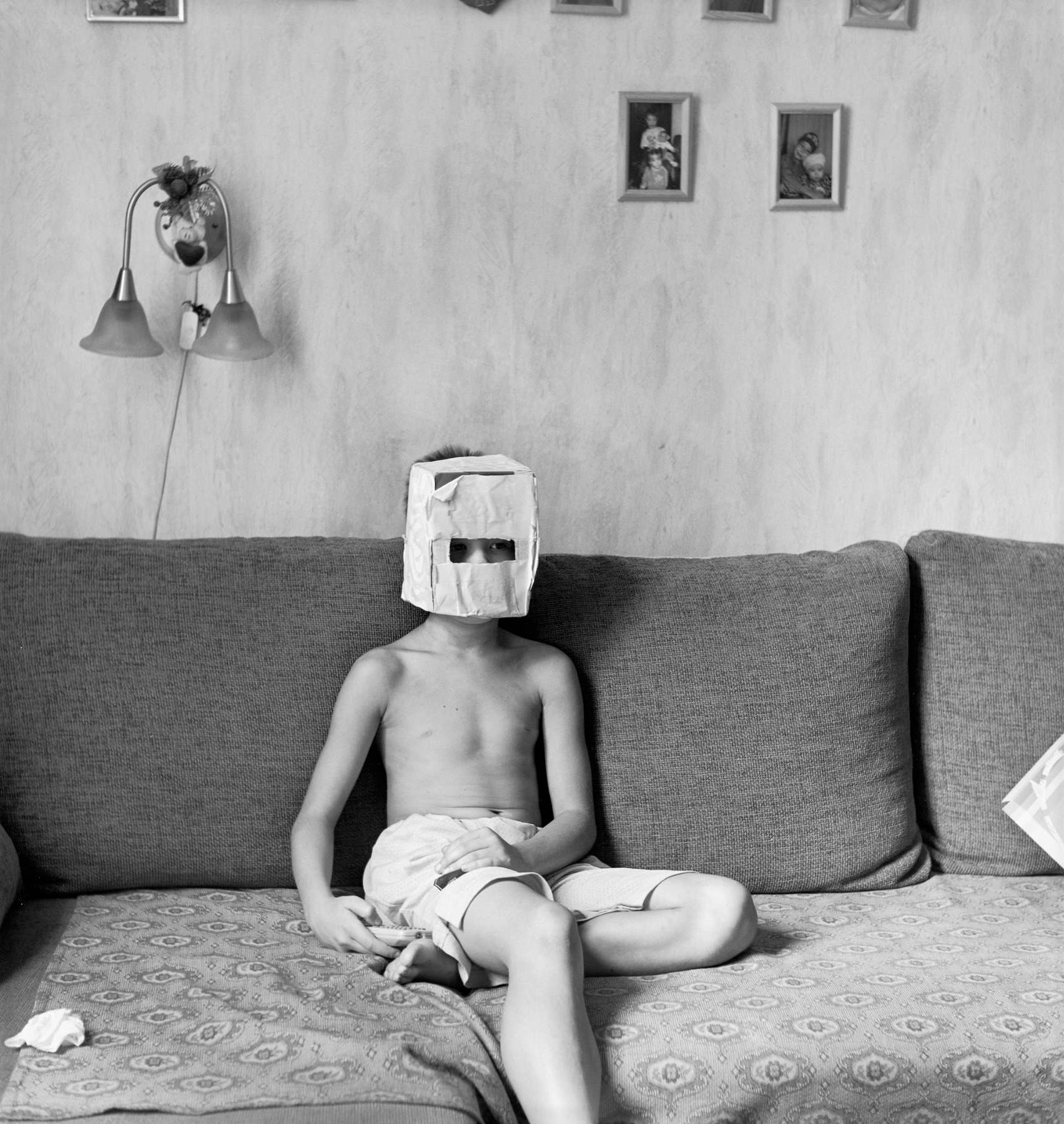
Inta Ruka. Places Called Home
Until 14 October
Between 1983 and 2008, photographer Inta Ruka photographed people in her native Latvia, capturing their lives in rooms, courtyards, and streets where everyday life unfolds. She returned to the same individuals repeatedly, working slowly and allowing trust to develop over time. The resulting photographs are not merely documentary, but preserve places, relationships, and lived experience from which a sense of belonging emerges.
The exhibition Places Called Home brings together over 80 photographs from two series that create a quiet yet powerful narrative of Latvia in transition and of the people who call these places home. The series My Country People was created over the course of two decades in Balvi, a rural region of Latvia near the Russian border and the hometown of Ruka’s mother. Ruka began visiting the area in the early 1980s and gradually became acquainted with the villagers, returning to them again and again over the years. With this series, Ruka represented Latvia at the 1999 Venice Biennale.
Estonian Museum of Applied Art and Design
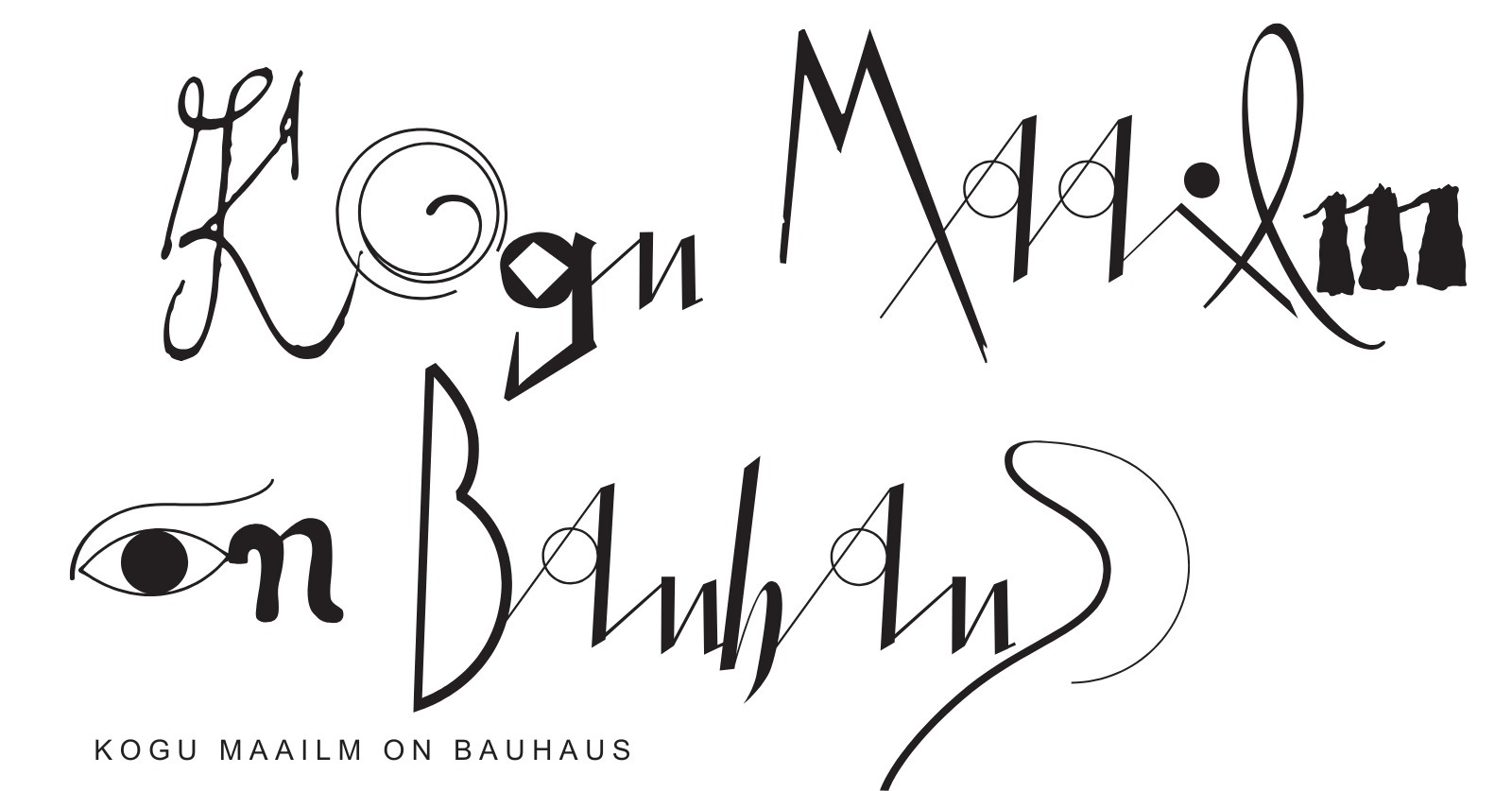
The Whole World a Bauhaus
Until 4 October
The exhibition “The Whole World a Bauhaus” presents a diverse, engaging, and surprising insight into the work and life of the Bauhaus art school through eight thematic chapters. It focuses on one of the most important art schools of the 20th century, founded in 1919 in Weimar.
Through photographs, original drawings, models, documents, films, and objects, the exhibition invites visitors to explore the wide scope and versatility of Bauhaus modernist design theory and practice. This is reflected in architecture, everyday objects, painting, and theatre, as well as in its teaching methods and formats. The aim of Bauhaus was to create a better everyday environment and to promote new ways of living. During its 14 years of operation, Bauhaus was an institution that constantly redefined and reinvented itself. Its direction was continuously discussed and debated by its three directors – architects Walter Gropius, Hannes Meyer, and Ludwig Mies van der Rohe – as well as by Bauhaus masters and student.
Contemporary Art Museum of Estonia (EKKM)
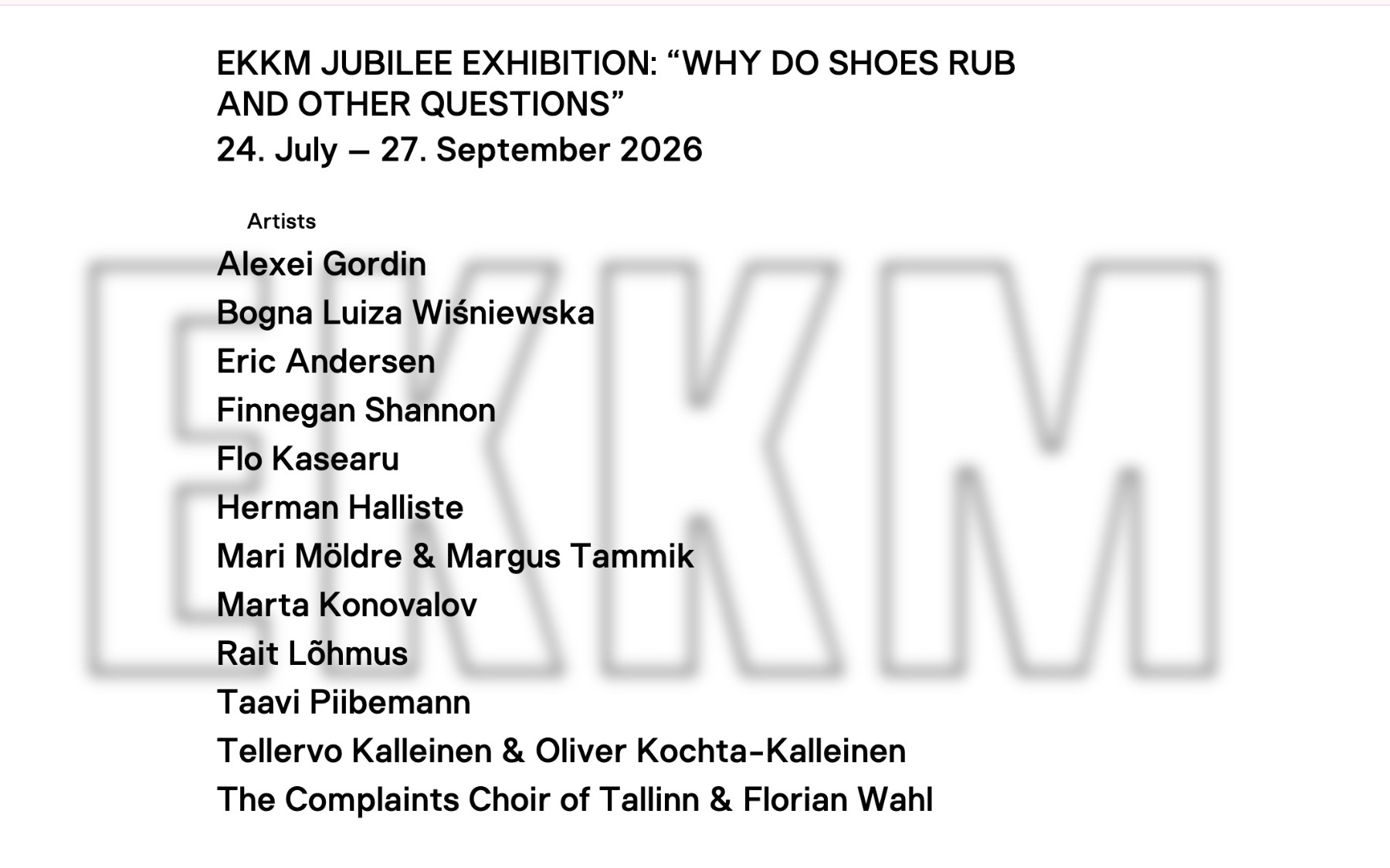
EKKM jubilee exhibition: “WHY DO SHOES RUB AND OTHER QUESTIONS”
24 July – 27 September 2026
On July 23, the jubilee exhibition of the Contemporary Art Museum of Estonia (EKKM), Why Do Shoes Rub and Other Questions, will open to mark the museum’s 20th year of operation. The exhibition will invert the museum to celebrate its anniversary outdoors with a collectively curated exhibition. The museum is more than its building; it is growing out of it, flowing into the courtyard, the gardens and the street. The exhibition, which takes a look at both EKKM and its wider role as an art institution, is inspired by the image of a corn. An inconvenience that cannot be ignored, and which is at the same time a sign of the body’s defence mechanism, expressing resistance and care.
The exhibition celebrates the museum itself, but even more so all the artists, art workers, and the audiences who have been part of the ongoing creation of this place. The exhibition, which can be experienced around the clock, highlights the museum as a social sculpture – a temporary monument that captures the energy of 20 years of collaborations. As an ephemeral, regenerative, and changing form, much like EKKM itself, the exhibition is subject to seasonality and weather conditions, and practices a continuous state of persistence. The exhibition brings together works by artists based in Estonia, Finland, Denmark, and the United States with pieces from the collections of EKKM, Estonian Art Museum, and the Museum of Contemporary Art Roskilde. New works are going to be presented by Alexei Gordin, Flo Kasearu, Rait Lõhmus and Taavi Piibemann. In addition, EKKM has initiated Tellervo Kalleinen and Oliver Kochta-Kalleinen’s open-source project The Complaints Choir which has culminated in a collaboration between disgruntled citizens and local musician Florian Wahl. A music video for the new song No Way! will be presented at the exhibition
Temnikova & Kasela gallery
Zody Burke. 'Roller coaster piece', model roller coaster, found objects from family ranch in Sacramento CA, other mixed media 2026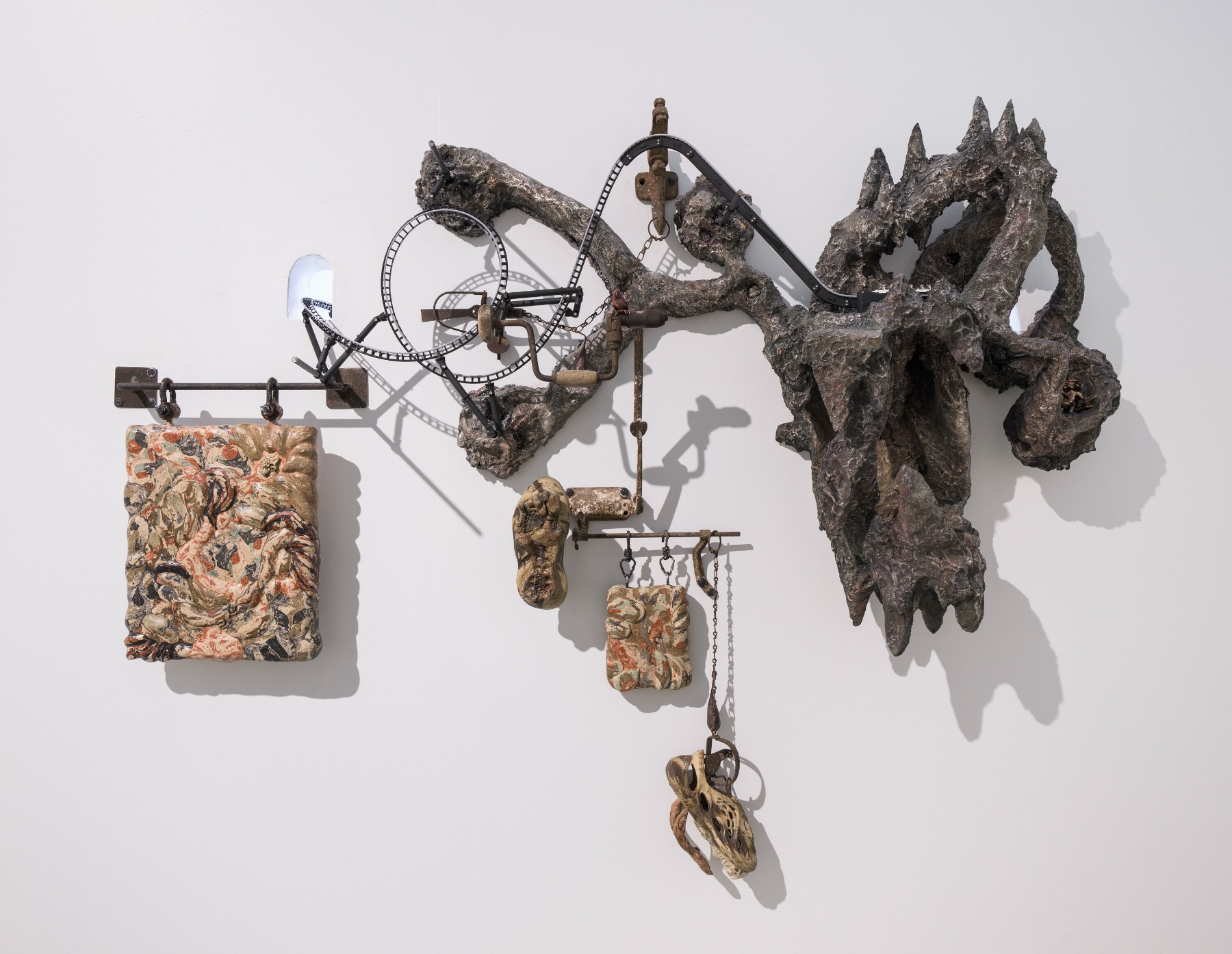
Klara Zetterholm, Zody Burke. Ersatz Strata
Until 15 August
Temnikova & Kasela Gallery presents group exhibition by American Tallinn based artist Zody Burke and Stockholm based artist Klara Zetterholm. The textual component of the exhibition, developed in collaboration with Jaakko Pallasvuo, forms a body of pseudo-documents that expands the fictional world while undermining the assumed objectivity of museums. The joint exhibition constructs a fictional archaeological site, drawing on the visual language and narrative strategies of natural history museums.
Through reliefs, sculptures, and kinetic elements, the artists present a site that appears to have been repeatedly rediscovered by different cultures, each interpreting it in its own way. The exhibition explores how meaning is produced through display, how history is staged, and how institutions shape our understanding of the past. Klara Zetterholm’s earlier fictional archaeology project, Discoveries at Valdaesti Umdar, provides one point of departure. Her hyperrealistic figures merge prehistoric reconstruction with contemporary fantasy, revealing the overlap between scientific authority and pop-cultural imagination. Zody Burke, in turn, focuses on identity formation, national mythologies, and the aesthetics of institutional spaces. Together, they create a multilayered fictional site in which each “cultural layer” reflects its own era and its modes of understanding.
PoCo museum
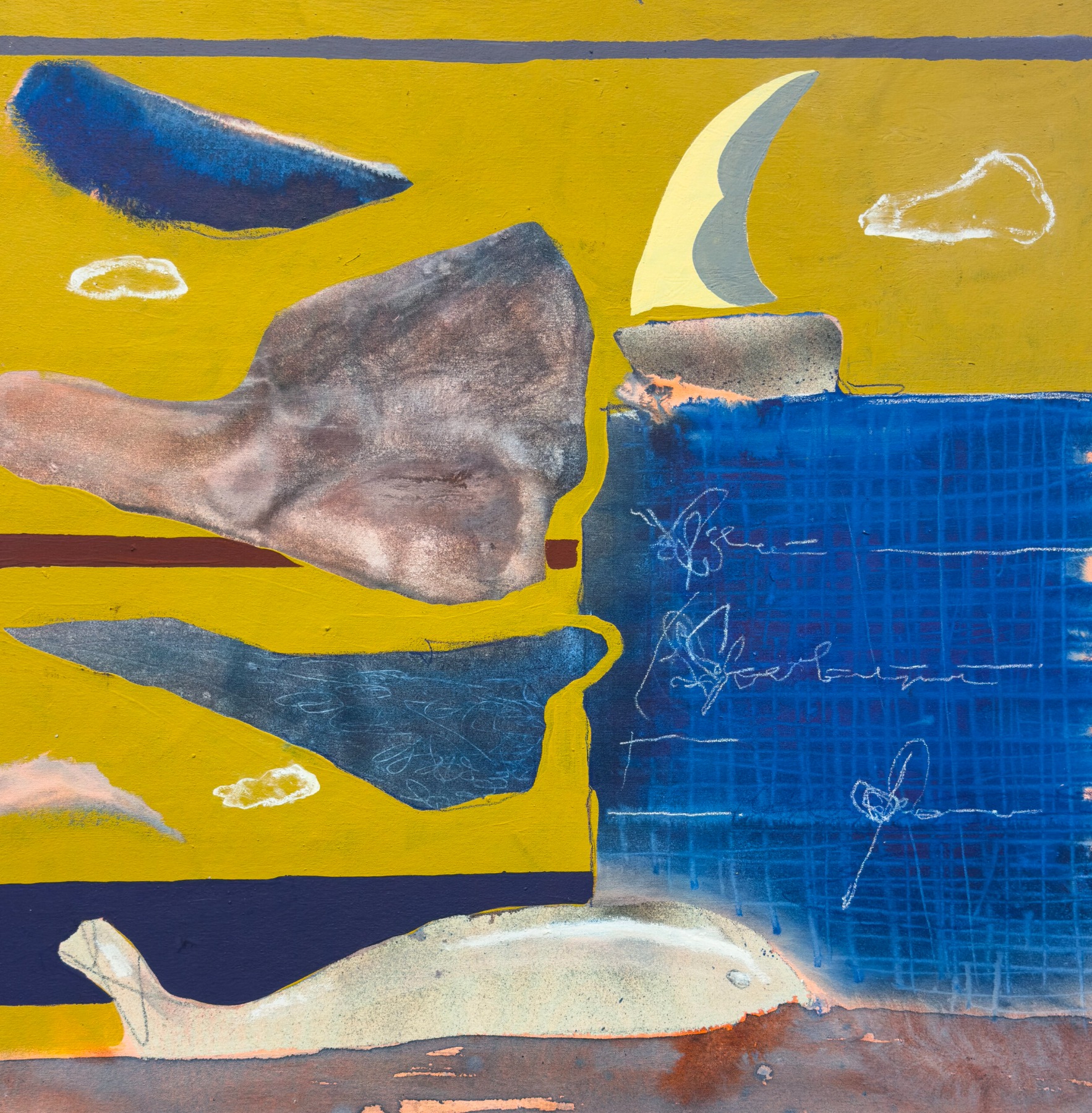
Consulate of EGS
Until 31 October
The multilayered, cross-material exhibition brings together new & old paintings, sculptures, glass works, documentary material and site-specific installations. The exhibition reflects on the intertwined histories of Helsinki and Tallinn as well as EGS’s long connection to Tallinn’s industrial peripheries, abandoned factories and self-organised graffiti sites.
EGS (b. 1974) is Finland’s most internationally acclaimed graffiti artist, known for bridging traditional graffiti with contemporary art through stylized world maps, sculptures, and glass art. Emerging from the mid-80s Finnish graffiti scene, he has painted in over 50 countries, focusing on themes of geography, political history, and identity.
ESTONIA, Tartu
Tartu Art Museum
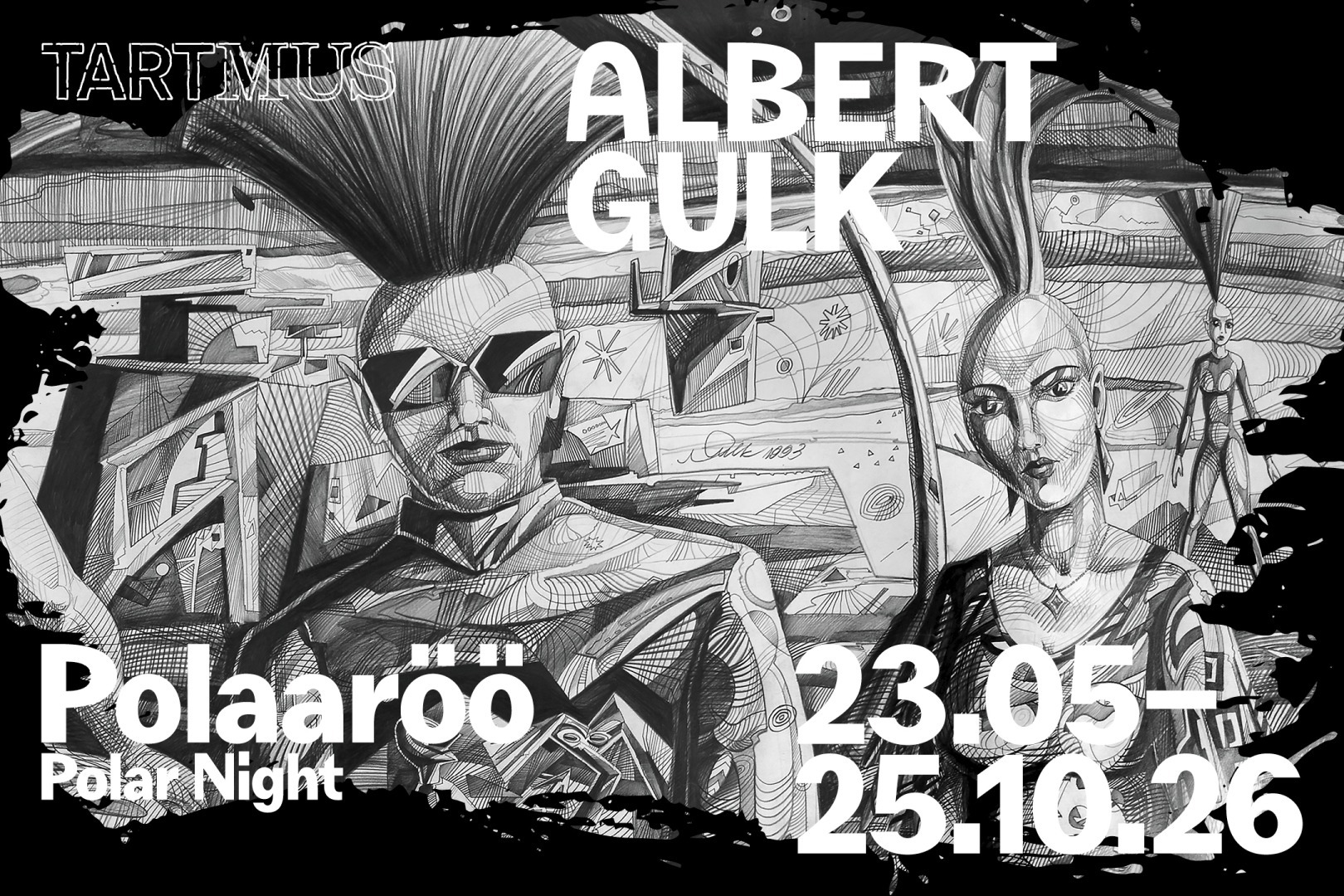
Albert Gulk. Polar Night
Until 25 October
At the beginning of the 1990s Albert Gulk (born in 1969 in Antsla) began making pencil drawings of monumental size, filling the surface of the paper with densely inhabited worlds. The exhibition Polar Night will offer a selection of drawings and watercolours from this period. In Gulk’s pictures, landscapes turn into creatures and creatures into landscapes. There are no clear lines between species: a bug might take on humanoid features and a person might take on bestial characteristics. Even the border between the living and the mechanical becomes blurred: a bird might resemble a machine, and a landscape might seem to breathe.
These works reflect deep attention to nature, an interest in popular scientific illustrations and influences from science fiction and popular culture. The exhibition focuses on the period where all these layers are visible simultaneously. The exhibition is accompanied by a catalogue, which takes a wider view of the artist’s works from this period and also includes reproductions of some of his largest drawings, measuring upwards of 7 or 10 meter.
Kogo gallery
Photo: Marje Eelma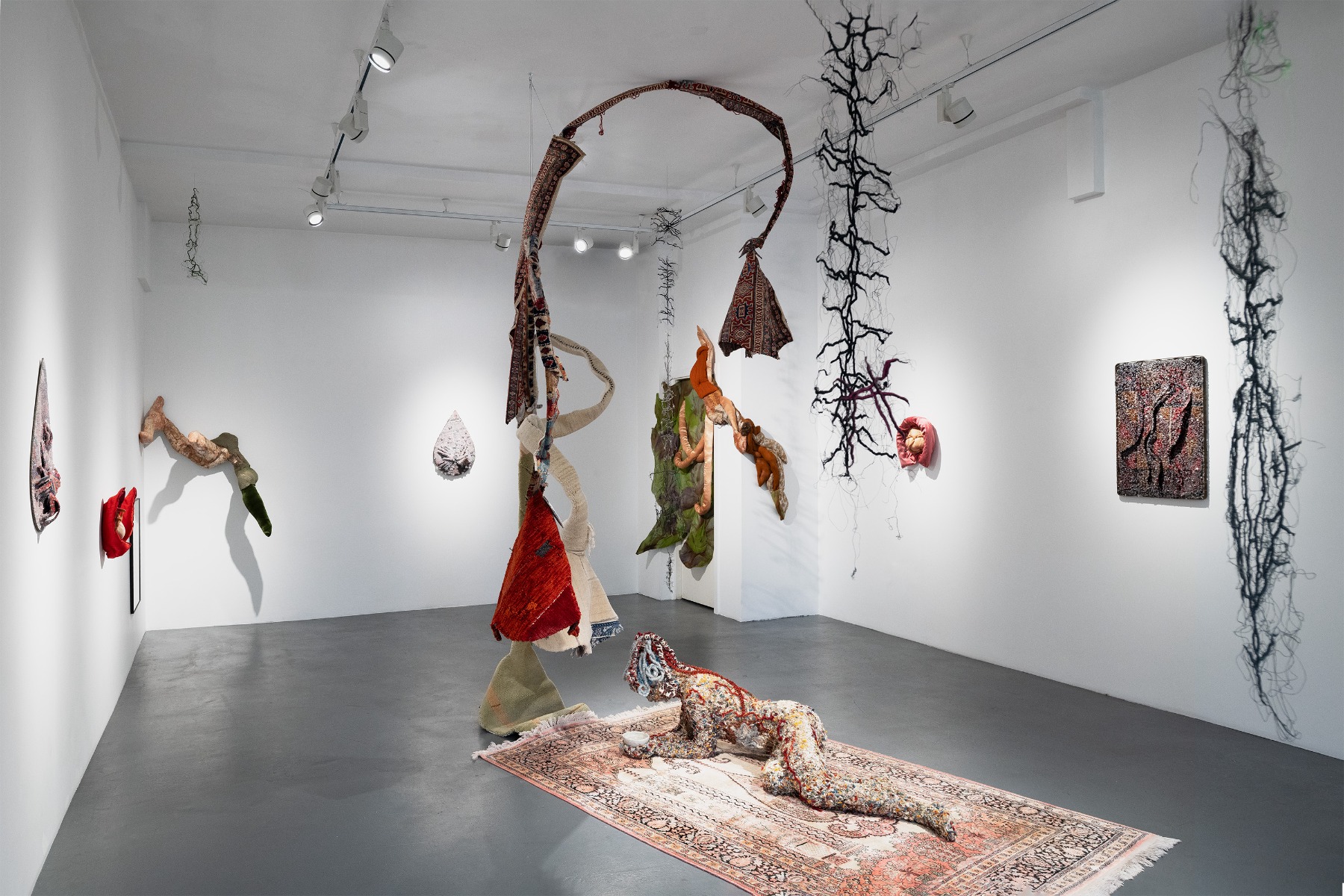
Anna Malicka, Noushin Redjaian, Kadri Liis Rääk. Thrifters and Transformers
Until 22 August
From afar, one can spot a room whose paned window is overtaken by entanglements of fibre. It appears as a strange substance forming an unravelled veil, a fluid system of threads that coalesces into abstract lace. Upon entering the space, one discovers multiple formations, resembling the one in the window, descending from different parts of the ceiling and holding within their bodies ornament-like shapes, or perhaps an alien language yet to be deciphered. In the middle of the room, a tree formed from fragments of carpet has arisen and beneath it lies a female figure with a bowl, her interior revealed, while her crystallised heart hangs near the entrance. Around this mystical scene, processes of metamorphosis unfold as plant forms emerge from the walls, transforming into visceral, human-like body parts before returning once again to vegetal states. This is the world unfolding at Kogo Gallery, where three artists, Anna Malicka, Noushin Redjaian and Kadri Liis Rääk, come together to create a room of their own: a women’s space woven from layered memories, sedimented meanings and material traces.
Thrifters and Transformers brings together artists who, in a sensual and intimate manner, reshape the world’s matter through resources drawn from nature, cultural history and tradition, collective memory and embodied knowledge, as well as found objects and materials awaiting a second life. Their shared artistic trajectory foregrounds both the physical and symbolic potential of materiality, while queering ideas associated with design and fashion.
LATVIA, Riga
Latvian National Museum of Art
Laimonis Mieriņš. Nude 5. 1986. Charcoal on paper. Collection of the Latvian National Museum of Art, Riga. Photo: Gvido Kajons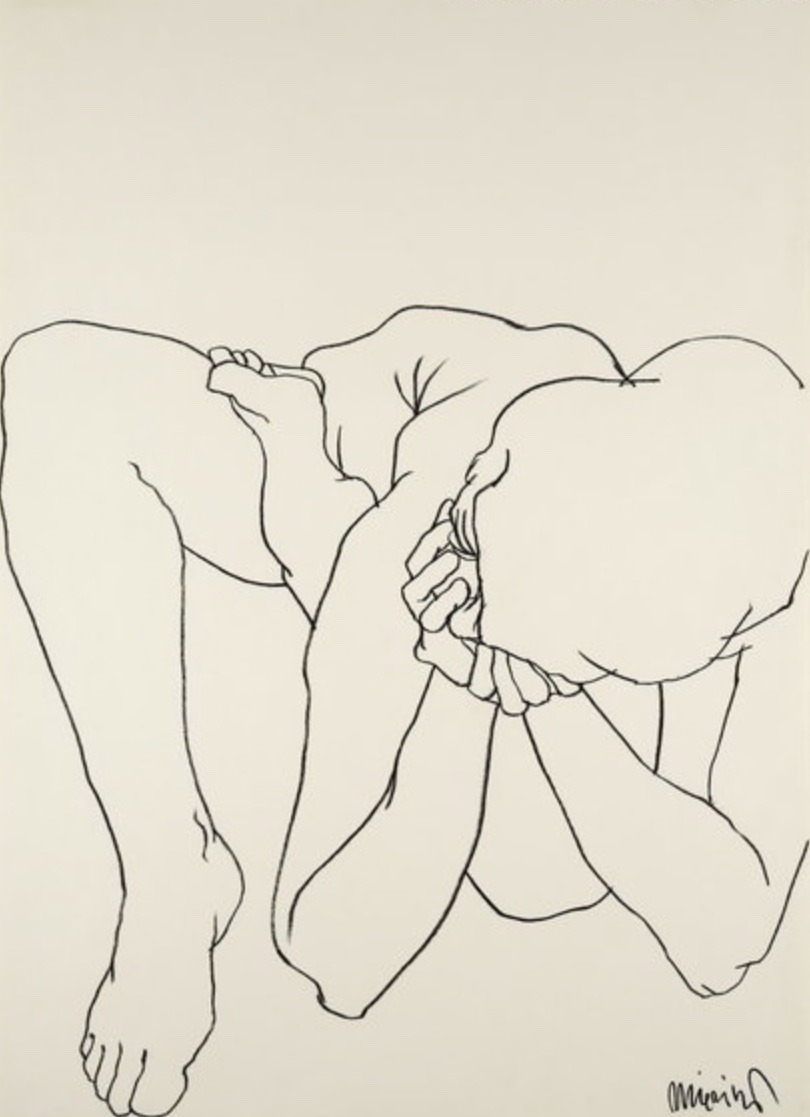
Embodied Thought
Until 8 November
The exhibition will reveal the diversity of drawing and its historical development in Latvia from the 18th to the 21st century, highlighting artists in whose practice drawing plays a significant role. The concept of the exhibition is based on the relationship between drawing and thinking, emphasizing drawing’s ability to create an empathetic experience and allowing the viewer to approach the artist’s thought process.
The exhibition will feature 97 artists from different generations — beginning with Johann Christoph Brotze and representatives of classical art, continuing with leading figures of contemporary art, and concluding with artists born in the 1990s. This broad historical survey will allow visitors to trace the development of Latvian art up to the present day through the personal and fragile medium of drawing, revealing its ability to connect both generations and eras.
Ilmārs Blumbergs. Triptych. Sheet 2.1977. Lithograph on paper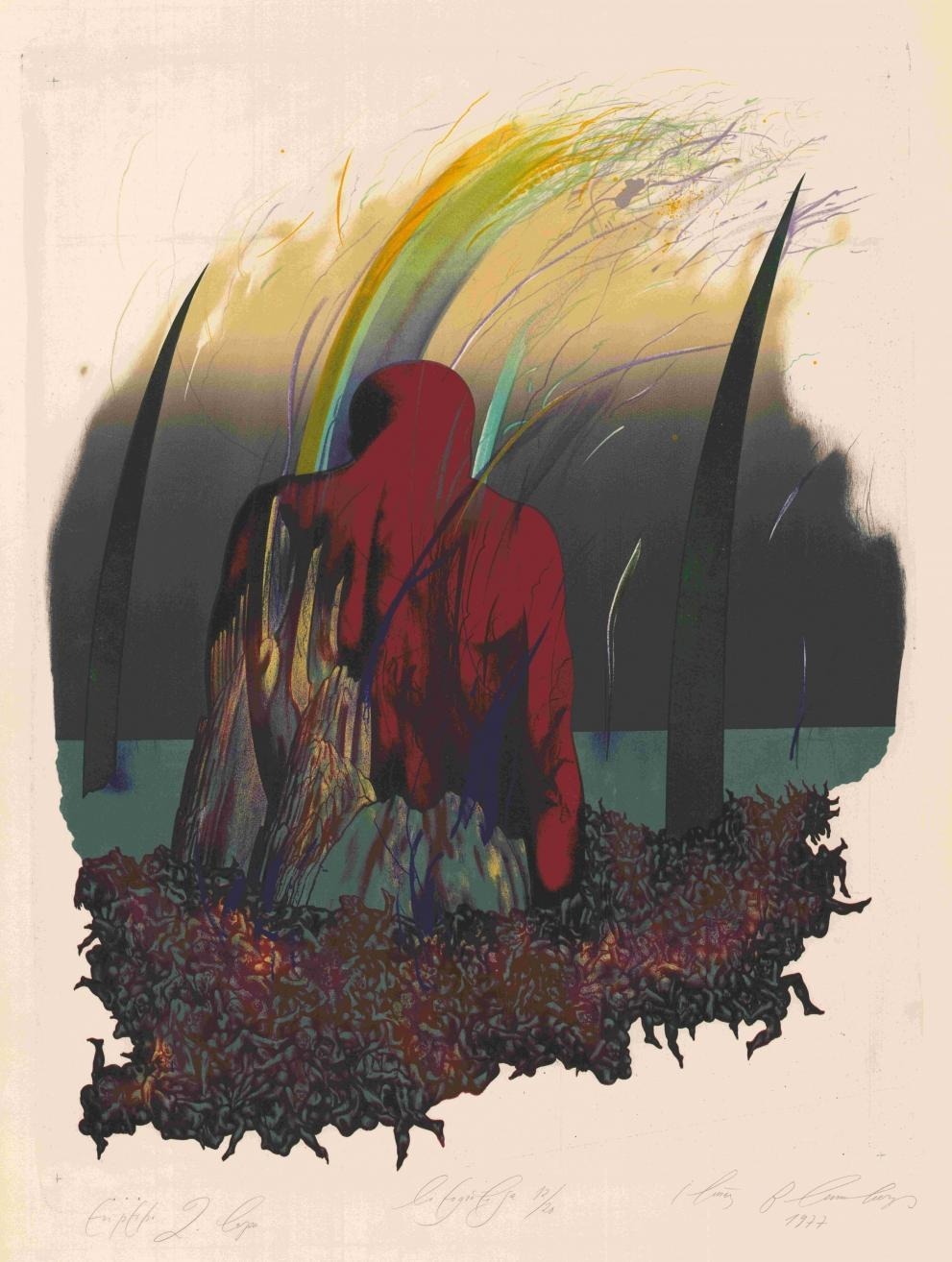
Dreams of Various Length. Manifestations of Surrealism in Latvian Printmaking in the 1970s–80s
Until 16 August
The exhibition focuses on interpretations of Surrealism in the oeuvre of eight graphic artists – Māris Ārgalis (1954–2008), Ilmārs Blumbergs (1943–2016), Valija Brence (1941–2009), Maija Dragūne (1945), Arthur Nikitin (1936–2022), Aija Ozoliņa (1932–2023), Māra Rikmane (1939), and Lolita Zikmane (1941). Currently not equally known and studied, these talented authors worked under Soviet occupation in the 1970s and 80s, when Surrealism, alongside Abstractionism, was placed on the list of art directions undesirable to Soviet ideology. The term appeared in the Latvian press already in the mid-1920s, yet in visual art traces of Surrealism came much later – the use of the direction’s characteristic expressive means (biomorphic forms, dreaminess, unexpected combinations of objects, things and characters or their counterpositions, the fusion of time and space, deformation of images or their metamorphosis into other forms) is noticeable in the early 1970s.
This tendency is particularly evident in graphic art, which, in comparison to painting and sculpture, faced less ideological supervision from the Soviet authorities. In Latvian art, Surrealism predominantly manifested itself in the adoption of formal means of expression and not deliberate adherence to the principles cultivated by the surrealists of the interwar period.
Riga Contemporary Art Space
Artūrs Virtmanis. GEOMETRY OF MELANCHOLY. Cardboard, paper adhesive tape. 2011–2026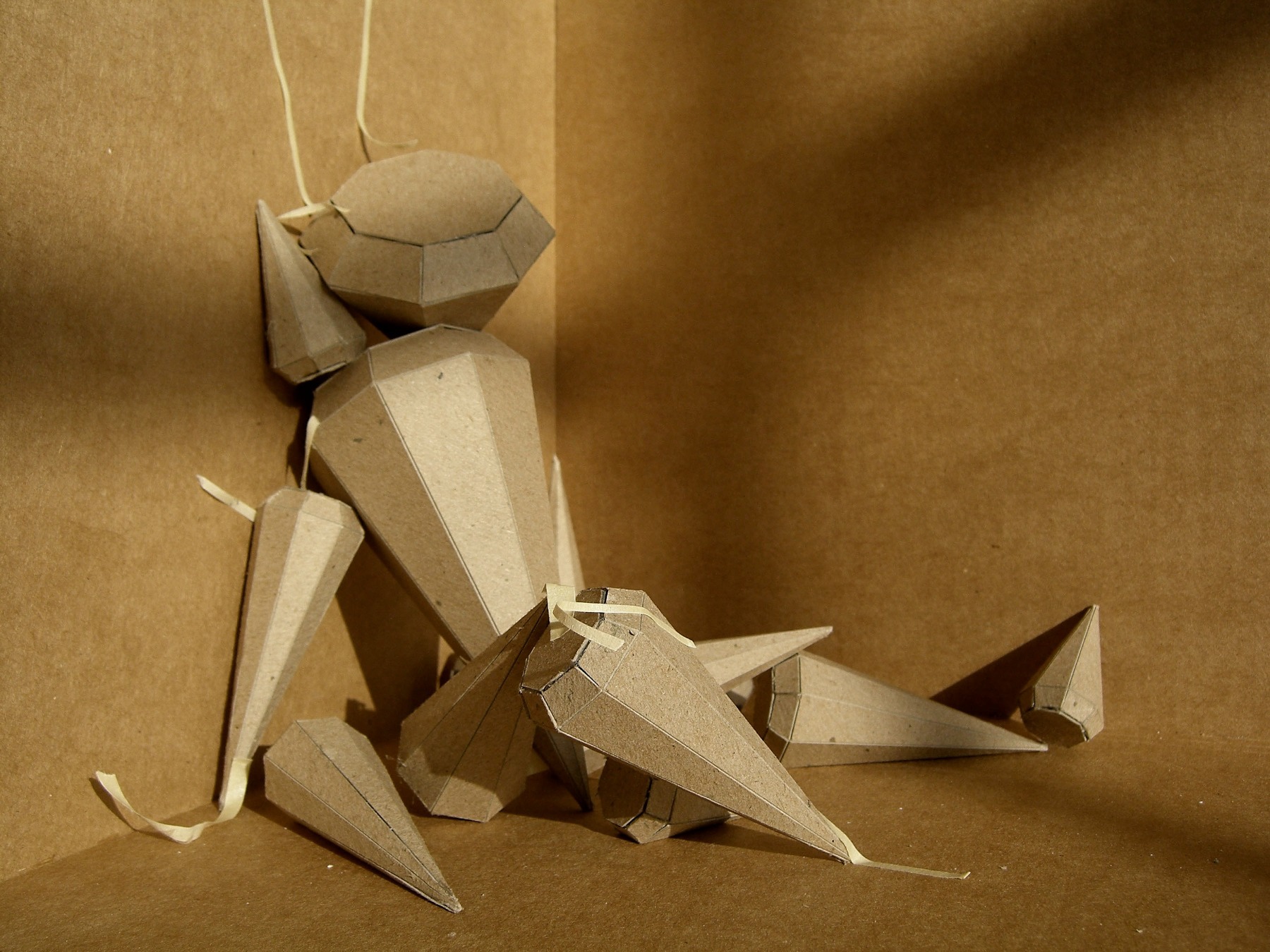
How are you today? Emotional intelligence
Untl 13 September
The multimedia research exhibition HOW ARE YOU TODAY? EMOTIONAL INTELLIGENCE is dedicated to Dr. Ilze Aizsilniece (1966–2025), who passed away last year. The exhibition continues the conversation she began on the significance of emotions in one’s life, inviting viewers to examine them through the prism of art, science, medicine, and personal experience. Emotions influence our choices, relationships, and physical and mental health, as well as our ability to get along with others and with ourselves. They also determine how we perceive the world and make decisions. In this project, art becomes a way to experience, recognize, and understand emotions.
The exhibition features Latvian artists from various generations: Kristaps Ancāns, Ēriks Apaļais, Kristians Brekte, Andris Breže, Aleksandrs Breže, Anna Ceipe, Kristiāna Dimitere, Reinis Dzudzilo, Miķelis Fišers, Indriķis Ģelzis, Helēna Heinrihsone, Brenda Jansone, Marks Halsons, Frančeska Kirke, Maija Kurševa, Katrīna Lipšāne, Laimdota Malle, Sarmīte Māliņa, MAREUNROL’S, Ģirts Muižnieks, Pauls Rietums, Ilze Rukšāne, Līga Spunde, Krista Vindberga-Auzniece, Artūrs Virtmanis, Amanda Ziemele, Otto Zitmanis, and Paula Zvane.
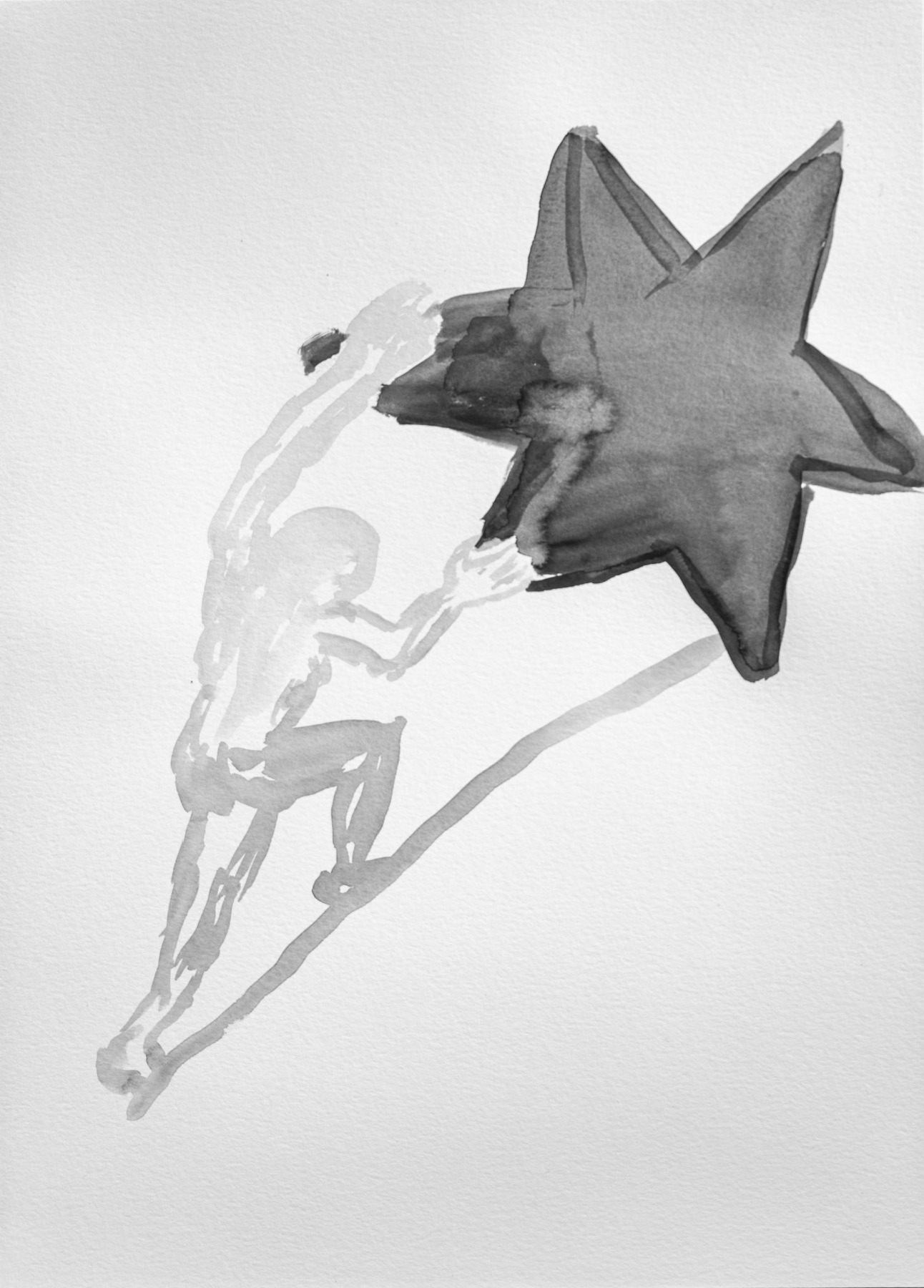
Jelena Glazova. Person with the last name Universe
Ubntil 23 August
Jelena Glazova is a poet and interdisciplinary artist based in Riga. Her work exists at the crossroads of language, image, and sound, exploring how these elements shape perception and meaning. She experiments with text, visuals and sound to challenge traditional ways of interpretation. A key part of her sound art is the human voice. She digitally manipulates it, turning its natural presence into abstract sound structures. Through this process, Glazova creates immersive experiences that blur the line between physical and virtual, personal and technological.
In her works, Jeļena Glazova combines images, poetic texts, experimental sound, and installations.
Kim? Contemporary Art Centre
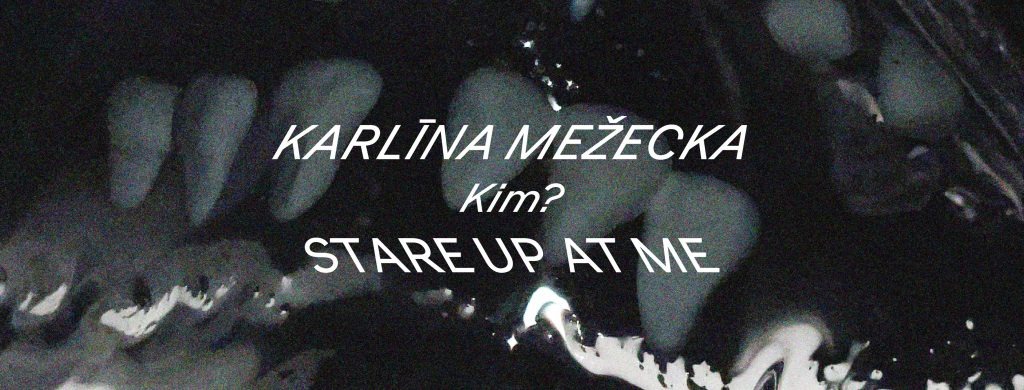
Karlīna Mežecka. Stare Up At Me
19 June – 9 August
Borrowing its title and dramaturgical undercurrent from Madonna’s “Don’t Tell Me” (2000) – a country-pop hallucination of suspended desire, emotional stasis and erotic ambivalence, punctuated by the lines “Tell the bed not to lay/Like the open mouth of a grave/Not to stare up at me/Like a calf down on its knees” – Karlīna Mežecka’s largest solo exhibition to date unfolds in four chapters: “Life”, “Death”, “Dominance” and the closing “Summary”. Through a series of new sculptural and installation-based works, Mežecka foregrounds bodies that appear as unstable figurations, suspended between surface and interior, between what is materially present and what remains imagined.
The unsettling image of a conjoined calf emerges as the exhibition’s central protagonist. In “Dominance”, it is elevated above the viewer, assuming a monumentality that never fully resolves into stability, as its fragility remains visible even at scale. Devotional iconography, infantilised objecthood, a sacrificial body, and failed monumentality converge within a single suspended presence. Its blank gaze holds the surrounding space in a sustained state of being addressed, circulating attention without closure and positioning the form simultaneously as object and projection surface.
Zuzeum Art Museum
Photo: Kristine Madjare 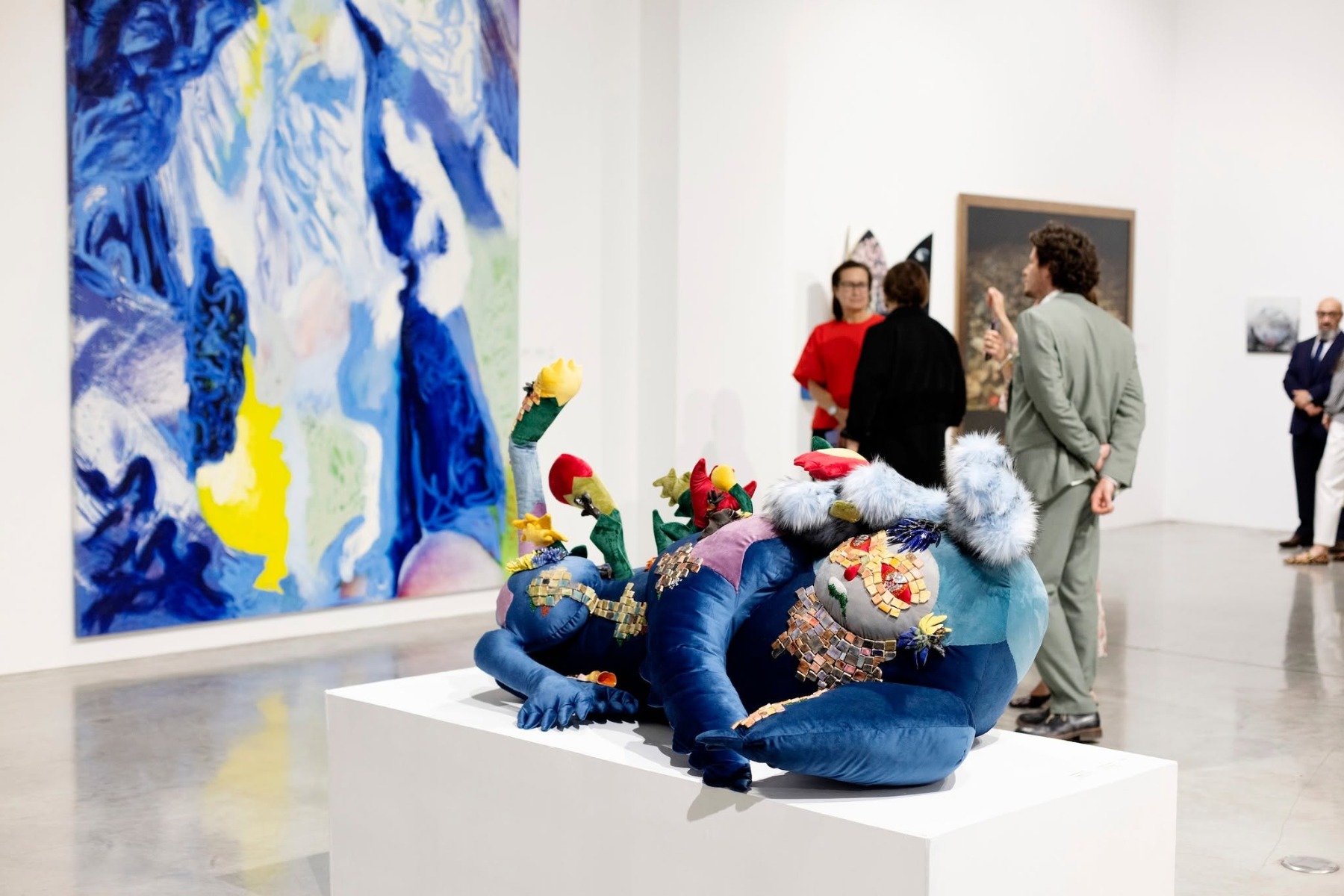
MAMA ‘Mother Nature’
Until 30 August
MAMA ‘Mother Nature’ is conceived as an interdisciplinary travelling exhibition and a global artistic platform reflecting on the interconnectedness of culture, environment, and collective responsibility. Curated by Emin Mammadov, the exhibition explores the intersections of ecology, identity, and collective memory, inviting viewers to consider the Earth as a living, powerful entity and a bearer of ancestral experience and the wisdom of renewal. The exhibition brings together works across a range of media, including installation, sculpture, video, and textile. At Zuzeum, the presentation is complemented by works by local and international artists from the Zuzāns Collection, creating a dialogue between the exhibition’s core and the local context.
Since its premiere at the Heydar Aliyev Center in Baku, the exhibition has travelled across continents and has been shown at the Bahrain Art Centre in Manama, MAXXI Corner in Rome, and most recently at the Azerbaijan Pavilion at the 2025 London Design Biennale at Somerset House. Artists: Nina Pandolfo (Brazil), Elizabeth Toll (Sweden), Uta Bekaia (Georgia), Andris Vītloņš (Latvija), Elnara Nasirli (Azerbaijan), Gillie & Marc (UK-Australia), Tarasenko Anastasiya (Ukraine), Gala Caky (Serbia), Andris Eglītis (Latvija), Kris Lemsalu (Estonia), Klāvs Loris (Latvija).
ASNI gallery
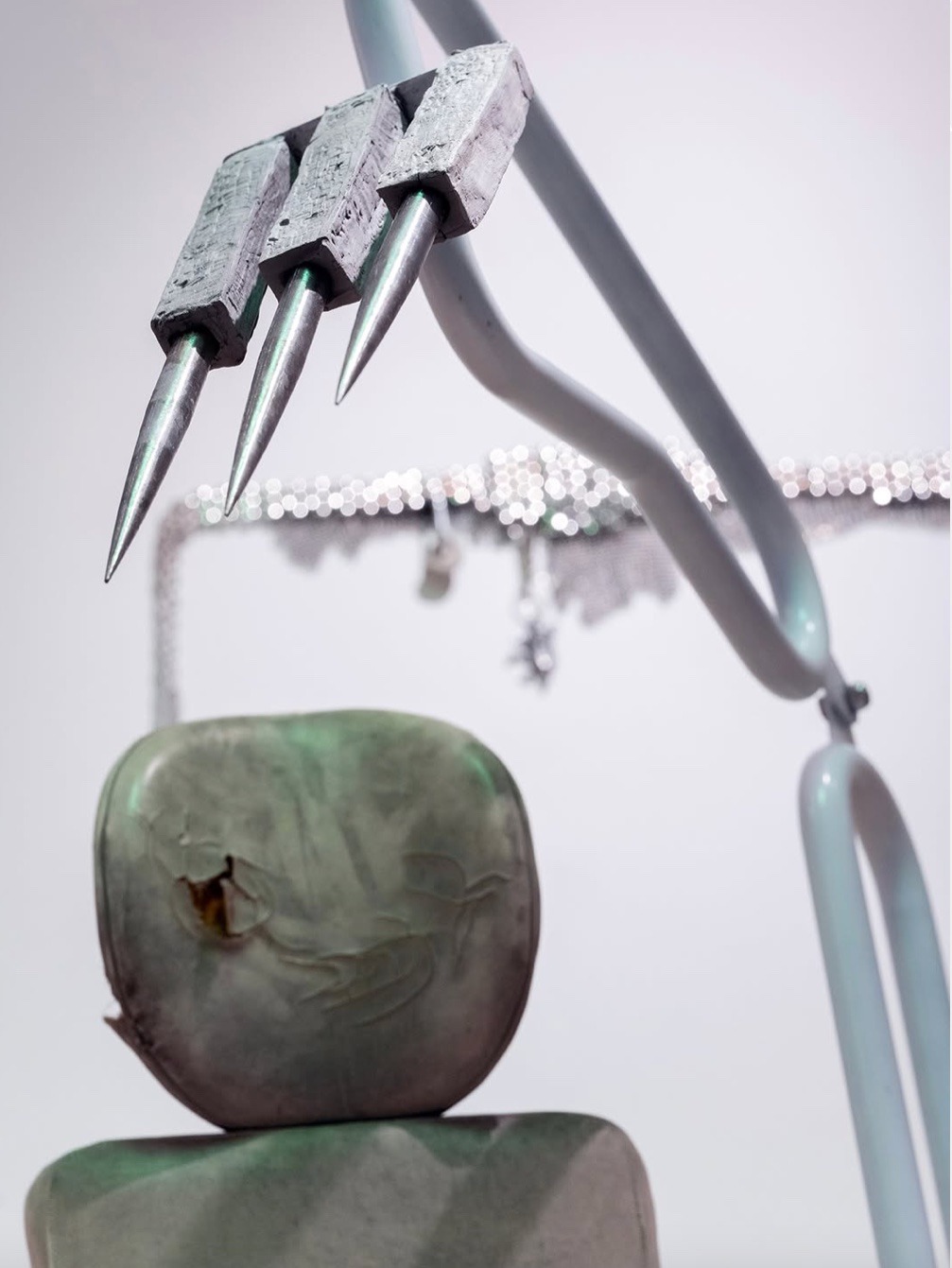
Madlen Hirtentreu and Darja Popolitova. Neanderthal Beauty Clinic
17 June – 16 August
At the very centre of the Hirtentreu’s and Popolitova’s “Neanderthal Beauty Clinic” stands a dental chair, surrounded by beauty equipment readily available to cut, inject, smooth and slim. In a world, where beauty standards move at the same pace as fast fashion and jaw line, lip shape, brows and skin tone constantly need changing and perfecting, a person’s body becomes a project forever in need of optimisation. The artists question the neoliberal beauty culture’s promise of freedom and self-fulfilment and reveal how the said freedom and perfection are often nothing but well-marketed pressure. Theorist Victoria Pitts-Taylor, who has researched the power dynamic between the body and power in beauty culture points out that even though beauty procedures are presented as a personal choice, the choices (above all) women make are born in a social space, where certain choices are awarded with approval and belonging, deviating from these, however, is punished by social ostracisation.
Gallery 427
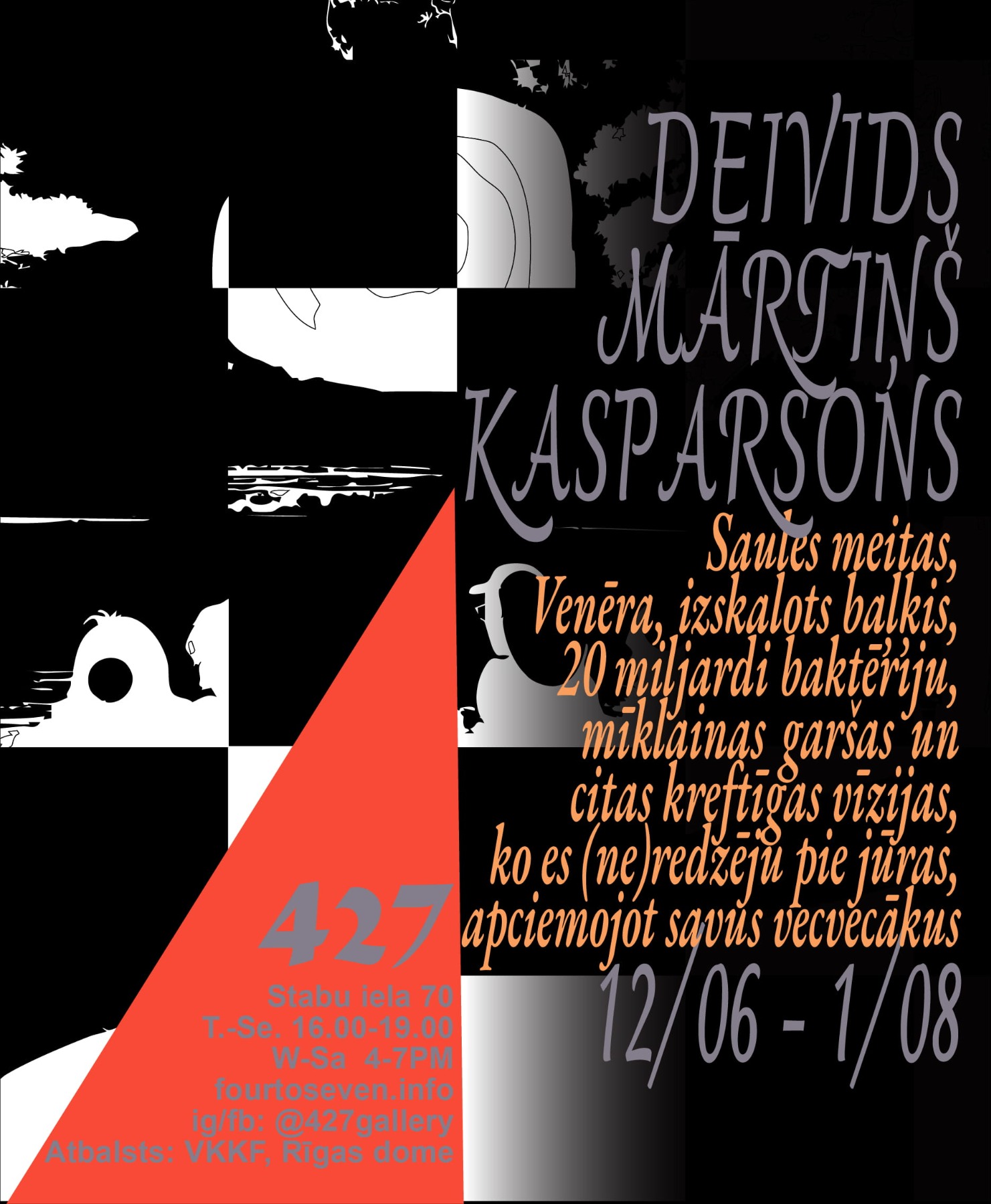
Deivids Mārtiņš Kasparsons. Daughters of the Sun, Venus, driftwood, 20 billion bacteria, mystery flavours and other hefty visions I (didn’t) have by the sea while visiting my grandparents
Until 1 August
“They call it seasickness or, sometimes, motion sickness. It happens when conflicting signals are being sent to your brain, so your body doesn’t really know whether it is moving or not. It is always worse when you are not moving, but think that you are. Smug and pompous you bare your teeth at others, so sure you are making progress. Turns out, you’re drifting in the sea. What a shame. Anyway, the only ailment I would call seasickness is being far away from it. Sometimes, I travel by bus and I hate it. Once, I traveled for three days, from Stockholm to Copenhagen on a yacht. No mermaid in sight, but I threw up as soon I set foot on land ho!”
Deivids Mārtiņš Kasparsons (Riga/Copenhagen), born in September 2001, is a painter. After graduating from the Royal Danish Academy, Kasparsons has returned to Latvia and operates from Zvejniekciems. “Daughters of the Sun, Venus, driftwood, 20 billion bacteria, mystery flavours and other hefty visions I (didn’t) have by the sea while visiting my grandparents” is the artist’s first solo exhibition that has been carefully calibrated to foreground a visceral and unapologetic expression of self. Kasparsons claims the sea is his leitmotif and refers to himself as a “common water strider”. His contemporary landscapes challenge realism’s authority of the world we inhabit.
The Chekhov Theatre Gallery
Ieva Epnere’s solo exhibition Tuesday. Riga Photography Biennial 2026. Photo: Ingus Bajārs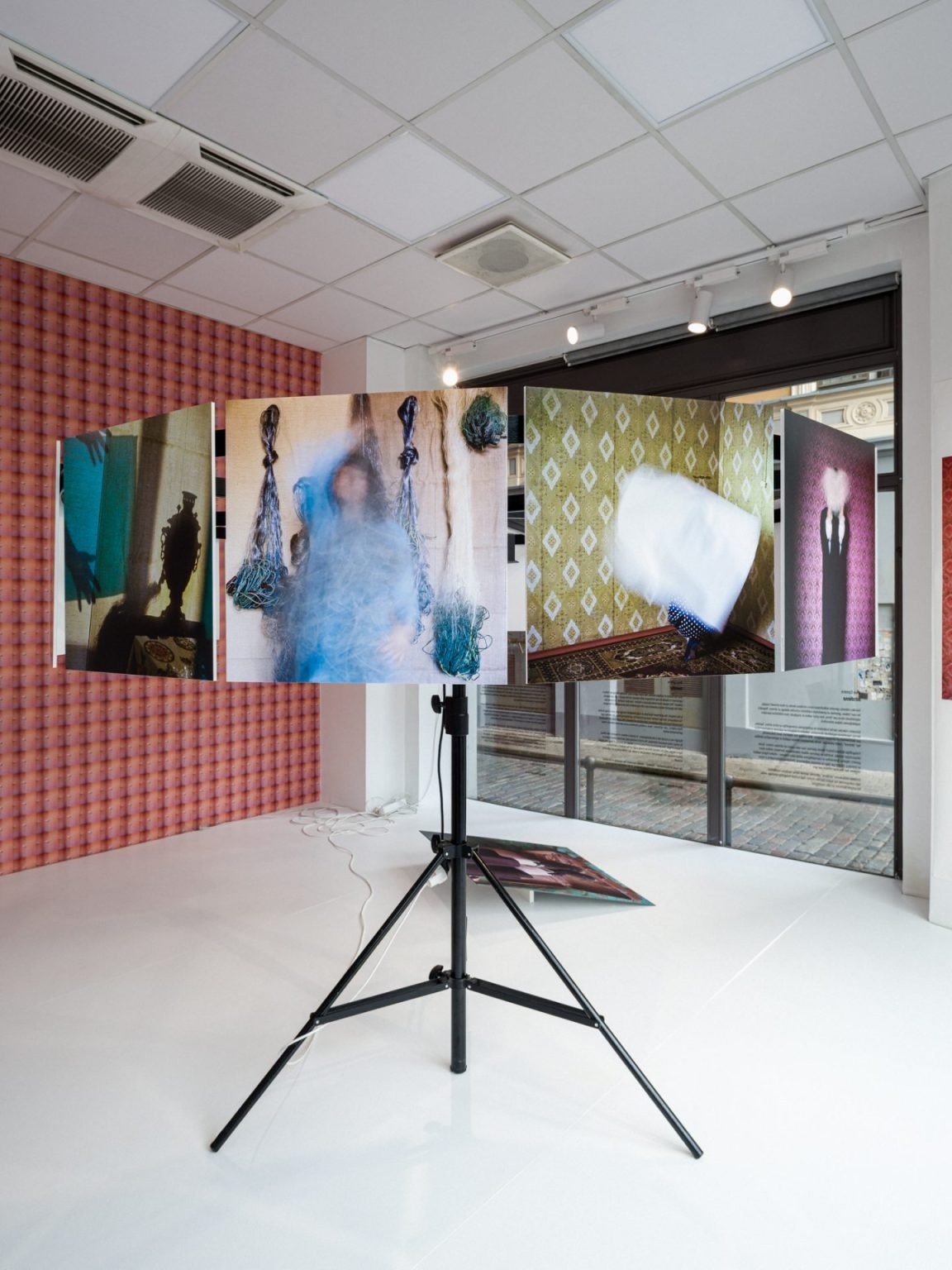
Ieva Epnere. Tuesday
Until 27 September
Over the course of multiple months, the artist spent every Tuesday visiting her father's apartment in Liepāja to stay in dialogue with memory via the space, light, and objects present. This regular recurrence became a rhythm – one that maintains a connection with the departed whose presence was still engrained in the atmosphere of the space. In the artwork, the apartment functions as a psychological scenography and a living archive.
Daylight has a crucial role in the photographs – it creates a dream- or memory-like effect. By using a long-exposure technique, the artist’s moving body becomes almost spectral in layers of light. This ghostliness and transparency reveals the passing of time – the human figure merges with the interior, thus becoming a part of the memory’s mechanism. The name of the exhibition – “Tuesday” – initially represents the regularity of the works’ creation, but steadily it takes on a broader meaning. In this exhibition, photography becomes a way to keep something present even after a loss. This is the closing exhibition of the Riga Photography Biennial 2026.
LATVIA, Cesis
Roberts Tiso. FUCK THE CONTEXT, 2023 / Environmental installation RAISING FLAGS (in collaboration with museum in progress, Vienna, Austria). Pils laukums Photo: Rudolf Strobl, Copyright: museum in progress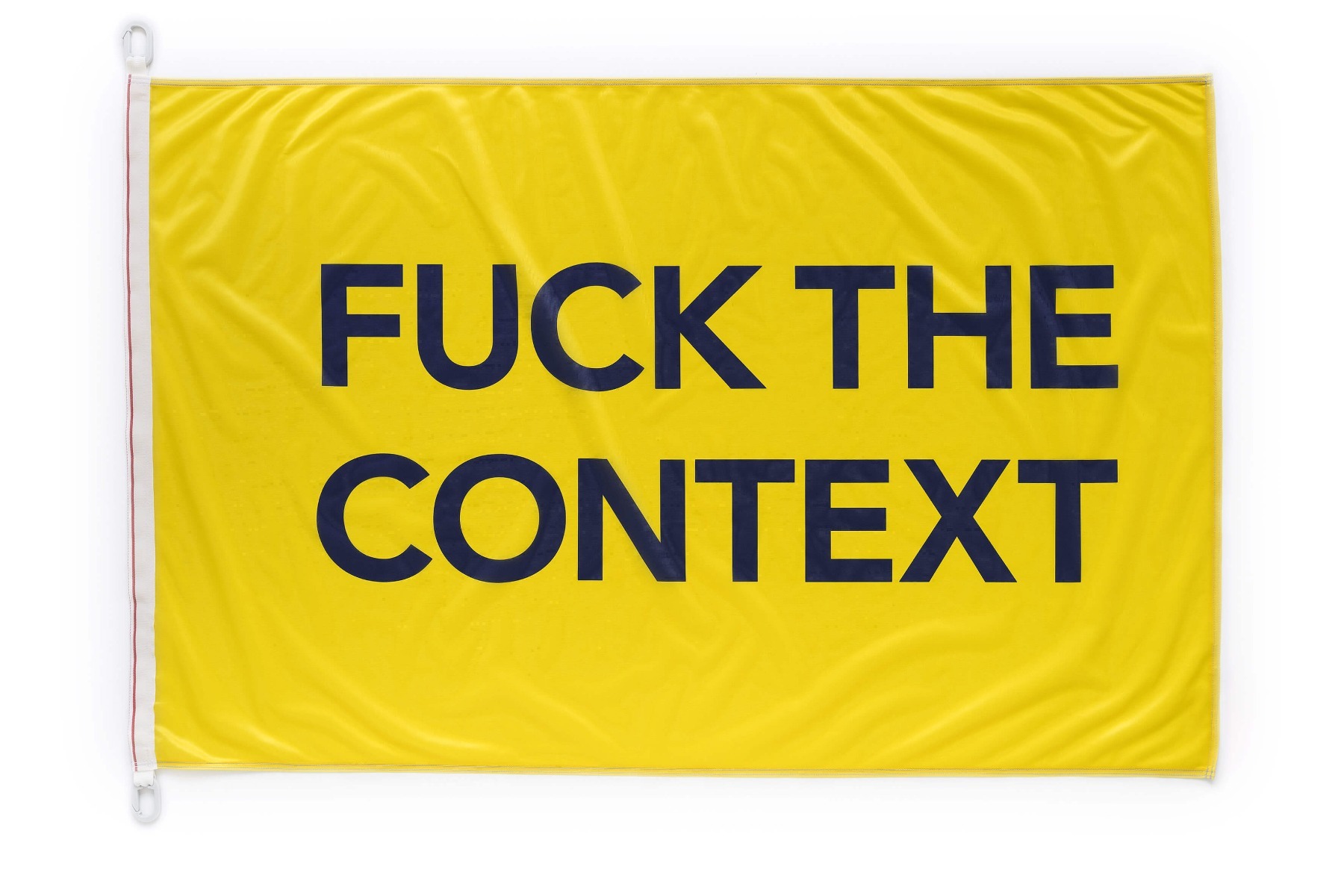
“Cēsis 2026” Art Festival
18 July – 23 August
From July 18 to August 23, the Cēsis 2026 Art festival will present a visual arts program that highlights the role of art in today’s chaotic and intense world. Of note are this year’s program aims: to support artistic innovation and the realization of large-scale projects significant to Latvia’s art scene; to introduce classic examples of contemporary art; and to provide an opportunity for art to engage with the audience in an urban setting.
“Art is one of those forces that helps us keep our bearings and find a ‘second wind’ in today’s strange and anxiety-ridden world, one where the value system is crumbling and it’s becoming increasingly difficult to stay grounded,” says Daiga Rudzāte, curator of the visual arts program. The visual arts program will include three large-scale projects: On the Second Floor, a solo exhibition by Amanda Ziemele at the New Castle in Cēsis, Time will Show, an installation by the artist group Famous Five (Līga Marcinkēviča, Ieva Rubeze, Mārtiņš Ratniks) at the Cēsis Concert Hall Gallery, raising flags The Public Art Project in Pils laukums.
LATVIA, Strenči
Oto Holgers Ozoiņš. Mantle. 2026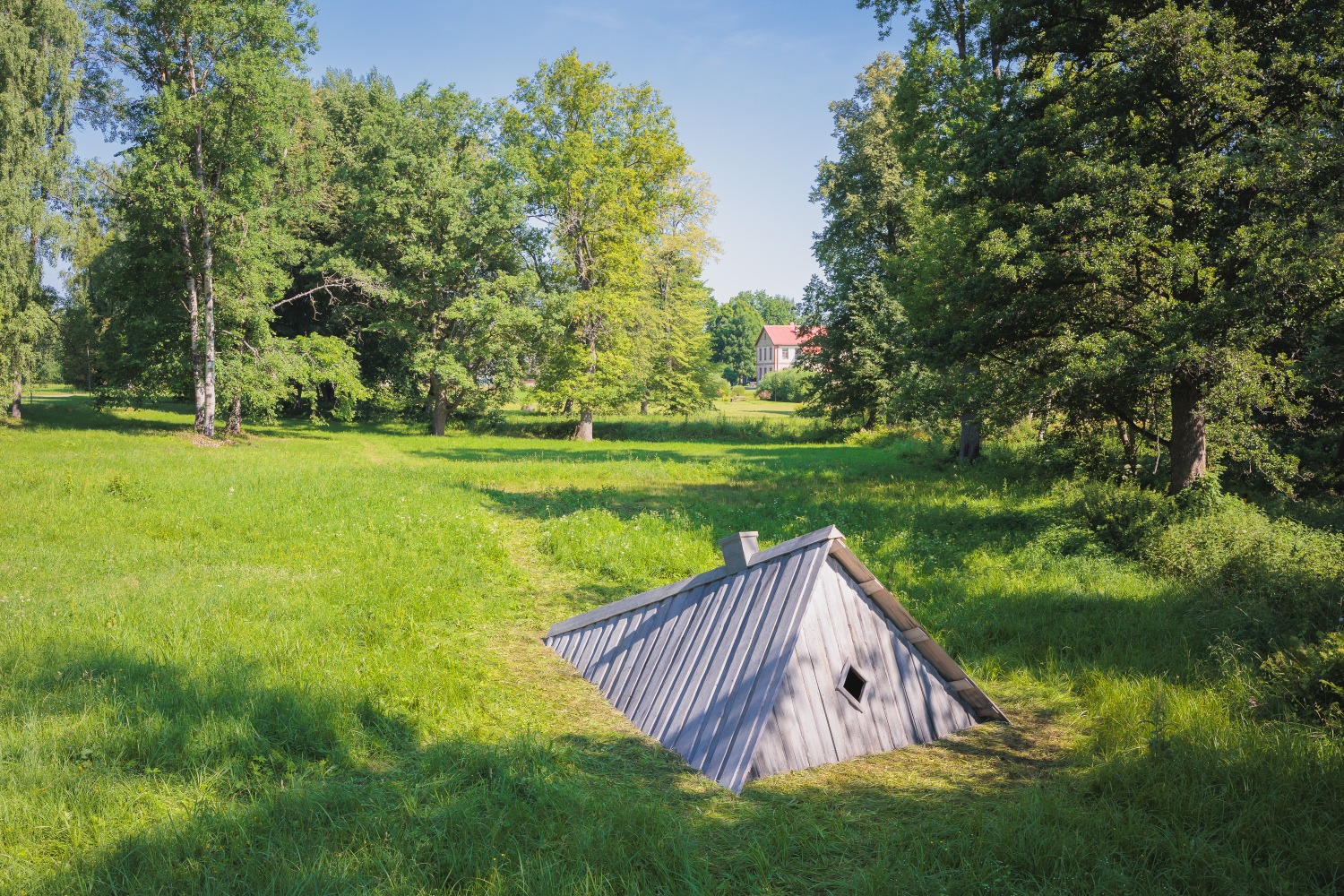
Finding Places. An outdoor group exhibition, curated by Orbīta
Until 31 August
Throughout the summer, the town of Strenči hosts an outdoor exhibition curated by the artist collective Orbīta, featuring objects and installations hidden throughout the urban landscape. The exhibition, "Finding Places," presents site-specific artistic interventions that interact with the town's urban infrastructure. By following the exhibition map, attentive visitors can discover a series of artworks partially concealed within the city during a walk of approximately one hour. Along the route, they will encounter a half-submerged building marking the site of a once-grand hotel destroyed by fire, a choir of radios that begins singing in the market square once every hour, a tongue-twisting street-name installation dedicated to street corners, an emotion-sorting field, the Orbīta cocktail accompanied by a story at a local café, and many other artworks that do not always appear to be artworks at first glance.
The exhibition features works by members of the Orbīta collective as well as invited artists. Participating artists include Anna Salmane, Reinis Dzudzilo, Oto Holgers Ozoliņš, Katrīna Marta Riņķe, and the creative collective Poetic Robotism (Eva Vēvere and Laura Prikule). The exhibition is curated by Orbīta members Semyon Khanin, Artūrs Punte, and Sergejs Timofejevs, who are also the authors of several of the exhibited works.
LATVIA, Jūrmala
Art Station Dubulti
Photo : Gustavs Bruno Grodzs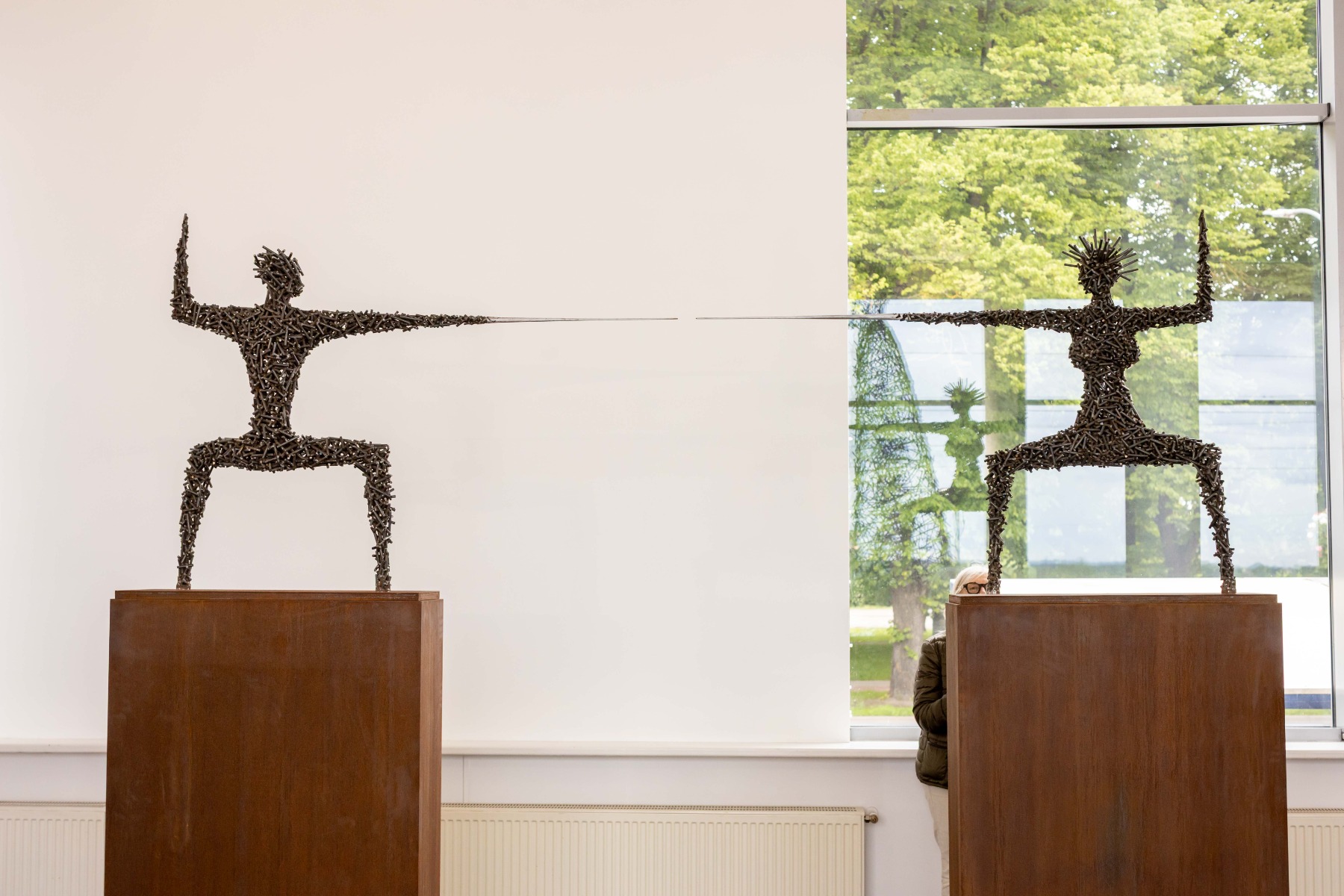
Gļebs Panteļejevs. Monuments
Until 2 September
A solo exhibition by Latvian sculptor Gļebs Panteļejevs, exploring themes of freedom, moral values, and individual responsibility. One of the leading figures in contemporary and monumental sculpture in Latvia, Panteļejevs is known for works that honor human achievement, historical memory, and principles of social importance.
In Monuments, the artist reflects on the mobility of the soul and the fragility of freedom in an age when individuals can become participants in their own unfreedom. Panteļejevs’s sculpture is distinguished by classical mastery of form, a modernist sense of abstraction, and an ability to transform monumental subjects into deeply personal and emotionally resonant experiences.
LATVIA, Daugavpils
Rothko Museum
Photo: Didzis Grodzs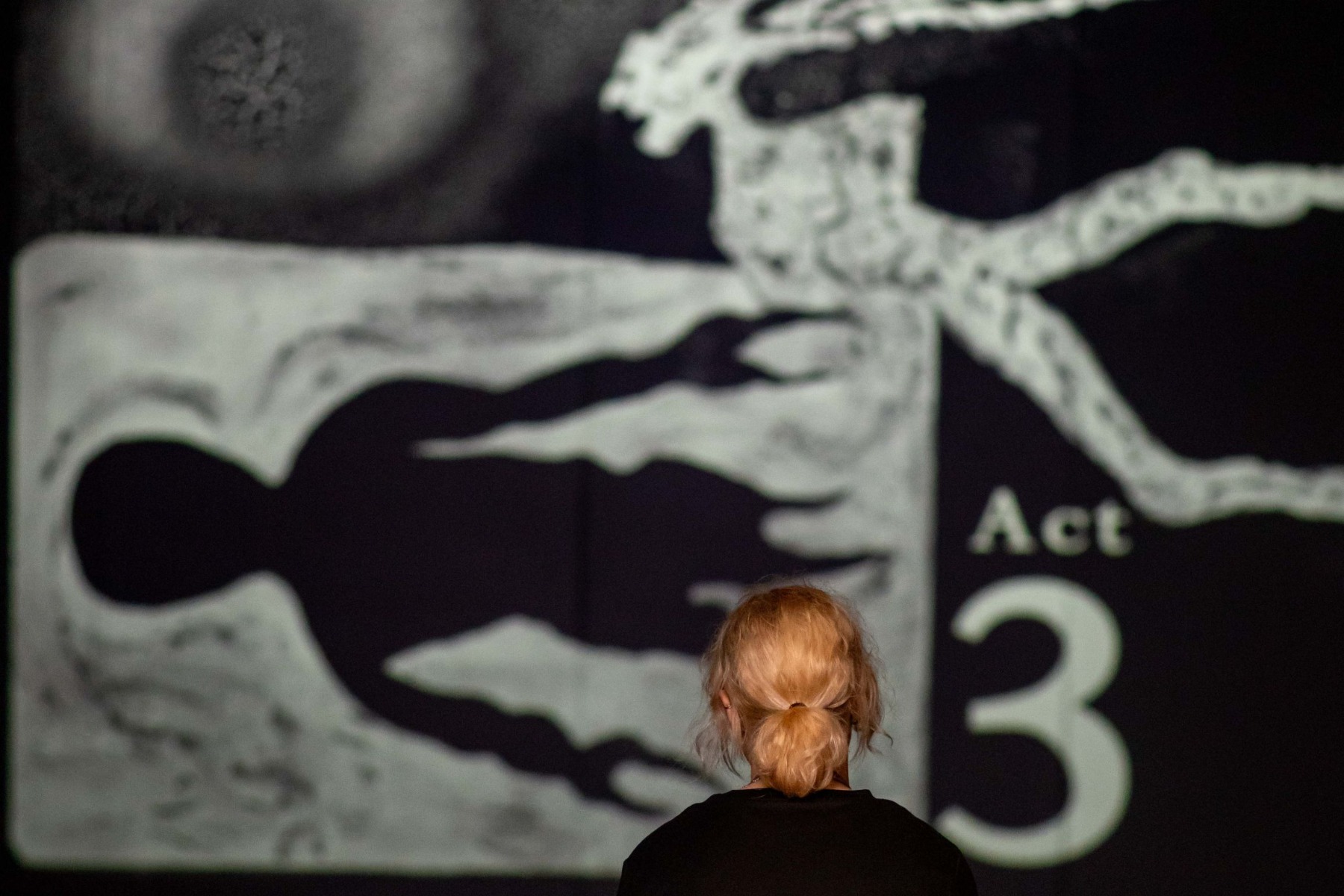
The Other Mind: Roger Ballen. A Retrospective
Until 30 August
What you are about to experience is the unsettling, poetic, and deeply psychological world of Roger Ballen – one of the most distinctive voices in contemporary photography. For over five decades, Ballen has explored the human psyche through haunting black-and-white images and, more recently, vivid colour compositions. His work blurs the boundaries between documentary and fiction, reality and dream, human and animal, sanity and madness. Born in New York and based in South Africa since the 1980s, Ballen began his career documenting rural communities and marginalised individuals. But his artistic journey soon took a radical turn. He developed the now-iconic “Ballenesque” aesthetic – a surreal theatre of the absurd populated by disjointed bodies, animals, wires, dolls and primitive drawings. These elements are not props but psychological symbols, revealing the subconscious forces that shape our existence.
This retrospective, curated specifically for the Rothko Museum, presents Ballen’s evolution from stark documentary realism to intricately staged, psychologically charged compositions. Visitors will encounter works from key series such as Boyhood, Platteland, Outland, Shadow Chamber, Boarding House, Asylum of the Birds, and The Theatre of Apparitions, as well as newer colour photographs that expand his visual language while retaining the raw emotional power of his earlier work.
LITHUANIA, Vilnius
Contemporary Art Centre (CAC)
“Superglue, or Inventing the Friend”, exhibition view. Contemporary Art Centre, 2026. Curator: Valentinas Klimašauskas. Photo: Andrej Vasilenko
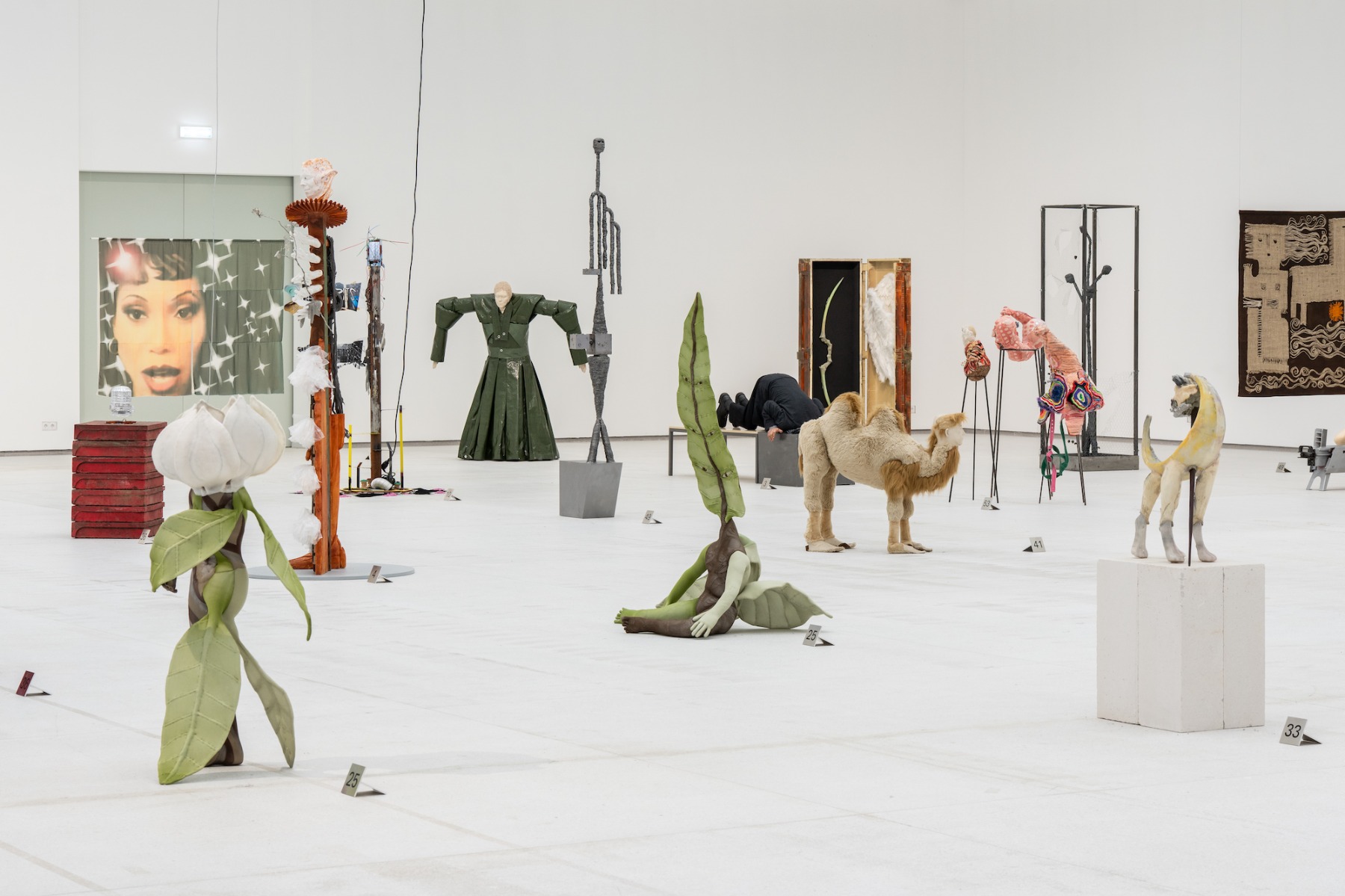
Superglue, or Inventing the Friend
Until 6 September
The international group exhibition ‘Superglue, or Inventing the Friend’, marks a new phase for the Contemporary Art Centre (CAC), inaugurating the exhibition programme under its new director. Predominantly presenting figurative art, the exhibition invites a reconsideration of the CAC’s relationship with its audience. The exhibition’s abundance of figures creates an aesthetic and social environment grounded in diversity – one that may both facilitate encounters with the other while questioning identity (of the individual, the depicted figure, or the (post)human), the possibility of connection with the other, and the authenticity and meaning of contemporary art itself.
Bringing together historical and contemporary works, ‘Superglue, or Inventing the Friend’ reflects on encounters with the other through different notions of otherness, the emergence of the posthuman figure, and contemporary art itself as something not entirely knowable – something foreign. Assemblages of new and historical figures, individual and collective, implicitly raise the question: what kind of glue today could bind together a fragmented, combative, and rather narcissistic society? What role can art play in a world where opinions are becoming increasingly rigid? And, in the hell of ideological excess, what might still allow us to imagine relationships that open the possibility of authentic, unpredictable, non-commodified experiences – friendships, or even the possibility of falling in love with the other rather than rejecting them?
More info >>
Read an interview with the curator, Valentinas Klimašauskas
Sapieha Palace
Ethan Assouline, Tout va bien, 2026. Wood, clock mechanisms, plastic, lamps, mirror, aluminium, steel, dimensions variable. Courtesy the Artist and Gauli Zittert1 / 100. Photo: Andrej Vasilenko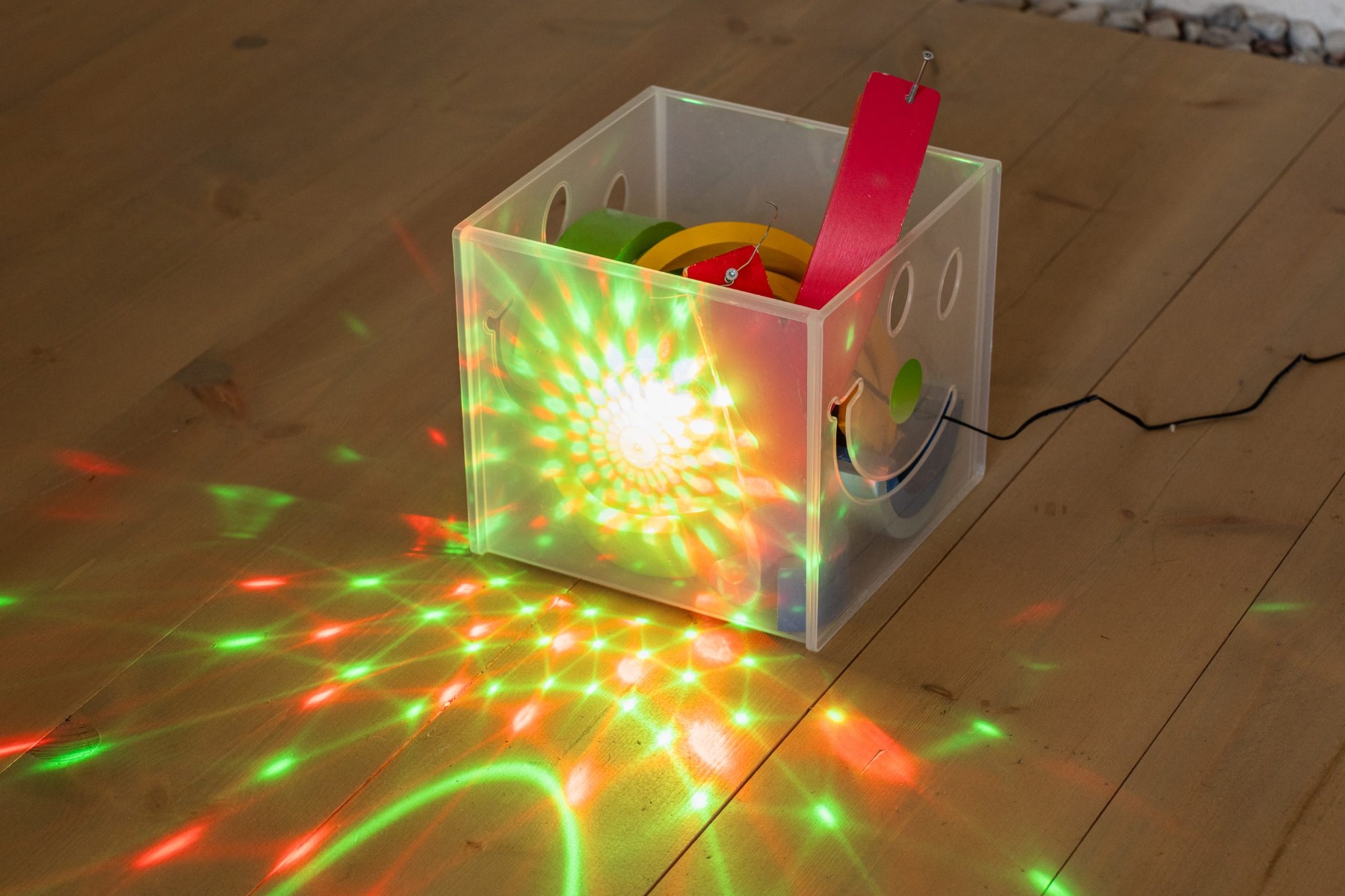
Housekeeping in a Dangerous Time
Until 31 December
Housekeeping in a Dangerous Time looks into artistic practices that engage with the contemporary forces shaping intergenerational ties and the distinctions between life stages. The artists featured in the exhibition turn their attention to the role of everyday technologies in the self-formation of contemporary individuals – in the processes of identity formation and expression, and in relation to others. Along the way, they also explore notions of maturity as well as the societal expectations and infrastructures that define and sustain it.
Participating artists: Ethan Assouline, Anna Clegg, Jeremy Deller, Ryan Gander, Saulė Gerikaitė, Camille Henrot, Nojus Juška, Marc Kokopeli, Robertas Narkus, Phung-Tien Phan, Josiane M.H. Pozi, Piotr Skiba, Niklas Taleb.
MO Museum
Artwork featured on the exhibition’s poster: Dominika Kováčiková, The Witness, 2025. Property of the artist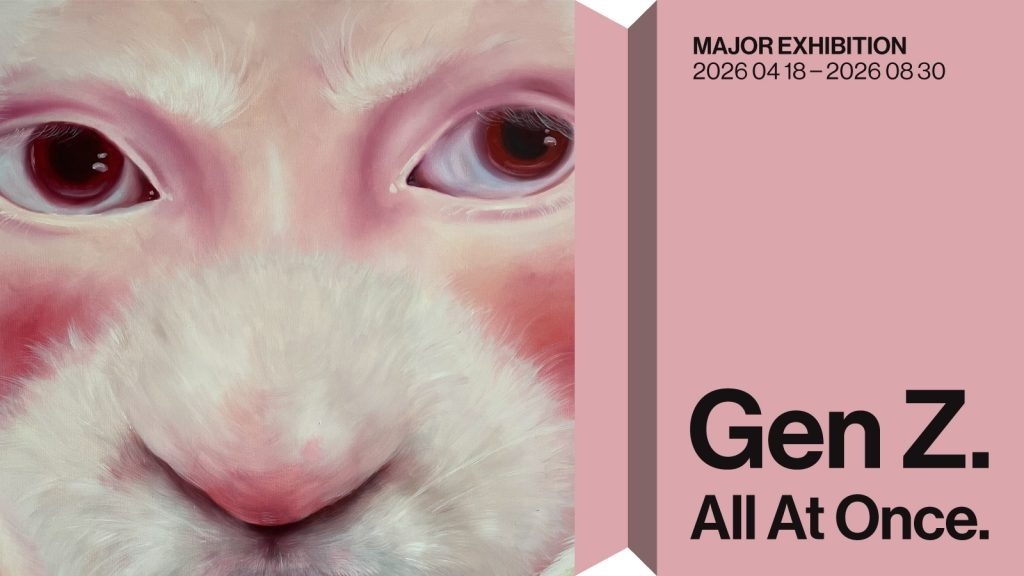
Gen Z. All at Once
Until 30 August
The exhibition brings together twenty young artists living in eleven countries of Eastern Europe – a region shaped not by a single shared memory, but by inherited discontinuities, delayed futures, and permanent transition. These artists do not approach history as a closed narrative, nor do they seek to resolve it. Instead, they inhabit a present shaped by instability.
Generation Z is the first generation to have grown up entirely within this condition. Contradictions no longer require resolution. What once appeared incompatible – public and private, intimacy and exposure, play and anxiety, production and leisure – has become fluid, unstable, and permanently intertwined. The present moment functions as a dense field in which heterogeneous impulses, affects, and images collide, while also offering a shelter from an accelerated and uncertain future. Participating artists: Aaron Roth, Ant Łakomsk, Denisa Langrová, Dzelde Mierkalne, Dominika Kováčiková, Helena Parys, Katrīna Biksone, Madlen Hirtentreu, Mara Verhoogt, Matyáš Tserhack Maláč, Mikelis Murnieks, Morta Jonynaitė, Nikola Balberčáková, Olga Krykun, Paula Tončić, Emilija Povilanskaitė, Sarah Nõmm, Tornike Gognadze, Valentina Várhelyi, Weronika Wysocka and Oksana Pawełko.
National Gallery of Art
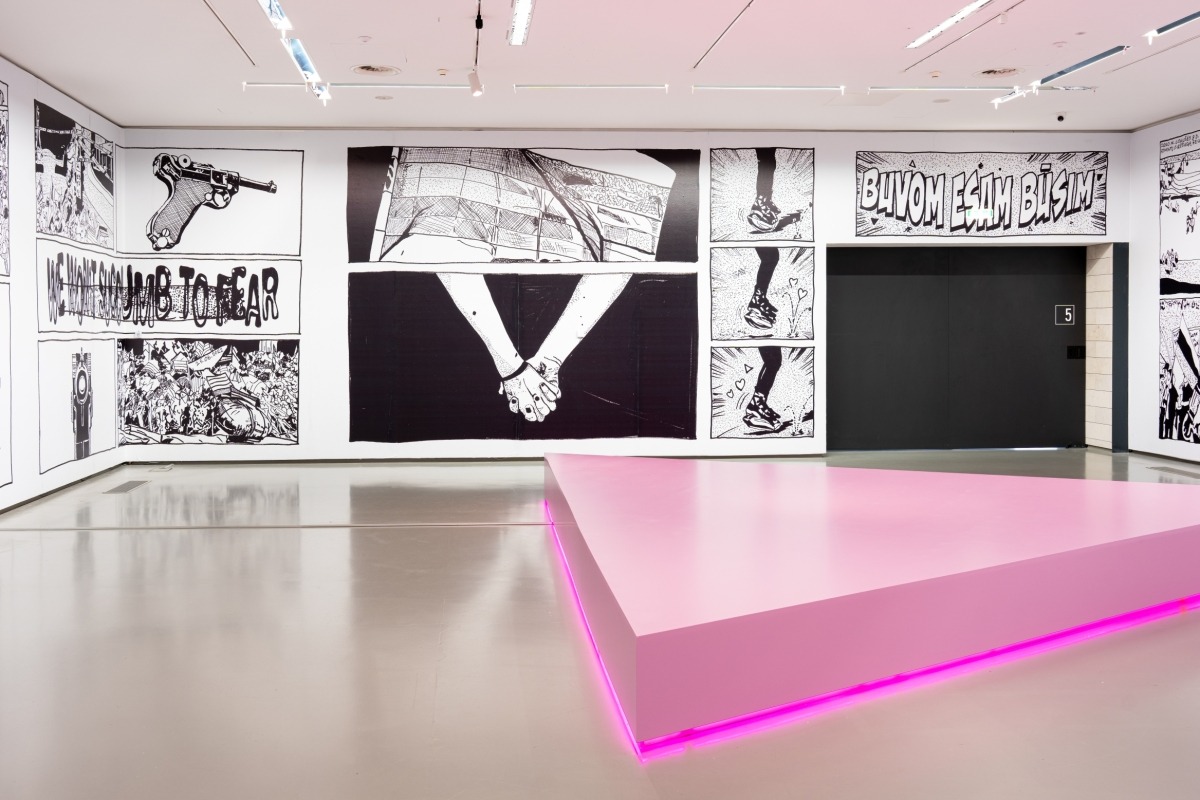
Vsevolod Seva Kovalevskij. Margins & Miracles
Until 13 September
By weaving together personal archives, fragmented memories, and popular media imagery, Vsevolod Seva Kovalevskij reveals the gap between the lived experiences of queer people, institutional memory, and mediated truth. Queer existence is inseparable from the city’s public spaces – where visibility can mean both community and danger. A monumental comic-style drawing takes us through the streets of Vilnius, London, and Oslo. The first Lithuanian ‘Baltic Pride’ march in 2010, confrontations within the LGBTQIA+ community at London Pride in 2018, and the shooting in Oslo in 2022 – events personally experienced by the artist – are brought together in a graphic narrative about life under conditions of ever-changing insecurity. Within the drawing, proclamatory protest signs, silent politicians, and the artist’s ‘off-screen’ voice restore what usually remains outside the official narrative.
The aesthetics of the comic book point to traditions of queer self-publishing, alternative archives, and autobiographical storytelling – an accessible medium, subject to less institutional control, that remains important to artists and activists. A significant element of the exhibition is Kovalevskij’s gesture – the reclaiming of the pink triangle. Once a symbol of violence and stigma, used in Nazi concentration camps to mark homosexual men, it is here transformed into a platform for queer voices, where being together and resting become acts of resistance. Margins & Miracles is a non-chronological, face-to-face encounter with fear, trauma, solidarity, and the refusal to remain silent.
Vytautas Kasiulis Museum of Art
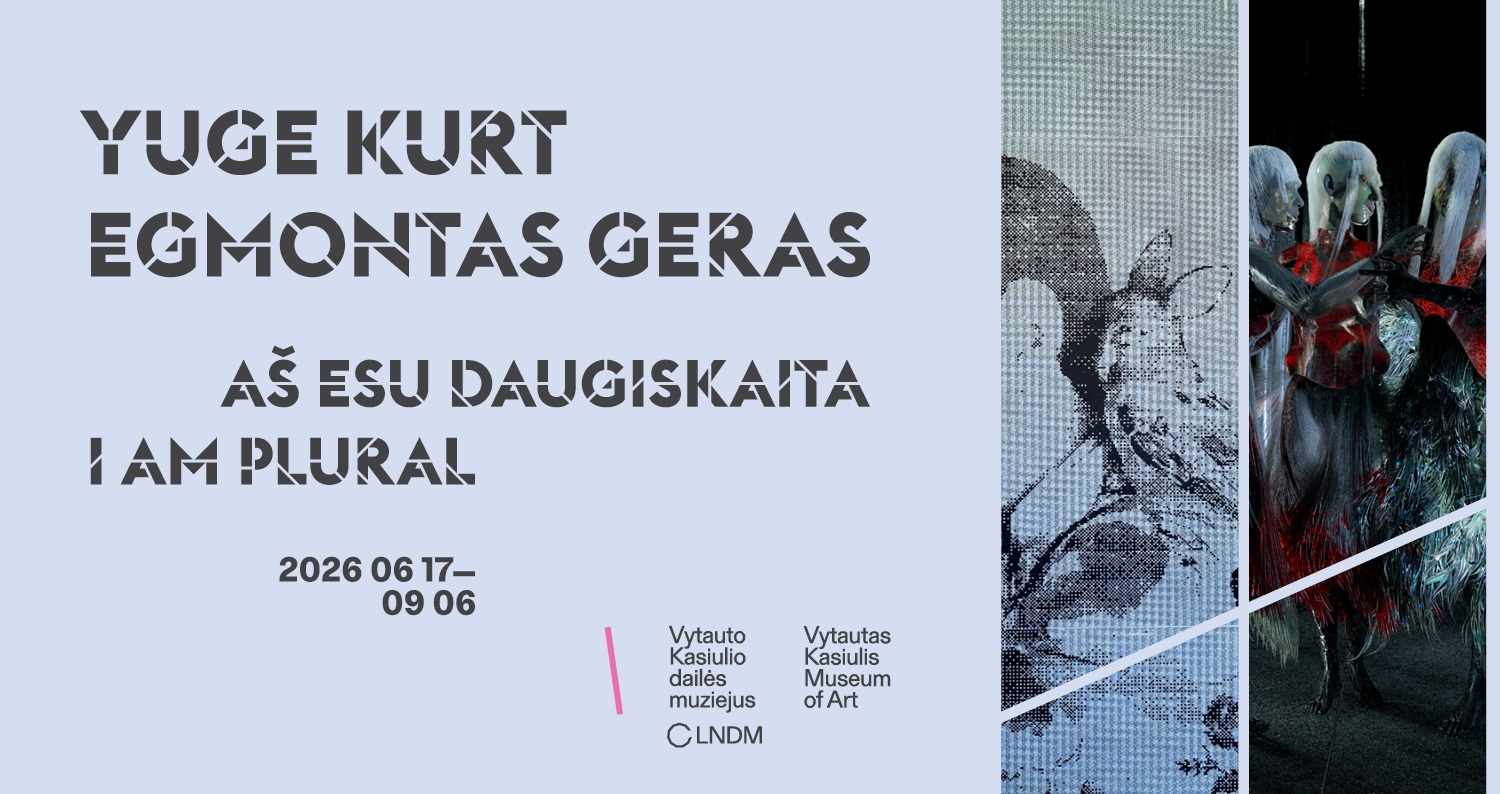
Yuge Kurt and Egmontas Geras. I Am Plural
Until 6 September
I Am Plural brings together two artists: Vilnius-based Yuge Kurt and London-based Egmontas Geras. Thousands of miles separate these two artists who before have not met in person, but they have been sharing their creative ideas for three years. This digital space dialogue is materialized by the exhibition for the first time. “It is the first exhibition by the Vytautas Kasiulis Museum of Art that looks at the transformation of contemporary identity in the globalized and virtual world, and the possibilities provided by the digital technology in relation to creative activity,” Ilona Mažeikienė, director of the museum places the event into context. „It invites us to contemplate how our identity and ways of existence are changed by the junctions of the physical and digital realities, and by the increasingly digitalised environment. The artists presented rely on artificial intelligence and experimental creative processes to reflect the relationships of humanity, technologies, memory, and the self at these points of intersection of the physical and the digital realms.”
Radvila Palace Museum of Art
Evgeniy Pavlov, Alternative, 1985. Gelatine silver print, photomontage, 30 × 40 cm. Collection of the Museum of the Kharkiv School of Photography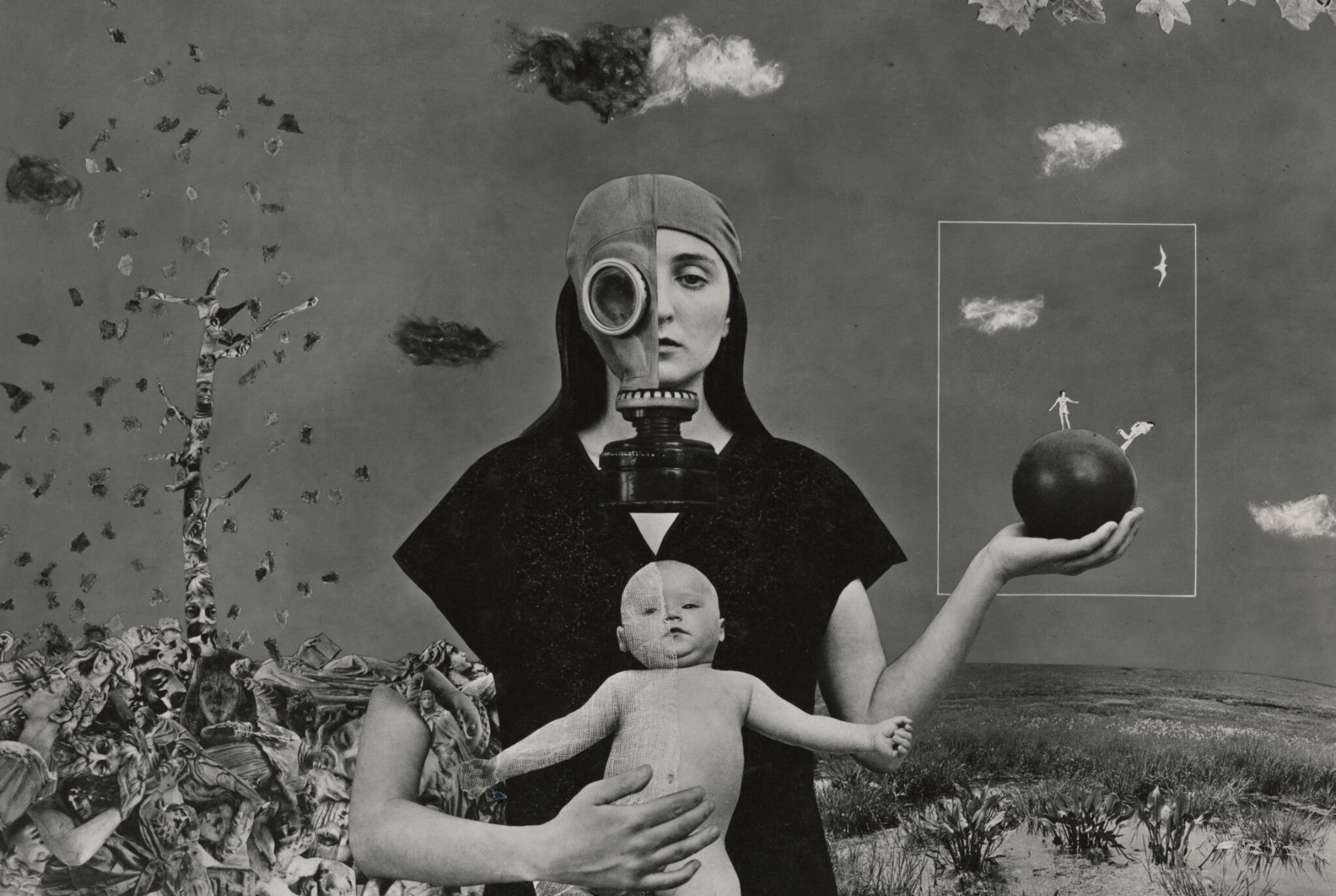
Ukrainian Dreamers from Kharkiv
Until 20 September
The Kharkiv School of Photography is a community spanning four generations of artists who use photography as their primary medium of expression. From the period of Soviet censorship through the turbulent years of Ukraine’s independence, revolutions, and the onset of Russian military aggression, Kharkiv photographers have continuously expanded the boundaries of the medium, transforming it into a sharp instrument of social and aesthetic critique. The history of the Kharkiv School of Photography dates to the late 1960s, when eight artists who met through a regional amateur photo club formed the informal group Vremia.
By the 1980s, a new cohort of Kharkiv artists – including the Gosprom collective – partly continued Vremia’s innovations, while partly rejecting them in favour of grey, uneventful photography. In the 1990s, performativity intensified and became a key tool for exploring post-Soviet subjectivity, suspended between memory and fiction. Fast Reaction Group produced particularly influential projects that combined ostentatious self-fashioning with sharp social critique. The subsequent generation – represented by the SOSka, Shilo, and Boba-Group collectives, as well as independent artists – drew on the full range of visual strategies developed within the Kharkiv photographic milieu. These shared aesthetic affinities, together with close personal ties and professional collaborations across all four generations, justify viewing the Kharkiv School of Photography as a distinct art movement – one that transformed Soviet utilitarian photojournalism into one of the most significant phenomena of Ukrainian contemporary art.
Galerija Vartai
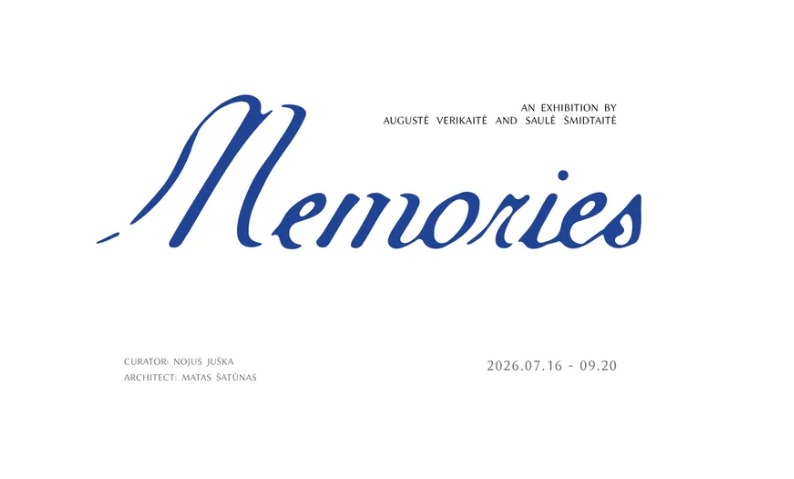
Augustė Verikaitė and Saulė Šmidtaitė. Memories
Until 20 September
The works by Augustė Verikaitė and Saulė Šmidtaitė presented in this exhibition unfold as an intimate exploration of time and memory - an exploration experienced every day. Through distinct artistic languages, the two artists examine both their own memories and those of others, along with the objects, rituals, and everyday habits in which memory quietly accumulates.
Saulė Šmidtaitė (b. 2001) creates video works and installations using archives of photographs, films, and video art from the 1990s and the following decades. The artist seeks overlaps between different eras - how individual experiences intersect with collective memory and with imposed systemic, colonial, or religious norms. By delving into the forms through which intense experiences are expressed, she considers which behavioural patterns are inherited or driven by inertia, and which arise as conscious choices. Augustė Verikaitė (b. 2000) devotes much attention in her work to objects that preserve memories. Her motifs include models of sewing patterns found in family archives, empty pages from photo albums, theatre props, and other objects. Using photography, silkscreen printing, video works, and sculptural objects, she transforms these items into monuments that capture the transience and fragility of memory, as well as its influence on human life and everyday existence.
Pamėnkalnio Gallery
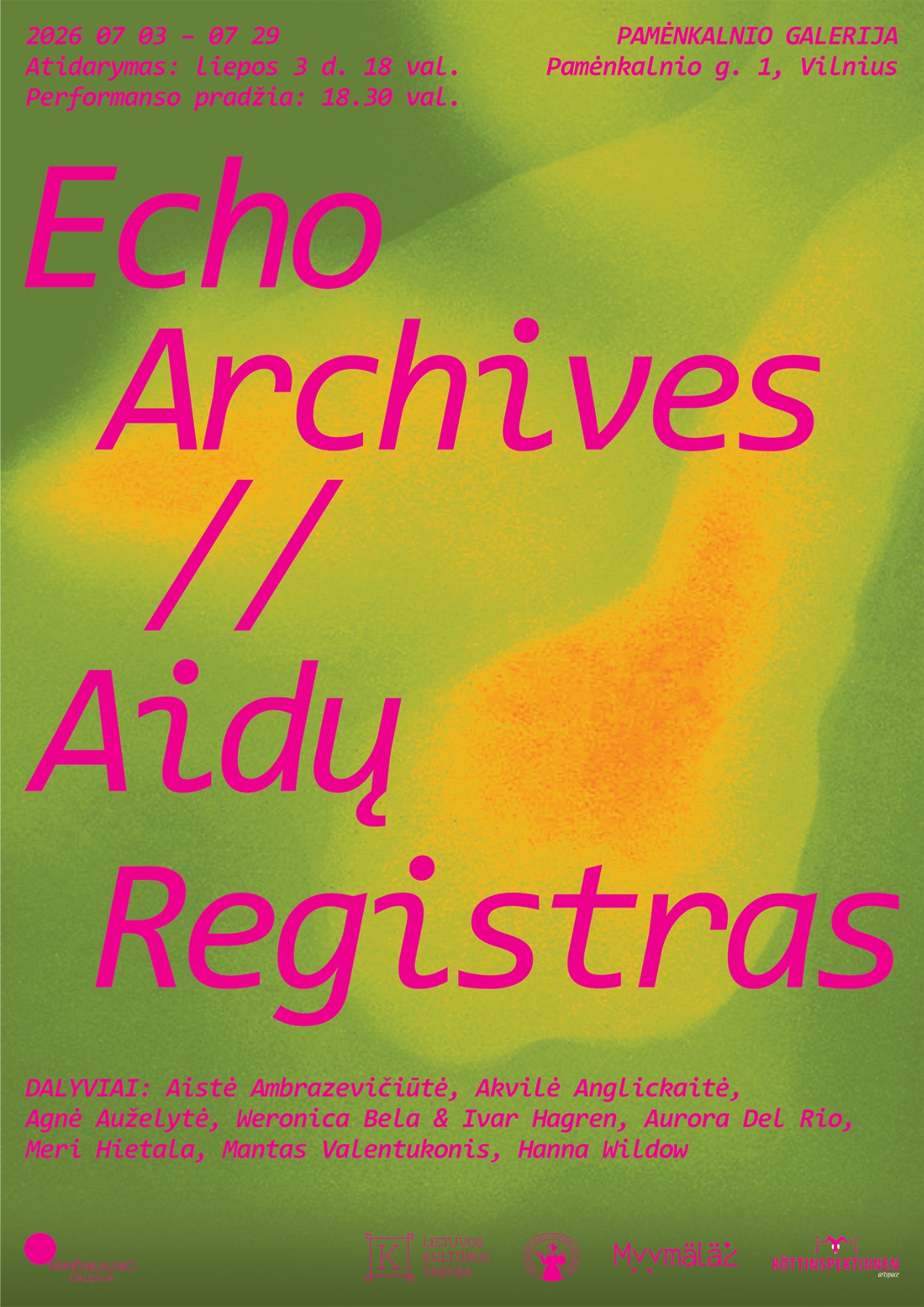
ECHO ARCHIVES
Until 29 July
Echo Archives is a group exhibition that brings together artists from three countries to explore the structures of ecological memory, inherited forms of land-based knowledge, and the fragile relationships that bind people, landscapes, and histories together.
The exhibition begins with a simple question: how do we learn to care for the world around us? Through stories told in kitchens, songs passed between generations, seasonal rituals, and everyday gestures such as tending to a plant or protecting a river, knowledge about living with nature has long been shared through experience rather than instruction. Yet these forms of knowledge are increasingly endangered by extractive economies, environmental degradation, and the accelerated rhythms of contemporary life. Artists: Aistė Ambrazevičiūtė, Akvilė Anglickaitė, Agnė Auželytė, Weronika Bela & Ivar Hagren, Aurora Del Rio, Meri Hietala, Mantas Valentukonis, Hanna Wildow.
(AV17) gallery
Mindaugas Navakas, Porcelain, exhibition view, 2020. Photo by L. Skeisgiela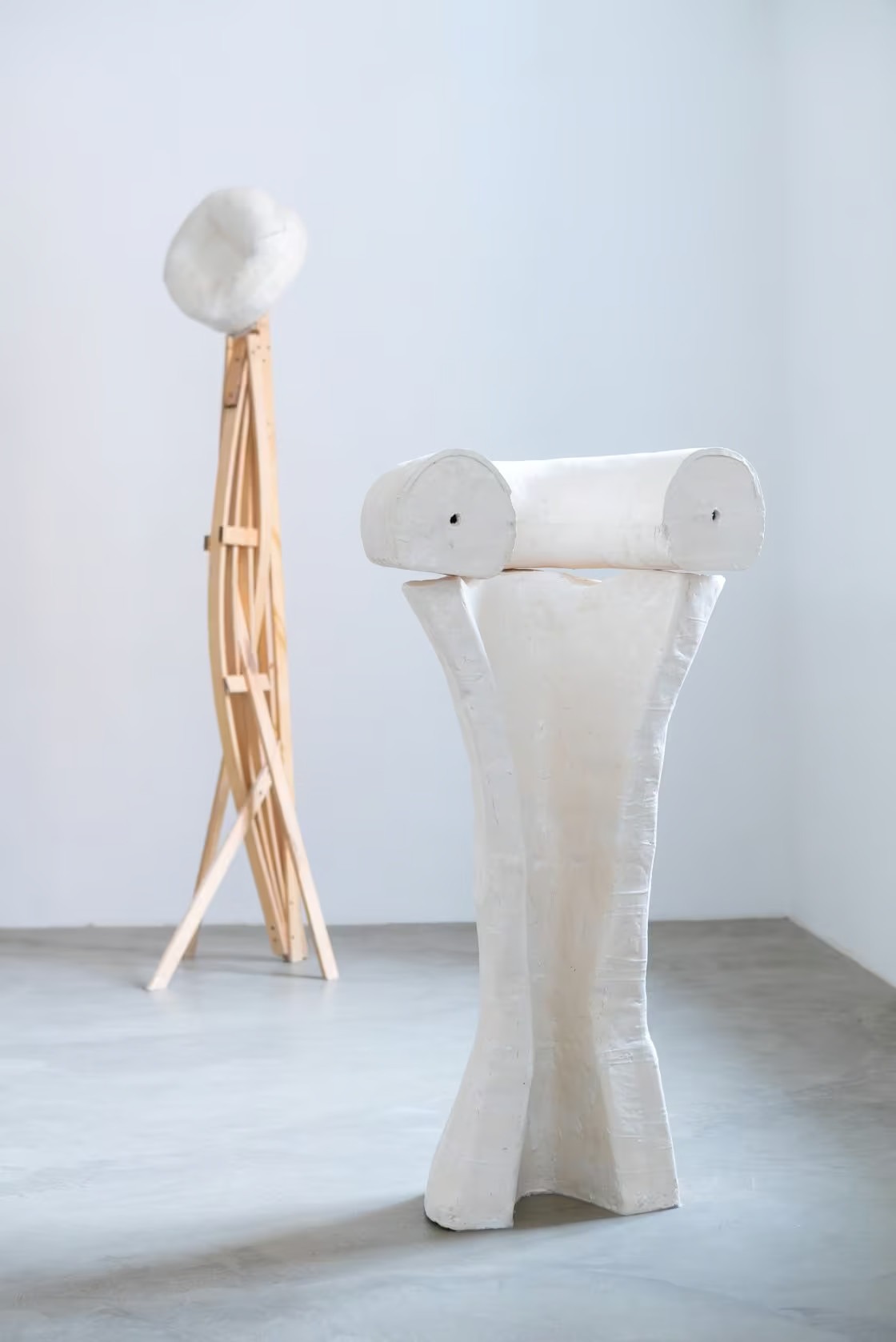
Mindaugas Navakas. On Green
22 July – 26 August
Mindaugas Navakas is one of the most prominent figures in Lithuanian contemporary sculpture. His work played a significant role in the transformation of sculptural practice during the 1980s and the 1990s and in the development of contemporary art in Lithuania. His artistic practice is distinguished by its attention to materiality, scale, and the relationship between the object and its environment. Throughout his career, Navakas has consistently explored the possibilities of sculpture by combining diverse materials, forms, and cultural contexts. Monumental forms, precise construction, and a sensitive engagement with architectural and urban environments remain defining characteristics of his work. His sculptural objects have been exhibited extensively in public spaces, with many becoming integral elements of urban landscapes in Lithuania and abroad.
Presented during the summer season, “On Green” reveals a less familiar aspect of Navakas’ artistic practice. Here, the artist appears to move away from the monumentality that has long characterized his work, instead turning towards found objects and organic forms. The exhibition reconsiders the universality of cultural symbols and explores the dialogue between different traditions, histories, and local contexts. Employing his characteristic subtle irony and sarcasm, Navakas examines the ways in which history is interpreted and represented. Throughout the exhibition, the colour green functions not only as a visual leitmotif but also as a conceptual tool, connecting diverse contexts and opening multiple perspectives on how the world may be perceived.
modernity, where flexibility becomes a fundamental condition of existence.
LITHUANIA, Kaunas
Meno Parkas Gallery
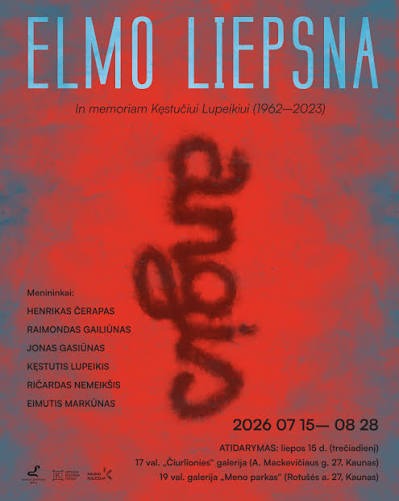
In Search of St. Elmo’s Fire. In memoriam Kęstutis Lupeikis
Until 28 August
The exhibition is dedicated to the memory of painter, architect and member of the group Angis, Kęstutis Lupeikis (1962–2023). Organised by Meno Parkas Gallery, the project brings together the artists of the group Angis — Henrikas Čerapas, Raimondas Gailiūnas, Jonas Gasiūnas, Eimutis Markūnas and Ričardas Nemeikšis — in memory of their fellow artist Kęstutis Lupeikis, who passed away in 2023. The exhibition is dedicated to him, but it is less a retrospective or a summing-up of a finished history than an attempt to look again, from the present moment, at a group whose members are connected by shared artistic experience, by the environment of the Kaunas Art School and the Stepas Žukas Applied Art Technical School, by the tradition of expressionist painting, its continuation and reconsideration, and by a lasting relationship with exhibition space. Returning to these places becomes an opportunity to see what remains in artistic practice as time, generations, circumstances and the artists themselves change.
The group Angis was founded in 1990. From the very beginning, it appeared as a mobile association of artists oriented towards progressive activity. In the cultural context of the time, Angis actively opposed the small-scale chamber painting then widespread in Lithuania, decisively transforming and expanding the tradition of Lithuanian expressionism into a neo-expressionist one. Through new plastic discoveries and unconventional pictorial content, the artists deconstructed the classical expressionist legacy. Their liberation from traditional forms and formats coincided with the processes of Lithuania’s National Revival.
Kaunas Picture Gallery
Barbara Kasten, Diptych I 84, 1984, Polacolor, each 20 × 24″.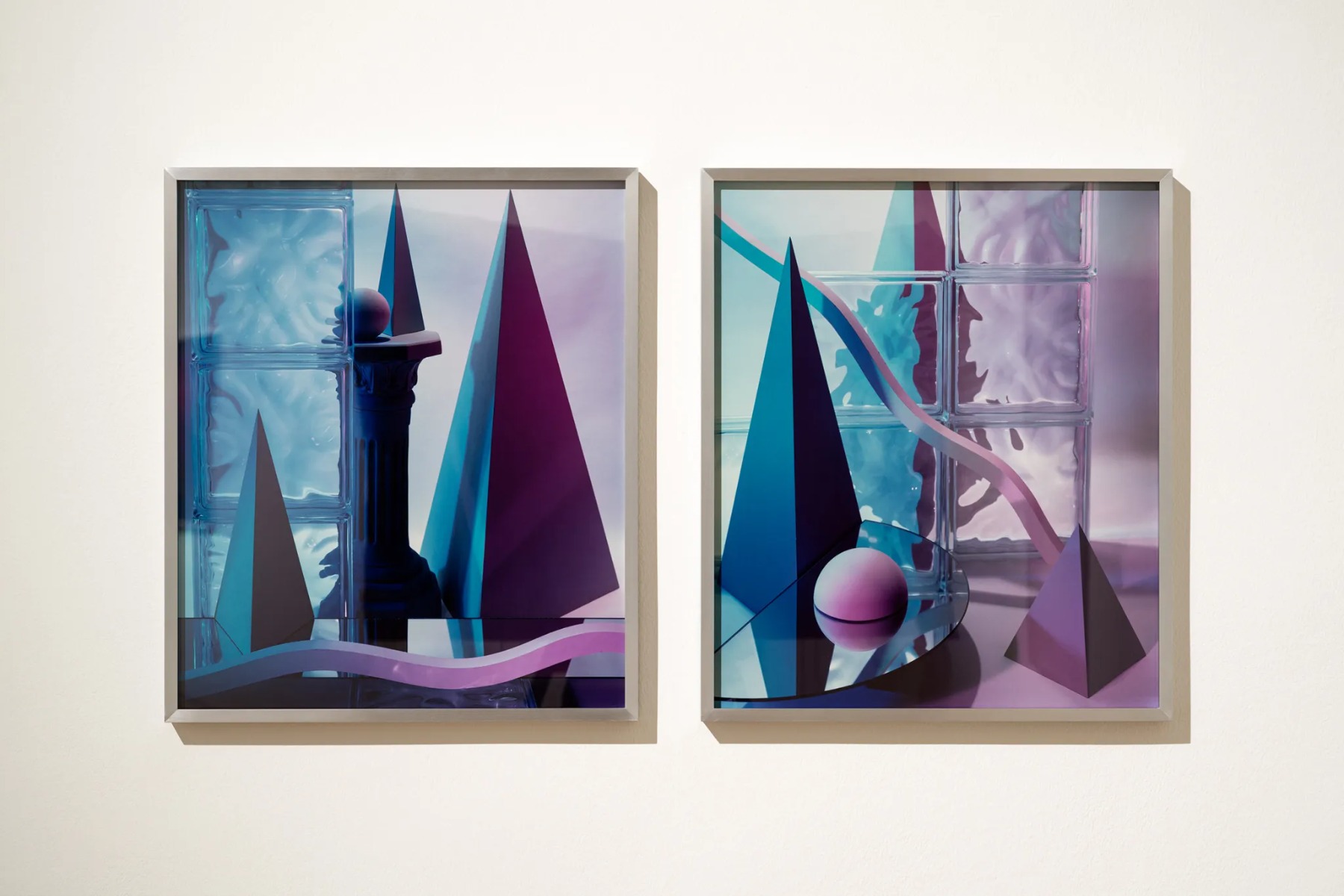
Barbara Kasten. Post-Abstraction
Until 25 October
Barbara Kasten, an American artist of Lithuanian origin, belongs to a generation of artists who expanded the concept of photography and transformed it into a sphere of experimentation with space, light, and perception. Her studies in painting, sculpture, and textile design, as well as the ideas of the modernist art movement Bauhaus grew into a signifanct foundation for her work.
The Bauhaus tradition and the ideas of László Moholy-Nagy had a significant influence on her work. Upon returning to the United States, Kasten transformed photography into an experimental medium in which she creates meticulously arranged visual compositions using mirrors, geometric forms, colour, and light. Later, after moving to New York, she devoted increasing attention to architecture, and her work came to blend Bauhaus experiments, Constructivism, and the influence of postmodern architecture. “Barbara Kasten is a pioneer in every medium she has explored and one of the most consistent experimenters in contemporary art. Her work continues the tradition of female artists who redefine the very concept of the medium itself,” – emphasizes the exhibition curator Agnieszka Pindera.
LITHUANIA, Klaipeda
Gallery “Energija”
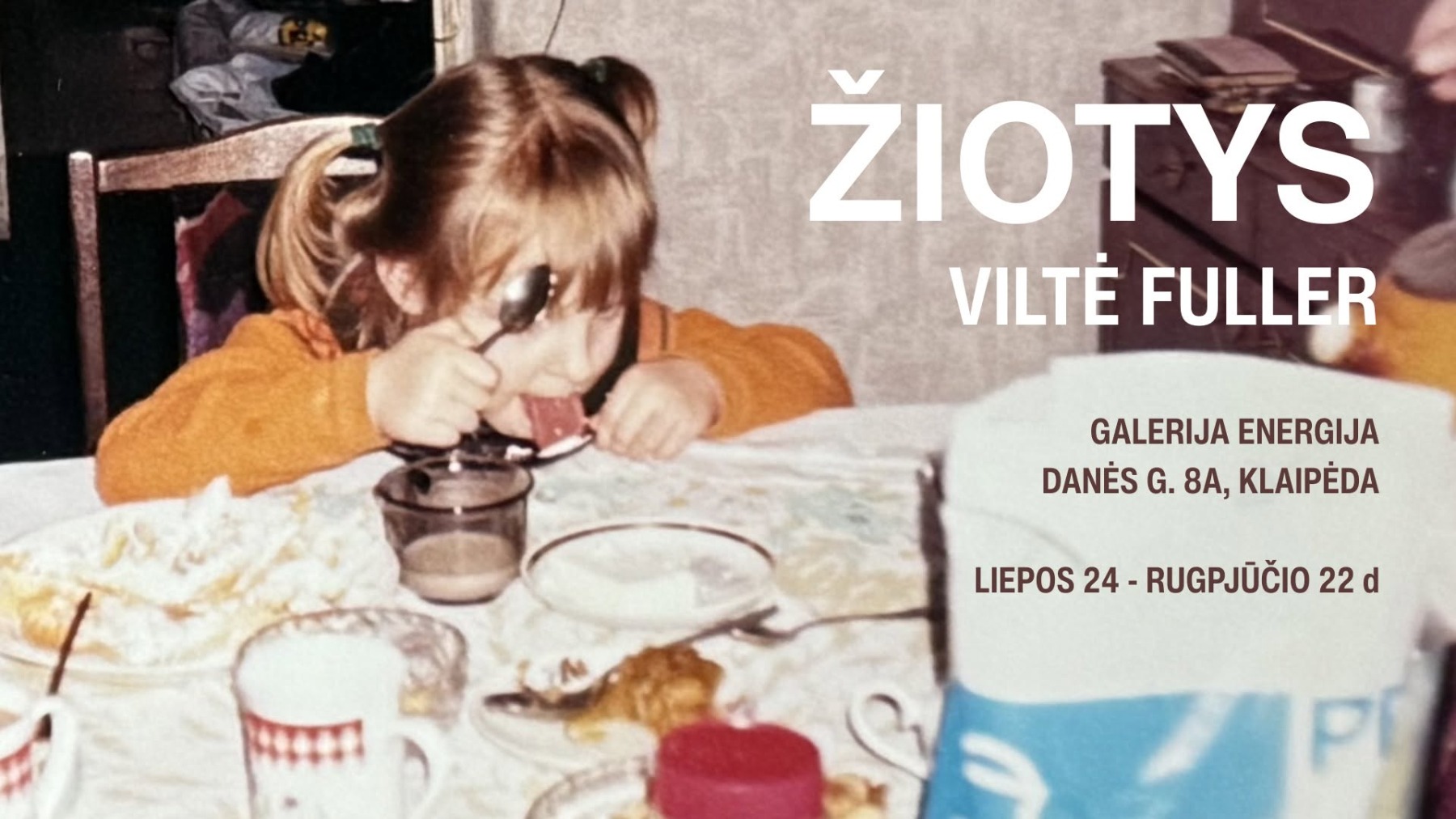
Viltė Fuller. Mouths
24 July – 22 August
Mouths is a solo painting exhibition by Klaipėda-born, London-based artist Viltė Fuller. In this new body of work, Fuller turns her attention to private and semi-private domestic spaces through the lens of Baltic food culture: markets, bakeries, roadside cafés, family recipes, and everyday eating rituals. For the artist, food becomes not only a cultural symbol but also a way to explore the subconscious, dreamlike childhood memories, migration, and identity.
“Growing up in the United Kingdom, I most often experienced Lithuanian culture through language, family traditions, and food. This exhibition is an attempt to reconnect with those roots and to revisit the rituals that shaped my own relationship with Lithuania.”
LITHUANIA, Nida
Photo: Brigita Kasperaitė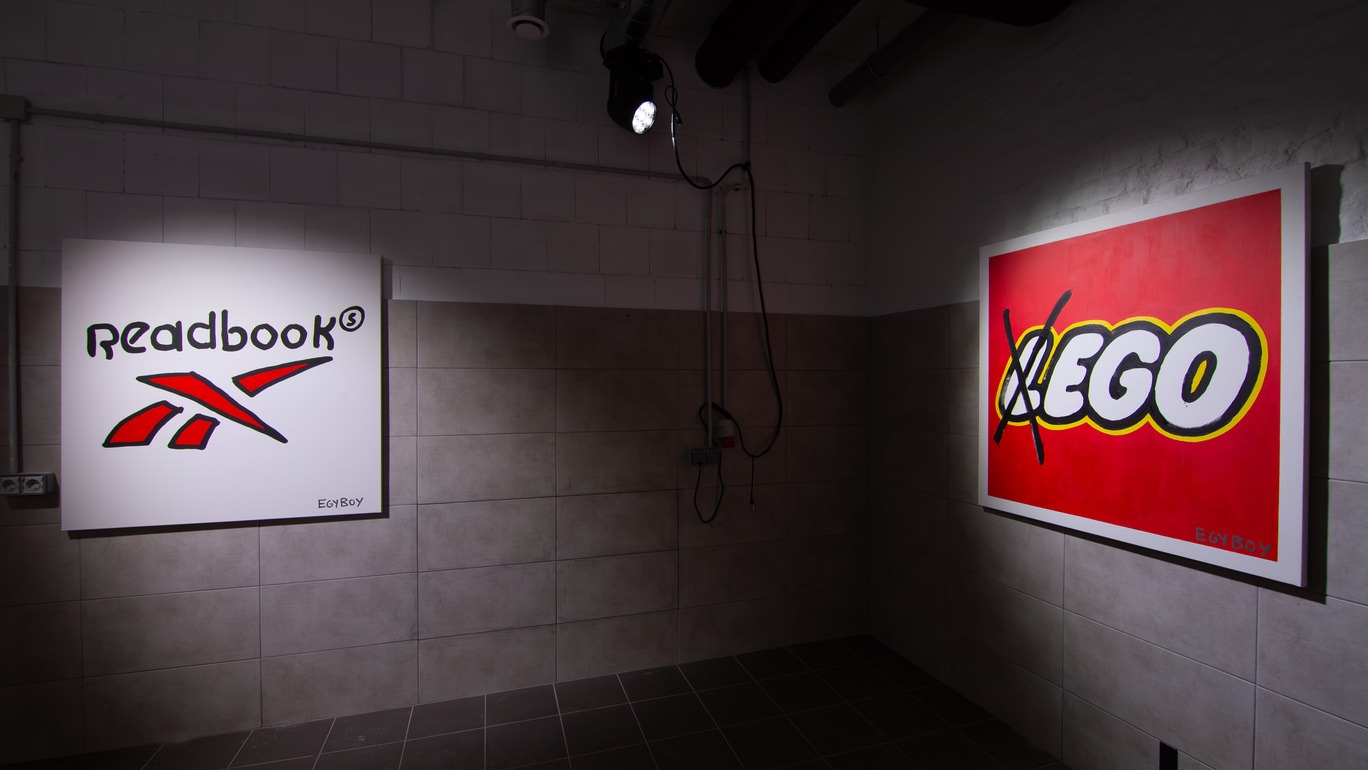
Medus. Nida Art Foundation
30 July – 2 August
This summer, ten artists are living in the Skruzdynė, in Nida, reviving the town’s rich cultural history while marking the beginning of a new chapter at the Butterfly Station (Drugelių stotis) residency.
The main concluding part of this summer’s residency programme will be the contemporary art festival “MEDUS”, scheduled to take place in Nida from July 30 to August 2.
Upper image: From ”Monuments” by Gļebs Panteļejevs at Art Station Dubulti
