


What to see in the Baltics
In Riga, the 17th edition of Survival Kit, the international contemporary art festival organised by the Latvian Centre for Contemporary Art (LCCA), is underway. In Vilnius, Gallery Weekend has just come to an end, with a number of very interesting exhibitions still on view across the city. In Tallinn, galleries and artists are preparing for the Foto Tallinn art fair, which opens this weekend. And, of course, art events and must-see exhibitions are not limited to the capitals of the Baltic states. Check out our selection of events and exhibitions taking place this September and October.
ESTONIA, Tallinn
Kumu Art Museum
Kristi Kongi (1985). “I think all the world has turned into what I’m seeing” (O’Keeffe). Detail. 2025. Oil on canvas. Courtesy of the artis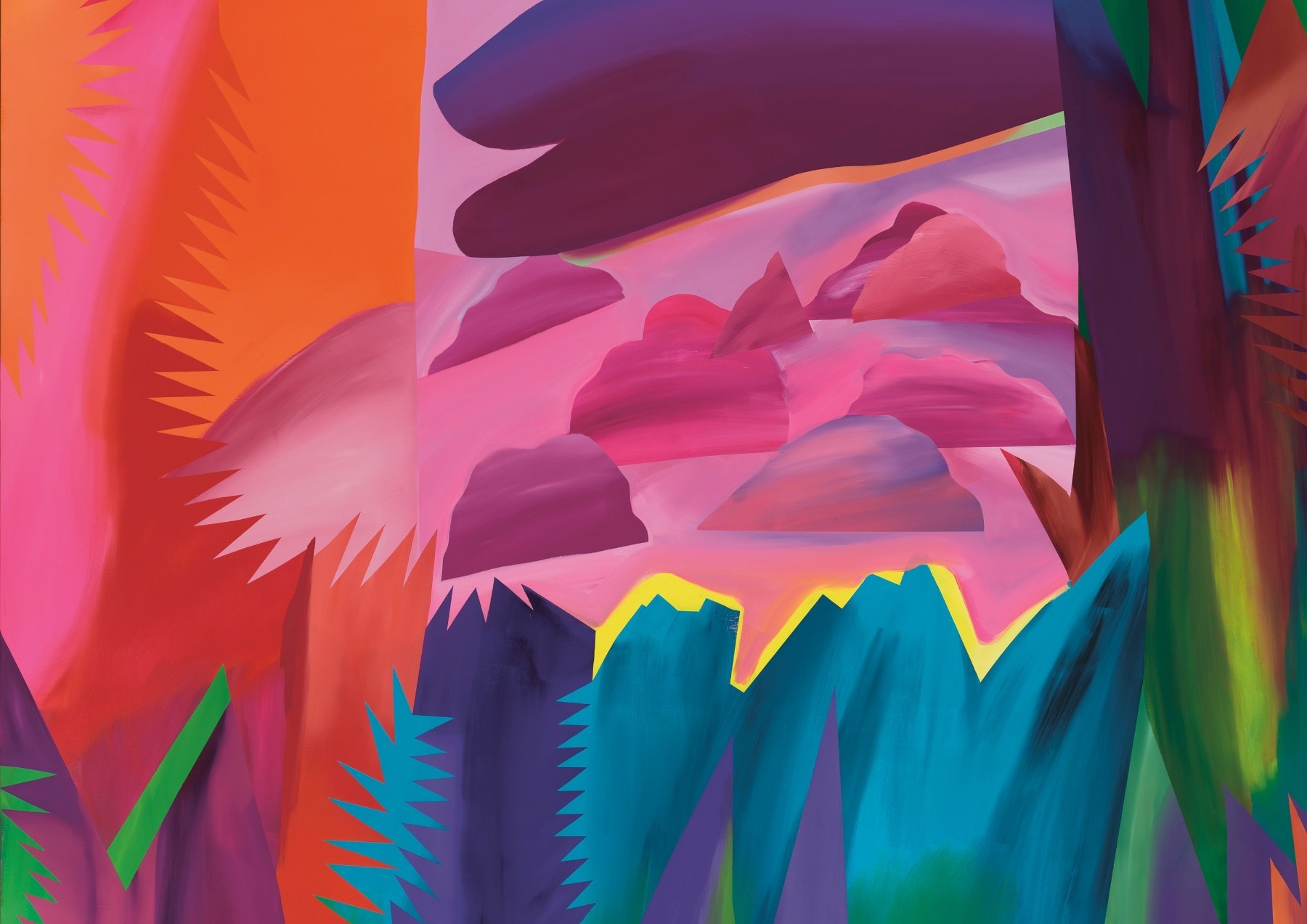
Kristi Kongi: Chromatic Drift
Until 10 October
The painter Kristi Kongi’s large-scale solo exhibition is one of the highlights of the Kumu Art Museum’s anniversary year. It is the first solo exhibition by an Estonian woman artist in Kumu’s great exhibition hall, featuring new works created specifically for this event. The exhibition evokes a holistic sensory and spatial experience centred on colour, a hallmark of Kristi Kongi’s oeuvre. Extending beyond the canvas, colours and motifs have spilled onto the floor, walls, windows and the outdoor space.
Chromatic Drift reflects the artist’s inner journeys over the past few years, during which colour has served the purpose of mapping and preserving both states of mind and memories. The works feature recurring motifs of openings and passages, which reflect a sensory journey to somewhere else, a parallel world. The staircase, both as an image and as an object, gives direction for either moving forward or staying put. These empty landscapes created by Kongi do not speak of arrival, but instead draw attention to a state of in-betweenness.
Marja Helander. Birds in the Earth. 2017. Video still. Finnish National Gallery Collection / Museum of Contemporary Art Kiasma. Photo: Finnish National Gallery
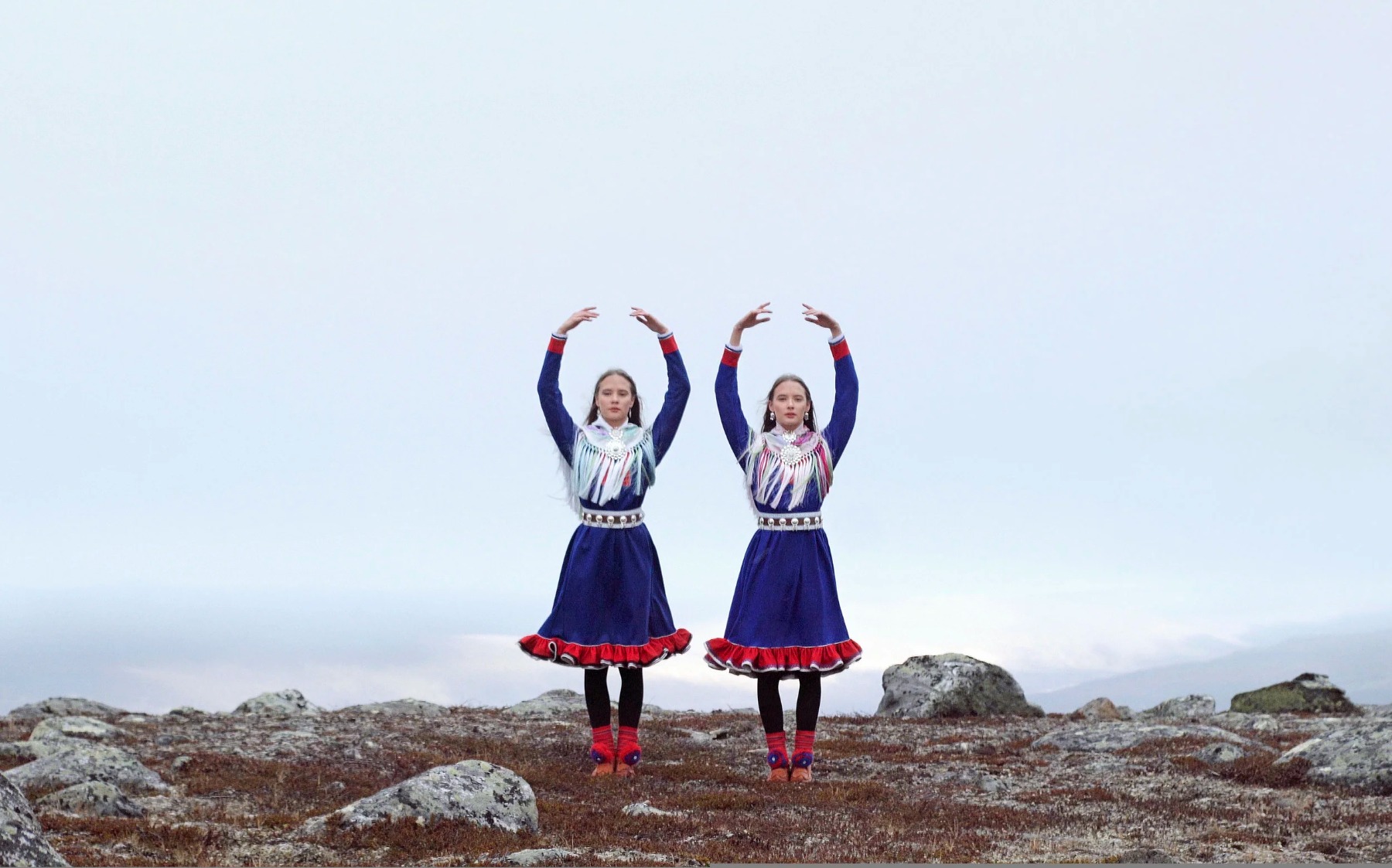
no beginning, no end: Decolonial Gestures in Sámi Worldbuilding
Until 14 March
This international exhibition examines the complex journey being taken by the Sámi people as they strive for Indigenous justice and self-determination through decolonial worldbuilding. The politicization of Sámi art that began in the 1960s and 1970s, developing in parallel with the Sámi self-determination movement, has received widespread attention over the last decade. Today, Sámi art has become one of the most visible and dynamic parts of the Nordic contemporary art scene, and is increasingly prominent in the global artistic arena. This exhibition presents works by artists from different generations, including figures who prepared the ground for the vigorous developments currently being seen in Sámi art, as well as younger artists.
no beginning, no end stands in dialogue with the exhibition Expedition: Finno-Ugrians and the Power of Images (2 October 2026 – 21 February 2027), curated by Linda Kaljundi. Both are contributions to Expedition, a joint multi-year research project undertaken by the Art Museum of Estonia, the Estonian Academy of Arts, and the Estonian National Museum that has been investigating our relationships with Indigenous peoples and the impact these relationships have had on Estonians’ own self-image.
Kai Art Centre
Foto Tallinn 2024. Photo: Aron Urb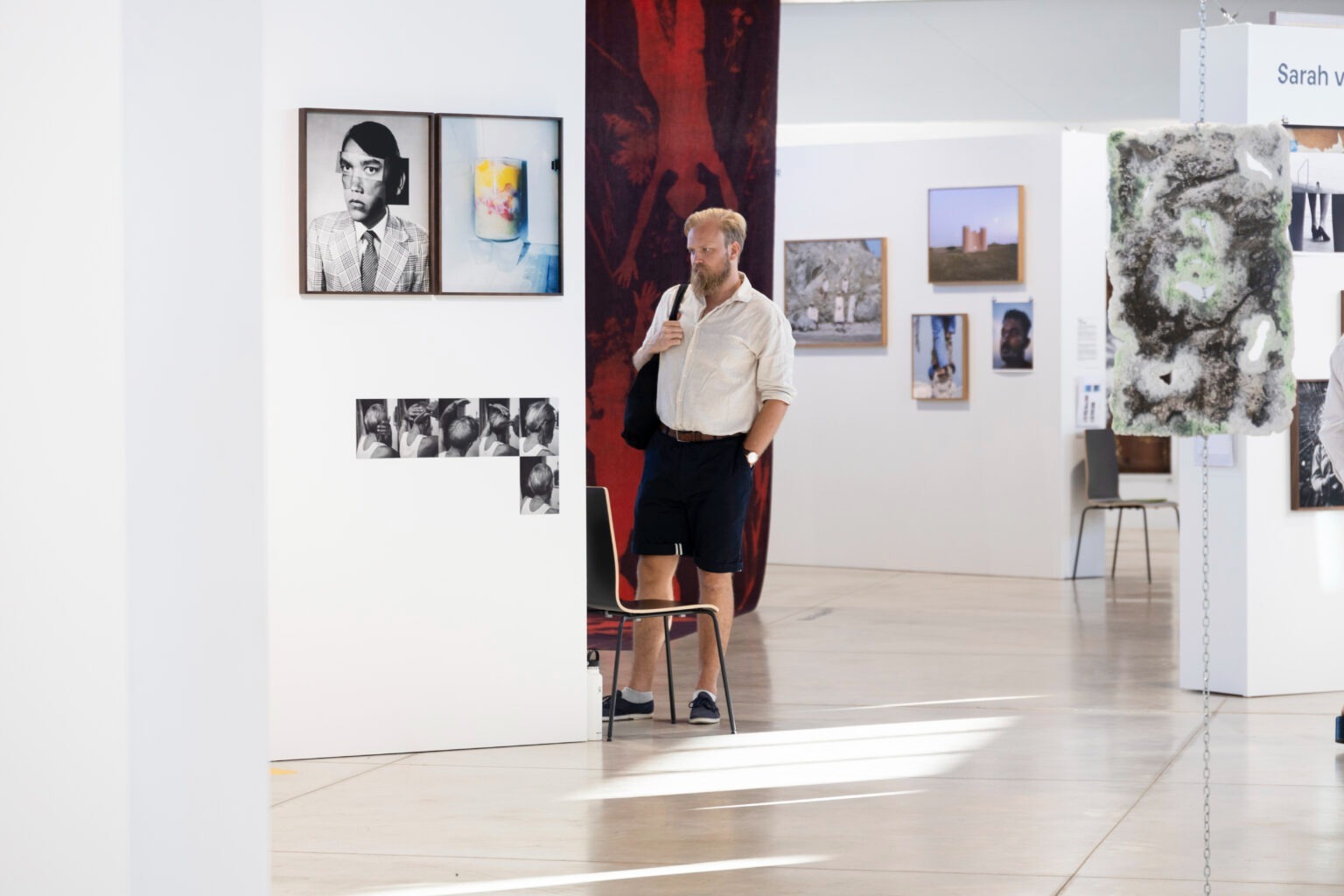
Foto Tallinn 2026
18 – 20 September
Foto Tallinn is a biennial international art fair presenting work selected by a jury of leading experts and represented by artists and galleries, bringing the latest contemporary photographic art to audiences while offering collectors and art enthusiasts the opportunity to discover new artworks, new ideas, and the artists themselves.
The contemporary photography art fair Foto Tallinn is presenting to the public the exhibitions of 16 galleries and 15 individually applied artists, selected by an international jury. In total, the fair will feature works by 45 artists, the majority of whom will be present in person to introduce their work. The Foto Tallinn 2026 jury comprised highly respected professionals from the art world: Anna Tellgren (Moderna Museet, Stockholm), Jeppe Ugelvig (New York), Margot Samel (New York), Sara Giuliattini (Polycopies, Paris), and Foto Tallinn 2026 Artistic Director Lilian Hiob-Küttis. Foto Tallinn received a record number of applications this year, with all jury members highlighting the high standard and diverse approaches to contemporary photographic art.
READ OUR INTERVIEW with Foto Tallinn 2026 Artistic Director Lilian Hiob-Küttis
Tallinn Art Hall
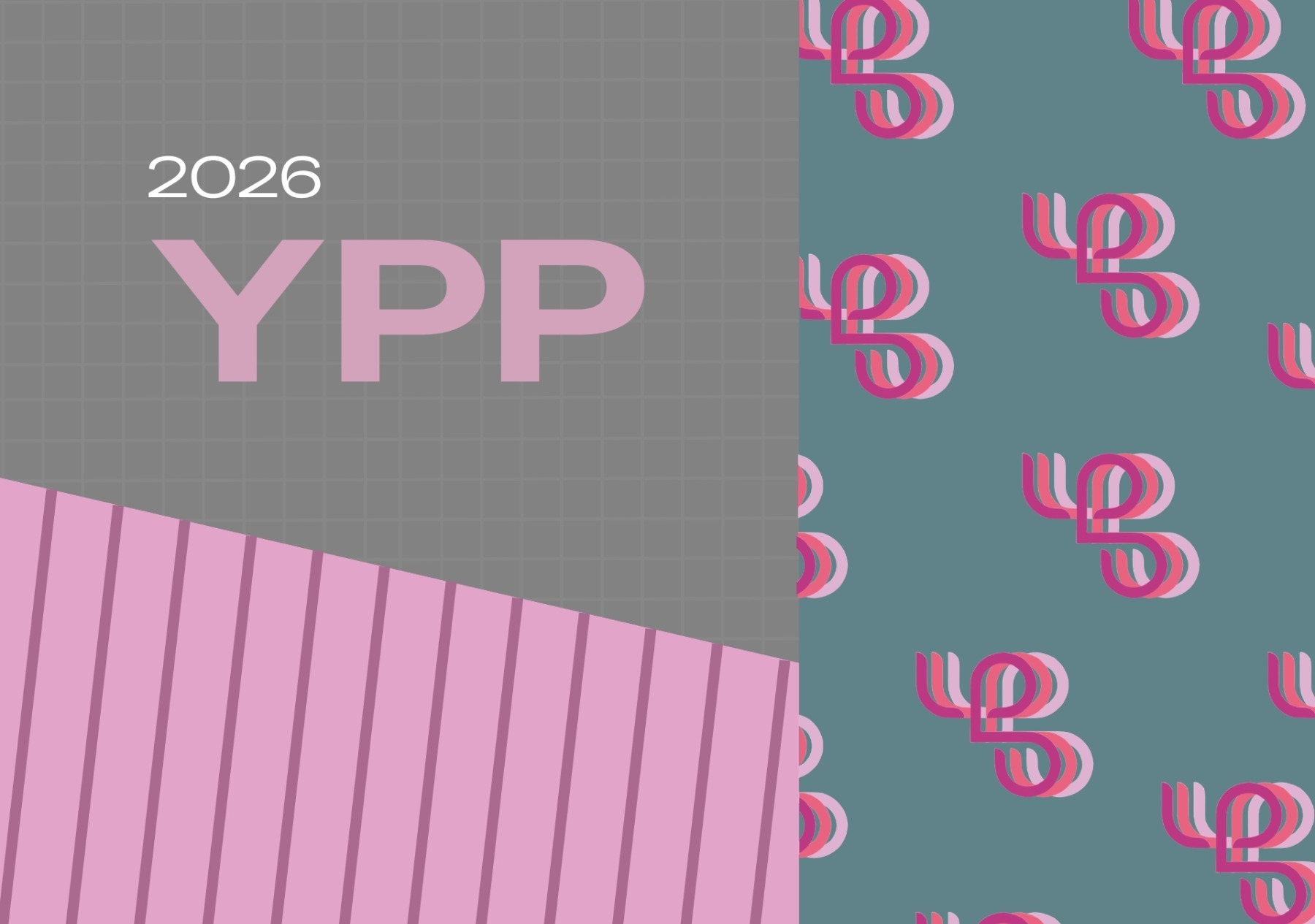
Young Painter Prize / YPP 2026 Finalists’ Exhibition
The Young Painter Prize / YPP 2026 Finalists’ Exhibition brings together 25 emerging painters selected through this year’s international open call. YPP was founded in 2009 as an independent platform supporting a new generation of painters from the Baltic region, and today connects artists from Lithuania, Latvia, Estonia, and Ukraine, as well as Baltic artists living abroad.
Rather than working around one prescribed exhibition theme, YPP begins with the artists themselves. The exhibition reflects the concerns, visual languages, and very different realities of a new generation of painters. Across the selected works, personal histories meet questions of identity, memory, belonging, the body, social and political experience, imagined worlds, and the changing relationship between the individual and the environment.
Fotografiska
'Regular Encounters' (1; 2; 3), from the series 'Elegy of Care', 2025 © Anna-Liisa Kree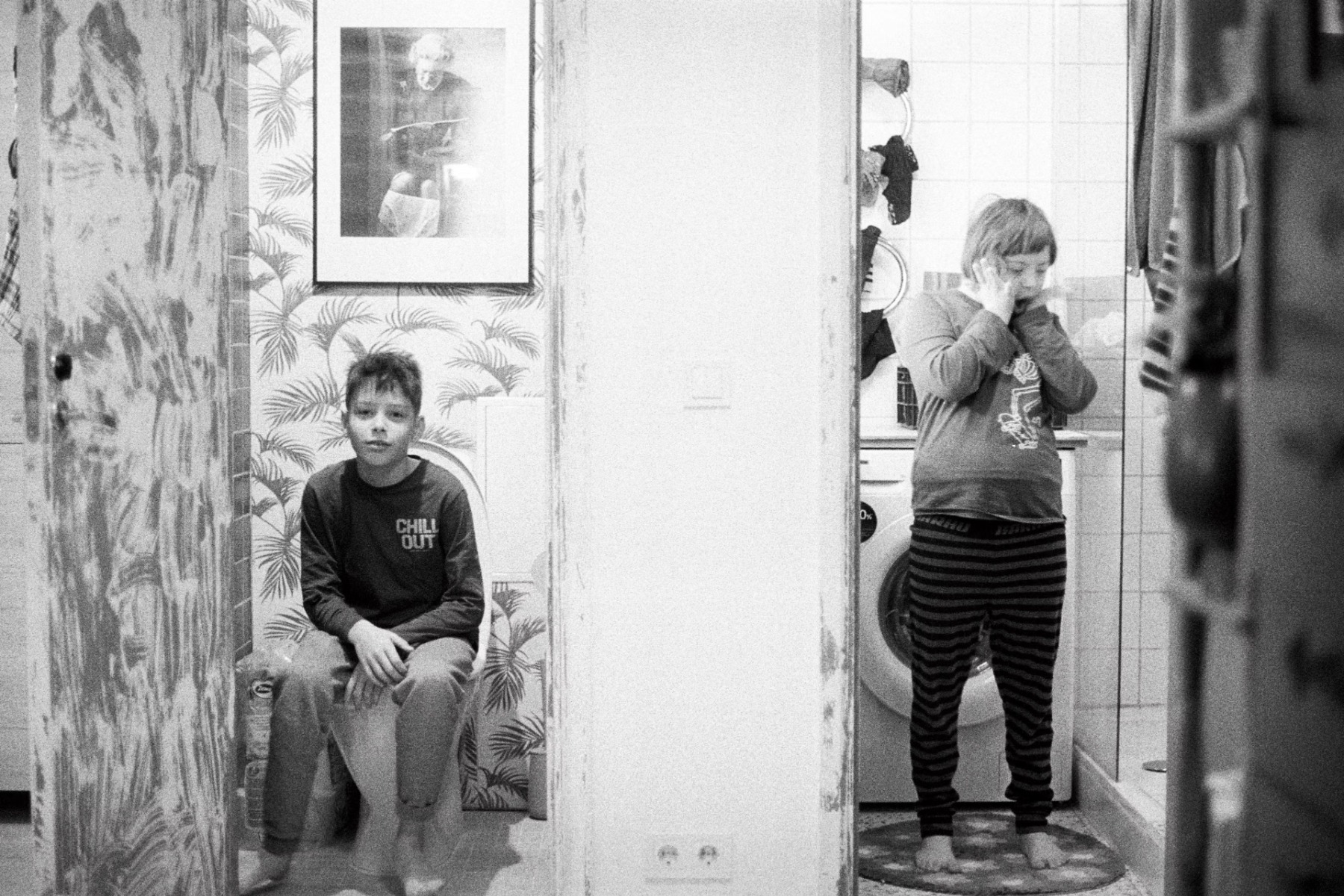
Emerging Artists 2026: The Baltics & Finland
Until 1 November
The first exhibition of Fotografiska Tallinn’s new initiative, Emerging Artists: The Baltics & Finland, brings forward rising photographic talents from the region – a new generation of bold and distinctive voices pointing toward the medium’s possible futures. The platform’s inaugural exhibition brings together artists from four countries, whose works open up personal worlds, test the boundaries of photography, and offer new ways to experience the present moment.
The exhibition Emerging Artists 2026: The Baltics & Finland features the following artists: Annemarija Gulbe, Krišjānis Elviks, Anna Ansone ft. Anna Marija Puķe (Latvia), Ieva Baltaduonytė (Lithuania), Shia Rówan Conlon (Finland), Karl Ketamo (Finland), Anna-Liisa Kree (Estonia), Andra Rahe (Estonia), Filips Smits (Latvia), Pavelas Šalaikiskis (Lithuania). The selected artists engage with photographic material in markedly different ways: by staging carefully constructed scenes for the camera; by observing themselves and their surroundings closely and honestly, yet also with playfulness and humour; and by shaping contemporary moods through their series, bringing into view the more subtle undercurrents of society.
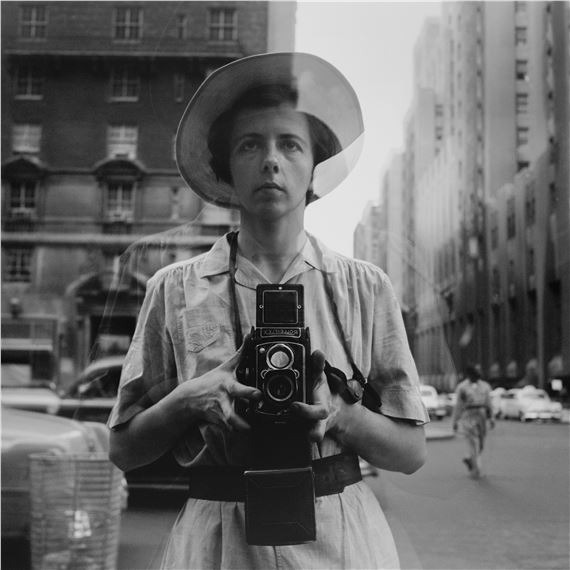
Vivian Maier. Unseen Work
Until 17 January
Vivian Maier (1926–2009) is one of the most enigmatic figures in the history of photography. Her contribution to the medium was discovered only after her death, yet she is now regarded as one of the greatest street photographers of the twentieth century. Vivian Maier was born in the Bronx, New York, spent part of her formative years in France, and returned to the United States in 1951. Throughout her time in New York City, Maier began to photograph the world around her and develop a visual language through the use of her camera, all while working as a nanny.
Maier belonged to the invisible working-class at the height of the American dream, allowing her to only be a witness to it. It took a long time for her work to see the light and to be revealed. Nearly a century later, she figures in the history of photography alongside the greatest masters of the twentieth century. Vivian Maier: Unseen Work explores Maier's oeuvre from the early 1950s to the mid-1980s through approximately 200 works, including vintage and contemporary prints, color and black-and-white photographs, Super 8 films, audio recordings, and contact sheets presented exclusively in the Tallinn exhibition. The exhibition offers a comprehensive view of this dense, rich, and multilayered archive, providing a fascinating testimony to post-war America and the darker side of the American Dream.
Estonian Museum of Applied Art and Design
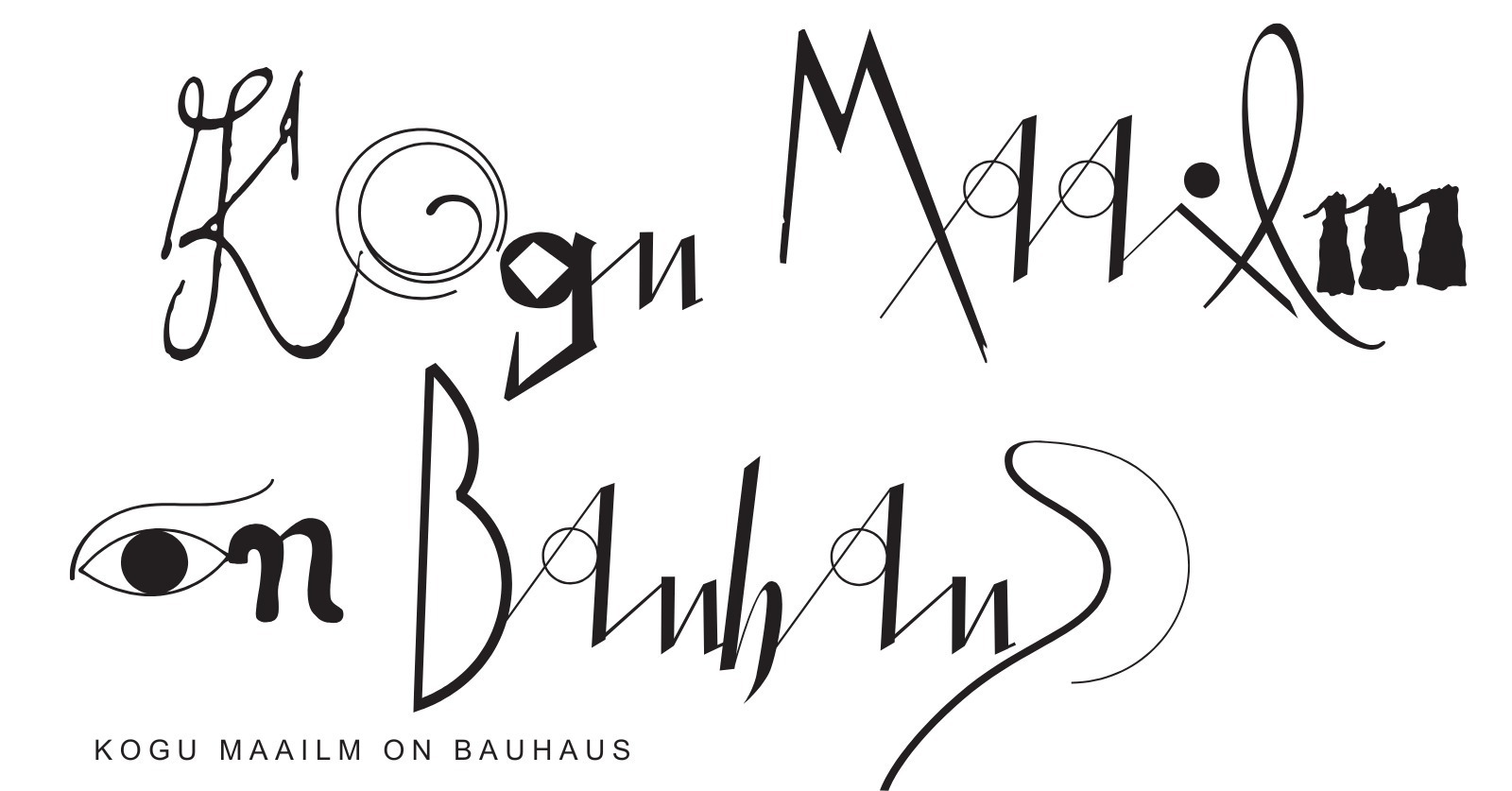
The Whole World a Bauhaus
Until 4 October
The exhibition “The Whole World a Bauhaus” presents a diverse, engaging, and surprising insight into the work and life of the Bauhaus art school through eight thematic chapters. It focuses on one of the most important art schools of the 20th century, founded in 1919 in Weimar.
Through photographs, original drawings, models, documents, films, and objects, the exhibition invites visitors to explore the wide scope and versatility of Bauhaus modernist design theory and practice. This is reflected in architecture, everyday objects, painting, and theatre, as well as in its teaching methods and formats. The aim of Bauhaus was to create a better everyday environment and to promote new ways of living. During its 14 years of operation, Bauhaus was an institution that constantly redefined and reinvented itself. Its direction was continuously discussed and debated by its three directors – architects Walter Gropius, Hannes Meyer, and Ludwig Mies van der Rohe – as well as by Bauhaus masters and student.
Contemporary Art Museum of Estonia (EKKM)
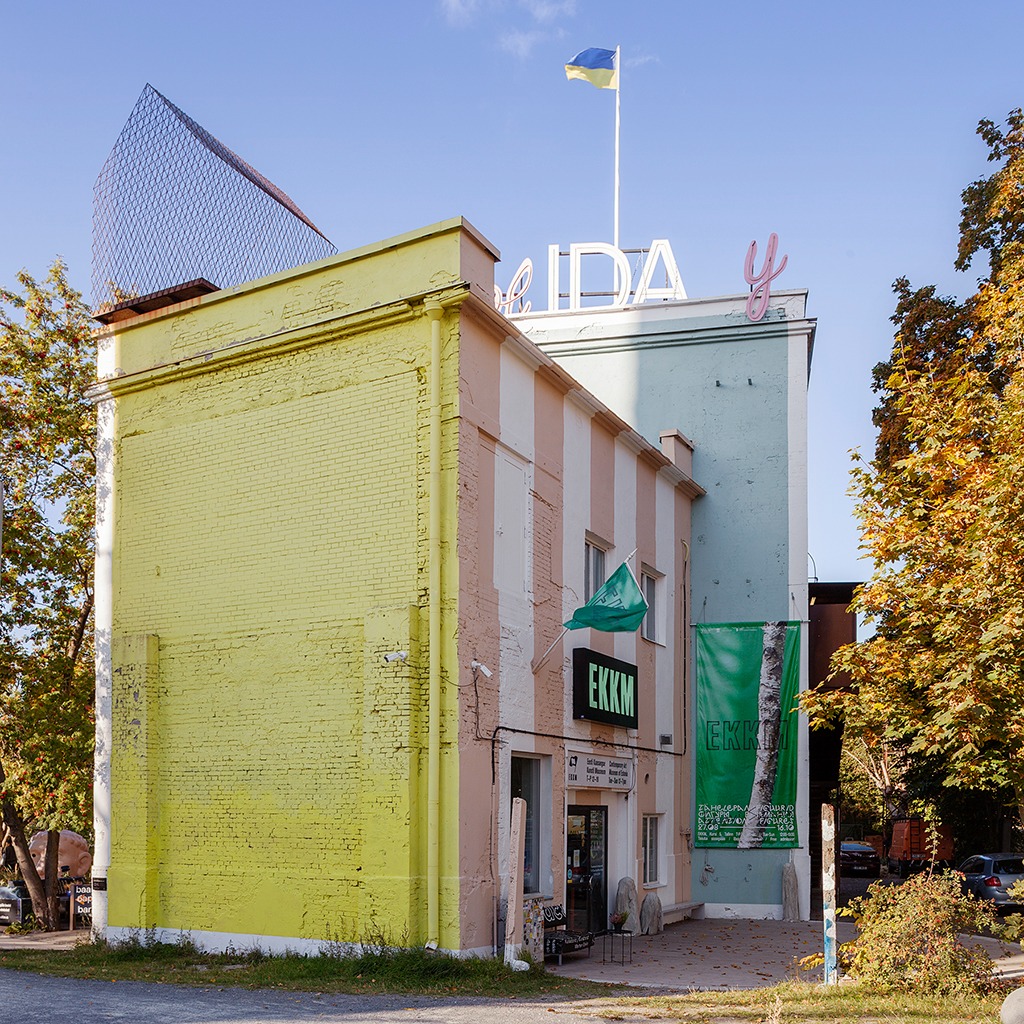
International group exhibition focusing on Southwest Asia
10 October – 13 December
EKKM will conclude its 20th season with an international group exhibition (10.10–13.12.2026), which will make a long-distance call to Southwest Asia and highlights Palestinian artists, among others. The exhibition is being curated by Evelyn Raudsepp and will be developed in collaboration with curators for whom Palestine and the Palestinian diaspora are both a professional field of work and a deeply personal concern. Instead of trying to convey complex and poignant experiences or speak for others, the exhibition will take shape through video interviews: through observations and reflections that emerge in personal and intimate conversations. The exhibition shifts from hearing to listening: from generalised news feeds and statistics to the stories and lived experiences of individuals, where art and culture emerge as carriers of resistance and resilience, memory and imagination.
Temnikova & Kasela gallery
Kaido Ole. Allegory II. Oil, acrylic, canvas. 2025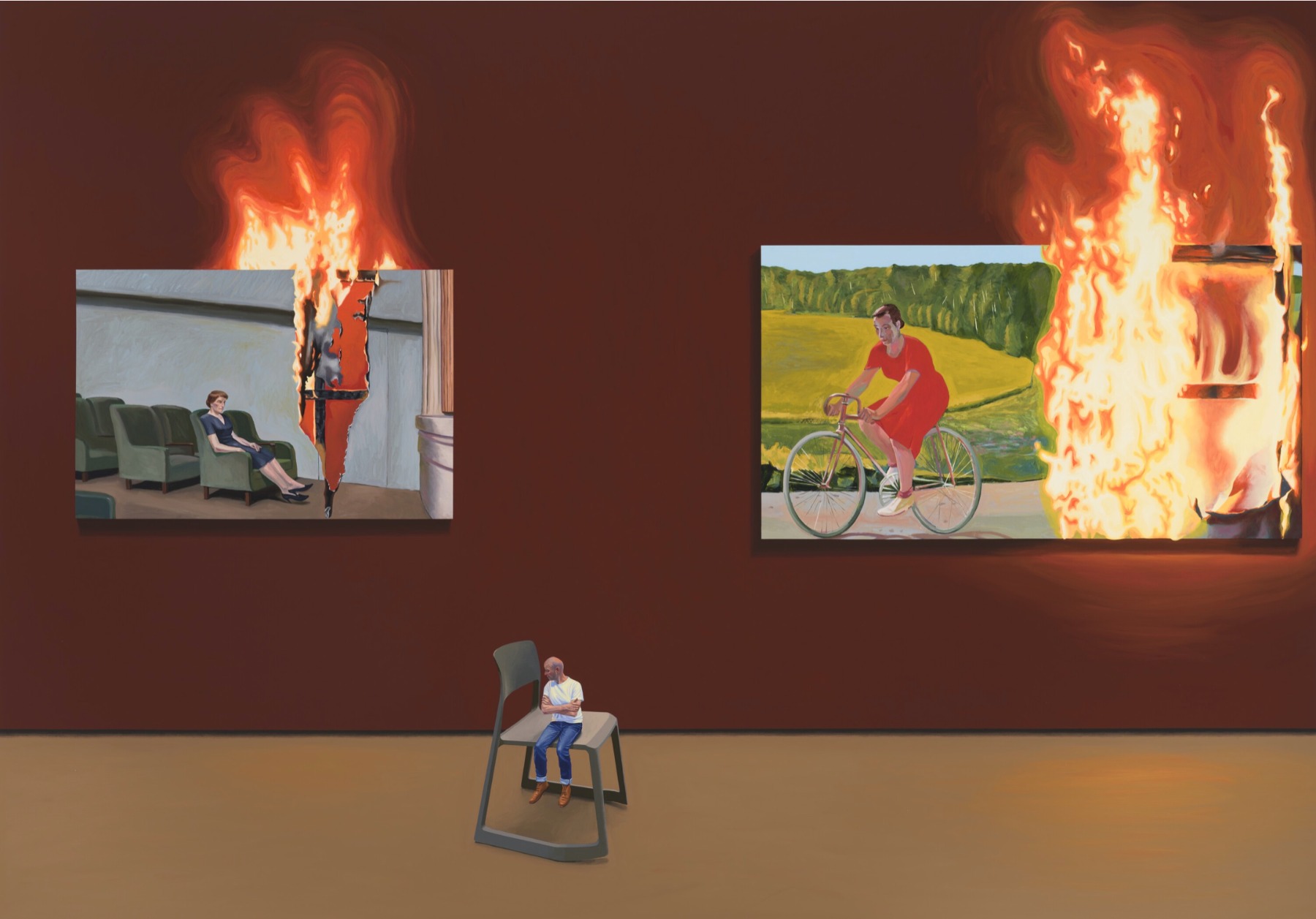
Kaido Ole. Krt
Until 10 October
These paintings are about BAD things. Not just the today-was-a-bad-day kind of bad, but the bigger, more universal kind that doesn’t go away when the next day comes, or even the next month. I don’t know how or when these BAD things got hold of me, but for several years now I’ve been trying to find a way to get them out of me and into my paintings. Some of it even seemed to work, but the BADNESS still kept haunting me. Now, painting these works filled with flames, I felt like things were finally getting a little easier. That’s the magic trick of art, isn’t it? The works may be about BAD things, but if the works themselves are GOOD, then somehow, in
the end, everything is all right. The bad shrinks back down to its proper size, and the world – my world – is back in balance. At least I hope so.
Punctum Gallery
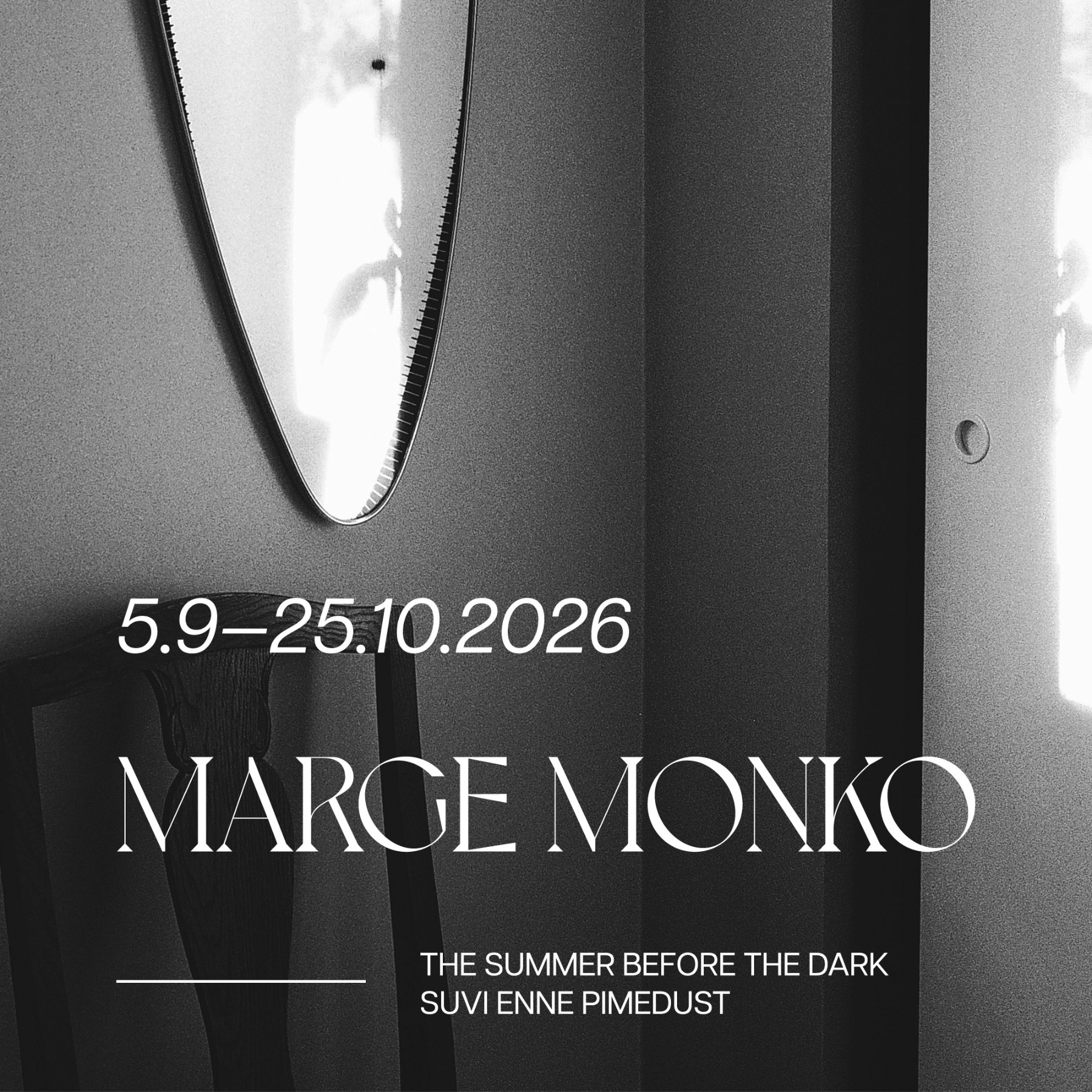
Marge Monko. The Sumer Before The Dark
Until 25 October
Like the beginning of summer, the end of summer also dissolves unnoticed into the yearly cycle of passing. Summer light turns to autumn light so slowly that we rarely notice the moment it has vanished and it is fully dark outside. Marge Monko’s solo exhibition “The Summer Before the Dark” begins from a similar source: not from darkness itself, but from the last light before we realize that something has already passed through us.
Marge Monko (b. 1976) is a well-known name on the Estonian art scene. Having earned a master’s degree in photography at the Estonian Academy of Arts and later leading the photography department there for years, the artist has in her earlier work engaged with the representation of women’s image, labour, and body in public space — often reflecting her own or other women’s experience through found material, archives, and the gaze of others. This exhibition turns its gaze more directly than before toward the artist’s own life: an artist accustomed to watching others here lets the viewer see her own inner world. The photographs on display deal with something that is changing, but has not yet completely disappeared.
More info >>
ESTONIA, Tartu
Kogo gallery
Anna Mari Liivrand. Coiling Paths II. Stained glass, industrial glass, tin, spray paint, furniture paint, found objects, engravings, iron, 2026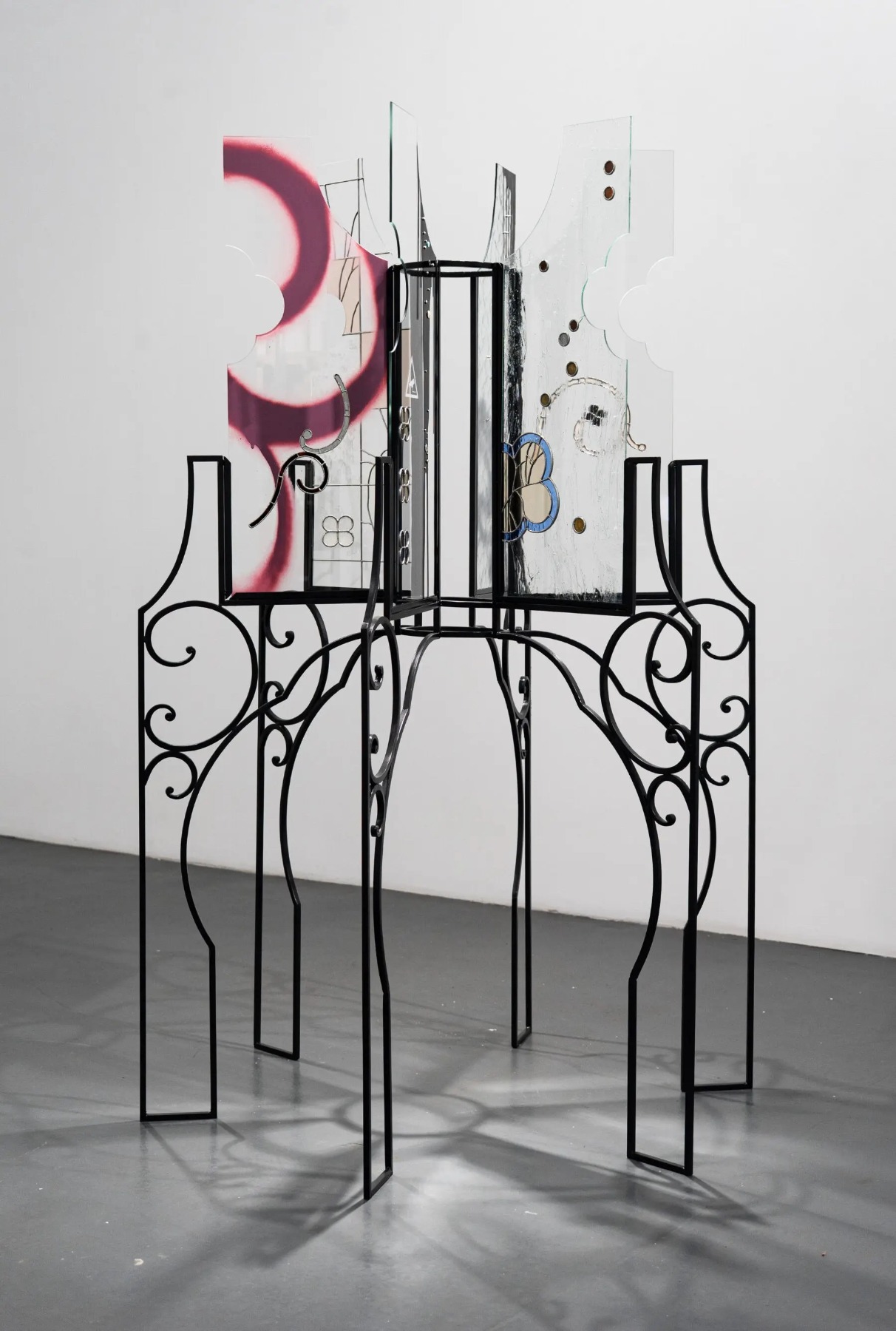
Anna Mari Liivrand. A The Woo of Coiling Paths
Until 24 October
A recent recipient of the Köler Prize, Anna Mari Liivrand works across drawing, sculpture and installation. In her latest body of work, Liivrand extends her exploration of ornamental metalwork, botanical motifs and stained-glass mosaics, incorporating subtle urban gestures inspired by graffiti into her intricate compositions. Each installation in the exhibition unfolds as a distinct chapter within a broader narrative where every fragment follows its own trajectory while contributing to Liivrand’s evolving visual vocabulary of coiling forms, material memory and transformation.
Combining vintage stained glass, industrial remnants and antique ornamentation, the artist carefully pieces together disparate fragments, coaxing them into forms of striking delicacy. The glass elements embrace fragility: their imperfections preserve traces of the past and become vessels of memory, echoing the philosophy of kintsugi. Whether through floral etchings rendered with the precision of botanical illustration or airy traces of spray paint evoking fragments of urban inscriptions, each structure reveals a beauty shaped by its layered history. A The Woo of Coiling Paths is curated by Elīna Drāke.
LATVIA, Riga
Riga Congress Hall
(foreground) Anna Hulačová, Hydro Hybrids, 2023. Photo: Kristīne Madjare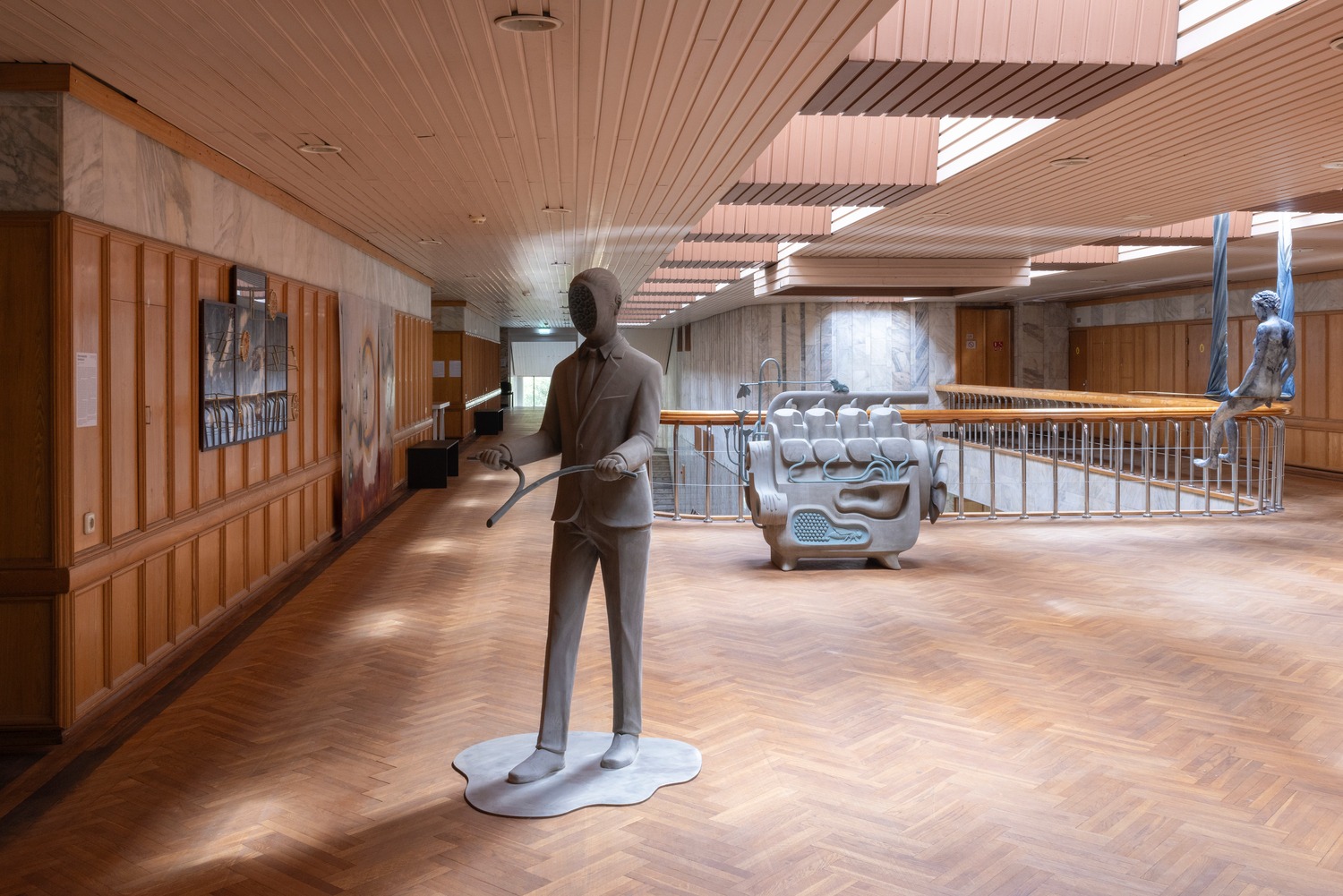
Survival Kit 17
Until 27 September
The 17th edition of Survival Kit, the international contemporary art festival organised by the Latvian Centre for Contemporary Art (LCCA), “Arrow of the Wind: On Artists and Healers”, takes place from 28 August to 27 September 2026 at Riga Congress Hall (Krišjāņa Valdemāra iela 5), Riga, Latvia.
Curated by Elena Sorokina and Simona Markel Dvorák, together with the Initiative for Practices and Visions of Radical Care, the festival explores the shared terrain between art and healing — spanning therapy, incantation and ritual, physical and mental healthcare, and spiritual restoration.
Throughout the festival, the Survival Kit 17 exhibition is complemented by a series of events, including performances, conversations and discussions, mediated walks, and exhibition tours.
READ OUR INTERVIEW with Survival Kit 17 curators Elena Sorokina and Simona Markel Dvorák
Latvian National Museum of Art
Krista Vindberga-Auzniece. I Remember Everything. '4'33. 2022. Graphite on paper. Collection of the Latvian National Museum of Art, Riga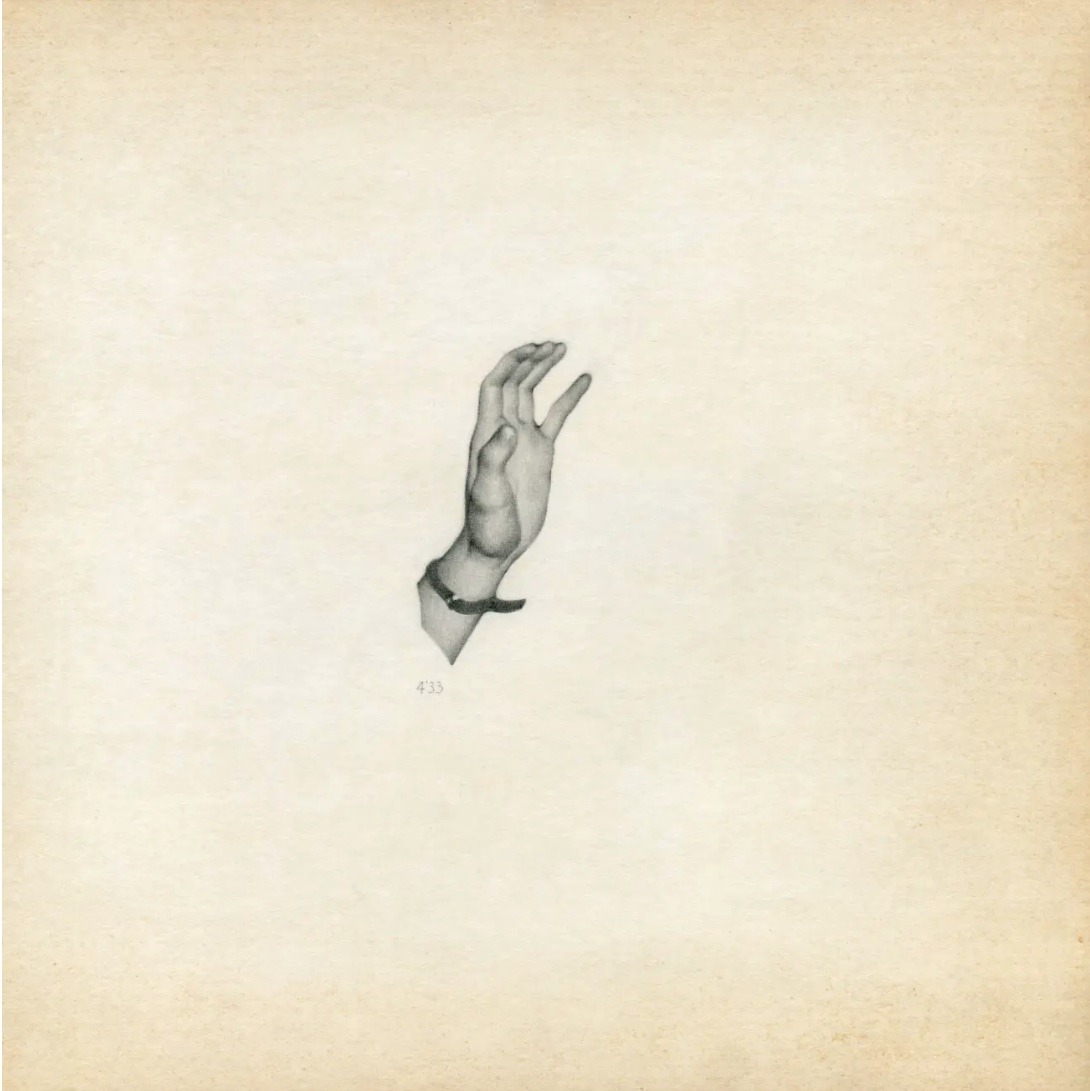
Embodied Thought
Until 8 November
The exhibition will reveal the diversity of drawing and its historical development in Latvia from the 18th to the 21st century, highlighting artists in whose practice drawing plays a significant role. The concept of the exhibition is based on the relationship between drawing and thinking, emphasizing drawing’s ability to create an empathetic experience and allowing the viewer to approach the artist’s thought process.
The exhibition will feature 97 artists from different generations — beginning with Johann Christoph Brotze and representatives of classical art, continuing with leading figures of contemporary art, and concluding with artists born in the 1990s. This broad historical survey will allow visitors to trace the development of Latvian art up to the present day through the personal and fragile medium of drawing, revealing its ability to connect both generations and eras.
Publicity image for Laura Prikule’s and Eva Vēvere’s exhibition Poetic Robotism. AERO. 2026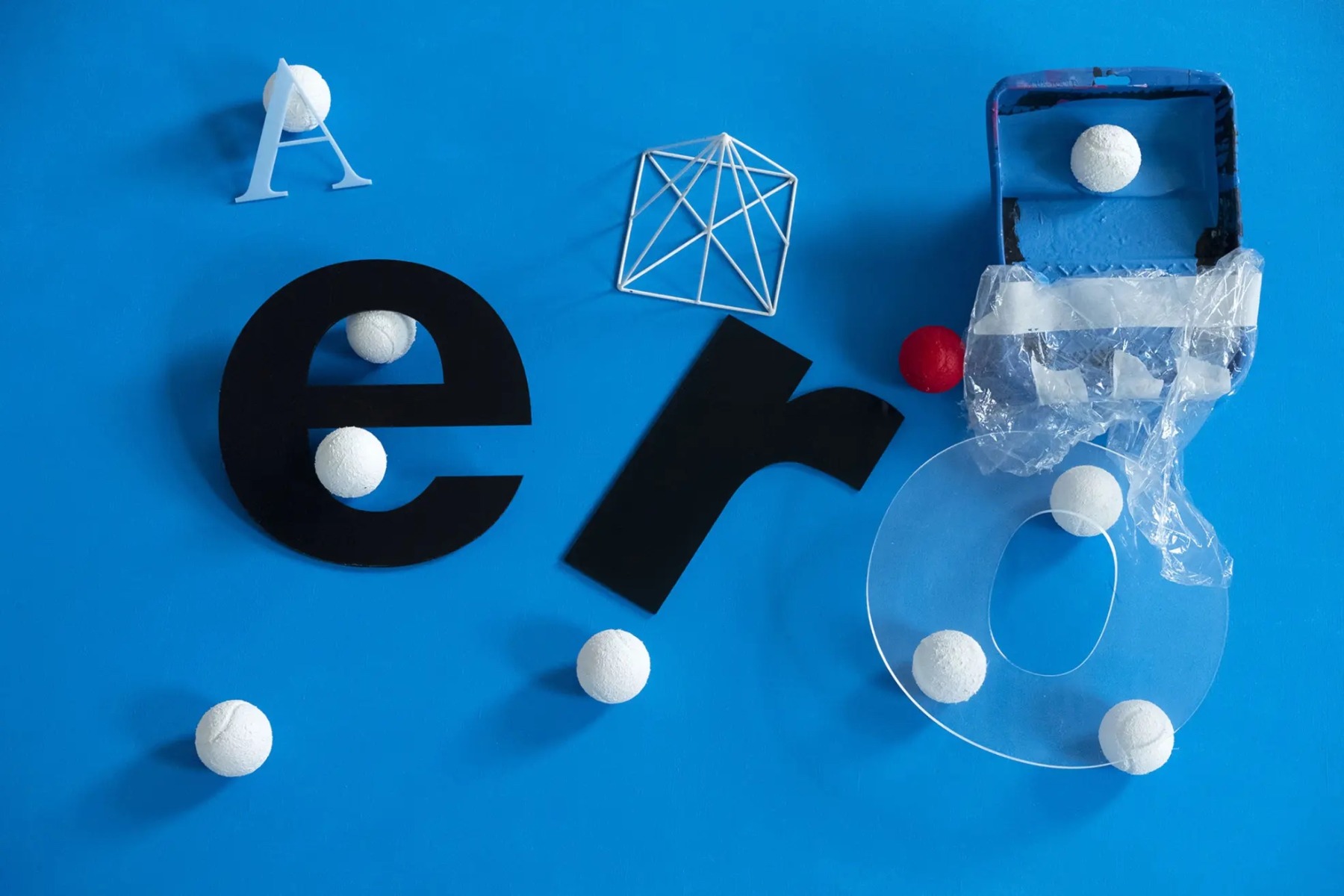
Poetic Robotism. AERO
Until 18 October
The exhibition AERO by the artist duo Poetic Robotism (Laura Prikule and Eva Vēvere) is taking place in the Cupola Hall of the main building of the Latvian National Museum of Art. Presenting a novel exhibition format, it takes the shape of an interactive, visitor-engaging installation that generates live, dynamic artistic situations. At its core is the ongoing presence of the artists – throughout the exhibition, Laura Prikule and Eva Vēvere will continue to develop the exhibition on-site using co-creative and performative practices and micro-rituals. The visitor insights and artistic output will merge into a shared field of experience together with the already existing artwork. The nature of AERO dictates that part of the display consists of distinct movable and convertible pieces and modular systems. Every week, visitors will encounter a new perspective – over two months, the exhibition will experience ever-evolving, visually distinct versions, concluding with a collection of traces and artifacts from its various phases of transformation.
Riga Contemporary Art Space
Nefeli Papadimouli, Dream Coat, 2023-25. Cotton and wooden structure, 150 x 160 cm (each). Courtesy of THE PIL L and the artist Nefeli Papadimouli. ADAGP Paris 2026. Photo: Mirka Koutsouri.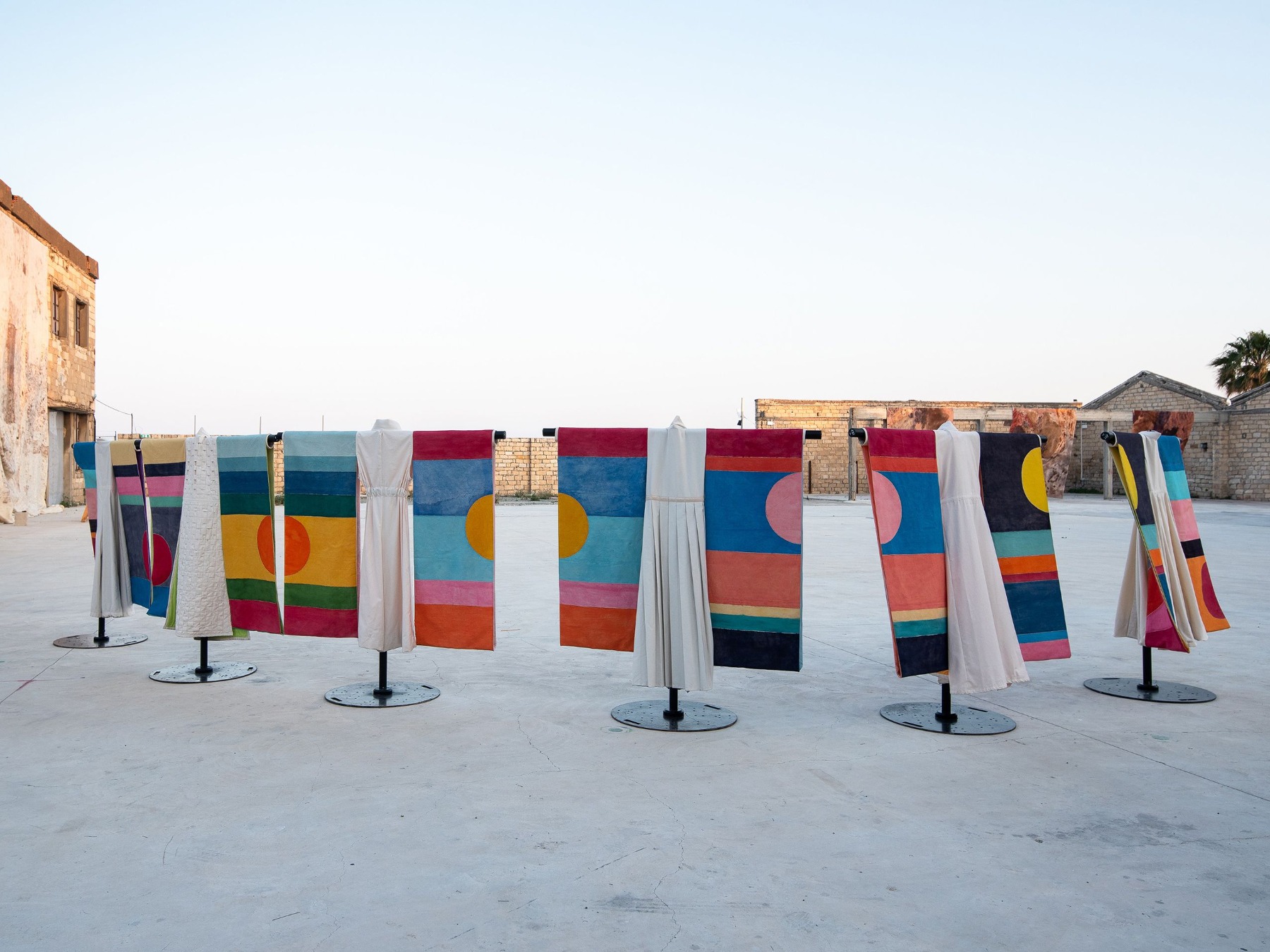
Always the Sun. Greek contemporary art
2 October – 10 January
Always the Sun, an exhibition curated by Marina Fokidis, brings together a constellation of 27 Greek artists whose practices are shaped by the interplay of geography, light, climate, and cultural legacy. It is the first large-scale presentation of contemporary Greek art in the Baltic region. Drawing inspiration from the song by The Stranglers, the exhibition approaches the sun not as a motif, but as a medium of thought, perception, and lived experience. It explores how the brightness, heat, and exposure of the Mediterranean have influenced aesthetic languages and fostered strategies of survival, intimacy, and adaptation.
For Riga, a northern city where sunlight is often fleeting, this exhibition offers an encounter with a southern sensibility: not exotic, but grounded, material, and spiritual. It imagines a solar dialogue between North and South, Baltic and Mediterranean, as a conversation rather than an opposition. It proposes light not only as a symbol, but also as a form of knowledge. In ancient Greek thought, light illuminated truth, but the southern sun, unlike the colder light of the Northern Enlightenment, is contradictory. It dazzles, reveals, and blinds. It asks us not to observe from a distance, but to feel, inhabit, and listen.
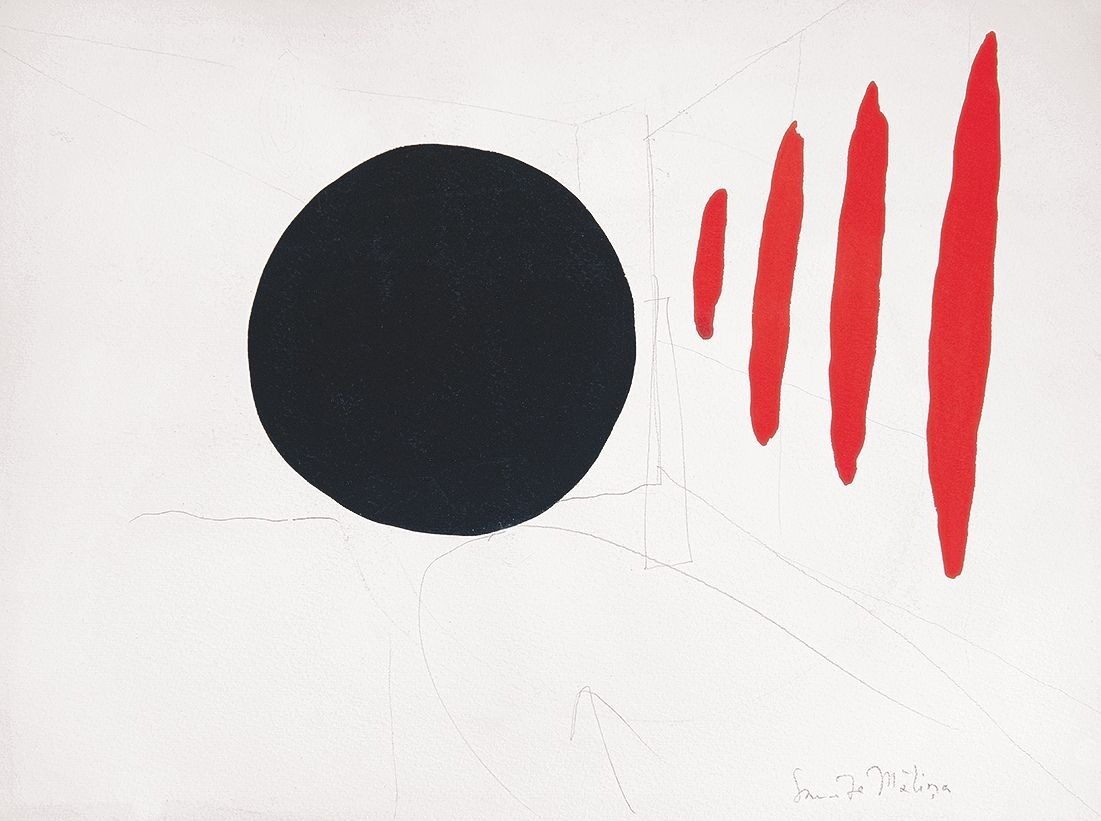
Sarmīte Māliņa. Watching From The Sidelines
Until 25 October
Sarmīte Māliņa entered the Latvian contemporary art scene in the early 1990s, participating in group exhibitions that boldly challenged the visual art norms of the time. Her work quickly distinguished itself through a striking sense of restraint and clarity.
As part of the exhibition series GIANTS, the installation Watching From The Sidelines, originally created for Latvia – XX Century Somersault. 1940–1990, is presented anew. The work offers a contemplative exploration of perception, distance, and the shifting nature of historical memory. Māliņa not only reflects on the past but also invites viewers to consider how our understanding of history is shaped today.
Kim? Contemporary Art Centre
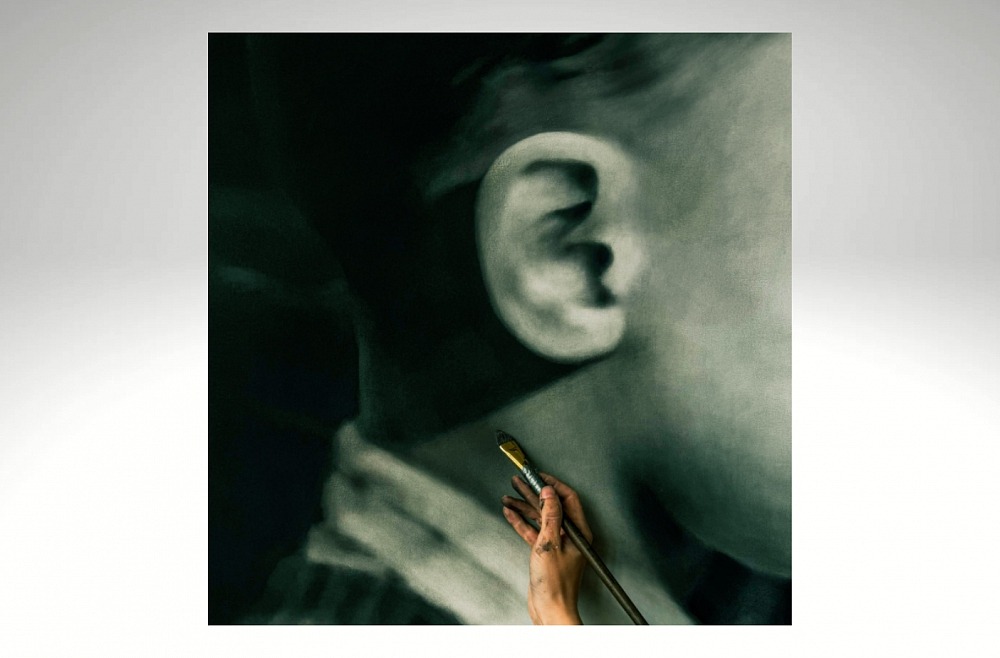
Photo: Ansis Starks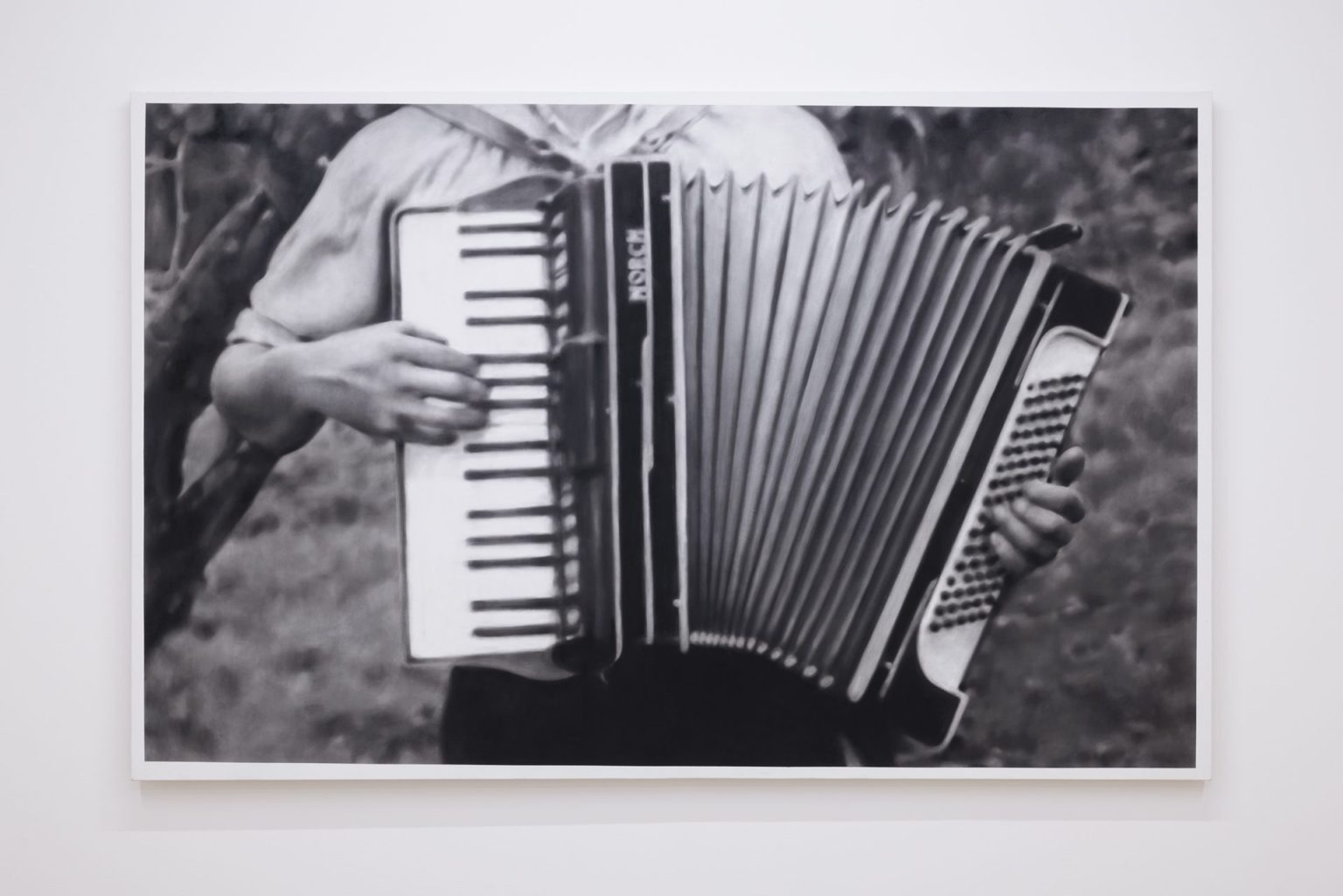
Krista Vindberga-Auzniece. Circles Are Better Than Lines (oda pieskārienam)
Until 18 October
The body remembers through touch. The new drawings made especially for Krista Vindberga-Auzniece’s solo exhibition emerge through repetition, silence, and concentration, with one movement slowly following the next until time accumulates in the surface. Charcoal crumbles, slips from the control of the hand, and is worked into the carefully prepared canvas; each subsequent touch retains the trace of the one before, turning duration into a material quality of the image.
Vindberga-Auzniece’s particular sensitivity, a heightened sense of presence akin to falling in love or some other intoxicating state, meets images from a time that belonged to others. Old family albums become starting points for prolonged looking, where a smile, a hand on a shoulder, a dance step, a fold of fabric or flowers held with ceremonial seriousness acquire a new kind of attention, bringing peripheral details into focus. The artist’s hand is at once an instrument, a measuring device, and a bearer of memory. The drawing takes on sculptural contours, its surface holding the pressure of the palm, the imprints of fingers and movements causing persistent friction, pushed to the point of drawing blood, leaving the artist’s body legible within the image. The photographic source material comes from the artist’s personal archive: faded black-and-white and sepia images of lives past.
Zuzeum Art Museum
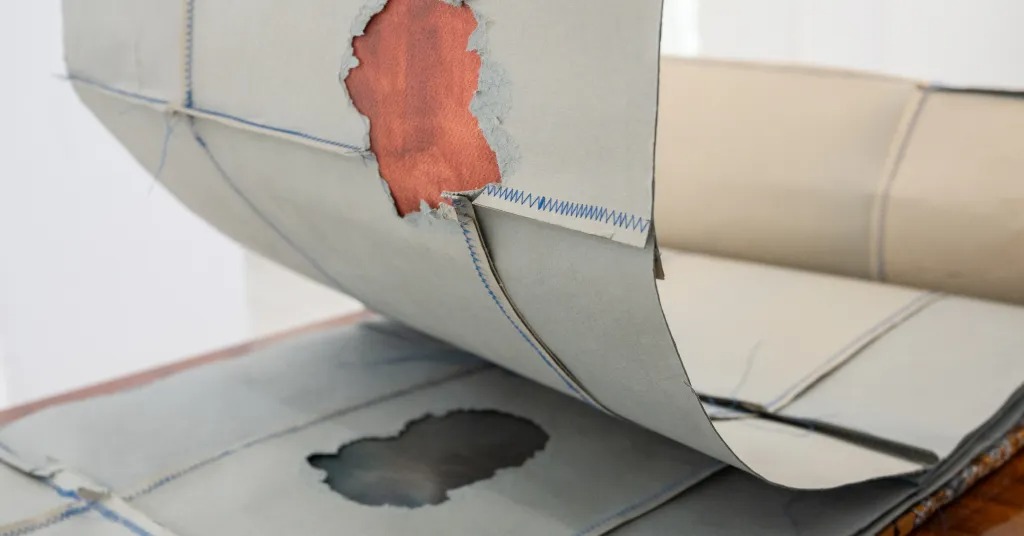
Collective Memory is Everything I Don’t Remember: Moments We Share
2 October –17 January
How does collective memory shape our personal recollections? How does it intertwine with our identity? And why is it important to ask what we choose to remember – both individually and as a society? The exhibition presents work by seven Latvian women artists. They belong to the generation commonly referred to as millennials, whose formative years were shaped by the restoration of Latvia’s independence and the period of change that followed. Their practices explore the relationship between collective memory, identity, and individual perceptions of the past. Drawing on their own and their families’ experiences, the artists engage with the realities of the twentieth century, share personal stories, address socioeconomic issues, and examine public space. In Zuzeum’s Greenhouse and Sculpture Garden, newly created works are shown alongside projects never before exhibited in Latvia, spanning a wide range of media – from photography and analogue film to object-based installations. Participating artists: Ieva Balode, Vika Eksta, Ieva Kraule-Kūna, Liene Pavlovska, Diāna Tamane, Krista Vindberga, Elīna Vītola. Curator: Diana Kotmel Kněžínková.
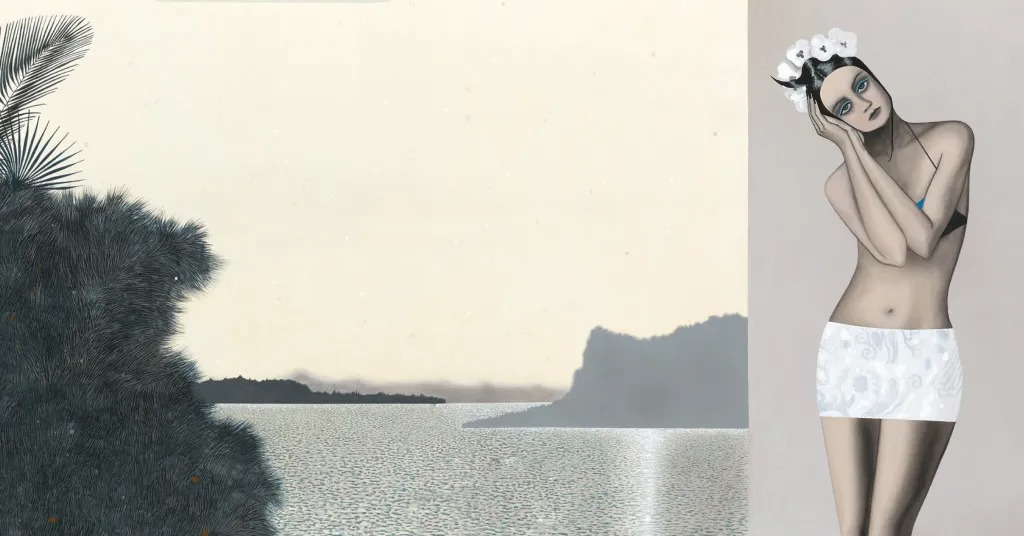
Looking Away. Women Artists in the Zuzāns Collection: 2000–2026
2 October –17 January
Looking Away. Women Artists in the Zuzāns Collection: 2000–2026 focuses on living artists and works produced during the first two decades of the twenty-first century, composing an idiosyncratic collective biography of the period. The exhibition brings together works by around forty women artists living in Latvia, across the Baltic region, and elsewhere in the world, most of them drawn from the Zuzāns Collection.
In her essay ‘Looking Away – Participations in Visual Culture’ (2005), British visual culture theorist Irit Rogoff emphasised the importance of active spectatorship. She suggested that perhaps it is by looking away ‘from the objects of our supposed study […] that we have a potential for a rearticulation of the relations between makers, objects, and audiences.’ This led her to a crucial question: can looking away be understood not necessarily as an act of resistance, but as another way of participating in culture? Twenty years later, Rogoff’s idea becomes the conceptual foundation of the exhibition and is developed further. Whereas Rogoff invited viewers to look away from the artwork, the exhibition invites the artists themselves to make a similar shift in perspective, turning their attention from the finished work to the conditions in which it was made. This idea is realised through individual conversations between the curators and every participating artist. These conversations become an integral part of the exhibition.
Pauls Stradiņš Medicine History Museum
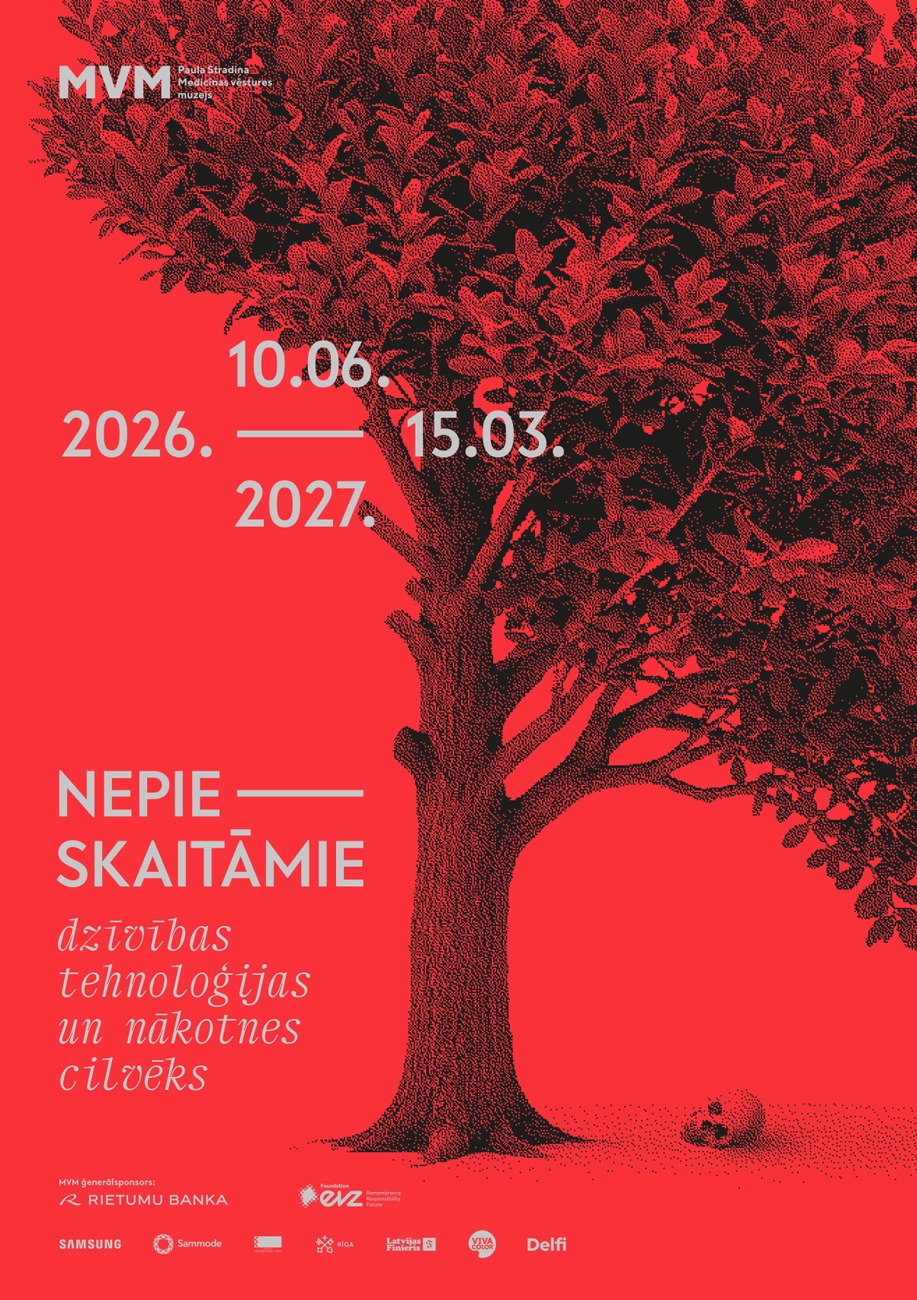
The Unaccounted. Technologies of Life and the Human of the Future
Until 15 March
Informed by the concept of progress, the notion of a 'human of tomorrow', increasingly healthy and endowed with various abilities, is, while certainly appealing, also a somewhat risky one. The scientific efforts to bring these ideals to life are the subject of 'The Unaccounted. Technologies of Life and the Human of the Future', an exhibition using a backdrop of past events to outline the pledge made by the modern medicine: longevity, new reproductive options and a generation of genetically enhanced offspring. Life technologies are presented at the exhibition as an ethical challenge. The development of areas like gene engineering, AI diagnostics and interspecies transplantation offers a potential of improved healthcare, while simultaneously further exacerbating the issues of disparity, availability of medical services and the value of life.
The lab-like design of the exhibition lends itself to an interaction between historical artifacts, medical innovations and contemporary art. Alongside artworks by Korbinian Aigner, Maria Arlamovsky, Aleksandra Briede, Heather Dewey-Hagborg, Andrejs Grants, Aivars Gulbis, Antje Majewski and Paweł Freisler, Lennart Nilsson, Juliette Pavy and Wilhelm Werner, the exhibition includes research and archive materials by scientists and physicians Francis Galton, Arnolds Laksbergs, Carl Linnaeus, Jēkabs Prīmanis, Johann Volkmar Sickler and other authors.
ASNI gallery
Angela Maasalu. The True Deceiver. Oil on canvas. 2026 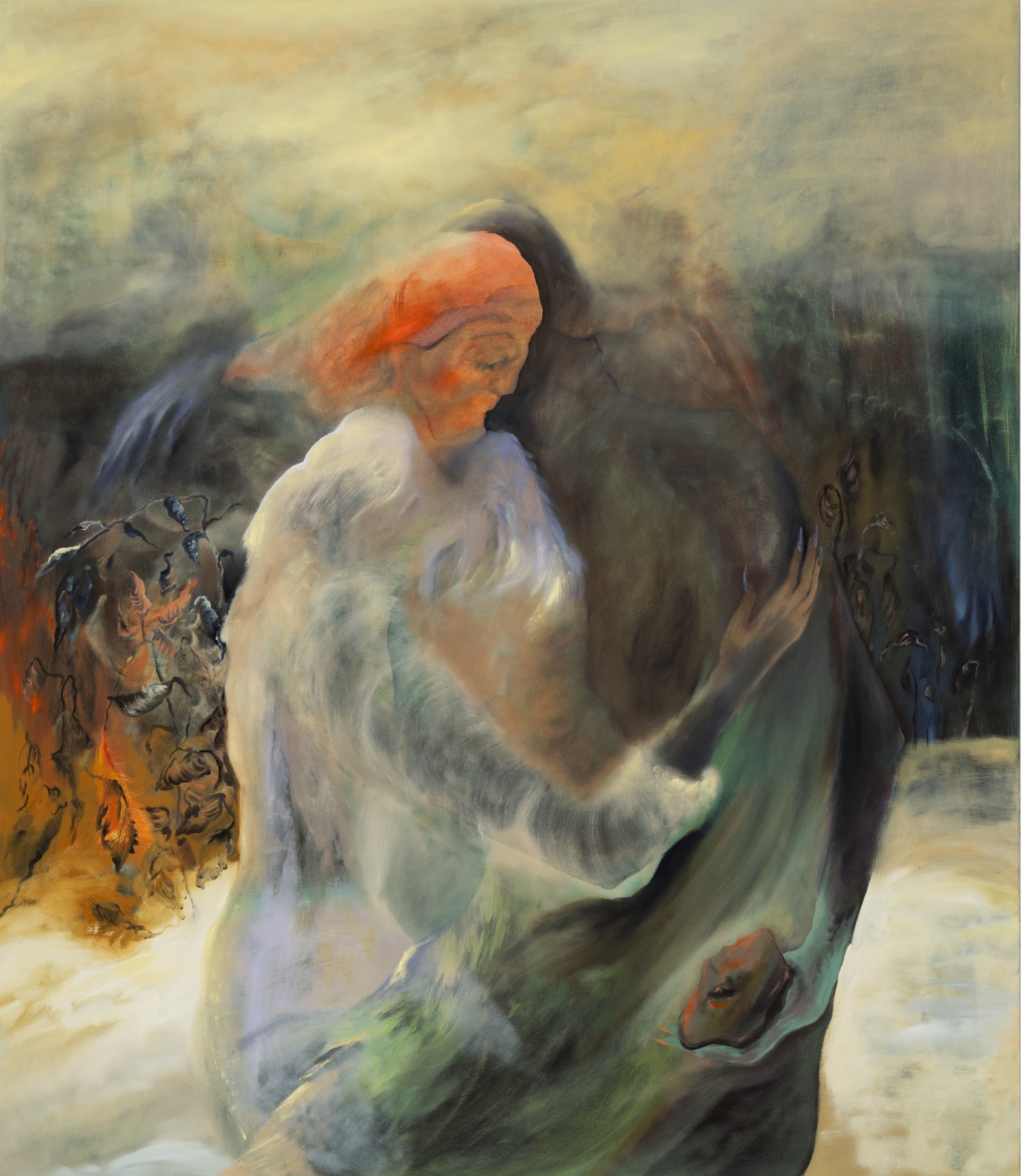
Angela Maasalu. The True Deceiver
Until 11 October
The exhibition draws its inspiration from Finnish writer and artist Tove Jansson’s lesser-known, psychologically nuanced novel for adults, The True Deceiver (1982), which explores the boundaries between truth and lies, self-deception and trust. The questions explored in the novel take on renewed relevance today, in a world where the constant flow of information, misleading narratives, and conflicting perspectives can often make it difficult to make sense of what is happening around us. The exhibition reflects on the fine line between what we choose to believe and the illusions we are willing to create for ourselves.
Angela Maasalu (1990) is an Estonian painter who, after graduating from Central Saint Martins, has been living and working in London. This is the artist’s first solo exhibition in Latvia.
LATVIA, Daugavpils
Rothko Museum
Umberto Mastroianni, Wild Fury, bronze sculpture, 1975, private collection, Turin, Italy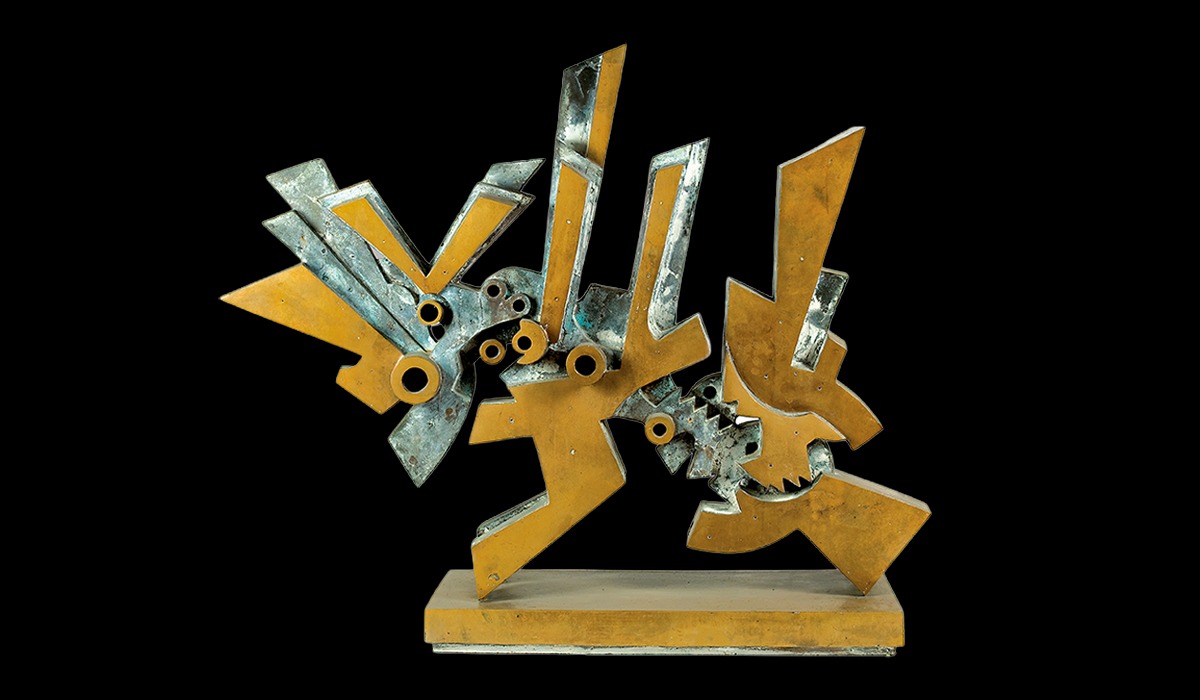
Umberto Mastroianni. Chromatic Abstraction. 1934–1992
Until 29 November
Organised by Il Cigno Arte and presented at the Rothko Museum, the exhibition offers an opportunity to rediscover the work of Umberto Mastroianni, one of the most significant Italian sculptors of the twentieth century. Through a carefully selected group of works, including cardboard compositions, bronze sculptures and a limited number of tapestries created both on the loom and through embroidery, the exhibition highlights the artist’s continuous and inexhaustible desire to experiment with materials and expressive languages.
Mastroianni’s artistic research was characterised by a constant exploration of matter, from bronze to paper, from cardboard to fabric, which he transformed into instruments of expression and creative investigation. Through cuts, folds, engravings and the use of colour, the artist gave life to dynamic surfaces in which material transcends its physical limits and becomes a space of movement, rhythm and emotional intensity. The exhibition creates an ideal dialogue between Umberto Mastroianni and Mark Rothko, not through a direct relationship, but through a shared artistic aspiration: moving beyond representation to explore the emotional and spiritual potential of the artwork.
LATVIA, Madona
MABOCA gallery
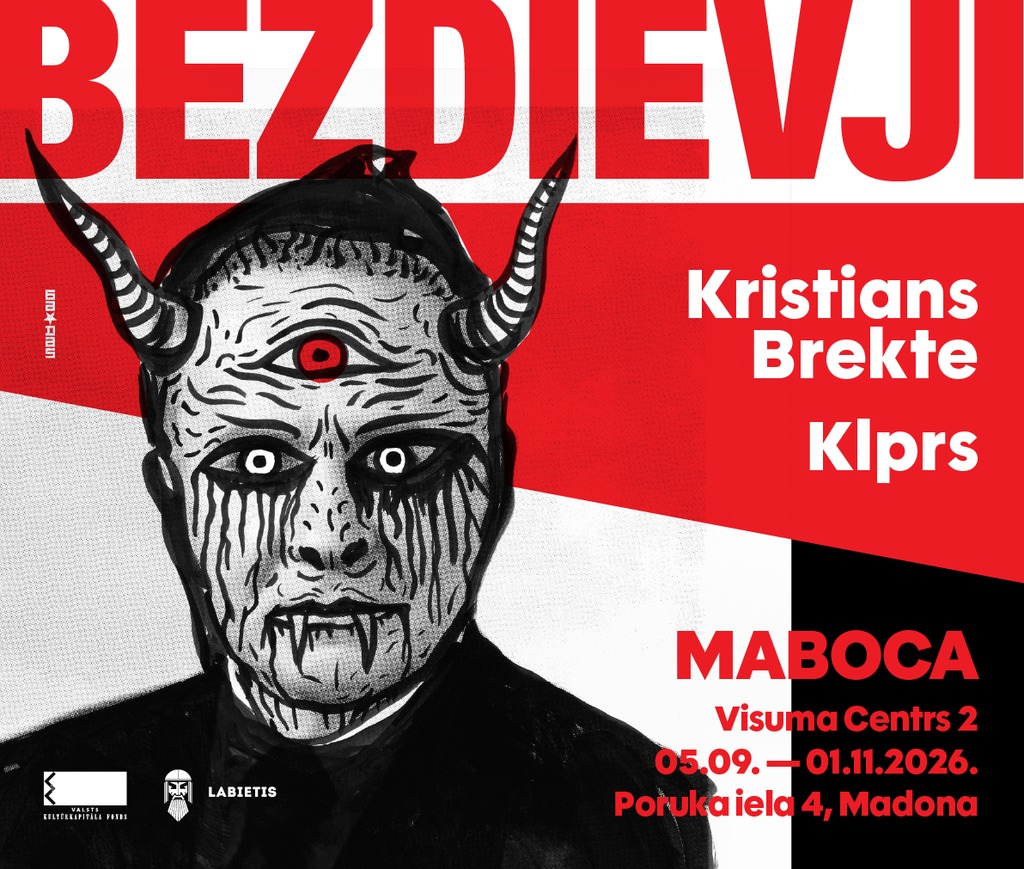
Kristians Brekte / Klprs. Godless
Until 1 November
Who are we, who do we belong to, and what happens when power begins to answer these questions in our place?
The exhibition “Godless” (Безбожники) comprises twenty-eight works in which Kristians Brekte, together with bibliomaniac Klprs, takes on the faces of Soviet power and its ideological machinery. Using archival photographic portraits, uniforms, medals, stiff gazes, and all the other trappings of the theatre of power, the artists use ink to tear away the official face, exposing what lies beneath it: a demon, a clown, and the mask of the cult of power.
LITHUANIA, Vilnius
Contemporary Art Centre (CAC)
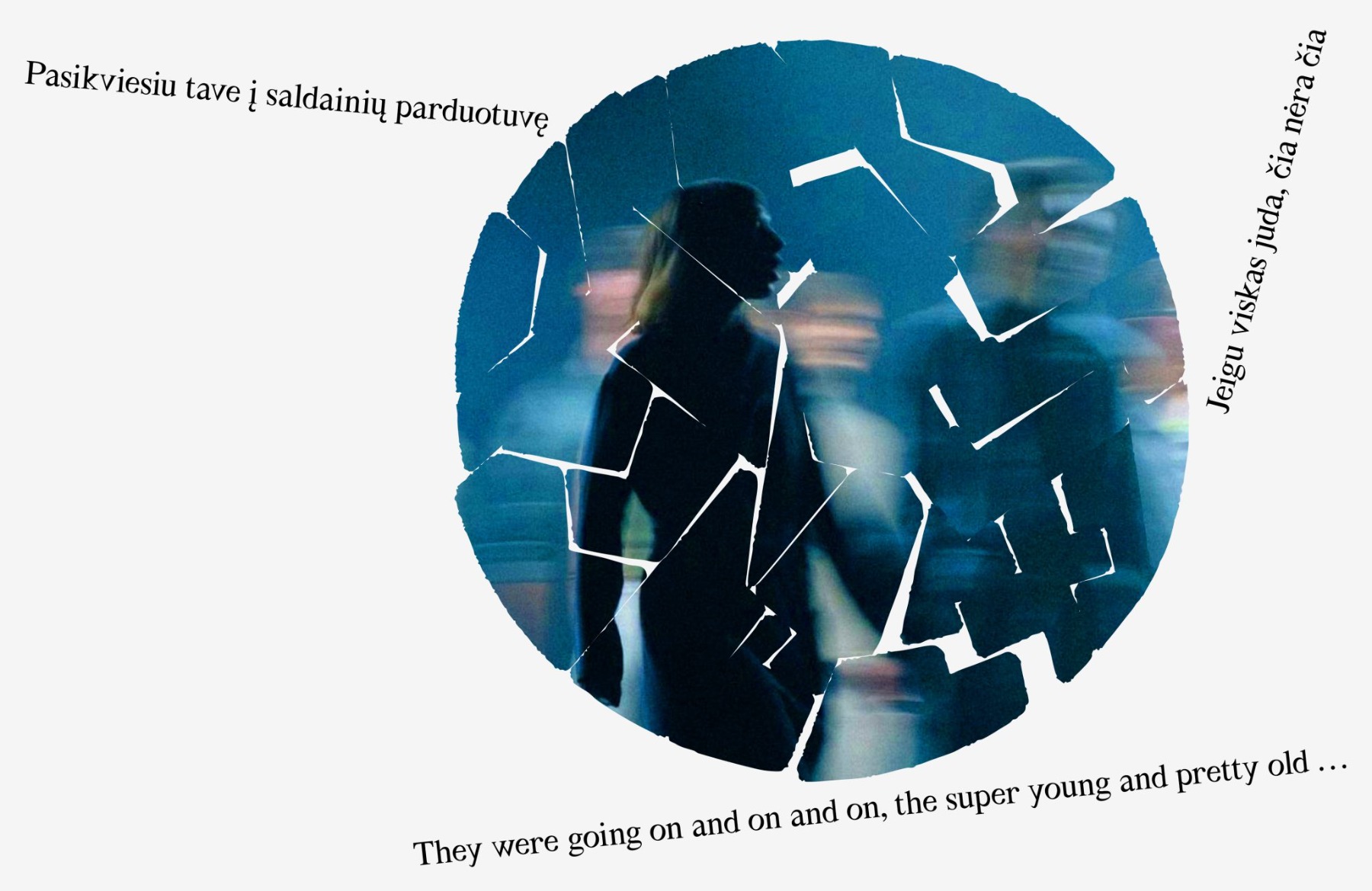
Lina Lapelytė. Gatherings
9 October – 10 January
The Contemporary Art Centre will open Lina Lapelytė’s major solo exhibition ‘Gatherings’ on 9 October 2026. It will bring together works from across Lapelytė’s career, from her earliest pieces to new works presented here for the first time.
The exhibition opens during a significant year for the artist, with her work currently on view at Hamburger Bahnhof in Berlin and Tate Modern in London, two of Europe’s leading contemporary art institutions. The opening night of the exhibition will feature Lapelytė’s new performance Mud Works, produced in collaboration with Triennale Milano Teatro.
Sapieha Palace
Ethan Assouline, Tout va bien, 2026. Wood, clock mechanisms, plastic, lamps, mirror, aluminium, steel, dimensions variable. Courtesy the Artist and Gauli Zittert1 / 100. Photo: Andrej Vasilenk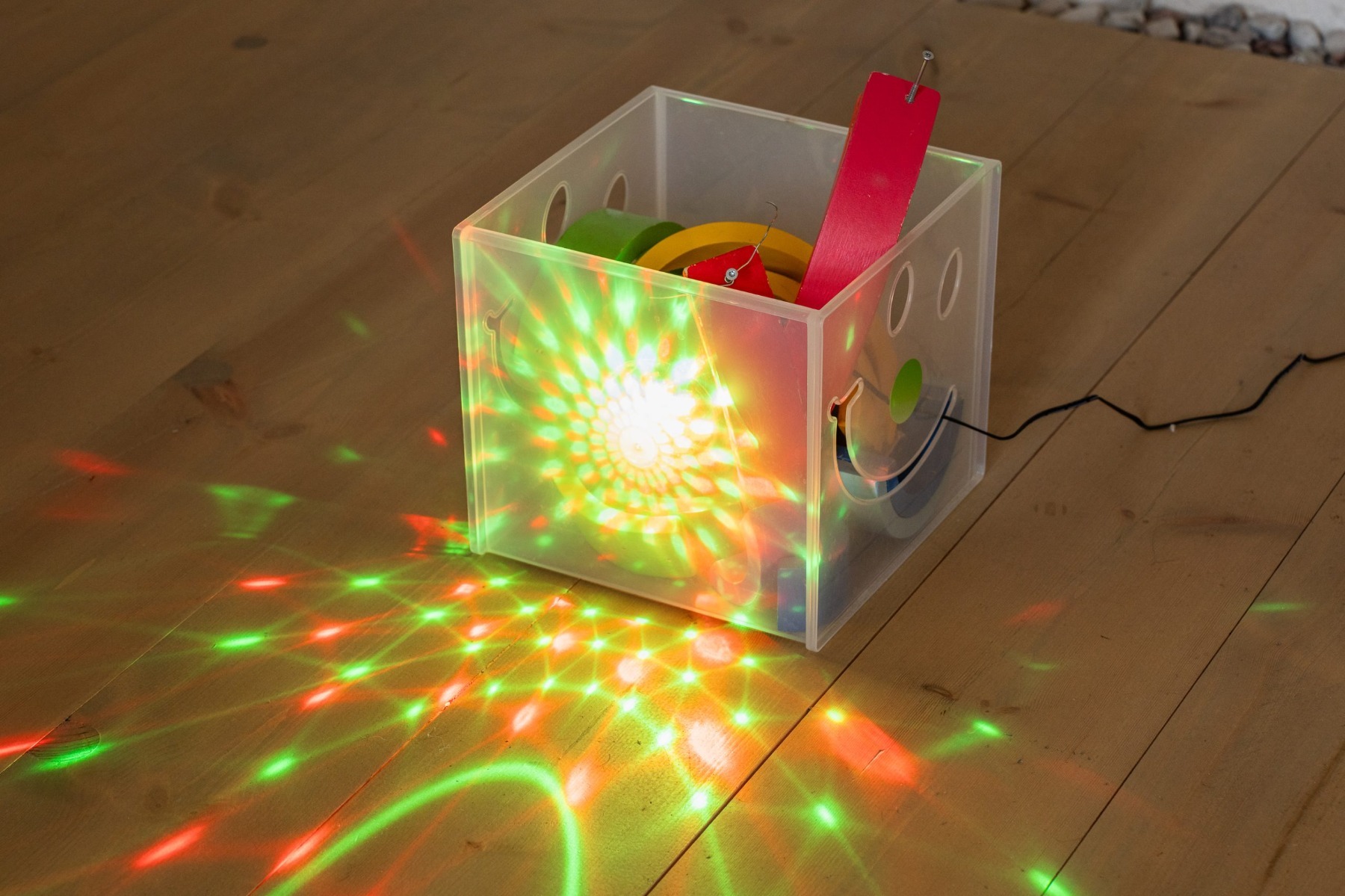
Housekeeping in a Dangerous Time
Until 31 December
Housekeeping in a Dangerous Time looks into artistic practices that engage with the contemporary forces shaping intergenerational ties and the distinctions between life stages. The artists featured in the exhibition turn their attention to the role of everyday technologies in the self-formation of contemporary individuals – in the processes of identity formation and expression, and in relation to others. Along the way, they also explore notions of maturity as well as the societal expectations and infrastructures that define and sustain it.
Participating artists: Ethan Assouline, Anna Clegg, Jeremy Deller, Ryan Gander, Saulė Gerikaitė, Camille Henrot, Nojus Juška, Marc Kokopeli, Robertas Narkus, Phung-Tien Phan, Josiane M.H. Pozi, Piotr Skiba, Niklas Taleb.
National Gallery of Art
Aurelija Maknytė, 'Channels', National Gallery of Art, Vilnius, 2026. Photo: Andrej Vasilenko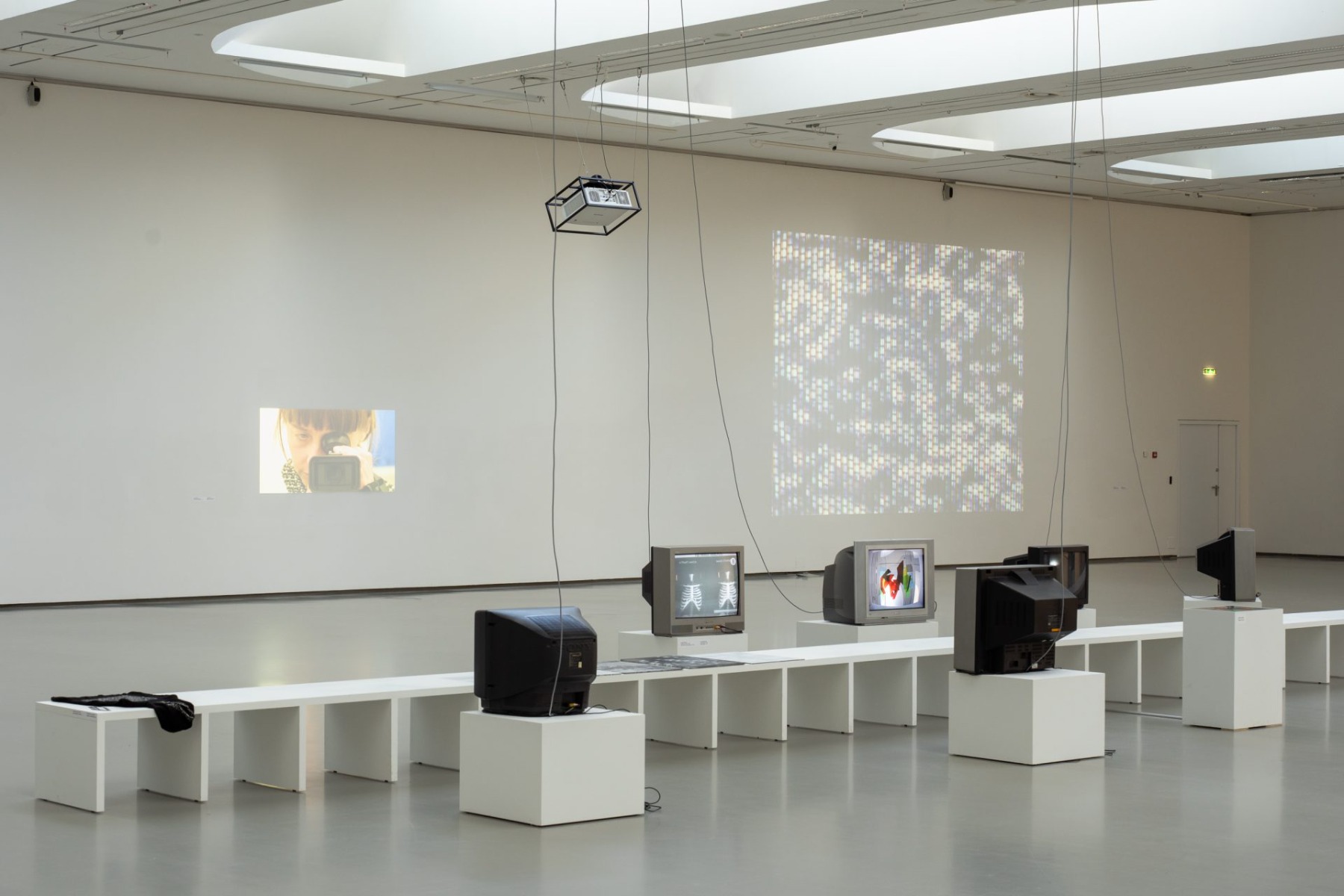
Aurelija Maknytė. Channels
Until 18 October
This exhibition is the first comprehensive presentation of the artist’s work, surveying an artistic practice spanning nearly three decades and showcasing both well-known pieces and works that have rarely, if ever, been exhibited before. Maknytė is one of the most distinctive figures in Lithuanian contemporary art. Her creative practice constantly intertwines the history of everyday life, nature, and technologies. Although her works emerge from daily observation, collecting, documentation, and years of research, they rarely result in finished exhibits. Incompleteness, process, and the opportunity to continually rethink accumulated material are among the key principles of Maknytė’s work.
One of the exhibition’s main themes is light. In the NGA’s Great Hall, natural daylight meets the light emitted by television screens, electric bulbs, and flickering video projections. Fragments of Maknytė’s series Light Therapy I–III – recreated especially for this exhibition – reveal the artist’s long-standing interest in light as both a prerequisite for the emergence of the technological image and as an artistic medium in its own right. Television and television sets constitute an equally important part of Maknytė’s body of work. For over a decade, the artist amassed a personal television archive, recording excerpts of television programmes and films onto VHS tapes and using them to create video works, fictional autobiographies, and new narratives. For her, television was not merely a source of imagery, but also a form of cultural memory.
Vytautas Kasiulis Museum of Art
Nijolė Šivickas. Entrance and Exit. 2001–2006. Clay, glazes, obsidian, metal.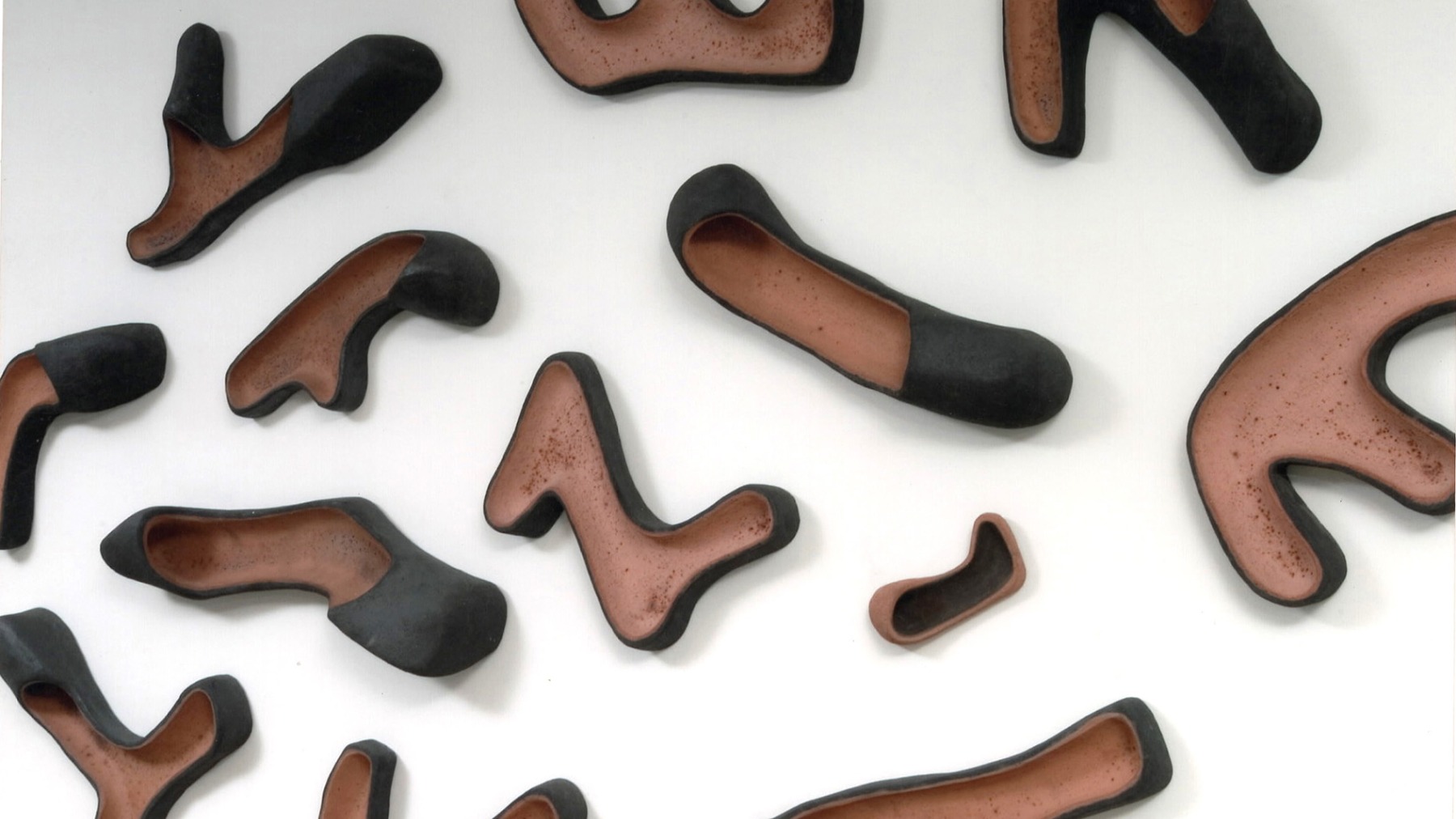
Nijolė Šivickas de Mockus. The Universe from a Spiral
Until 7 February
Nijolė Šivickas de Mockus (1925–2018) was a Colombian artist of Lithuanian descent whose life and work spanned the dramatic historical turning points of the 20th century, the experience of emigration, and a unique artistic path. Born in the Kėdainiai district, near the Nevėžis River, she grew up in independent Lithuania, but her youth was marked by the events of World War II and the Nazi and Soviet occupations. She attended school in Kėdainiai, Raseiniai, and Panevėžys, where she also began taking painting lessons. In 1944, as the second Soviet occupation approached, she fled to Germany with her sister Aldona. There she worked in a metalworking factory, but even under difficult conditions, she never stopped drawing and sketching; she was later admitted to the State Academy of Fine Arts in Stuttgart. During her studies, influenced by postwar European artistic ideas and the revival of the Bauhaus tradition, she created drawings, portraits, landscapes, and her first more abstract works.
In 1955, her first solo exhibition, held at the National Library of Colombia, received positive reviews from critics, but the artist herself felt she had not yet found her own artistic voice. The result of her search was clay – a material that would define all of her subsequent creative work. After being introduced to ceramic techniques by the Lithuanian artist Juozas Bagdonas, she began creating not only utilitarian objects but also distinctive sculptural forms.
Pamėnkalnio Gallery
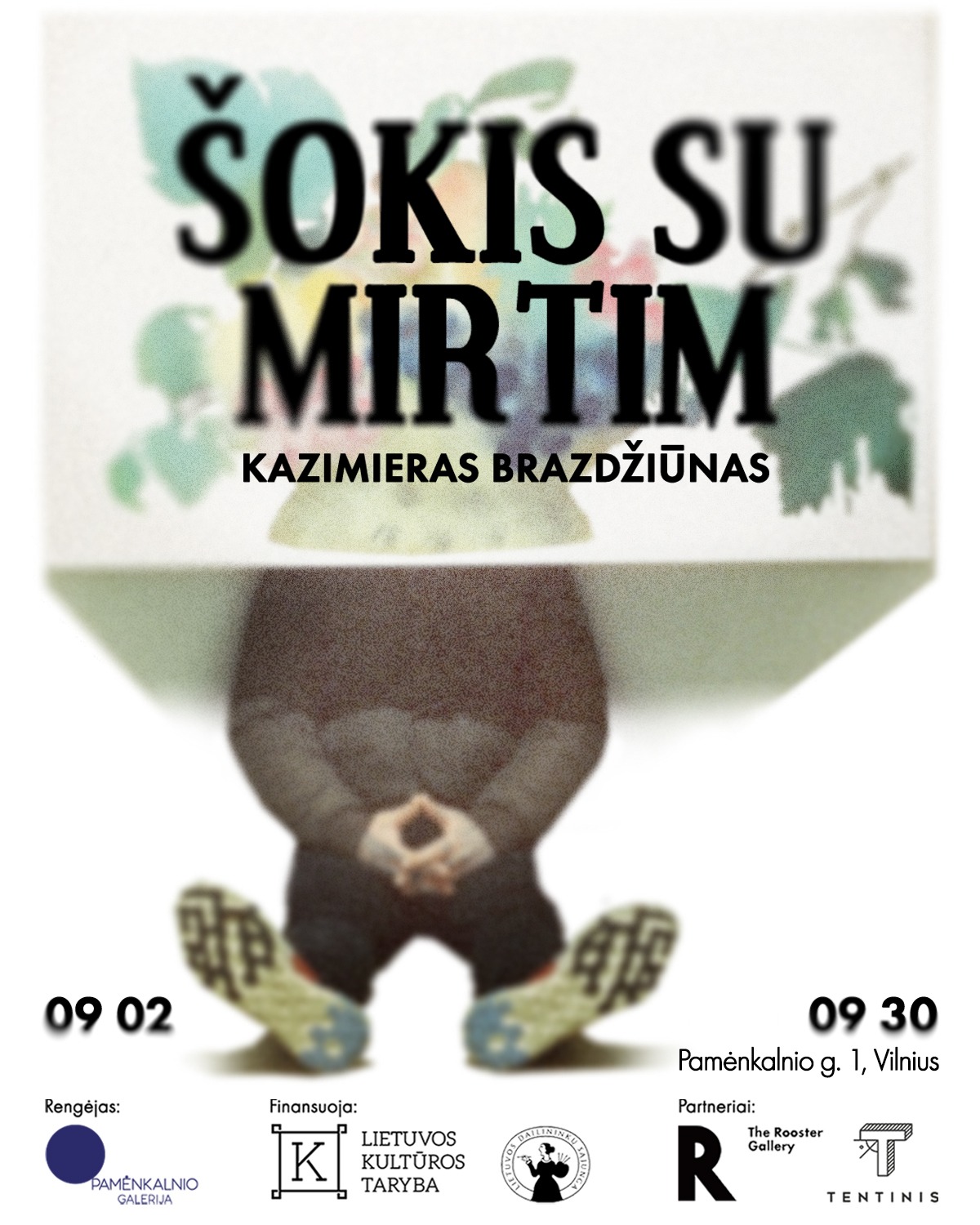
Kazimieras Brazdžiūnas. Dance with Death
Until 30 September
Dance with Death is Kazimieras Brazdžiūnas’s third solo exhibition at Pamėnkalnio Gallery, concluding a series of three shows. Alongside paintings, the show features objects, mosaics and works created in other media.
The exhibition explores the fragile boundary between being and non-being, bringing together fragments of different identities and images dispersed across time. Wandering images, severed from their original contexts, find their way back to the physical surface of the canvas. Disillusionment and the collapse of illusions run through the works. Against the clarity of the white ground, the paintings open up space for the viewer’s own thoughts and interpretations. Rather than seeking a single correct answer, the exhibition invites the viewer to experience the form and materiality of art, leaving room for that which, with the passage of time, must remain unspoken.
Meno Niša gallery
Photo: Audrius Solominas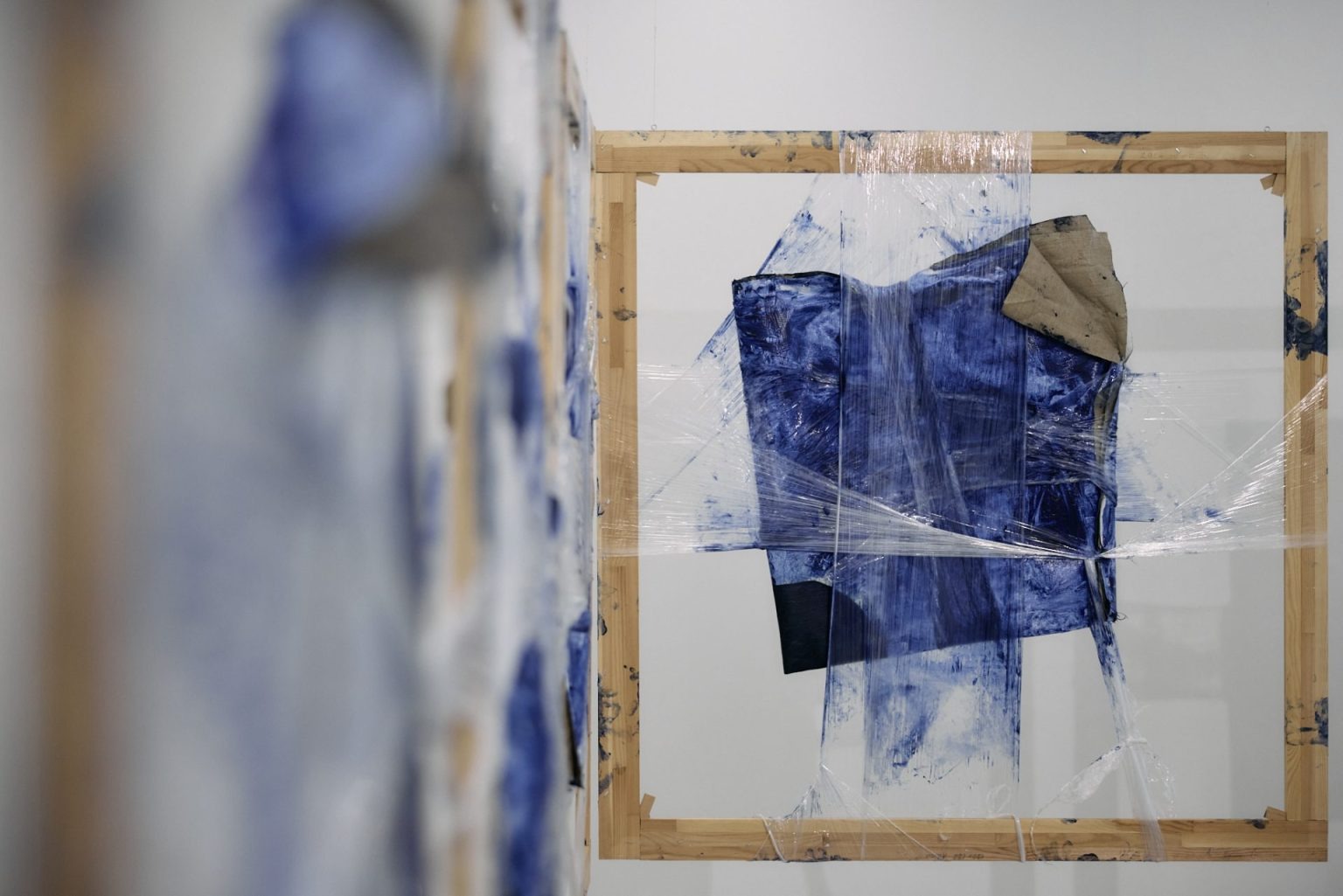
Algirdas and Remigijus Gataveckas. The Code: I Am
Until 2 October
Conceived as a unified installation, the exhibition The Code: I Am explores the institution as a system that both protects and shapes individuals. Rooted in personal experience, the narrative raises the question of where institutional care ends and the restriction of individuality begins. Algirdas and Remigijus Gataveckas (b. 1985) are Lithuanian artists working in painting, drawing, installation, and public art. They combine the tradition of academic realism with the principles of conceptual art. Social exclusion, identity, memory, and human dignity are key themes in their work.
The transformation of the canvas lies at the heart of the exhibition, The Code: I Am. The canvas is removed from its stretcher, coated with lapis lazuli, folded, and tightly wrapped in transparent packing film. This irreversible act renders the painting’s previous state inaccessible and transforms it into an object. The plastic film has a dual meaning: while it is typically used to protect artwork, here it simultaneously compresses and constrains it. Lapis lazuli also occupies a special place in the installation. Once extremely valuable, it was associated with the sacred, nobility, and luxury. Today, its history is inextricably linked to resource exploitation and power struggles. The Gataveckas draw on the ambiguity of the material to address the creation and appropriation of human value.
Panerių St 38
Photo: Martynas Norvaišas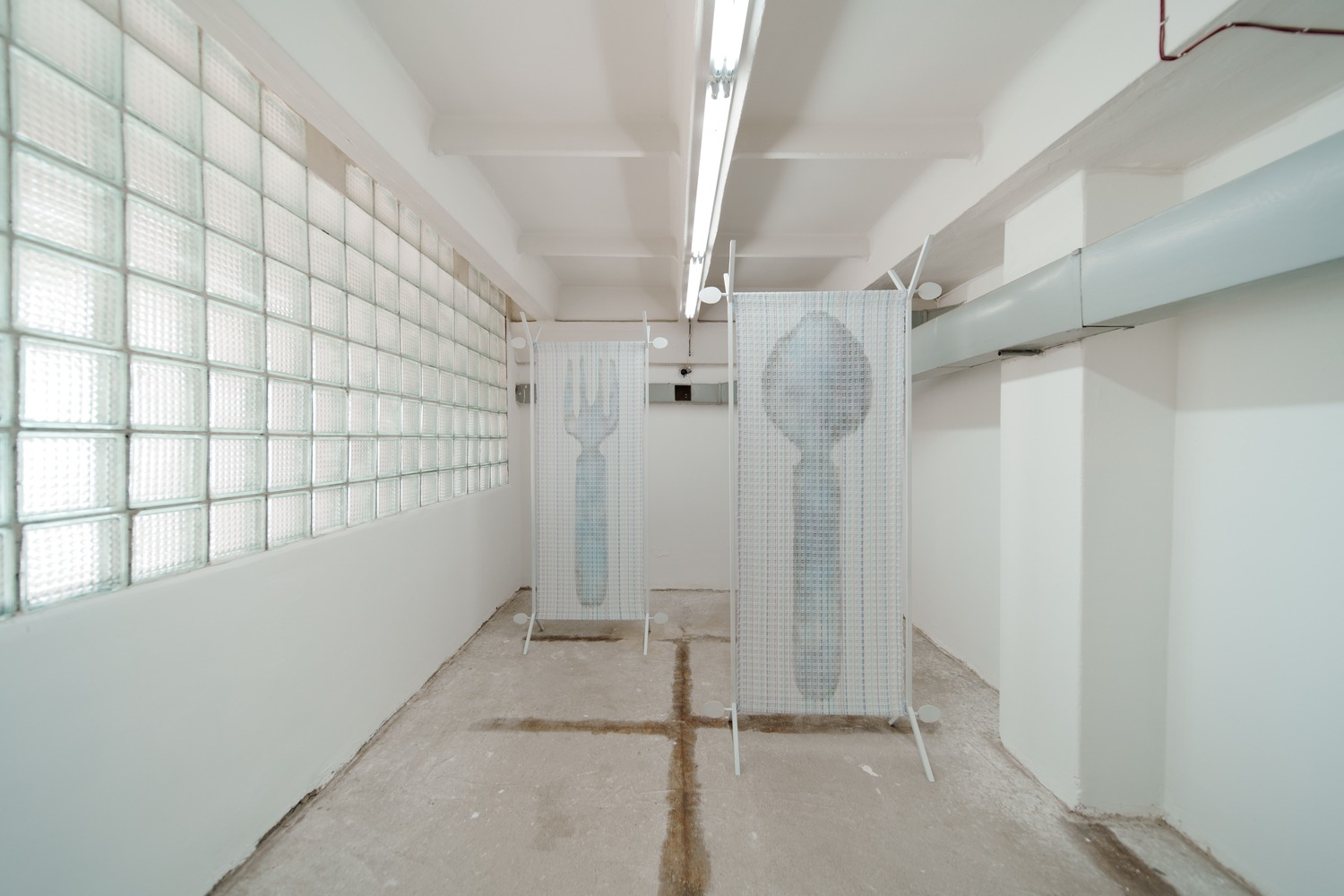
Morta Jonynaitė. Messages from the Sky
Until 4 October
The exhibition Messages from the Sky by Morta Jonynaitė is on view at Panerių St 38 in Vilnius. The exhibition brings together Jonynaitė’s woven conversations and textile forms of address, through which the artist reflects on intimate processes of communication. Like an attentive anthropologist, Jonynaitė gathers memories of those close to her and fragments of stories heard from afar, preserving shared, archaic experiences from slipping into oblivion – the desire to be together and to understand one another. Translating these narratives into sculptural and textile objects, the artist explores attempts to communicate across different generations, ideological regimes and linguistic registers; between presence and absence, earth and sky.
LITHUANIA, Kaunas
Meno Parkas Gallery
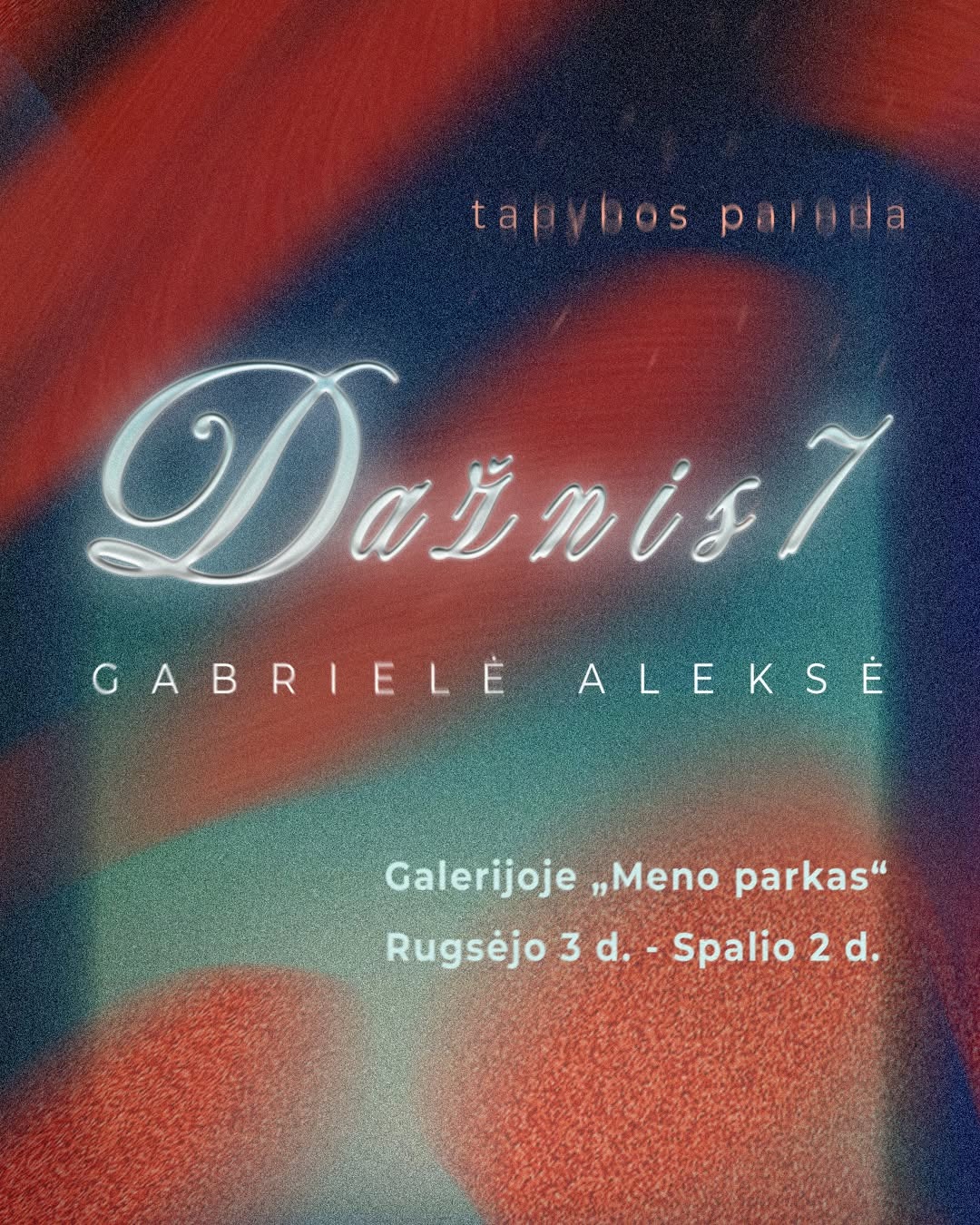
Gabrielė Aleksė. Frequency 7
Until 2 October
The solo exhibition Frequency 7 presents a new series of previously unseen paintings created through the artist’s exploration of the relationship between binaural rhythms, perception, mental imagery, and the creative process. The exhibition takes as its point of departure a 7 Hz rhythm, corresponding to the theta brainwave range and associated with hypnagogia, dreams, and deep relaxation.
Here, 7 Hz functions less as a number than as a threshold into territories of experience that resist clear definition. Through motifs of gateways, windows, empty rooms, the horizon, and light, the exhibition explores the boundary between outer and inner experience, between a sharp boundary and a gentle transition. The paintings are accompanied by a spatial installation. In a dedicated listening space, visitors will be able to listen to a recording of binaural rhythms that served as one of the exhibition’s creative points of departure.
Kaunas Picture Gallery
Barbara Kasten, Diptych I 84, 1984, Polacolor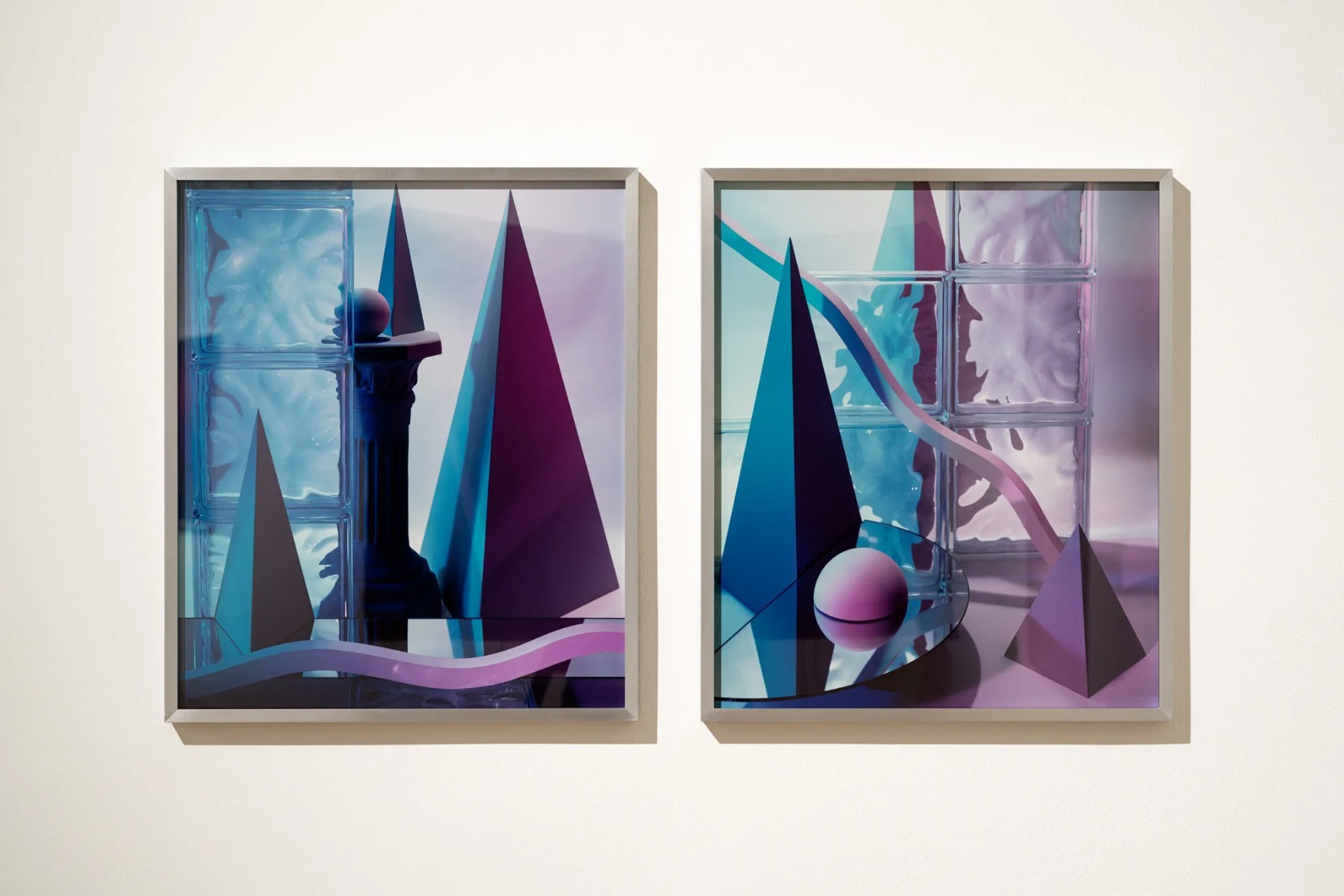
Barbara Kasten. Post-Abstraction
Until 25 October
Barbara Kasten, an American artist of Lithuanian origin, belongs to a generation of artists who expanded the concept of photography and transformed it into a sphere of experimentation with space, light, and perception. Her studies in painting, sculpture, and textile design, as well as the ideas of the modernist art movement Bauhaus grew into a signifanct foundation for her work.
The Bauhaus tradition and the ideas of László Moholy-Nagy had a significant influence on her work. Upon returning to the United States, Kasten transformed photography into an experimental medium in which she creates meticulously arranged visual compositions using mirrors, geometric forms, colour, and light. Later, after moving to New York, she devoted increasing attention to architecture, and her work came to blend Bauhaus experiments, Constructivism, and the influence of postmodern architecture. “Barbara Kasten is a pioneer in every medium she has explored and one of the most consistent experimenters in contemporary art. Her work continues the tradition of female artists who redefine the very concept of the medium itself,” – emphasizes the exhibition curator Agnieszka Pindera.
LITHUANIA, Klaipėda
Klaipėda Culture and Communication Center (KKKC)
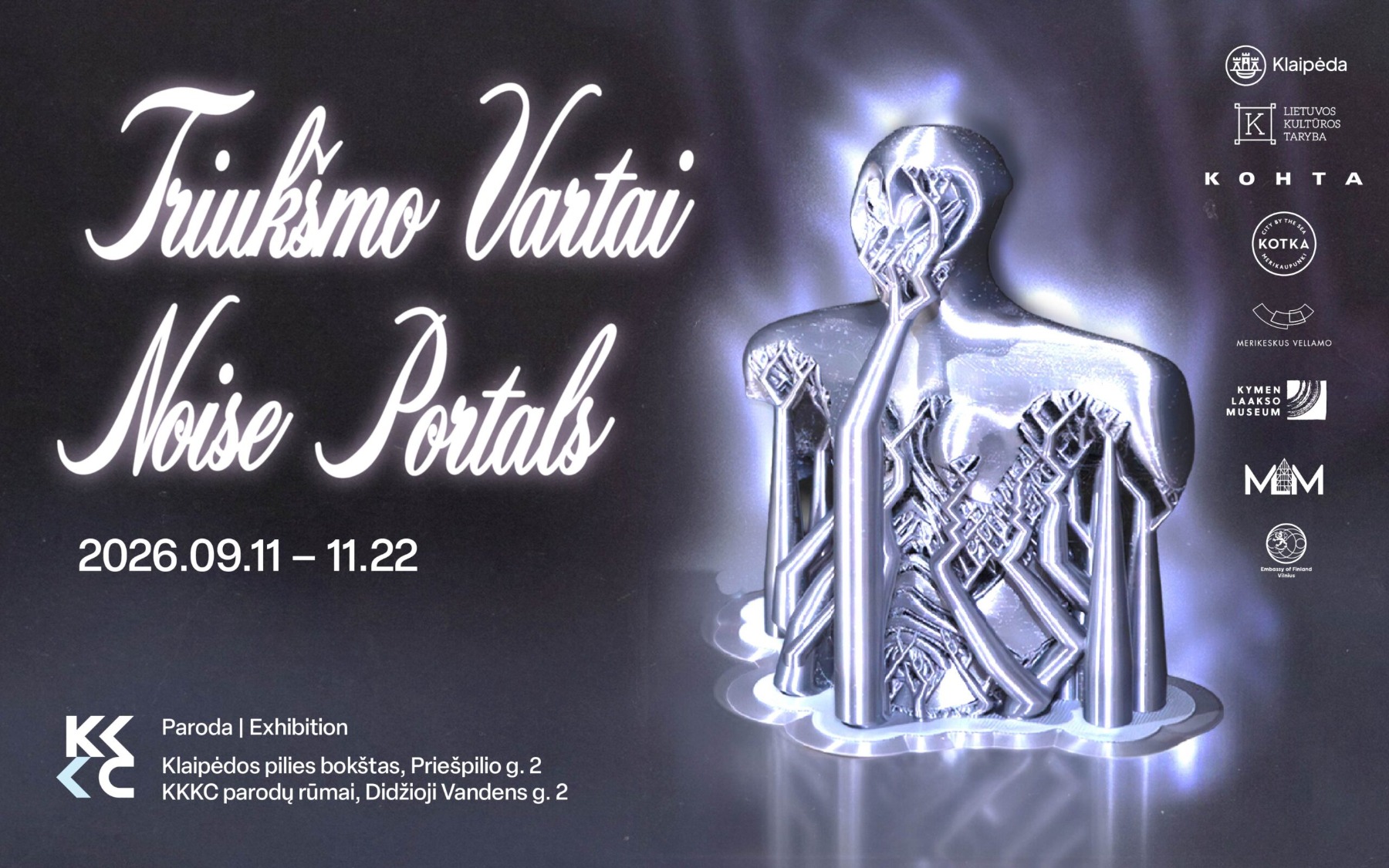
Noise Portals
Until 22 November
What do the two Baltic Sea ports – Klaipėda and Kotka, Finland – have in common? Both cities are marked by different losses and different urban rhythms. This is revealed in the exhibition “Gates of Noise,” where the rhythm of the city, the silence of nature, and the ruins of construction and war form a space in which the experiences of urban change are encoded. Here, the sounds of the port and heavy industry – harsh, sometimes even unsettling – reveal themselves as more than mere disturbances. At times, they can become a movement and a shared rhythm, providing the impetus to bring communities together, to help them cope with loss, and to seek new ways of creating experiences in cities whose identity is unstable – and, as a result, all the more appealing.
Upper image: Publicity image for Krista’s Vindberga-Auzniece’s exhibition "Circles Are Better Than Lines (oda pieskārienam)"
