


2025: Arterritory’s Most Inspiring Interviews
Interviews, conversations, an attempt to make sense of contemporaneity, of the current state of art and society – this genre has always been a strong suit of Arterritory.com. Our dialogues with artists, curators, and collectors consistently go beyond specific art events and help broaden our understanding of the world. At the same time, not a didactic tone but an honest and trusting atmosphere of conversation has always been extremely important to us.
Summing up the year, we selected 22 interviews from the many published on the portal in 2025. These are conversations worth rereading – or discovering if they happened to slip past your attention. We wish you enjoyable reading that enriches your world of ideas.
JANUARY
Bernar Venet. Two Gold Ovals with “Proposition X”. 2014. Acrylic on canvas. 243x438 cm. Photo: Jerome Cavaliere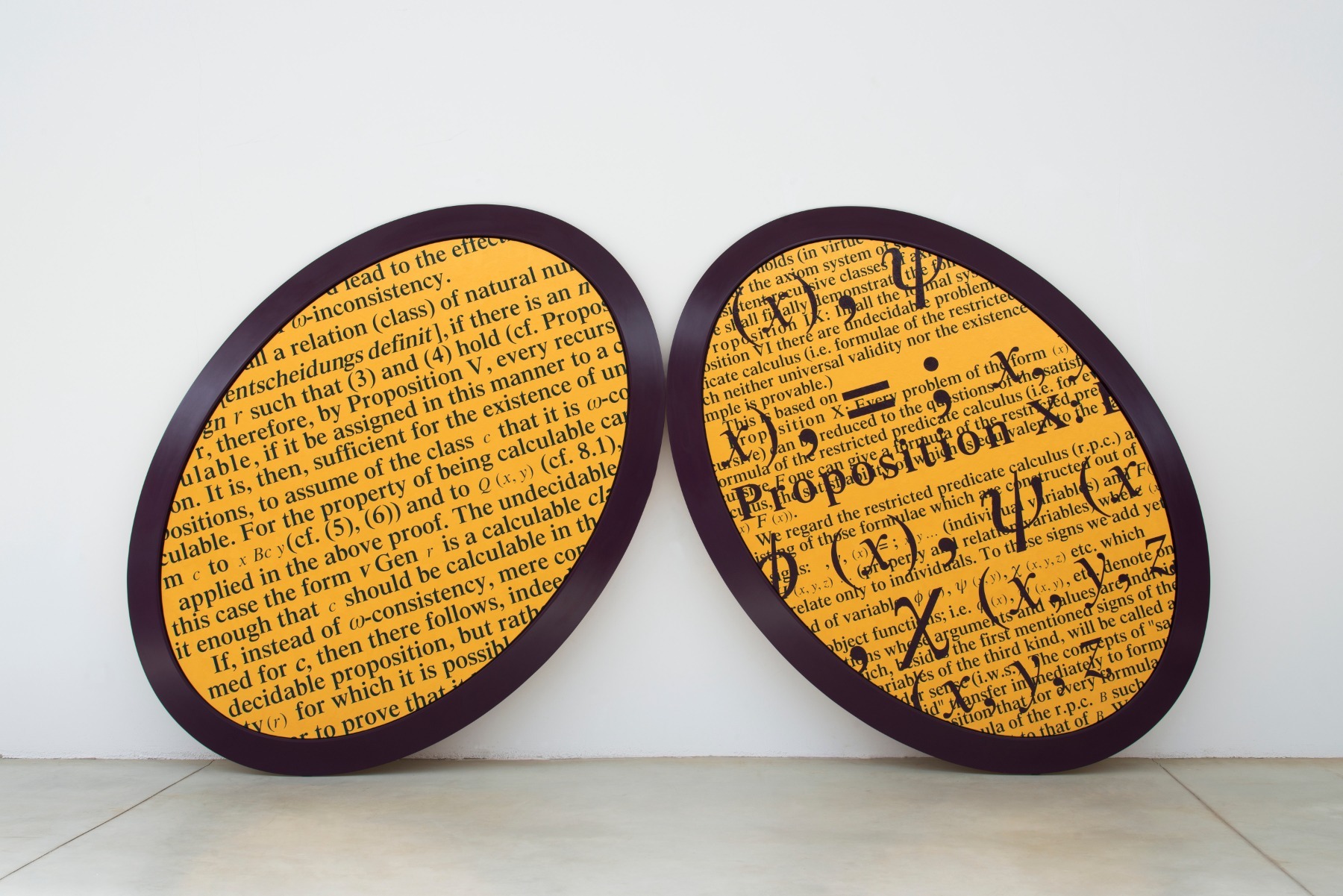
Each painting is a kind of equation
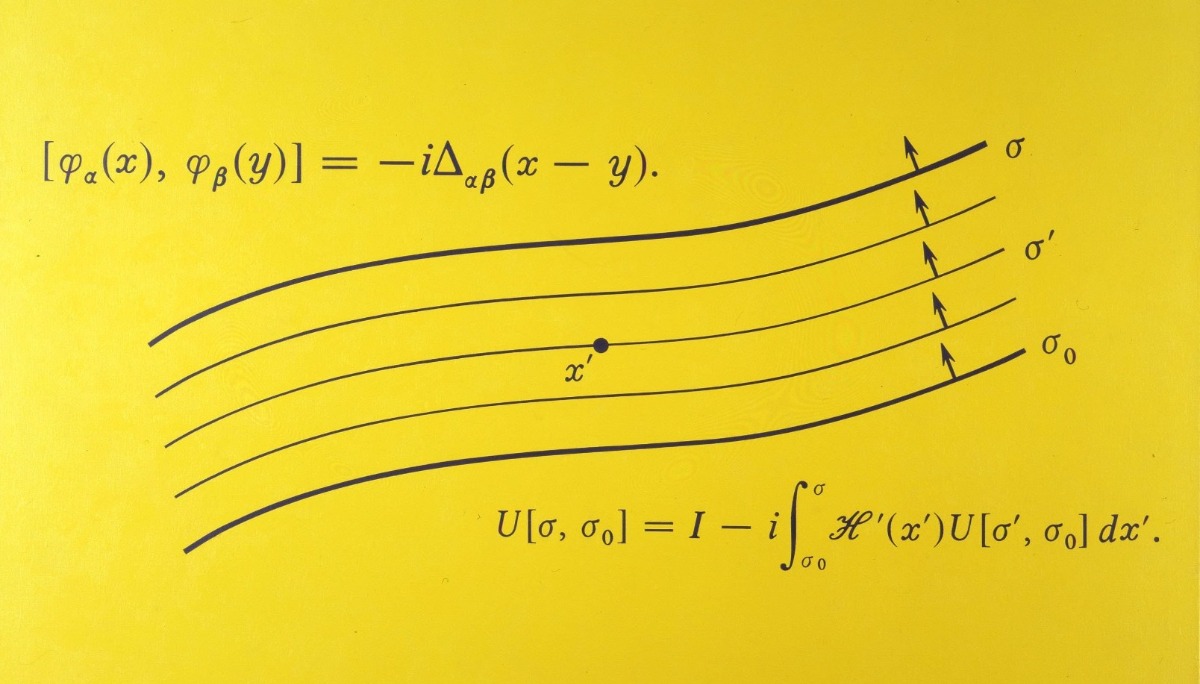
An interview with French conceptual artist Bernar Venet on the occasion of the exhibition of his paintings at the Museum Riga Bourse
For me, the creative process is driven by curiosity, continual questioning, and a permanent desire to discover other unexplored areas. My entire body of work is made of pauses, new beginnings, experiments that draw on delving into the past. That is perhaps what allows me to continually broaden a gestation into an endless questioning. So much remains to be created. I am convinced that art as we once lived it and live it today is only a stage in knowing and sharpening our sensitivity. Let’s accept that the parameters that define what art is nowadays will have nothing to do with those that will become the norm tomorrow. It is our chance, for it will be proof that art, as a field of knowledge, will always keep that precious possibility of being able to renew itself indefinitely.
FEBRUARY
Josef Dabernig, L acrimosa,” 2024. 16mm film, digital transfer, black and white, sound. Installation view, 15th Baltic Triennial Same Day, Contemporary Art Centre (CAC) Vilnius, 2024. Photo: Kristien Daem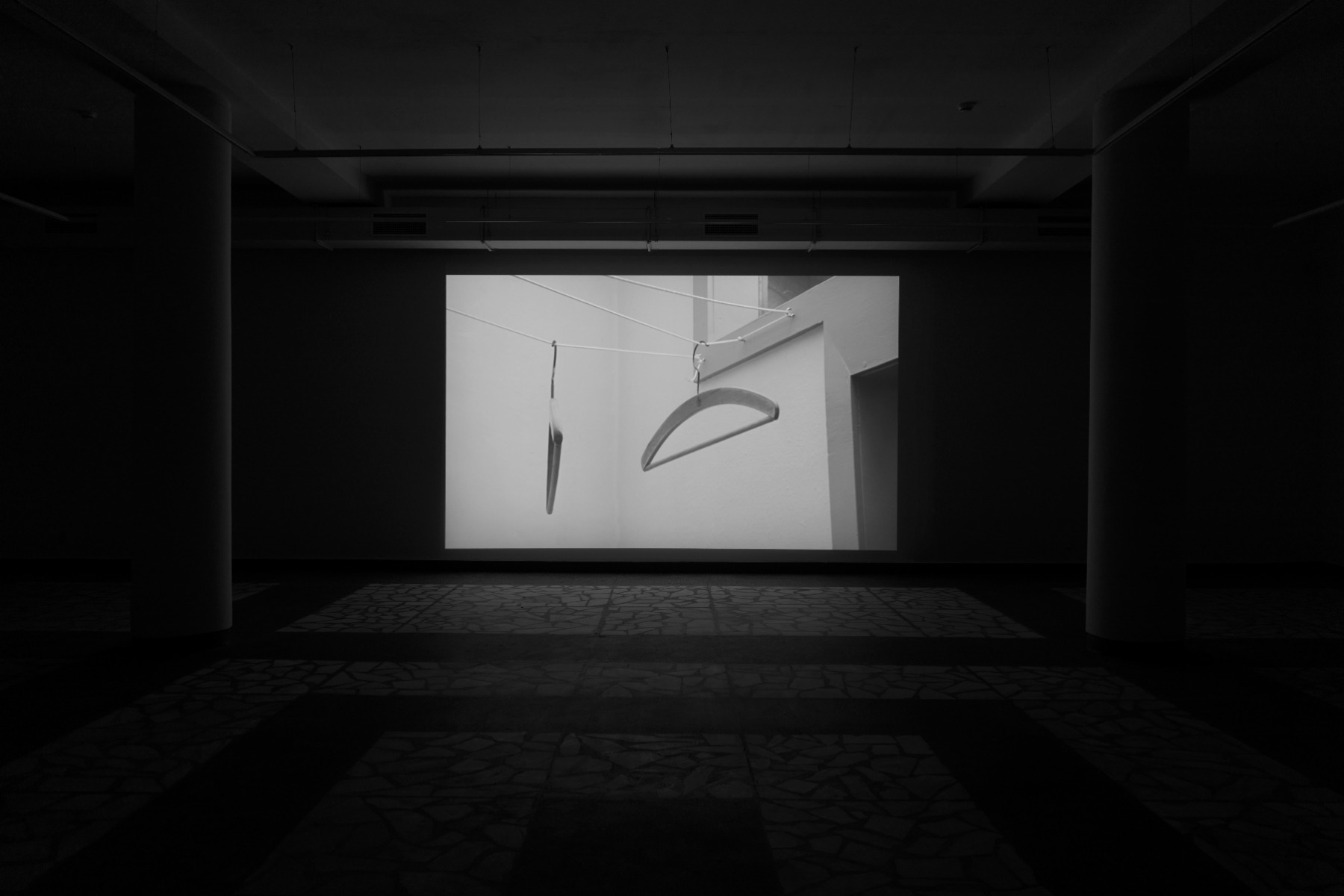
Difficulty in grasping the contemporary
An interview with Paul O’Neill, an Irish curator, artist, writer and educator
In a sense, the conception of the contemporary is itself becoming anachronistic. Given the sheer volume of wars and destruction in the world, alongside the accelerating erosion of democracy, it feels increasingly inadequate to frame the contemporary in traditional philosophical terms. This difficulty in grasping the contemporary is, I think, part of why it’s so challenging to understand the methodologies of fascism and the extreme right today. These movements are profoundly “out of time”, rooted not in continuity but in destruction, nihilism, misanthropy, and anti-humanism. The scale of destruction they pursue is not just physical or institutional but temporal, aiming to dismantle human time itself. Compounding this is their deployment of advanced technologies – military, digital, and virtual – which render their strategies almost incomprehensible. This confluence of temporal dislocation and technological extremity makes it profoundly difficult to fully grasp or confront these forces in the present moment.
MARCH
Photo: Didzis Grodzs / Rotko Museum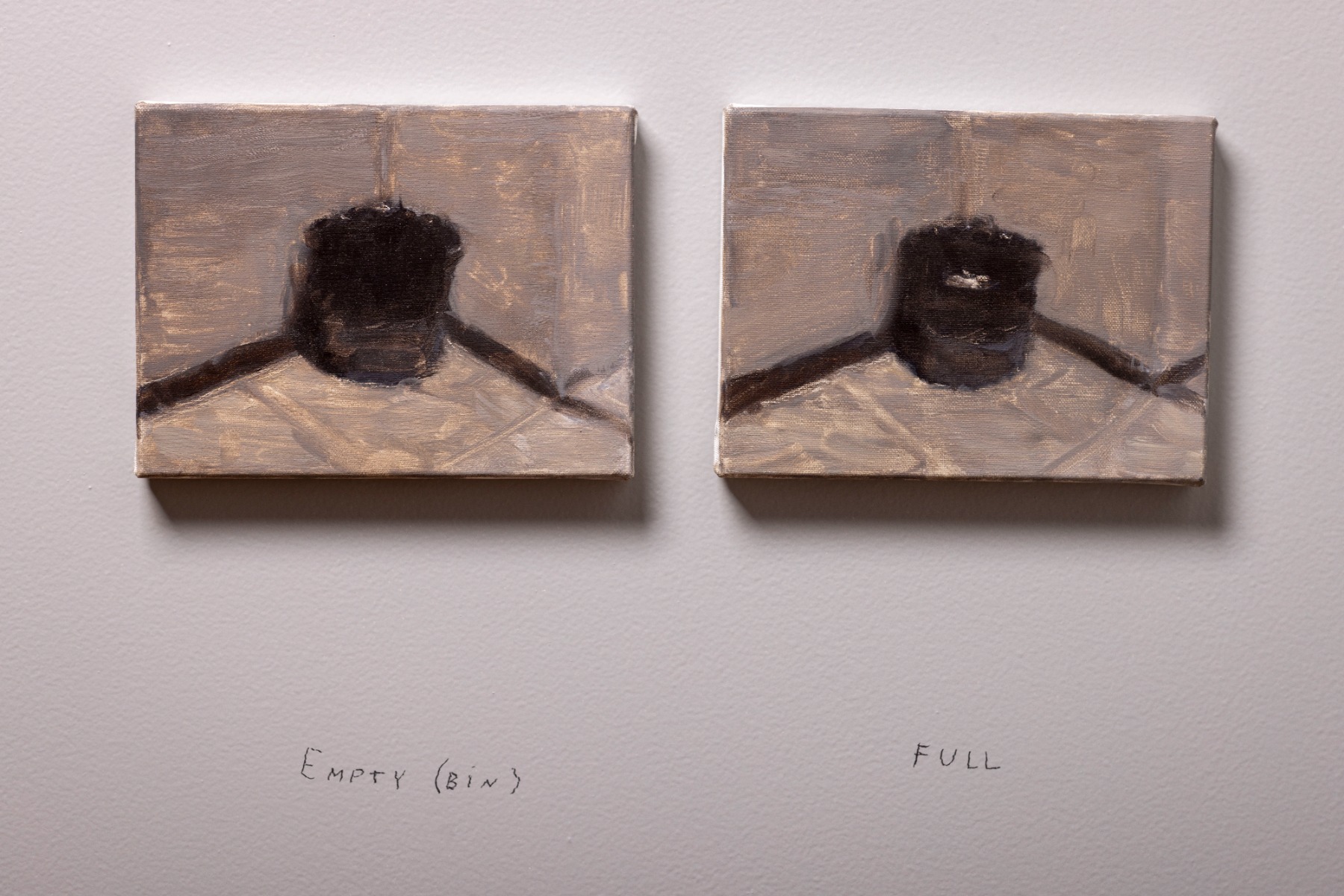
All of my objects are practically spaceships
A conversation with Romāns Korovins / shortlisted for the Purvītis Prize 2025
Every time I happened to see two similar objects, I experienced a kind of aesthetic ‘torque’, a kind of visitation. Angels came on wings to visit me. There is a kind of koan to be found in looking for a difference between two similar objects. There is something Zen-like about it. A presence/absence or the other way round – it’s all about absence/presence, and there is a great difference. (Laughs.) A diptych for me is the shortest story ever. The beginning and the end. The pause between these two works – this pause is the actual content of the story, the zero state. Zero state between thoughts: yeees, how very Zen. (Laughs.)
'Amazons. The Ancestral Future’ Installation image, 2024 / CC BY-SA-NC Martí Berenguer. Courtesy of CCCB Barcelona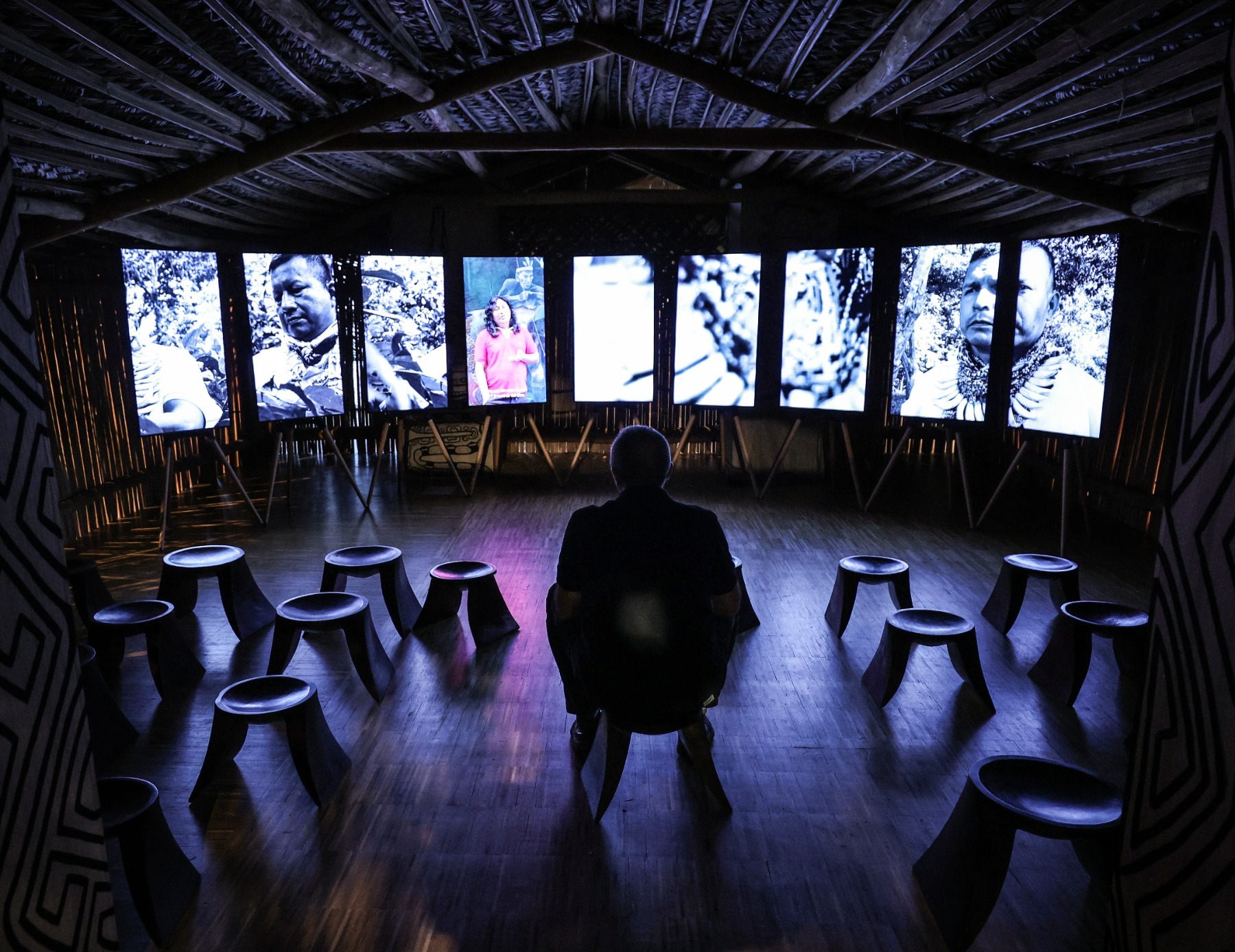
There are many Amazons, coexisting at the same time
An interview with Claudi Carreras, cultural producer, photography researcher and curator of the exhibition Amazons. The Ancestral Future at the CCCB arts centre in Barcelona
Some artists remain deeply embedded in their communities, and their artistic production is fundamentally communal. When this art is extracted and placed in a different context, it is often treated as individual art. By integrating indigenous art into the market under the contemporary art paradigm, we risk violating important cultural principles. This is something we need to reflect on. It feels significant because it represents something new, but at the same time, I wonder if it’s just another trend – part of the art market’s constant renewal. Now, indigenous art is gaining attention, and while it is extraordinary and deeply meaningful, how this moment unfolds is critical to consider. Ultimately, it represents a cultural divide. For indigenous communities, these artistic traditions are not merely “art” in the Western sense; they serve communal, spiritual, and cultural functions far beyond the commercial realm. Everything is intertwined because they aren’t artists in the traditional sense of the word. Of course, they are, but many different elements are being merged and redefined. That discussion, for me, is really important. But I don’t have definitive answers.
APRIL
Luīze Rukšāne. Cold hands but a warm heart 3. 2023. Graphite and charcoal on canvas, 100 x 150 cm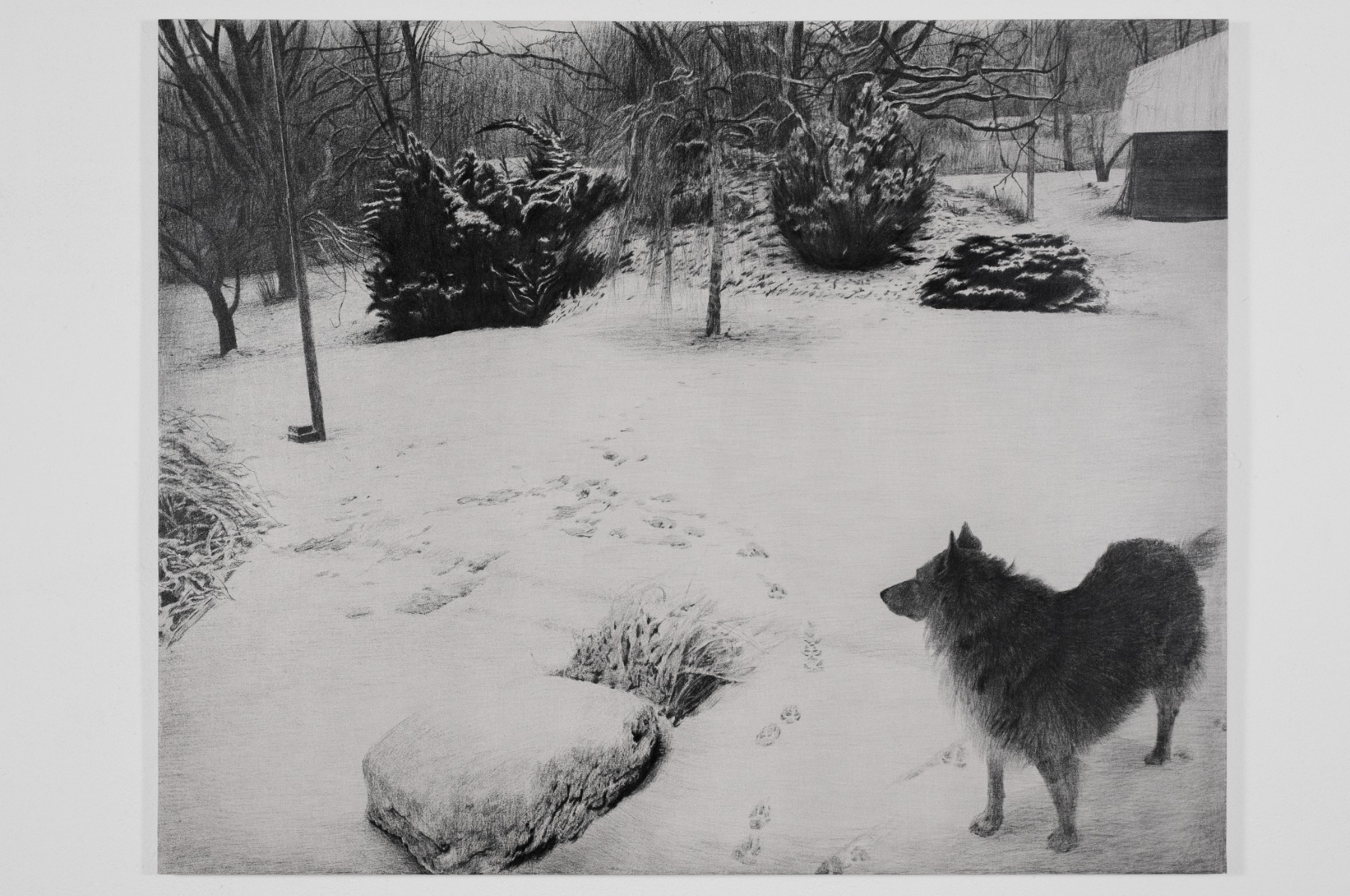
The landscape outside the window is not to be taken for granted
A conversation with Luīze Rukšāne / shortlisted for the Purvītis Prize 2025
I think there are a great number of artists and, consequently, a lot of various types of art that serves different purposes. There is art that can work as a calming factor and art that can be the exact opposite, a revolutionary catalyst. The goals can be very different but there is one particularly relevant in an institutional context, and it has to do with social interaction and fostering an inclusive society. To an extent, it is in the latter context that I see myself: I would like my art to be intellectual yet also accessible on the level of emotional intelligence. I would like it to be reasonably comprehensible to people, and I believe that working with photographs facilitates that: the images are all very recognisable, which invites a person to view them a little bit longer and take a deeper look.
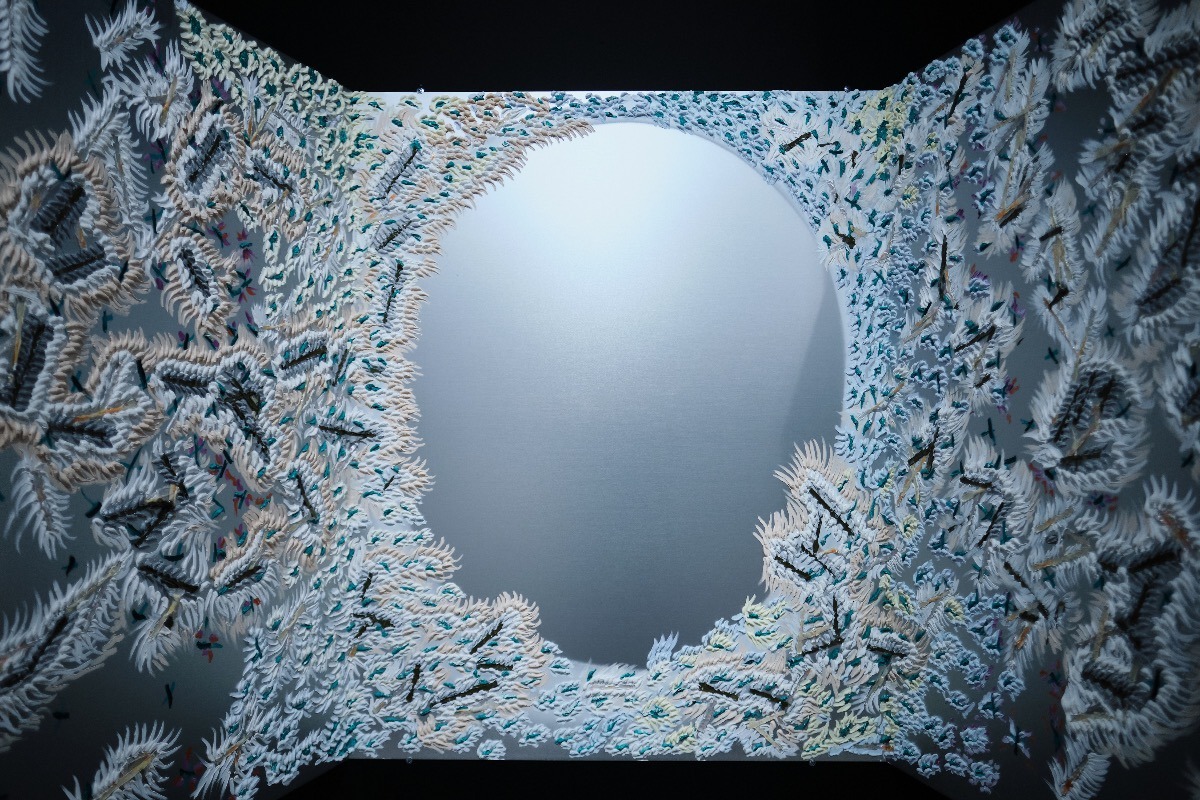
I have no sentiment for watching the world come to an end
A conversation with Elza Sīle / shortlisted for the Purvītis Prize 2025
I have never had a particular sentiment for watching the world come to an end. I would rather see all people come together, cast aside hatred, envy and greed, and use technological advances to realise incredibly beautiful and intelligent environments for themselves and plants and animals to live in. Flames can, of course, be beautifully and interestingly painted, but I would rather see the application of new electric-biological materials put in use towards outstanding new engineering structures and habitable surfaces. Mixed, of course, with natural materials that have been obtained without destroying some other distant land.
MAY
31.12.2022.23:00, 2023. Fireworks in a jerrycan / VV Foundation collection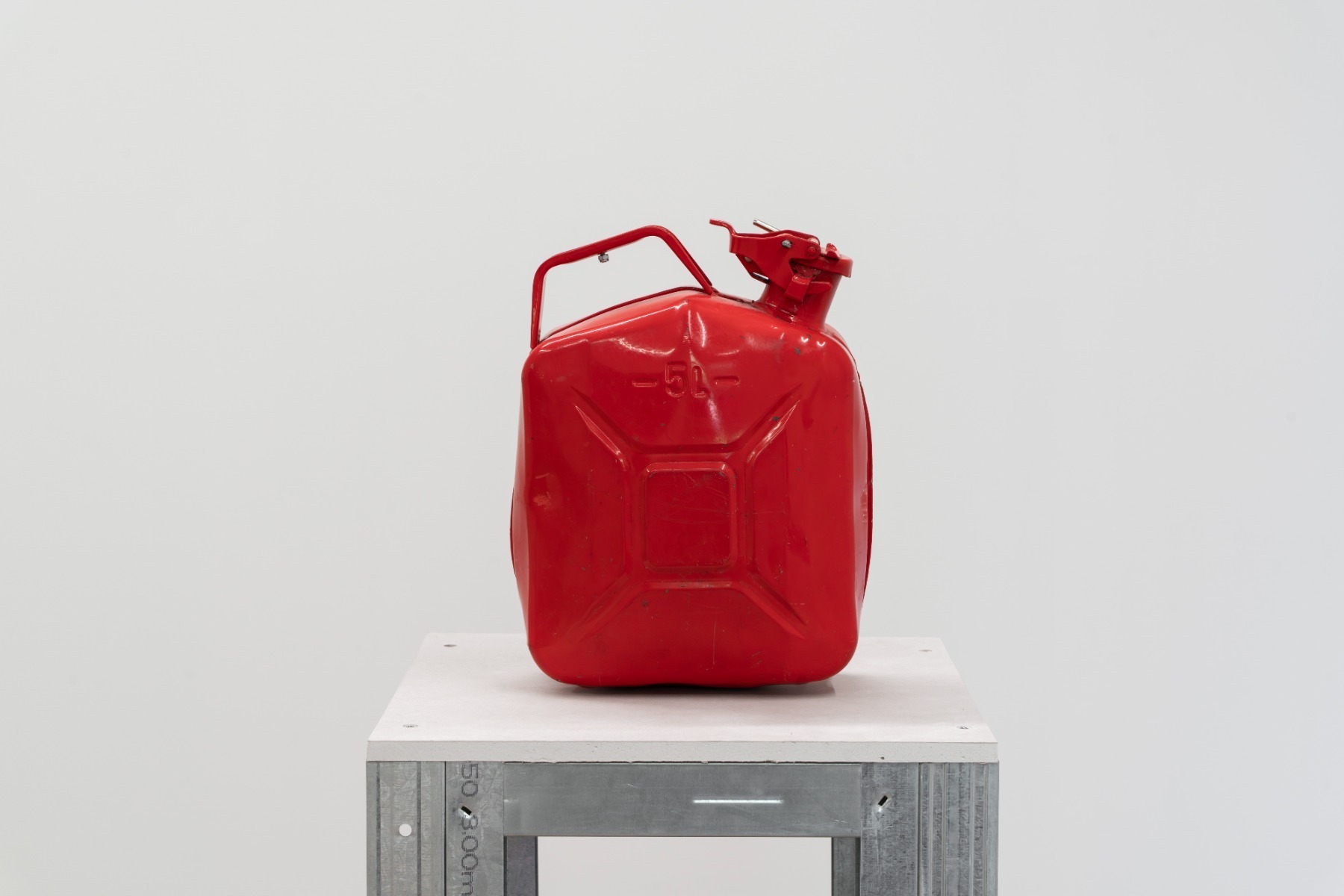
A hammer drops, striking some wires...
A conversation with Krišs Salmanis / shortlisted for the Purvītis Prize 2025
In general, I’m very lucky. I was born at the right time to know what it was like in the Soviet Union, but not to be so entrenched in it as to be particularly nostalgic about it. I was just young enough to get away for secondary school – I went to an all-boys school in England. After that, I was convinced that I had nothing to do with that ‘post-Soviet human’. And then during the pandemic, living in the countryside, my partner and I would take the children on nature walks. And in the middle of all that beautiful nature, you still see those white-brick pig farms with collapsed roofs, or dilapidated grain elevators, or suddenly – three-storey apartment blocks in the middle of nowhere… In the countryside, where there are quaint farmsteads and beautiful scenery all around! It’s surreal! And we would just walk on and continue chatting, until I realised that I was just accepting the situation as nothing out of the ordinary. I was so used to it, since childhood, that it was just…there. For at least 50 years now. And then it came to me that this ‘post-Soviet human’ is also inside of me – and he is all around me.
Exhibition "Unexpected Encounters" at the Arsenāls Exhibition Hall, 2019. Photo: Kristīne Madjare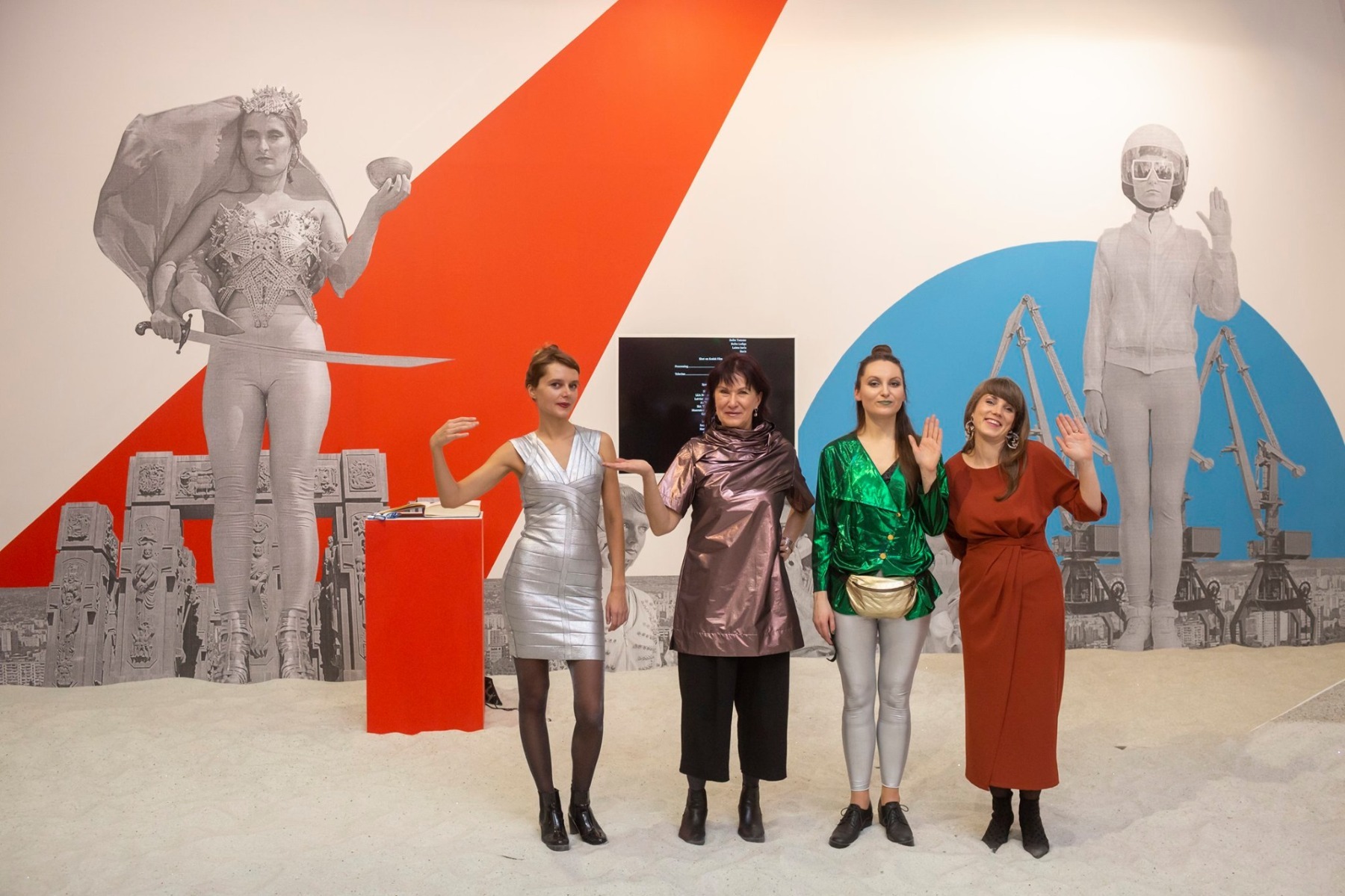
Contemporary Art as a Form of Thinking
The Latvian Centre for Contemporary Art (LCCA) turns 25! What does Solvita Krese, who has been the director of the centre throughout this long and eventful period, think about this momentous milestone?
I think that both I and a large part of society – including ourselves, i.e. artists and art institutions – had no idea how fragile this world we had built over many decades really is. It seemed to be a solid edifice, gradually strengthening and cementing itself with values of equality, inclusion and others that we had taken for granted. And now it all seems to be simply...exploding. On the other hand, looking at the broader context of history, we see that the world cyclically undergoes changes. Like the pendulum of a clock, it goes one way, and then it comes back. I just don’t know how far it will swing the other way now. And then there’s that feeling – why do we have to be the ones experiencing this stage, when the pendulum is swinging backwards? Those of a more conservative mindset are likely saying, ‘Finally, the world is starting to sort itself out!’ [laughs] – it all depends on which way you look at things... I think the most important skill to have at the moment is to not panic or act tragically but to try to see something positive and perhaps try to find some tricky way to turn the ‘mechanism’ back round in some way.
JUNE
Installation view of Janis Rafa’s solo exhibition We Betrayed the Horses, 2025. Produced by ΕΜΣΤ. Courtesy of the artist. Photo by Paris Tavitian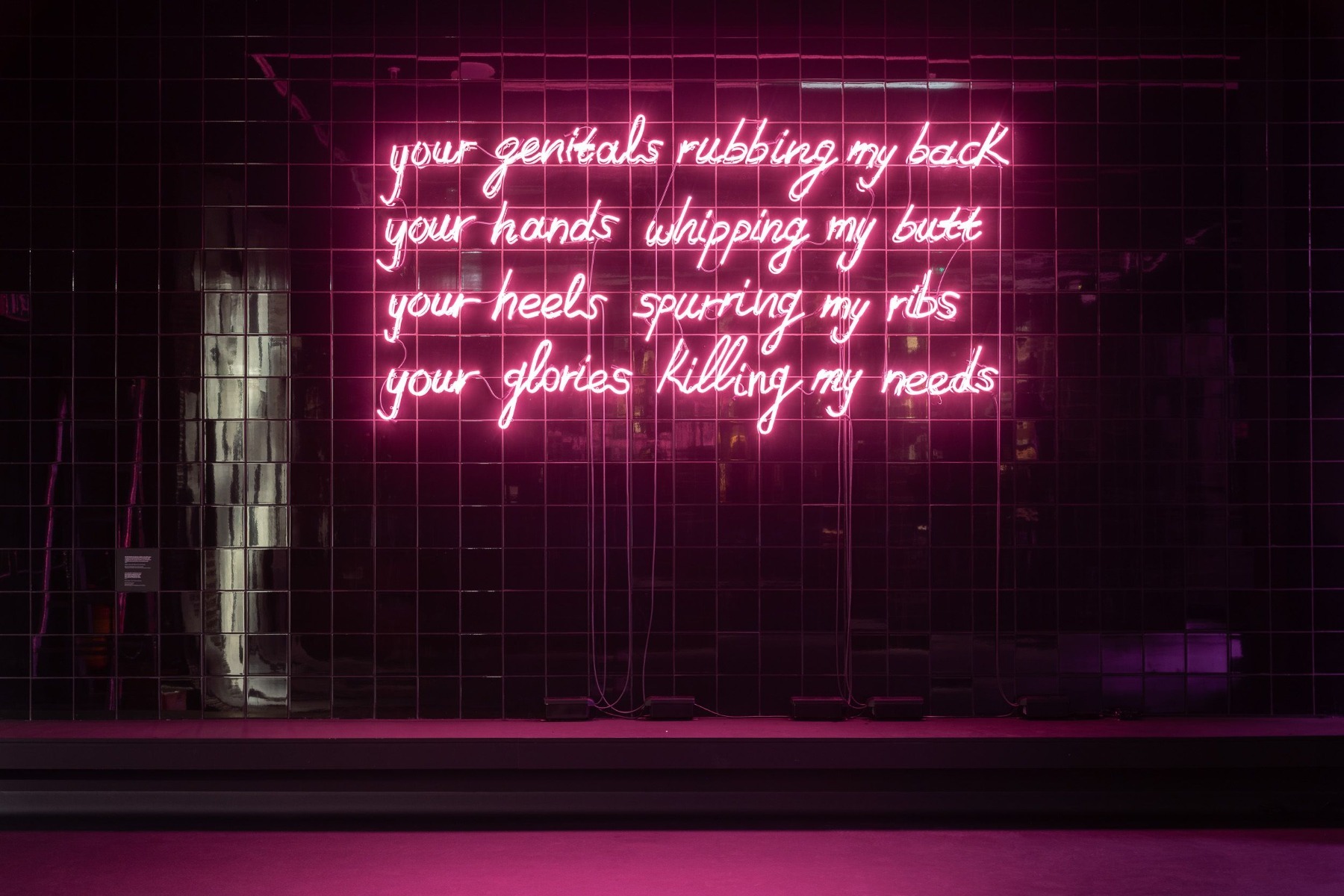
And the silence that follows
A conversation with Greek artist Janis Rafa on horses and their absence, on love and domination
In the BDSM culture role-play involves dominance, submission, and bodily violation. But in that context, these things are based on mutual consent. With horses, and with animals more broadly, this negotiation is impossible. The whips, saddles, reins become tools of non-consensual control, of the eternal “who’s on top”. There are also other works of mine that aren't part of this exhibition, but they explore similar themes – particularly around leaking, mouthing, and the mouth itself. Because it's a betrayed mouth, it's a mouth that is tricked, like the instincts of the animals are tricked in order for us to control them.
Christian Skjødt Hasselstrøm (Denmark). μ. 2022/2025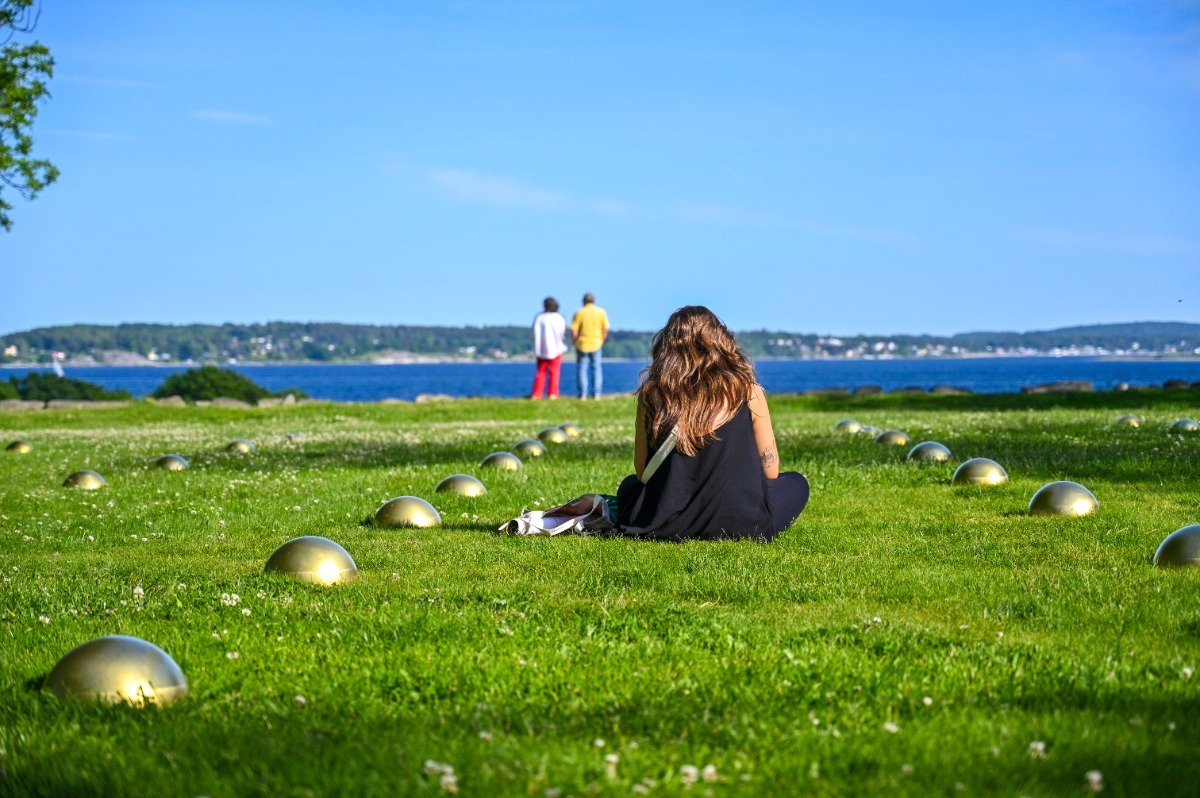
Embracing the World to Hear It
A Conversation with Morten Søndergaard, Curator of the Nordic Biennale of Contemporary Art MOMENTUM 13
Sound is becoming more central to the way art is developing. At the same time, I think there's also an interesting, somewhat divergent tendency. You can see sound being integrated into contemporary art in various ways – as more of a medium of experience. In my understanding, it's not something that necessarily engages with the central core of aesthetics. And that's one trajectory. The other trajectory is where artists are truly using sound – and the technologies of sound – as a genuine aesthetic foundation. You could even say they’re working with the physics of sound, exploring spaces where images and meaning emerge directly from sonic processes. So, it’s not just an exploration of sound itself, but also of many other concepts through this medium and its physical properties. I find that deeply fascinating. Over the past ten years, this direction has become especially strong. There's a new generation emerging now, producing amazing work and really engaging with this field in exciting ways.
JULY
Photo: Arterritory.com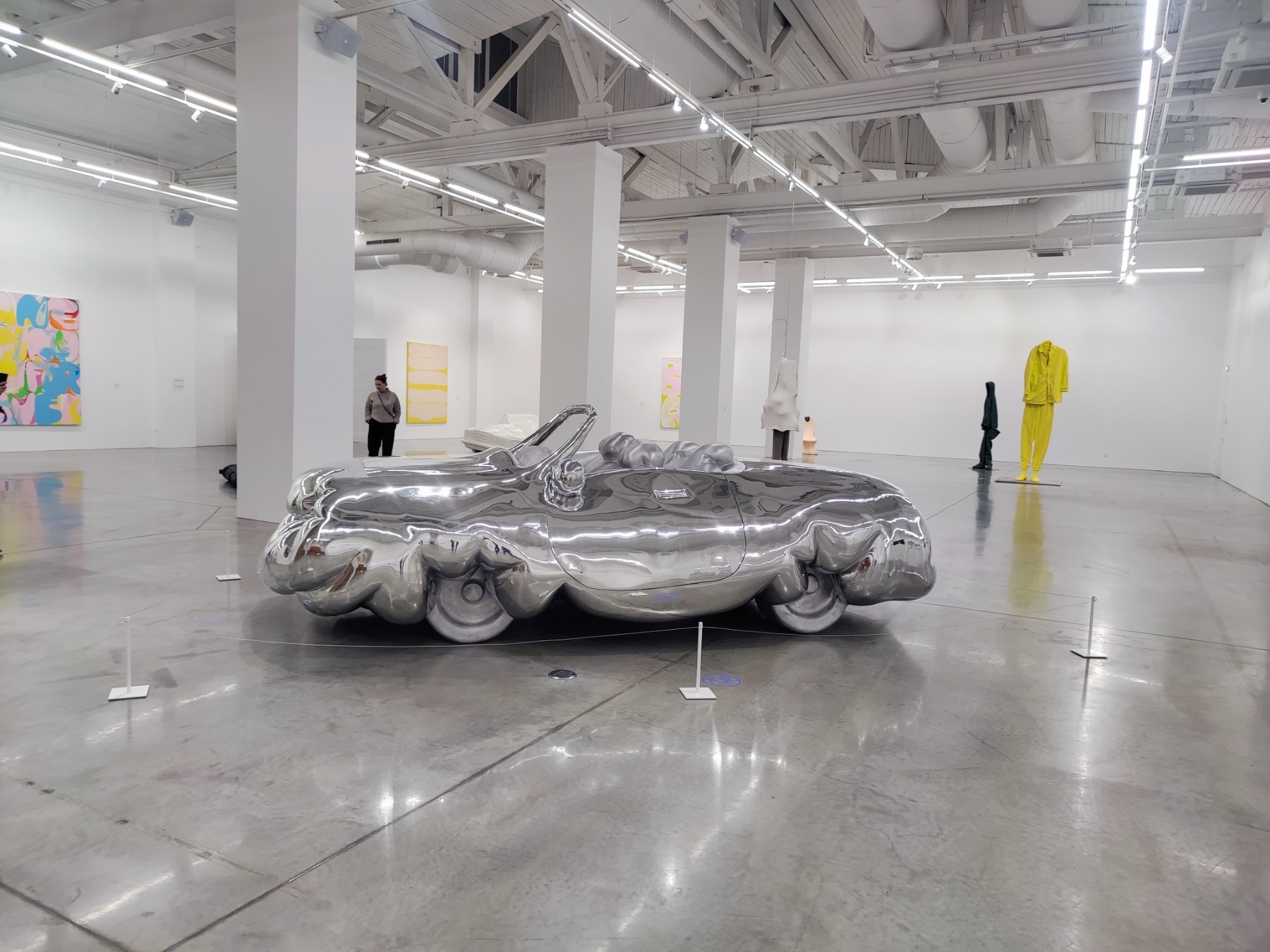
Paradise is so boring
An interview with artist Erwin Wurm
I use to read bits and pieces — never the whole book — of Alighieri Dante’s Divine Comedy. You know, The Divine Comedy and Dante — it’s not funny. It’s a tragedy of the world. It’s about hell. And hell is made of circles. The deeper you go, the madder and chaotic it becomes.When you look at our world from that perspective, maybe it becomes a bit more understandable — or at least acceptable. This is just our world. We were made like this. We’re not the good guys. We’re not the smart guys. We’re always caught in this deep, troubling mess. All the time.There’s so much history. It’s unbelievable what has happened to the world. And we’ve learned nothing. Absolutely nothing.
View of Matthew Ronay's exhibition 'Thirteen Forms' at Perrotin Paris, 2025. Photo: Claire Dorn. Courtesy of the artist and Perrotin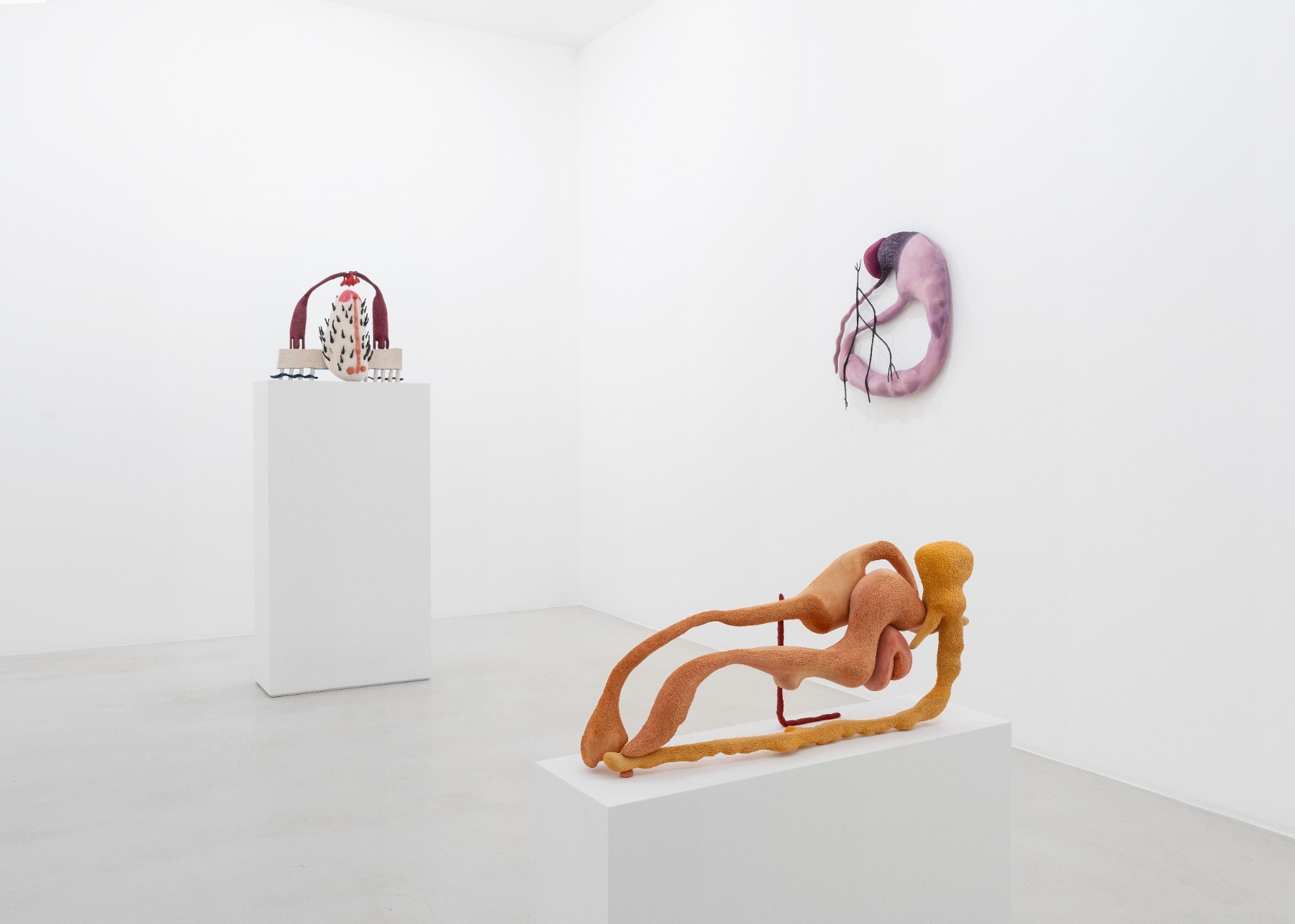
The Subconscious and the Algorithm
On Intuition, AI, and the Future of Sculpture / A Conversation with New York-based artist Matthew Ronay
AI is definitely a mirror. The way I’m using it requires a person to examine things and dedicate time to understanding something. My favorite thing about using it was its unlimited patience to work through ideas. I spent hours trying to pinpoint specific ideas that works touched on. I would keep prompting until it spit out something that felt right. A partner or friend shouldn’t be exposed to this mania. I did feel connected to it while we were working on something, and it did cause me to laugh often.
AUGUST
Nicolas Bourriaud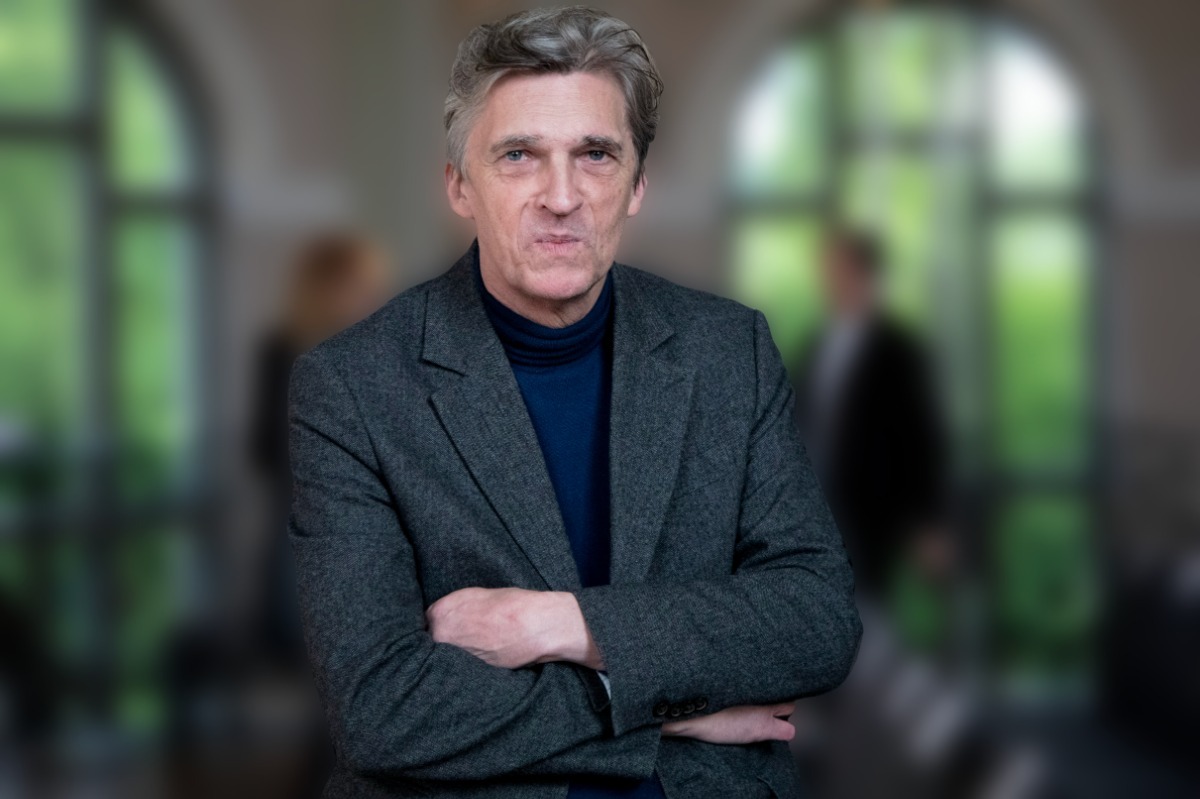
Curating is about choices
An interview with a curator and writer Nicolas Bourriaud
What is the common point between the shaman and the artist? Well, there are two ones. The figure of the shaman exists because there’s no art, properly speaking, in his/her community. In certain human societies, shamanism includes the concept of art. But in societies where this concept exists, you don’t need shamans, as artists are assuming their role, which consists in giving a shape to the unknown, to the non-explainable. It is a social position, a specific mental place. And what is this position? Shamans and artists are both diplomats. They enter into contact with the invisible, with energies we cannot see, with forms of life we’re not connected to. But it’s the same principle, I would say.
Survival Kit 16: House of See-More. Installation view. Work by Sana Shahmuradova Tanska. Photo: Kaspars Teilāns.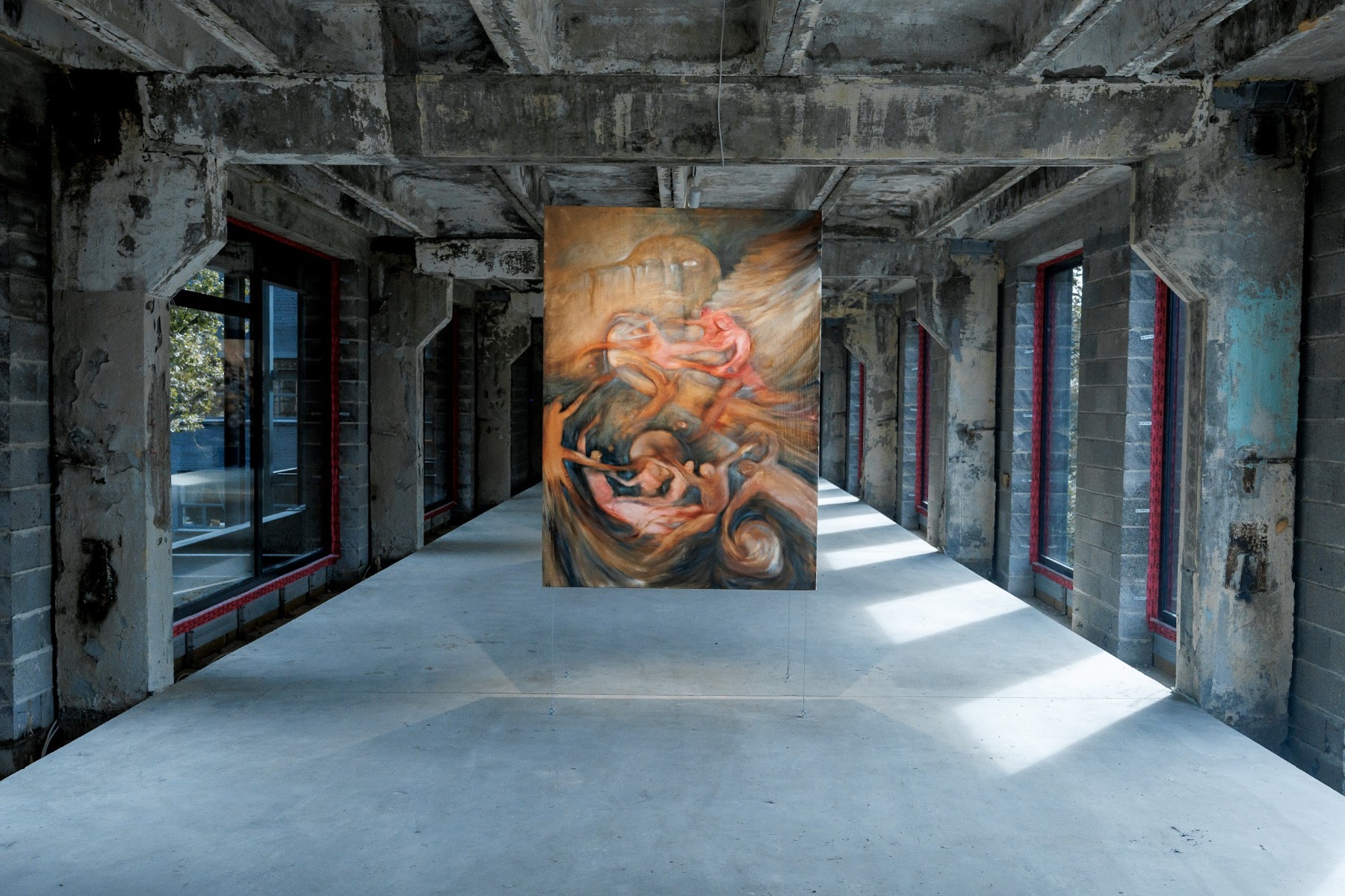
When Simurgh Invites Us to See-More
An interview with Payam Sharifi, member of the Slavs and Tatars collective and one of the curators of Survival Kit 16
What we’re interested in – and some others too – is not to narrow the path, but to widen it. So the question becomes: what can we find that is common among these former states? I don’t like the term “post-Soviet,” but I’ll use it here because there’s no alternative yet. Hopefully someone will come up with one soon. But let's say all this, what does, what does Tallinn have to do with Almaty, Almaty with Tbilisi, Tblisi with Warsaw? We believe that there are things that connect these places that are not top down Moscow imposed imperial projects. And the question then becomes, what are these things and, and how can we find and identify these things? And how can we use these as a kind of yeah, it's another form of, of language or of, of some source, you know?
SEPTEMBER
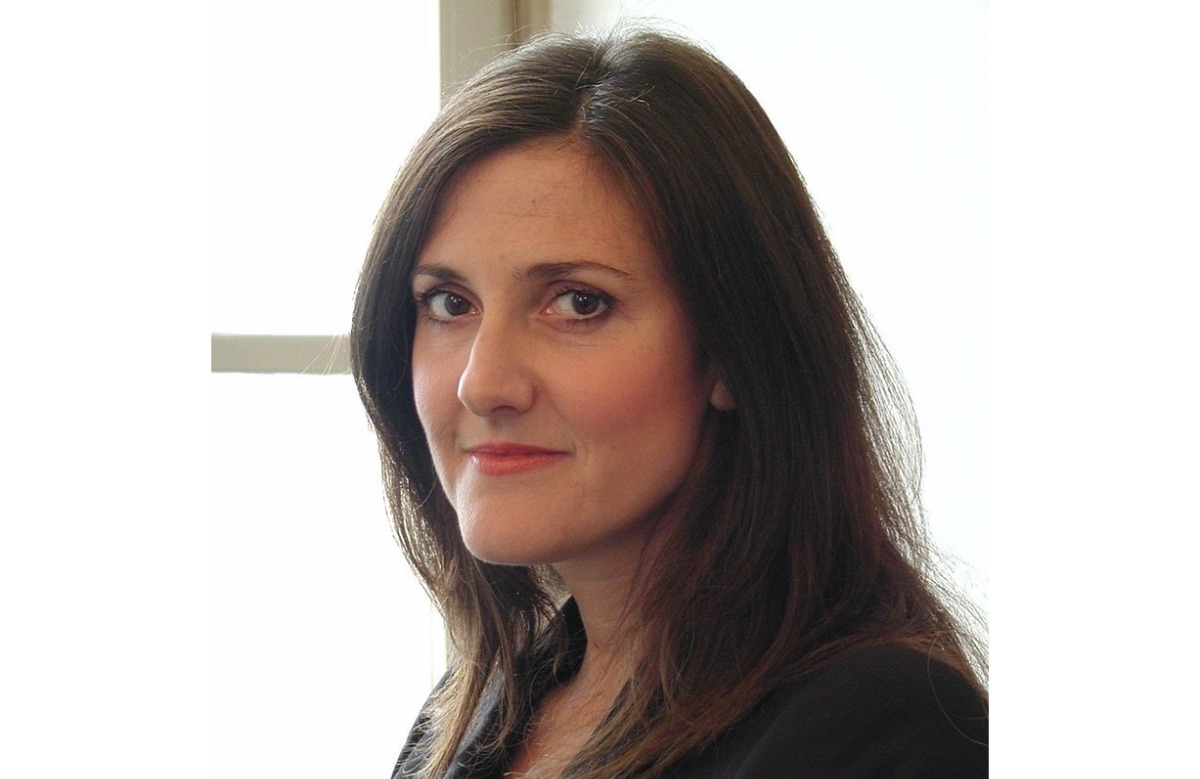
Marcella Beccaria, Curator of STATEMENT. © Courtesy of the artist
Art can show us different ways of thinking
An interview with Marcella Beccaria, curator of STATEMENT 2025 at viennacontemporary
Reality seems to shift right under our feet, and what we can grasp or understand about the way things function has become increasingly obscure. We live in a world in which, in a way, each of us is fabricating our own realities. This is very challenging, and it is very interesting to look at how artists are reflecting on this paradoxical situation. It’s not necessarily that artists can predict the future—although sometimes art does anticipate it—but that is not the primary role of art. For sure, however, art can show us different ways of thinking—ways that exist outside of a given frame—inviting us to use our own critical intelligence, rather than simply accepting prefabricated images of the world as others would have us take for granted.
View from a solo exhibition Momentary Organisms by Paweł Matyszewski, 2025, Kogo Gallery. Photo: Marje Eelma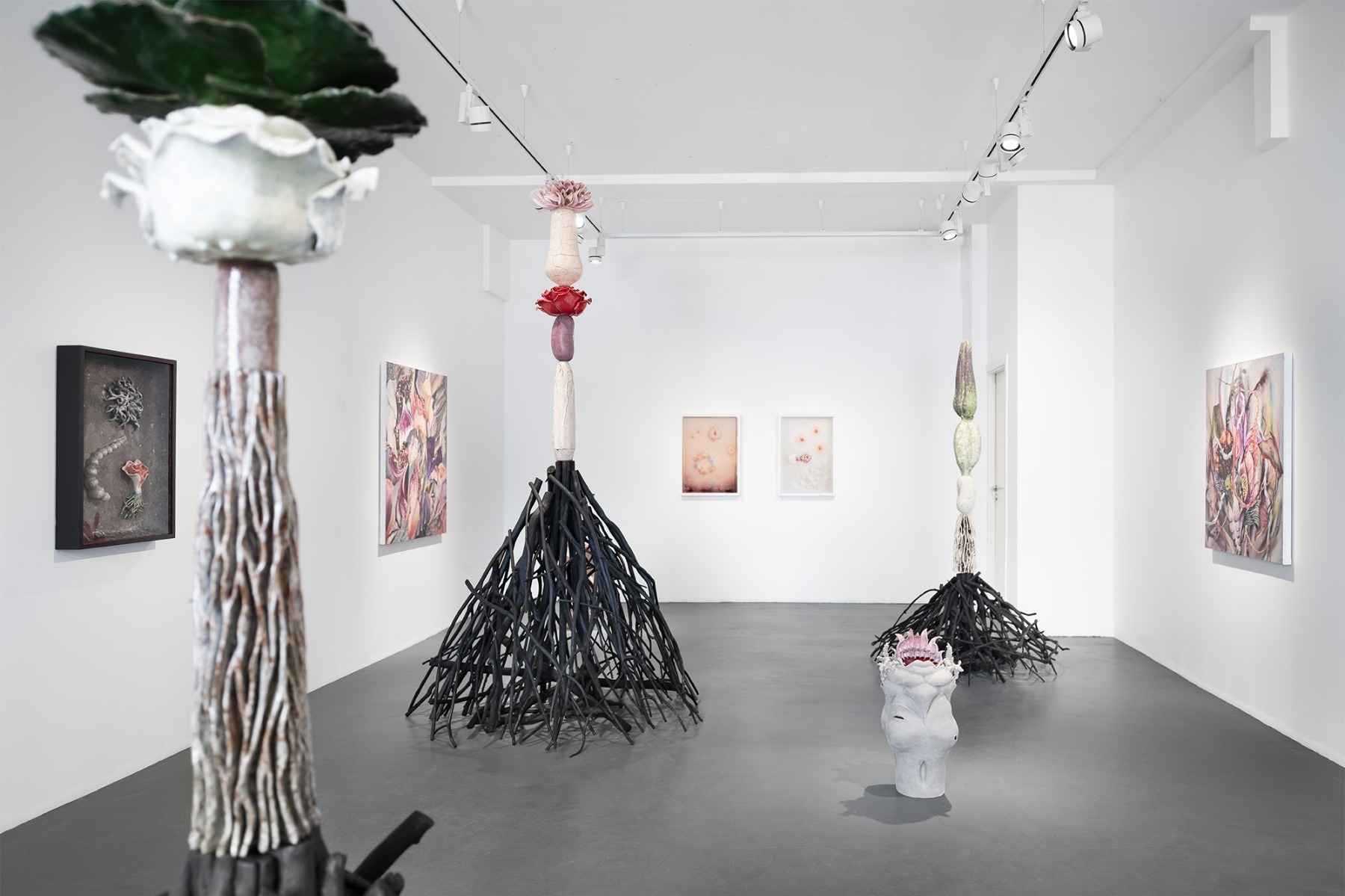
Giving space to rare things
A conversation with Polish artist Paweł Matyszewski on queerness and love of plants in art
I live near the Belarusian border, so when I go to art residencies people from countries like Germany tell me “Oh my gosh, so you live near the Belarusian border! Aren’t you afraid about your future, about your place?” So I started to think about my place, my village, my garden, our home that I would have to leave if there were an invasion. And I wanted to create an artwork that would speak about our roots, the places where we were born. Of course, we can change our life, we can move somewhere else and we can have a home there. But in my case, I’m really connected to my land, my family. I chose to come back here after graduating the University of Arts in Poznań. It’s the Western part of Poland, quite far away from here.
OCTOBER
Installation view from the exhibition NAKED EYE. Photo: Finnish National Gallery / Petri Virtanen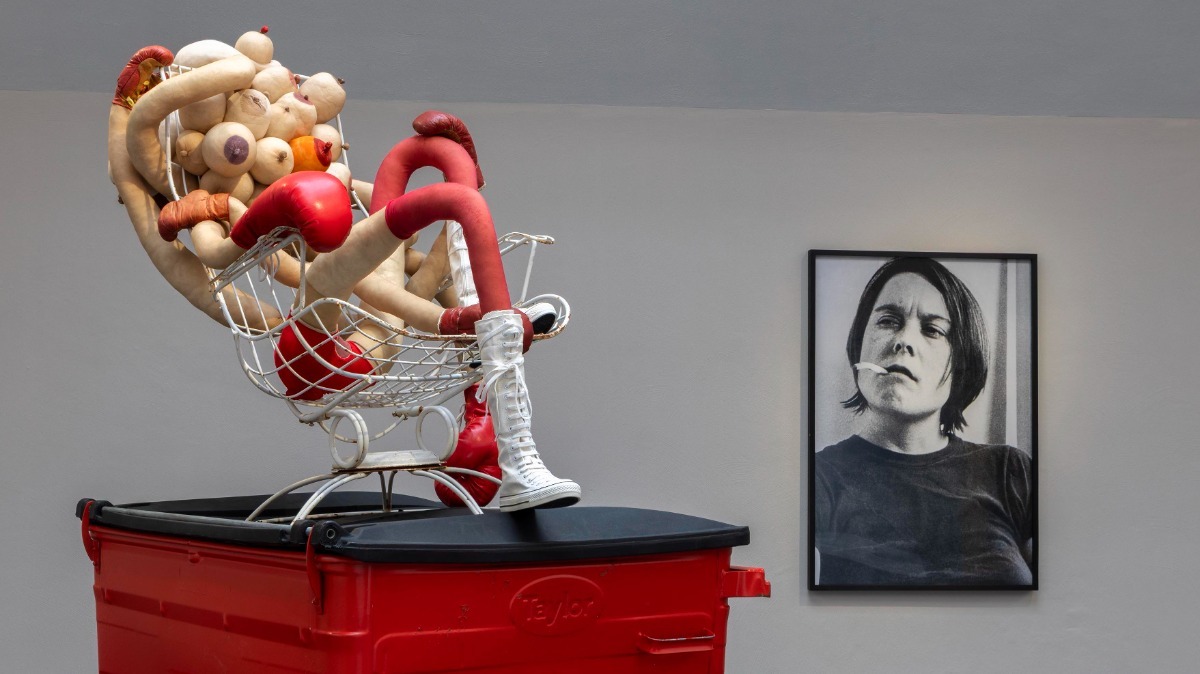
Sarah Lucas: “Meaning isn’t fixed”
An interview with the British artist Sarah Lucas, one of the most influential figures on the contemporary art scene
What scares me about the cultural climate right now is the polarisation of beliefs. All sorts. The intolerance of one and others’ beliefs and the volatility of these times. The frightening shift to the far right. The opposition to and dismantling of institutions of the state including culture but also education and law. These institutions were centuries in the making. These are iconoclastic times. War all around and the prospect of dictatorships in what we used to call the free world. Diversity looks to be on shaky ground right now.
Cassi Namoda, Maria’s second week in the city. 2019-2020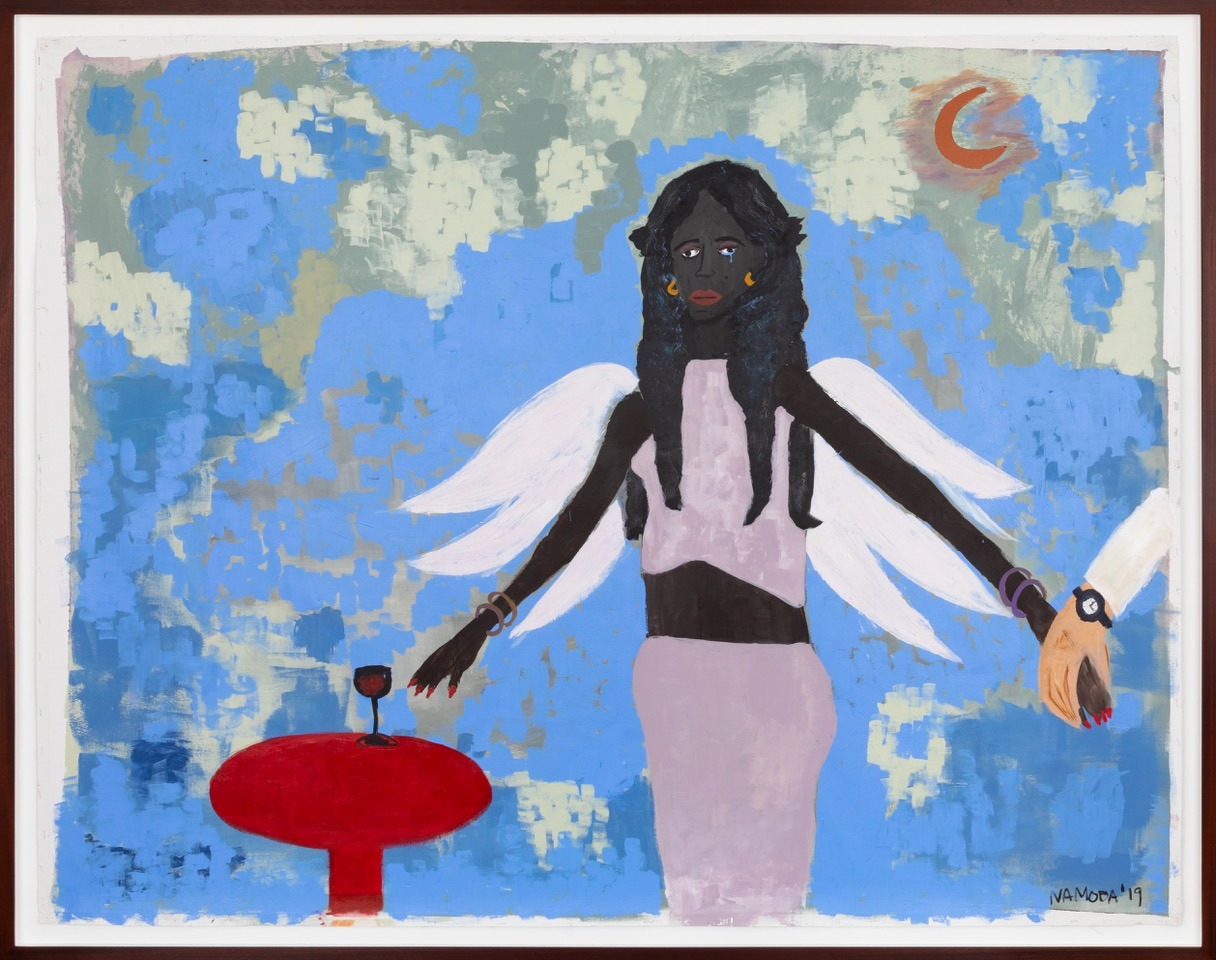
Collection as Embodiment of Ubuntu
Interview with art collectors Harry David & Lana de Beer David
Whenever there’s hype – look at the Young British Artists, for example—suddenly there’s a frenzy, and it’s insane. Personally, I don’t think there’s only one path for African art, but it does need to find some stability. Institutions need to include it so it doesn’t disappear again. Even in the era of Trumpism, people still have to open themselves to the world and to new ideas. Trump can’t reverse the fact that the world is becoming smaller and more connected. I’m not afraid of that. But hype is always a shock – for artists especially. Suddenly you have young artists who were earning nothing, and then they’re promised the moon. That can be destabilizing. Hopefully it will settle, but there is a place for it.
NOVEMBER
David LaChapelle. Gas Shell. 2012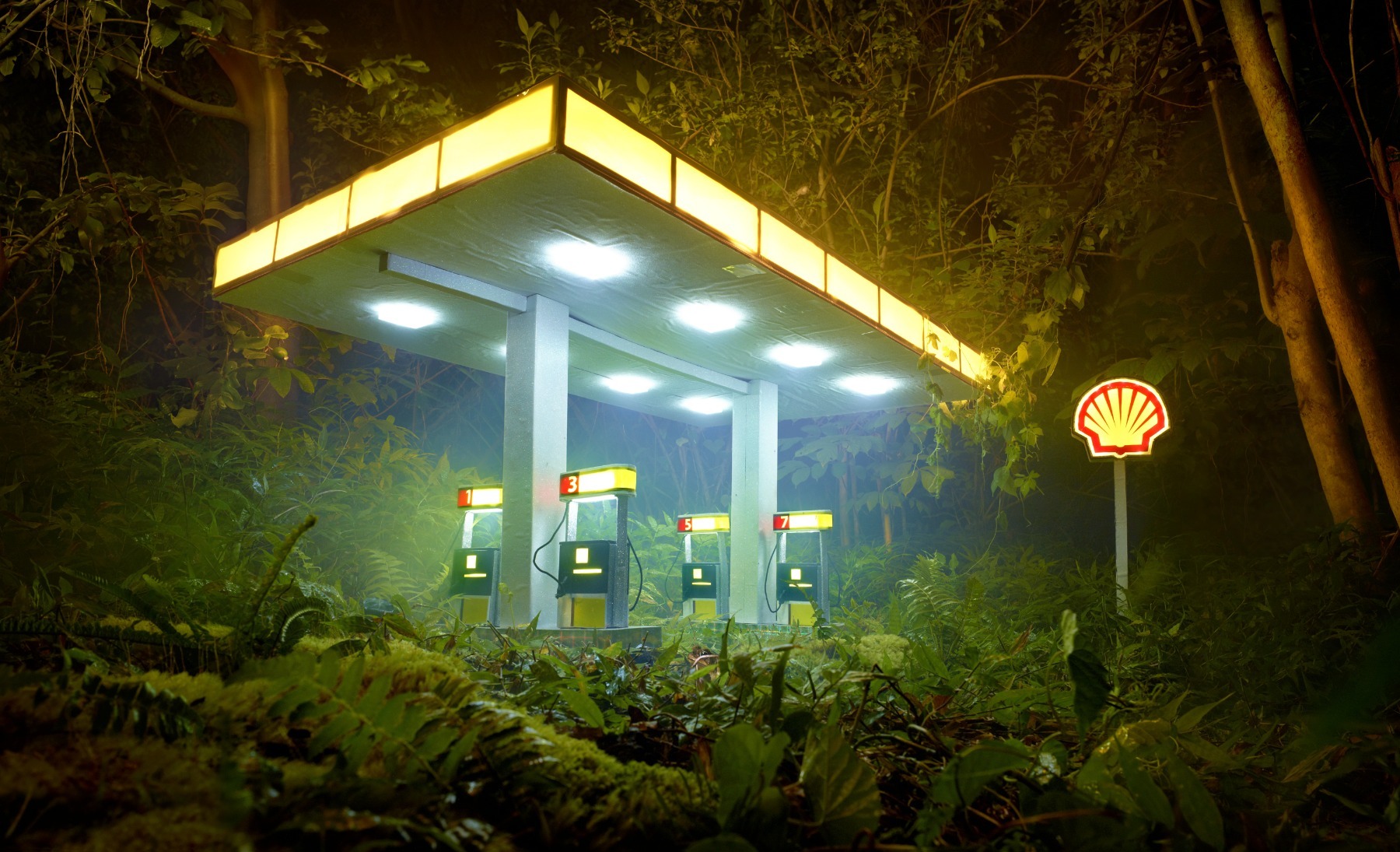
The Time Is Now
An interview with American artist David LaChapelle
Especially in my art — if I have a choice to create something, I want to create something full of light and love. I don’t want to make things that are confusing or that add to the confusion or darkness, or that just mirror it. I want to be a prism — to turn that light into something beautiful. As artists, we have a choice, and I want to choose beauty as my language, the vocabulary I use. Whatever I want to say or express, I want to use beauty in those images to touch people.
The RIXC “Plants Intelligence” exhibition in the Kim? Contemporary Art Centre. Photo: Kristīne Madjare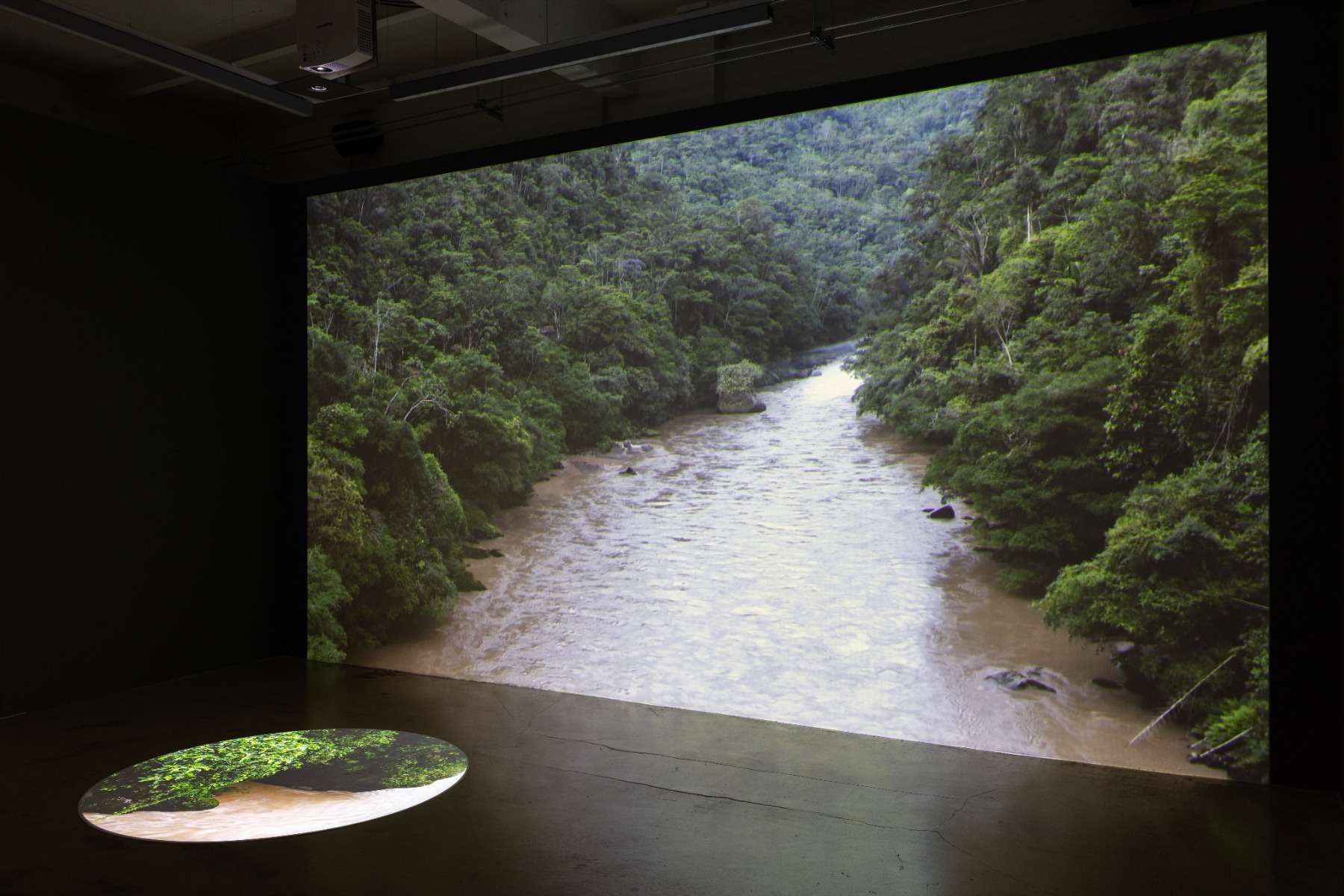
“Their time is now and tomorrow”
An interview with Swiss art and media theorist Yvonne Volkart, co-curator of the exhibition “Plants Intelligence”
This is what art can do, especially in performative art – you can temporarily, as I say, mime another being. It’s also connected, perhaps, to older or archaic ways of thinking, where humans have always tried to personify other things: an animal, a plant, or even a stone. Yes, it’s pre-modern thinking, showing this old sense of kinship with the world around us. Or that we all come from the same origins – that’s one thing. The other is that miming is always a way of trying to understand. Children do it all the time: they mime what adults do. It’s their way of learning, of trying to understand, and also of imagining that they can become like them. It’s play – a playful way of being the other, while also not fully being the other.
DECEMBER
Banguoja audiofestival, Radvila Palace Museum of Art, Vilnius, 2025. Photo: Andrej Vasilenko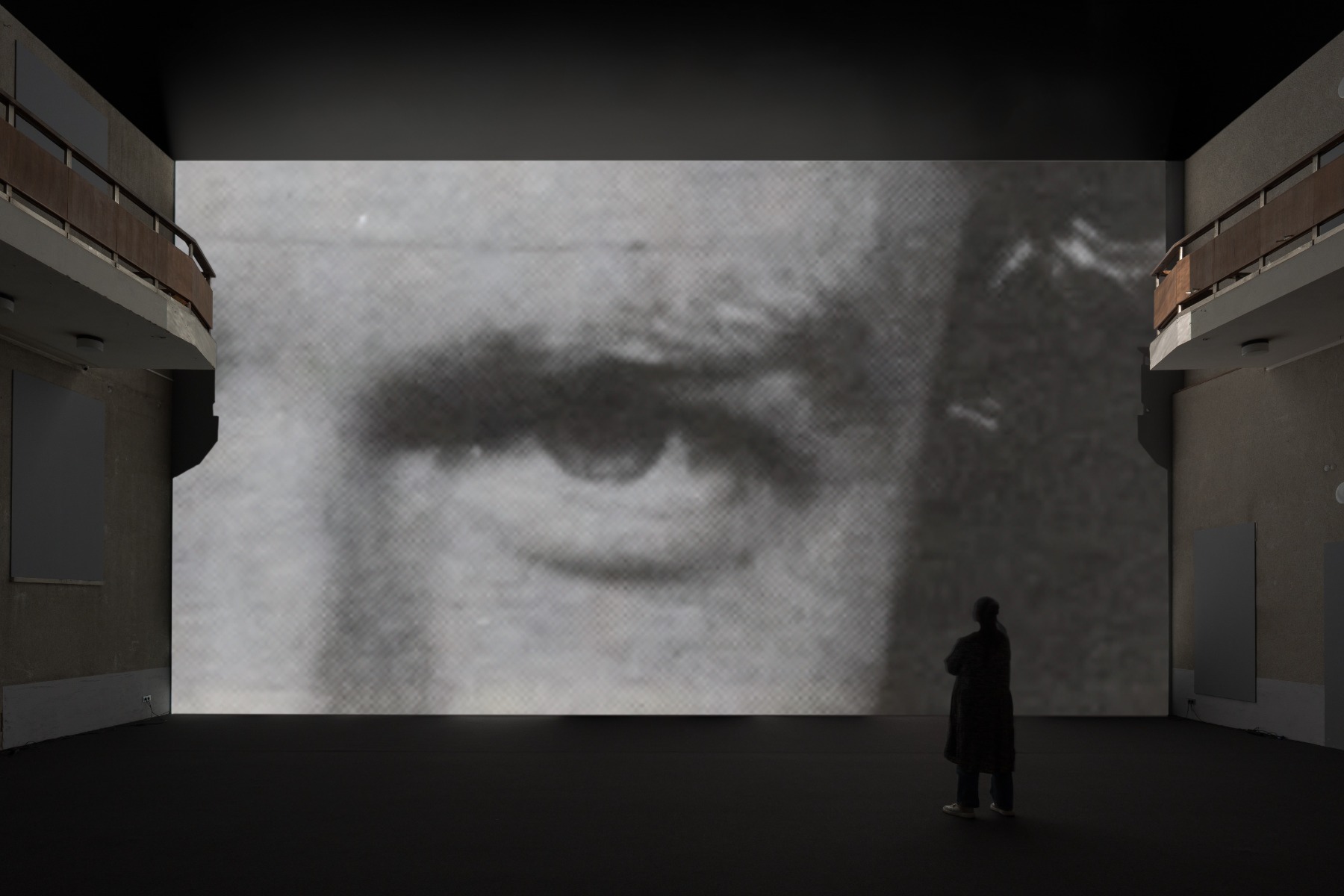
Traces That Remain
A conversation with the Latvian artist Konstantin Zhukov
For me, queer people are those who actively challenge the status quo, who are political, who are passionate about human rights and freedoms – it’s not just about who you sleep with. I always say that some of the queerest people I know are in the heterosexual relationships. I do see “queer” as a badge of honour.
Valentinas Klimašauskas. Photo by Tautvydas Stukas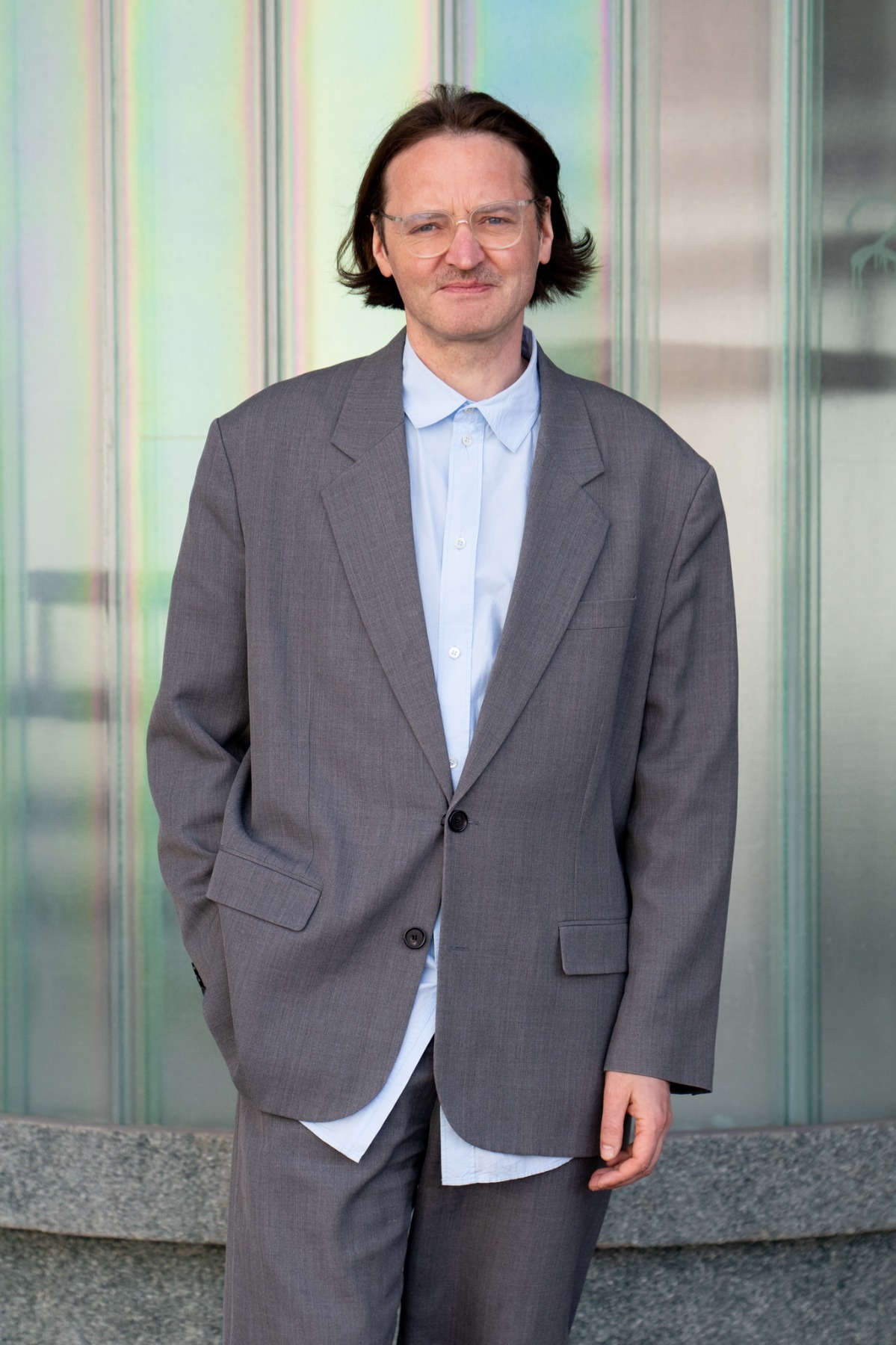
Curating a poem
An interview with the new director of CAC Vilnius, Valentinas Klimašauskas
It is rather rare that artists are genuinely interested in – and successful at – depicting objective and concrete geopolitical realities in their practices; a specific mindset is required for that. However, good artists generally tend to reveal or challenge frontiers – of time, style, personality, gender, ethnicity, culture, and so on. It should also be noted that art and artists need to challenge their own instrumentalisation, as they can easily become tools of propaganda. Autonomy is important even at the frontiers – perhaps even more so than anywhere else. To quote Jacques Rancière: “The function of art is not to be a direct tool for political propaganda, but to challenge our perceptions and create new possibilities for understanding the world and society.”
Upper image: Bernar Venet. 5Y (Minus). 2001. 56x76 cm (fragment)
